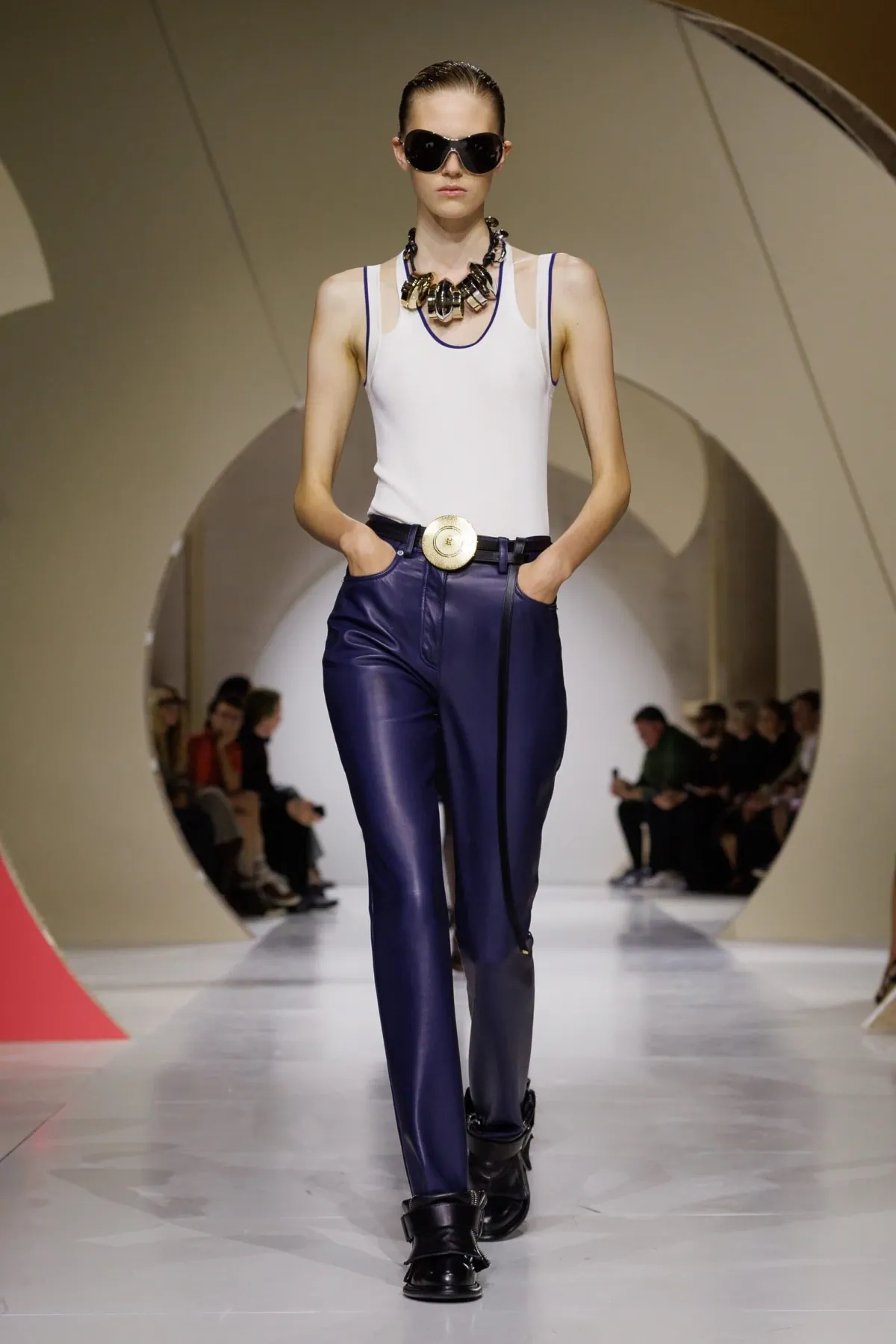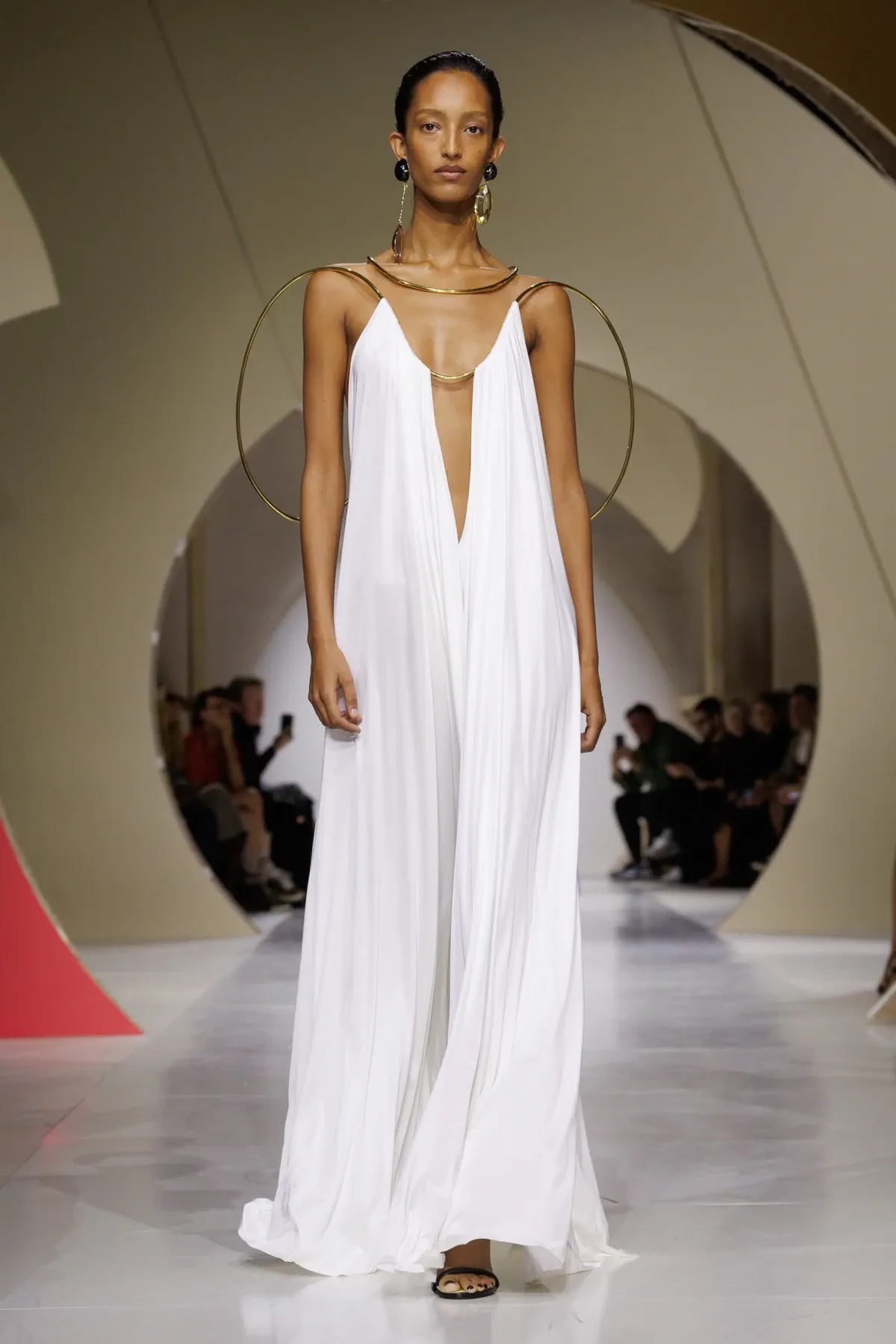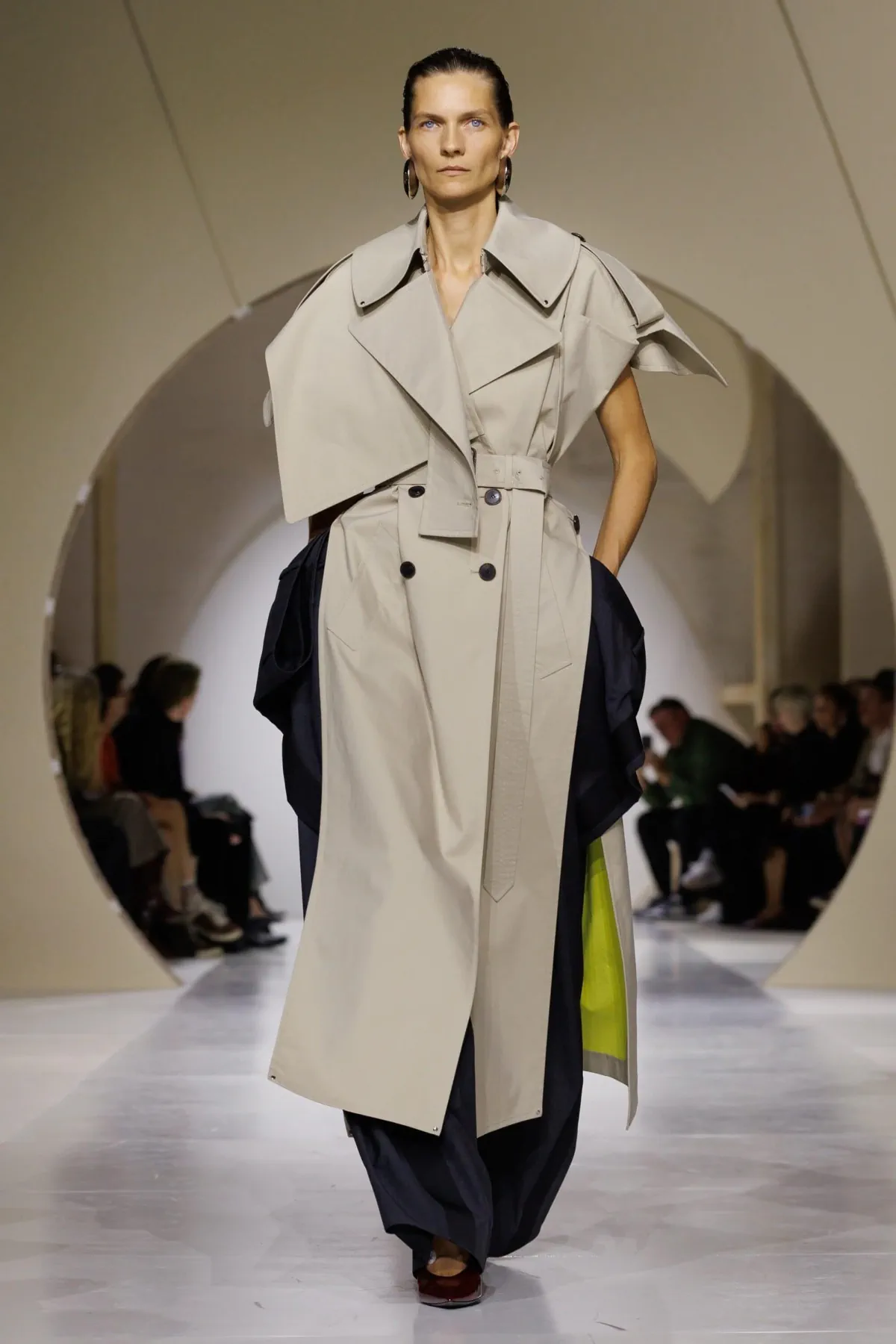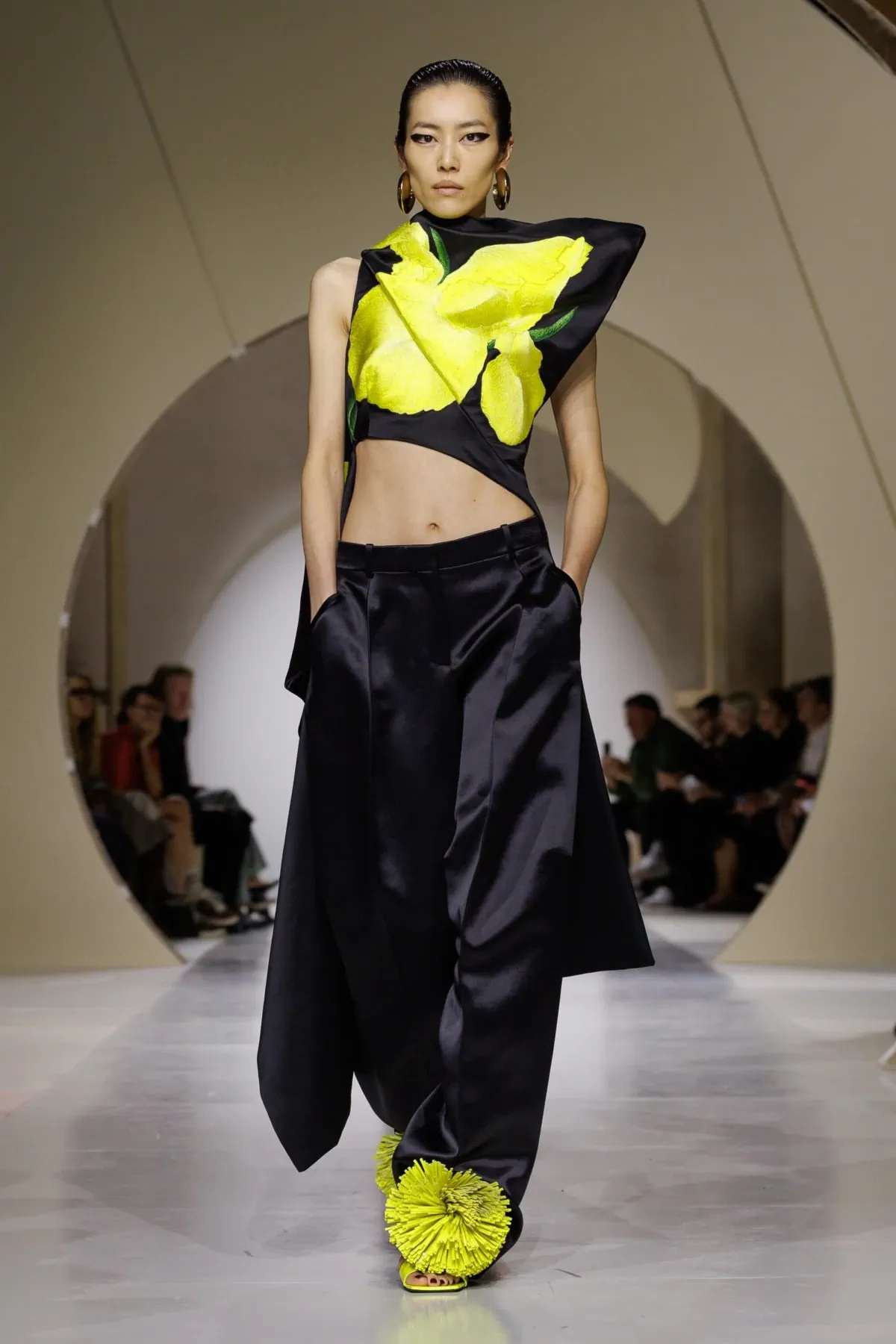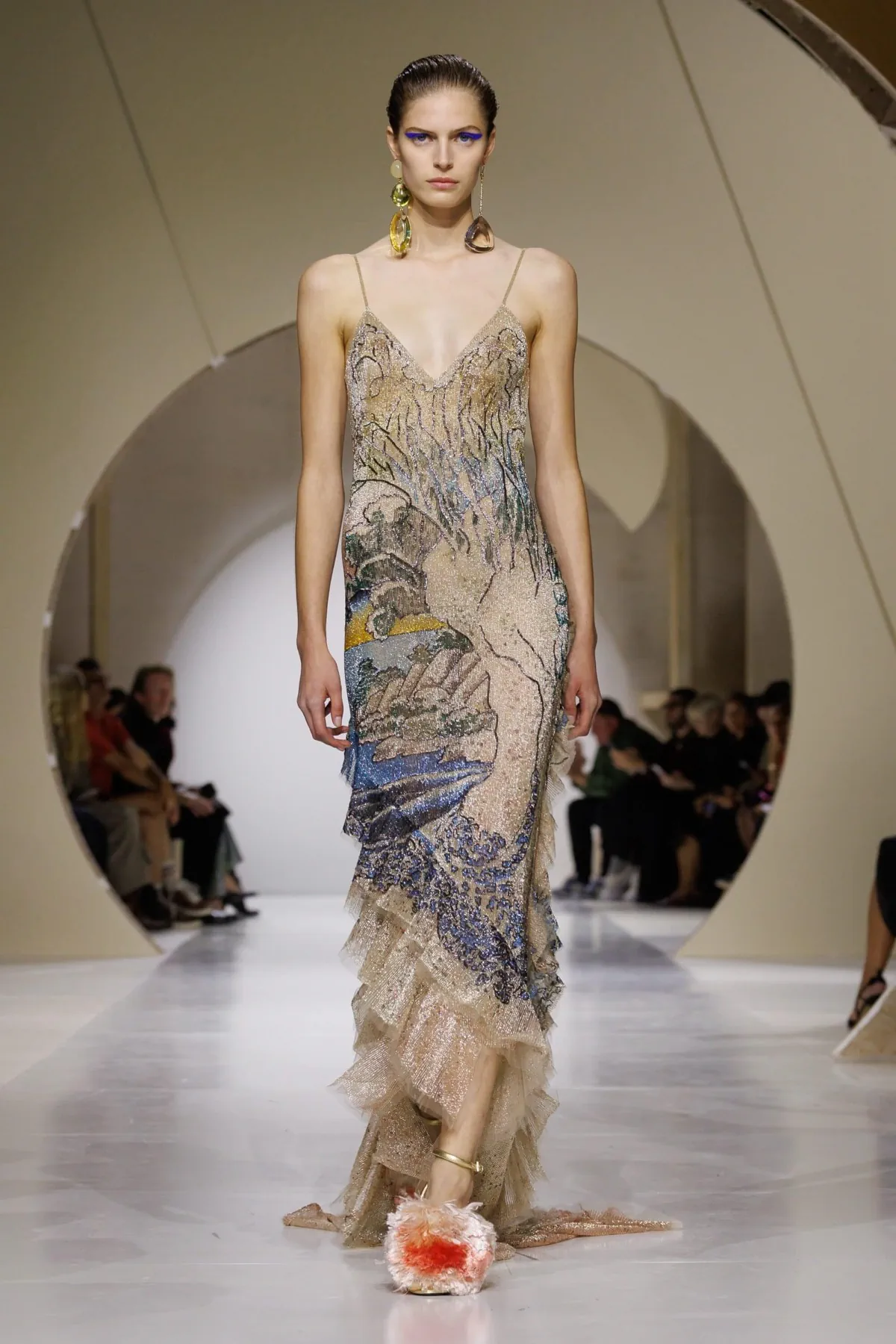

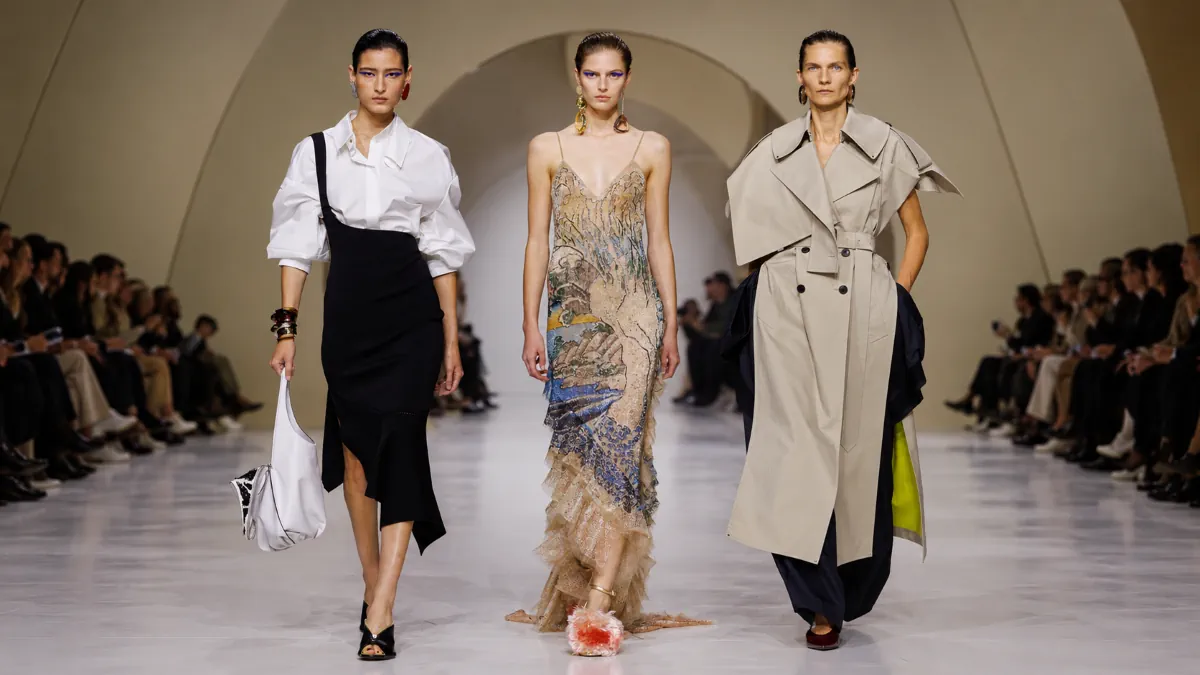
| Givenchy Spring 2027 was presented in Paris. The collection focused on precise tailoring, technical knits, leather, sculptural dresses and oversized outerwear. It also marked the first Givenchy show since Marco de Vincenzo became head of leather goods design. |
For Givenchy Spring 2027, Sarah Burton approached uncertainty with structure. Rather than loosening clothes into soft, unformed silhouettes, she concentrated on cutting, proportion and a controlled use of volume. The result was a collection that moved between practical wardrobe pieces and more demanding experiments with shape.
Burton described the idea as a search for “balance and clarity.” That intention was visible in the tailoring. Pinstripe suits were altered so that front panels crossed or tilted across the body, while sleeves sometimes became part of the jacket’s main construction rather than separate functional elements. Familiar tailoring remained recognizable, but its architecture had been reconsidered.
The British designer also looked back at Hubert de Givenchy’s early work, particularly black tailoring, animal prints and sharply defined silhouettes. Instead of reproducing those clothes, Burton translated some of their characteristics into forms suited to contemporary dressing. Restrictive skirt shapes, for example, were replaced by technical knits that created a similarly narrow outline with greater ease.
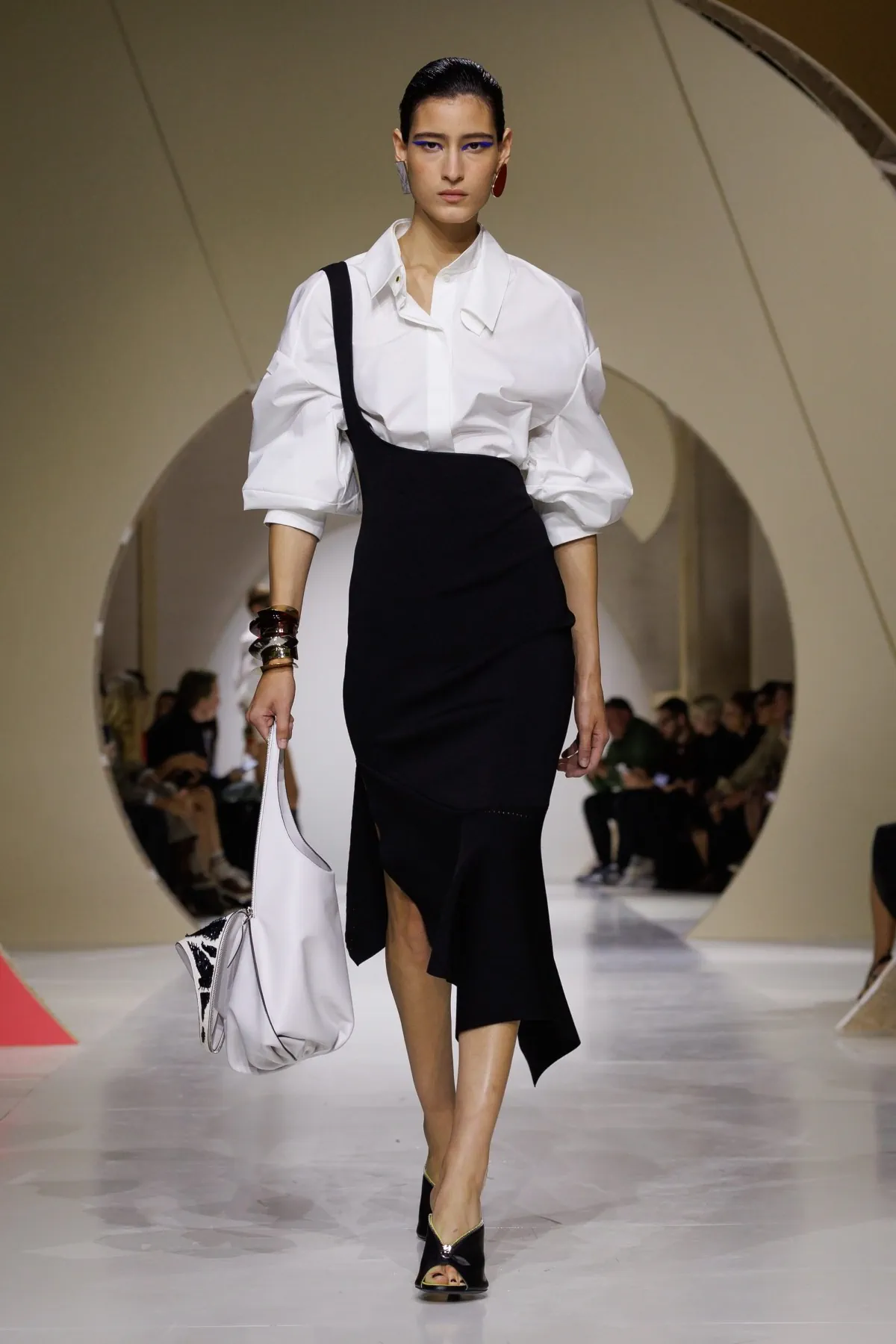
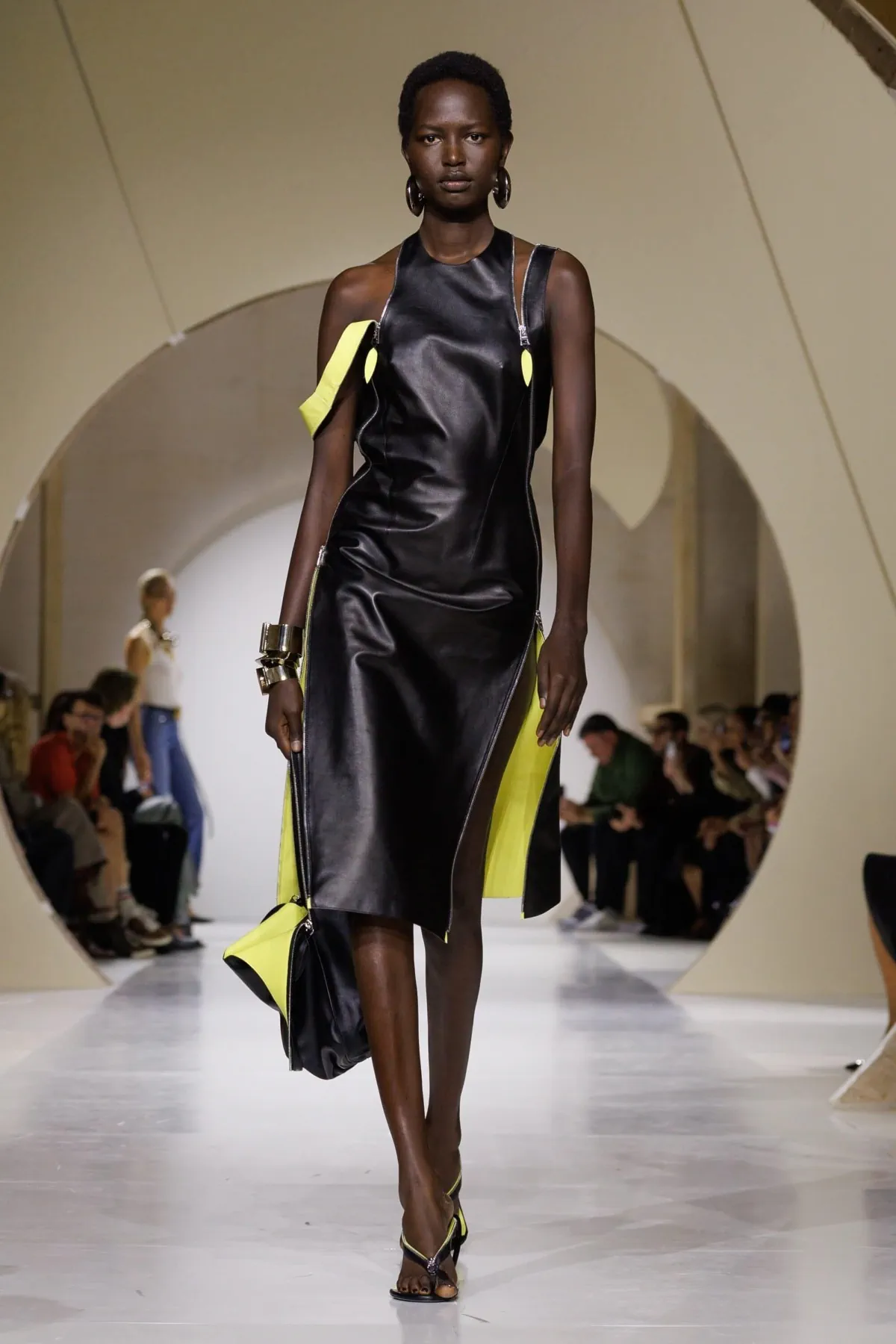
That balance between discipline and wearability appeared throughout the collection. Strong-shouldered coats had a direct, formal quality, while leather dresses opened around the neckline and skirts were cut high at the front with longer sections at the sides. Crisp shirts appeared with fluted skirts and narrow straps, while satin peplum jackets were paired with jeans.
Volume became more pronounced elsewhere. Oversized peplums projected outward from dresses, and trousers were extended with additional panels that complicated their outline. One late look pushed the idea further: a very large pale pink silk robe with embroidery was worn over a transparent slip. It occupied substantial physical space without depending on conventional body-conscious construction.
Follow all the latest news from Fashionotography on Flipboard, or receive it directly in your inbox with Feeder.
You may also read

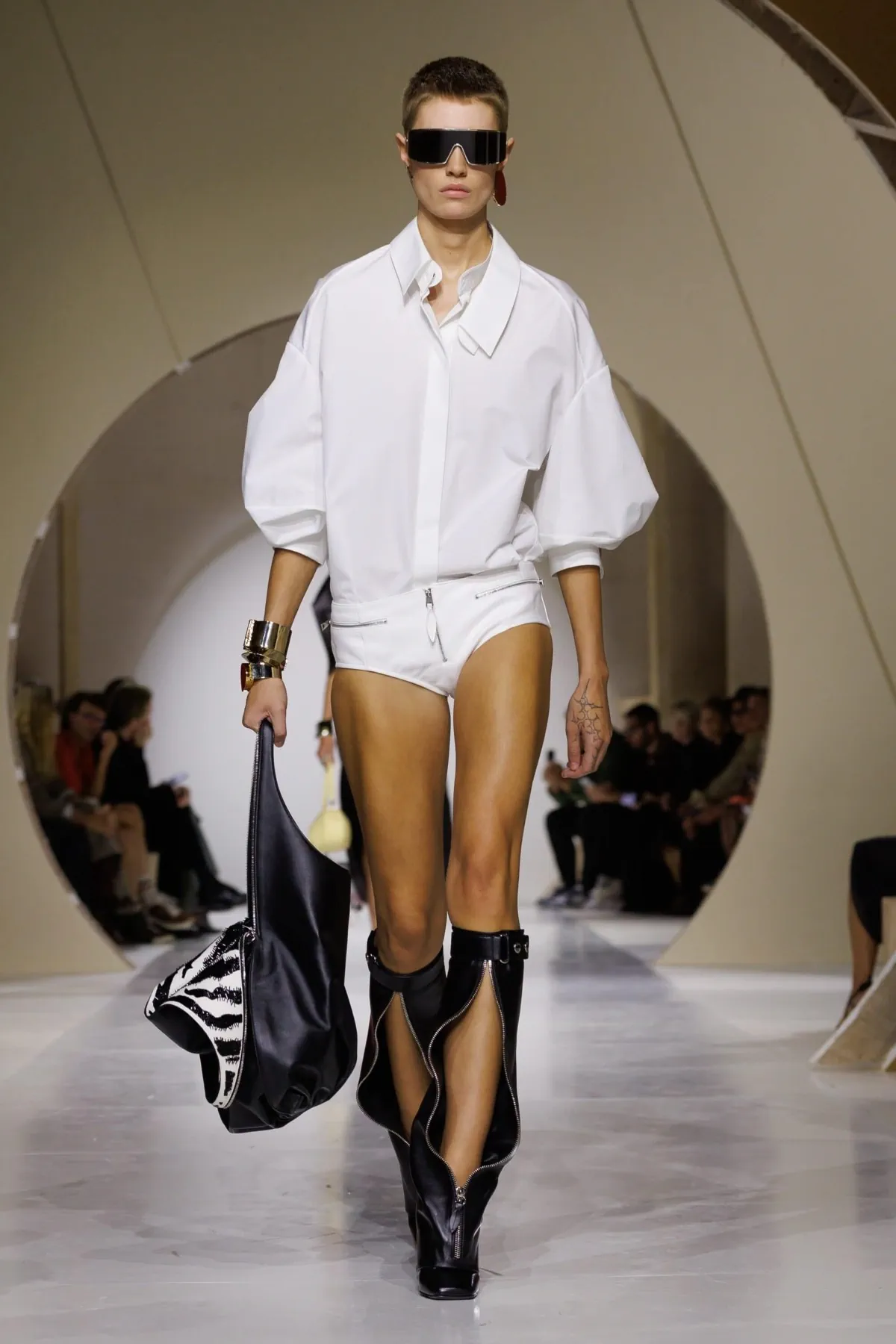
Accessories were equally important. Large tassel necklaces, knotted cobalt leather belts and substantial metal pieces introduced another layer of structure. Some jewelry was so closely integrated with the garments that the distinction between decoration and construction became less clear. Strapless pleated gowns in pale pink and cobalt, for example, used twisted gold-toned metal elements where sleeves might normally appear.
Beading offered another direction. A black slip dress was covered in long beaded fringe and styled with matching cuffs, while similar surface treatment appeared on small moon-shaped evening bags. Brightly colored leather goods also had a stronger presence, including the Cut, a zippered hobo bag with a contrasting interior.
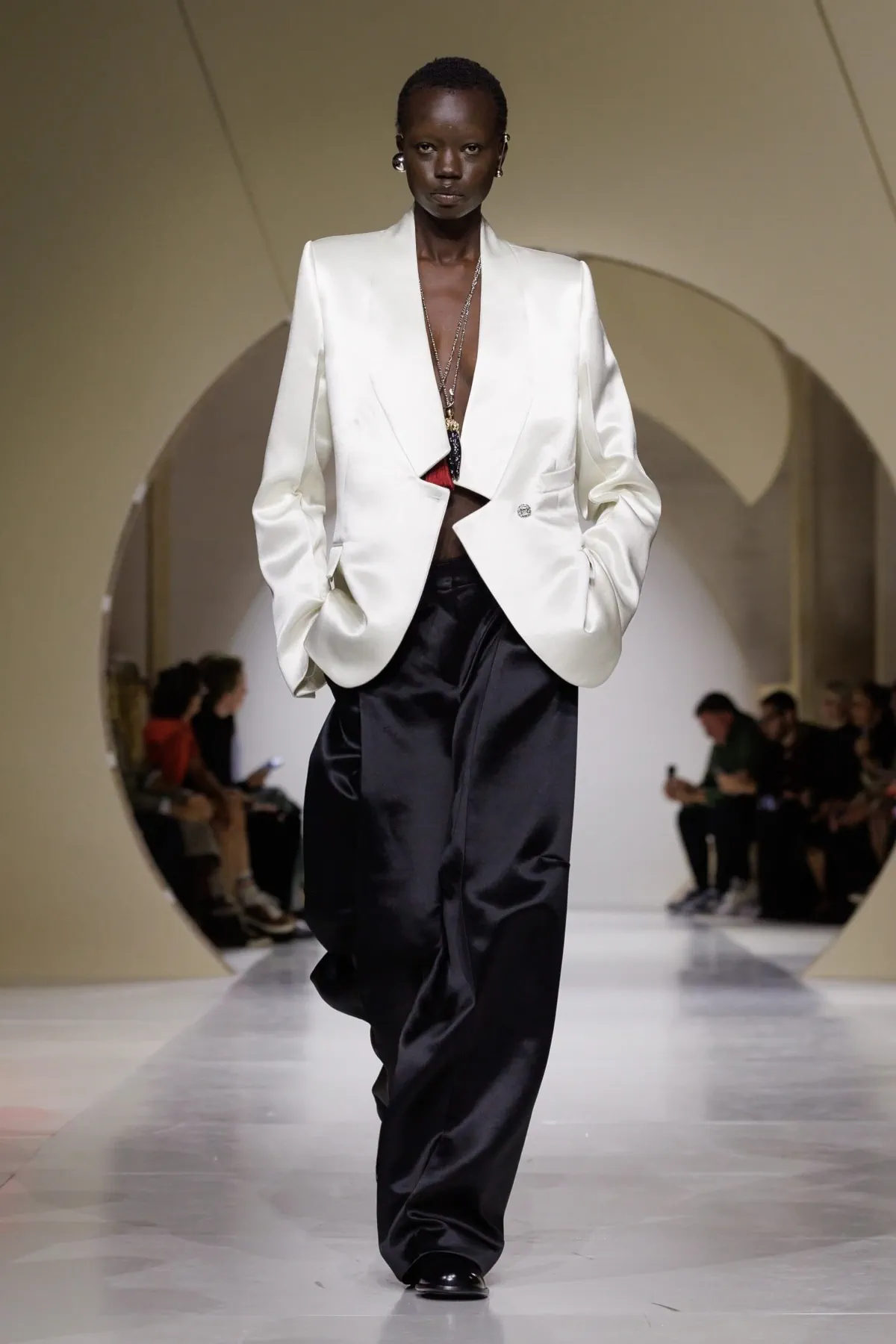
The collection was the first Givenchy show since Marco de Vincenzo joined the house as head of leather goods design, giving the expanded bag selection additional significance. Yet Burton’s central concern remained clothing and the people wearing it. She spoke of dressing “different women” for “different moments,” an approach that helps explain why formal tailoring, leather separates, denim and elaborate eveningwear could share the same collection without being forced into one uniform formula.
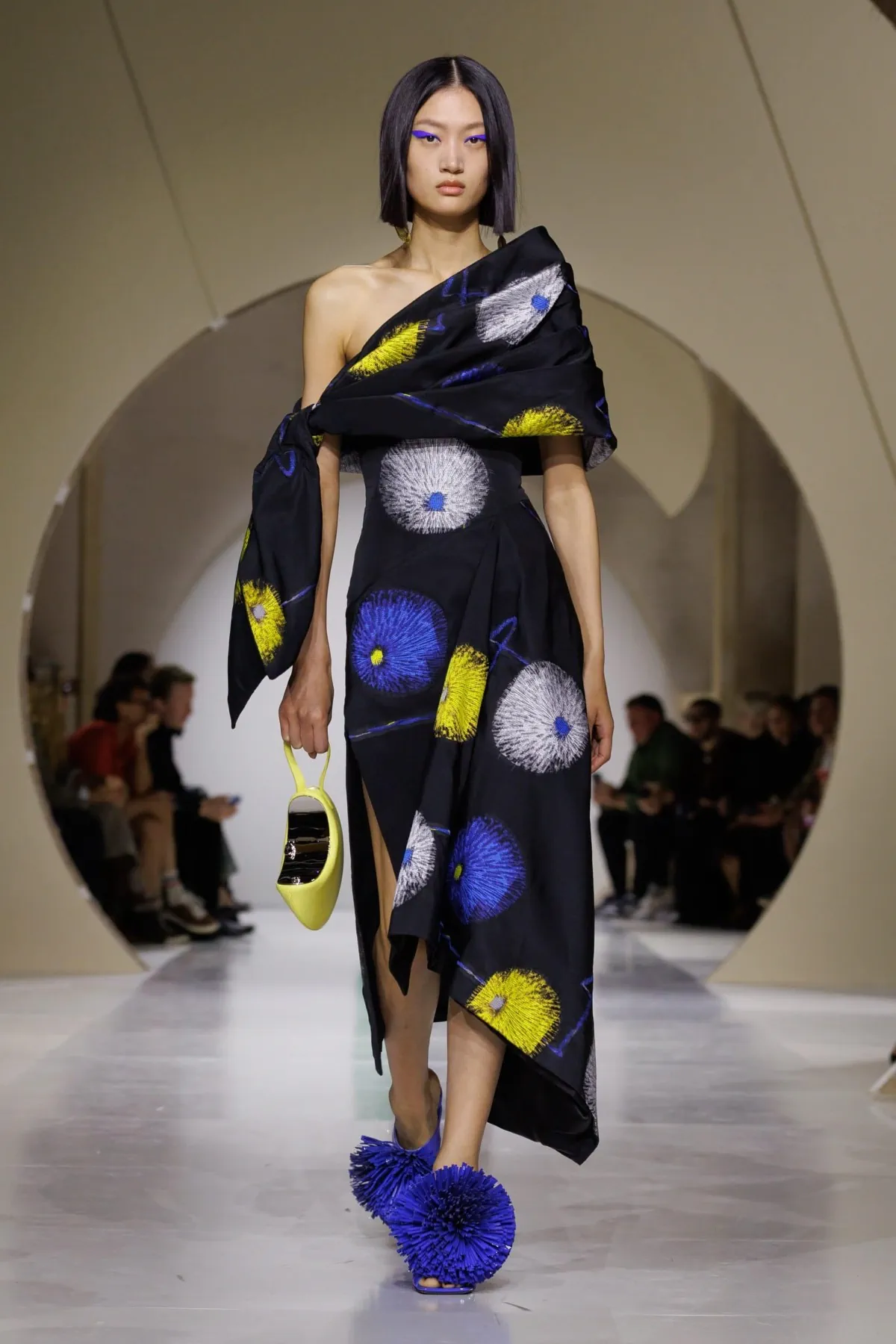
That range matters because Burton did not treat precision as severity. Even the more experimental pieces allowed for practical decisions about comfort and use. Technical fabric replaced restriction, shirts and jeans grounded elaborate jackets, and accessories could be removed or changed without weakening the clothes.
Givenchy Spring 2027 therefore presented structure as a flexible tool rather than a fixed rule. Burton used the house’s history as reference material, but the collection’s clearest argument concerned the present: clothes can be exact without becoming rigid, expressive without becoming decorative for decoration’s sake, and substantial without simply following the current preference for tightly fitted silhouettes.