


| The Prada Holiday 2026 campaign, titled “Drawing Prada: Animated by Hand,” debuted in late October 2026. It features Maya Hawke, Sadie Sink, Chen Haoyu, Luther Ford and Kelvin Harrison Jr. Animator John Pomeroy directed the hand-drawn illustrations, while Glen Luchford handled photography. |
Under the creative direction of Miuccia Prada and Raf Simons, the Italian fashion house revisits traditional animation to present its holiday collection through illustrated landscapes, expressive animals and contemporary fashion.
Prada turns to traditional animation for Holiday 2026
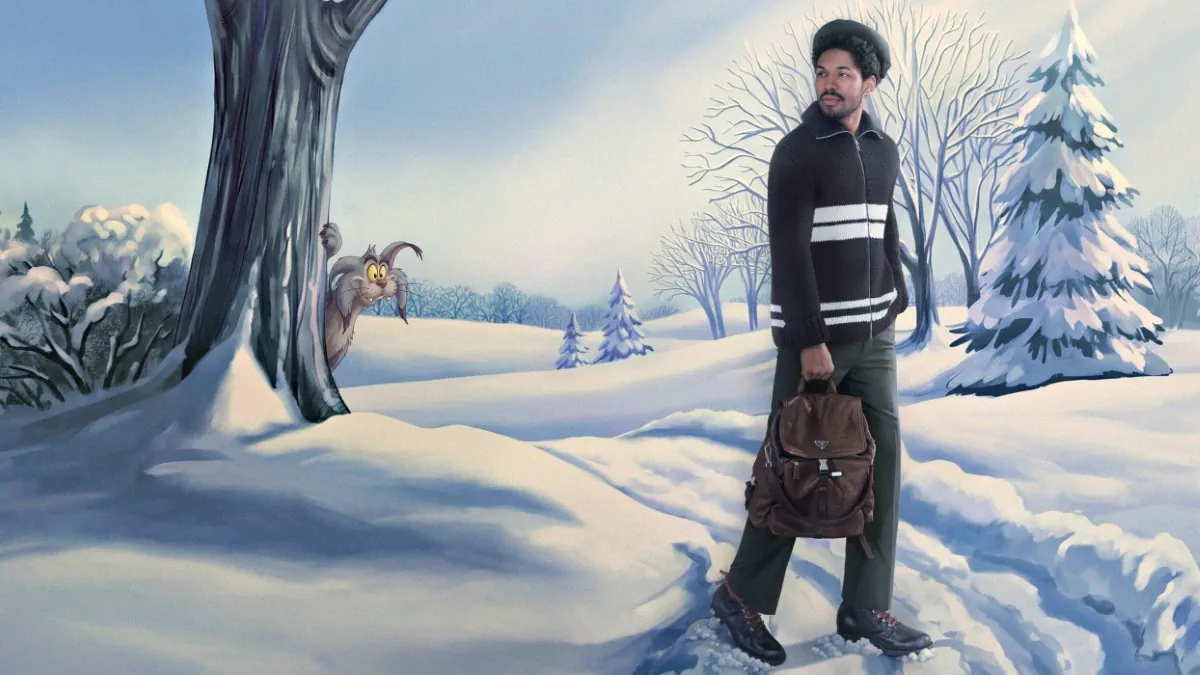
The Prada Holiday 2026 campaign, featuring Maya Hawke, Sadie Sink and three fellow actors, takes a different approach to seasonal fashion advertising. Instead of relying on conventional winter photography, the Italian house has commissioned a series of hand-drawn environments inspired by classic animated cinema and illustrated children’s books.
Titled “Drawing Prada: Animated by Hand,” the project brings together photographic portraits, animated animals and detailed winter scenery. Its creative direction comes from Miuccia Prada and Raf Simons, with Ferdinando Verderi overseeing the campaign’s visual concept.
The decision is particularly relevant as artificial intelligence becomes increasingly common in commercial image production. Prada has chosen a labor-intensive technique that makes the contribution of individual artists central to the finished work.
Maya Hawke and Sadie Sink explore an illustrated winter
The campaign features five actors: Maya Hawke, Sadie Sink, Chen Haoyu, Kelvin Harrison Jr. and Luther Ford. Each appears in settings that combine photographed figures with traditionally illustrated surroundings.
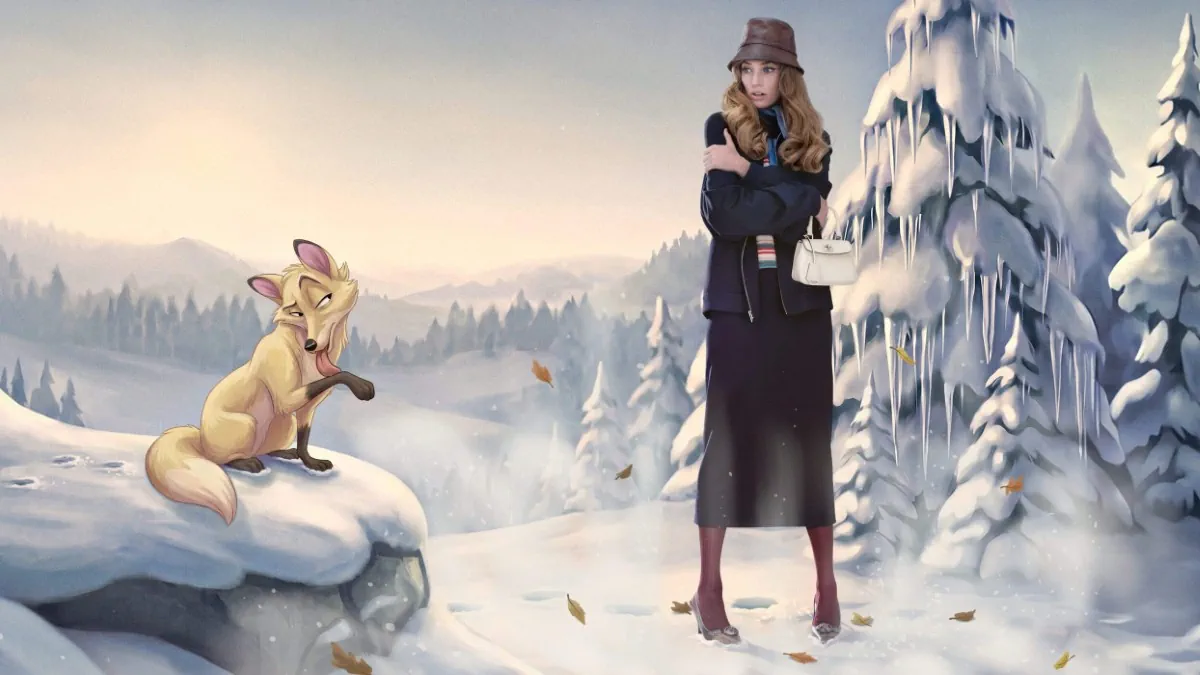
One photograph shows Hawke standing beside a fox in a snowy forest. She wears layered winter clothing, including a striped scarf, a brown hat and burgundy hosiery. The contrasting textures give her outfit a practical quality against the stylized landscape.
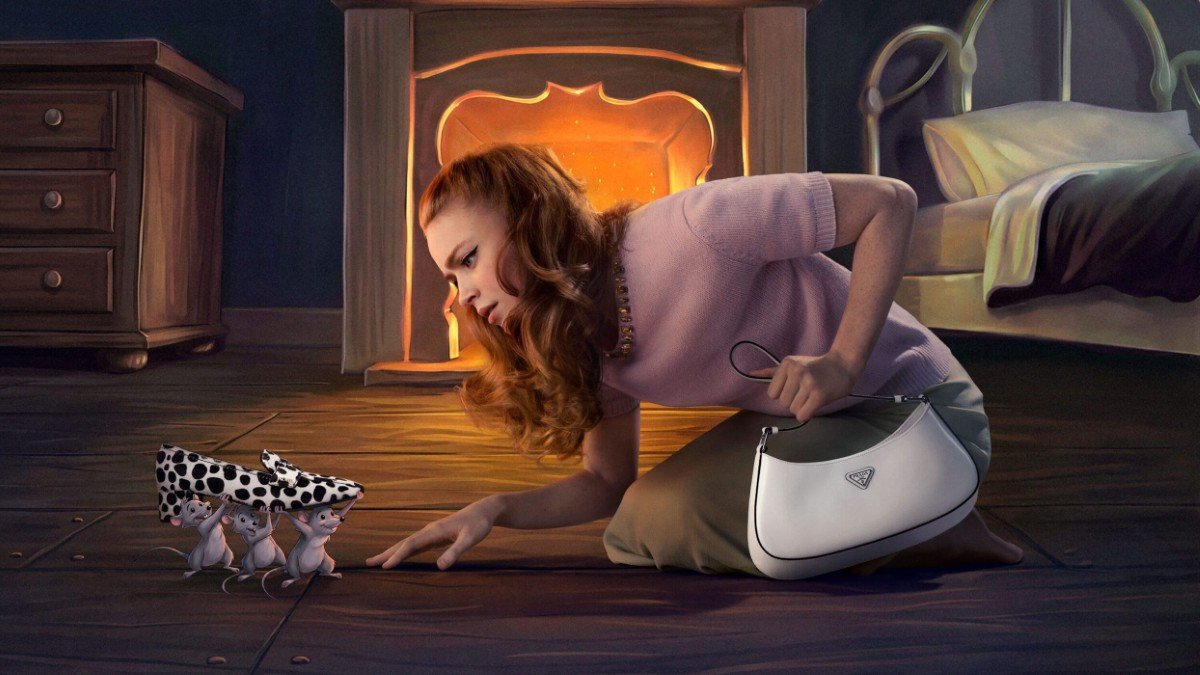
Sink appears in a warmer interior, where several illustrated mice attempt to transport a spotted Prada shoe. Dressed in a lilac knit top with decorative detailing, she bends toward the small animals while holding a pale handbag.
These interactions give Prada’s accessories a clear place within the images. Shoes and bags become objects that attract the attention of the illustrated creatures, rather than simply appearing beside the actors.
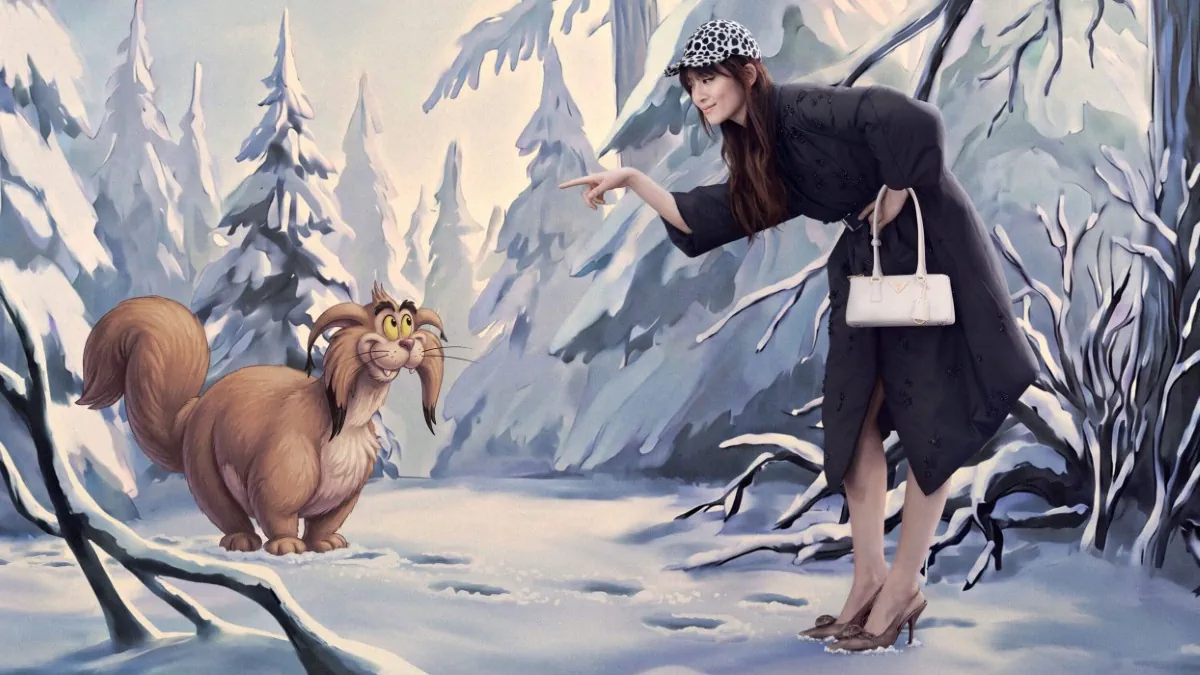
Other scenes extend the concept through snowy woodland settings and encounters between the characters and their unusual companions.
Follow all the latest news from Fashionotography on Flipboard, or receive it directly in your inbox with Feeder.
John Pomeroy brings decades of animation experience
The illustrations were developed by a team led by John Pomeroy, an American animator whose professional background includes work on Pocahontas, Fantasia 2000 and The Land Before Time.
His involvement provides an important connection to the period when animated films depended heavily on pencil drawings and individually developed character expressions.
For Prada, Pomeroy’s team created woodland animals, winter landscapes and interiors using traditional drawing methods. The characters communicate through their expressions, physical gestures and responses to nearby objects.
An accompanying behind-the-scenes film documents the artistic process. It shows how drawn figures develop through successive stages of illustration, offering viewers an understanding of the technical work behind the campaign.
This additional material shifts some attention away from the finished advertisements and toward the people responsible for producing them.
Glen Luchford connects fashion photography with illustration
Photographer Glen Luchford plays an equally important role in establishing the campaign’s visual consistency.
His photographs were planned around the lighting and perspective of the illustrated environments, allowing the actors to occupy their surroundings convincingly.
The difference between photographed clothing and drawn scenery remains visible. Leather accessories retain their surface details, while knitwear, outerwear and tailored pieces preserve the qualities of real materials.
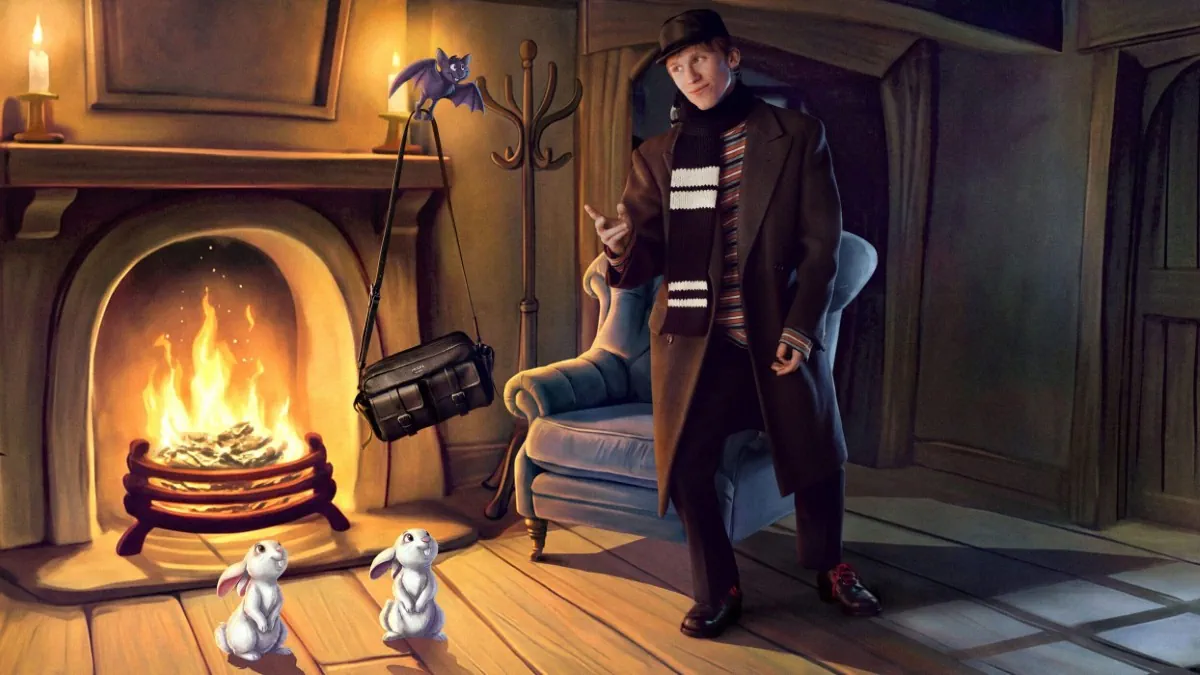
The contrast is particularly effective in scenes featuring snow-covered trees or softly illuminated interiors. The illustrations establish the setting, while the photography provides a detailed view of the garments.
Luchford’s participation also continues an existing relationship with Prada’s holiday advertising, following his work on earlier seasonal projects.
Why Prada’s handmade approach matters
The campaign arrives during a wider industry discussion about generative AI and the future of creative production.
Digital tools can reduce certain production demands, but traditional animation requires specialized skills and substantial time. Prada’s decision demonstrates that established illustration methods can still serve contemporary fashion communication.
It also connects two forms of craftsmanship. The care involved in developing illustrated characters offers a useful comparison with the technical knowledge required to produce luxury clothing and accessories.
Rather than presenting technology and traditional methods as opposing choices, the campaign shows what a carefully selected artistic process can contribute to a brand’s visual identity.
For viewers, Drawing Prada offers more than seasonal product imagery. It provides a closer look at the relationship between fashion, photography and illustration, while giving the artists behind the campaign a visible role in its creation.