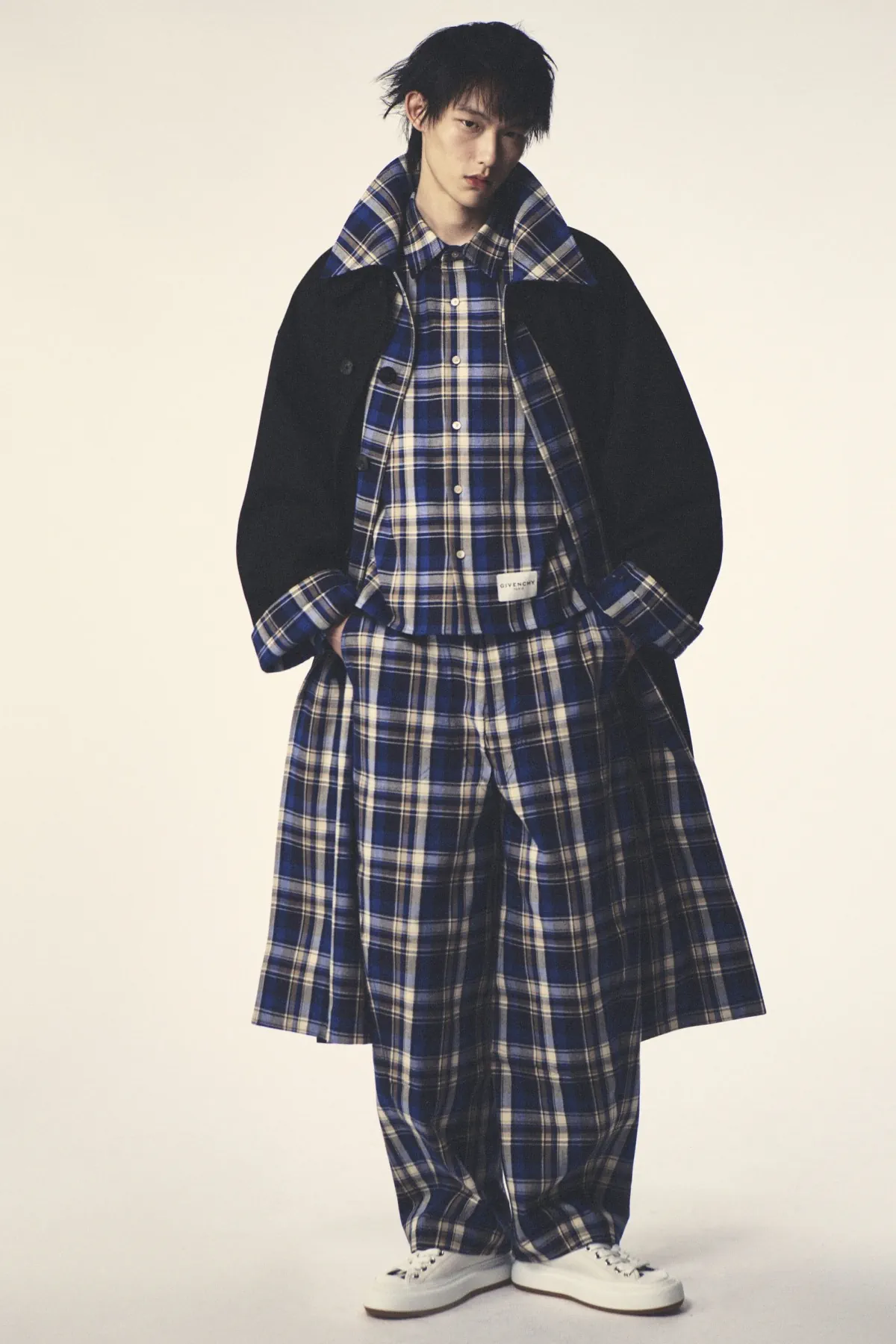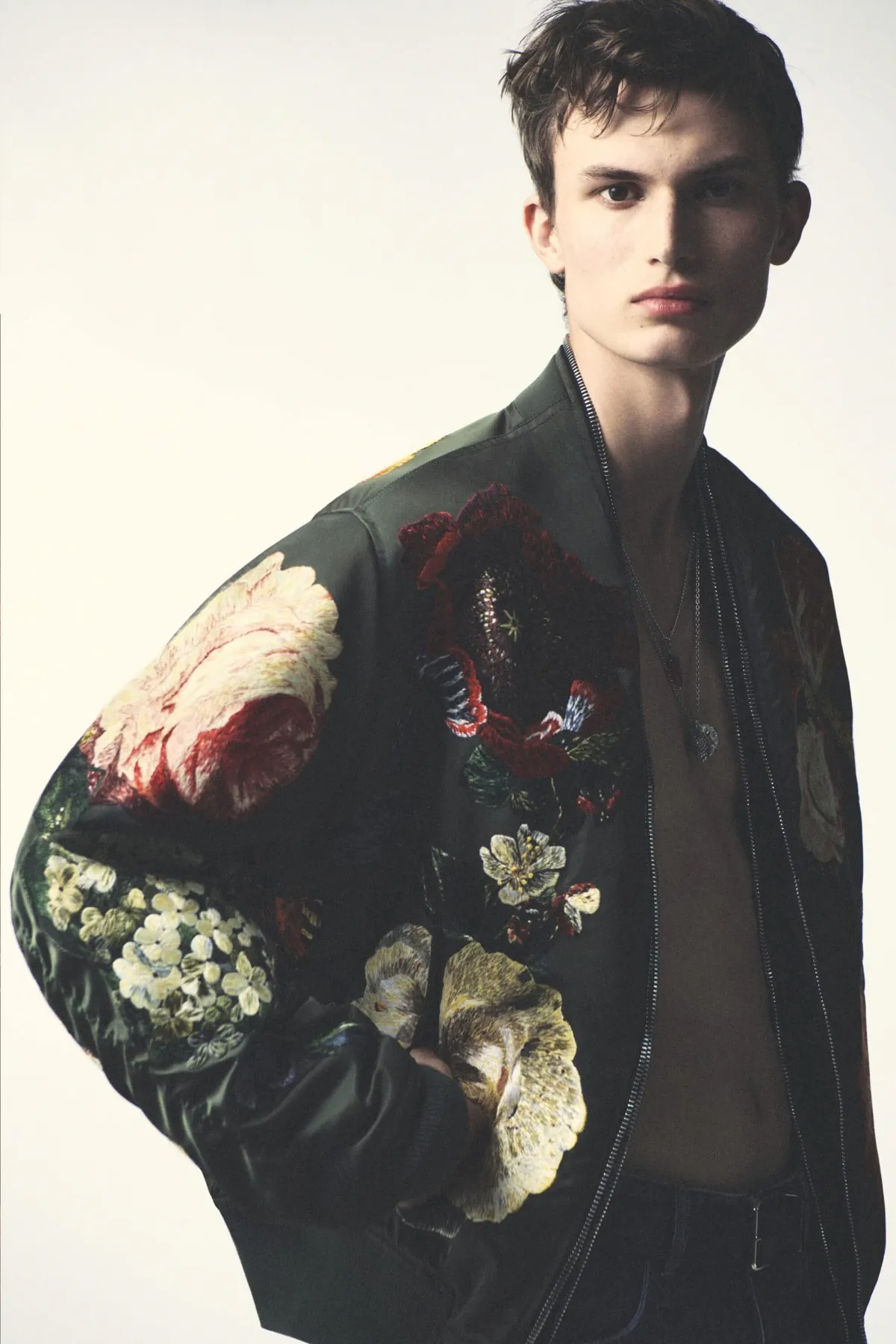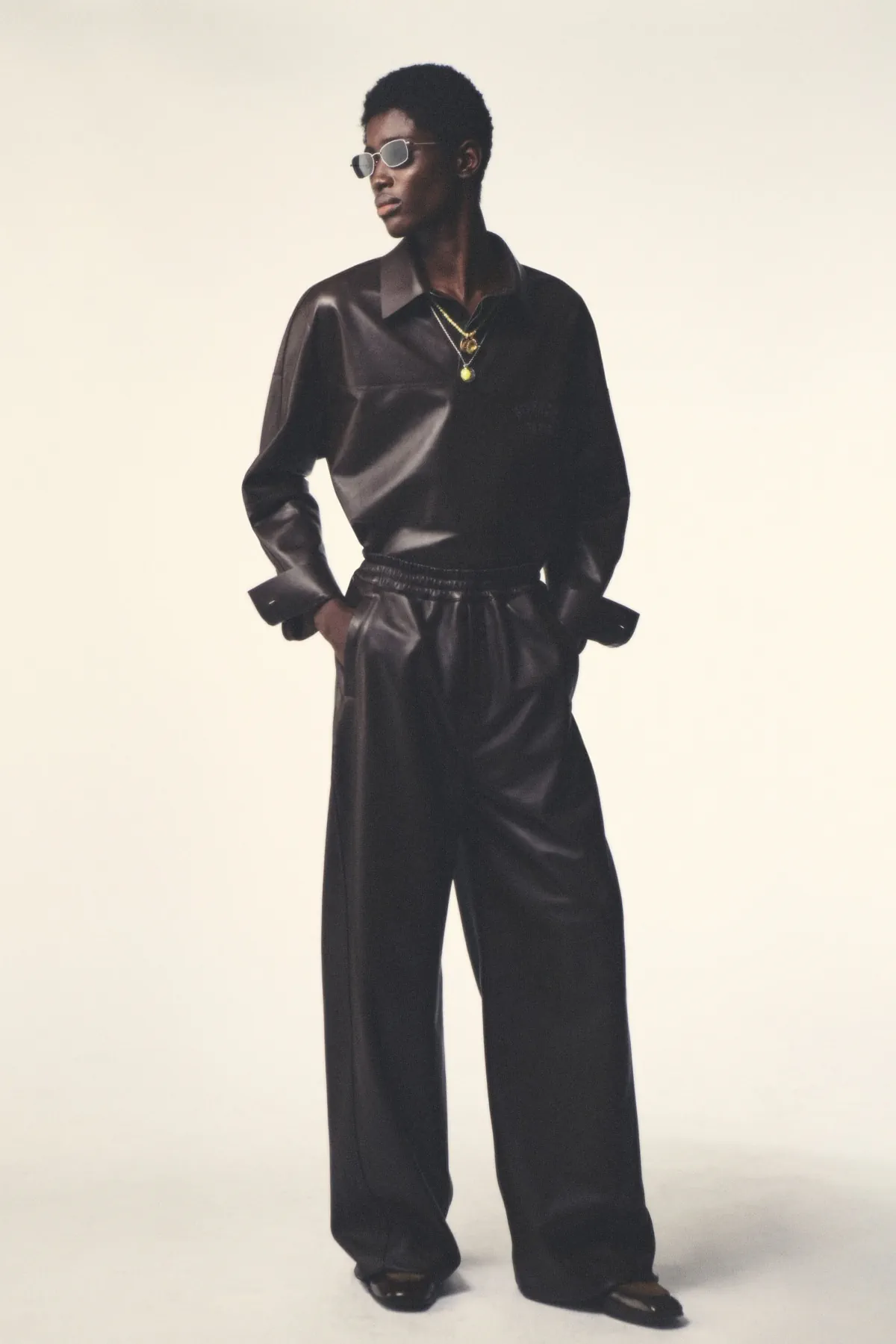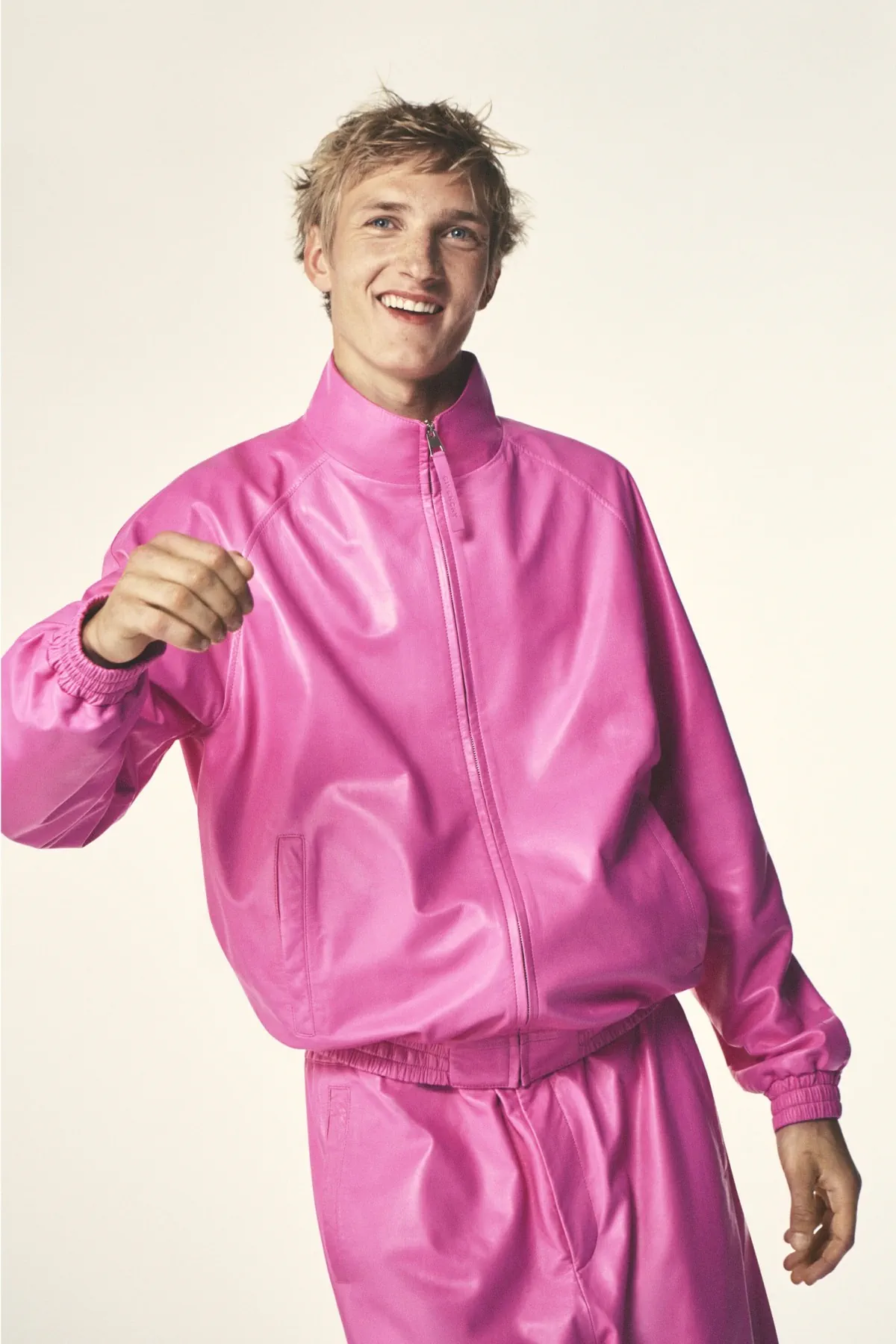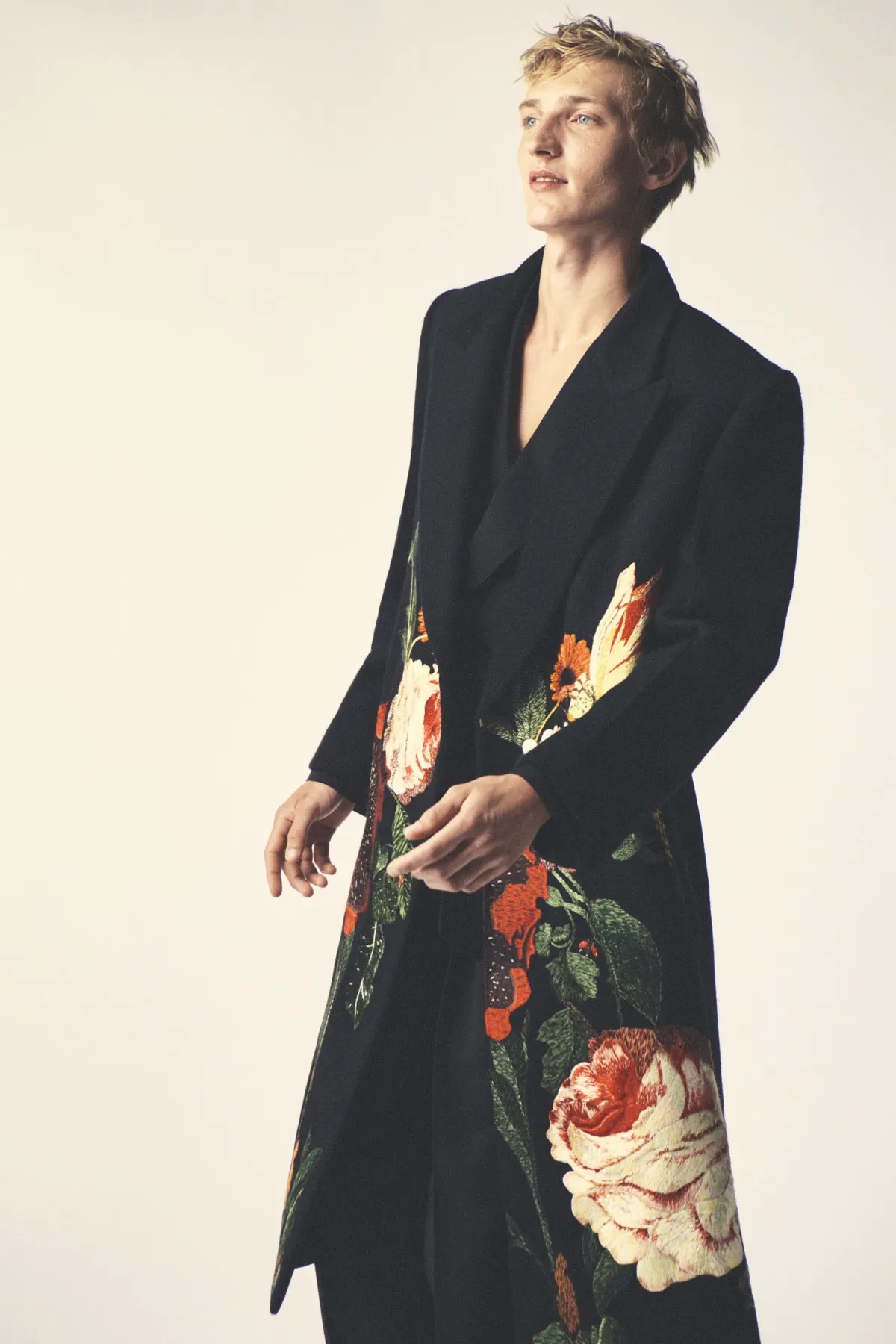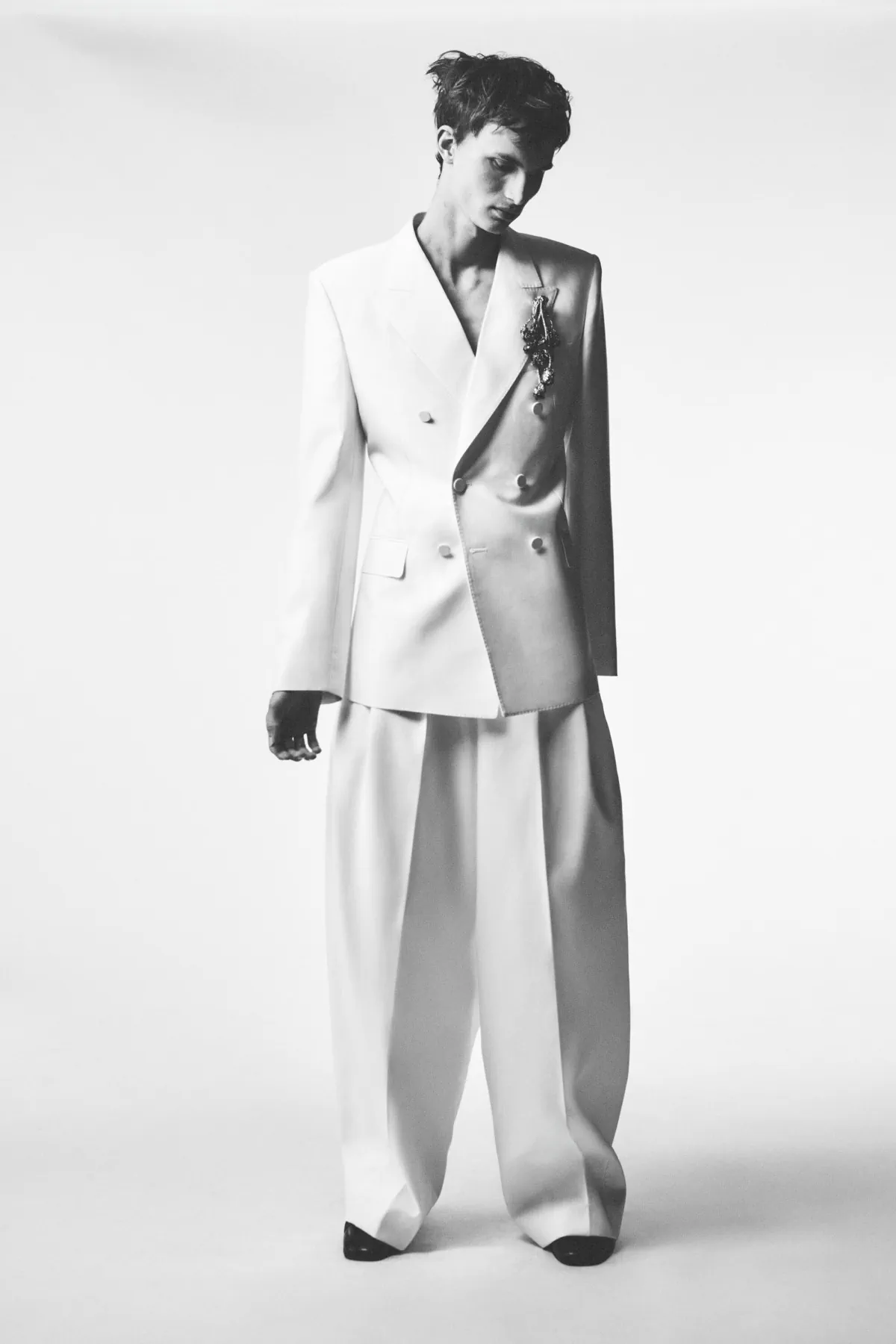

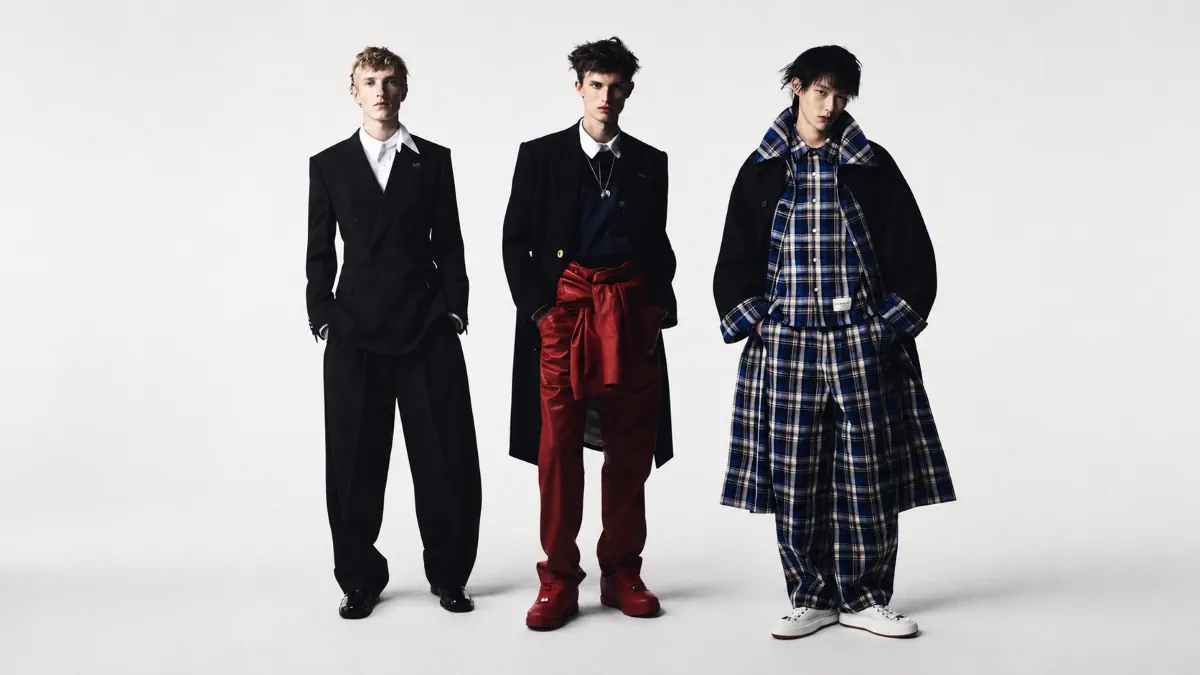
When Sarah Burton arrived at Givenchy’s Hôtel Particulier on Avenue George V last Thursday, she wasn’t there to pay homage to the past. She was there to move beyond it. Her debut menswear presentation for Givenchy’s Spring 2027 collection was less a fashion show than a quiet declaration: intimate, precise, and entirely hers.
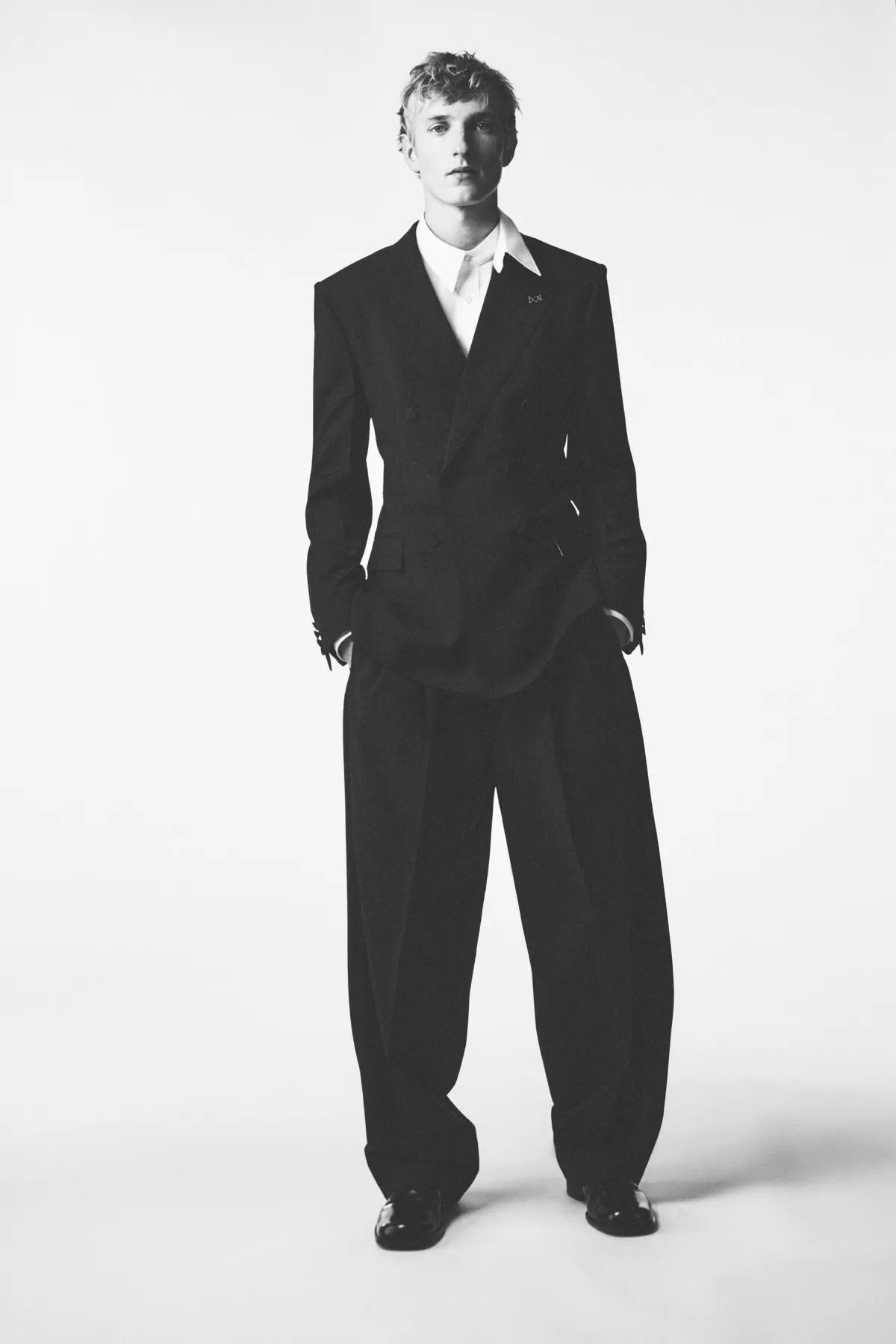
Burton has been Givenchy’s Creative director since late 2024 and has overseen menswear from the beginning. But Thursday marked her first publicly presented collection. Staged across three interconnected rooms at the house’s historic headquarters, the collection was titled “A Private Space. A house within a house.” The presentation format suited her perfectly. She chose this approach to highlight the craftsmanship of the embroidered military bombers, double-breasted suits, and sleek leather aviator coats.
The setting itself carried meaning. The rooms were filled with mannequins staged alongside haunting sculptures by British artist Rachel Whiteread. Whiteread’s work involves casting the interiors of ordinary objects and spaces in plaster and resin. Two colossal black pieces, titled Closet and Wardrobe, anchored the space. Whiteread told Burton that one represented her younger self and the other her older self. The dialogue between the two pieces felt like the conceptual spine of the entire collection.
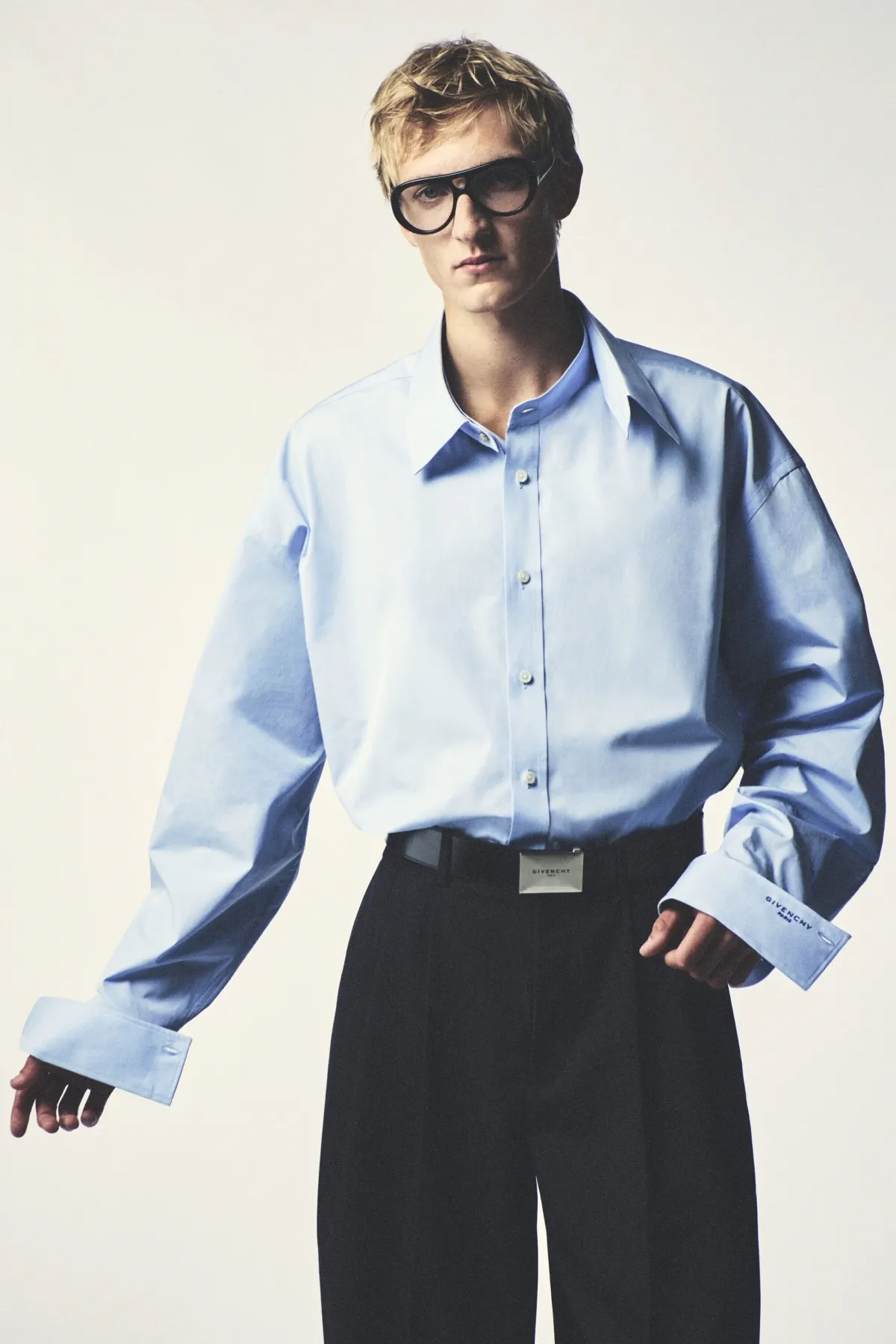
Burton has never been a designer who announces herself loudly. She let her campaign faces – photographer Don McCullin, filmmaker and DJ Don Letts, and painter Danny Fox – choose their own looks. She described the process as “very much like an old couture or bespoke way of working.” The campaign itself appeared overnight on billboards across Paris. Juergen Teller shot the campaign, and his instinct for capturing people in motion – alive rather than posed – matched Burton’s intentions exactly.
That instinct extends to the clothes. The wardrobe she has built for Givenchy men is neither themed nor conceptually overwrought. It begins with what she calls “established male archetypes“: sharply tailored suits, evening coats, soft bomber jackets, leather rugby shirts, and a tulip-patterned tie drawn from the house archive. However, her approach to these pieces is far from conventional. She slices lapels, peels back facings, and curves seams away from their default shapes. The effect is to make familiar garments feel slightly estranged, not broken, just reconsidered.
Follow all the latest news from Fashionotography on Flipboard, or receive it directly in your inbox with Feeder.
You may also read
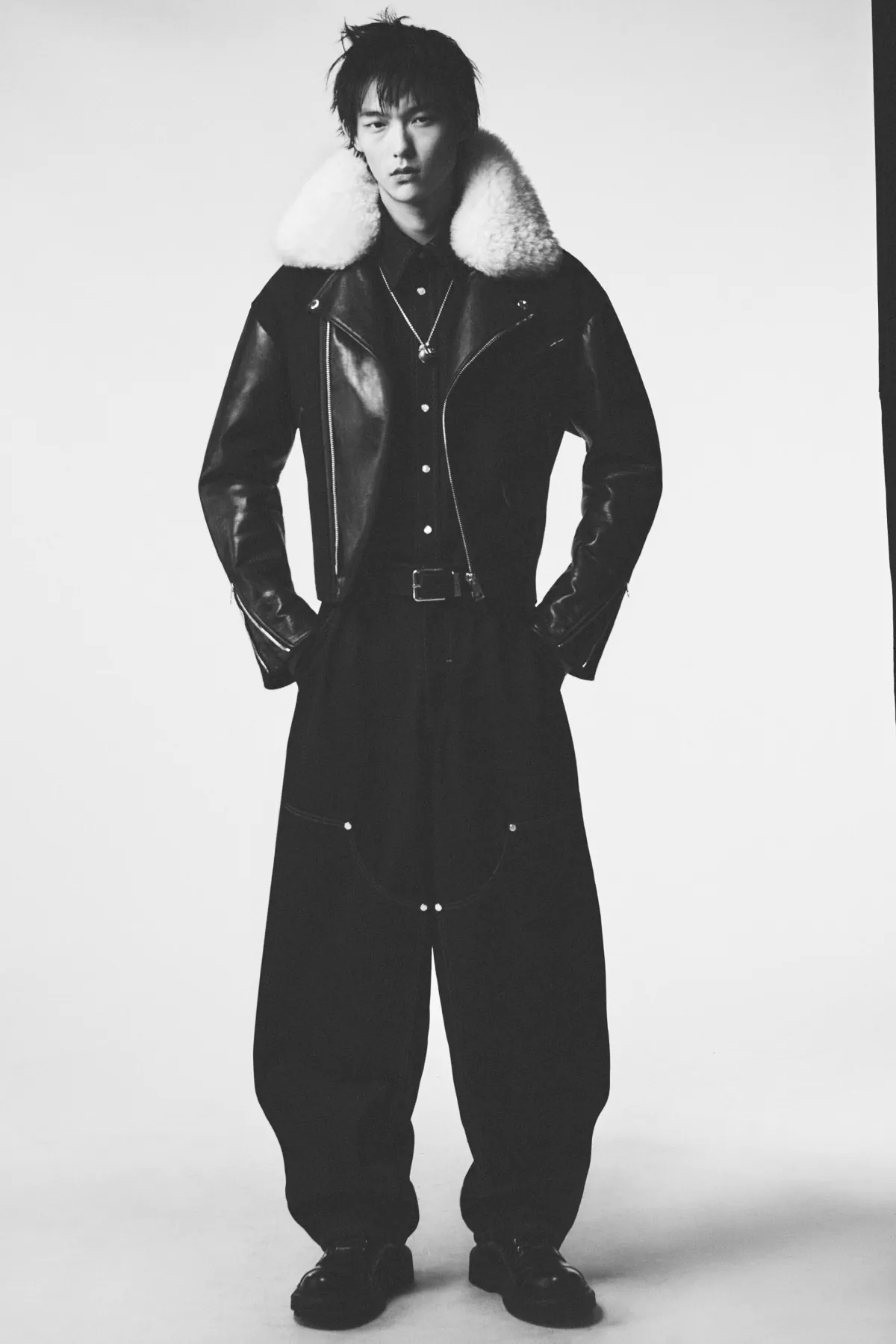
Color works similarly. A nearly fluorescent yellow satin car coat appeared as sharp and precise as technical outerwear. Bomber and biker jackets carried dense floral embroideries over denim looks. Then came the leather tracksuits in vivid, full-body colorways. They were paired with puffy sneakers and installed among Whiteread’s more recent works made from colorful found objects. Chalamet wore these pieces during his Marty Supreme press tour. Burton has turned them into something halfway between sportswear and haute couture, which is exactly the kind of category confusion she seems to enjoy producing.
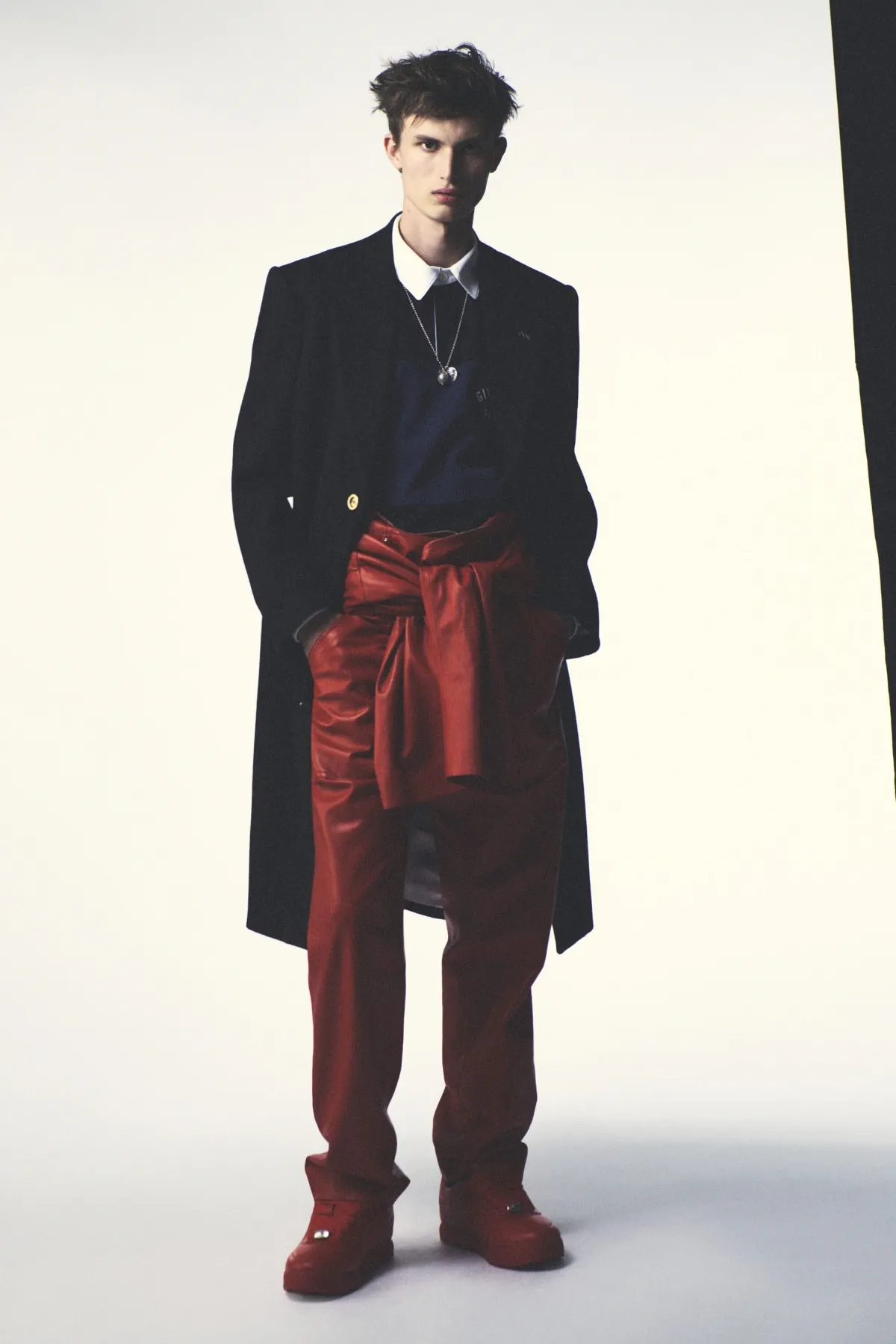
What makes this collection significant is not any single garment. Historically, Givenchy menswear has swung between a classic, tailored image and a streetwise edge, from Ozwald Boateng’s flamboyant Savile Row style to Riccardo Tisci’s dominant streetwear to Clare Waight Keller’s return to suiting. Burton is not choosing between those identities. She is, as she put it, wiping the slate clean and starting again. Her starting point is not the archive, but rather, the man himself – men, plural, across generations, with different needs and relationships to clothing.
“It’s about human beings and how they dress,” she said simply. That phrase could sound like a cop-out. But coming from Burton, it sounds like a conviction.
She has time to develop this idea. She has already made clear that Givenchy menswear is no longer a secondary concern.