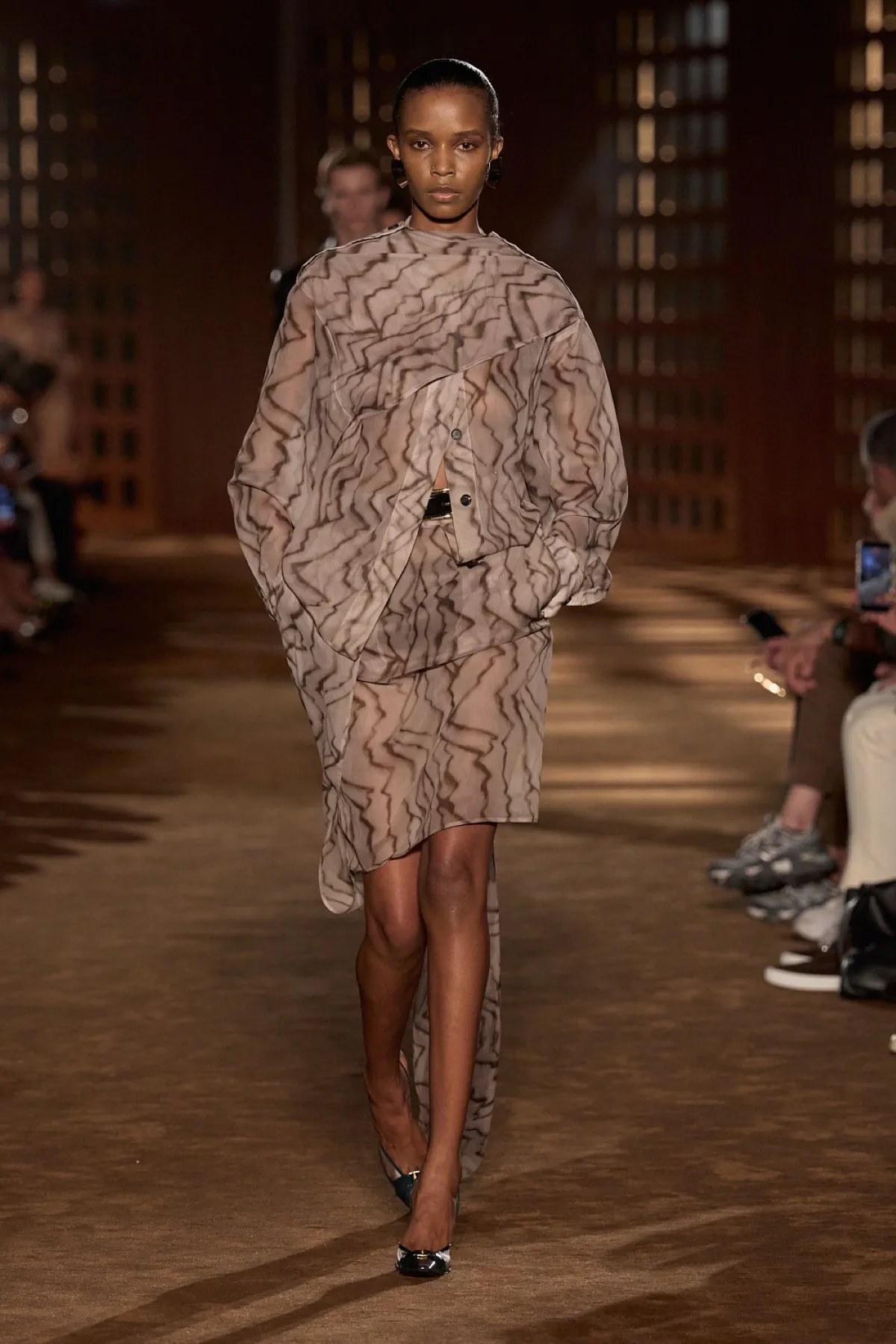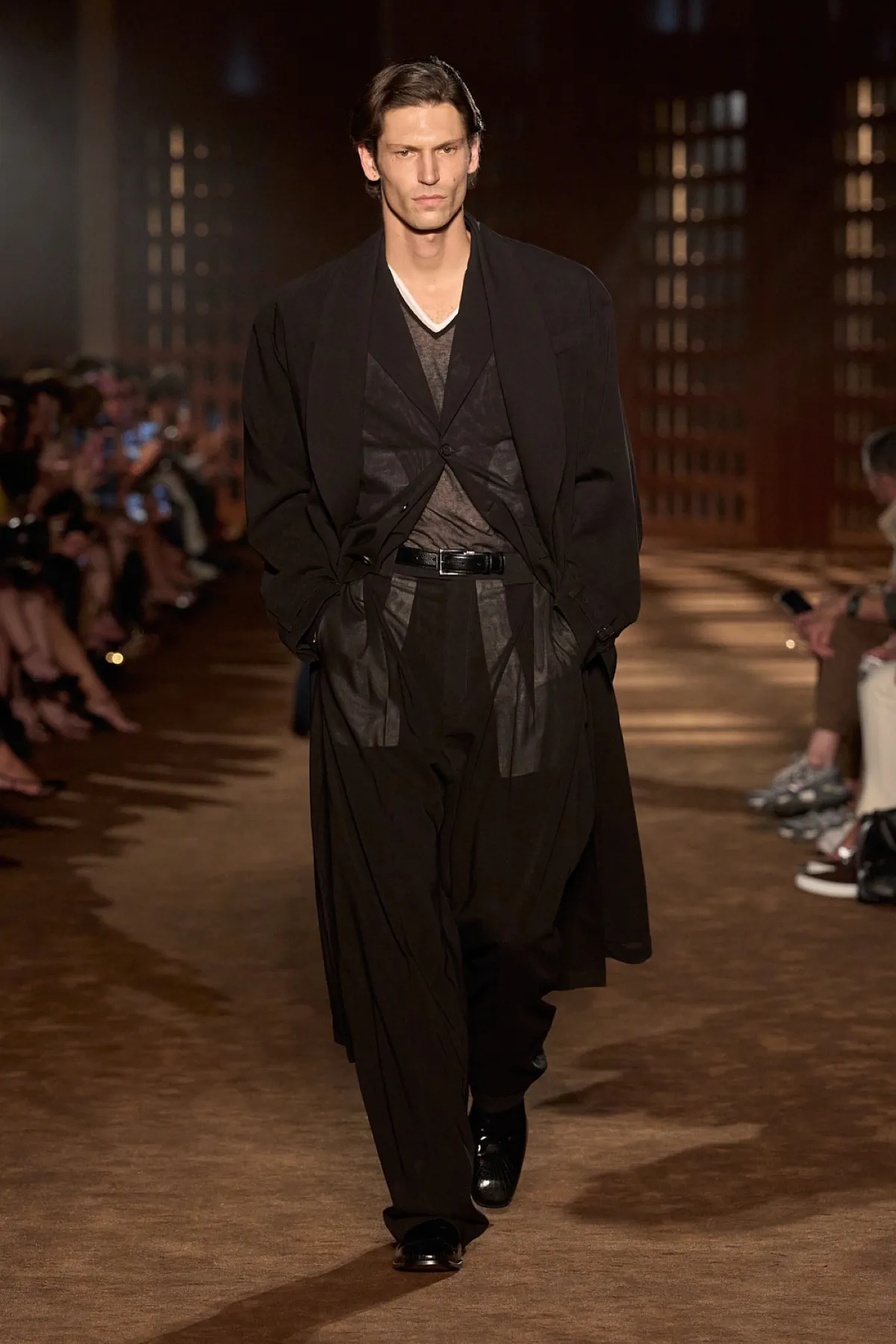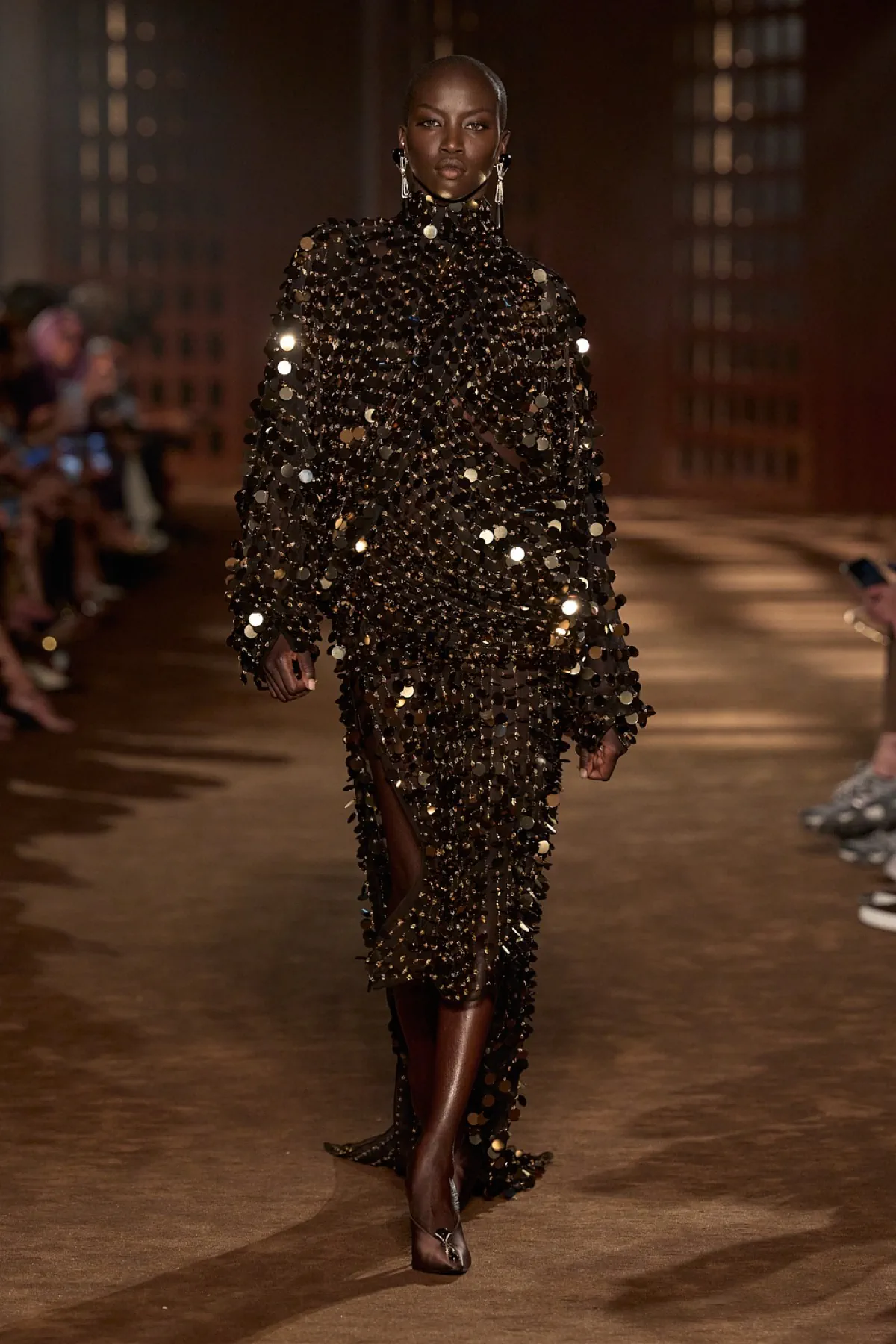

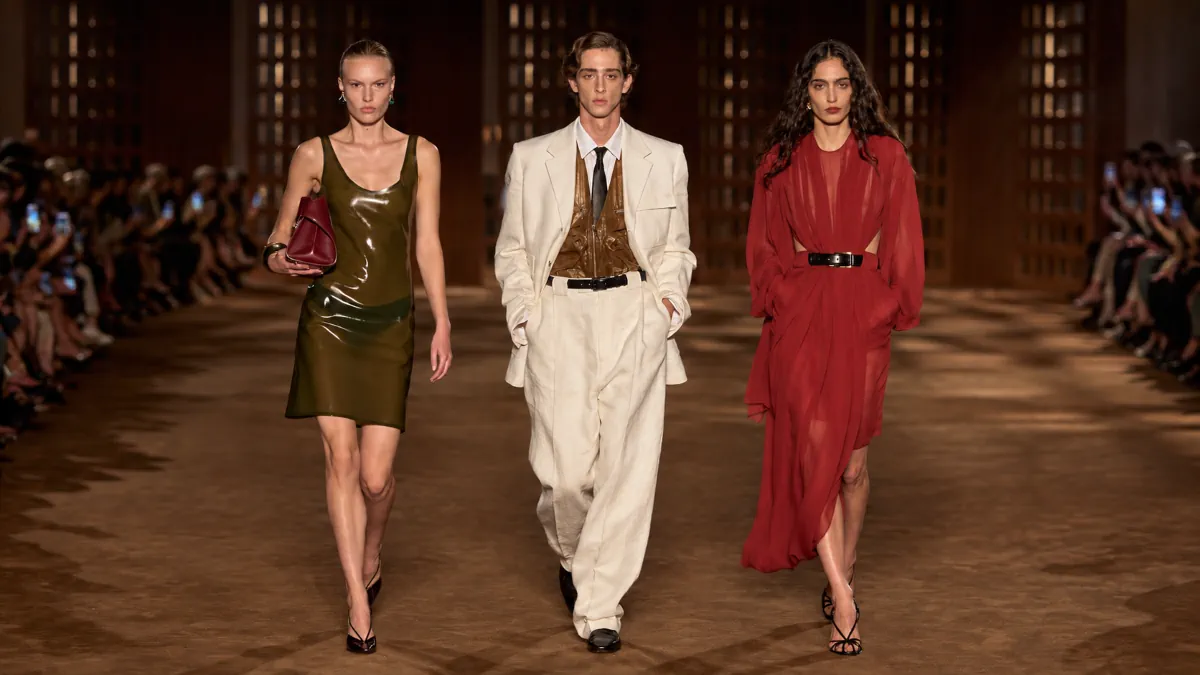
| Ferragamo Spring 2027, designed by Maximilian Davis and shown at Milan’s Triennale, draws on Lee Miller’s photographs of Egypt and 1940s waist construction. The collection combines desert-toned tailoring, translucent latex, weathered leather, Gancini hardware, a reworked 1947 F wedge and the returning Cara bag. |
Milan smelled like rain the morning Maximilian Davis staged his Ferragamo show at the Triennale, and inside, something felt different from the last few seasons. The clothes had weight. They had a point of view that did not need explaining, though Davis explained it anyway backstage, talking about Lee Miller’s years photographing Egypt and the dry, cracked light of the desert she captured with Man Ray. Spring 2027 turned out to be one of his strongest outings yet at the Florentine house, six years into a tenure that keeps sharpening rather than repeating itself. In an industry that rewards volume, that restraint is the statement.
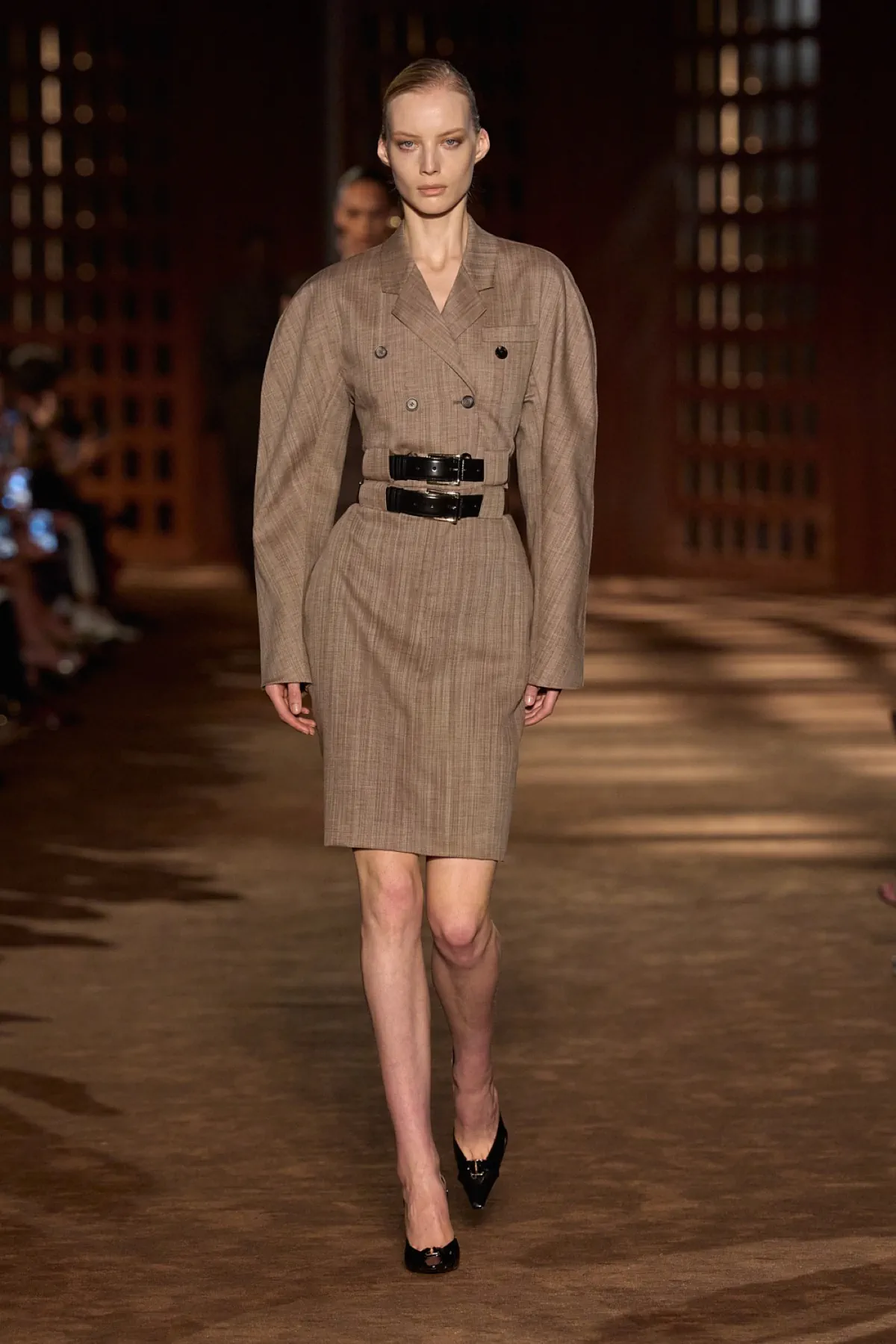
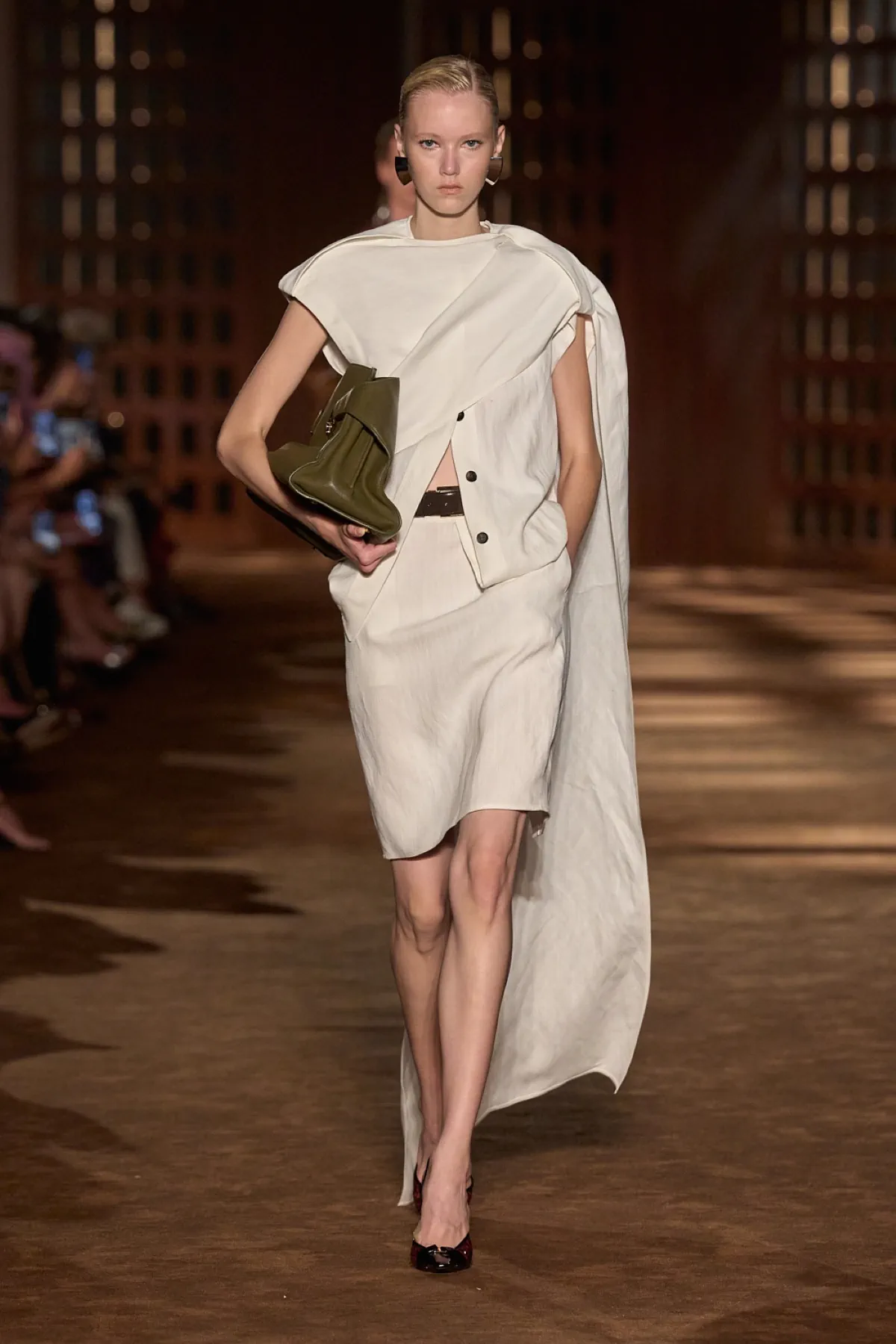
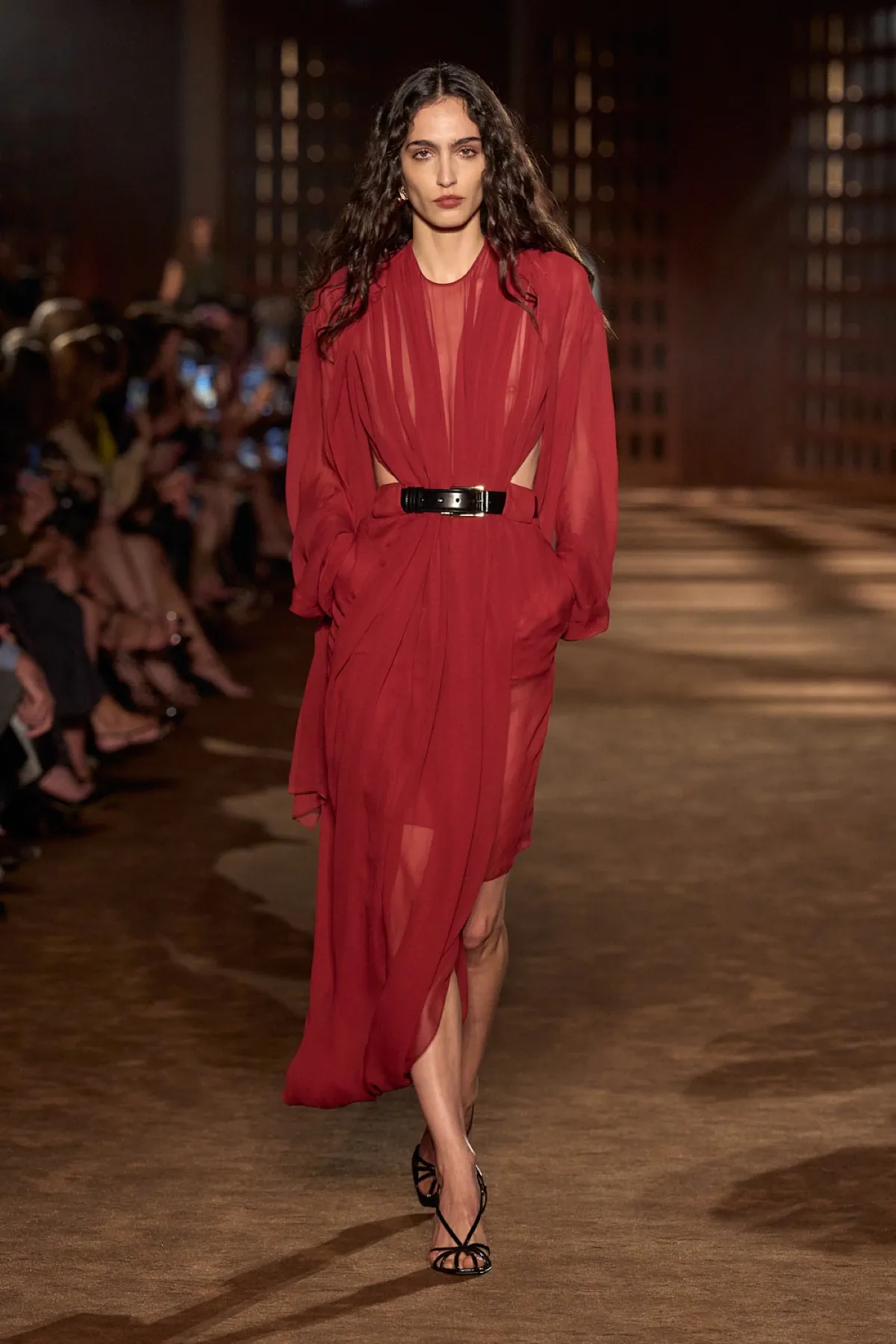
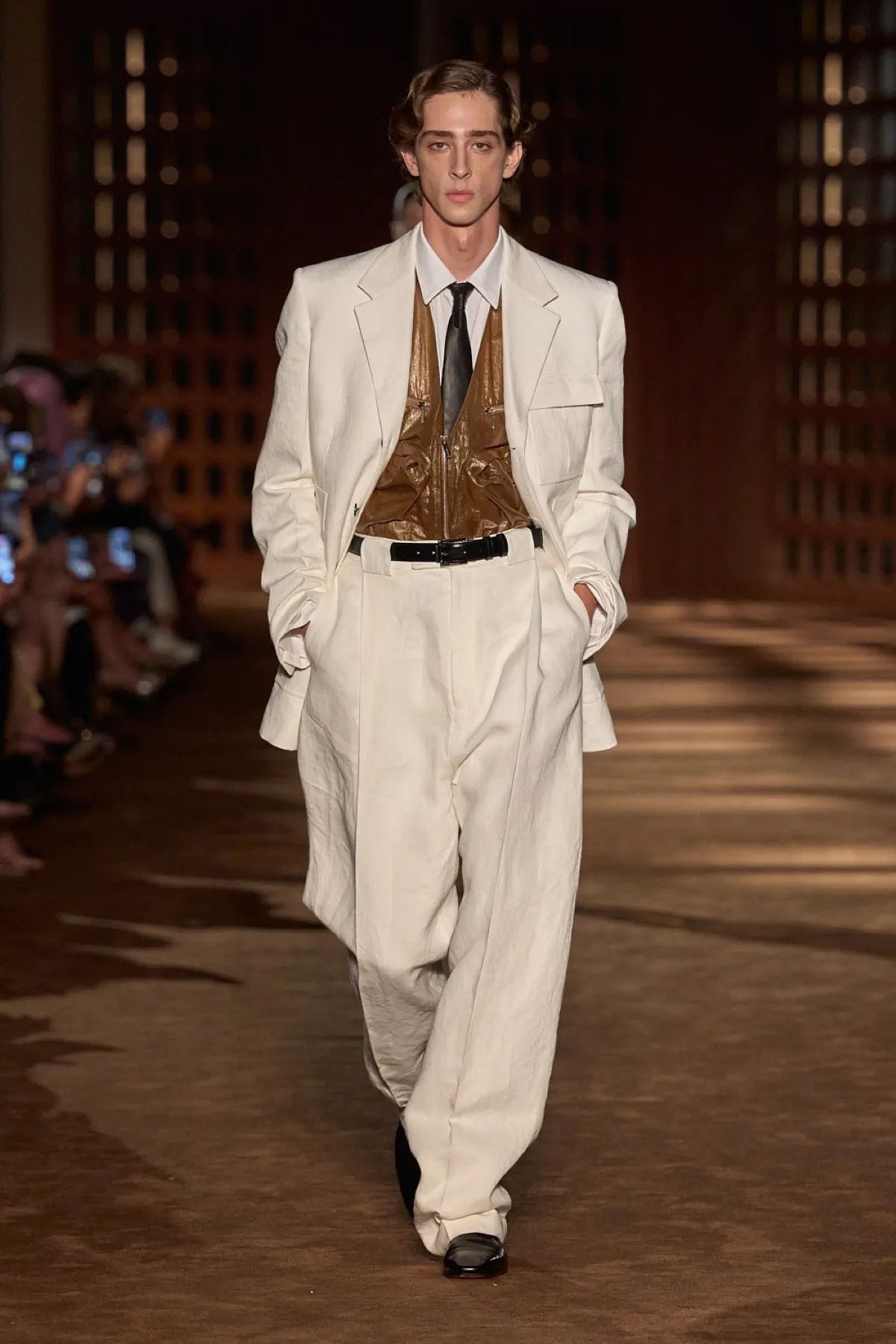
The waist came back first. Davis kept saying it himself, almost like a refrain: the 1940s were about women reclaiming the waist, and he wanted that structure throughout the lineup. Menswear belts, doubled and sometimes tripled, wrapped skirts and trousers and even bodices, threaded through loops with a bluntness that read more utilitarian than romantic. On some dresses, wool bodices strapped tight gave way to silk-satin skirts left open at the back, a small shock of skin where you expected none. It was a clever trick, using something as ordinary as a belt to do the work of tailoring. For a male reader, that is the most portable idea of the show: a belt worn deliberately, doubled or cinched over a jacket, is the cheapest way to borrow a silhouette.
Color leaned toward spice. Cumin, rust, sand, a deep paprika red. These were not colors chosen for shock value; they felt pulled straight from Miller’s Egyptian photographs, sun-bleached and slightly parched. Cotton-linen blends and viscose gave the tailoring a dry hand, while sheer double-layered silk-wool let you glimpse the canvassing and pocket bags stitched inside jackets, an unusually honest way to build a suit. Fashion rarely shows its own construction. Here, it did, almost proudly. It is also a palette that suits a man’s spring wardrobe well: sand and rust in linen or cotton tailoring are easier to wear than the usual pastels, and they will reach stores around the turn of the year.
Follow all the latest news from Fashionotography on Flipboard, or receive it directly in your inbox with Feeder.
You may also read

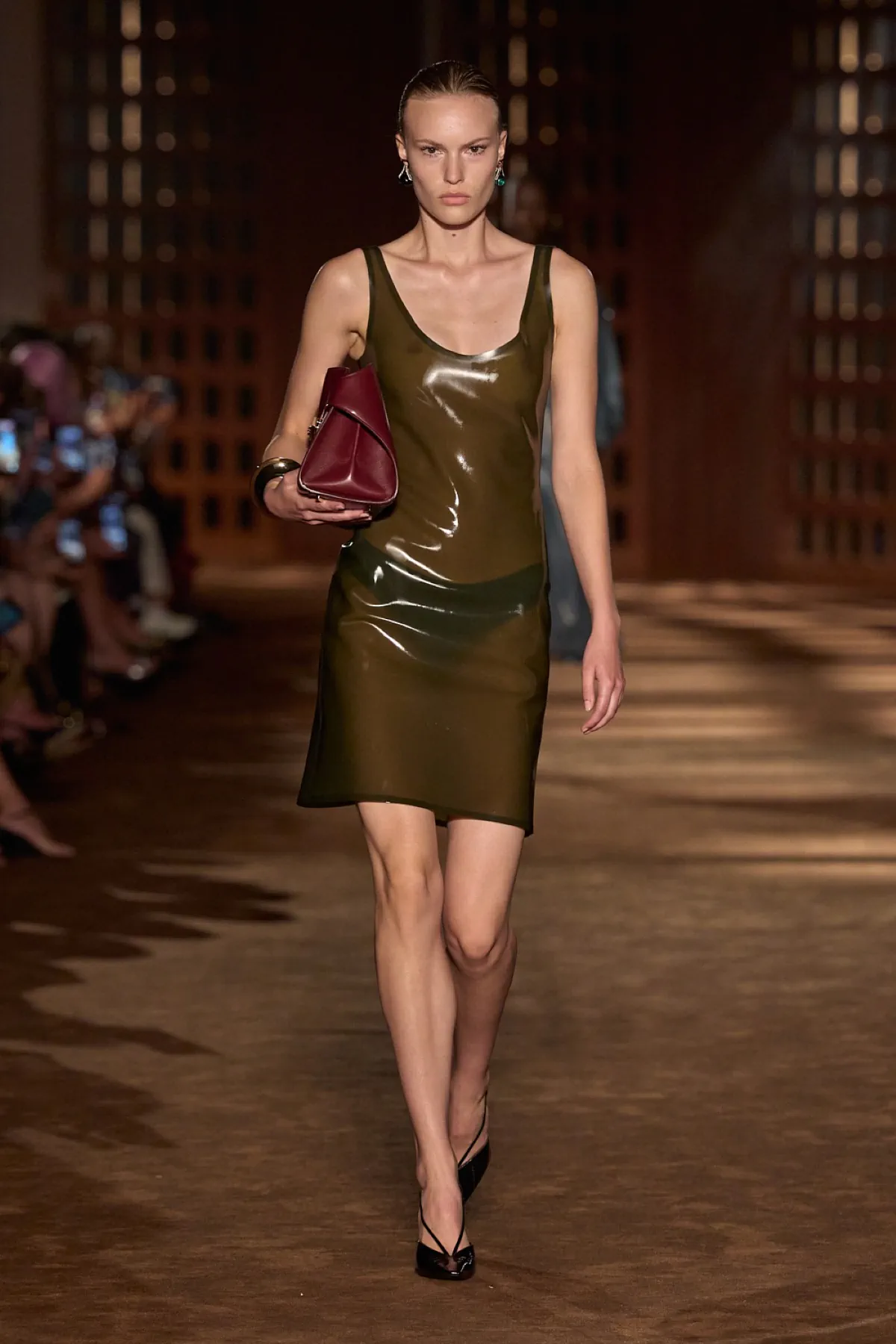
Then came the rubber. Translucent trench coats, tank dresses, skirt suits, all cast in a clouded, richly tinted latex that Davis linked to nursing uniforms, since workwear worn by women earlier in the century has become a recurring theme of his time at Ferragamo. Under the runway lights, the rubber caught and lost shape depending on how it pressed against the body, an effect that recalled the solarization technique Miller and Man Ray pioneered in their darkroom experiments. It sounds like a stretch on paper. On the runway, watching a model turn and the material seem to dissolve at the edges, it made sense. Whether it survives outside the show is another matter: the likelier legacy is a coated cotton or technical-nylon raincoat, which is a more realistic proposition for the street.
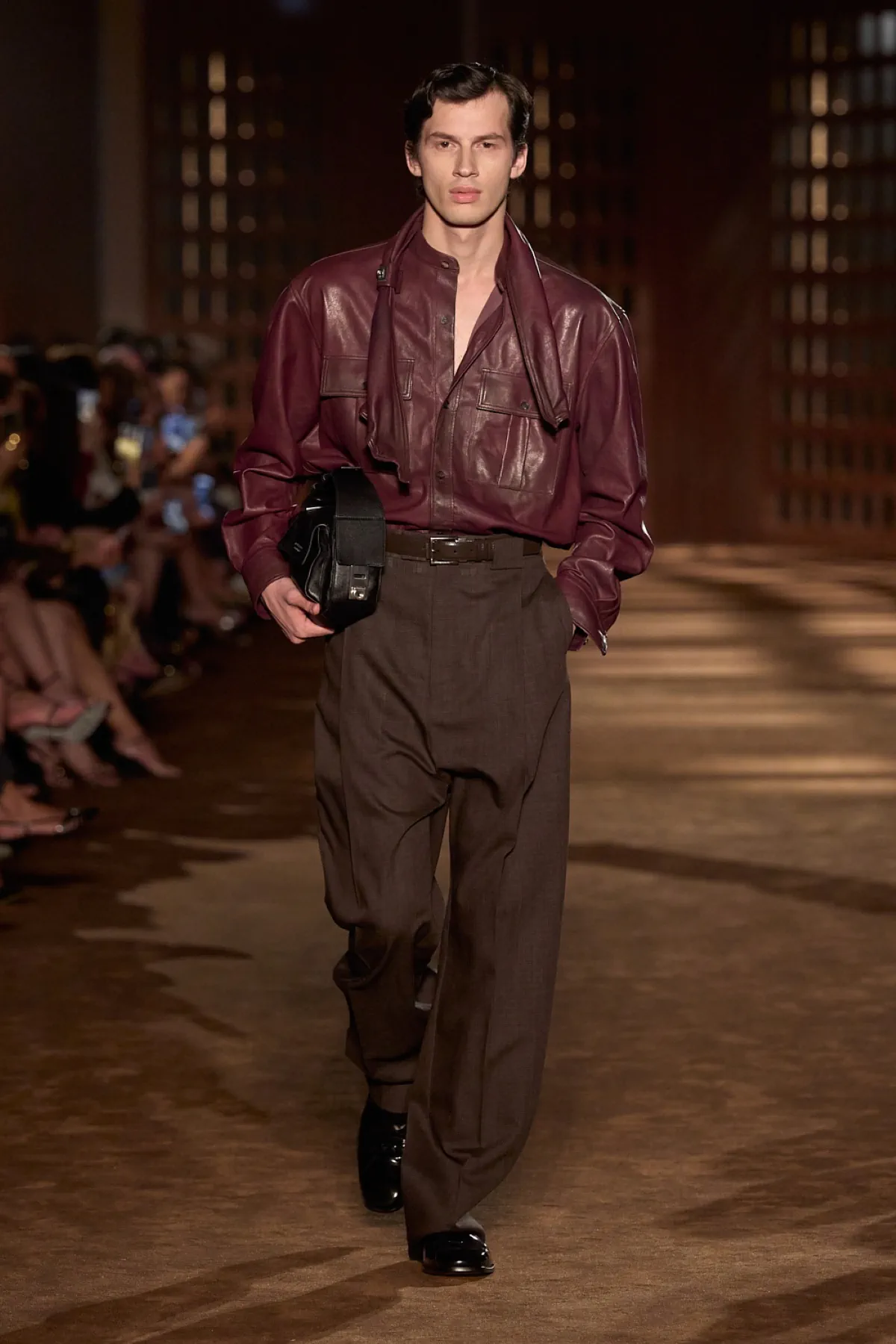
Leather did the heavier lifting elsewhere. Vests and jackets closed with the house’s Gancini clasp came weathered and cracked, as if left out in the sun too long, a nod to sand and to skin over time. Shoes told a parallel history. Davis returned to the F wedge that Salvatore Ferragamo carved in 1947, reworking its shape into slingbacks and sandals, and gave the Vara pump a more austere bow, less cute, closer to origami. The Cara bag showed up again too, restyled and given generous runway time, proof that Davis understands accessories are where this house still makes its clearest argument. For menswear, the same logic applies to the Gancini hardware and aged leather: belts, bags and loafers are where the house is easiest to wear.
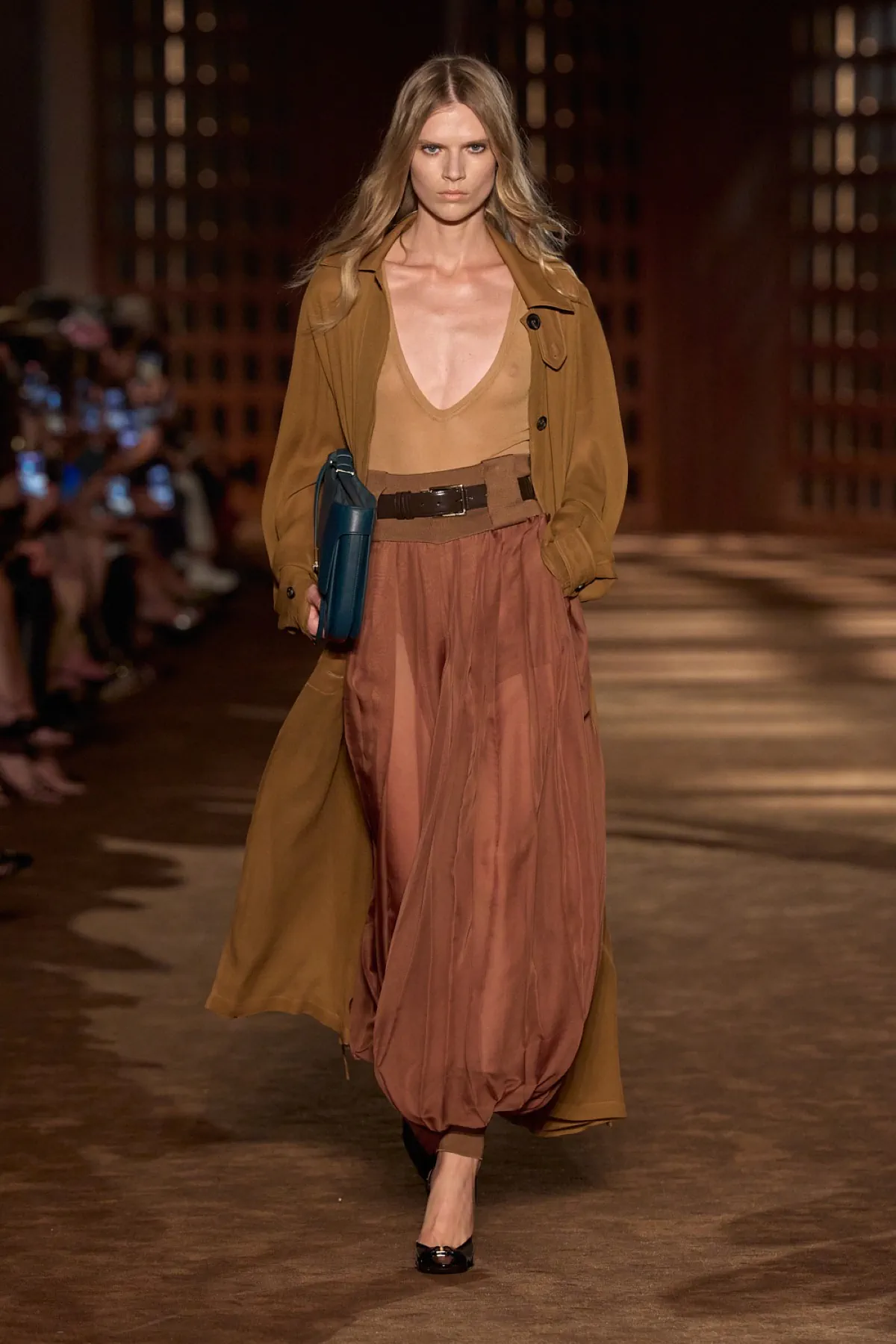
There were echoes of Tom Ford’s Yves Saint Laurent in the sleeveless safari shirts and loosely laced pencil skirts, though Davis was working from an earlier decade than Ford ever did. Whether or not anyone reads that as an audition for another house entirely is beside the point. The menswear matched the womenswear stride for stride, sharp-shouldered and confident without shouting.
Davis has now passed six years at Ferragamo, long enough to stop proving himself and start refining what he already knows works: sharp waists, honest fabric, footwear that respects the founder’s own obsessions. Spring 2027 did not reinvent the house. It clarified it, and that felt like the harder, better achievement.