


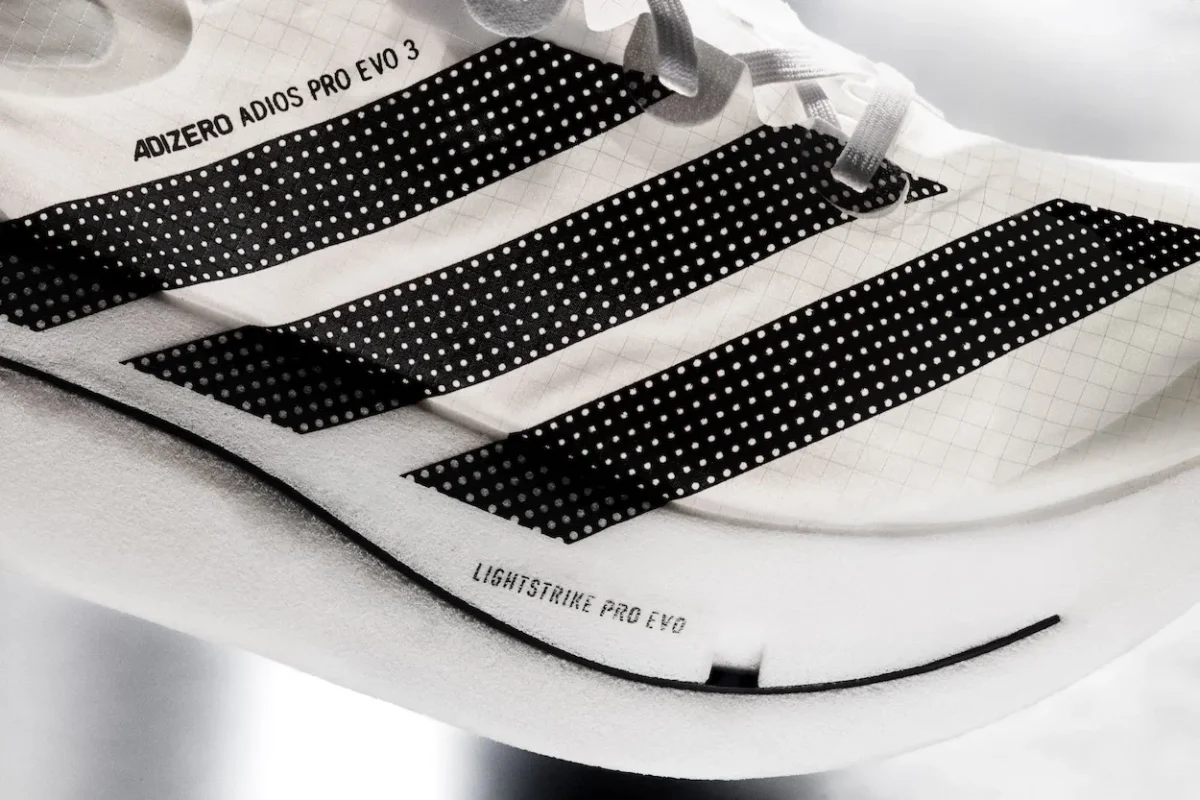
The Adizero Adios Pro Evo 3 weighs less than a small apple. At 97 grams for a UK size 8.5, it is the lightest production shoe ever, not a prototype or concept, but a real shoe you can buy. Starting tomorrow, April 25, it will be available in limited quantities.
Let that sink in for a second.
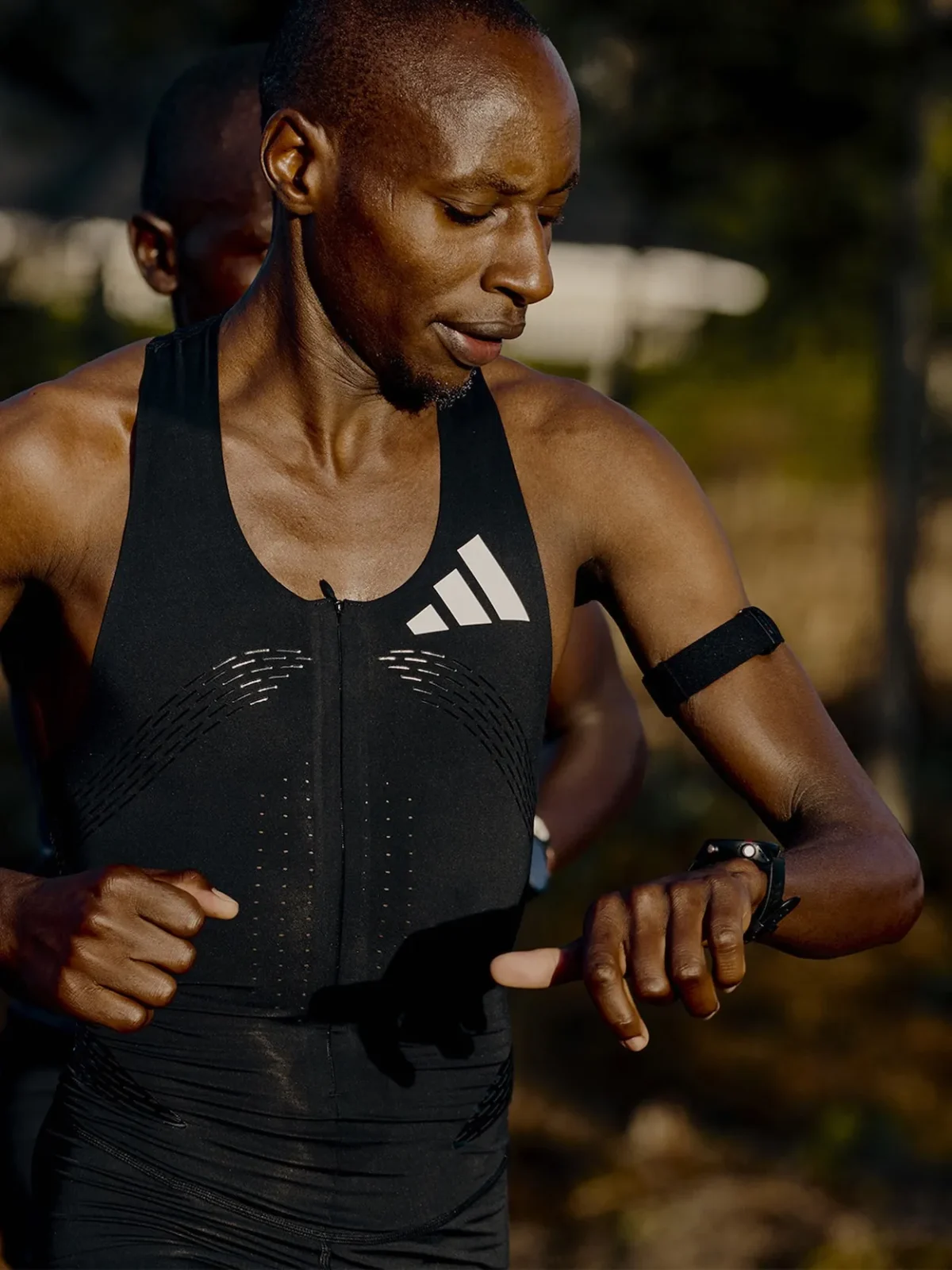
Three years of research went into its development. adidas ran through more than a dozen iterations, testing them in their labs in Herzogenaurach, Germany, and in high-altitude training camps in Kenya and Ethiopia. The engineering brief was almost absurd in its ambition: Build the world’s fastest marathon shoe, improve its performance over previous models, and reduce the weight to under 100 grams. “Our goal was to get down to two digits on the scale while improving performance,” said Stephan Scholten, VP of Product at Adidas. They succeeded.
The number that matters most, beyond the weight itself, is 30. The Evo 3 is 30% lighter than its predecessor and boasts a 1.6% improvement in running economy. For elite marathon runners, 1.6% is not negligible. It can mean the difference between setting a course record and finishing second.
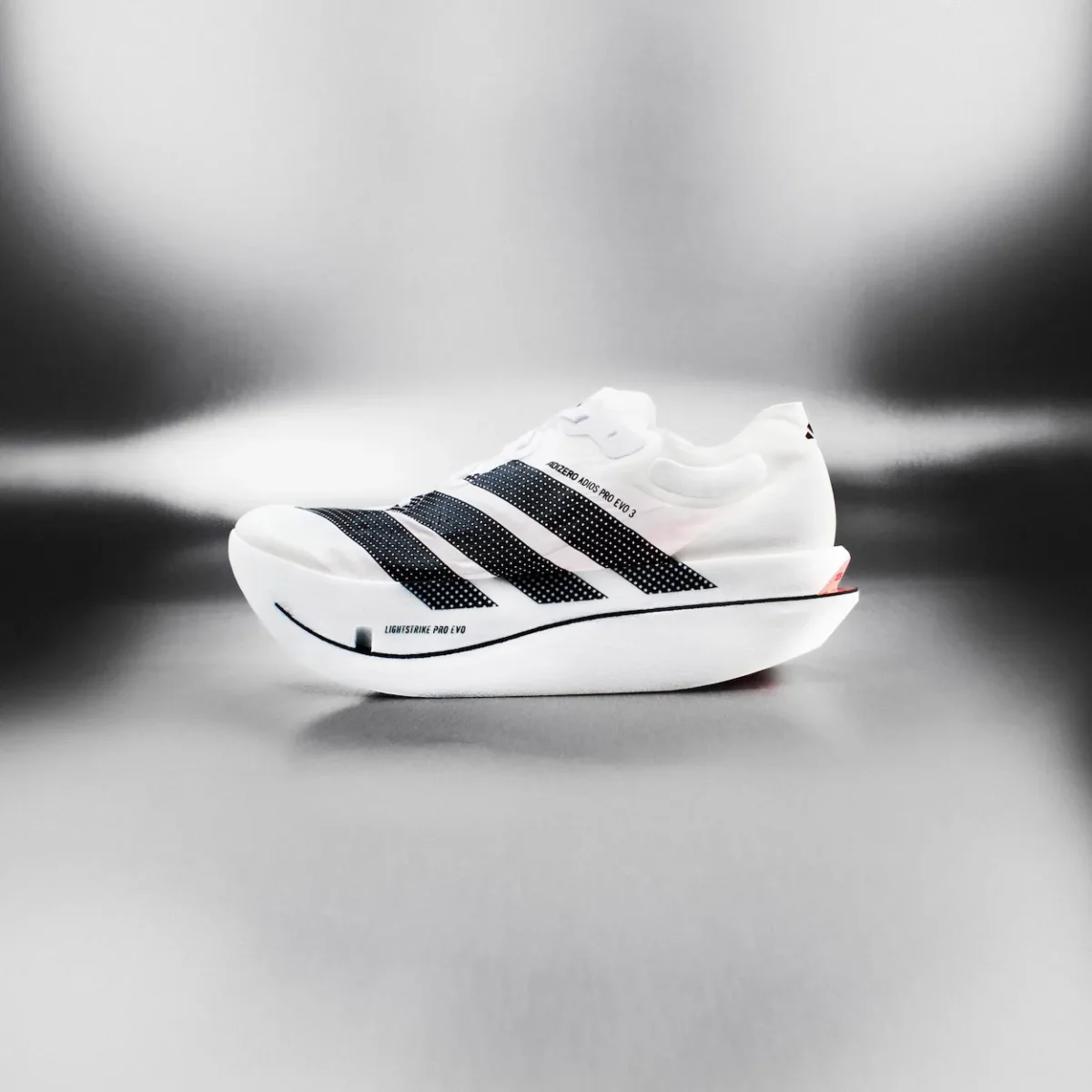
How did adidas achieve this without sacrificing the cushioning necessary for a shoe like this to be survivable over 26.2 miles? The answer lies in two pieces of technology working together in a way that hasn’t been tried before at this level.
The first is the new Lightstrike Pro Evo foam. According to the head of Adizero, the foam itself, without any stiffening element, is already fifty percent lighter than the previous version. RunRepeat’s lab analysis shows that it is the least dense foam they have ever examined under a digital microscope. It is softer than the softest super shoe ever made. Despite that, it still meets legal stack height rules at 39 mm in the heel.
| 📌 Key Facts |
|---|
| ⚖️ 97 grams makes it the lightest production racing shoe ever 🧪 3 years of testing across labs and high altitude camps 📉 30 percent lighter than the previous model 📈 1.6 percent improvement in running economy 🧵 Ultra minimal upper inspired by kite surfing materials ⚡ New ENERGYROAM carbon frame replaces traditional plates 🏁 Debuts at the 2026 London Marathon with elite athletes 💰 Positioned at $500 targeting high performance runners |
Follow all the latest news from Fashionotography on Flipboard, or receive it directly in your inbox with Feeder.
You may also read

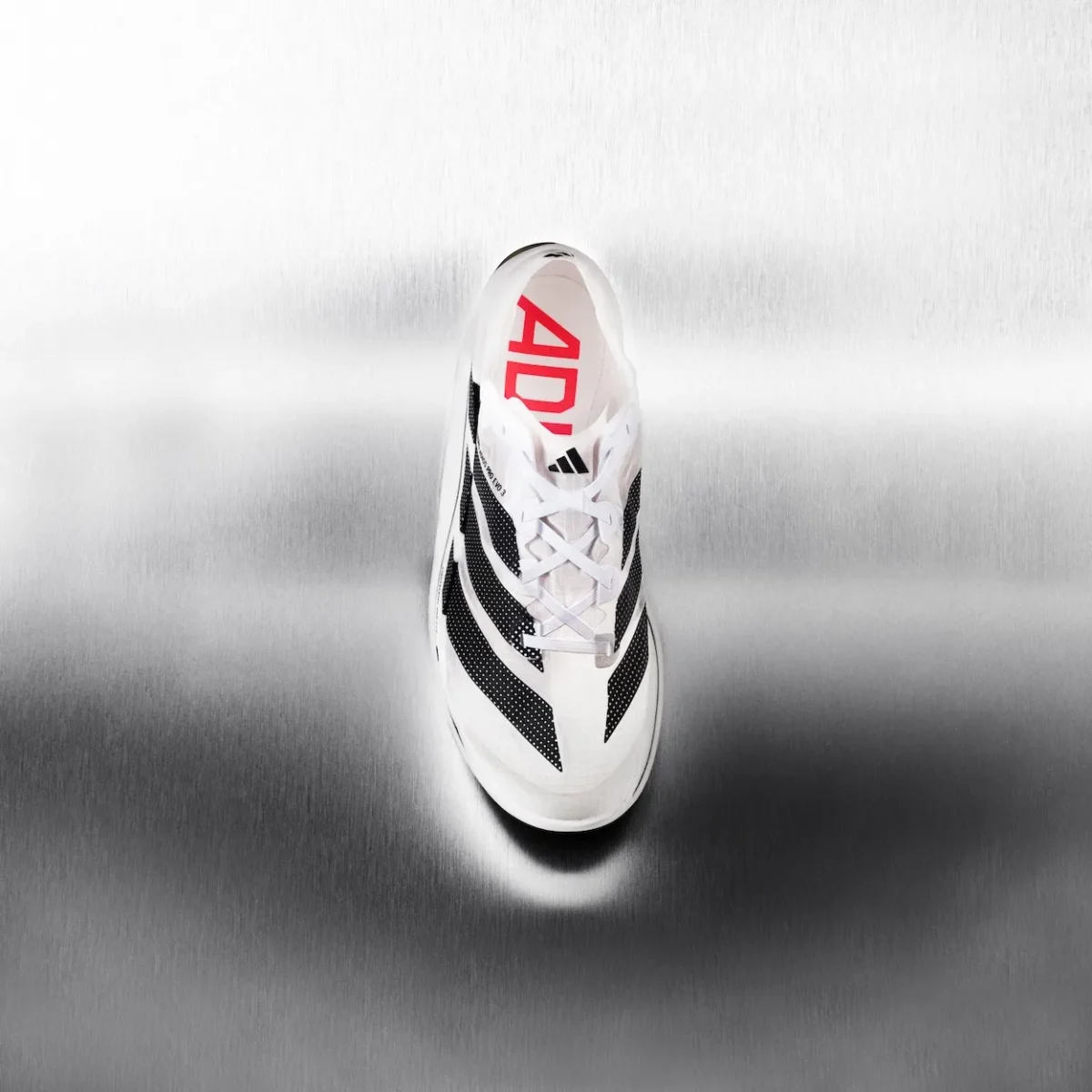
The second piece is ENERGYROAM, which replaces the brand’s familiar EnergyRods system. Rather than a traditional plate, the shoe has a carbon fiber-infused frame around the midsole. This frame stabilizes the soft foam, adds propulsion, and is lighter than a full plate or the EnergyRods adidas has used in the past. This solution is unusual, but effective, and the visual effect at the heel, where a cutout reflects the red Adizero logo in the black carbon, is striking.
The upper follows the same logic of ruthless subtraction. It is a new, woven material inspired by kite surfing sails that is engineered to feel nearly weightless on the foot. Even the laces and stitching were refined to eliminate whatever remaining grams could be found. The outsole uses Continental rubber in the forefoot — a significant improvement over the Evo 2, which several testers found to be dangerously slippery in wet conditions.
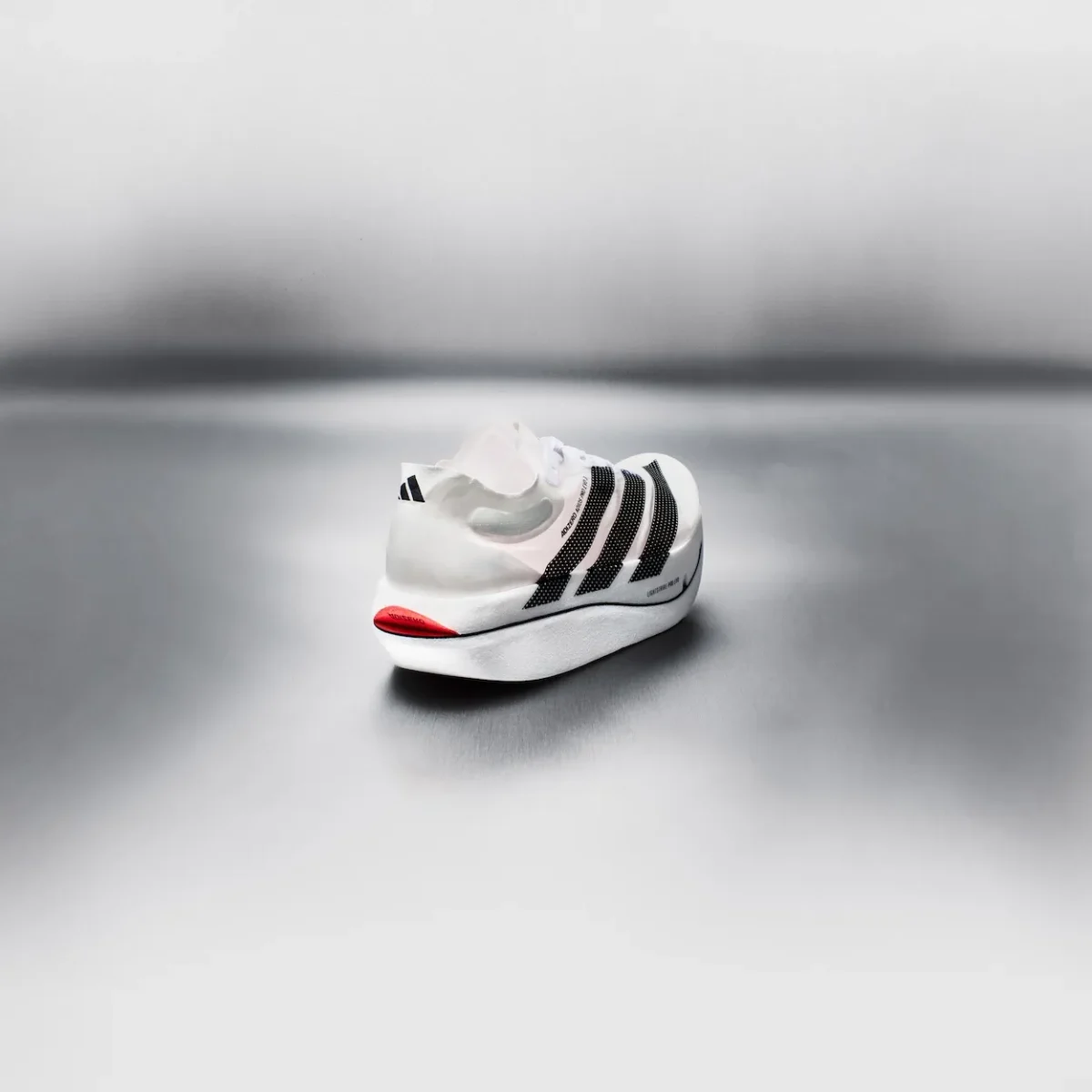
The Adizero Adios Pro Evo 3 will make its race debut at the 2026 London Marathon this Sunday, where defending champions Sebastian Sawe and Tigist Assefa will lead a competitive field. Patrick Nava, GM Running at adidas, put it plainly: “At that level, every detail really matters. We were measuring things down to the nearest nanogram.”
This level of obsession is evident in the numbers. Since the franchise launched in September 2023, athletes wearing the Pro Evo line have broken three world records and won over 30 key road races, including six World Marathon Major titles.
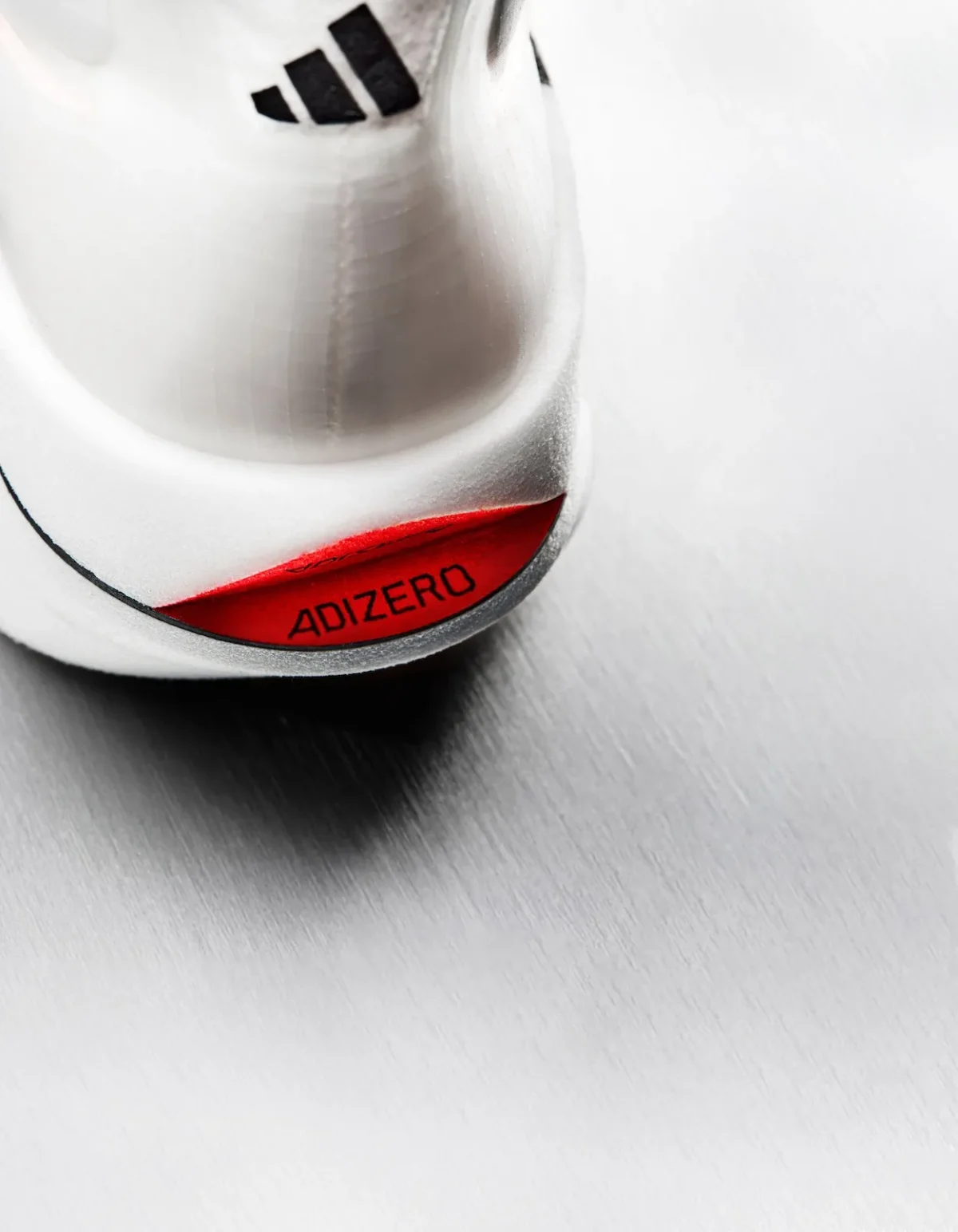

The shoe costs $500/€500. This price point is not for everyone, nor is it intended to be. RunRepeat notes that, at this price, the Evo 3 is difficult to justify for amateur runners, especially when there are lighter alternatives available for less. However, for the runner chasing a personal best at a major race, the calculus looks different.