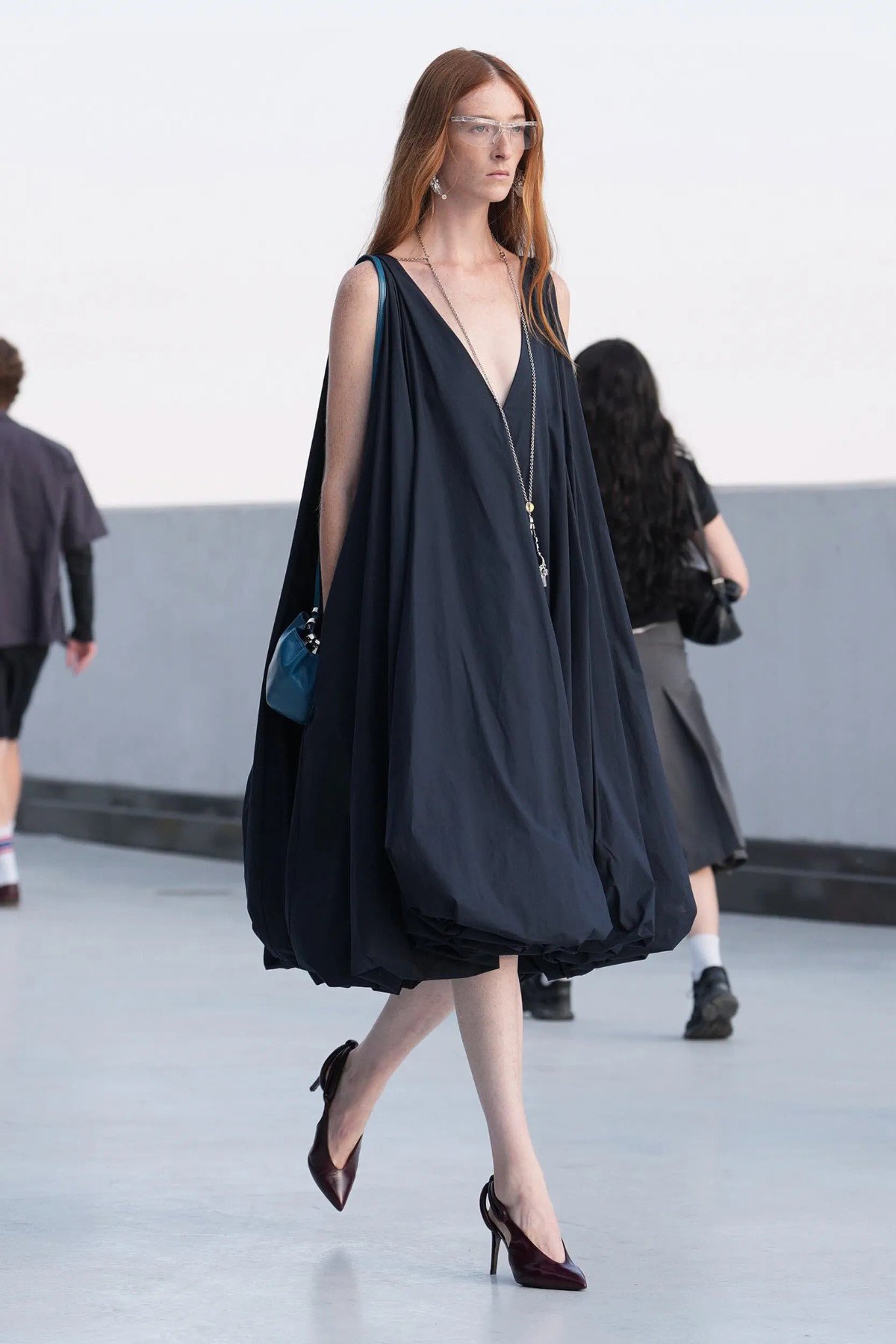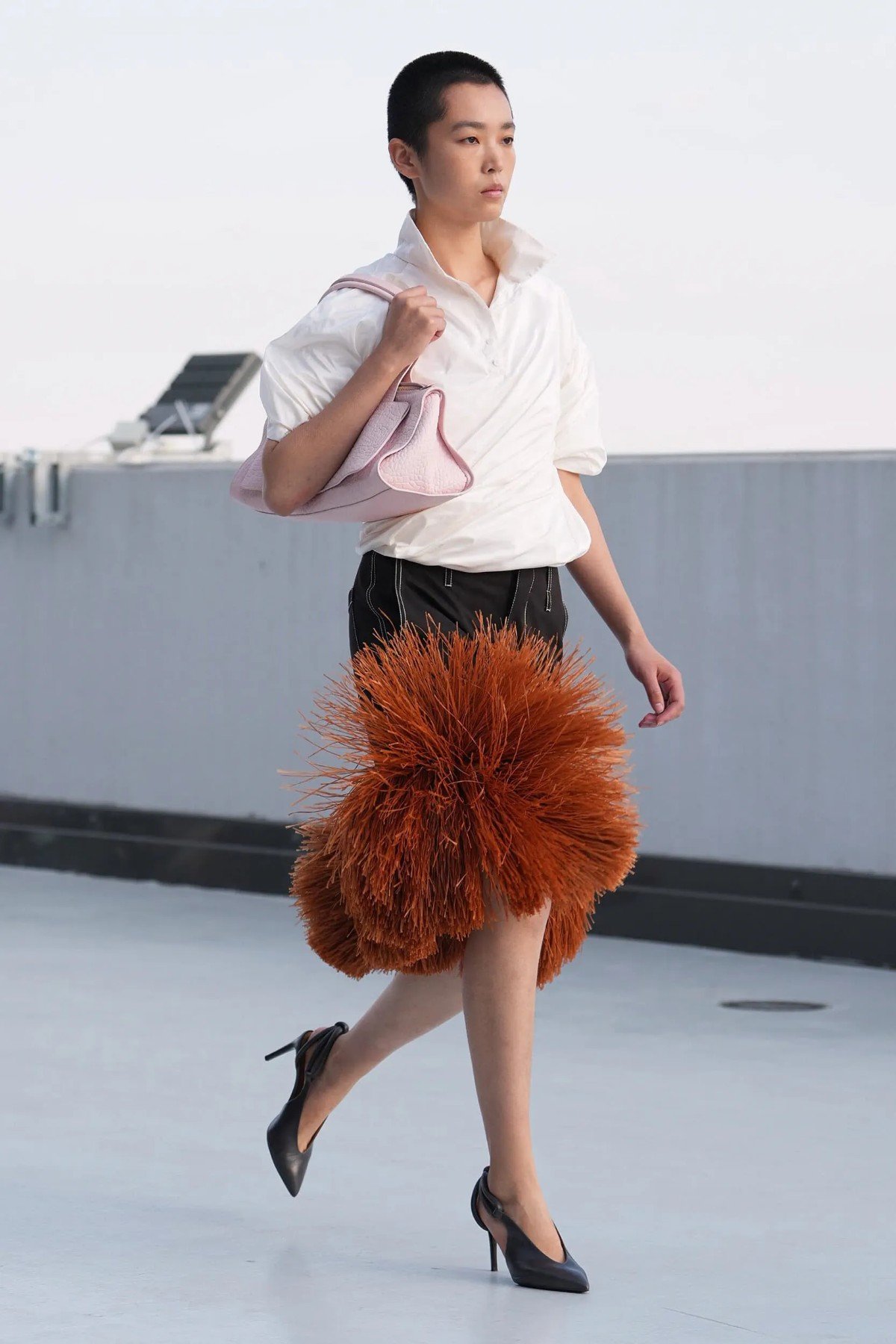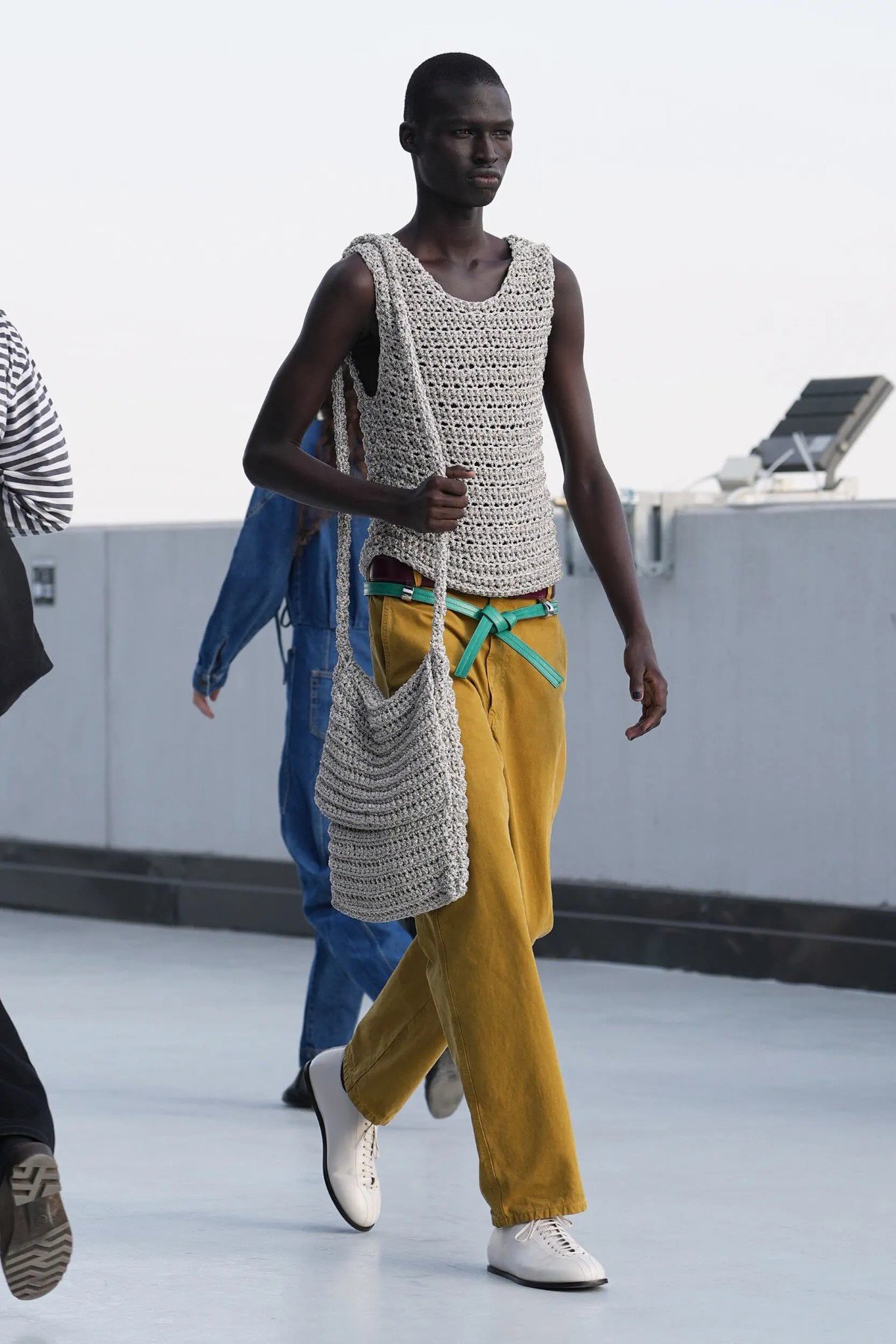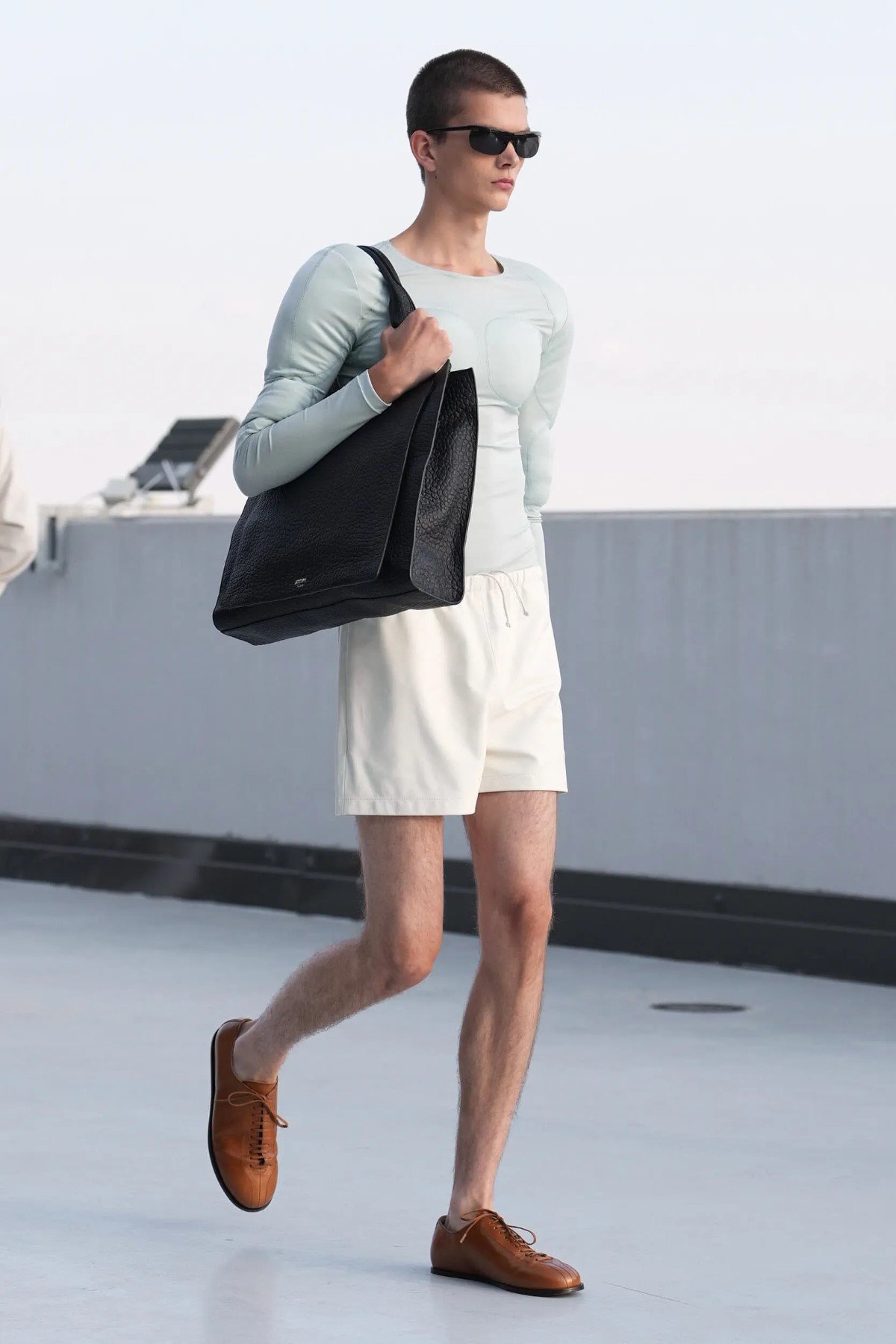

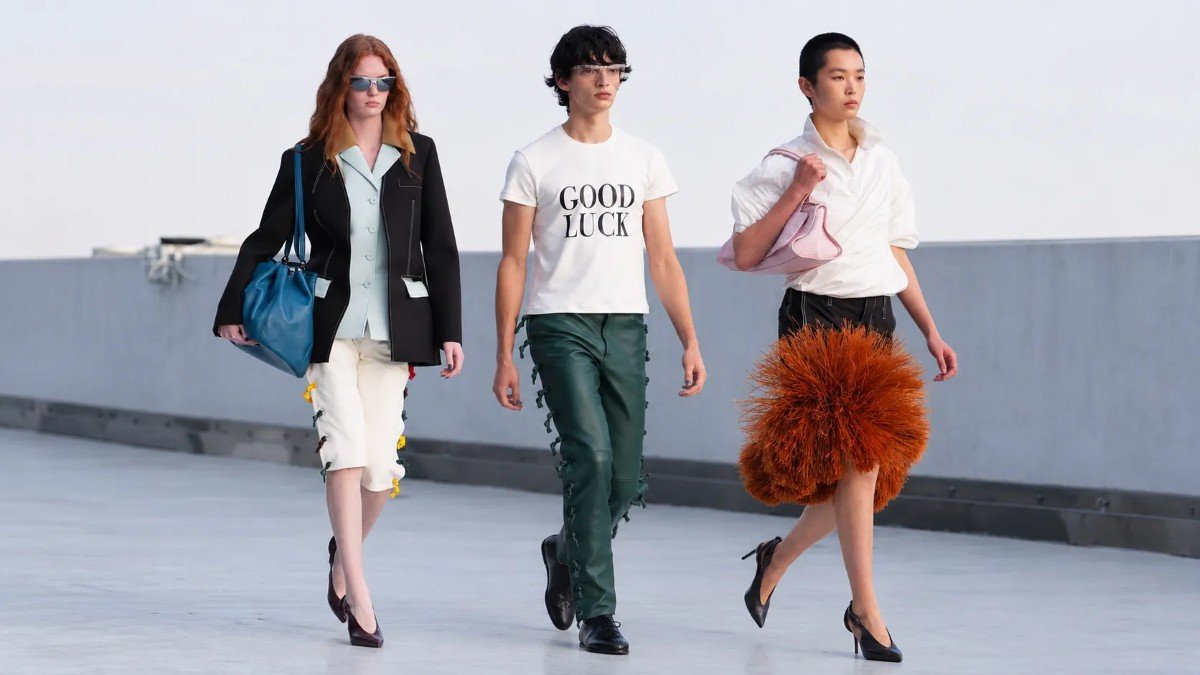
| Moschino unveiled its Spring 2027 collection in Milan on the fourth day of the city’s womenswear fashion week, alongside Tod’s, Gucci, and The Attico. New Creative directors Simone Rizzo and Loris Messina, appointed in June 2026 after founding Sunnei in 2014, staged the debut atop a parking garage. They had roughly three months to complete the collection. |
Last week, Moschino unveiled its Spring 2027 collection – the show took place on the fourth day of Milan’s womenswear calendar, alongside Tod’s, Gucci, and The Attico – and the setting spoke volumes. Creative directors Simone Rizzo and Loris Messina – the duo who built their reputation at Sunnei, the label they founded in 2014 – staged the show atop a parking garage on the outskirts of Milan. Golden light spilled across the roof as the show opened, not with models, but with dozens of ordinary people. Some walked dogs. Some pushed strollers. Nearly everyone held a phone.
That opening parade mattered. It set the tone for what followed, signaling a clear departure from the loud, cartoonish shows that Moschino audiences had grown accustomed to under Jeremy Scott and, more recently, Adrián Appiolaza.
Rizzo and Messina inherited a brand built on jokes, slogans, and winks about luxury excess. Franco Moschino, the founder of the house, spent his career mocking the fashion system from the inside. He printed parody logos on scarves. He mocked Chanel’s tweeds. He used his runway as a soapbox for causes ranging from inequality to the AIDS crisis. This legacy is a heavy one, and a new creative team inheriting it faces an obvious trap: repeat the jokes and risk looking nostalgic, or abandon them and risk losing the house’s identity entirely. The pressure was compounded by timing. Rizzo and Messina were appointed in June, just weeks after Appiolaza’s departure. This left them with barely three months to create a complete ready-to-wear collection – an intense timeline that makes the show’s cohesion all the more impressive.
Rizzo and Messina did not choose either path outright. Their press notes offered two guiding principles. One called for reigniting Moschino without imitating it. The other insisted that a clear, universal, present-day language was needed. These are ambitious goals for a debut, and the clothes mostly delivered on the second goal, albeit more cautiously on the first.
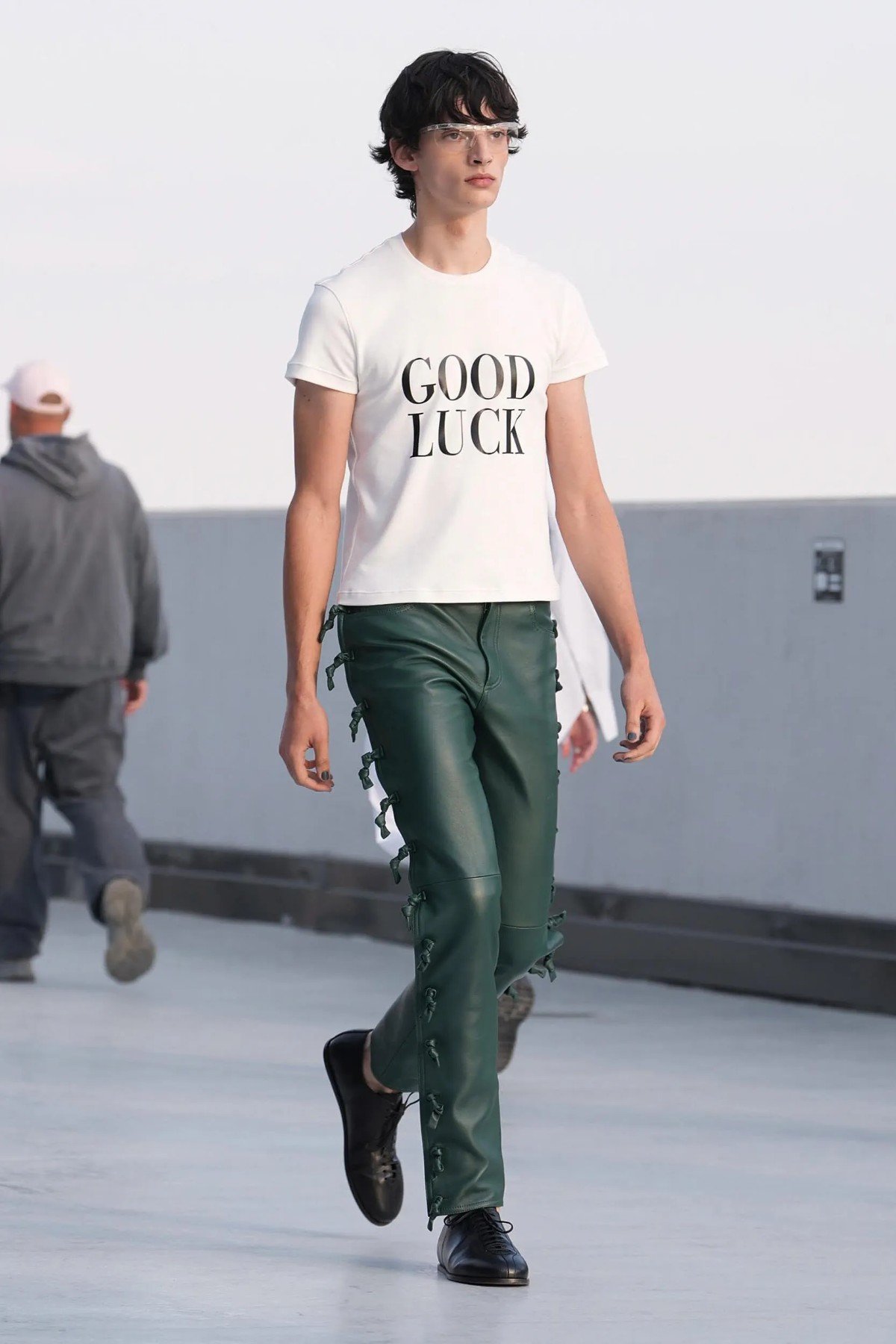
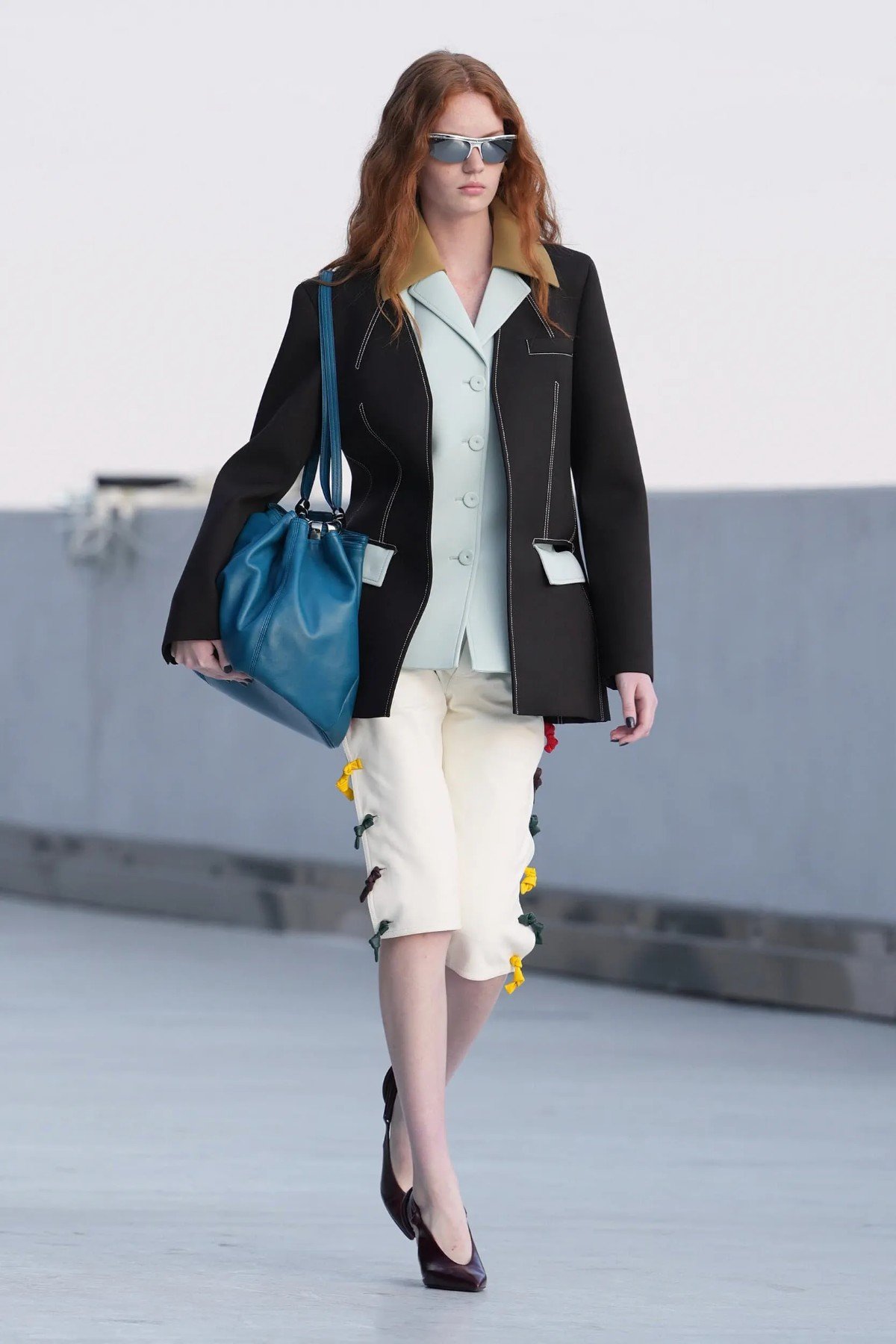
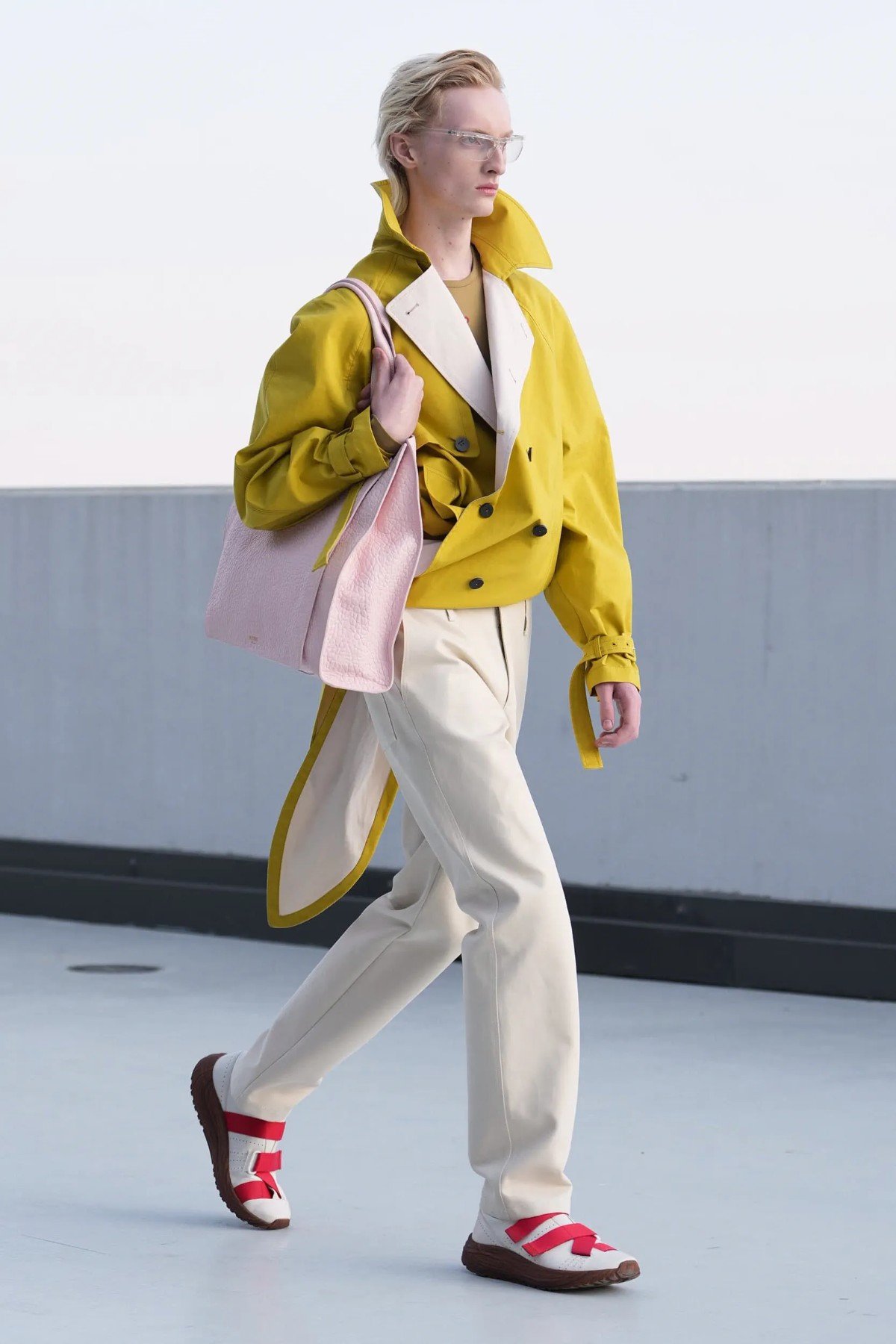
The ironic slogans and visual punchlines that defined Moschino for two decades were almost entirely gone. What replaced them felt calmer and, frankly, more wearable. Bermuda shorts swished with colorful raffia fringe – a small but fun detail. Leather pants and breeches were trimmed with toreador tassels – a nod to Franco’s love of costumes – without tipping into pastiche. One model carried a black lacquer clutch shaped like a life-sized cat, propped casually on her shoulder. It could have come off as a gimmick, but it landed as wit instead.
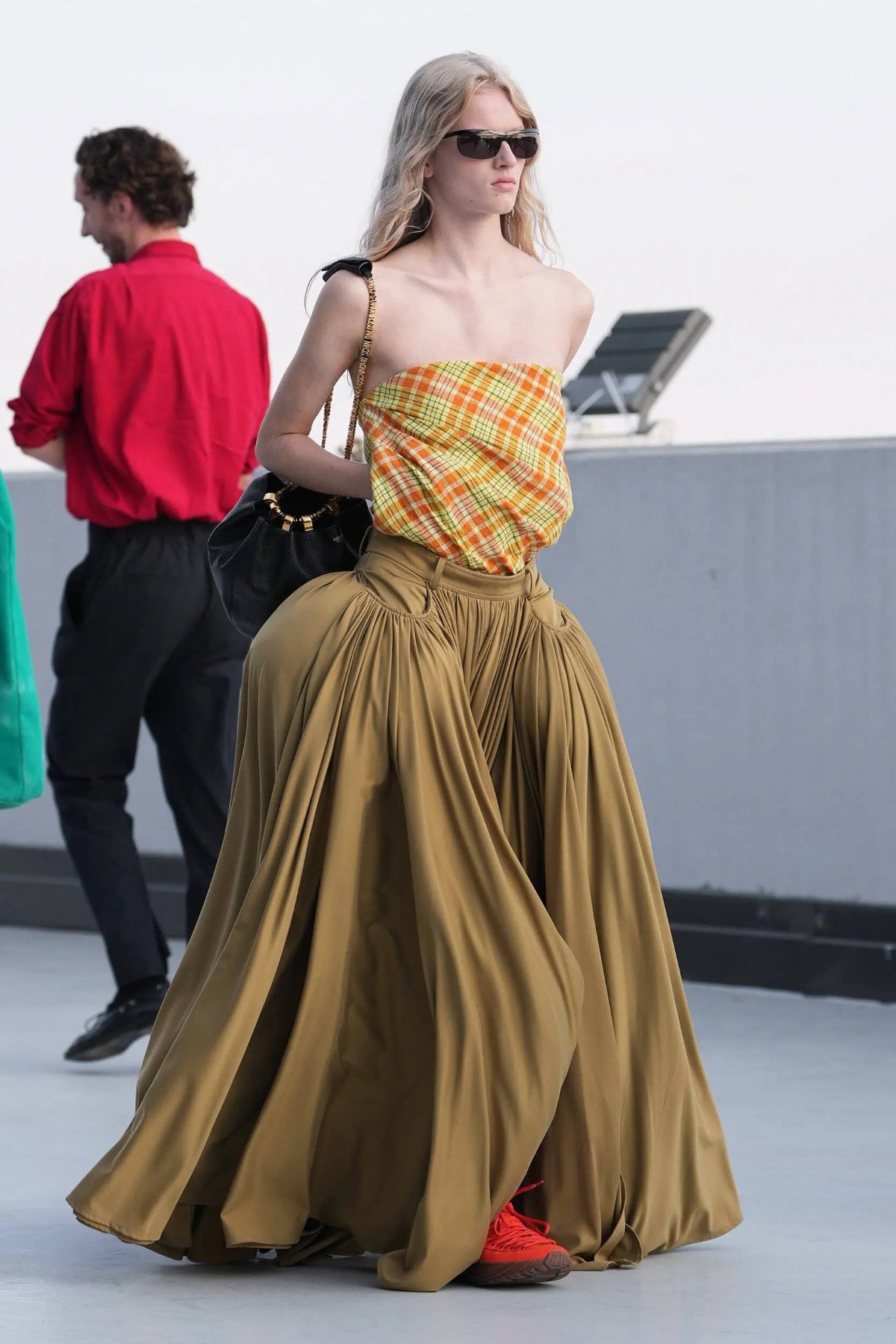
The real statement, though, was the show format itself. Hundreds of extras streamed down the runway in the opposite direction of the models – a choreographic choice that Rizzo explained simply: The clothes belong on the street and to real people. This sentiment echoes what the duo said years ago at Sunnei when they argued that fashion calls for realism over spectacle. Their track record backs that up. Their final Sunnei show featured a mock auction of the brand’s intellectual property, generating more conversation than elaborate sets typically do at runway shows.
This season, Milan has quietly leaned toward that same instinct. Established houses and newer brands alike seem to understand that the meaning of dressing up has changed since the pandemic. People want ease. They want clothes that function outside the bubble of fashion week. Rizzo and Messina, who spent over a decade building Sunnei around that very idea, are well positioned to bring it to a legacy house.
Follow all the latest news from Fashionotography on Flipboard, or receive it directly in your inbox with Feeder.
You may also read

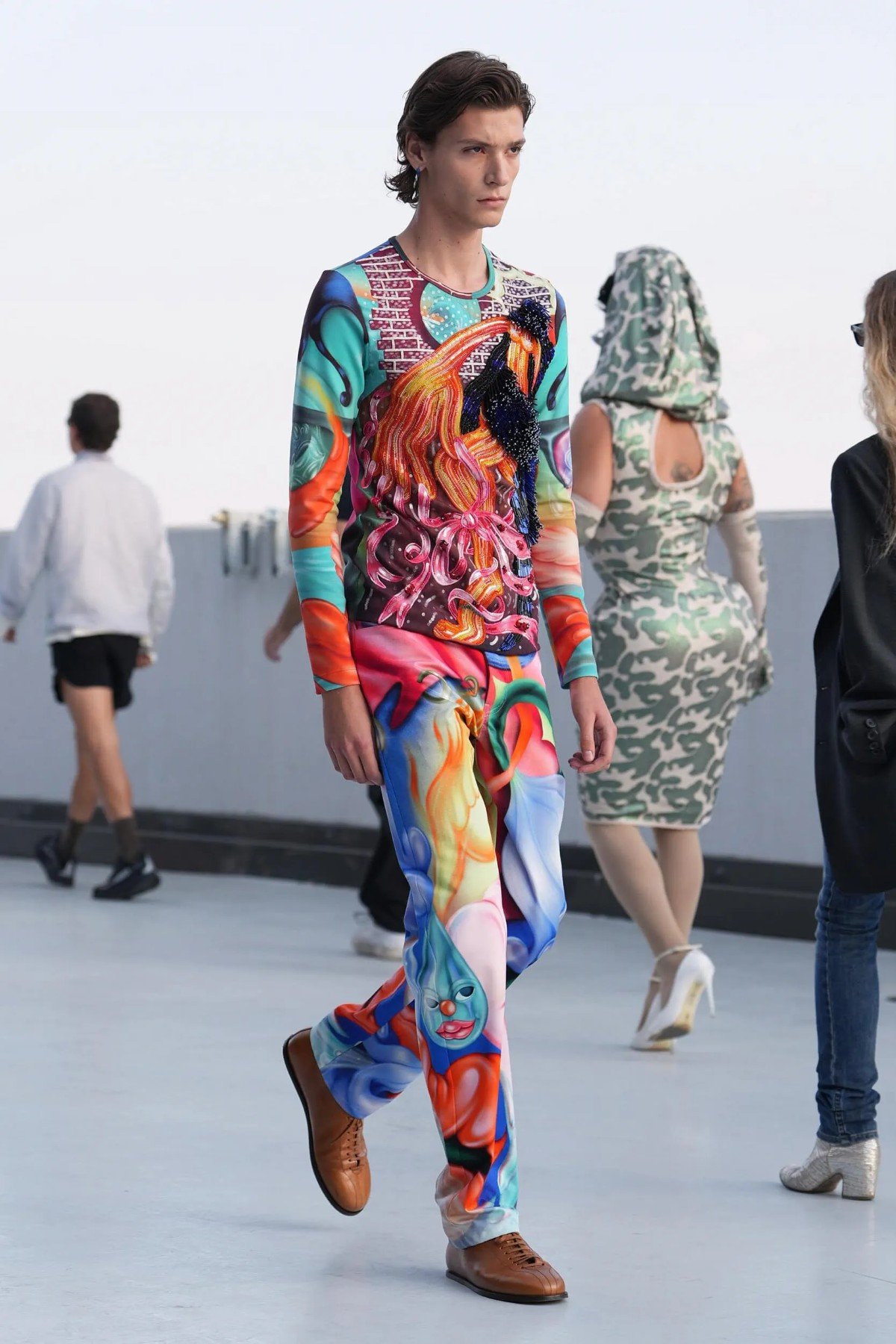
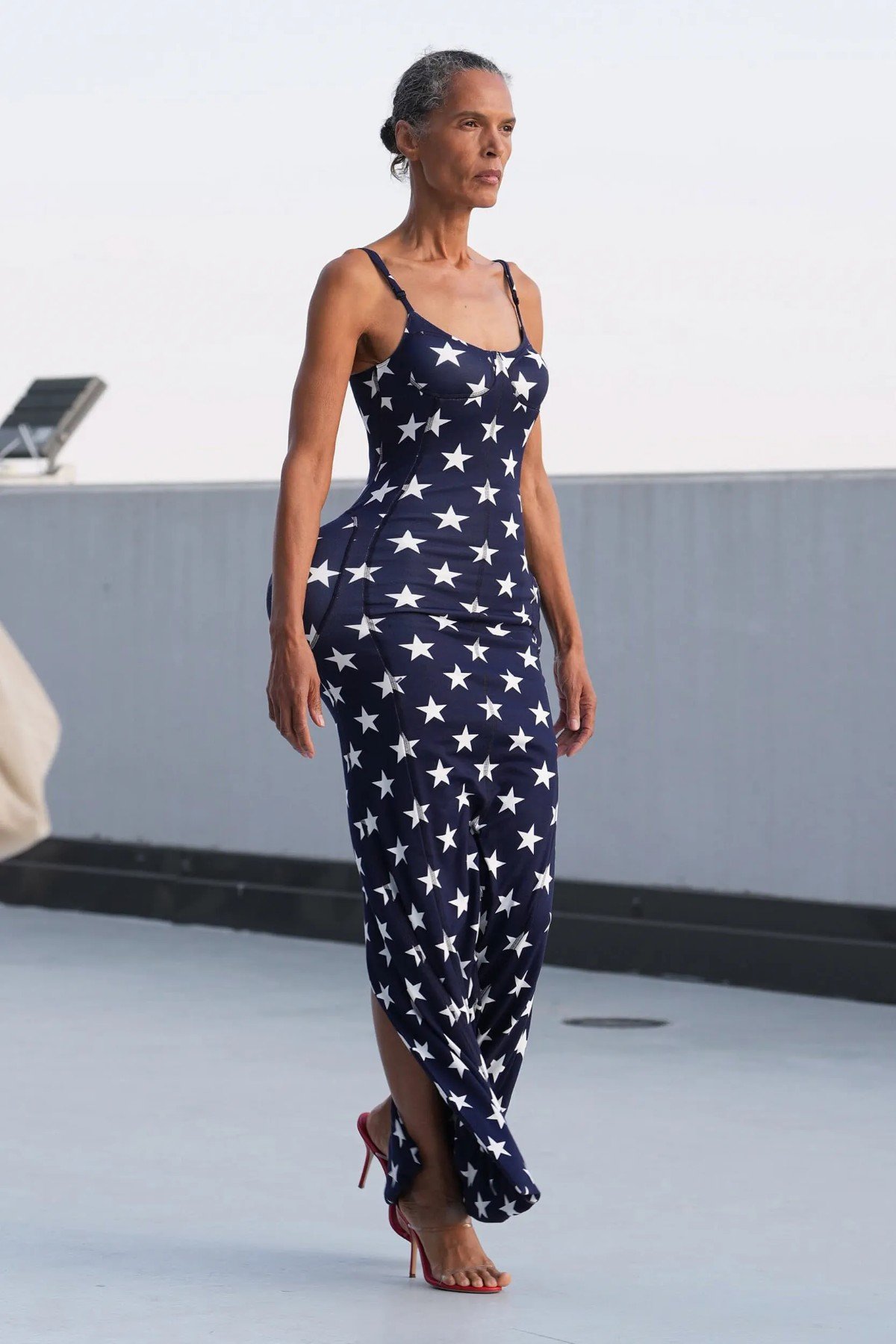
A couple of elements landed with less force than the rest. For example, a padded muscle tee for men and an exaggerated, curve-enhancing dress came across as heavy-handed commentary on body image, especially compared to the show’s light touch. The graffiti-style tees, reportedly inspired by Franco’s painting hobby, worked better as a subtle homage than as a headline moment.
The collection’s greatest strength was its restraint. The quieter looks, stripped of logos and punchlines, felt the most convincing and the easiest to imagine on a person walking down a street. This may be the smartest legacy that Rizzo and Messina could inherit from Franco Moschino – not his jokes, but his instinct for reading the room. It’s a quieter kind of provocation, but in a house built on provocation, quiet might be the boldest move.