


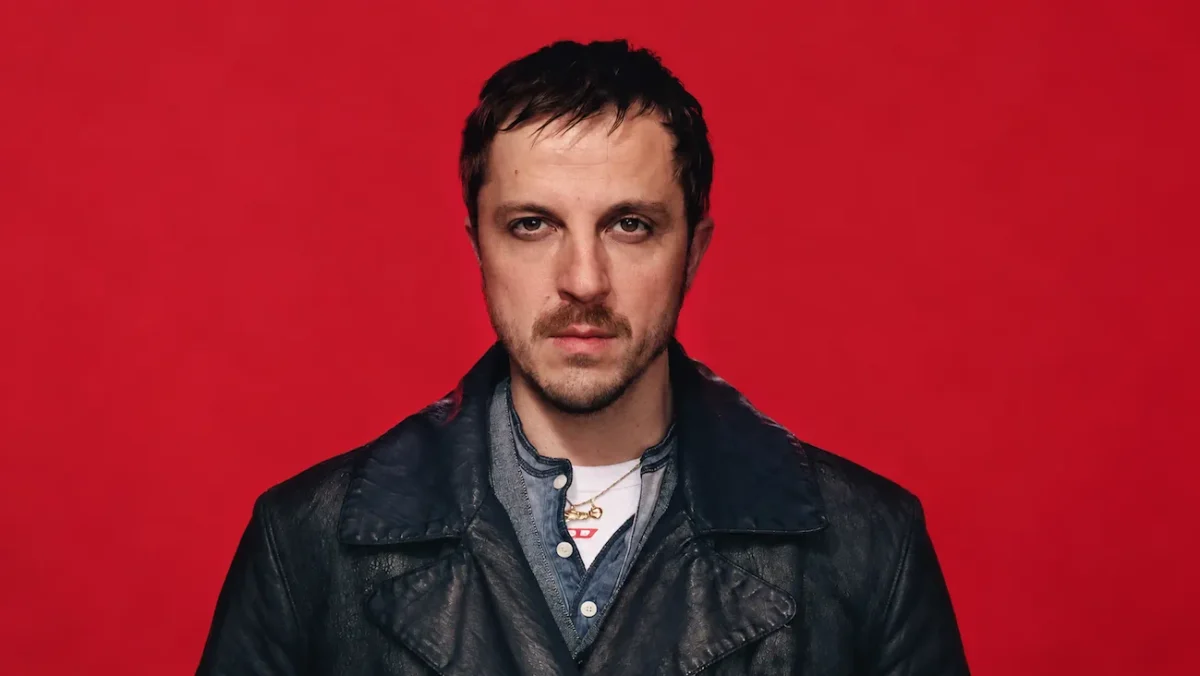
| Glenn Martens will leave Diesel after presenting his final collection for the brand at Milan Fashion Week on September 22, 2026. His departure ends a six-year tenure that began in October 2020. Martens will remain creative director of Maison Margiela, while Diesel says his successor will be announced later. |
Six years. That’s how long it took Glenn Martens to accomplish what few designers achieve in their entire careers: to make a brand desirable again without betraying its essence. Martens is stepping away from Diesel, and the fashion world is processing what this means. On Friday, Diesel confirmed that the Belgian designer will present his final collection for the brand at Milan Fashion Week on September 22nd. This will close out his six-year run, during which he pulled the denim label out of a long commercial slump and back into serious cultural conversation. Renzo Rosso, Diesel’s founder, made the announcement himself, and his statement carried the weight of someone who knows exactly what he is losing.
Martens will not disappear from view. He remains the creative director of Maison Margiela, a position he took in January 2025 following John Galliano’s departure. OTB Group, which owns both labels alongside Marni, Jil Sander, and Viktor & Rolf, says a successor at Diesel will be announced at a later date. For now, the industry is left to process the news and ask an obvious question: How did a designer known for unraveling seams and twisting denim into strange new shapes end up rescuing one of Italy’s most recognizable brands from irrelevance?
Diesel, founded by Rosso in 1978, had spent years drifting. The brand was still recognizable, but it had lost the sense of urgency that once made it feel dangerous and fun. When Martens arrived in October 2020, he inherited a company that needed more than a fresh perspective. It needed a reason to matter again.
Martens gave it one. Working from Diesel’s headquarters near Venice, Martens embraced denim as a raw material to twist, stretch, deconstruct, and rebuild rather than a category to refresh season after season. He referenced the brand’s late-1990s and early-2000s peak, when Diesel’s campaigns were provocative and its jeans were aspirational. Then he filtered that memory through his restless and almost obsessive approach to design.
In his statement announcing the departure, Rosso did not hold back on praise. “Glenn Martens’ contribution to Diesel has been extraordinary,” he said. “Through his vision, talent, and commitment, he has transformed the way the brand is perceived. He has forged a strong connection with younger generations and created a solid foundation for its future.” He added that Martens “brought Diesel back to the center of the global fashion conversation while preserving the openness, energy, and accessibility that have always distinguished us.”
This last point is more important than it might first appear. Many designers can make a heritage brand feel exclusive again. Fewer can do so without alienating the audience that made the brand recognizable in the first place. Martens managed to do both, according to Rosso, and the sales figures and runway buzz over the past few years suggest that Rosso’s praise was well-deserved.
None of this happened by accident. Martens spent close to a decade at Y/Project, the Paris label he took over in 2013 after the death of its founder, Yohan Serfaty. There, he built a reputation for twisting, wrapping, and manipulating fabric until the garments looked almost sculptural. He earned a devoted following among people who wanted fashion that challenged convention. His work caught Rosso’s attention years before Diesel officially hired him. Rosso first brought Martens in as a guest designer for the label’s experimental Red Tag capsule in 2018, two years after he won the ANDAM Prize, a French award supported by OTB for many years.
That early bet paid off. Once at Diesel, Martens applied his appetite for trompe l’œil effects and unconventional silhouettes to a much bigger, more commercial stage. Early seasons leaned on denim in nearly all its forms, utilitarian details borrowed from workwear, and pop culture references pulled straight from the MTV era. More recent collections have shifted toward longer hems and more tailored shapes, suggesting that Martens is chasing an older, more established customer base after already securing the loyalty of younger shoppers.
Martens’ influence at Diesel extended beyond the runway. He changed how the brand staged its shows, favoring inclusive formats and pushing unconventional collaborations and campaigns that made Diesel relevant in conversations it had been absent from for years. On Thursday, he shared a teaser for the upcoming spring 2027 show with his 367,000 Instagram followers. It kept up his irreverent streak, showing glimpses of bodies behind a steamy glass panel rather than anything resembling a traditional preview. This was a fitting final touch; even when leaving, he chose to tease rather than announce.
Follow all the latest news from Fashionotography on Flipboard, or receive it directly in your inbox with Feeder.
You may also read

His path to fashion started far from denim. Martens grew up in Bruges and graduated from the Royal Academy of Fine Arts in Antwerp in 2008. Shortly after seeing his graduation show, Jean Paul Gaultier recruited him, bringing him on as a junior designer for the women’s pre-collection line and the G2 menswear label. Martens has since described Gaultier as a genuine inventor, and traces of that early mentorship are evident in his approach to fabric and form.
Diesel now faces the task of finding someone who can maintain the momentum Martens built without simply repeating his ideas. That is a difficult assignment. Whoever takes over will inherit a brand with real cultural significance, something that Diesel had not enjoyed since before 2020, as well as high expectations from a fan base that grew up watching Martens take risks in public.
For readers who follow fashion but are not deeply immersed in it, the story boils down to this: The denim brand from your teenage years in the 2000s has become a fashion reference again, and one designer quietly did that work for six years before walking away at a time when he could have easily stayed.
For Martens, this shift means he can focus entirely on Margiela, a house with its own demanding history and devoted – sometimes skeptical – audience. He has already presented Artisanal and ready-to-wear collections there since taking over, and the initial response indicates that he is employing the same instinct for productive disruption that was so effective at Diesel.
Tuesday’s show in Milan will close one chapter and open another, in its own quiet way. Fashion has a habit of treating departures like endings. This one feels more like a designer moving his focus from one house to the next. It’s precisely the absence of a clean break that says the most about what Martens built at Diesel: not a passing style, but a method.