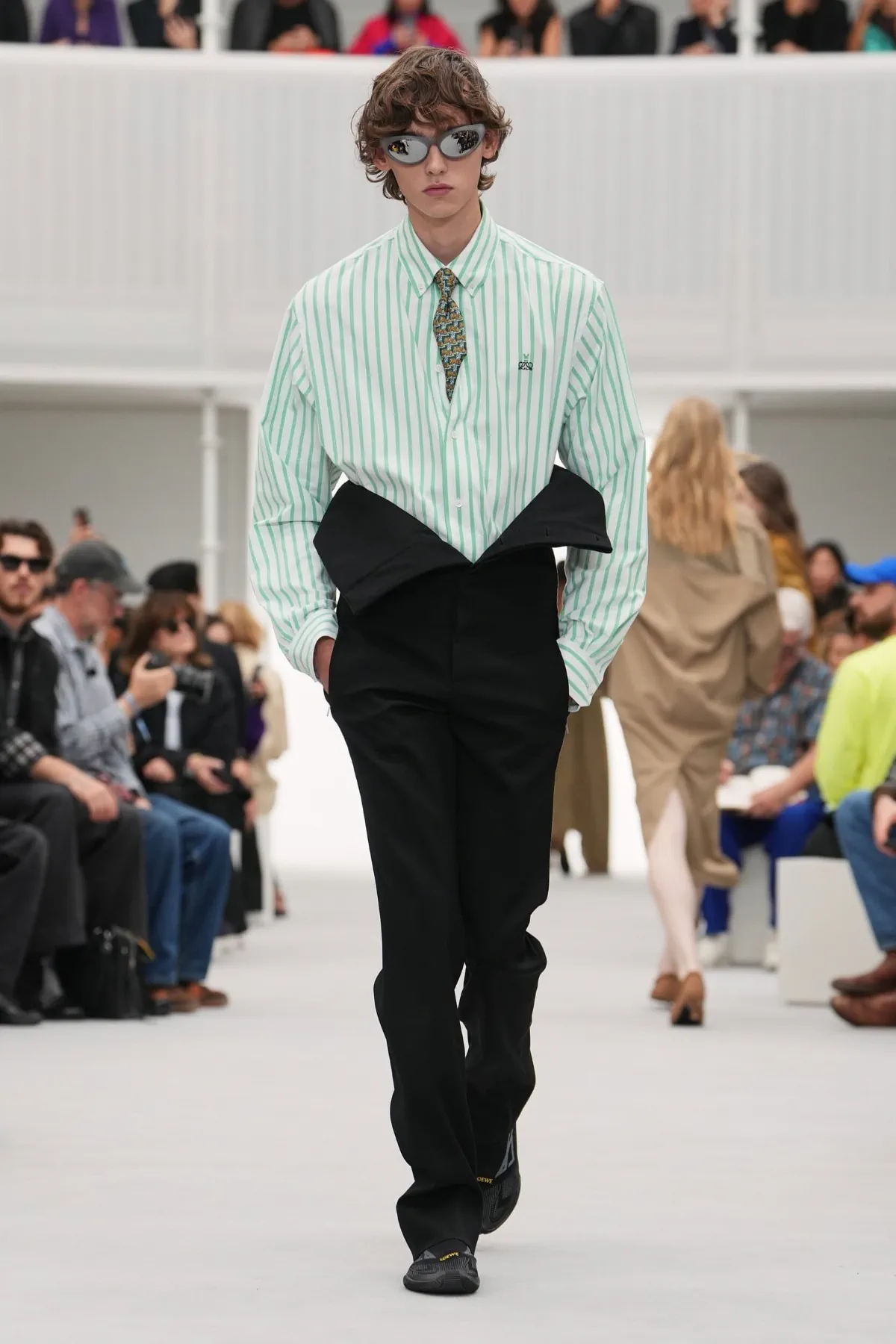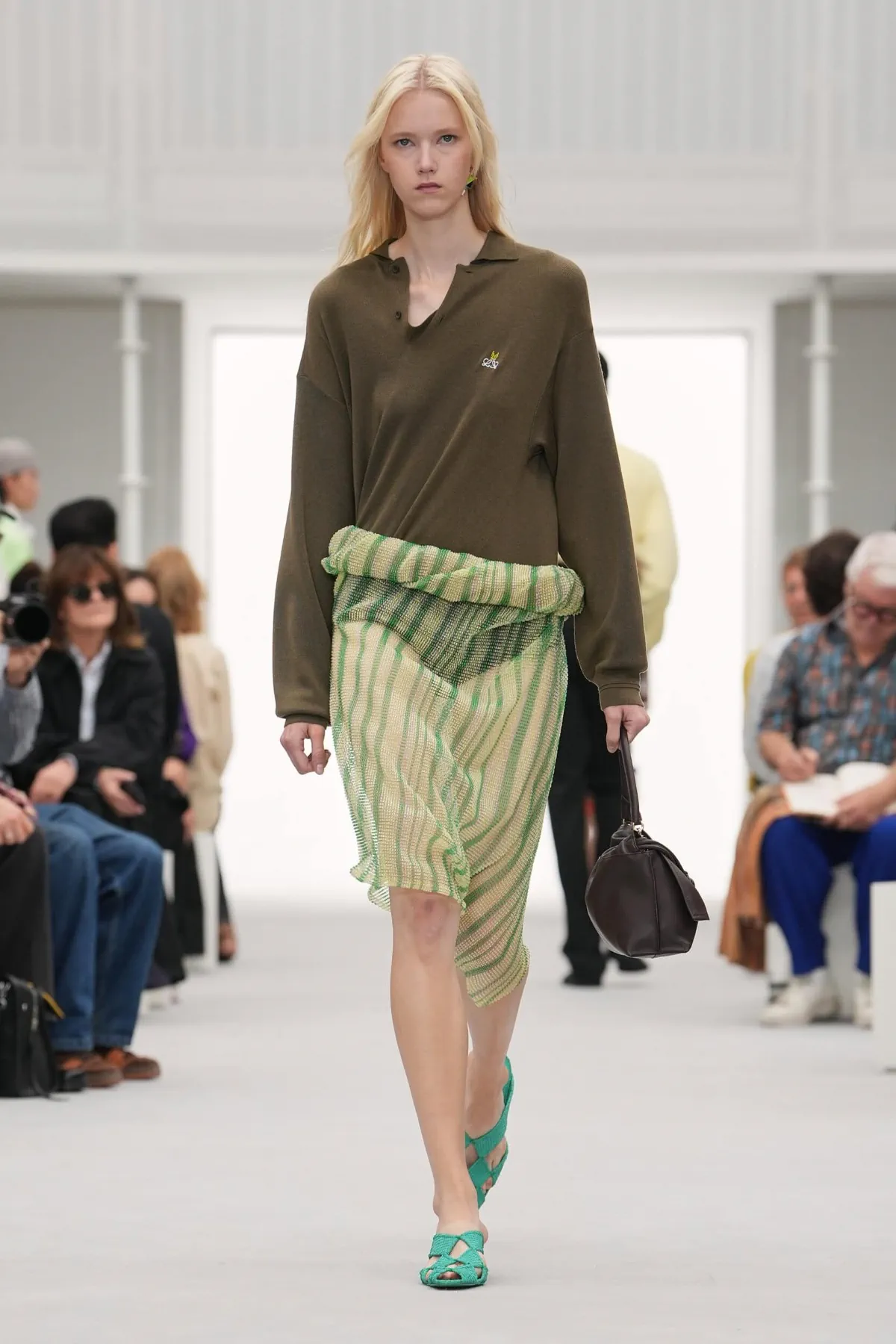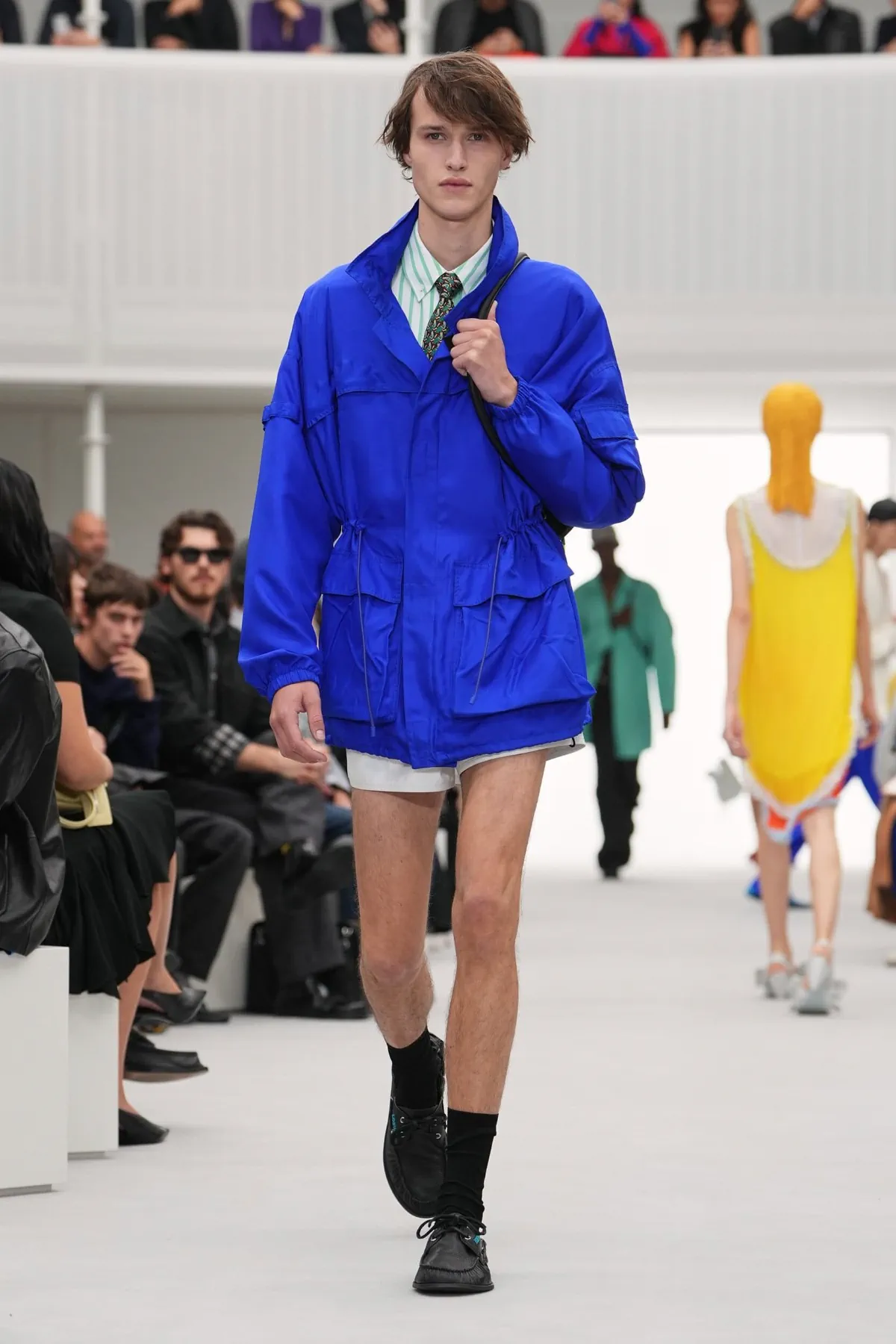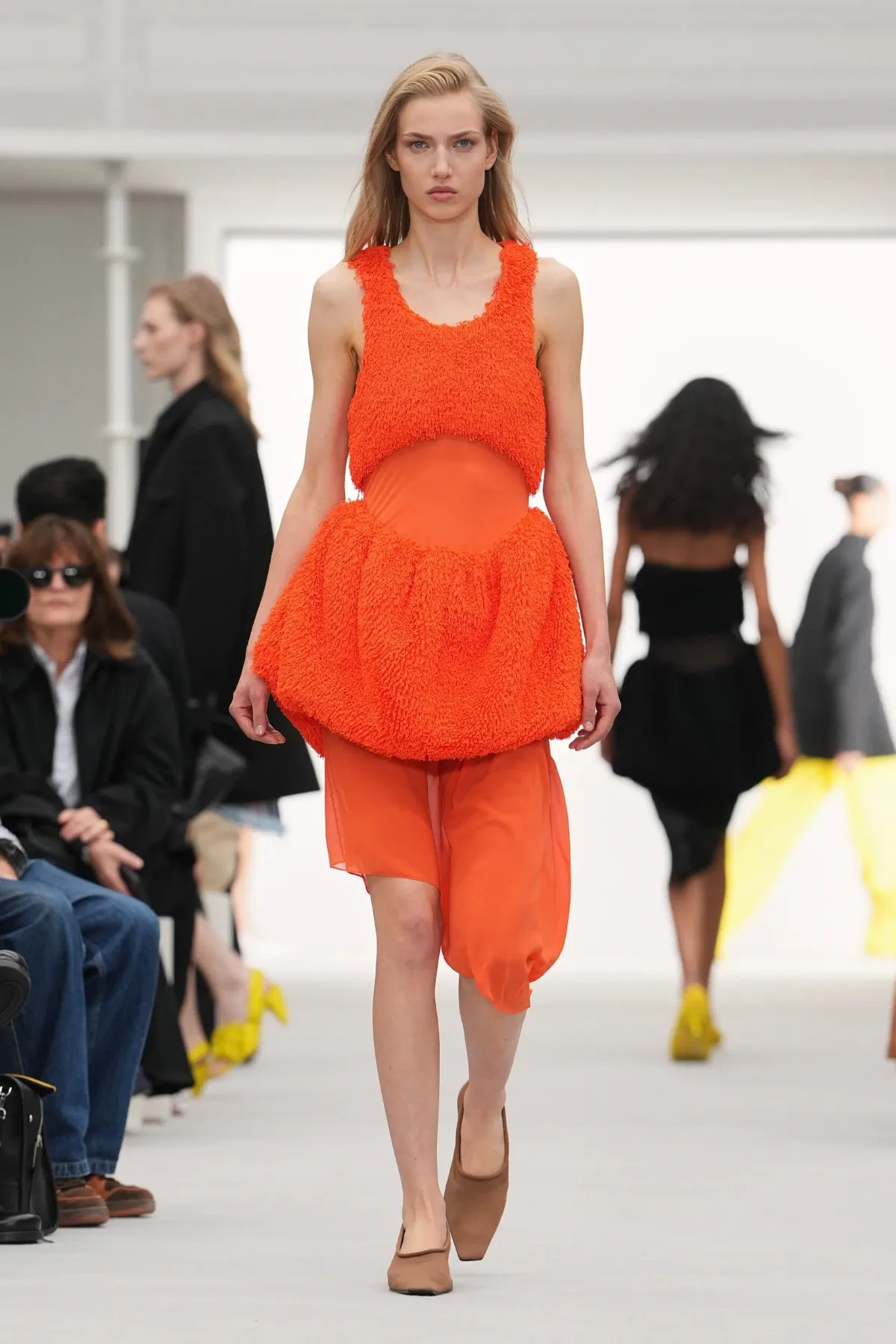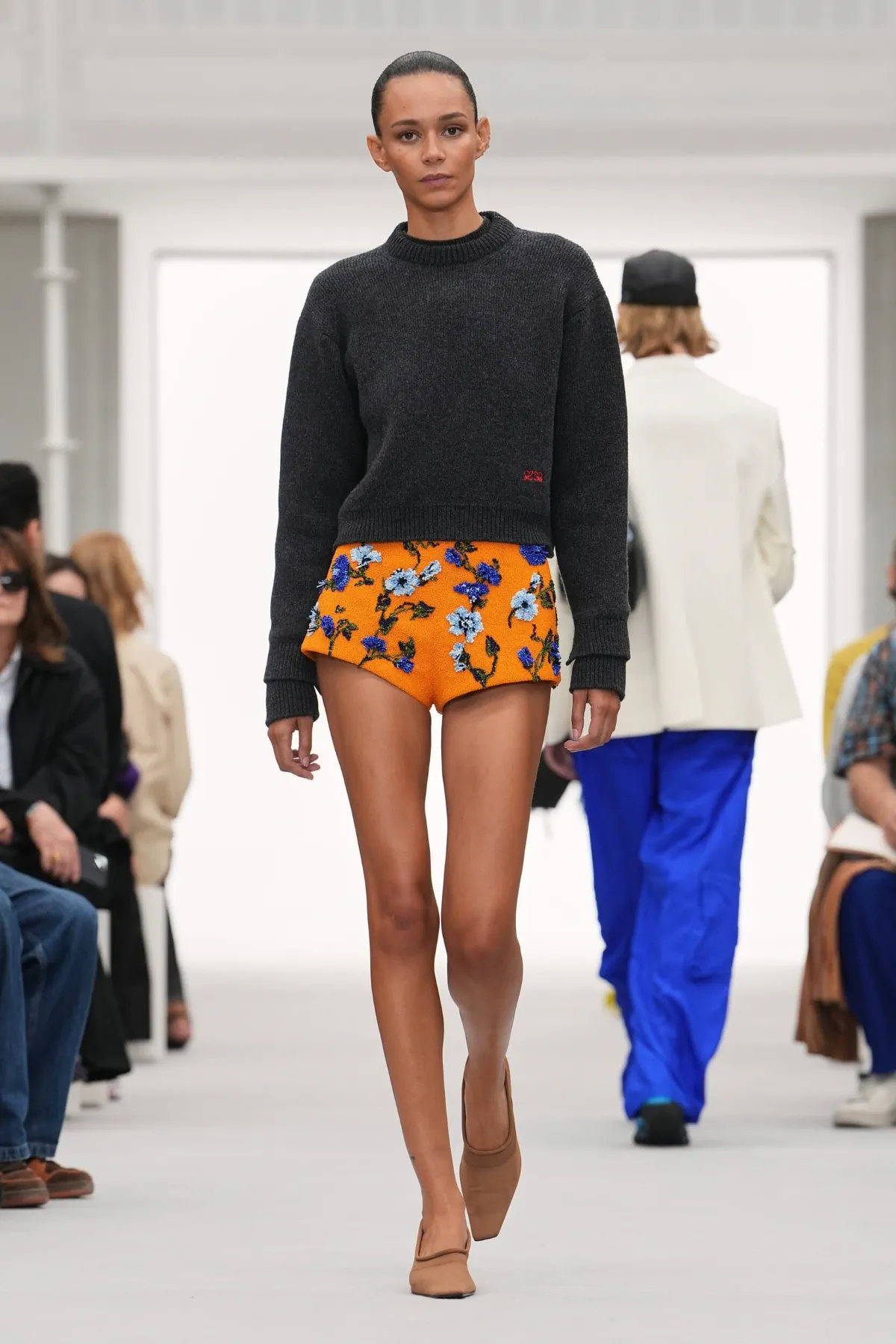

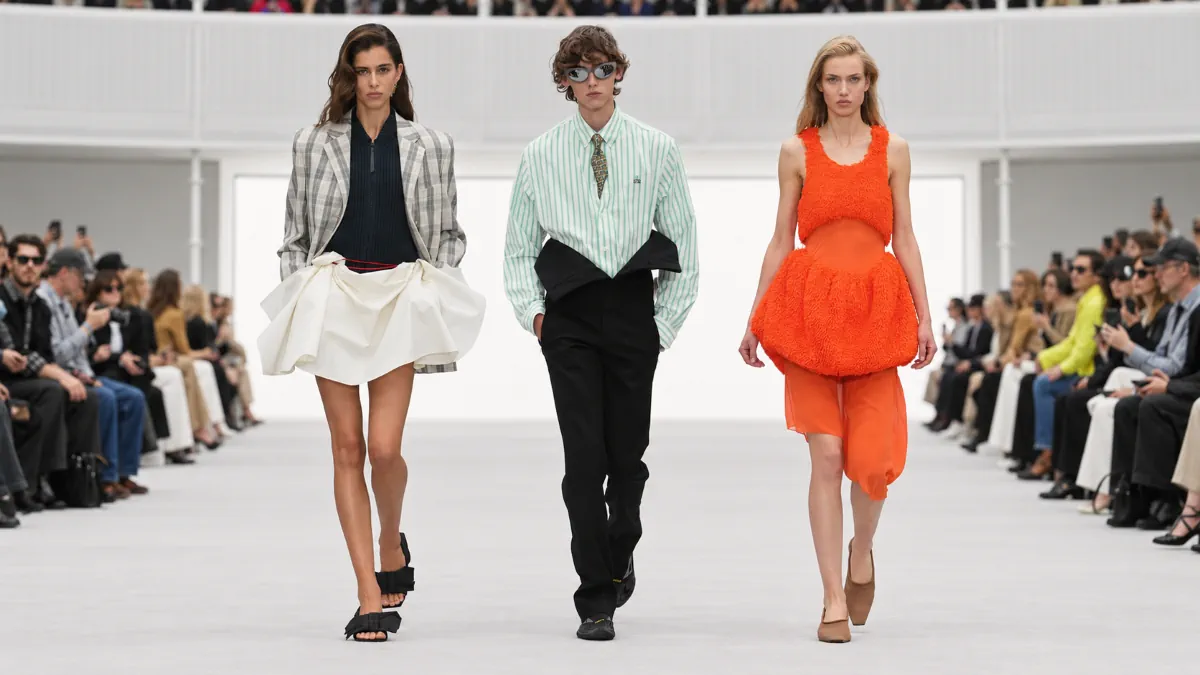
| Loewe’s Spring 2027 collection, its third by American designers Jack McCollough and Lazaro Hernandez, was shown in the round at the Château de Vincennes in Paris. The house turns 180 this year. Highlights include a napkin-folded miniskirt with a bungee waist, a revived 1960 suede blazer, and high-waisted toreador trousers for men. |
Loewe is turning 180 this year. Its predecessor now designs for Dior. The two American designers are still discovering the place they have inherited. For their third show, Jack McCollough and Lazaro Hernandez had to answer one question: Can a clever idea survive contact with an actual wardrobe? In the middle of the Spring 2027 season, Paris was the perfect place to put that idea to the test.
Loewe’s Spring 2027 collection had a clear goal: Jack McCollough and Lazaro Hernandez wanted to transform their ideas into wearable clothing. It was their third show for the house, and they sounded like designers who had finished the groundwork.
The show took place inside the Château de Vincennes, on the eastern edge of Paris. The set was built in the round, and the runway twisted like a maze. Models passed within arm’s reach of the guests.
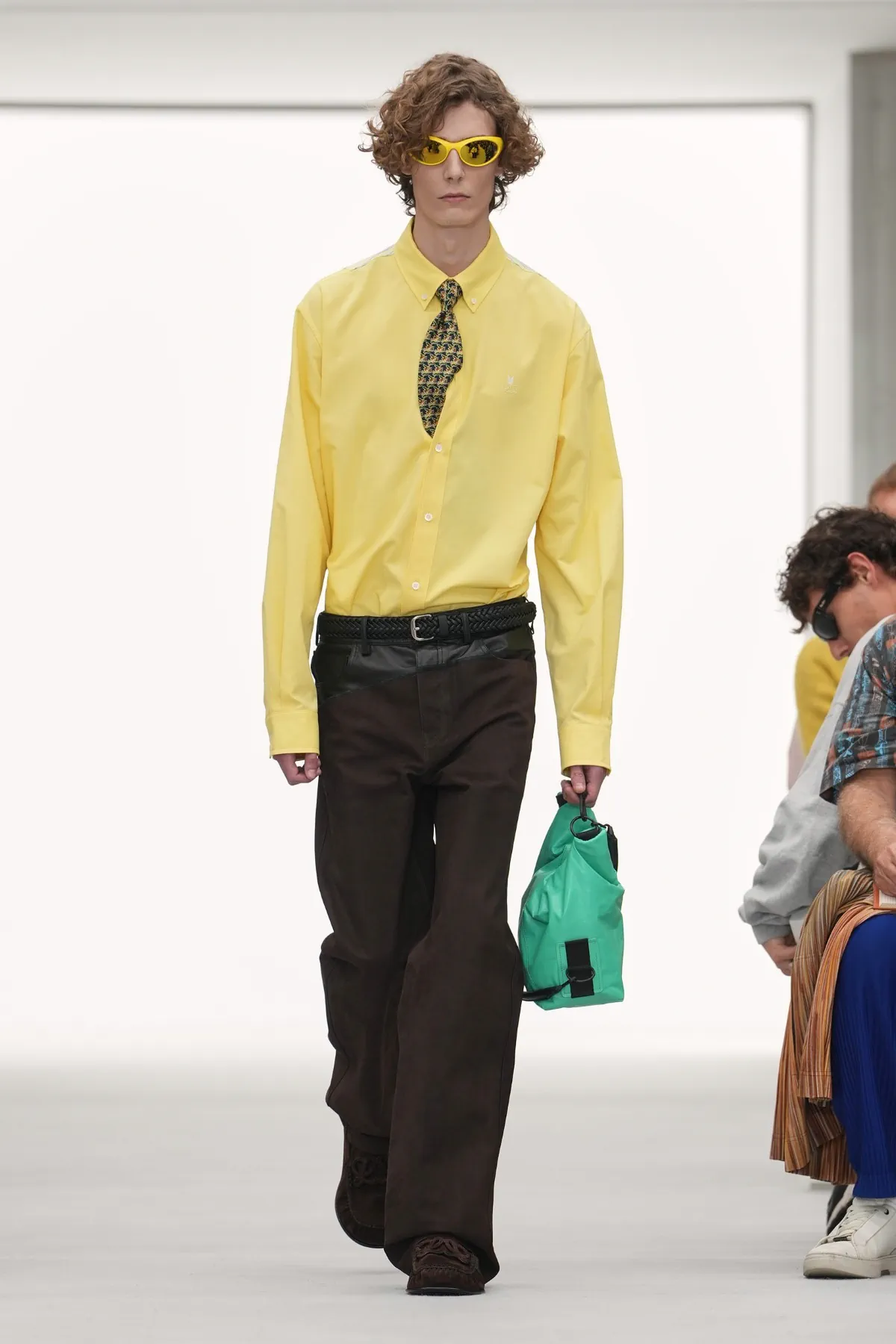
You could see the stitching. You could see how a hem sat. This intimacy suited a collection built on subtle details, turning the show into a testament to craftsmanship rather than a spectacle.
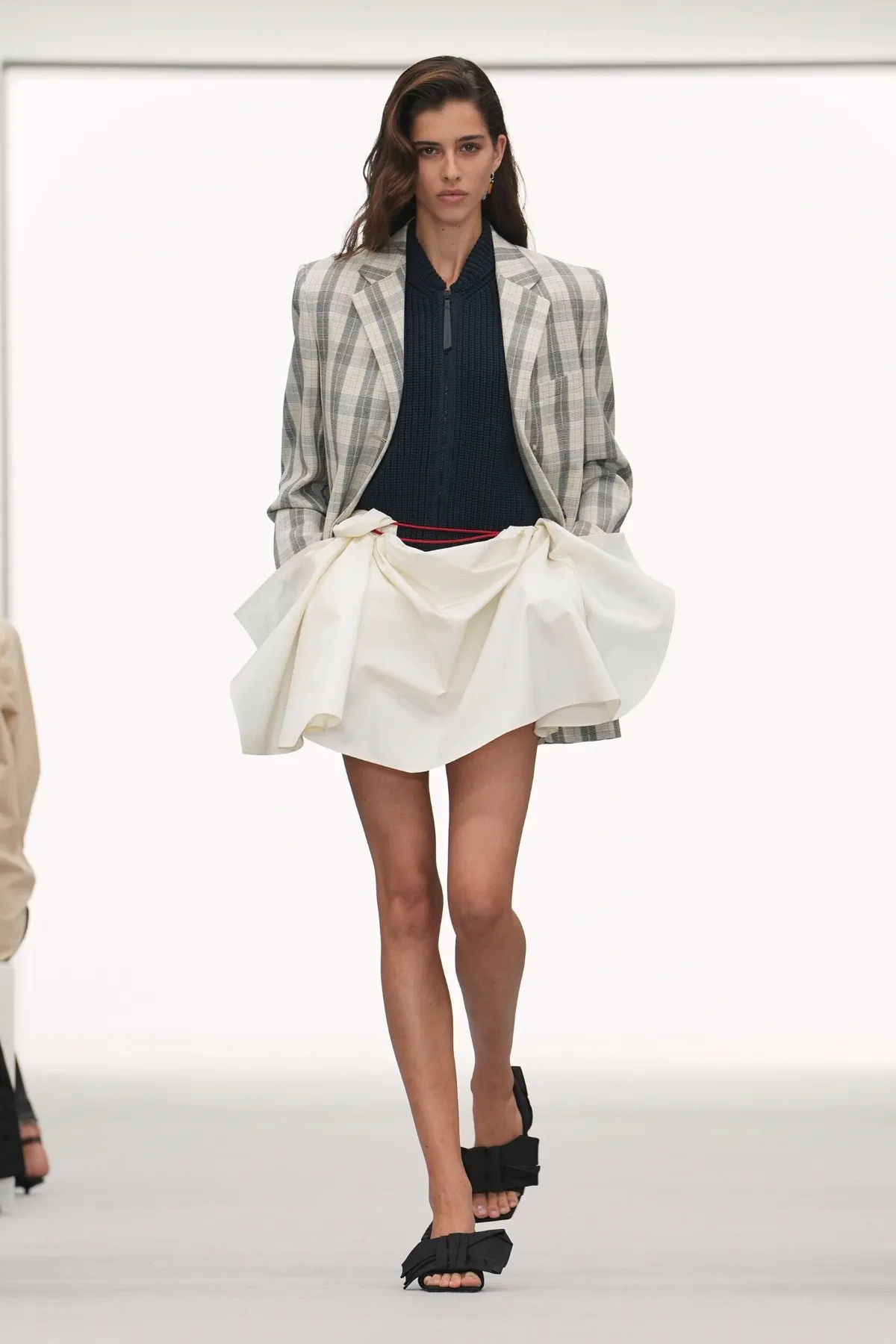
McCollough and Hernandez grew up in New England and worked in New York. They used their background to promote an easygoing Americanness. A checked sport coat and a zip-front ribbed knit looked ordinary enough. Then came a miniskirt shaped like a crumpled napkin and held at the waist by a bungee cord. The folds of the skirt were inspired by paintings by Zurbarán and Velázquez that the designers had seen at the Prado. Spanish painting and American sportswear are an unlikely pairing, but the napkin skirt embodies the collection’s concept: the old world provides the folds and the new world provides the bungee cord.
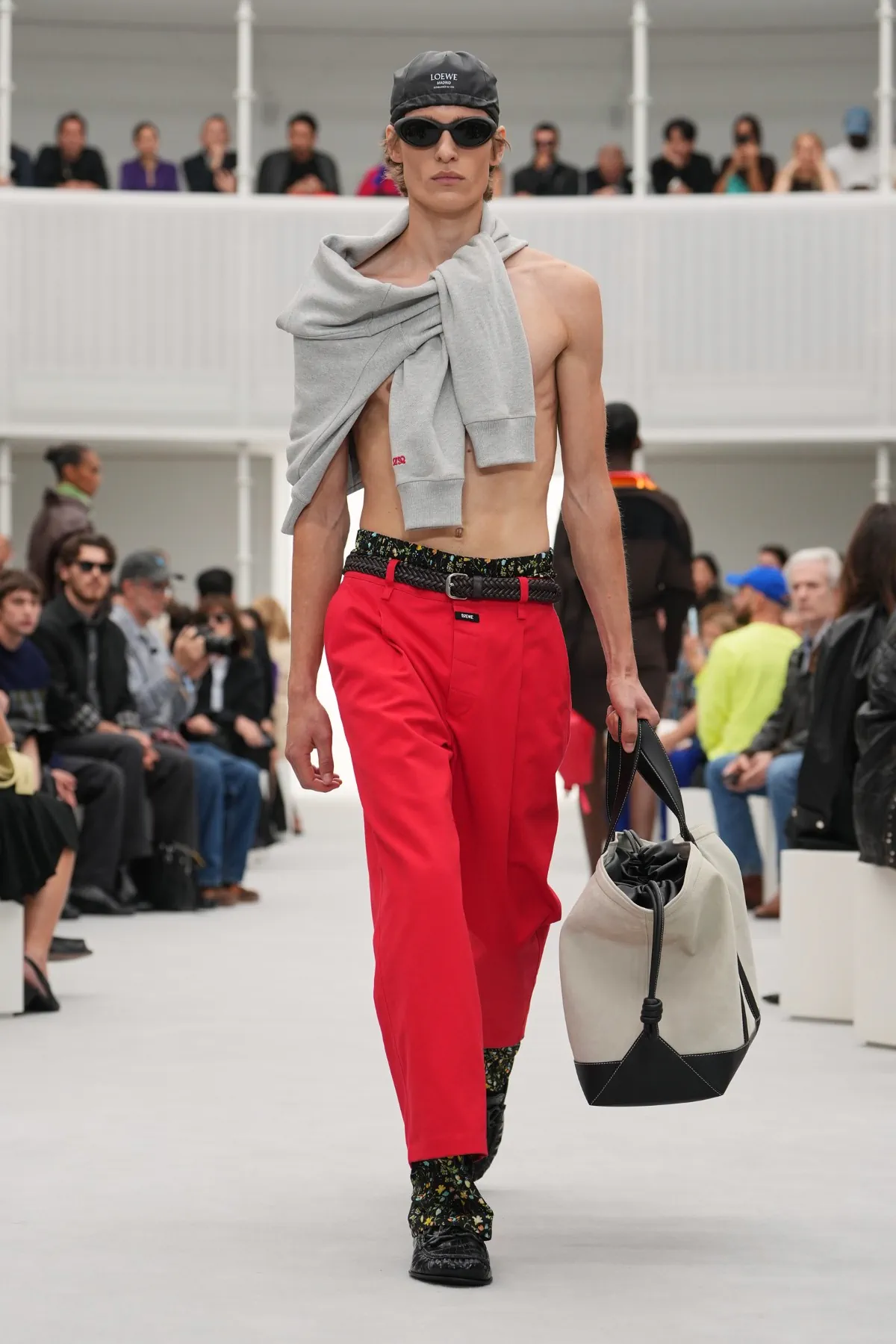
Other pieces played the same trick. A marled gray sweatshirt is about as humble as clothing gets, yet this one was covered in seed-bead embroidery. Jackets that resembled striped cotton Harrington jackets were made of leather. You had to touch them to know. This is a particular kind of luxury that rewards the wearer rather than the onlooker.
For women, polo-neck sweaters came with tiny, beaded knit skirts. An artisan whom the designers met through the Loewe Craft Prize made them. Glass-bead dresses and shirts with gauzy stripes resembled damp beach towels. Men’s trousers rose past the navel in a toreador cut under crisp, striped shirts and sporty anoraks.
Follow all the latest news from Fashionotography on Flipboard, or receive it directly in your inbox with Feeder.
You may also read

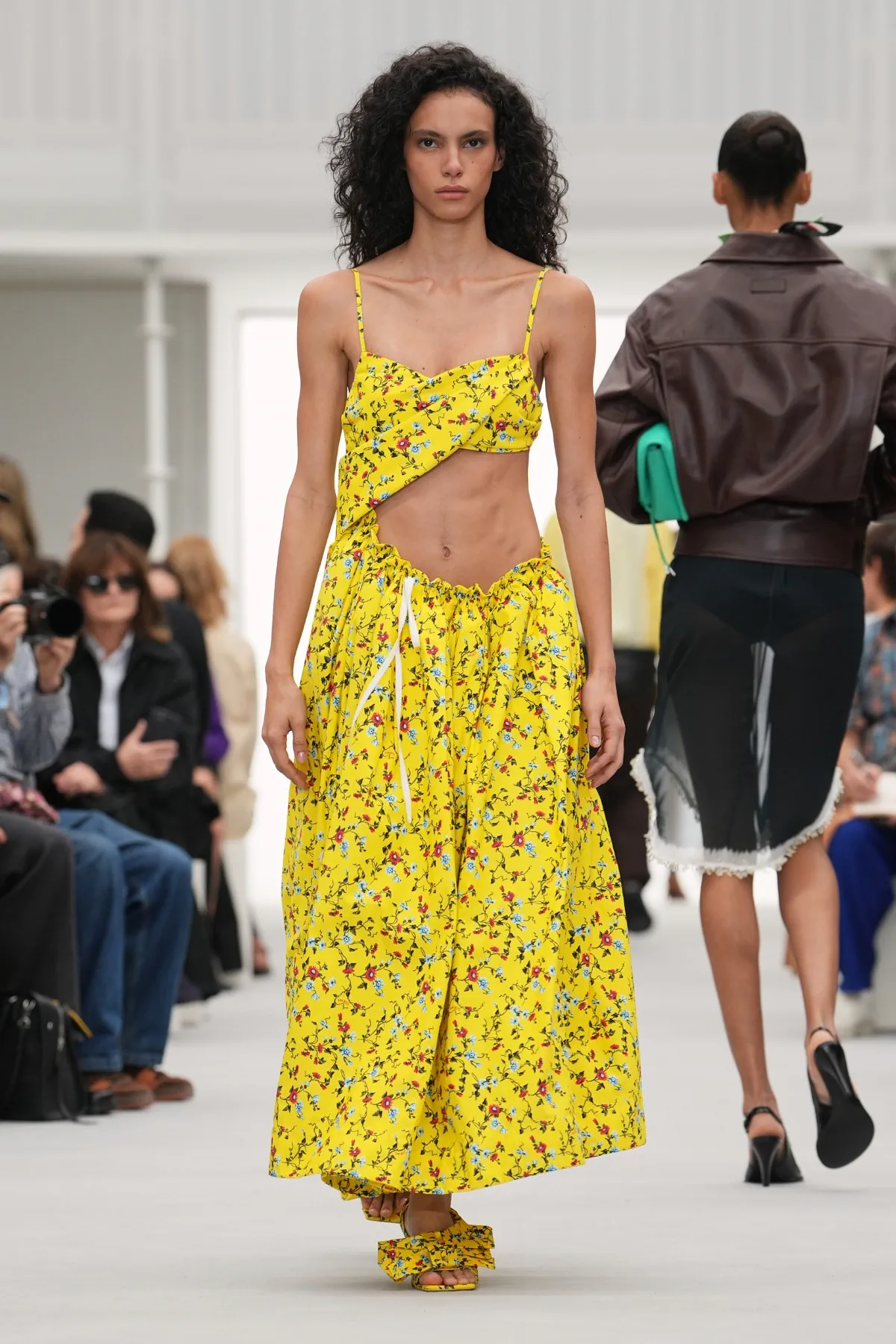
Not everything landed. Backward caps, barefoot running shoes, and cycling caps took the outdoorsy theme too far. The double-L logo appeared too often. Real luxury doesn’t need to announce itself, and the clothes were stronger without the lettering. It’s worth noting the contradiction: a collection built on discretion kept reaching for the loudest signal a house can send.
The designers also looked back. Loewe started as a leather workshop and didn’t make its first garment until 1960. That garment was a suede blazer. McCollough and Hernández revived it in an understated version, proving they can handle a classic.
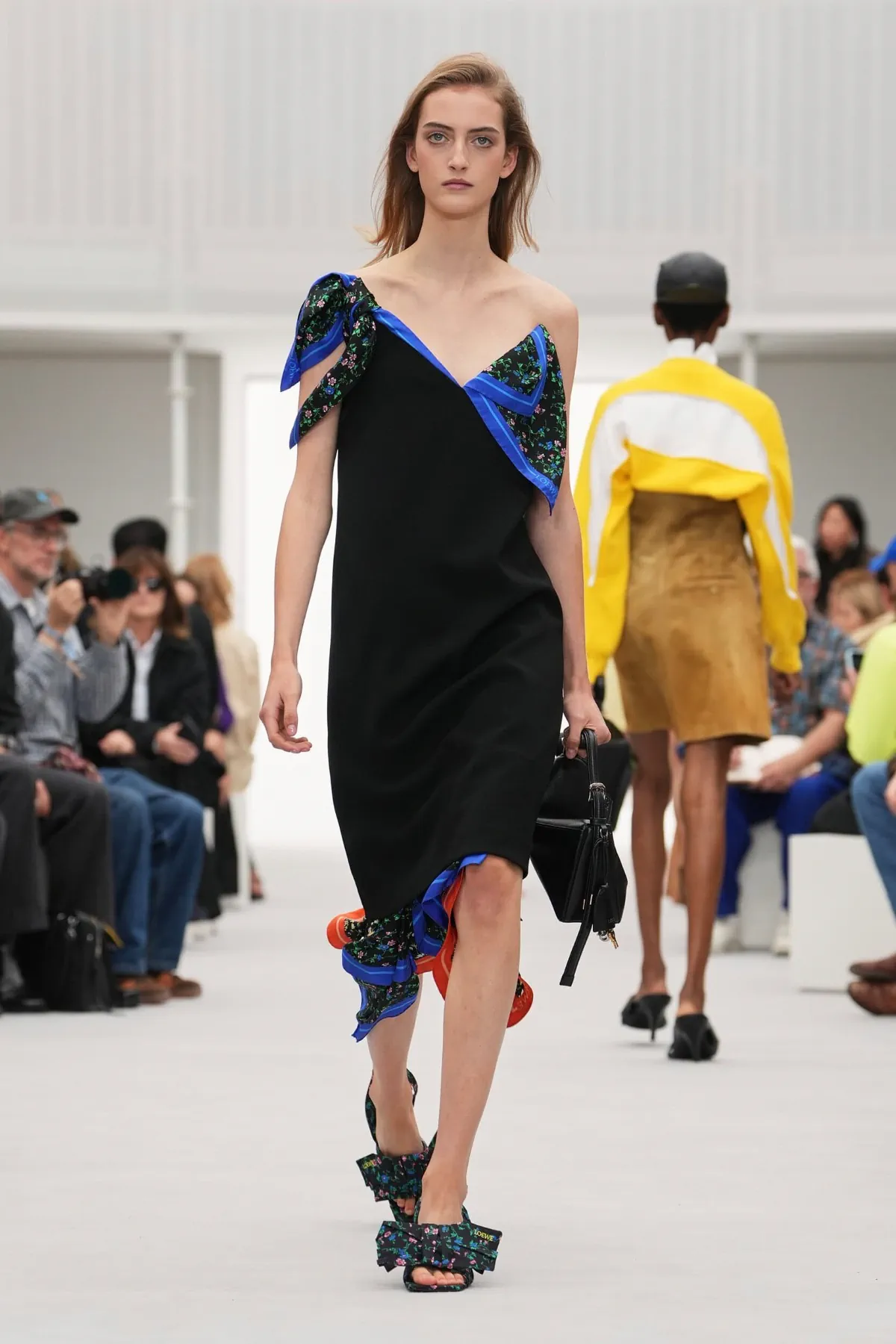
The house is celebrating its 180th anniversary this year. It has grown quickly over the past decade under the leadership of chief executive Pascale Lepoivre and Jonathan Anderson, who now designs for Dior. Designing for a company with such an influential former designer means that every choice is compared to his. Hernandez spoke of the old and new worlds sharing a room. The leather blouson, when belted tightly or draped loosely like a scarf, remained as sumptuous as ever. A long caramel suede piece sat somewhere between a coat and a dress. Nobody in the audience could quite decide which it was.
Michael Kors taught Hernandez, his former intern, that people everywhere want a sense of ease. The two designers brought that lesson to Paris. Their Spring 2027 collection offers clothes that allow you to wear a polo or a sweatshirt without feeling underdressed – that is the appeal. For readers of menswear, the most practical ideas are the high-waisted toreador pants under a striped shirt, the revived suede blazer, and the dressed-up sweatshirt. Each item can be found at any price point: a gray sweatshirt worn like tailoring or trousers cut higher than usual.
Still, the pair seems to be enjoying their discovery of Loewe. They are not finished. Next season will show whether their ideas have settled into a single point of view. Until then, the most convincing luxury of Loewe is what you feel, and the double-L has nothing left to prove.