
| Comme des Garçons Spring 2027 was presented within Paris Fashion Week. The collection uses denim including railroad and pinstriped versions alongside cotton gabardine and richer decorative textiles. Many models wear tall fabric crowns. Rei Kawakubo described the collection with one sentence about royal and everyday life becoming one. |
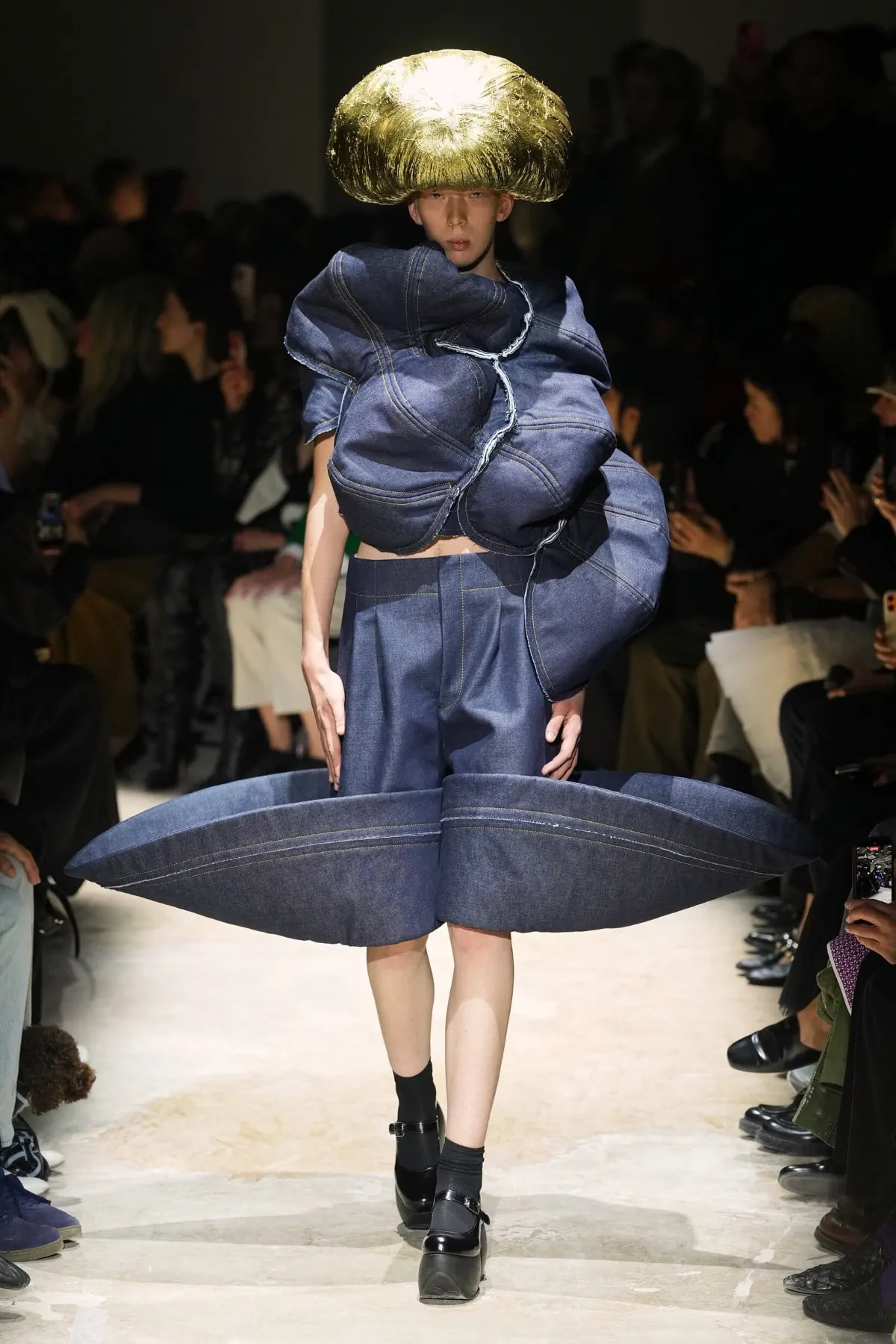
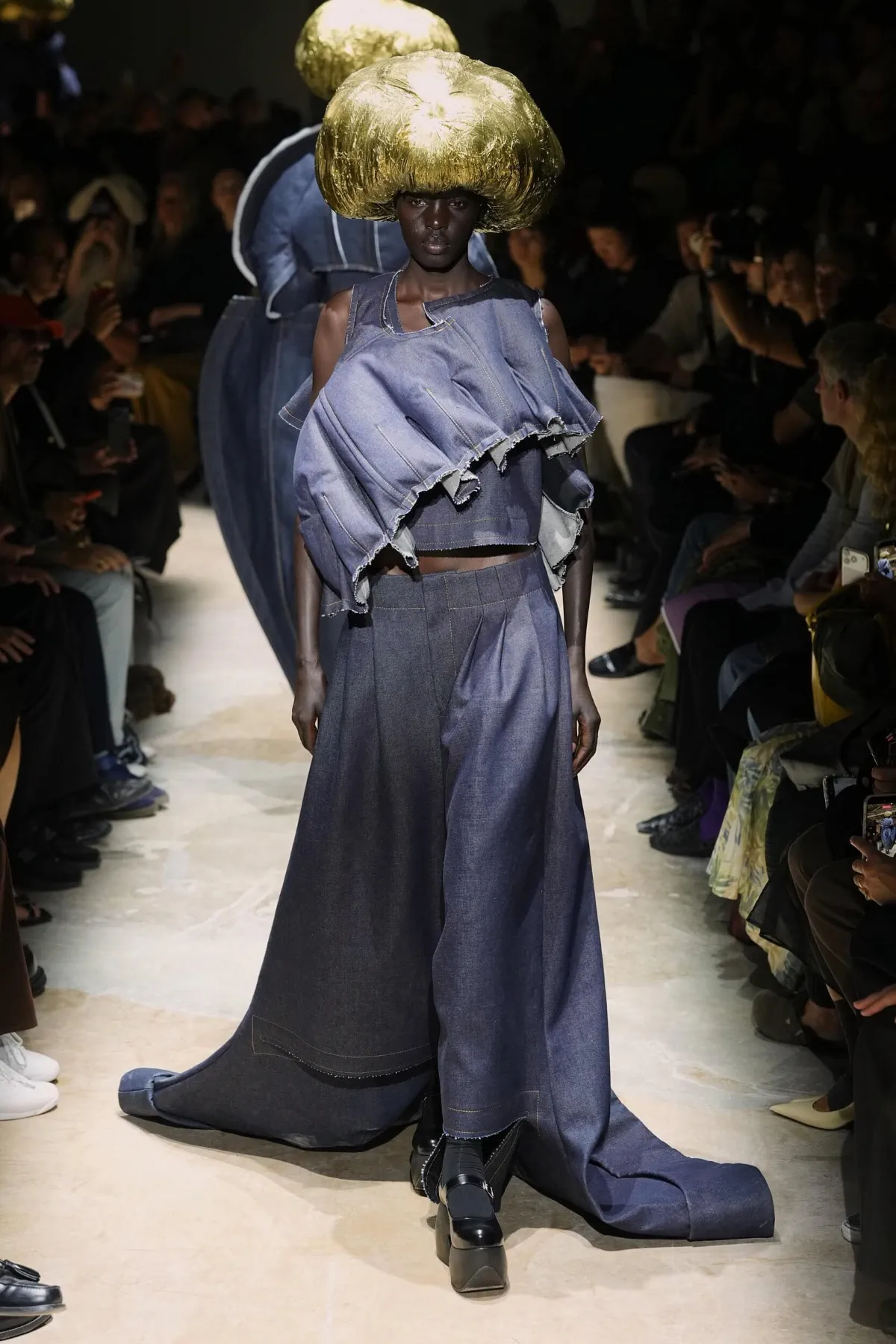
For Comme des Garçons Spring 2027, Rei Kawakubo placed familiar fabrics inside some of her least conventional forms. Denim, cotton gabardine and workwear references appeared in constructions so large that their everyday origins were often difficult to recognize at first glance.
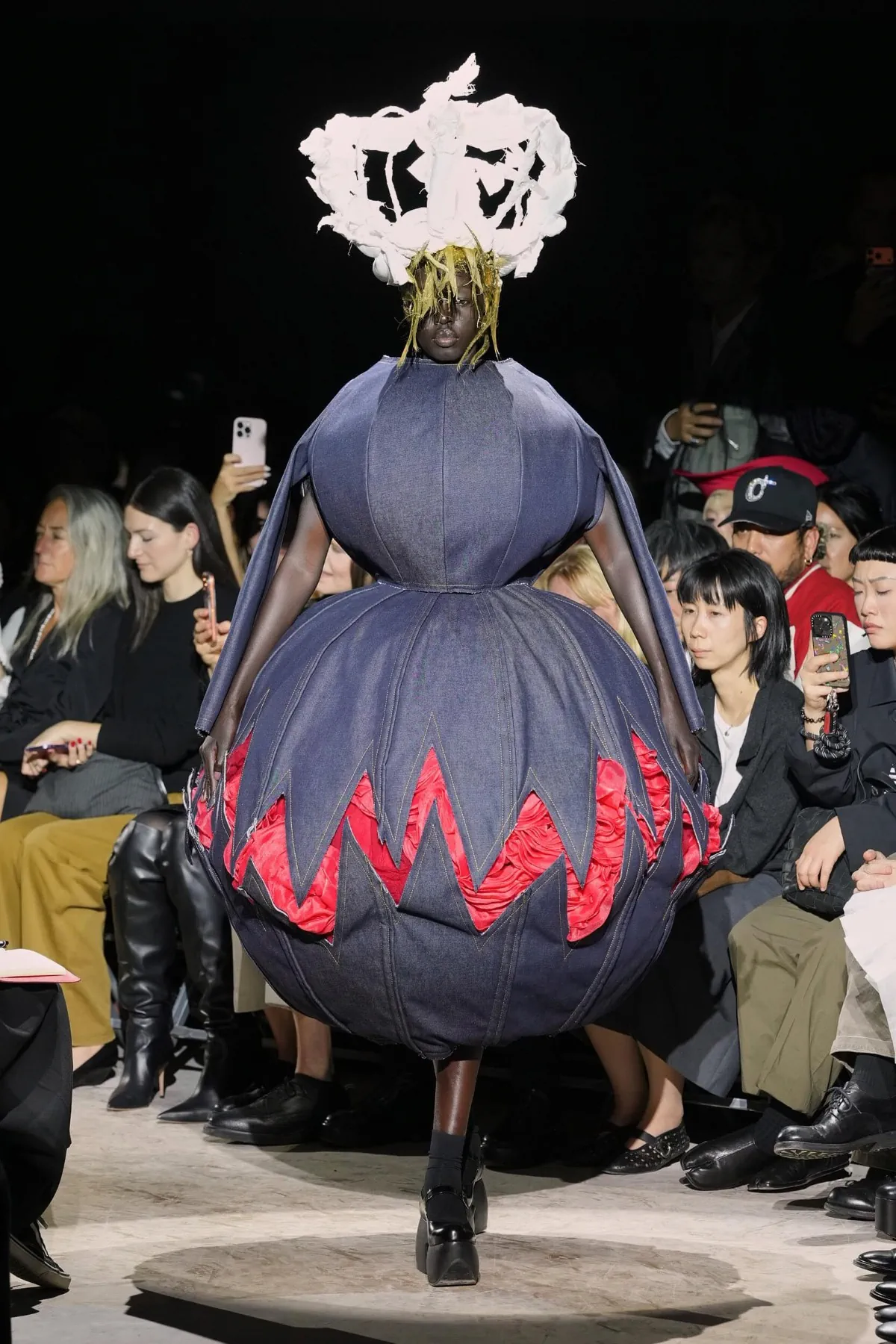
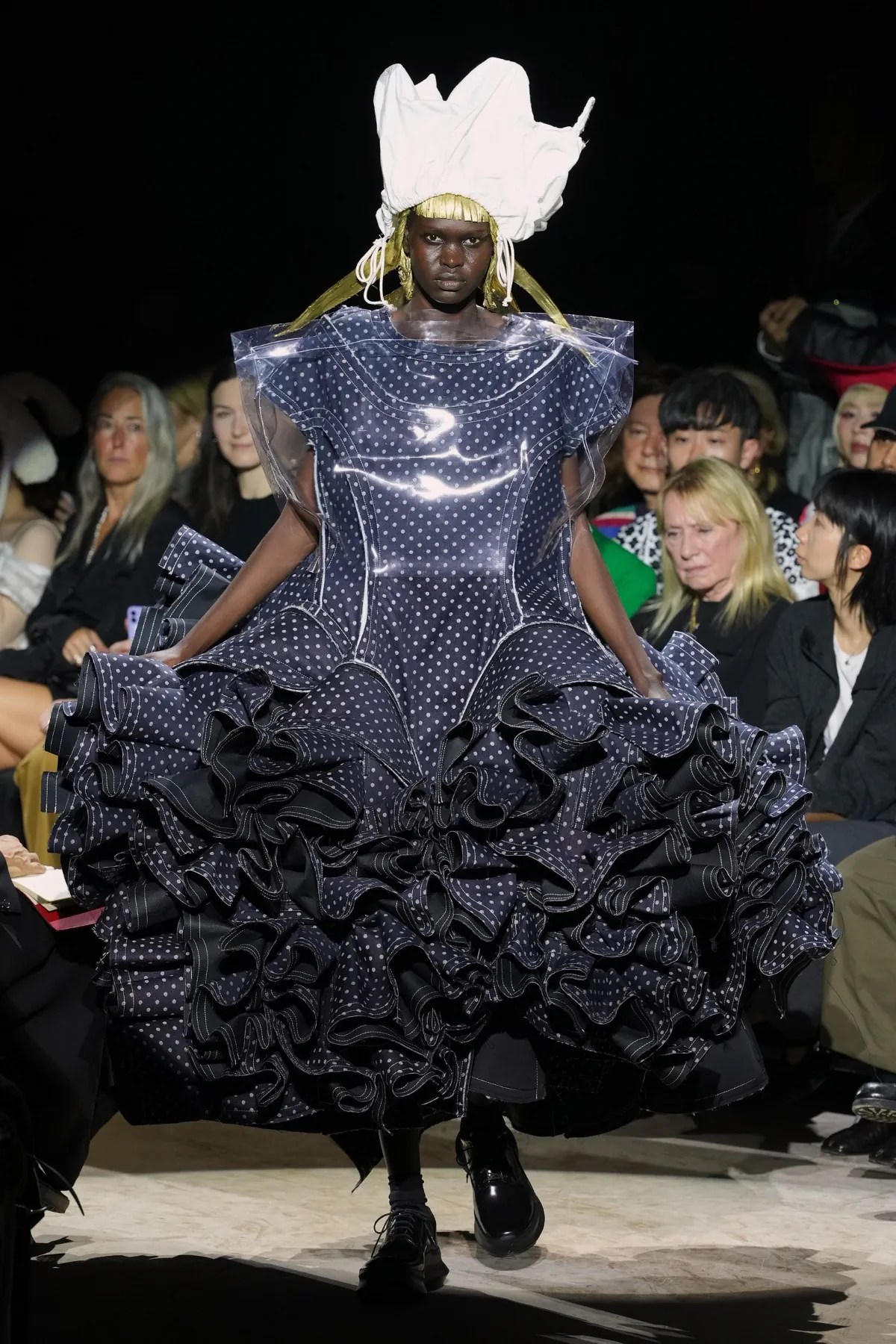
That choice matters because Kawakubo has frequently used materials associated with decoration and formal clothing when developing her most experimental work. Here, she reduced some of that surface richness. Plain denim and sturdy cotton became the foundation for garments that projected outward from the body, widened dramatically at the hips or enclosed the wearer in rounded volumes.
The contrast was explained only briefly. Kawakubo supplied the statement: “When royal life and everyday life become one.”
It was enough to provide a framework without fixing a single interpretation.
Familiar clothes become harder to recognize
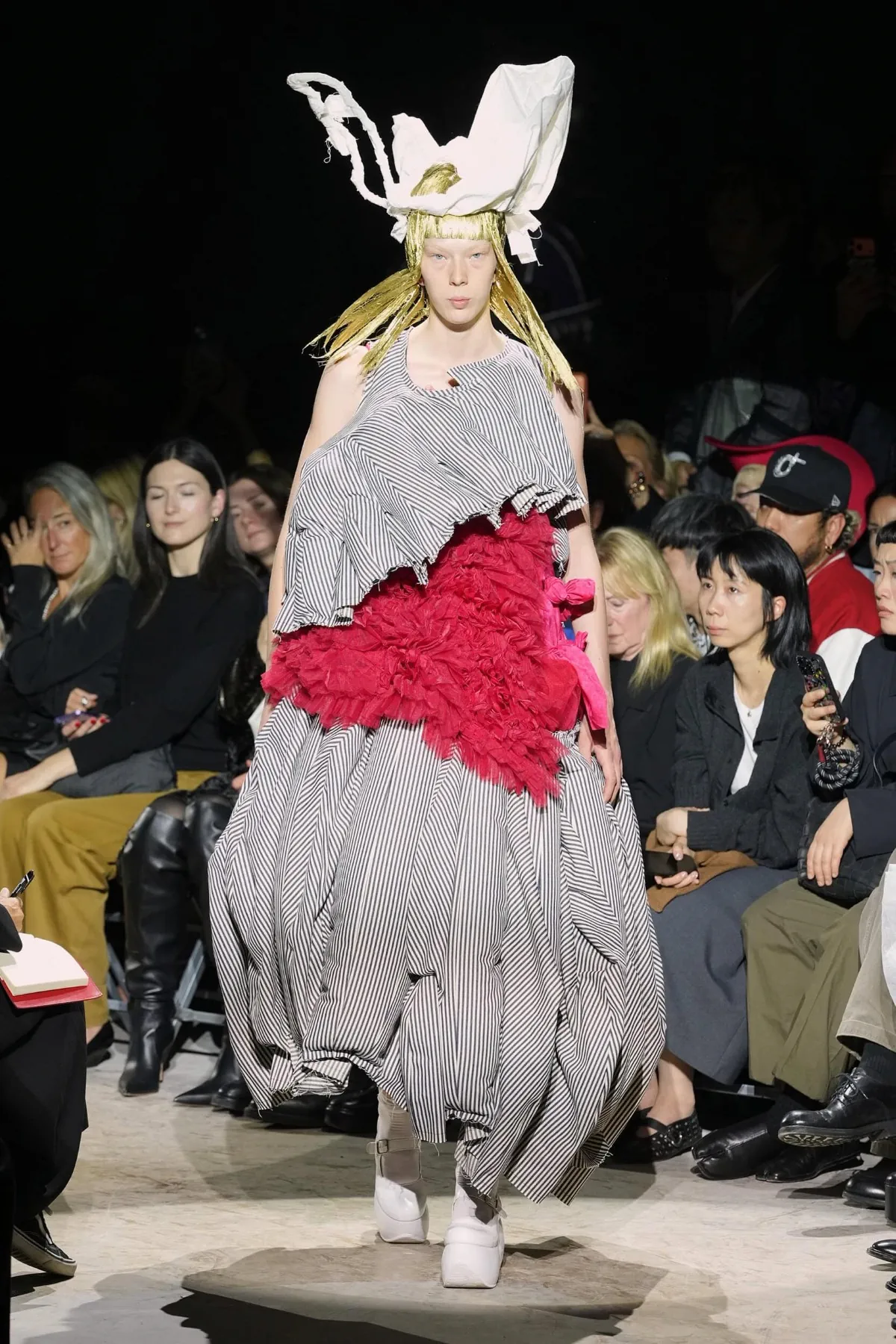
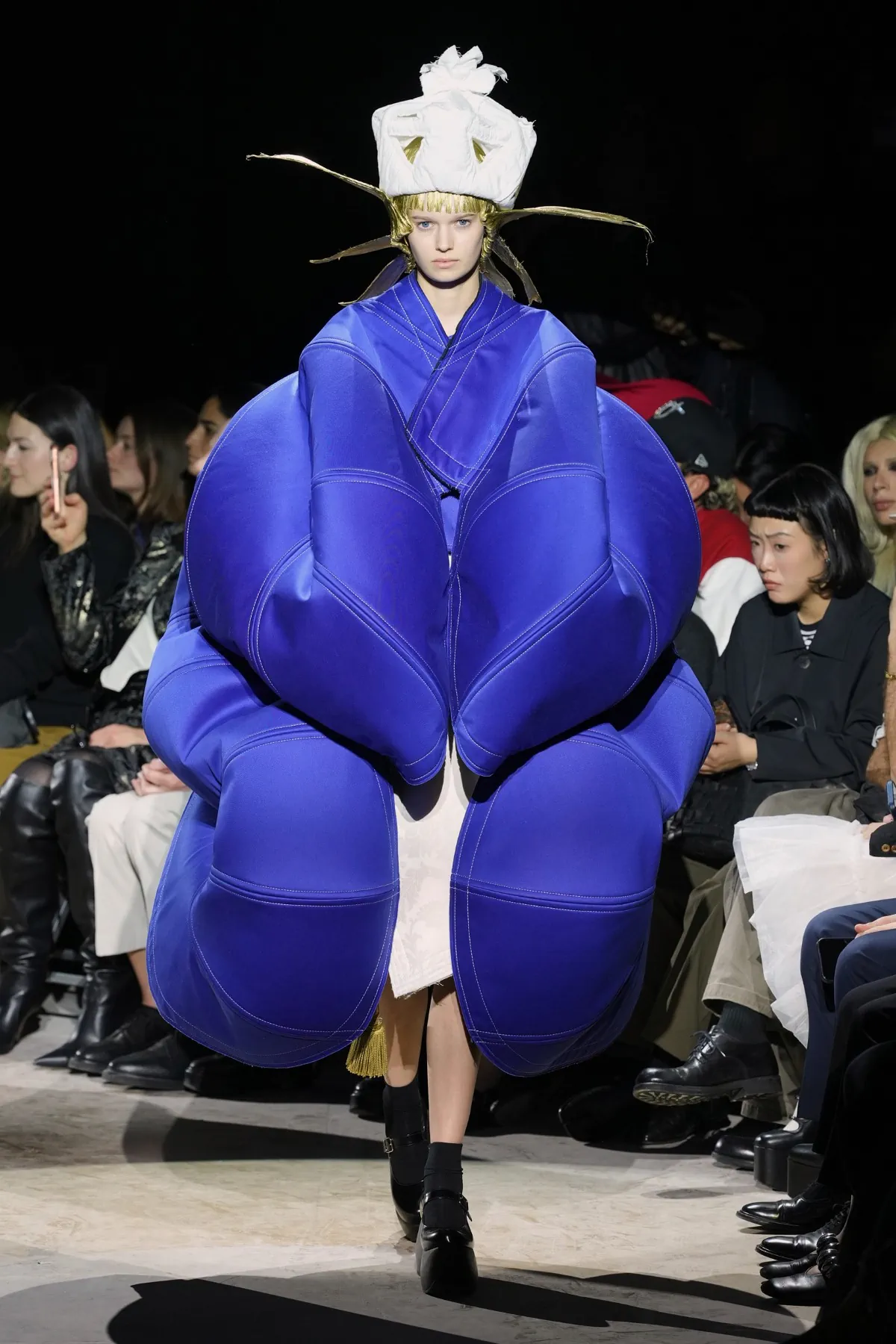
Certain pieces suggested recognizable wardrobe categories beneath their altered proportions. Elements of trench coats, bomber jackets and padded outerwear could be identified, although their construction had been expanded far beyond conventional use.
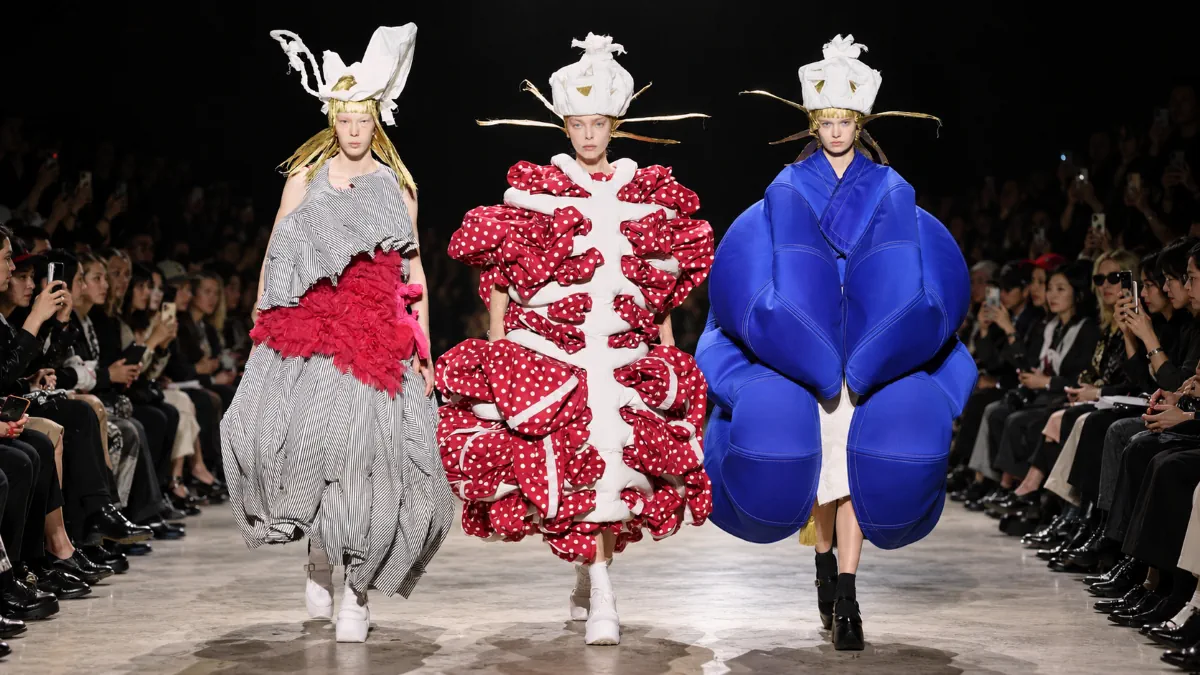
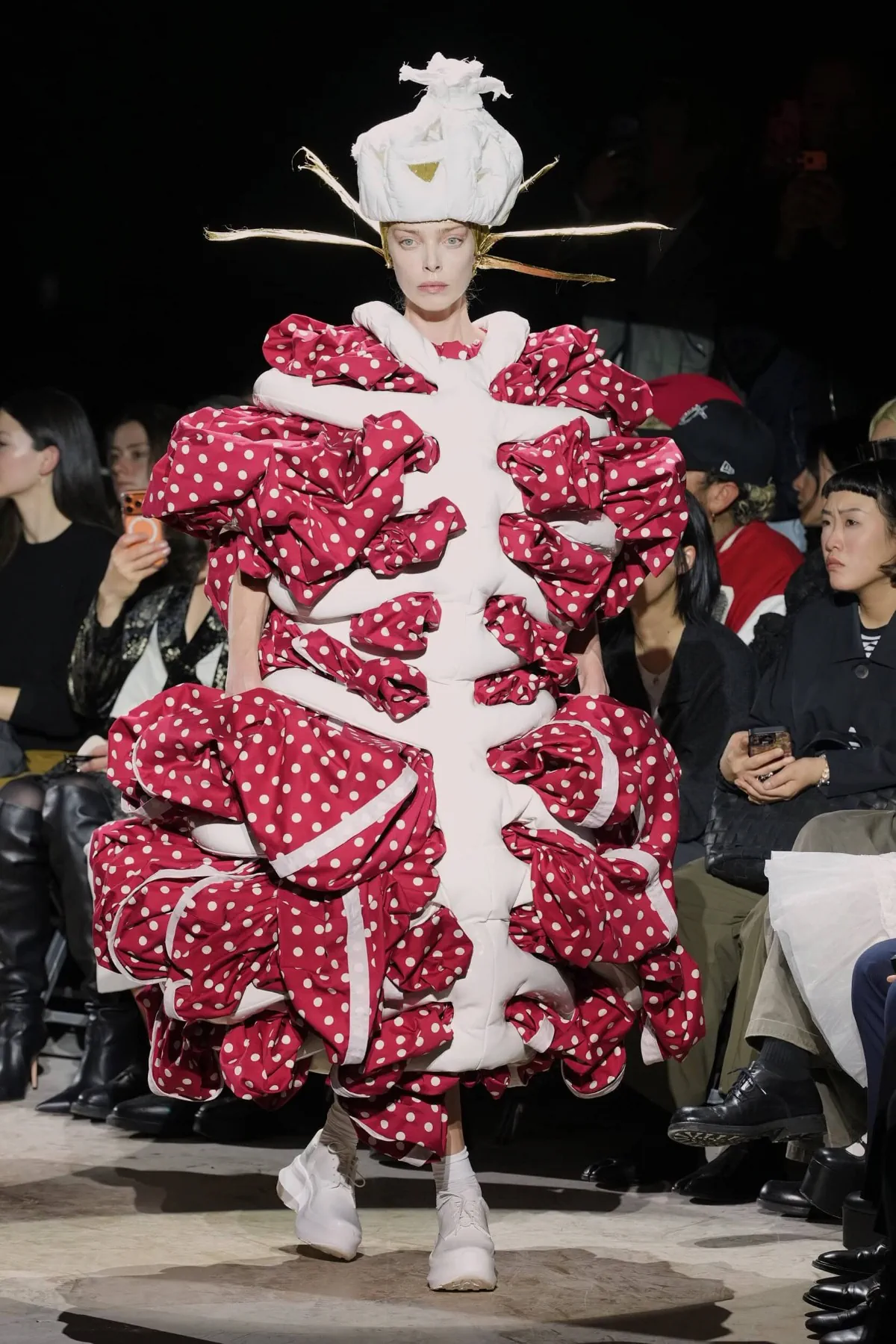
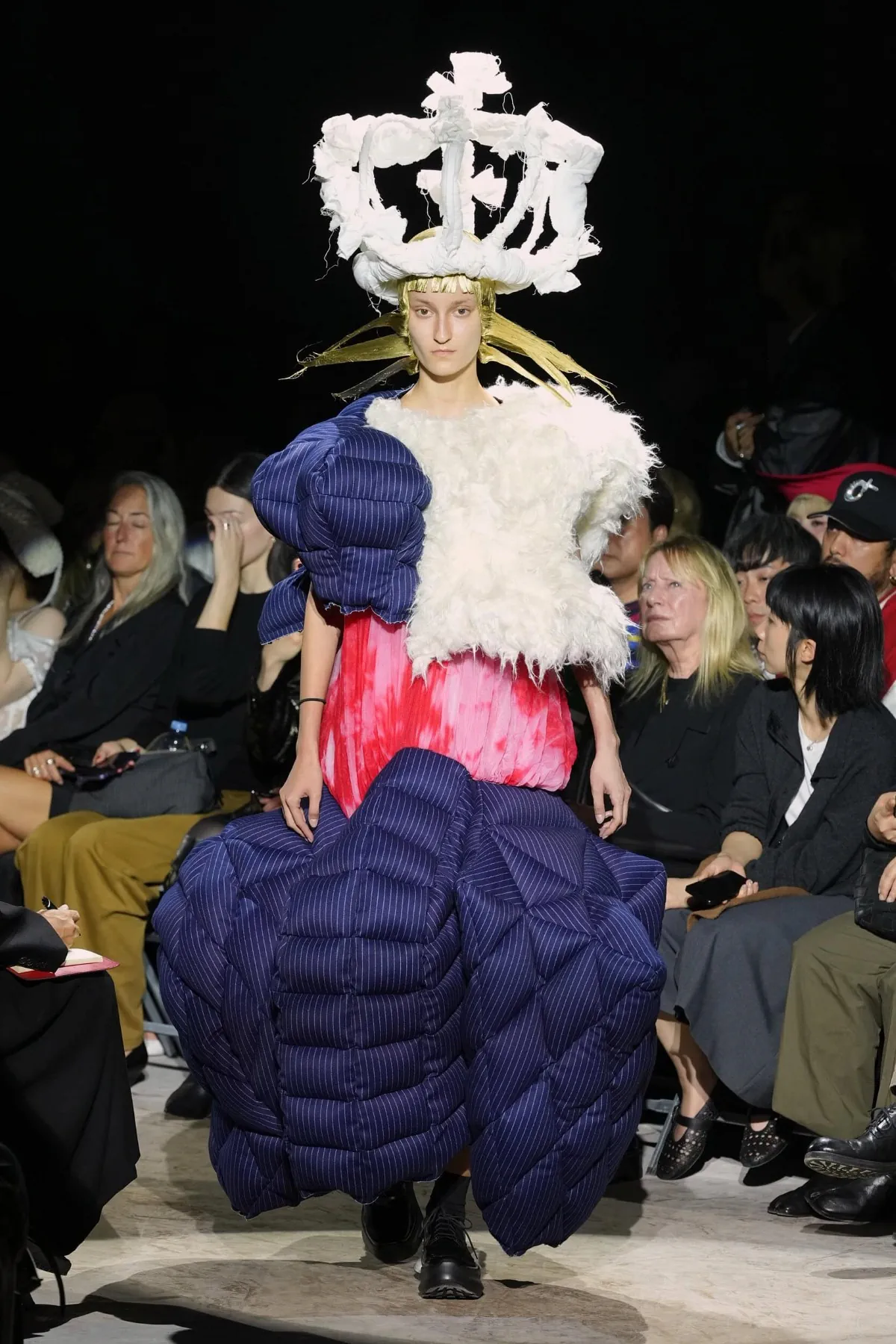
Some silhouettes resembled stacked spheres. Others produced narrow extensions or broad structures around the torso and skirt. Their dimensions also affected the practical conditions of the presentation. Models sometimes had to turn as they passed one another on the restricted runway.
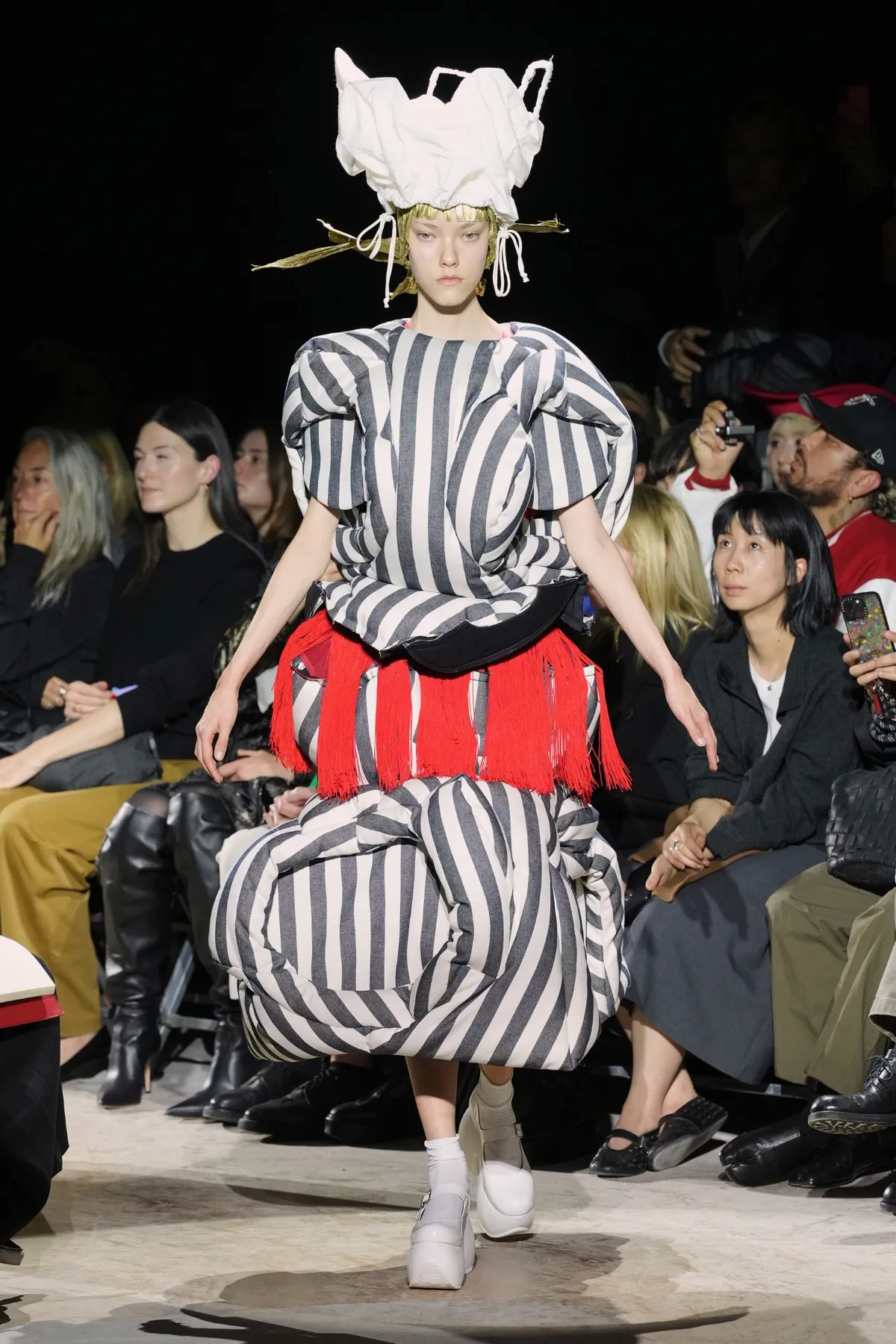
This physical scale gave otherwise ordinary materials greater presence. A fabric associated with jeans or utilitarian clothing no longer looked casual when it occupied so much space around the body.
Denim received particular attention toward the end of the collection. Kawakubo enlarged familiar categories including shorts, barrel-shaped trousers and very wide jeans. Several pairs extended close to or across the floor, turning a standard wardrobe item into another study of proportion.
Follow all the latest news from Fashionotography on Flipboard, or receive it directly in your inbox with Feeder.
You may also like

Decoration changes the meaning of the fabrics
The collection was not entirely stripped back. Decorative elements appeared inside openings and around the swollen structures. Gold braid and passementerie introduced associations with ceremonial clothing, while sections of hair, tulle and other materials emerged from gaps in the garments.
These additions prevented the workwear fabrics from settling into a purely practical context.
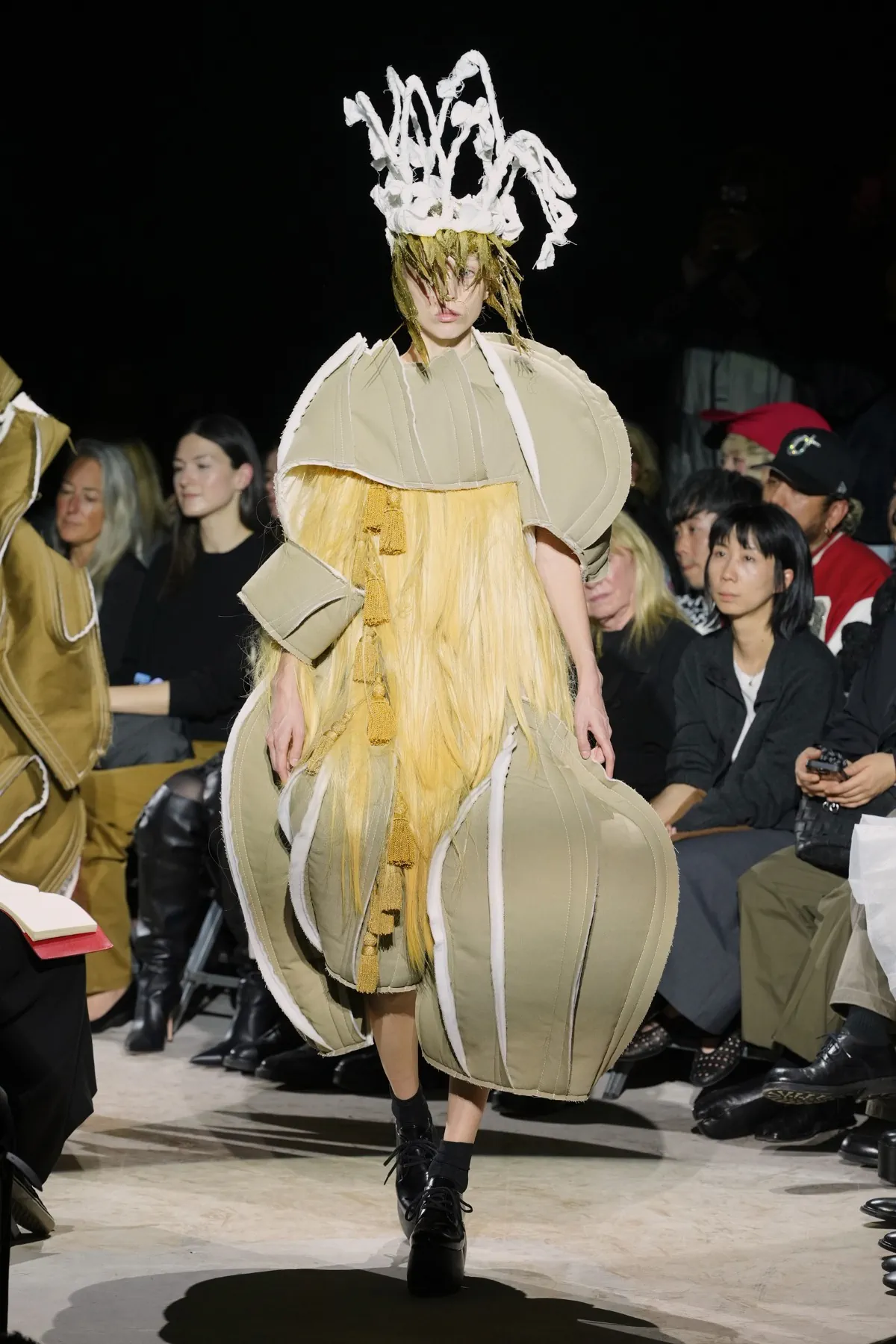
Tall fabric crowns strengthened that tension. They were roughly constructed rather than conventionally precious, connecting an established symbol of rank with materials that looked improvised. Later, metallic foil-like headpieces replaced them, making the reference less formal and more ambiguous.
One pinstriped design provided the collection’s most unsettling image. Red and white protrusions divided the garment and appeared to push outward from within. Unlike the more decorative treatments elsewhere, the effect made the structure look strained rather than finished.
Status is expressed through more than luxury materials
Kawakubo’s brief statement directs attention toward a basic fashion question: what actually makes clothing appear prestigious?
Comme des Garçons Spring 2027 suggests that expensive-looking fabric is only one answer. Scale can communicate authority. So can construction, decoration and familiar cultural symbols such as a crown. Put those elements around denim or cotton and the social meaning of the material begins to change.
That does not make the collection a simple argument about class. Kawakubo did not provide enough explanation to support such a fixed conclusion, and attempts to read the clothes as a direct political prediction go beyond what she publicly stated.
What can be seen more clearly is the deliberate collision of categories. Everyday trousers become monumental. Practical outerwear loses its conventional outline. Ceremonial trim appears beside workwear cloth. Crowns are assembled from fabric rather than precious metal.
The result is less about turning ordinary clothing into luxury than examining why viewers classify one as ordinary and the other as elevated. Kawakubo leaves that distinction unstable, using some of fashion’s most familiar materials to test how much meaning can change when form and context are altered.