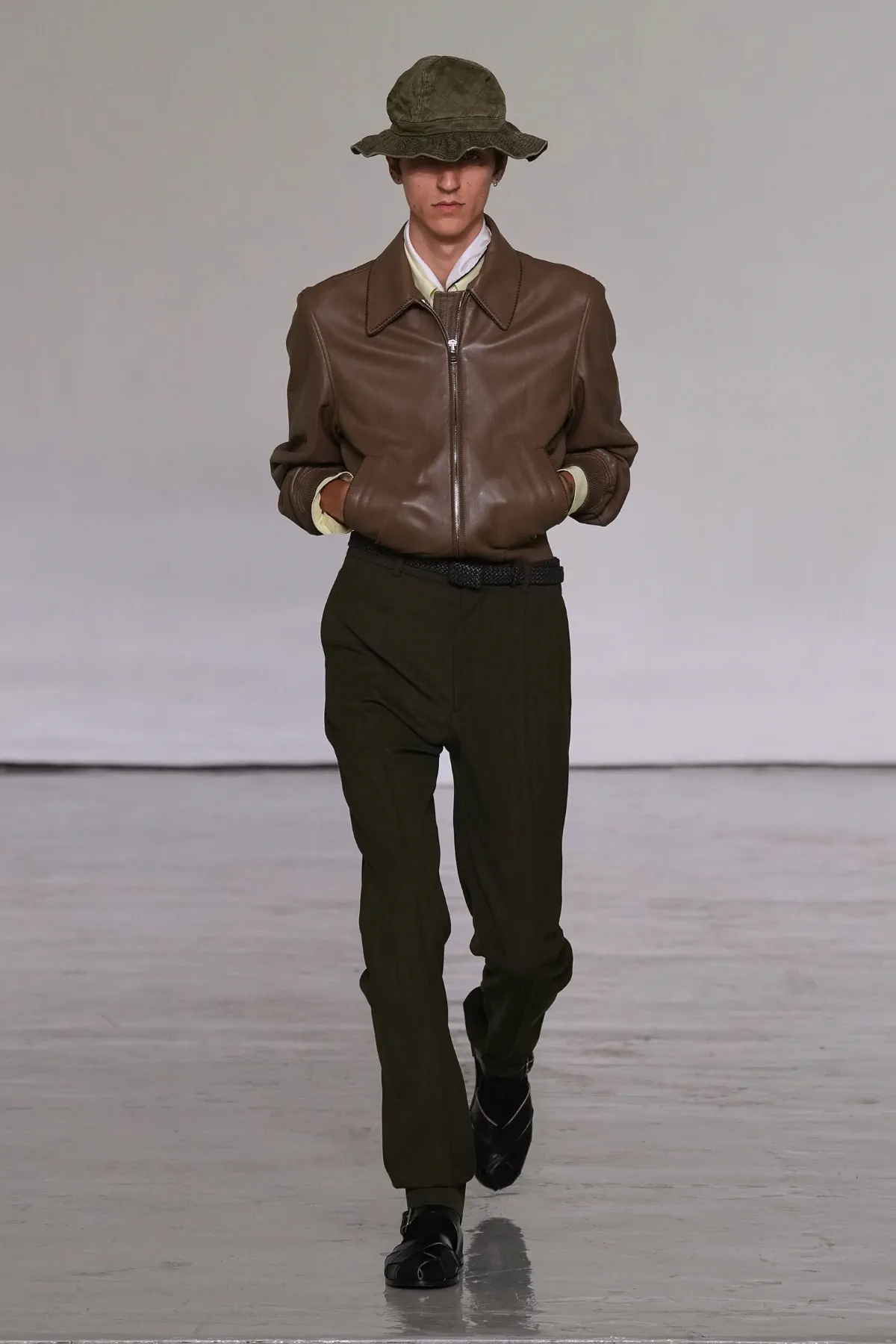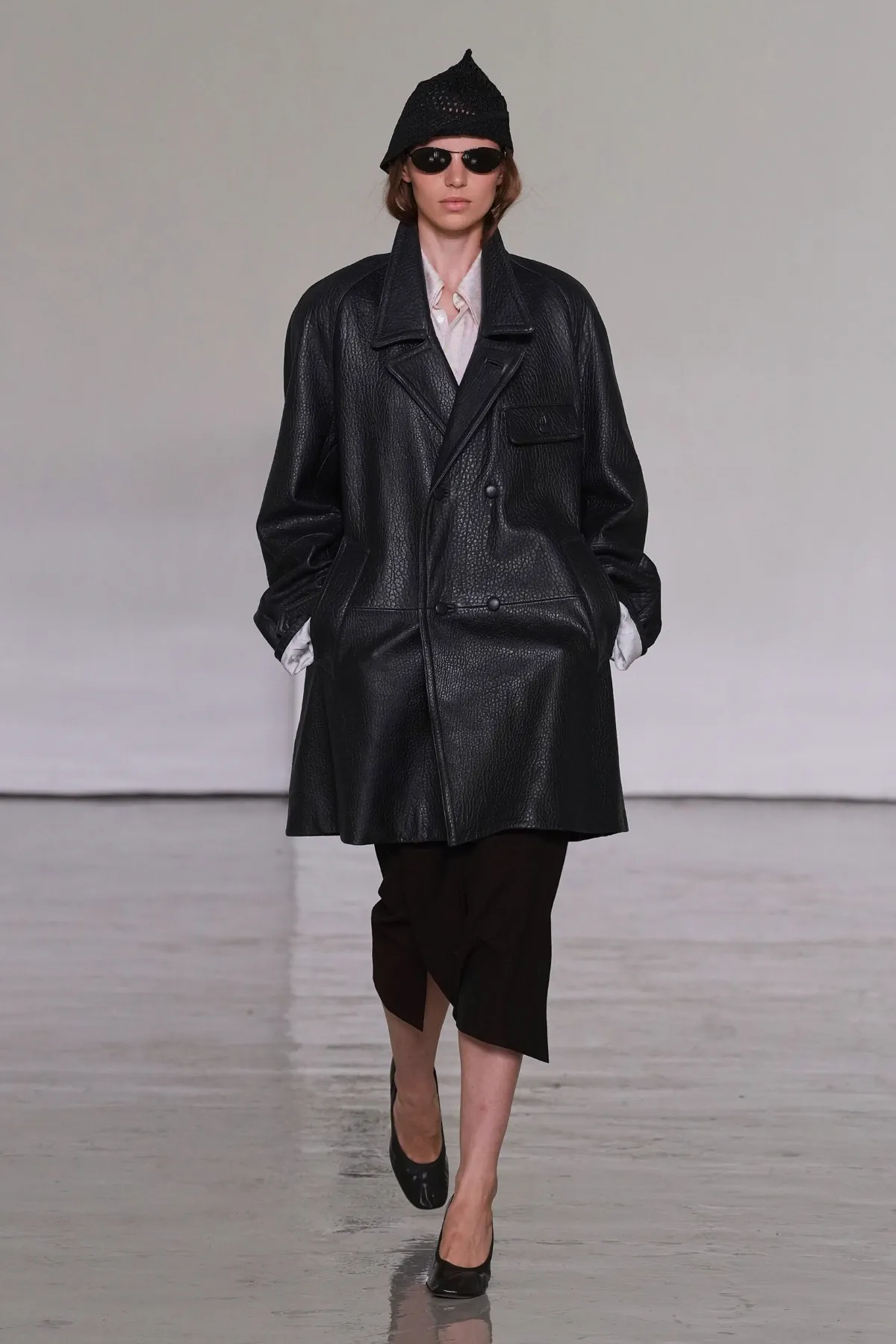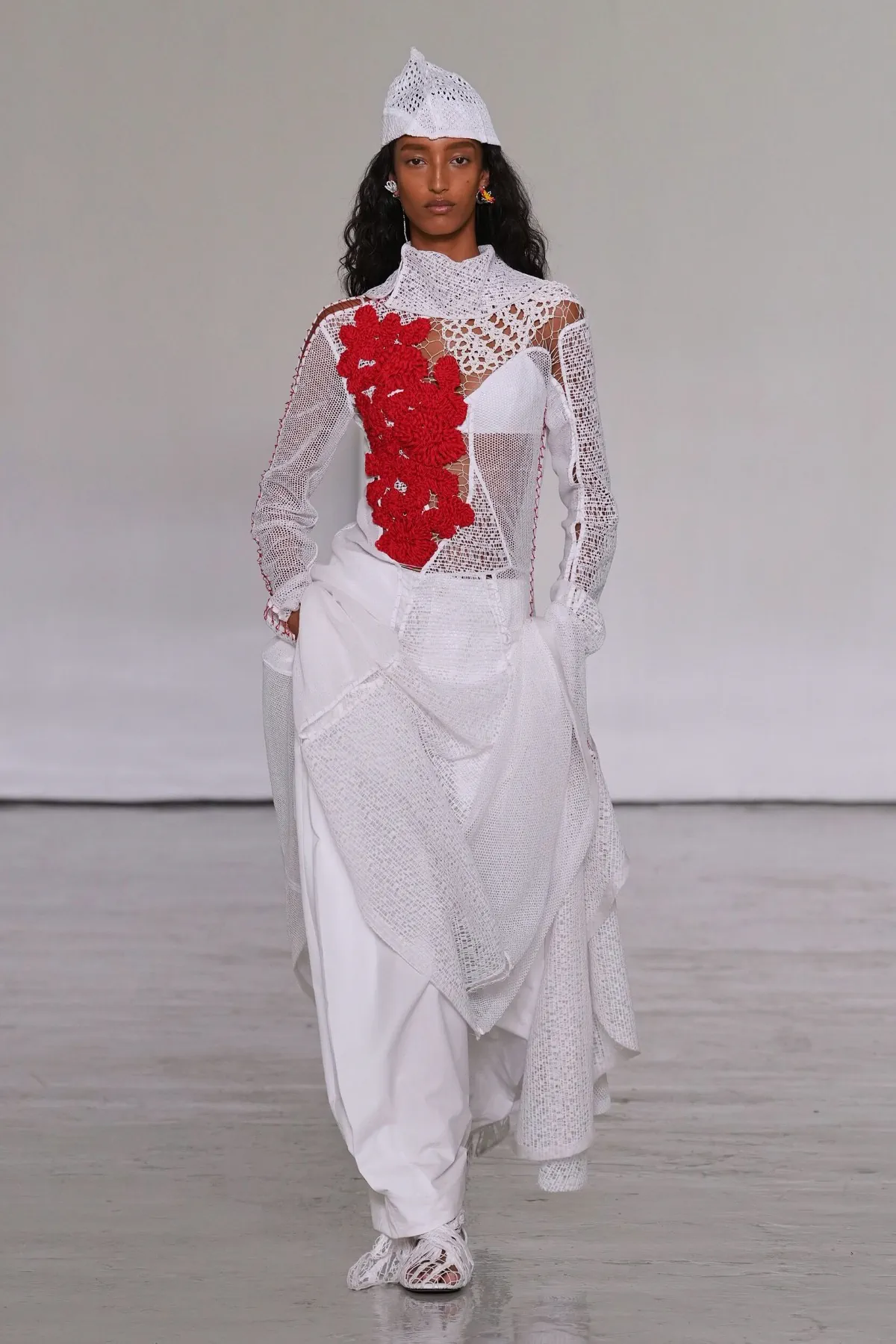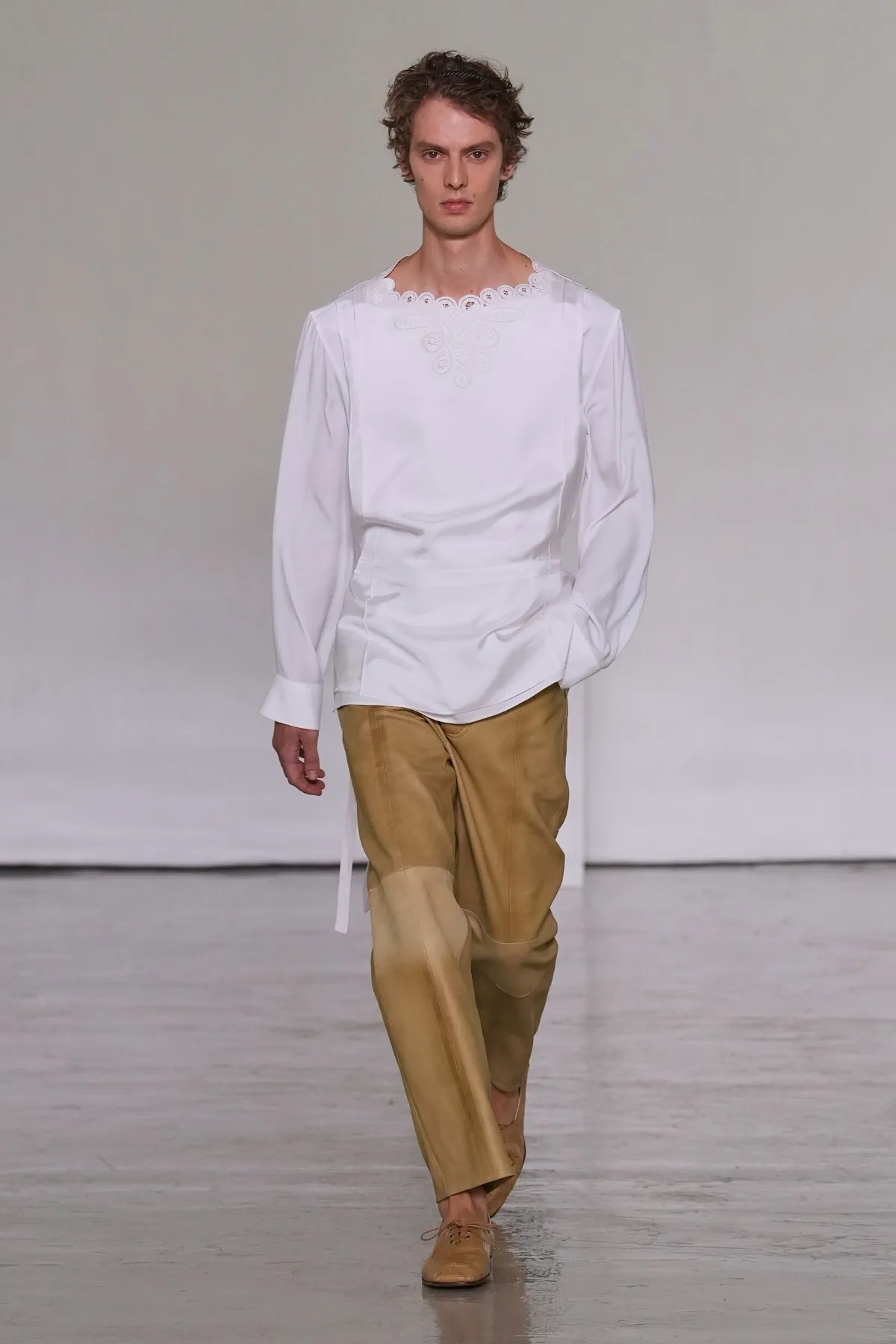

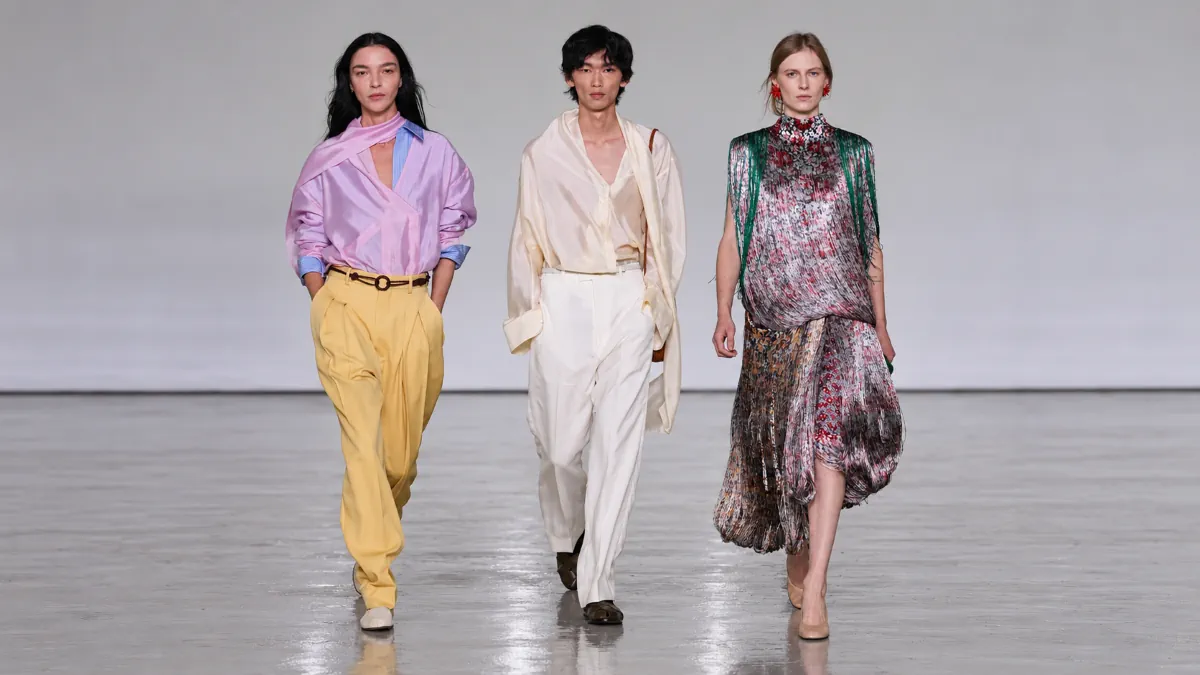
| Bottega Veneta unveiled its Spring 2027 collection in Milan on September 26th, 2026, the third by Creative director Louise Trotter. The collection shifts from dense to lightweight craft, using crisp cotton, gauzy pink silk trousers and Venice-region lace. Fringe is the dominant motif. Jacob Elordi attended. Spring pieces typically reach stores early in the new year. |
Milan’s runways rarely resemble weather reports, but Louise Trotter’s third collection for Bottega Veneta was like the first warm day after a long winter. The show, staged on Saturday in a stark white space lit with the cool precision of a science fiction set, marked Spring 2027 as the season when Trotter finally allowed her clothes to breathe. Crumpled white boxes were arranged in imperfect rows on the floor, each topped with a small, handmade leather parrot tulip. This hinted at the collection to come: one built on craft, but freed from the weight that had defined her first two seasons at the house.
Bottega Veneta has spent decades trading on intrecciato, the woven leather technique that functions almost like a signature. Trotter, a British designer in her second year in Milan, has never shied away from that legacy. Her debut and sophomore collections leaned so hard into the house’s artisanal prowess that critics teased her about it. Scooped-neck sack dresses and satin peacoats swallowed some of the models whole in earlier seasons, and a few of Saturday’s looks still showed traces of that tendency. This tension has been central to her tenure so far: How do you honor a house whose identity is a technique without letting the technique become a burden?
But something shifted. This time, Trotter swapped density for lightness, reaching for crisper cottons, gauzy pink silk trousers, and airy lace inspired by the stitching traditions of the Venice region. “We’re a house of craft,” she told reporters backstage. “Craft really is our logo, but this season we focused on techniques that would bring lightness and wearability while maintaining all the incredible handwork this house is capable of.” For a house whose reputation was built on not needing a visible logo, this is as much a design note as a positioning statement: Lightness is now the next thing craft must prove it can do.
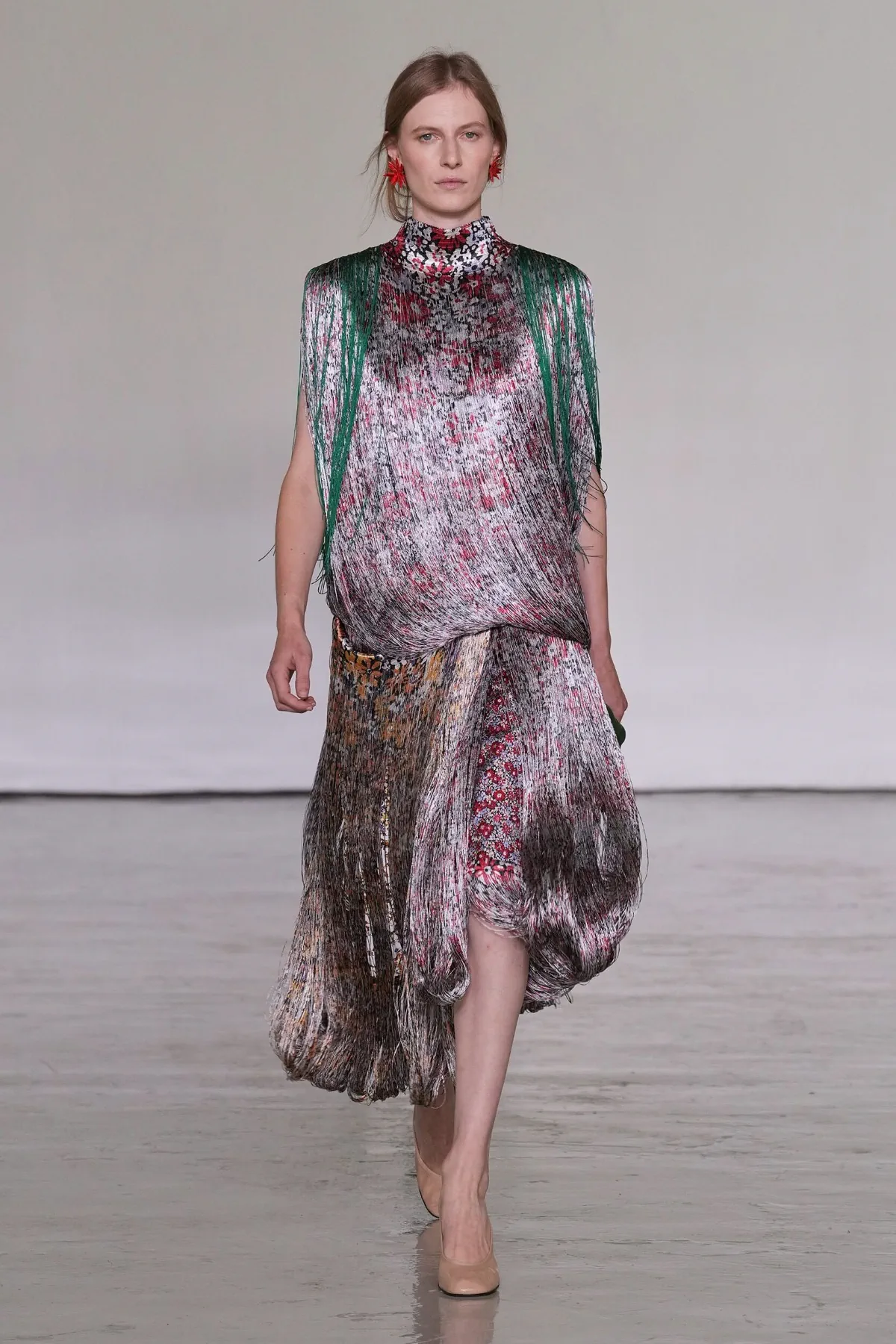
Fringe became the collection’s loudest motif, though never in an obnoxious way. It dangled from hip scarves, curled into rounded bubble skirts, and trailed off an oversized straw bag whose edges nearly grazed the floor. Meanwhile, Trotter’s tailoring stayed trim and elongated over simple chinos, and the shirting was mostly restrained, except for one white, short-sleeved piece that showed a bit of bra strap. “There is this sense of being a little bit undone,” she said backstage, describing a friction between polish and something looser and more organic.
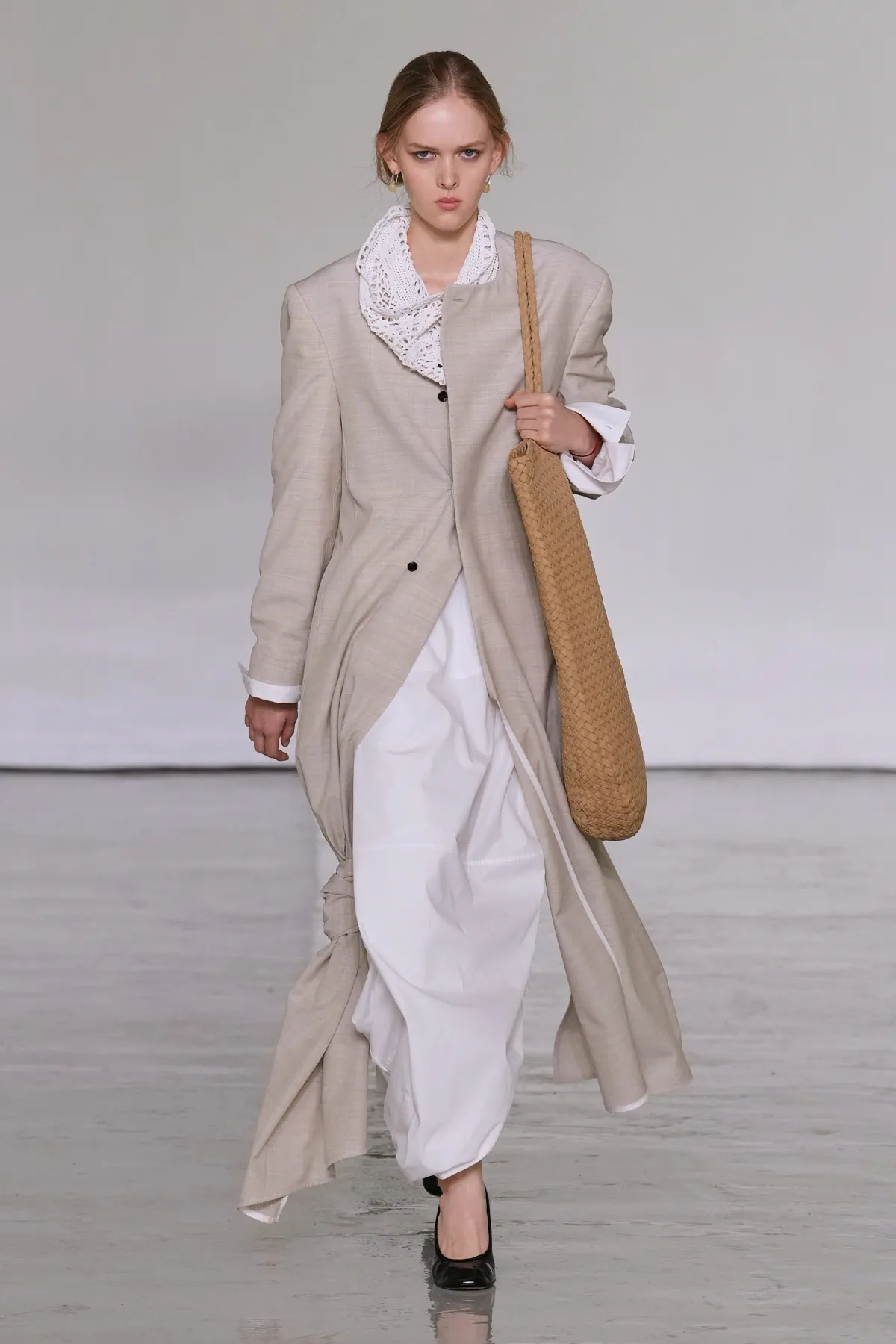
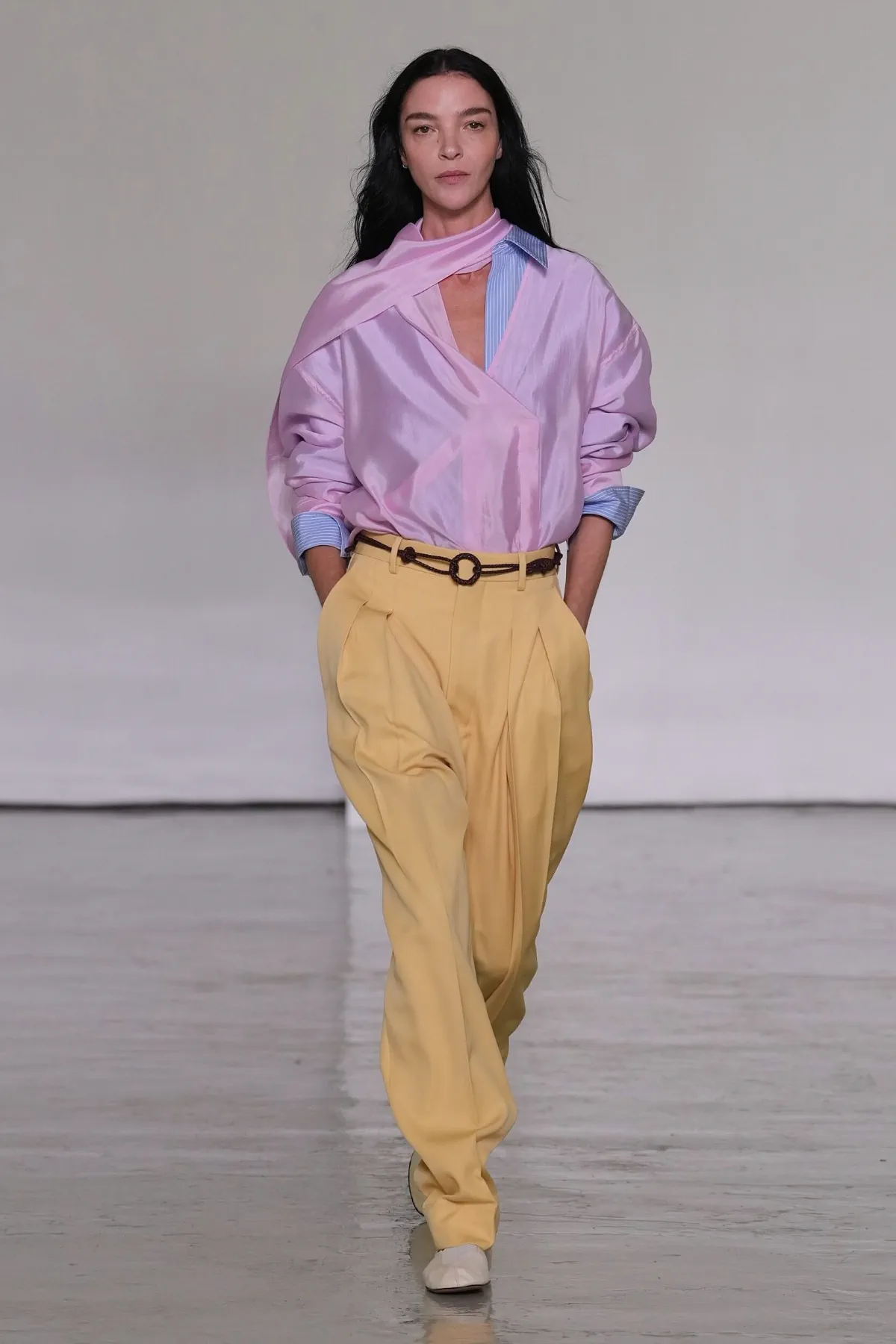
That in-between quality was intentional. Days before the show, Trotter described the collection as an observation of how a wardrobe transitions between seasons, a phenomenon she says she has noticed more acutely since moving to Milan. Coats opened the show with padded, slightly exaggerated shoulders and knotted hems as though the wearer might wade into water. Vibrant pastels followed: a lilac top over a striped button-down, butter-yellow chinos, and a flower-print fringe skirt that swung with real movement. By the middle, patchworked white lace and chunky crochet suggested that summer had taken over spring. This is a timely idea as autumn sets in. The transitional wardrobe – the awkward weeks between coat and T-shirt – is exactly where this collection lives. Spring pieces typically reach stores early in the new year.
Follow all the latest news from Fashionotography on Flipboard, or receive it directly in your inbox with Feeder.
You may also read

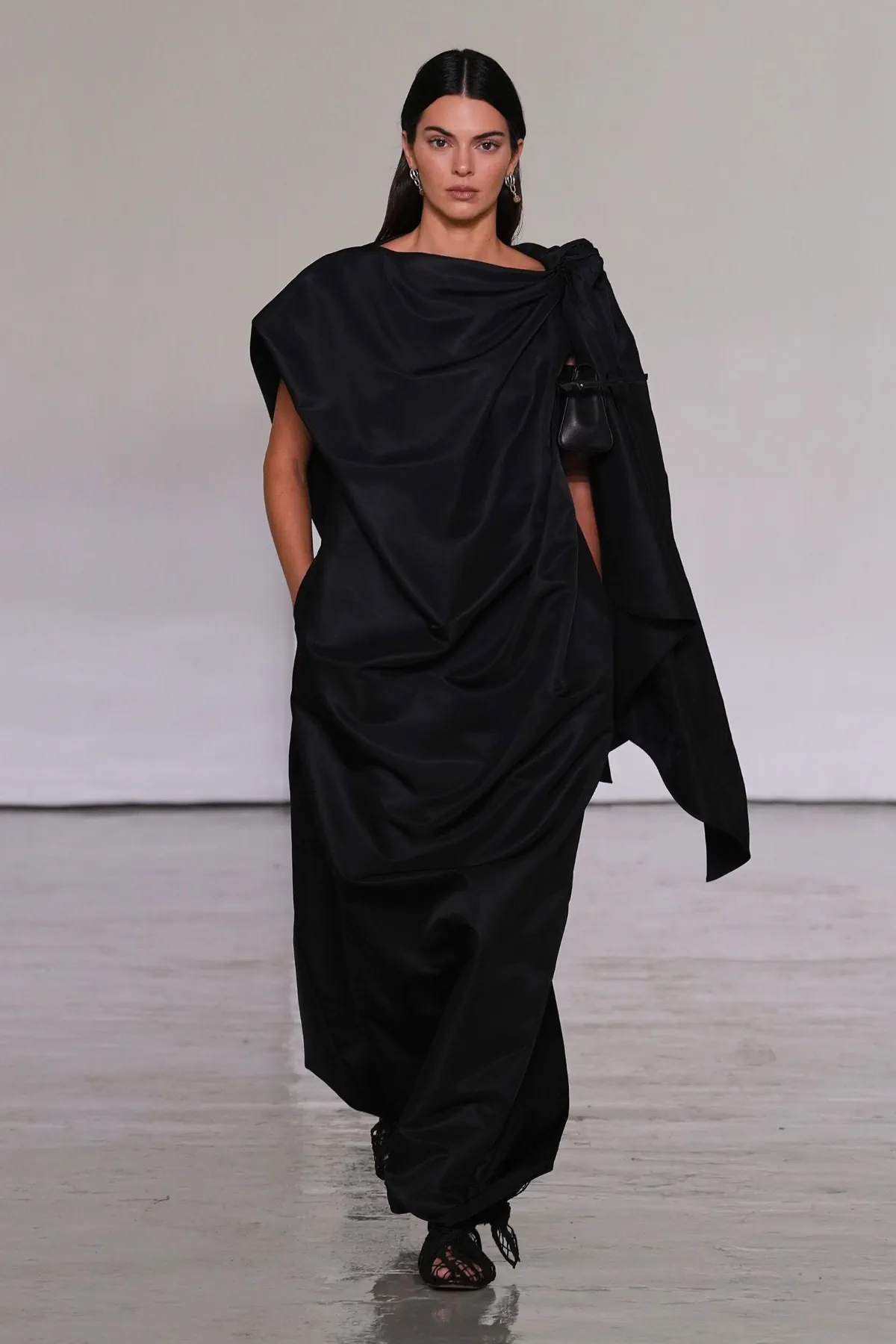
A red cotton dress with a gathered waist and a knot over a pleated skirt in the same shade stood out for its simplicity. Little black dresses wrapped in crisscrossing silk fringe kept things celebratory without tipping into costume. Earrings sculpted from clay-like leather, often mismatched, reinforced the artistic, craft-obsessed audience that both Trotter and her predecessor have courted. One plain, black, one-shoulder gown, entirely stripped of embellishment, offered a useful counterweight and proved that Bottega’s new direction doesn’t require constant adornment.
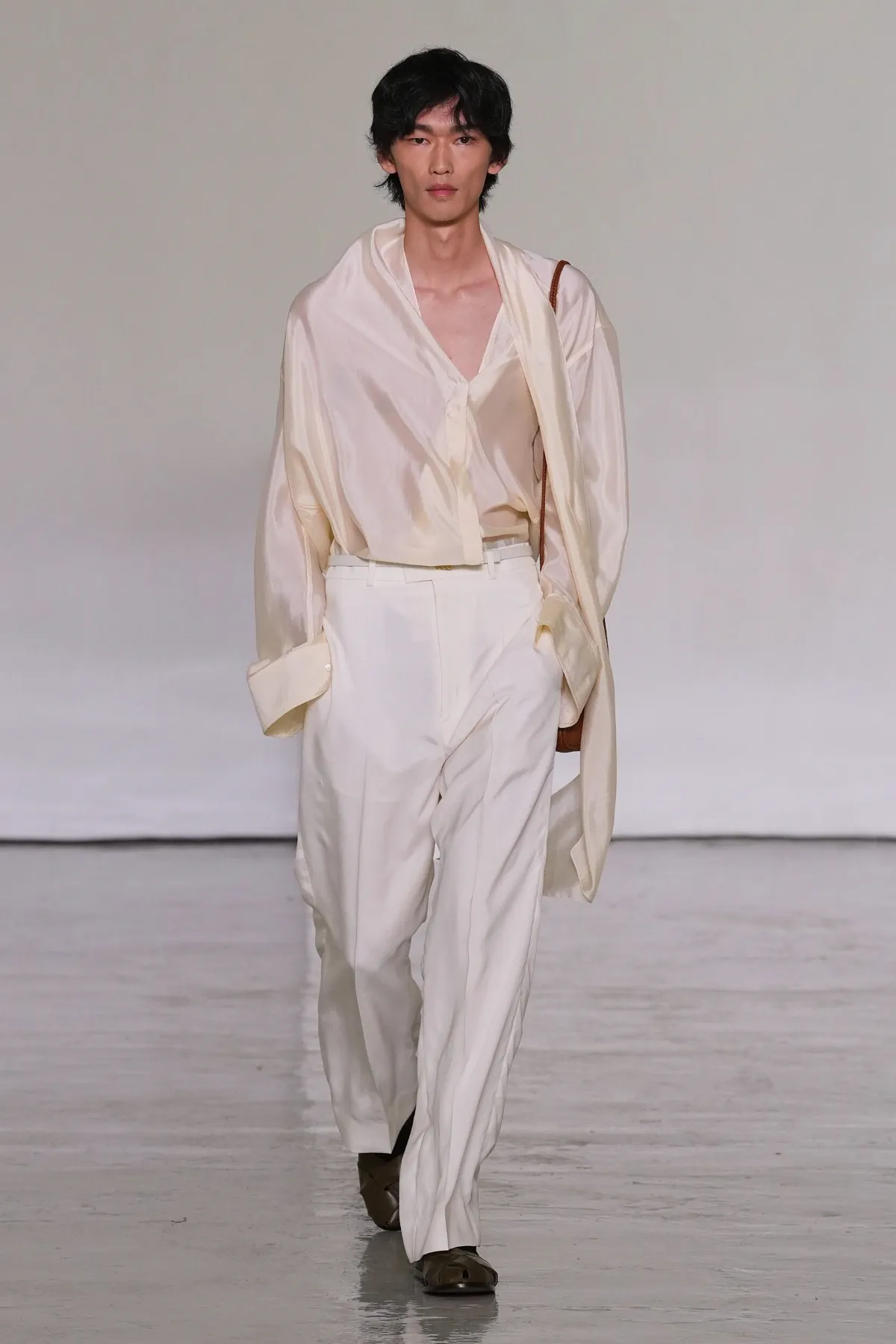
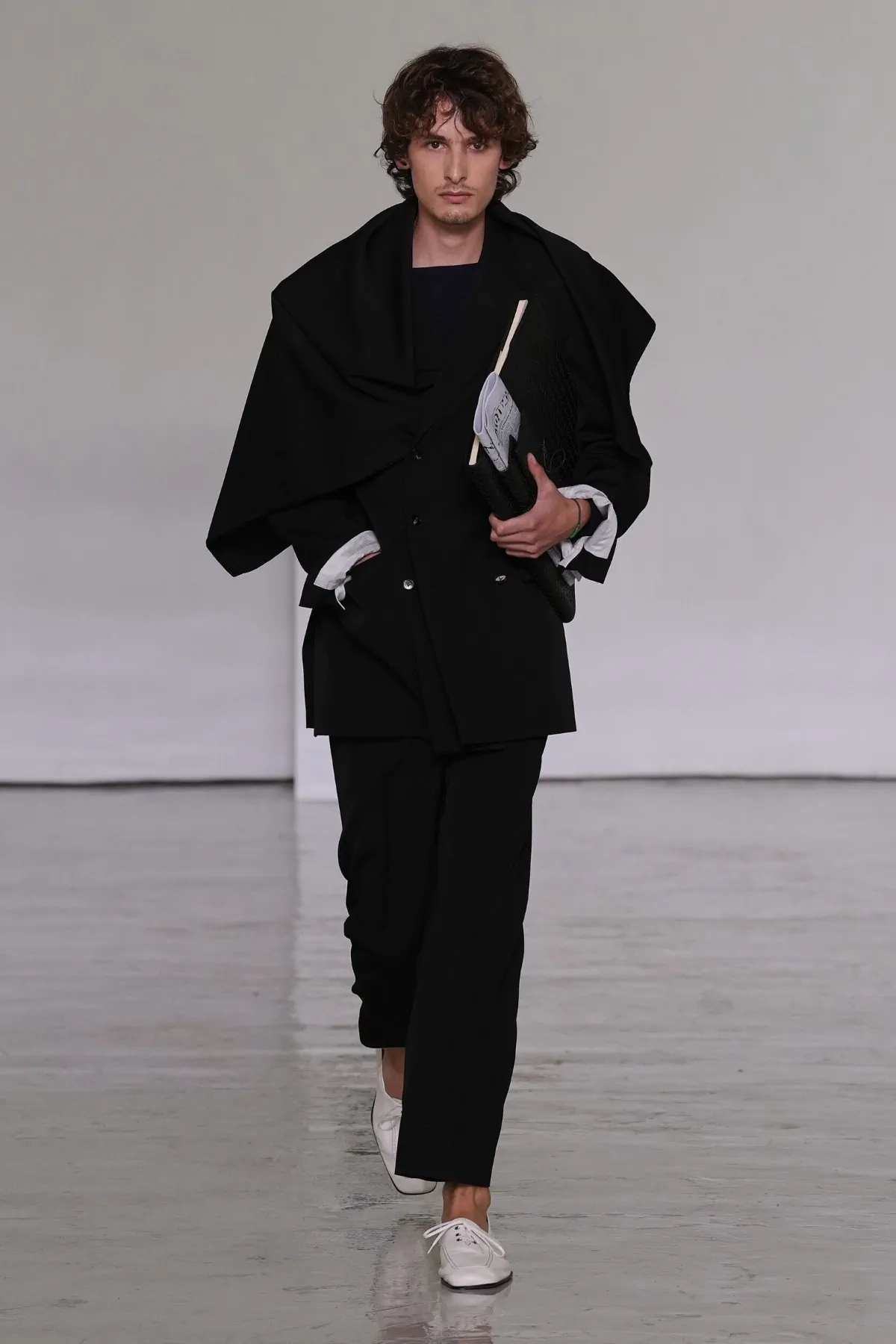
The menswear collection followed the same logic with trimmer silhouettes, lighter fabrics, and a slightly bohemian edge. Seated in a dark olive Harrington jacket with a red intrecciato pouch, Jacob Elordi made for good photographs, and his presence pulled the show toward an audience well beyond fashion insiders. But the real story was on the runway. For men, the takeaway is concrete and easy to adopt: a slim, elongated cut; a light jacket, such as a Harrington; and one confident color accent, like the red pouch or butter-yellow chinos. It seems that Trotter has found the balance she has sought since arriving at Bottega Veneta: heritage craftsmanship made wearable and precious materials treated as everyday clothing rather than museum pieces. Spring 2027 suggests she’s closer than ever to achieving it. The real test will be whether that lightness survives contact with the shop floor. For the first time, however, Bottega Veneta looks like a brand comfortable enough to travel light.