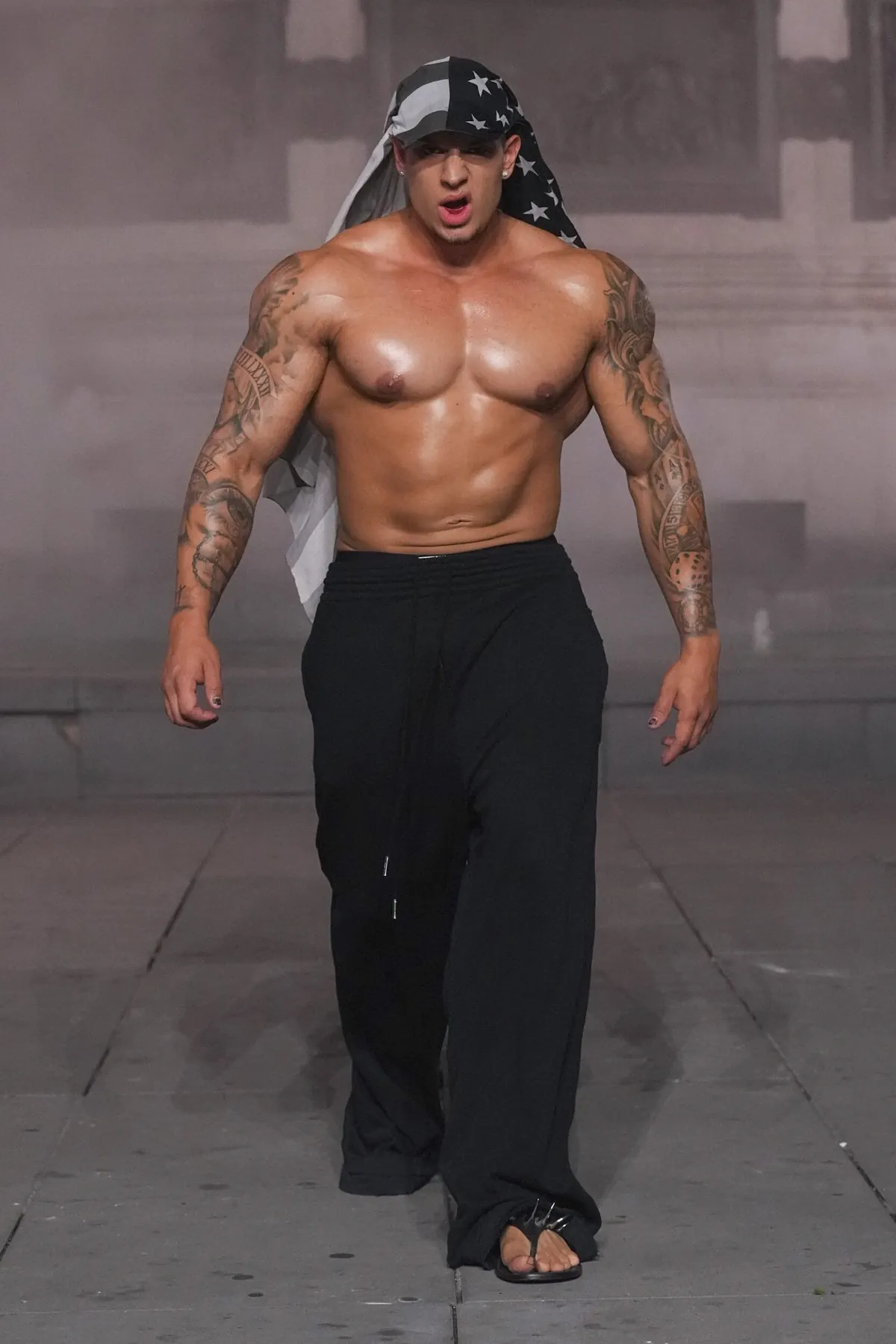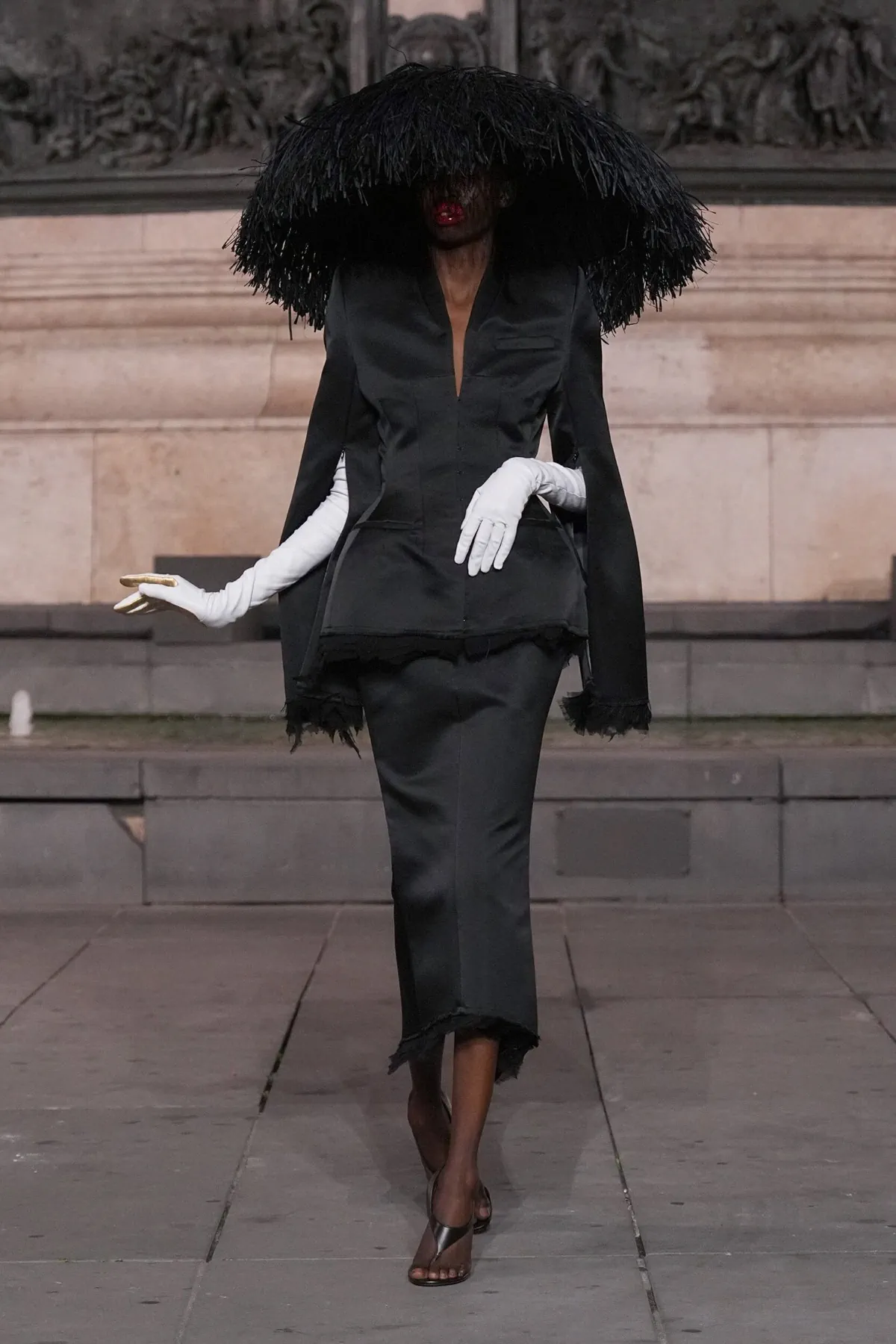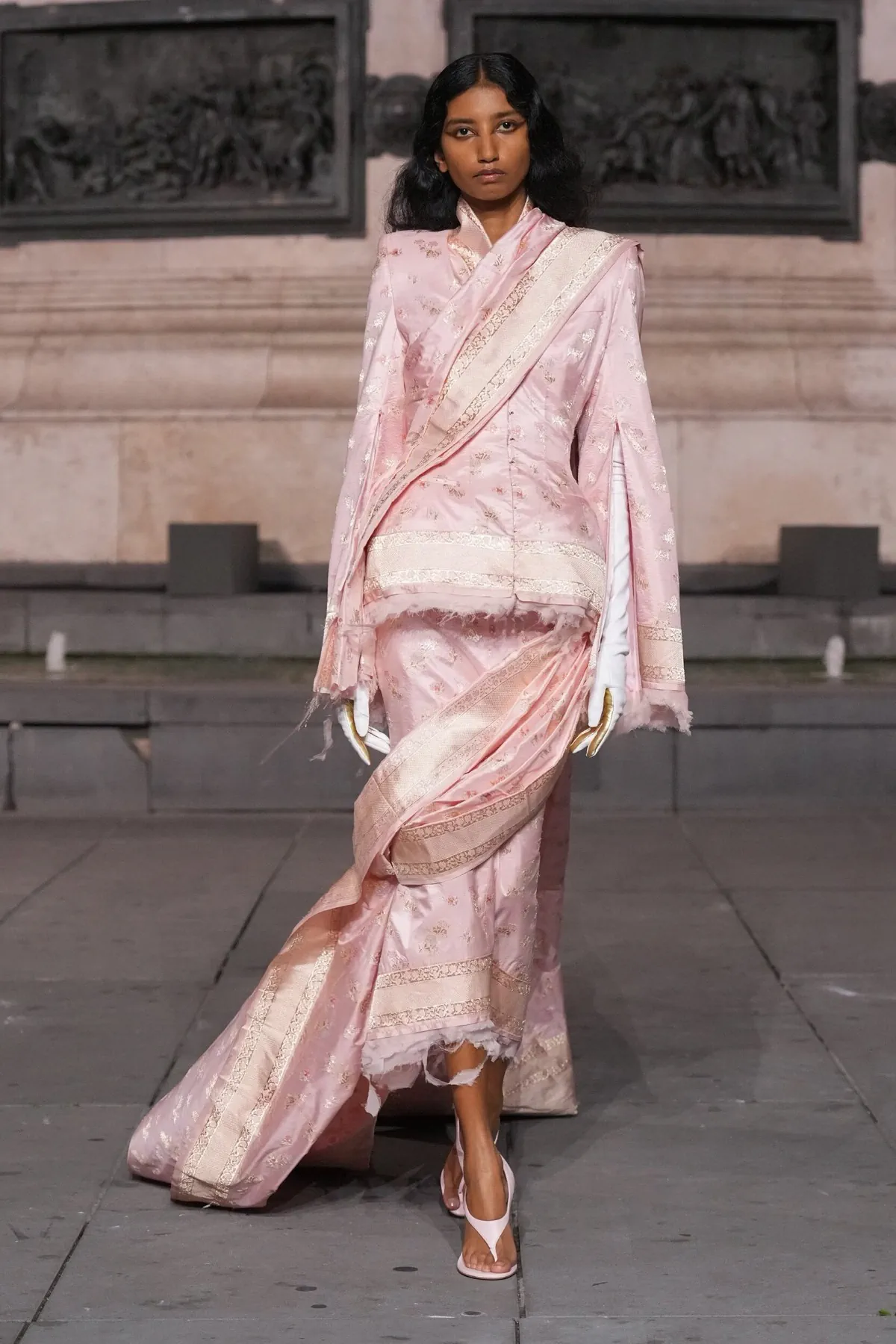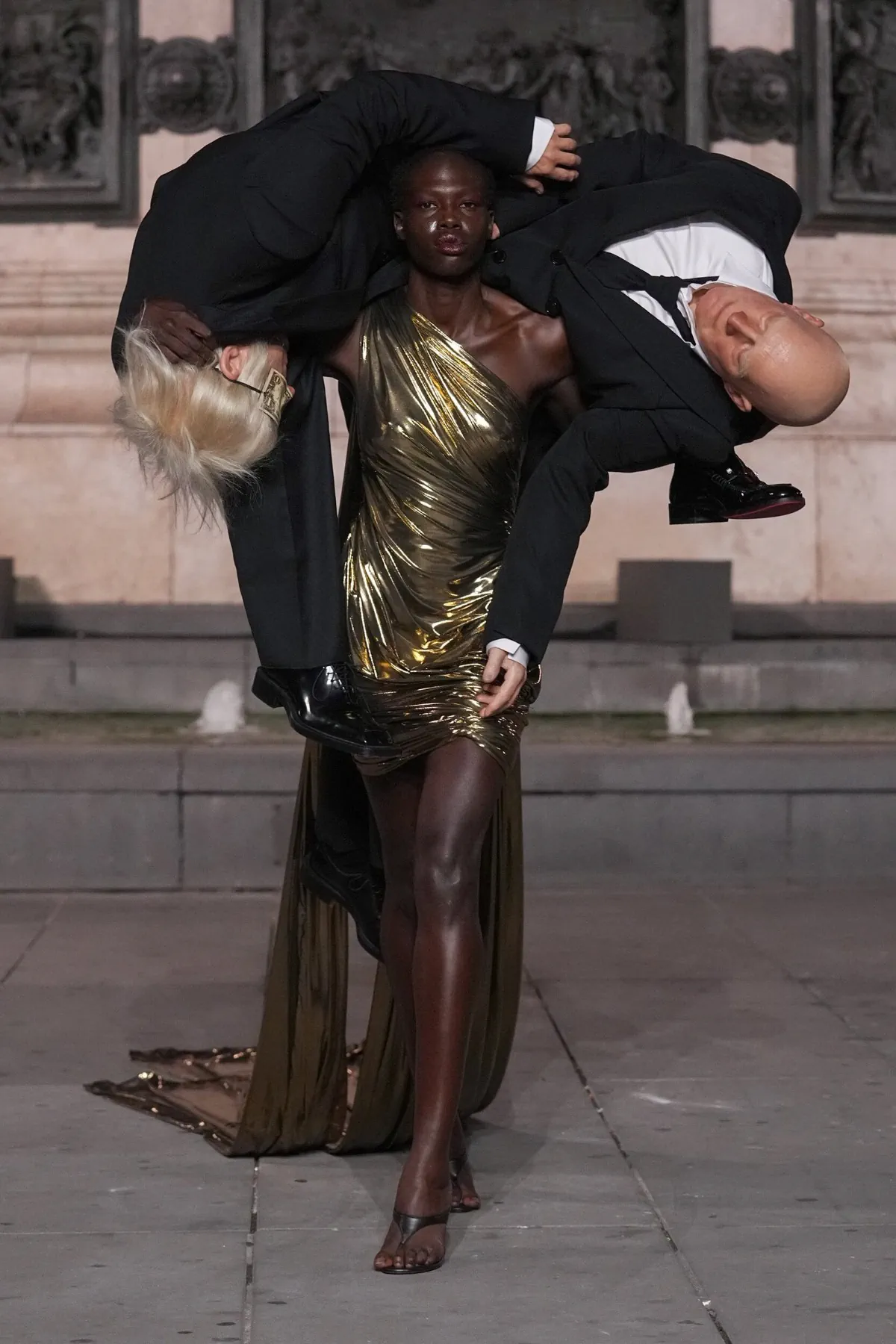

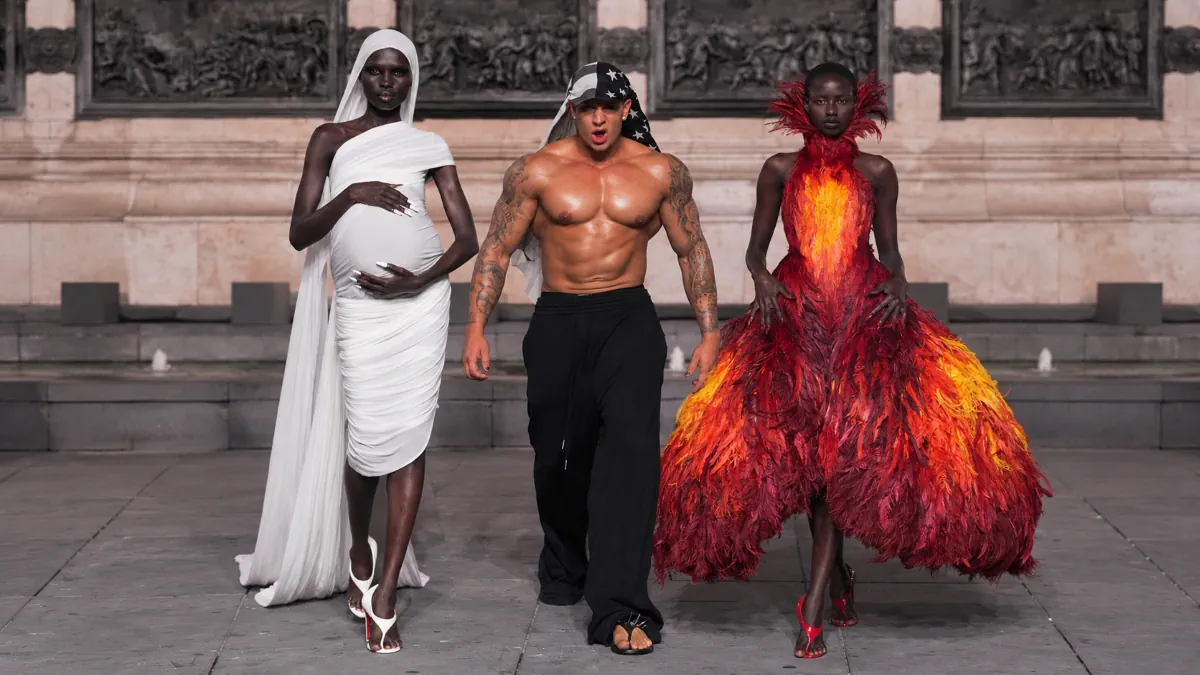
| Matières Fécales presented its Spring 2027 collection, “The Ninety-Nine Percent,” at Place de la République on September 28th, 2026. The show closed the first day of Paris Fashion Week. It was the first fashion show ever held on the Paris square. The Canadian label cast 99 models of color. Part of the sales will go to La Maison d’Allanah. |
Place de la République has hosted marches, vigils, strikes, and Fête de la Musique crowds. Until Monday night, however, it had never hosted a runway show. By the time Rihanna arrived late, the square’s first fashion show had become more than just a show; it was a political statement staged a few months before France elects its next president.
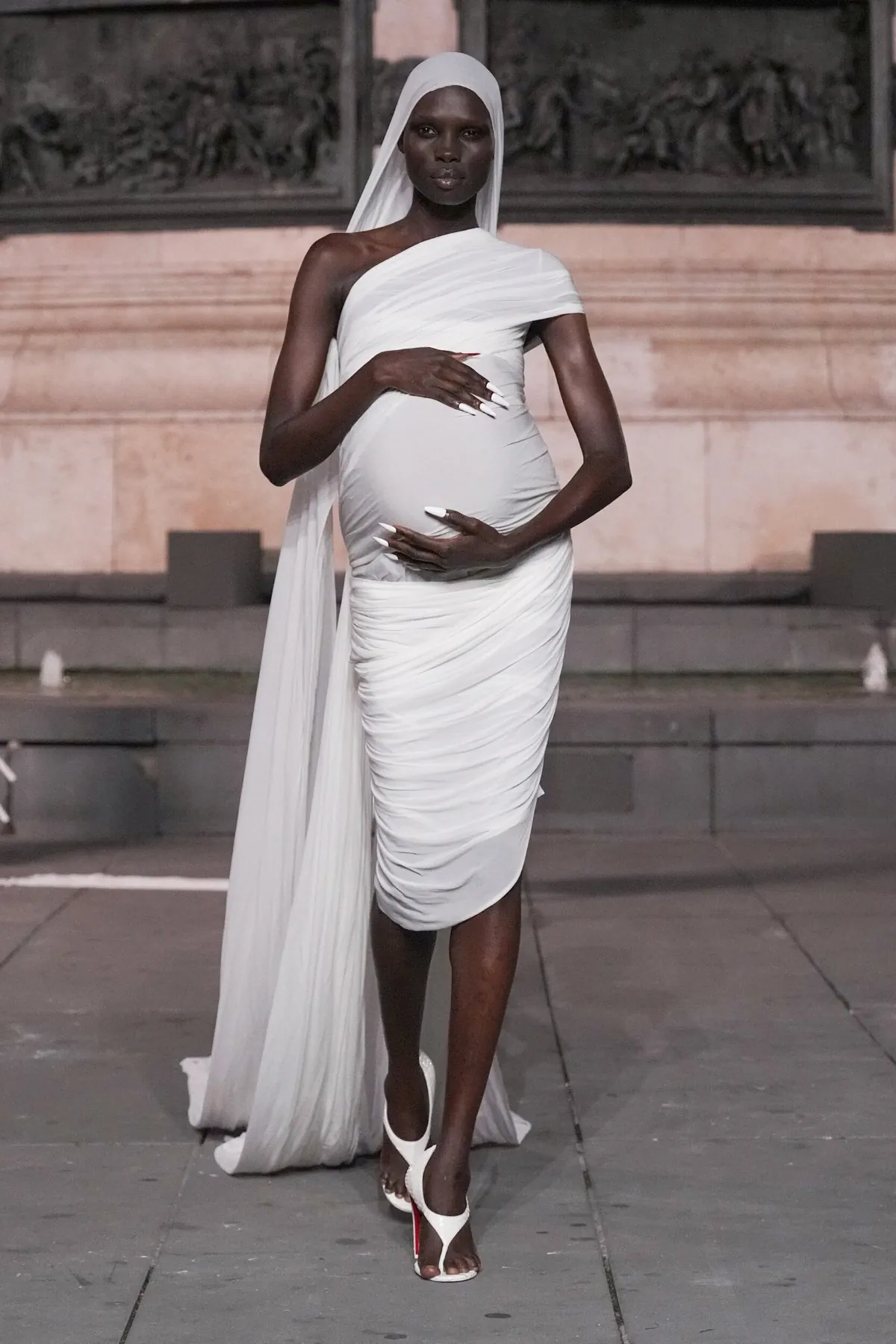
Matières Fécales presented its Spring 2027 collection in Paris’s Place de la République, a square that had never before hosted a fashion show. Nobody I asked could recall a precedent, and the French trade press confirmed it was a first. The founders, Steven Raj Bhaskaran and Hannah Rose Dalton, chose the location on purpose. The show closed the first day of Paris Fashion Week on September 28th at nightfall around the monumental statue of the Republic by Léopold Morice, which was inaugurated in 1883. Bhaskaran described the square as a sacred place where the city comes to voice its opinions – a place of revolution – and said it was fitting that the first show ever held there came from a pair of immigrants.
The Canadian duo has spent two seasons criticizing the luxury industry. They started their label in Montreal in 2014, but it has only recently become a serious presence on the Paris fashion calendar. Last March, they presented The 1% at the Palais Brongniart, the old Paris stock exchange, poking fun at the yacht-owning crowd. This time, they turned to the other 99 percent. The collection was aptly named “The Ninety-Nine Percent.” Read together, the two shows form a diptych: first, those who hold the wealth; then, everyone else.
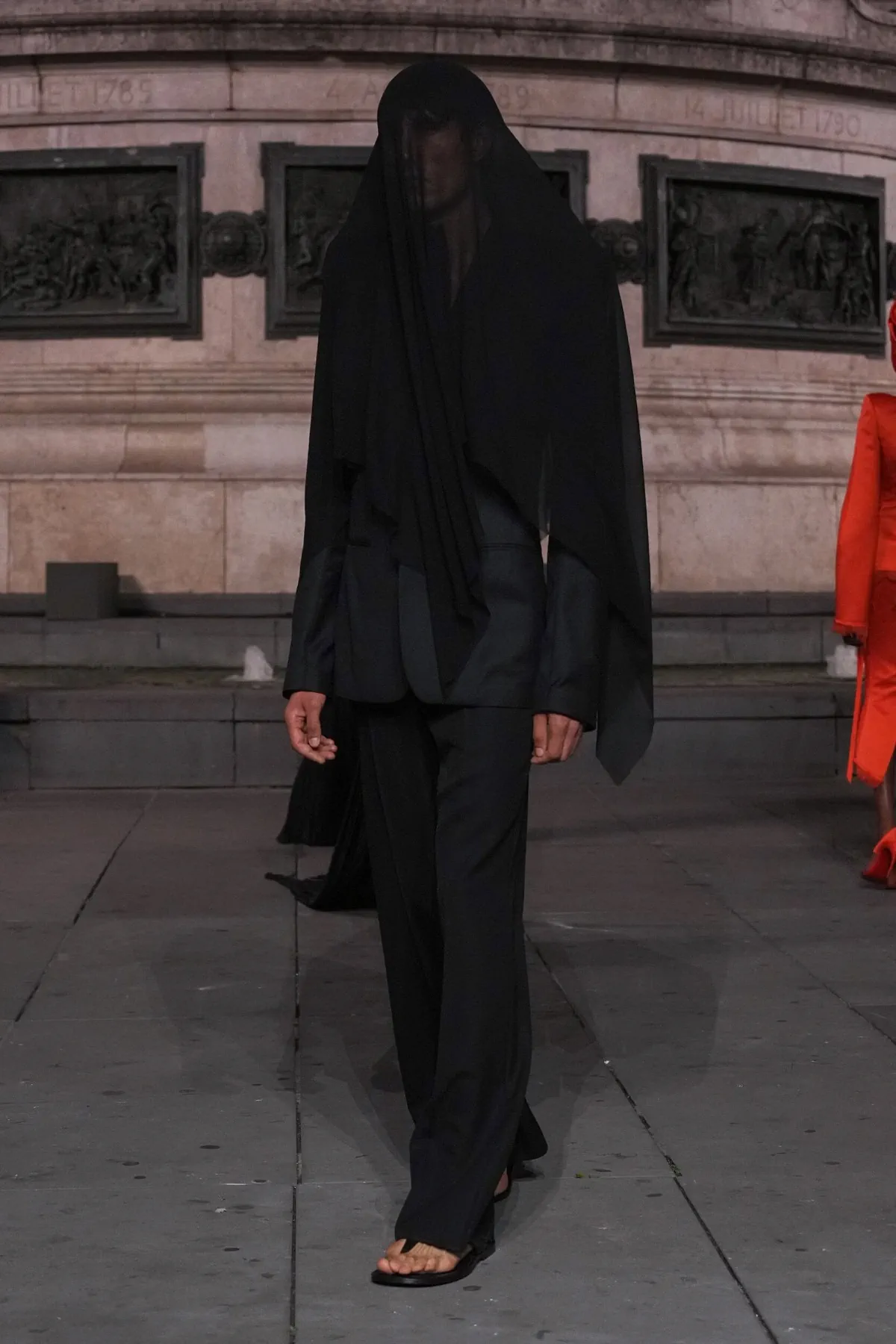
All 99 models were people of color. The 35-minute show took place beneath the Monument to the Republic, a place associated with marches and slogans. Some ordinary passersby were allowed inside the barriers, though the fencing was a small irony that the designers acknowledged. Rihanna arrived late, as she tends to do. Then it began.
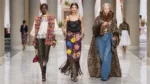
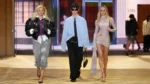
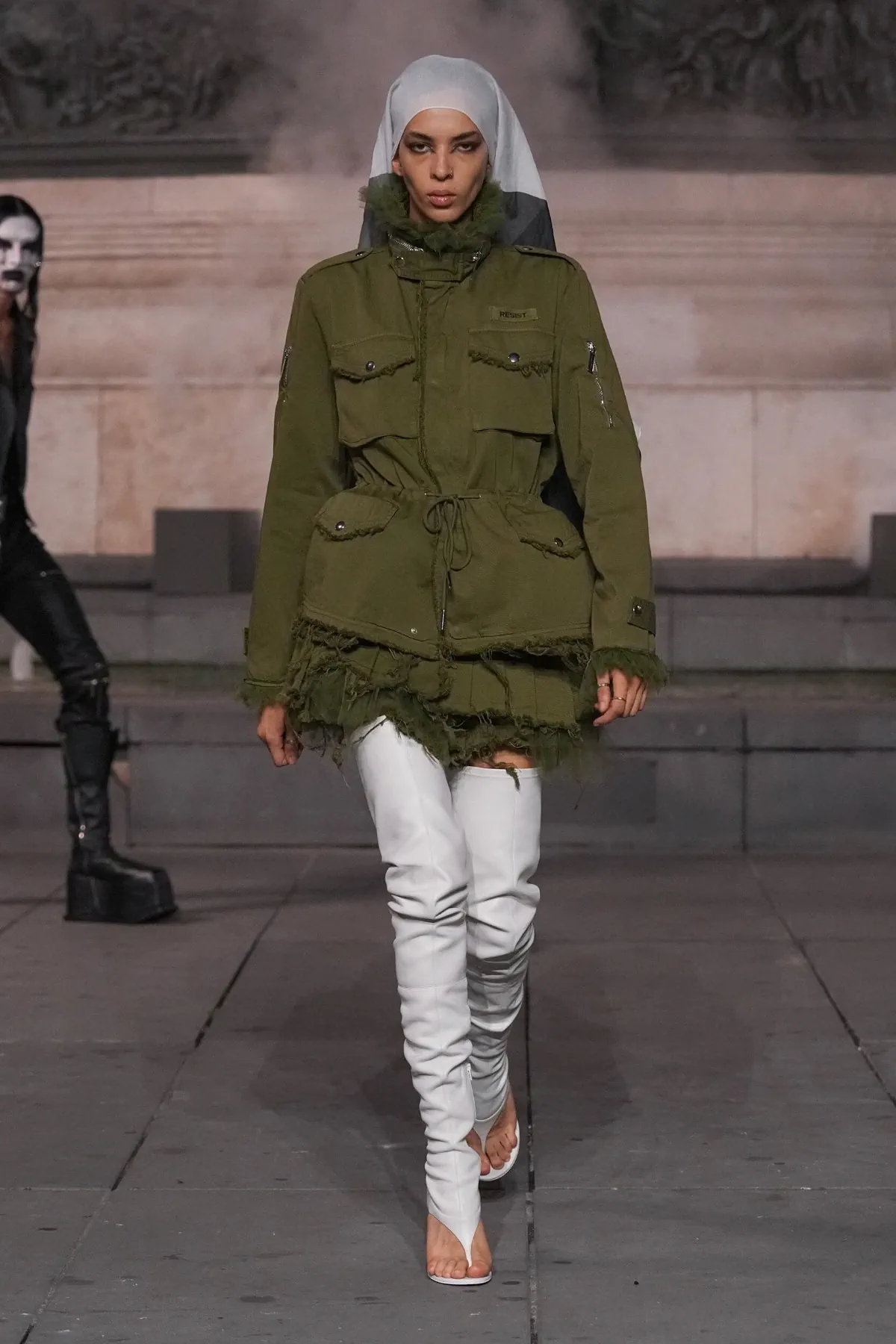
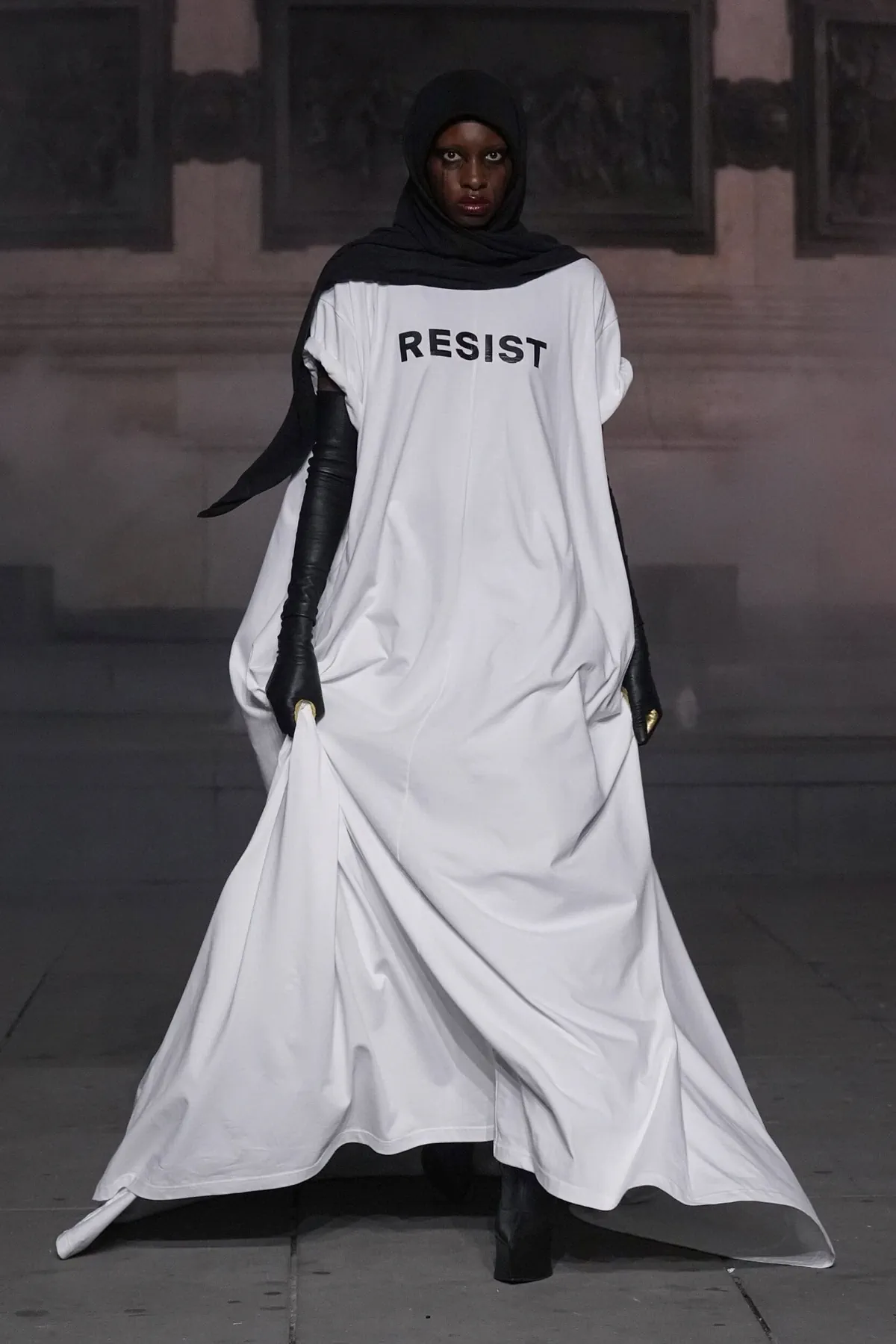
The first act was personal. Models carried swaddled infants, and the parade of white outfits concluded with Bhaskaran himself standing with his mother, Grace; his sister, Shandeal; and his niece. He grew up among Hindu, Christian, Mormon, and Muslim households, and his clothing reflected that. Kurtas had crosses on them, men’s heads were veiled, and the torn tailoring and linen recalled the skirts his mother wore at home. Christian Louboutin flip-flop slingbacks appeared on the runway. The most interesting part of the evening was the menswear: veiled heads and kurtas cut with the same seriousness as tailored jackets questioned what a “masculine” wardrobe can borrow.
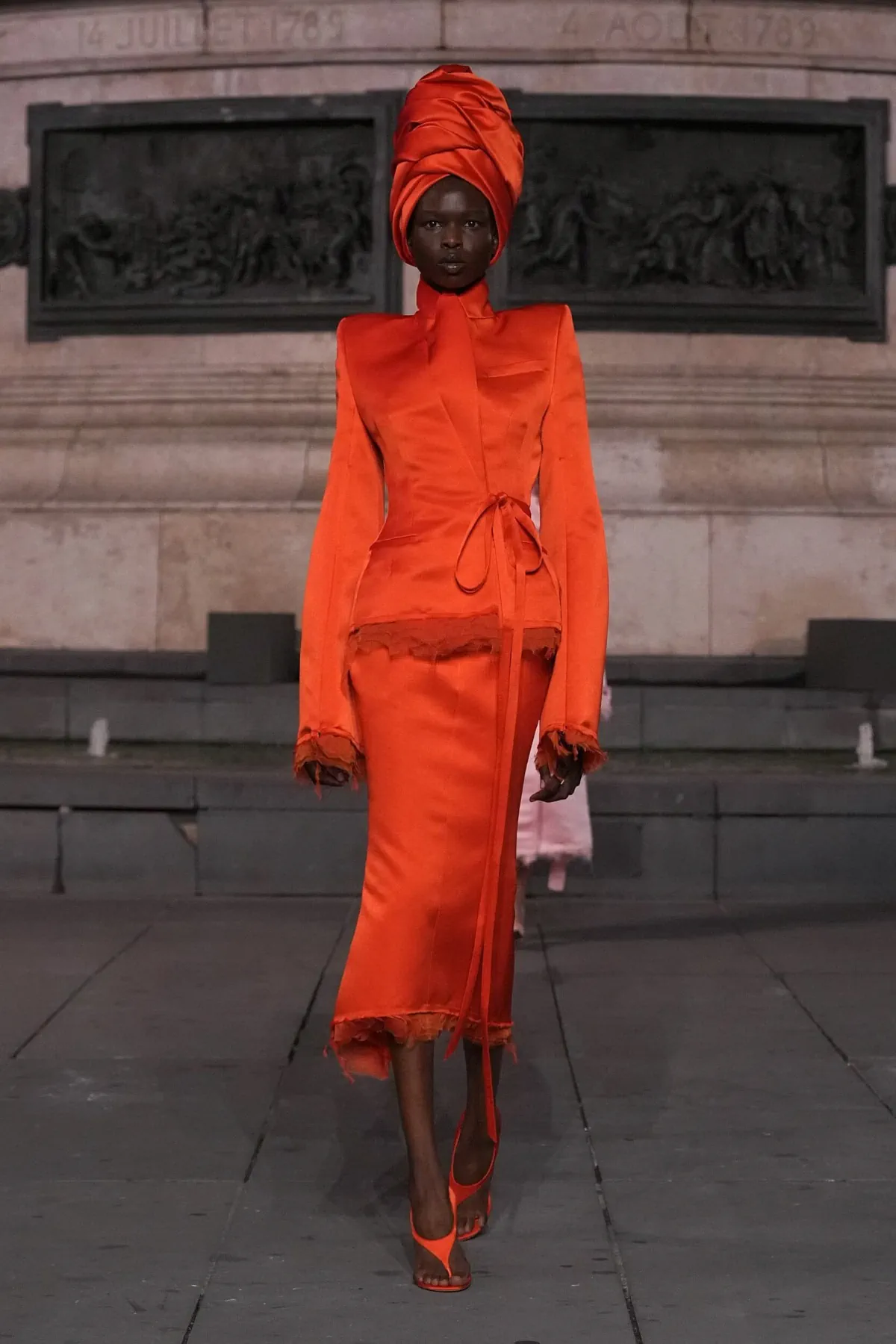
The second act was louder and harder to see. Strobe lights flickered, and dry ice obscured some of the clothes. Even so, the punk section was powerful. Leather, balaclavas, military coats, and T-shirts printed with Marianne resembled a crowd of Parisians rarely invited to a runway show. One model wore a tricolor flag stamped with the word “RESIST.” The audience cheered. The image that French viewers will likely remember most came in the same spirit: three Black female bodybuilders walking in tight blue, white, and red dresses, the last one with a red veil over her hair. In a country where identity and religion dominate the pre-election debate, it’s difficult to imagine a more pointed use of the national colors.
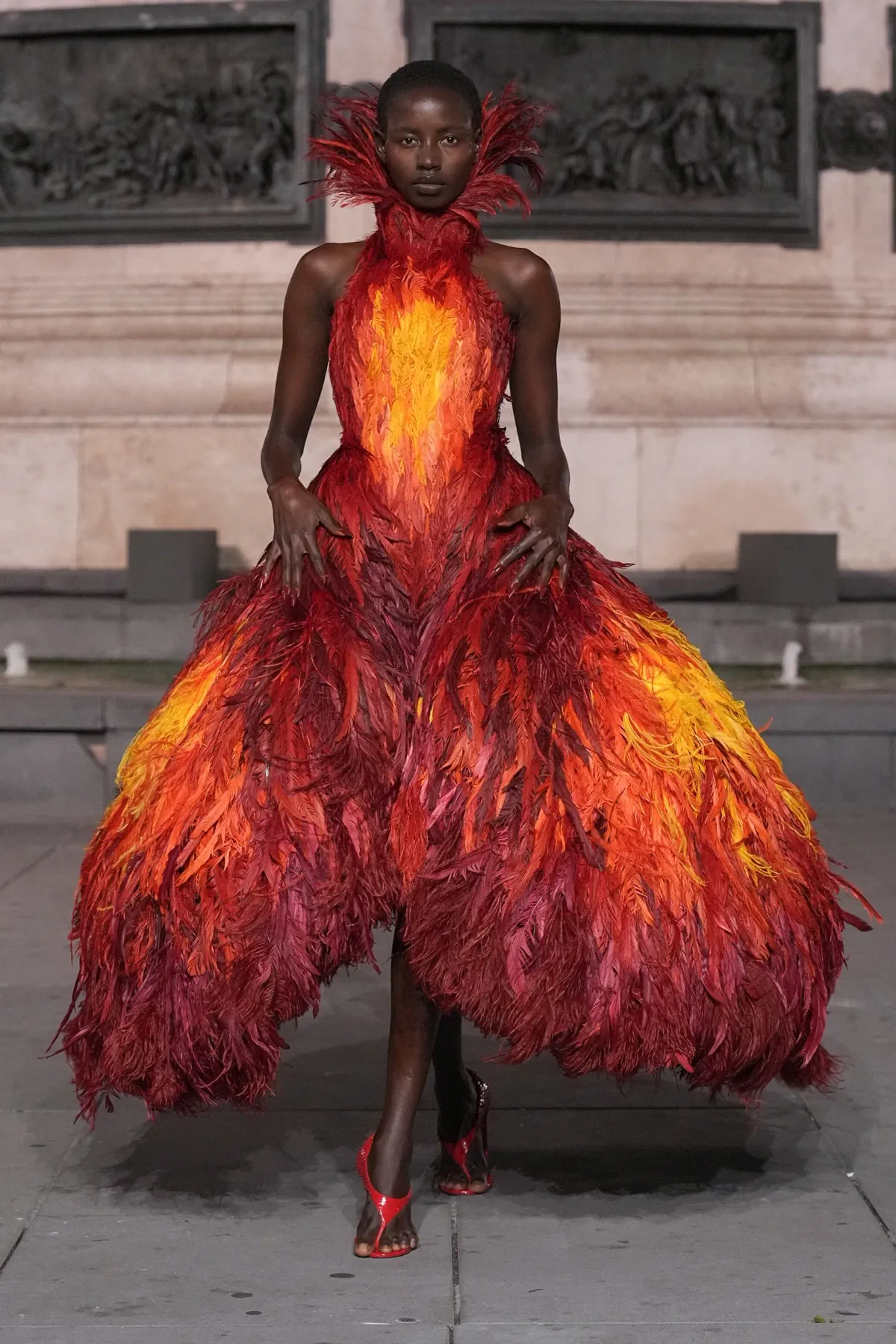
The third act was couture, and it was the strongest. Saris made in Varanasi were reshaped into 1950s ball gowns; one of them was made with over 300 meters of tulle. Handwoven cotton from Burkina Faso became a corseted evening dress. Mounia, the Martinican model who rose to fame with Yves Saint Laurent, wore a gown with a tulle train. The final three dresses traced the journey of a phoenix – from flame to ash to rebirth – with gold lamé and feathers.
Follow all the latest news from Fashionotography on Flipboard, or receive it directly in your inbox with Feeder.
You may also read

These last two looks are the ones people will remember. Two young Black models carried lifelike statues of well-fed older white men with their eyes covered by dollar-bill blindfolds. Sarah Sitkin made them. They were a response to the babies of the opening and were intended to be jarring. They also closed the loop with March: the one percent from the previous show, now reduced to dead weight carried on the shoulders of the ninety-nine.
Not everything was new. We saw traces of Alexander McQueen, Mugler, and Vetements. In particular, the feathered phoenix gown called to mind McQueen’s Voss. Rick Owens sat in the audience. However, the collection did not seem like a copy of anyone else’s work. Bhaskaran said the aim was to be soulful and bring humanity back to a world of hyper-perfect products. In a season when so much imagery looks smoothed by algorithms, that message resonates.
Fashion week is often a contest of scale. This show was small in ambition on the surface and bold in execution. By collaborating with artisans from India and Burkina Faso, the fashion house integrated their craft into Parisian couture without treating it as an afterthought. This approach felt as practical as it was political.
Some may find the politics heavy-handed. Yet the clothes conveyed the message subtly, which is more difficult than it seems. The house also announced that part of the sales would go to the association La Maison d’Allanah. For French readers, this is the concrete takeaway: the protest aesthetic was not borrowed and flown in for one night; rather, it was a show that tied its message to a local cause and a local square at a time when the country is debating who belongs in it.
France likes to repeat its motto of liberty, equality, and fraternity. On this night, Matières Fécales added a fourth word: visibility. It was hard to argue with. The real test will be whether Paris allows a label this confrontational to remain on the official calendar once the novelty of the location wears off.