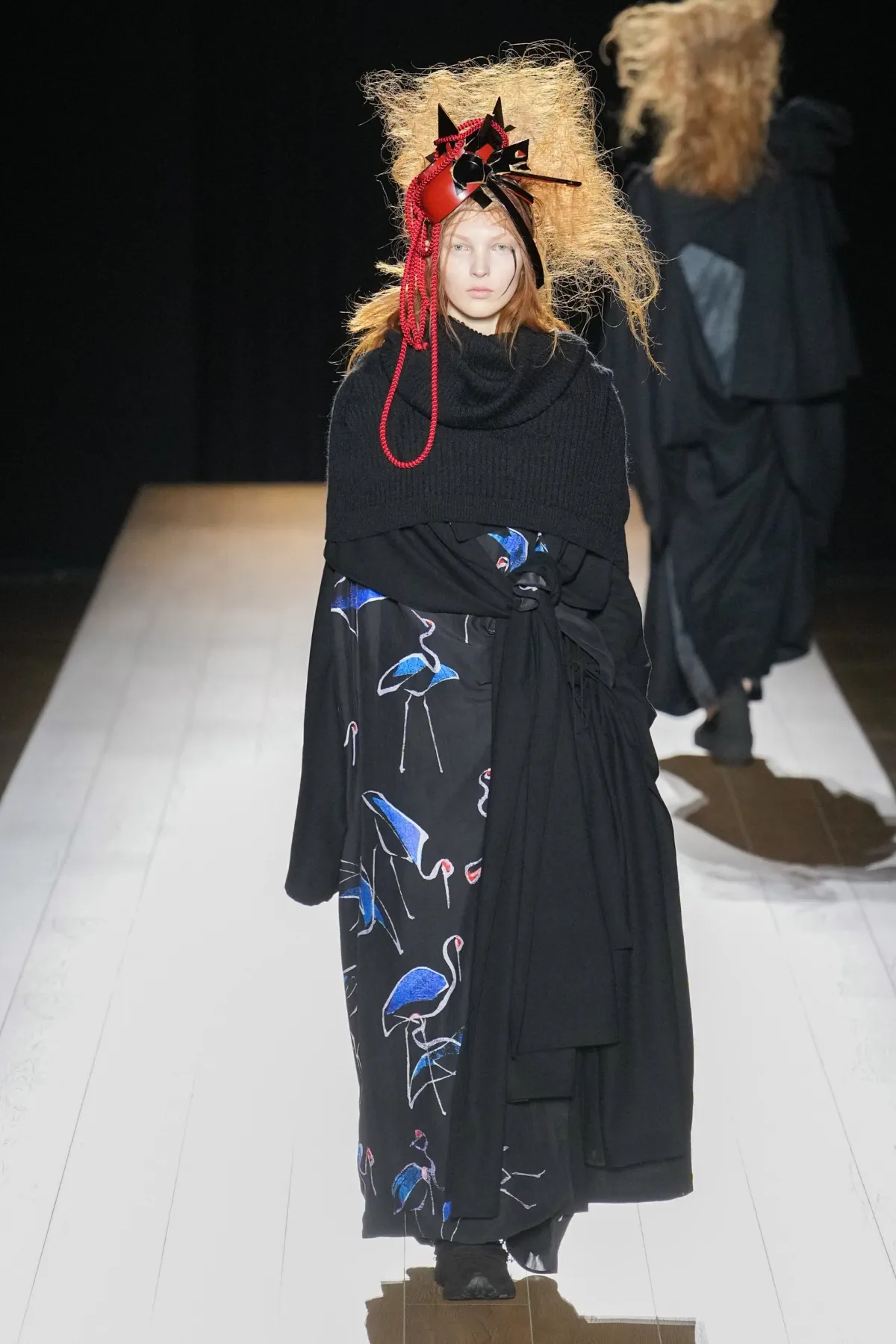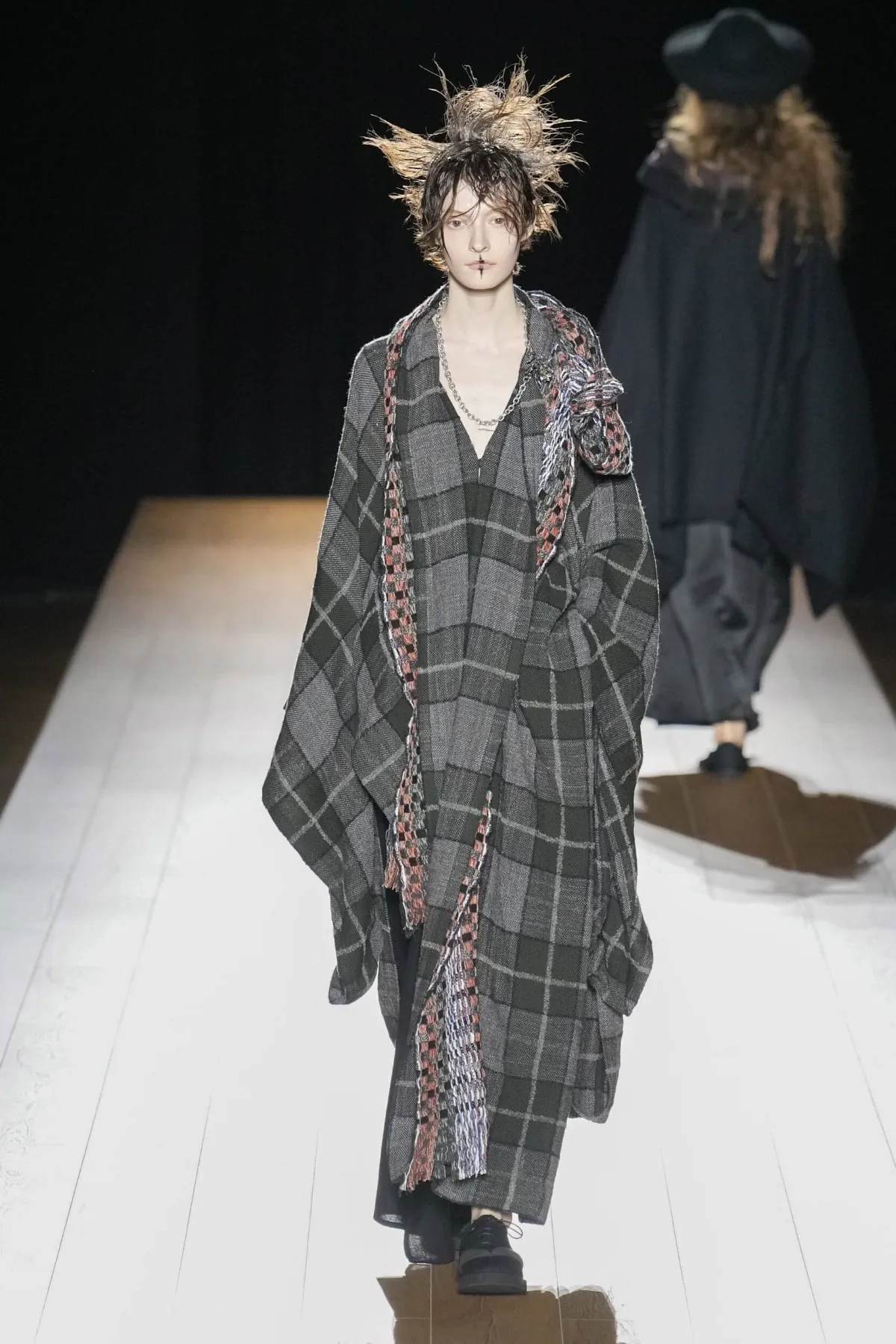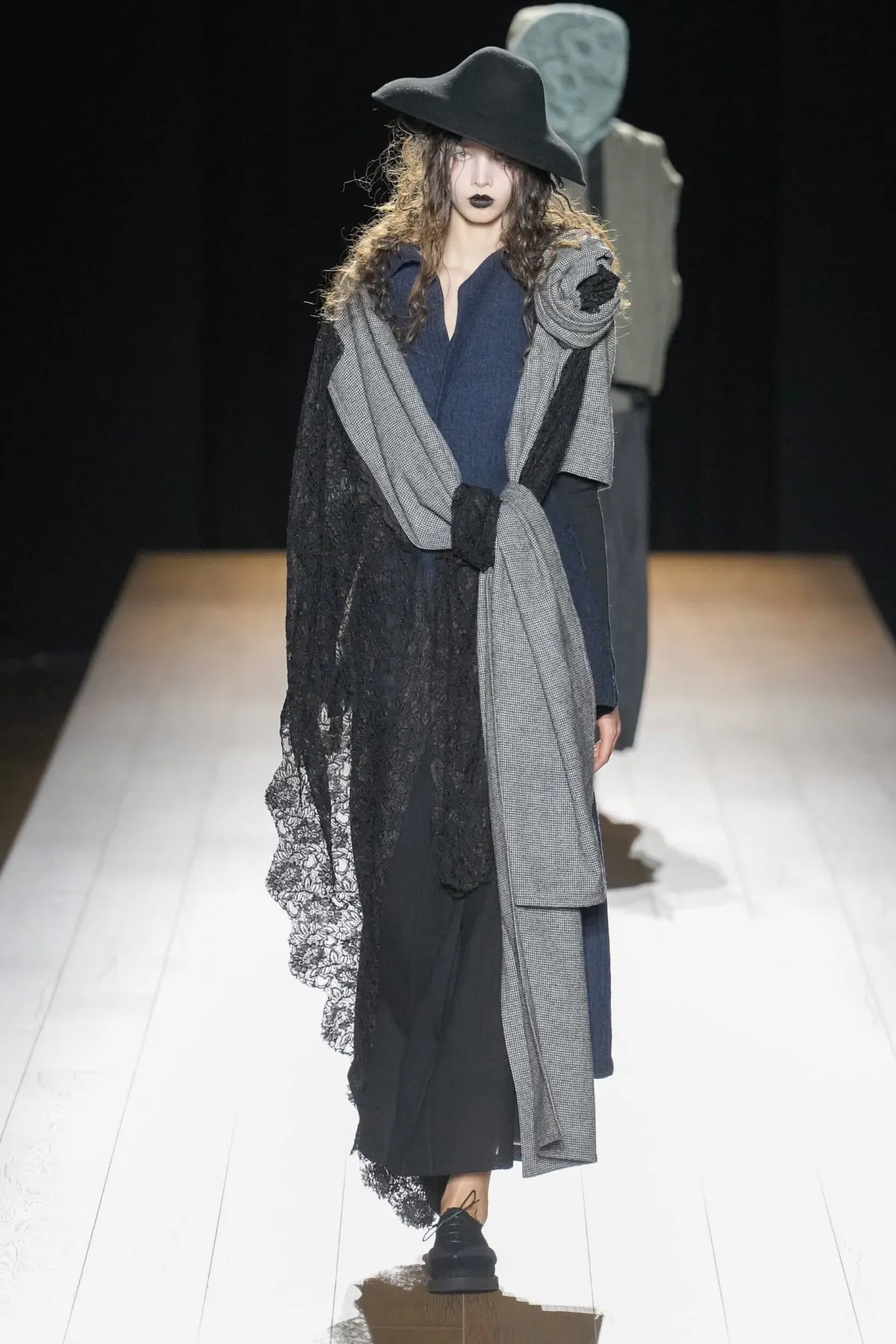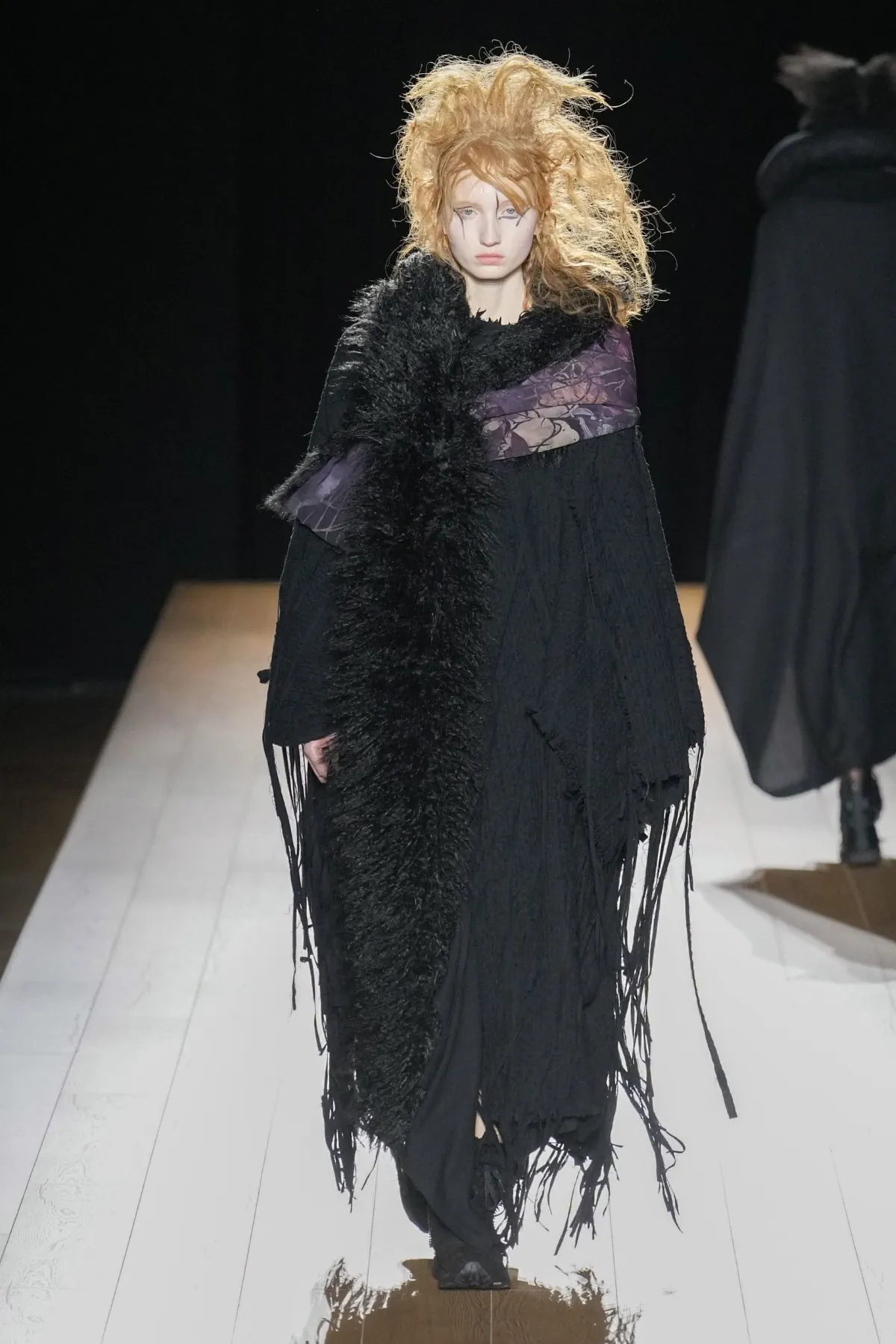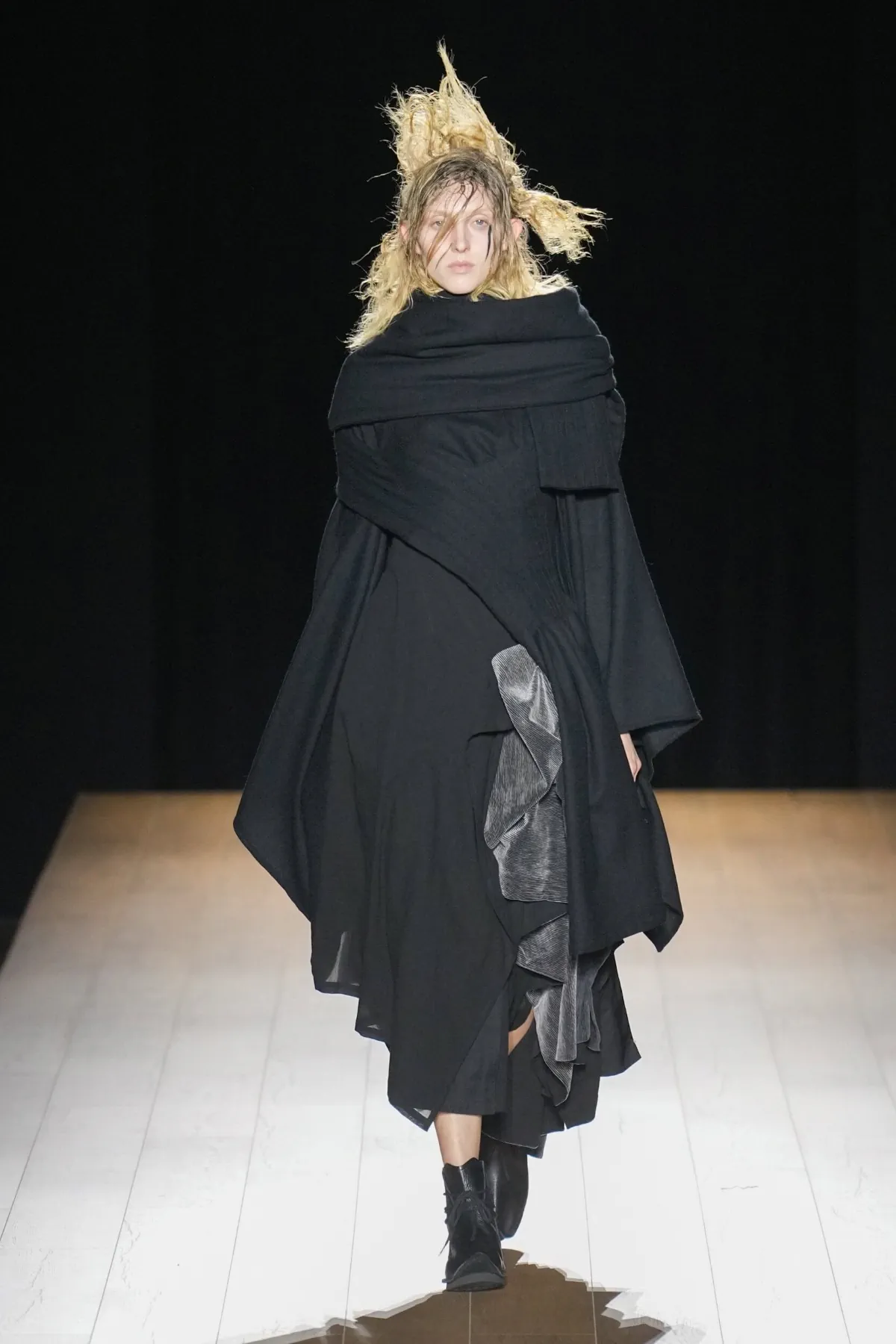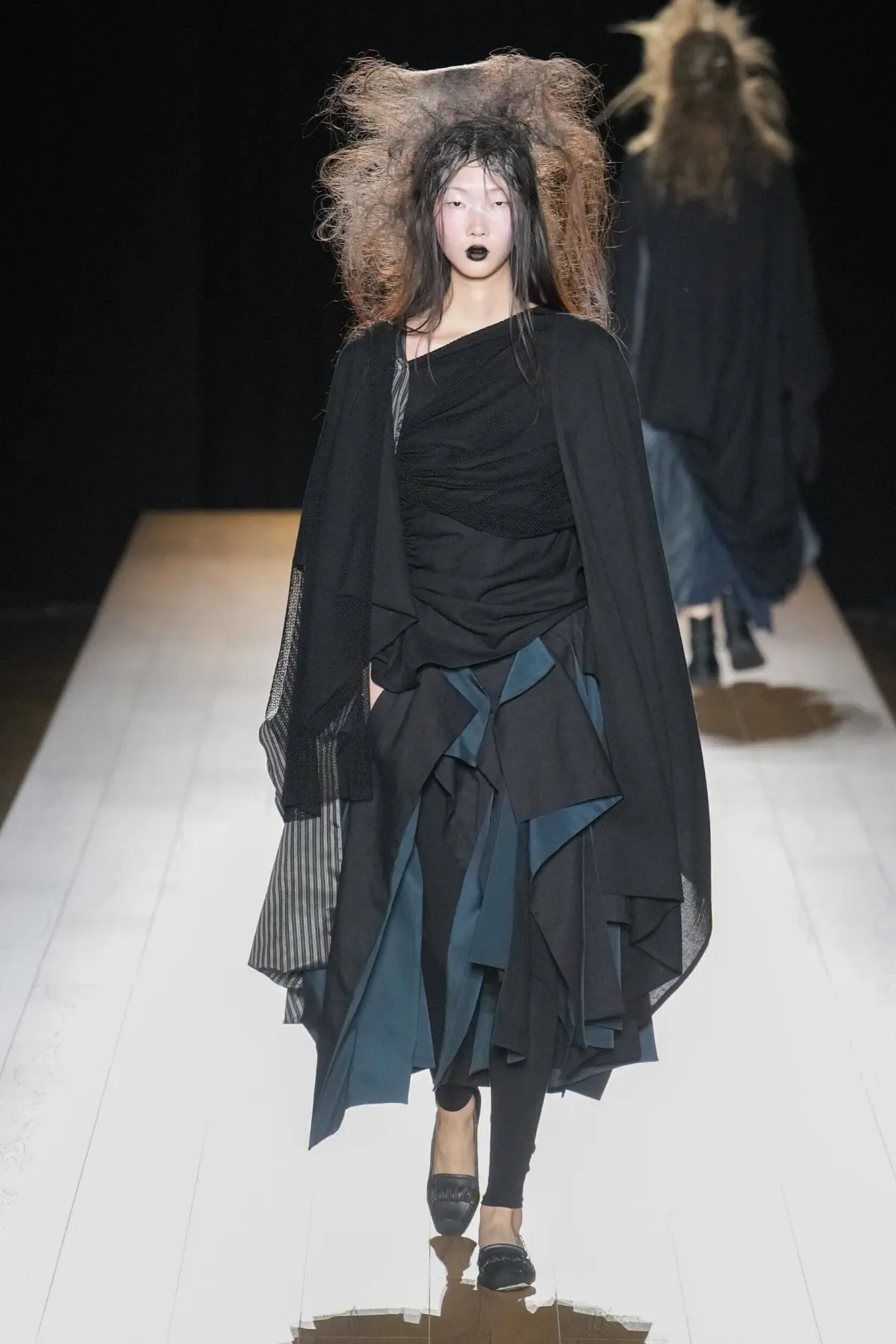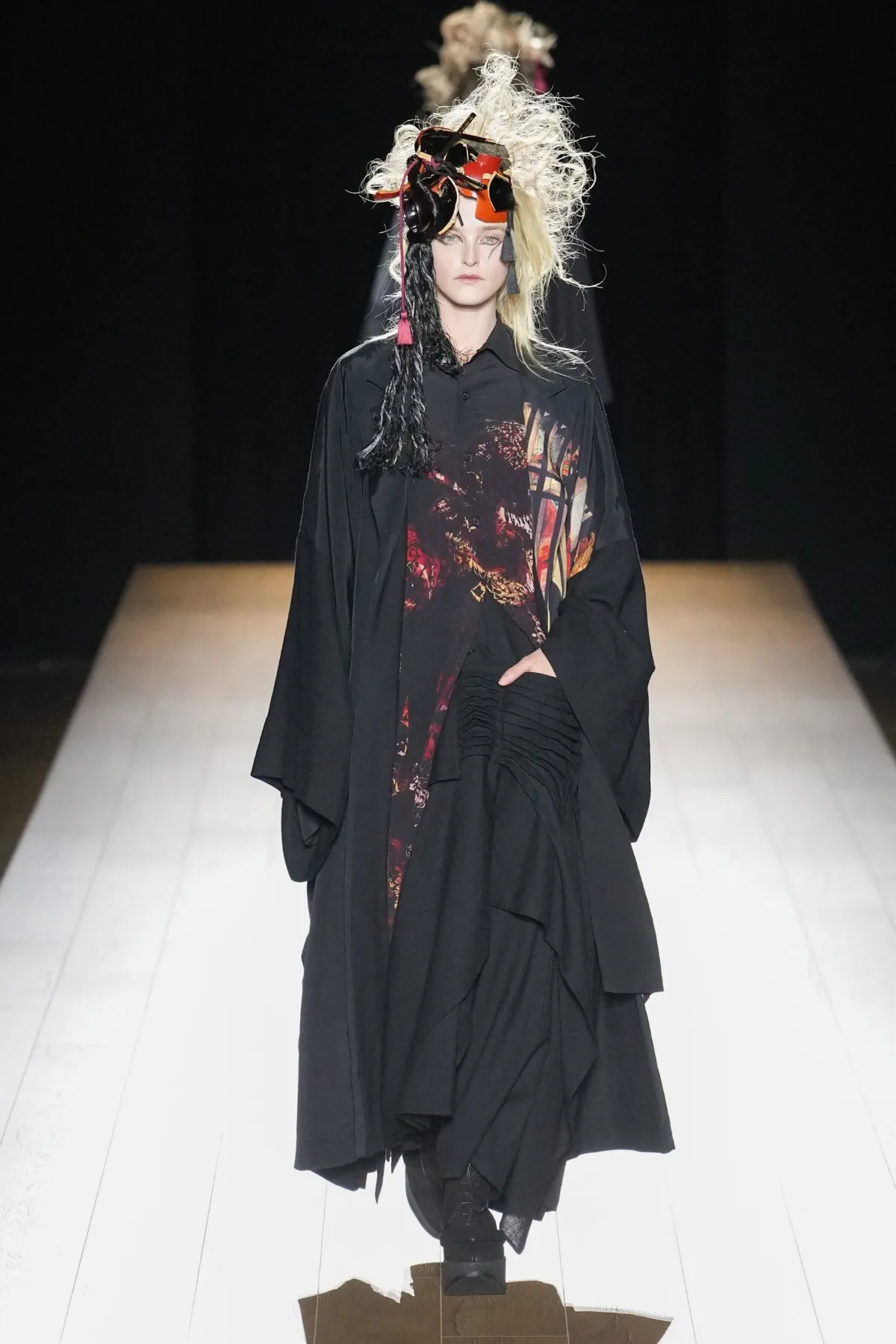

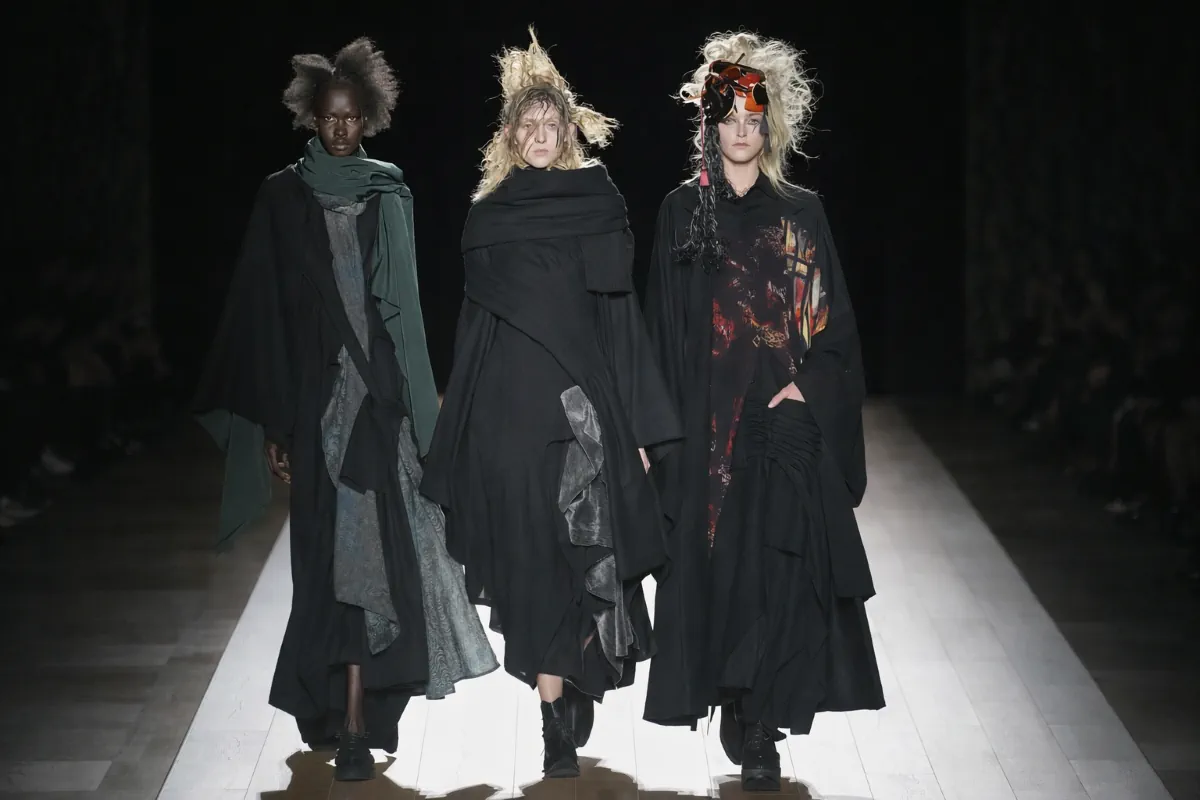
At 82 years old, Yohji Yamamoto shows no signs of slowing down with his Fall 2026 collection. The Paris show was quiet in a way that only a very confident designer could pull off. No spectacle, no gimmicks. Just cloth, form, and a lifetime of accumulated thoughts about what clothes can and cannot do.
| 📌 Key Facts |
|---|
| 🧵 The collection reinterprets the kimono silhouette through modern tailoring and fluid textiles. 🎨 Prints from the Edo-period artist appeared in the final five looks as a quiet homage. 🧥 Nearly hidden seams and layered fabrics reward close observation and movement. 🪶 Silk crêpe, damask and linen create garments that appear to settle naturally on the body. 👟 Canvas tennis shoes combined with geta-inspired straps highlight Yamamoto’s hybrid design thinking. 🌍 Rather than overt commentary, the collection emphasizes attention, presence and thoughtful dressing. |
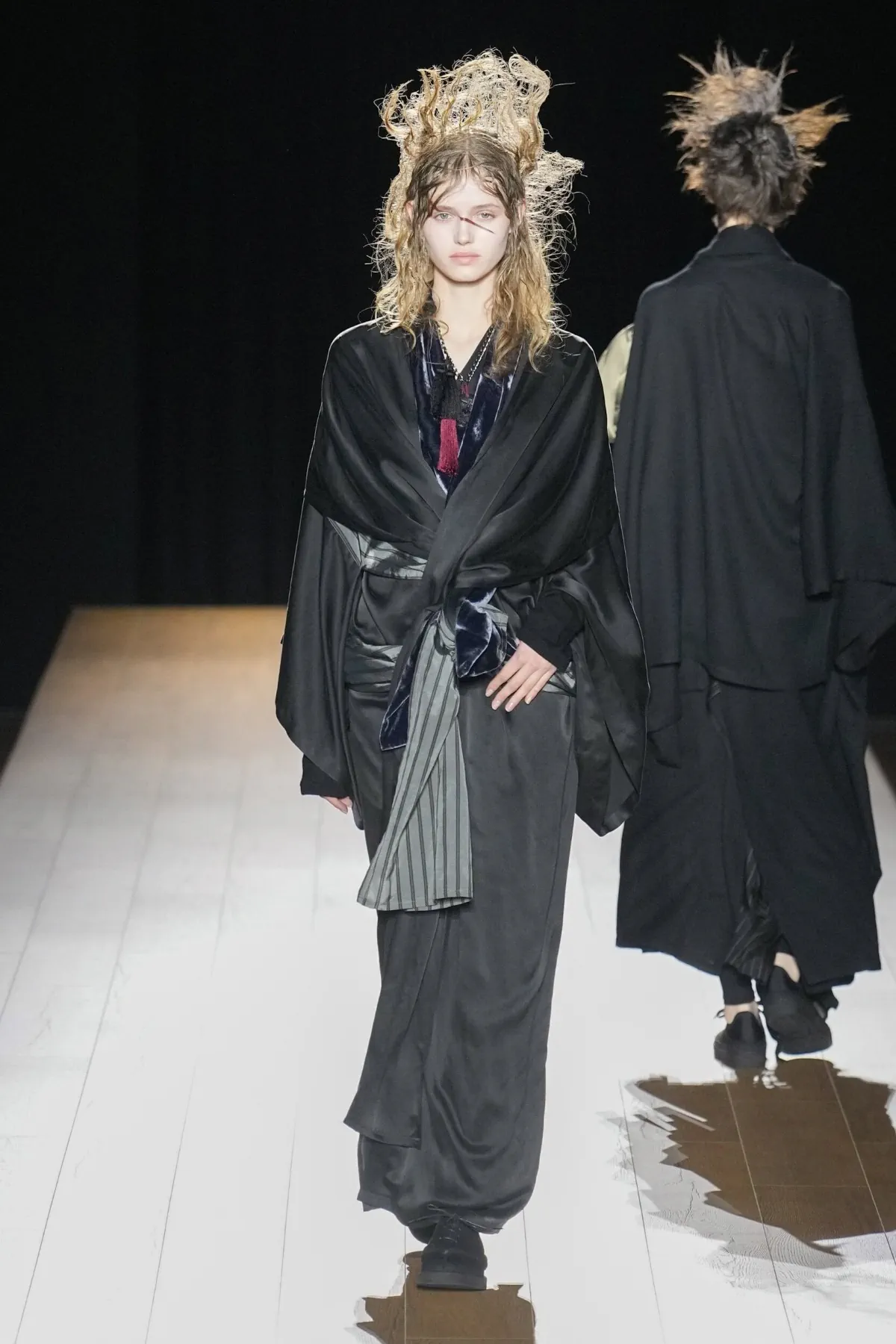
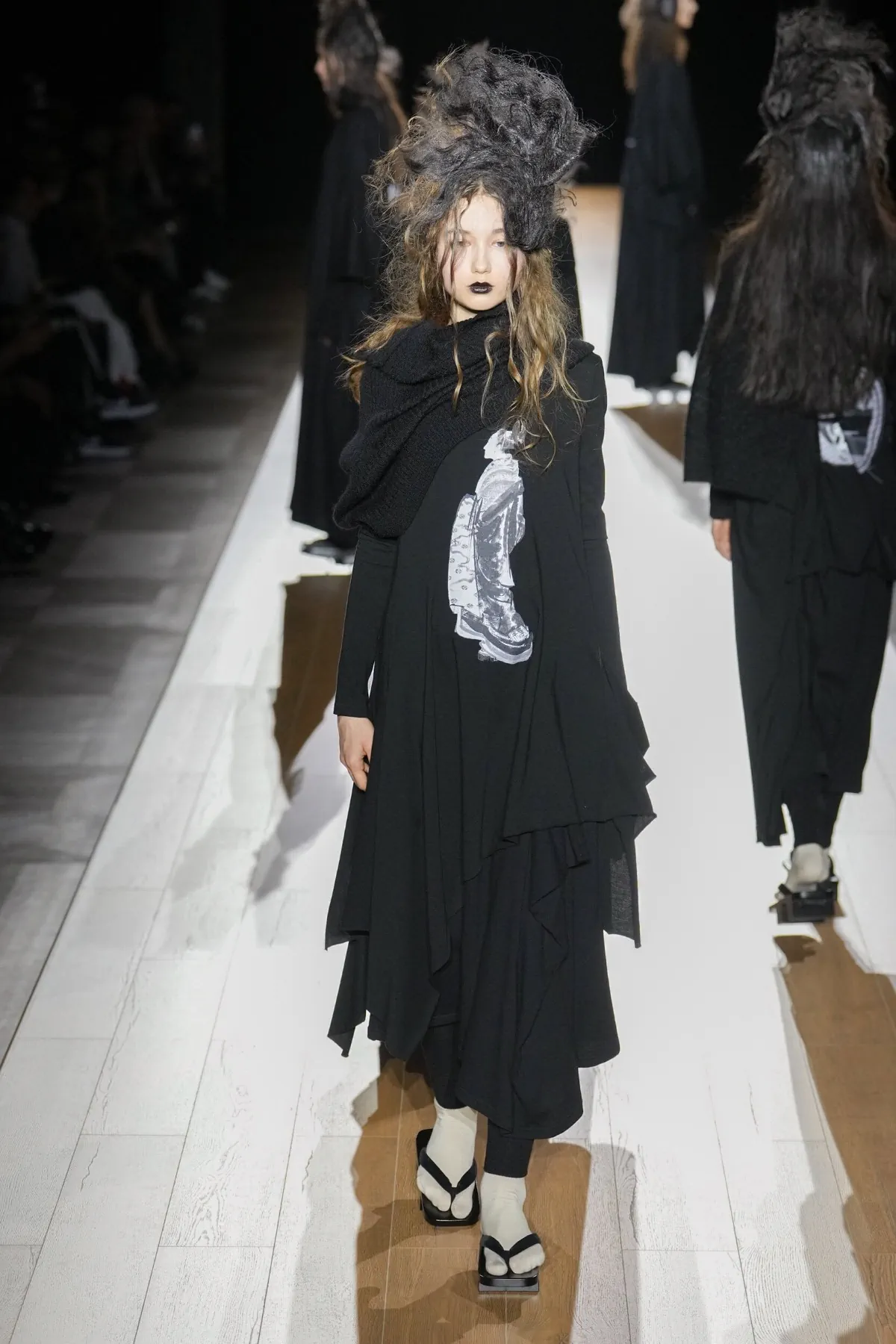
Yamamoto has recently hinted at succession, mentioning his daughter Limi and alluding to legacy. However, what unfolded on the runway suggests that questions of inheritance are, for the moment, beside the point. Afterward, he talked about Katsushika Hokusai, the Edo-period printmaker who produced some of his most ambitious work until his death. The parallel was not hard to find. Hokusai’s prints appeared during the final five exits of the show, a subtle homage from one dedicated artisan to another.
The Japonisme movement, which carried Hokusai’s influence into the studios of Claude Monet and other European painters, seems to have been on Yamamoto’s mind as he worked on this collection. The kimono is not new territory for Yamamoto, but he returned to it here with a new perspective. Fluid silk crêpe, damask weaves, and weightier linens moved across the body, making the garments appear less constructed and more as if the fabric had found its own natural resting place.
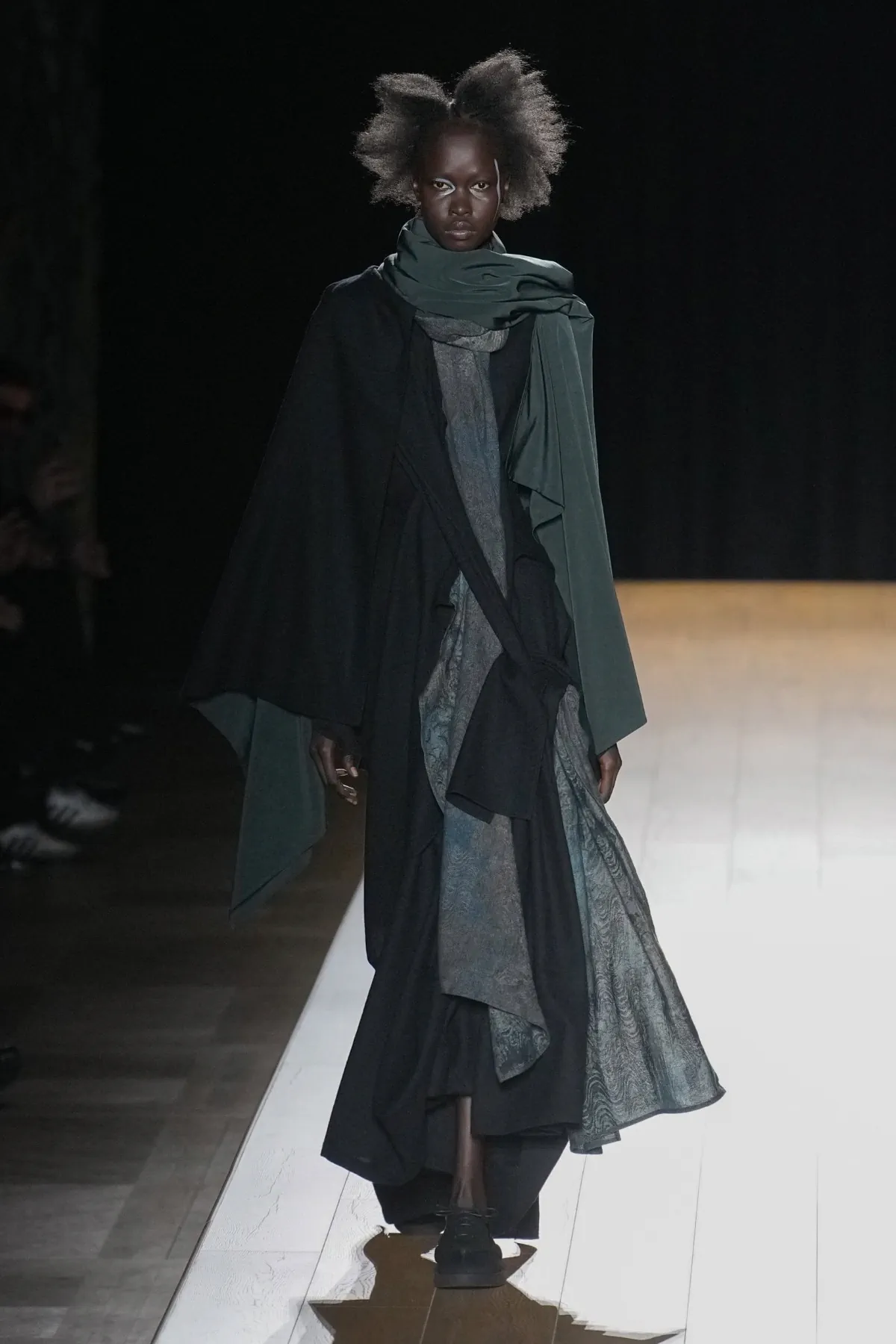
A bias-cut, tiered dress picked up an obi-like accent at the back. A stripped-down carrick coat was lined with eye-catching fabric long before the outer shell was visible. A leather-and-wool piece displayed its Eastern detail on the reverse side, which was visible only once the wearer turned away. Even a plaid with punkish energy was transformed through its pairing with a contrasting fabric from Japan’s active weaving tradition.
The seaming was nearly invisible throughout, rewarding patience. As the models moved slowly, the martingale, all that remained of a tailored jacket with its structure dissolved but its essence kept, could be seen. Yamamoto told one editor that the complexity of putting these pieces on was best experienced in person at the showroom. That was not a brush-off. It was a reminder that his clothes are meant to be worn, not just admired from afar.
Follow all the latest news from Fashionotography on Flipboard, or receive it directly in your inbox with Feeder.
You may also read
There is a tendency to portray a designer of Yamamoto’s age and stature as someone who is wrapping up a body of work and making peace with what has come before. This collection pushed against that perception. The fabrics were chosen with the precision of someone who is still curious and testing boundaries. The cuts demanded something from the body rather than merely draping it. A canvas tennis shoe finished with the thong strap of a traditional geta demonstrated the same lateral thinking that has always characterized his work.
The final five looks were austere knits, and the models wore geta footwear. They had the quality of a formal statement: unhurried, assured, and unwilling to perform for an audience expecting urgency. Hokusai’s prints moved through the lineup like a recurring thought: present, but not insistent.
Backstage, Yamamoto made a brief remark about the state of the world. “Too many wars,” he said. “I do not like it.” The comment landed simply, without elaboration. His collection did not attempt to solve problems that politics cannot. Instead, it offered what good clothes have always offered: a reason to pay close attention to the present and something worth wearing while doing so.