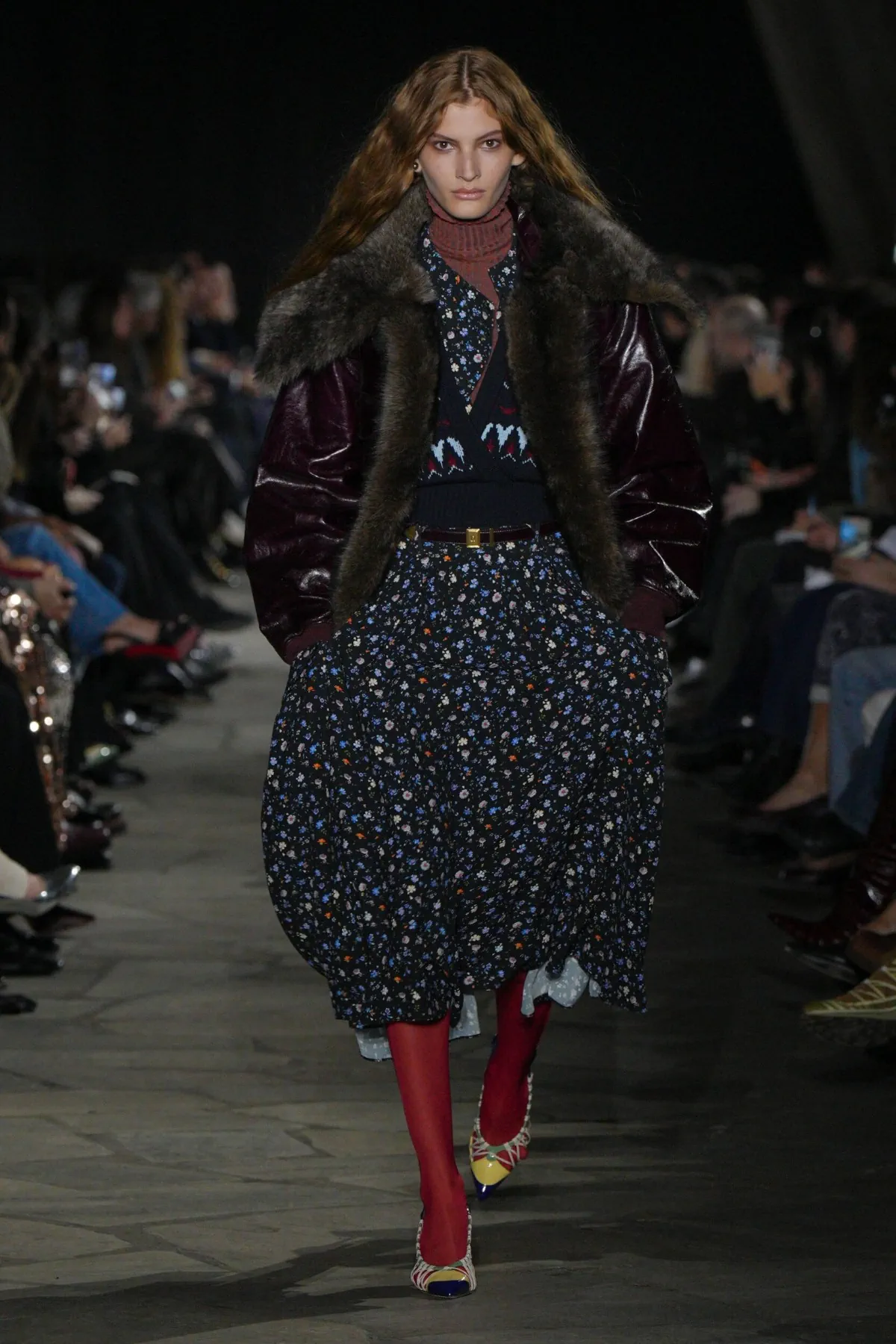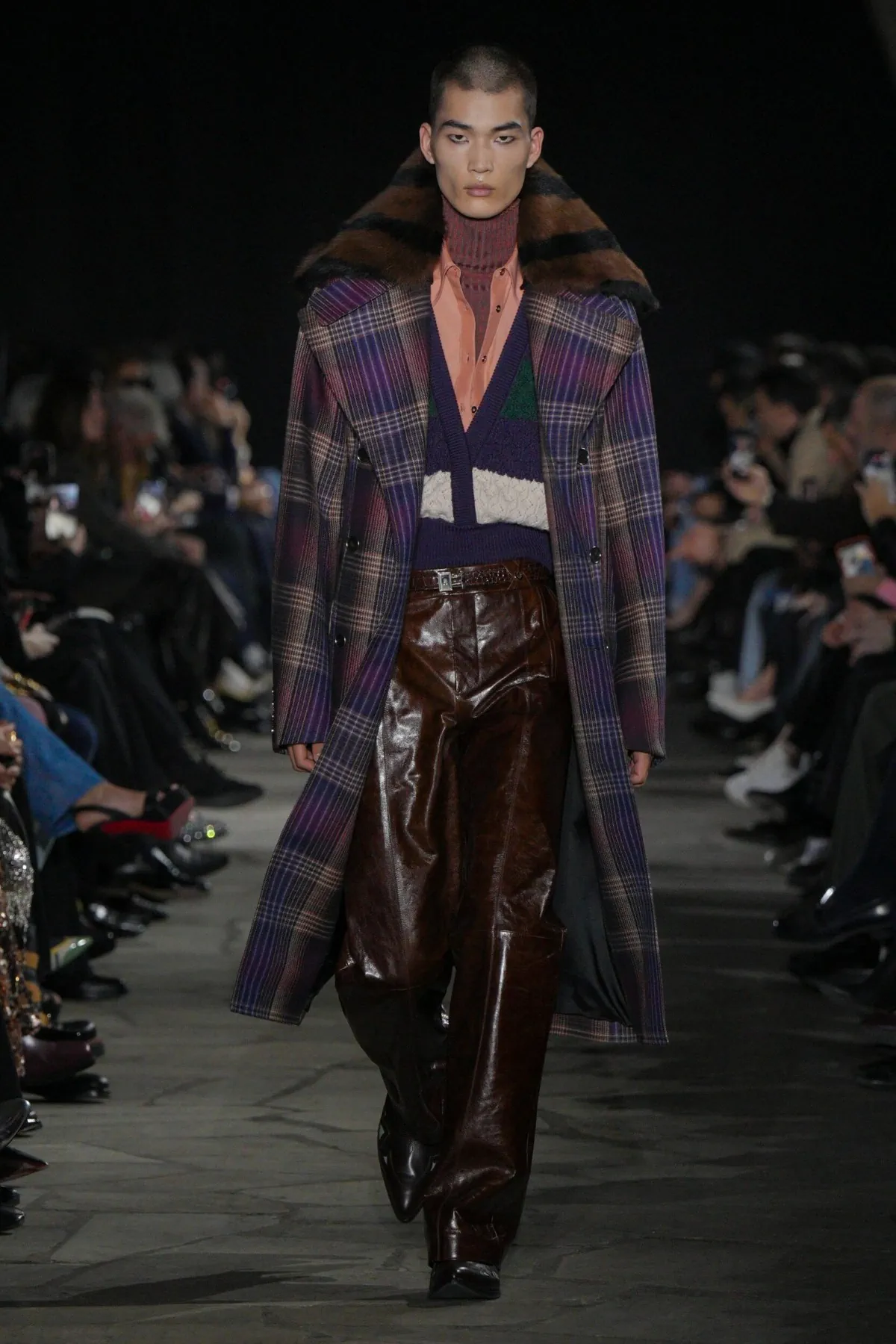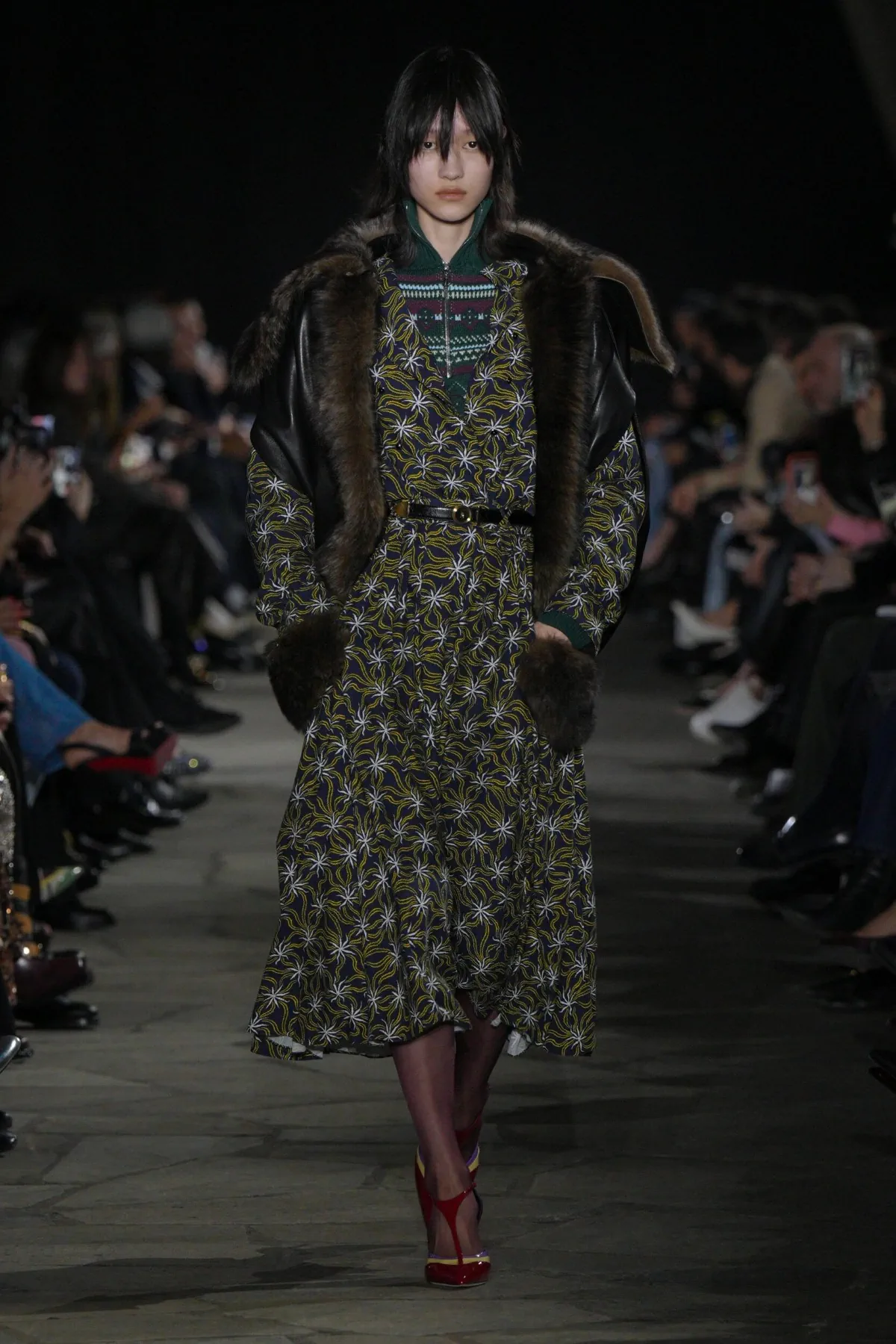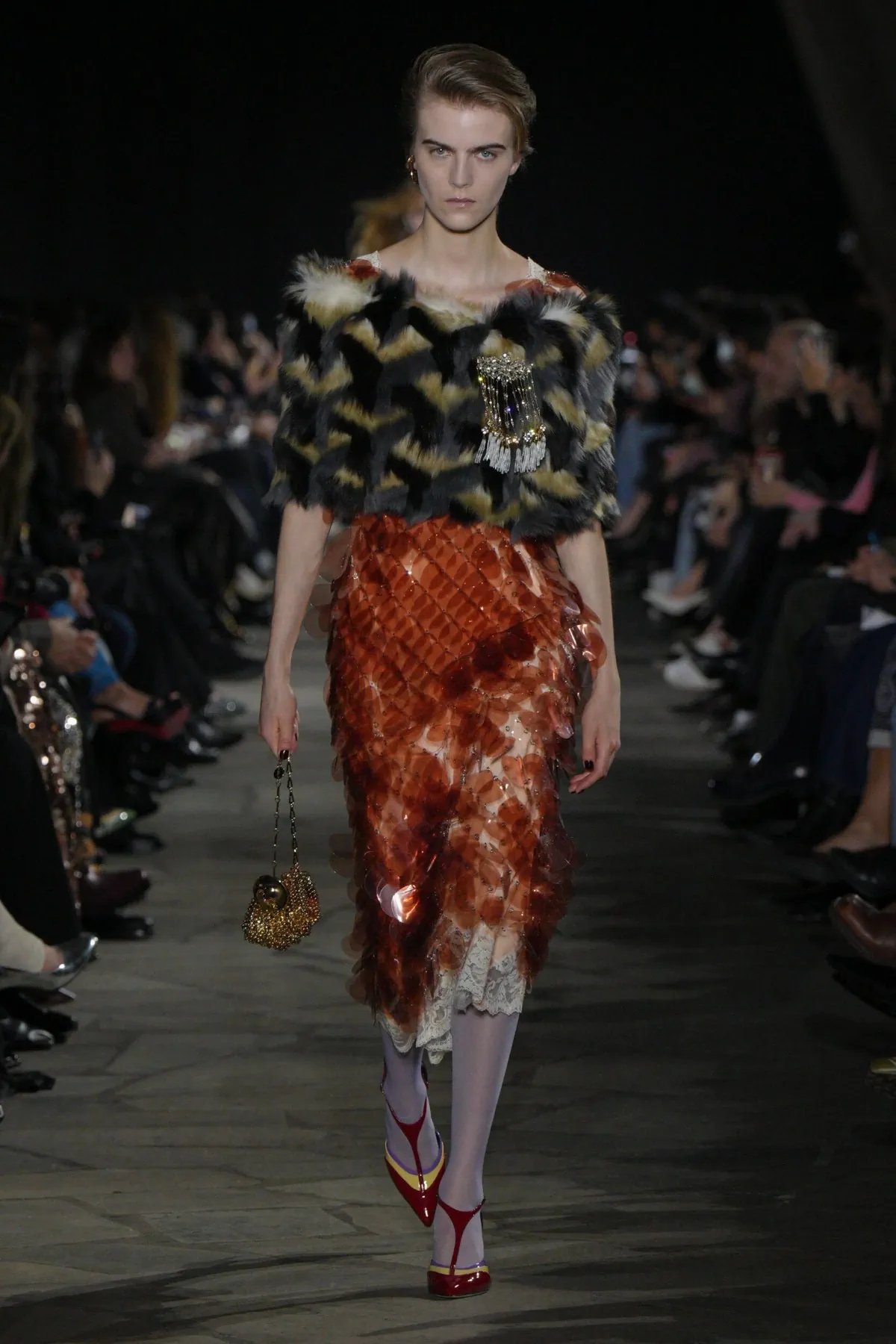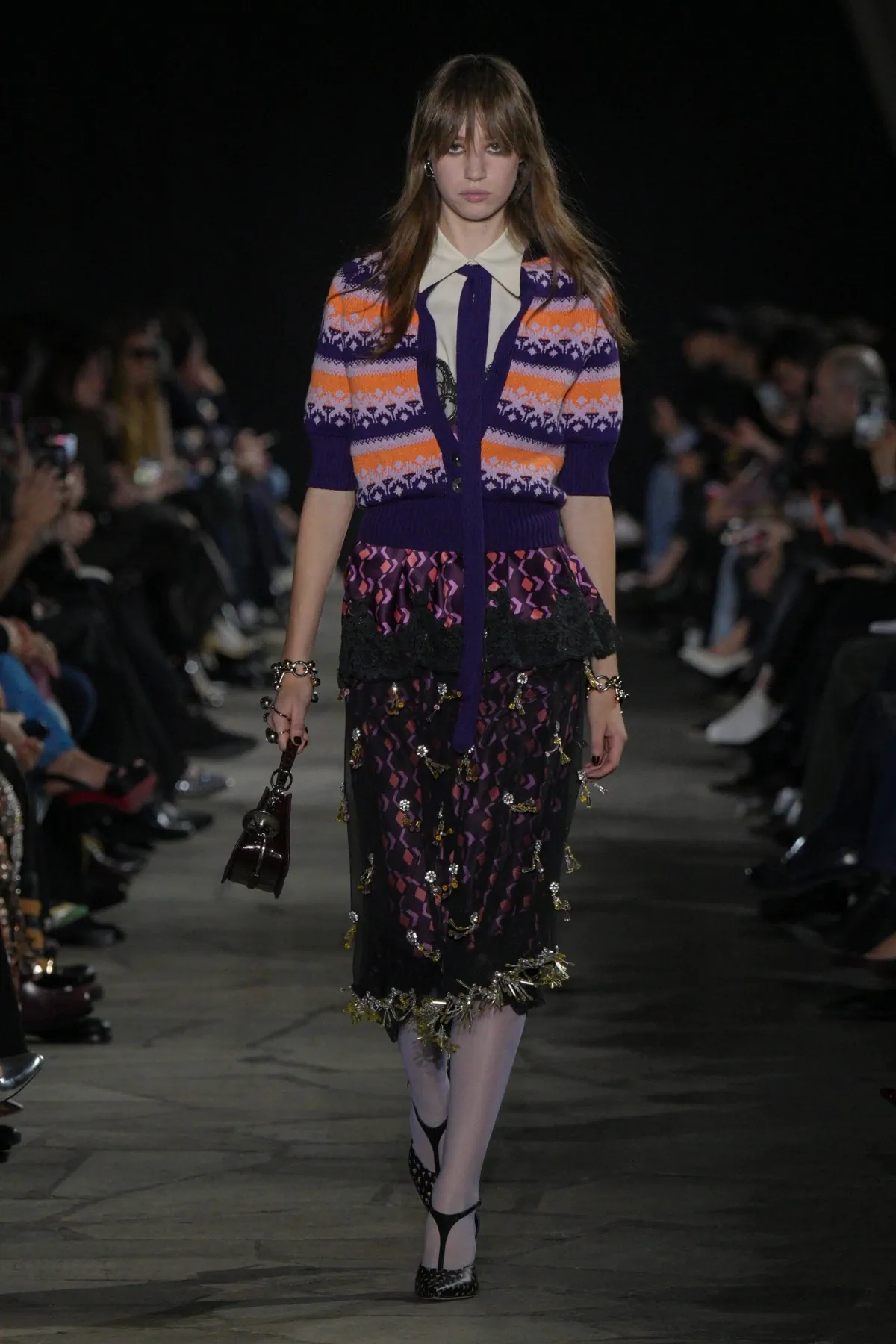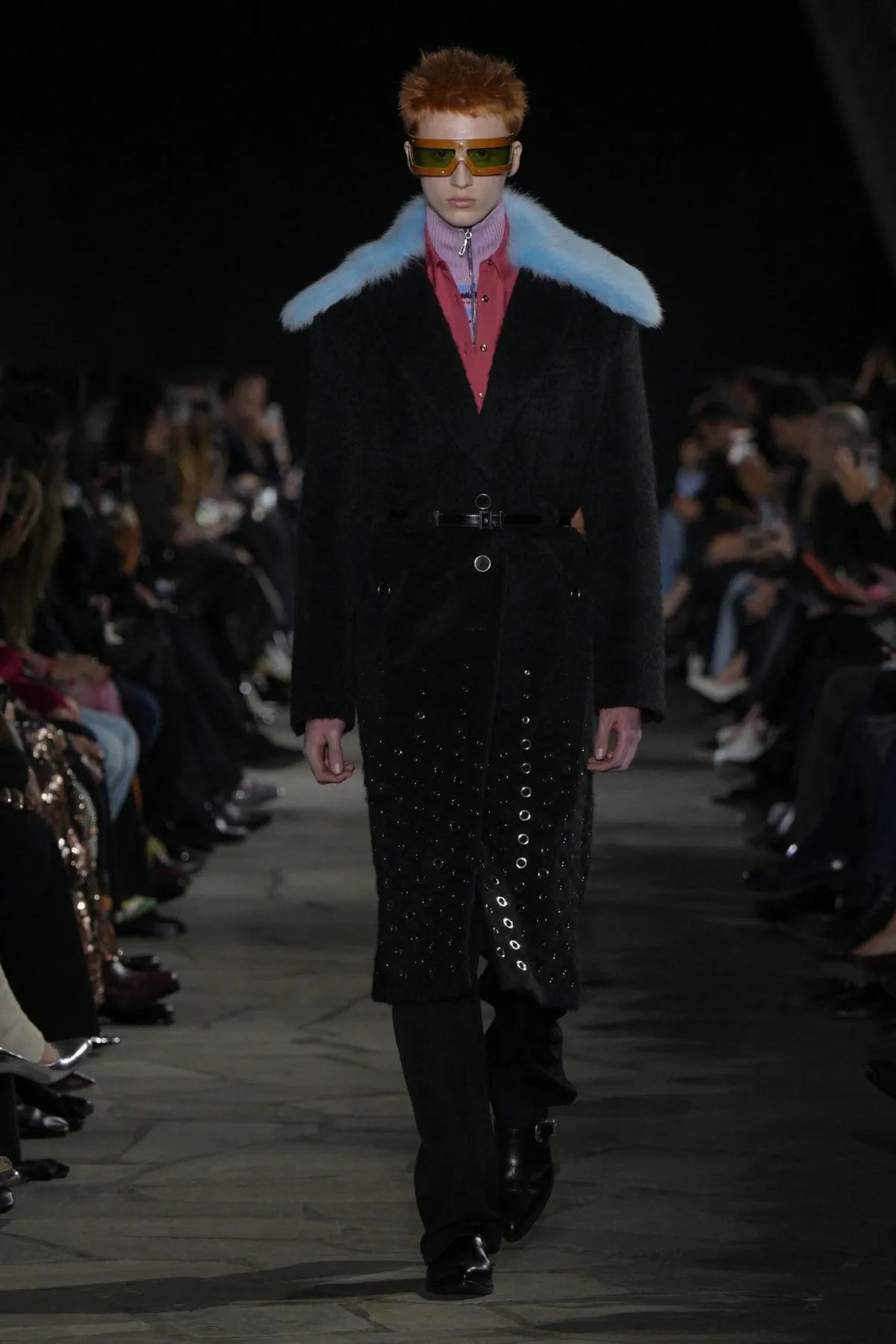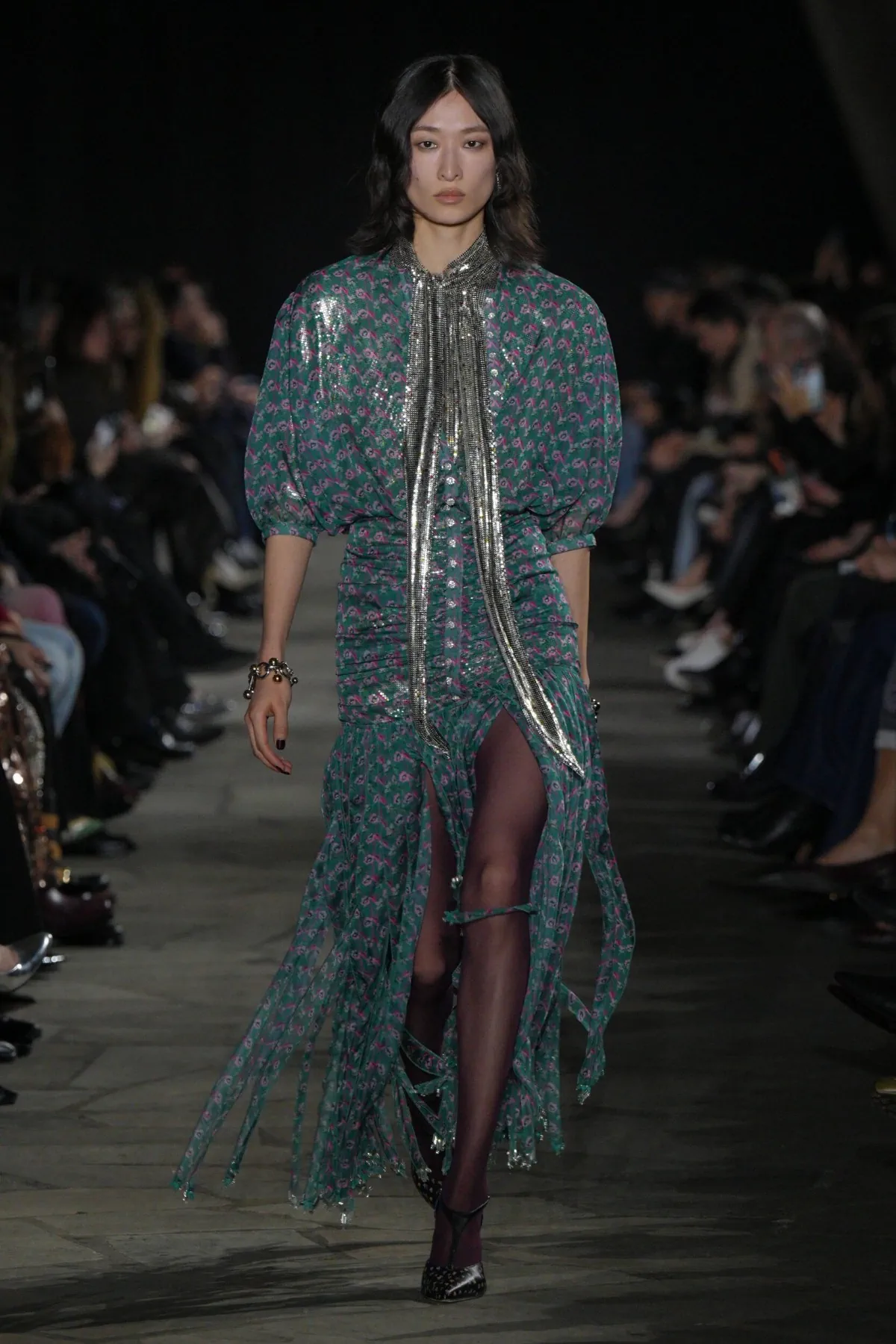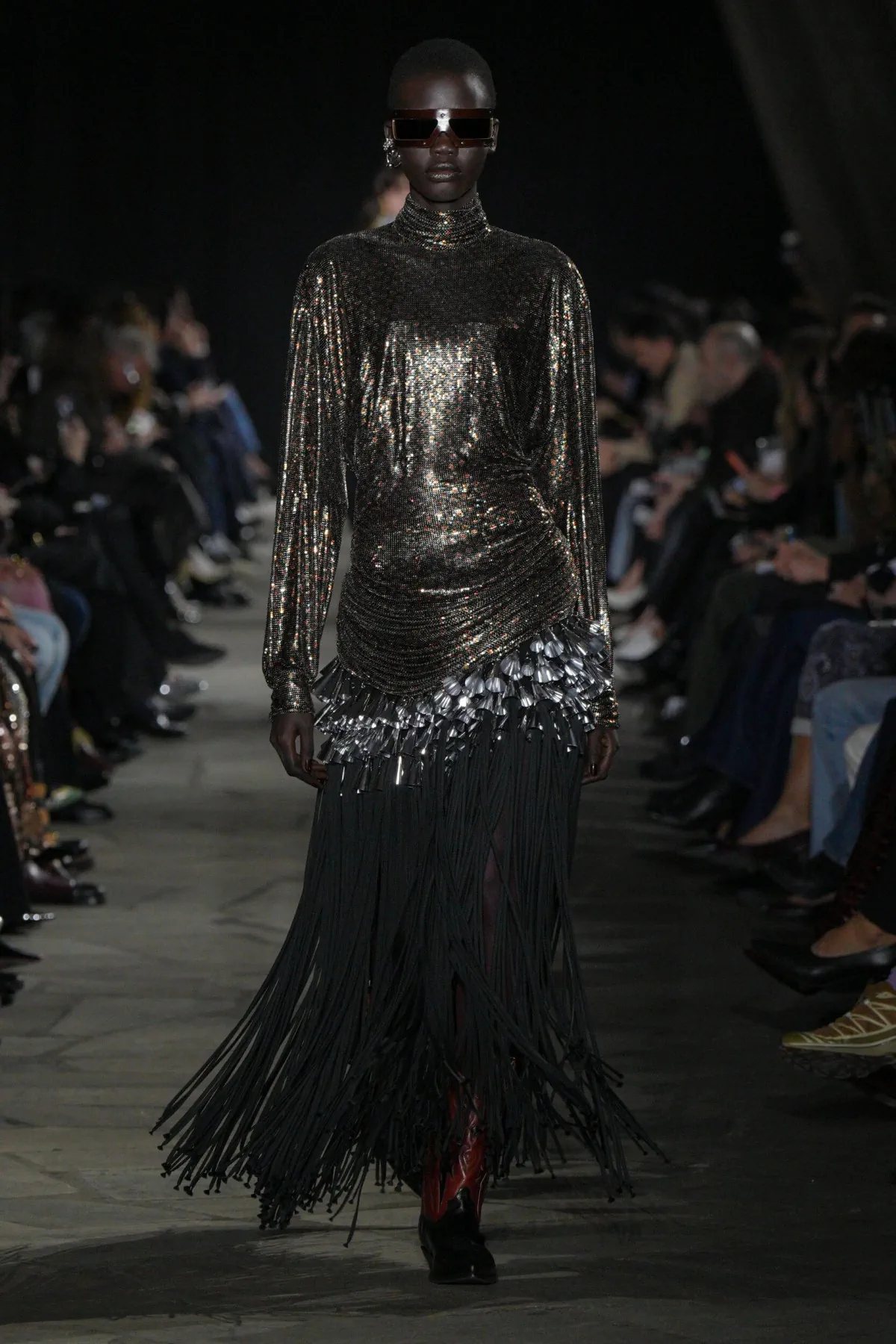

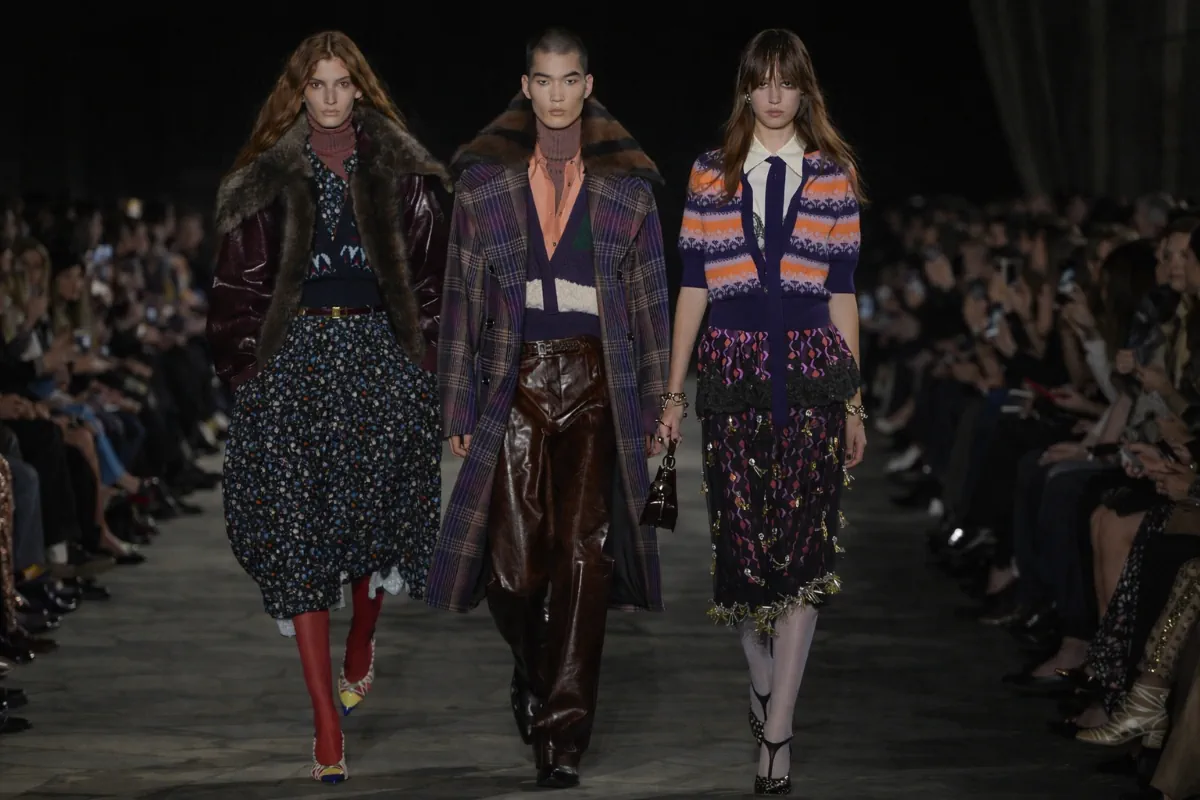
The Rabanne Fall 2026 collection opened with an unexpected question for a brand known for chain mail and metal discs: What does a 1940s tea dress have to do with today? Julien Dossena has an answer. He found it on a trip to London last November while sorting through wartime-era dresses at Portobello Market and in Brighton’s vintage shops. What he brought back to Paris, and eventually to the runway, was not nostalgia. It was something more unsettled.
| 📌 Key Facts |
|---|
| 👗 The 1940s tea dress becomes the central silhouette of the Rabanne Fall 2026 collection. ⚙️ Metal fringe, grommets and chain mail inject punk energy into traditionally delicate garments. 🧥 Tailoring, knitwear and lingerie slips are stacked to create deliberately unpolished looks. 📍 Julien Dossena draws from everyday style around Gare du Nord. 📚 Research into wartime fashion introduces subtle political resonance. 🏛 Rabanne continues expanding beyond its iconic metal mesh into full ready-to-wear wardrobes. |
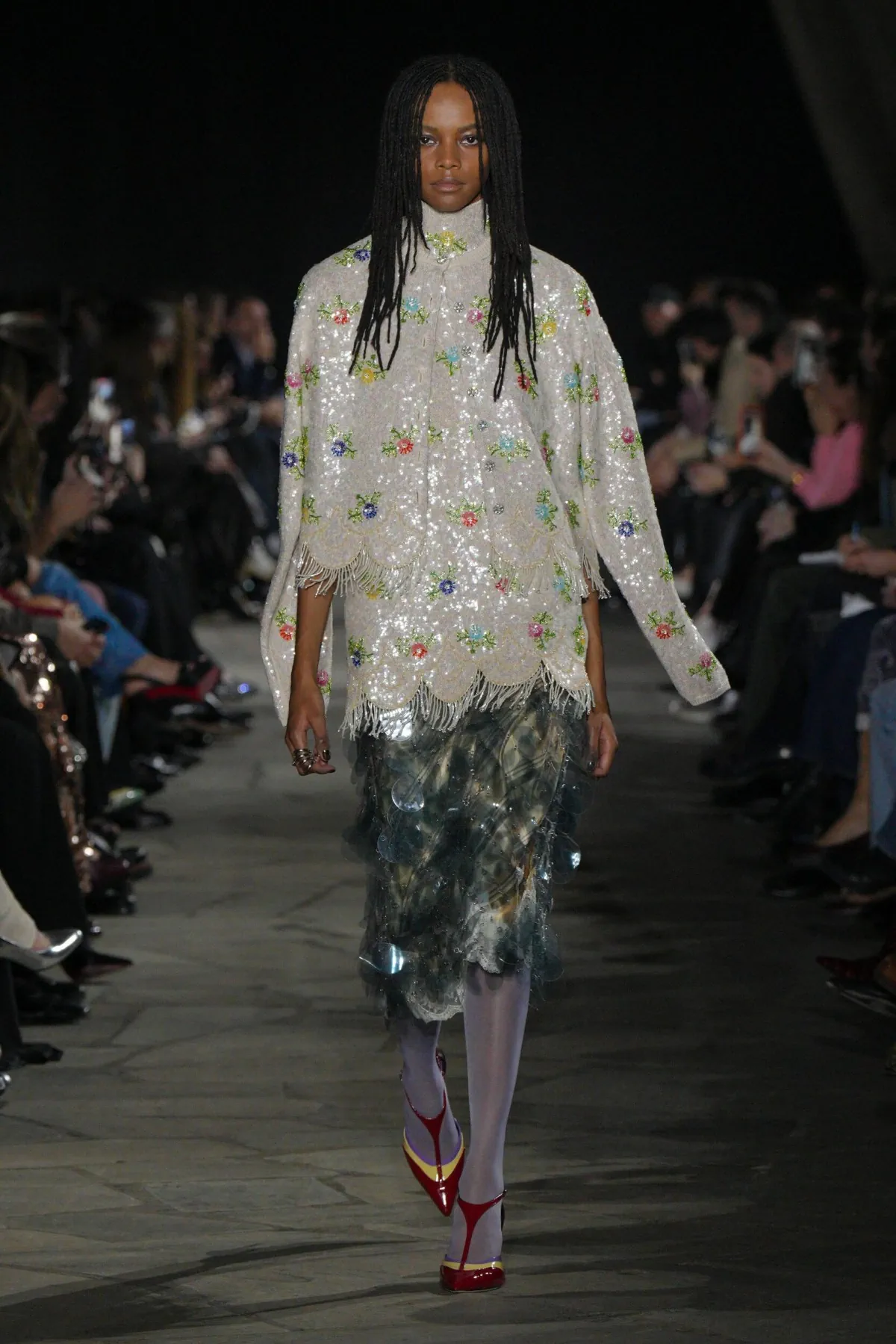
The 1940s silhouette was present throughout the show. Soft crepe dresses, lingerie-style slips, and delicate blouses formed the base layer of nearly every look. But Dossena didn’t leave them as they were. He paired those dresses and slips with plaid jackets made from classic men’s suiting fabrics, wide pleat-front trousers reminiscent of Zoot suits, and trenches with two-tone fur collars in bold, almost absurd color combinations, such as bright blue against burgundy and neon pink against brown. The message was clear: refinement was not the goal.
The collection’s interest lay not in the individual pieces, but in the deliberate friction between them. Sequins, crystal embellishments, and metal mesh appeared throughout. Skirts ended in thick fringe or panels of chain mail. Blazers featured large metal grommets, the kind you’d expect to see on a leather jacket rather than a tailored coat. Jacquard sweaters, a strong trend across the Paris runways this season, were layered over or under the dresses, giving the whole ensemble an improvised, layered quality. Dossena wanted that. He drew inspiration from the streets around the Gare du Nord, his new neighborhood, where he observed people dressing without apology or system.
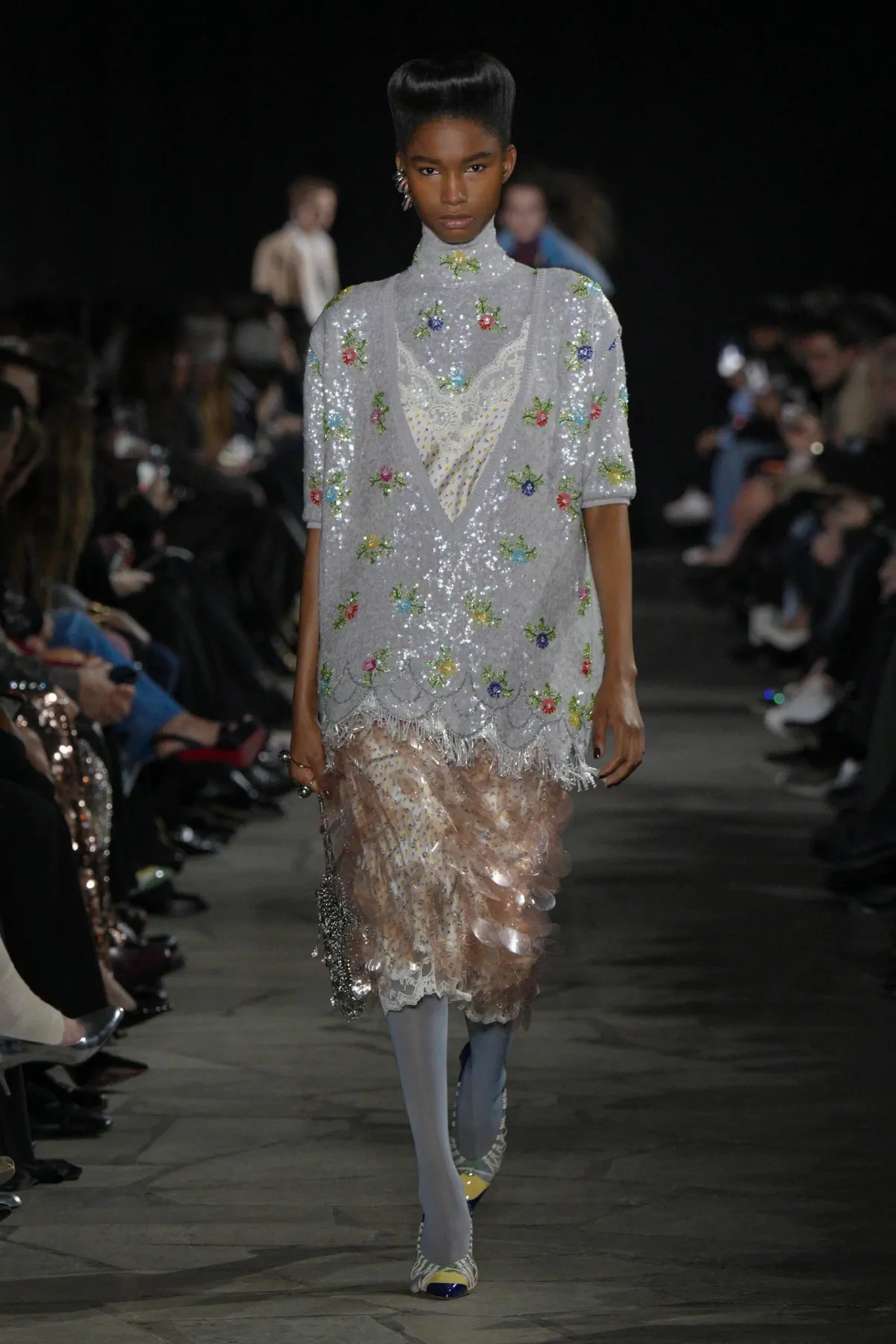
The punk references were deliberate and restrained. A tea dress is traditionally the most demure of garments. Transforming its hem into swinging metal fringe or covering it with a men’s overcoat changes its entire character. Dossena pushed these contrasts far enough to seem intentional, yet not so far that they became costumes. The cartoonish quality of some color choices – the kind of palette that initially seems like a mistake – kept the collection from feeling too studied.
There was a political undercurrent to all of this, though Dossena wore it lightly. His research into 1940s fashion inevitably touched on the French Occupation and how women dressed during a period of scarcity and surveillance. This history has obvious resonance in a time of cultural tension and uncertainty. Rather than making statements, the designer channeled that tension into clothes.
Follow all the latest news from Fashionotography on Flipboard, or receive it directly in your inbox with Feeder.
You may also read

He also made a practical argument. The women he designs for work, raise children, and lead full lives. He is not interested in dressing someone whose primary function is to be looked at. The layering that defines this collection and the way pieces accumulate rather than coordinate reflect that reality. Getting dressed becomes something you do on your own terms.
Since Dossena’s first show in 2014, Rabanne has expanded considerably. The house now produces far more than the metal mesh it was once known for, and its craftsmanship has grown to match. The Fall 2026 collection showcased this expansion: beaded knitwear sat alongside slinky metal-mesh florals, and plastic paillette skirts shared the runway with tailored wool outerwear. Together, they added up to a coherent point of view. Dossena designs for women who don’t wait to be polished.