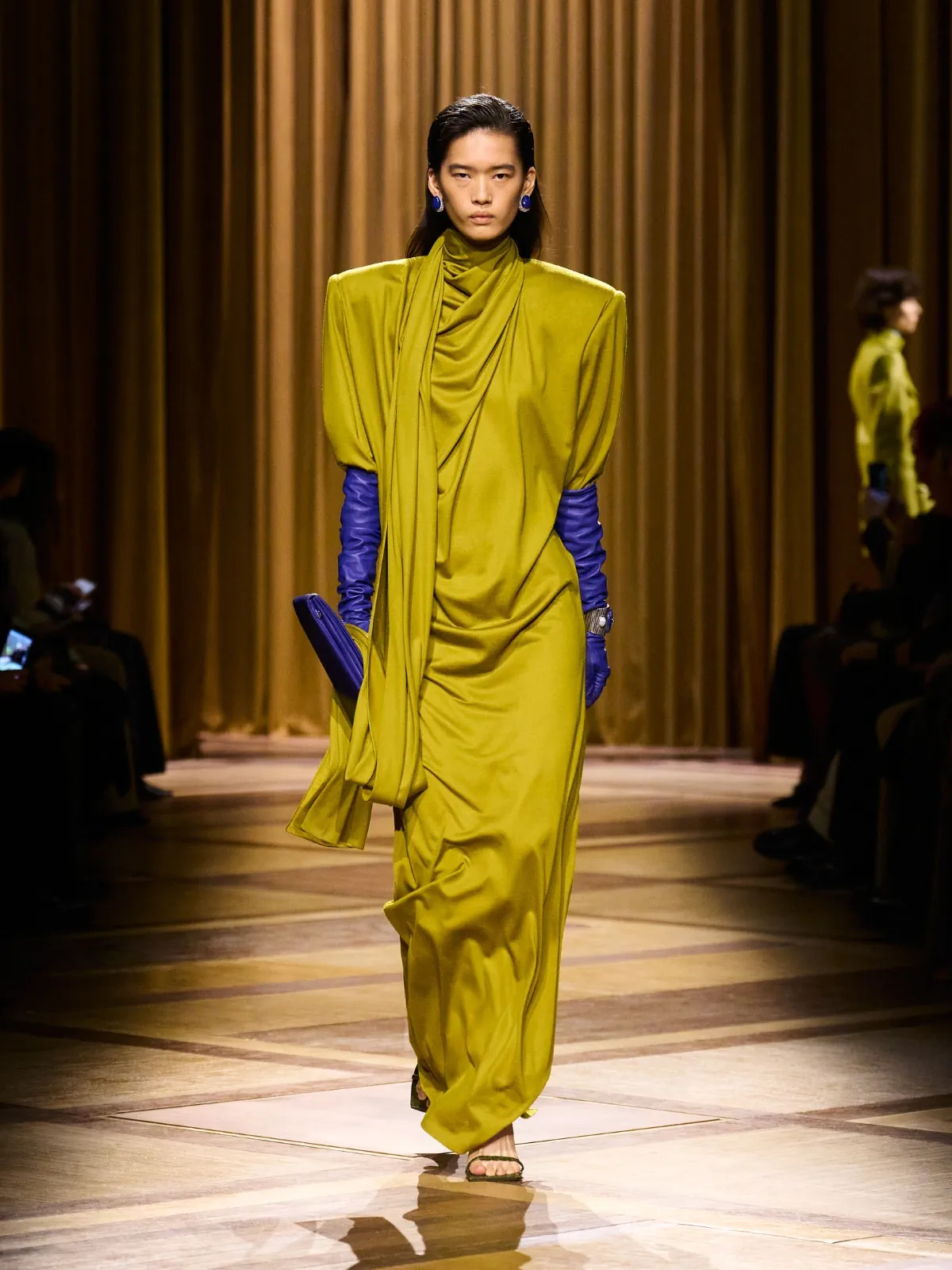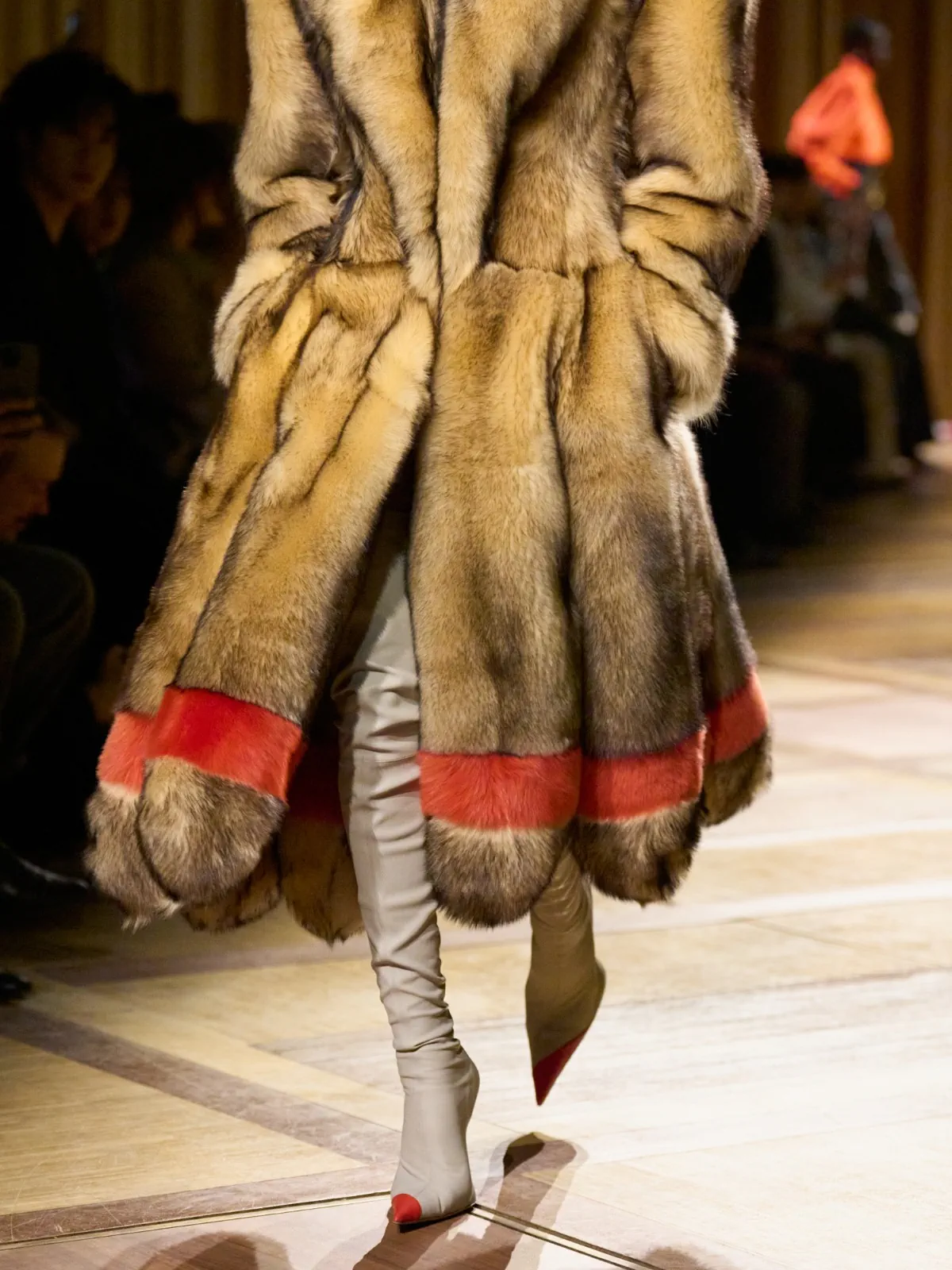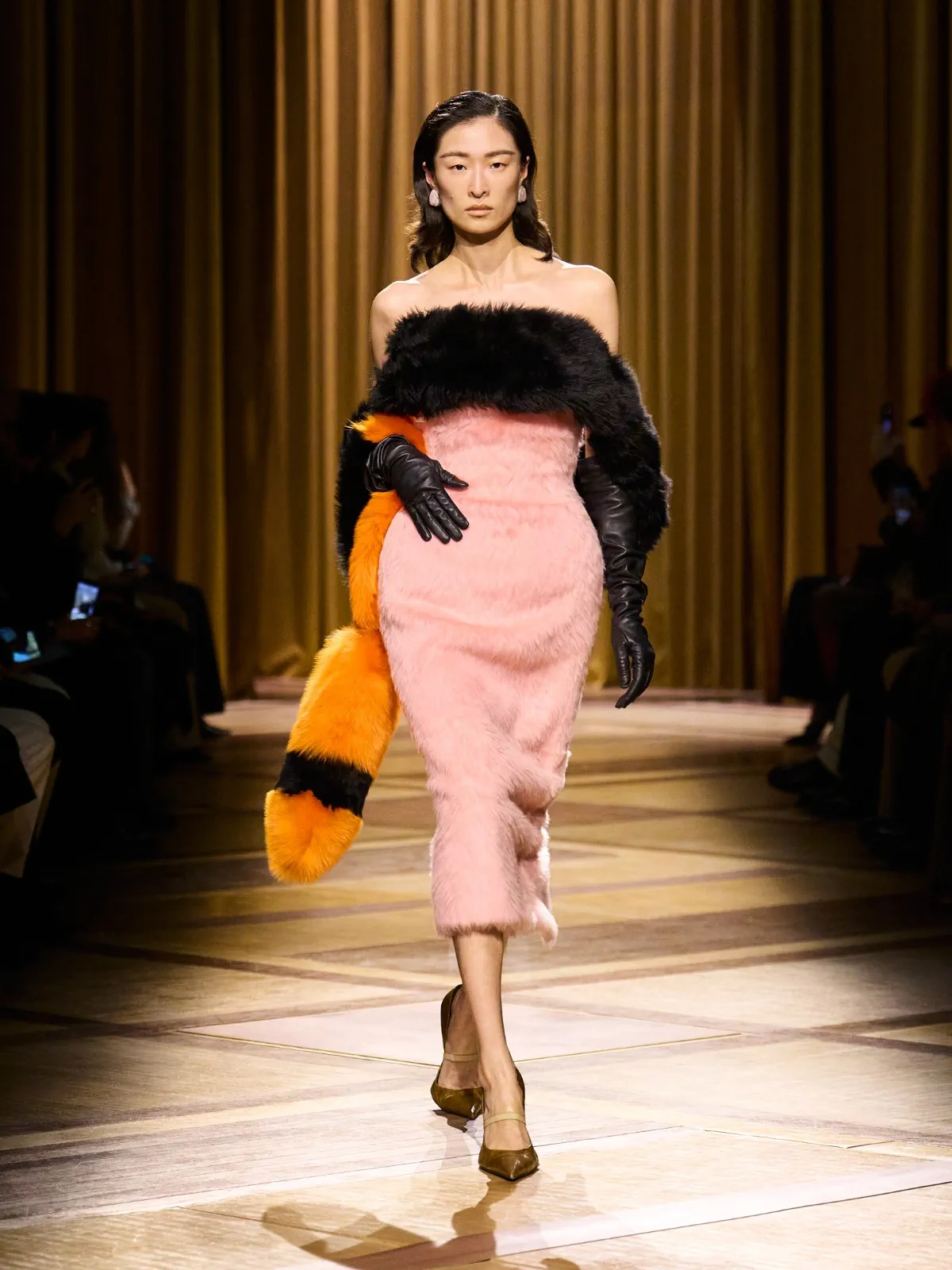

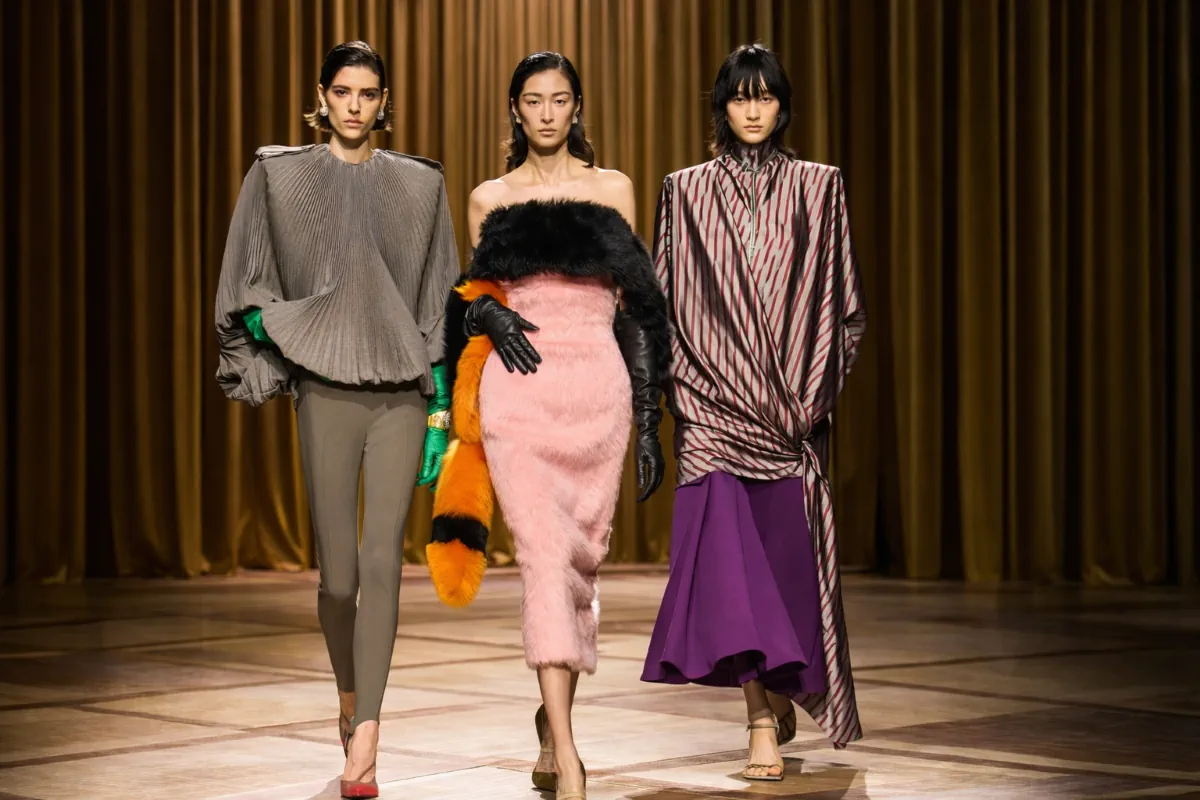
The Mugler Fall 2026 collection was presented at the Palais de la Porte Dorée, an Art Deco building constructed for the 1931 International Colonial Exhibition in Paris. The venue was not a neutral choice. Today, the building houses the Museum of Immigration History. For a designer who has made a point of engaging seriously with the complexities of his adopted house, choosing this venue was entirely consistent.
| 📌 Key Facts |
|---|
| ⚔️ Power dressing is the central theme of the Mugler Fall 2026 collection 🏛️ The show took place at the Palais de la Porte Dorée in Paris, now home to the Museum of Immigration History 👩 Miguel Castro Freitas referenced powerful female figures such as Joan of Arc and Joan Crawford 📐 Geometric shapes-triangles, squares and trapezoids-structured the silhouettes 🎬 Cultural references ranged from Mildred Pierce to sci-fi films like Blade Runner 🧥 Leather coats and strong shoulders reaffirm Mugler’s signature aesthetic |
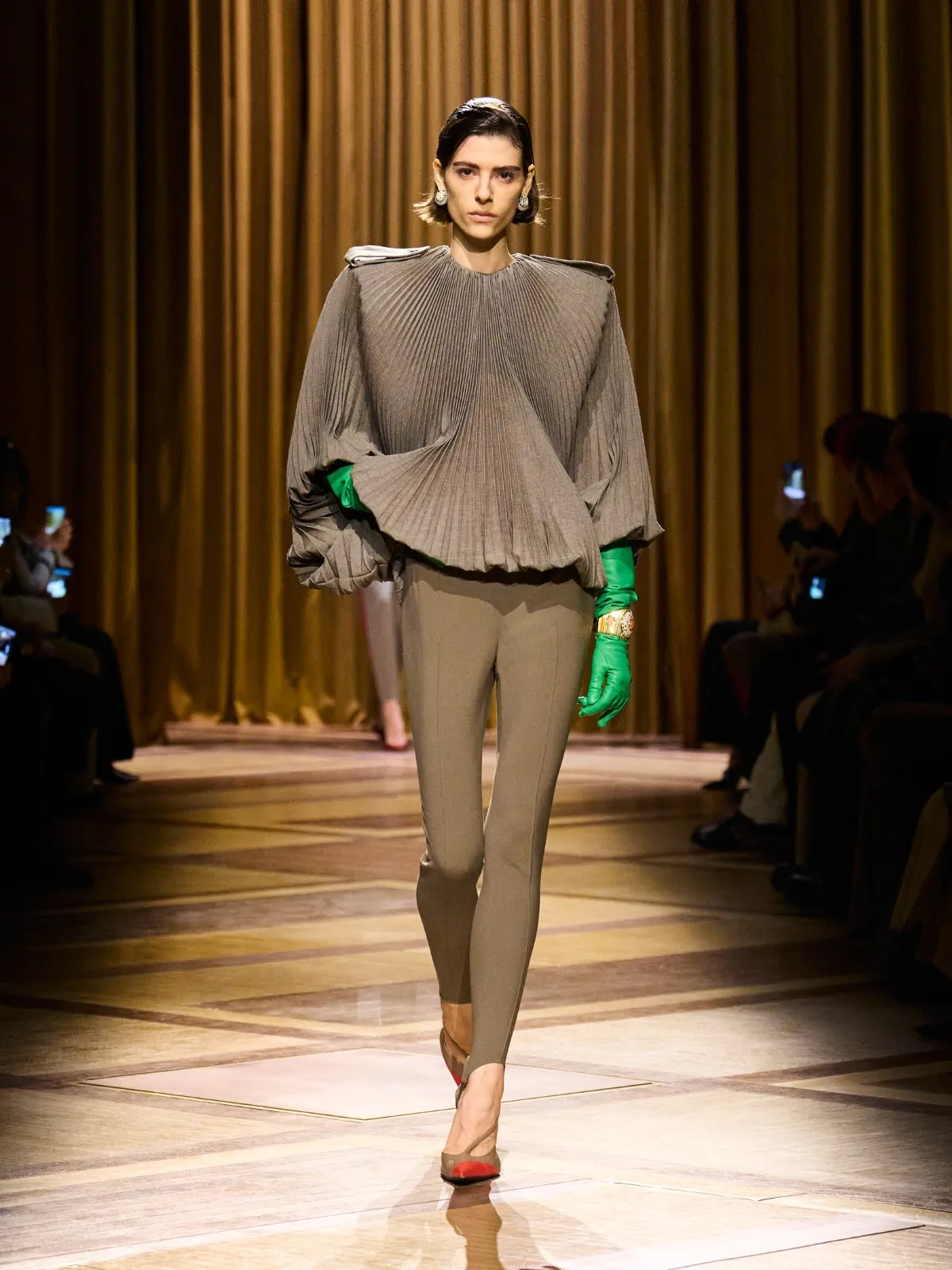
Miguel Castro Freitas titled his second collection for Mugler “The Commander.” He framed it as the second chapter in what he calls the “Trilogy of Glorified Clichés.” While his debut laid the groundwork, this collection delved deeper into the territory he established: power dressing, examined from various perspectives and filtered through a personal roster of muses that included Joan of Arc and Joan Crawford.
Clothes were presented on a runway shaped by basic geometric shapes: triangles, squares, and trapezoids, all taken to extreme lengths. Some silhouettes were softened with feminine details, while others were deliberately boxy and blocky, almost confrontational. A pale gray wool jersey column dress illustrated this approach well: light and fluid on its own, it was anchored by a jeweled plastron that seemed to float on the fabric and was held in place by clever internal rigging. The garment was armor that didn’t feel like a burden.
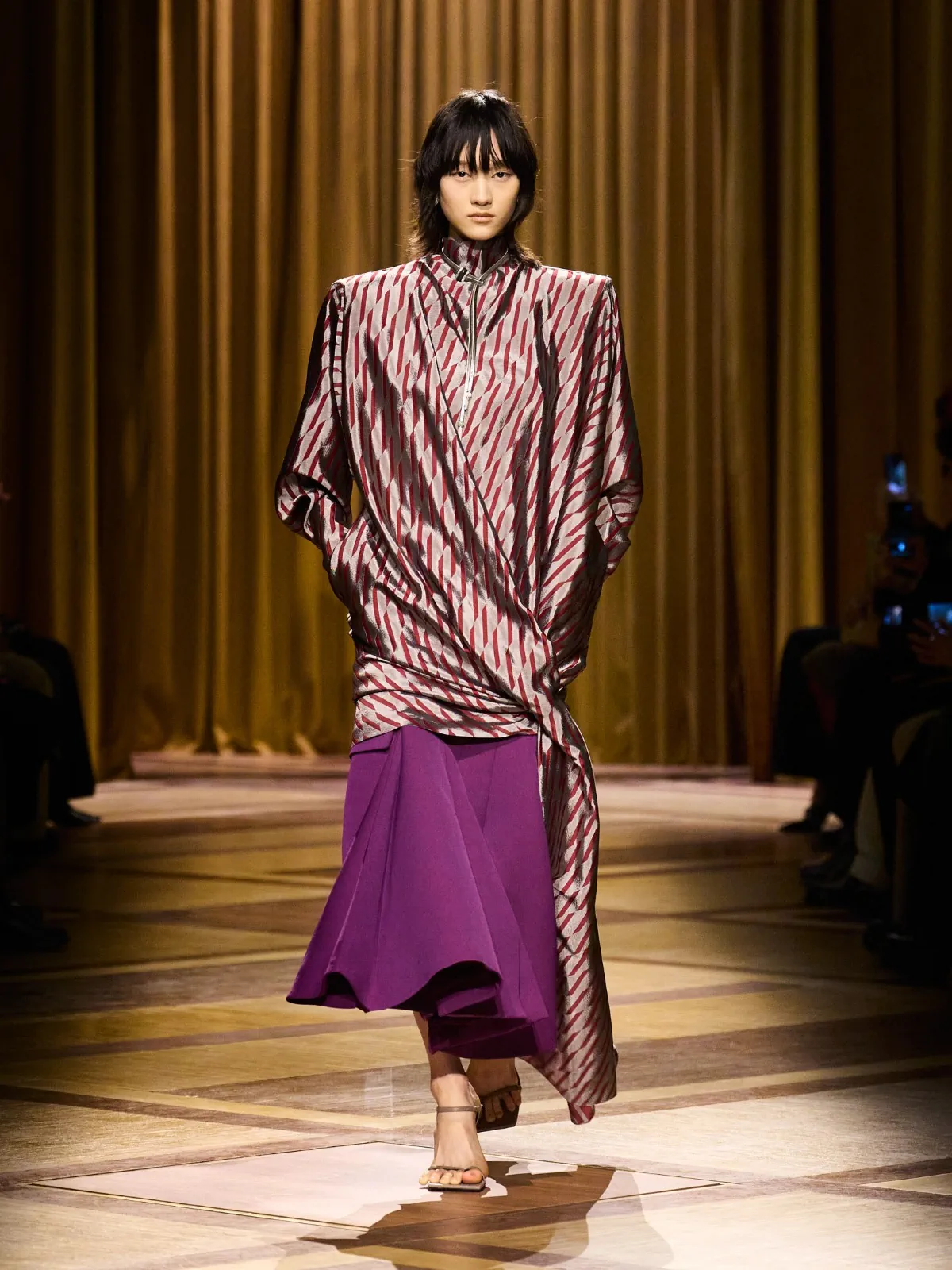
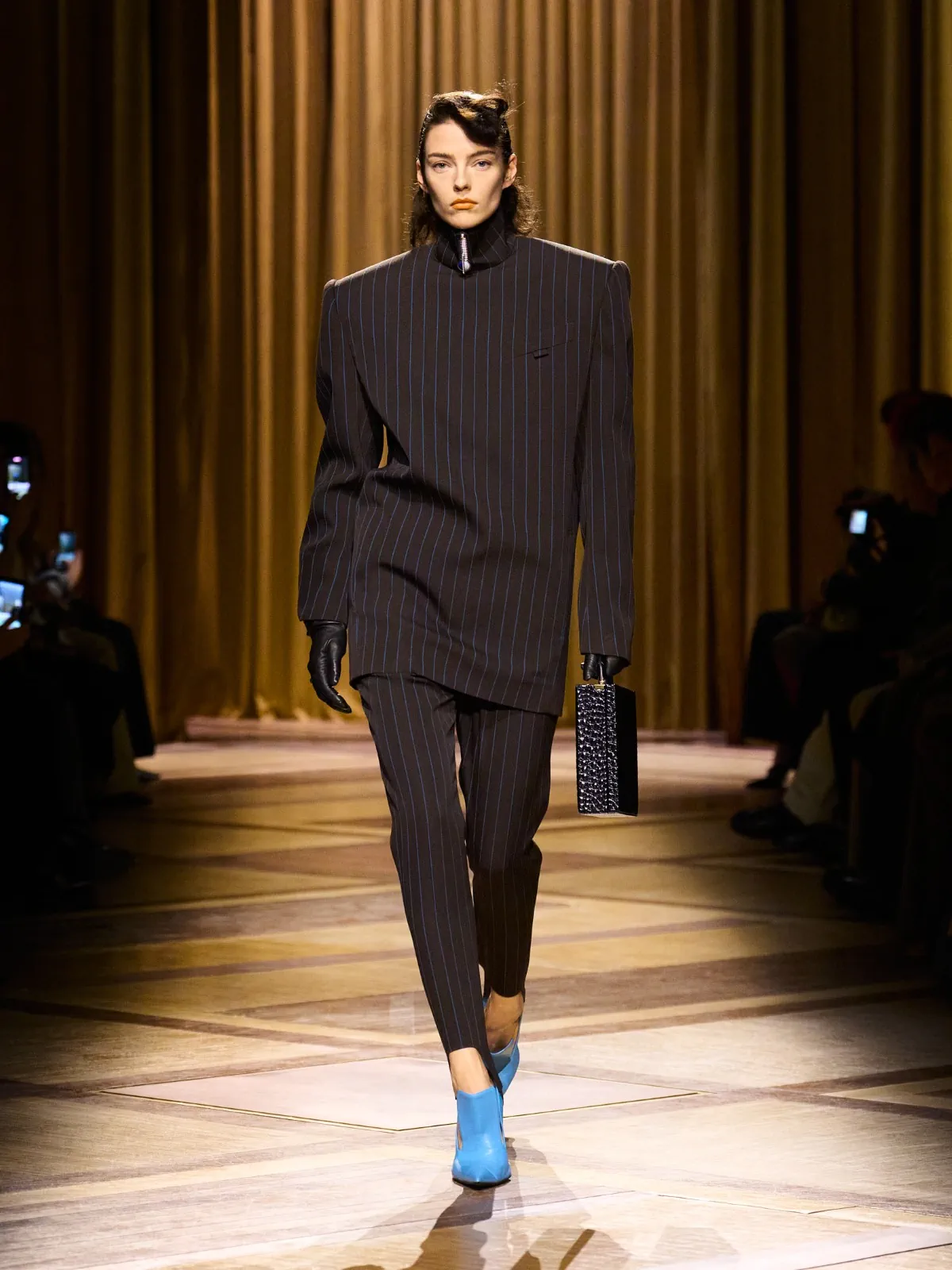
References accumulated throughout. A black leather jacket with a diagonal zipper and a shrunken trilby hat evoked Catherine Deneuve in a 1983 vampire film The Hunger, exuding cool menace and studied nonchalance. A pinstriped coat reminiscent of XVII century court attire evoked the social-climber suits worn by Joan Crawford in Mildred Pierce. Science fiction left its mark, too. Pleated lamé dresses and Soviet-style uniforms with shelf-like shoulder pads evoked Blade Runner and Gattaca. The references were wide-ranging but not arbitrary. Freitas was constructing a personal canon of powerful women.
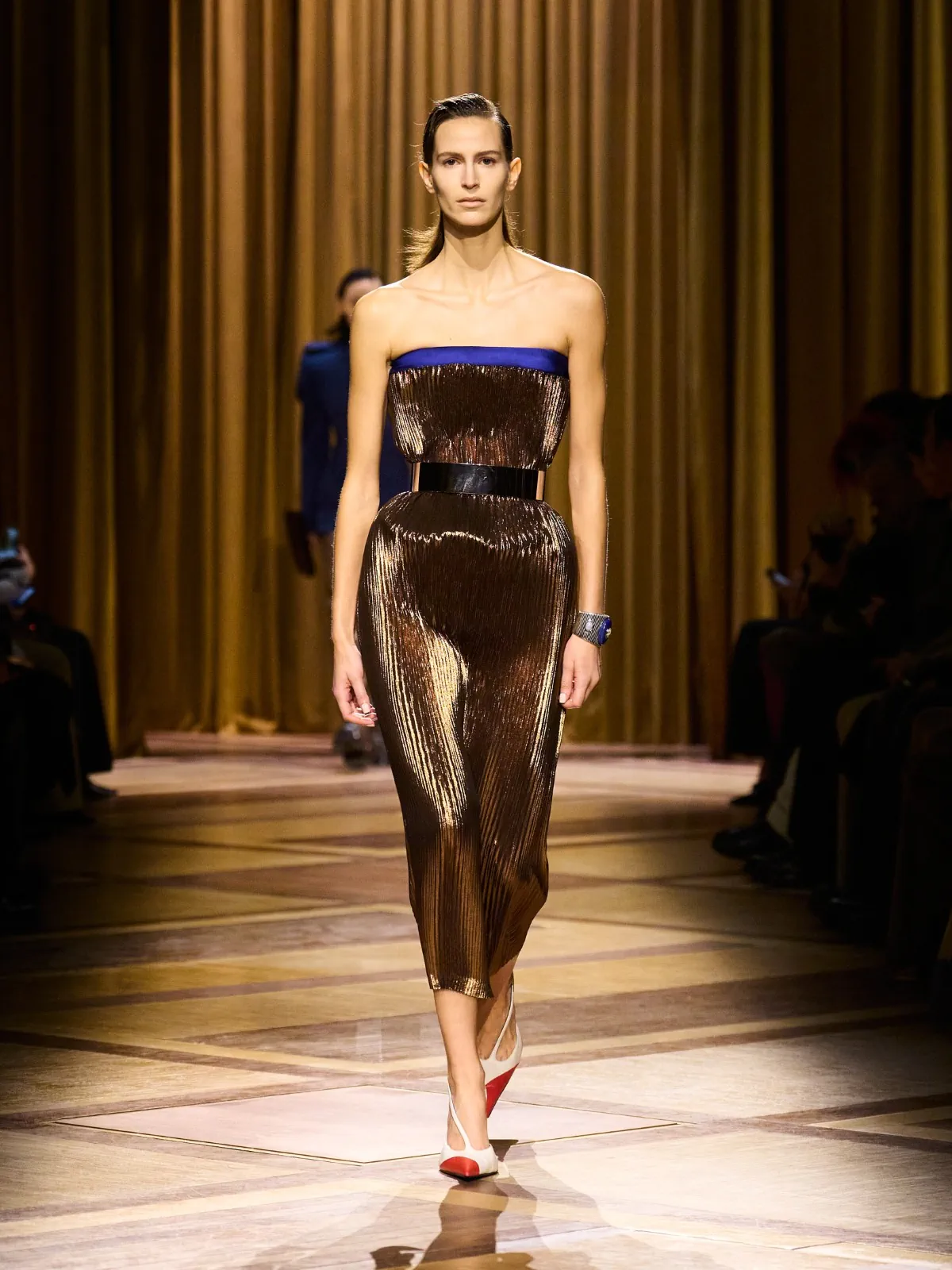
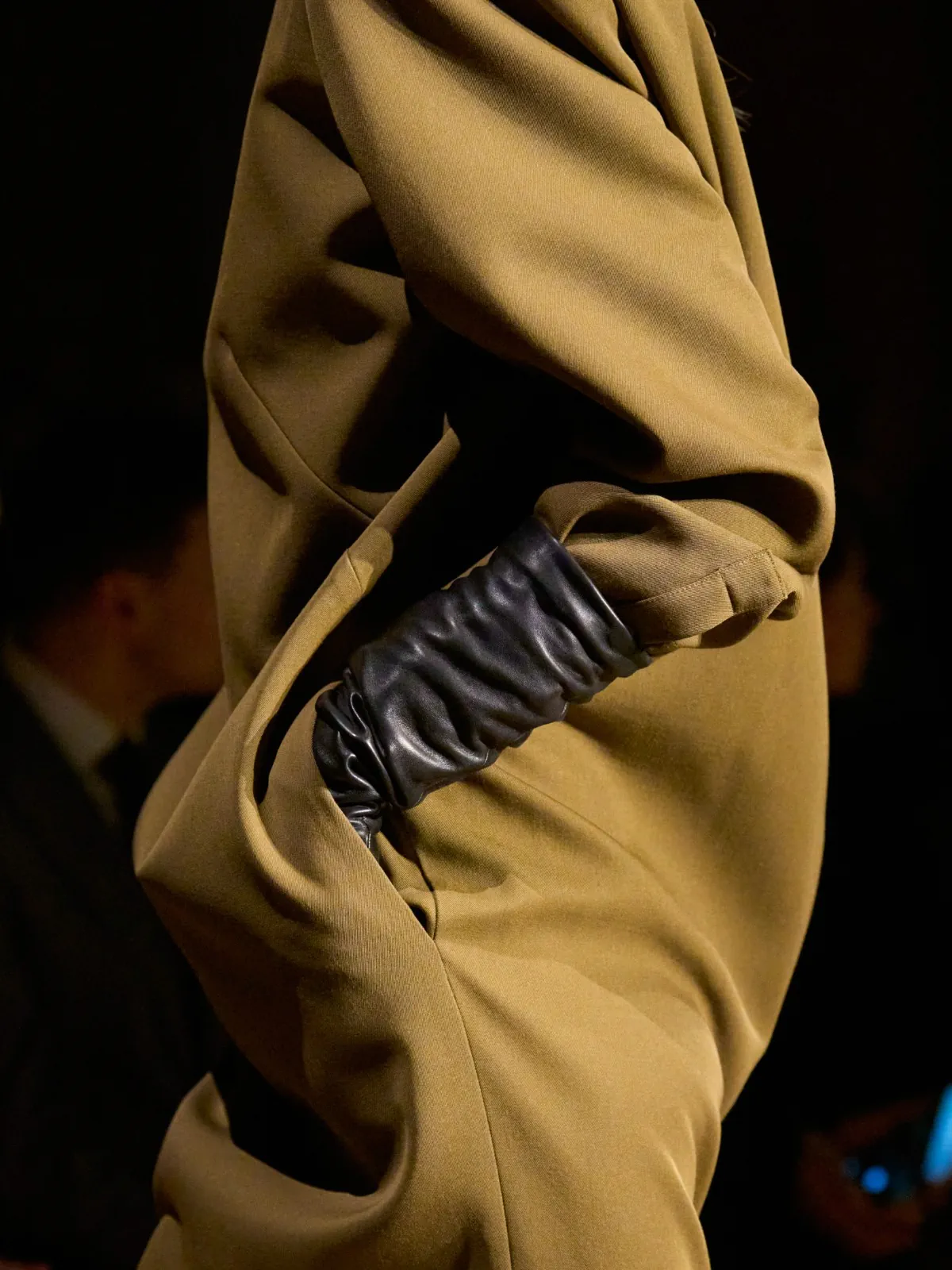
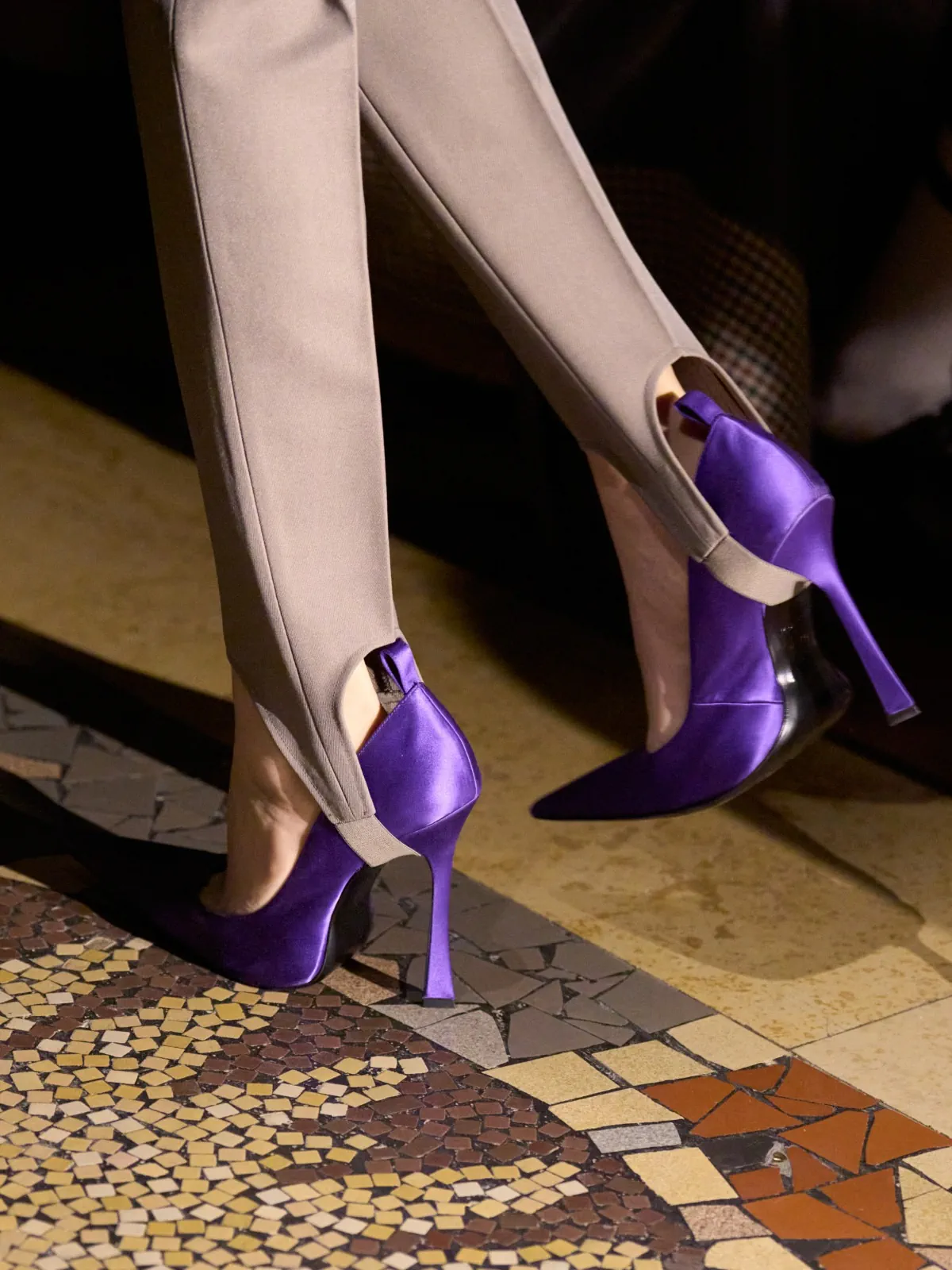
He also leaned into playfulness. Colored fur and leather appeared repeatedly: a strapless dress in pink and black shearling with an orange tail; a cargo jacket in metallic pink leather. Stirrup pants were anchored by towering stilettos. A rigid gold belt cinched a long-sleeved midi dress made of pleated, bronze-colored lamé. The house’s glossy leather coats and overcoats with exaggerated shoulders were unmistakably Mugler and likely to have the broadest commercial appeal, recognizable to longtime fans.
Follow all the latest news from Fashionotography on Flipboard, or receive it directly in your inbox with Feeder.
You may also read

Freitas has been open about his awareness of the founder’s complicated legacy. Manfred Thierry Mugler was a pioneer of clothing construction who worked with latex, metal, and feathers. He was also accused of fetishizing the women he dressed, though he insisted his intention was to liberate them. Freitas referenced two archive collections, Les Secrétaires and Les Militaires, in his show notes, fully aware that symbols of power carry different weight in the current climate. His stated aim is self-empowerment through personal choice.
The growing cultural presence of the house was evident in the audience. Chappell Roan attended the show just weeks after wearing a Mugler archival design hung from nipple rings at the Grammy Awards. This generated considerable attention. Freitas saw this as confirmation that his work was being received as he intended: with conviction and pride – exactly what he had asked for.
The collection was not uniformly wearable. A leather top tooled to resemble automobile upholstery looked striking on the runway but would be difficult to wear elsewhere. However, Freitas was not trying to dress for every occasion. He was making an argument about what clothing can mean when worn with purpose: when a woman chooses to put on a rigid gold belt or a shoulder-padded uniform, not because she was told to, but because she decided to. He believes that distinction is where the power actually lives.