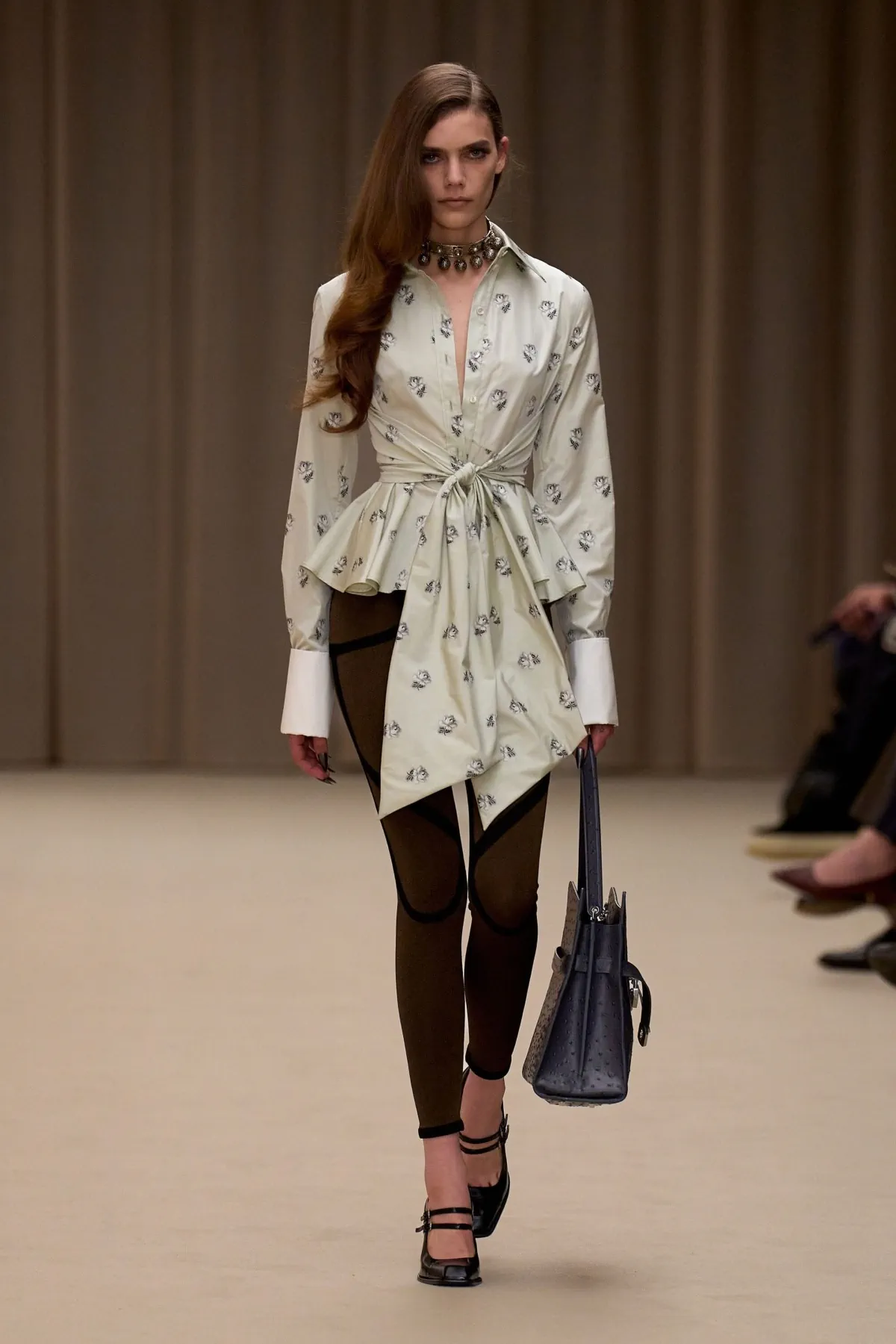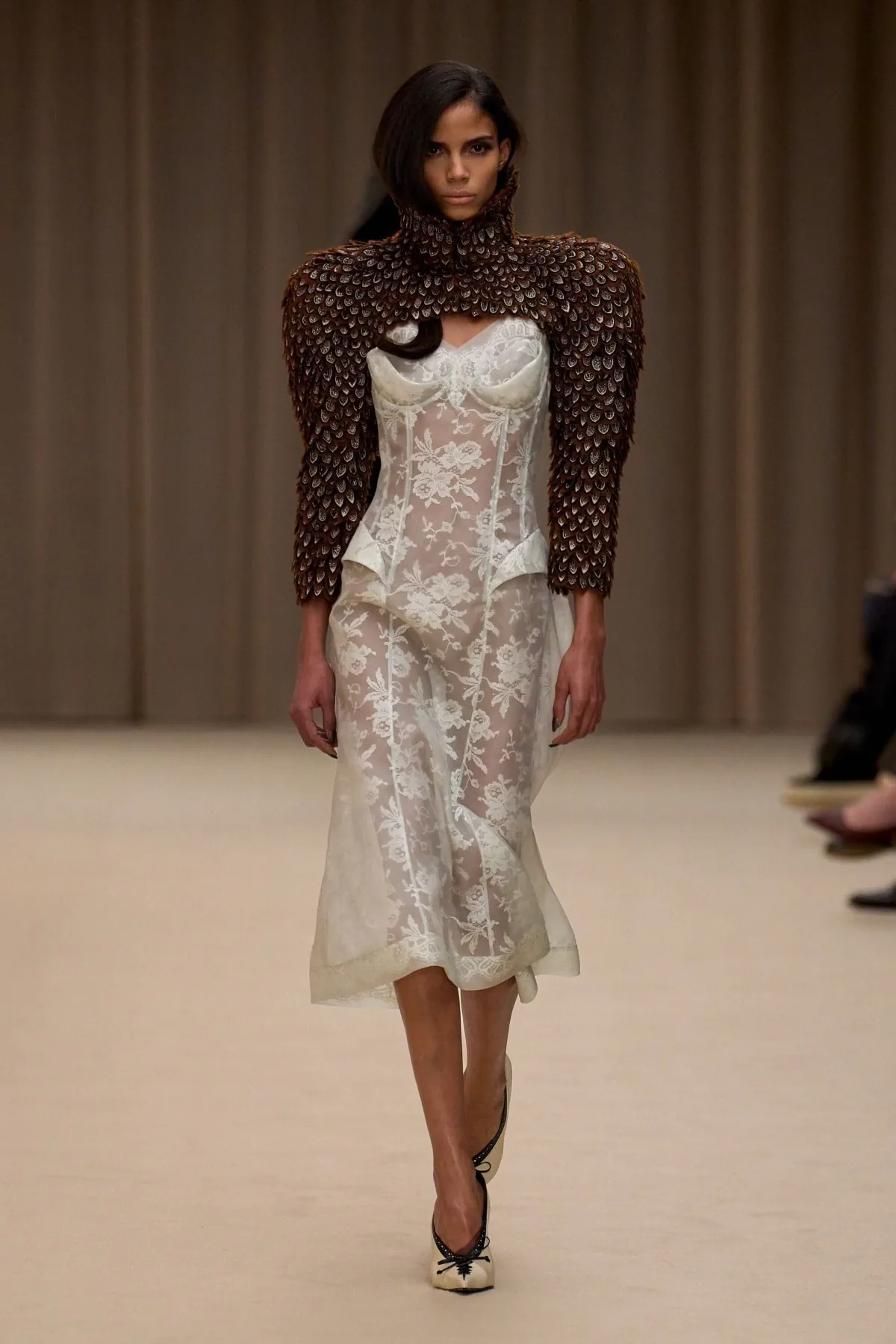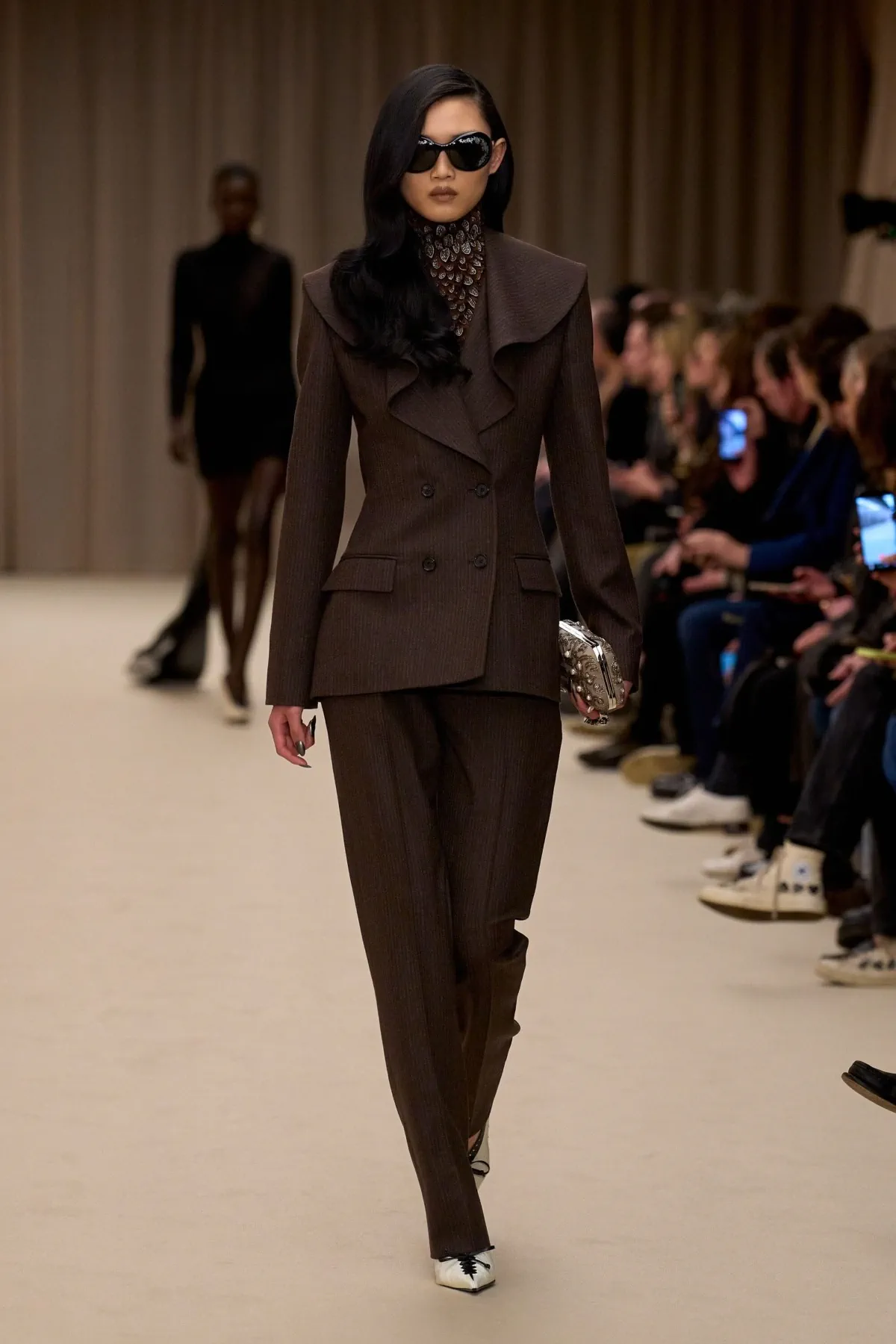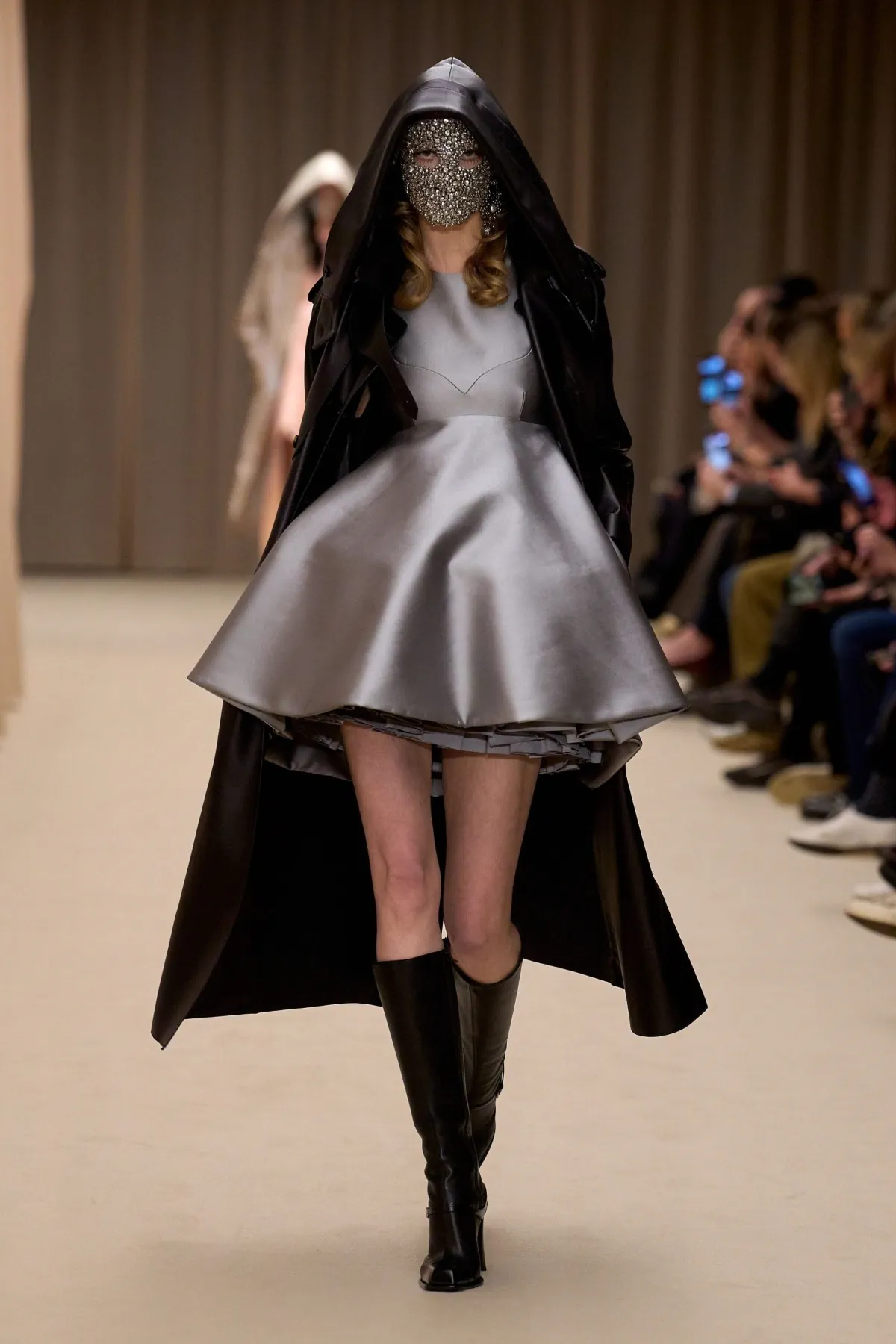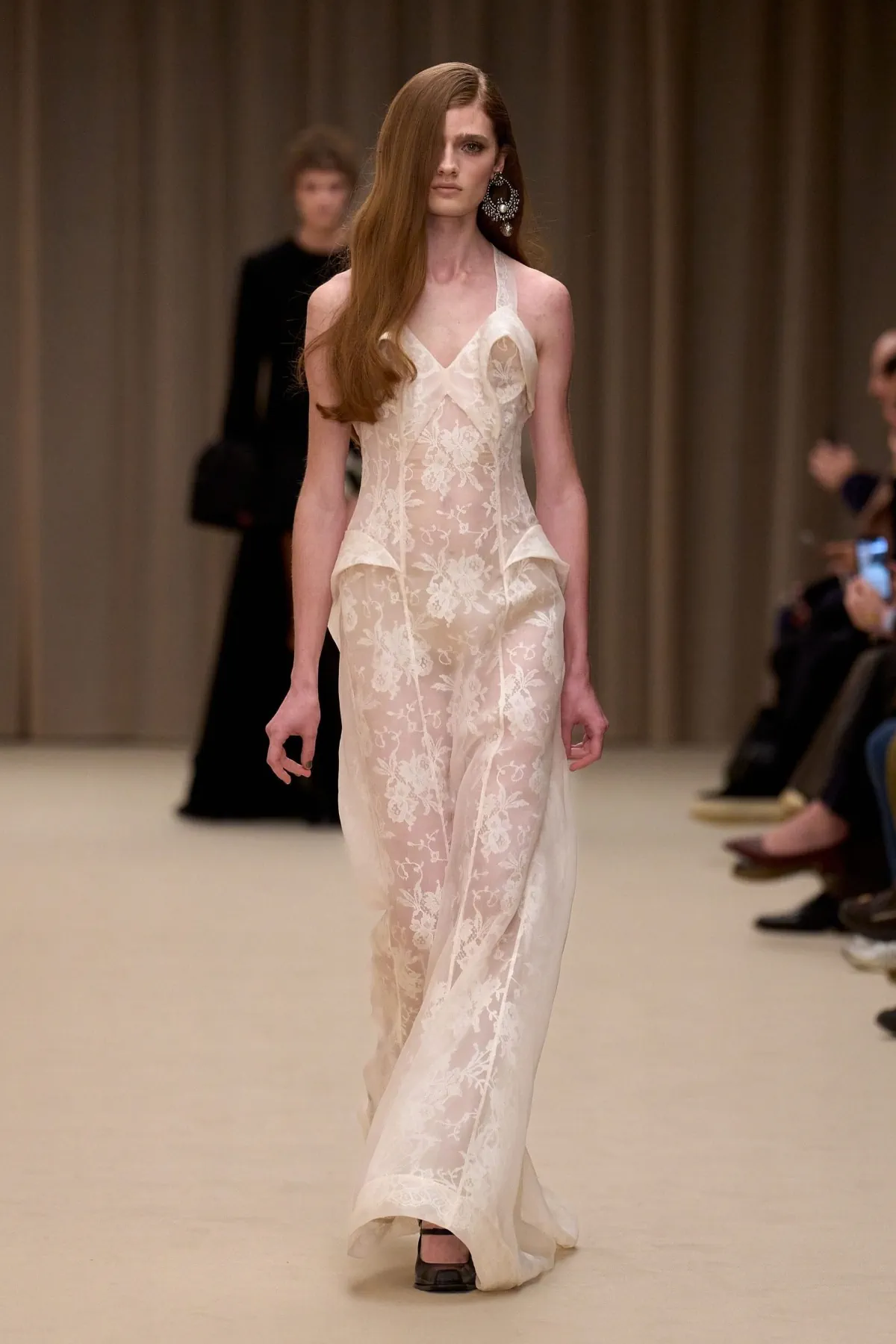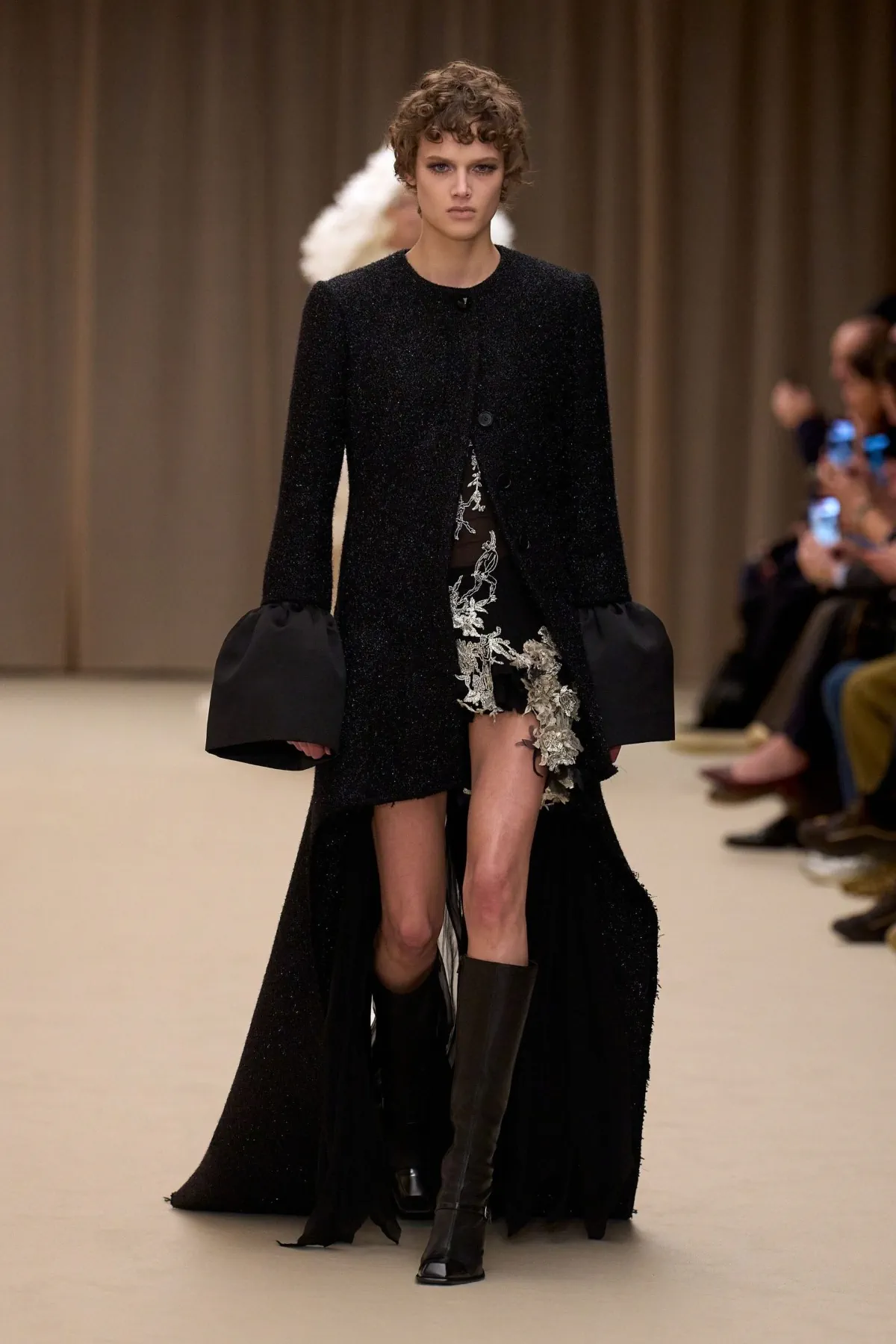

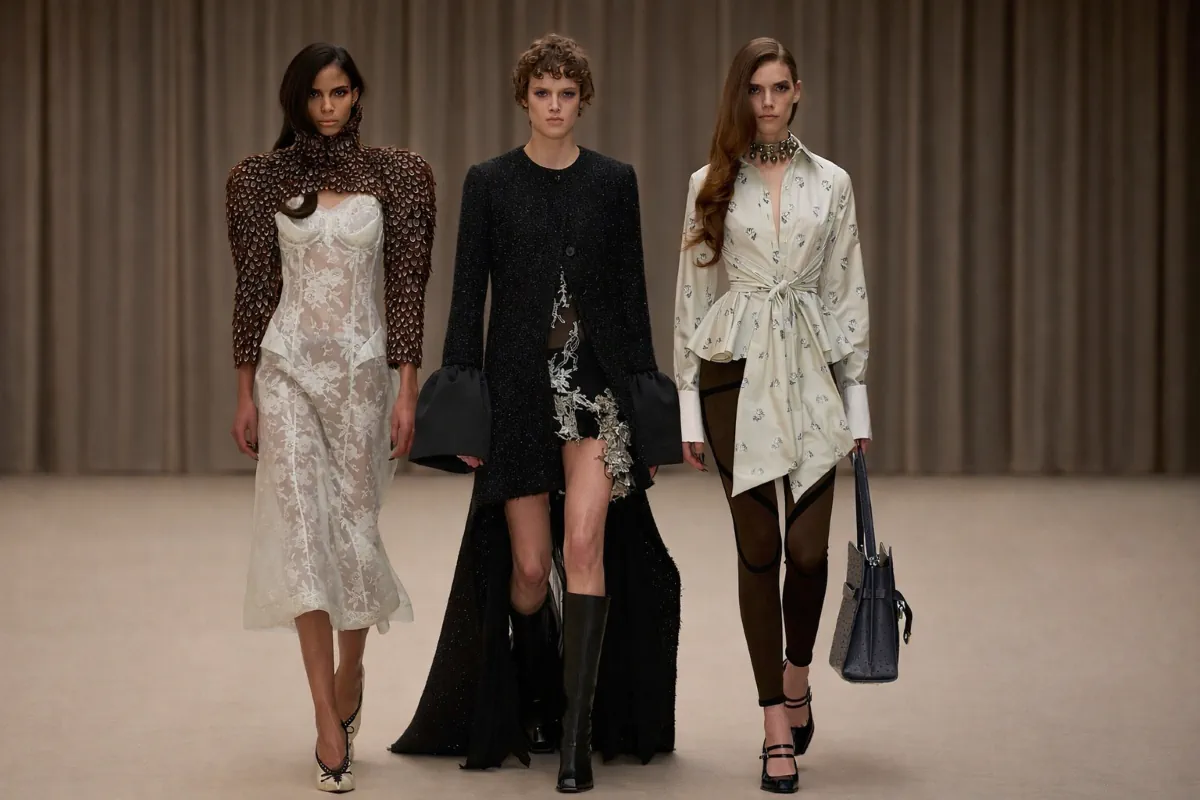
Seán McGirr has made no secret of his love for cinema, and his McQueen Fall 2026 collection makes his passion abundantly clear. The show opened on a flesh-pink, curtained set. The lighting was low and slightly unsettling. The score, by A.G. Cook, hovered somewhere between eerie and clinical. McGirr had been thinking about Todd Haynes’s 1995 film Safe, in which Julianne Moore is trapped inside a house that slowly becomes her enemy. You could feel that unease running quietly through the clothes.
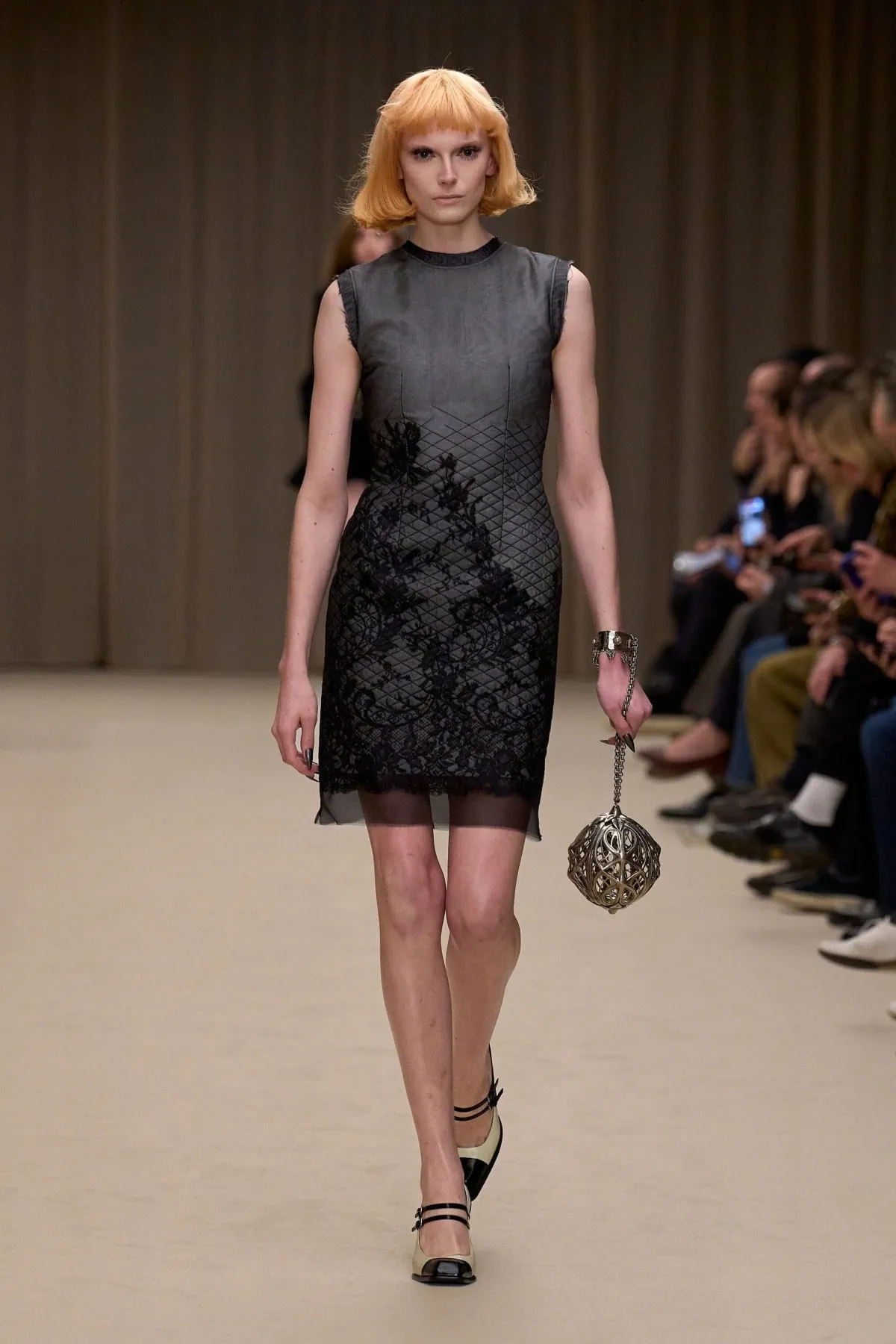
The idea of “perfection and paranoia,” as McGirr described it before the show, is not the most commercial concept in fashion. Yet, he managed to make it wearable, which is no small feat at a house under pressure to sell.
McGirr has been open about his habit of returning to the McQueen archive. There is something almost methodical about it. He pulls references, not to copy them, but to understand where the house has been so he can decide where to take it next. This season, single-hook jackets in icy gray Mikado silk or crushed jacquard referenced the 1996 La Poupée collection. Buttons marching diagonally across a tailored torso recalled the Dante show from that same era. The skeleton scarf, practically a signature of the house at this point, reappeared in softer shades of lavender and cargo green – a quieter gesture than the original.
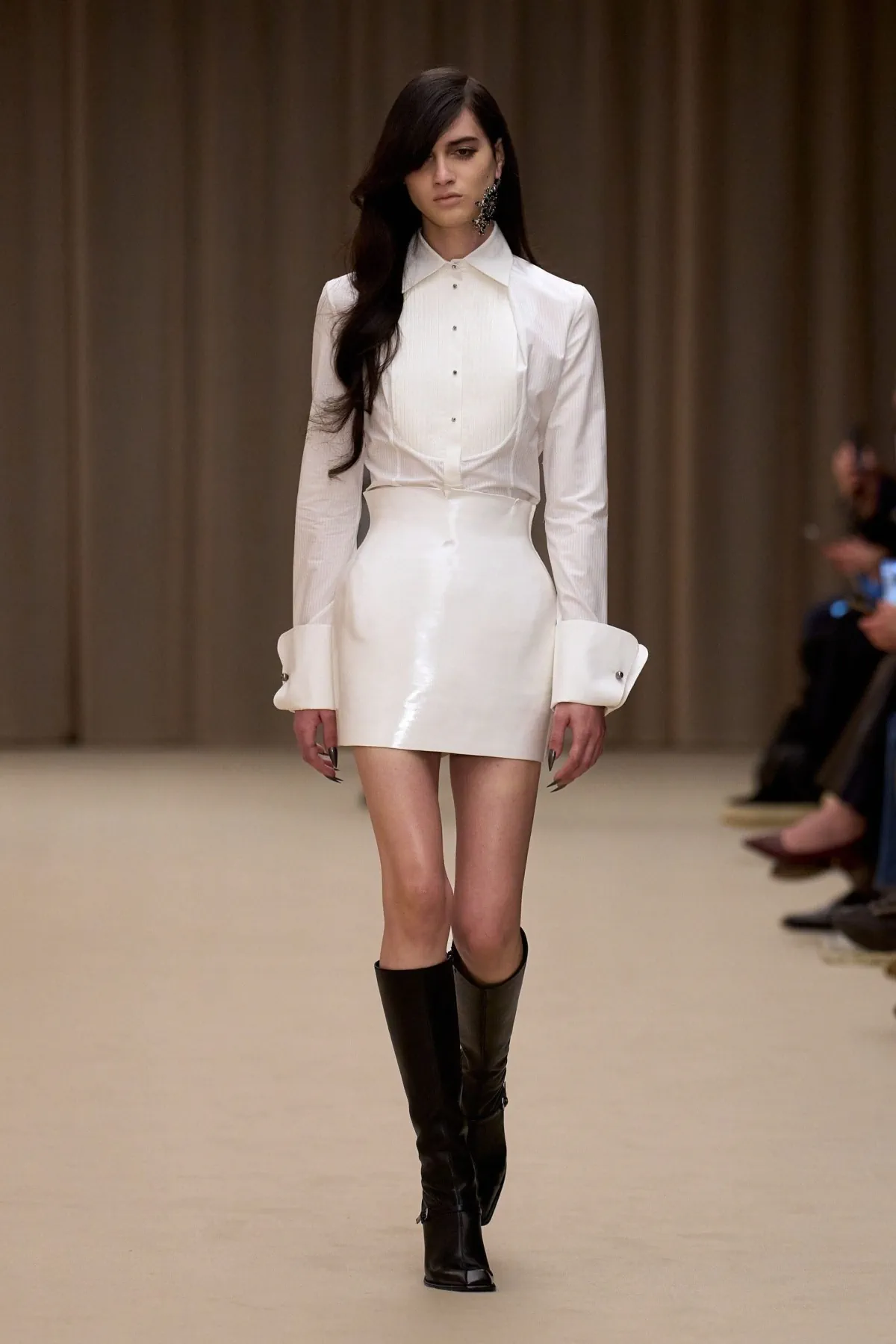
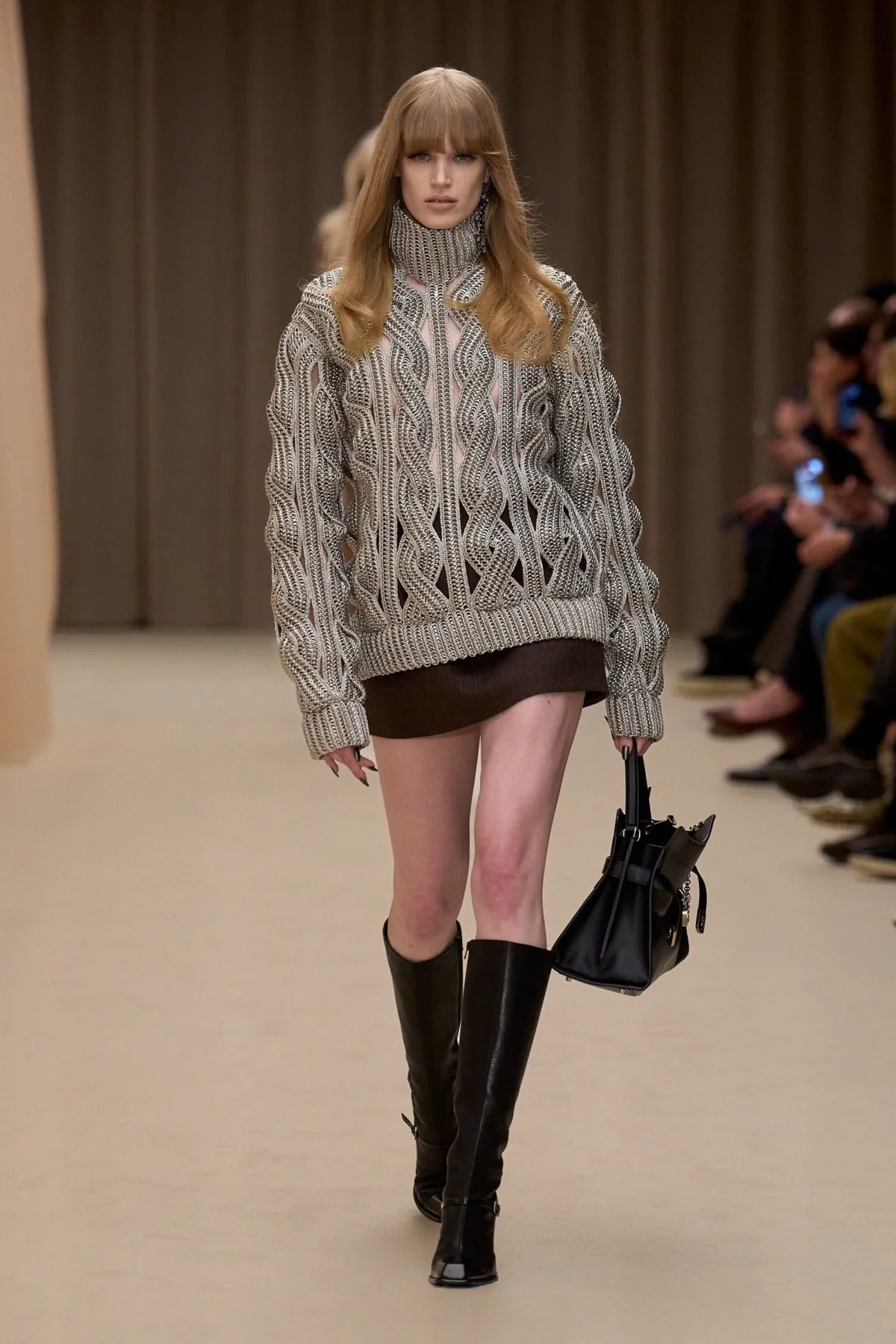
The feathered jacket, an emblem the house has worn for years, resurfaced as a shrug top with a trompe l’œil plumage, created through embroidery rather than actual feathers. Alexander McQueen’s fondness for chainmail in his more armor-like pieces was evident in a silver cable-knit sweater assembled from thousands of small metallic rings. This labor-intensive piece, which was almost impossible to rush, represented the collective effort of McGirr and his team.
What sets McGirr apart from some of his predecessors at the house is his genuine affinity for the street. He is not just a couture designer experimenting with miniskirts. The Mod-era knee-high boots and low-slung miniskirts with oversized cargo pockets drew inspiration from Mary Quant as well as from McQueen’s own spring 2005 show, one of the late designer’s most accessible collections. McGirr updated those references for 2026 by dropping the waistbands low on the hips, giving the silhouette a Gen Z flair without shouting it from the rooftops.
Follow all the latest news from Fashionotography on Flipboard, or receive it directly in your inbox with Feeder.
You may also read
The more disquieting elements were there if you looked for them. Several models wore plastic masks. Their side-parted hair had been sculpted into rigid, hyperreal waves. Brazilian model Marcele Dal Cortivo walked with her face hidden behind a molded plastic shield. She wore a miniskirt shaped from a cast of her own body, belly button indentation and all. These kinds of details push a collection past the pretty and into something more ambiguous. That ambiguity is what McGirr does best.
McQueen is not operating from a position of ease. Since Luca de Meo took over at the company’s parent, Kering, last September, the group has been cutting staff and recalibrating its brands to produce more commercially viable items. McQueen lost roughly 20 percent of its workforce to layoffs in late 2025. That kind of reduction doesn’t disappear the moment the lights go up on a runway. The sheer evening dresses, occasionally underworked, showed where the strain has been felt most acutely.
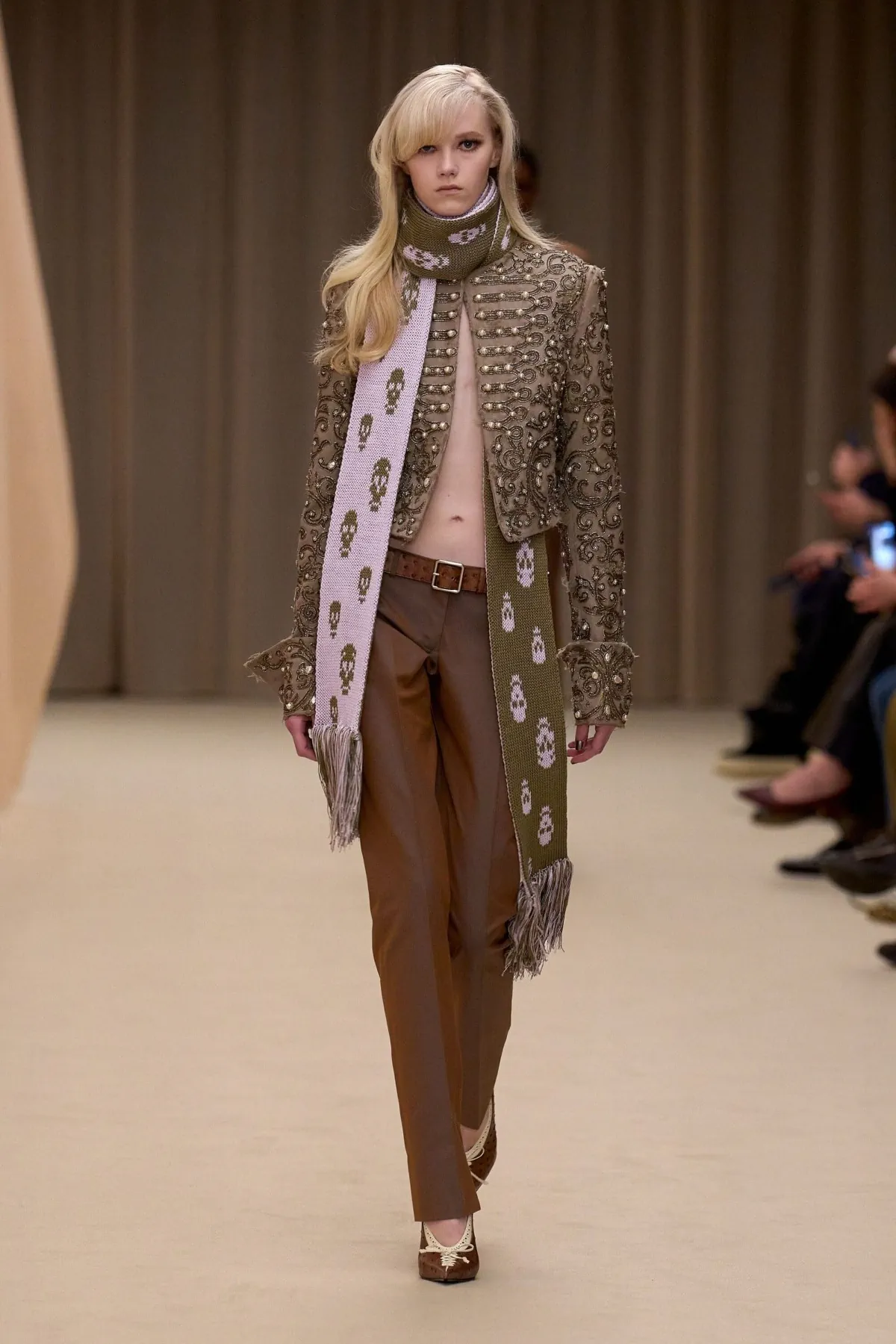
Nevertheless, the tailoring was sharp and marketable, the evening wear had moments of genuine beauty, and the collection as a whole had a clear vision. McGirr delivered what de Meo wants: clothes that sell without entirely sacrificing the house’s willingness to unsettle. That is a harder job than it sounds.