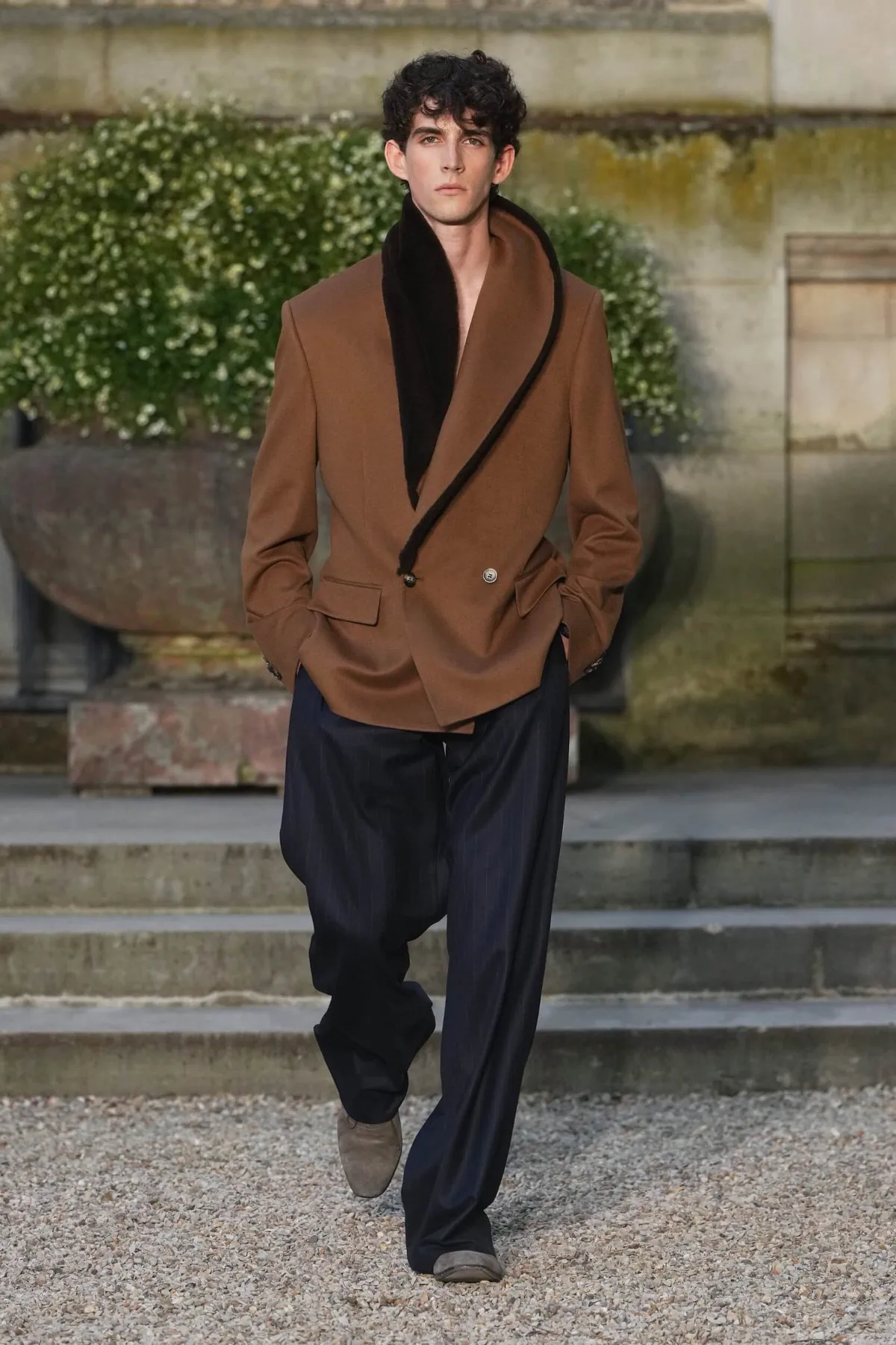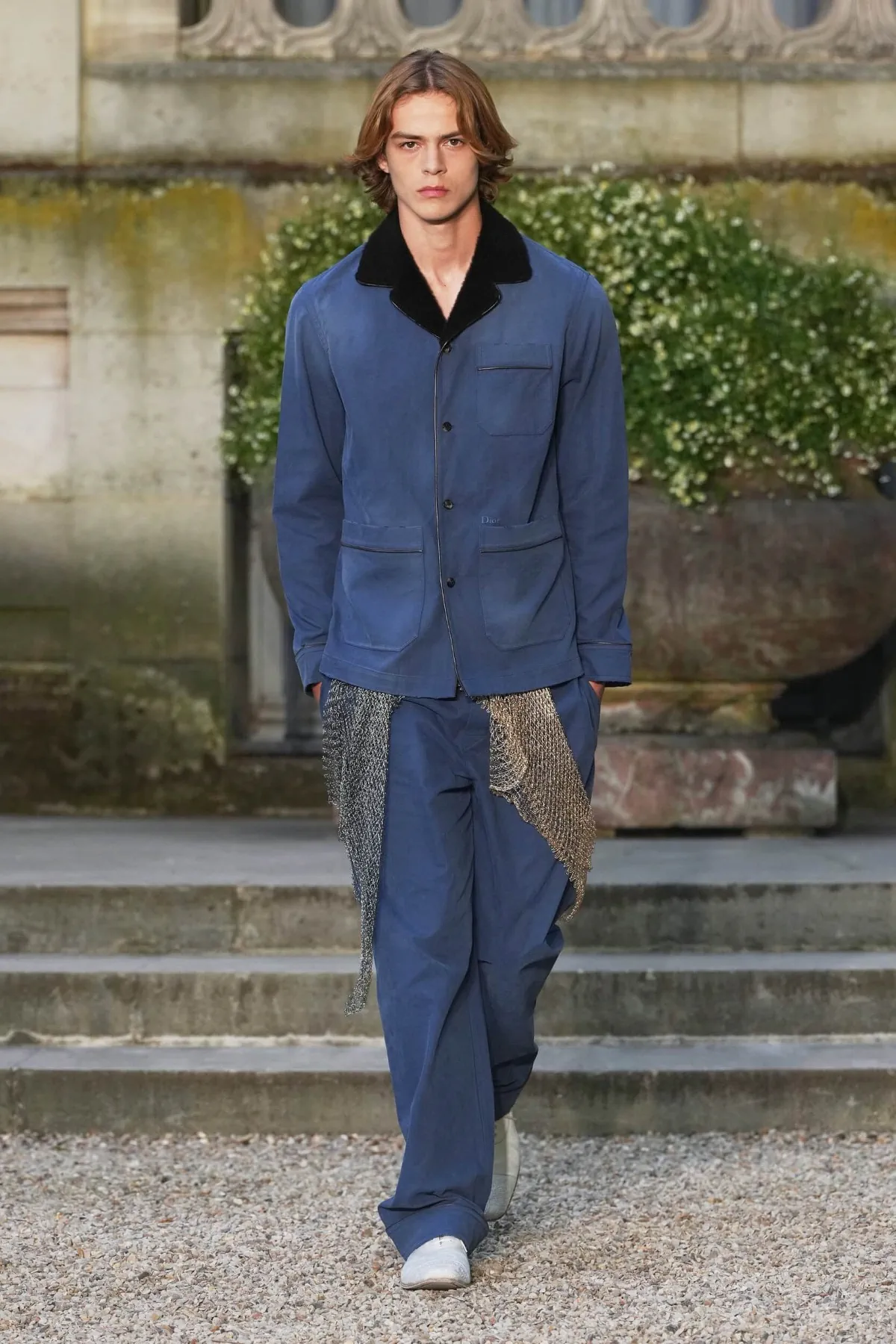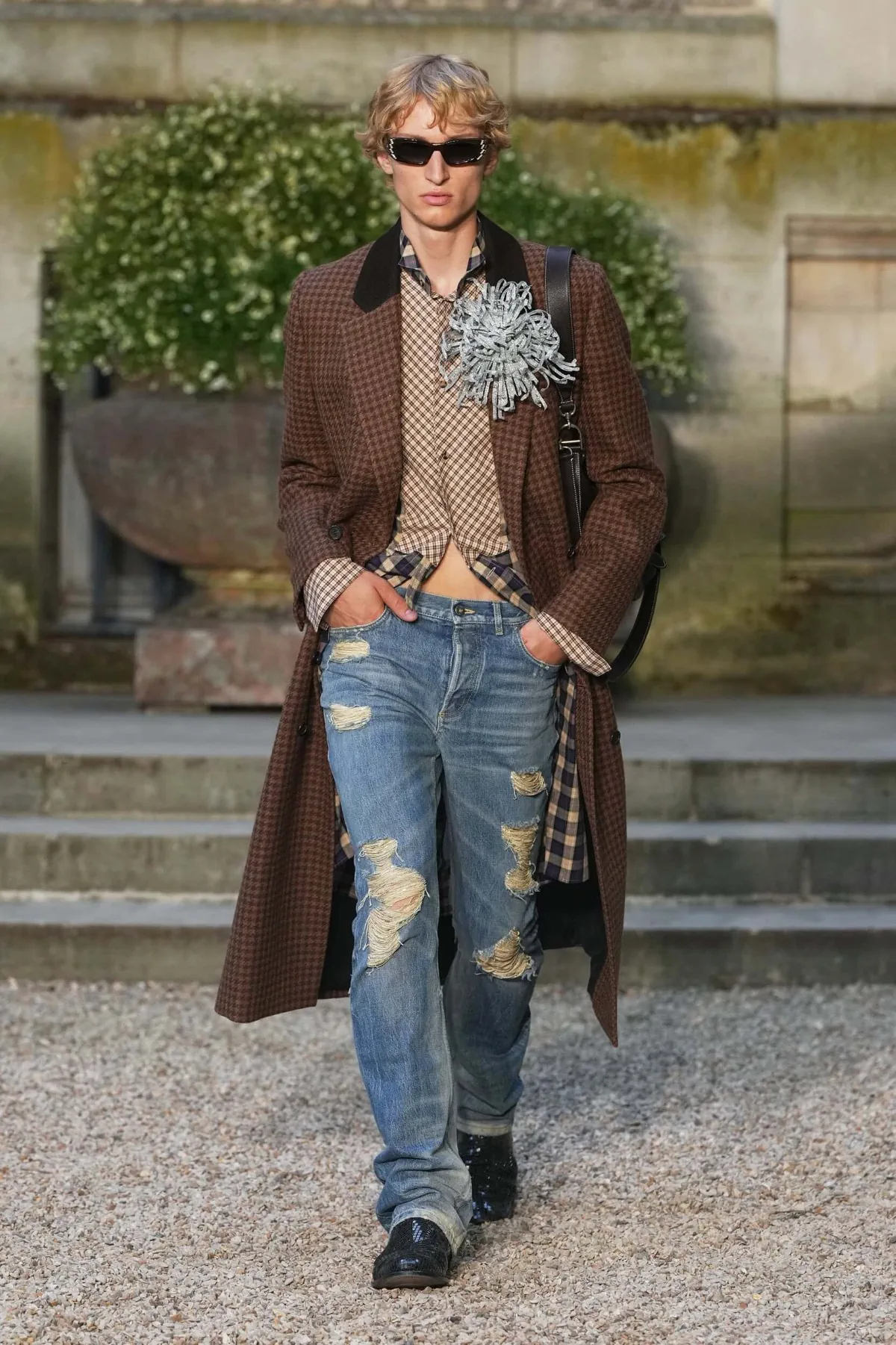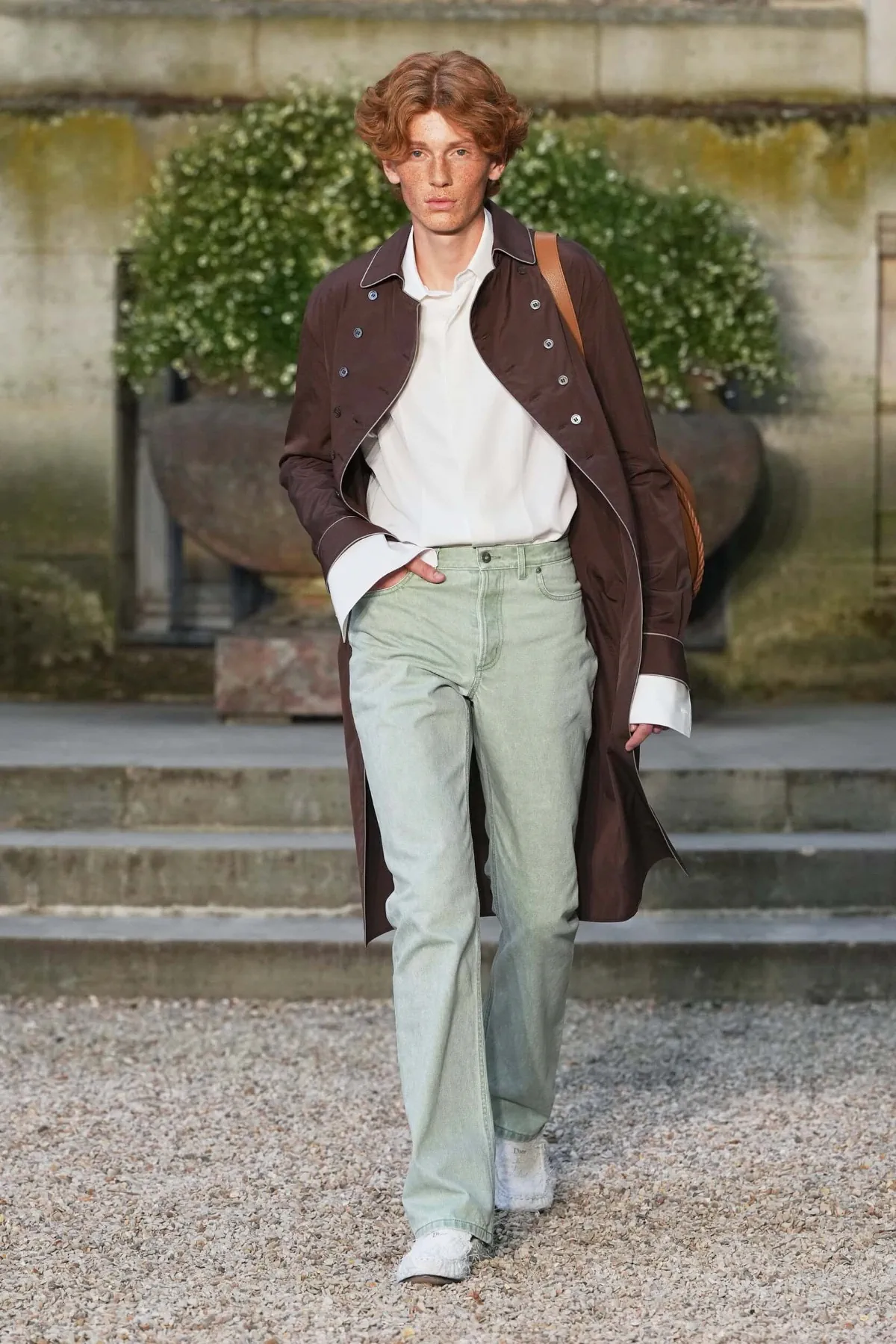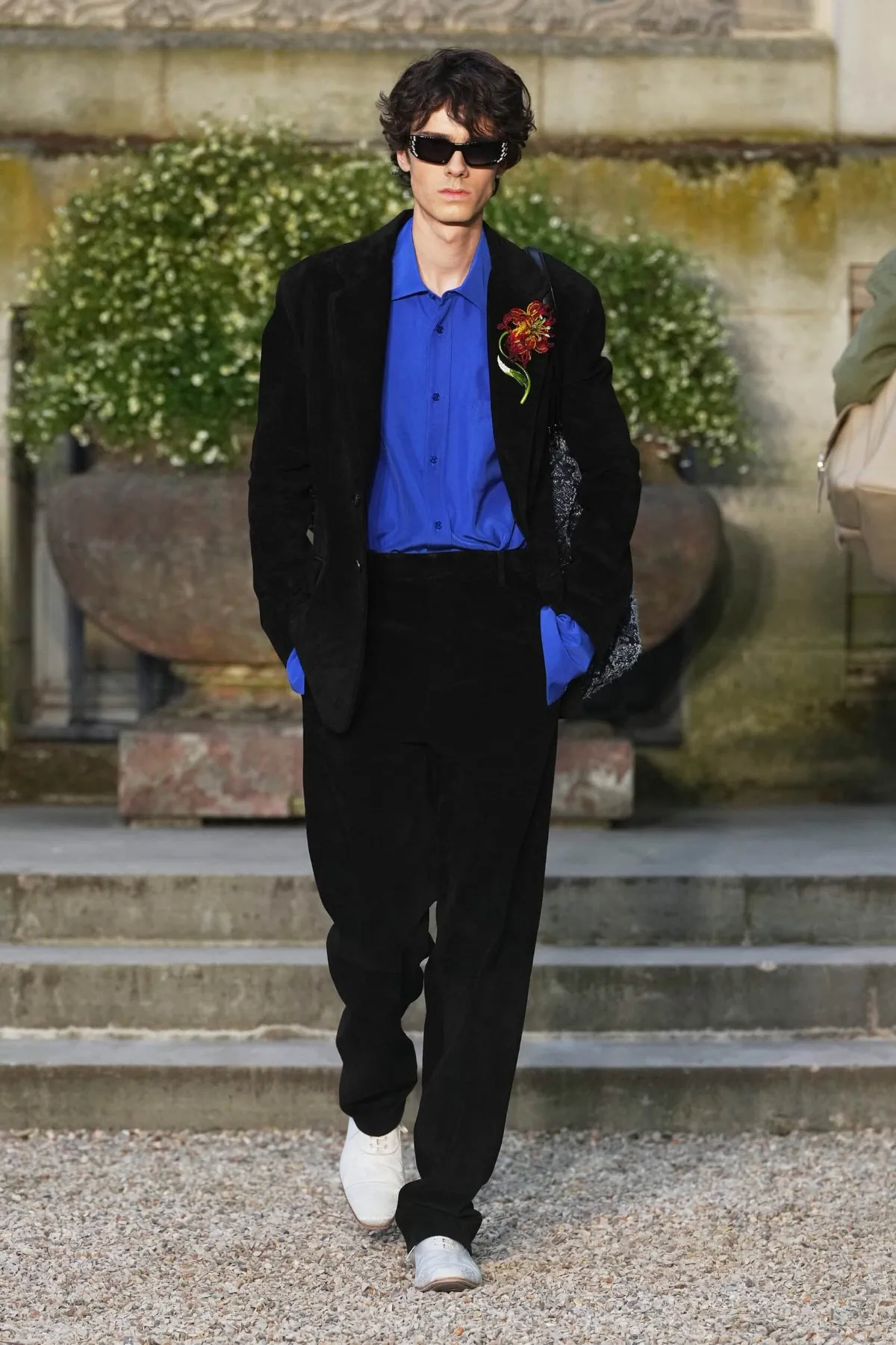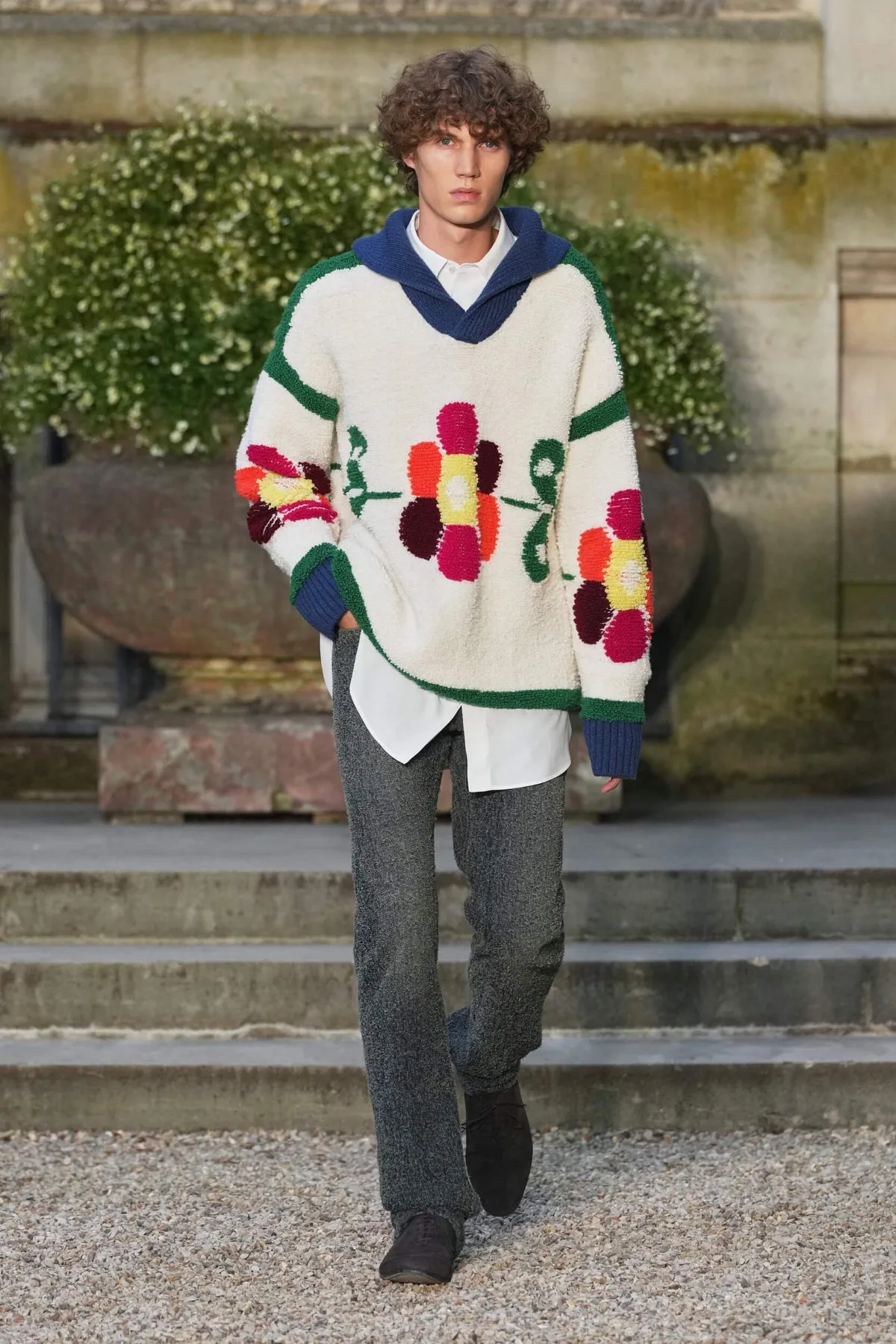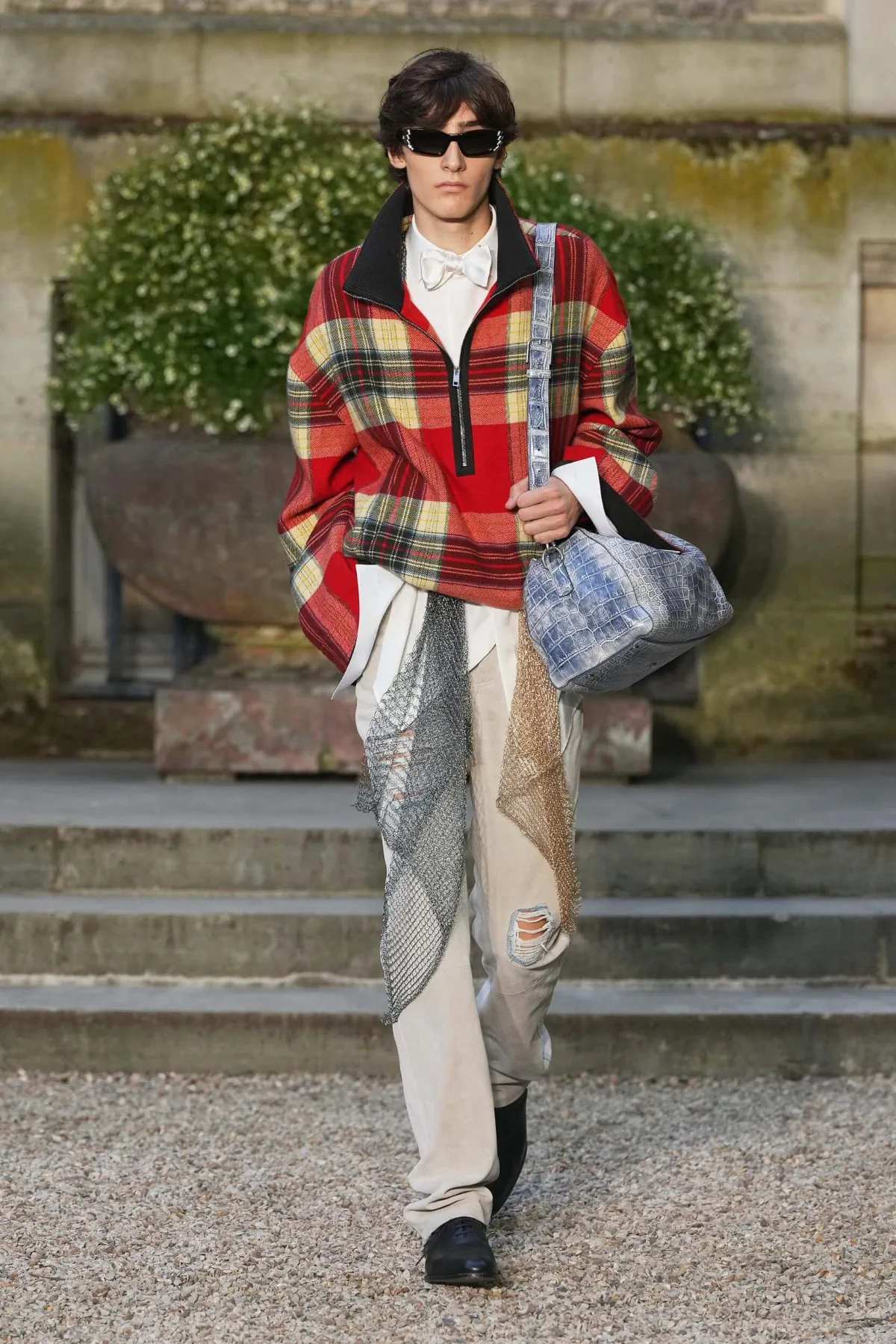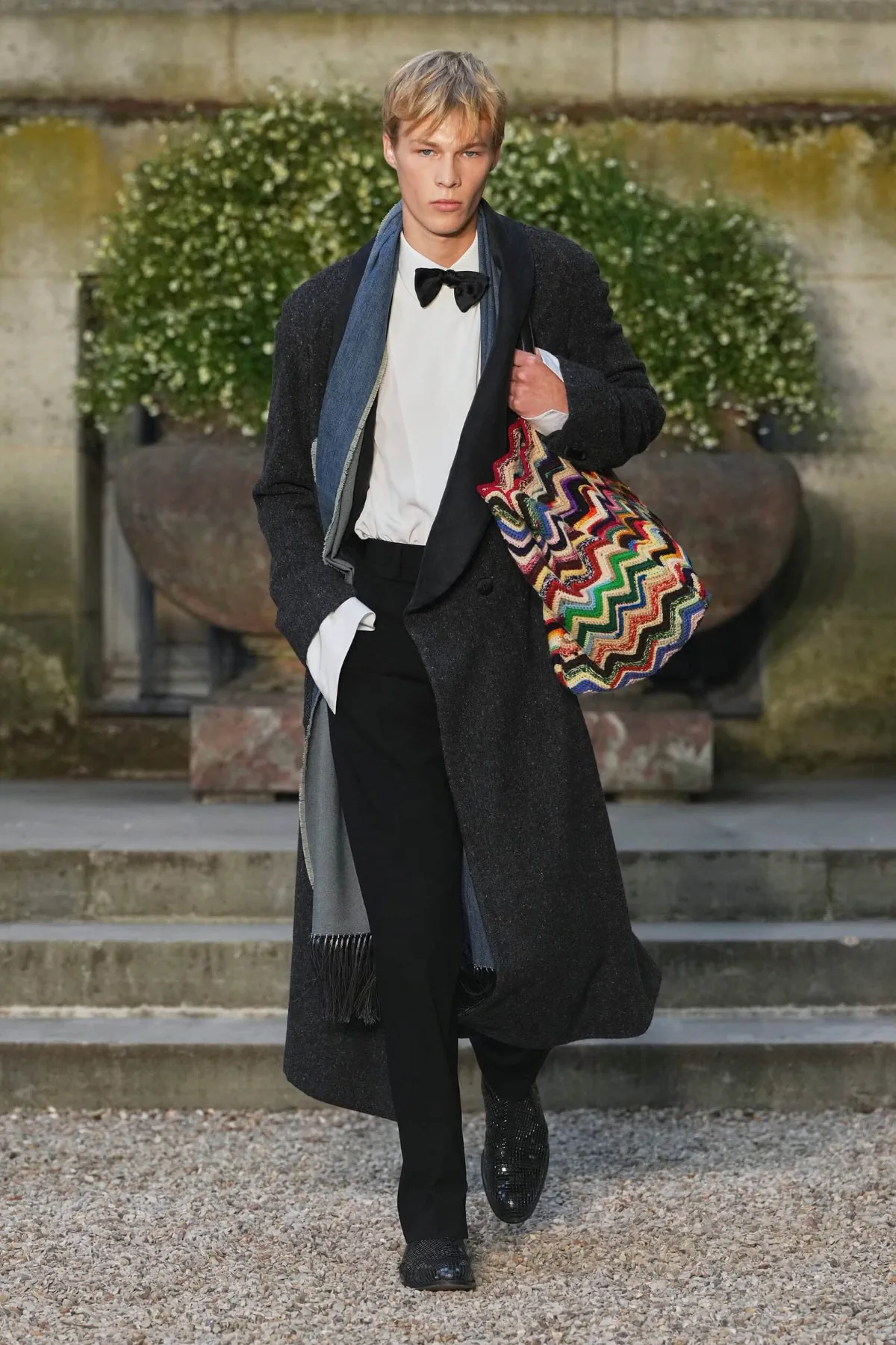

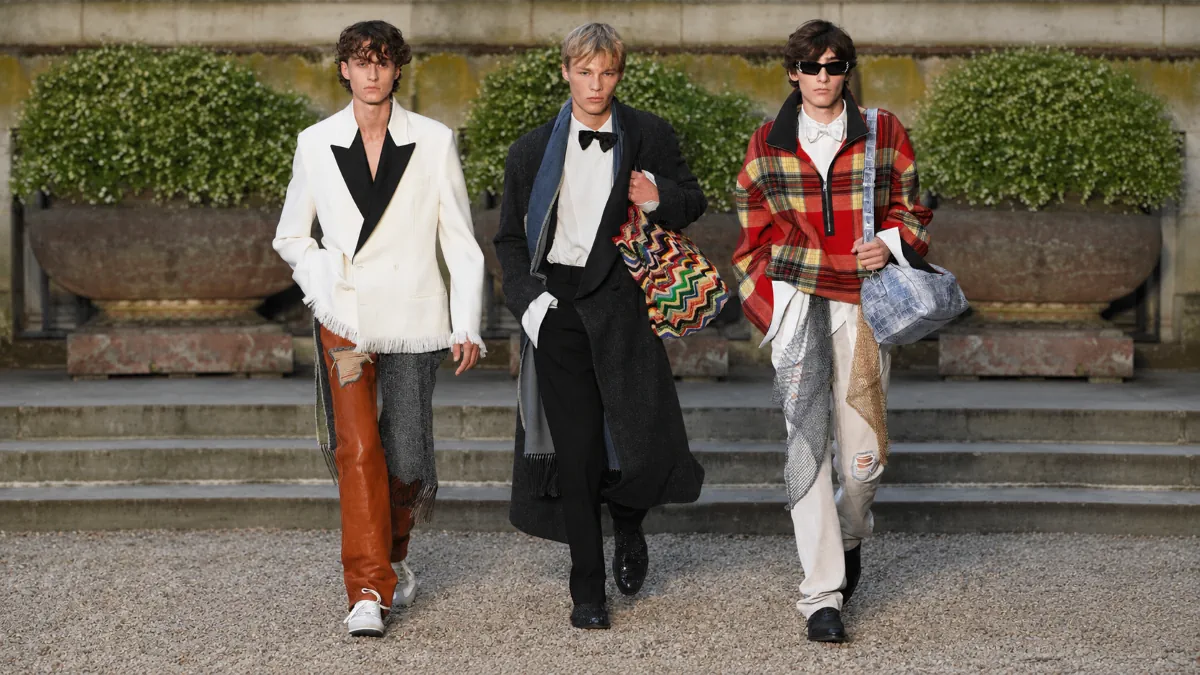
The fact that the Dior Men Spring 2027 show started at 9 a.m. tells you something. A record-breaking French heat wave forced the house to move its original 2:30 p.m. slot to breakfast time. Guests arriving at the Musée Nissim de Camondo were handed cold towels and fresh strawberries. Those seated in the garden were offered old-fashioned parasols. It was an odd, slightly surreal morning – and exactly the right one for what Jonathan Anderson had in mind.
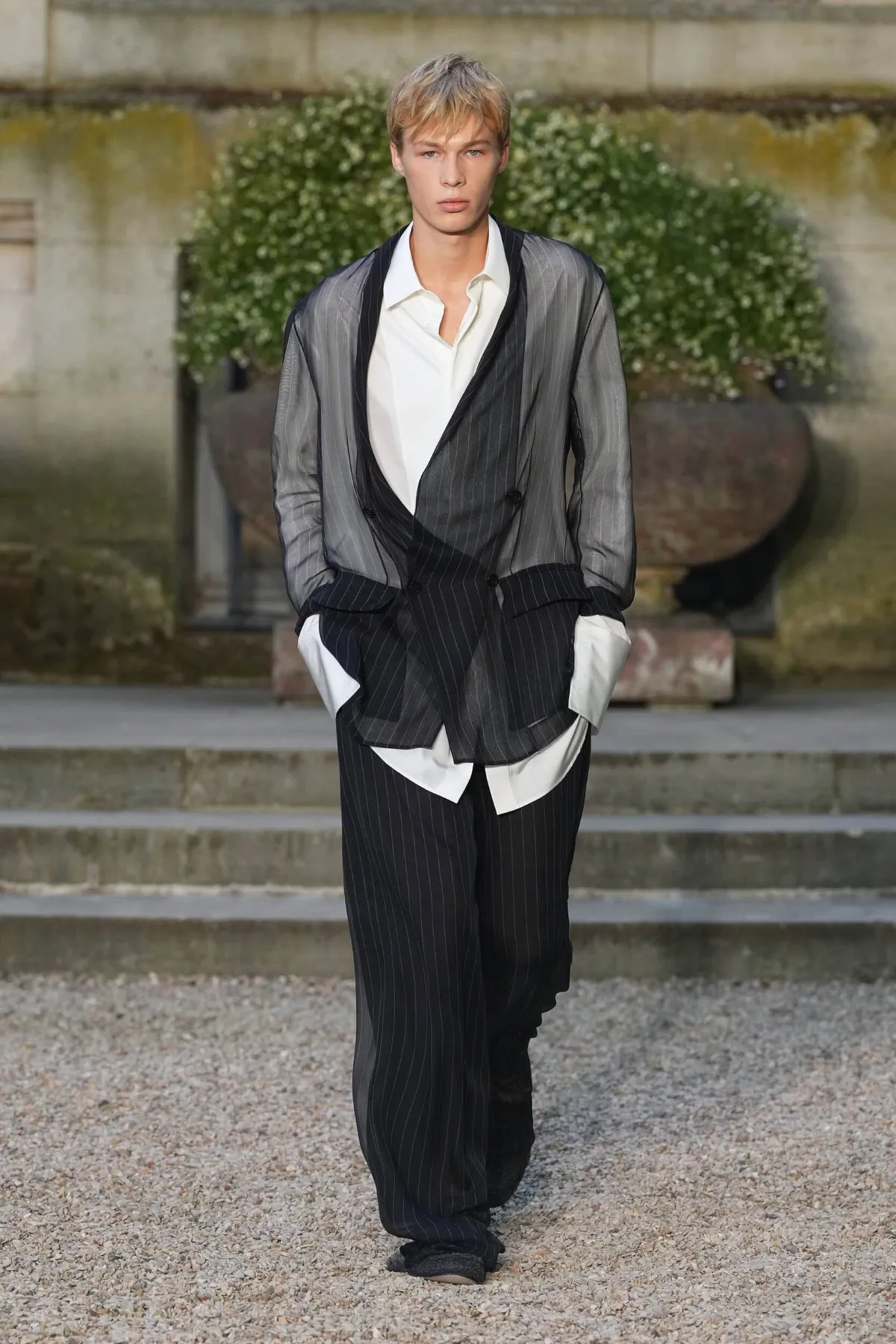
The early hour worked perfectly with his theme, a looser take on the “disheveled aristocrat” aesthetic he introduced with his debut Dior men’s show a year ago. Models emerged looking as if they had been up all night: bow ties crooked, dressing gowns trailing, knitwear laddered, and denim ripped. Think less runway and more the morning after a very good party at someone’s very expensive house.
That party metaphor was deliberate. Anderson’s show invitation was a black, glittering disco ball nodding to Studio 54. The soundtrack was a custom mix by Fred Again, featuring Christine and the Queens, Headie One, Jamie T, and others. Anderson told reporters that he has observed a resurgence of rave culture in London, with kids going out and dressing up to push against uniformity. He said, “You see it in the suburbs; you see it more outside the city. I see it on the Seine at seven o’clock in the morning.”
The collection reflected that energy. High and low rubbed against each other artfully: frayed denim shawl-collared jackets were paired with lavishly embroidered shirts and black dress pants; a crisp, pleated tuxedo shirt was thrown over stonewashed pink shorts and topped with a textured wool frock coat. Oversized shorts, fast becoming one of Anderson’s Dior signatures, appeared alongside faux-repaired, patchwork denim. None of it felt accidental. Anderson is too precise for that.
This season, the tailoring revolved around what he calls the Bobby suit: a baggy silhouette inspired by a vintage Marc Bohan jacket that he bought for himself. The Bobby suit came in sheer silk chiffon printed with pinstripes or houndstooth, as well as classic wool for day and evening wear. The sheer versions were particularly fitting given the sweltering conditions – suits so light and transparent that you could barely see them.
Follow all the latest news from Fashionotography on Flipboard, or receive it directly in your inbox with Feeder.
You may also read
As the first designer to oversee both the men’s and women’s lines at Dior simultaneously, Anderson has set out to synchronize the two. His fringed jackets and crinkled, checked raincoats directly echoed looks from his women’s cruise collection, which was presented in Los Angeles last month. Achieving that kind of coherence across collections is harder than it looks. Anderson makes it seem almost incidental.
He’s after something more fluid than a signature look. “You can have a beautiful suede coat. We can pair it with gold python trousers or shorts. But at the same time, when you break it down, it could be for my dad, or it could be for me in the summer,” he said. The whole proposition is clothes that travel across demographics without announcing it.
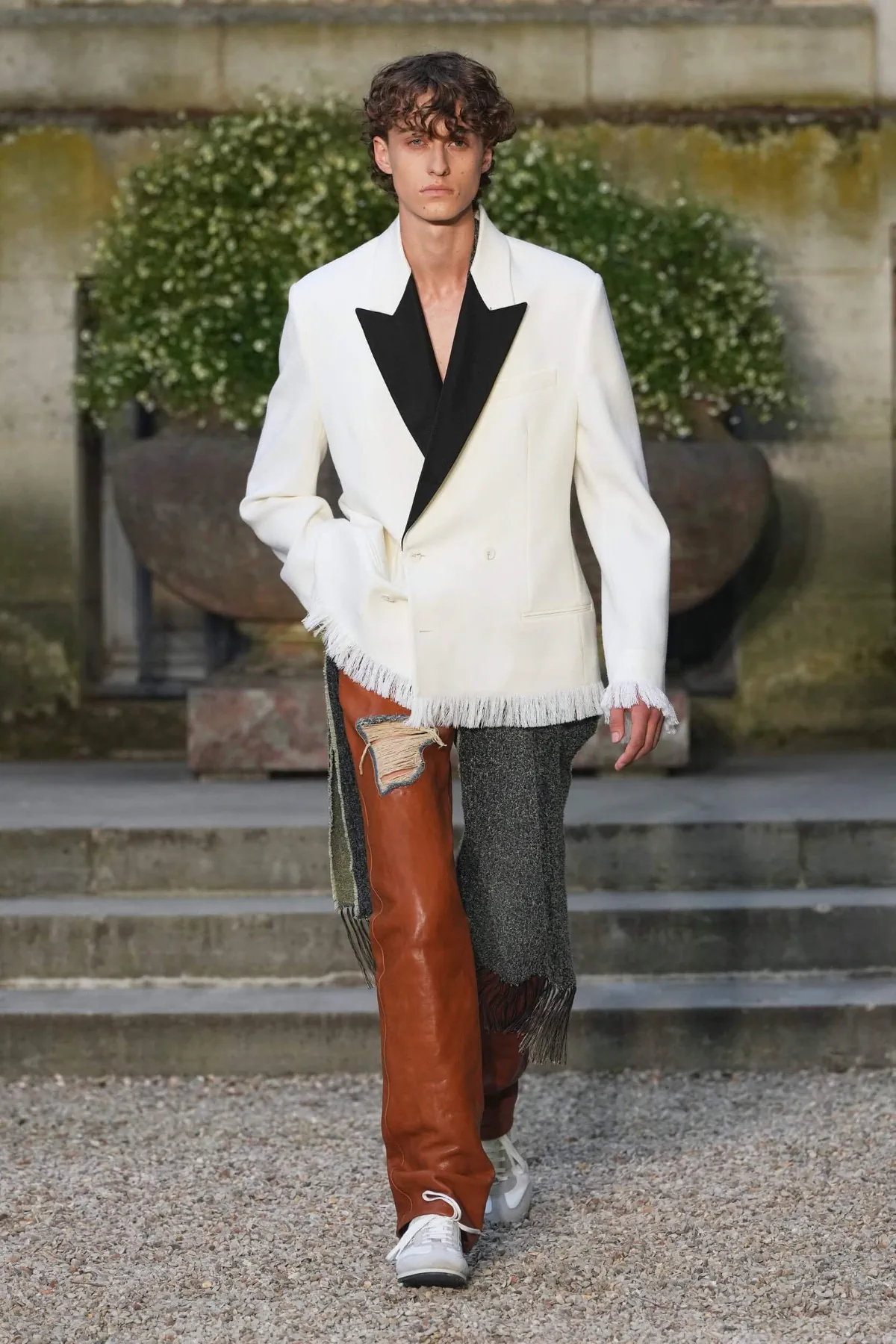
He has moved on from the shrunken Bar jackets and voluminous designs of his first collection, which were admired but difficult to sell. His more conceptual ideas have yet to make it to the Dior shop floor, where more traditional styles prevail. This may explain why he increased the number of commercially accessible pieces, such as cotton drill pajama suits with velvety collars.
“It takes time to define a look,” Anderson said simply. He’s right. Three shows in, Dior Men under Anderson still feels like a project in motion – intellectually consistent, yet not fully crystallized. His shorthand for it: “Formality, Eton, partying, going out, dressing up.” That’s a broad umbrella. He’s getting there.