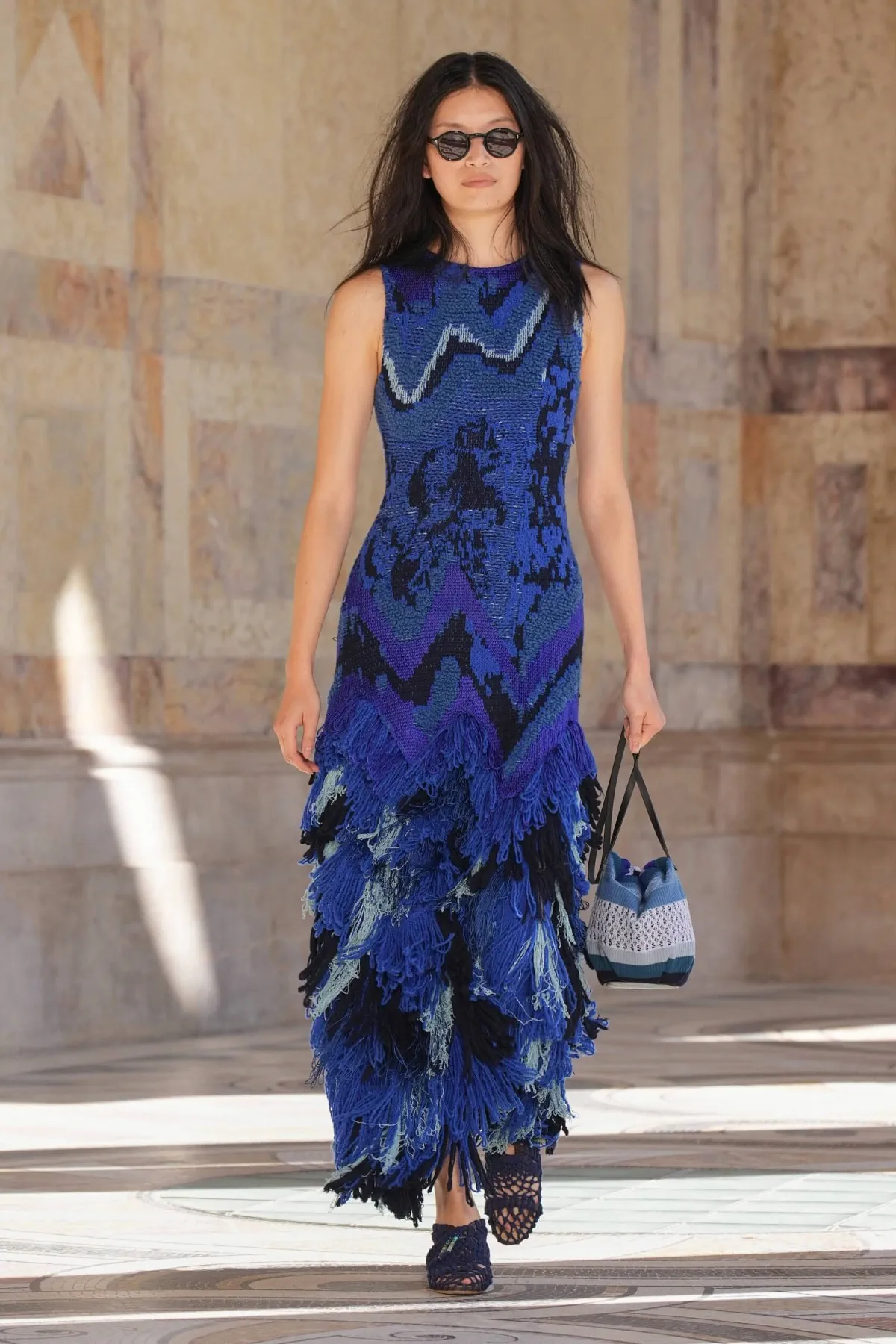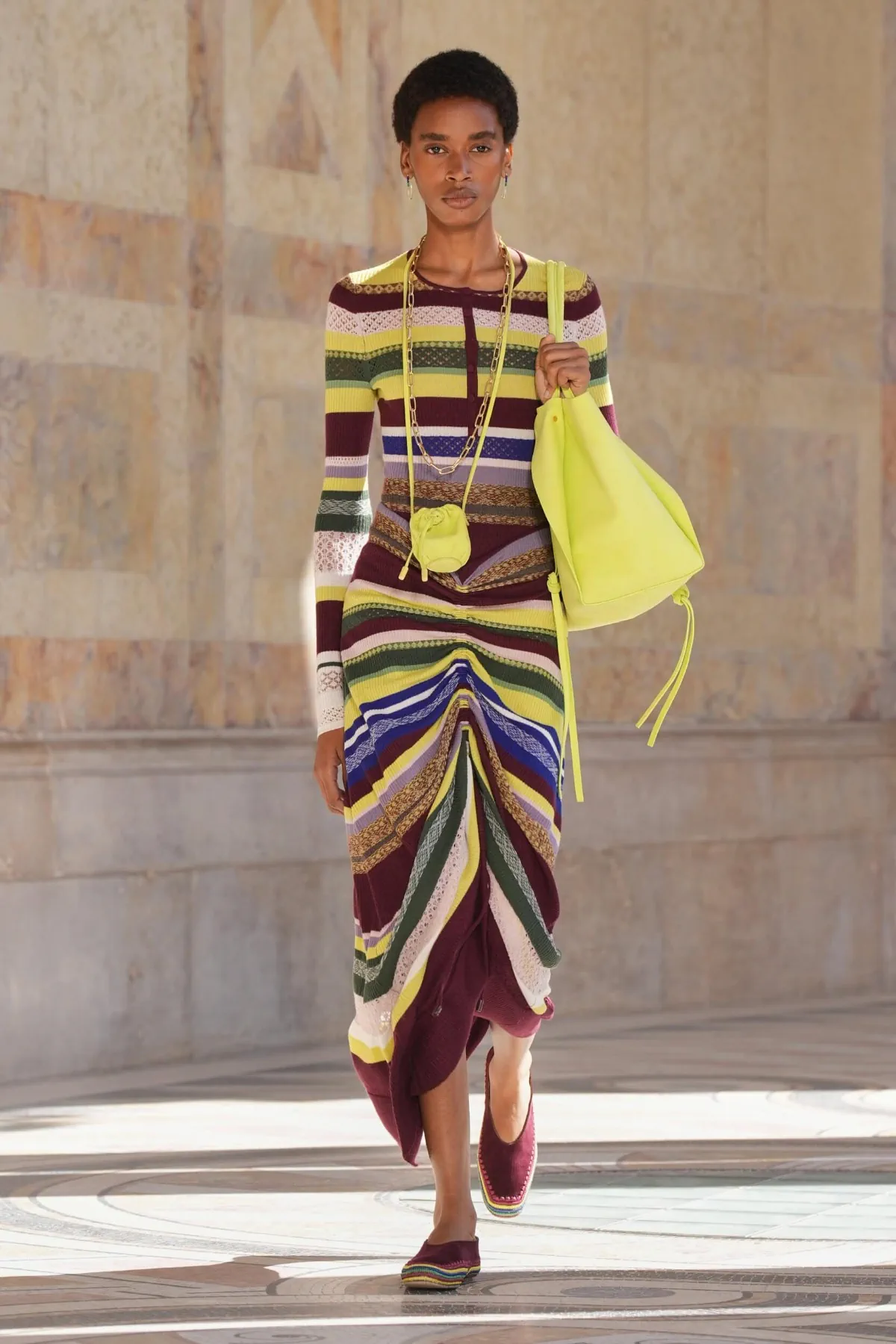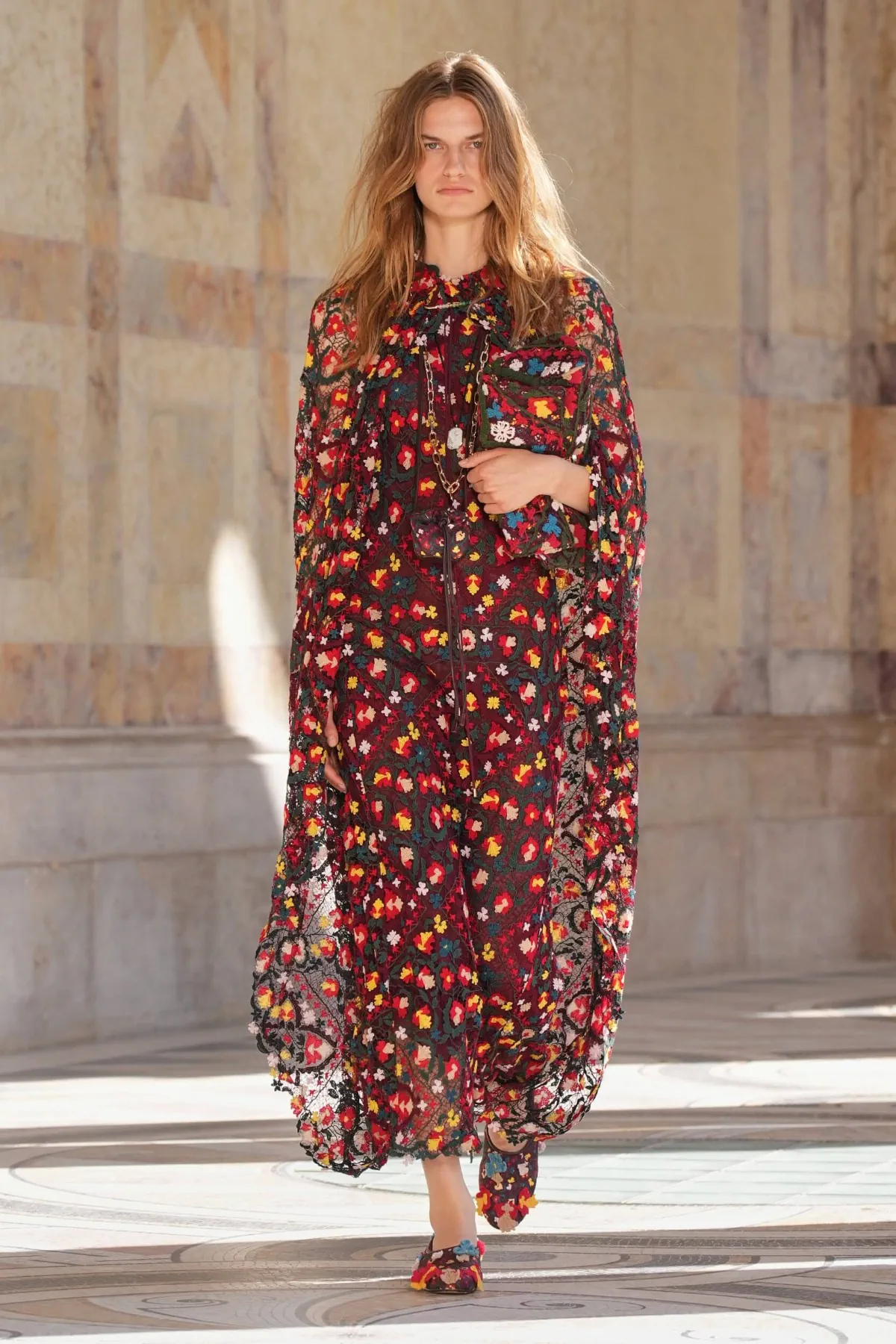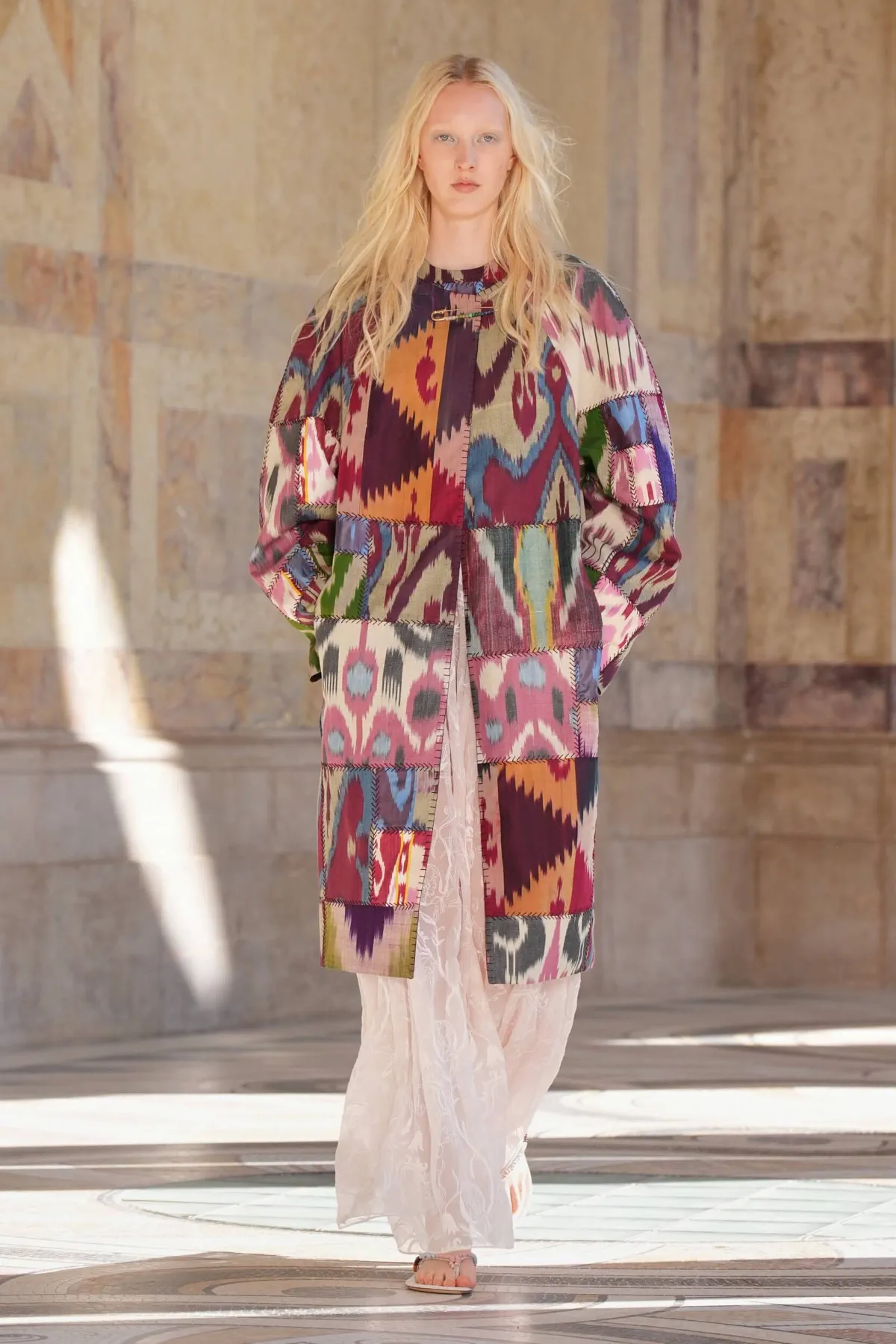

| Gabriela Hearst Spring 2027 is a womenswear collection focused on Afghan women and traditional craft practices. The collection was presented at the Petit Palais in Paris. Hearst collaborated with Turquoise Mountain to involve Afghan artisans in textile and jewelry production. She described Afghanistan’s roughly 22 million women as the collection’s muses. |
Gabriela Hearst has long treated materials as more than a question of surface. For Spring 2027, that approach becomes particularly specific. Gabriela Hearst Spring 2027 looks to Afghanistan, its recent history and the work of women who continue to maintain textile, embroidery and jewelry traditions under difficult circumstances.
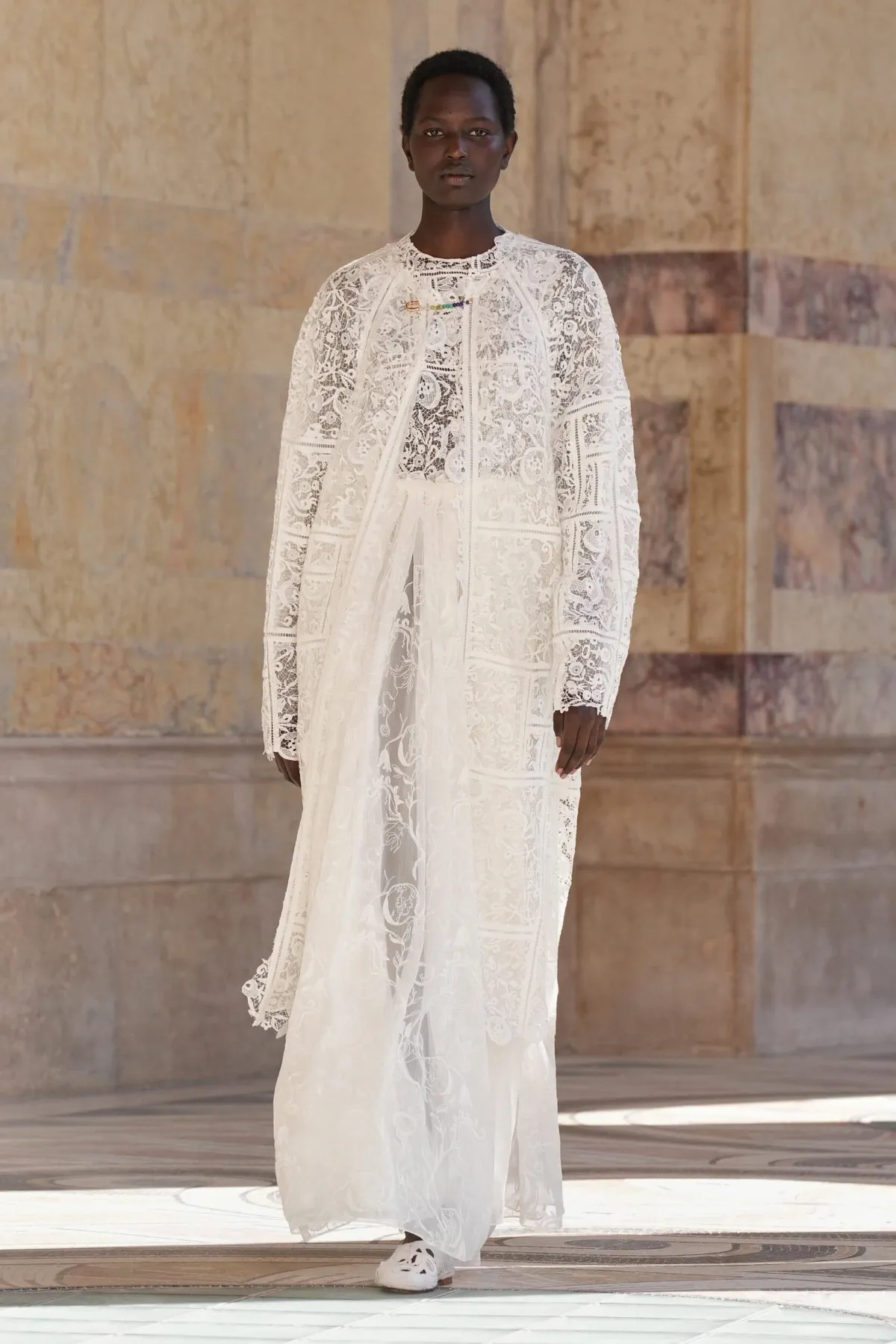
The collection developed through a partnership with Turquoise Mountain, the nonprofit organization that supports artisan communities and traditional skills in Afghanistan. Rather than simply borrowing familiar Afghan references, Hearst worked with makers whose expertise forms part of the culture being discussed. Their contribution appears in miniature painting, embroidery, weaving and jewelry.
That distinction matters. Fashion often turns traditional craft into visual shorthand, removing techniques from the people and conditions that produced them. Here, the emphasis is placed on production itself. Hearst wanted the collaboration to result in pieces that could realistically be made, giving the work an economic dimension as well as a cultural one.
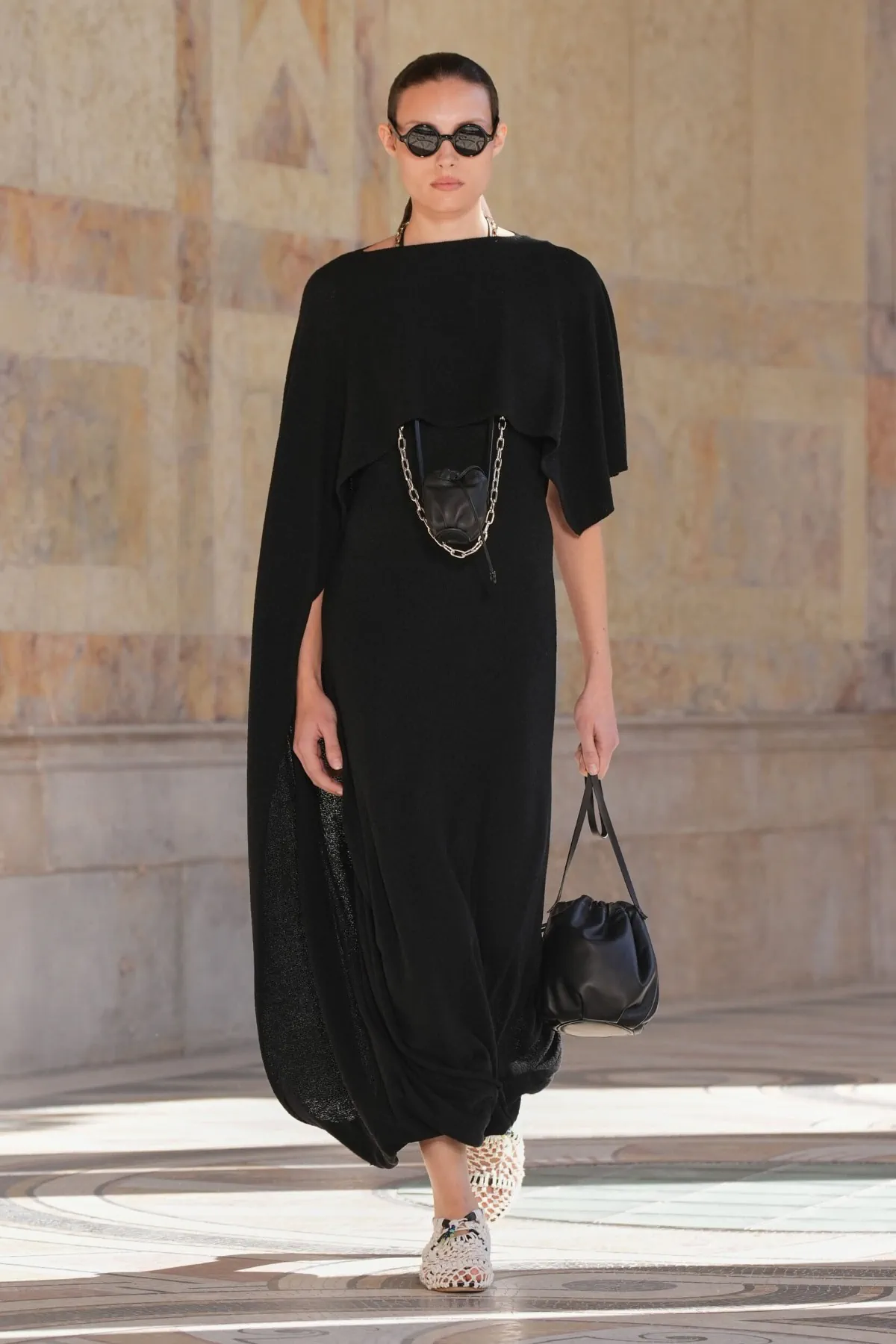
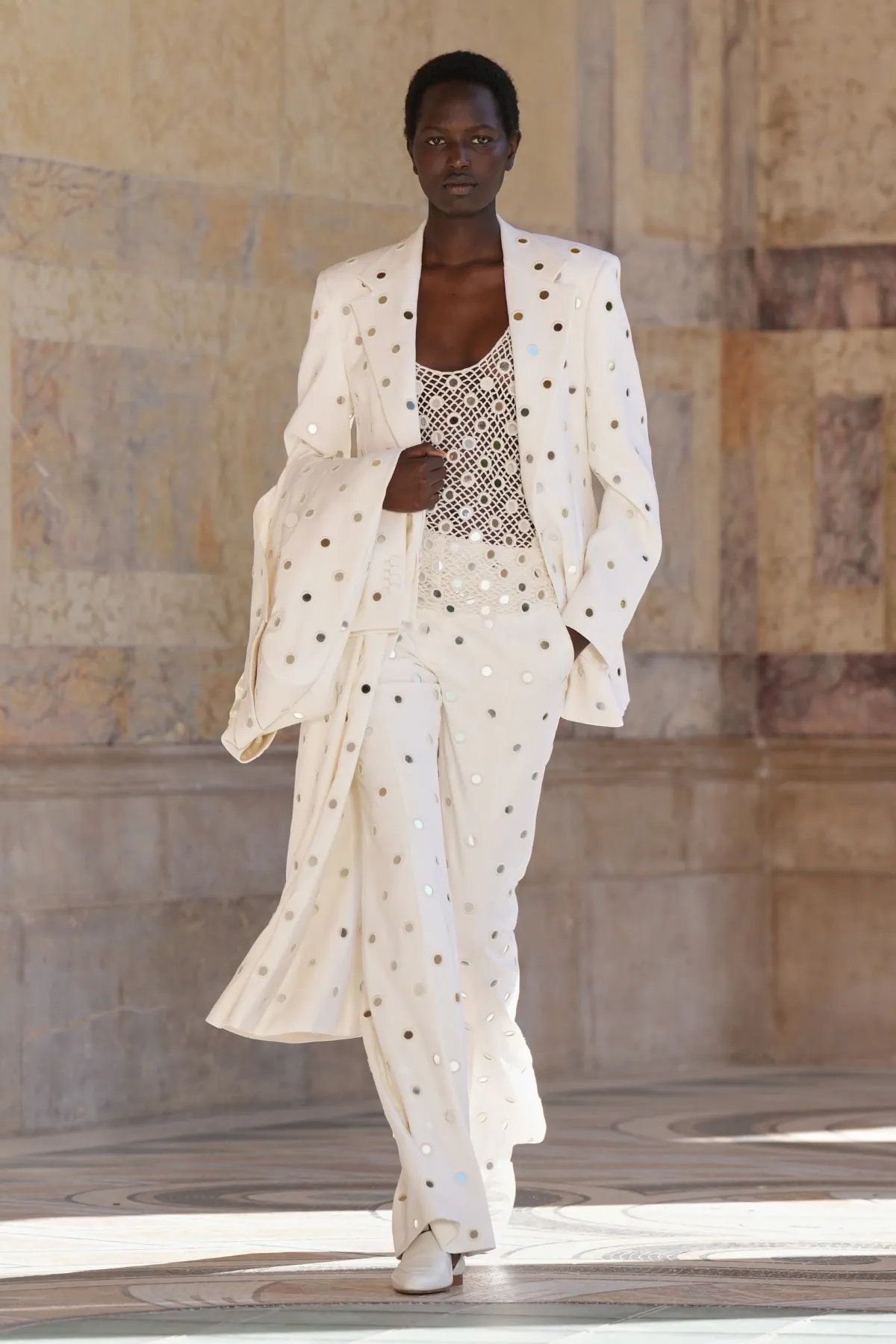
One of the clearest examples is shisha embroidery, a technique that incorporates small mirrors and is traditionally linked with protection from harmful forces. Mirrors appear across ivory wool tailoring, linen pieces and hand-worked knitwear. On a black top, they sit beside small painted images of Afghan landscapes. Elsewhere, miniature paintings made in Afghanistan are protected with crystal quartz and set in sterling silver to become buttons.
Follow all the latest news from Fashionotography on Flipboard, or receive it directly in your inbox with Feeder.
You may also like


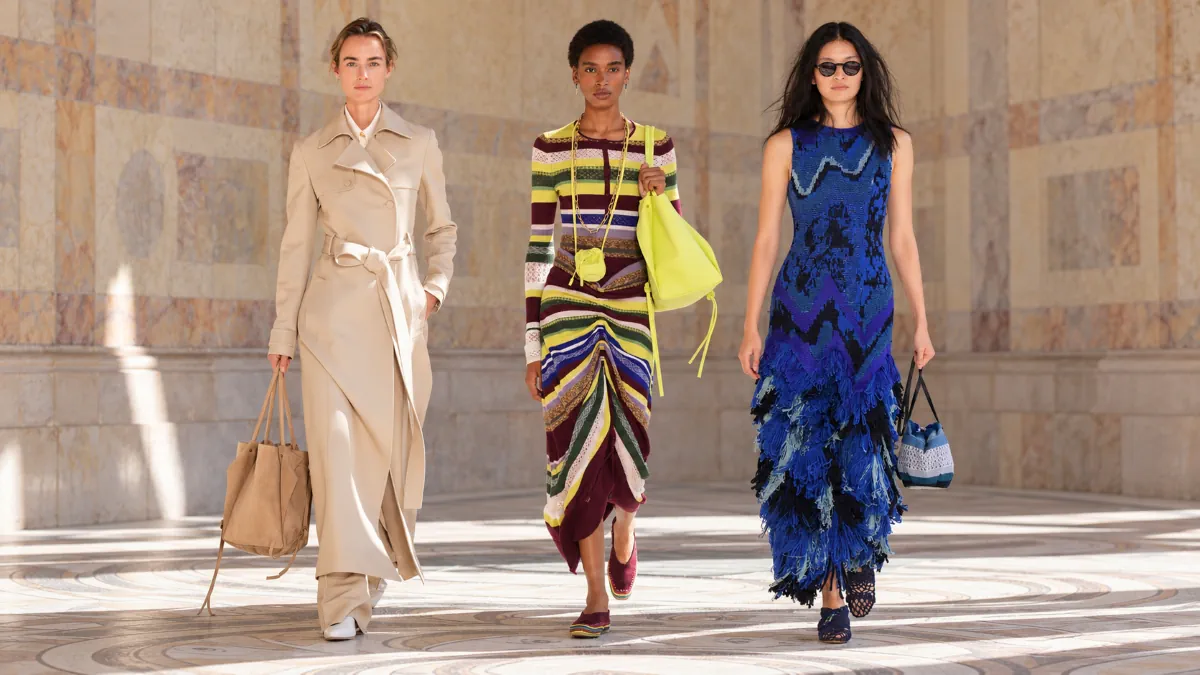
The clothes remain firmly within Hearst’s established wardrobe. Structured trouser suits sit beside knitted lace dresses, while quilted leather jackets carry floral Suzani embroidery. Deadstock ikat fabrics are cut into patchworks and further worked with embroidery. Handwoven silk is used for cargo trousers, separates and outerwear, with natural variations in the material left visible rather than corrected.
Technical development is equally important. Water-resistant trench coats are made from silk coated with a water-based natural resin, offering an alternative to the appearance and function usually associated with synthetic outerwear. Pleating is used with particular control, including on a long white dress where fine folds follow the body and are fixed by hand.
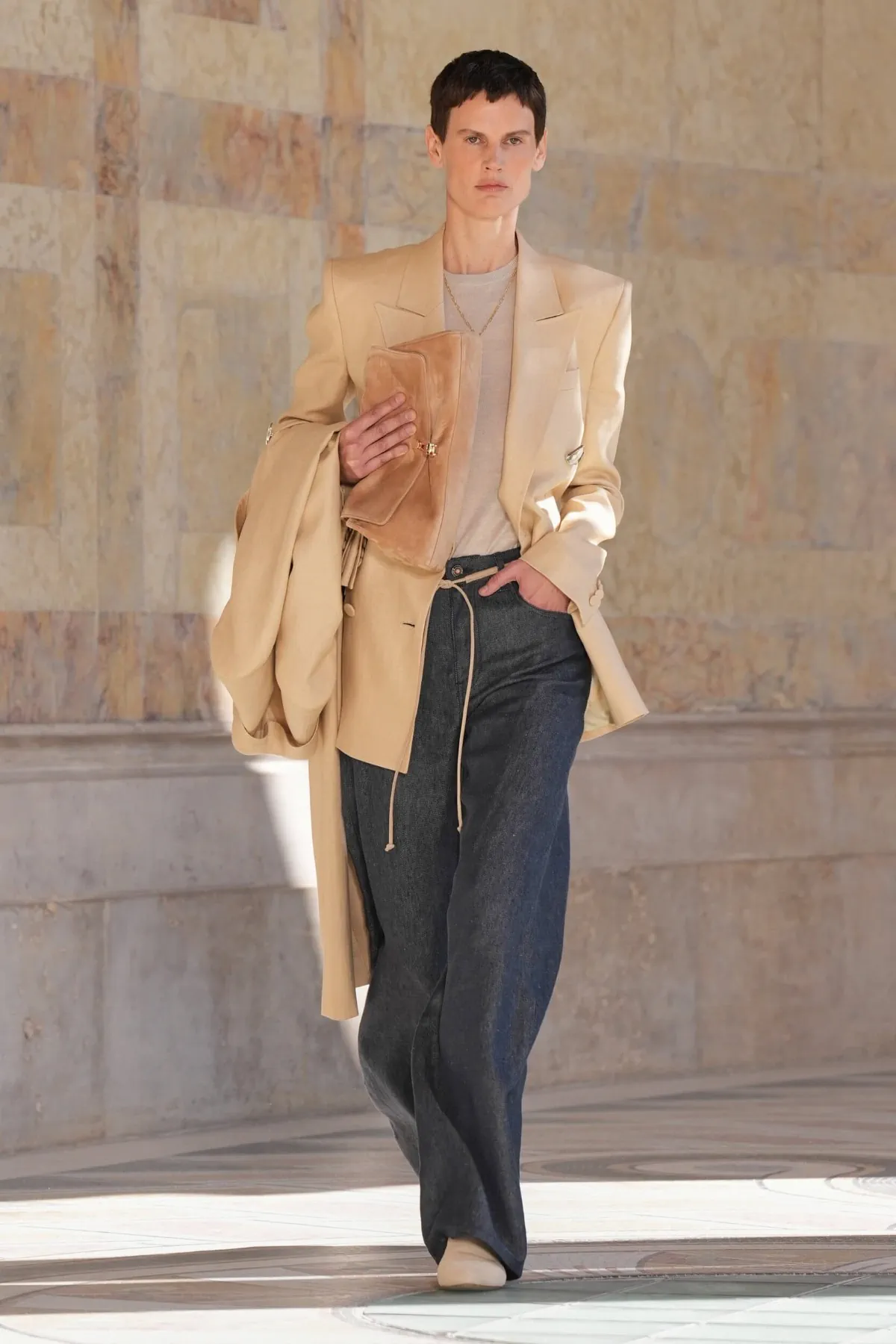
The Afghan references also extend through the work of artist Sughra Hussainy, who was born in Afghanistan and trained at the Turquoise Mountain Institute in Kabul. Her interpretations of Suzani and Hazara textiles were translated into hand-crocheted lace by the Bolivian cooperative Madres e Artisanas. These ideas then moved across clothing, leather goods, bags and shoes.
Jewelry carries the same concern with material history. Quartz, lapis lazuli and malachite appear in beaded cords produced by Turquoise Mountain artisans. The accessories connect personal adornment with the older idea of objects as portable value and family memory.
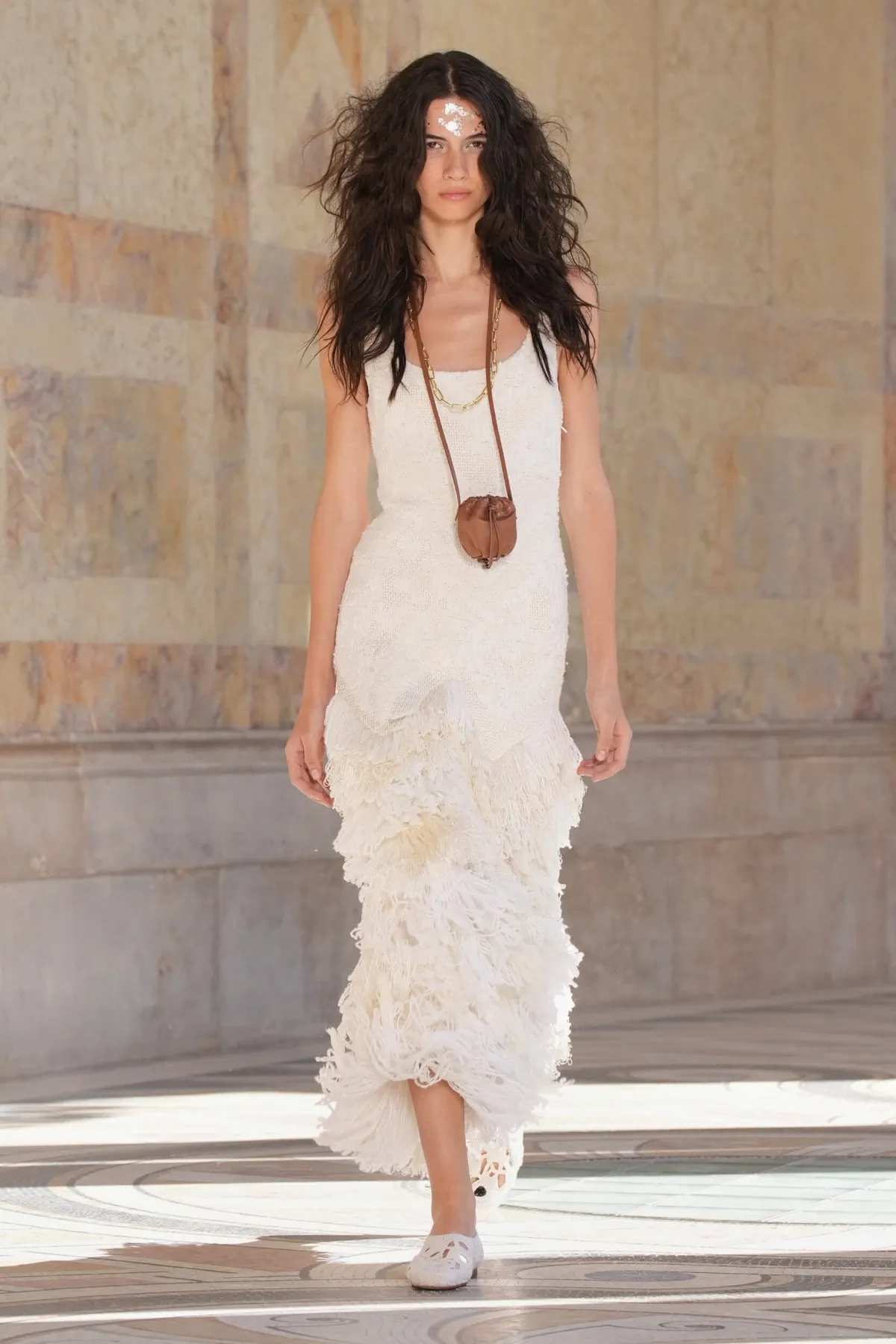
The strongest aspect of the collection is its restraint. Gabriela Hearst does not present Afghan craft as an exotic decorative source. Instead, she places individual techniques within a wider account of women’s labor, cultural preservation and economic survival. The result asks the viewer to consider not only how a garment looks, but also who made it, where its knowledge comes from and what can be sustained when that knowledge is given practical support.