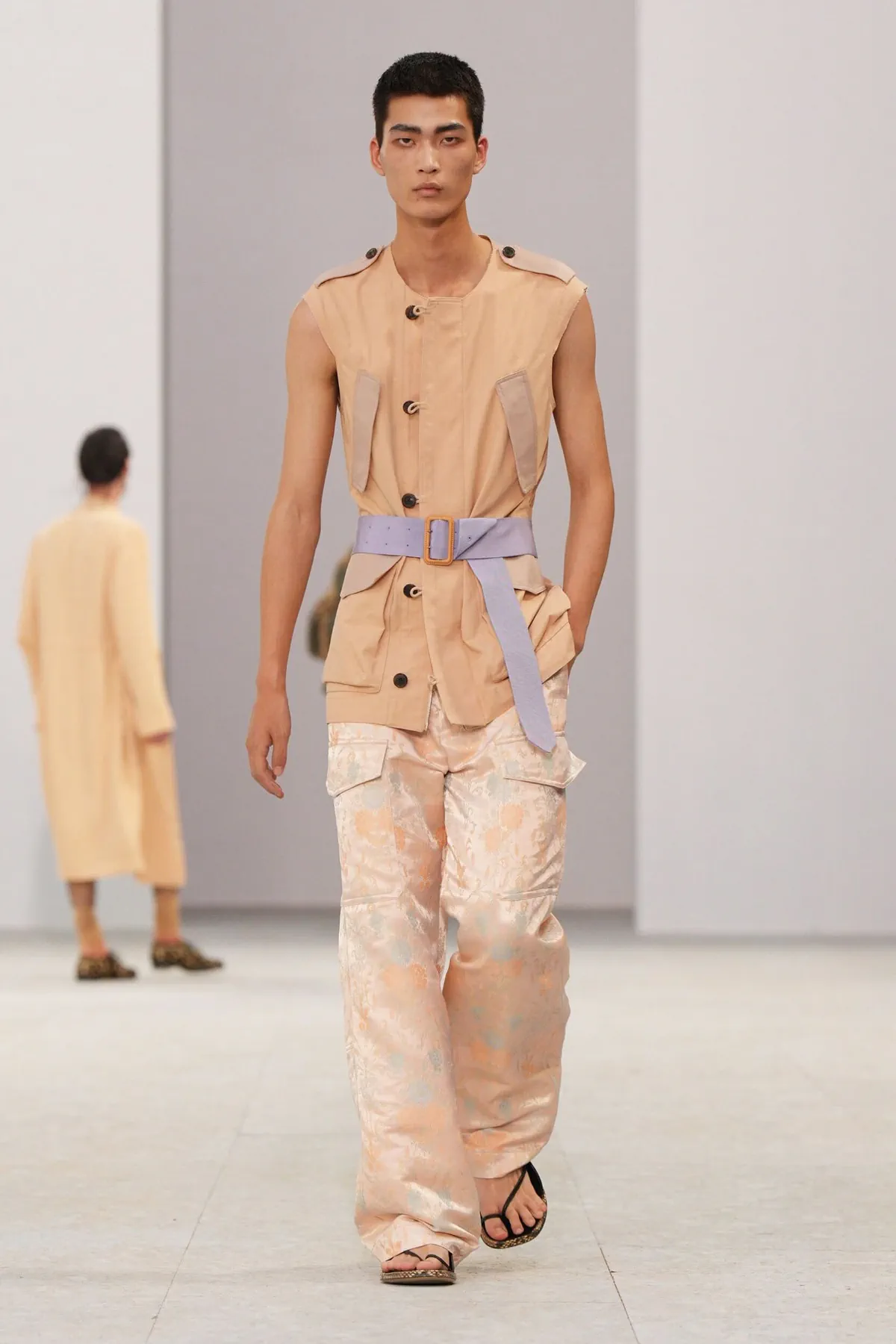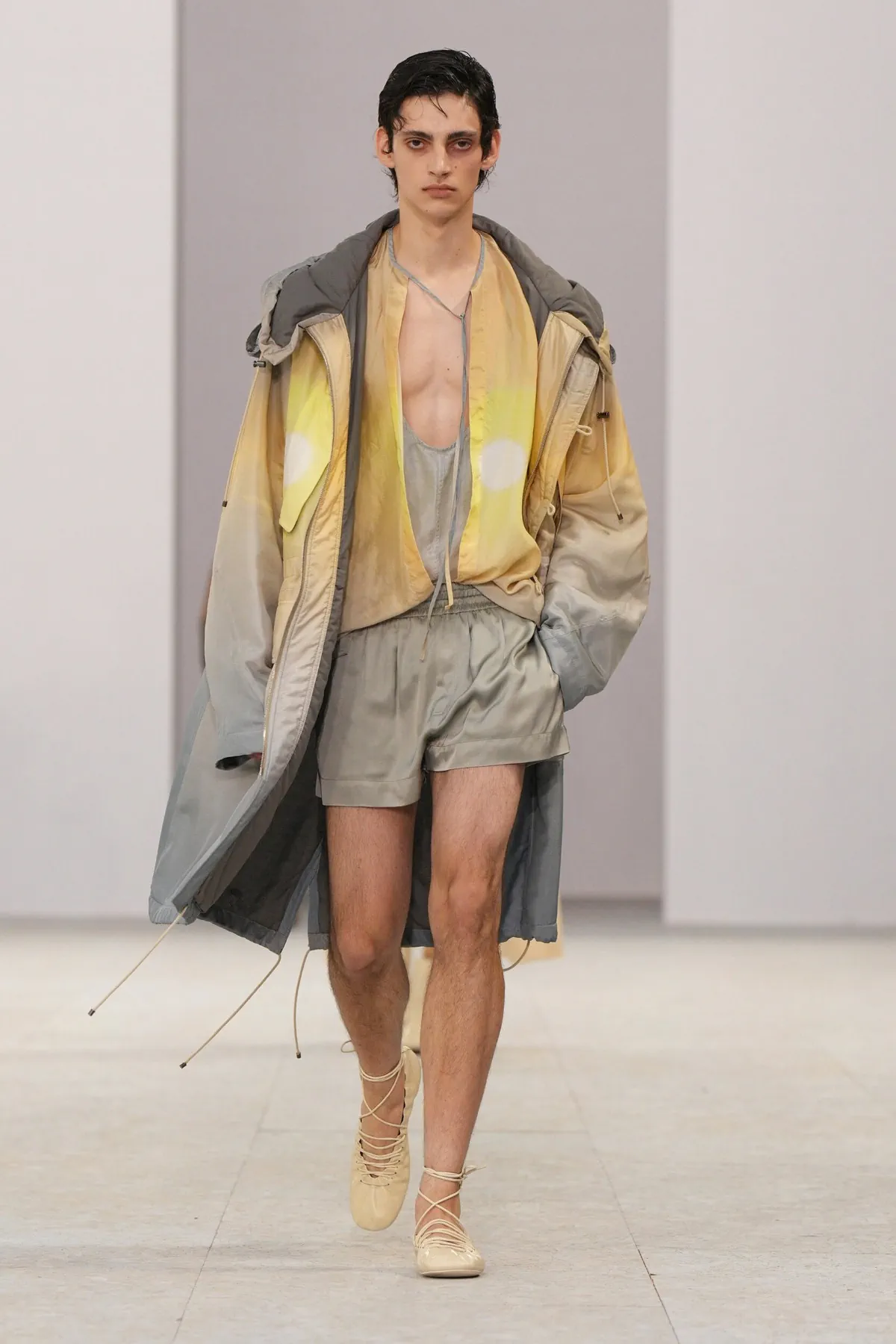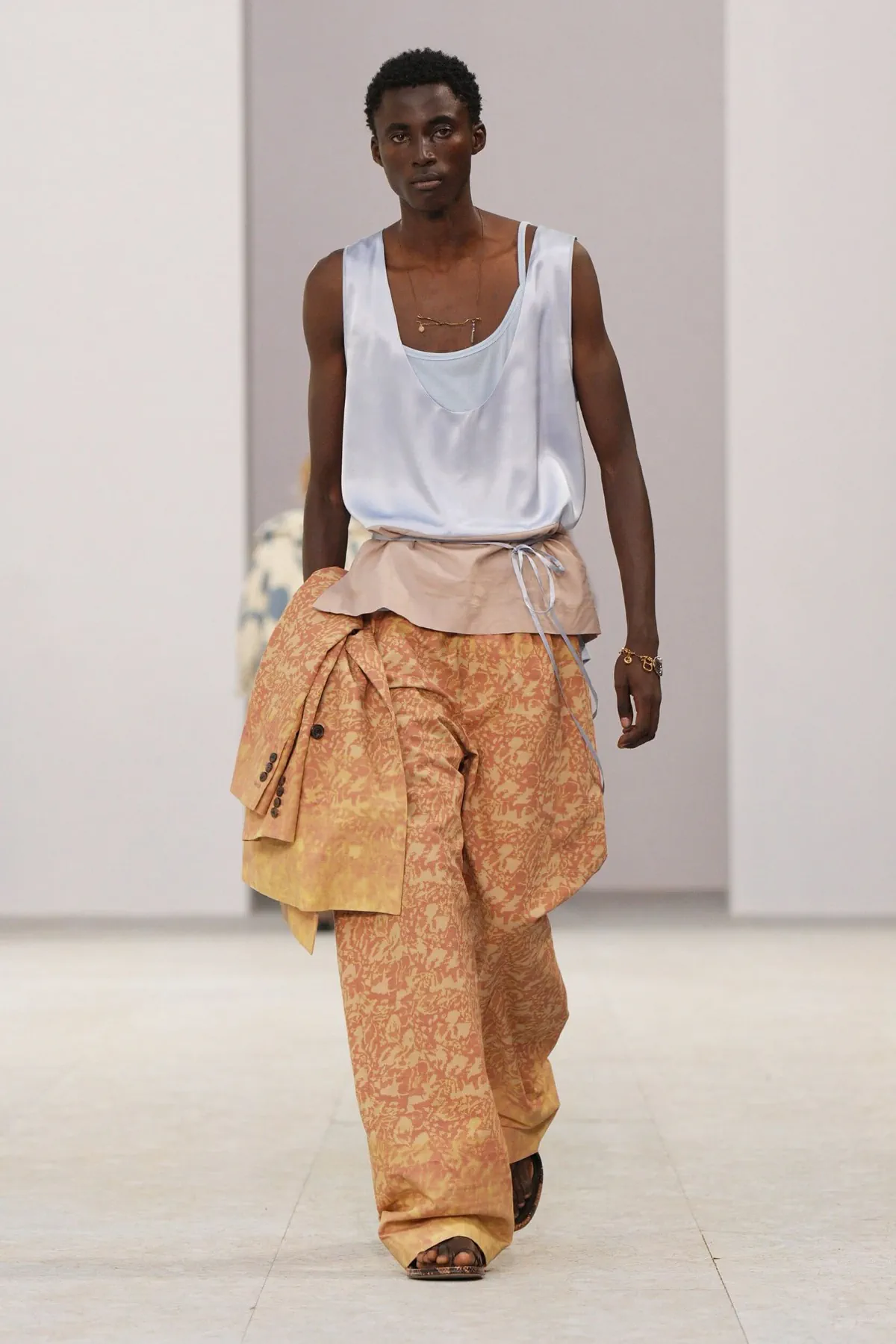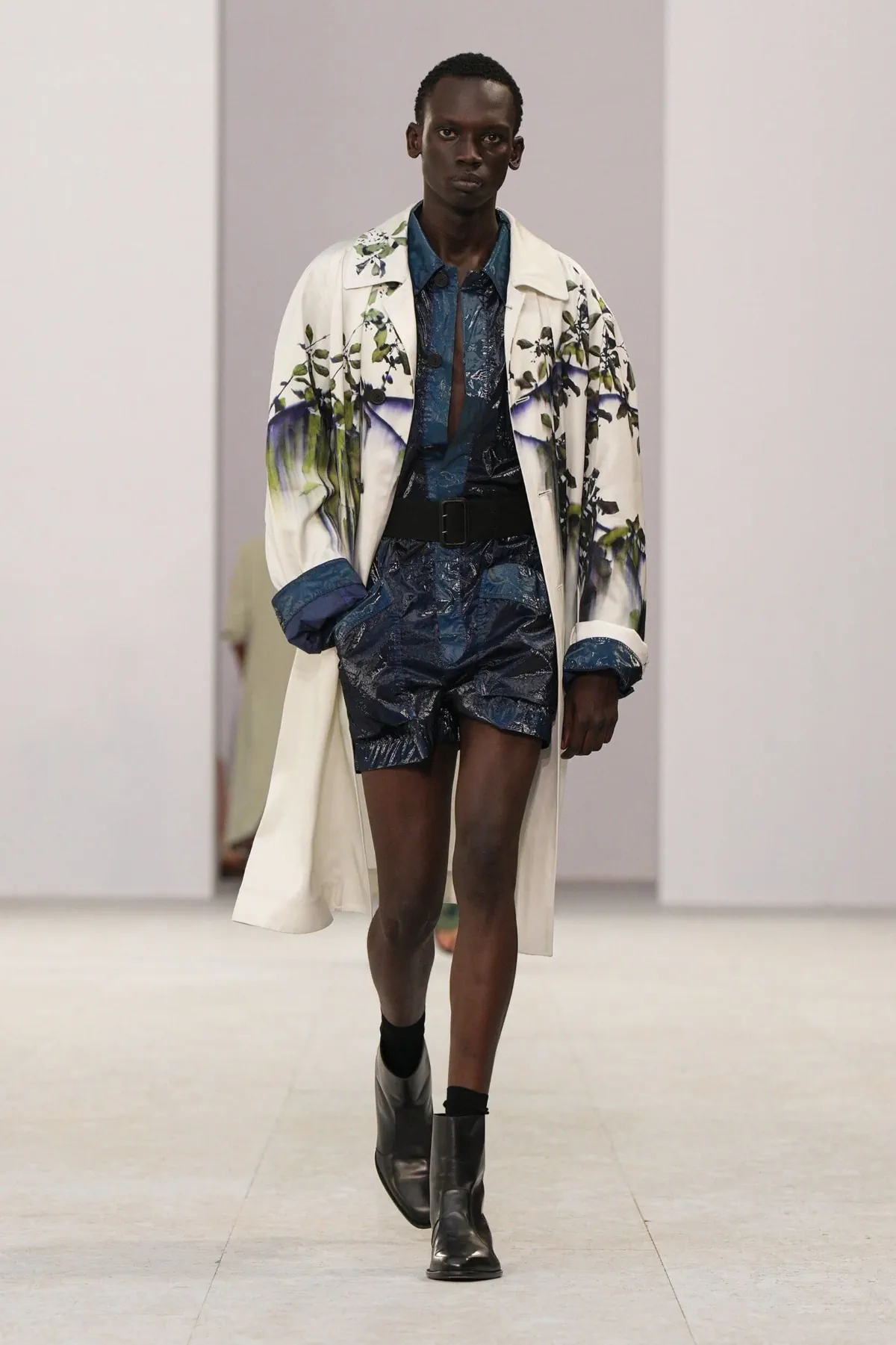

Some designers build a collection around a concept and lose sight of the clothes in the process. Julian Klausner is not one of them. His Spring 2027 menswear show for Dries Van Noten, held during a Paris Fashion Week Men’s that felt more like a slow roast than a fashion week, was the kind of show that rewards attention. The keyword here is light – not just in weight, but in intention.
Klausner drew inspiration from Stéphane Mallarmé’s 1876 poem “L’après-midi d’un faune,” framing the collection around the image of a half-human, half-animal creature awakening from a dream in a forest. This poem later served as the basis for a Debussy composition and a Nijinsky ballet performed by the Ballets Russes. Klausner incorporated these layers of cultural reference without turning the show into a lecture. “We started the season with the desire, the wish to do something that feels light, that feels delicate,” he said during a preview.
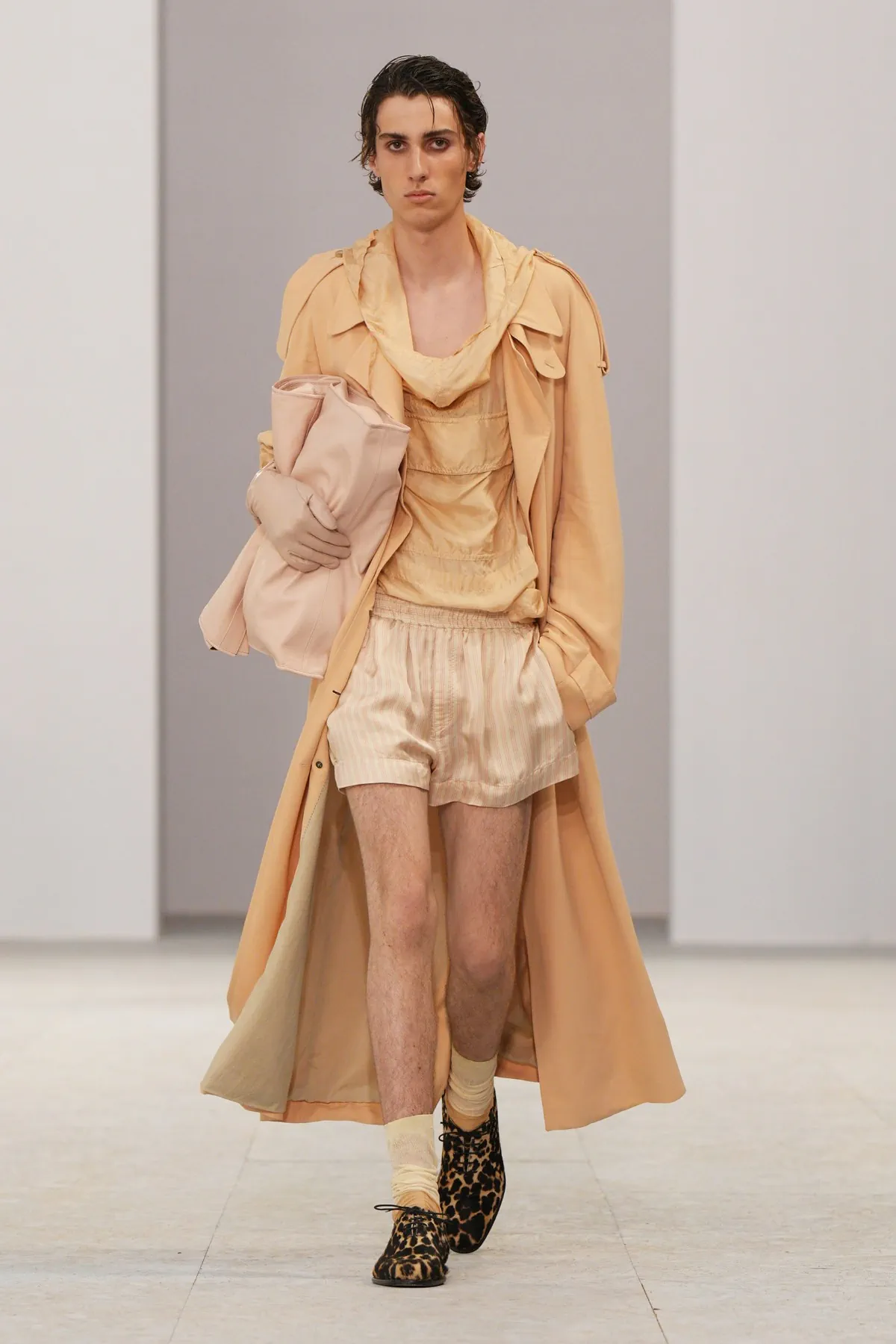
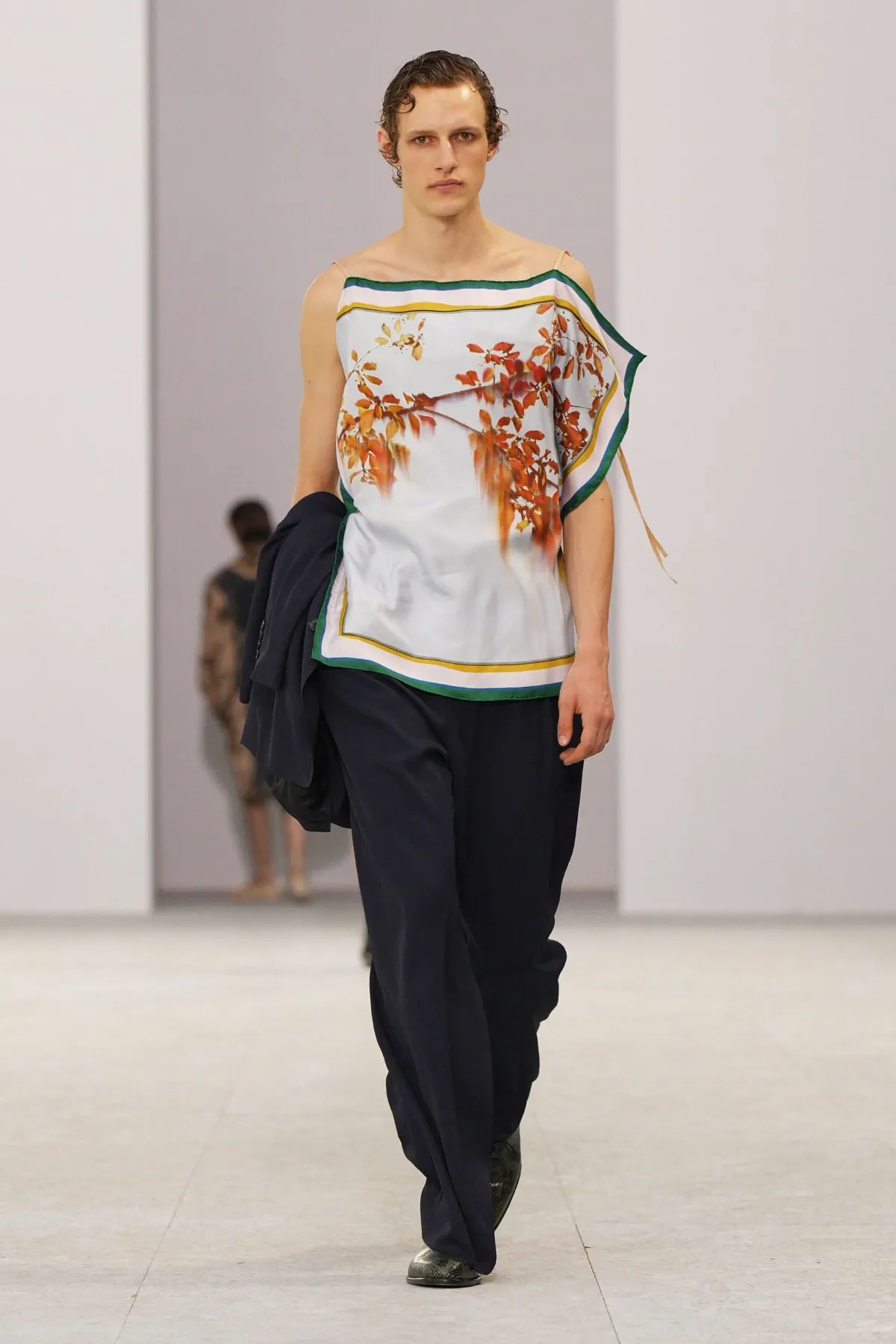
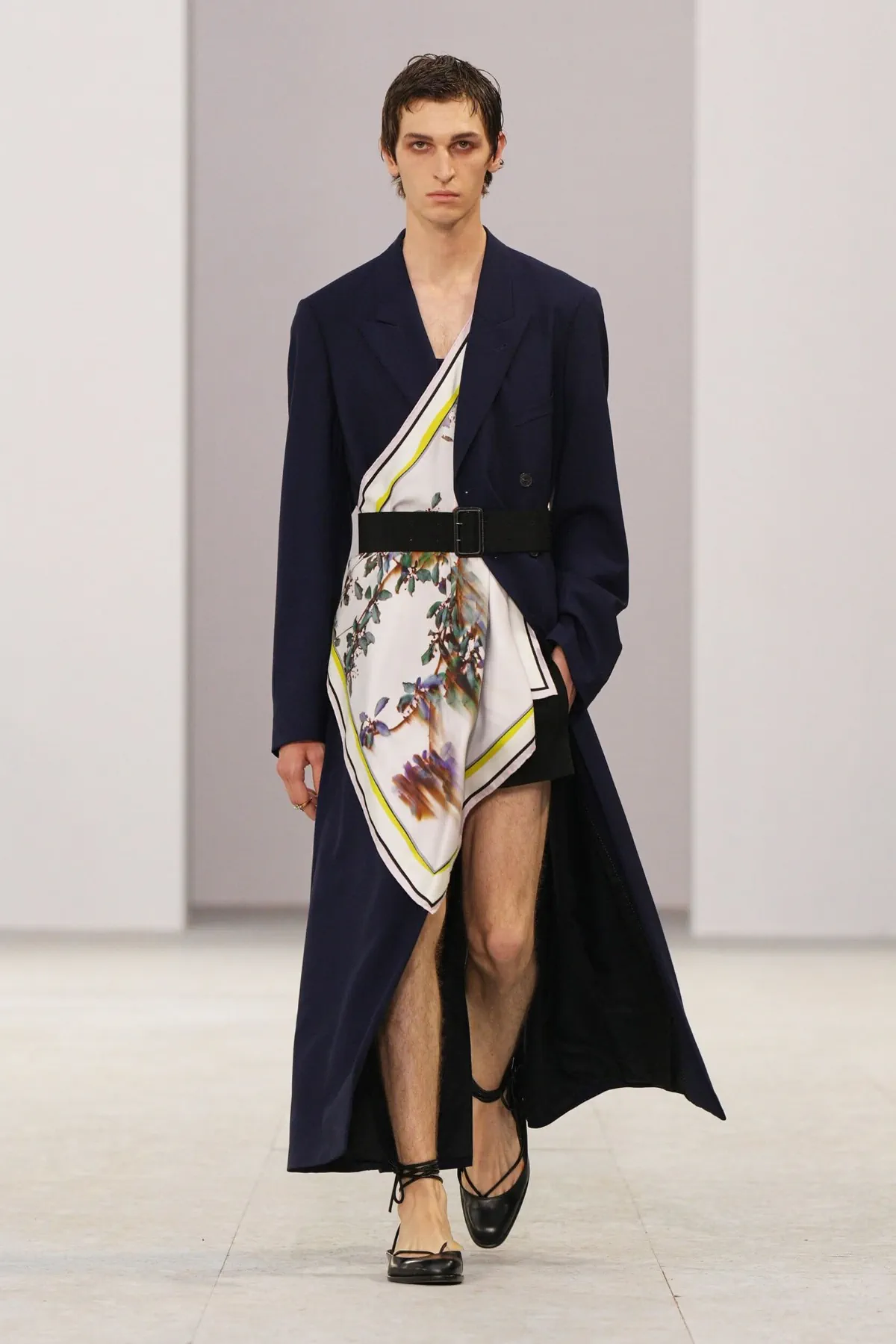
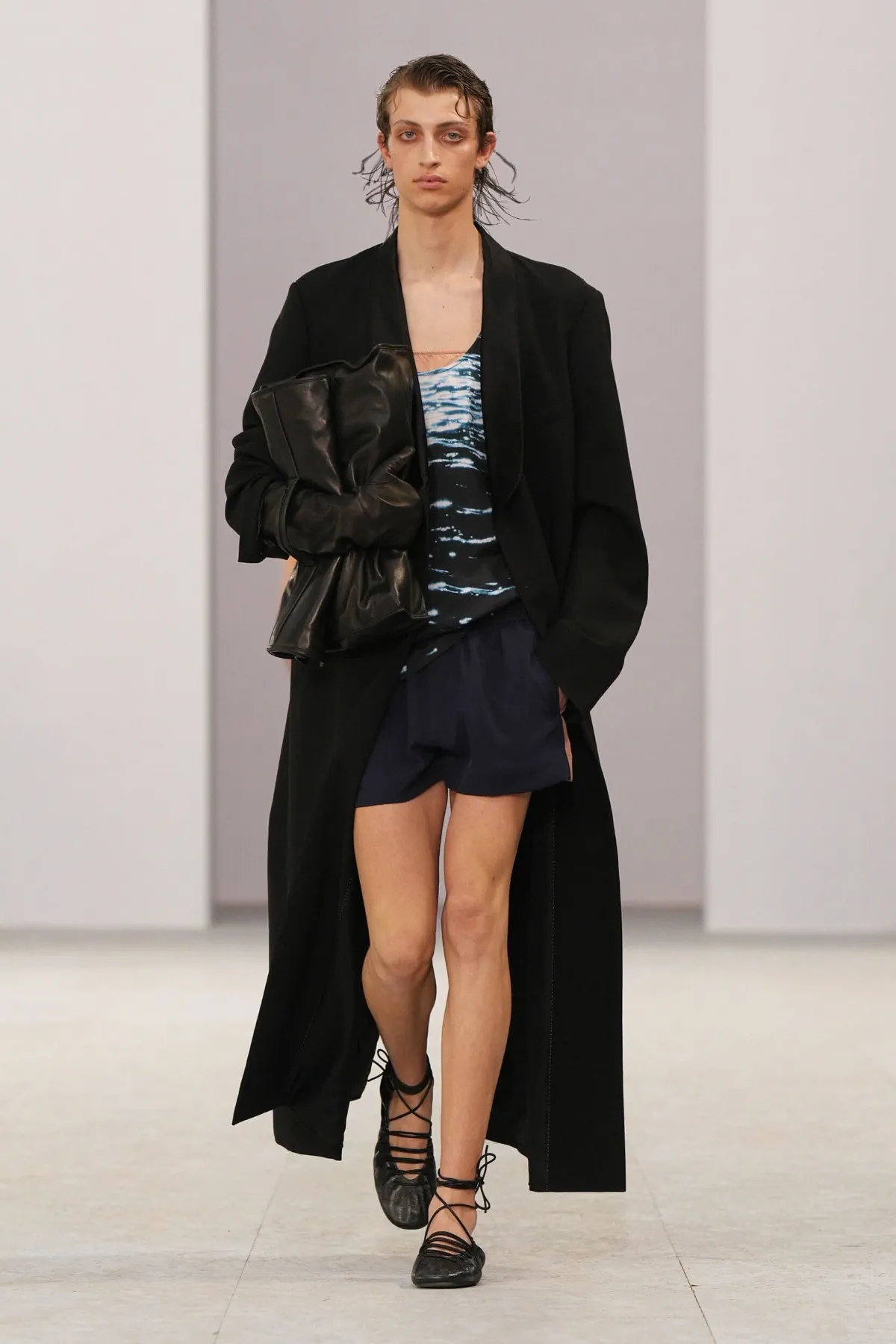
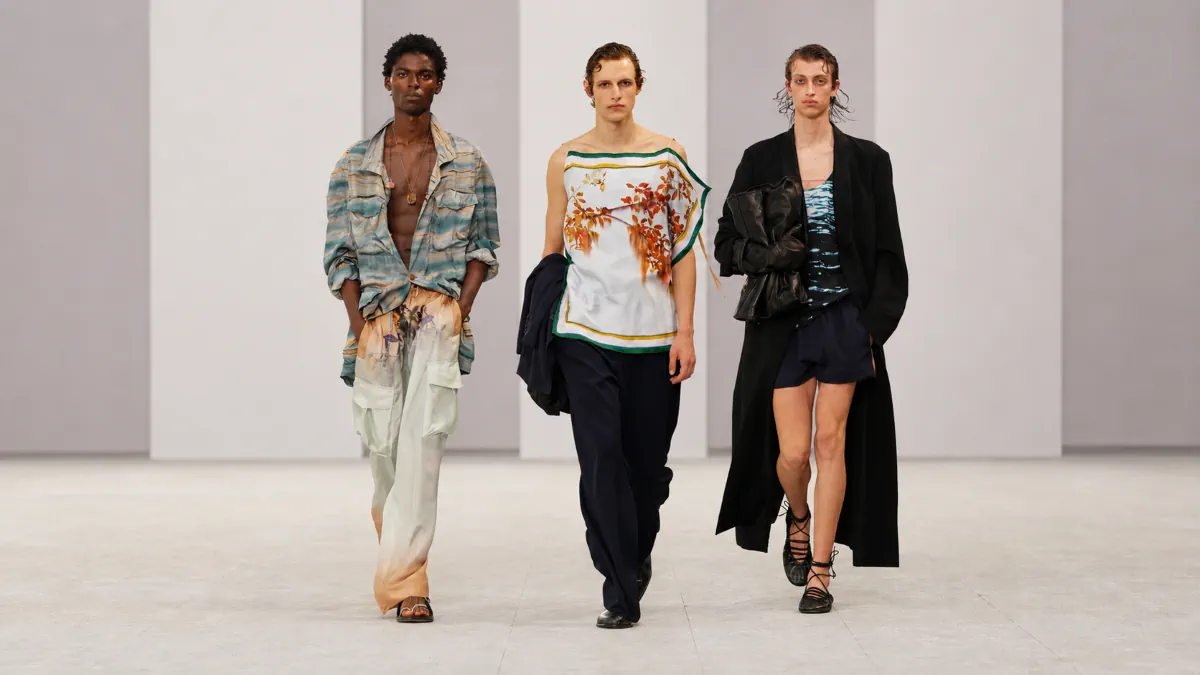
What came down the runway was exactly that. The collection opened with peachy neutrals, then cycled through warmer spice tones and cooler water hues before ending with the soft, muted shades of a forest floor. Acetates, viscose, washed silks, chiffon, watery nylons, and nearly sheer knits gave the clothes a barely-there quality. Cargo pants in flowing fabrics had a sensual flutter to them. Parkas drifted rather than being structured. Even the dropped shoulders felt like a deliberate release of tension.
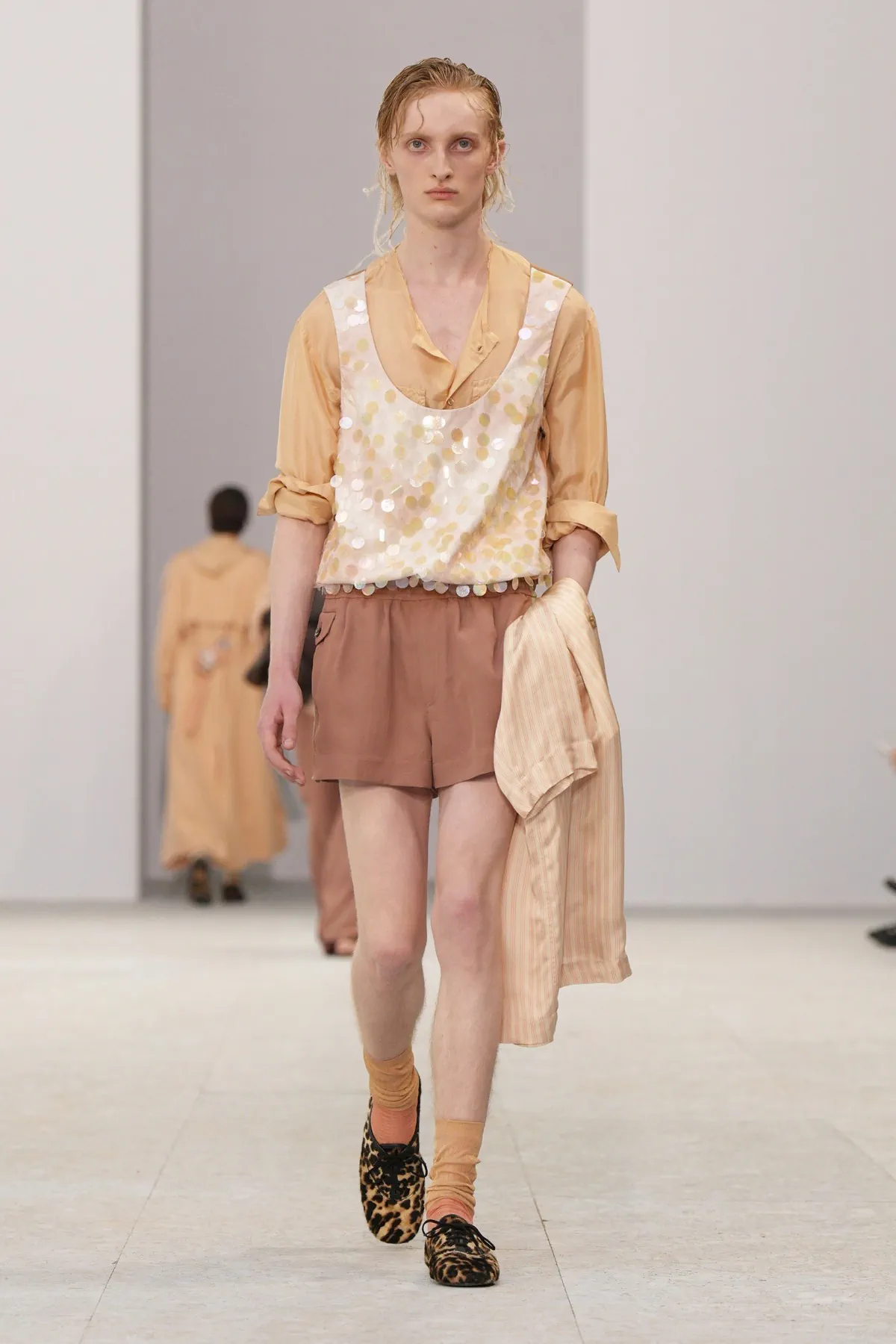
This was Klausner’s third menswear show since he was appointed Creative director in December 2024. He was promoted from his role as head of womenswear, a position he had held since joining the Antwerp-based fashion house in 2018. His background in womenswear is evident – and that’s a compliment. He incorporated lingerie into the collection with wispy, embellished vests; backless chiffon tops; and designs that would have seemed out of place in menswear just a few seasons ago. The collection moved through a color arc from the pale candy tones of dawn to the deep blues and purples of late evening – a full day rendered in fabric.
The leopard print that appeared throughout was not gratuitous. It underscored the animalistic nature of Mallarmé’s faun. Models wore it on bags and gloves, maintaining the reference without overemphasizing it. Forest and sky prints appeared on utility parkas, transforming workwear into something more fantastical. Some models wore pink ballet shoes, which depending on your tolerance for whimsy, either delighted or puzzled. Either reaction is valid.
Follow all the latest news from Fashionotography on Flipboard, or receive it directly in your inbox with Feeder.
You may also read

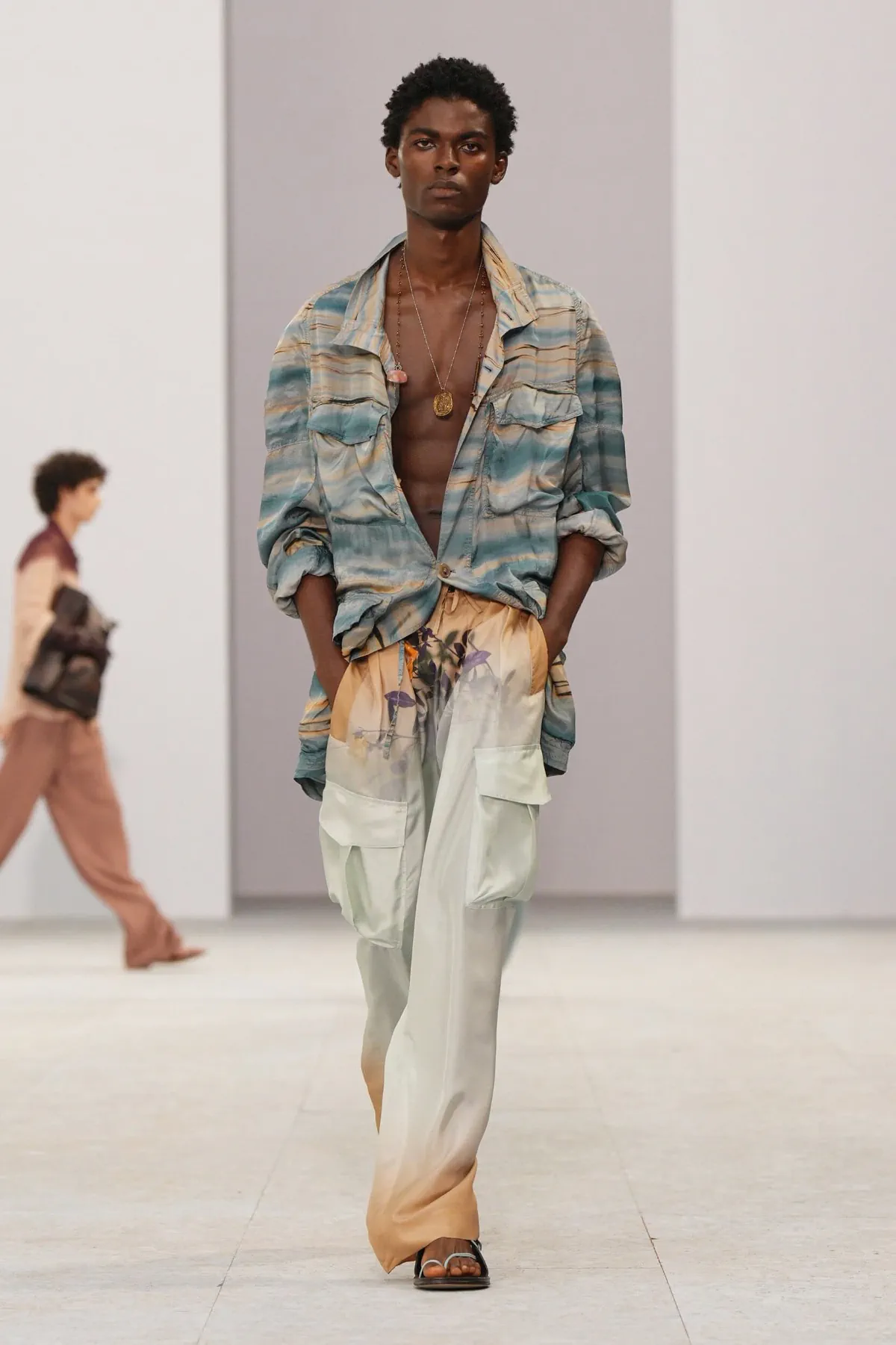
Klausner’s particular skill – which becomes more apparent with each season – lies in his ability to continue Van Noten’s visual language while making it feel genuinely personal. The color work is exceptional. The tonal layering is precise yet not rigid. The whole collection makes an argument for dressing with less armor, especially for men.
Not since Klausner’s debut collection has the house felt so confidently itself yet so open to something new. The ease he’s bringing to Dries Van Noten is genuine. Whether the house’s longtime clients will fully embrace this more feminine, porous version of the brand remains to be seen. But the clothes are compelling enough that the question almost doesn’t matter.
Klausner is still early in this chapter. The foundation is solid. Watch this space.