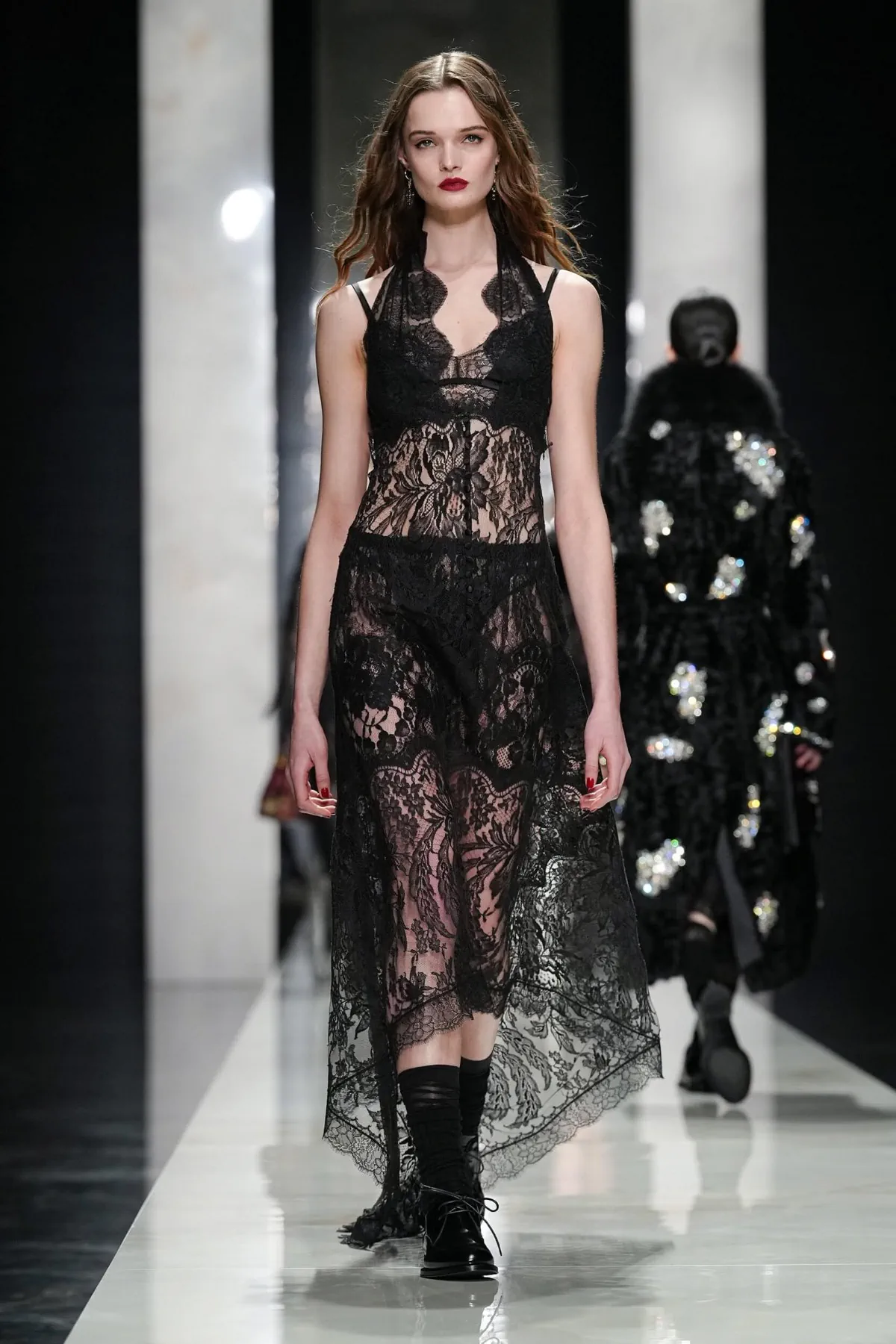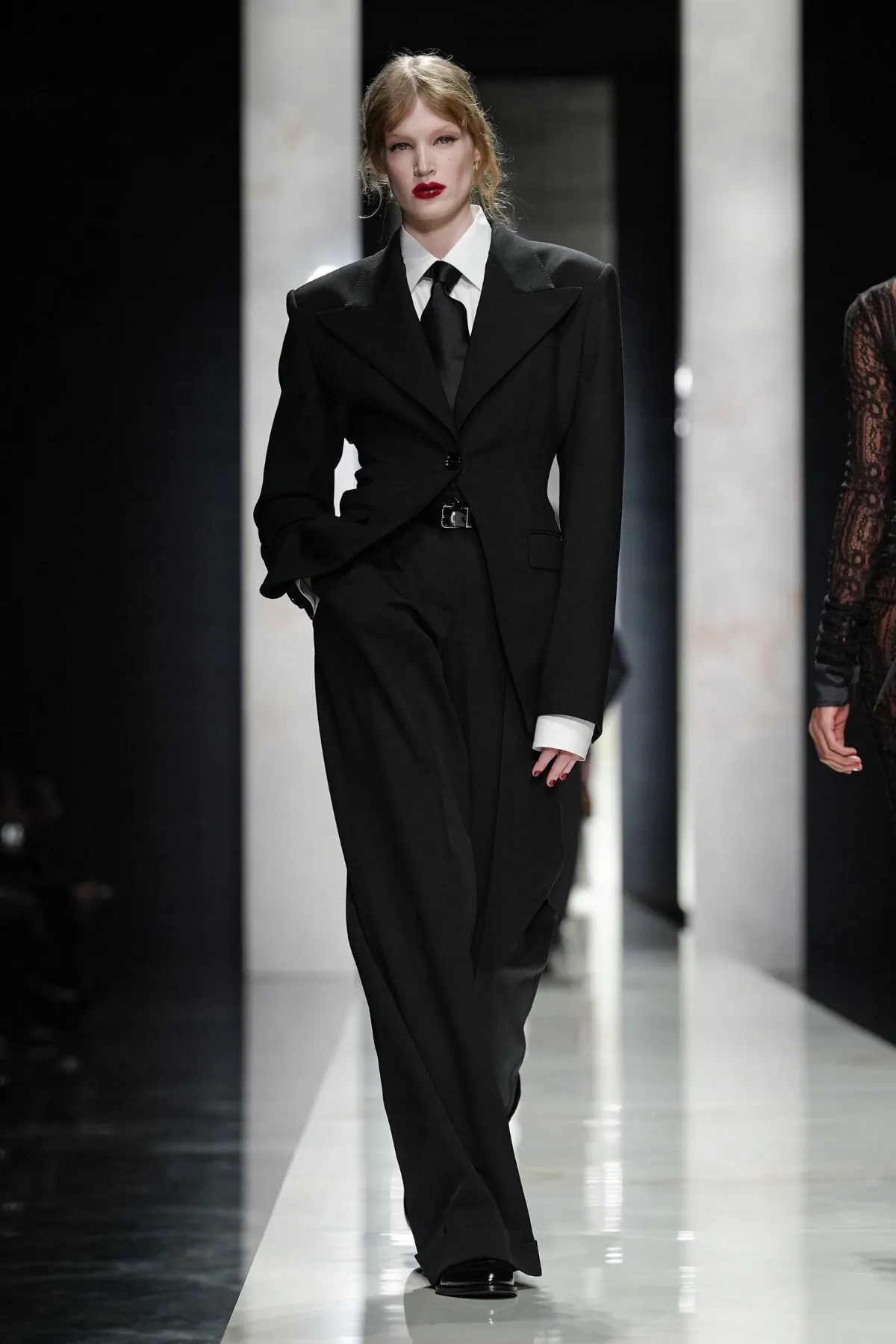

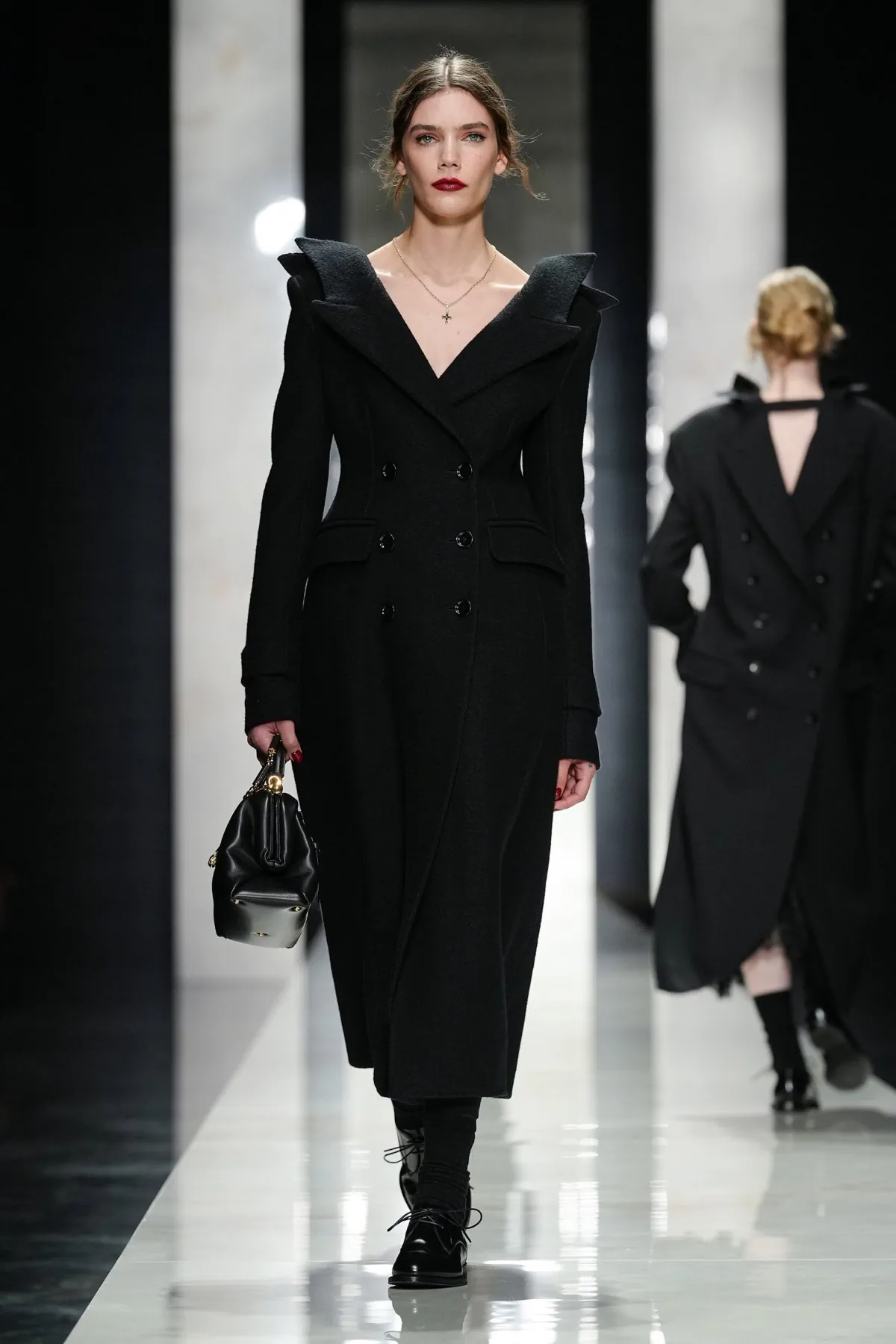
Milan is mid-transformation. Giorgio Armani, Gucci, Fendi and Marni are among the houses undergoing a change in creative leadership. Versace is next. The city is restless and uncertain, almost giddy with anxiety over reinvention. And then there is Dolce & Gabbana. For the Fall 2026 collection, the fashion house offered no disruption, no pivot, and no attempt to become something it was not. Instead, they offered something harder to pull off: complete conviction.
| 📌 Key Facts |
|---|
| 🖤 Collection almost entirely black ✂️ Advanced mirrored tailoring construction 🧵 Layered black lace with organza 📸 Inspired by a 1975 Helmut Newton photograph 👠 Madonna present, reinforcing 30-year brand relationship 🇮🇹 Strong Sicilian cultural references 🎯 Strategic refusal of reinvention amid Milan creative turnover |
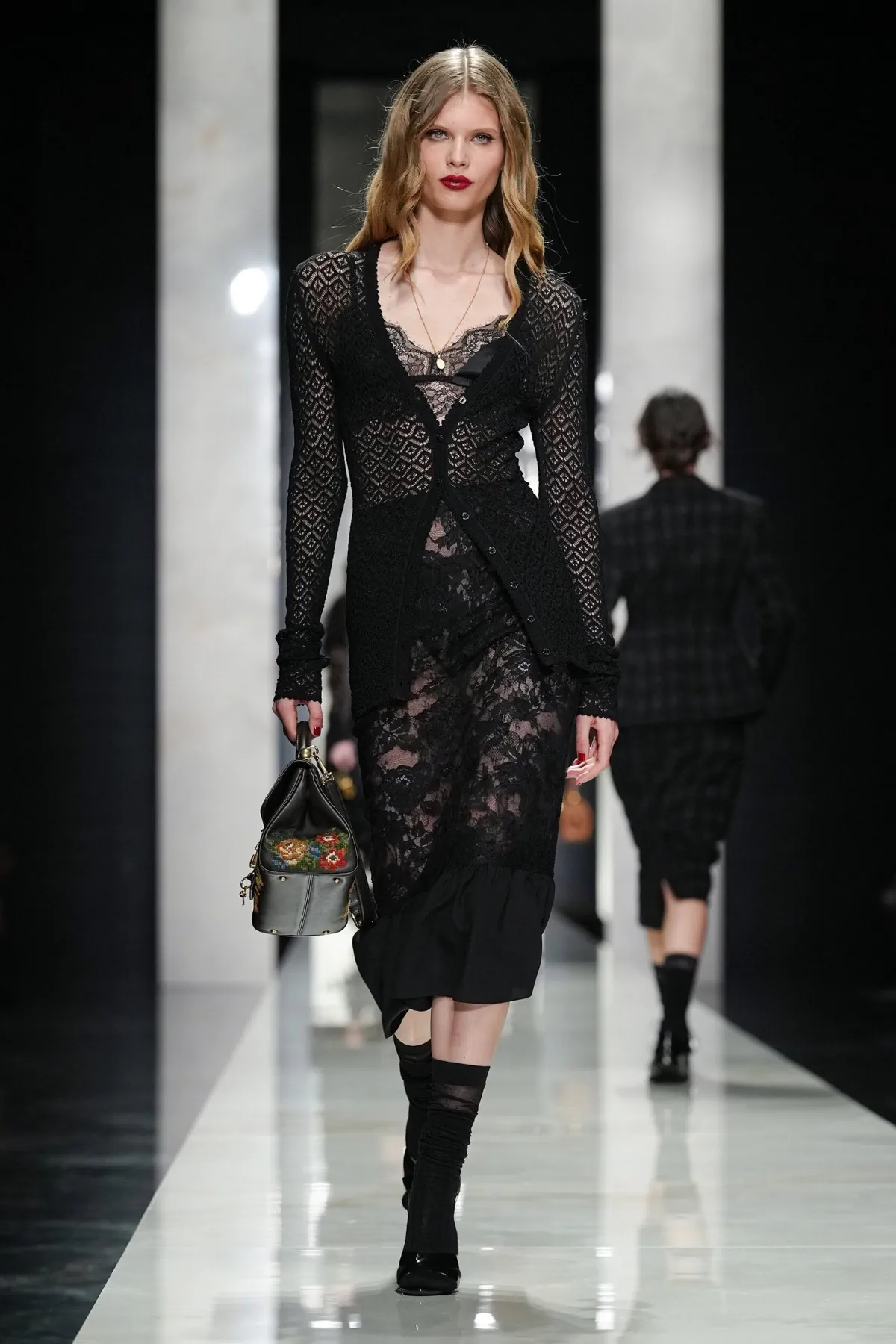
Domenico Dolce and Stefano Gabbana crossed the 40-year mark in 2025. They opened their fall show with a short black-and-white film about identity – a deliberate and not subtle choice. Many brands today lose themselves chasing what’s current. Dolce & Gabbana did the opposite.
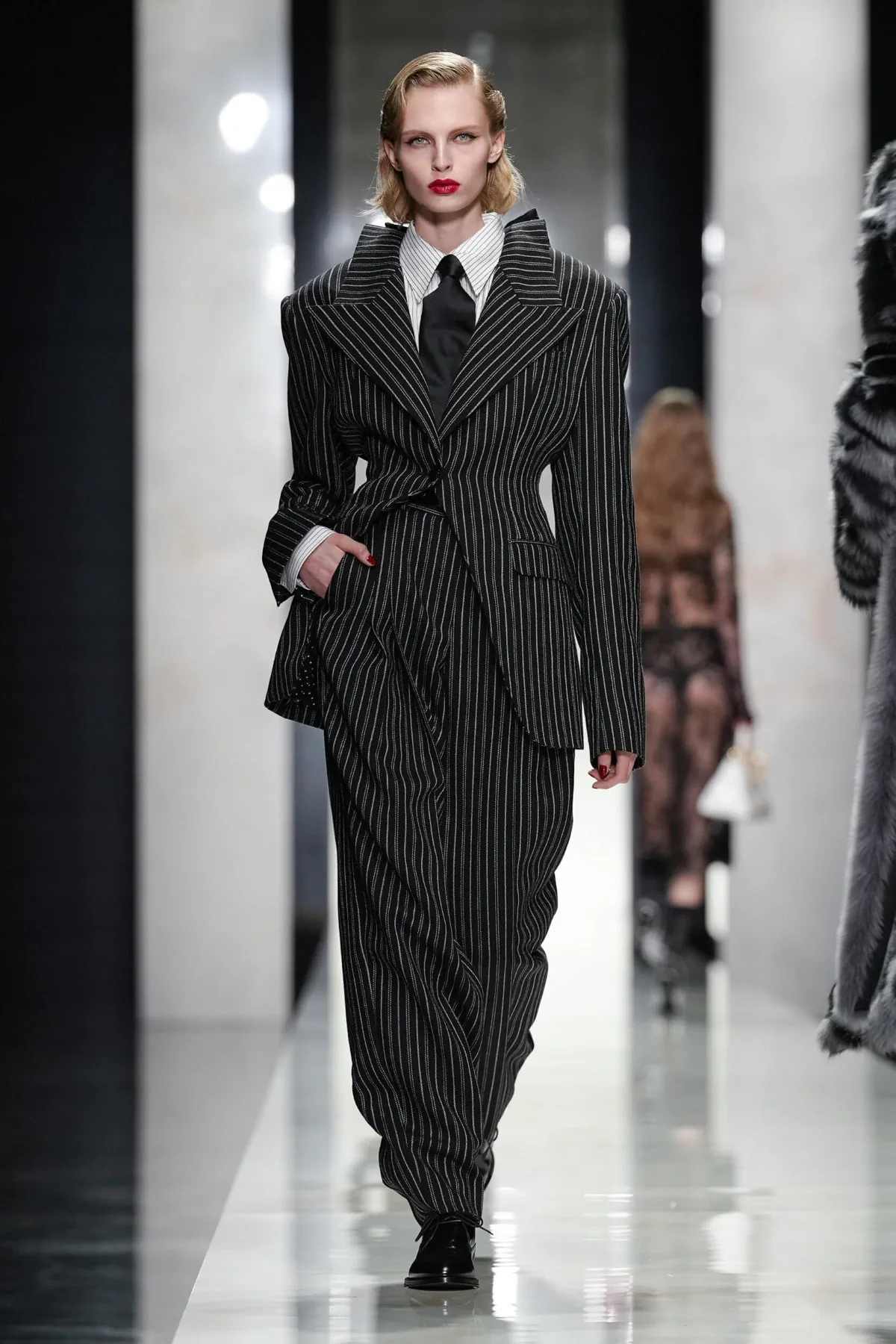
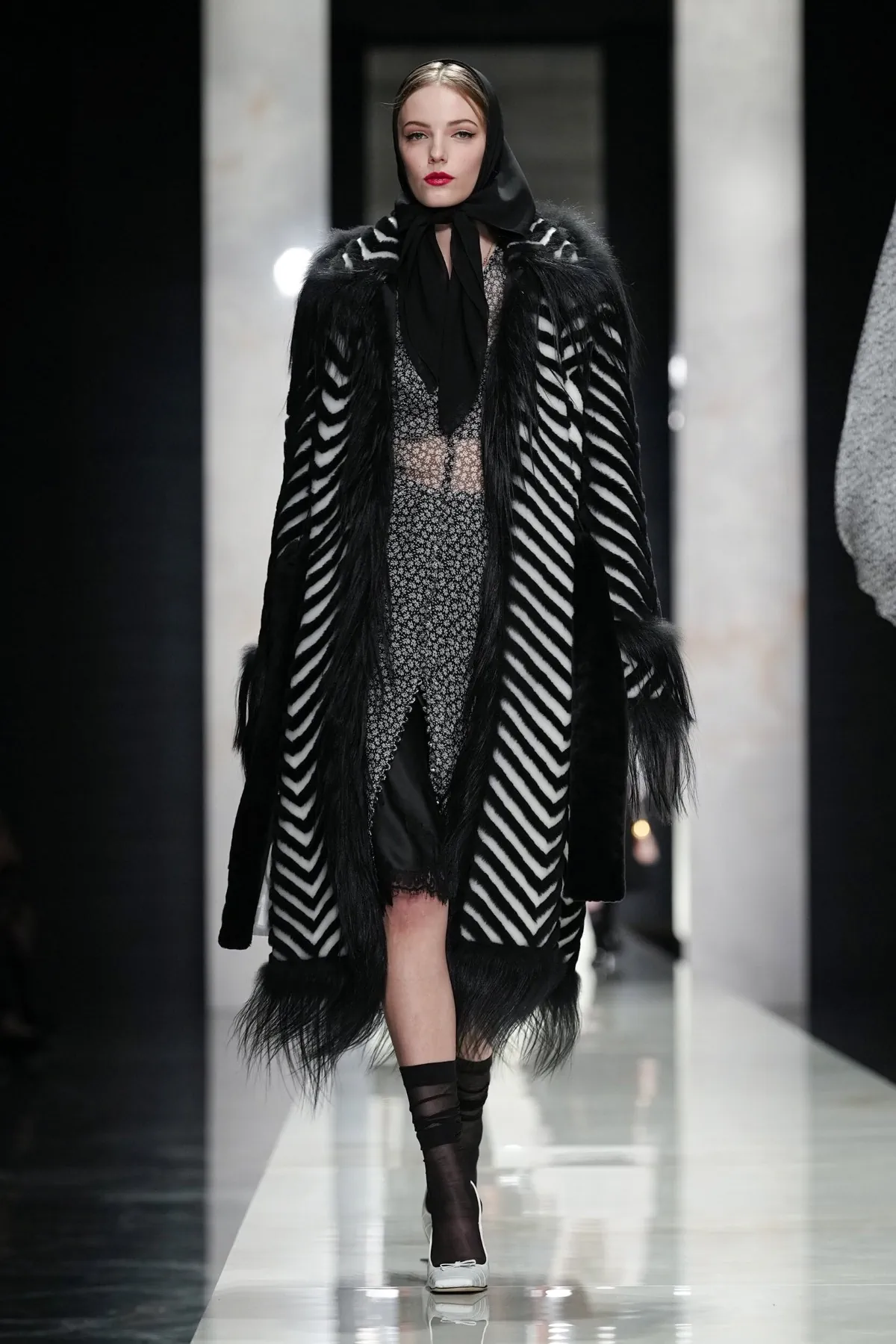
The collection was almost exclusively black. Not because black is safe, but because, for these two designers, black has always been the color of intention. It comes from Sicily, from the widows, priests, and volcanic rock under their feet. Structured double-breasted coats, trench silhouettes, and pinstriped suits moved with architectural confidence down the runway. Some jackets had their stripes shifted to the back – a subtle subversion that rewarded those paying close attention.
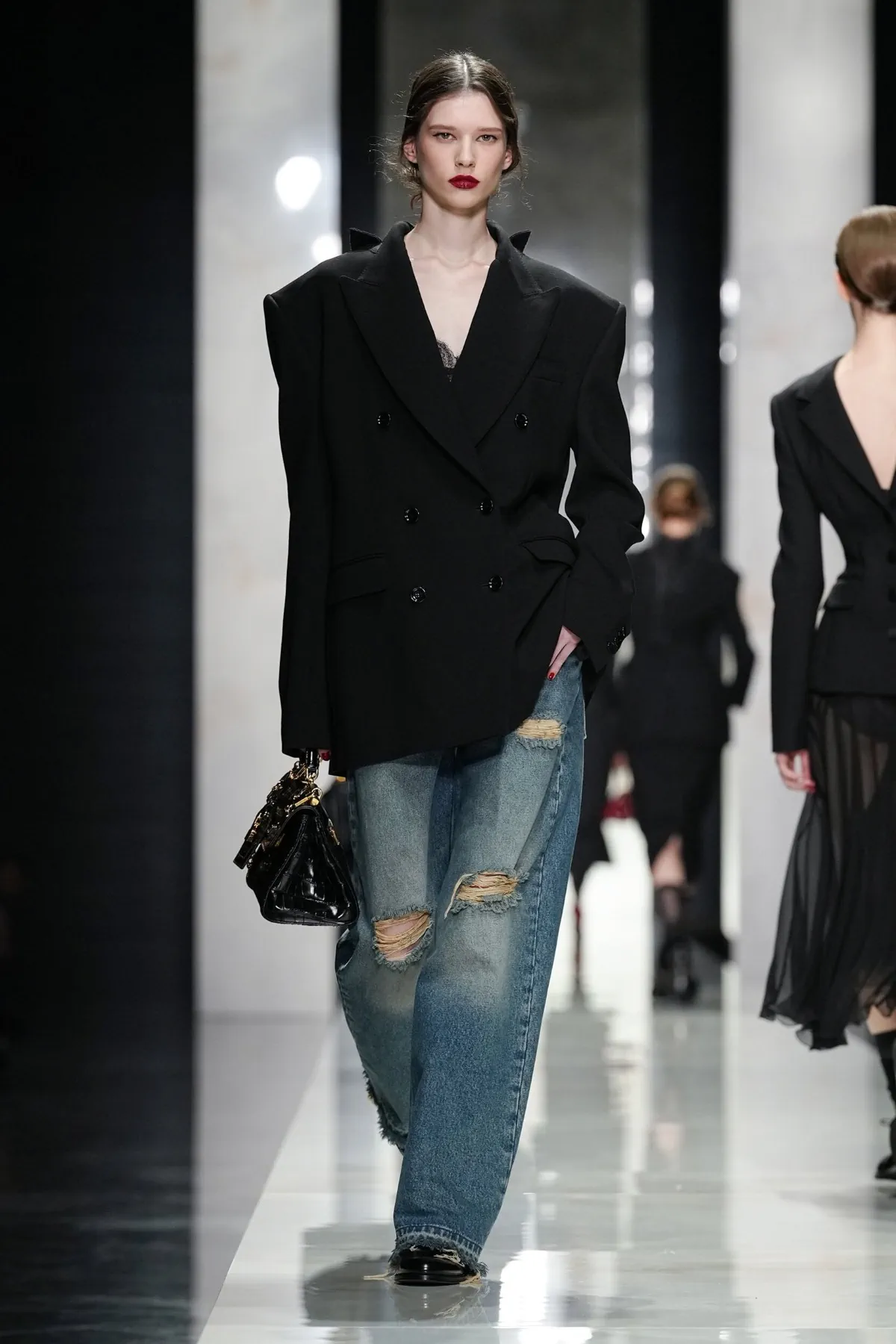
Domenico Dolce’s tailoring stood out with particular force. He designed several jackets and coats so that the back mirrored the front with the same lapels and buttons running down the spine. It is a technical challenge of the highest order, and he knew it. The models wearing these pieces paused on the runway and turned slowly, a deliberate, old-school gesture that allowed the workmanship to speak for itself. The effect was especially striking on one man-sized double-breasted blazer, the lacy silk camisole underneath barely visible beneath the weight of the suit.
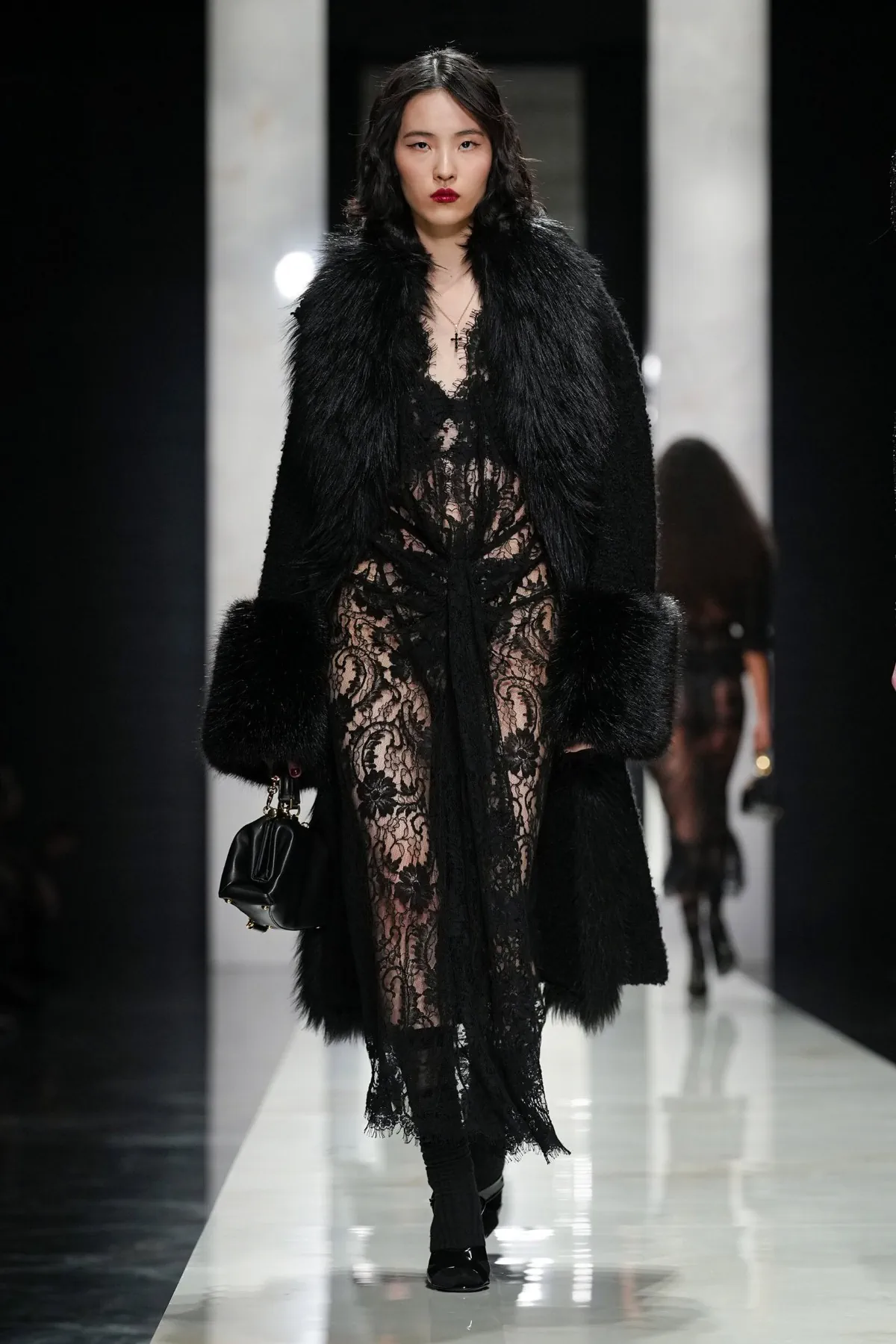
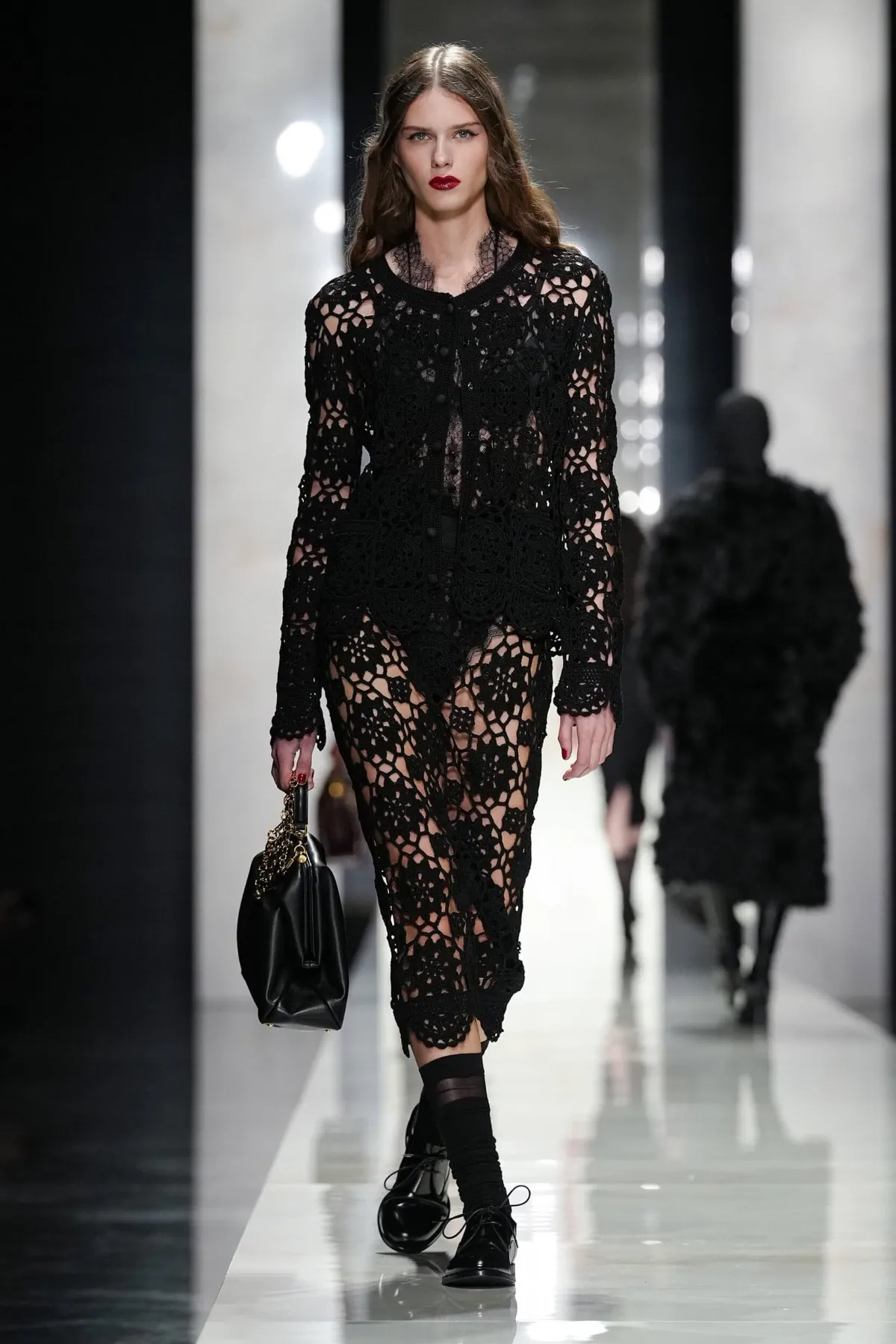
Black lace appeared throughout the collection, layered and sheer, often paired with silk organza. There were mid-calf skirts with softly blurred hems, translucent tops, and bralettes visible beneath structured jackets. The sensuality was controlled rather than obvious. Dolce & Gabbana handle intimacy with a kind of discipline. They do not shout it. They allow it to surface slowly, like light shifting on fabric.
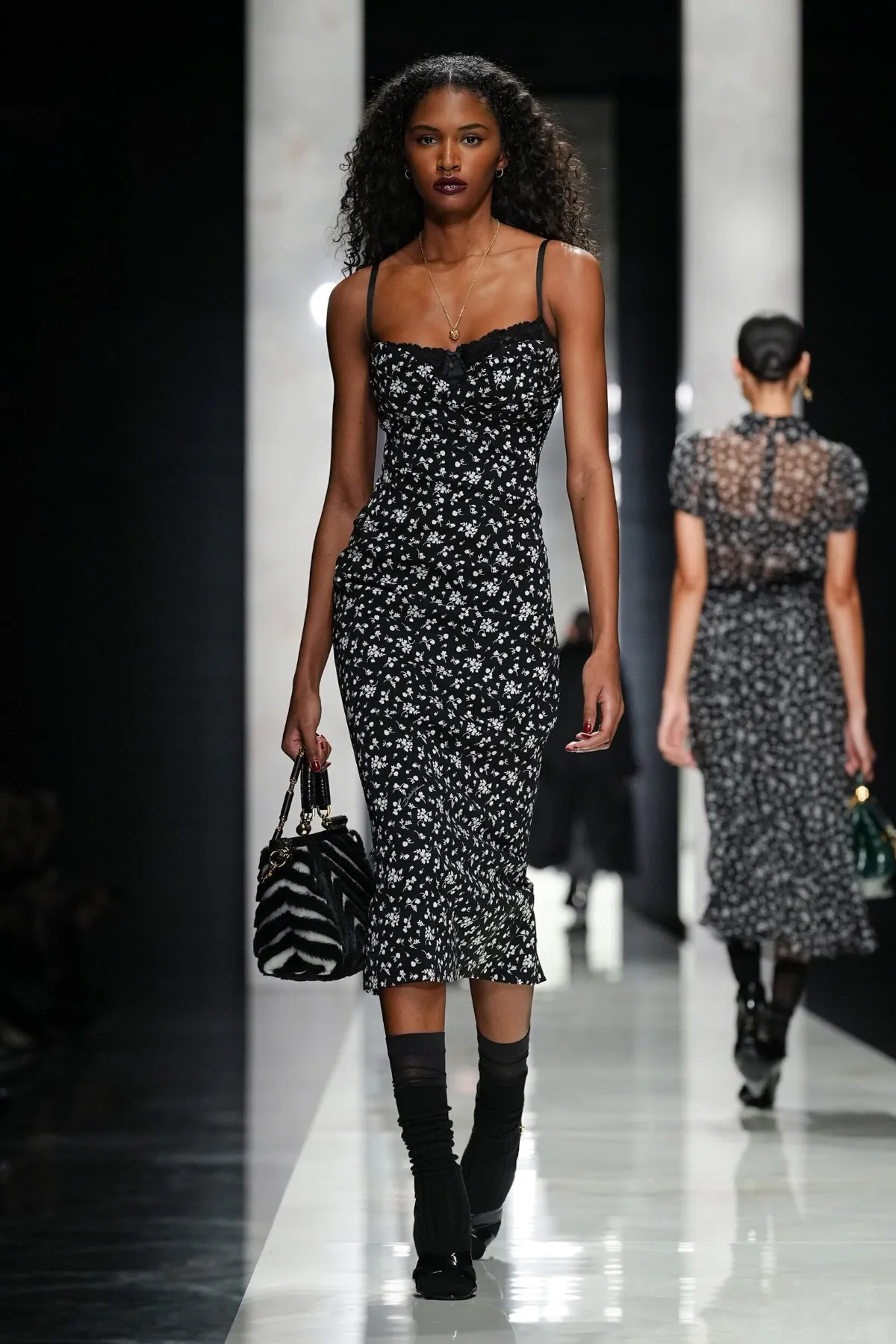
Toward the end, the collection broke from black with a series of micro-print dresses. The inspiration was a 1975 Helmut Newton photograph of the model Lisa Taylor reclining with a printed dress loose between her legs and her gaze directed at a shirtless man whose face is hidden from view. This was the memory of a picture, not its reproduction, and that distinction matters here. These were clothes informed by a specific photographic intelligence, not costumes built around it.
The guest of honor was Madonna, who arrived three-quarters of an hour late – which is its own kind of authority. She wore a short black corset dress, a precisely cut dark jacket, black sunglasses, and turquoise gloves. The silhouette was sharp and slightly severe. She sat beside Anna Wintour, and the show began.
Follow all the latest news from Fashionotography on Flipboard, or receive it directly in your inbox with Feeder.
You may also read

Madonna has been associated with Dolce & Gabbana since the early 1990s, when the fashion house designed her wardrobe for the 1993 Girlie Show tour. Her presence at this show was no coincidence. She recently recorded an Italian pop song from 1968 for a Dolce & Gabbana fragrance campaign, which highlights the designers’ attachment to Italian cultural memory. She is more than just a loyal client. She embodies what the brand has always stood for.
That argument holds up. While other fashion houses are still trying to figure out who they want to be, Dolce & Gabbana already know. After 40 years, that certainty is their strongest asset.