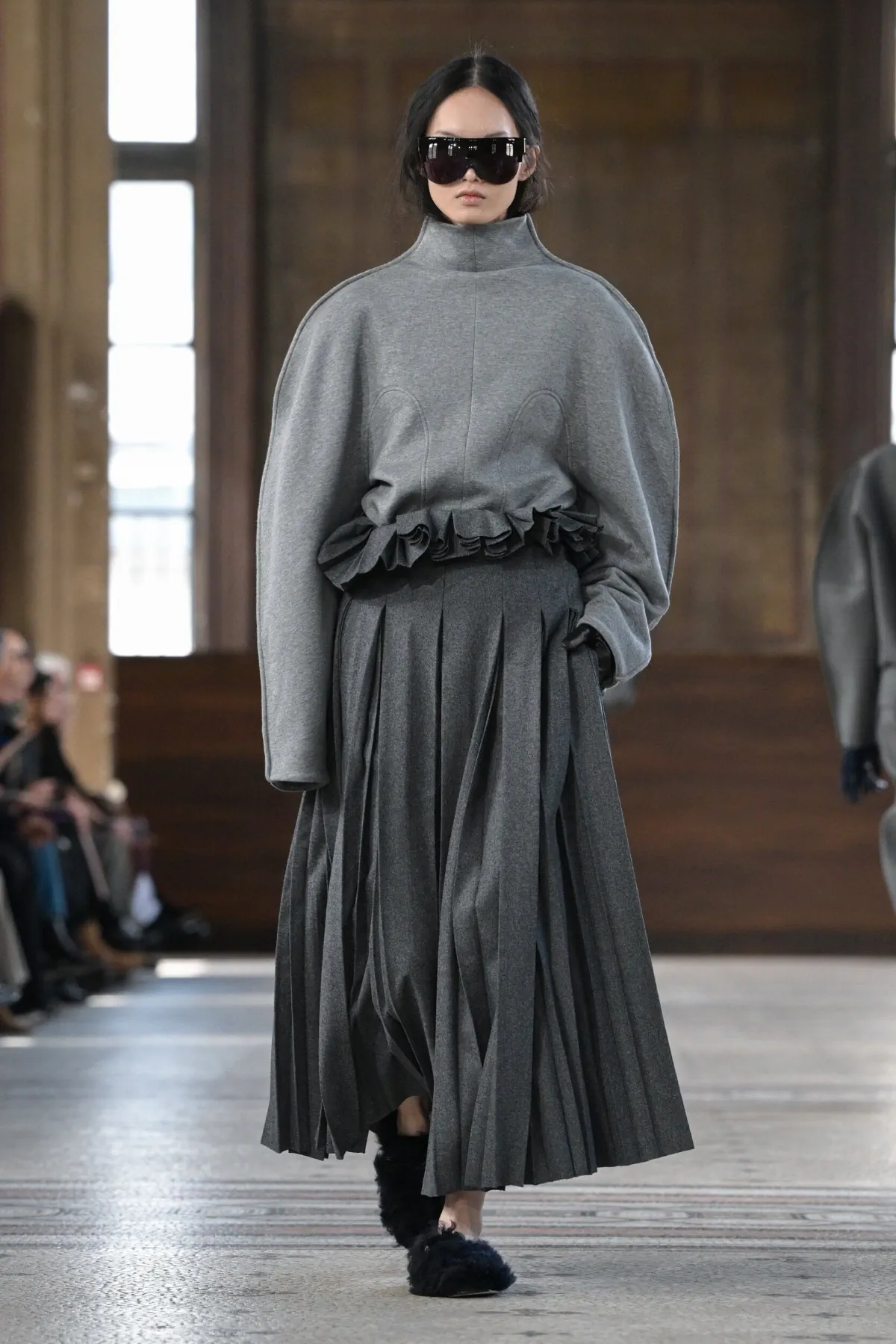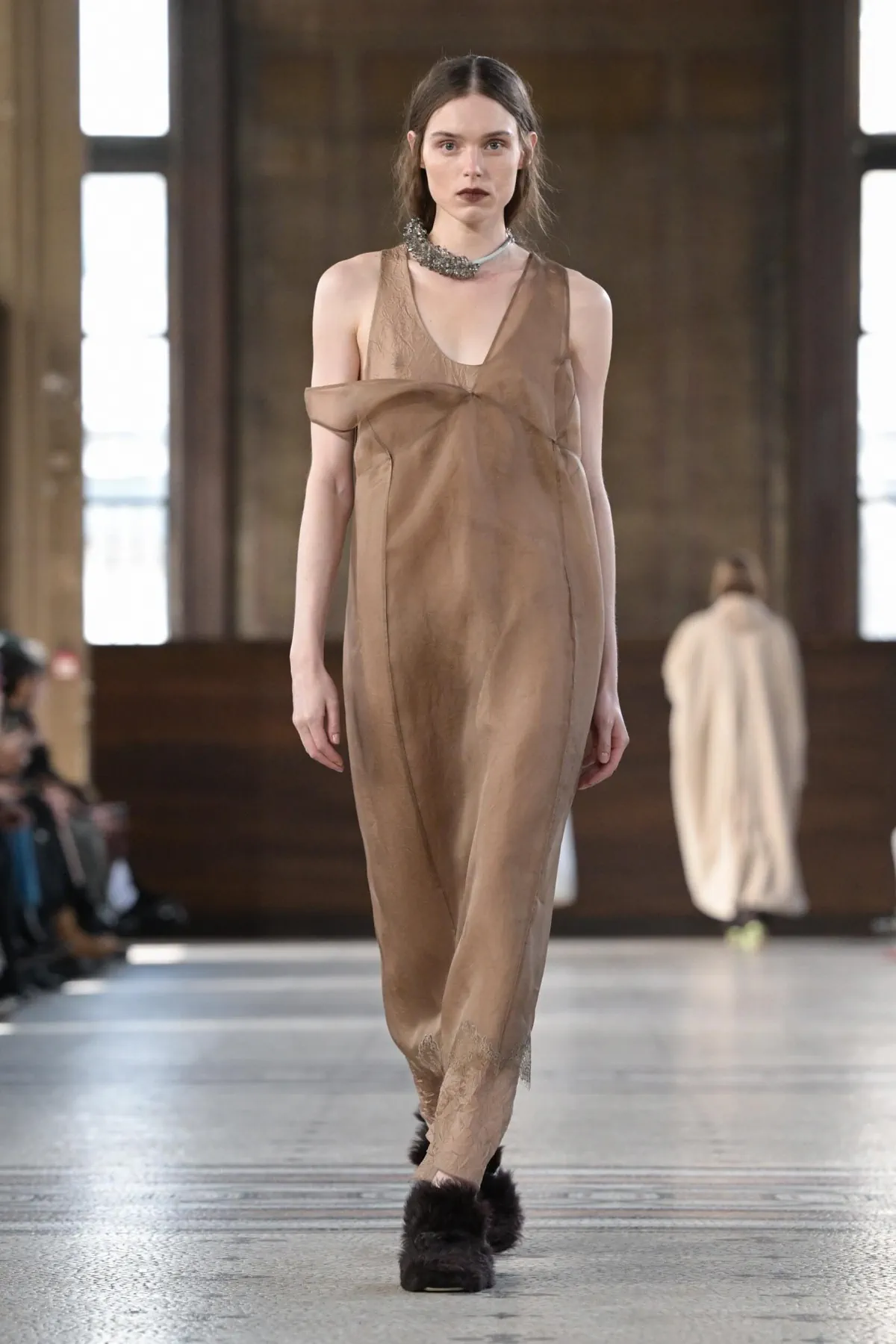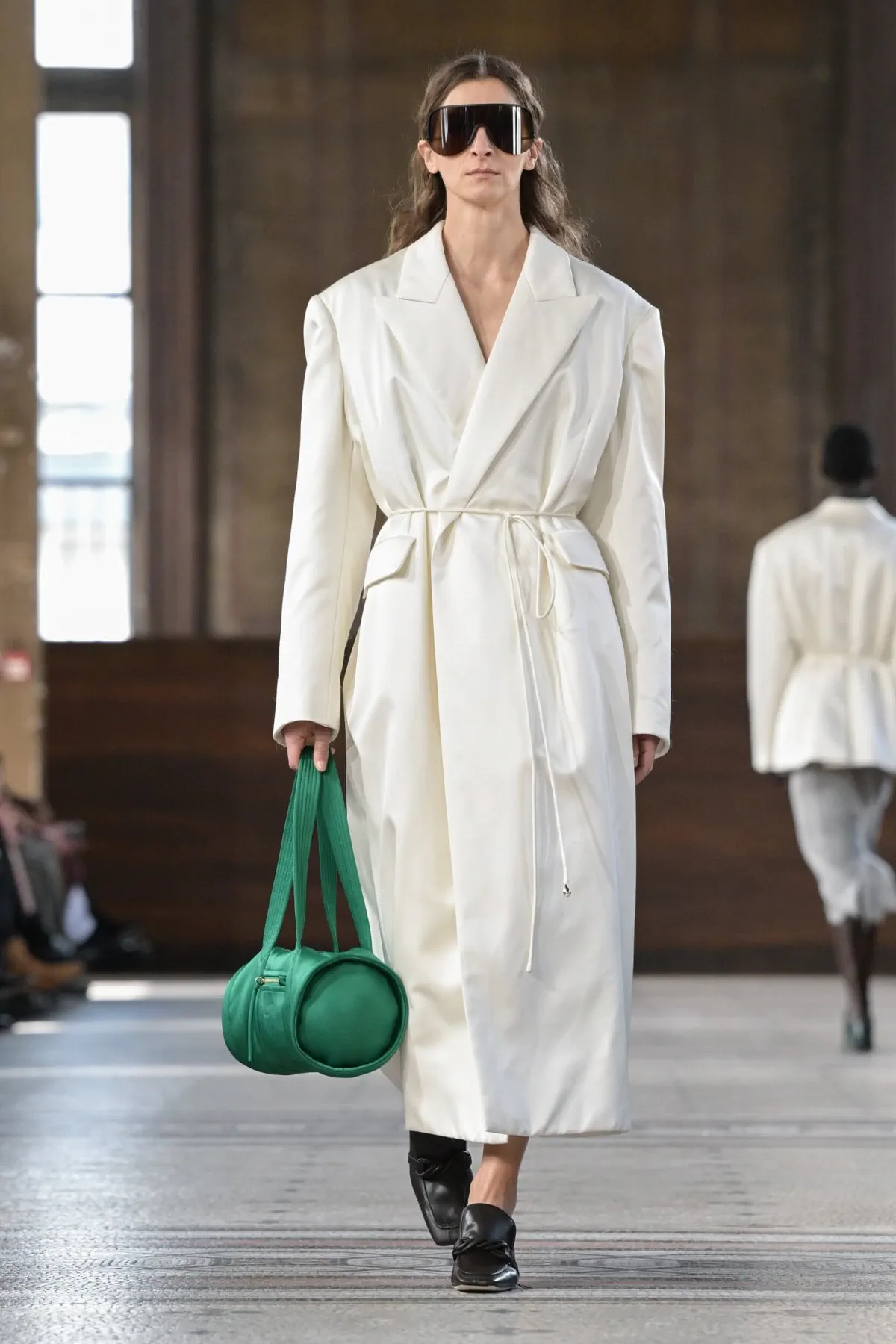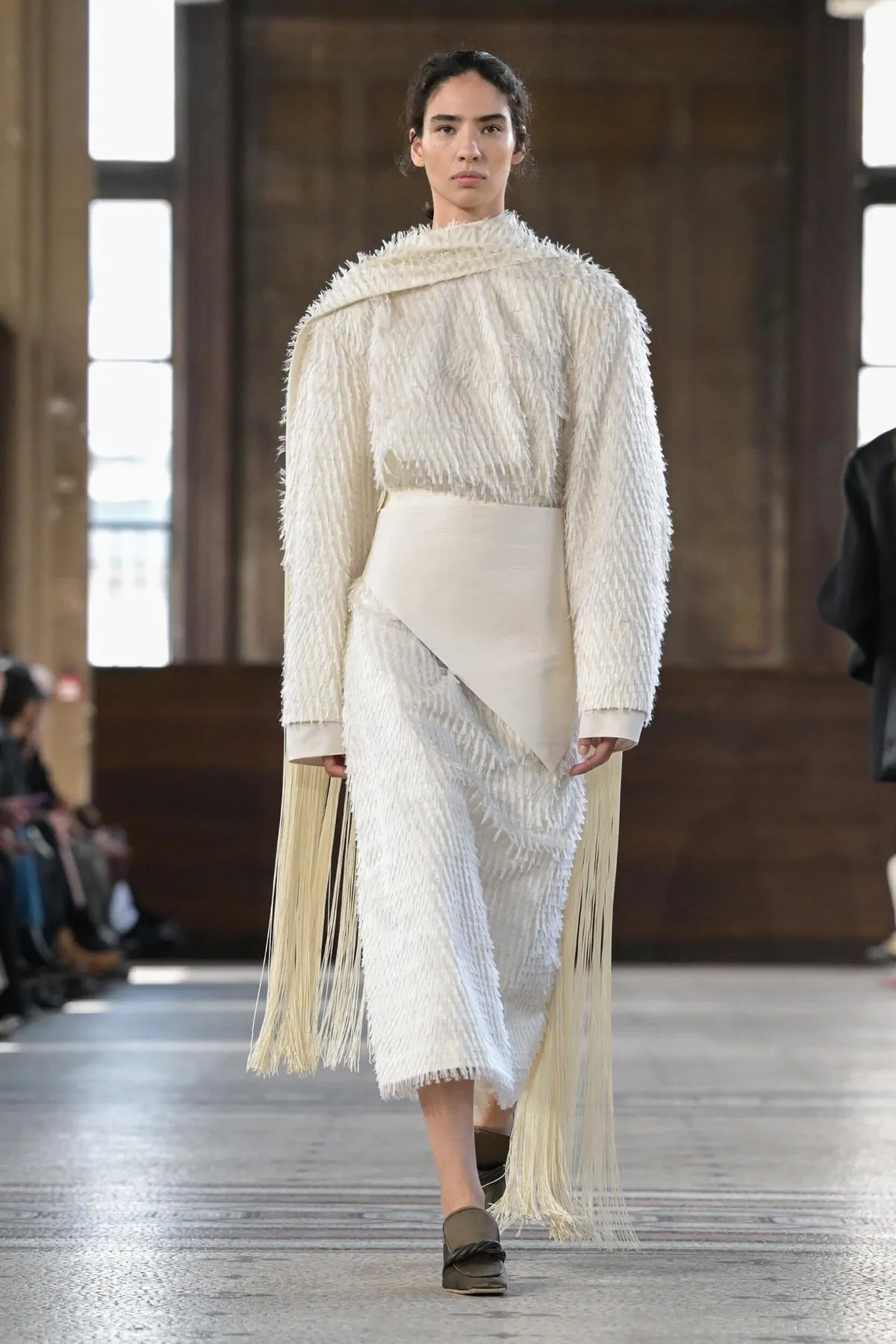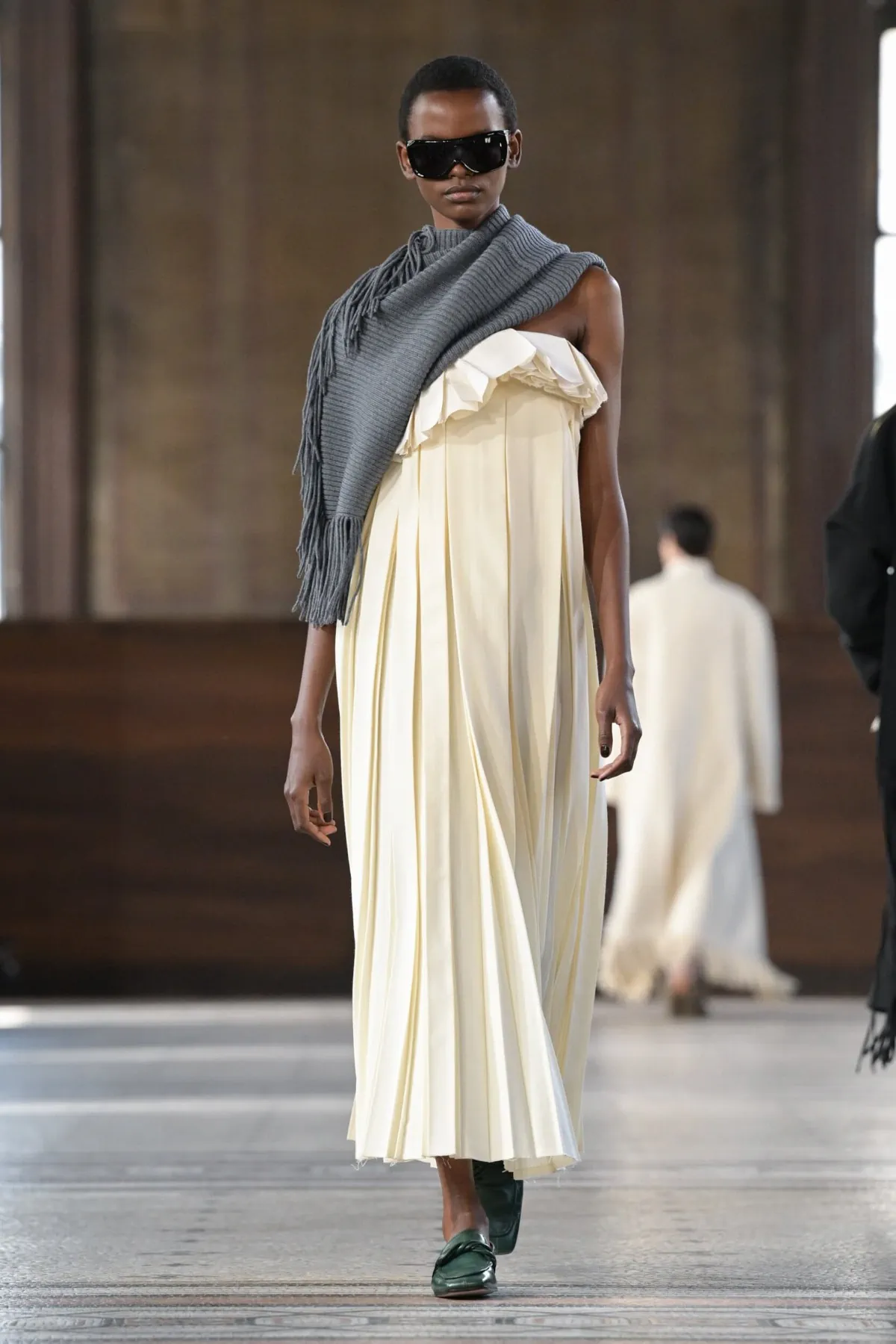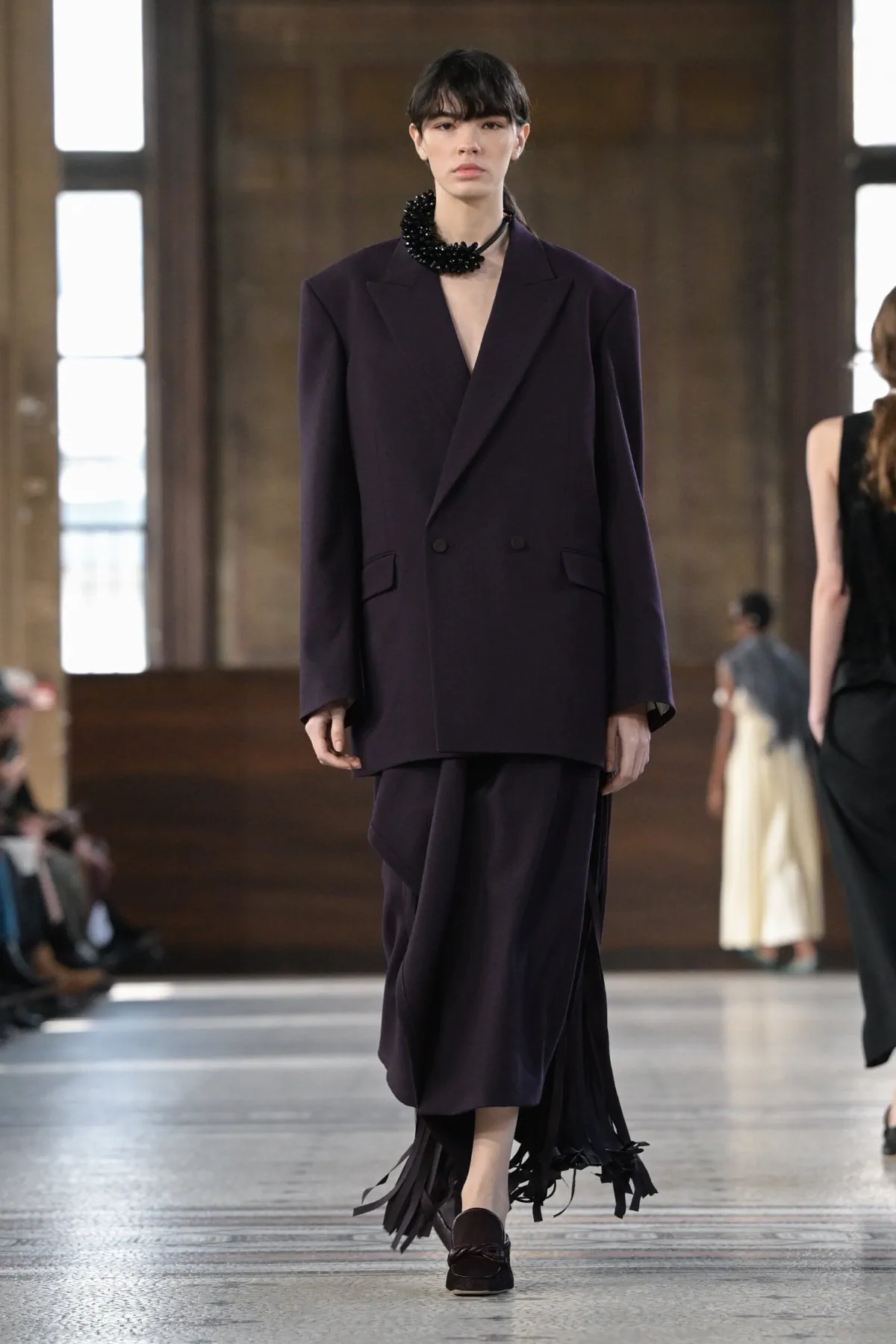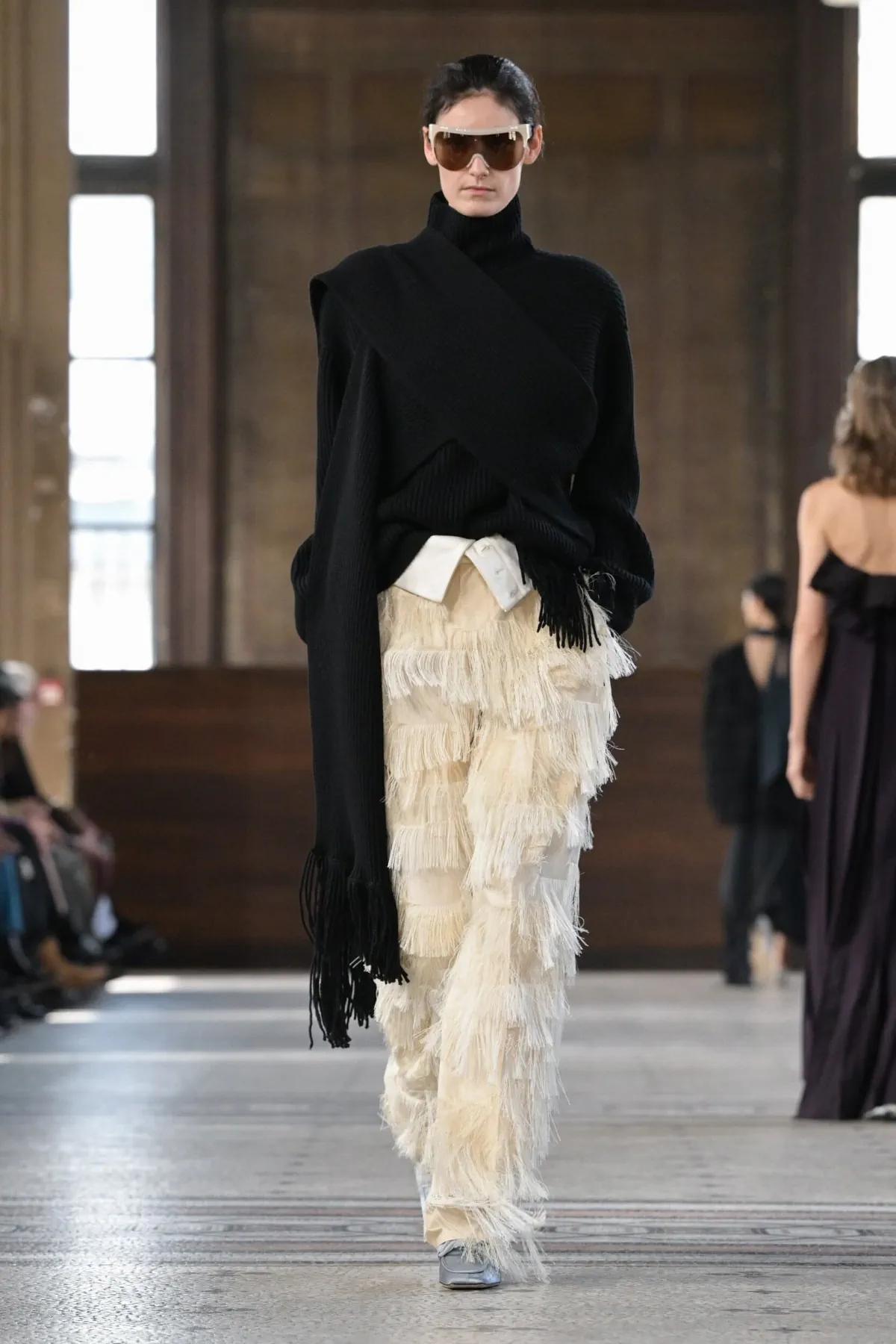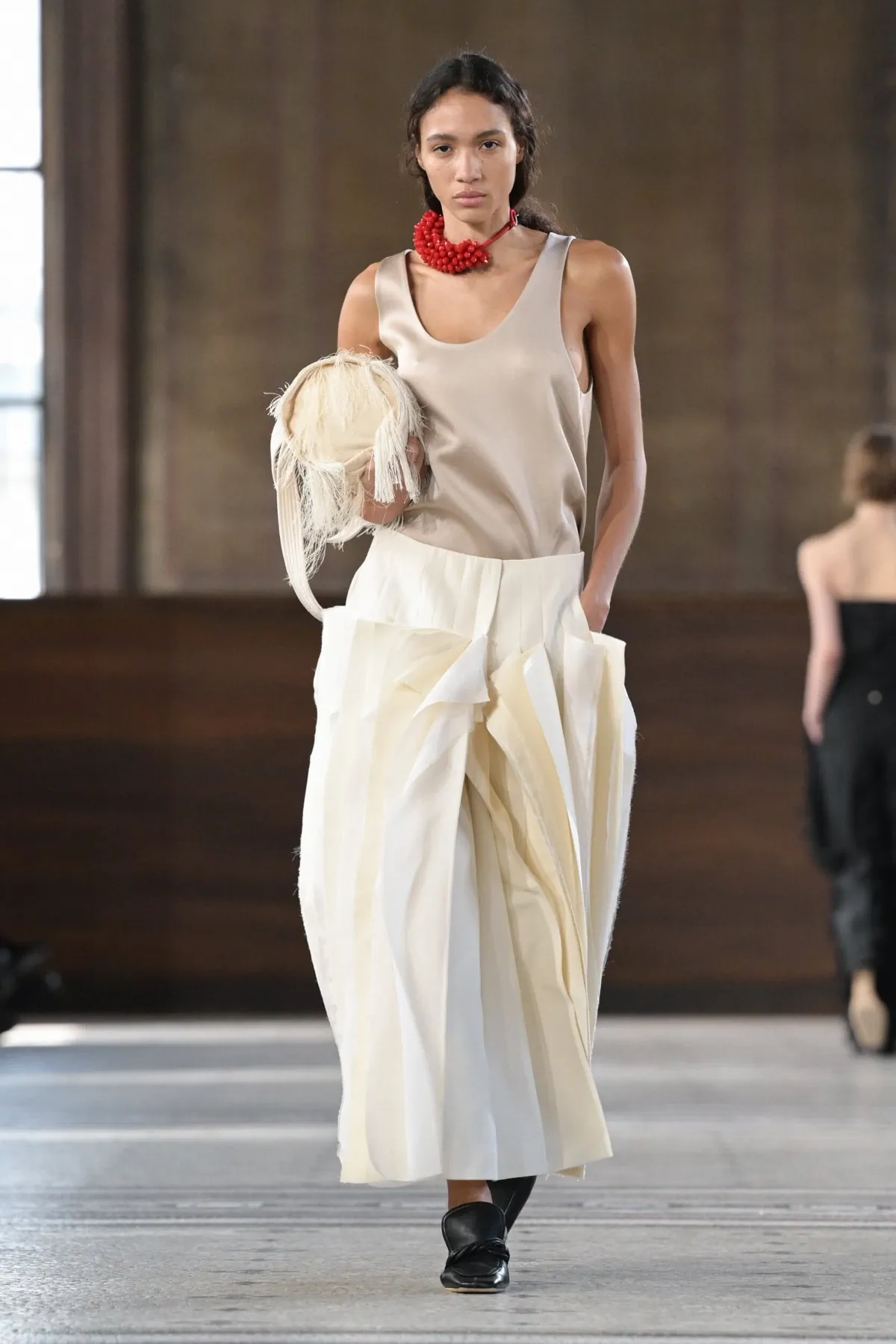

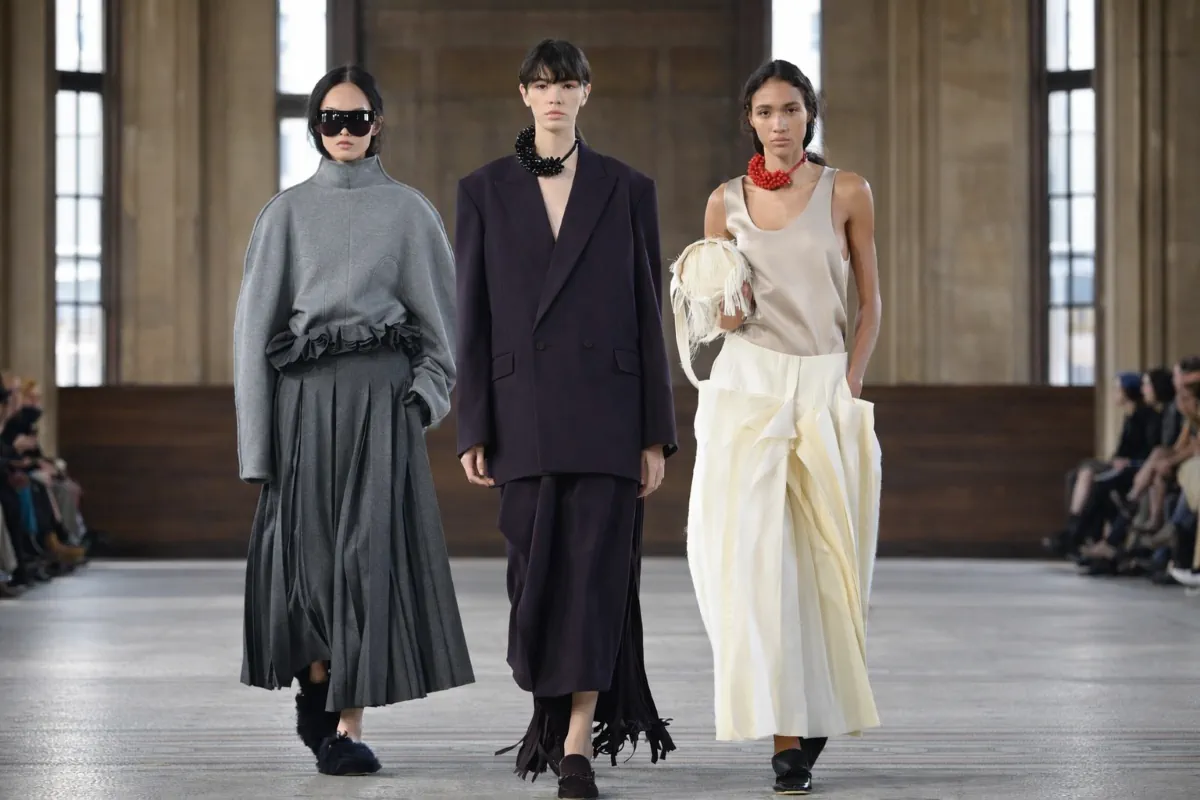
Mark Thomas, the British designer now in his third collection as Carven’s Director of design, moved his second runway show from the brand’s historic headquarters on Rond-Point des Champs-Élysées to the Conservatoire National des Arts et Métiers. The high-ceilinged, marble hall was filled with sunlight, giving the show an almost ecclesiastical weight. The setting wasn’t incidental. It said something about where Thomas sees the brand going: forward.
| 📌 Key Facts |
|---|
| 🧵 Mark Howard Thomas presents his third collection for Carven, signaling a more confident design language. 🎨 The show focuses on browns, blacks, grays, sand and white, letting texture drive visual interest. 👗 Monochrome tailoring reimagines the suit as an adaptable everyday wardrobe system. 🏛 The collection was shown at the Conservatoire National des Arts et Métiers in Paris. 🧶 Key fabrics include bonded wool, silk toile, organza and leather. 🏠 Housecoats, boudoir silhouettes and kimono cuts reinterpret Carven’s heritage. |
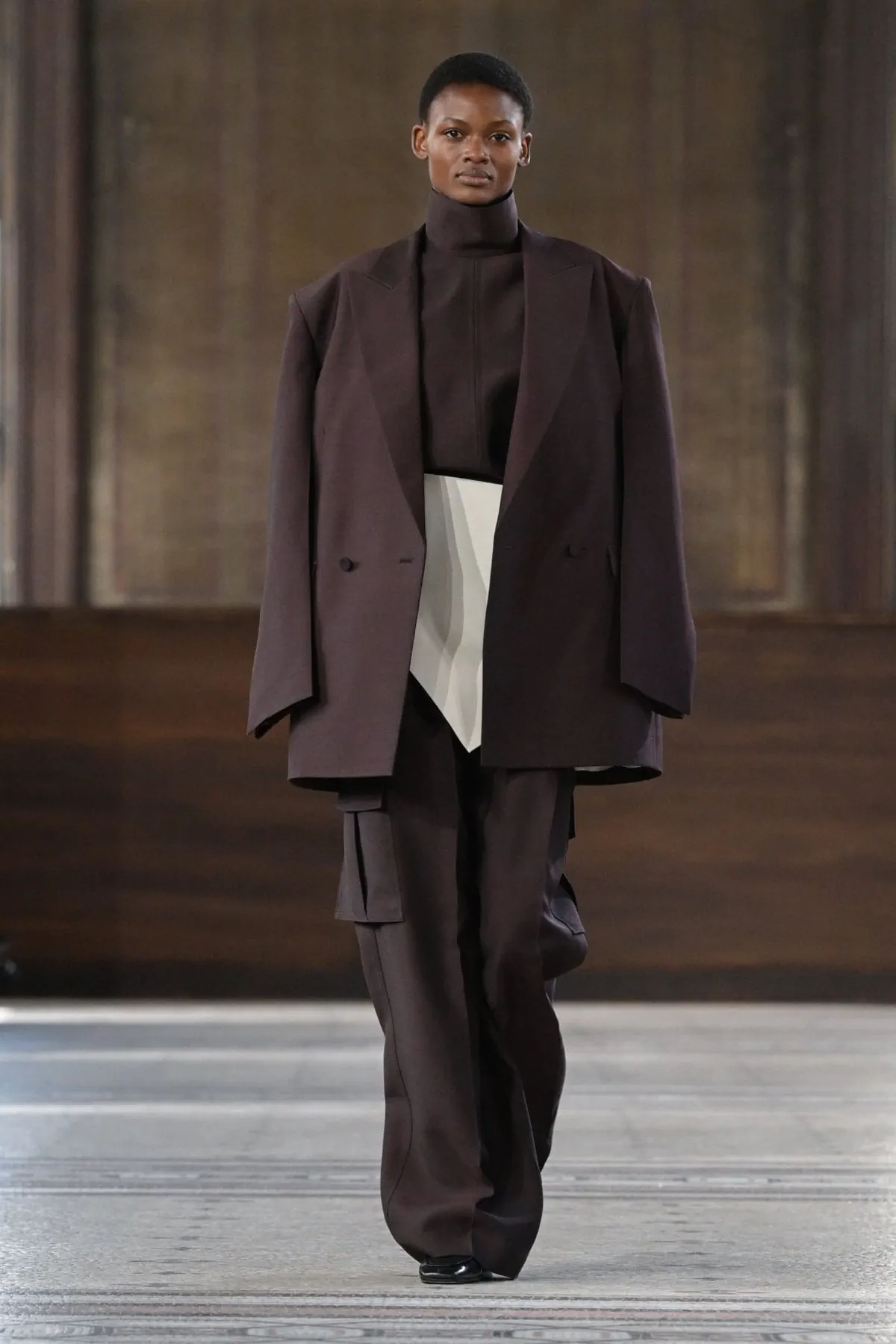
When he stepped into the role two years ago, he described Carven as “a baby brand.” The Fall 2026 collection renders that description outdated. What he presented was the work of a designer who has moved beyond the exploratory phase and achieved a more confident style.
The color palette was limited to browns, blacks, grays, white, and sand. There were no distractions or decorative pivots through color. Thomas let texture carry the weight instead. The opening look made this clear: a mahogany-colored leather coat with raglan sleeves, worn over a crisp shirt and paired with an asymmetric leather belt and straight-cut trousers. The layers sat without bulk. Achieving that kind of precision is harder than it looks.
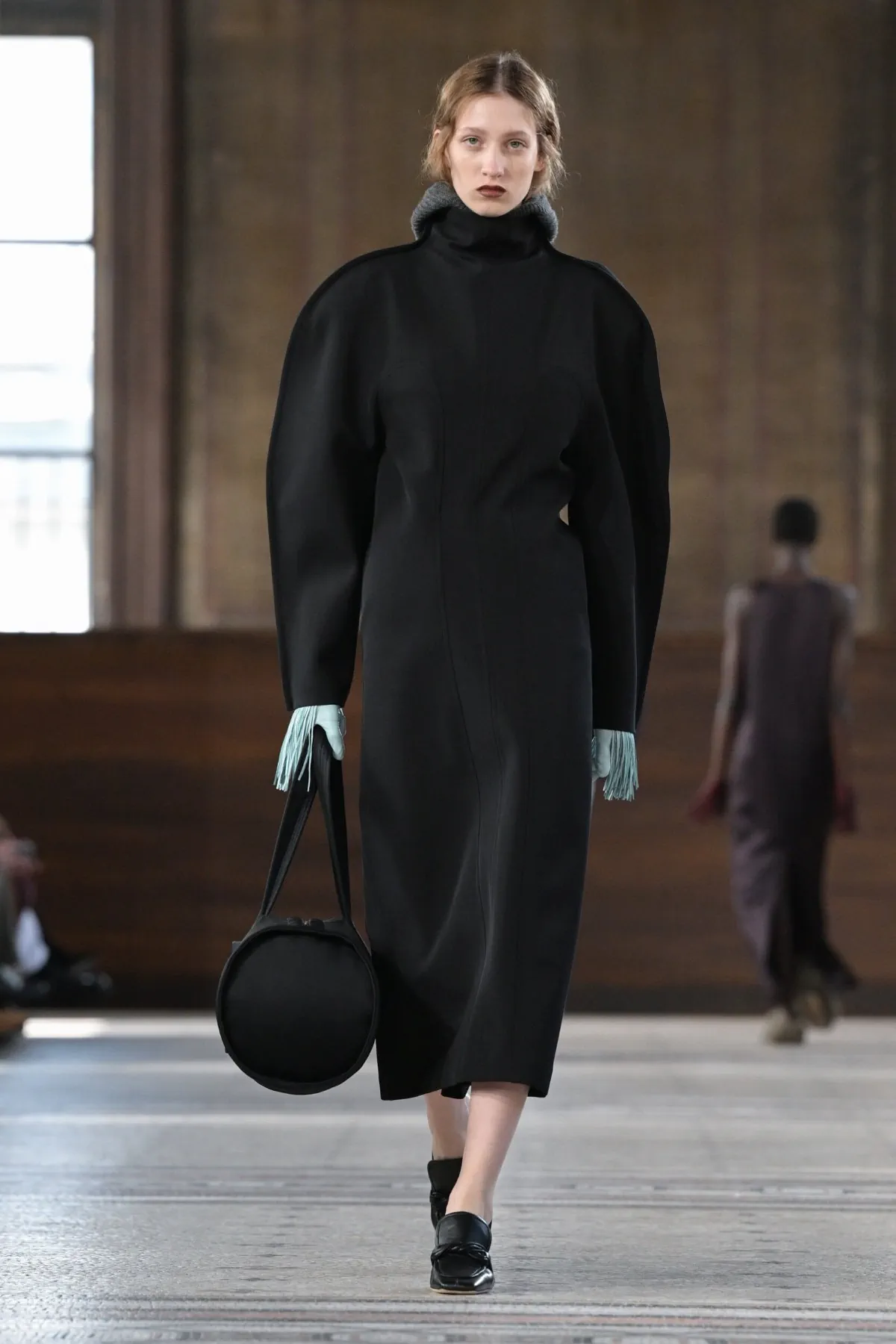
Thomas calls this approach “uniform tailoring“: monochromatic looks that propose a new way of thinking about the suit. Not the suit as office armor or as a ceremony, but rather, the suit as an everyday vocabulary that women can fluently adapt to their own purposes.
Throughout his tenure at Carven, Thomas has worked with a recurring theme: the line between the domestic and the outside world. For Fall 2026, that tension became genuinely interesting. There were pieces that drew directly from Carven’s couture-level heritage: double-silk blousons and tops cut in 1950s kimono shapes. They were made from silk toile and bonded wool, which was structured yet felt light to wear. These clothes reminded you that the house has a history worth honoring.
Follow all the latest news from Fashionotography on Flipboard, or receive it directly in your inbox with Feeder.
You may also read

On the other hand, Thomas interpreted the boudoir convincingly. A singlet pulled into a long, relaxed dress appeared completely deliberate. Translucent organza separates layered until opaque acquired a quiet modernity. Padded housecoats were presented as outerwear and appeared entirely plausible. Fringe, lifted from carpet detailing and applied to jackets and trousers, brought movement without veering into costume territory. Scalloped swag trim elevated a fitted dress from ordinary to extraordinary.
All of these elements were united by a sense of purpose. According to Thomas, the Carven woman dresses because she is going somewhere. This may sound obvious, but in a fashion world full of studied undress and deliberate casualness, clothes that commit to looking put-together have real authority. This was that.