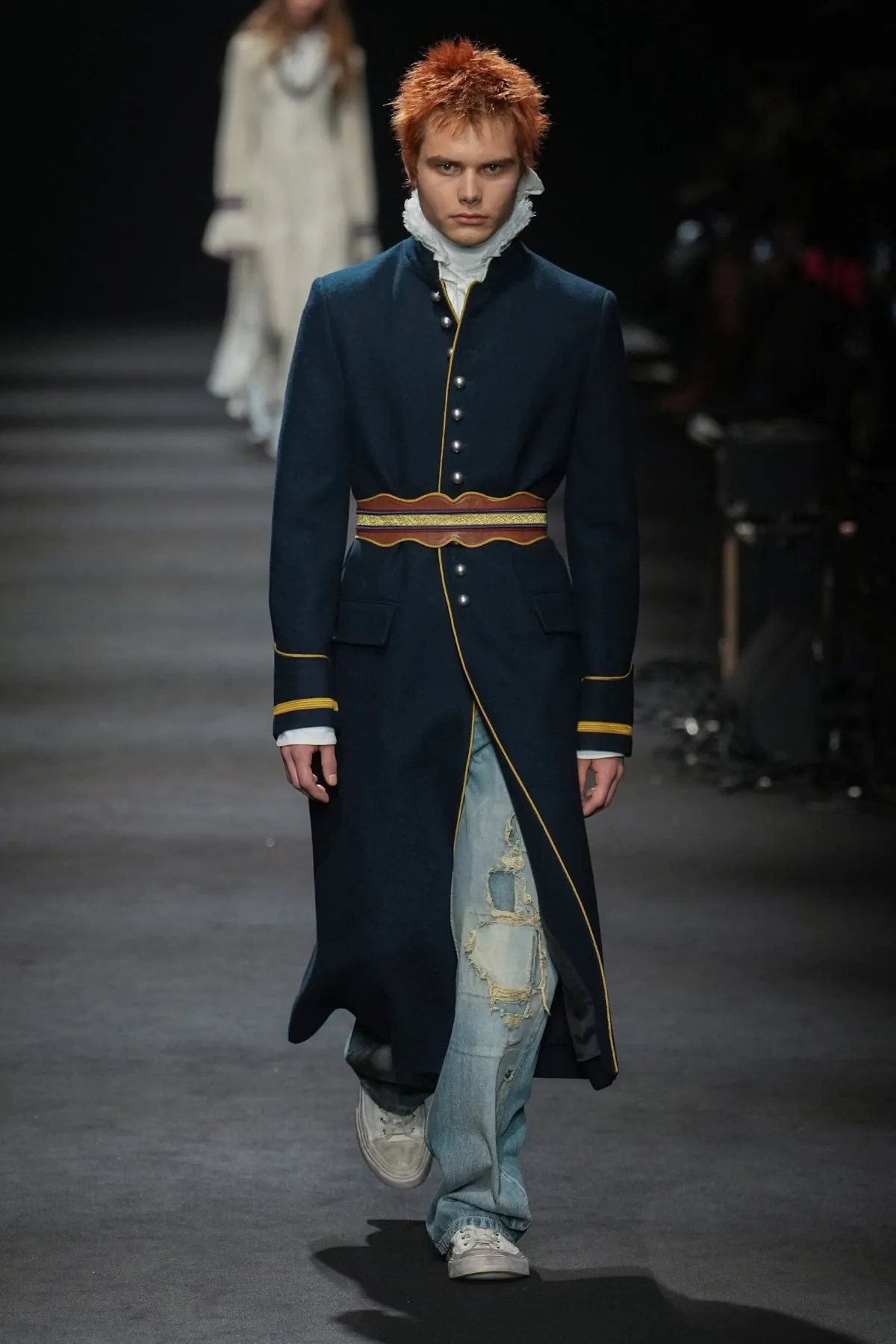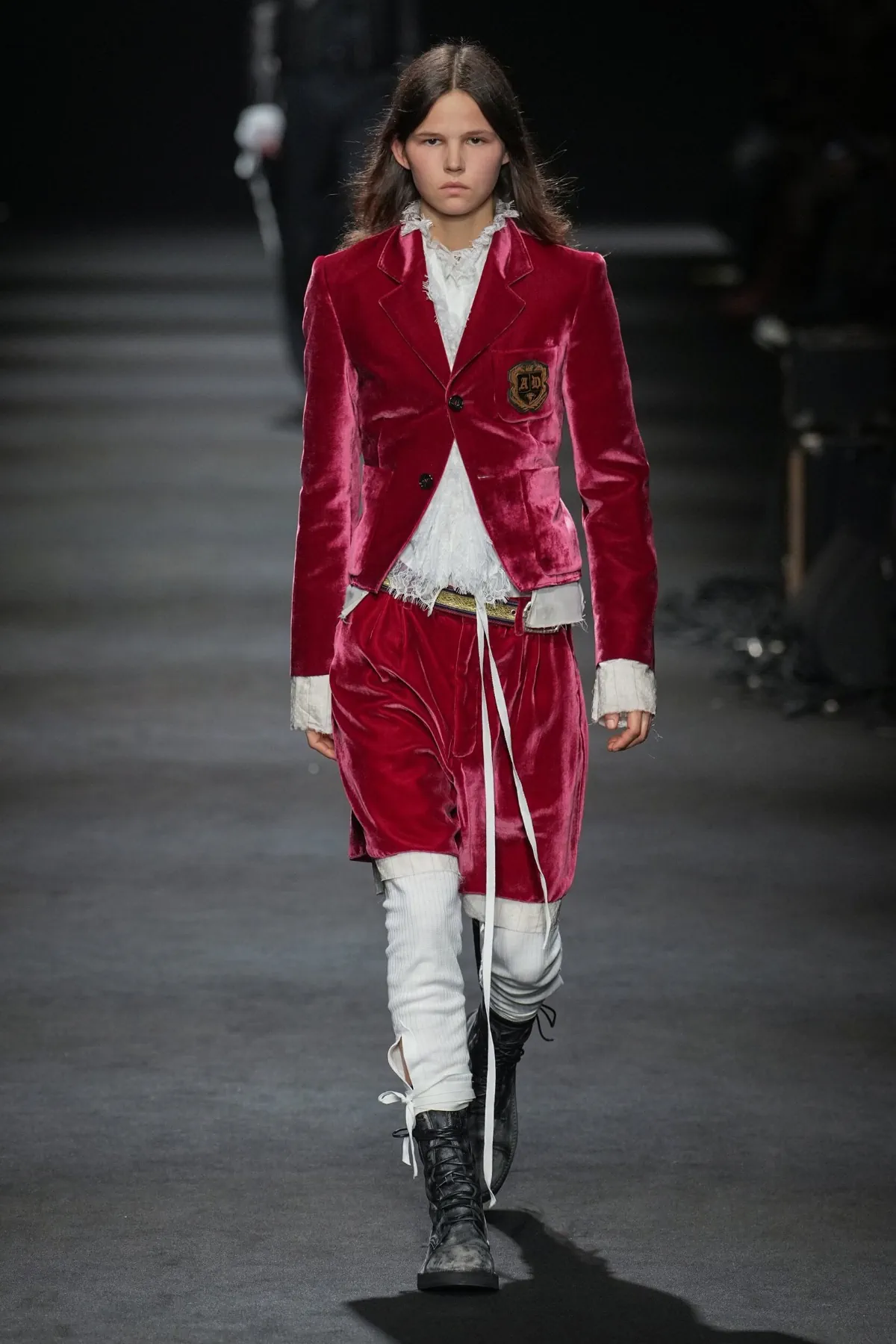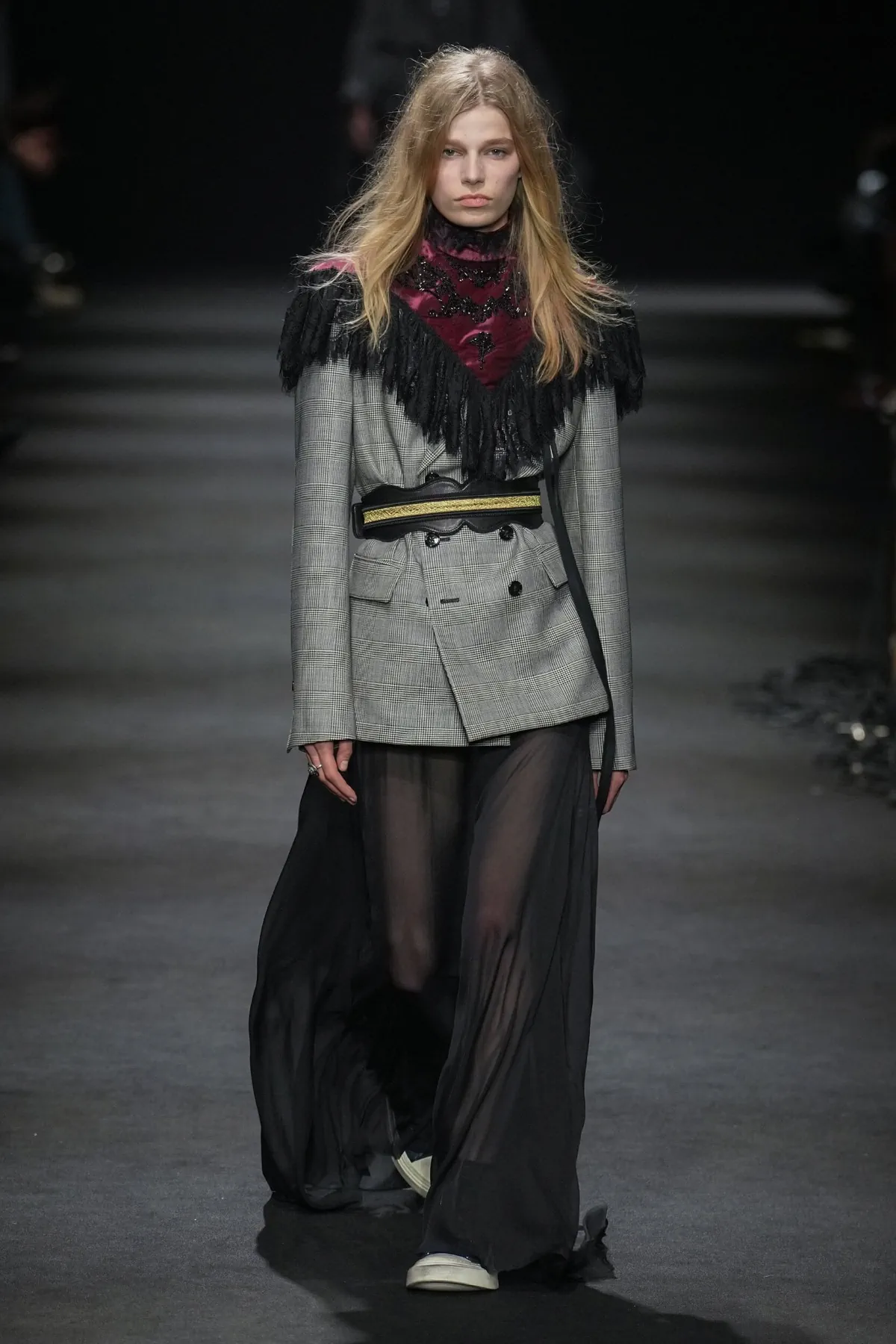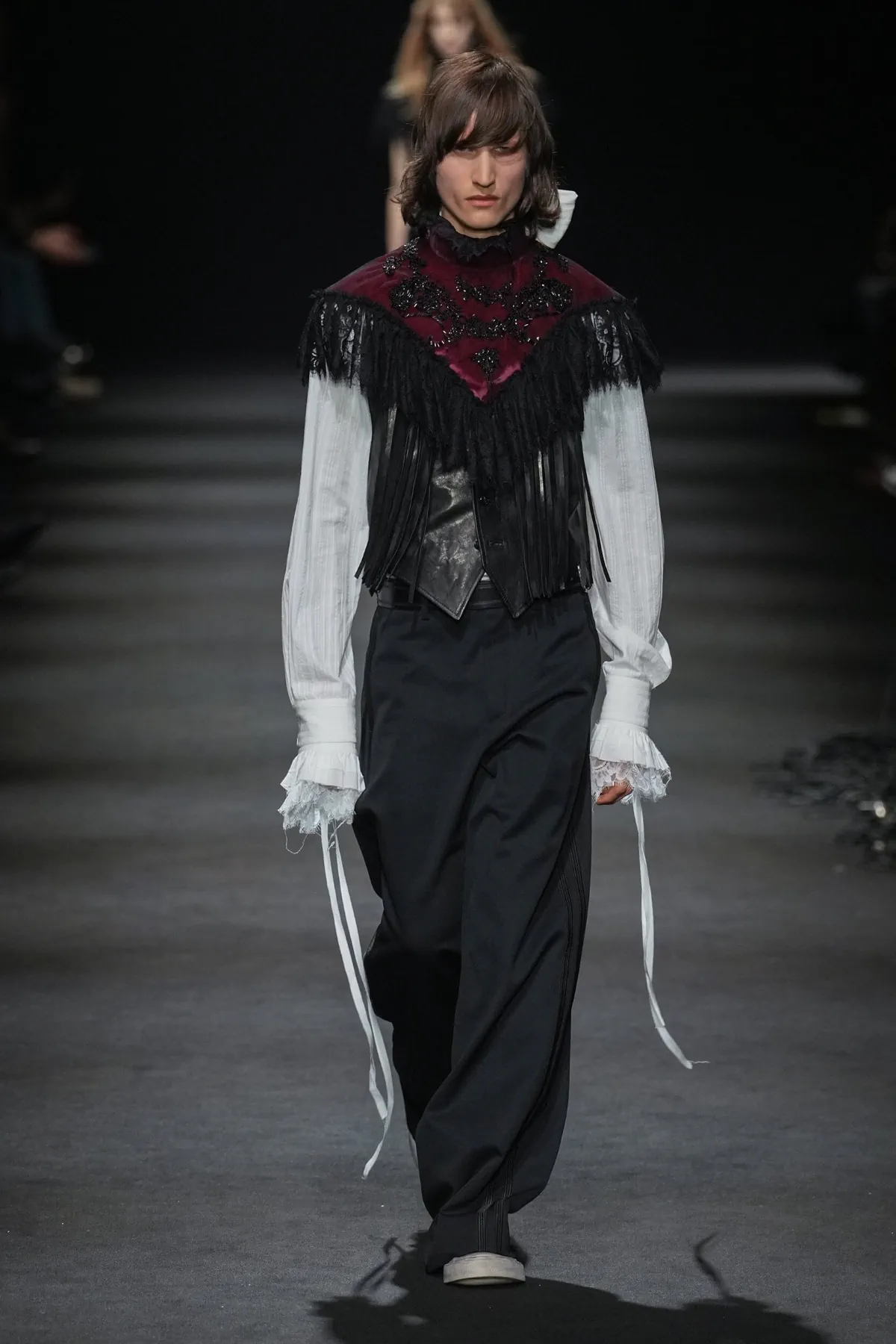

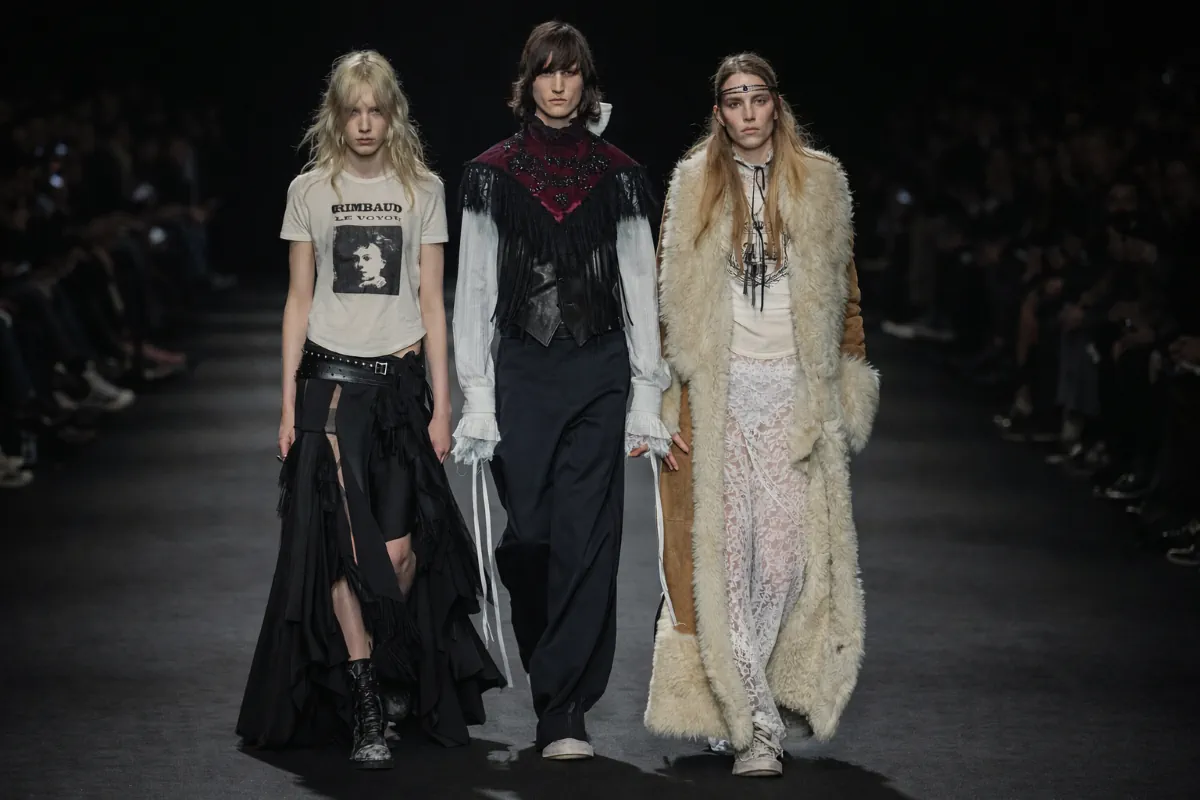
Ann Demeulemeester has always attracted those who seek clothes with a point of view, and the Fall 2026 collection continues to appeal to a younger audience while staying true to the brand’s roots. The show unfolded like a return to a familiar place, where the regulars have grown up and brought their friends, claiming the space with new habits and needs. There was a palpable tension between legacy and the present, and you could see yourself somewhere between the two.
| 📌 Key Facts |
|---|
| 🖤 Stefano Gallici continues evolving Ann Demeulemeester with a focus on youth culture and rebellion. 🎸 Teenage self-expression, poetry and rock music shape the collection’s narrative. 🧥 Victorian and regimental influences appear in cropped jackets and long structured coats. 🎓 Preppy codes are deliberately distressed with frayed hems, torn skirts and altered uniforms. 🧶 Distressed mohair sweaters and oversized varsity pieces add fragility and attitude. 🖤 Ruffled shirts, sheer chiffon and bias skirts maintain the house’s poetic DNA. 👟 Sneakers and sturdy boots anchor the looks in everyday urban life. 🎤 Musicians and creatives reinforce the brand’s cross-generational community. |
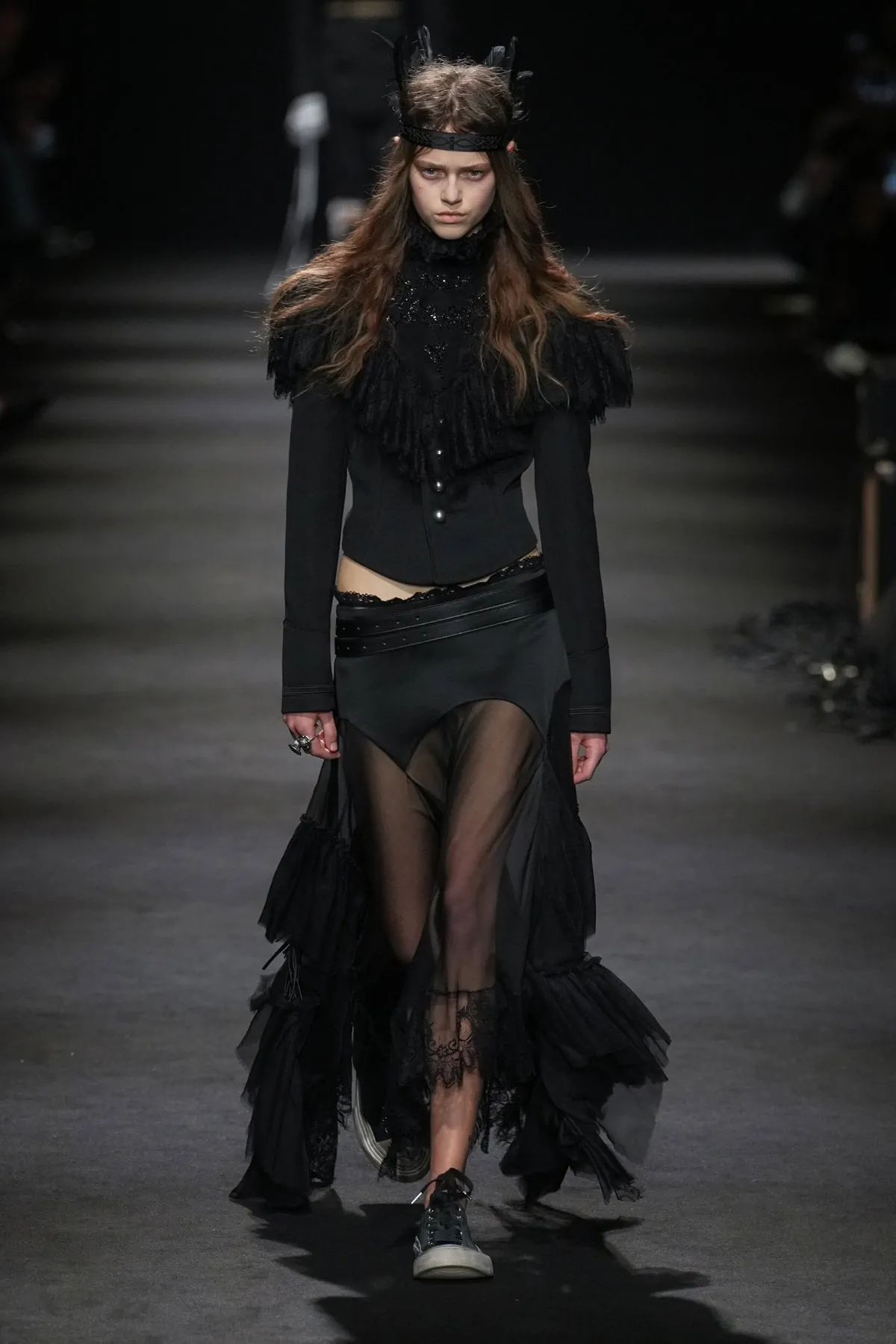
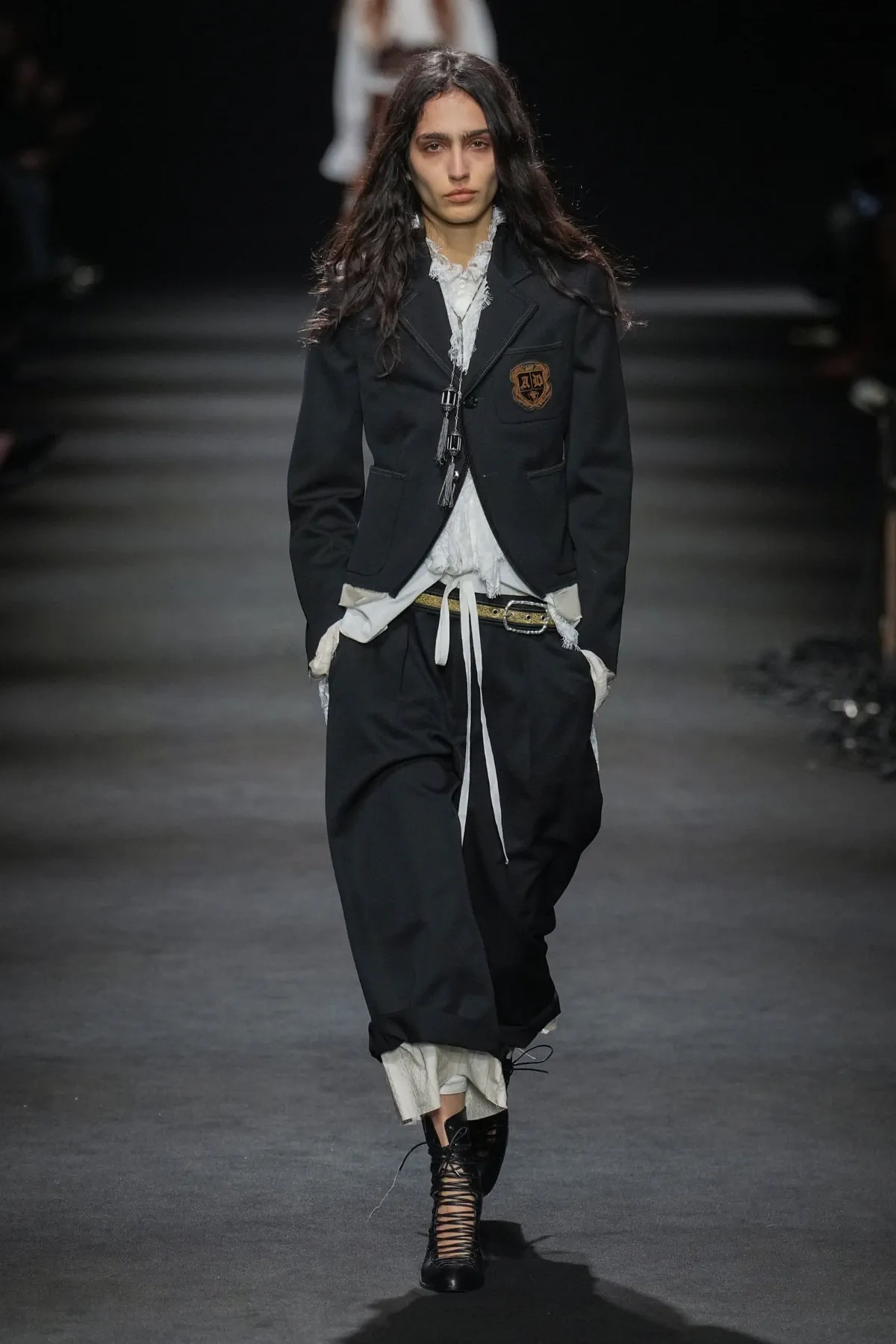
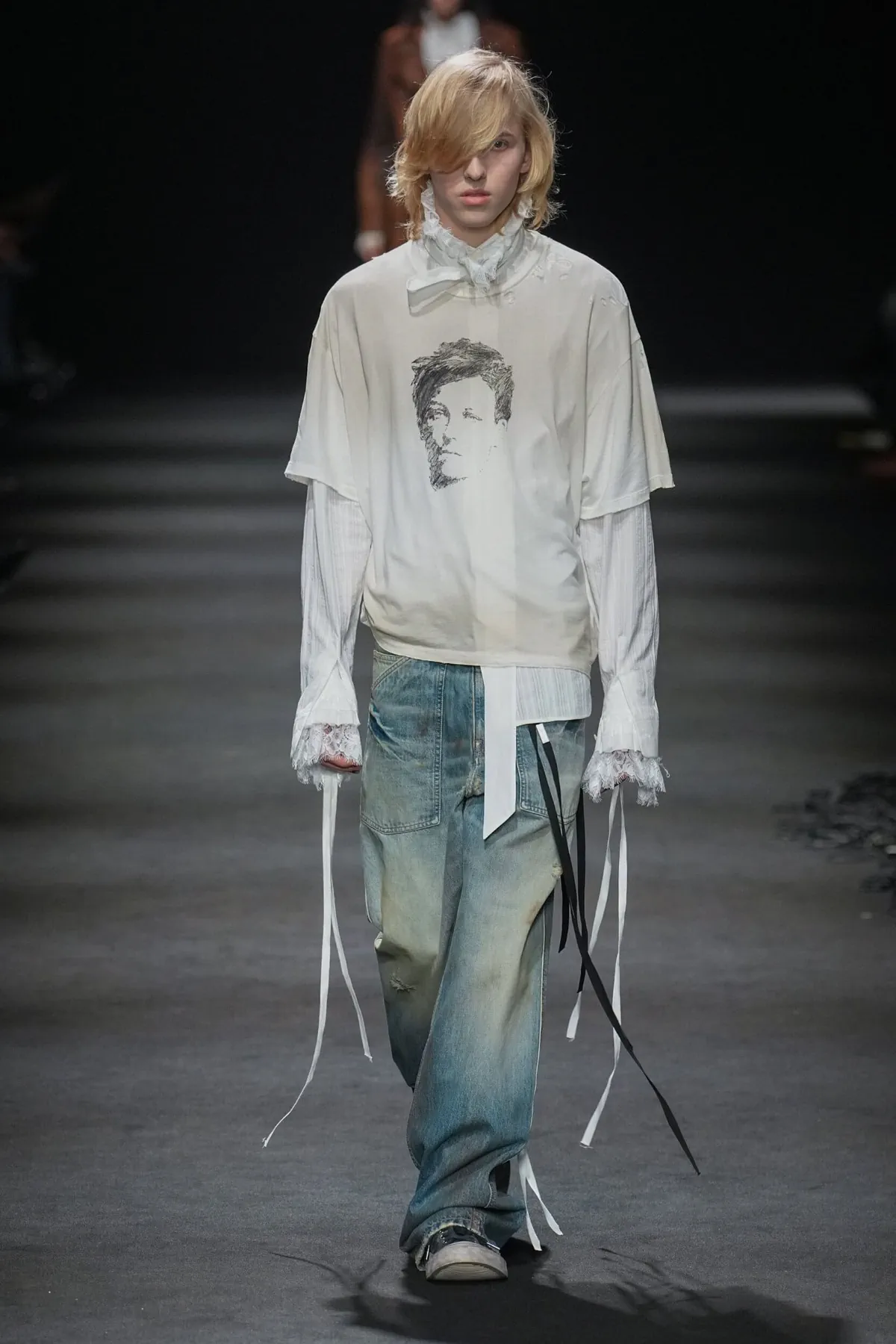
The collection grew from Stefano Gallici’s past, filtered through Rimbaud’s stubborn streak and the stubbornness of small-town adolescence. Imagine a teenager scribbling on denim, underlining lines of poetry, and refusing to edit the impulse to personalize anything within reach. That instinct resurfaced on the runway in uniforms that appeared rebellious at first glance: school blazers frayed at the edges, linings pushed outward, and trousers that looked like rough drafts of private thoughts. The result was not polished; it insisted on personality.
For Fall 2026, Gallici revisited the Victorian shadows he explored last season but brought them closer to campus and the street. Tailored jackets carried faint regimental echoes, cropped and sharp, while coats swept past the knee with a severity that never tipped into costume. Those familiar, Napoleon-style shapes, once curious, now read as part of the brand’s vocabulary. They are worn with the ease of something pulled from a trusted wardrobe. The references sat close to the body rather than shouting across the room.
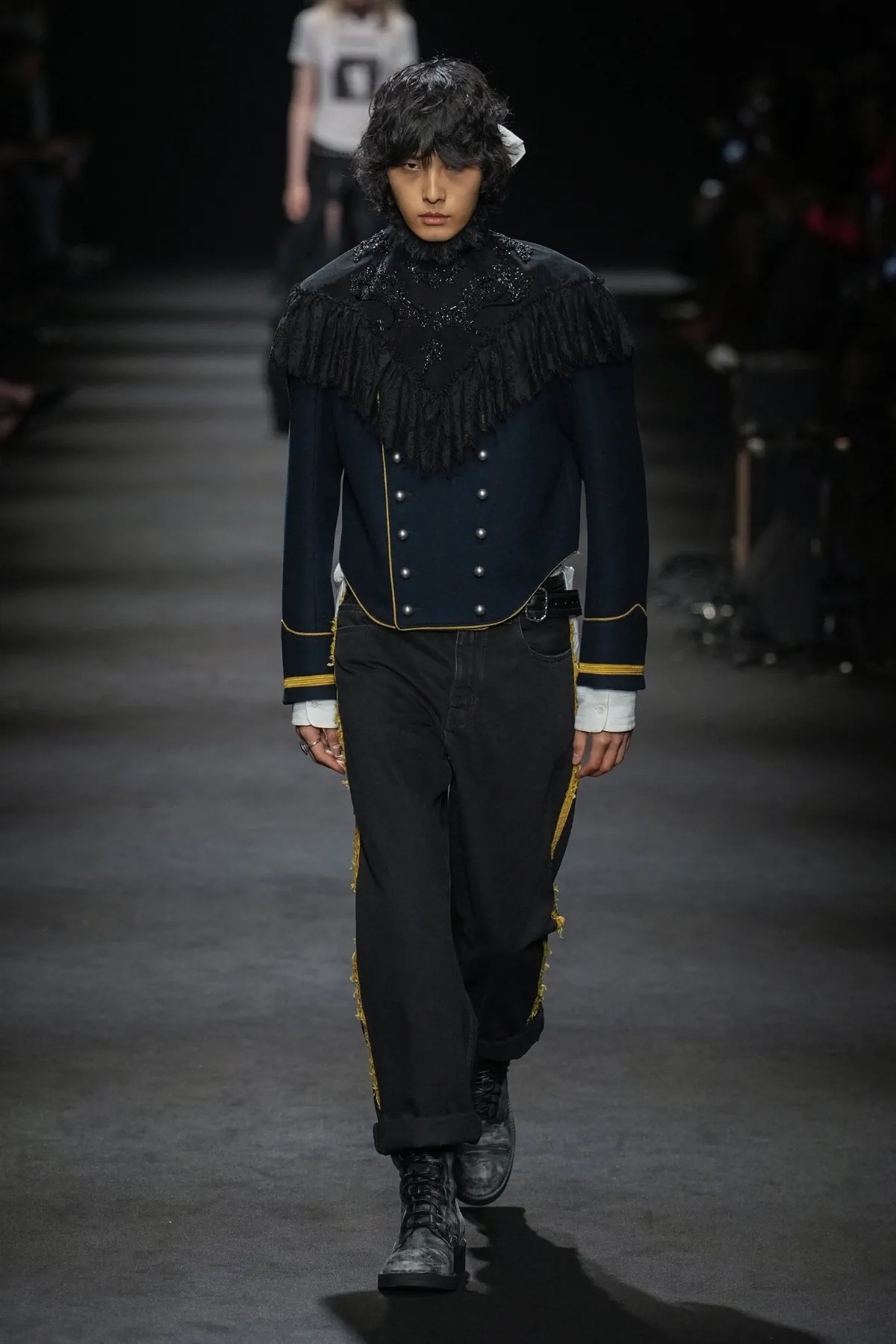
Preppy codes appeared, then immediately refused to behave. Ripped school skirts dragged loose threads, and raw hems suggested a restless hand at work only minutes before the show began. Velvet blazers bore crests that looked less like institutional badges and more like private emblems. They were worn with denim bearing shredded gold side trims – a faint glint running down a leg that had already seen late nights. Some trousers turned into walking notebooks, printed with snippets of text hinting at the wearer’s inner life instead of slogans aimed at the crowd. The clothes invited you to look twice but never begged.
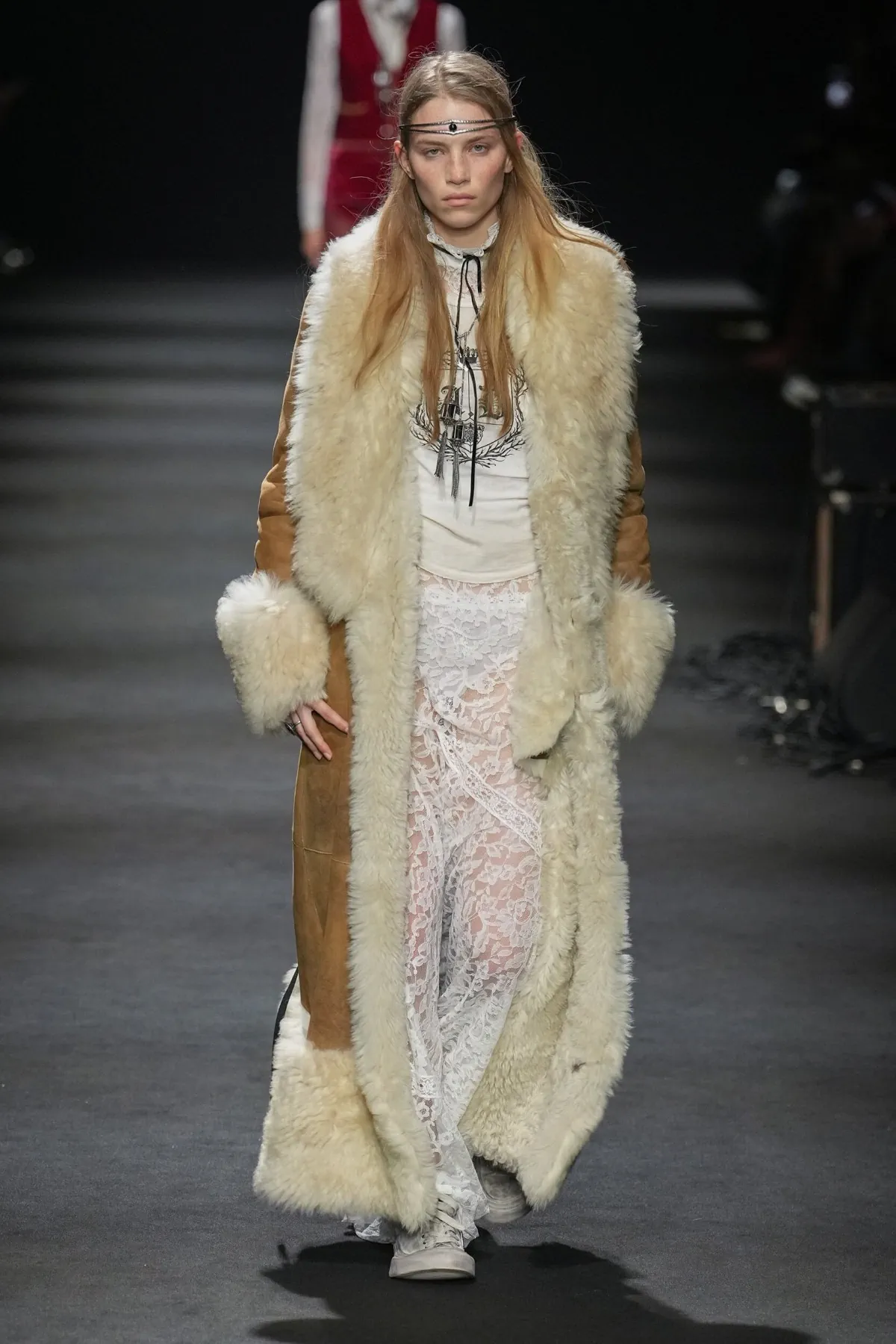
Knitwear adopted that attitude and took it further. V-neck mohair sweaters were distressed to the point that their fragility seemed deliberate rather than careless. They were stretched over lace pieces that suggested a slip grabbed in a rush. Varsity sweaters became dresses, their proportions thrown off balance in a purposeful way, not a cute one. Leather jackets – bikers, bombers, and a standout zippered blouson that spliced shearling with hard, studded panels – brought weight to the lineup without overwhelming it. Sneakers with a familiar Converse-like profile and solid boots kept the looks grounded. They were meant for pavements and metro stairs, not pedestals.
Follow all the latest news from Fashionotography on Flipboard, or receive it directly in your inbox with Feeder.
You may also read

Romanticism surfaced in ruffled shirts, high collars, and long, bias-cut skirts that moved with a soft insistence. Sheer chiffon brushed against velvet, and tulle trimmed necklines and cuffs, adding a touch that never drifted into sweetness. These were not gowns for safe evenings. They were suited to people who leave the house knowing the night may extend far beyond the invitation. Even at its most historical, the tailoring remained cut for motion and heat, not museum air.
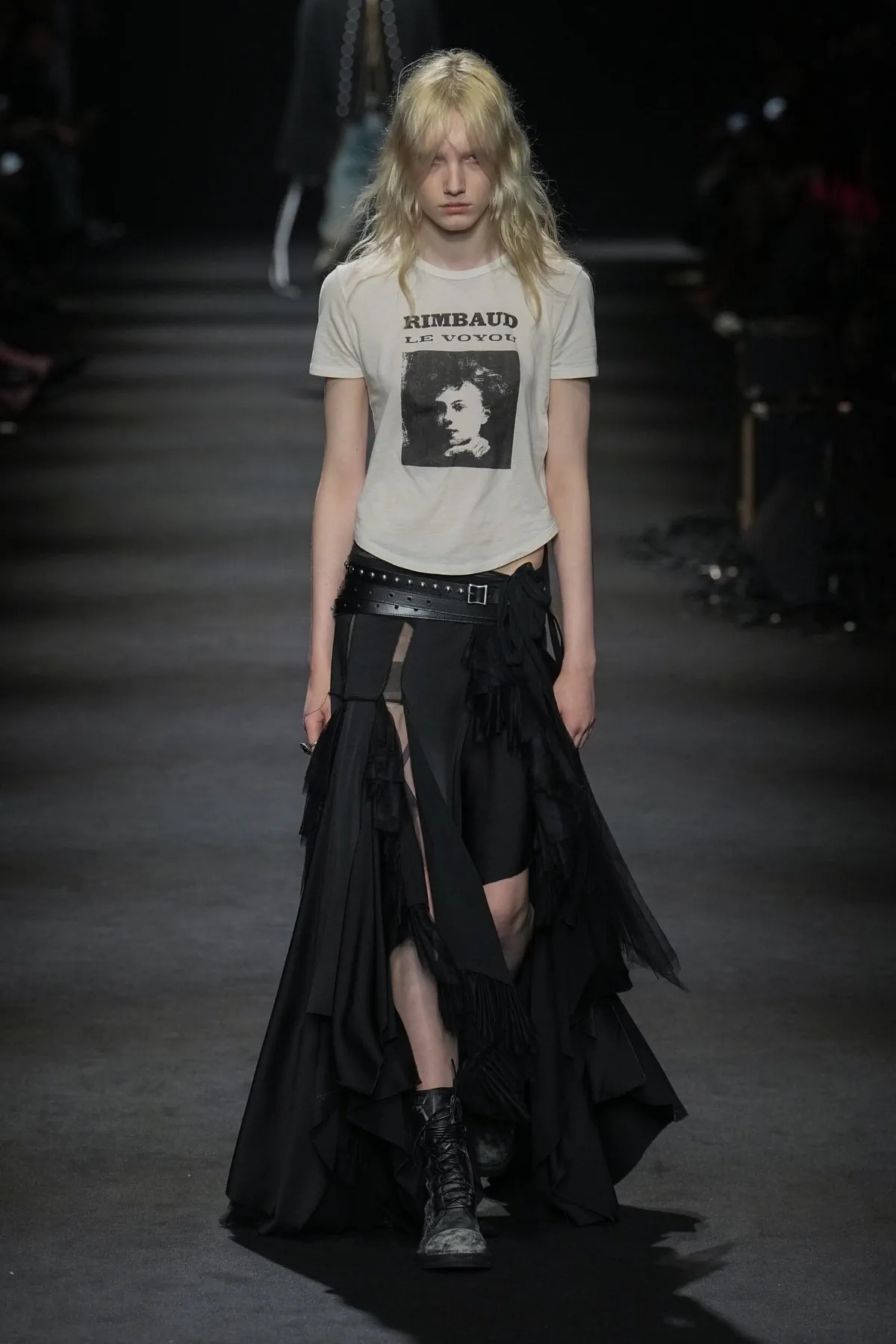
The casting reinforced that attitude, featuring familiar musicians, cult favorites, and guests whose names circulate through playlists and group chats rather than society columns. They walked before an audience in which aging rock icons sat near young creatives who wear the brand off-season. This is proof that Gallici is building a shared wardrobe rather than a museum of Ann-ness. You could sense the strategy in the room: speak to the new generation without locking out those who arrived earlier and never left.
Rimbaud floated through the show as a quiet ghost, appearing in prints and portraits. His presence mattered less as a mere reference and more as an attitude. Gallici isn’t chasing nostalgia for an old Antwerp dream. He’s testing how far he can stretch the romantic gloom of the house toward a sense of belonging for people who grew up with festivals, playlists, and secondhand blazers scuffed from someone else’s life. If you have ever wanted clothes that honor adolescent intensity without trapping you in the past, this Fall 2026 collection made a persuasive case.