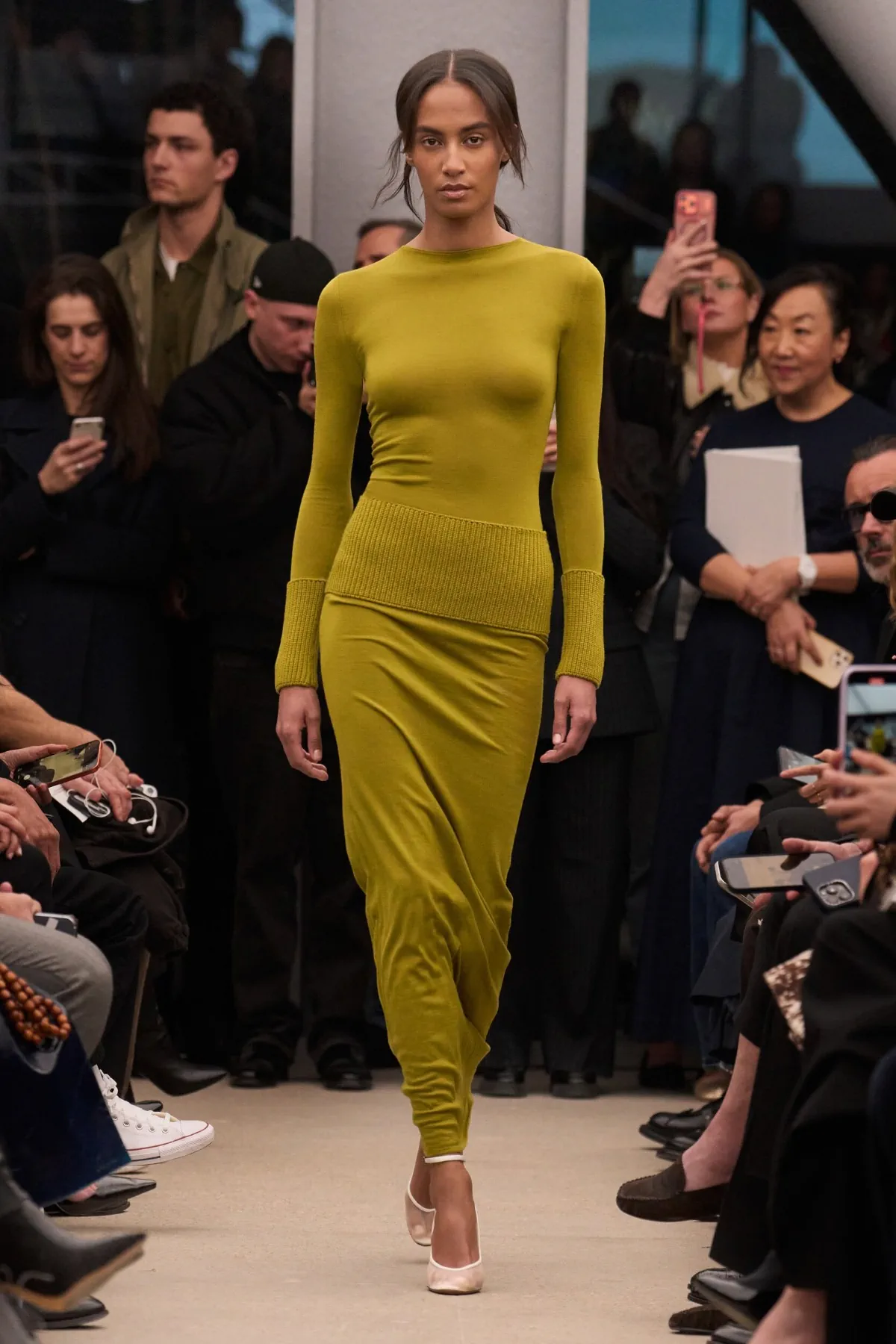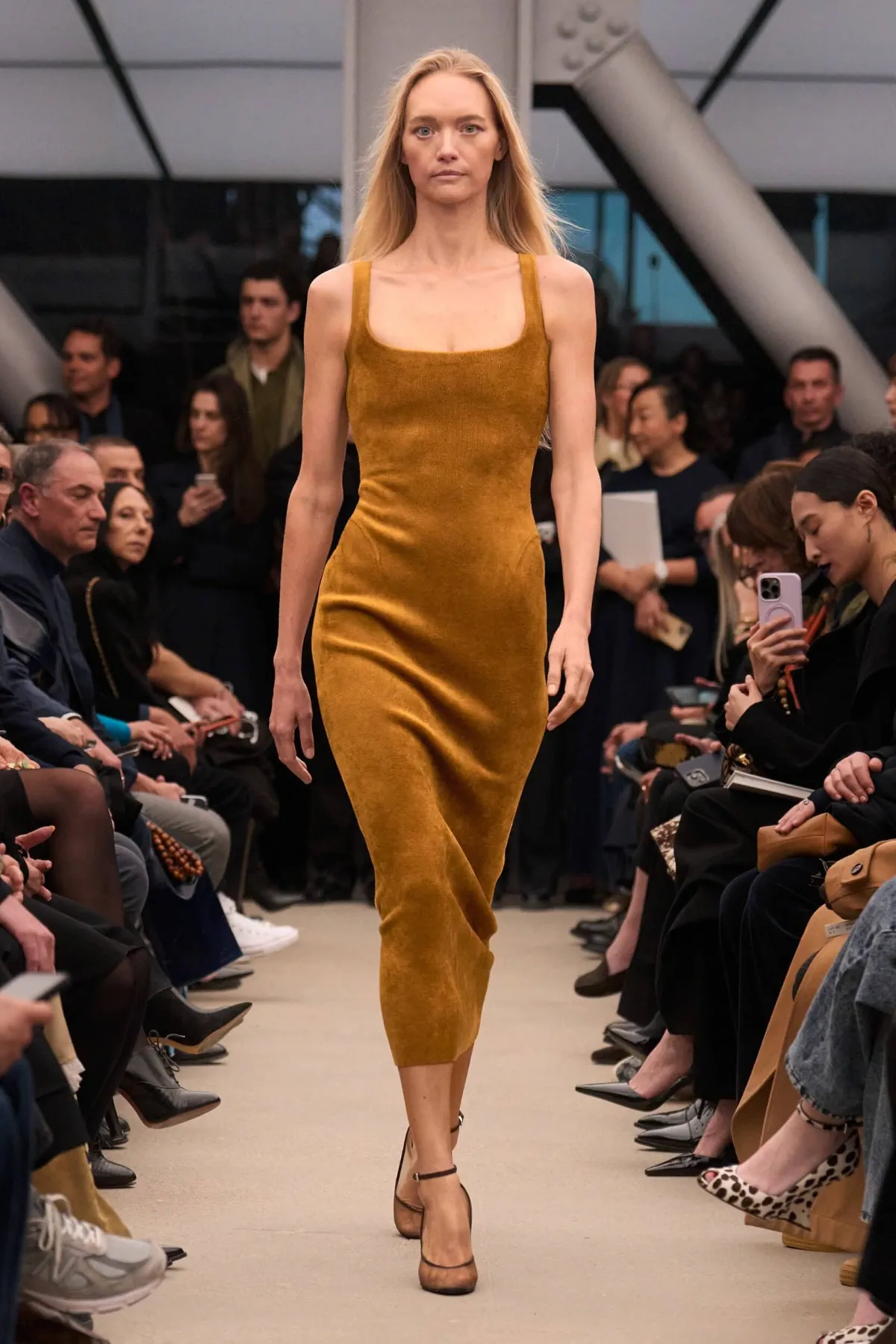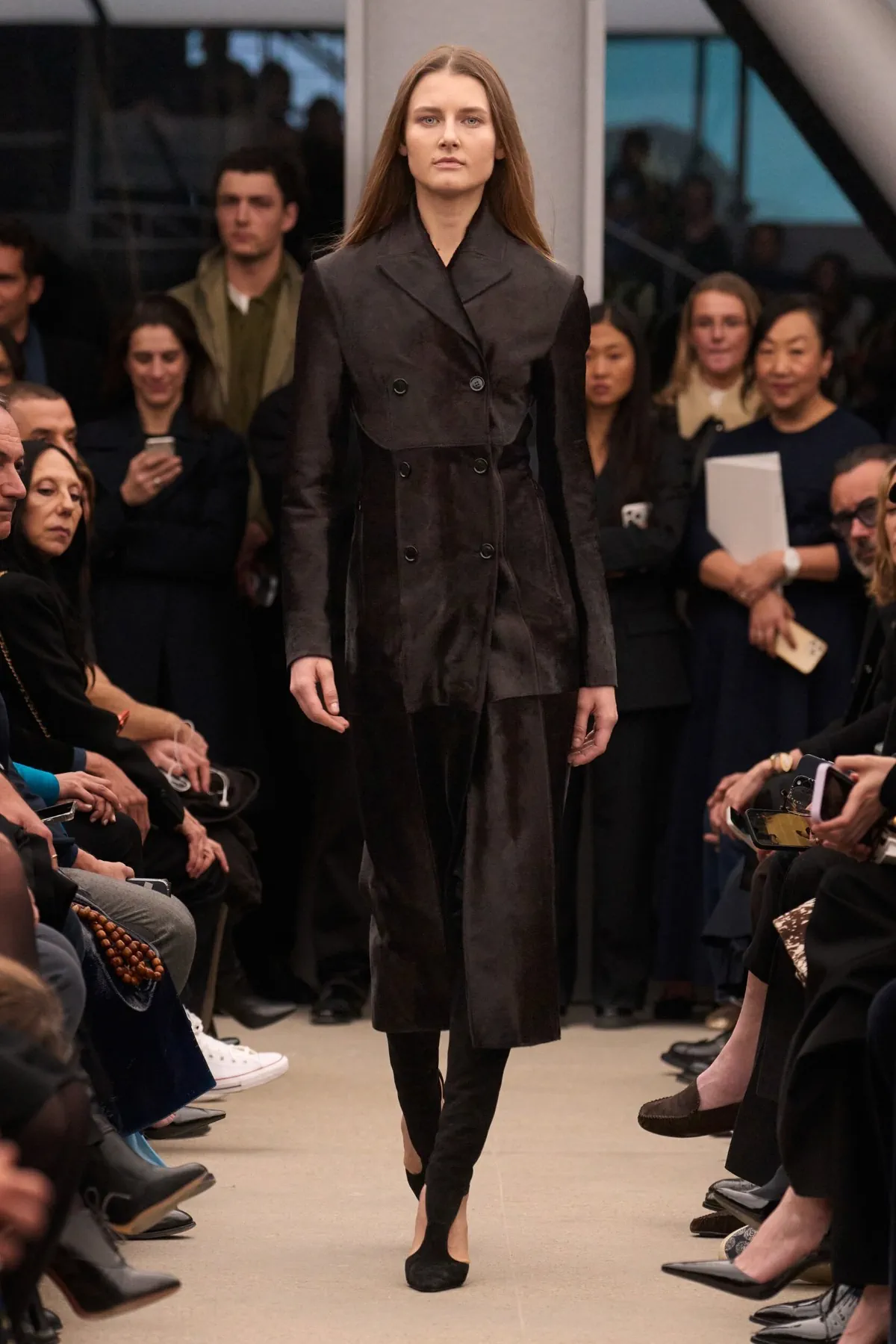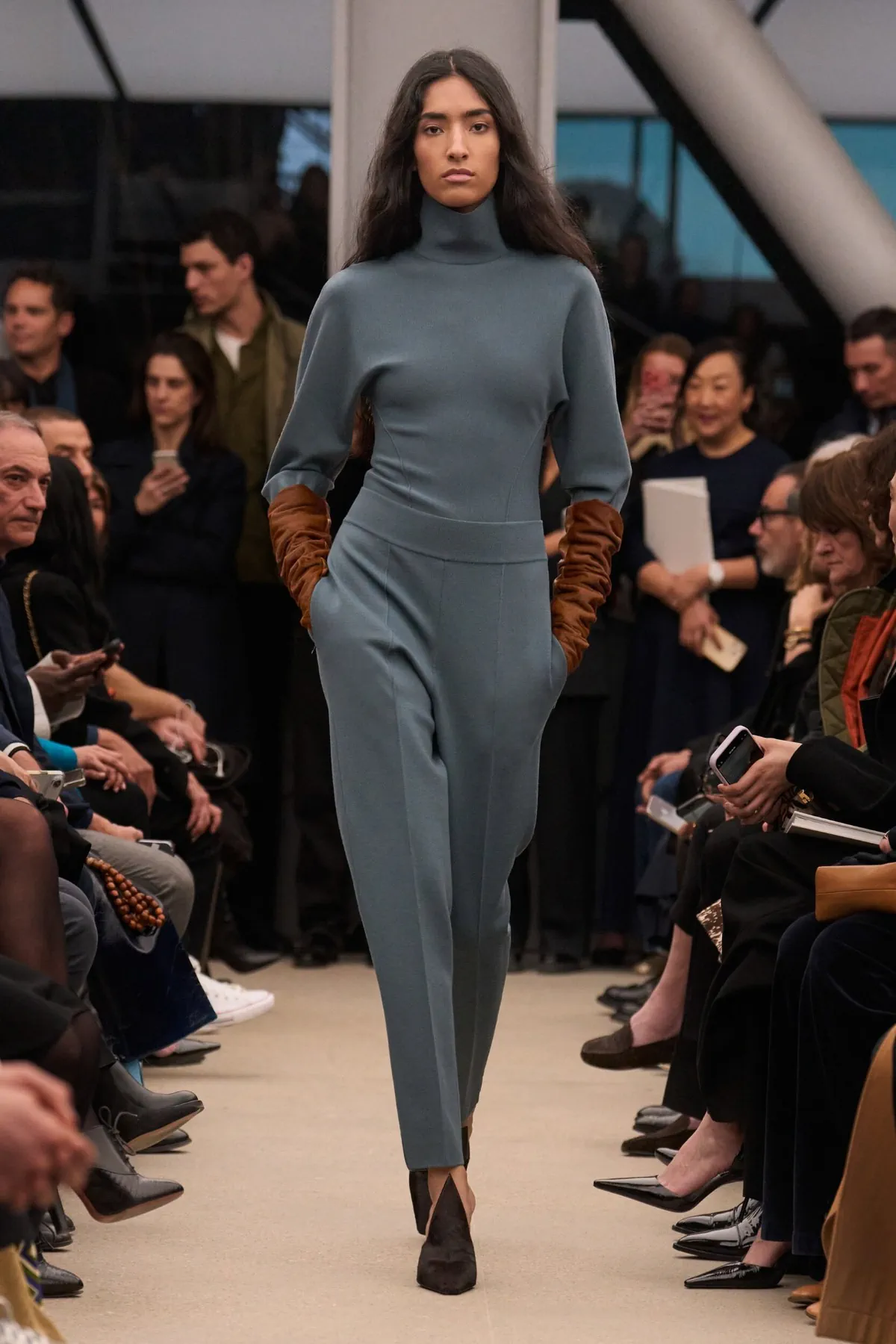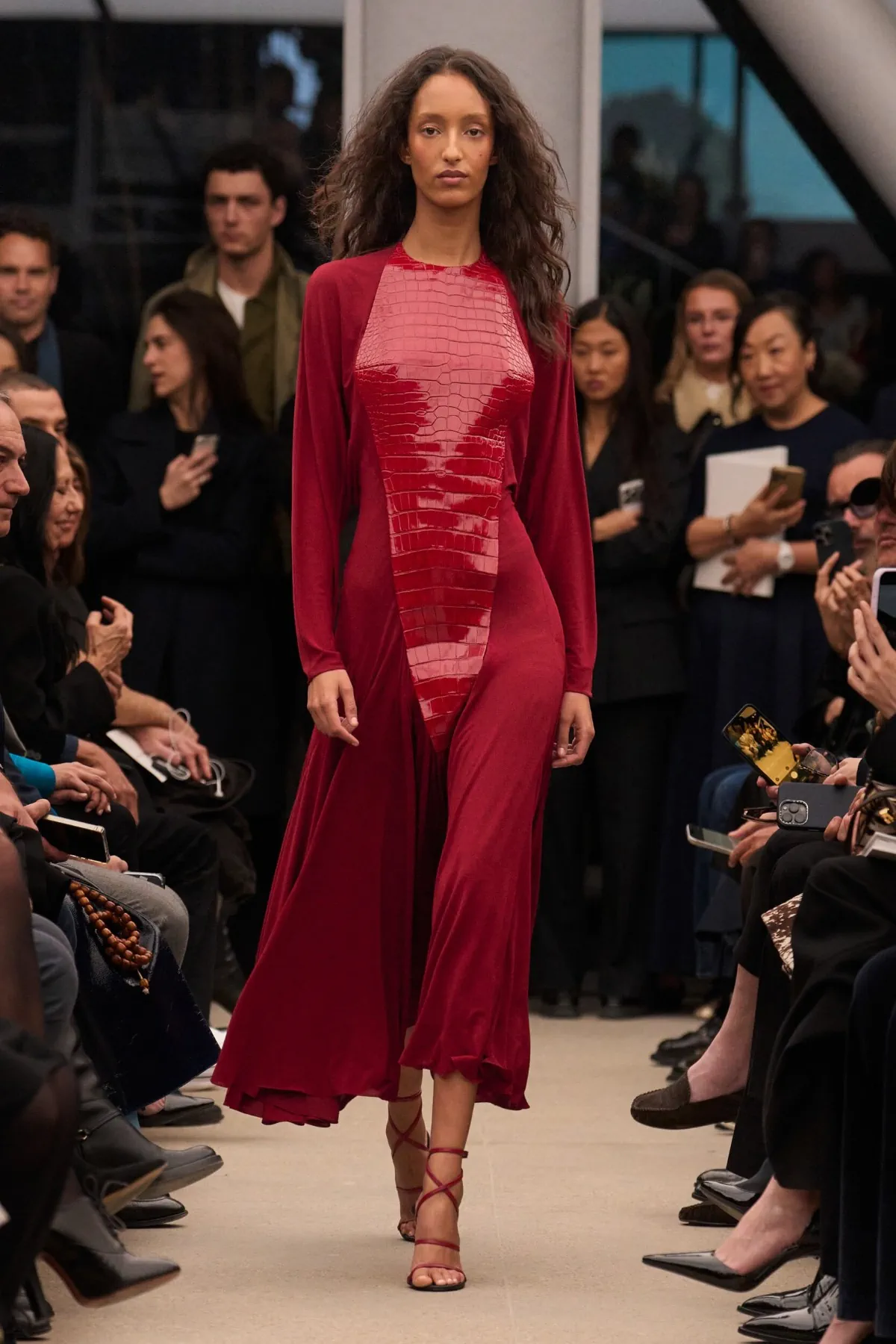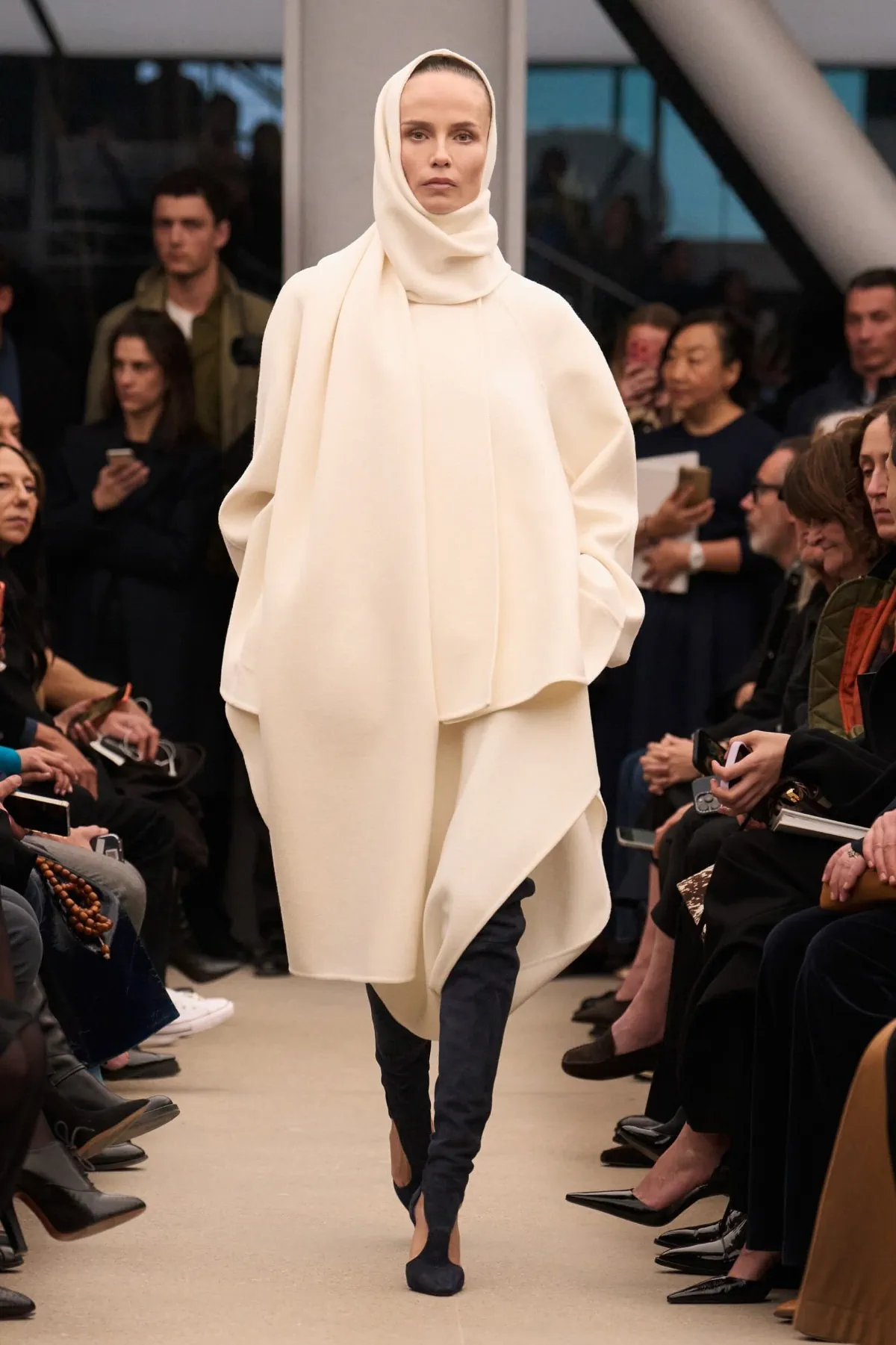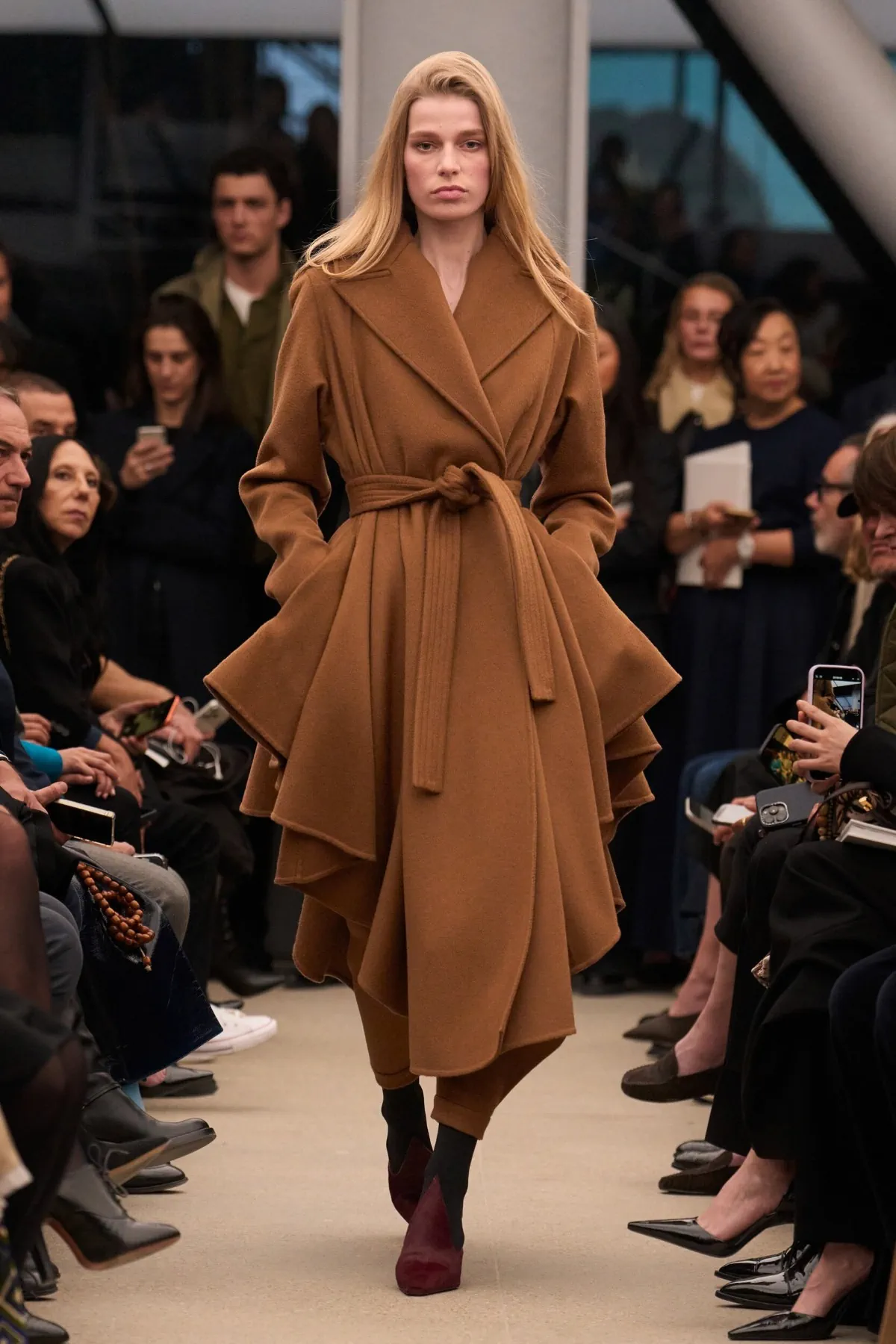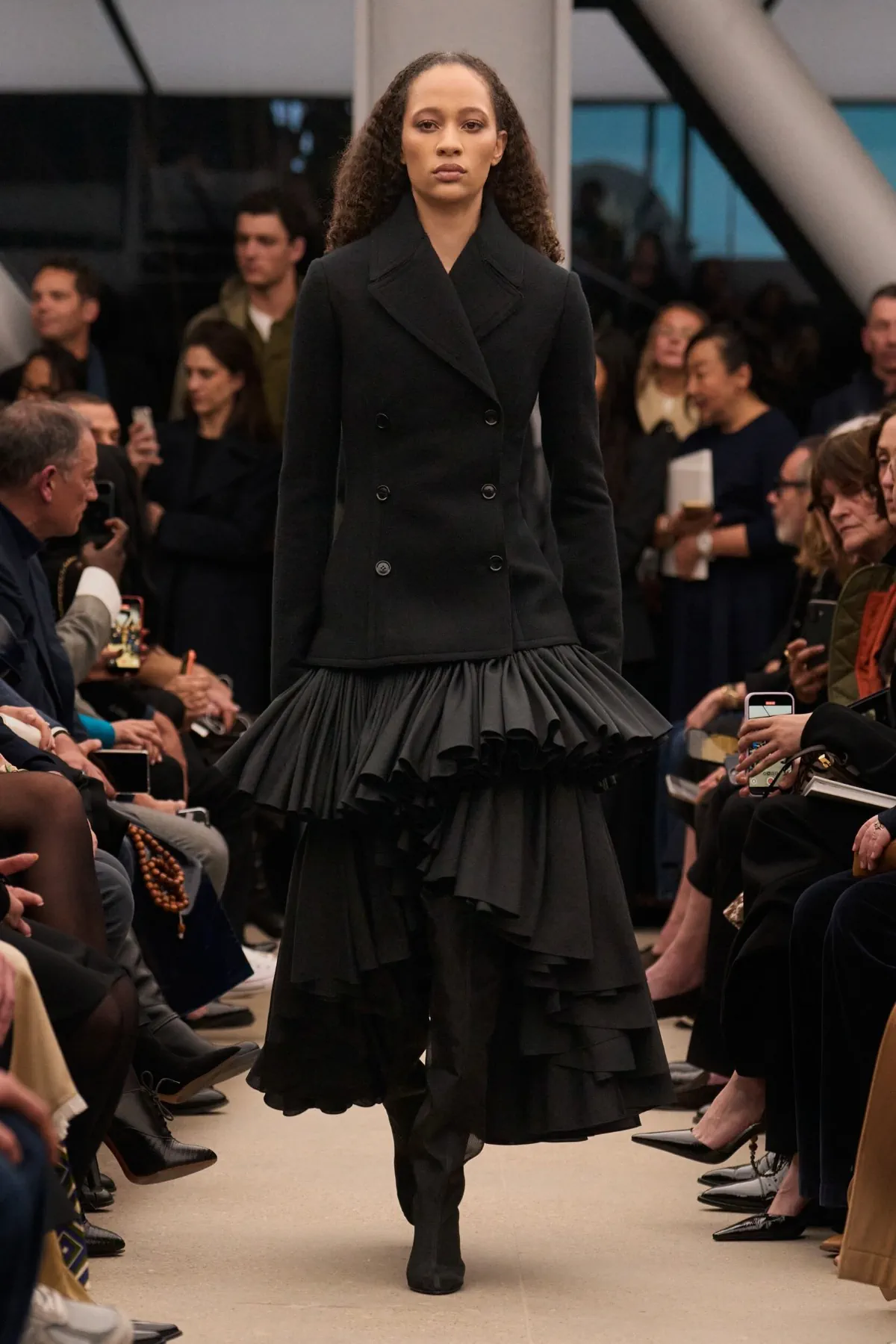

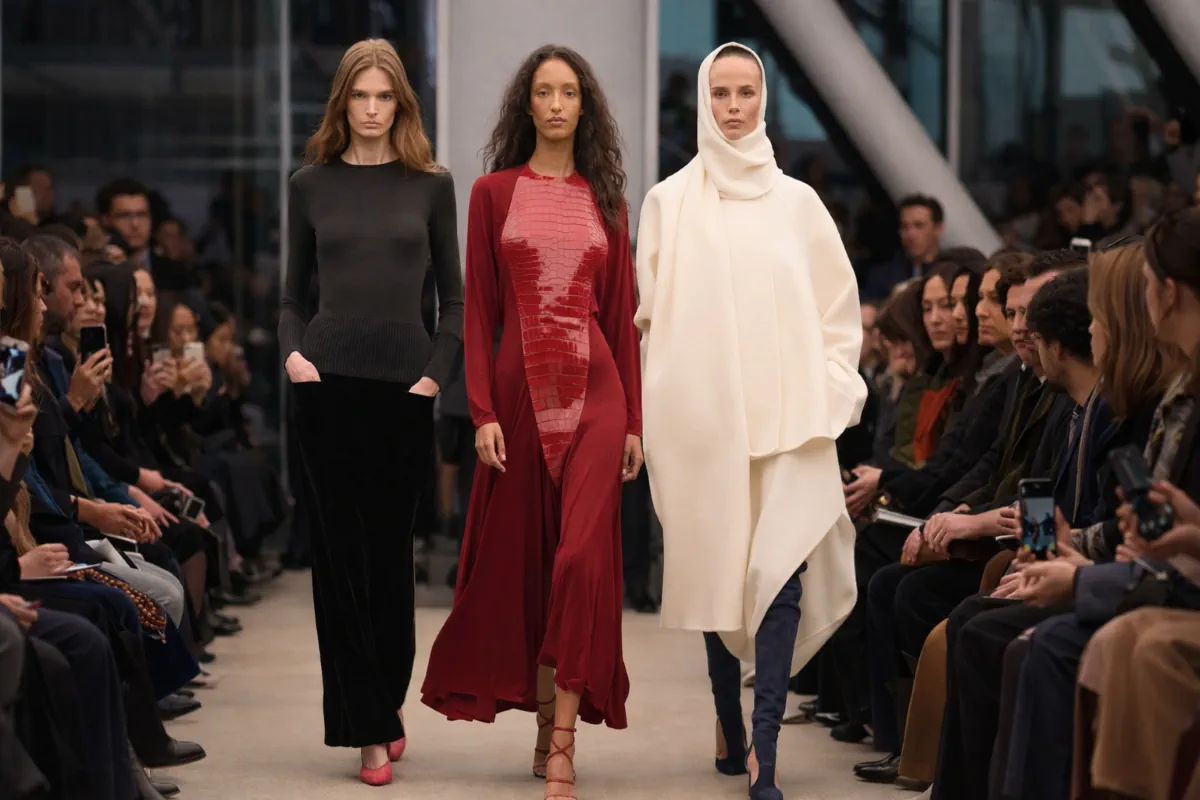
Some designers leave with fireworks; others leave with something rarer: clarity. Pieter Mulier chose the latter. His Summer-Fall 2026 collection for Alaïa, presented at the former Fondation Cartier in Paris on a bustling Wednesday evening, served as his farewell. It made an impact with the subtle strength of a well-tailored coat.
| 📌 Key Facts |
|---|
| 🧵 Pieter Mulier’s final Alaïa runway show after five years leading the house 👗 Core silhouettes: bodycon dresses, velvet pantsuits, and calfskin coats ✂️ Central concept: luxury defined by cut, fit, and construction 🧶 Technical signature: structured knitwear and sculptural matte jersey pieces 📸 Tribute to the atelier: portraits of the entire team photographed by Keizo Kitajima 👠 Radical runway choice: no bags, no jewelry – only the clothes took center stage |
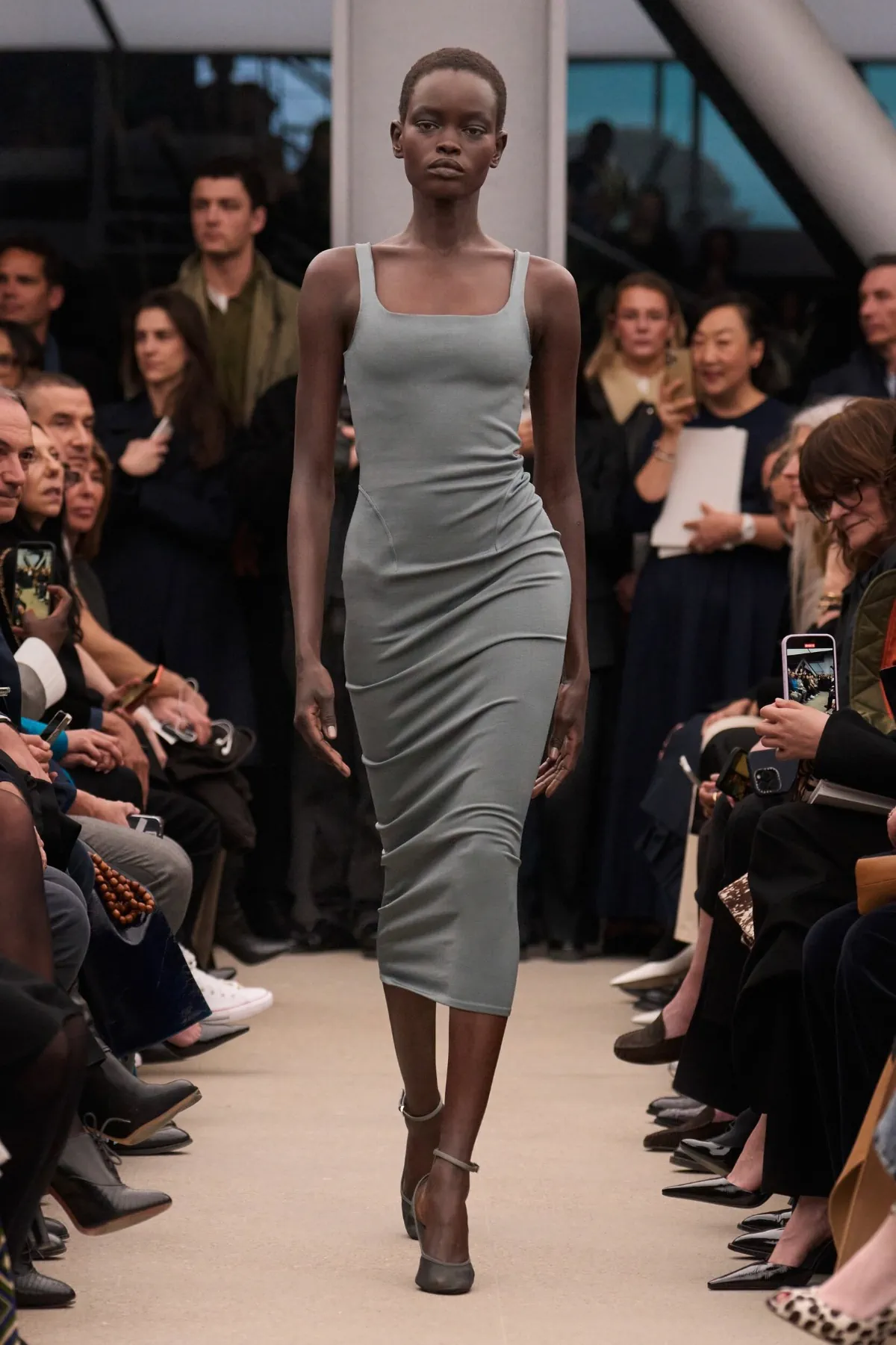
The crowd, pressed shoulder to shoulder along a narrow runway, watched the clothes move through the room with uncommon attentiveness. That attention was earned. Mulier, who will take the helm at Versace on July 1st, stripped away the production flourishes that often define fashion’s grand exits. What remained was a vocabulary refined over five years: clinging jersey dresses, velvet pantsuits cut with the precision of tailored armor, calfskin coats with gently flared hems, and densely ruffled skirts that brought the show to a close.
Some of the opening dresses carried faint echoes of founder Azzedine Alaïa’s iconic crocodile tailcoats – not quotations exactly, but whispers. The house’s DNA was present without being wielded as a crutch. A double-breasted coat moved through the space with the kind of sinuous authority that Alaïa himself spent decades perfecting late into the night. A leather blazer, tailored to within a millimeter of its life, did what great tailoring always does, making the wearer look like herself, only better.
What Mulier understood, and what came through with unusual force, is that luxury is not about the fabric. It’s about the fit. The clothes did not announce themselves. They simply were. They were wearable in the same way a perfect sentence is readable – effortlessly, because so much effort went into making them that way.
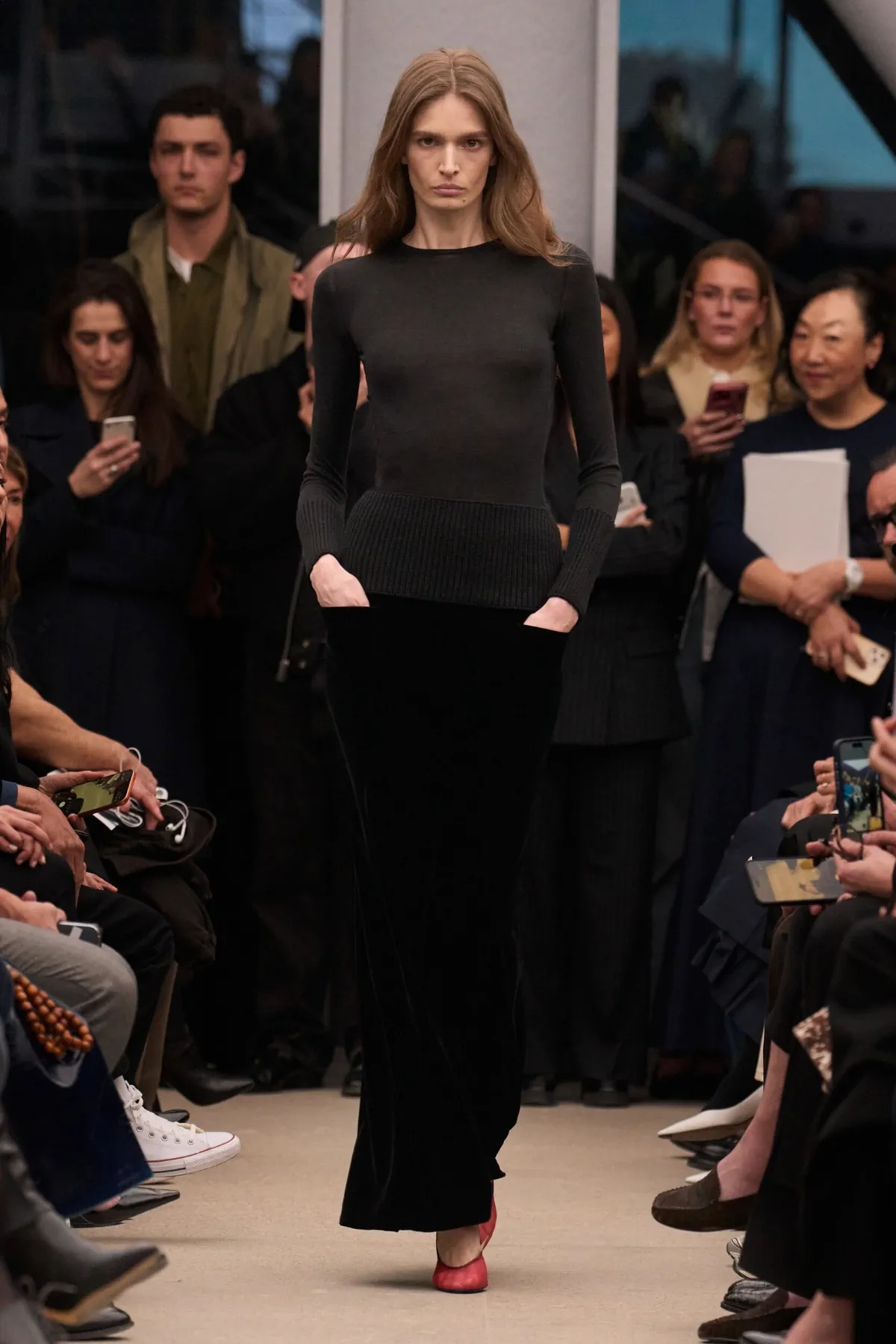
Among the guests watching from the benches were Raf Simons and Matthieu Blazy, two of the most exacting thinkers in fashion. Their presence was fitting. This was a show for people who care about construction and the difference between a well-fitting garment and one that merely closes.
Mulier also acknowledged something designers rarely do publicly: the team. He commissioned photographer Keizo Kitajima to take portraits of everyone from the chief executive to the atelier workers and placed a hardcover book of them on each seat. The gesture was deliberate. Whoever comes next at Alaïa will inherit the archives and the people who keep the house alive.
Follow all the latest news from Fashionotography on Flipboard, or receive it directly in your inbox with Feeder.
You may also read

Another of Alaïa’s technical signatures, knitwear appeared in dresses with waterfall skirts and scrolling flounces and in a superbly fitted, matte jersey jumpsuit that looked as if it had been built around its wearer. A reprise of Mulier’s own contribution to the house – straps tethering the sides of cutaway skirts to the ankle – appeared as a kind of signature, a subtle farewell inscription.
What made the collection so affecting was precisely what it refused to do. There were no bags on the runway. No jewelry. No distractions. The shoes were bare and simple. The focus was total. In a time when fashion can feel oversaturated with imagery and noise, Mulier made the radical choice to showcase only clothing.