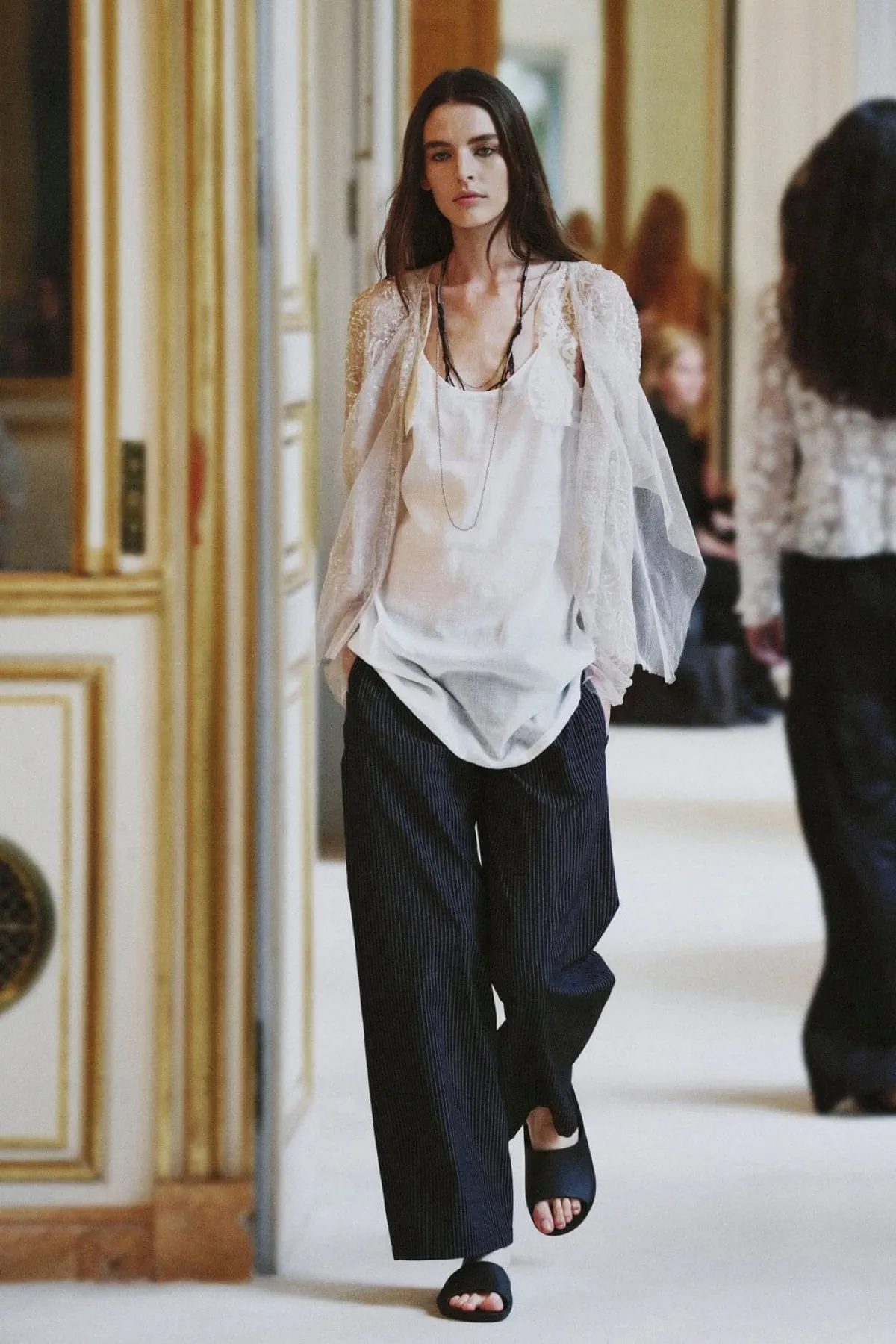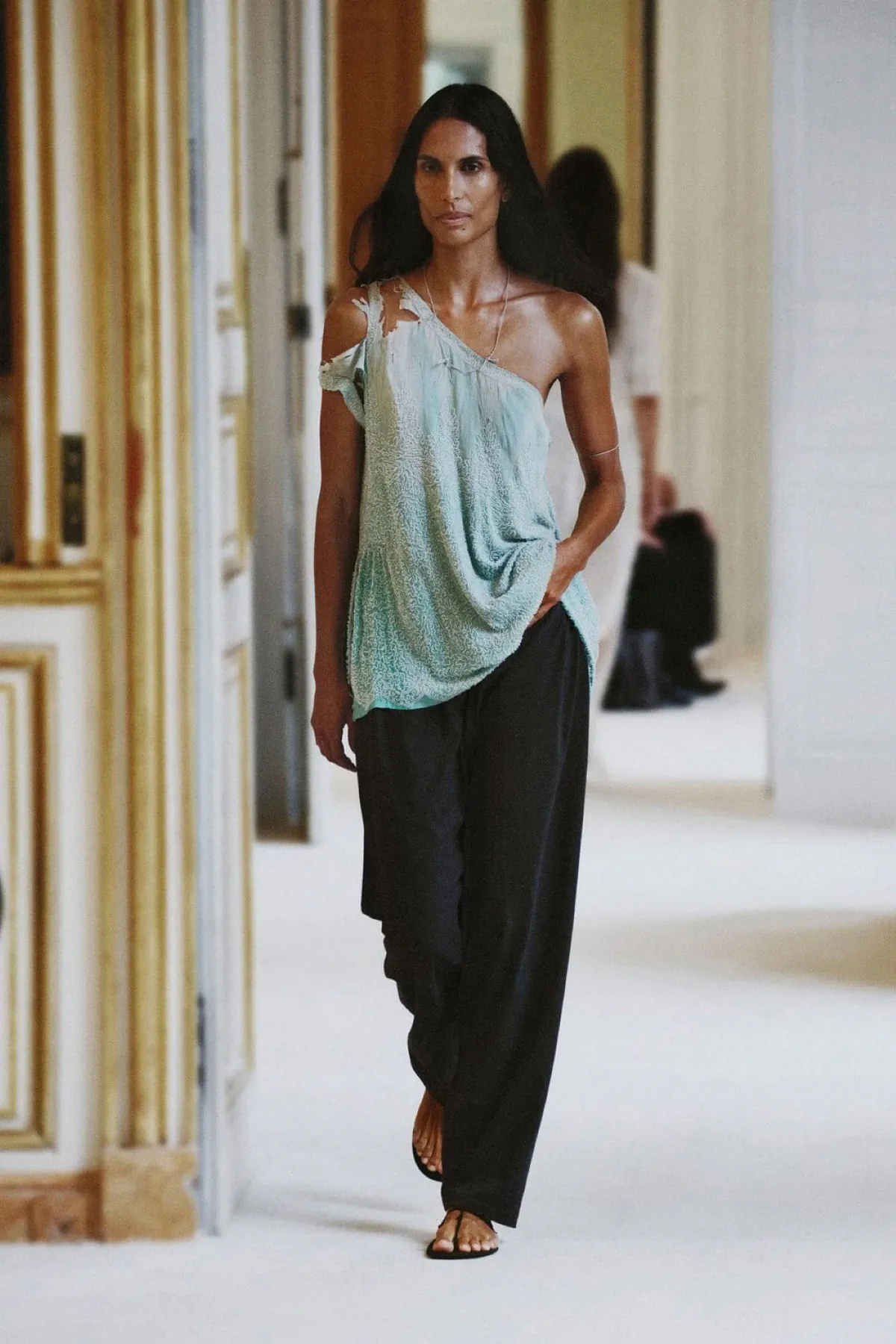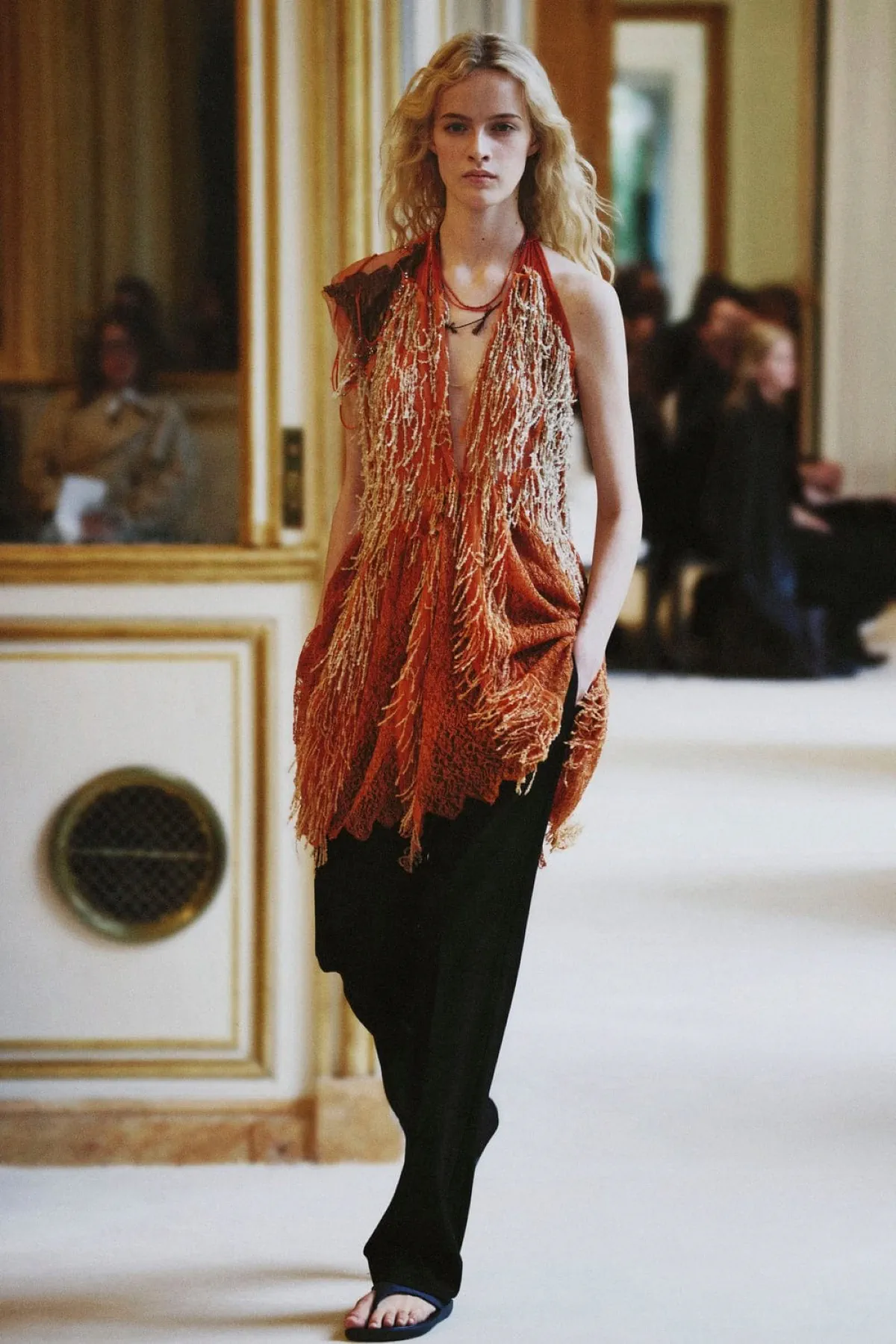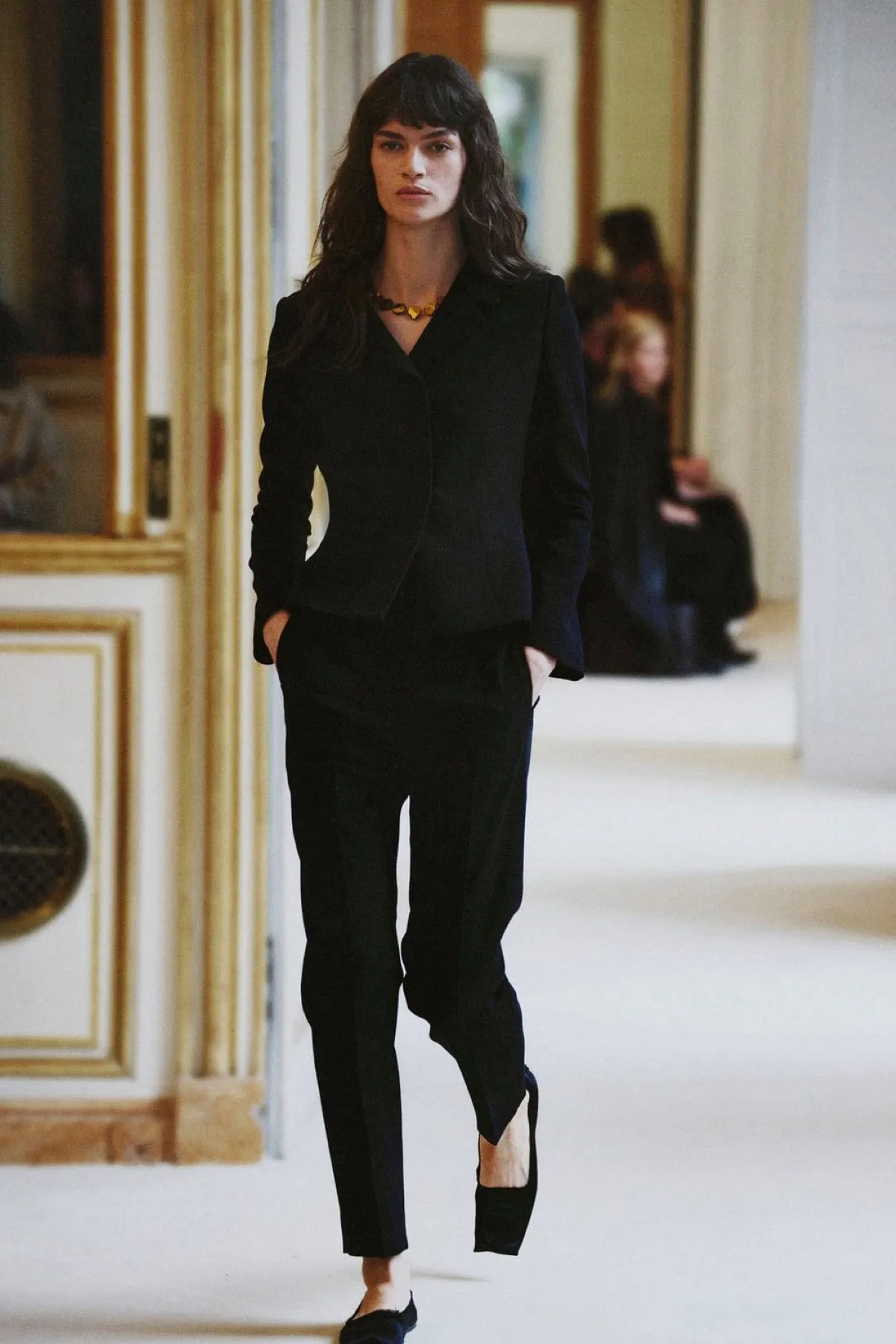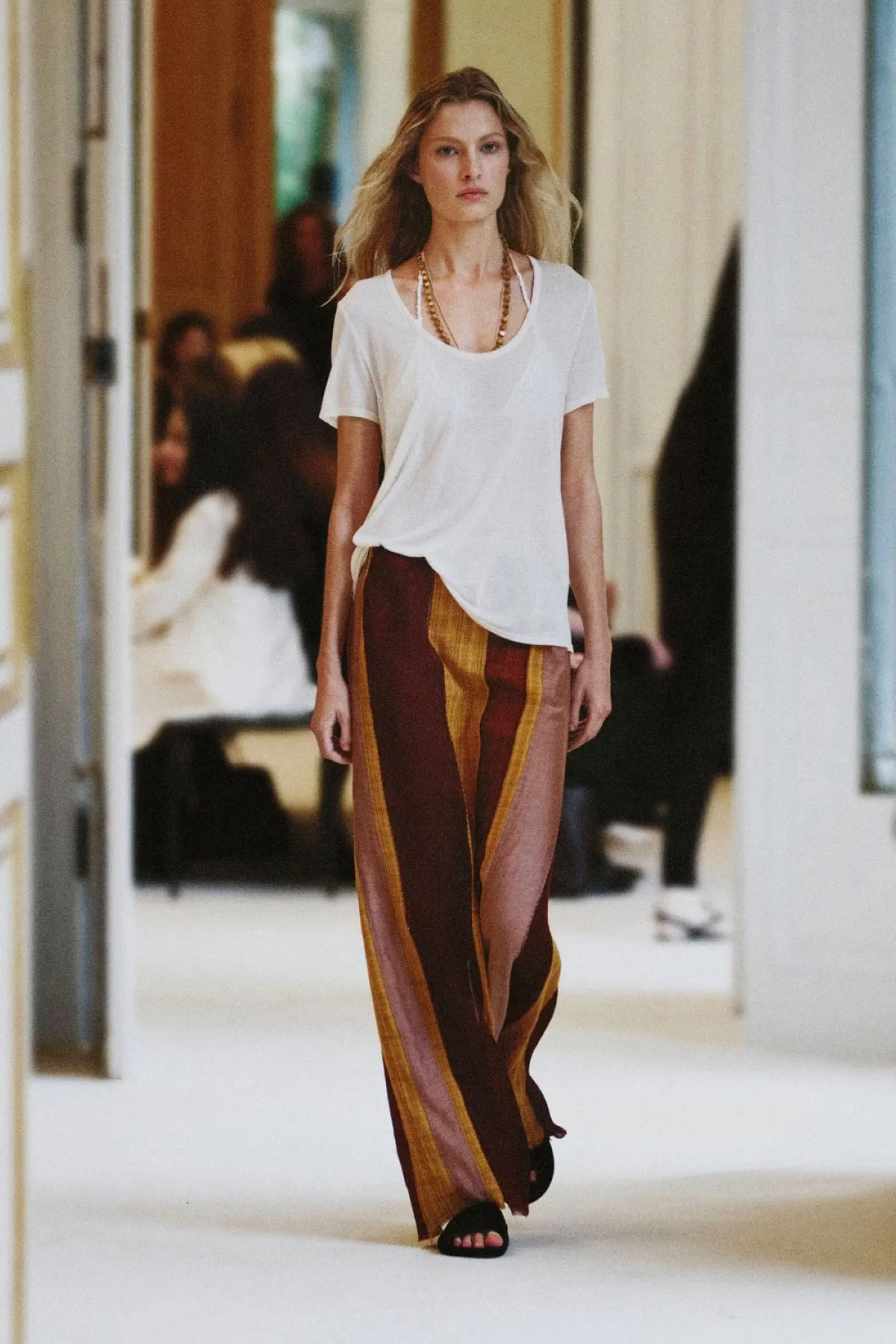

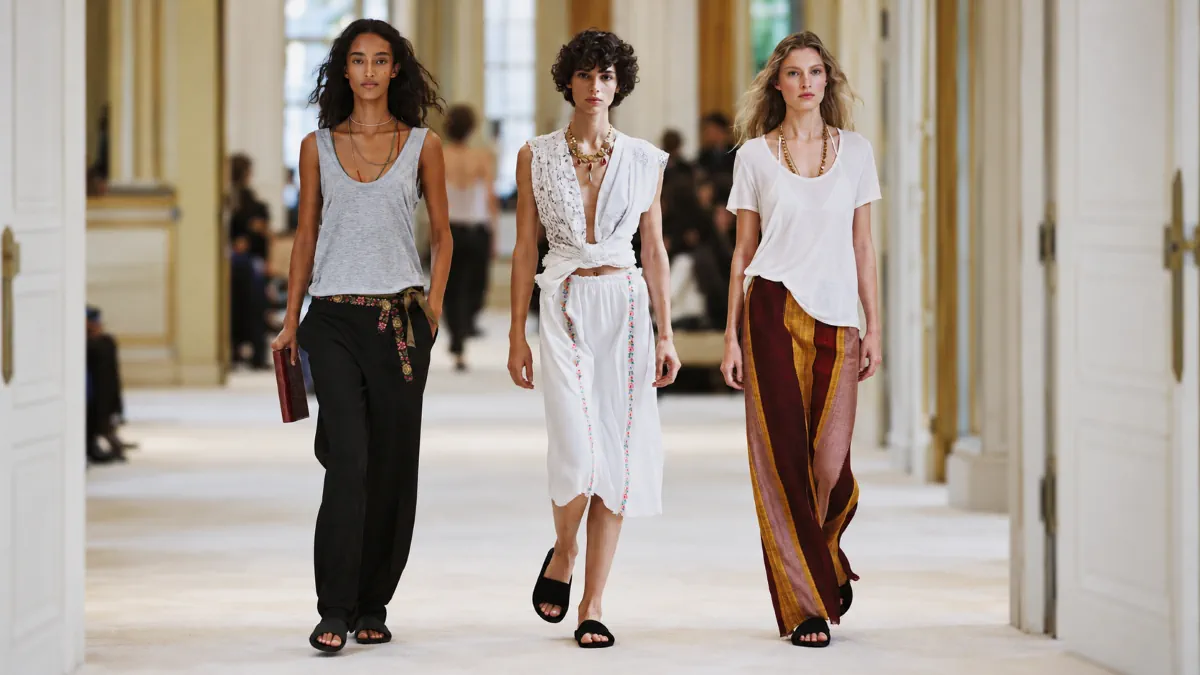
| The Row Spring 2027 was presented in Paris by Ashley and Mary-Kate Olsen during Paris Fashion Week. Runway images were released about 24 hours after the presentation. The collection featured slim tailoring, crochet, lace, fringe, beads, canvas totes and brighter colors. |
The Row has spent years building a reputation around understatement, but its latest collection suggests that restraint no longer has to mean visual austerity. The Row Spring 2027 keeps the disciplined construction and careful styling associated with Ashley and Mary-Kate Olsen while introducing more surface detail, color and decorative craft than followers of the label may expect.
The presentation itself remained characteristically private. Guests encountered the familiar controlled setting, with soft lighting, carpeting and phones kept away during the show. This season, however, the secrecy lasted for less time. Official images appeared roughly a day later, giving a wider audience unusually quick access to the clothes.
What those images reveal is not a rejection of The Row’s established wardrobe but an expansion of it. Trousers, jackets, shirts and trench coats remain central, yet they now sit beside crochet, lace, fringe, embroidery and colored beads. The effect is more eclectic without becoming overloaded.
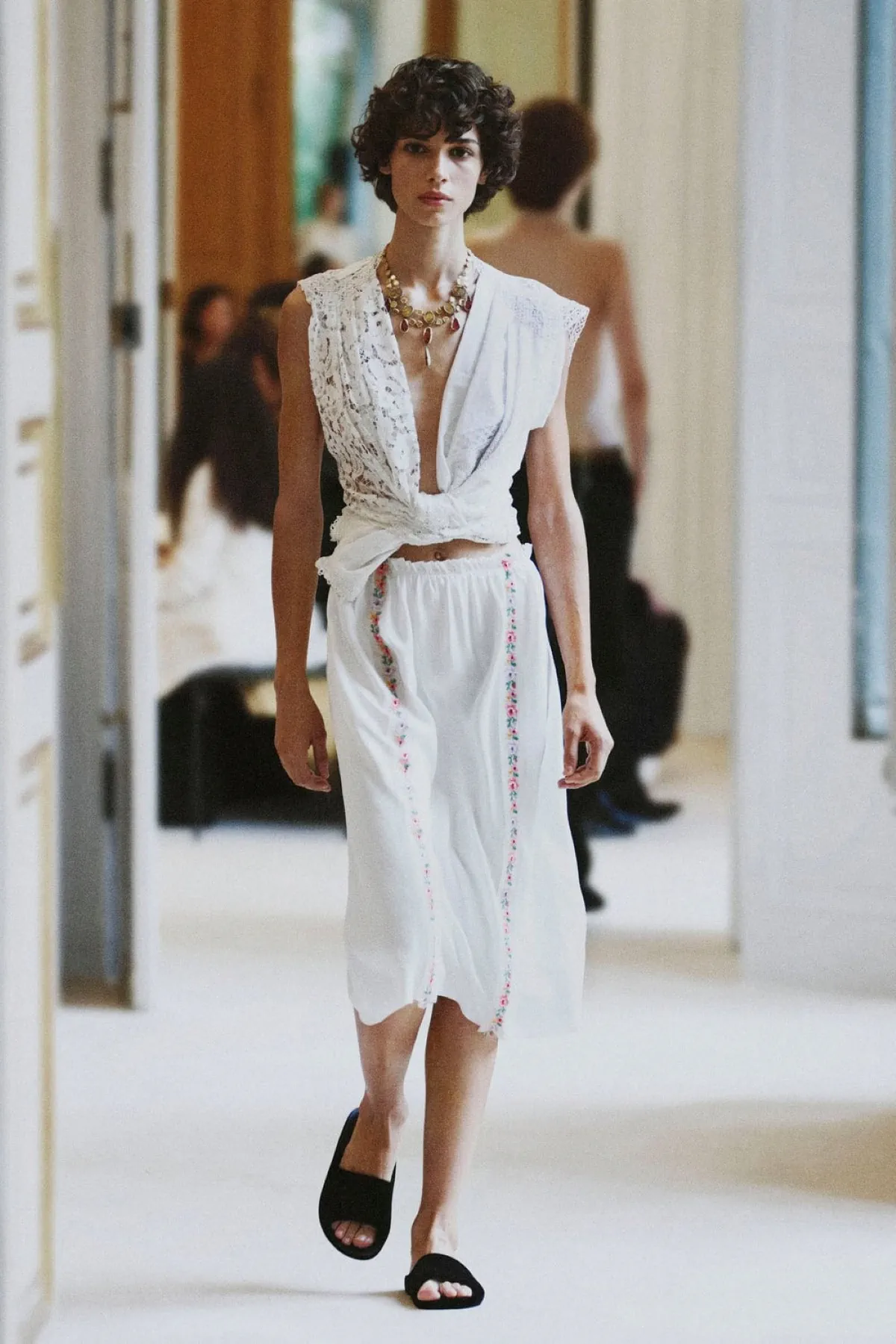
That shift is clearest in the tops. Several looks use a relatively plain trouser or skirt as the foundation for something much more detailed above the waist. Crochet pieces, sheer layers, fabric constructions and raised decorative surfaces carry much of the visual interest. This approach offers a practical lesson even for readers who are unlikely to shop directly from the collection: one expressive garment can change the character of otherwise familiar clothes.
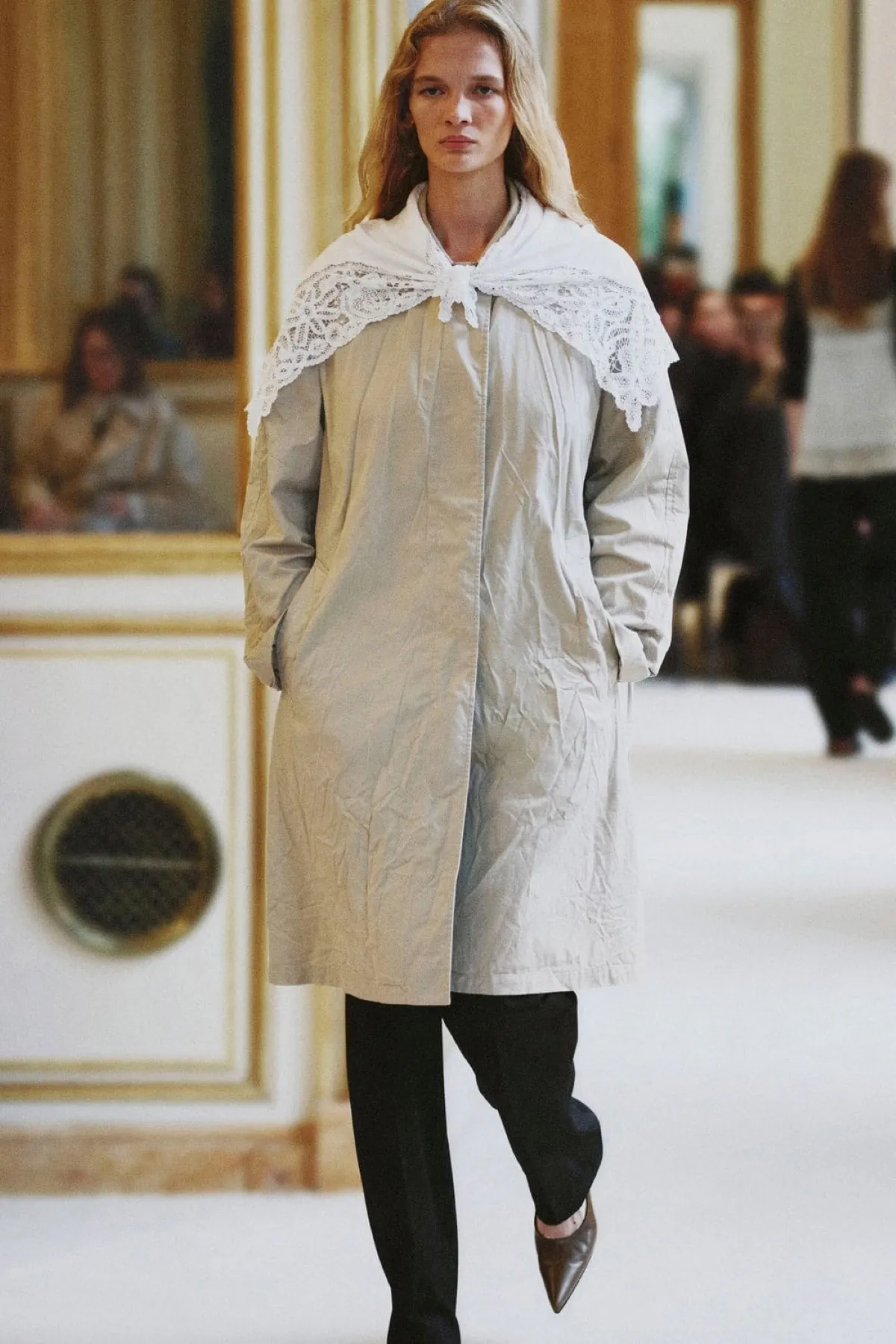
Lace is treated with similar flexibility. Rather than limiting it to eveningwear, the designers place lace over everyday outerwear and layer delicate pieces with simpler garments. A white lace scarf worn across a beige trench is a good example of how decoration can be introduced without turning an outfit into a formal statement.
Follow all the latest news from Fashionotography on Flipboard, or receive it directly in your inbox with Feeder.
You may also like
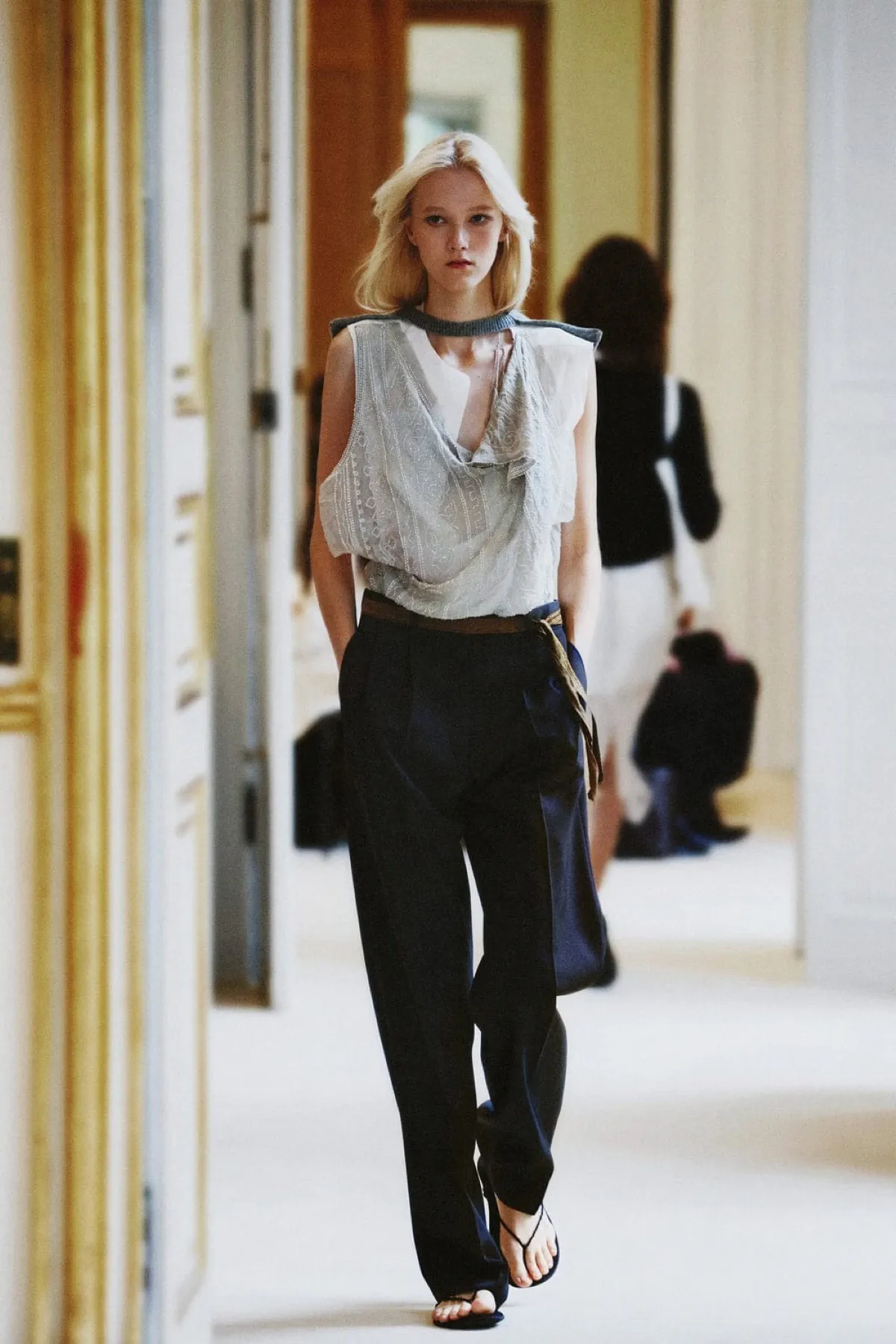
The tailoring also deserves attention. The Row became closely associated with generous proportions and relaxed shapes, but this collection includes noticeably closer cuts. Cigarette trousers, narrower jackets and defined waists point toward the late-1990s references appearing elsewhere in fashion. A long blazer with buttons positioned below the bust gives the body a more controlled outline without relying on obvious structure.
Accessories provide some of the collection’s most accessible ideas. Colored bead necklaces appear beneath sheer tops or partly hidden inside open shirts rather than sitting prominently on the surface. The styling makes jewelry feel integrated into the clothes instead of added afterward.
Bags take a different direction. Simple canvas totes appear deliberately ordinary beside the more intricate garments. Their appeal lies less in novelty than in contrast. Against lace, beads and precise tailoring, a plain tote keeps the overall appearance grounded.
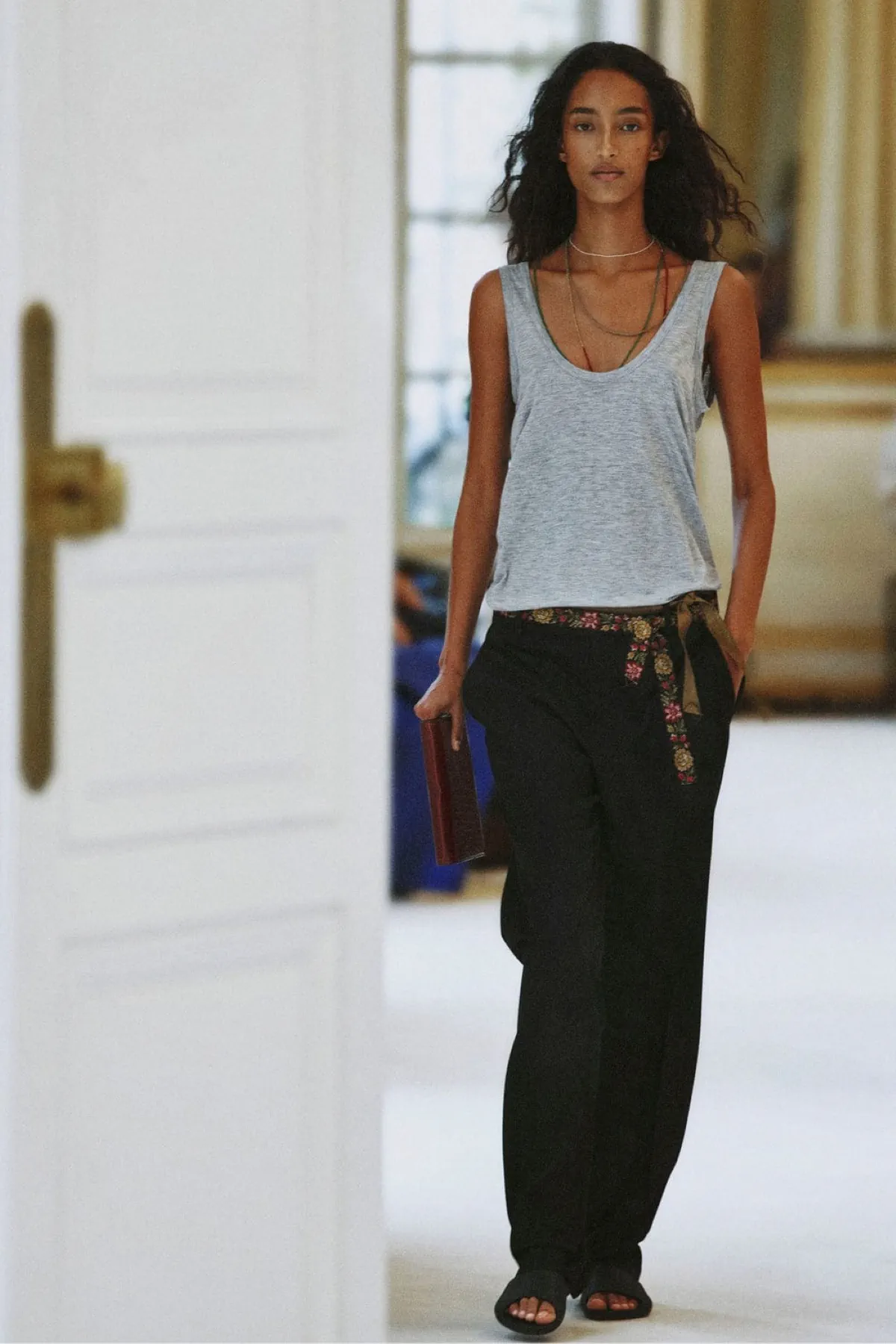
The opening look worn by Mona Tougaard captures much of the collection’s logic. Wide dark trousers are paired with a simple tank, small colored necklaces, an embroidered waist detail and a red leather clutch. None of the elements is especially complicated on its own, but their combination shows the increasing importance of styling within The Row’s approach.
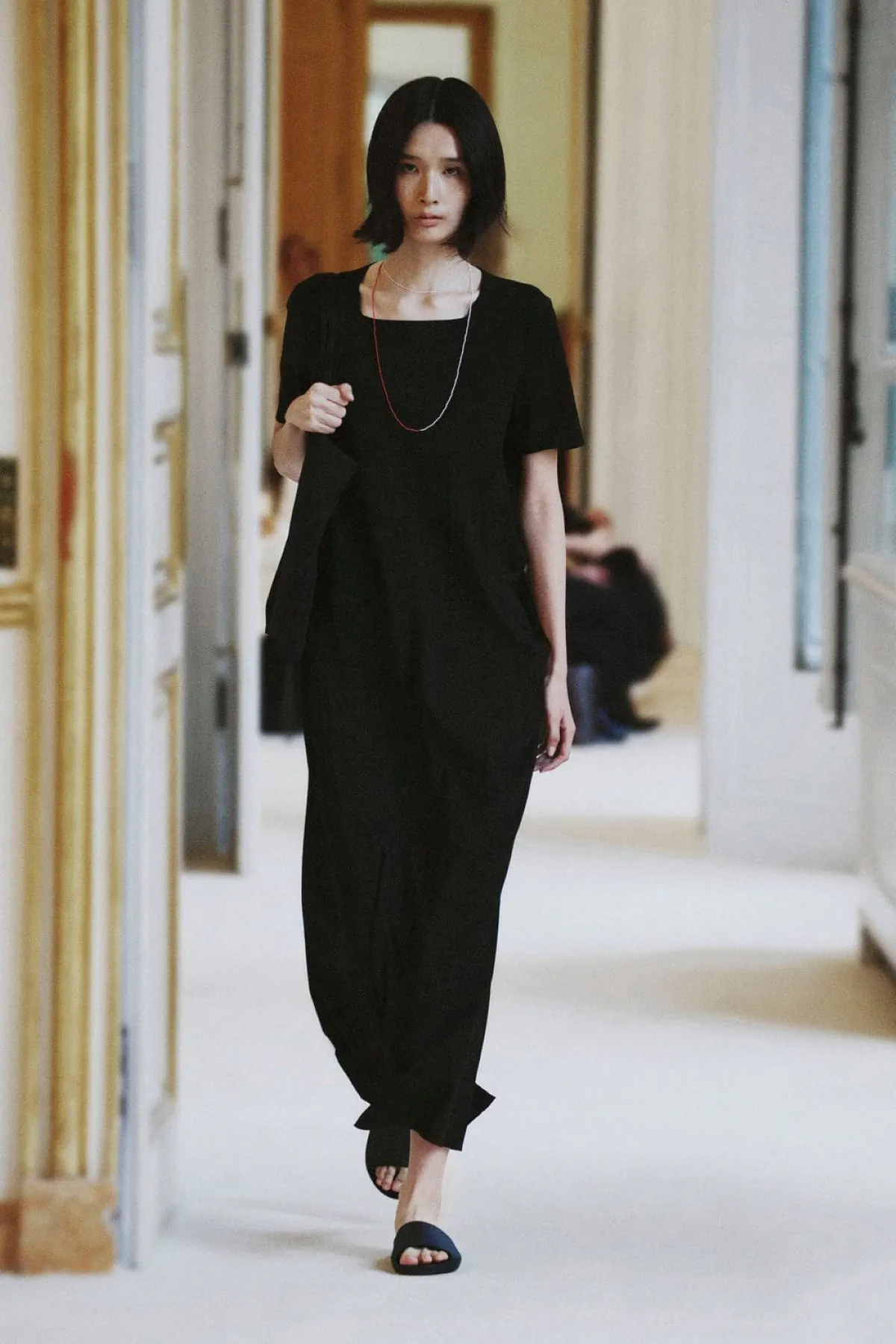
For a label long associated with reduction, Spring 2027 feels more permissive. It does not abandon simplicity. Instead, it makes room for texture, decoration and color while keeping construction and proportion under tight control. The result suggests a useful principle beyond the runway: a limited wardrobe can still offer variety when the individual pieces are chosen carefully and combined with greater attention.