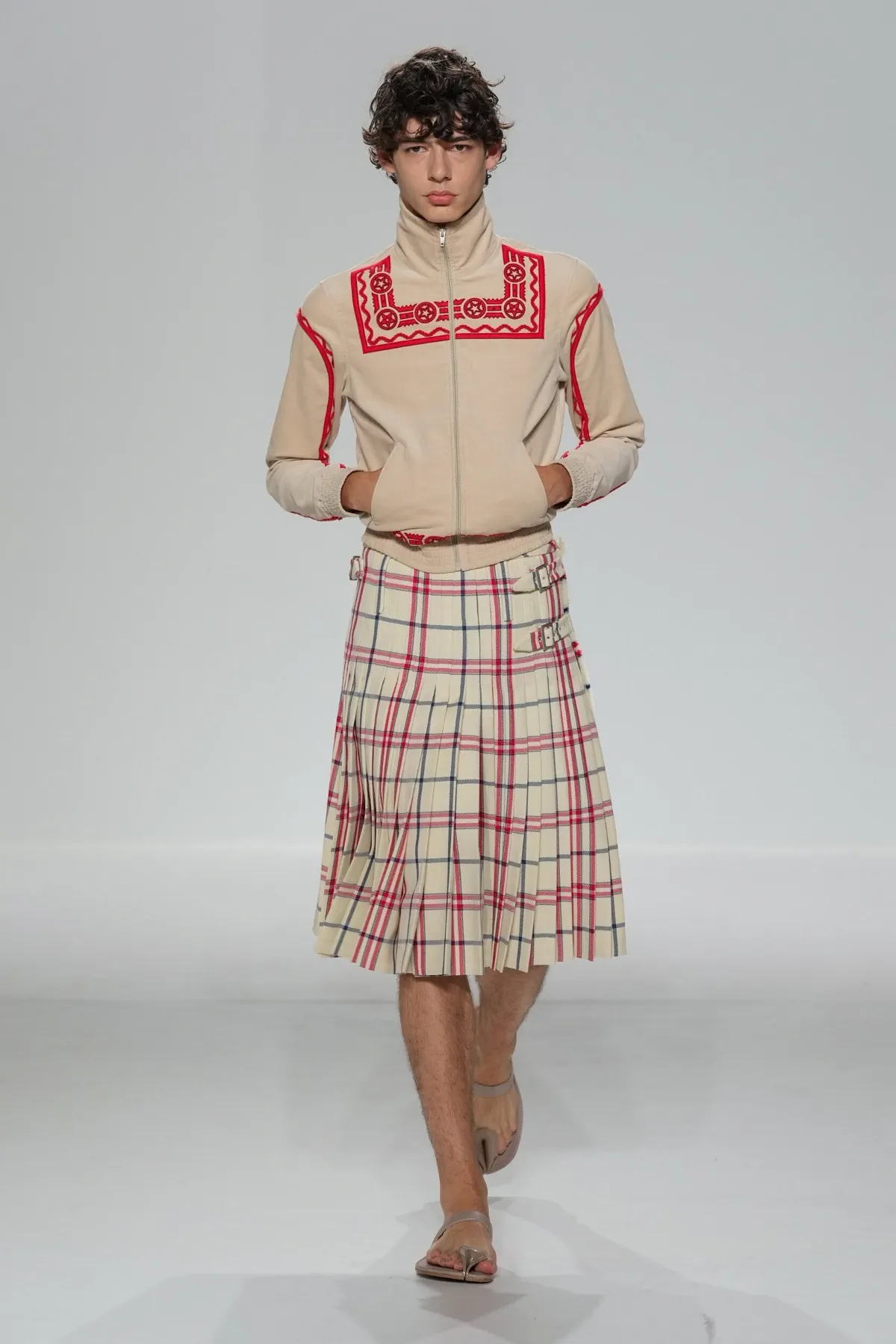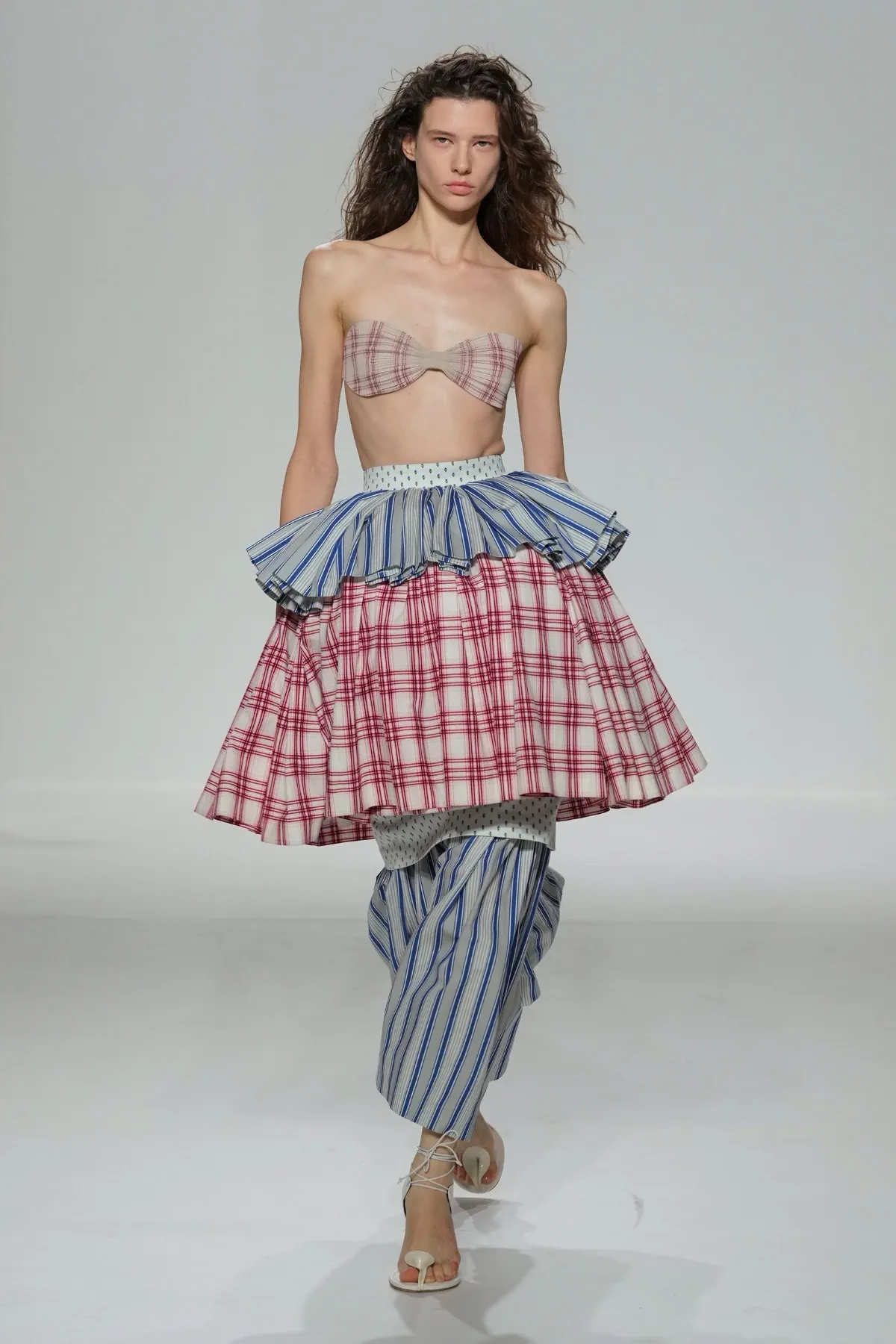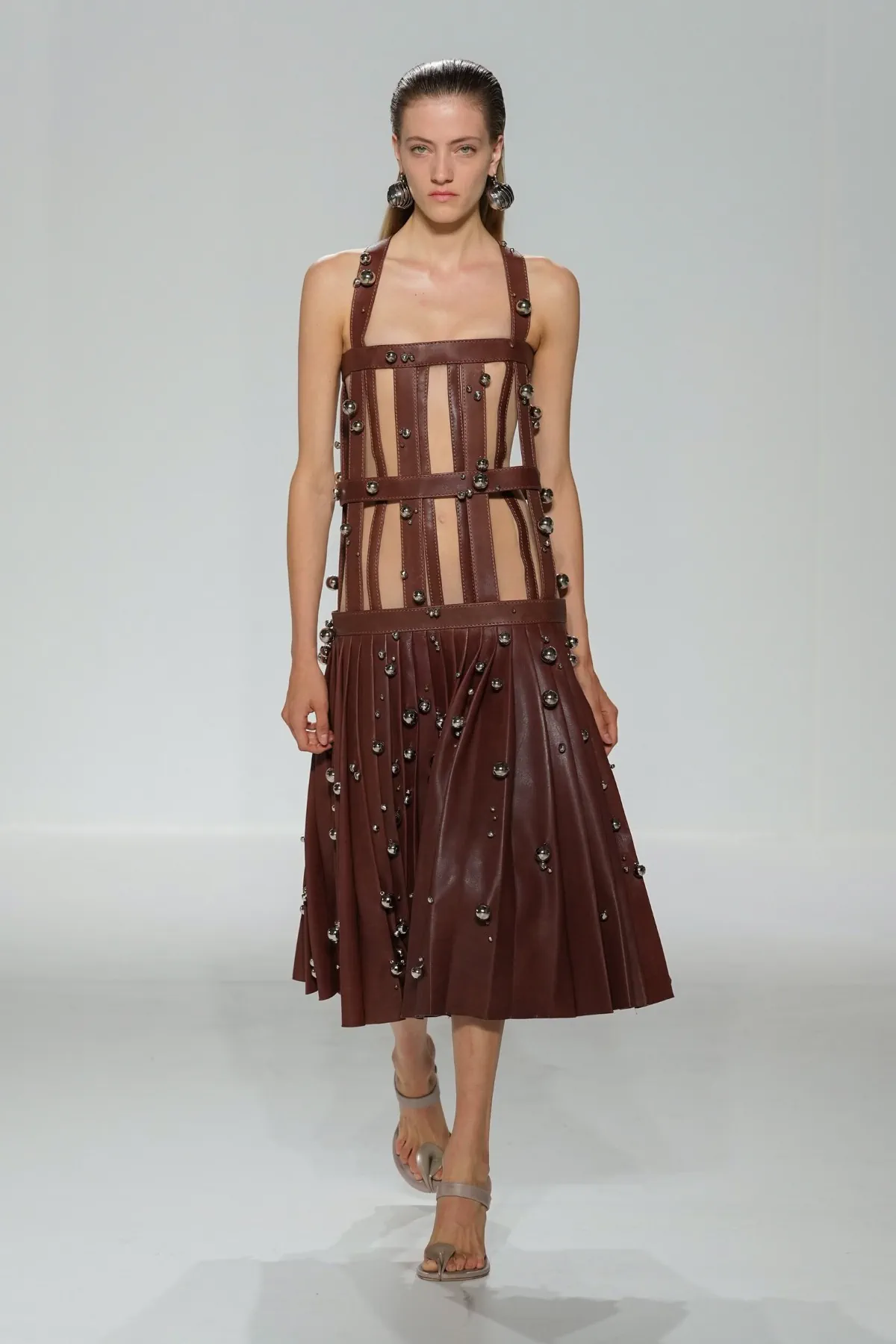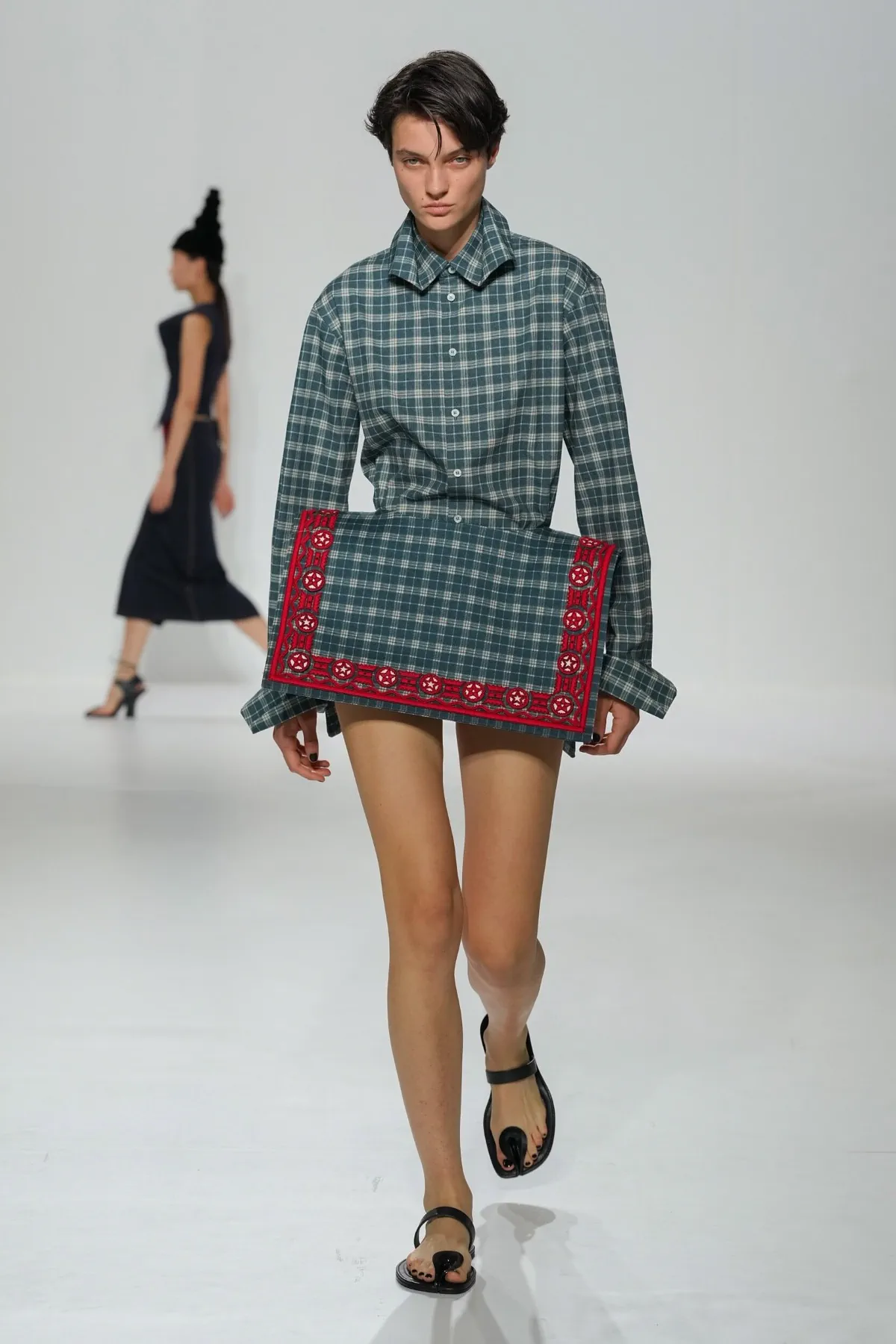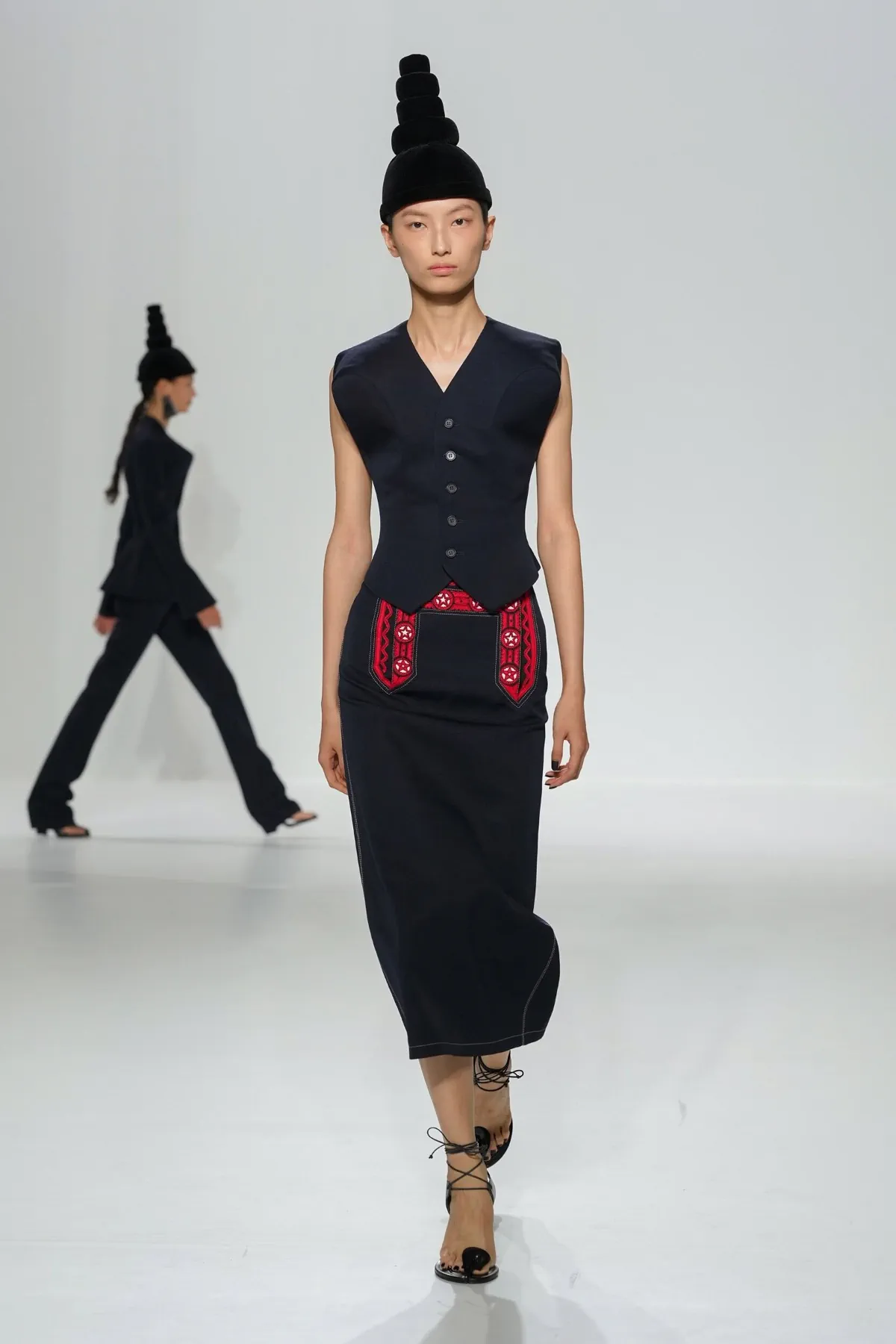

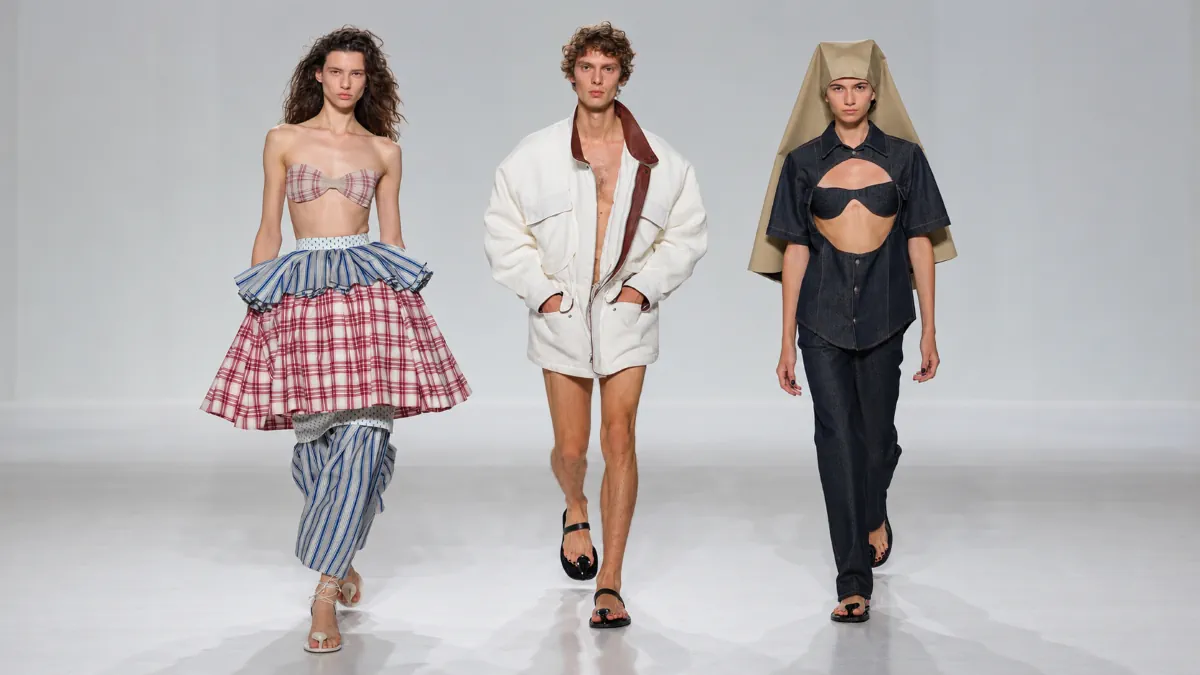
| Jean Paul Gaultier Spring 2027 was presented at Paris Fashion Week at the Palais de Tokyo under Creative director Duran Lantink. It is Lantink’s fourth ready-to-wear collection for the house. Mirrors were installed to show the garments from several angles. About one quarter of the collection consisted of white looks. |
The task facing Duran Lantink at Jean Paul Gaultier is becoming clearer with each season. He is not simply revisiting an archive filled with famous silhouettes. He is working out which parts of that vocabulary can become his own. Jean Paul Gaultier Spring 2027 suggests that process is beginning to settle, even if the results remain uneven.
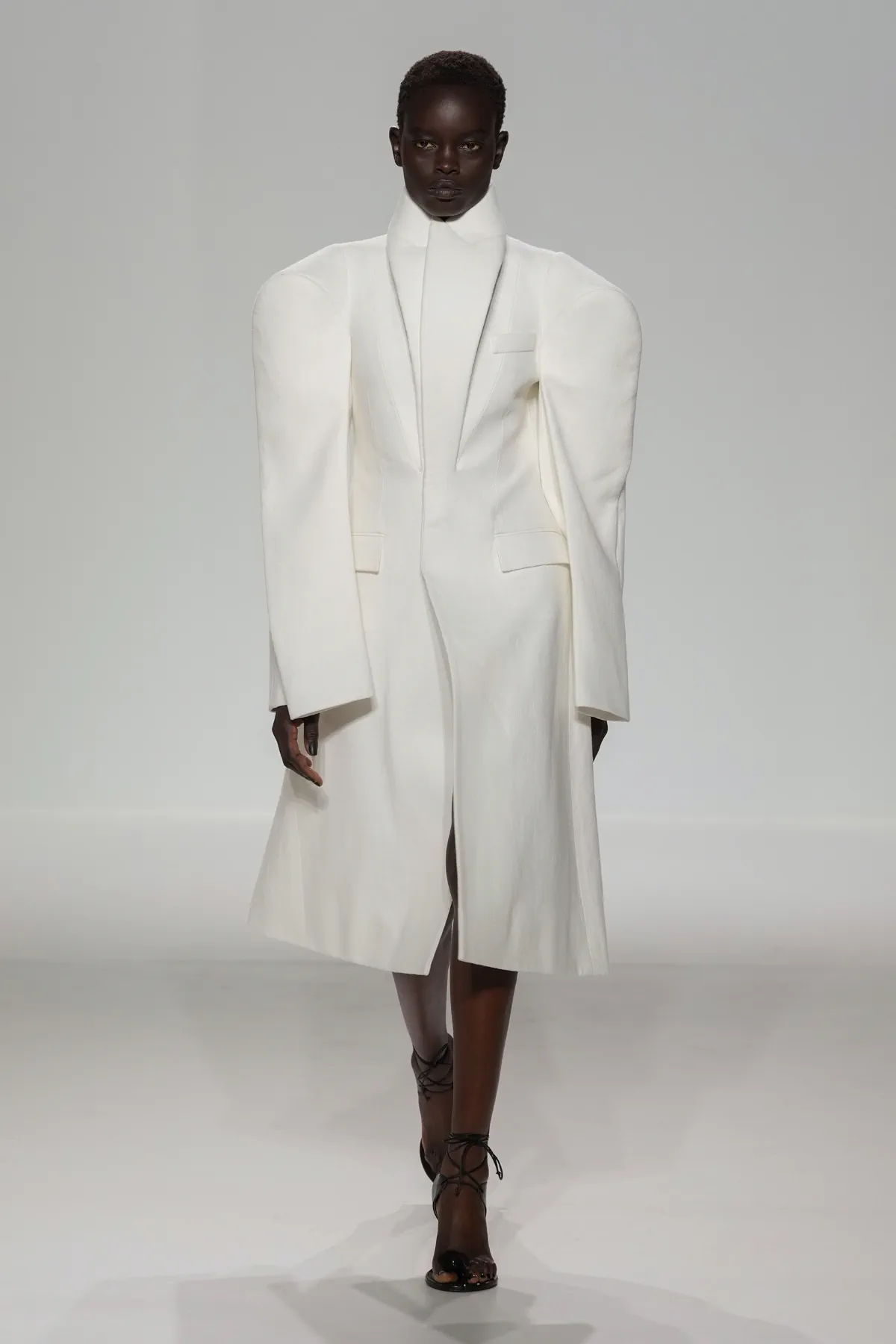
Presented at the Palais de Tokyo in Paris, the collection placed construction at its centre. Mirrors surrounded the runway, allowing guests to see clothes from the front, back and three-quarter view. That mattered because many pieces changed significantly depending on the angle. A jacket that appeared conventional from the front could reveal a sharply projected waist or an unexpected volume from the side.
The opening tailoring established that approach. A white coatdress came with rounded, exaggerated shoulders and a raised sculpted collar. Other jackets pushed the shoulder line forward toward the chest, while detached collars and open necklines changed familiar proportions without making the garments impossible to understand.
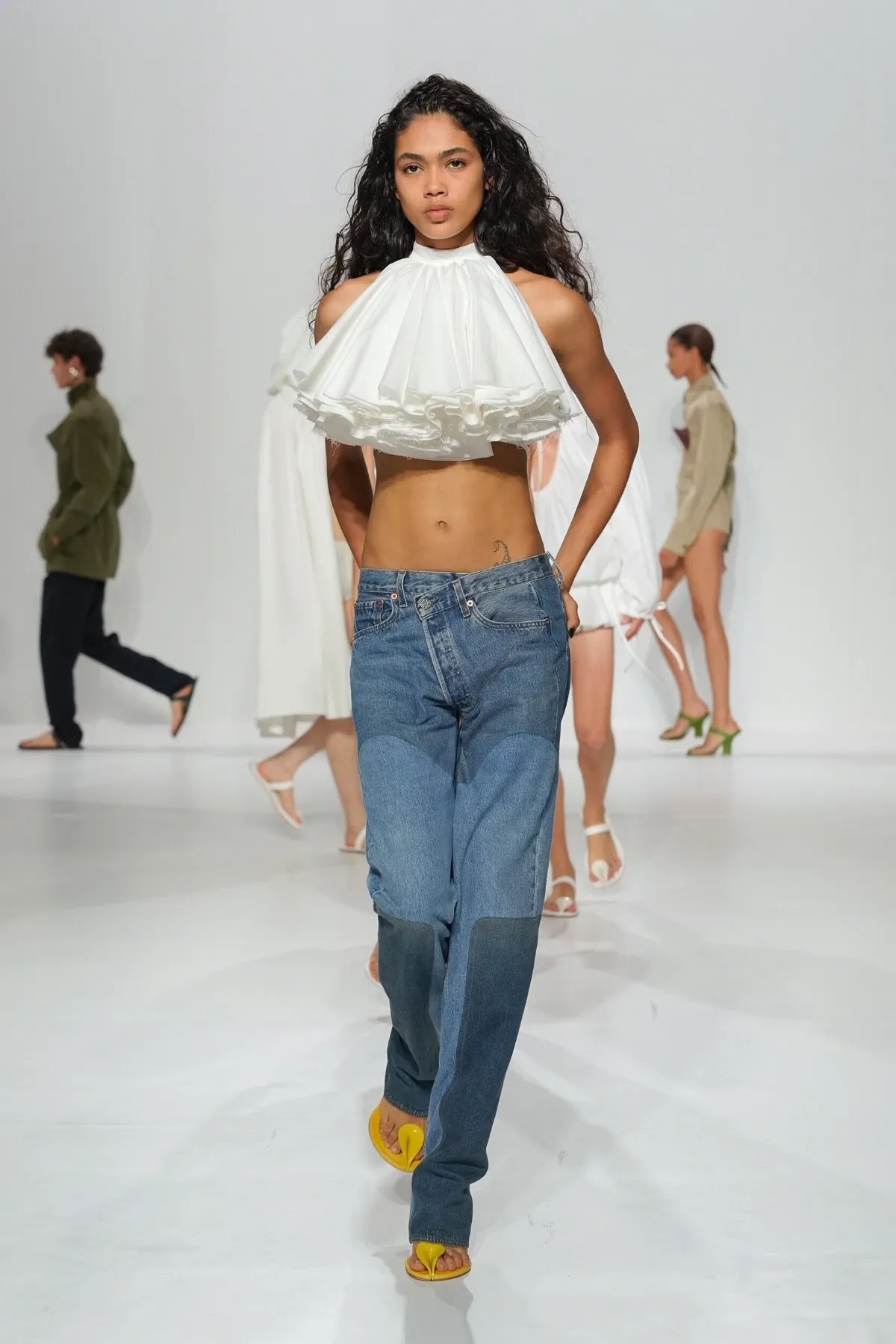
This was one of Lantink’s more convincing decisions. Instead of treating wearability as a compromise, he used recognisable pieces as a base for experimentation. Slim low-rise jeans were buttoned off-centre. Shirts were cropped with hems that stood away from the body. Conventional blazers acquired pronounced hourglass shapes or circular openings across the chest.
Gaultier’s long association with lingerie also returned, though with less emphasis than in some previous collections. Cone-shaped bras appeared inside cutout dresses, denim shirts and trench coats. The reference was unmistakable, but Lantink generally integrated it into the construction rather than presenting it as a standalone historical quotation.
Follow all the latest news from Fashionotography on Flipboard, or receive it directly in your inbox with Feeder.
You may also like
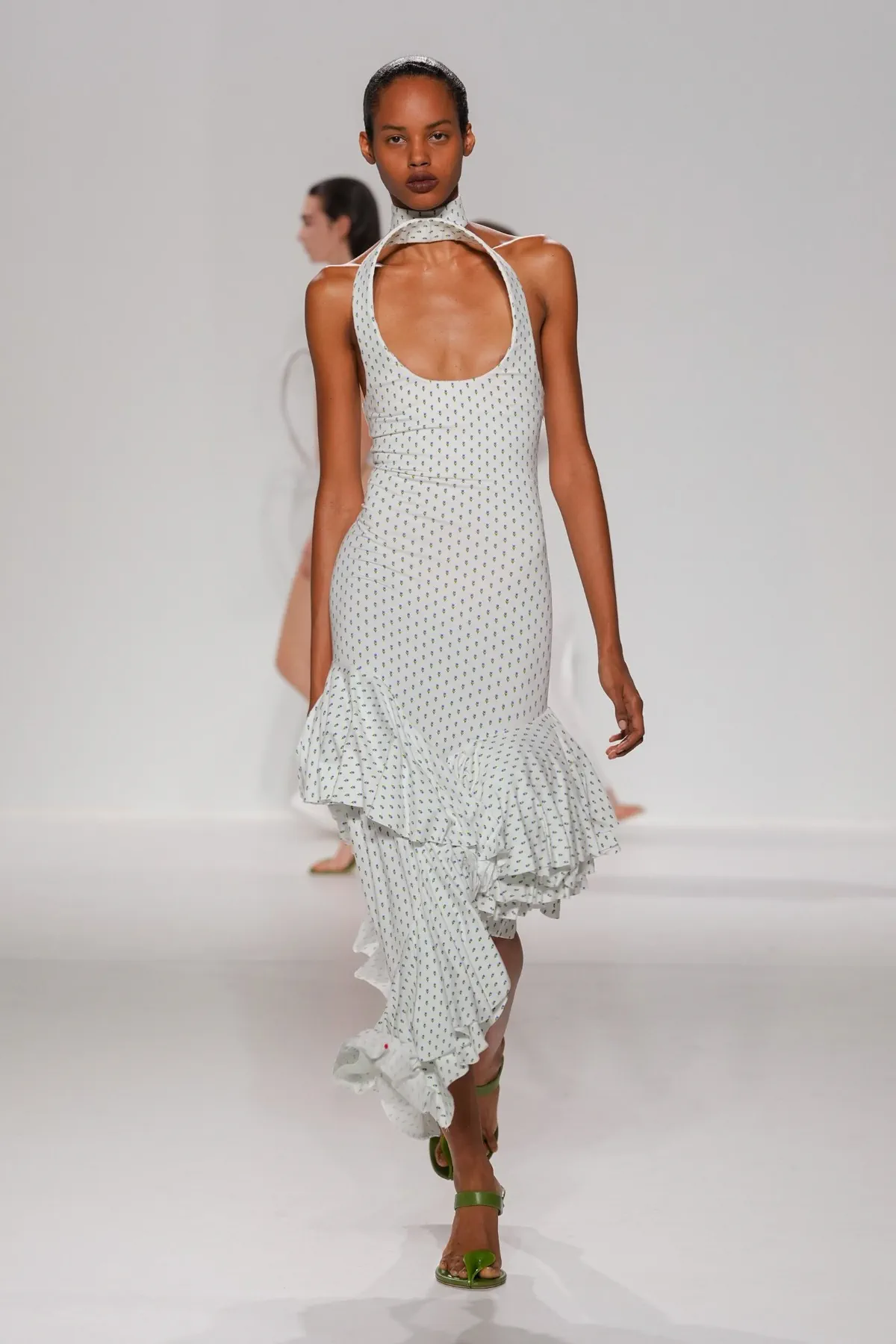
Elsewhere, the collection became more eclectic. Tartan, kilts, leather, small floral patterns and alpine references appeared beside Gothic details and practical outerwear. Bells were attached to several garments after Lantink discovered an old Gaultier glove decorated with pompons and small bells in the founder’s office. The idea eventually expanded into pieces densely covered with them.
Some of the white looks moved in another direction, using jersey, ruffles, draping and close-fitting hoods. Lantink described part of this section through late-1980s Ibiza references. There were also rain caps, felted wool underwear and deliberately contradictory combinations of covered heads and open coats.
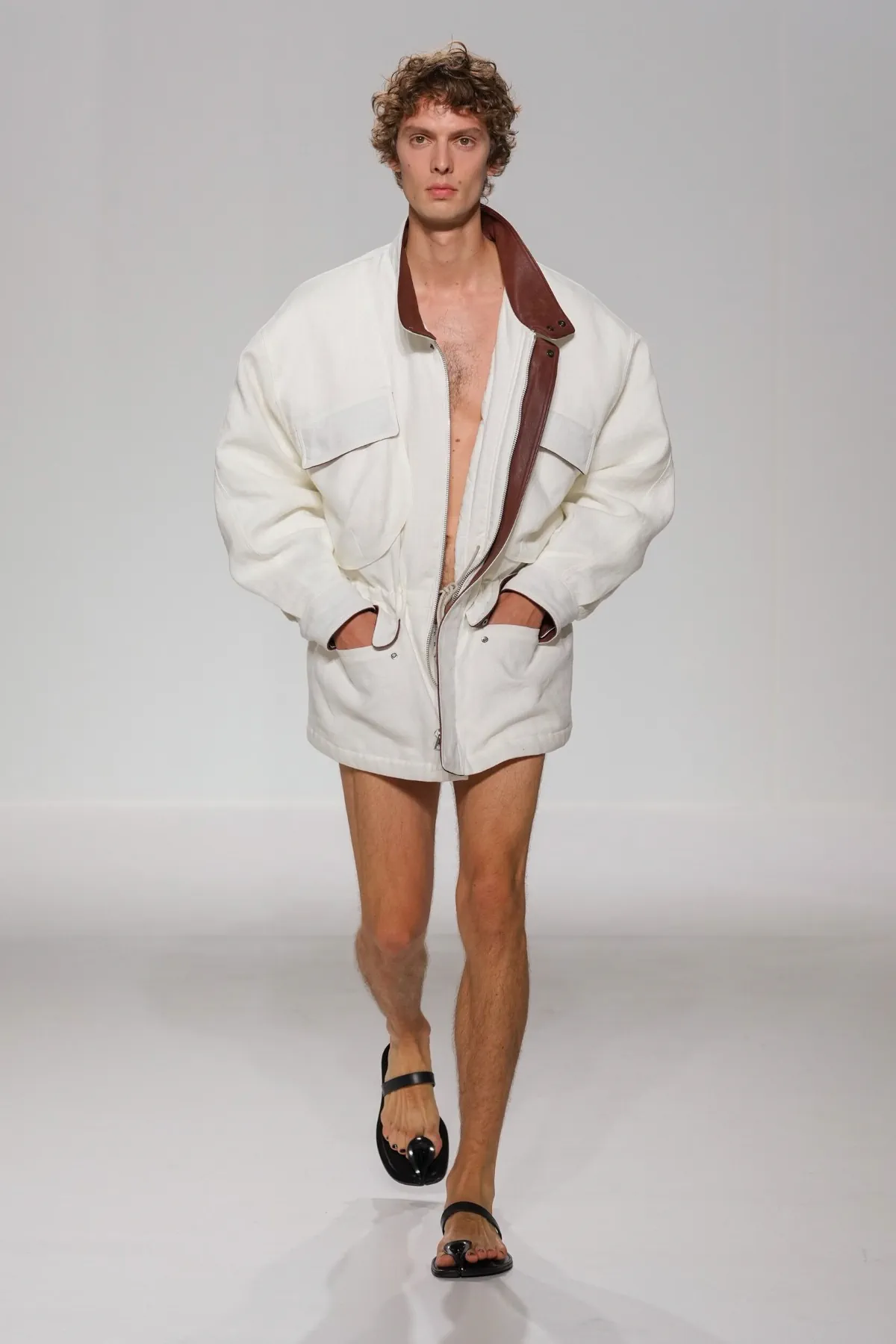
Footwear provided another sign of the house’s expansion under Lantink. Split-toe shoes appeared as flats, heels and lace-up versions, giving the collection a recurring practical detail beyond the clothing itself.
The difficulty came when the collection leaned too heavily on construction and provocation. Gaultier’s work has often succeeded because technical invention was balanced by humour and an accessible sense of pleasure. Here, several ideas felt more studied than spontaneous. Lantink’s own playful instincts, visible in earlier work for the house, seemed less present.
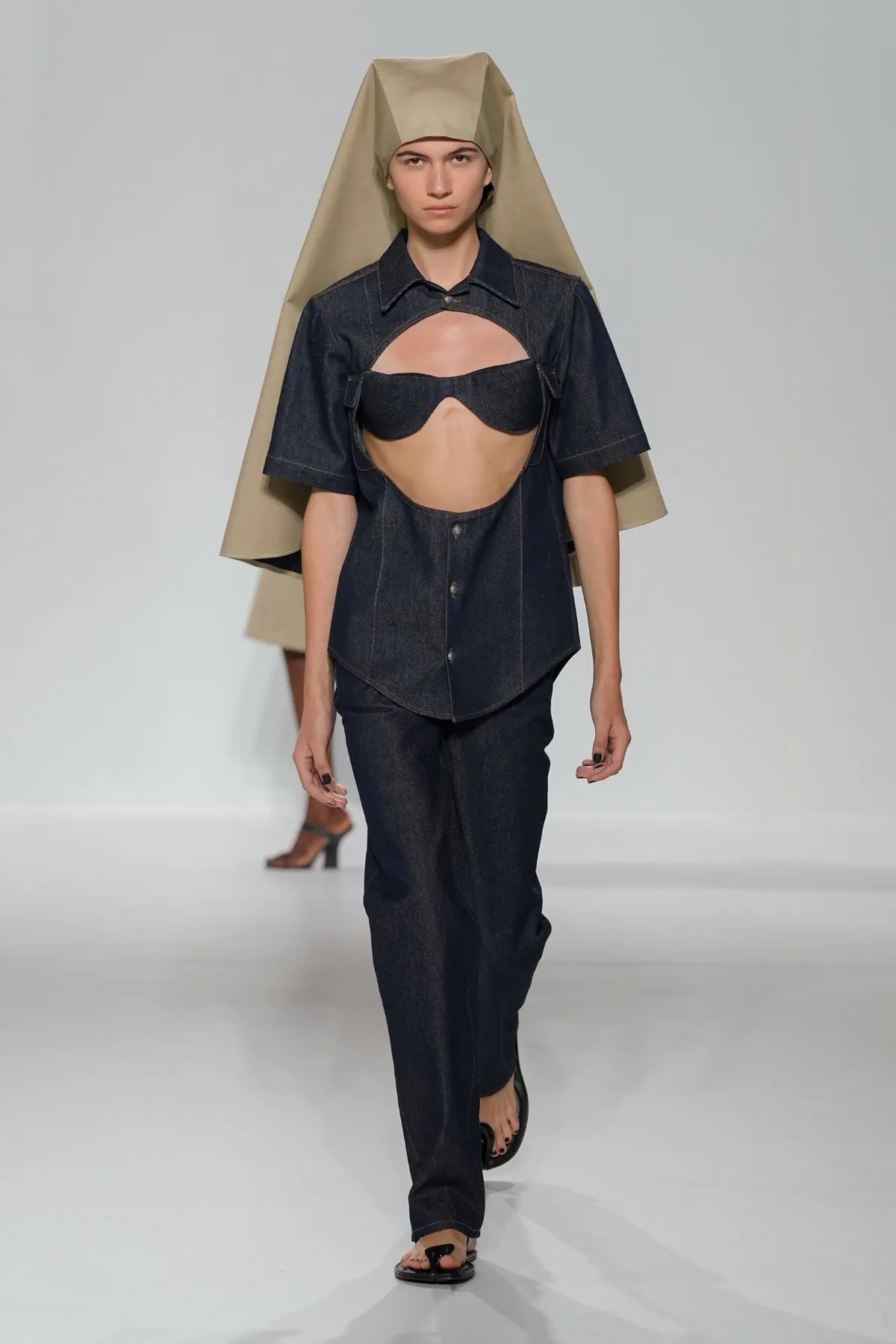
Still, Spring 2027 shows progress. Lantink is moving beyond simply identifying famous Gaultier references and is starting to reorganise them around his own interest in volume, anatomy and unusual proportions. The strongest pieces were not those that shouted loudest about the archive, but those that made a familiar jacket, dress or pair of jeans look slightly unfamiliar again.