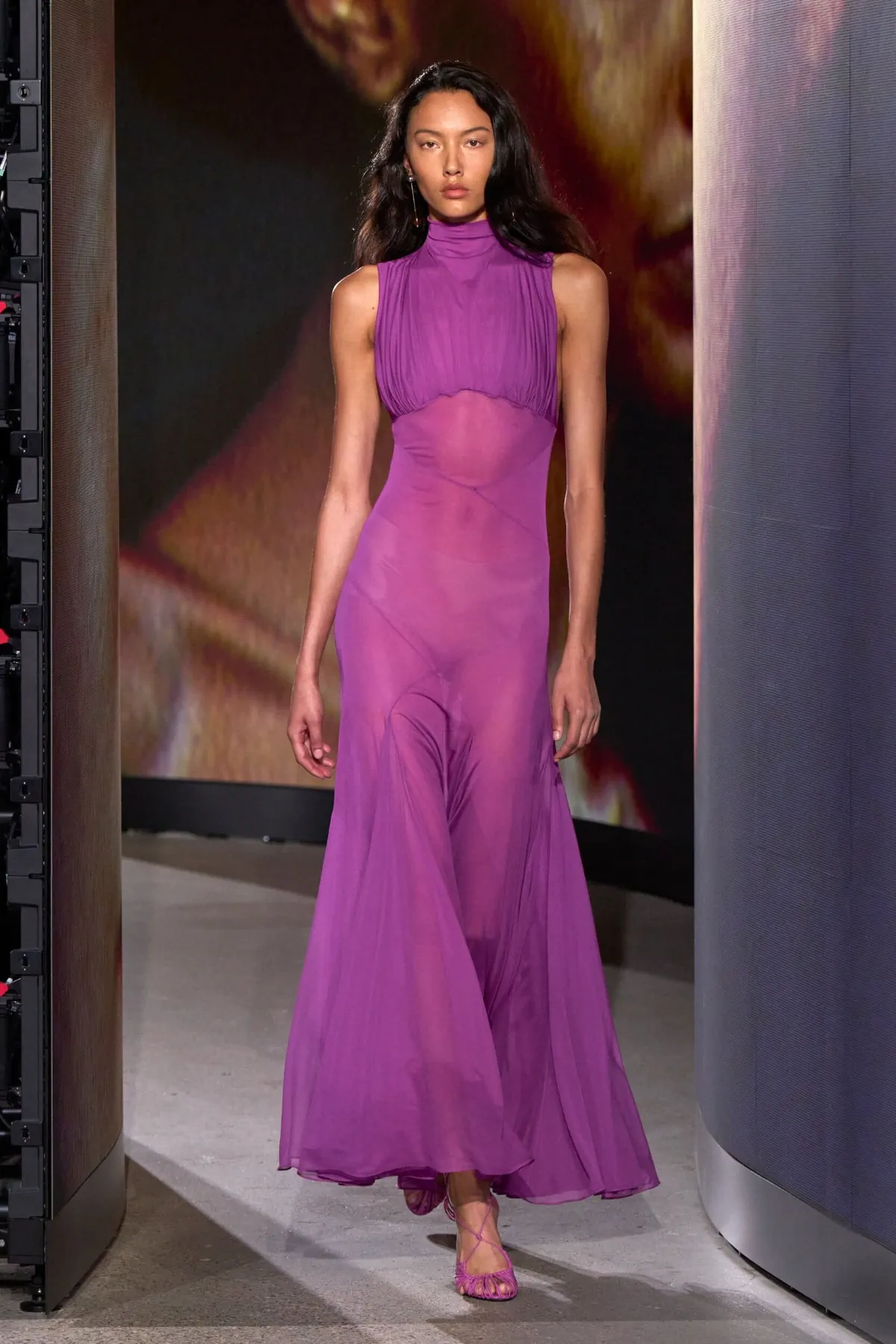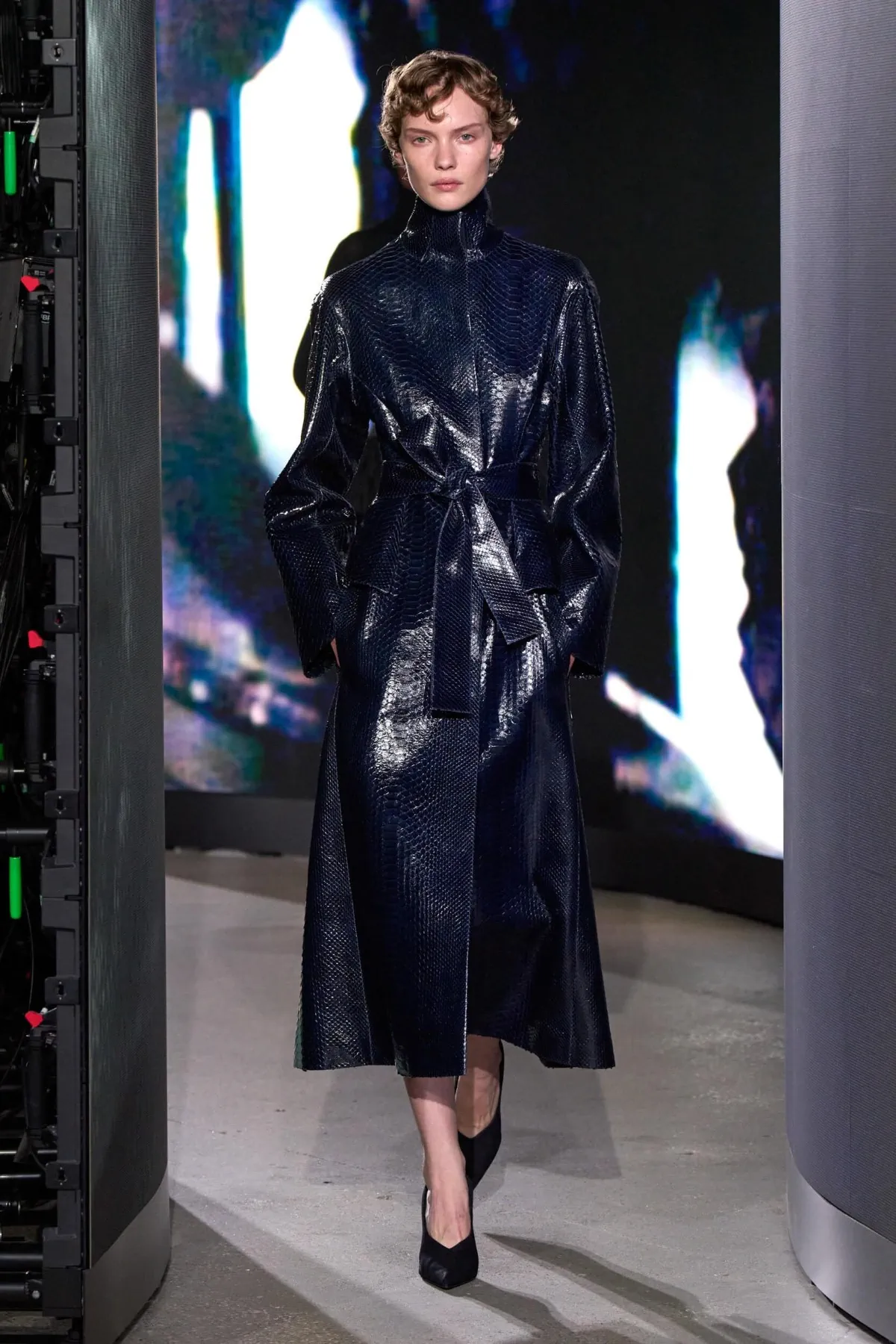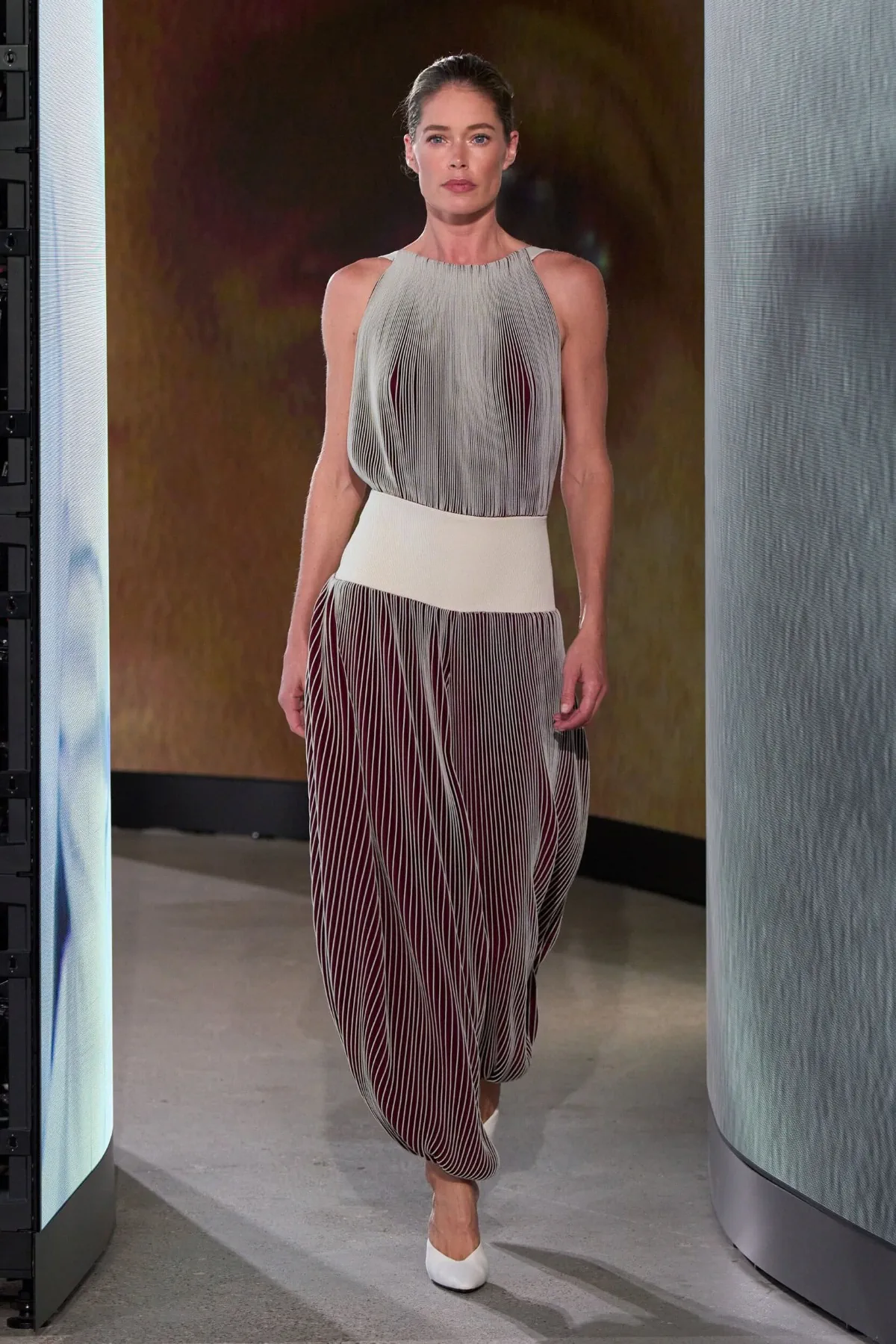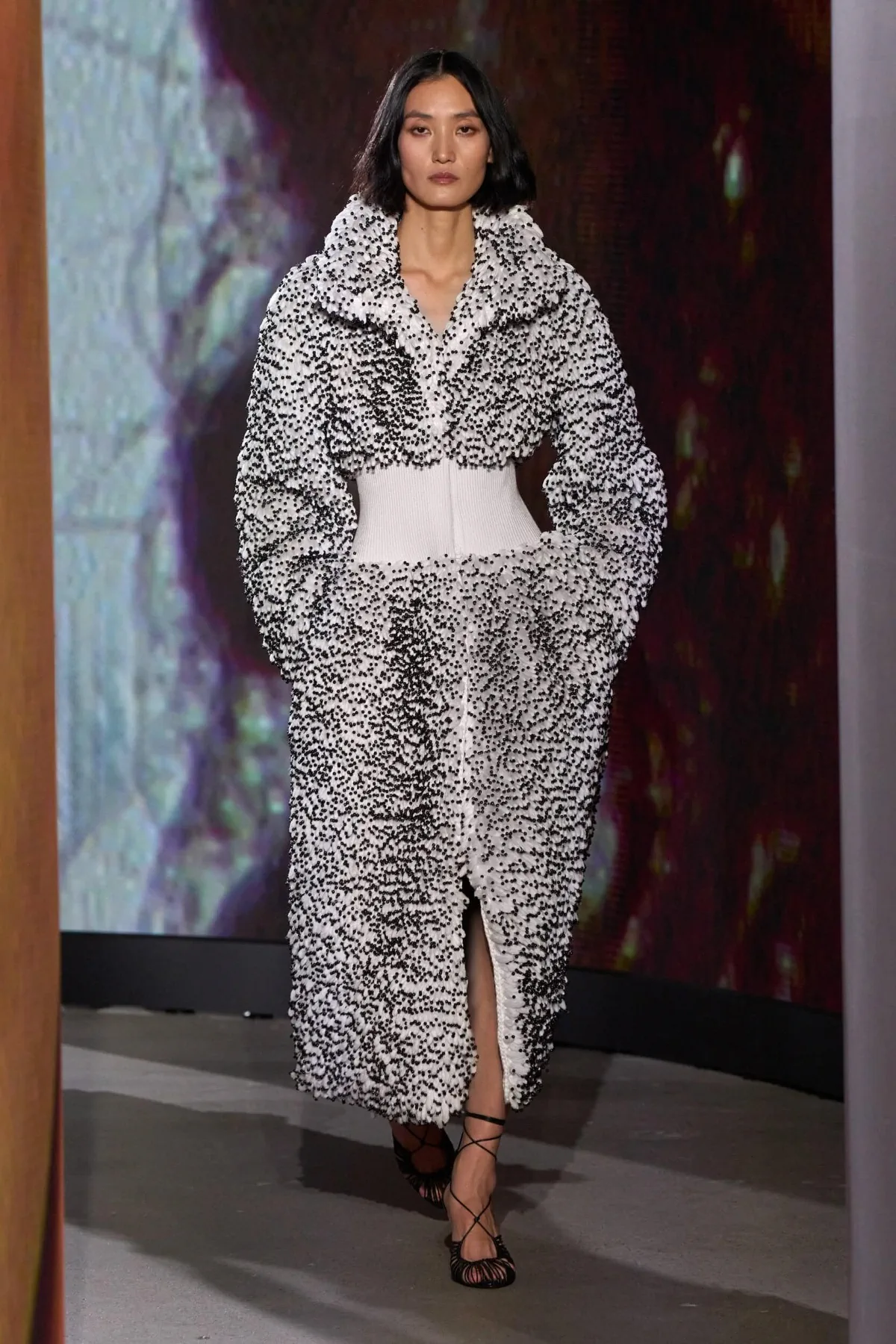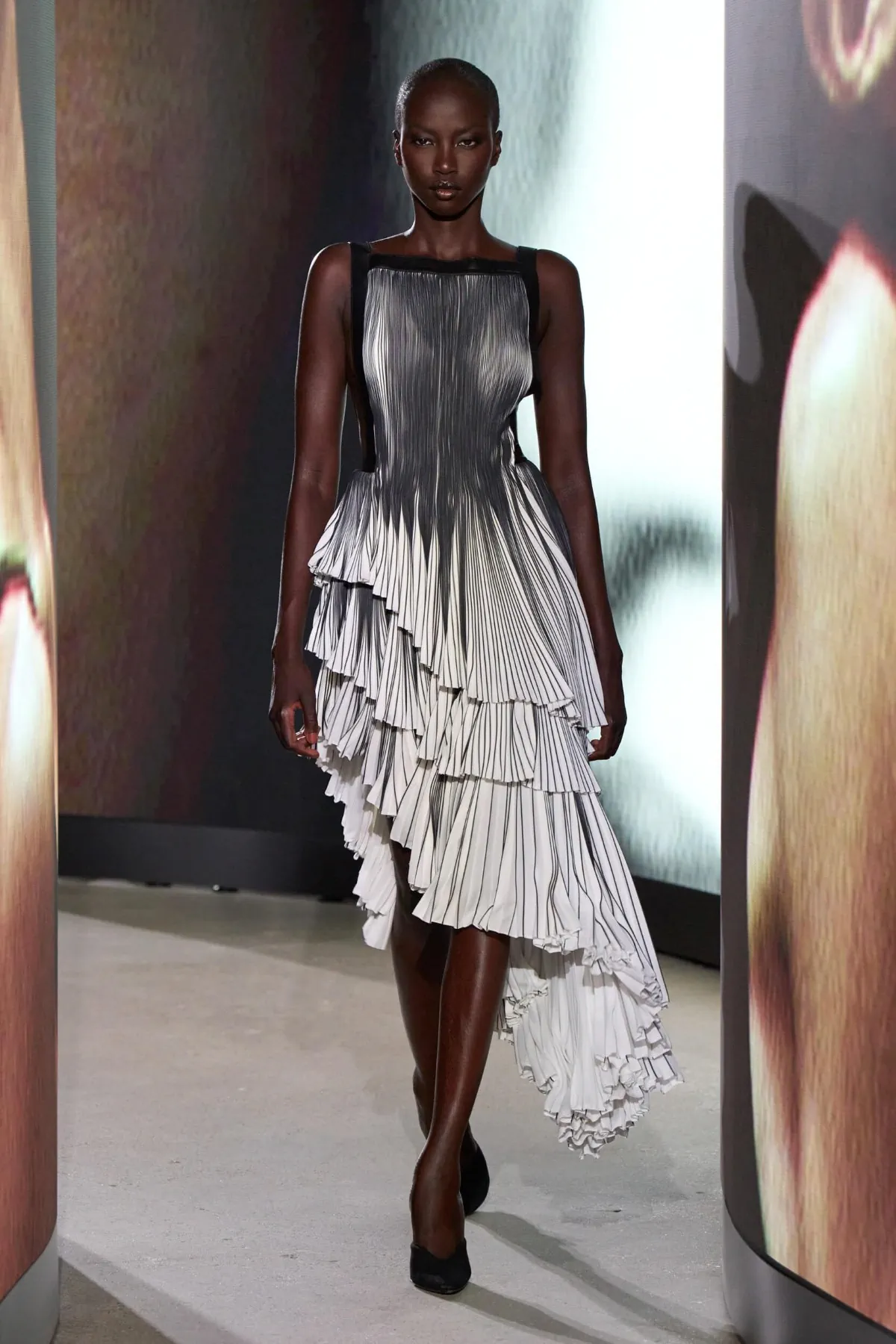

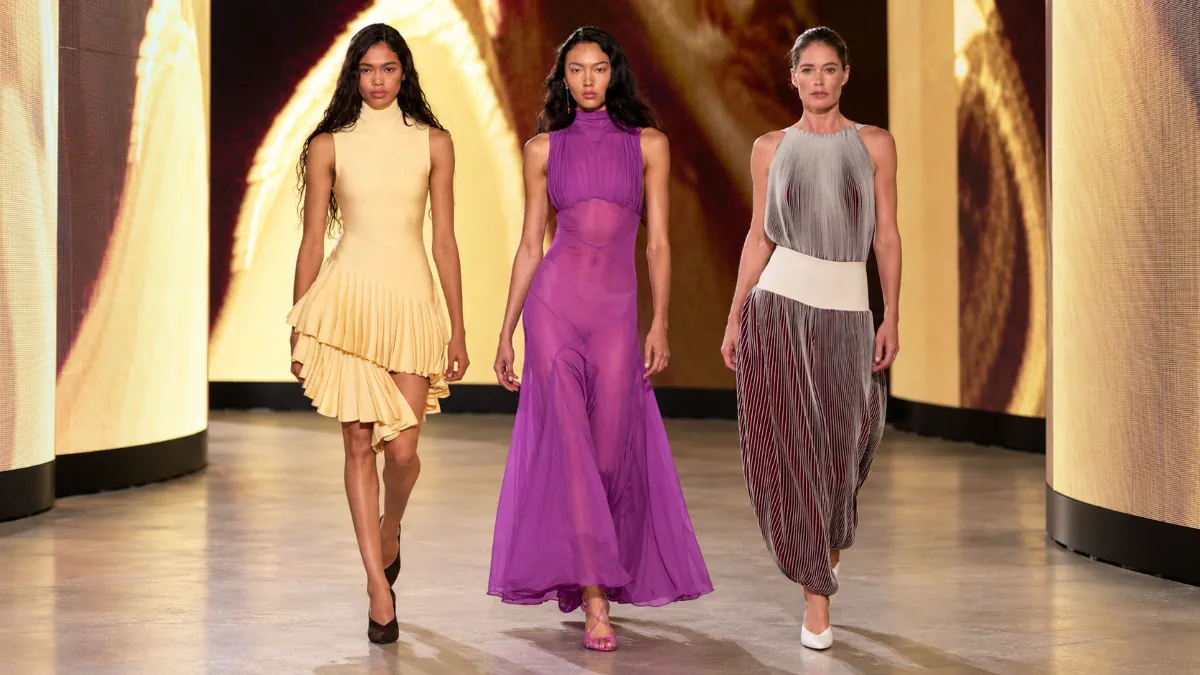
| Alaïa Winter/Spring 2027 was presented during Paris Fashion Week as the house’s first runway collection since Pieter Mulier left in January 2026. The collection was created by the studio. It was shown at the former Fondation Cartier in Paris. |
Alaïa entered an unusual chapter in Paris this season. Alaïa Winter/Spring 2027 was the house’s first collection presented after Pieter Mulier’s departure in January 2026, and there was no newly appointed Creative director taking the customary final acknowledgement. Instead, the studio took responsibility for a collection built around continuity, the body and the technical knowledge that has long defined the house.
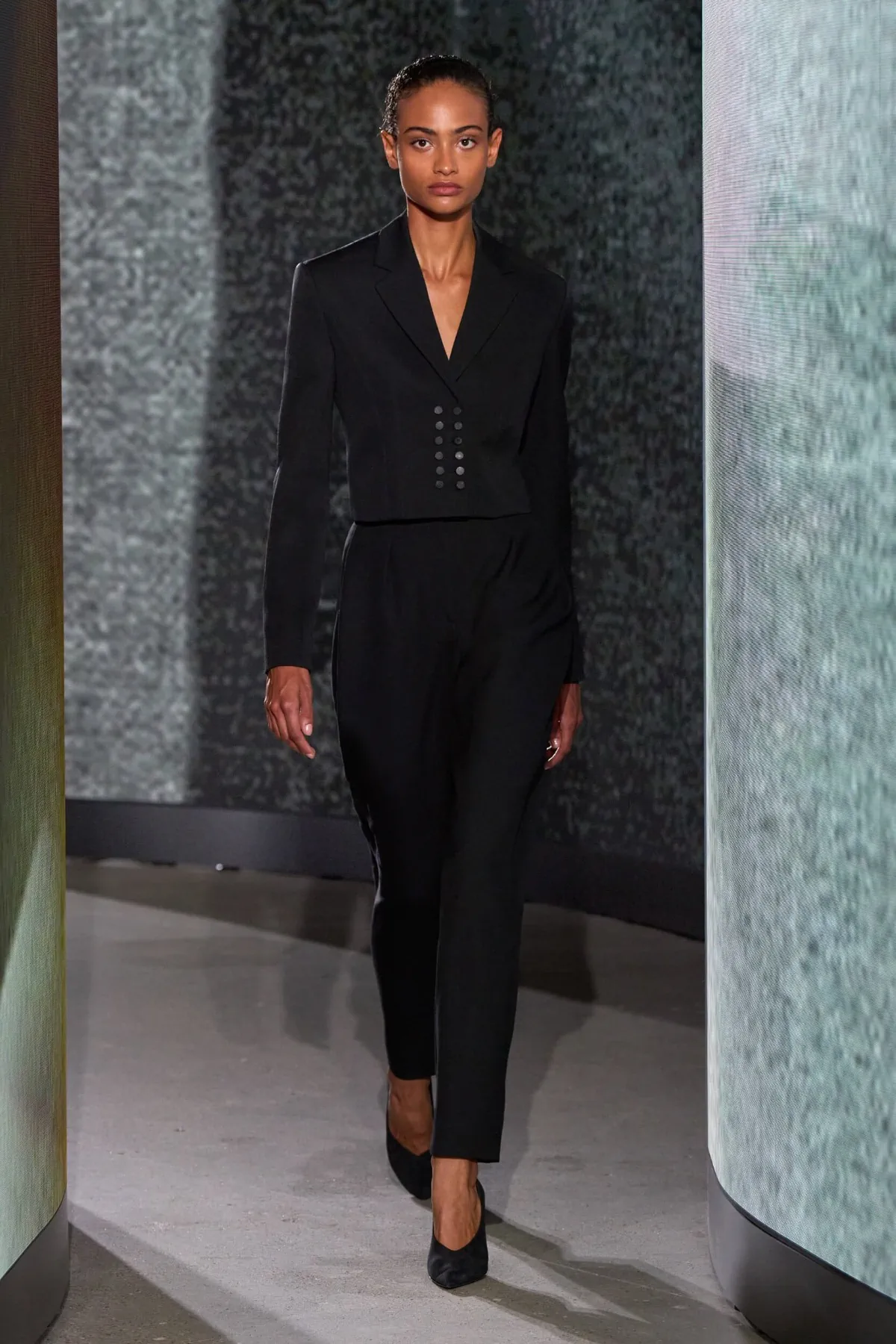
The setting reinforced that approach. Alaïa chose the former Fondation Cartier pour l’art contemporain in Paris’s 14th arrondissement, where guests stood around the edges of the main space rather than being placed according to a visible hierarchy. Curved screens created by American artist Julian Klincewicz showed a combination of prerecorded and live imagery, placing different views of the models alongside the physical presentation.
That visual structure reflected a central concern of the clothes themselves: how fabric relates to the body.
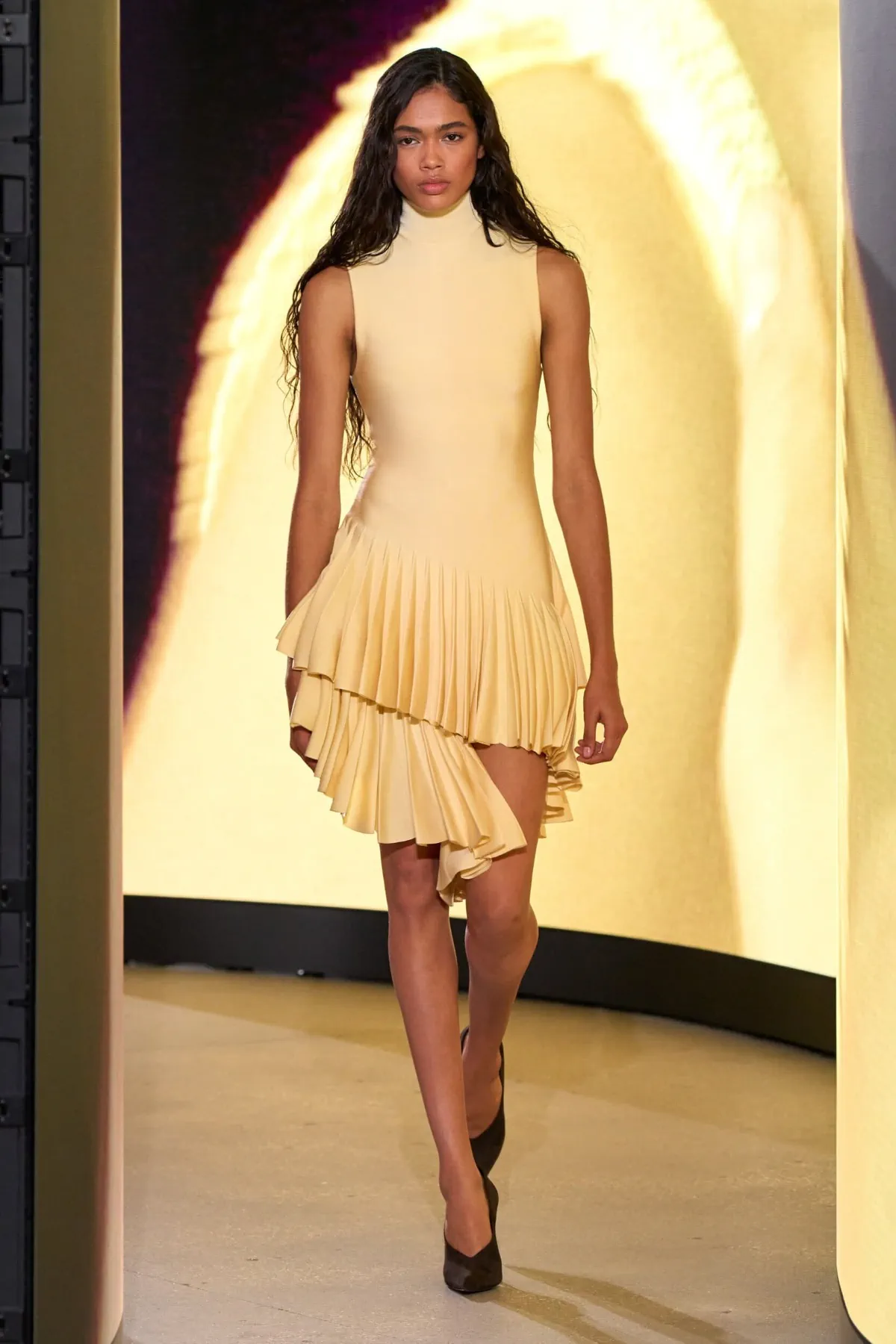
Rather than treating the figure as something to conceal or reshape entirely, the studio worked with garments that closely followed it, wrapped around it or selectively exposed it. Draped dresses opened around the hips, while twisted jersey created narrow silhouettes with a soft surface. Several long dresses featured high necklines and fitted sleeves, with fabric gathered at the sides so that the legs became visible as the wearer walked.
This treatment of the body was clearly connected to Azzedine Alaïa’s own work. His designs were often based on exact construction and an understanding of anatomy rather than decorative excess. For Winter/Spring 2027, those references appeared through seams, proportion, colour and technique instead of direct reproductions of specific archive pieces.
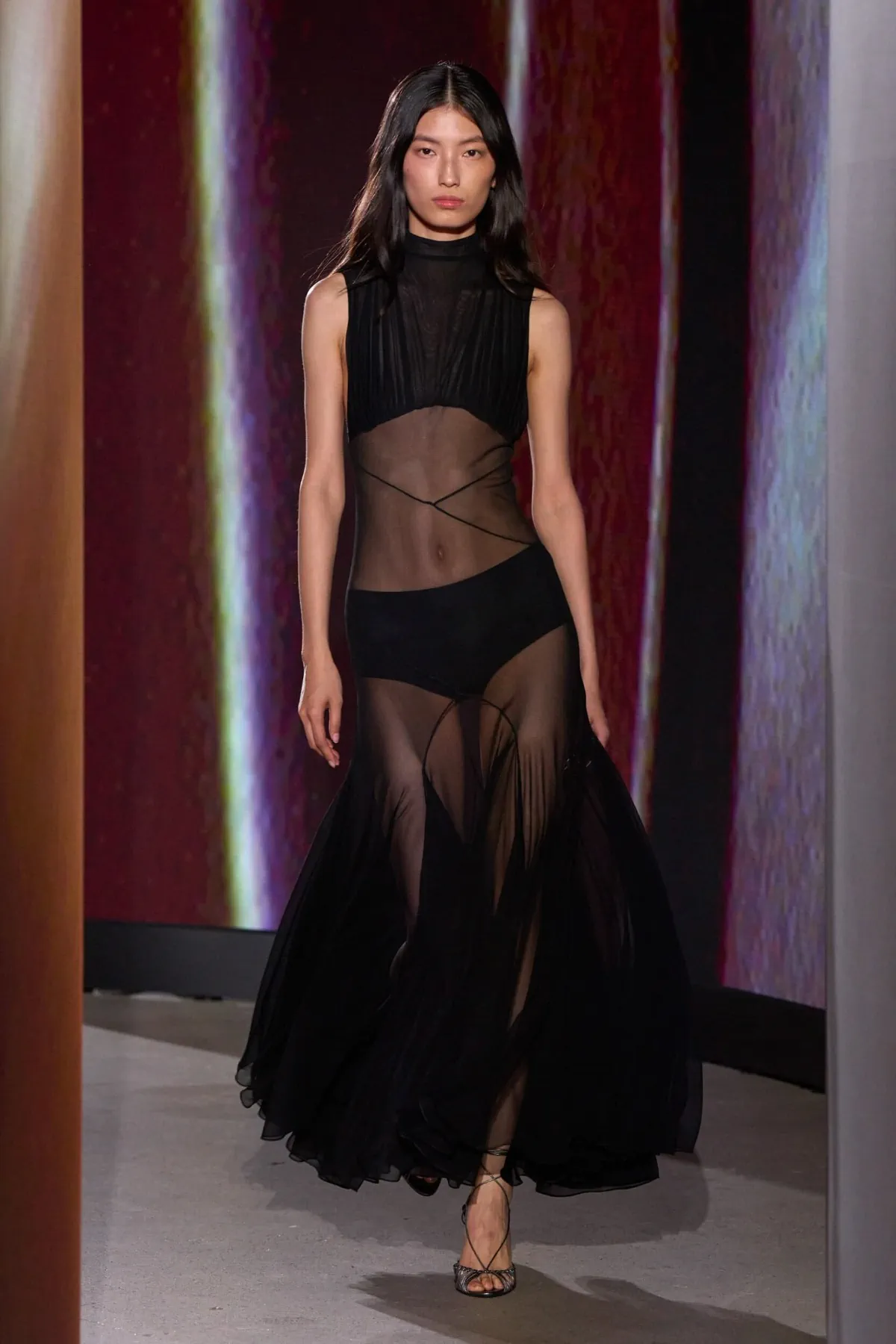
The collection also retained some of the sharper ideas developed during Mulier’s tenure. There were compact minidresses, strong outerwear and pieces that combined sensuality with precise construction. The result did not read as a sudden break between one period and the next. It suggested that the studio was interested in identifying which parts of recent Alaïa belong to the broader language of the house.
Follow all the latest news from Fashionotography on Flipboard, or receive it directly in your inbox with Feeder.
You may also like
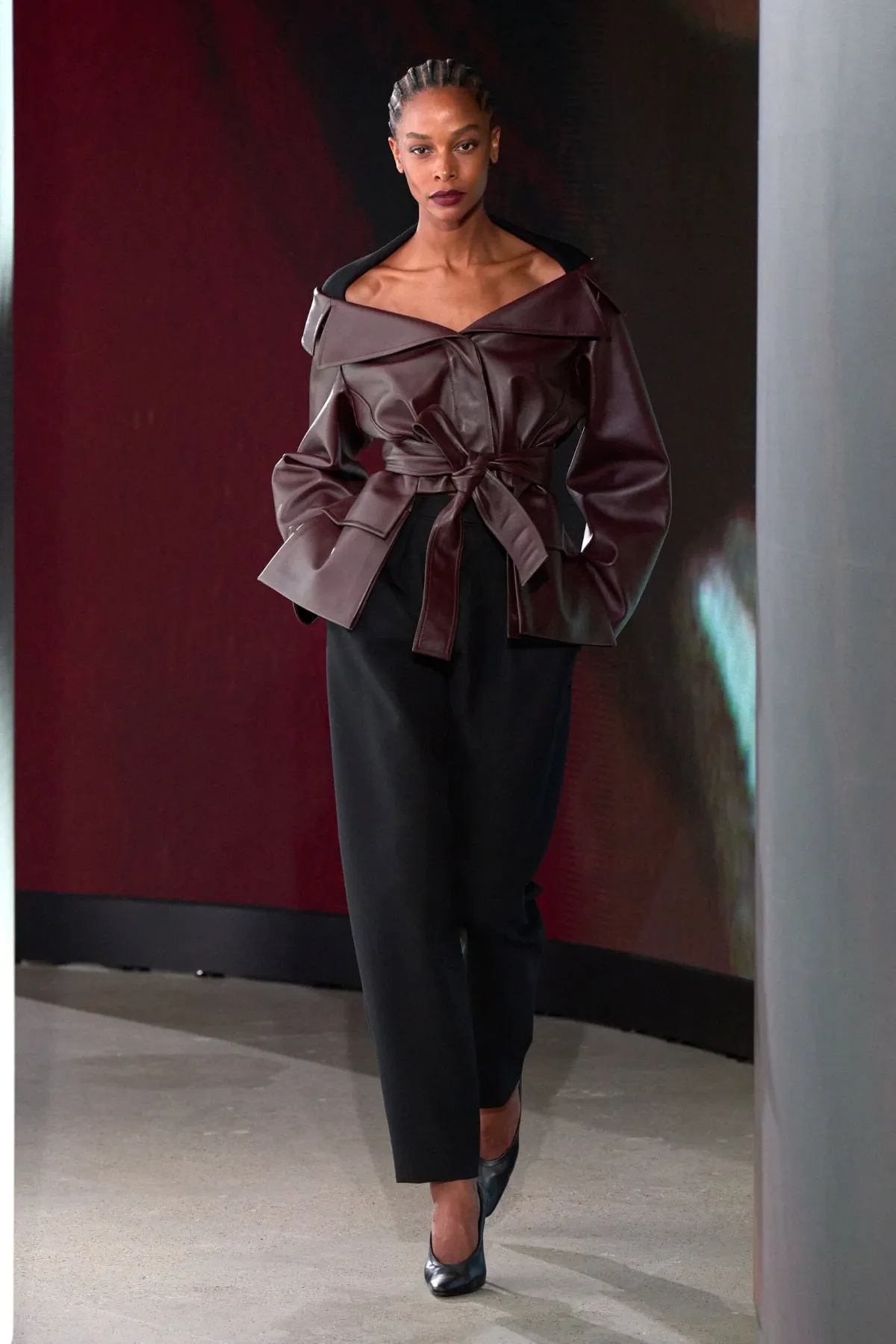
Material choices helped make that argument. Leather appeared in black and deep burgundy across jackets and coats, including pieces shaped with carefully worked pleats. A pale blue version was used for an asymmetric skirt, where the material created a firmer sense of volume. Knitted pleats, soft draping and twisted jersey offered a different response, allowing fabric to sit closer to the figure without appearing rigid.
Details received similar attention. Jewellery and shoes with sharply pointed fronts extended the collection’s interest in controlled shapes and specialist workmanship. These elements mattered because the clothes depended less on surface novelty than on construction, proportion and finishing.
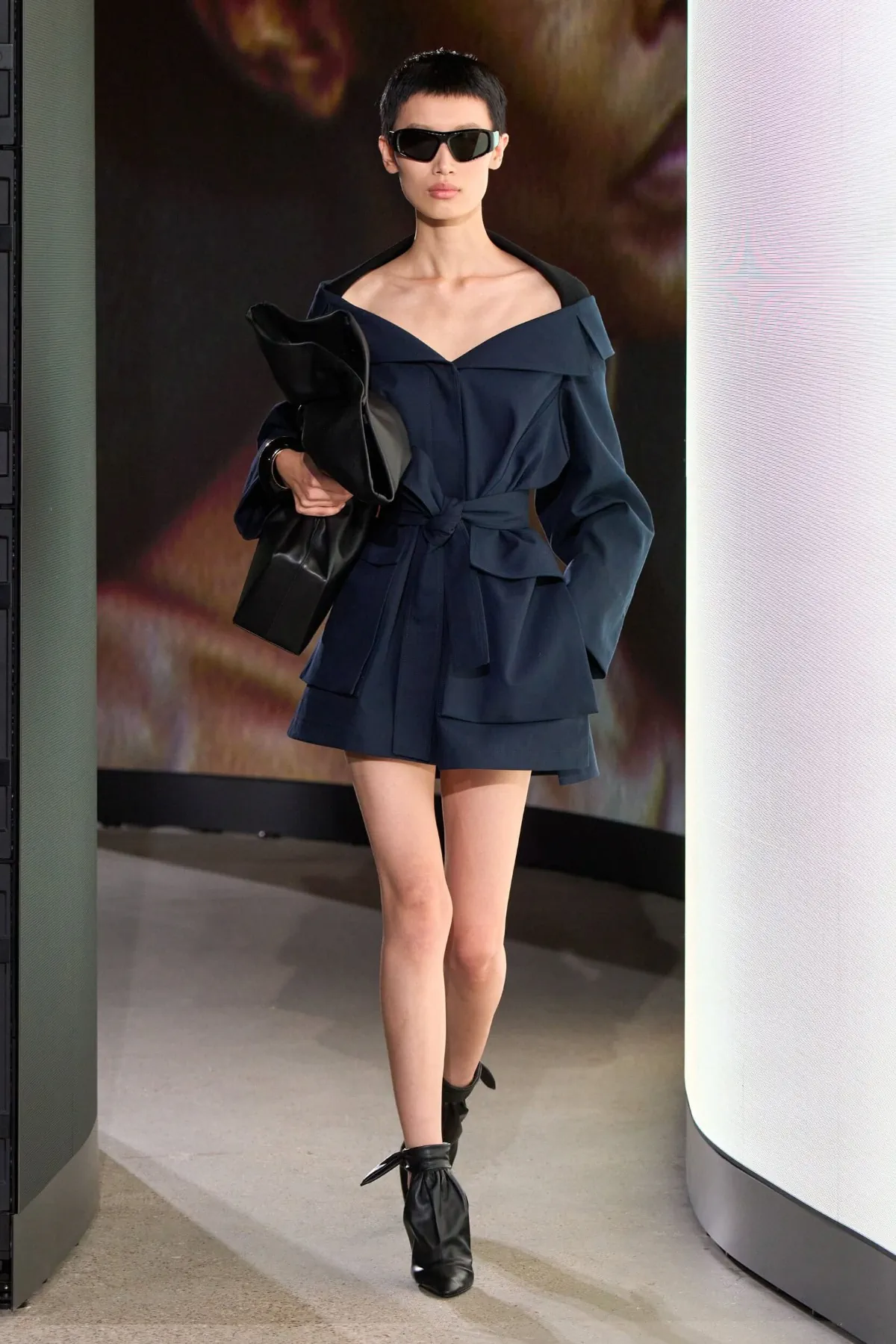
One recurring device was the figure eight, associated with the infinity symbol. It informed wrapping techniques and openings in the garments while also referring to the house’s interest in permanence. That idea was especially relevant for a studio collection presented between creative directorships.
There is always a temptation to treat such a season as a holding pattern. Alaïa Winter/Spring 2027 makes a more useful case for examining what remains when a designer leaves. Here, the answer was not a dramatic reinvention. It was a close study of the house’s existing vocabulary and of how those ideas might continue without becoming fixed in the past.