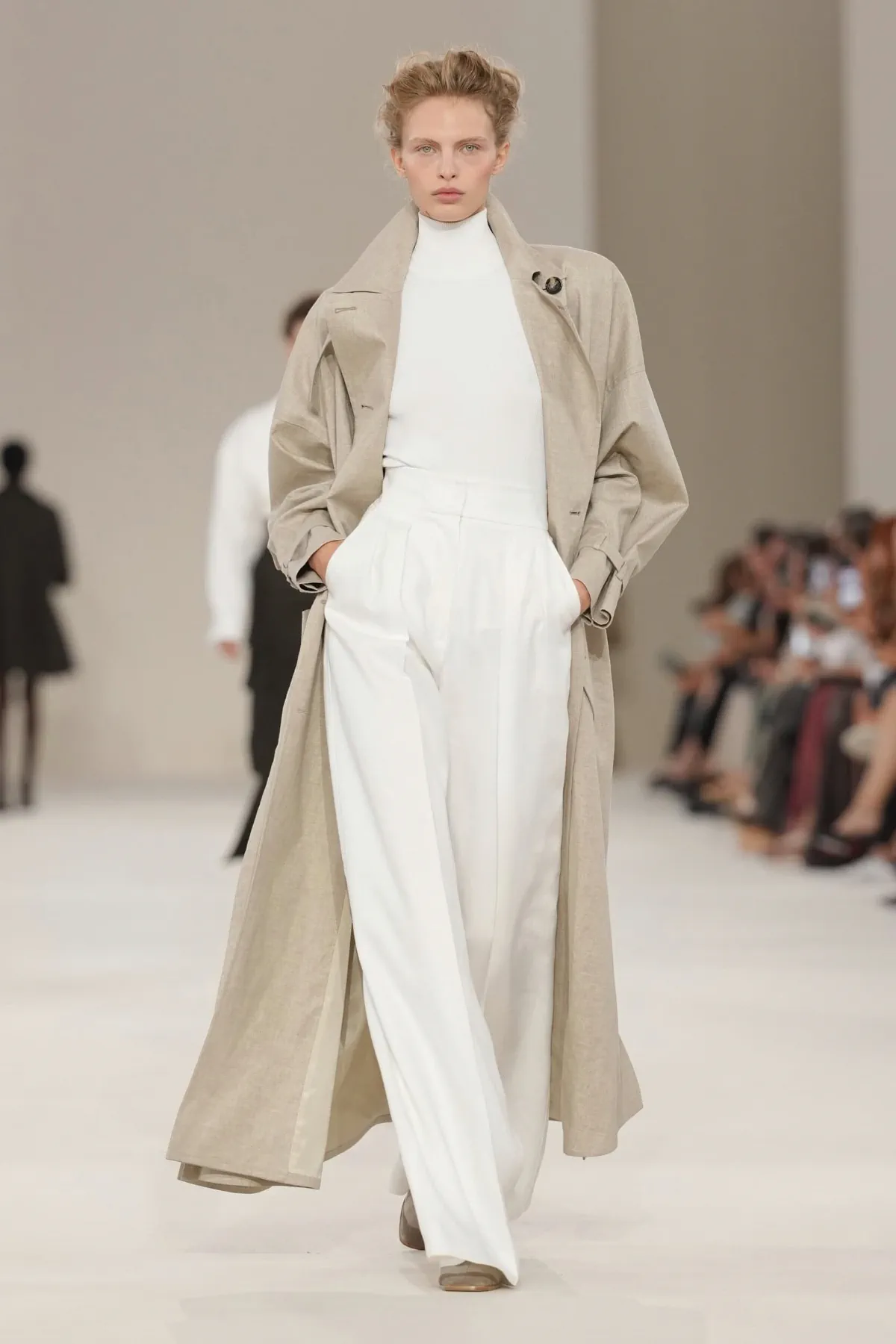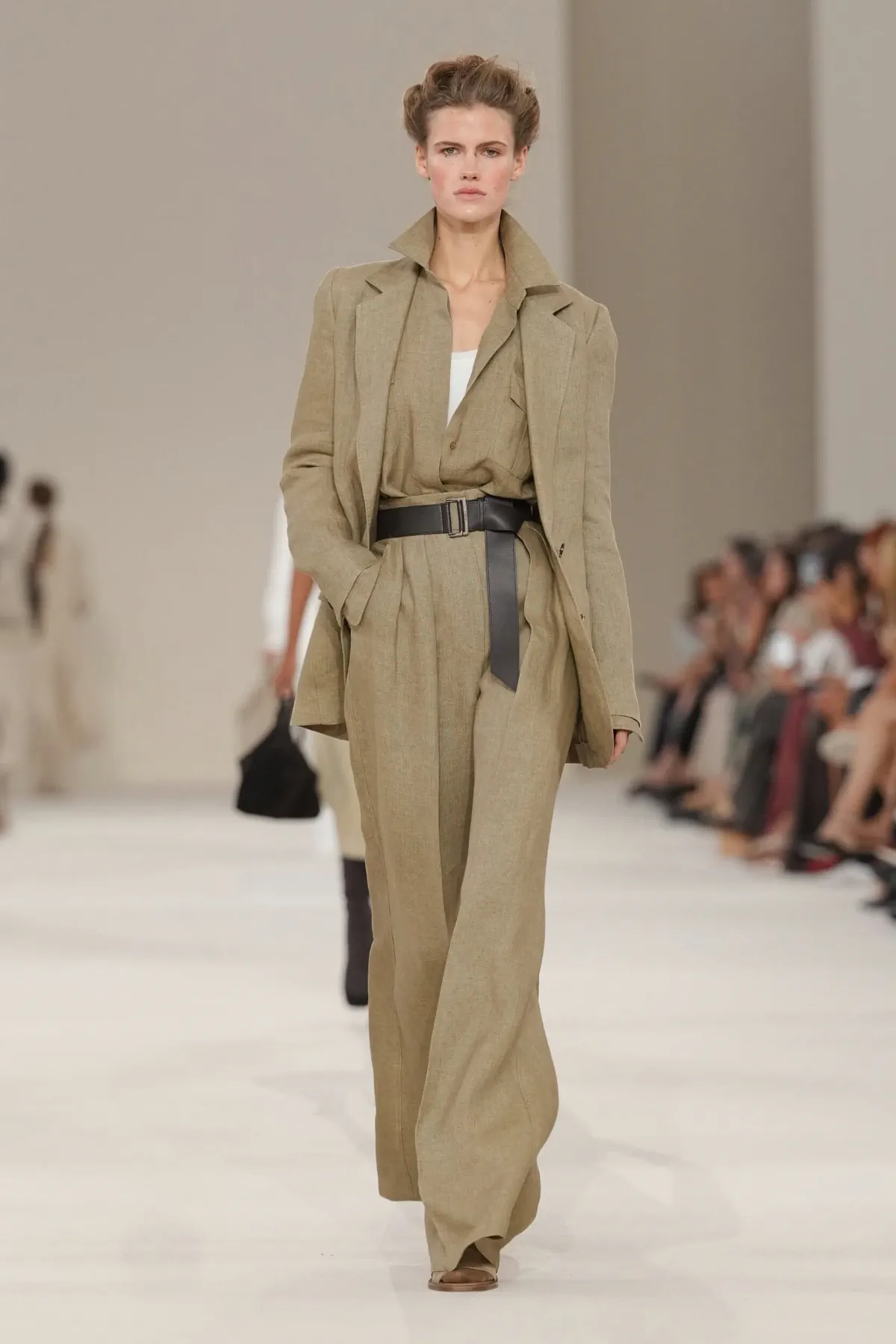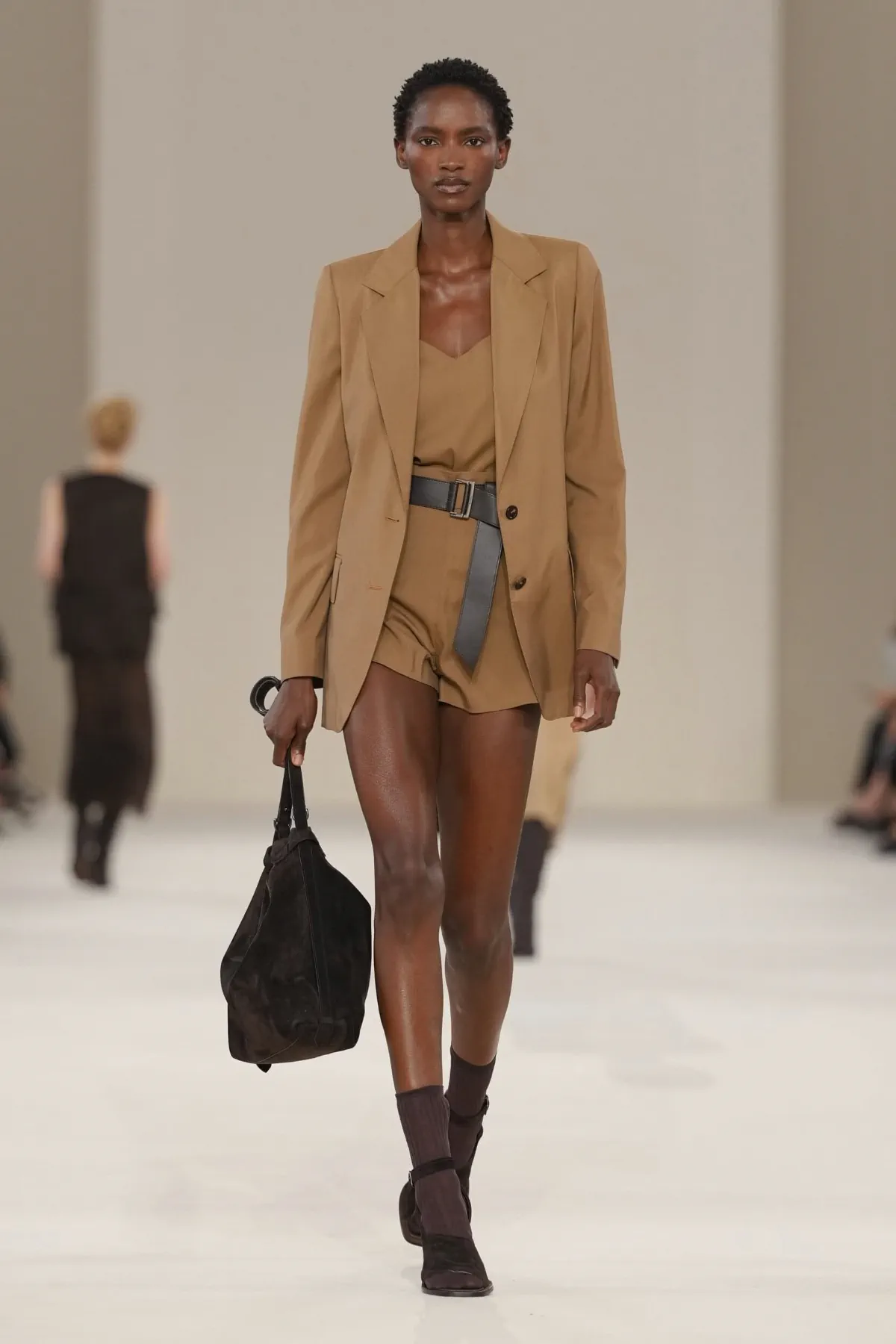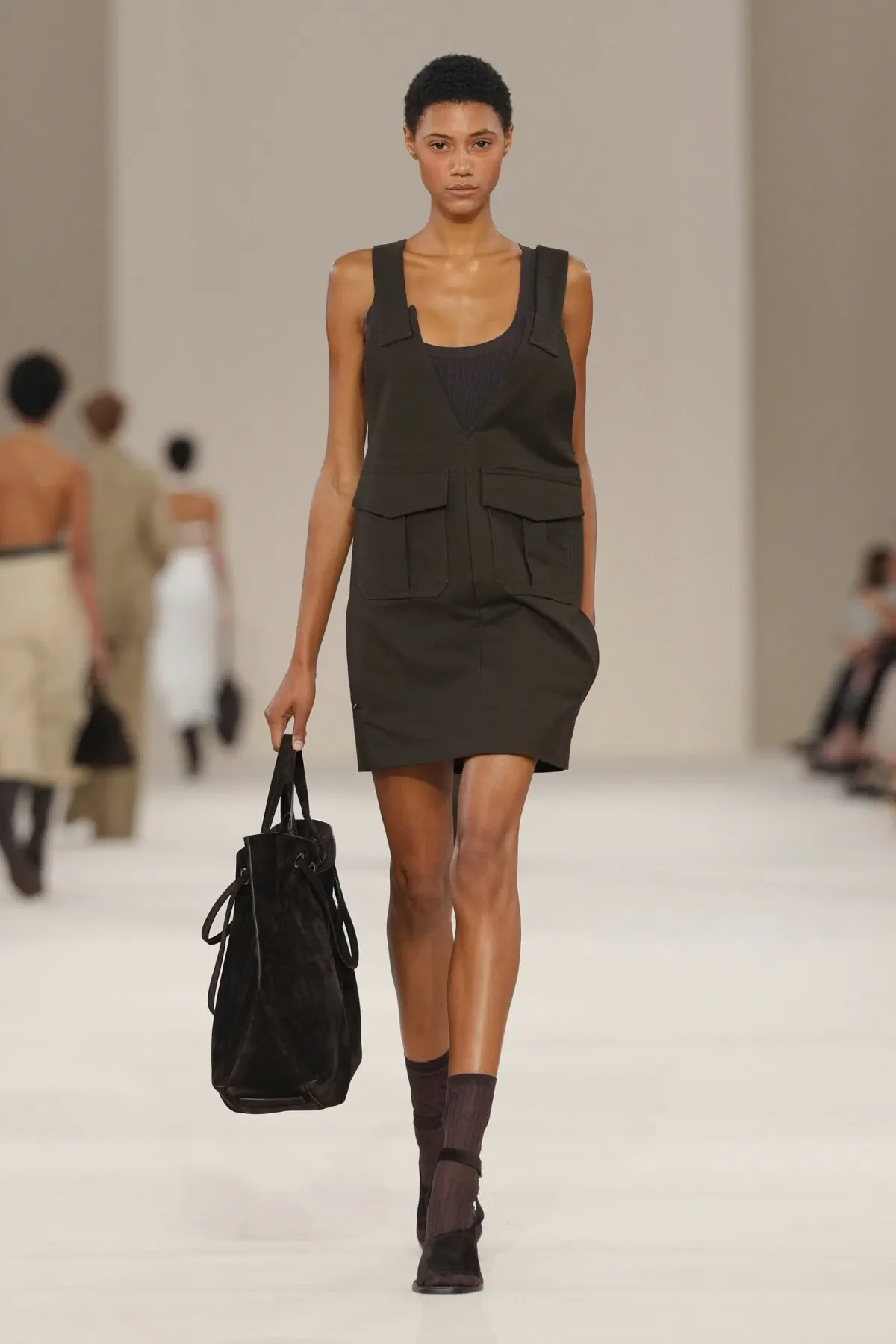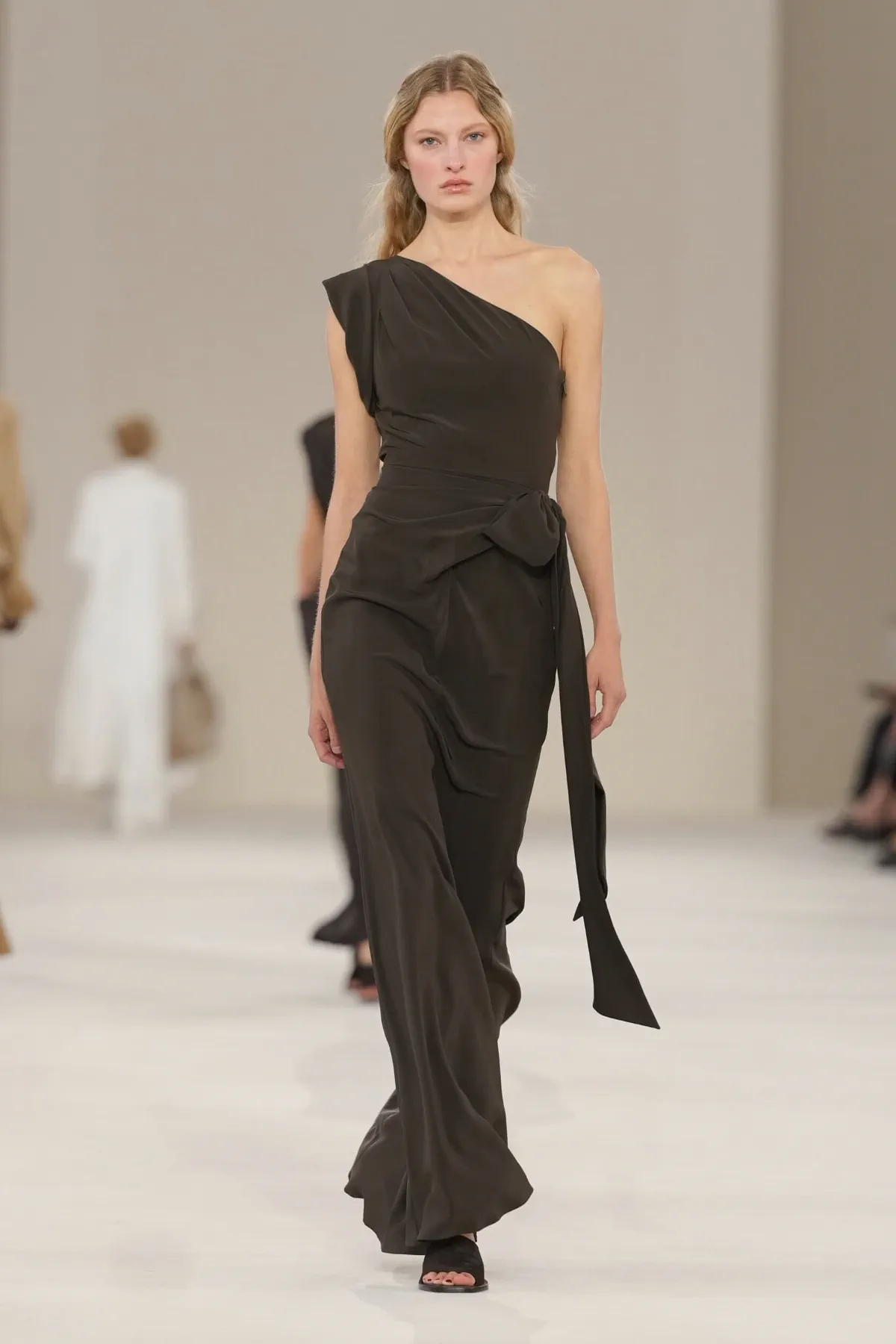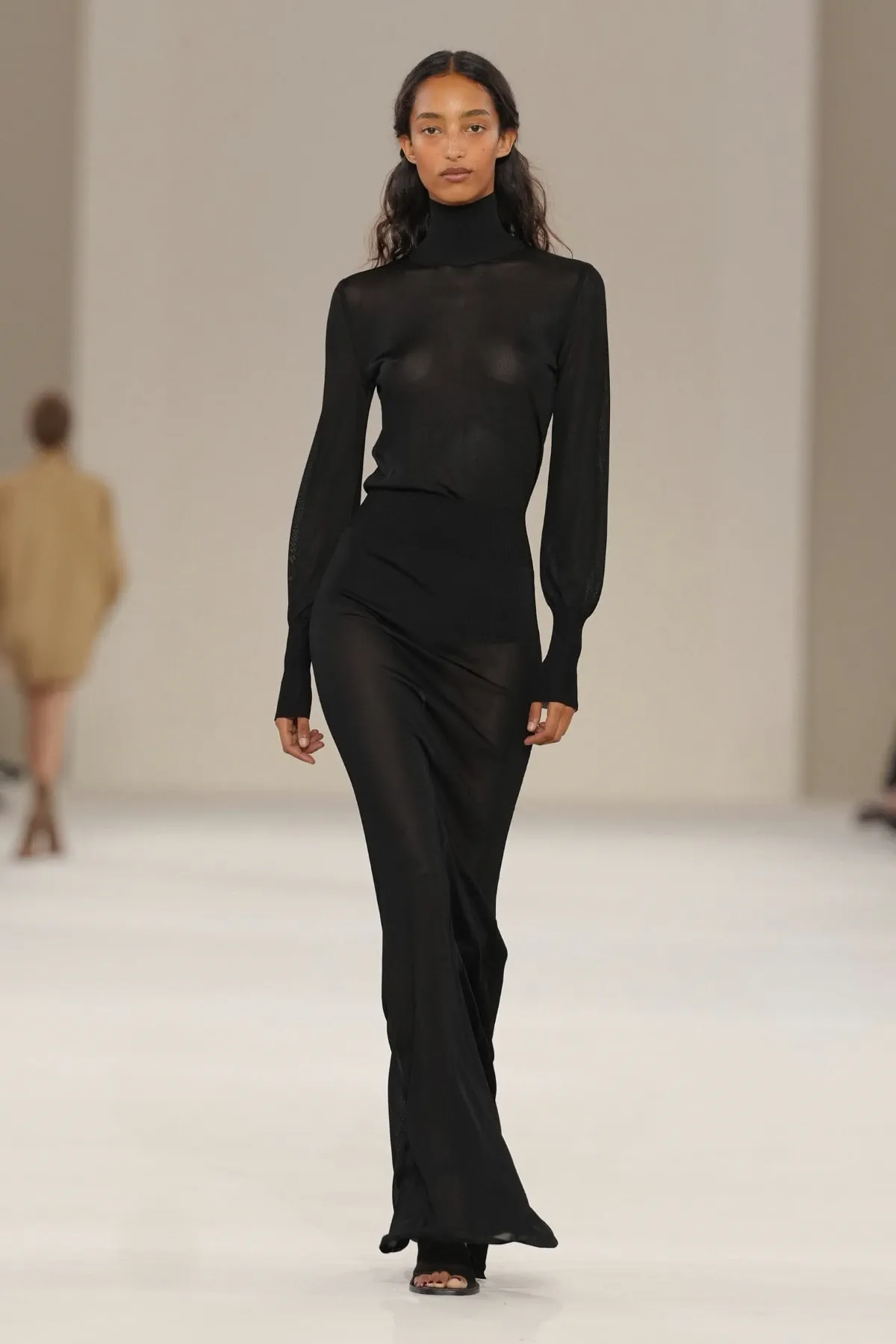

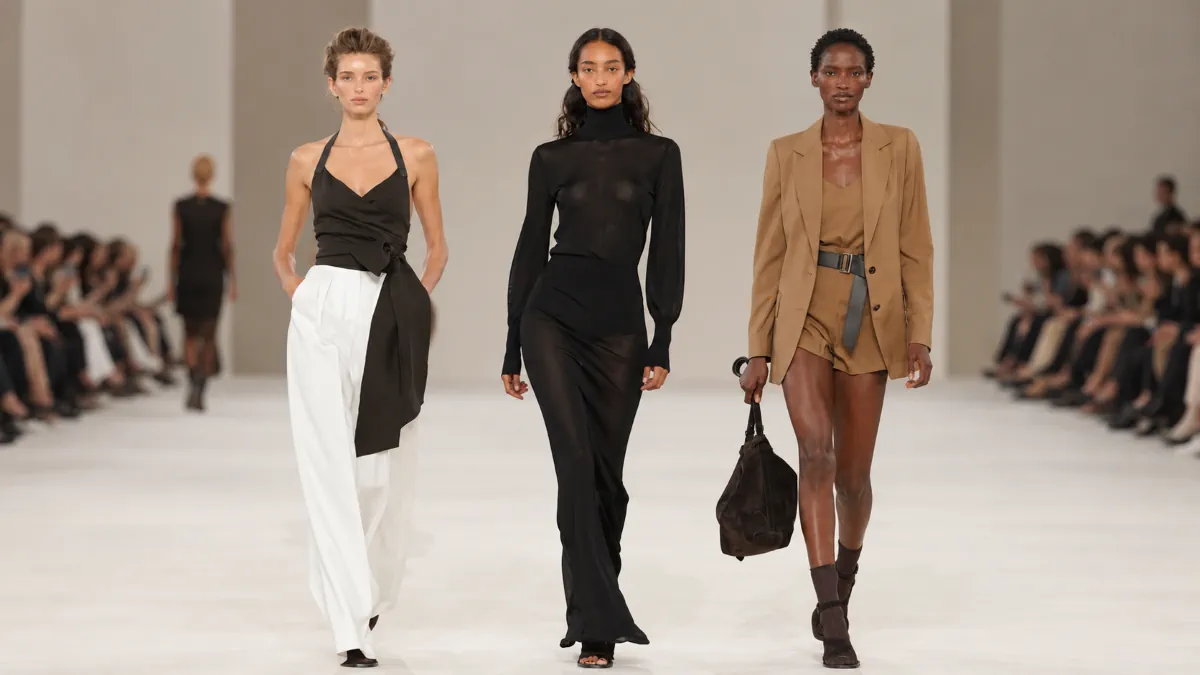
At Max Mara Spring 2027, Ian Griffiths looked to women who treated adventure as part of everyday life. Presented in Milan, the collection drew on the wardrobes of pioneering figures from the 1930s, including Amelia Earhart, Beryl Markham, Osa Johnson, Freya Stark and Eva Dickson. Their practical approach to clothing gave Griffiths a framework for examining utility through a polished urban lens.
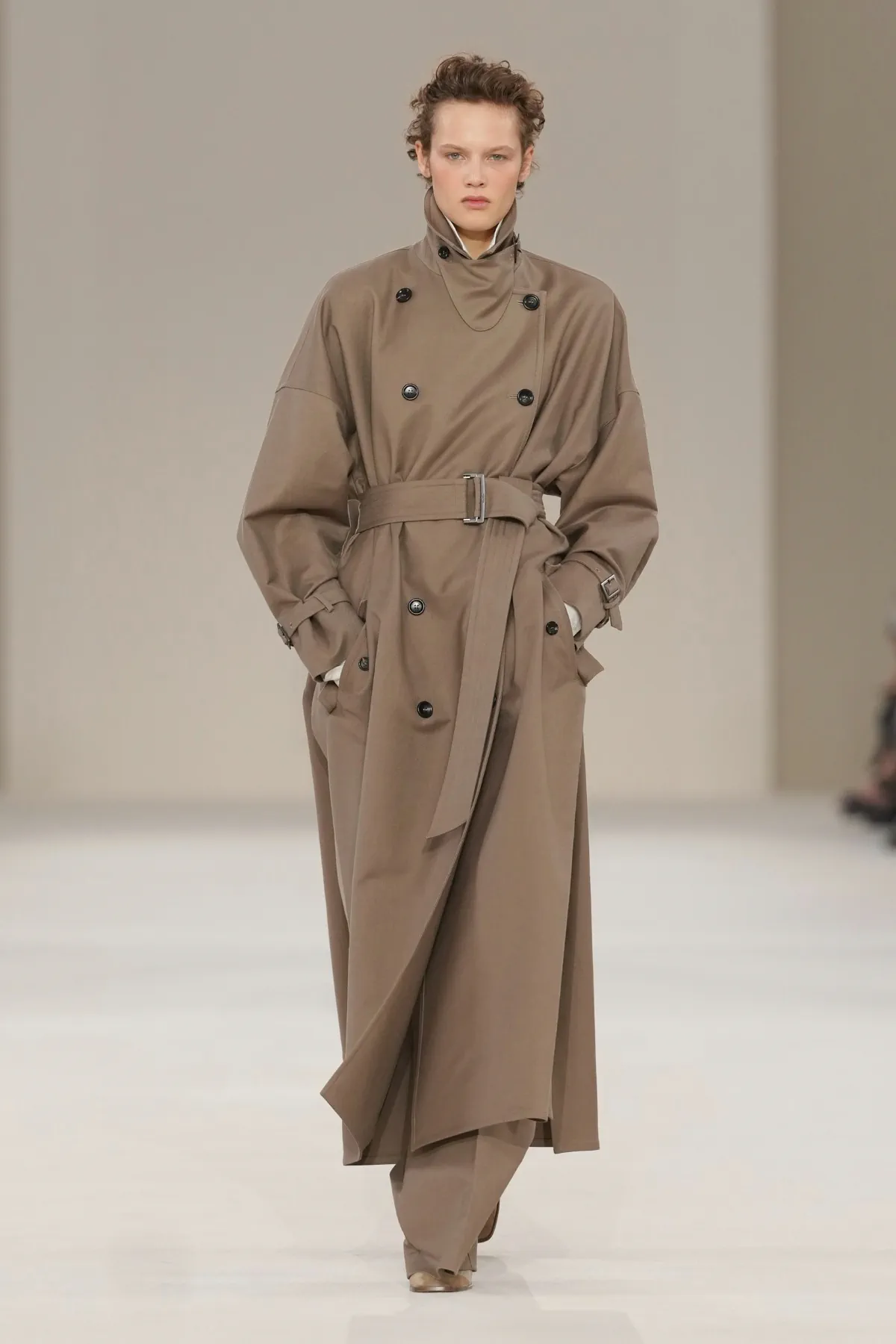
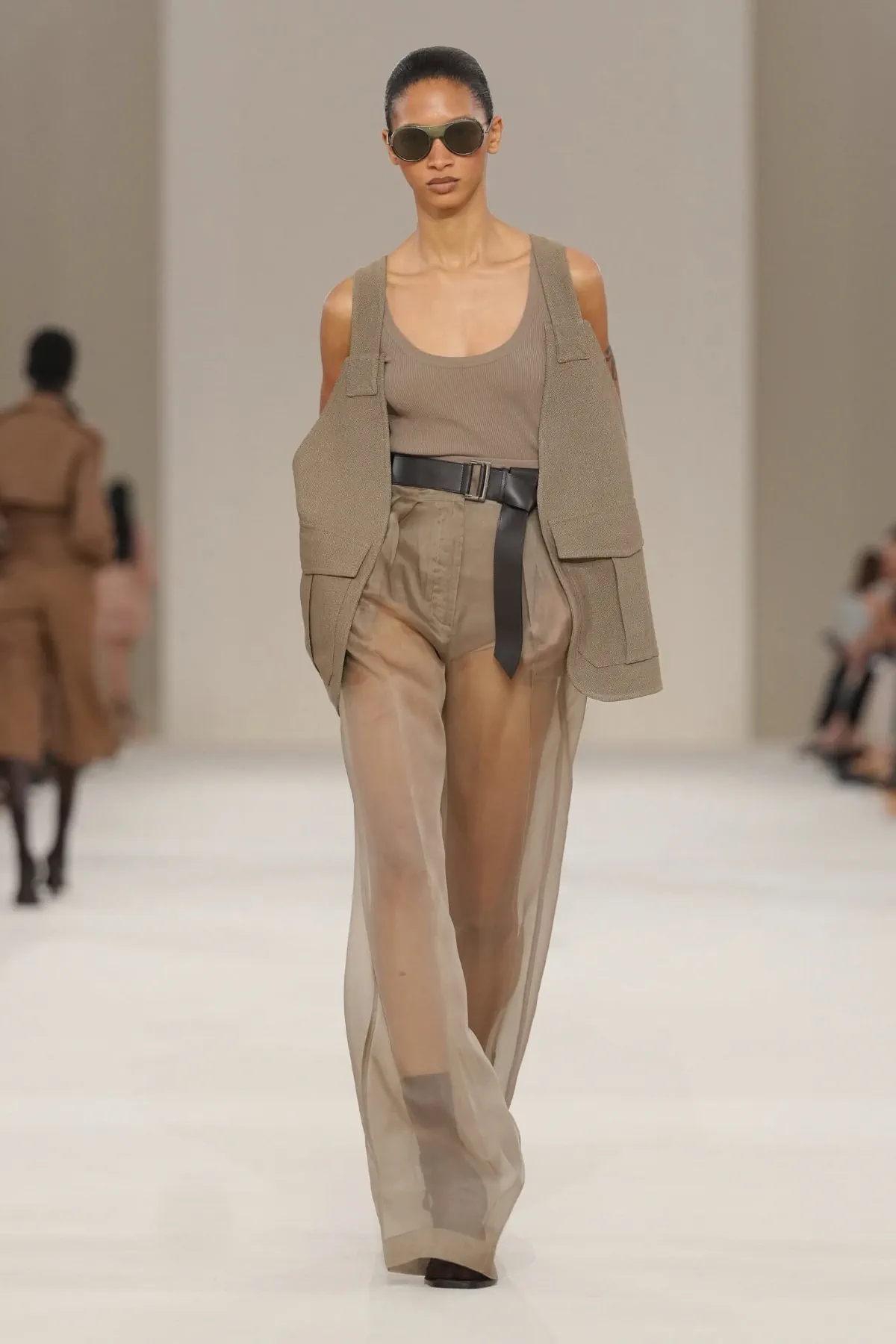
The safari jacket became the collection’s central piece. Rather than treating it as a literal expedition uniform, Griffiths dismantled and rebuilt its familiar codes. It appeared as cropped belted jackets, long dusters, relaxed shirts and oversized vests. Large bellows pockets migrated onto dresses and tailored separates, while wide leather belts brought definition to otherwise generous silhouettes.
The palette stayed largely within Max Mara’s familiar territory of tobacco, chocolate, cream, white and earthy neutrals, occasionally softened by rose tones. Linen tailoring offered a lighter interpretation of summer suiting, while gabardine and leather added weight and structure. High-waisted trousers and skirts often fell with considerable volume, creating a contrast between disciplined construction and easy movement.
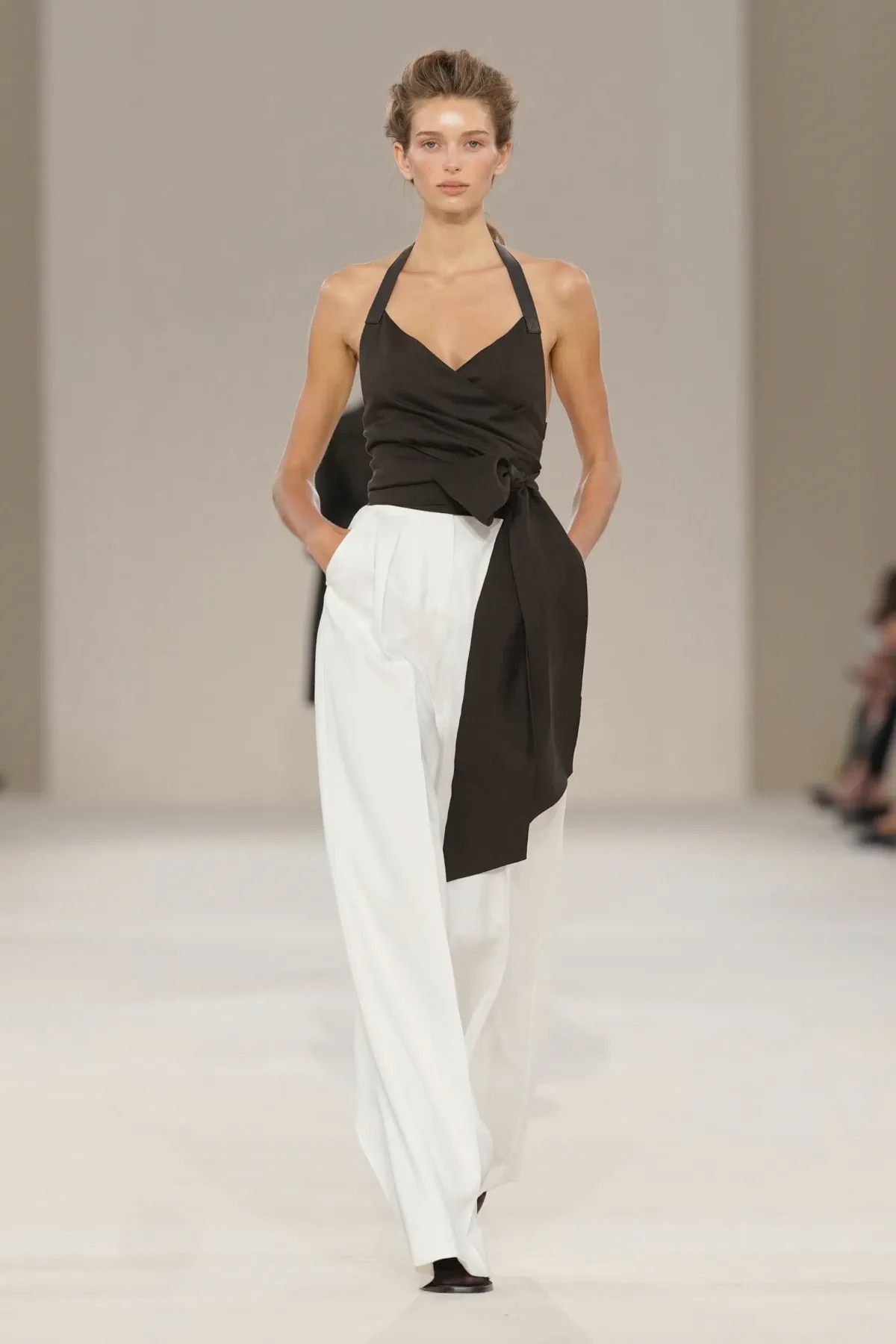
There were also less expected combinations. Sheer organza was used for trousers, jumpsuits and flight-inspired pieces, turning functional shapes into something noticeably more sensual. Bra tops appeared beneath open blazers, while bodysuits were paired with oversized utility vests. These elements connected the collection to current fashion without overwhelming its historical references.
Even the simpler dresses carried more history than their minimal lines initially suggested. Spaghetti-strap slips, halter tops and apron dresses could easily be read through the lens of 1990s minimalism, yet their elegance also recalled the streamlined glamour of 1930s Hollywood.
Follow all the latest news from Fashionotography on Flipboard, or receive it directly in your inbox with Feeder.

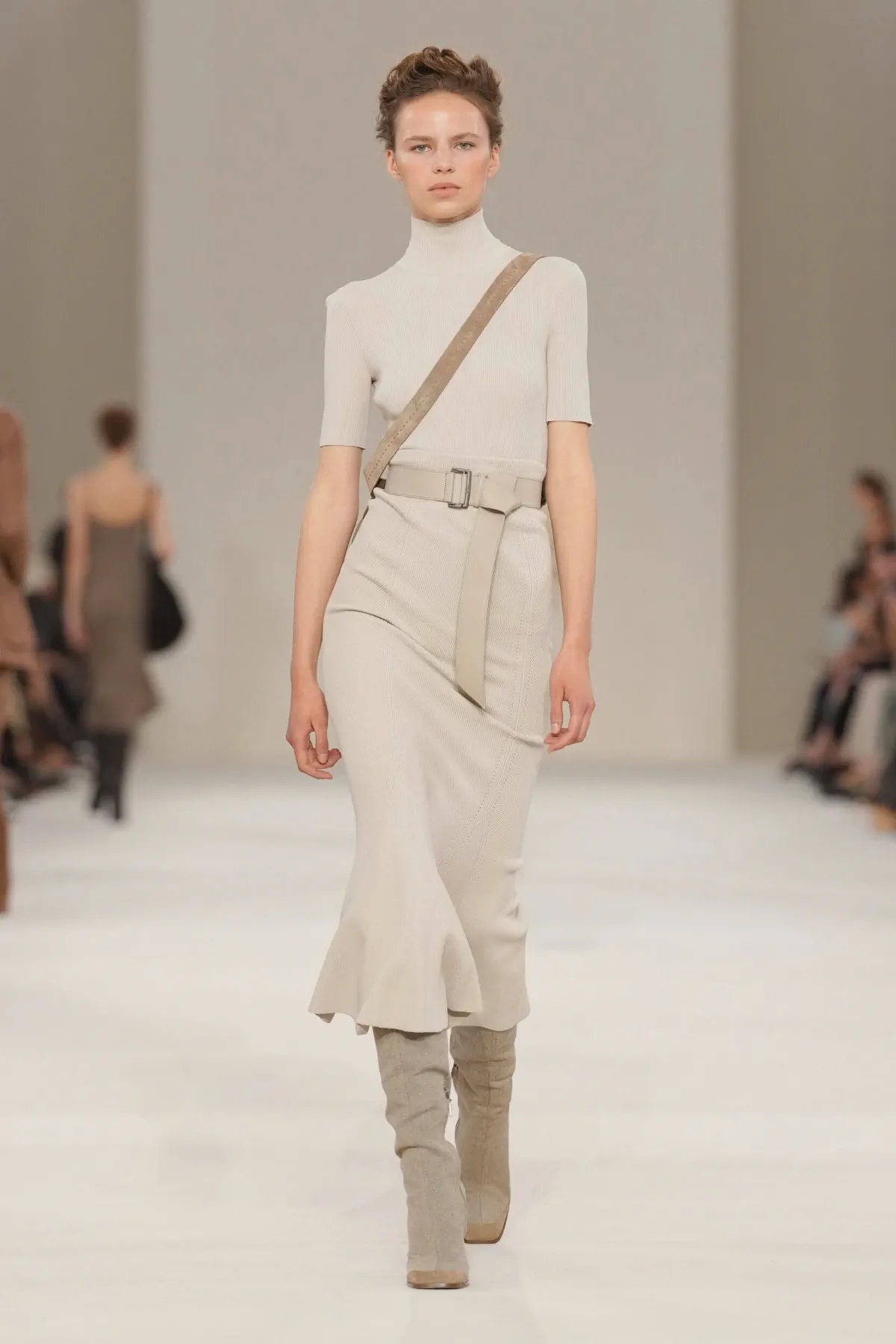
Griffiths described his approach as “utility luxe,” but his definition of luxury is less about excess than usefulness. That idea was particularly clear in the closing bias-cut knitwear, where evening dresses offered visual impact without sacrificing the flexibility associated with separates.
The collection also arrived with a more serious undertone. Its references to readiness, protective dressing and what the show notes called “corporate armor” inevitably carried contemporary associations. Yet Max Mara avoided turning those ideas into costume or commentary at the expense of clothes.
Instead, Max Mara Spring 2027 asked a practical question: can clothing feel escapist while remaining genuinely useful? Griffiths answered through familiar wardrobe foundations rather than fantasy pieces. Safari jackets, trenches, tailored trousers and simple dresses became tools for imagining movement, independence and a life beyond the routine.