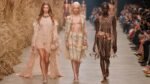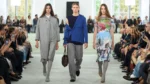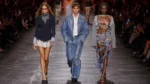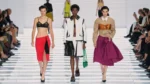

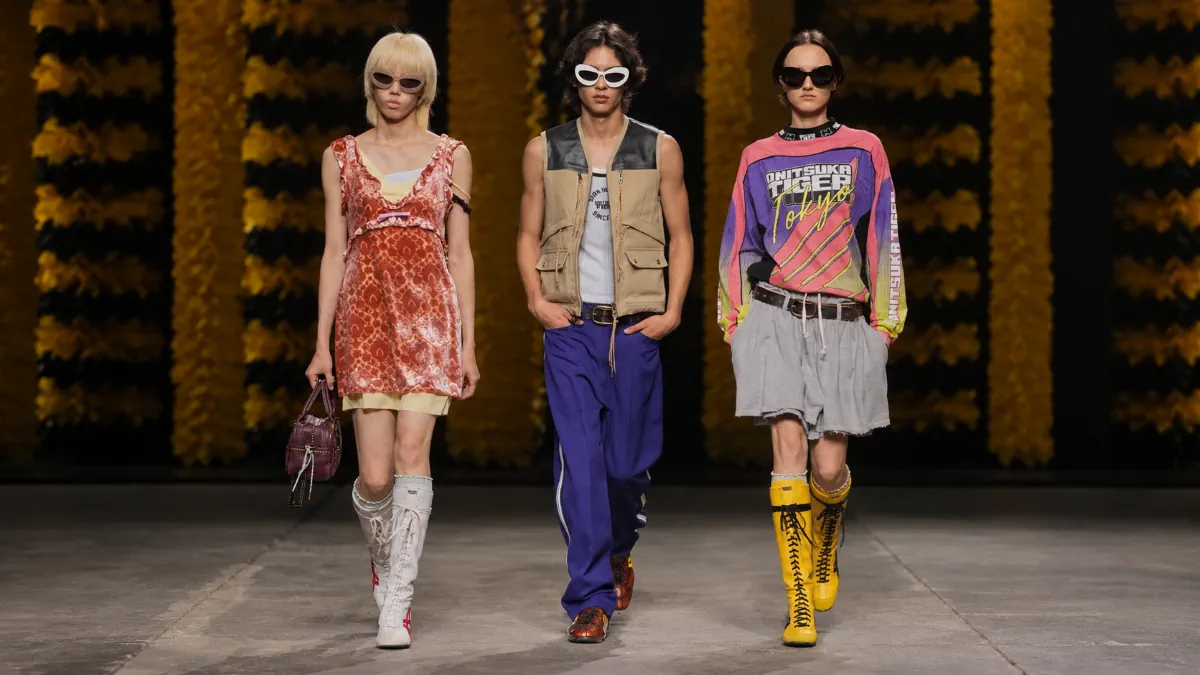
| Onitsuka Tiger unveiled its Spring 2027 collection during a runway show titled “Energy Station,” staged as a full-scale roadside stop with a working car wash, laundromat, café, and flower stall. Creative director Andrea Pompilio collaborated with Honda, featuring a custom Mid Sports Concept motorcycle and garments made from archival Honda technical fabric. The show marked Pompilio’s most fashion-forward outing for the Japanese running brand, owned by Asics, to date. |
Two motorcycles cut through the darkness before a model appeared – and one of the motorcycles was not just a prop. It was a custom Honda, a detail that signals how far Onitsuka Tiger has pushed its fashion ambitions this season. The Japanese sportswear brand, which is owned by ASICS, has spent recent seasons building its fashion credentials under the direction of Creative director Andrea Pompilio. This outing was his most confident yet. Held inside an industrial venue transformed into a sprawling roadside stop, the collection paired the label’s running heritage with a relaxed, lived-in interpretation of Americana that felt more observed than invented.
Pompilio called his set “Energy Station,” and it earned the name. A functioning car wash, a flower stall, a laundromat, a café, and a corner market surrounded the runway. They were rendered with such detail that the whole thing looked less like a stage and more like an actual stretch of road. Backstage, he told journalists that he had envisioned a caravanserai, a stopping point where travelers from different places cross paths for a few hours before scattering again. This concept gave the show its logic. No one on this runway matched anyone else, and none of them looked dressed for an occasion. They looked like people who happened to end up in the same parking lot.
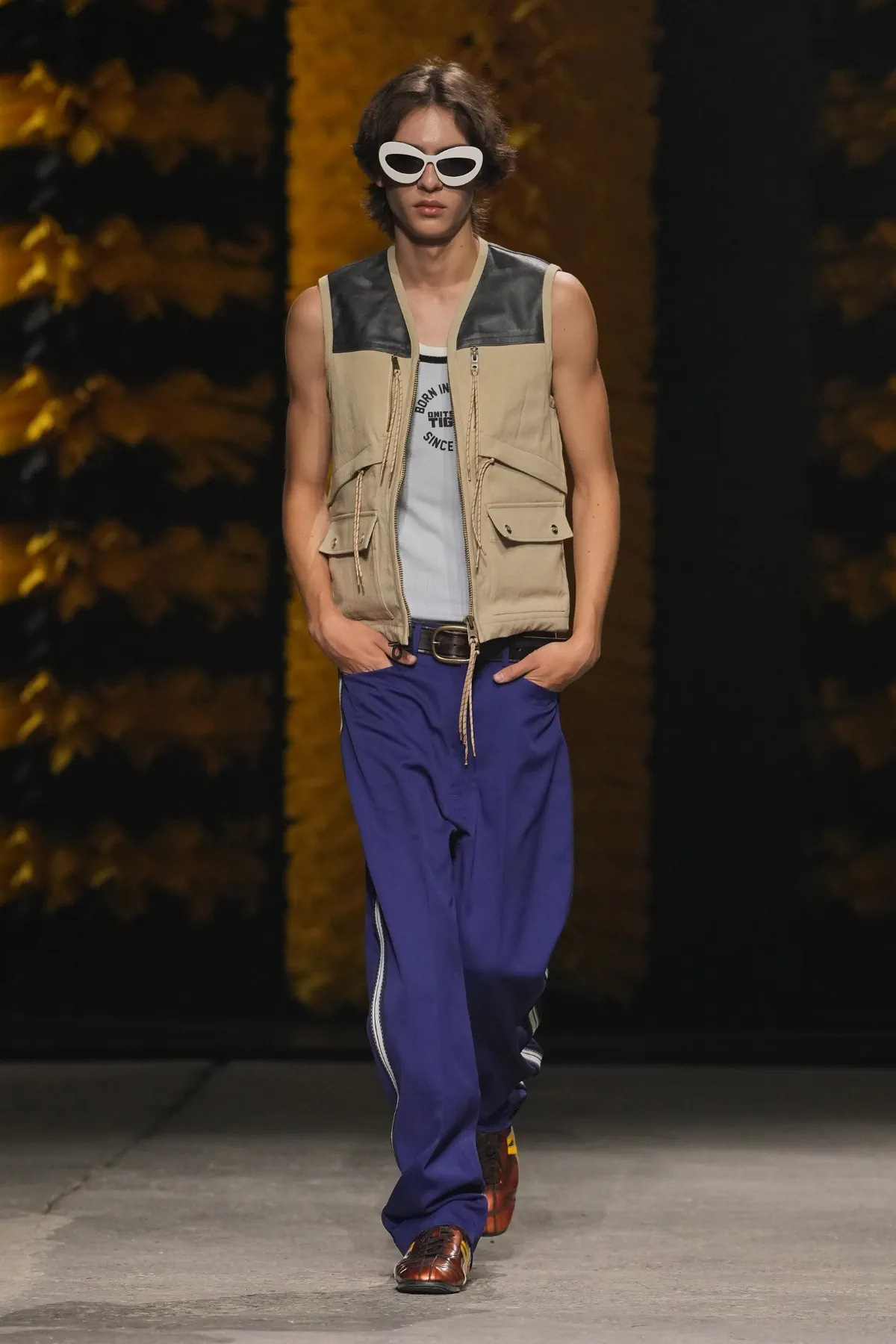
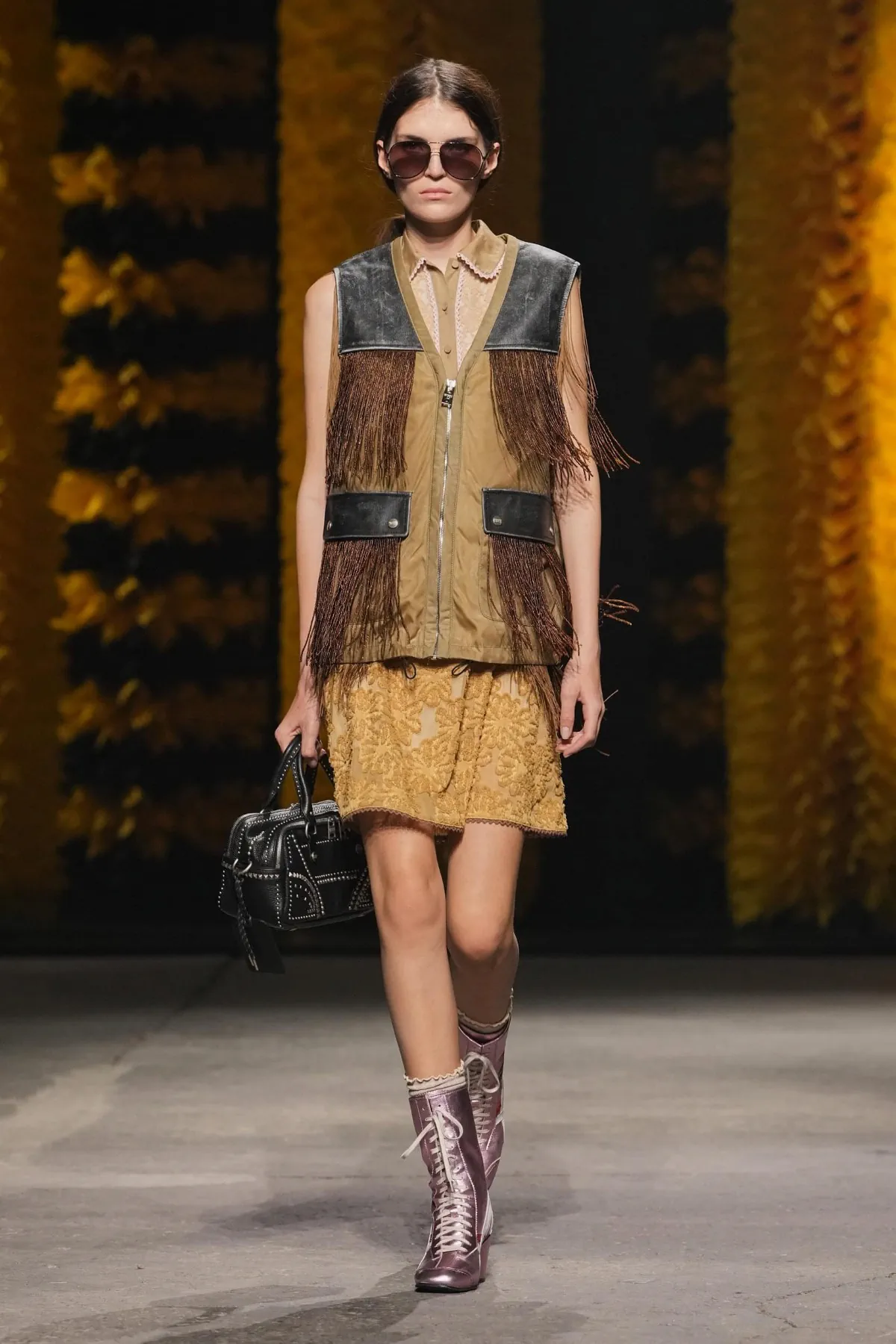
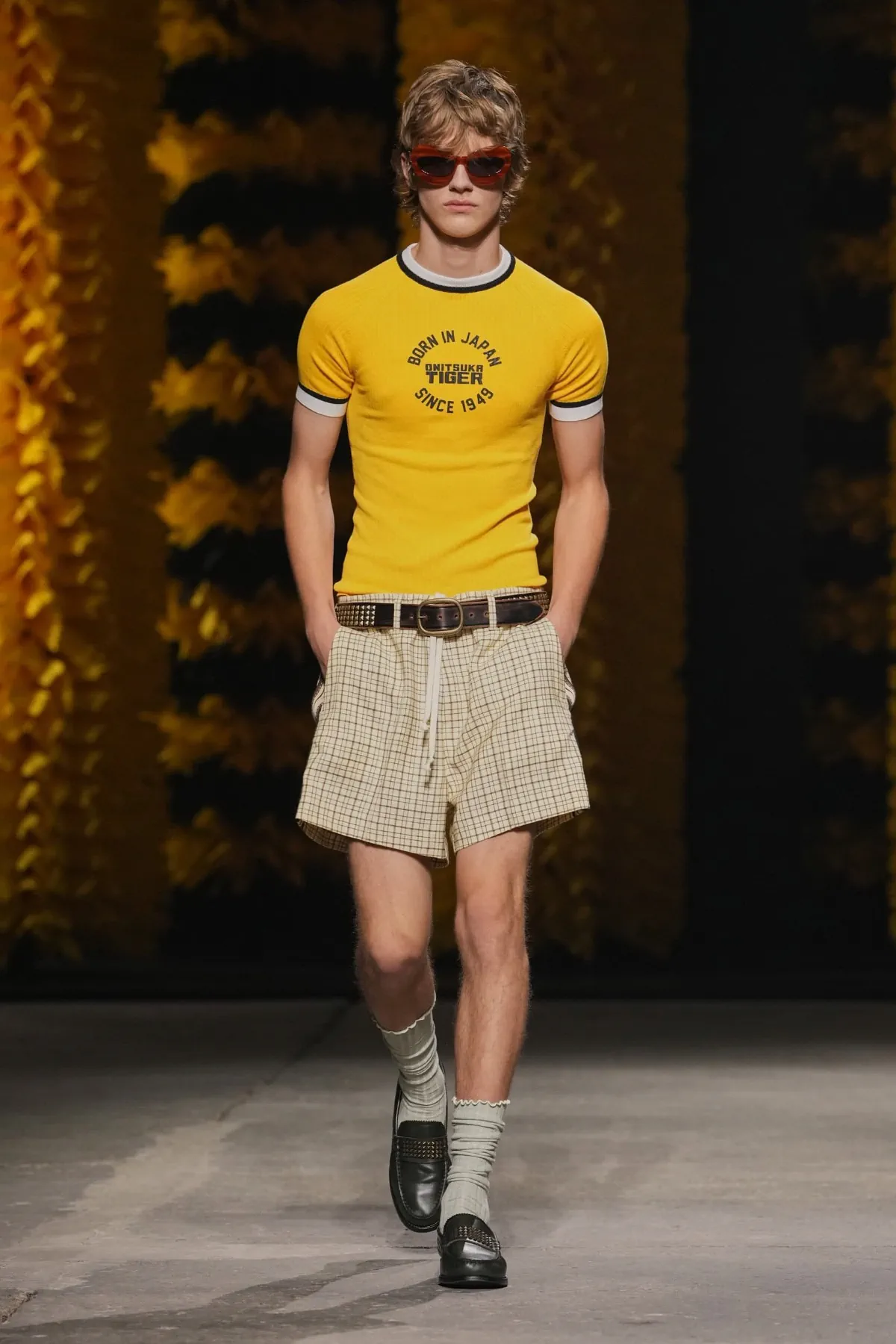
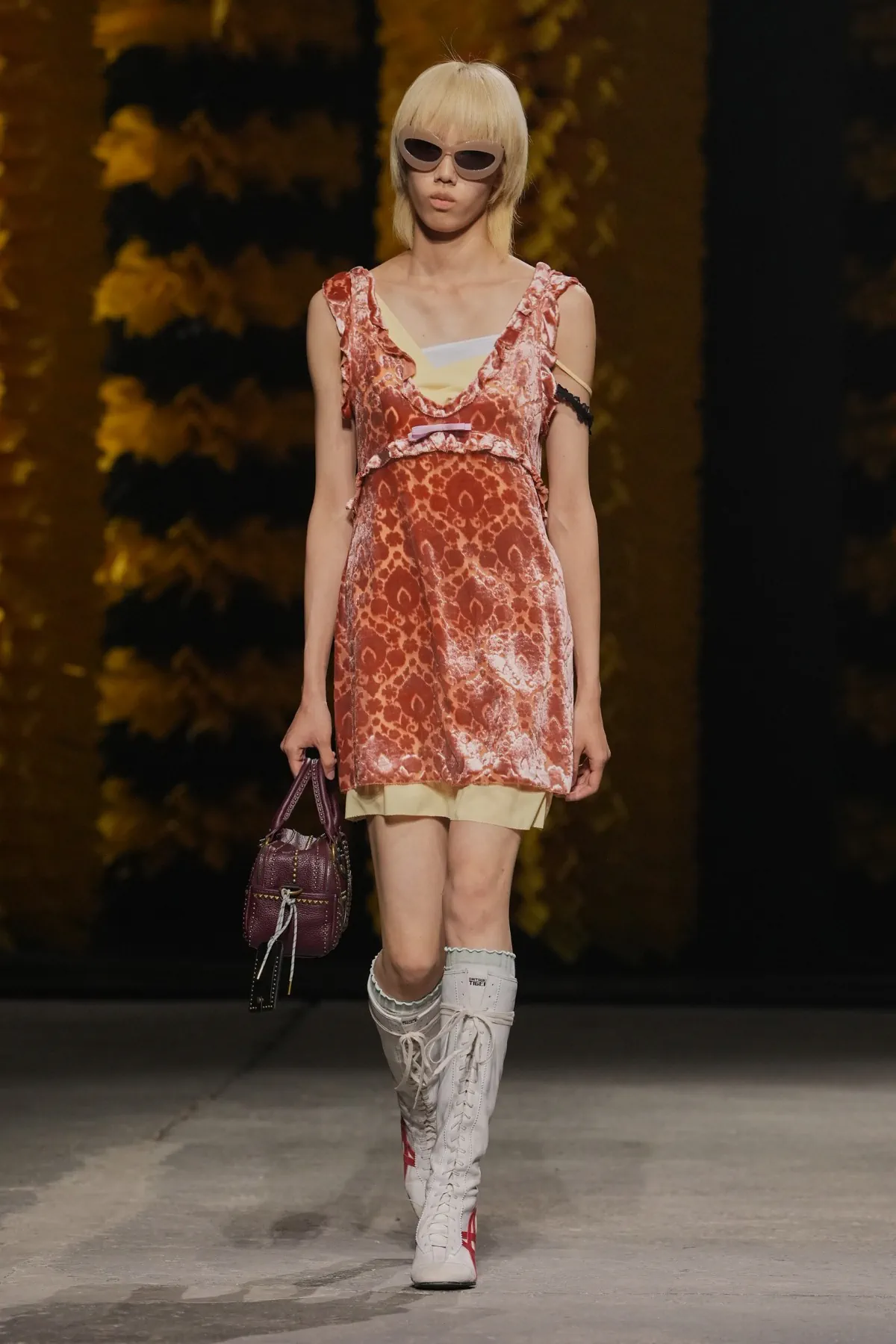
The clothes leaned harder into Western cues than Pompilio had before, and the shift suited him. Suits came in earthy, sun-bleached tones with small bow details at the collar or a checked pattern that read more ranch hand than boardroom. Fringe appeared on suede jackets, beaded evening pieces, and utilitarian vests, giving the collection a rougher, road-worn texture without appearing costume-like. Short slip dresses in devoré velvet sat next to featherweight jersey pieces – a pairing that captured the show’s approach of contrasting elements without forcing them.
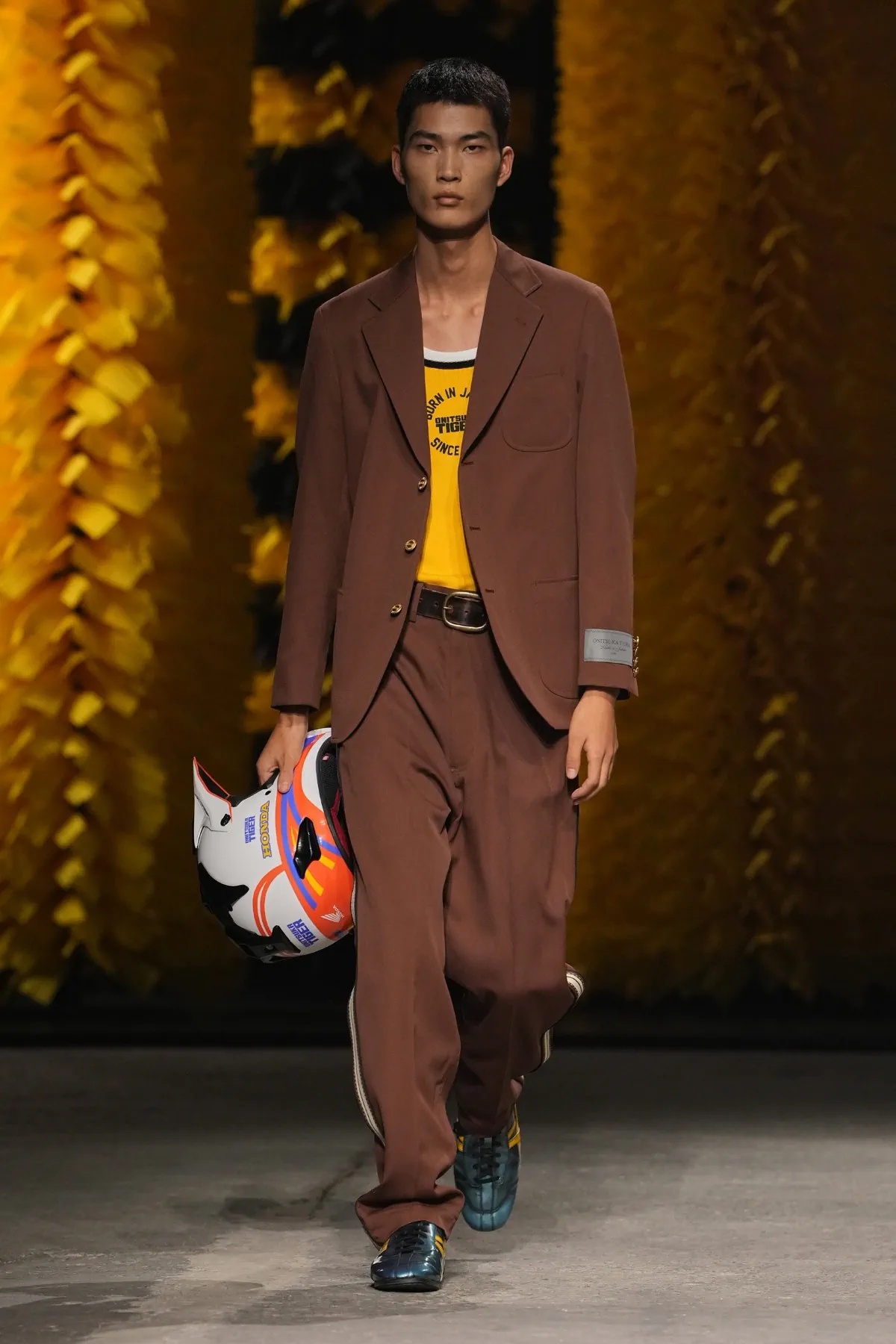
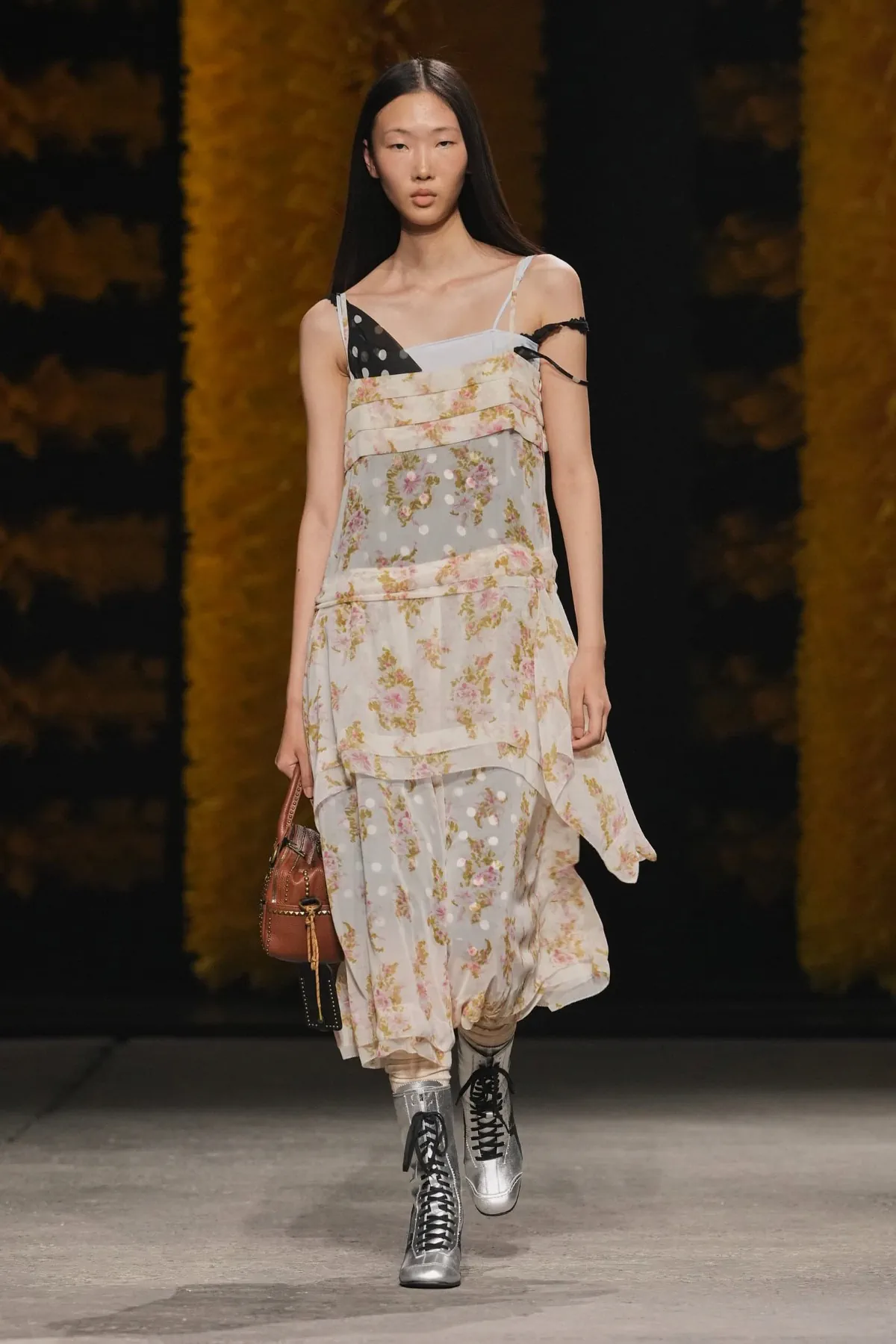
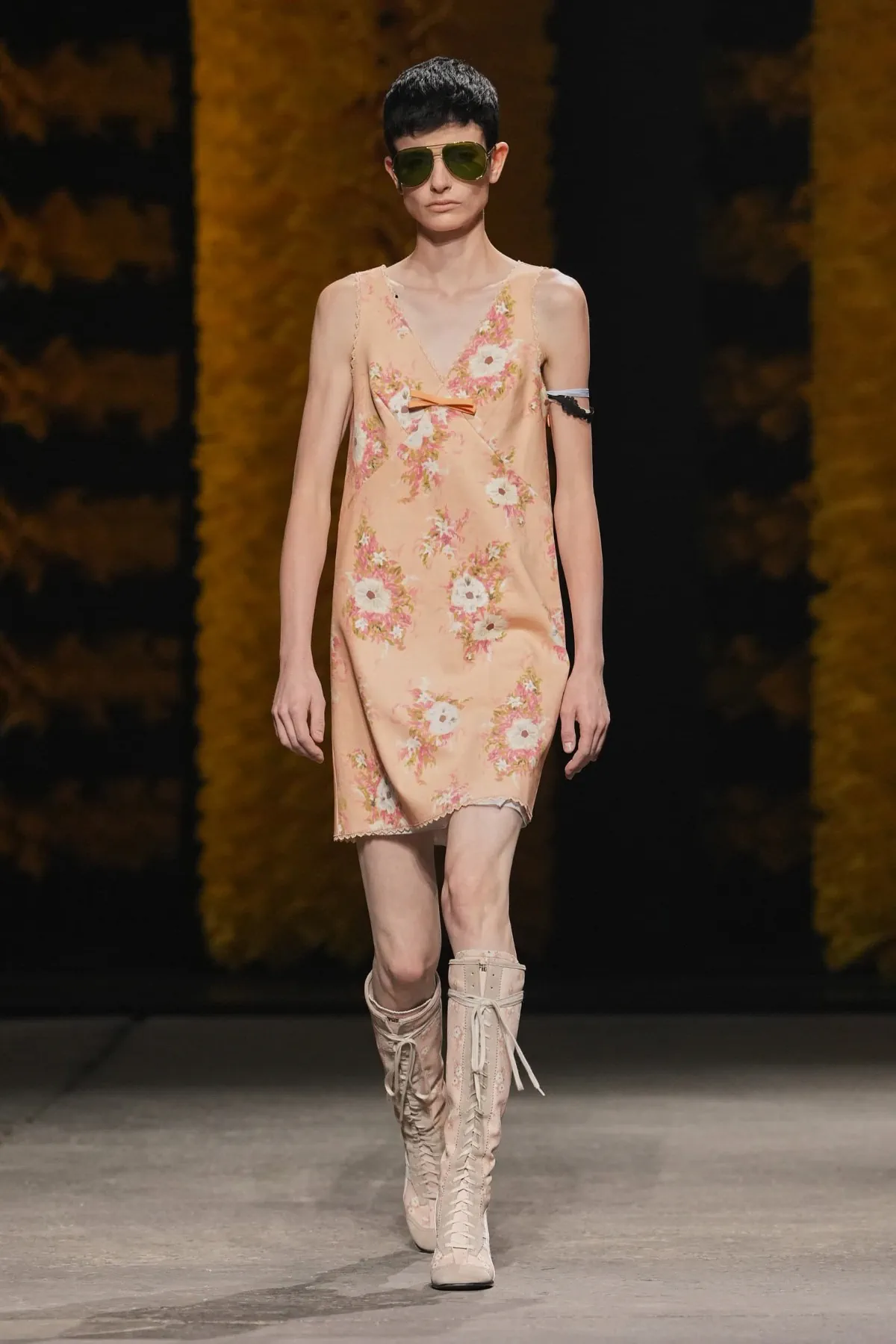
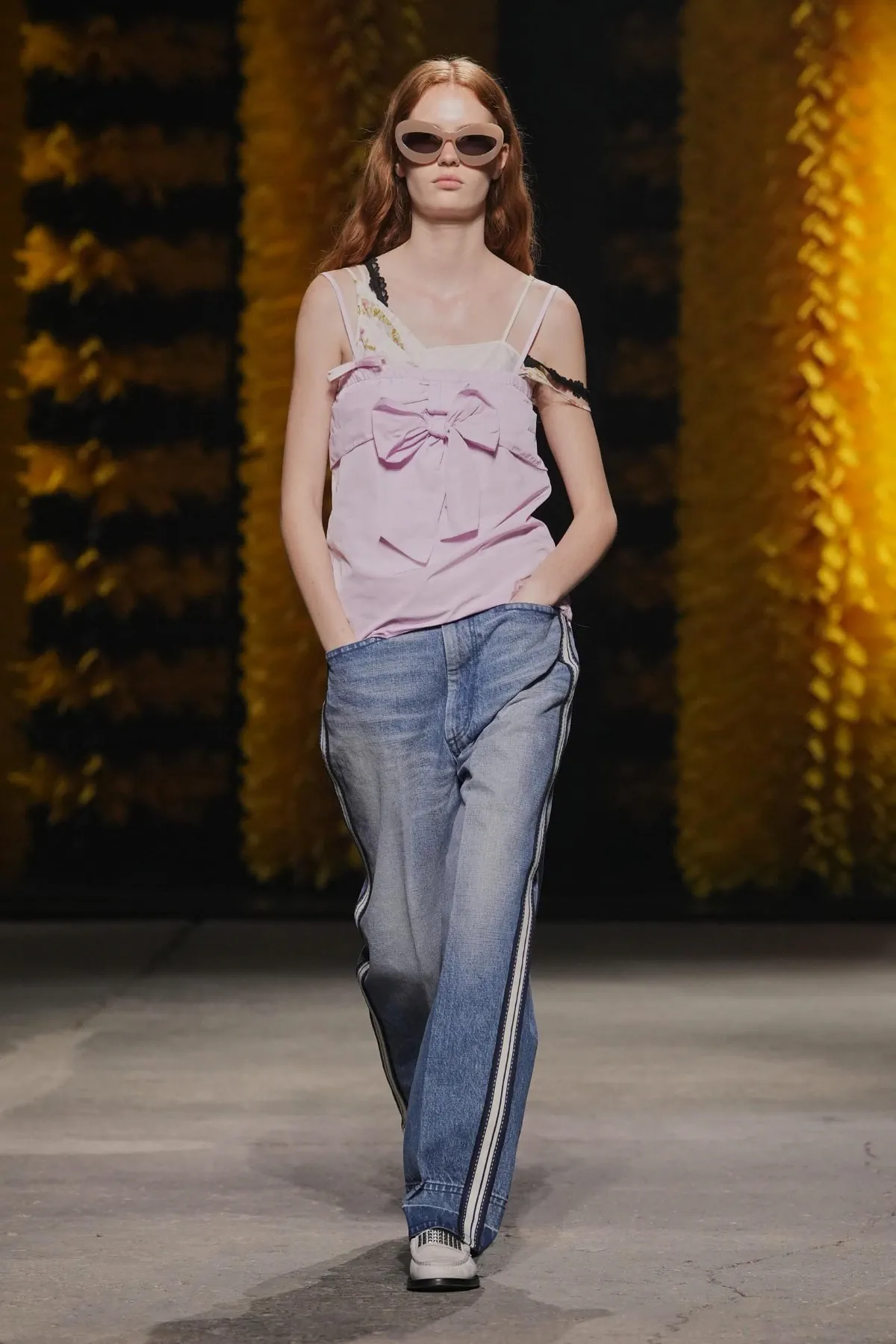
Dresses with floral prints, cut from stiff Japanese jersey – chosen precisely because the fabric holds its shape rather than draping softly – added a vintage note that felt specific to the brand rather than borrowed from a generic idea of the past. Track pants with side stripes doubled as trousers under boxy blazers. Windbreakers were tossed over tank tops and miniskirts – the kind of thrown-together outfit someone actually wears to run errands, not one built for a photograph.
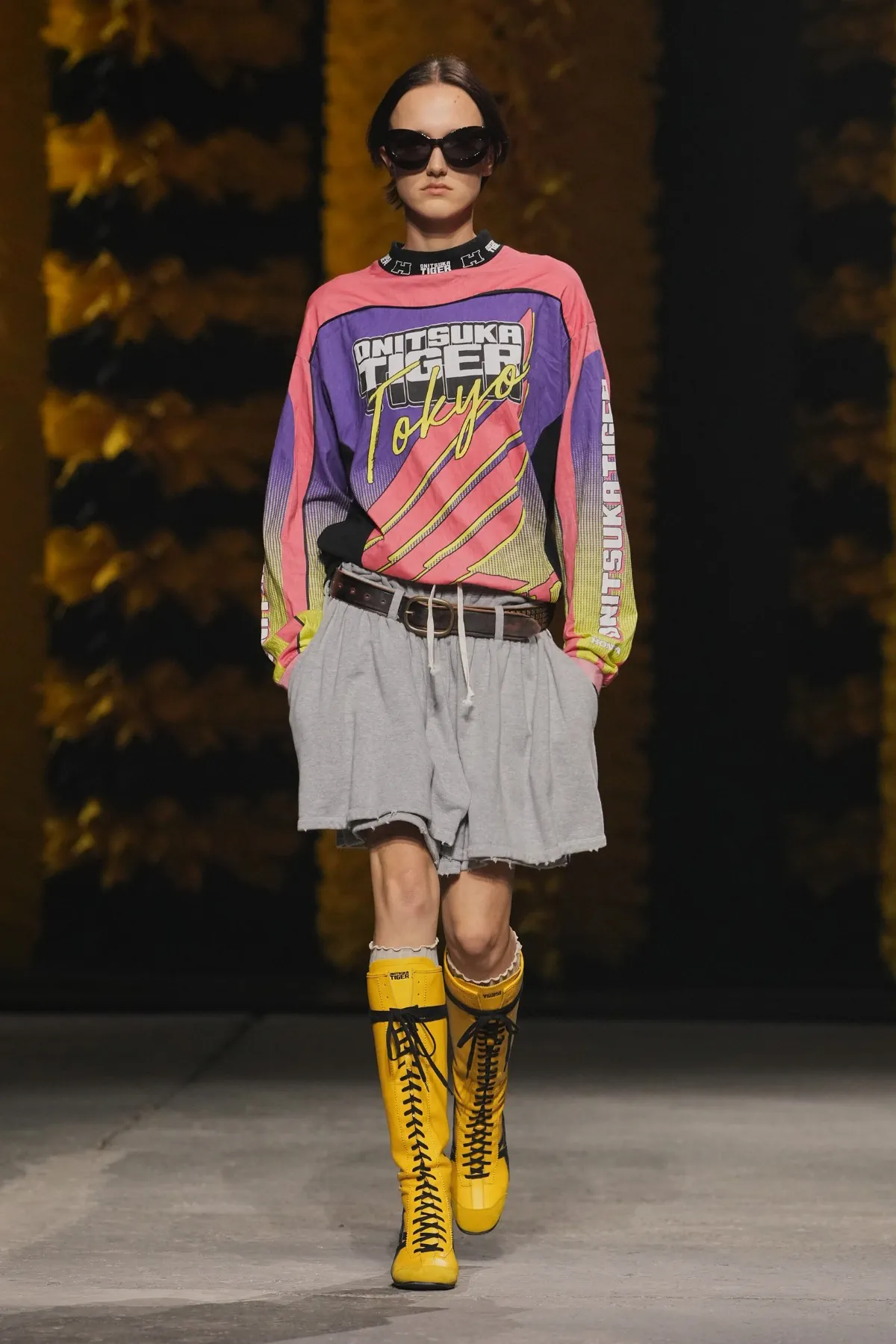
The season’s headline collaboration came from Honda. This is what sets the show apart from every other Americana-inspired collection this season – it’s not just a logo exercise; it’s an archive raid. A custom Mid Sports Concept motorcycle wearing an Onitsuka Tiger livery rolled the runway, and the clothing was pulled directly from the automaker’s catalog rather than from a licensed motif. Perforated leather miniskirts and shorts echoed classic biker silhouettes. A reworked motocross uniform used original technical fabric sourced straight from Honda’s archive. Candy-colored biker jackets and graphic long-sleeved T-shirts rounded out the collaboration, giving it a playful edge rather than a purely technical one. The collaboration between two Japanese heritage brands – one built on speed and the other on running – trading actual source material instead of surface branding is a rarer move than the fashion-meets-automotive category usually delivers. It’s a detail worth watching if a wider drop follows the runway pieces.
Follow all the latest news from Fashionotography on Flipboard, or receive it directly in your inbox with Feeder.
You may also read

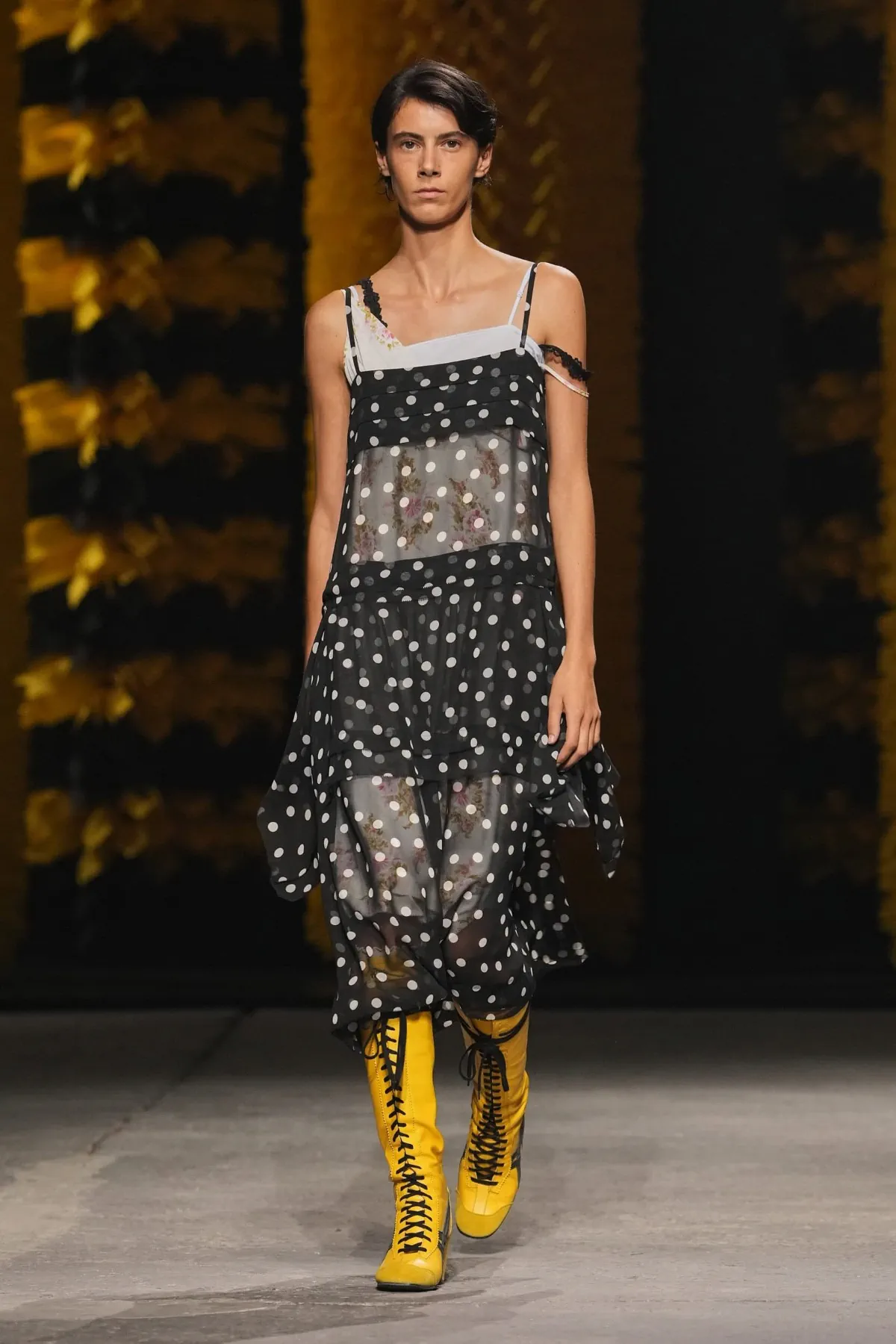
Footwear did the heaviest lifting, as it should for a brand built on running shoes. Penny loafers featured the brand’s tiger-stripe detailing on the side, offering an accessible translation of its DNA. Knee-high, lace-up, heeled boots referenced the Mexico 66 sneaker – the label’s most recognizable silhouette – while chunky-heeled pumps and pointy stilettos provided a sharp counterpoint to all the fringe and denim.
The show worked because of restraint. Pompilio had plenty of material – a car wash, a motorcycle brand, and a Western wardrobe – yet he resisted piling it all onto every look. Individual pieces stayed simple, even as the show around them remained elaborate. By the time the full cast walked out together for the finale, the mismatched, slightly rumpled crowd looked less like a runway lineup and more like people who had genuinely wandered in from somewhere else. This was exactly the effect that Pompilio said he was going for, and it’s harder to pull off than the “everything, all at once” version of Americana that most brands default to this season.