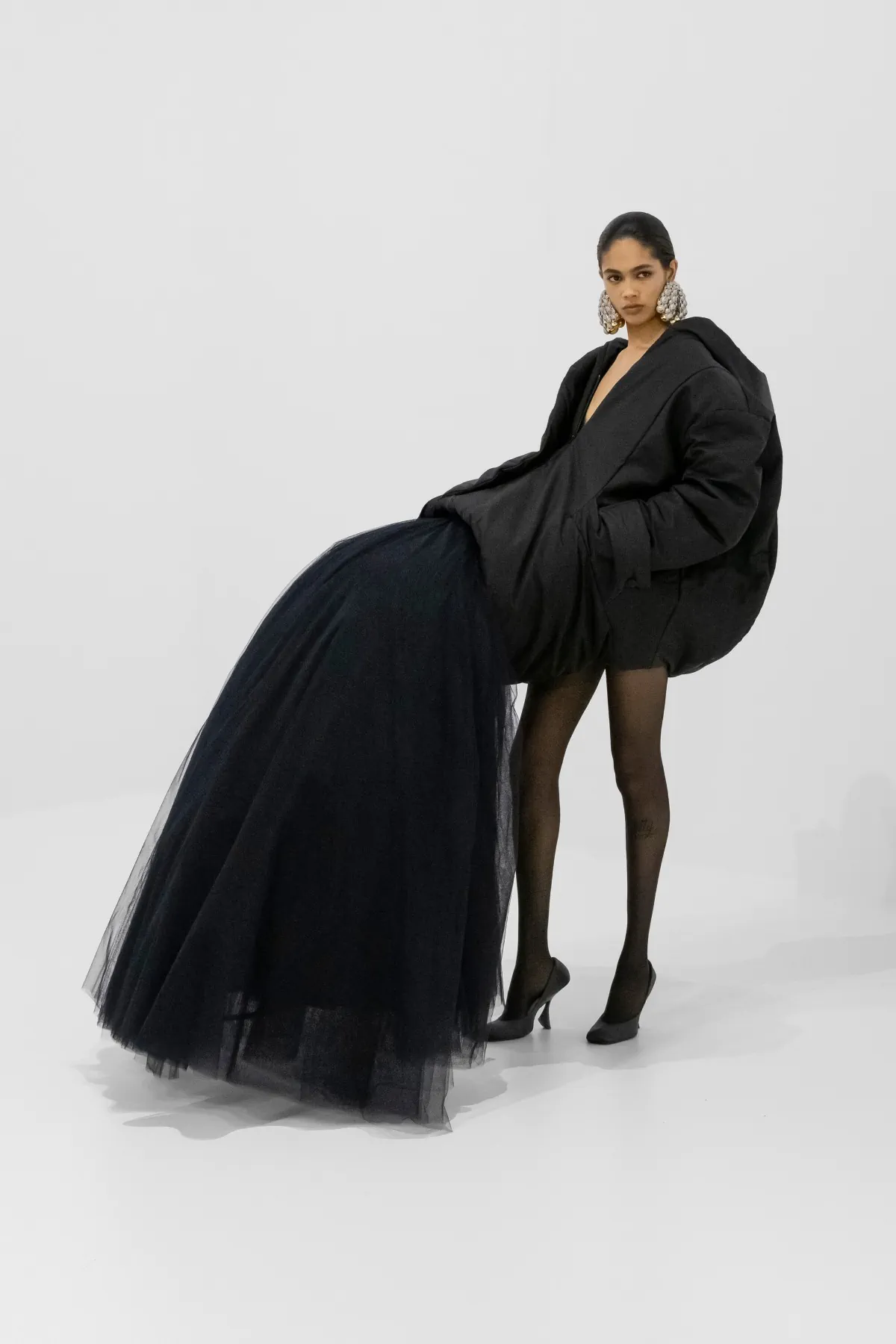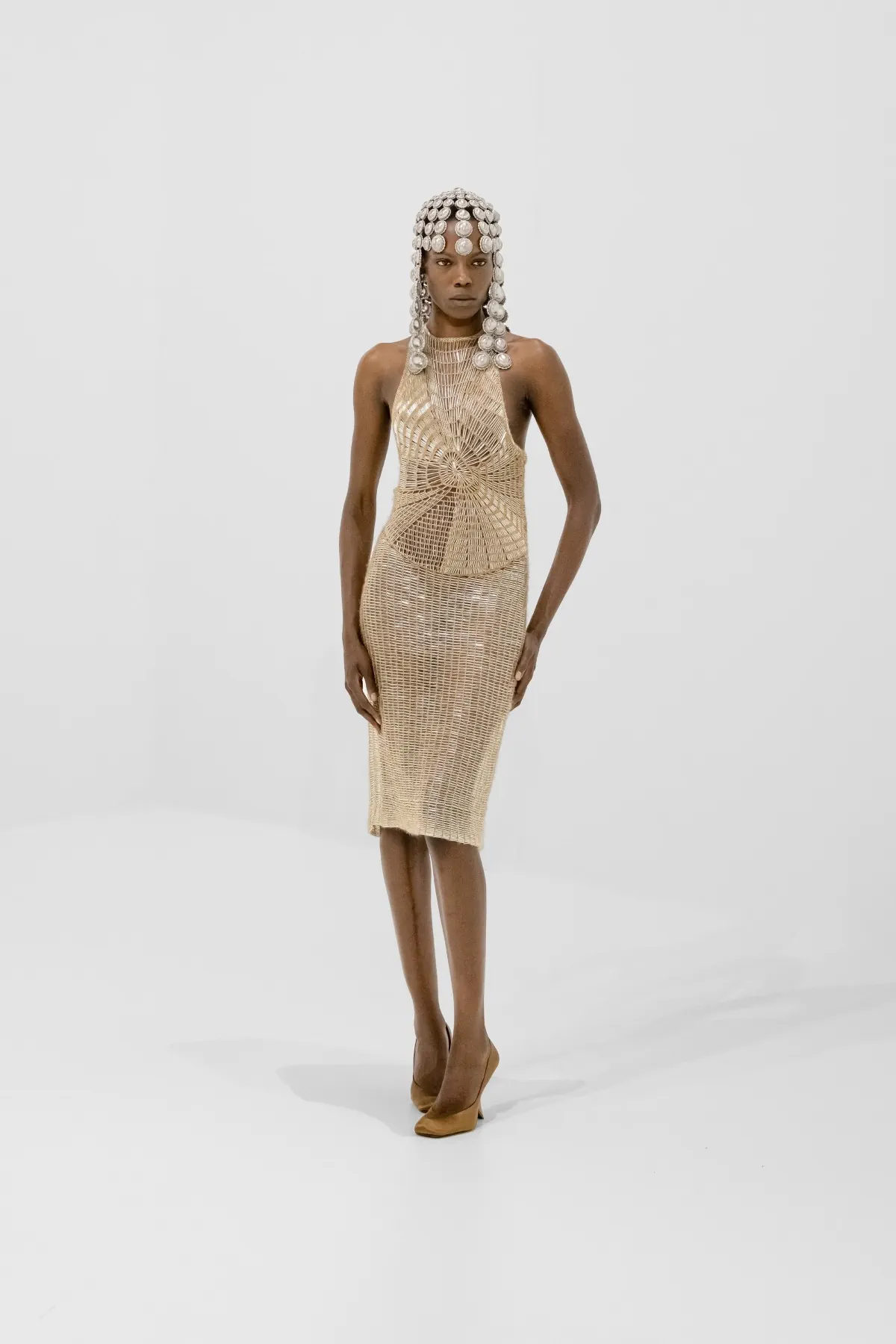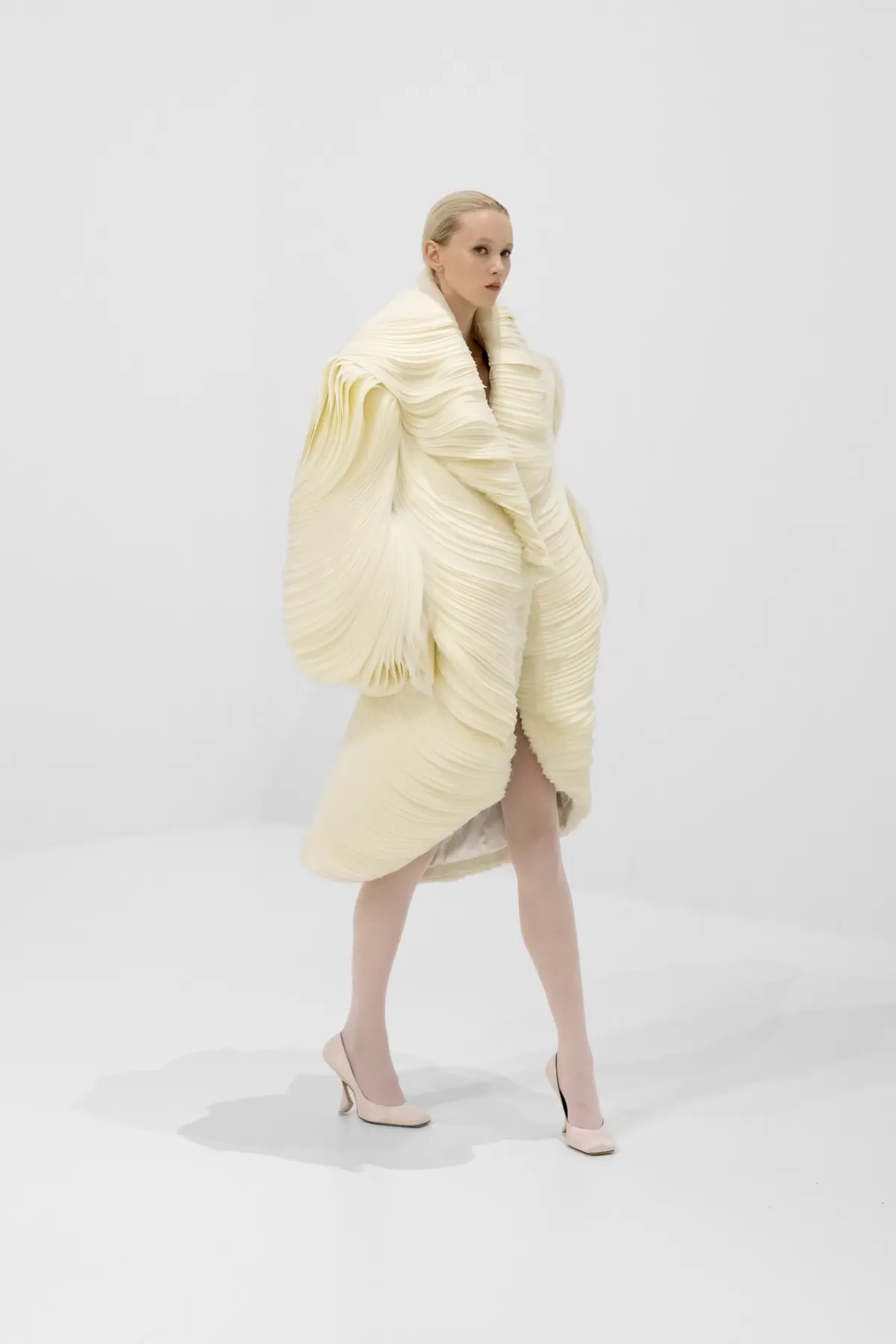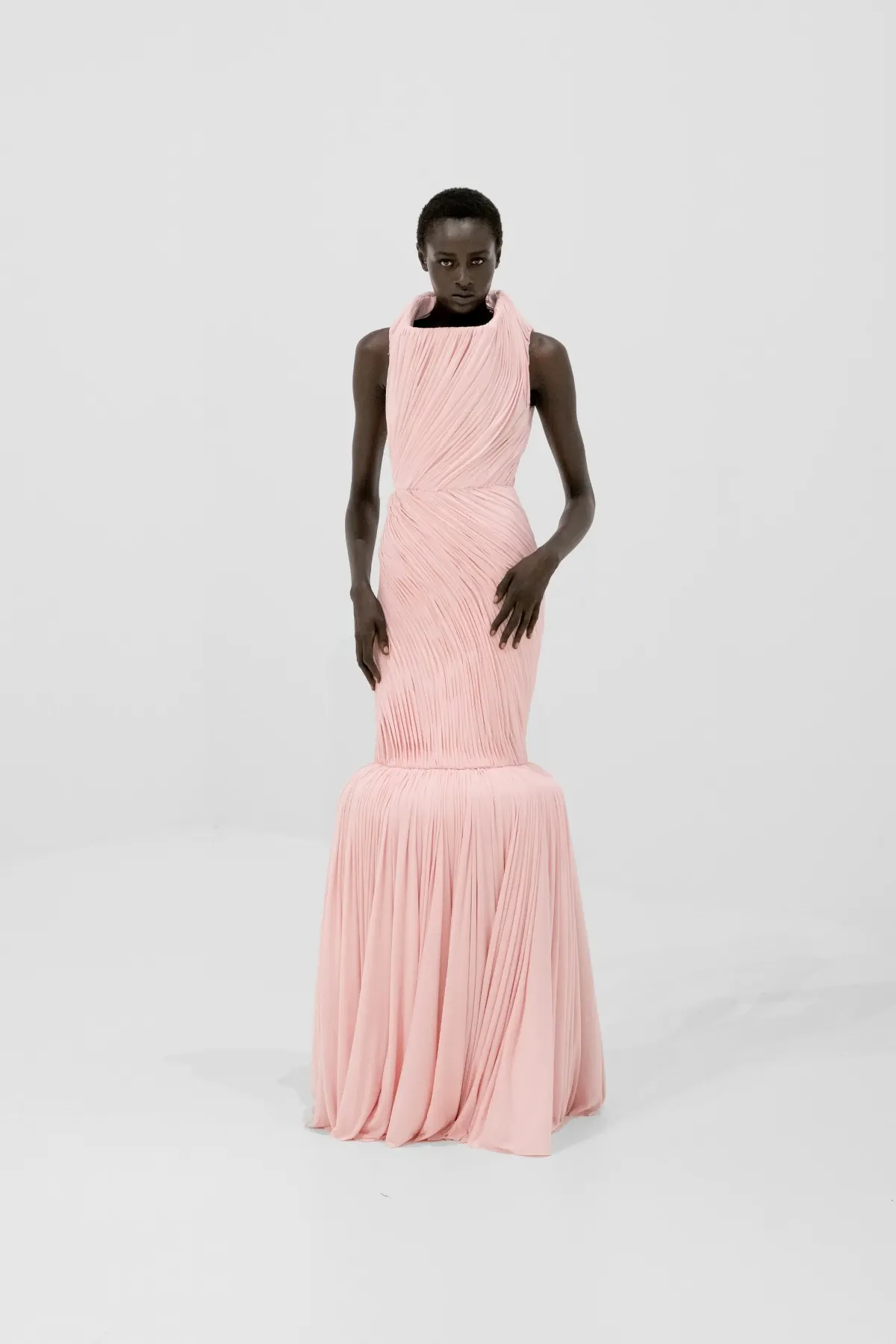

The Jean Paul Gaultier Fall 2026 couture arrived with a jolt, and Duran Lantink made sure no one could settle into expectation. The collection asked what couture means now and answered with clothes engineered for women who like risk, wit, and a sharp point of view.
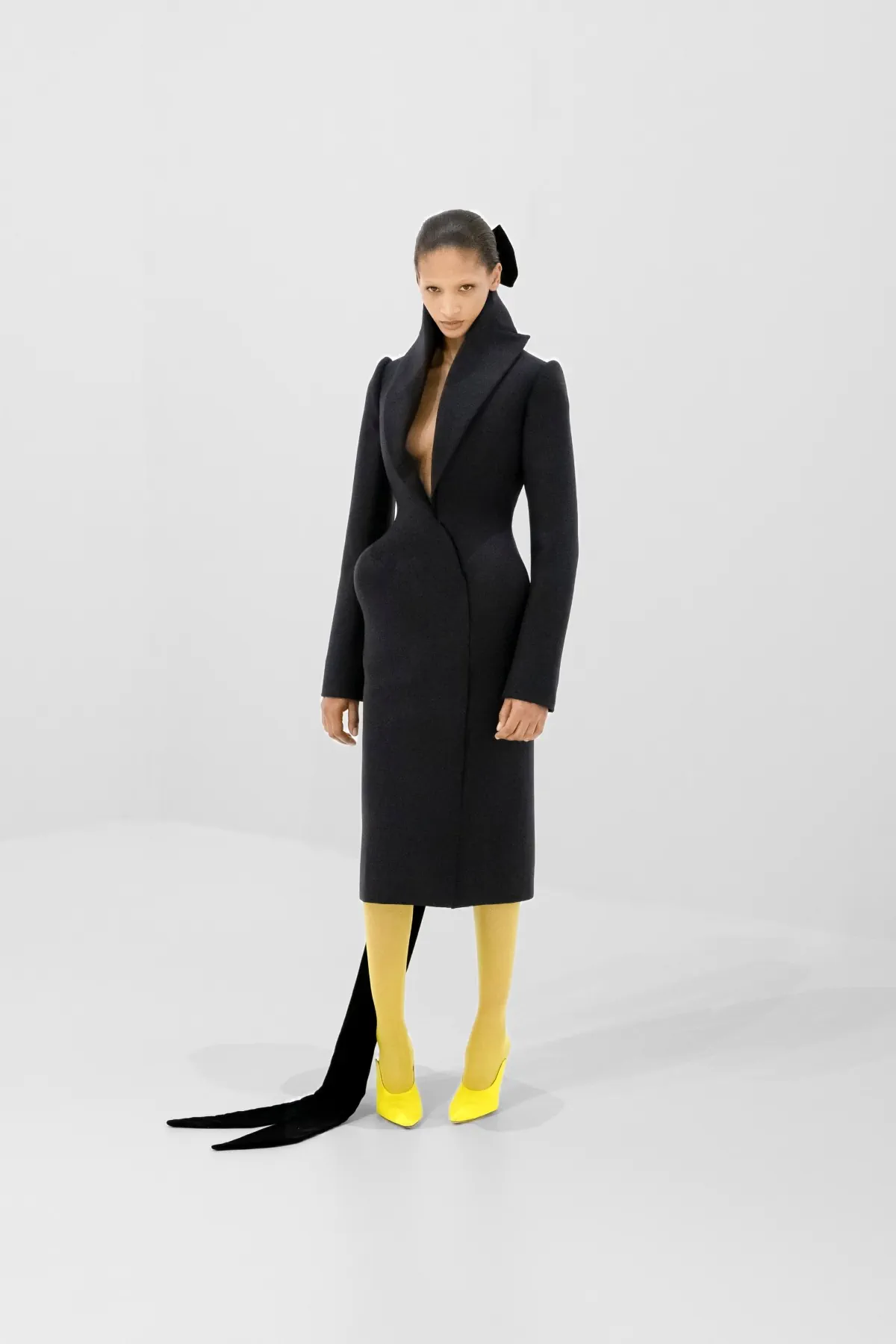
Working inside one of Paris’s most watched houses, Lantink did not lean on polite nostalgia. He drew inspiration from Versailles, Marie Antoinette, modern construction, and the house’s own graphic codes, then interpreted them through a contemporary lens. The result felt less like a tidy homage and more like a confrontation with form.
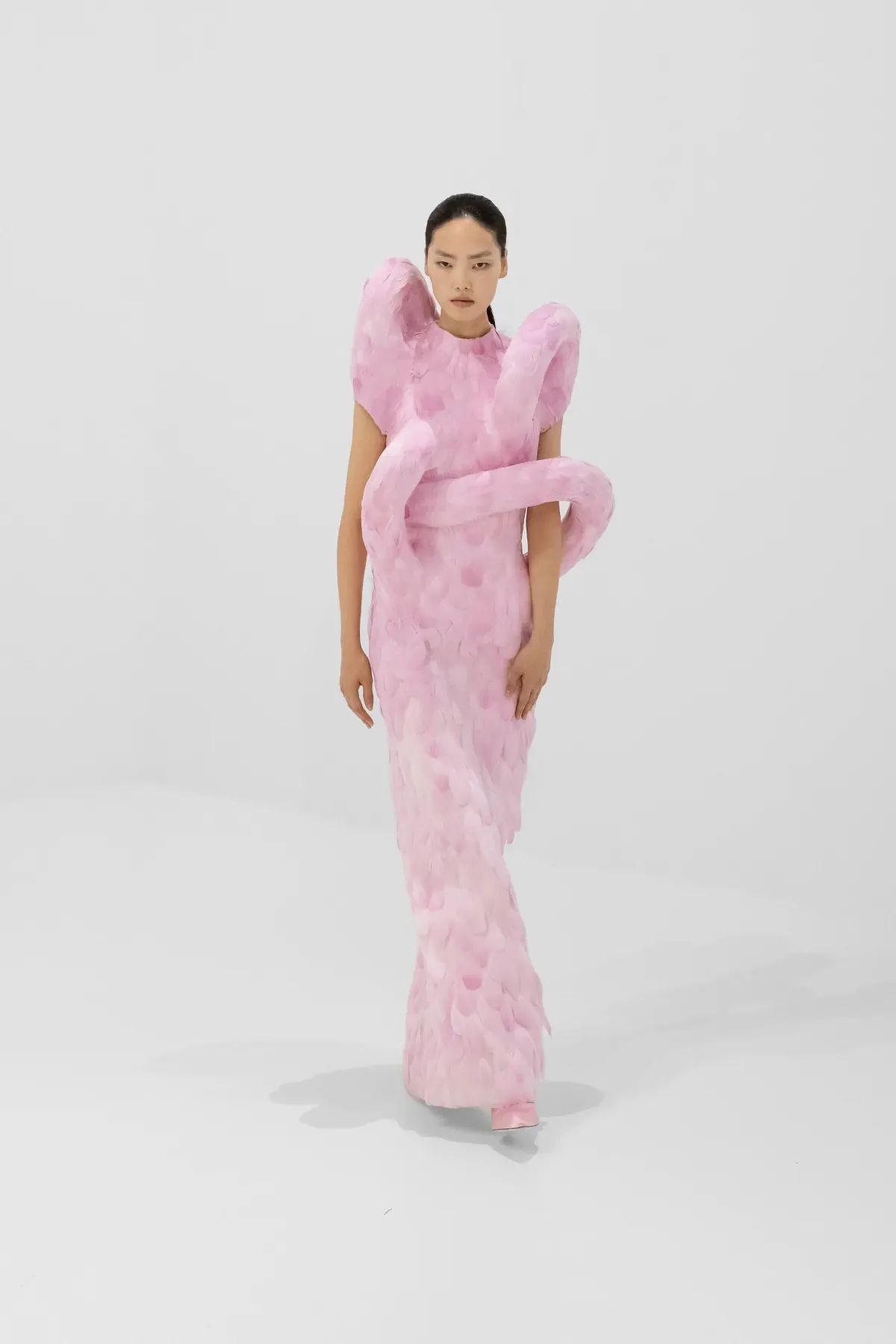
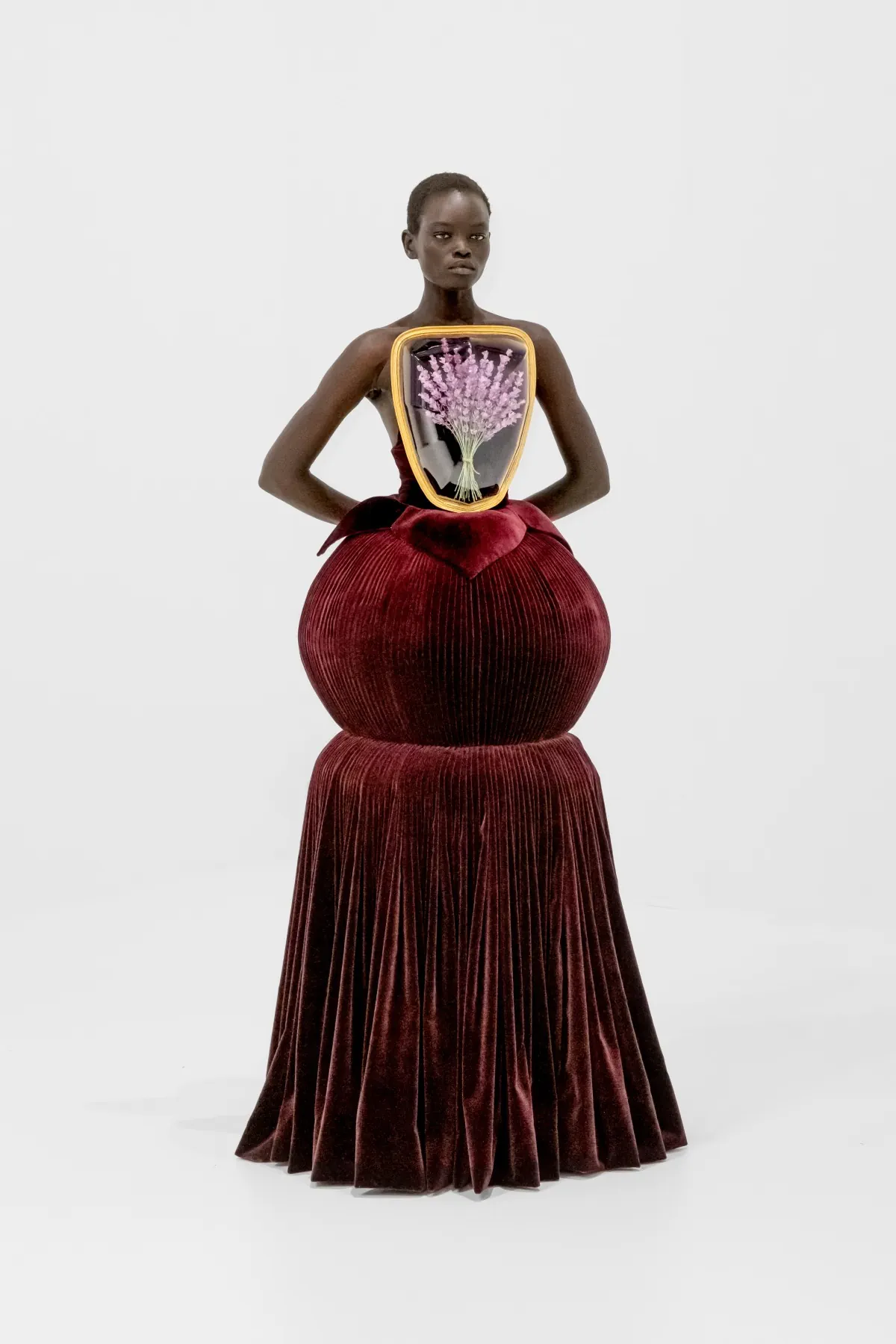
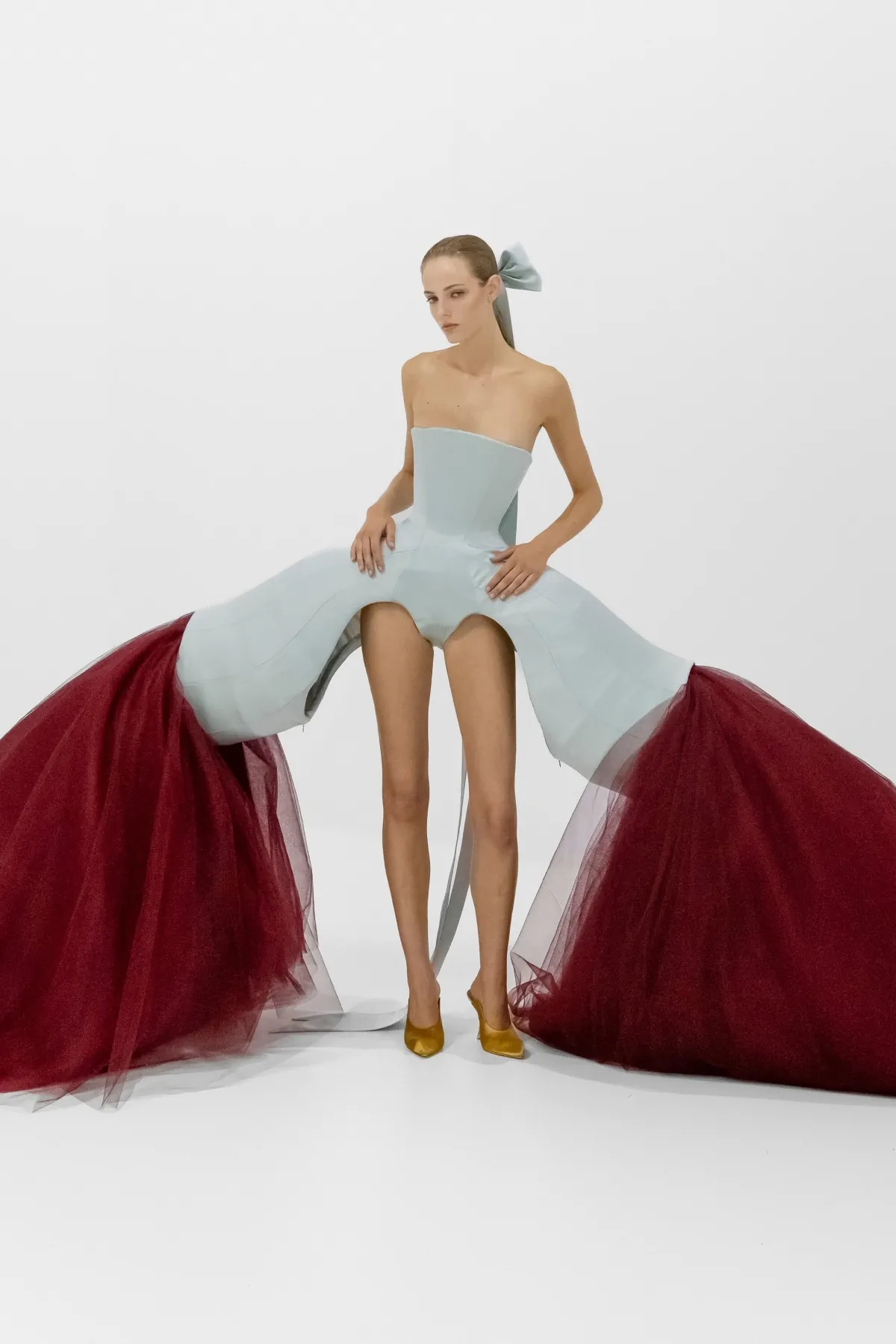
The body was both the starting point and the problem. Corsetry appeared and shifted off center. Shapes folded sideways. Tubes of satin, feathers, and tulle pushed outward with a kind of stubborn force. One look seemed designed for a body slightly reimagined by technology and finished by hand. Another design echoed the traditional couture obsession with structure, except the structure had been deliberately destabilized.
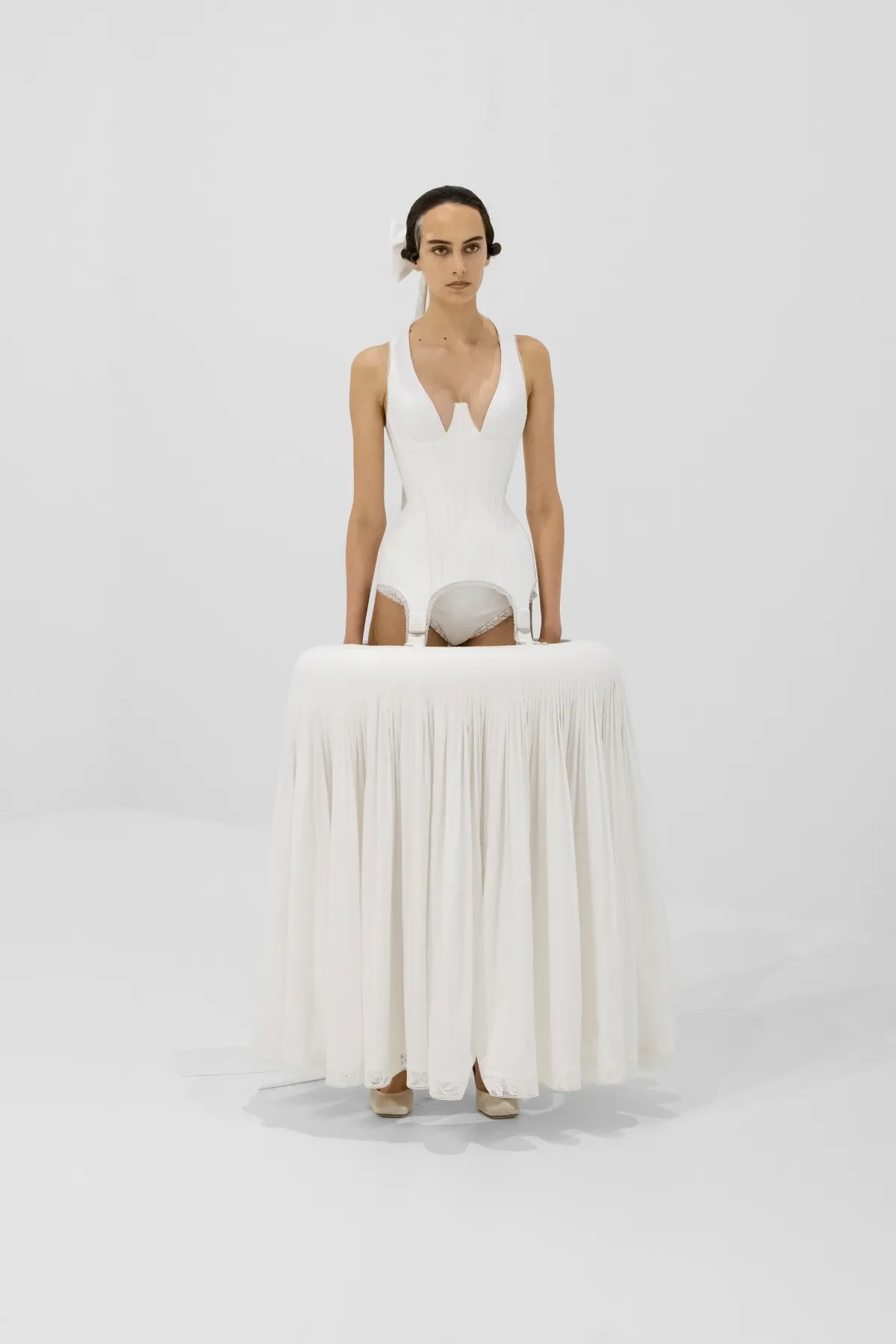
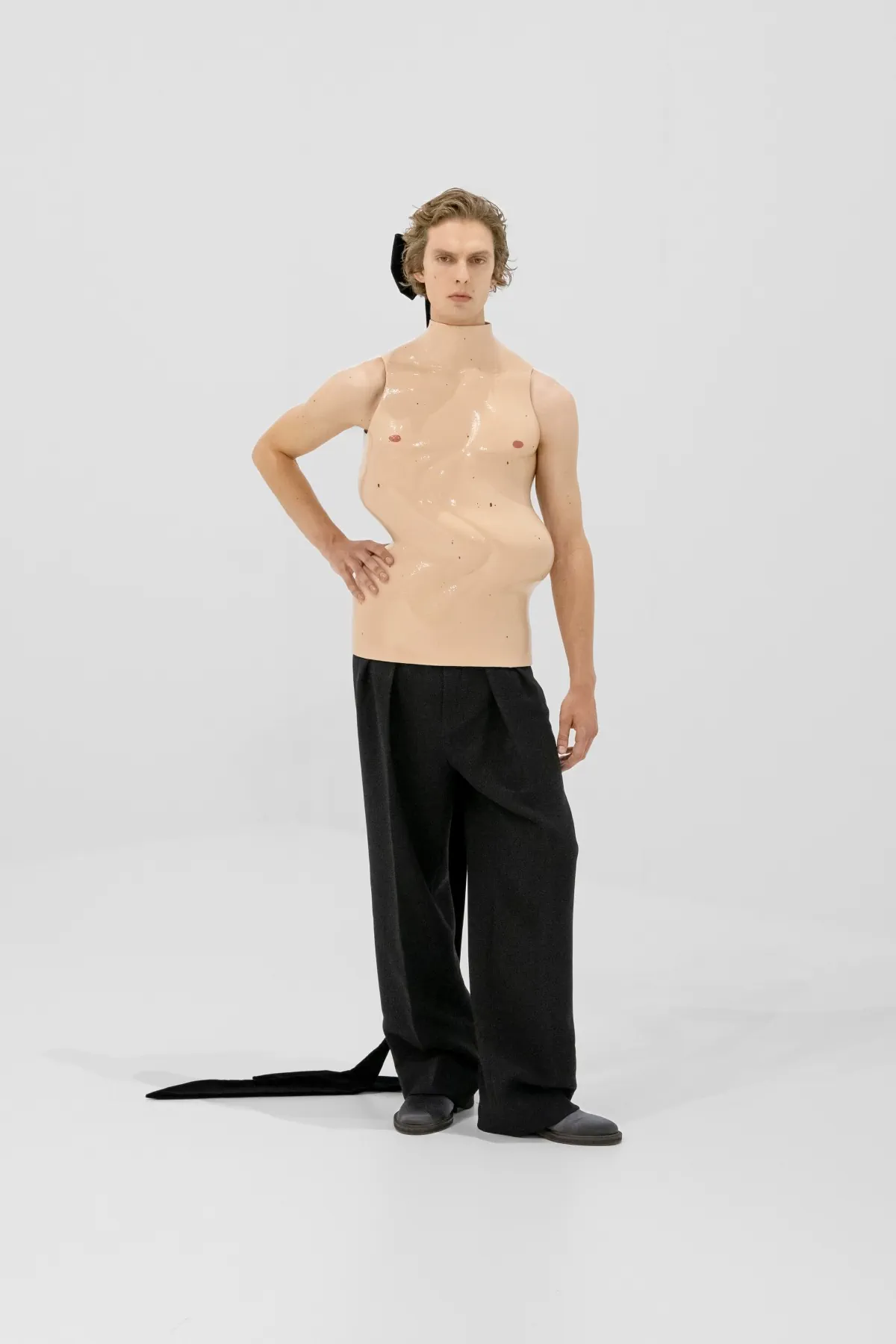
This tension charged the collection. Lantink is clearly interested in what happens when craftsmanship defies convention. He understands the allure of handiwork but also knows that modern fashion cannot survive on embroidery alone. So, without losing sight of the tactile pleasure couture clients still expect, he introduced 3D thinking, molded surfaces, and exaggerated volumes.
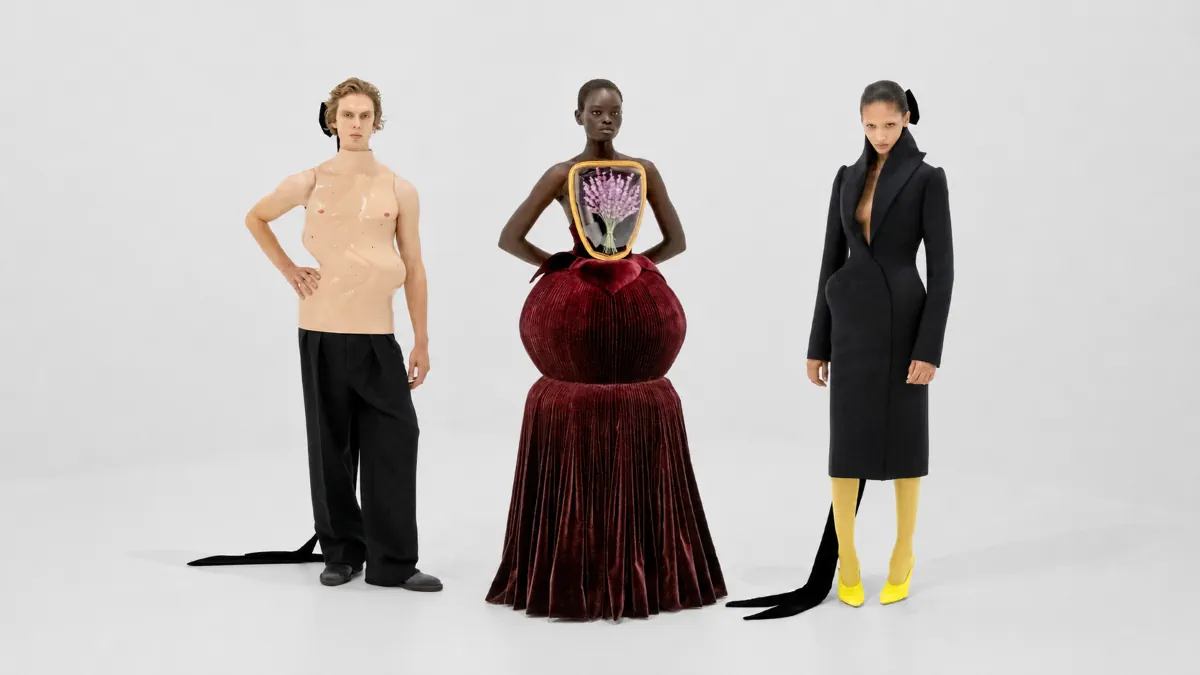
The couture collection also carried the house’s familiar sense of mischief. A jacket became a hood. A crop top changed roles and looked strange in a new way. Denim appeared in a more refined form, while a bomber jacket and a jean jacket emerged with enough ease to balance the more extreme looks. These subtle references were important. They reminded us that Gaultier has always treated everyday clothing as raw material rather than a limitation.
There was also a stronger historical presence than the spectacle initially suggested. Marie Antoinette loomed over the collection, but not as a costume. Her influence was evident in the volume and height of the designs, as well as in the refusal to appear small. The idea of taking up space was evident in the gowns, sculpted forms, and feathered shapes that seemed designed to fill a room before a woman could even enter it.
The clever part was that Lantink never let history harden into museum language. He kept it moving. Velvet, satin, leather, and lace motifs sat beside elements that felt newly manufactured. A molded bustier had a science fiction edge. A pink pleated dress appeared lighter and almost teasing. Even the most elaborate pieces retained an urban directness that made the collection feel alive.
Follow all the latest news from Fashionotography on Flipboard, or receive it directly in your inbox with Feeder.
You may also read

For women drawn to fashion with attitude, this was the point. The collection wasn’t asking for approval. It was asking for nerve. Jean Paul Gaultier’s Fall 2026 Couture collection suggested that the modern couture client may want beauty, but she also wants friction. She wants to be noticed. She wants clothes that hold their shape and command attention.
Lantink seems to have grasped this instinct early on. Although he is new to the house, he already speaks the language of audacity fluently. He demonstrated that couture can surprise without being overly theatrical. The strongest looks did not shout. They insisted.