


On that day, L’Oréal and Kering announced the completion of one of the most significant transactions in beauty industry history. The French giant officially closed its acquisition of Kering Beauté, a deal worth roughly €4 billion. This brings the legendary House of Creed under L’Oréal’s roof, along with the beauty and fragrance lines of Balenciaga, Bottega Veneta, and, eventually, Gucci. If you care about luxury beauty, this is the moment that changes everything.
This is not a routine corporate shuffle. It surpasses L’Oréal’s 2023 purchase of Aesop for $2.5 billion, making it the largest acquisition in the company’s history. The scale alone signals how seriously L’Oréal is betting on the future of prestige fragrance and luxury beauty and what that means for the products that will end up on your vanity in the years ahead.
Understanding what Kering Beauté brings to L’Oréal
Kering Beauté is the beauty division of the Kering fashion group. It was launched in 2023 with the ambitious goal of building an in-house cosmetics and fragrance empire to rival the industry’s biggest players. The division began with the acquisition of Creed and the introduction of Bottega Veneta and Balenciaga fragrances. However, it only achieved €150 million in sales during the first half of 2025. Building a beauty business at scale requires infrastructure and reach that few companies possess. This alliance enables Kering to concentrate on its primary luxury fashion operations, unlock long-term value from its beauty portfolio, and bolster L’Oréal’s dominance in the high-end and niche fragrance sectors.
For beauty lovers, the implications are clear. The brands under L’Oréal’s stewardship – Creed, Balenciaga, Bottega Veneta, and Gucci – represent some of the most coveted names in luxury fragrance and cosmetics. Their futures are now in the hands of a company with the R&D capabilities, global distribution network, and market intelligence to maximize their potential.
Why Creed stands at the center of this acquisition
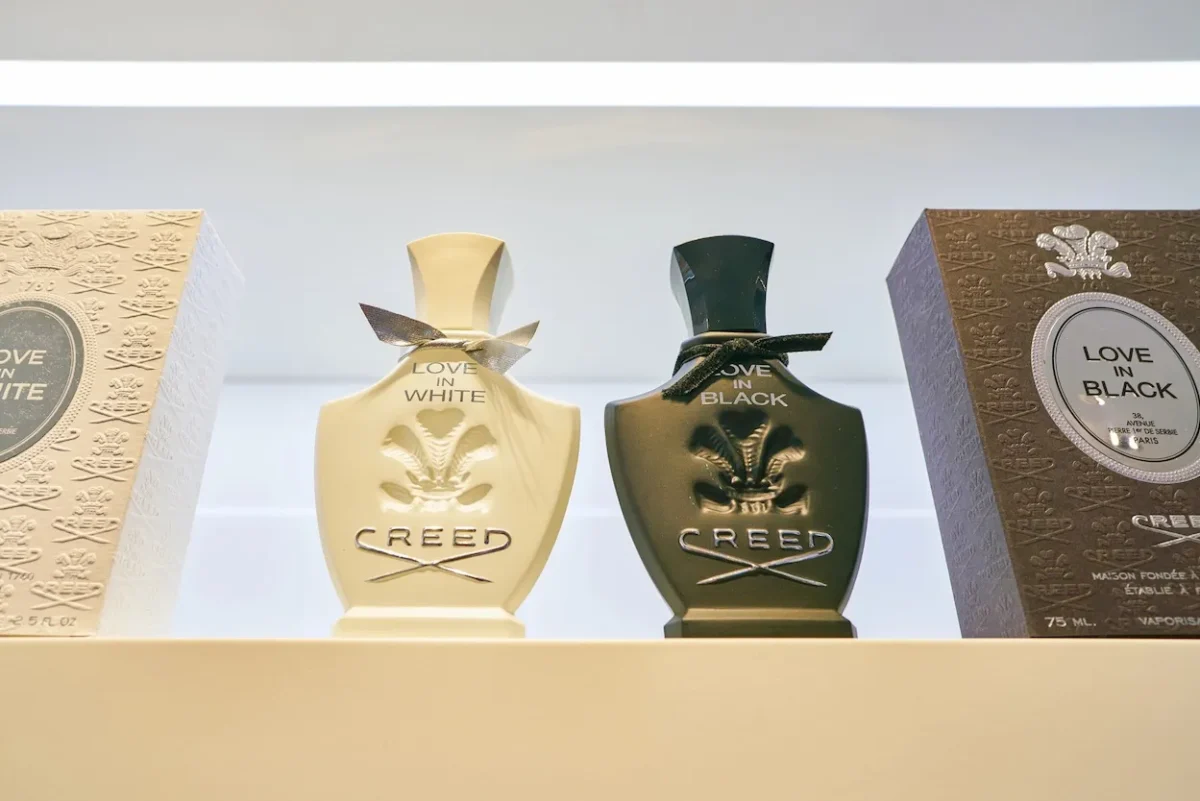
If one acquisition within this acquisition deserves your full attention, it is the House of Creed. It stands as one of the world’s oldest and most modern fragrance houses, celebrated for over 250 years of unparalleled luxury perfumery spanning seven generations, from father to son. Founded by James Henry Creed in 1760, the House of Creed began as an upscale tailor shop in Mayfair. What began as a relationship with royalty, scented gloves delivered to King George III, eventually evolved into an artisanal fragrance house with a global cult following.
Based in Paris with a factory in Fontainebleau, Creed still manufactures many of its own essences using a traditional technique. This process, now abandoned by most as too costly, sets Creed fragrances apart from their modern counterparts. High-quality natural raw ingredients are weighed, mixed, and macerated by hand. This level of commitment to craftsmanship is rare in an industry driven by speed and volume.
Creed’s most iconic fragrance, Aventus, launched in 2010 and became one of the most referenced men’s scents in recent memory, a benchmark against which other perfumers are routinely measured. A distinctive feature of Creed’s approach is the “Millésime” designation, a term borrowed from winemaking that signifies each fragrance is crafted with the highest concentration of the finest ingredients available in a given year, often vintage quality. You are buying more than just a bottle of perfume. You are buying something closer to a fine wine vintage.
The challenge for L’Oréal will be to honor that heritage while giving Creed the global scale it has never had before. This is not a brand that needs to be built. It needs to be stewarded correctly, which is a different and arguably harder challenge.
A long-term strategy built on Balenciaga, Bottega Veneta and Gucci
While the House of Creed is the headline, the licenses attached to this deal are equally worth watching. L’Oréal secured 50-year exclusive licenses to create, develop, and distribute beauty and fragrance products under the Balenciaga and Bottega Veneta brands. Both are among the most culturally potent fashion names operating today.
Balenciaga’s presence in the fragrance industry has been gaining momentum. Bottega Veneta’s understated, quiet luxury identity translates naturally into beauty products. Then there’s Gucci, which industry insiders are watching most closely. Coty holds the license for Gucci until 2028. Before L’Oréal takes control, it is expected that investments in developing Gucci collections will become a lower priority for Coty, and L’Oréal will inherit a brand that will require relaunching and additional resources. As one analyst told Reuters, “The big prize is Gucci,” and securing a fifty-year license is an extraordinary long-term position by any measure.
L’Oréal Luxe grew the Yves Saint Laurent beauty business from €649 million to €2 billion in revenue over two decades. This track record gives an idea of what L’Oréal is capable of when it acquires a luxury fashion license. Gucci, Balenciaga, and Bottega Veneta could follow a similar growth curve.
Follow all the latest news from Fashionotography on Flipboard, or receive it directly in your inbox with Feeder.
You may also read

What executives reveal about the long-term vision behind the deal
The executives speaking about this deal are not using cautious, hedged corporate language. They are confidently discussing a horizon of half a century.
“On behalf of the group, I am delighted to welcome these extraordinary brands into the L’Oréal family,” said Nicolas Hieronimus, L’Oréal’s chief executive officer. “This significant new milestone in our strategic partnership with Kering reinforces our position as the world’s number one in both beauty and luxury beauty. We will now work together over the next fifty years to write the next chapter of these iconic brands and unlock their immense growth potential.“
Cyril Chapuy, president of L’Oréal Luxe, was equally direct: “This acquisition marks a defining milestone for L’Oréal Luxe. By bringing these iconic brands into our portfolio, we are uniting around the essence of luxury: bold creativity, exceptional craftsmanship, and a forward-looking vision of beauty. I’m especially proud to welcome the teams behind these brands, whose contributions shape their unique identities. Together, we are strengthening L’Oréal Luxe’s leadership and reinforcing our ambition to be the ultimate destination for the world’s most aspirational luxury beauty experiences.“
From the Kering side, Luca de Meo, the CEO of Kering, described the transaction as a significant acceleration. “Our strategic alliance with L’Oréal marks a decisive step forward for Kering. By leveraging L’Oréal’s unmatched expertise in the beauty sector, we are entering a new phase of acceleration in developing fragrances and cosmetics for our Houses, which are among the most iconic in the world. This long-term partnership will enable us to realize their full potential in this category and support their growth by drawing on the creativity, desirability, and excellence that define them.”
Wellness and longevity are now part of luxury beauty strategy
The deal goes beyond fragrance and cosmetics. Both companies will establish a 50/50 joint venture to explore wellness and longevity opportunities, combining L’Oréal’s innovation capabilities with Kering’s knowledge of luxury clients. Wellness has become one of the fastest-growing areas in the beauty industry, and this joint venture signals that both companies see it as a serious strategic priority, not just a passing trend.
The prestige fragrance market was valued at $22.1 billion in 2025, with an expected annual growth rate of 4.15% through 2030. Luxury fragrance is proving to be more resilient than fashion and jewelry in times of economic uncertainty, making this deal even more strategically sound.
The deal reshapes competition across the beauty industry
This deal fundamentally reshapes the competitive landscape in prestige beauty, fragrance, and color. Adding Gucci, Bottega Veneta, and Balenciaga to L’Oréal’s existing portfolio of YSL, Valentino, Prada, Miu Miu, and Jacquemus creates a dominant position, forcing every other major player to rethink their strategic options.
The competition is feeling it. The immediate downmarket pressure falls on Coty. Losing the Gucci license in 2028, a deal that generates roughly $1.1 billion in annual sales, is an existential challenge for Coty, a company that is already exploring divestitures and a potential breakup.
For consumers, however, the picture is more nuanced. Bigger does not always mean better, and the beauty community will be watching closely to see if L’Oréal can preserve Creed’s identity while expanding its reach. Historically, L’Oréal has done this well. The Yves Saint Laurent case is the clearest proof of this. However, Creed is different. Its value is based on mystique, craftsmanship, and rarity – qualities that could easily disappear under the pressure of mass distribution.
Nevertheless, the structural logic is hard to argue with. L’Oréal operates 22 research centers across seven regional hubs and employs over 4,000 scientists on its Research and Innovation team. Few companies on Earth have the technical capability to rival what those brands could become with that kind of support. The next fifty years of luxury beauty are being written right now, and L’Oréal just picked up the pen.