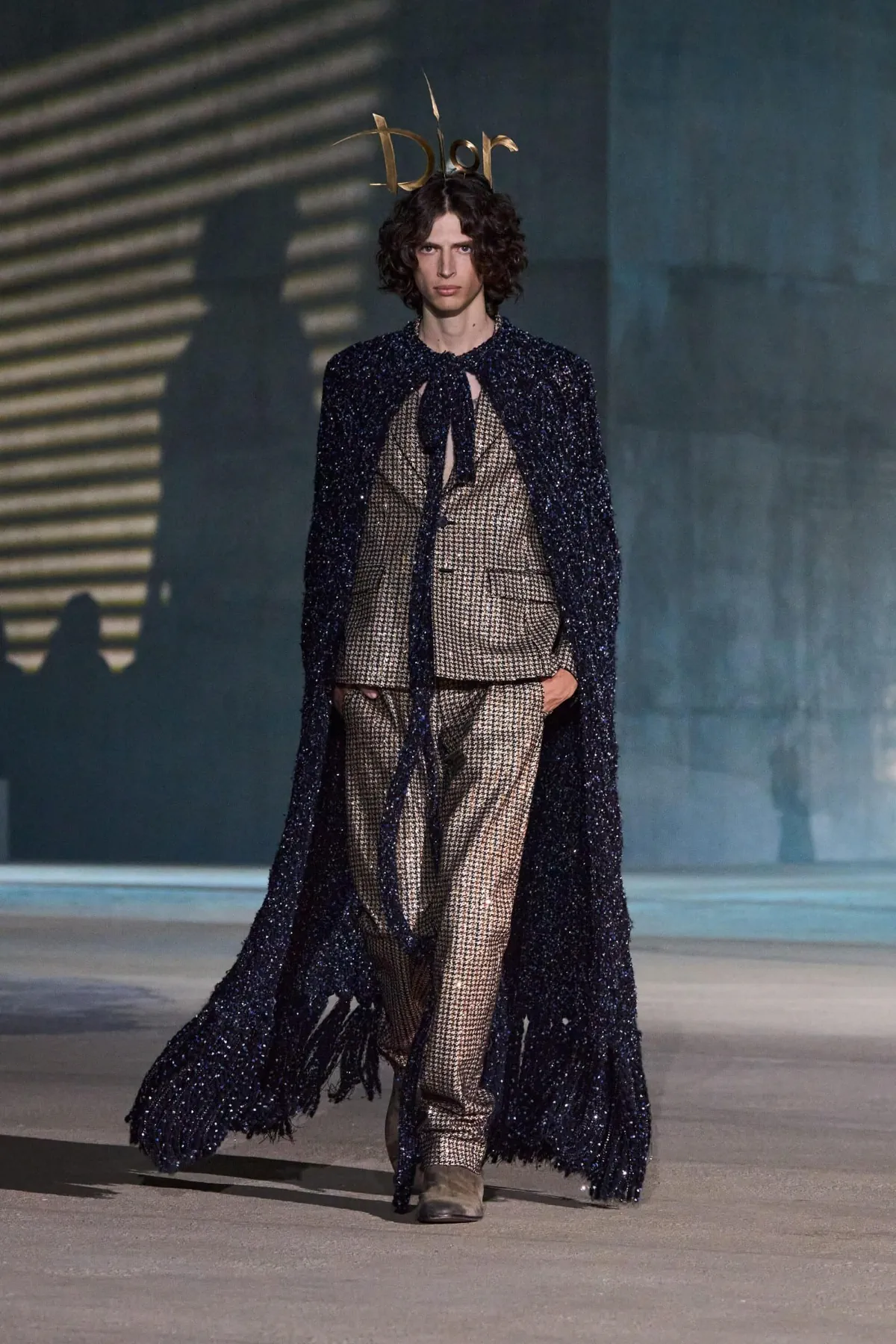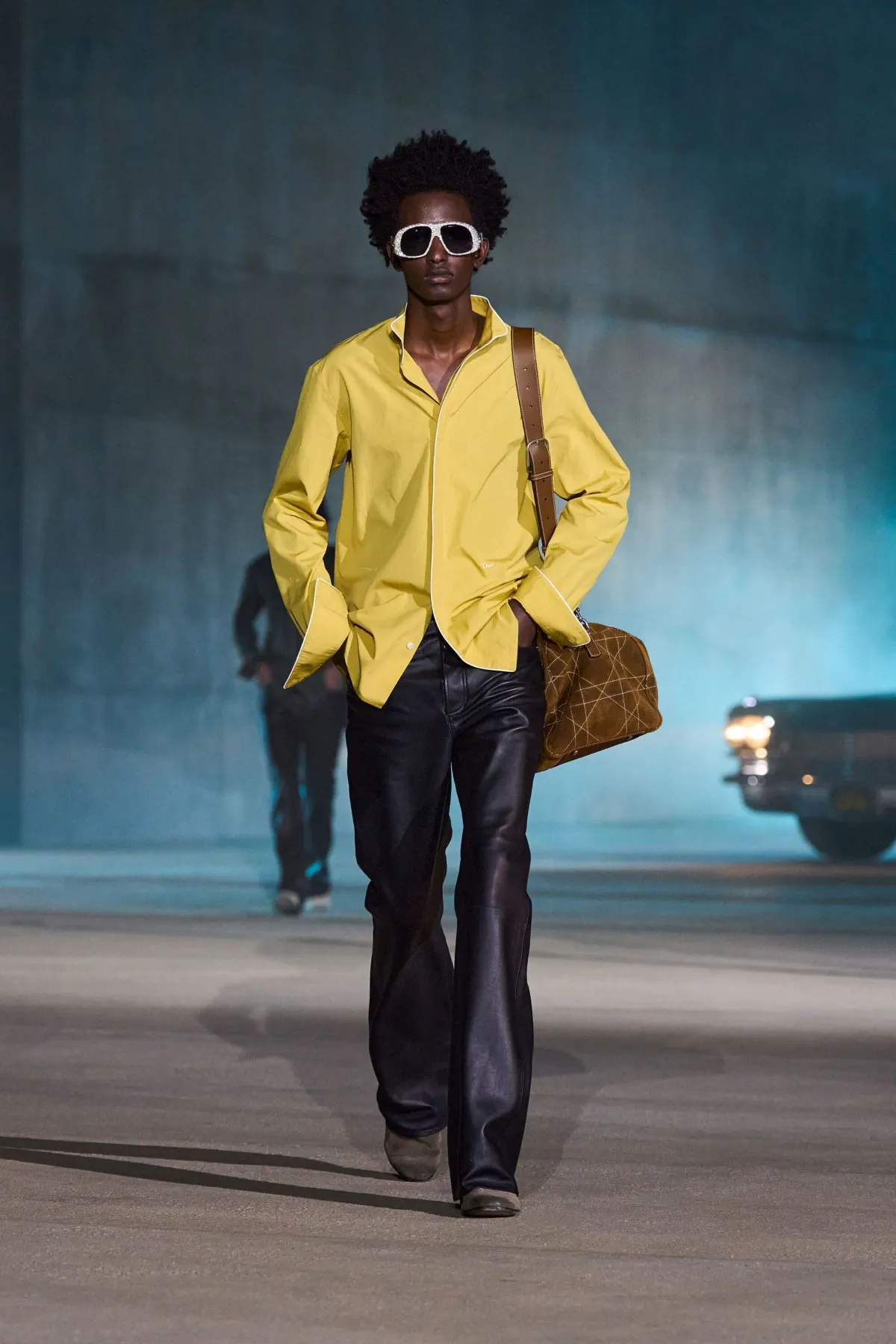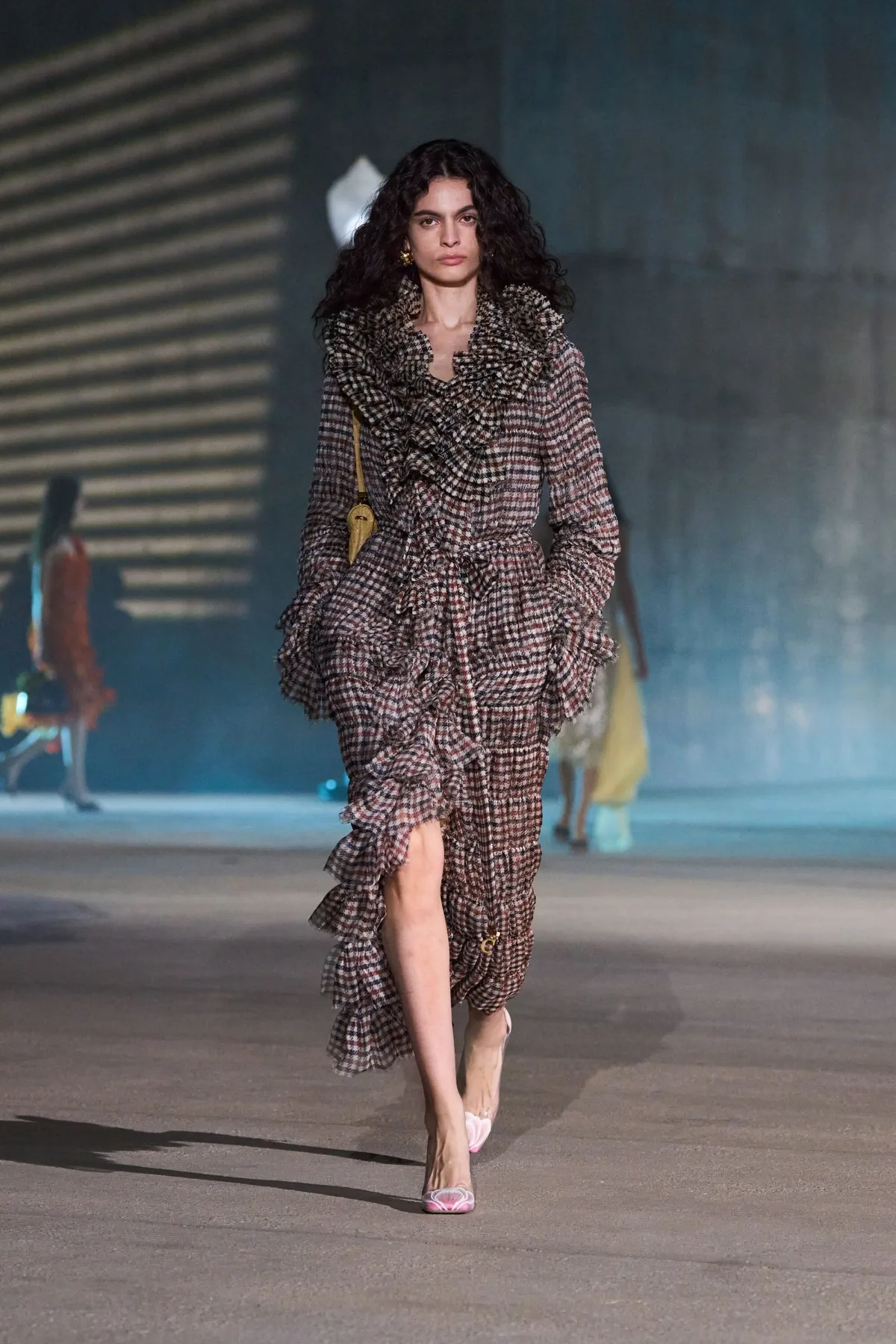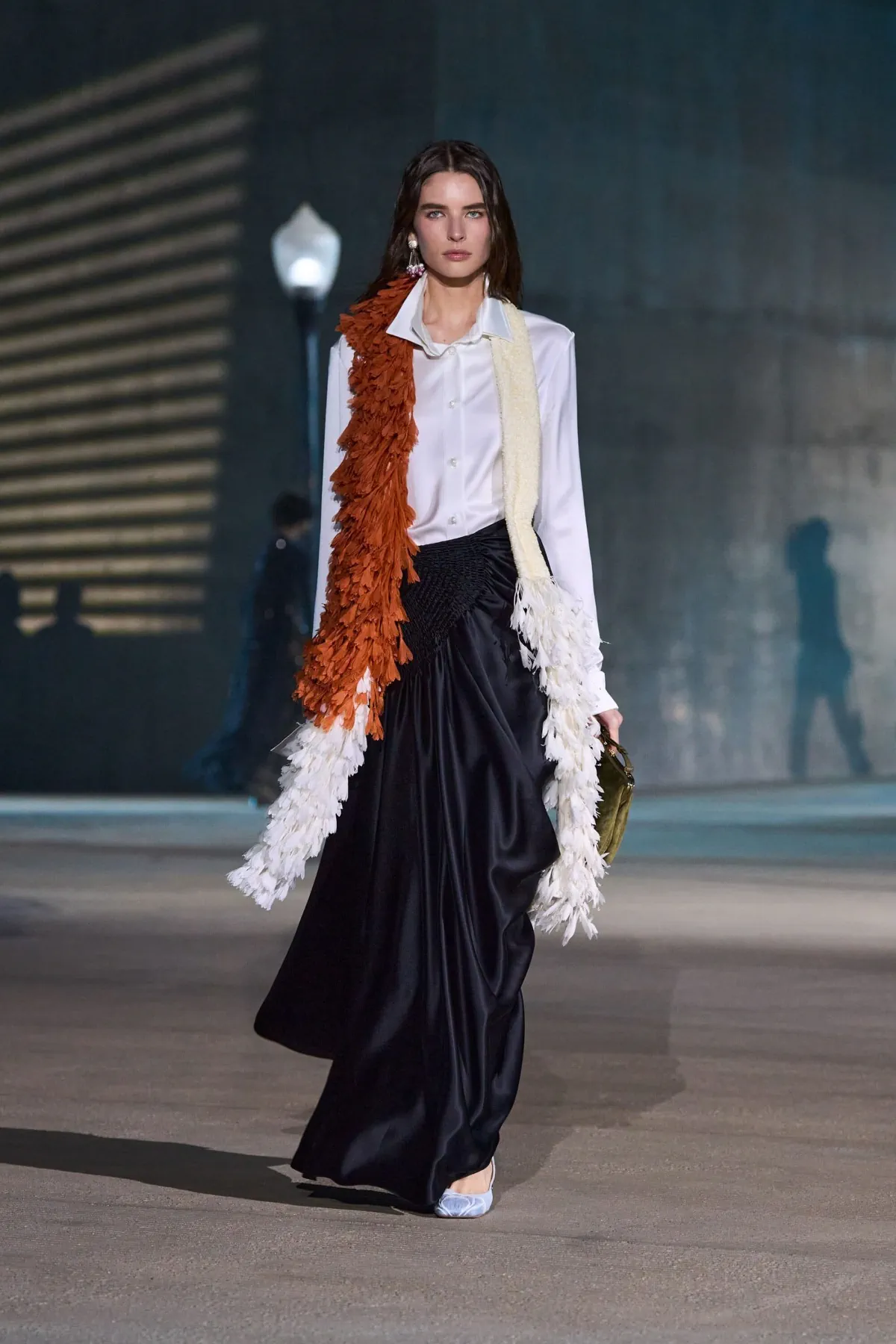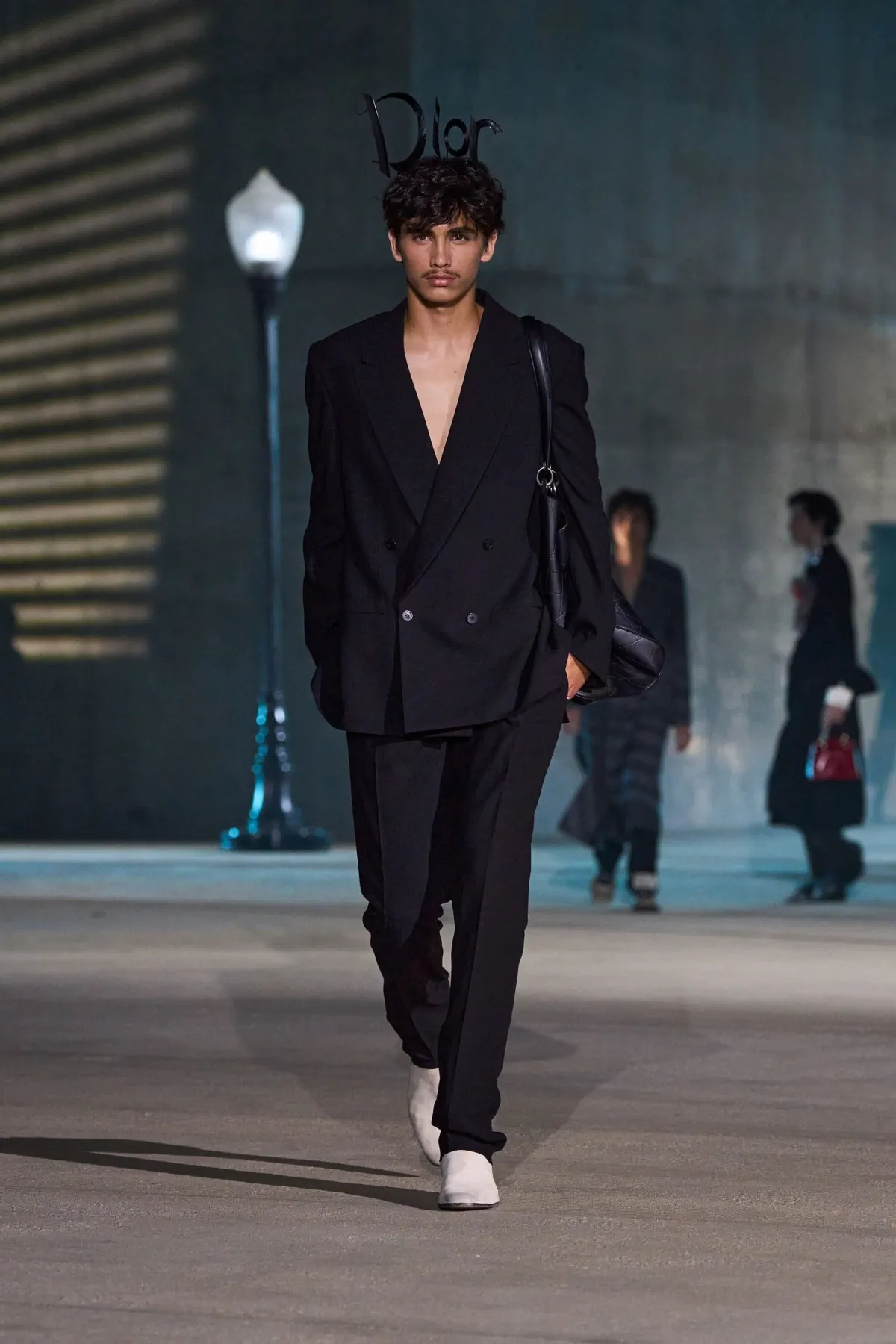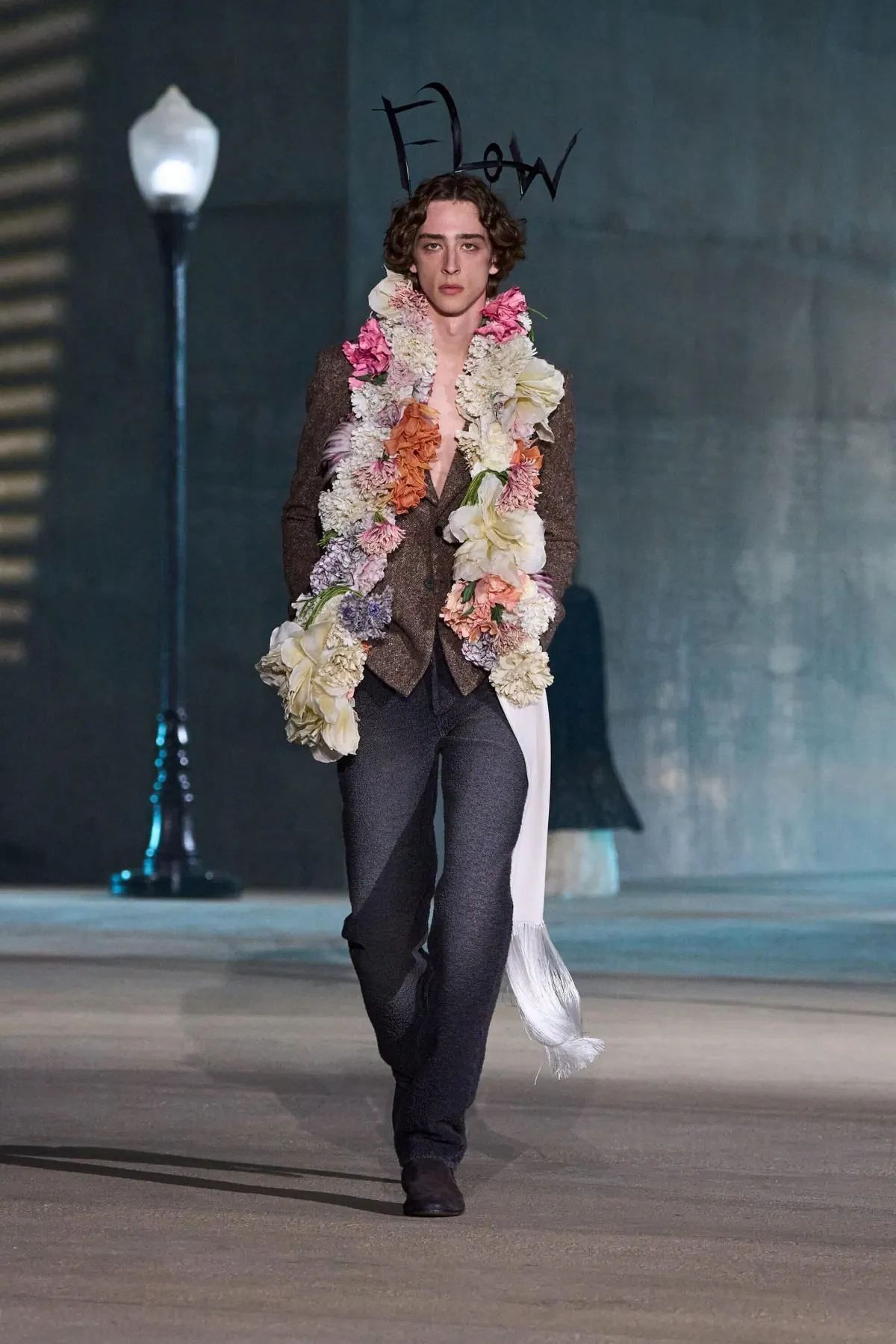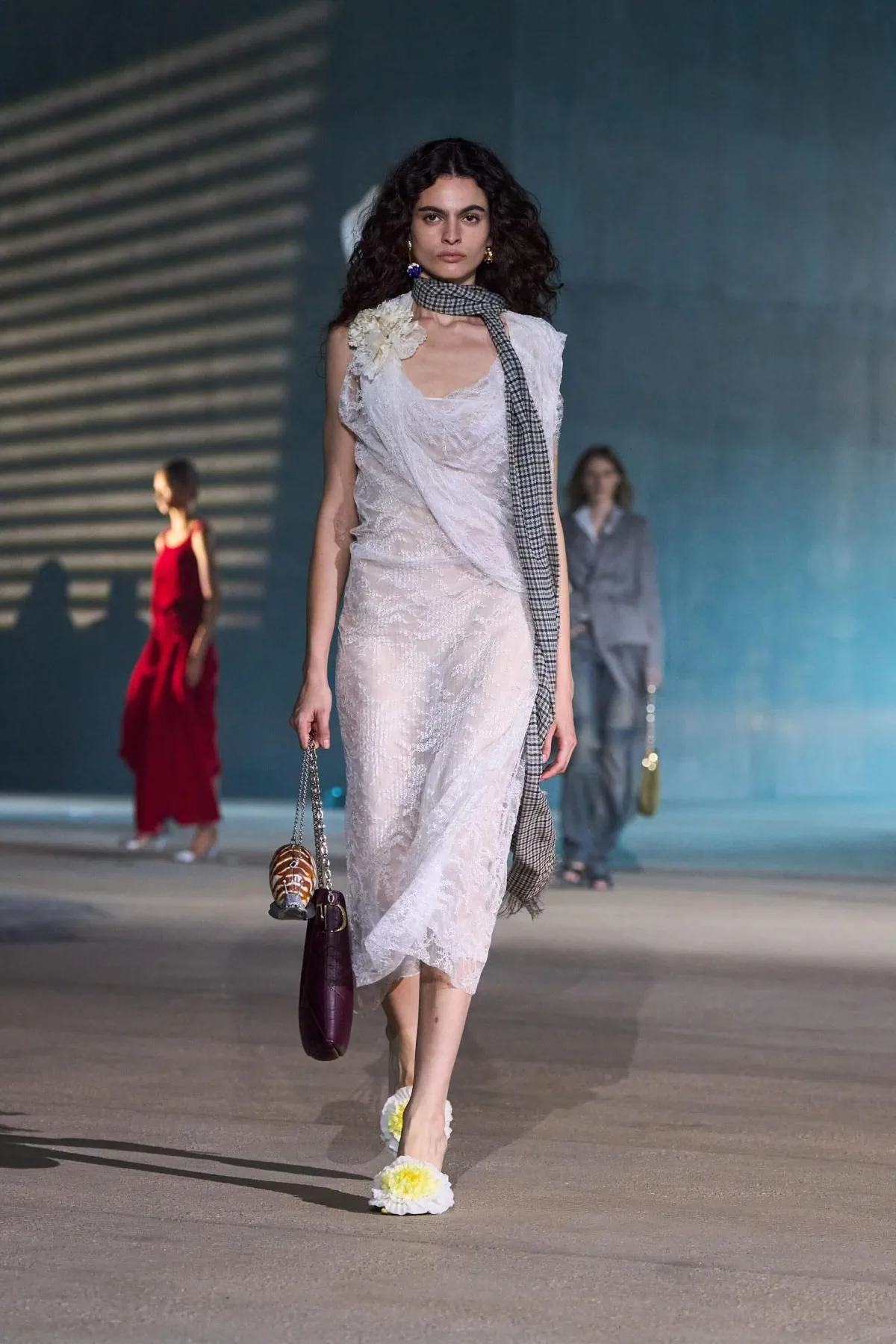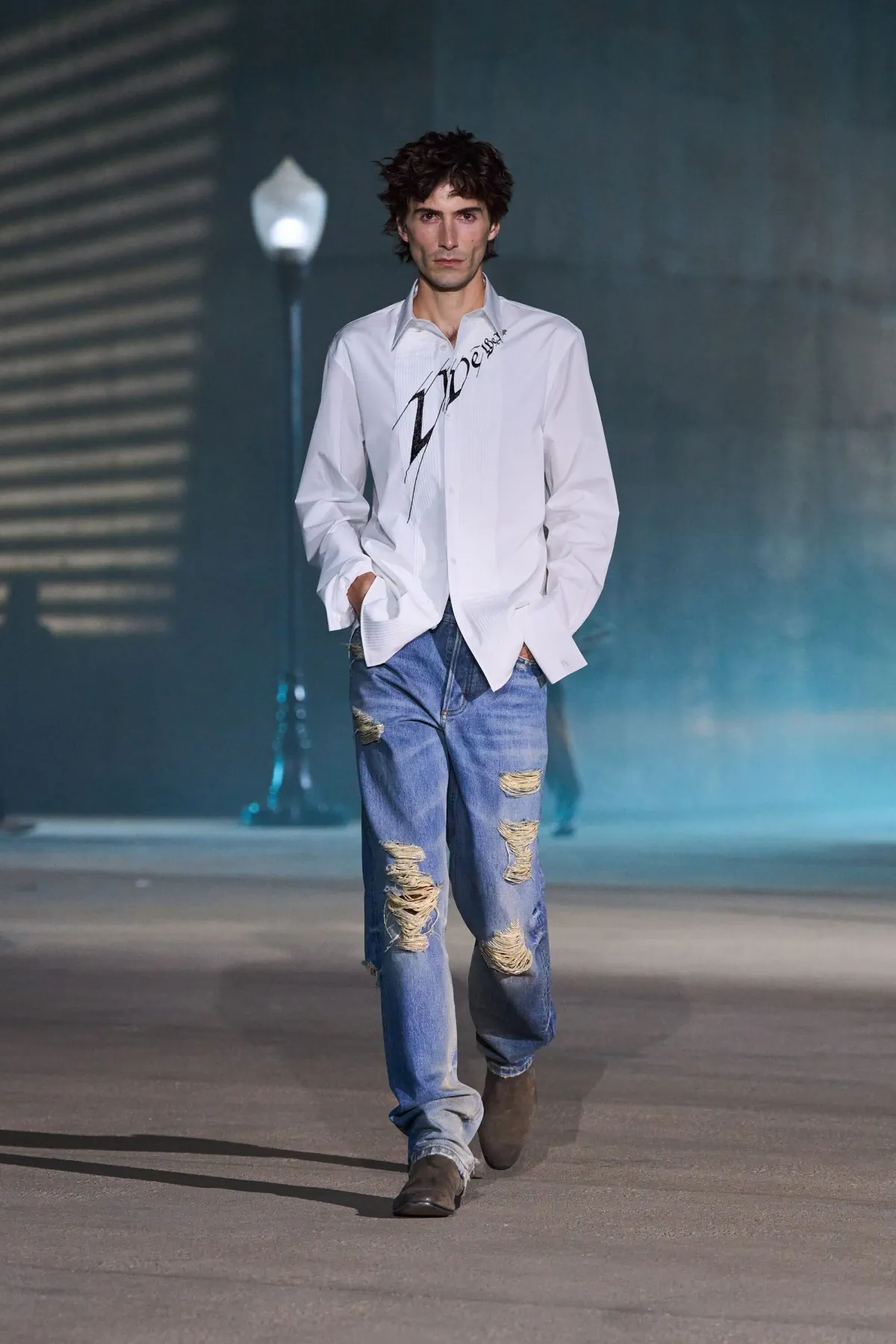


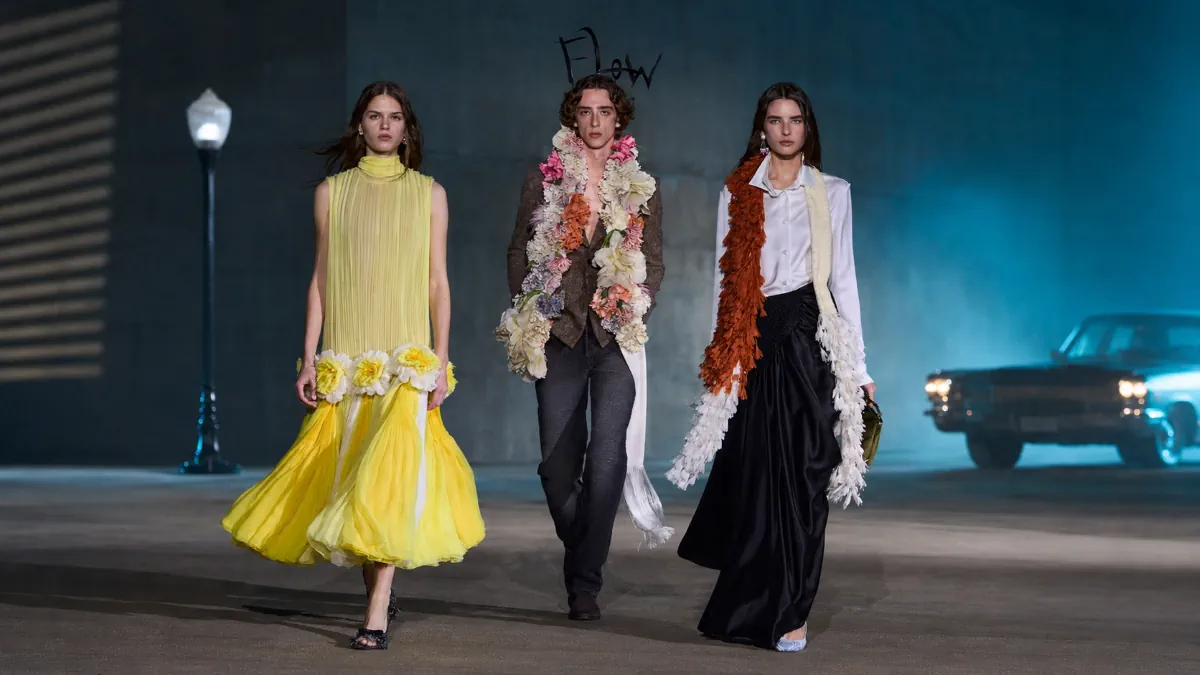
Jonathan Anderson’s first Cruise (Resort) show for Dior took place on the evening of May 13th at the Los Angeles County Museum of Art. He didn’t just showcase clothing. He made a declaration. For the first time under his direction, the Dior Men and womenswear collections walked the same runway, a notable feat against the backdrop of LACMA’s newly opened David Geffen Galleries, designed by Swiss architect Peter Zumthor. Smoke drifted across the forecourt. Vintage Cadillacs were parked at the edges. Dusk turned the whole scene golden, then gray. The Cruise 2027 (Resort 2027) collection had arrived.
In March 2025, Anderson was appointed creative director of Dior, becoming the only designer in the house’s history since its founder to oversee womenswear, menswear, and couture simultaneously. A year in, the pressure to define himself has not made him impatient. “I’m not in any rush,” he said before the show. “Money will come. It’s a product of being Dior. Dior is a big enough name no matter who works there.” This kind of candor suggests either extreme confidence or extreme relaxation, probably both.
The collection drew openly from Hollywood’s golden age, specifically Christian Dior’s deep involvement with cinema in the 1950s. The couturier dressed Ava Gardner, Marilyn Monroe, and Marlene Dietrich. It was Dietrich’s wardrobe for Alfred Hitchcock’s Stage Fright – for which Dior received an Oscar nomination in 1950 – that became one of the show’s central reference points. Dietrich’s famous phrase, “No Dior, no Dietrich,” surfaced again in Anderson’s work, woven into the collection’s visual language much as it has been throughout his first year at the house.
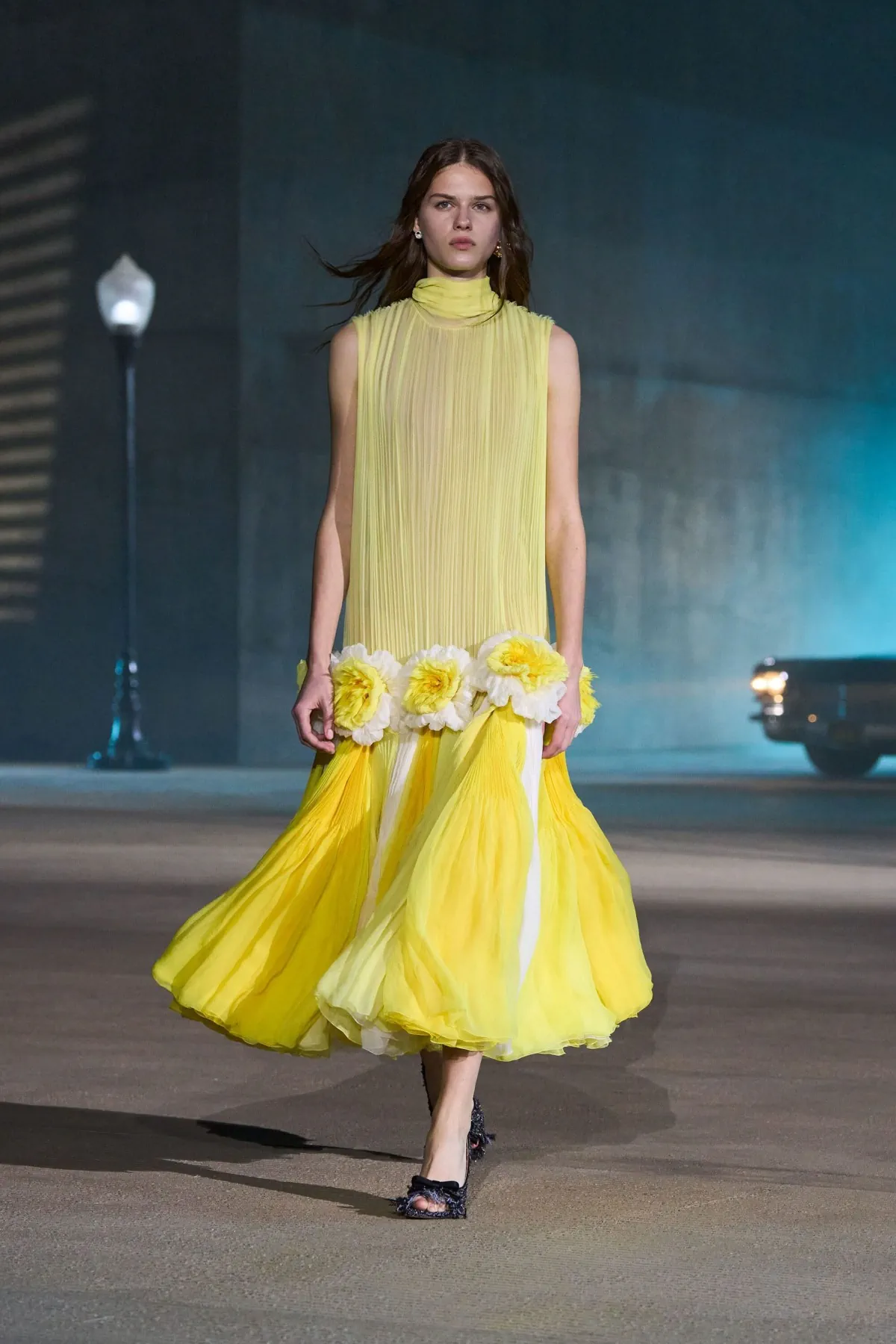
The show opened with dresses inspired by California poppies in pale primrose yellow, soft blush, and vivid red-orange. Their layered, petal-like construction gave the silhouettes an almost botanical weight. Then came softened tailoring, reworked denim, and the enduring Dior icon, the Bar jacket, stretched to mid-thigh with fringing along the hem. Anderson also revisited a white Bar jacket that Christian Dior originally made for Dietrich. It was a prototype that had been in the possession of the late designer Azzedine Alaïa until recently. “We had never had it until this year,” Anderson explained.
The Dior Men component of the Cruise 2027 collection felt genuinely considered rather than appended. Relaxed tailoring echoed the women’s silhouettes. Sculptural, feathered headpieces by Philip Treacy, an Irish milliner and a childhood hero of Anderson’s, appeared on the male looks. Anderson has admired Treacy’s work since his student days. The headpieces spelled out words like “Dior,” “Star,” and “Buzz.” The effect was part prop and part homage to the late Isabella Blow. Anderson said simply, “It was my dream to work with him.“
Follow all the latest news from Fashionotography on Flipboard, or receive it directly in your inbox with Feeder.
You may also read

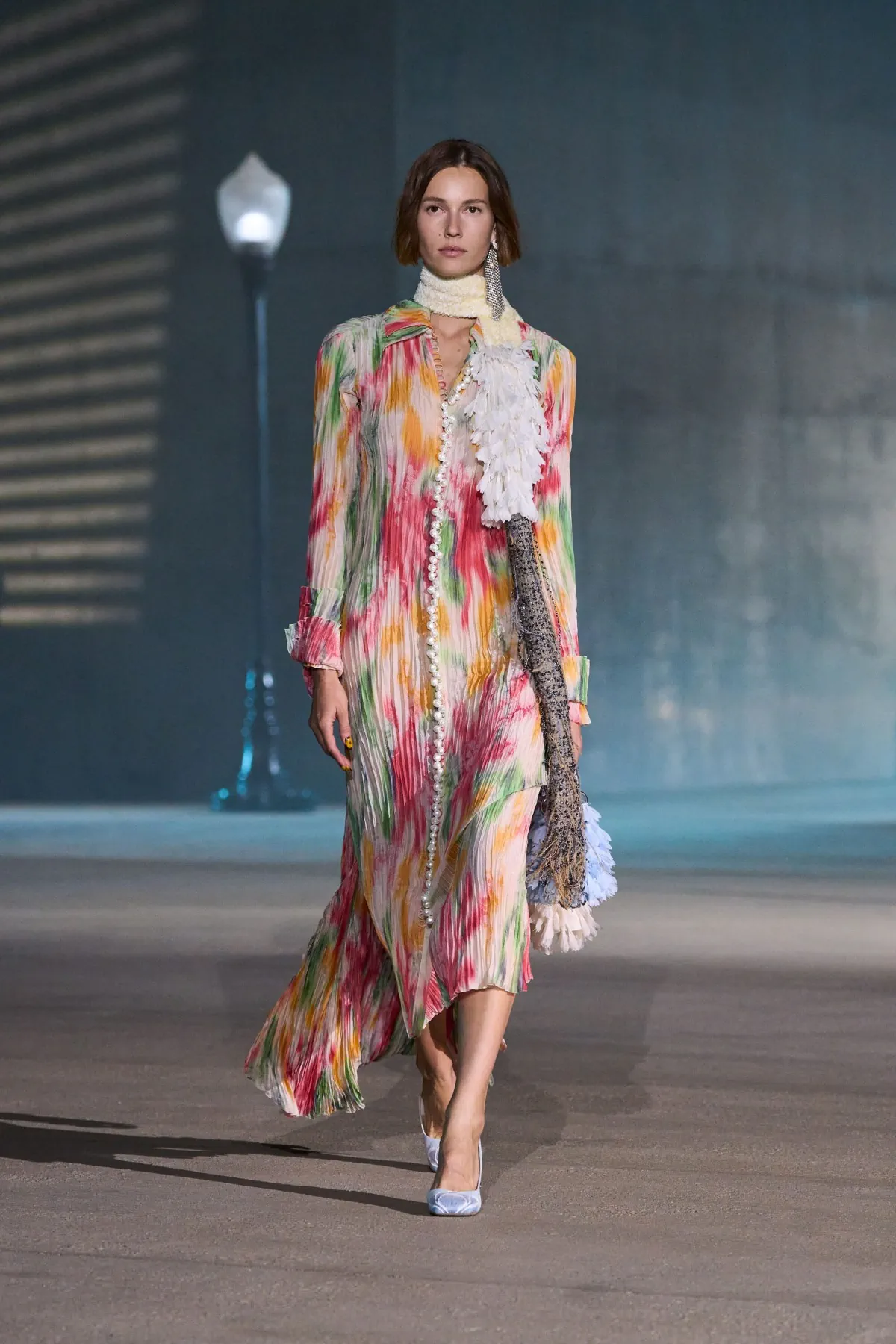
The collaboration with American pop artist Ed Ruscha brought another layer of Americana to the collection. Shirts bore graphic slogans and typographic motifs rooted in midcentury American iconography. Anderson described his desire to “reimagine denim,” collaborating with Dior’s Japanese supplier to embroider jeans with fine silver chains and using woven treatments to create a subtly pilled, faded effect through the yarn. This approach prioritizes textile innovation over distressed denim.
Anderson was in no mood to frame this as an isolated event. He spoke of the Los Angeles show as the opening chapter of a sustained engagement between Dior and the film industry over the next twelve months. Costume collaborations are already in development, including one with director Luca Guadagnino, with whom Anderson shares an established creative friendship. “There might be three more costuming movies,” Anderson said. “One will be with Luca, and there will be two others.”
The question he keeps returning to is structural: “How does a fashion house work with cinema, and how does cinema work at the fashion house? What is a new type of business model within that?” It’s an unusual question for a designer to ask out loud, but Anderson has never been entirely comfortable within the established parameters of fashion. A year into one of the industry’s most closely watched roles, he knows where things are going. He just isn’t telling everyone yet.