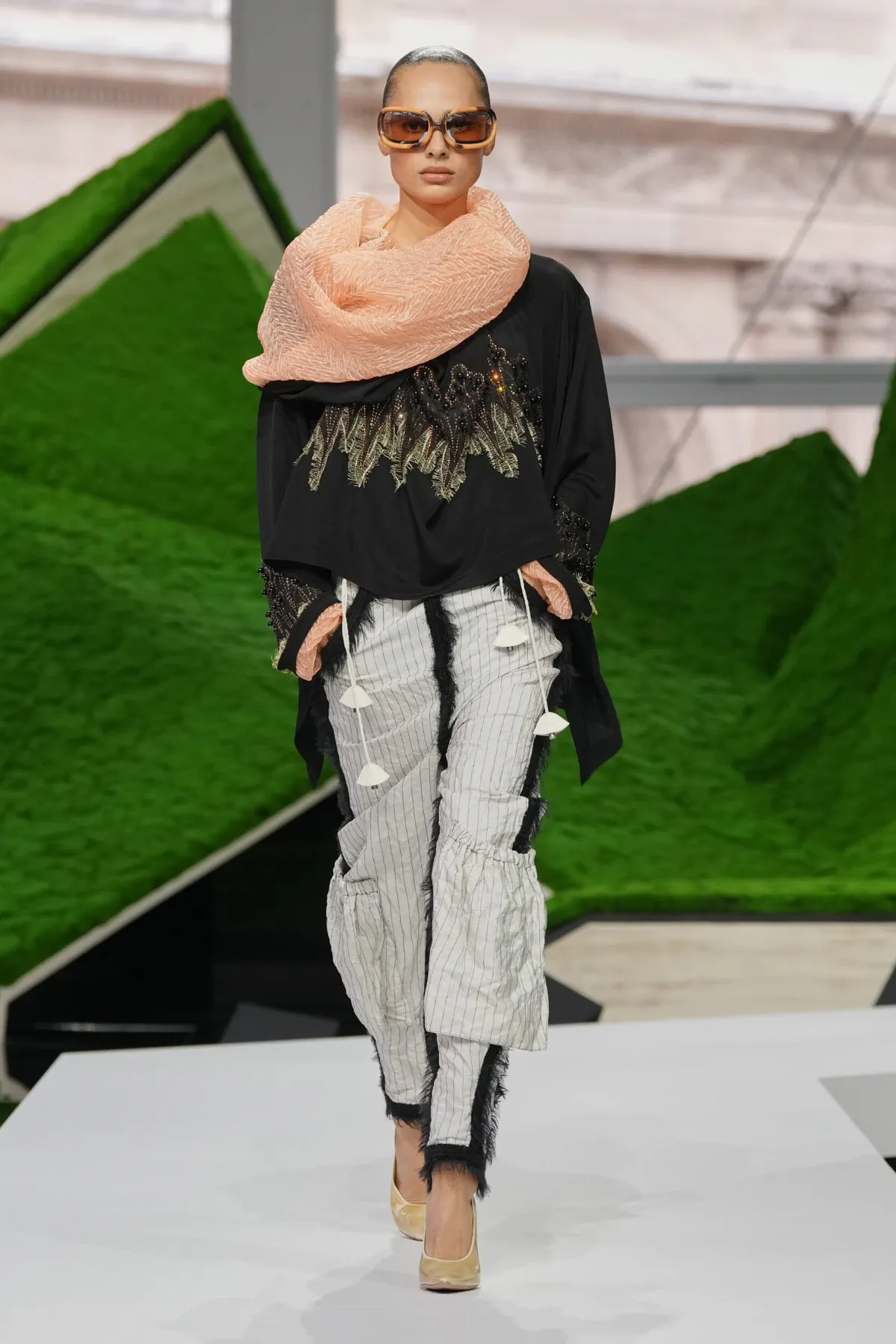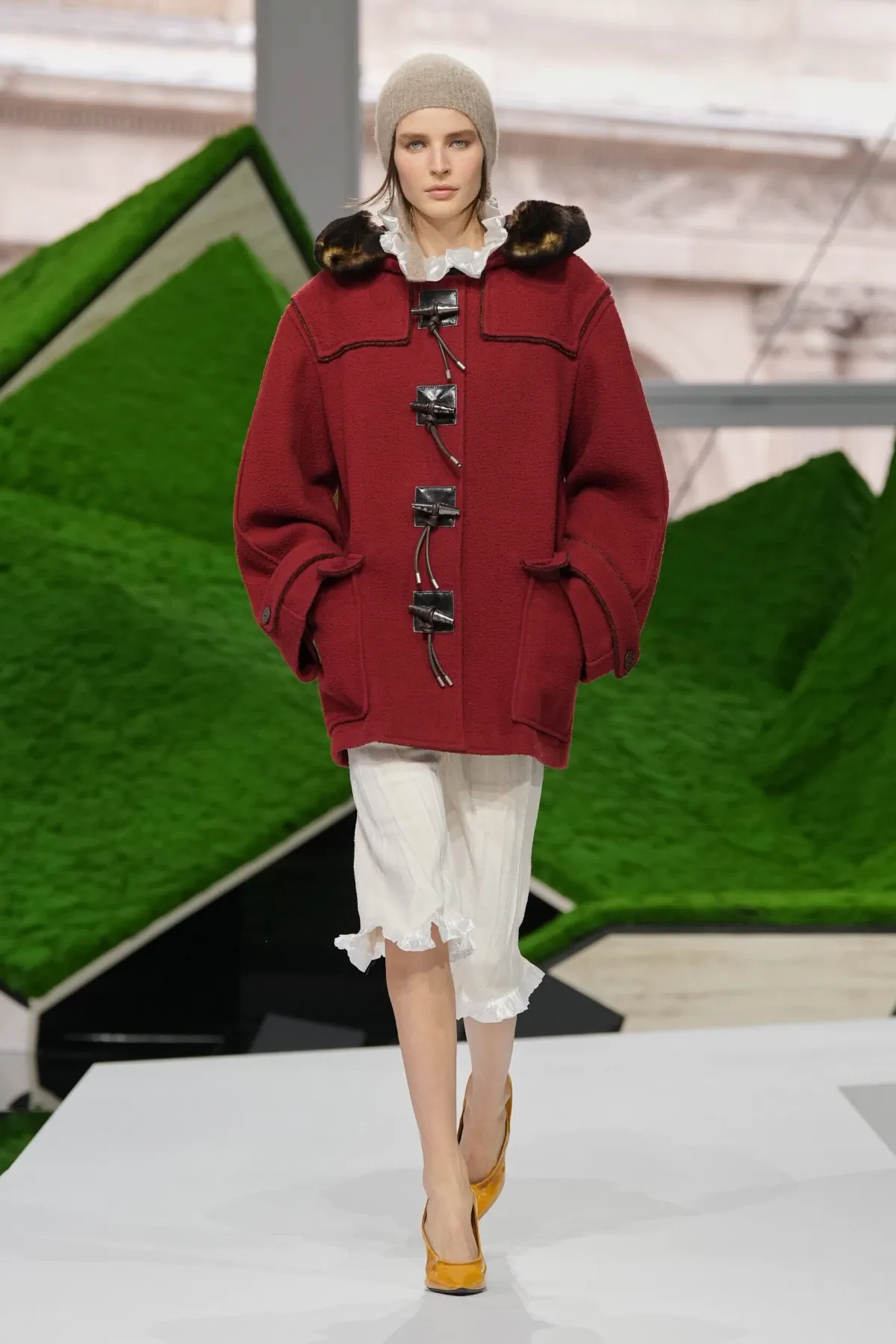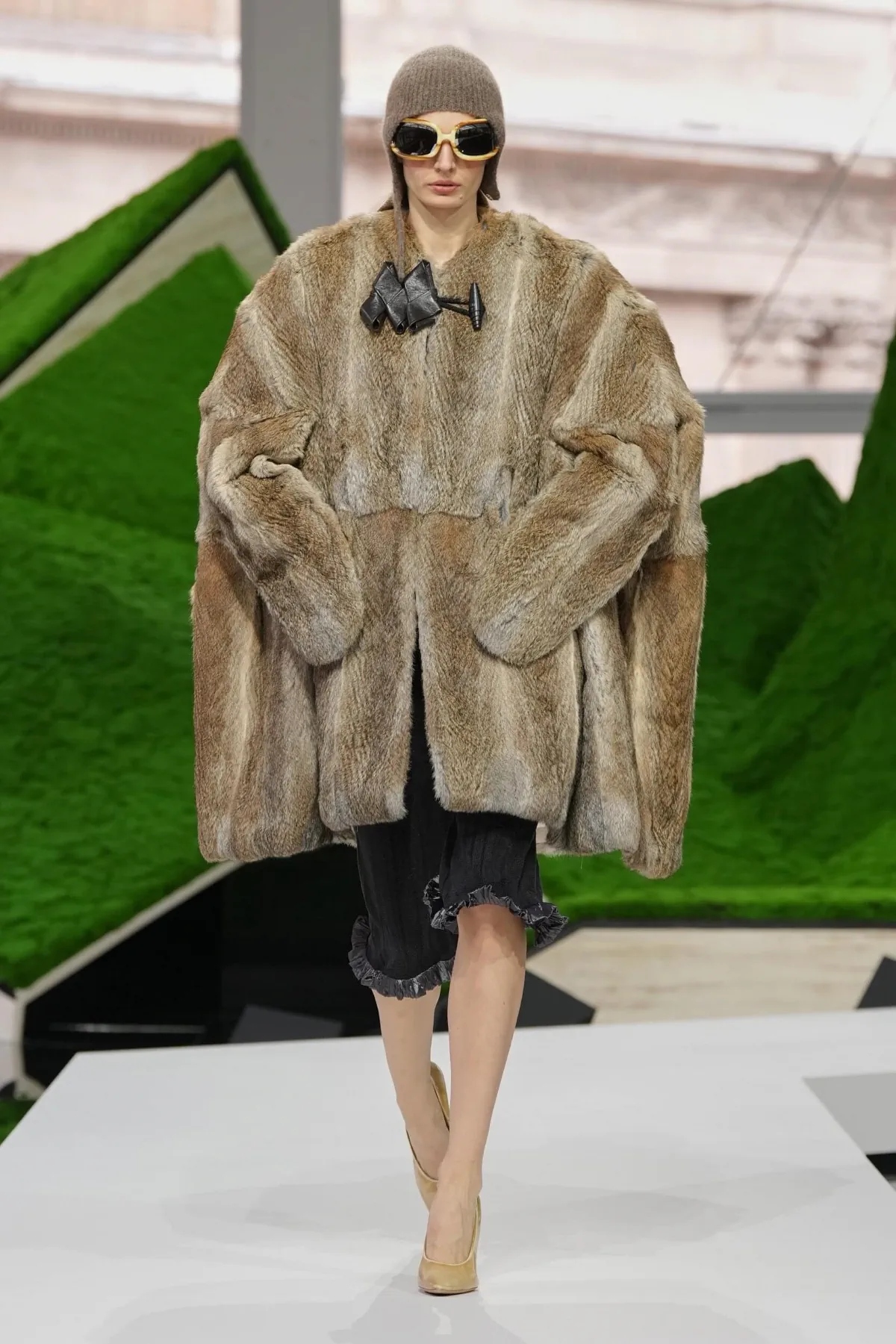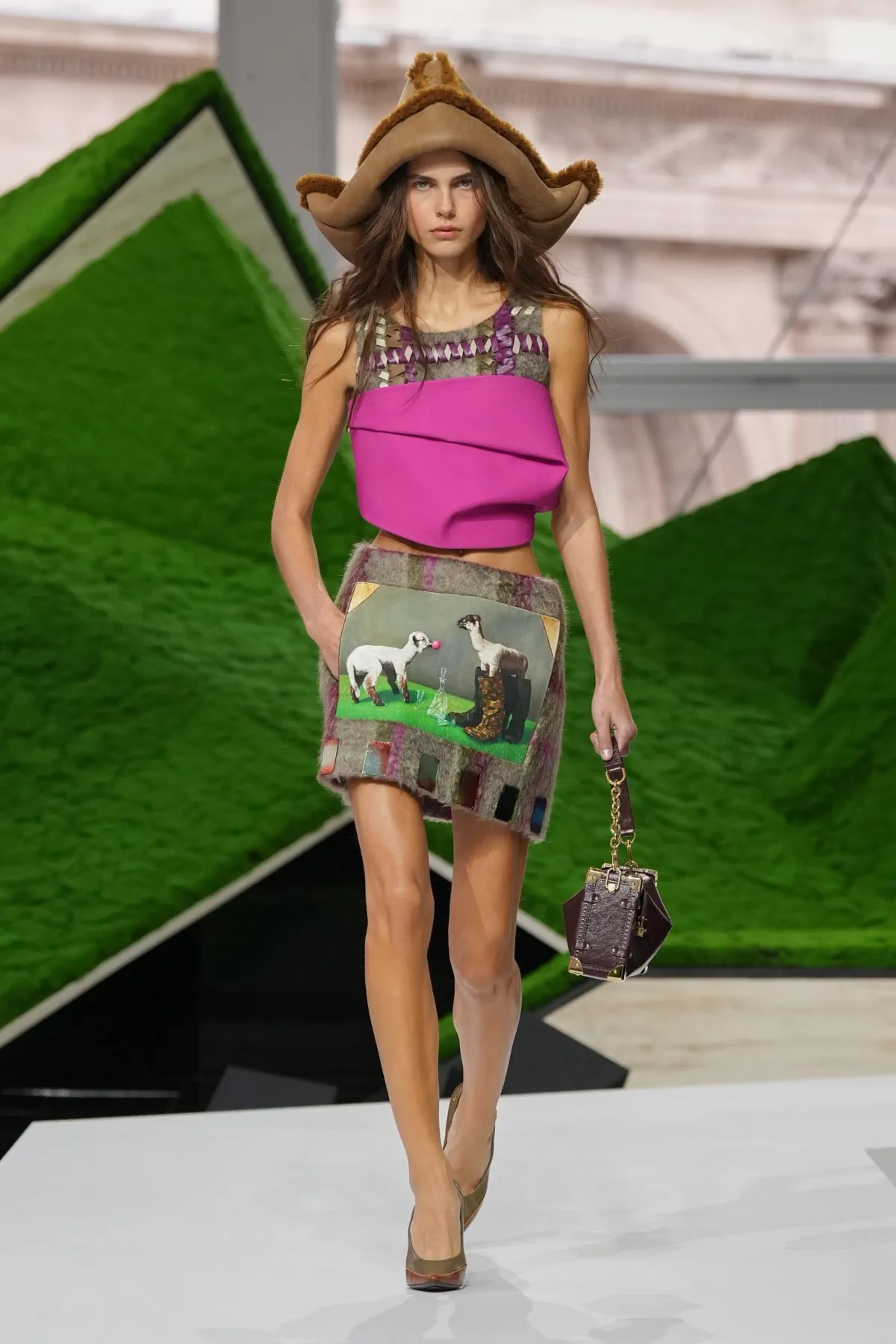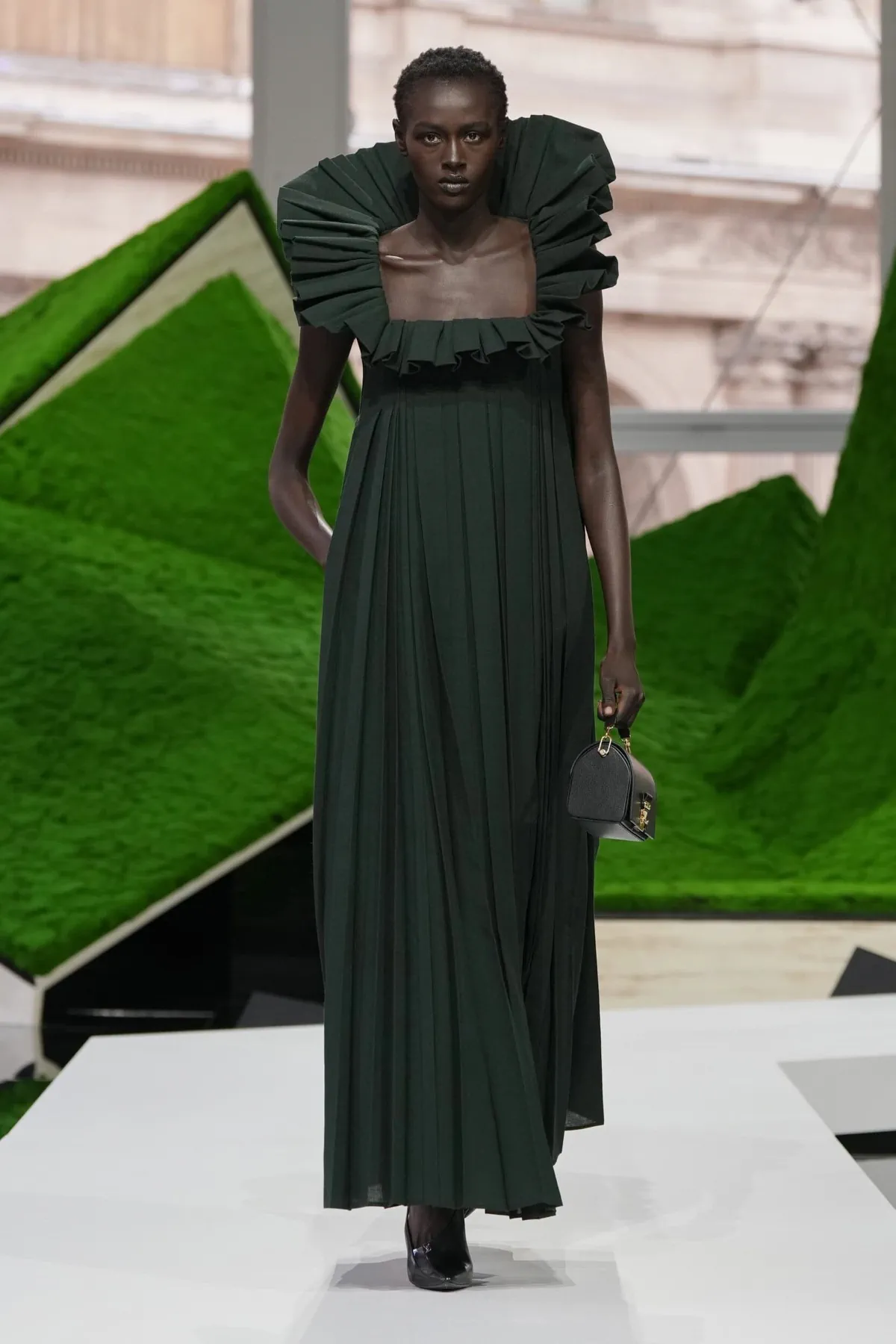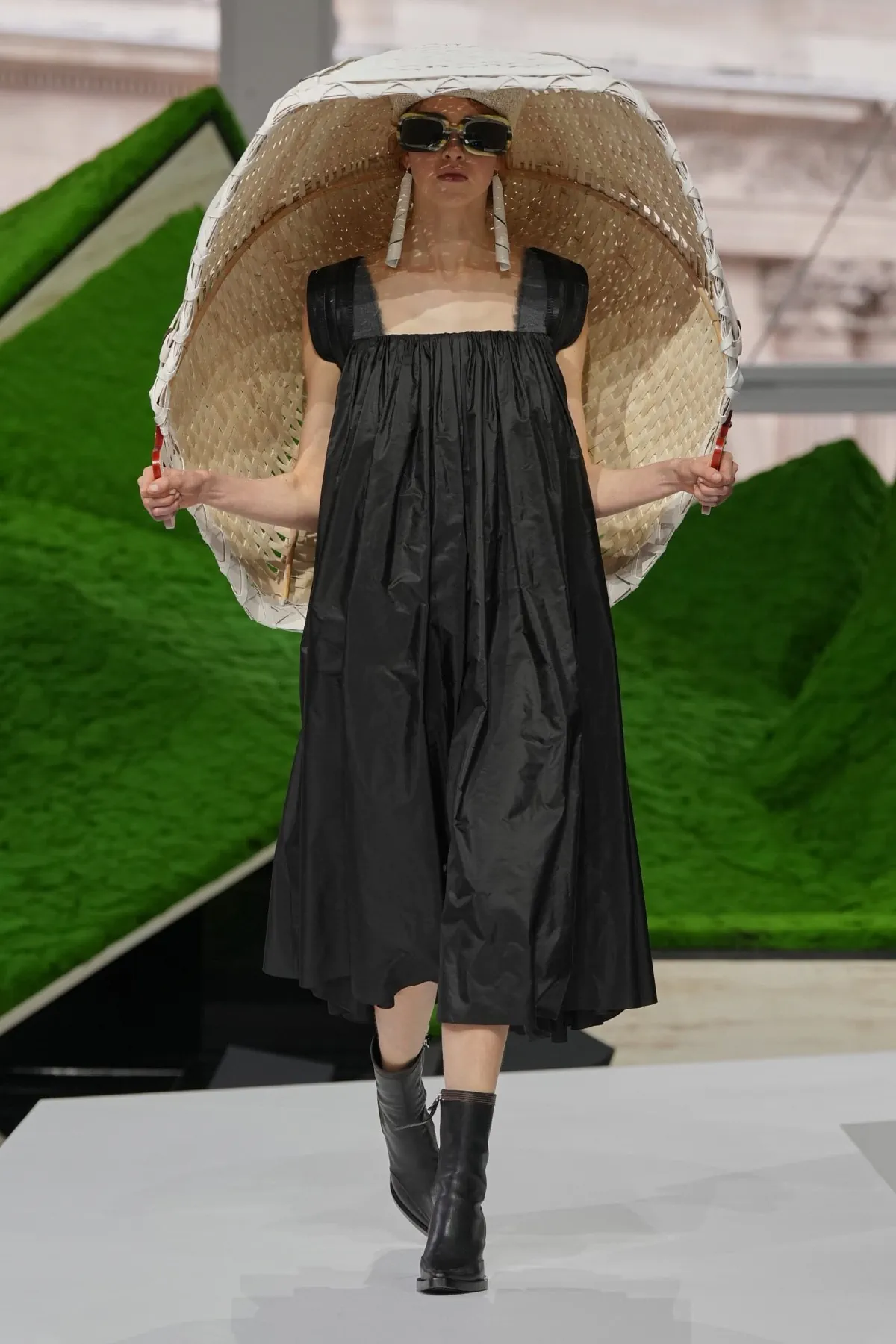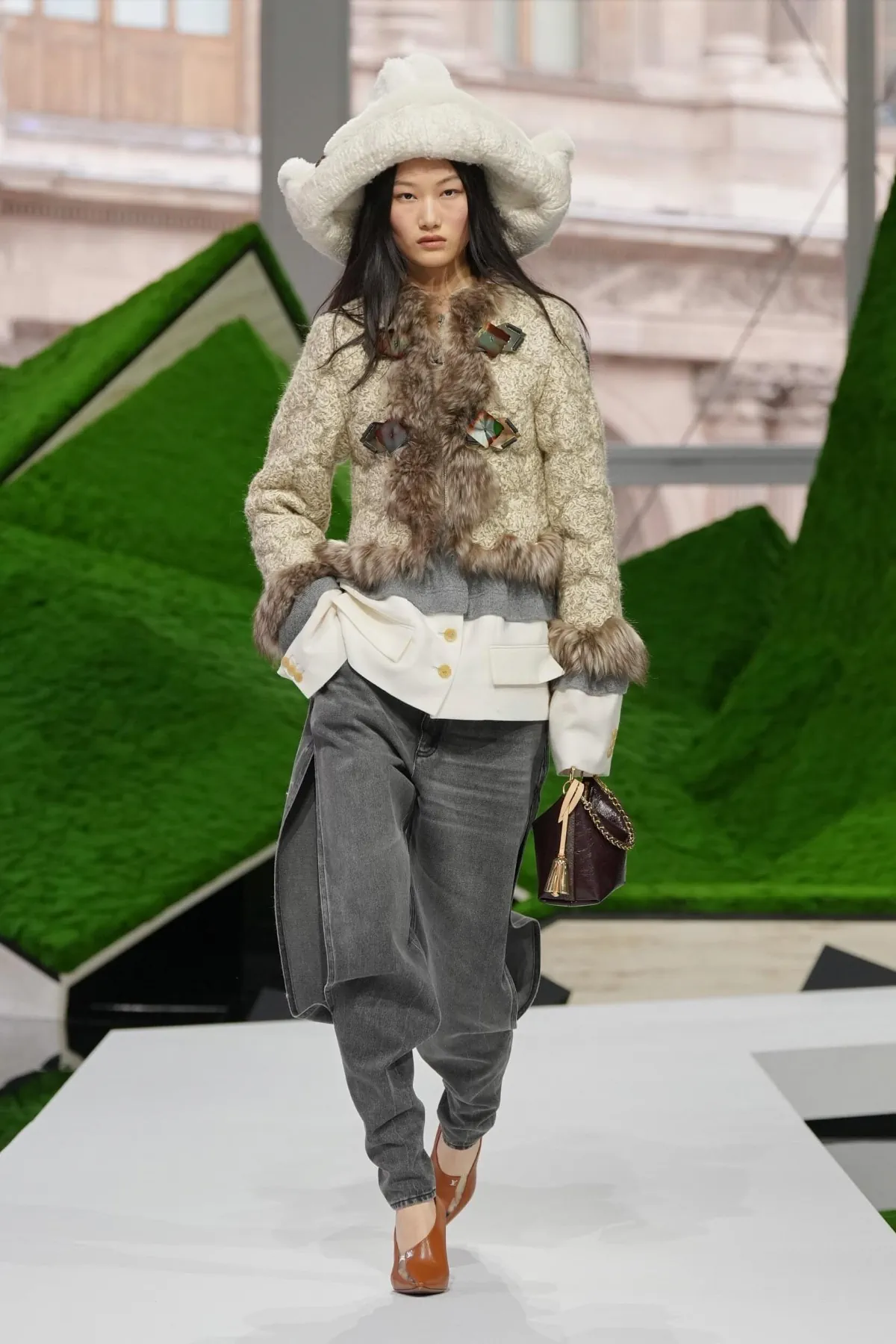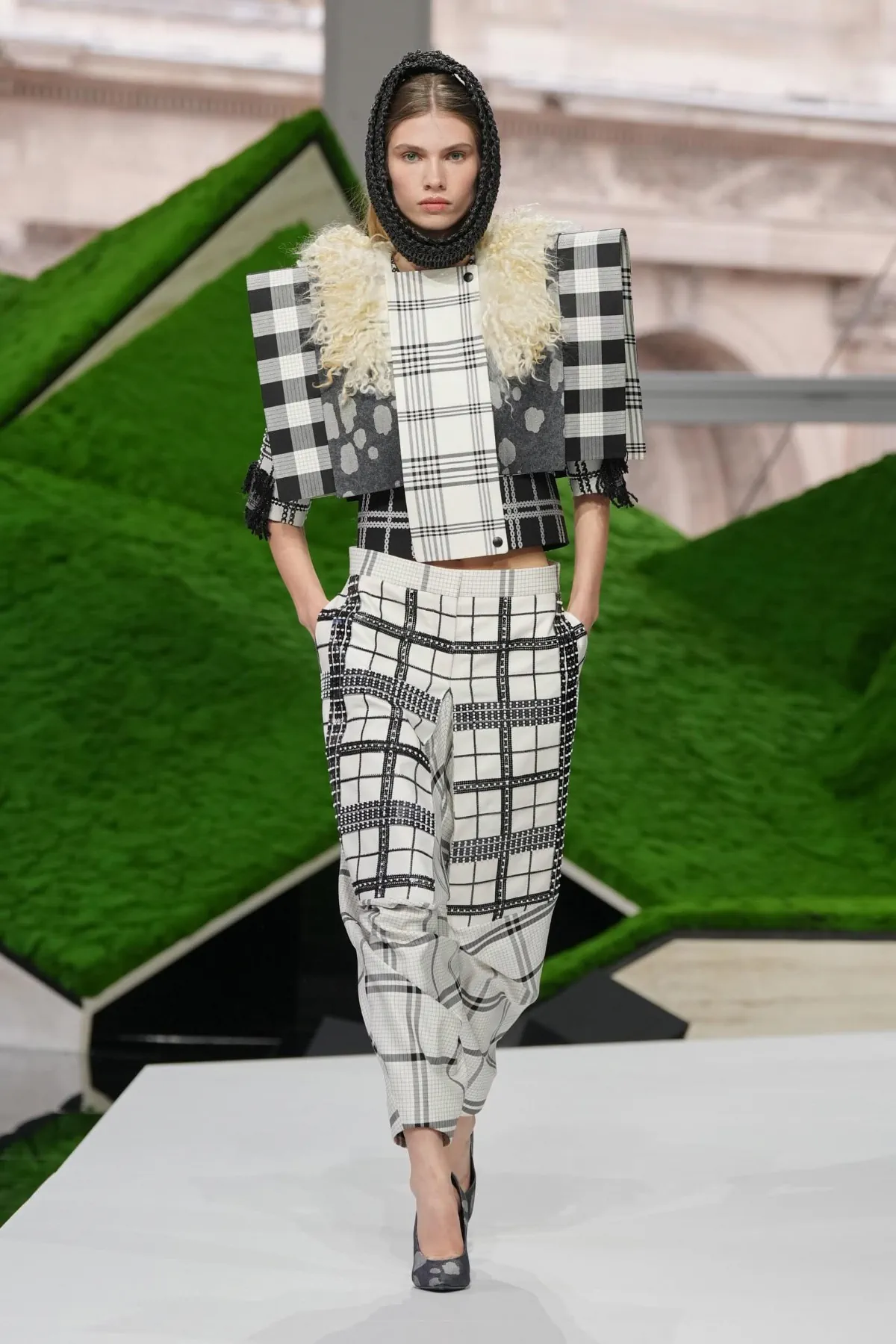

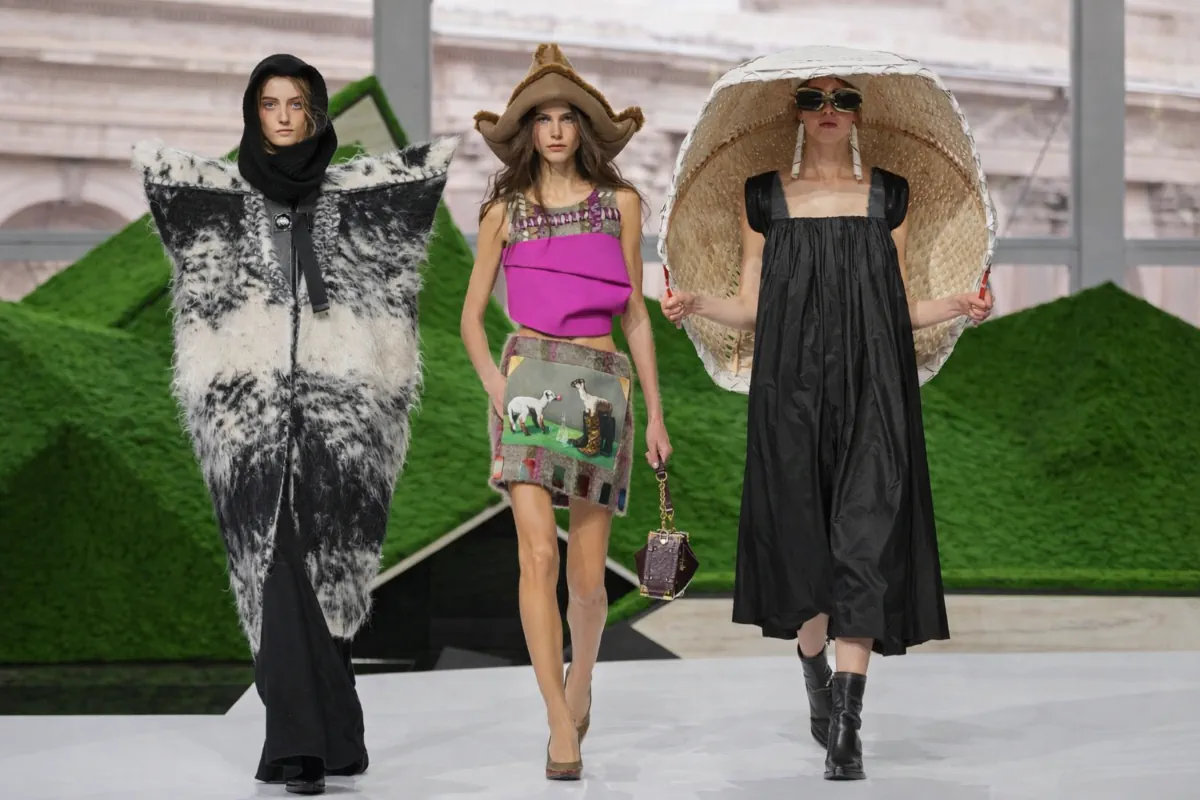
Nicolas Ghesquière has never been a designer to play it safe, and his latest Louis Vuitton show confirmed that instinct. The Louis Vuitton Fall 2026 collection was presented on a stage designed to look like a futuristic wilderness. Jeremy Hindle, the production designer behind the television series Severance, created a set of verdant pyramidal forms and moss-draped prisms. The setting made it clear right away that Ghesquière was not there to offer anything easy.
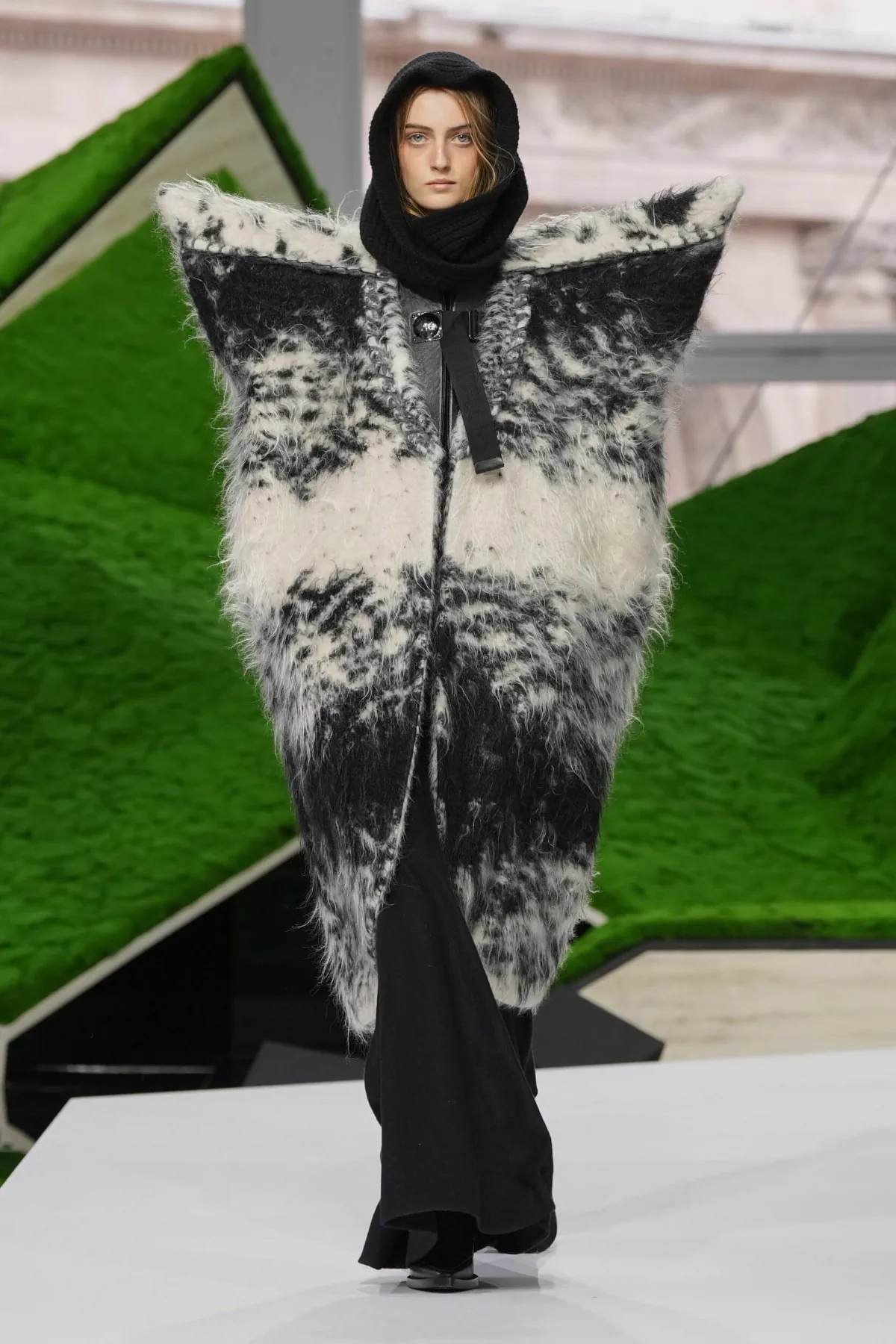
He opened with capes. Not the kind you casually drape over your shoulders at a garden party. These were massive, architectural constructions inspired by the kepeneks that Turkish shepherds have worn for centuries to protect themselves from the elements. At Louis Vuitton, they appeared in brushed animal hair, leather-trimmed wool, and stiff felt. They were theatrical. They were outsized. Among the many things shown during Paris Fashion Week this season, they were almost singular in their lack of comfort.
Most designers this season opted for the relatable. They dressed women in clothes you could picture wearing on a Tuesday morning. Ghesquière reached further. He asked you to consider clothing not as a wardrobe solution, but as a form of cultural inquiry.
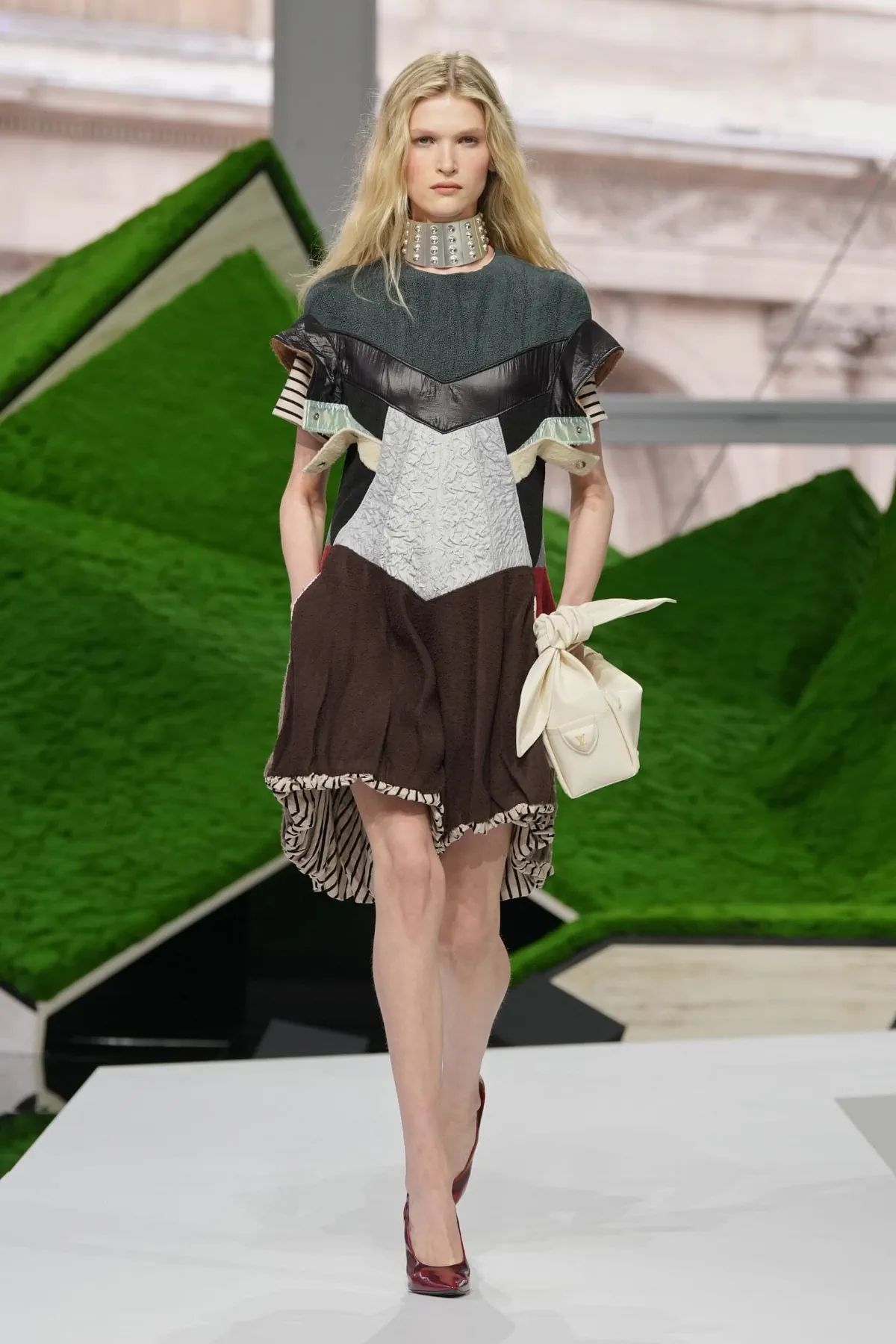
After the show, he told reporters that he wanted to explore the commonalities among garments from high-altitude cultures around the world, including those in the Andes, the Himalayas, and the steppes of Mongolia. Protection, yes. But also a shared human ingenuity in the face of nature’s indifference. This concept provided the framework and tension for the collection.
The references were wide-ranging yet cohesive. Tweedy jackets adorned with woodland creatures sat alongside silk salopettes reminiscent of farm wear through an LV lens. Cone-shaped hats appeared. So did patchwork rompers. Several looks featured the naïve sheep paintings of Ukrainian artist Nazar Strelyaev-Nazarko. Ghesquière discovered Strelyaev-Nazarko through the painter’s model girlfriend. This kind of detail and the serendipitous, circuitous way creative connections happen felt very much in the spirit of the whole show.
| 📌 Key Facts |
|---|
| 🏔️ Collection inspired by high-altitude cultures across continents 🧥 Oversized capes based on traditional Turkish kepeneks 🌍 References include Andes, Himalayas and Mongolian steppes 🎨 Artwork by Ukrainian artist Nazar Strelyaev-Nazarko integrated 🧵 Strong contrast between textured garments and sleek bags 🚶 Accessories presented as functional travel objects, not status symbols 🎭 Runway designed as a futuristic wilderness environment |
Follow all the latest news from Fashionotography on Flipboard, or receive it directly in your inbox with Feeder.
You may also read
There were also cropped leather jackets with eruptions of fur at the collar. There were short dresses constructed from elaborate geometric panels. Long john jumpsuits. And candy-wrapper rain capes that flared out like signal flags. The variety of silhouettes ultimately made the collection feel earned rather than indulgent.
While the clothing reached skyward, the bags offered ballast. The sleek, smooth handbags were a deliberate contrast to the hairy, layered textures of the garments. Some were displayed at the end of a walking stick, giving them the feel of a traveler’s essential rather than a status symbol. A new range of Mini Malle bags appeared in soft versions, some with an abundance of dangling belts. Tuxedo trousers had strips of fluff along the outer seams instead of the usual satin stripe. It was a small substitution with a big impact.