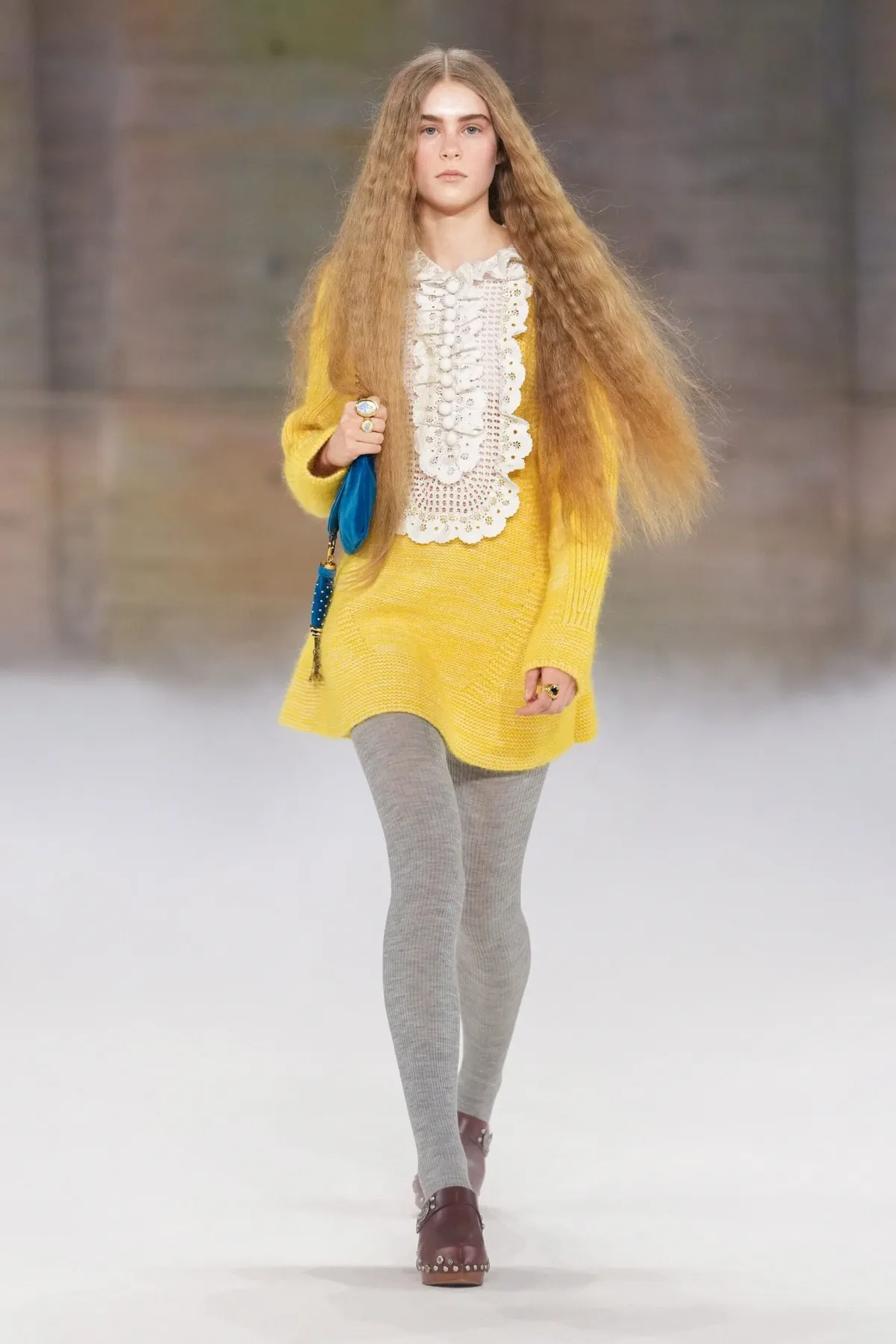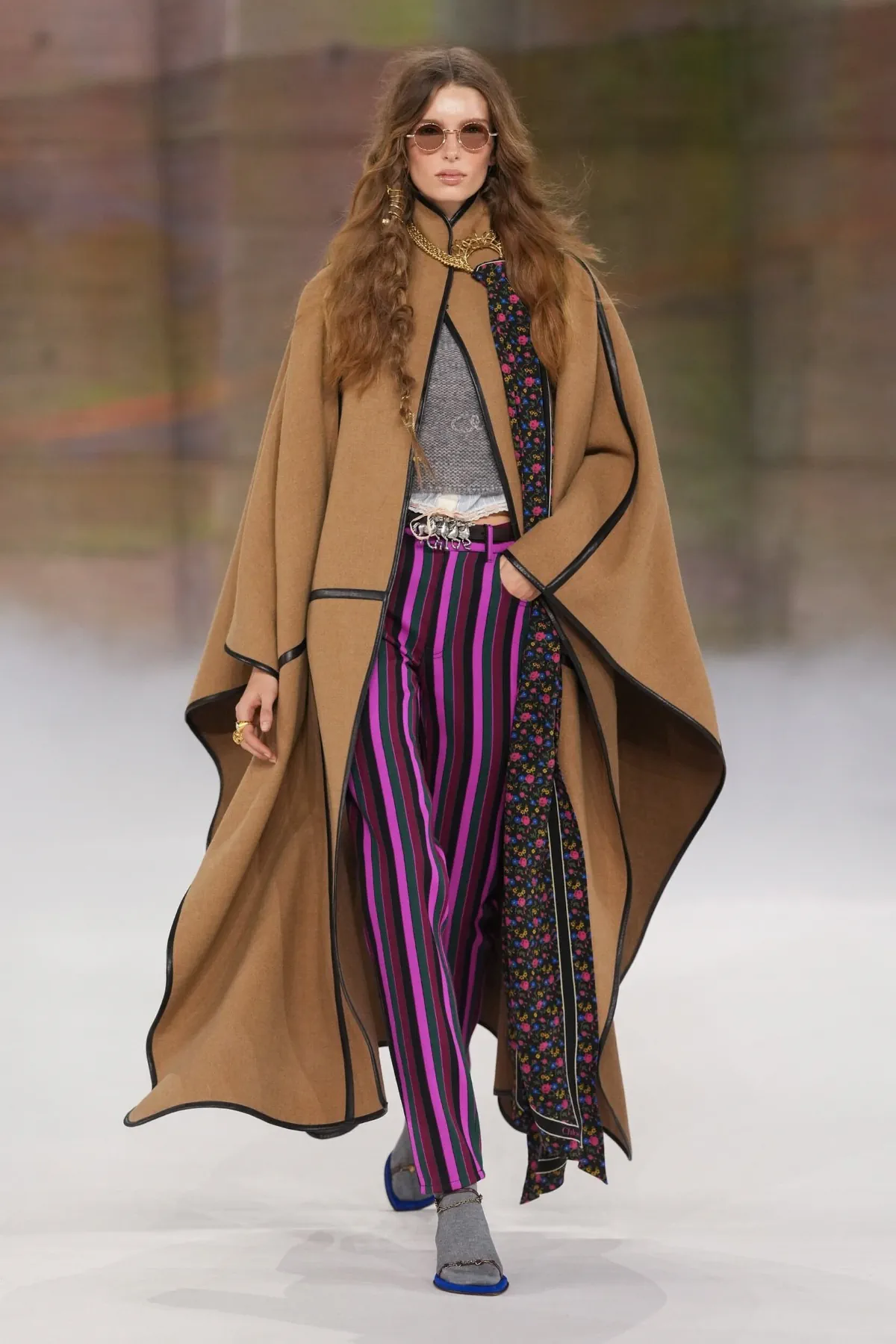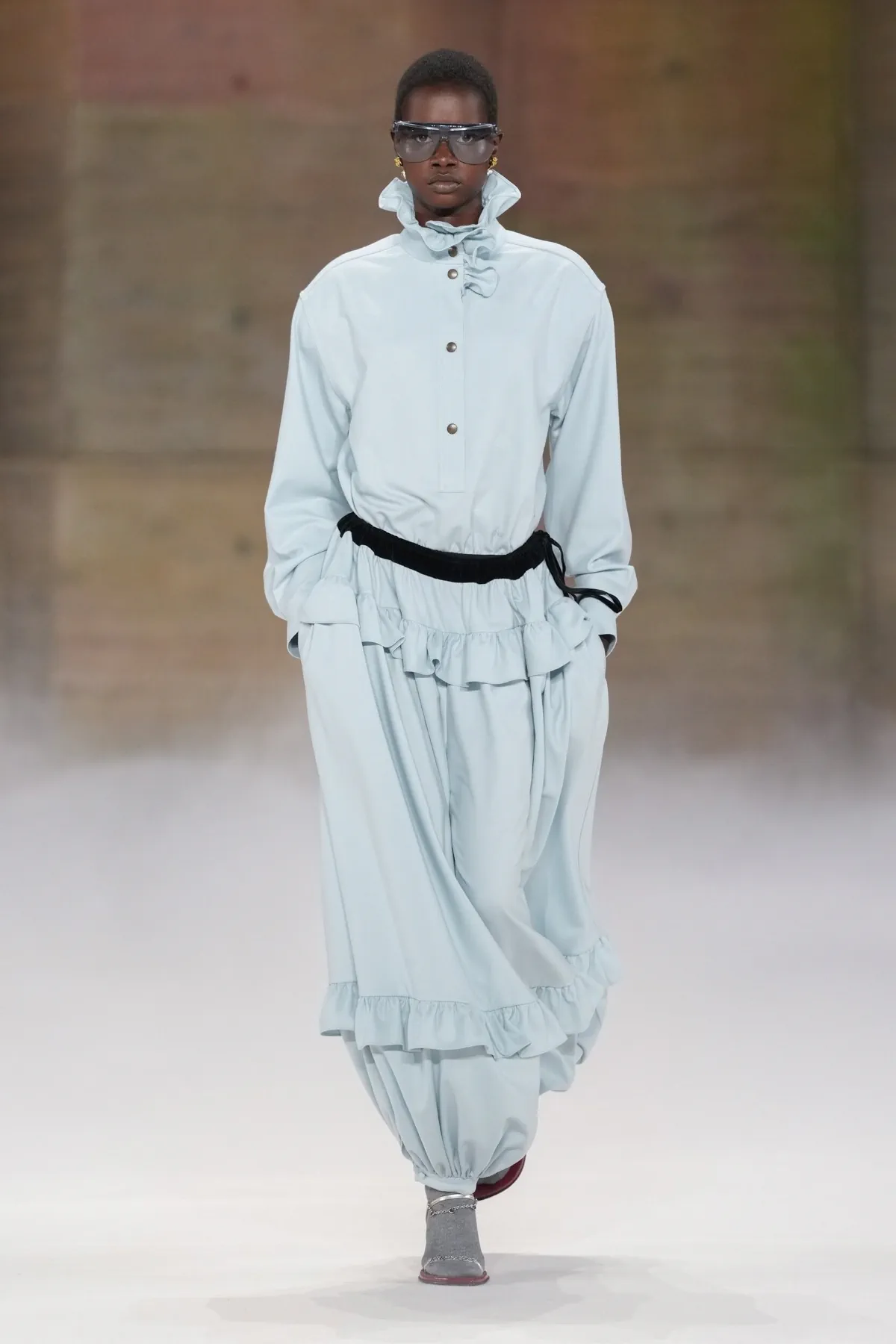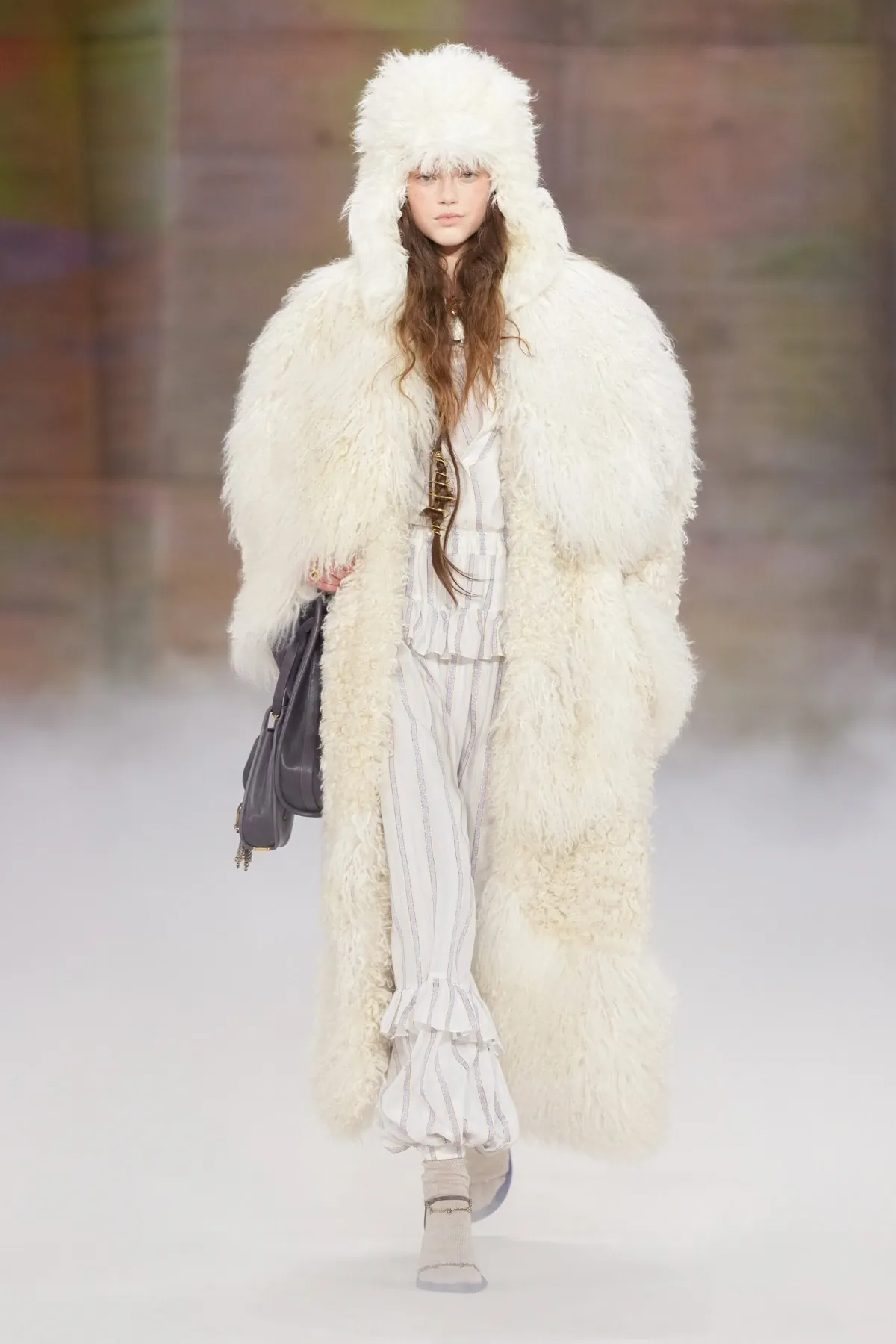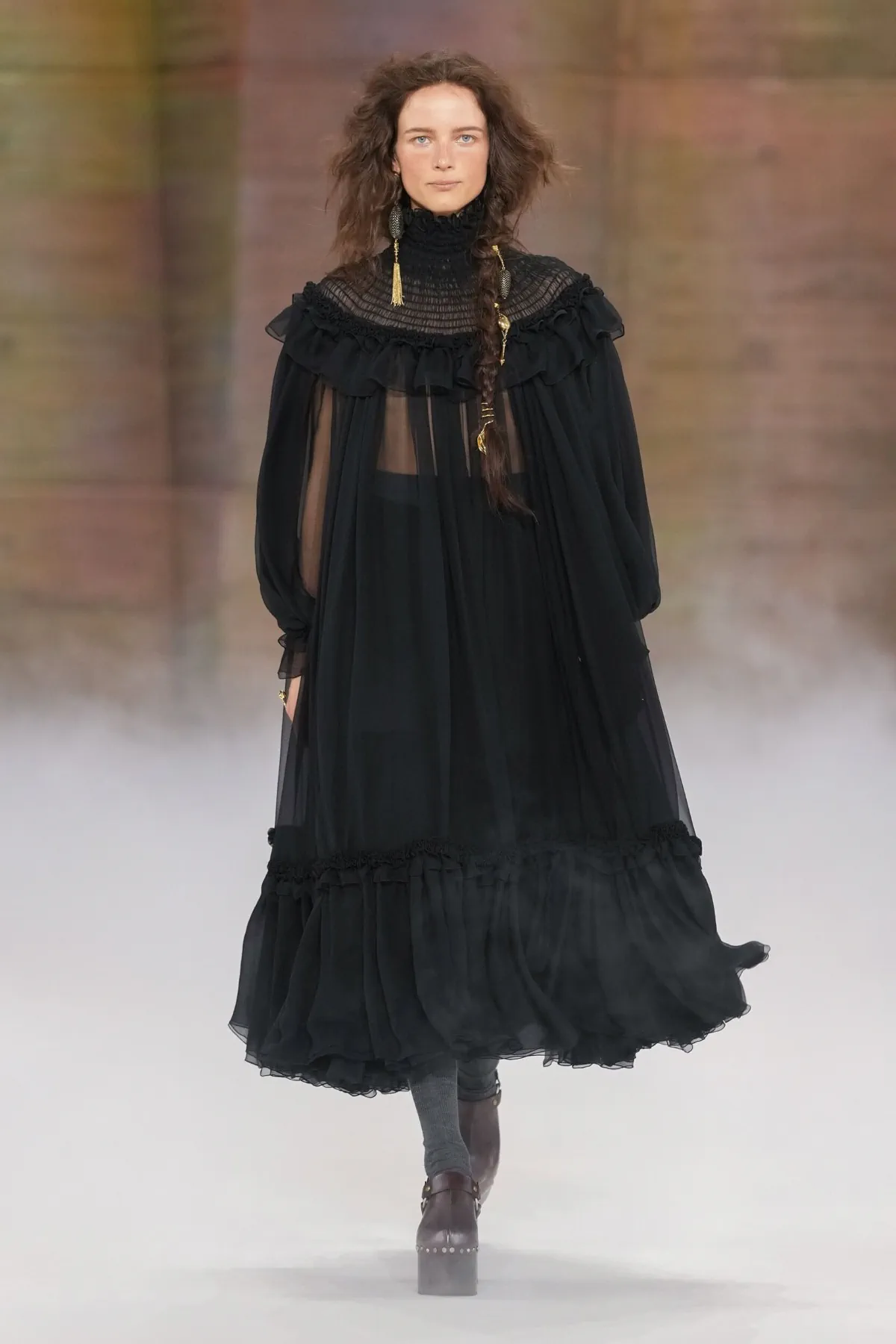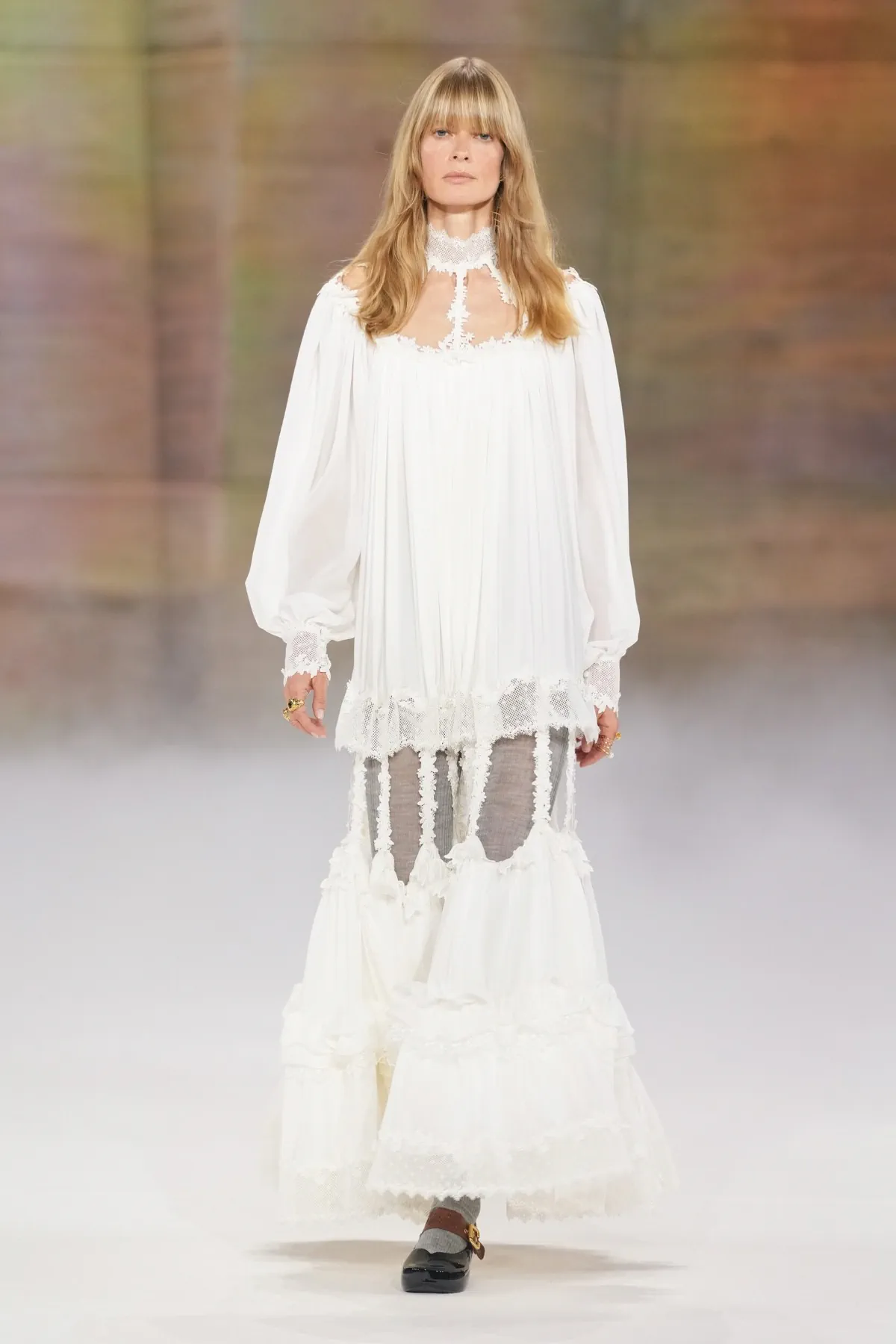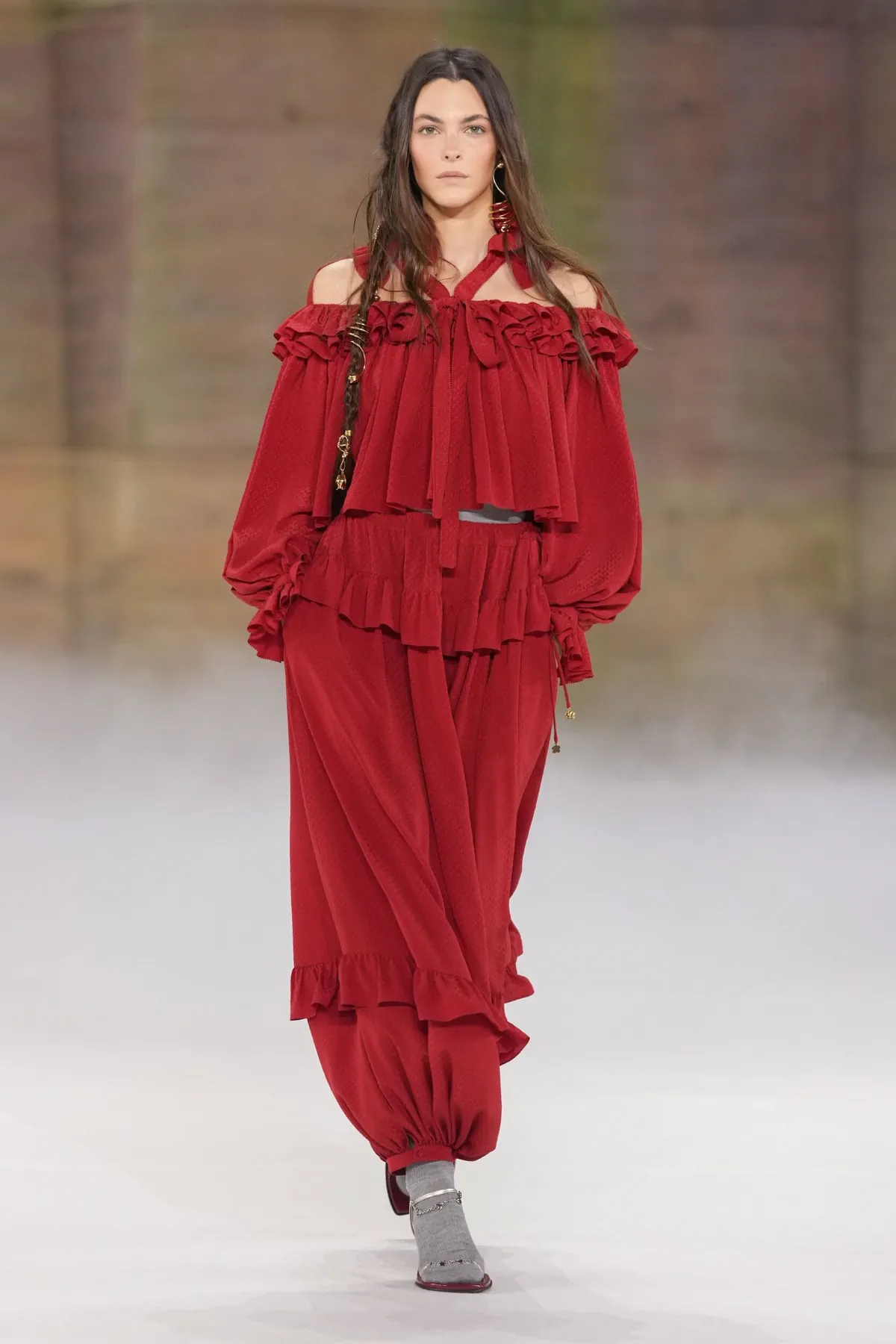

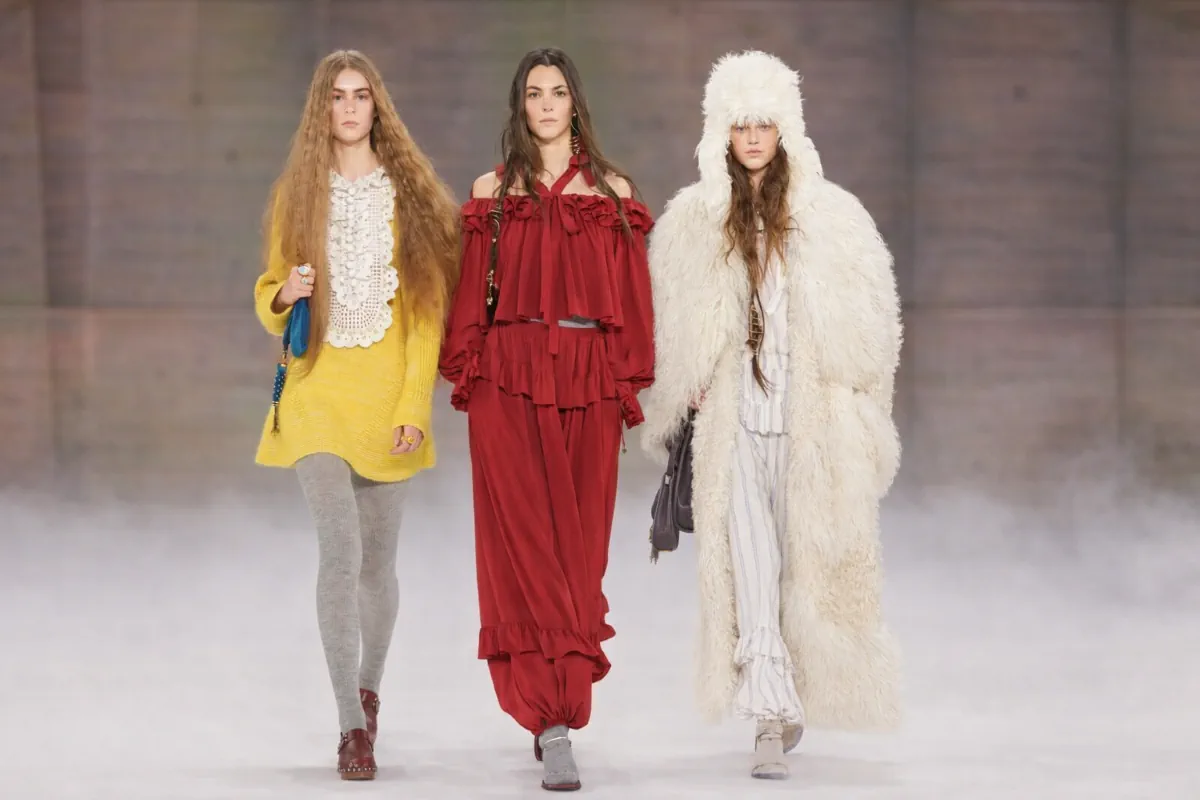
Chemena Kamali does her homework. For the Chloé Fall 2026 collection, she studied XIX-century Dutch folk costumes, examined photographs of long-hair contests in Lithuania, and revisited the Karl Lagerfeld era at Chloé, a period that defined the brand’s identity. The result was a show that landed somewhere between a countryside Sunday and a very particular kind of freedom.
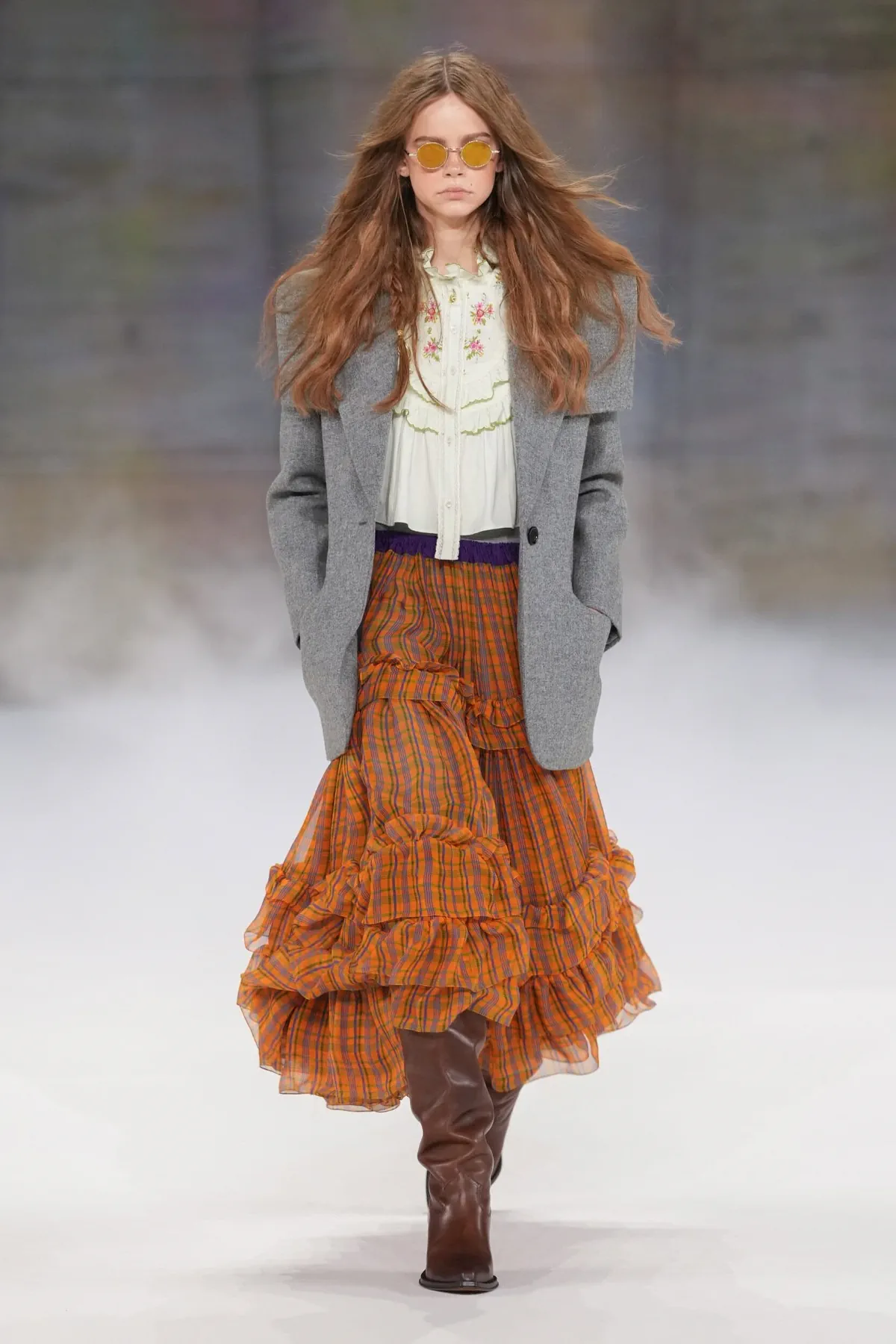
The show took place at the Maison de l’UNESCO in Paris, a brutalist space that provided an unexpectedly fitting backdrop for the handmade, human-scale clothes. Models moved through wisps of fog that rolled across the floor and curled around the ankles of front-row guests. Their hair was crimped, their sunglasses were small and round, and they wore clogs. You could place them in a field in 1974 without changing a thing.
Kamali’s research into Dutch folk dress was not merely decorative. She traced a direct line between a 1978 Lagerfeld jacket with a detachable shoulder yoke and the kraplap, a traditional Dutch garment made of stiffened cotton. This structural reference appeared in the fitted, precise wool blazers that opened the show, complete with detachable yokes. It was the kind of detail that most people in the room would never notice, yet it gave the clothes their backbone.
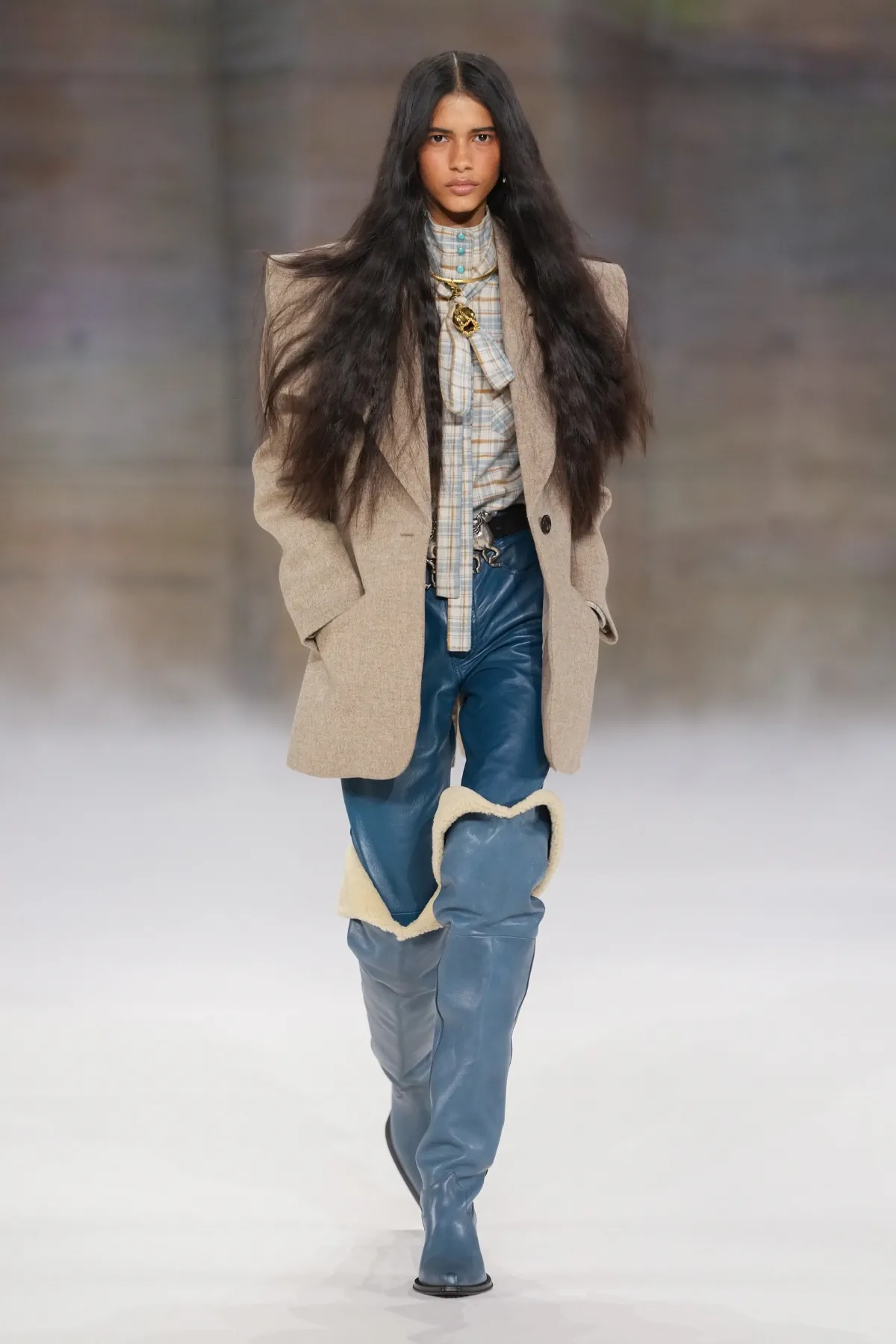
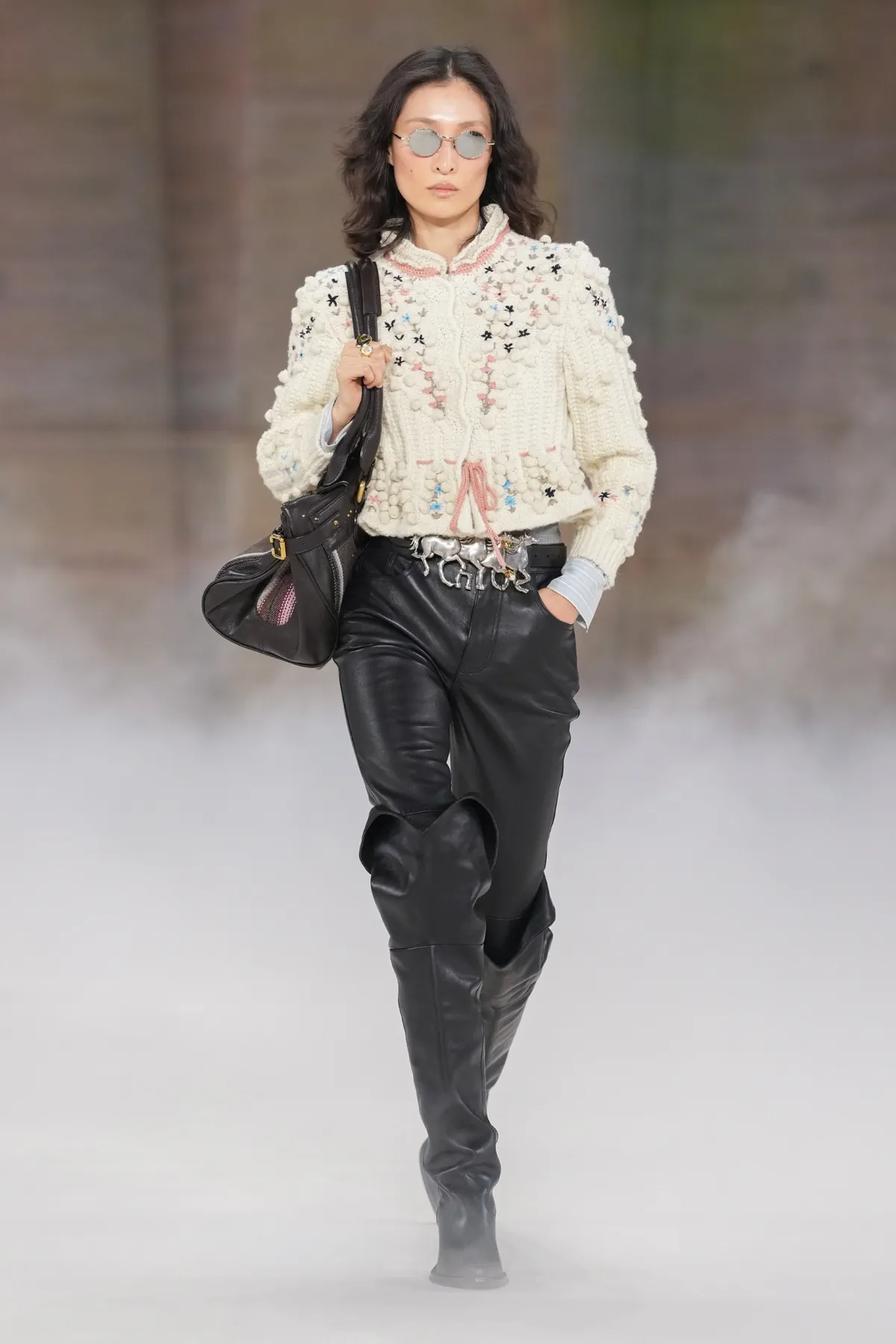
The broader silhouette drew from the same folk tradition. Tiered skirts came in faded checks. Quilted pieces featured micro-floral motifs that were visible only when you were close enough to touch the fabric. Hand-knitted cardigans were dotted with pompoms and small flowers. There was something almost stubbornly anti-digital about it all, clothing that rewarded proximity and asked you to slow down and look properly.
The word “bohemian“ is often used carelessly in fashion, but Kamali used it intentionally. She titled the collection “Devotion,” a word pointing toward community and craft rather than a particular aesthetic. Her mood board reportedly included pages from photographer Bob Fitch’s documentation of hippie culture – not the clichéd version, but the earnest, idealistic original. It was the peace-loving, nature-respecting, establishment-questioning generation that preceded the cynicism that followed.
Follow all the latest news from Fashionotography on Flipboard, or receive it directly in your inbox with Feeder.
You may also read
Chloé’s signature pieces were all present: capes, ponchos, bib-front dresses, and peach-toned blouses. One blouse was scaled up into a grand coat with the prominent shoulders Kamali has favored since her arrival at the house. The vocabulary was familiar, but the mood was specific. This was not nostalgia for its own sake. Kamali was making a case for the value of objects that require time and skill to produce.
There is a question worth asking about prairie references right now. Depending on who is wearing them and why, folk costume and checked skirts carry different weight. Kamali’s answer was clear; her reference point was the counterculture, not the domestic ideal. The women on her mood board were Joni Mitchell and Kate Bush – not exactly traditional wives. This distinction matters, and it was reflected in the clothes. These were not clothes designed to contain women. They were designed to let women move.
At times, the show was too long, and the accumulation of looks became repetitive. However, that is almost a secondary concern when a designer works with such seriousness and generosity. There was twenty-five meters of silk chiffon in a single underskirt. Tiny, hand-embroidered flowers adorned a blouse. Patchwork jackets assembled with visible care. The Chloé Fall 2026 collection asked whether clothing could still carry something real. Kamali’s answer this season was yes.