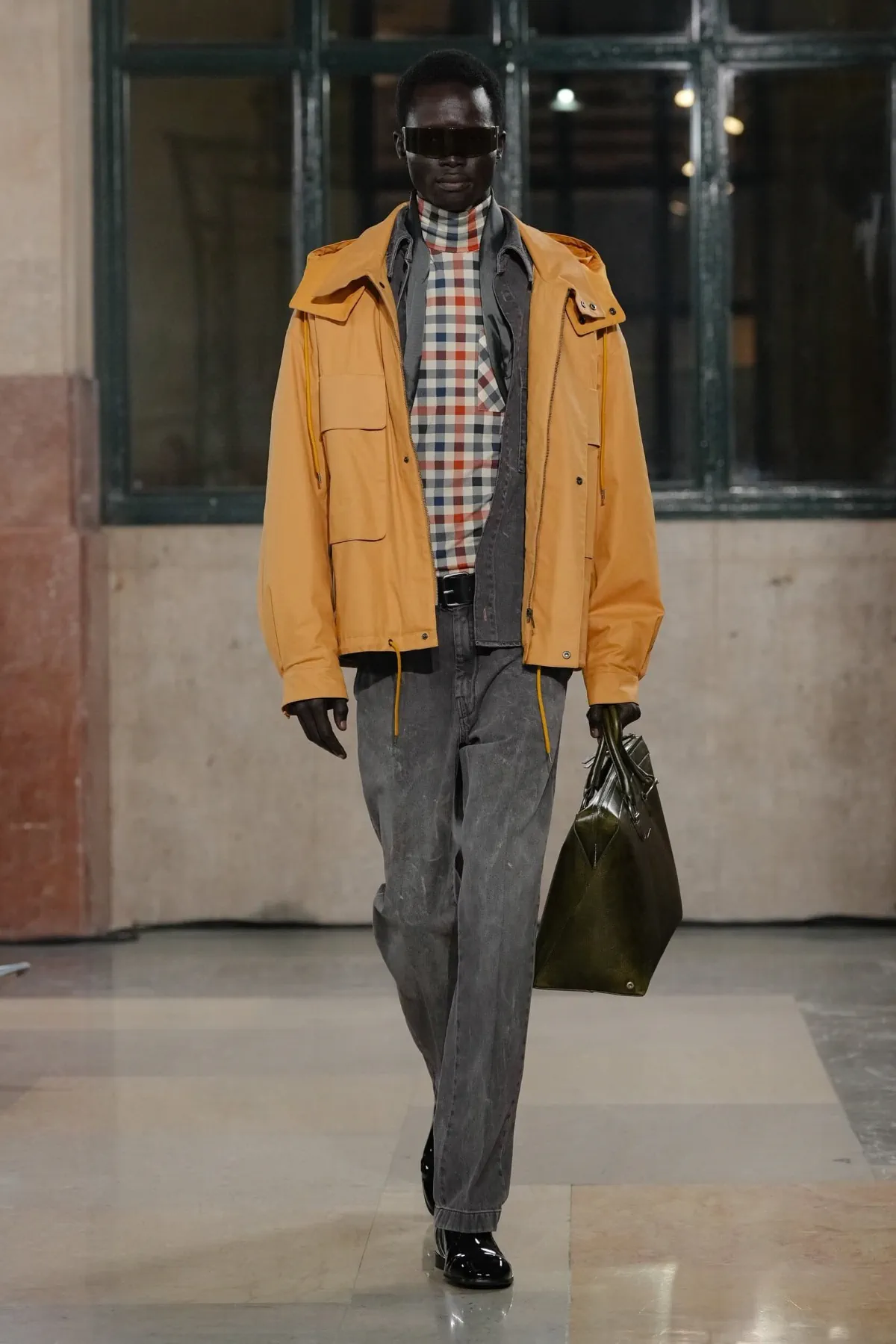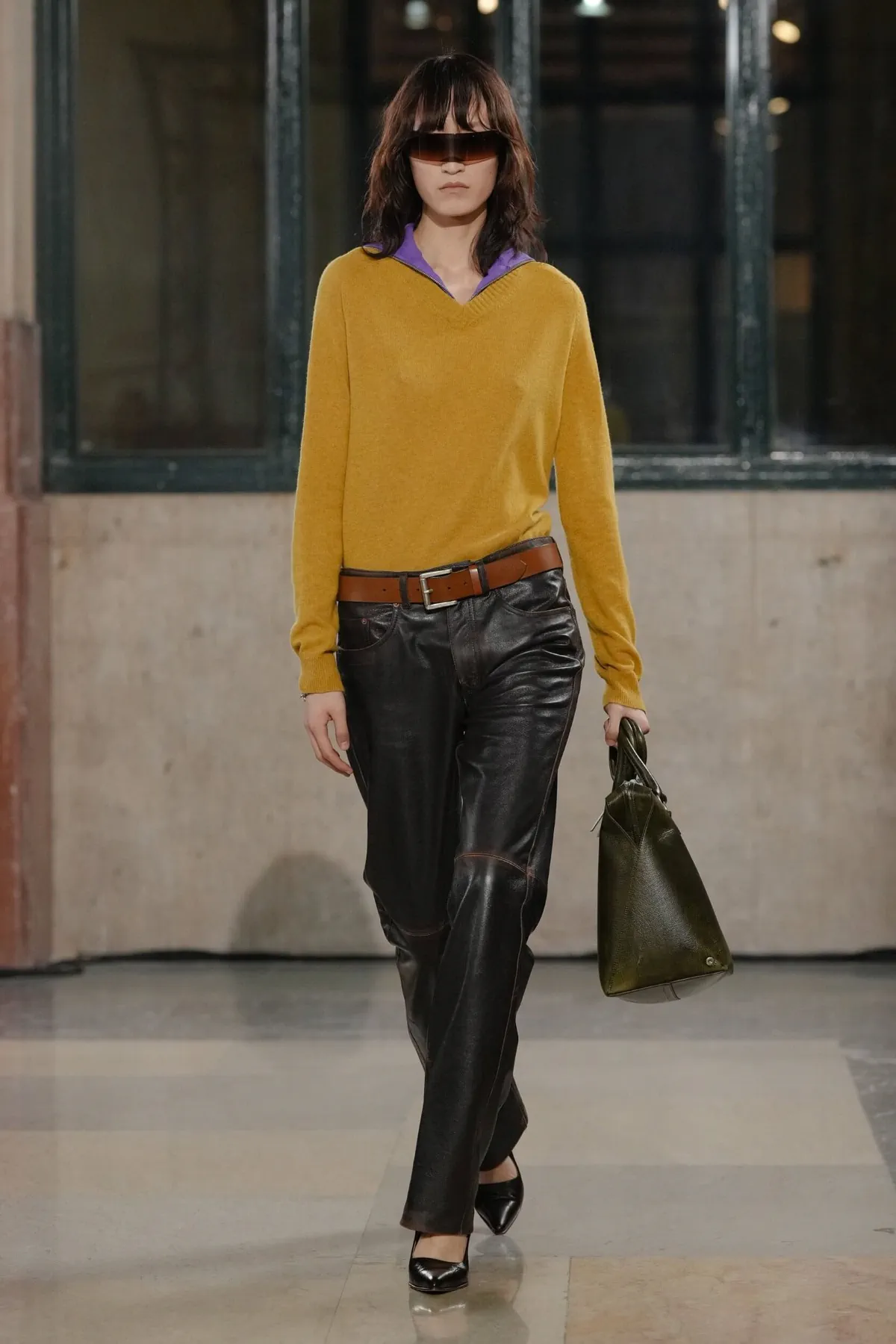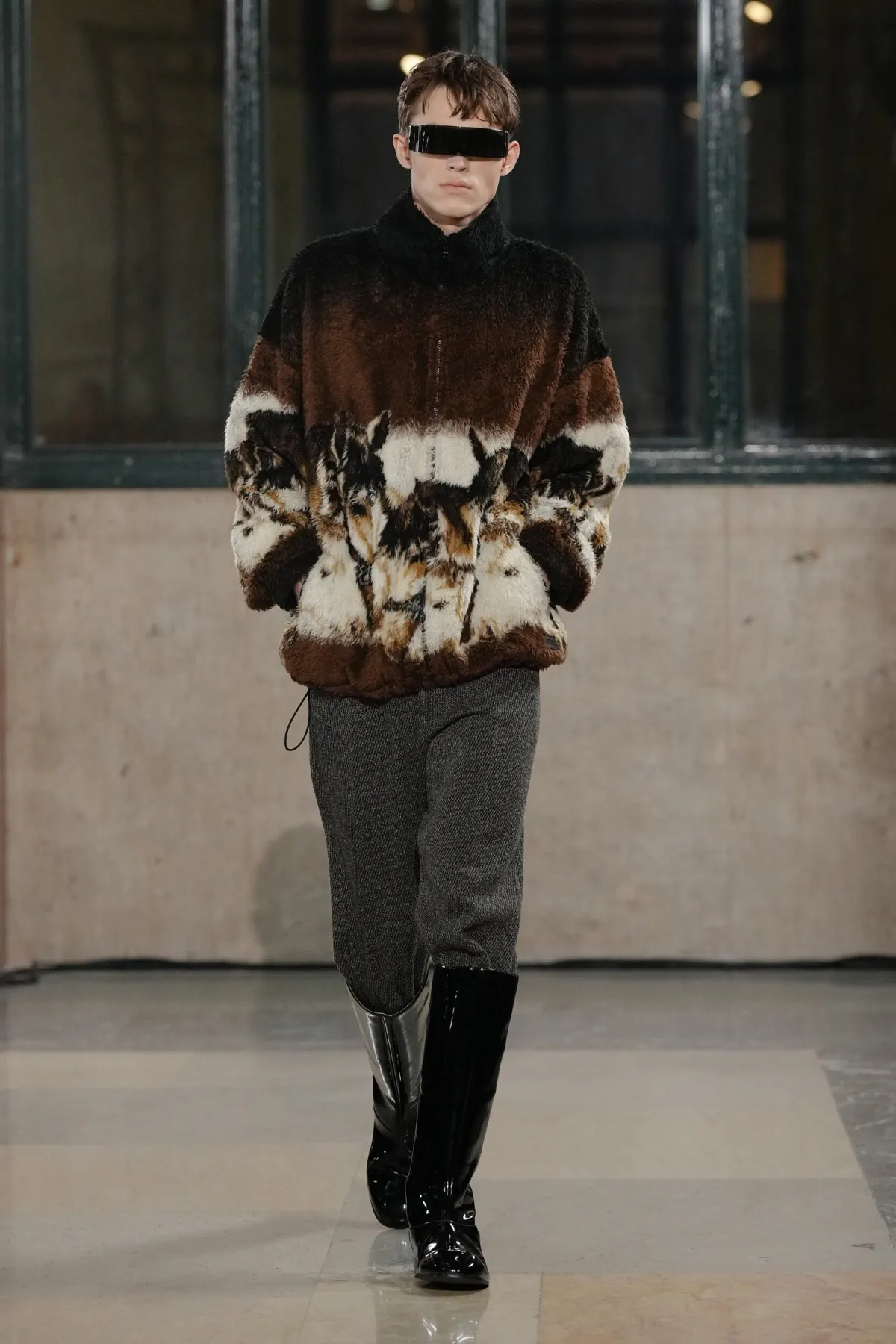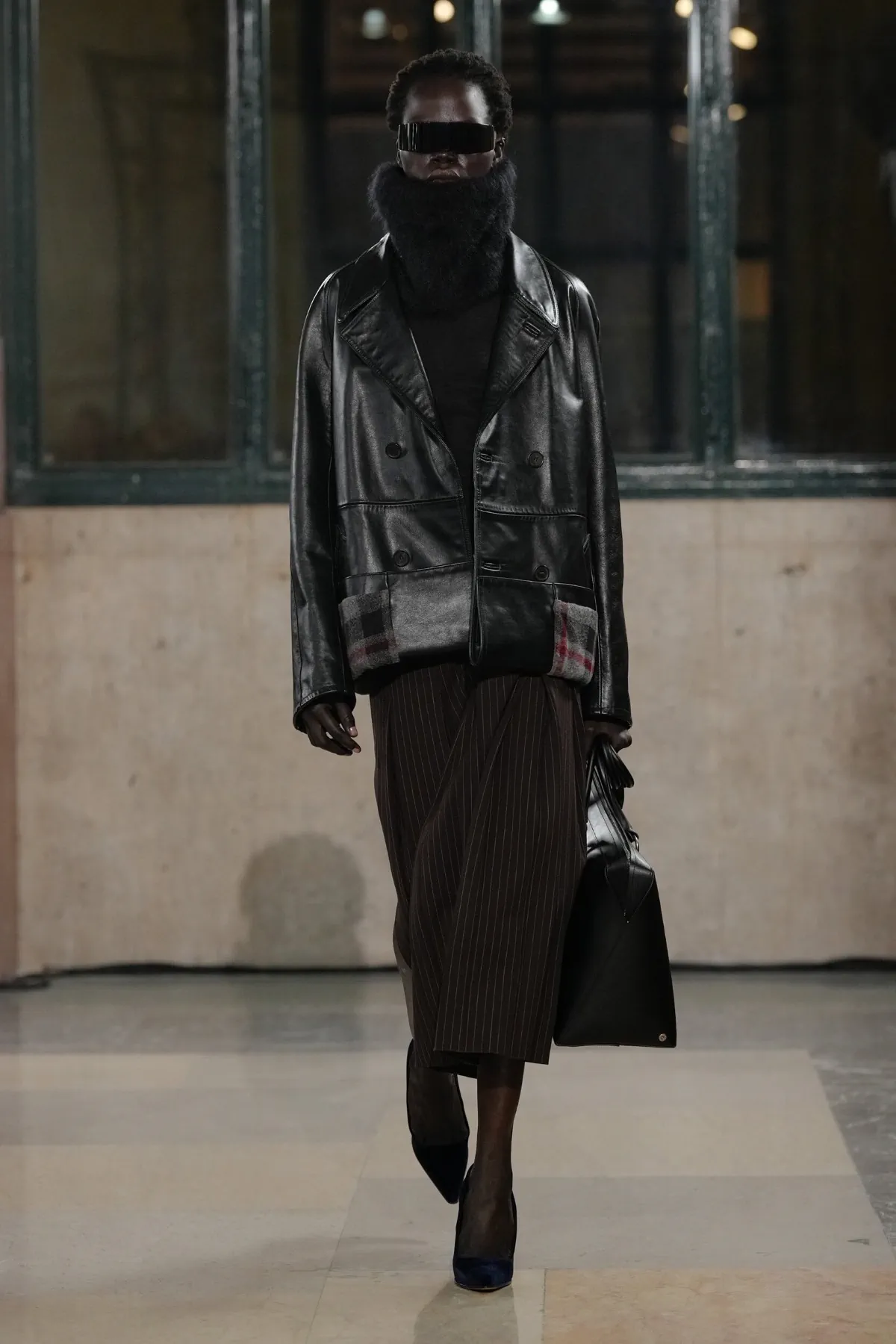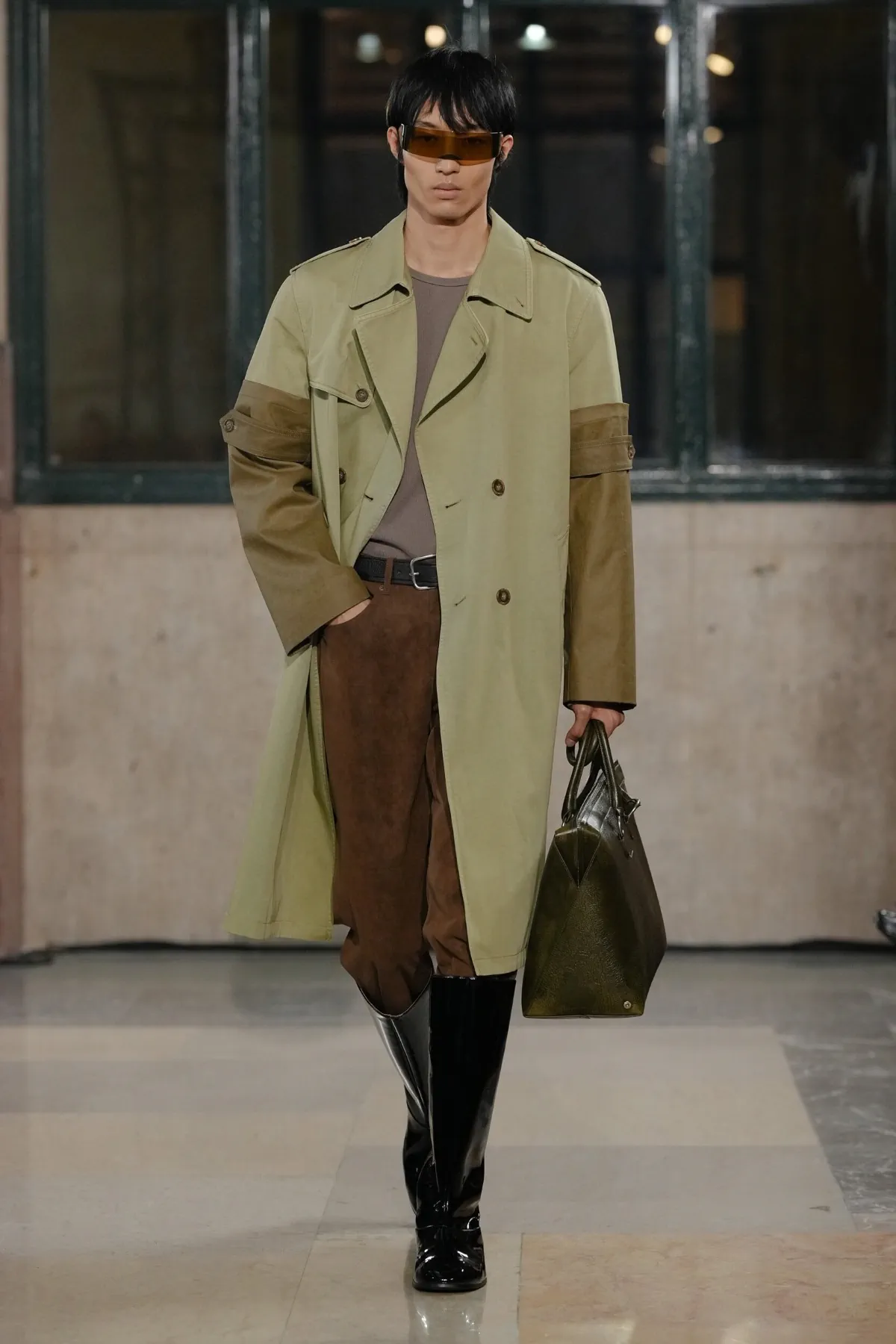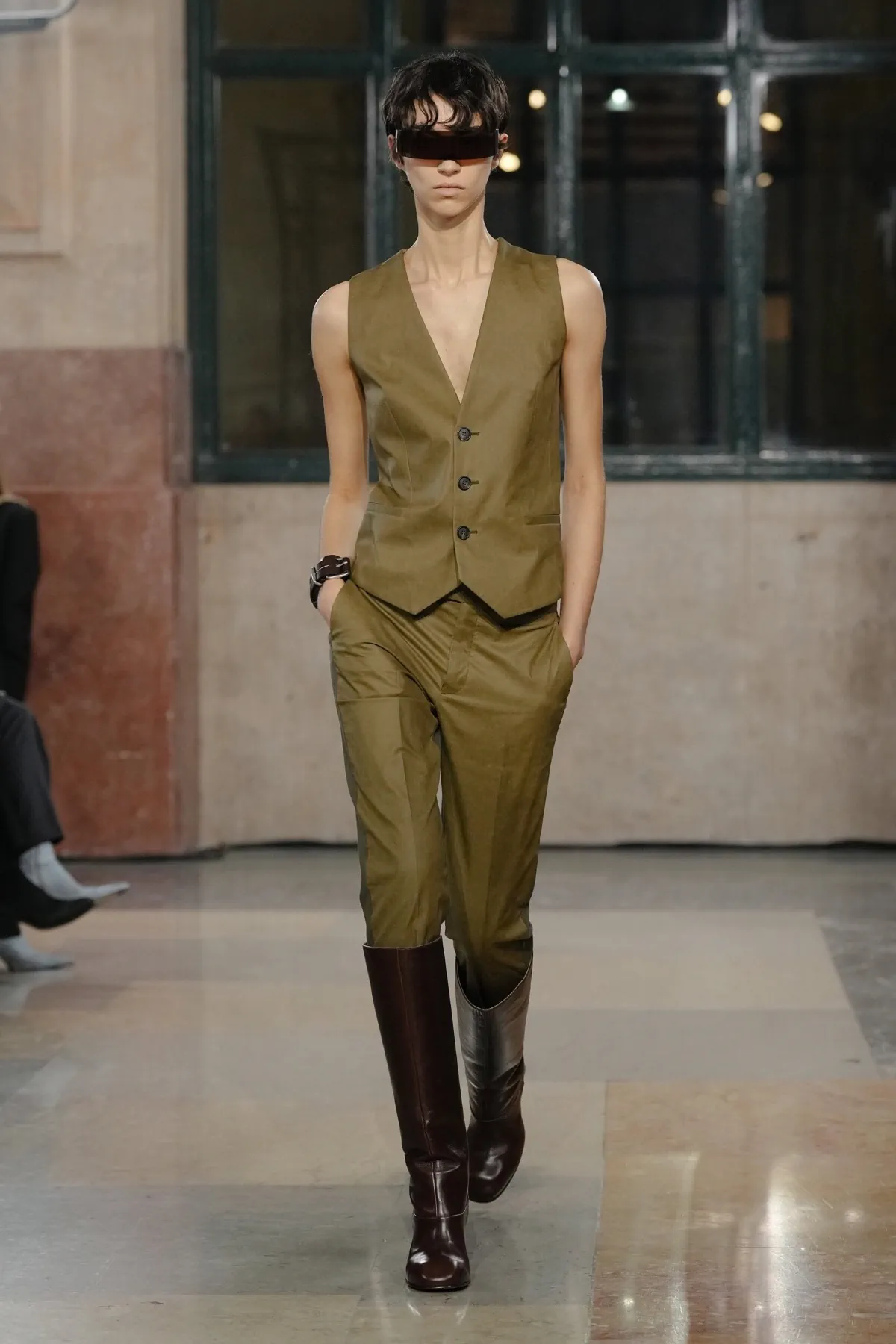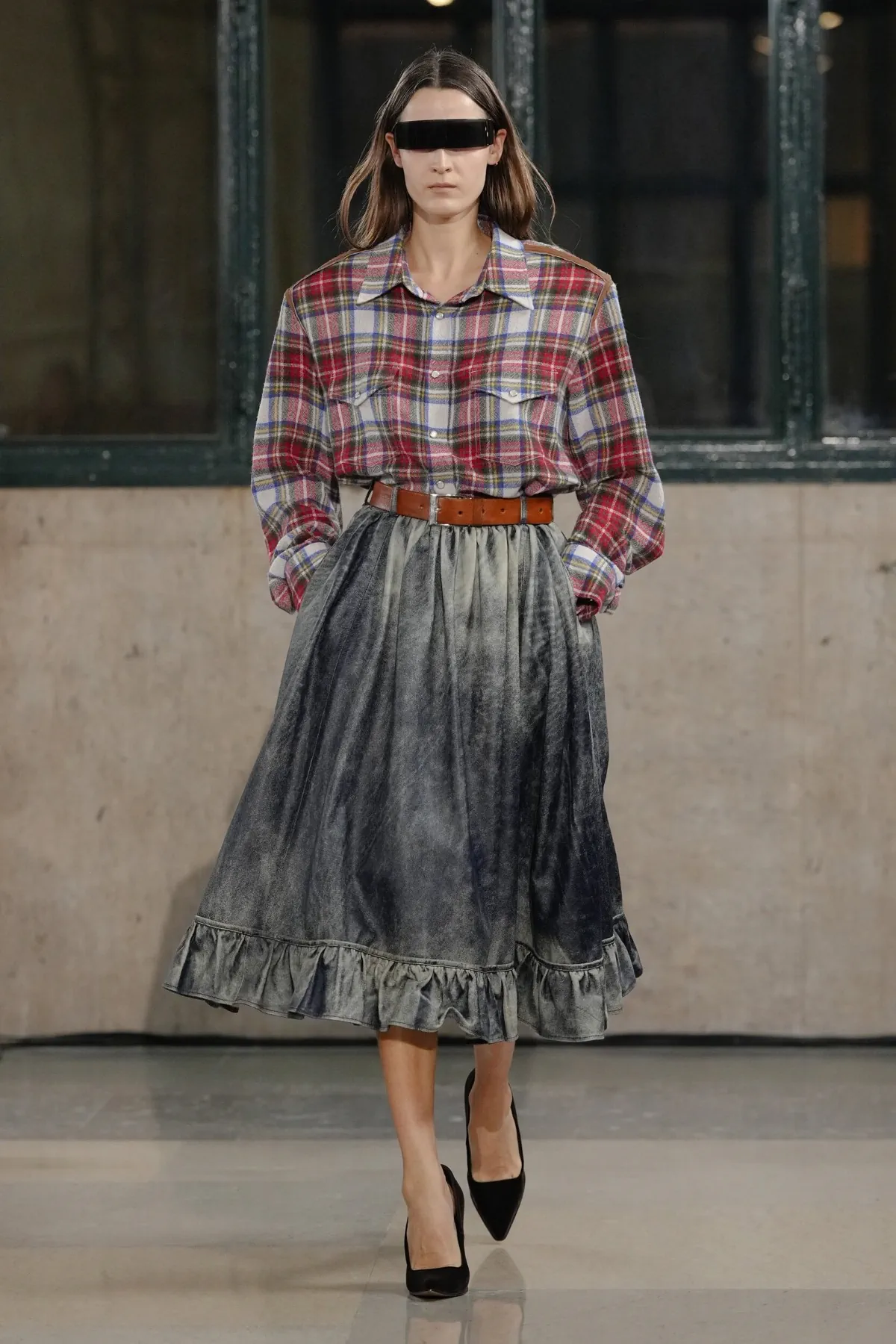

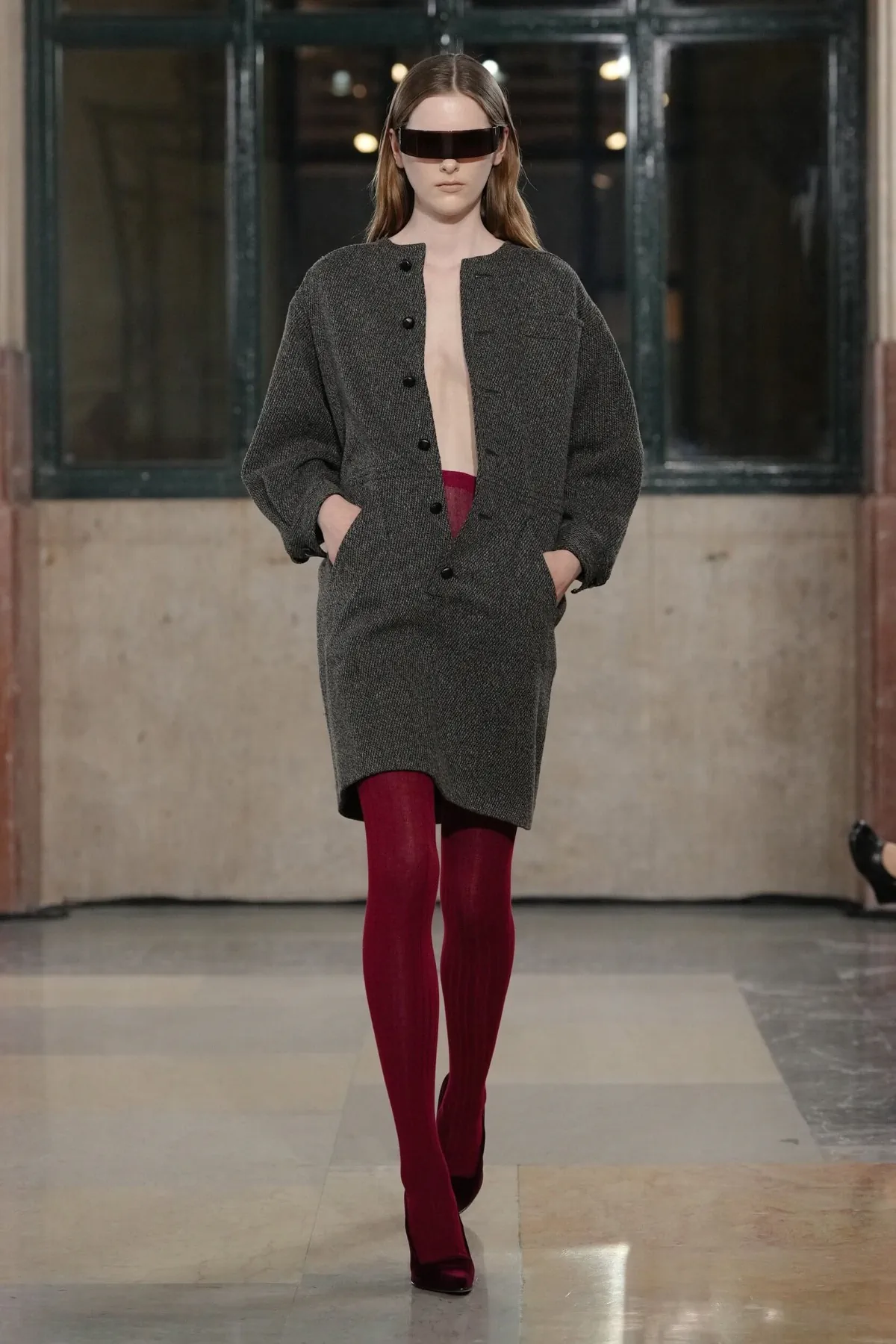
Milano Centrale is not a glamorous place. Commuters rush through its vast marble halls, dragging luggage and checking phones while barely noticing one another. But for its Fall 2026 collection, MM6 Maison Margiela chose this busy train station as its stage, and the choice made perfect sense.
| 📌 Key Facts |
|---|
| 🚉 MM6 staged its Fall 2026 show inside Milan’s Centrale Station 👖 Double-waistband jeans anchored the collection 🧥 Leather coats featured exposed linings and structural shifts 🎞️ Strong 1980s silhouettes shaped skirts, denim and outerwear 🐎 Equestrian details appeared in jodhpur trousers and riding boots 🎨 Railway-uniform color palettes influenced knitwear and track jackets 👠 Ultra-high pumps contrasted with the collection’s practical ethos |
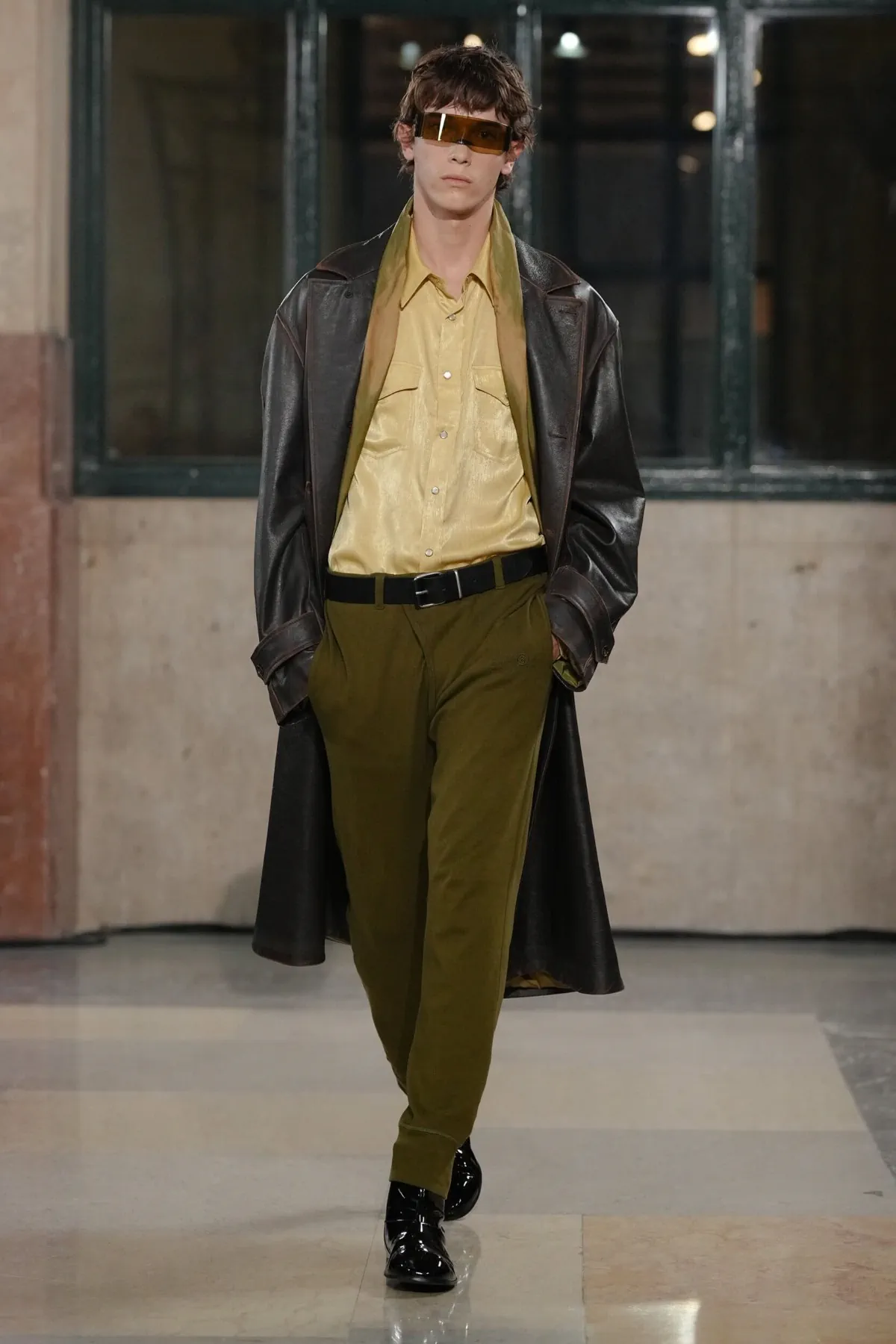
The brand has always been rooted in the clothes people actually wear: jeans, coats, track jackets, and plain turtlenecks. This season, the design team leaned into that instinct and studied the people who fill a train station on any given weekday. The result was a collection that felt plucked from real life and then subtly reworked.
Some pieces carried the logic of a rushed morning. Leather coat linings peeked out from the collar, creating the illusion of satin lapels – as if someone had thrown on a coat without looking in the mirror. Car coat hems were rolled up and fastened with metal snaps, as a cyclist might do to protect the fabric from a wet road. A pencil skirt turned out to be a backless apron layered over a long t-shirt. Shirt seams showed faint traces of yokes that had been removed. Nothing was accidental; the carelessness was deliberate.
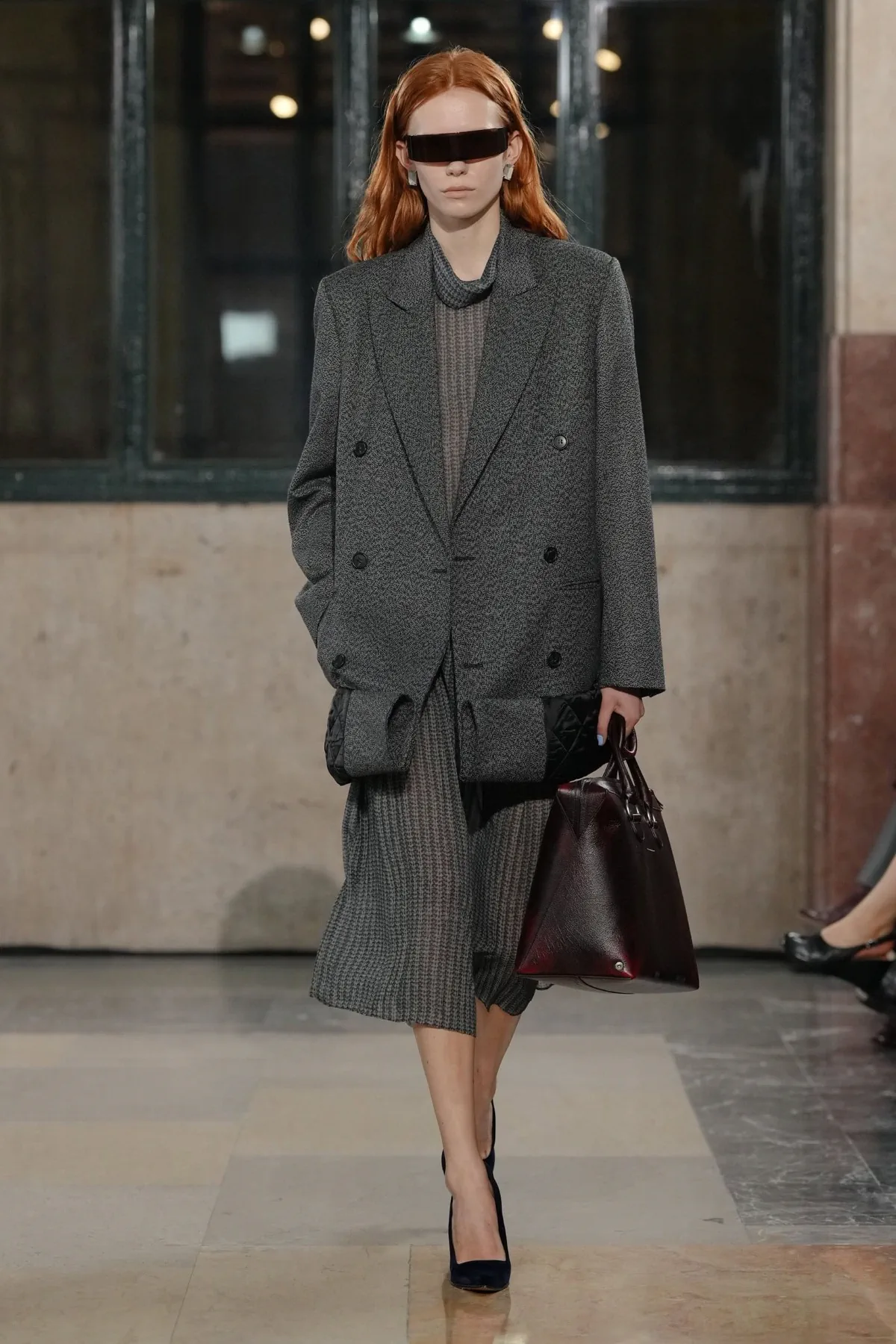
Jeans appeared throughout, which should surprise no one, given their central role in daily life. The men’s versions had double waistbands, with the outer layer left undone. The women’s jeans were high-waisted and tapered – a clear nod to the 1980s – which served as a recurring reference point. Full skirts with ruffled hems, paired with flannel shirts and mohair turtlenecks, reinforced the decade’s presence. So did the track jackets and anoraks with bold color blocking, scaled up to the proportions preferred in that decade.
Not everything looked backward, though. Oversized sweaters with the brand’s numeric logo knit into the chest felt current, especially when worn with thick tights. Unexpected equestrian details surfaced in the form of streamlined trousers cut like jodhpurs, riding boots, and frilly petticoats worn under plaid shirts and chunky cowl-neck sweaters. The fabrics were consistently high-quality: leather coats, velvet blousons with a worn-in look, and dresses and skirts made of a bleached, denim-like material.
Follow all the latest news from Fashionotography on Flipboard, or receive it directly in your inbox with Feeder.
You may also read

For those with office obligations, the collection offered V-neck sweaters layered over flared shirts and slim skirts or leather trousers. The palette borrowed from the garish color combinations of railway crew uniforms: functional, slightly aggressive, and oddly appealing on quarter-zip sweaters and track jackets.
The one misstep was the footwear. Very high pumps appeared on the runway, but a quick look at how people actually move through a city or train station tells you that comfort wins out. Those heels belong under a desk, not on a platform. The rest of the collection, however, featured clothes that you could genuinely imagine wearing. That is harder to achieve than it sounds.