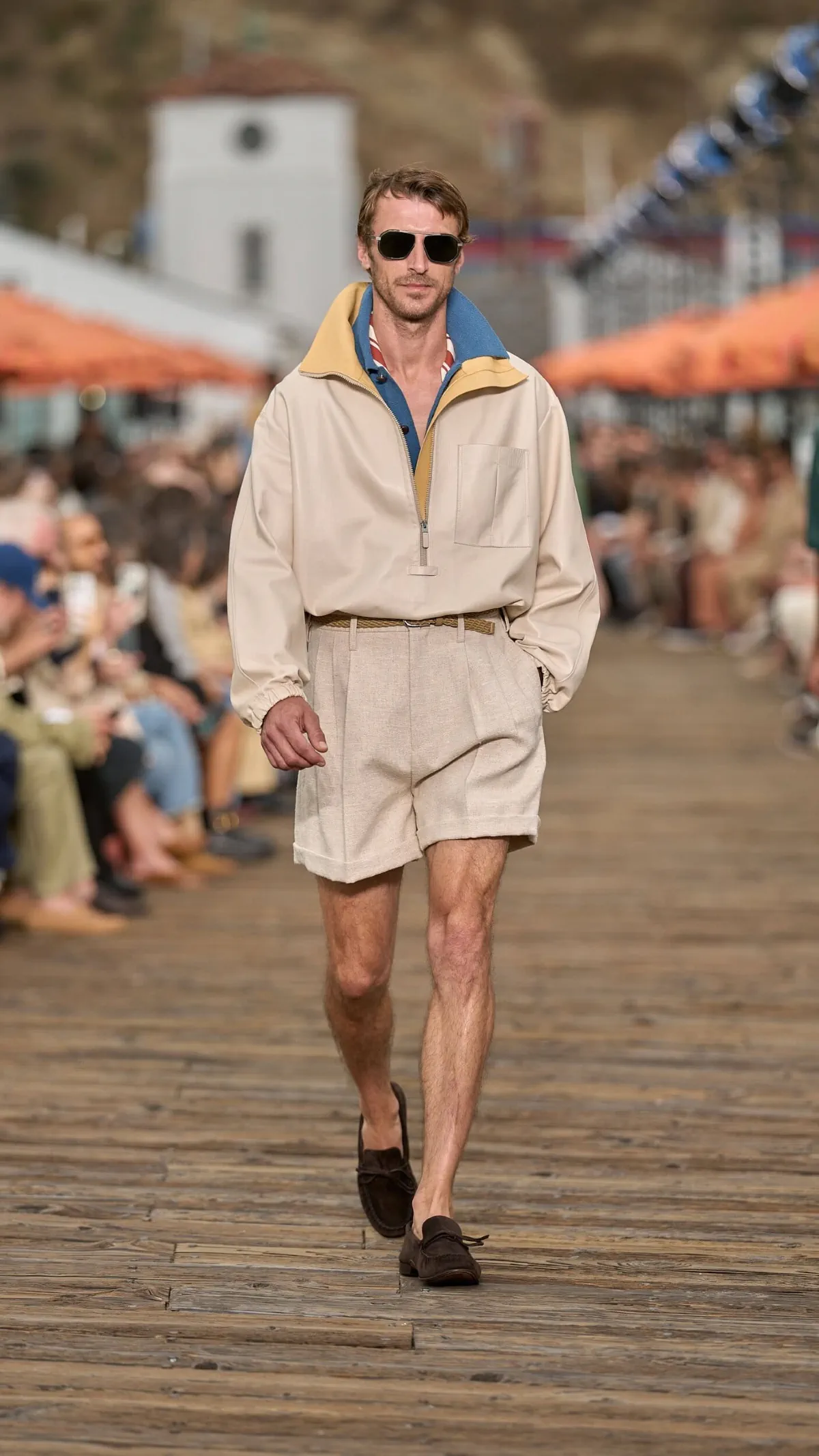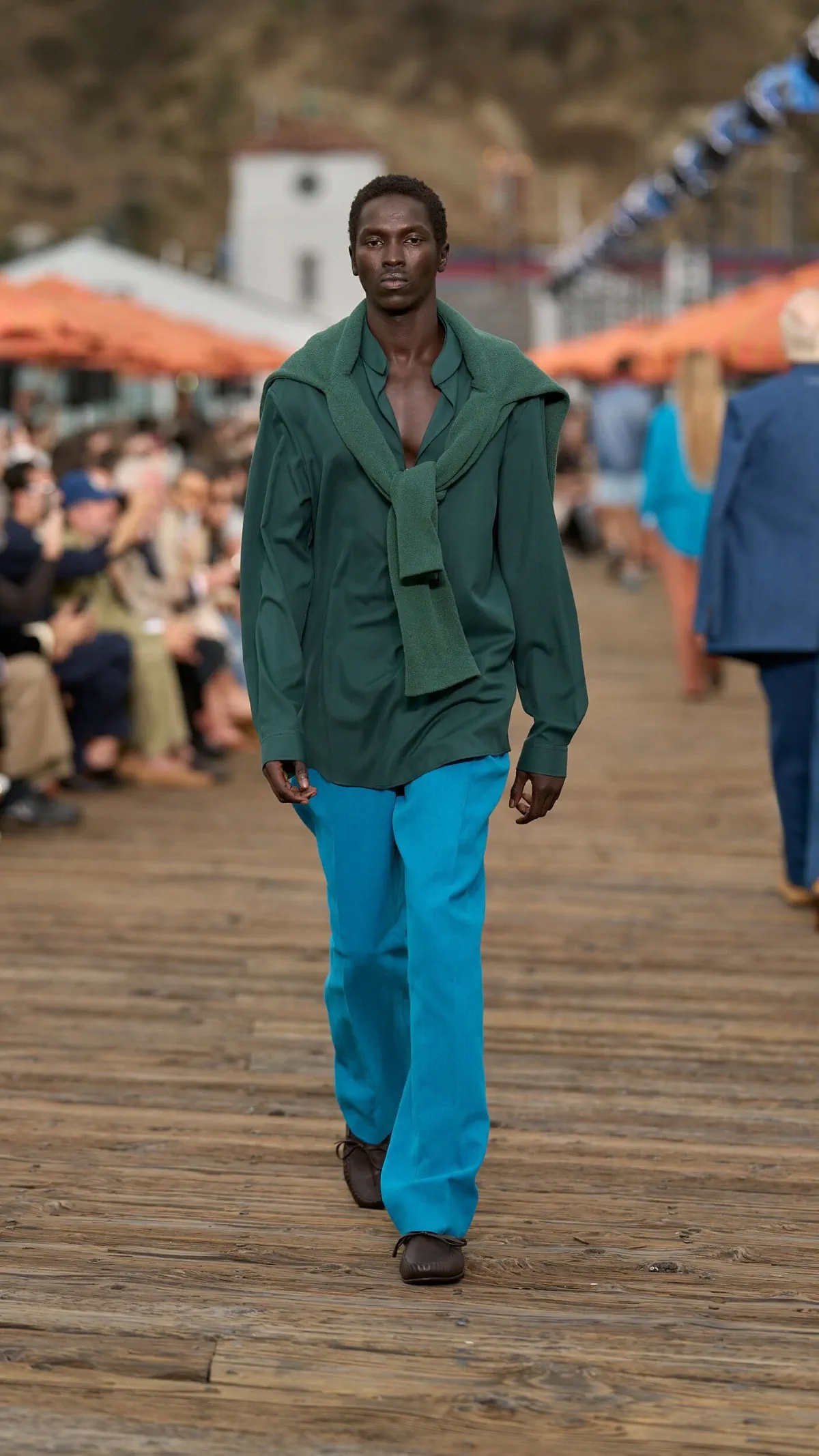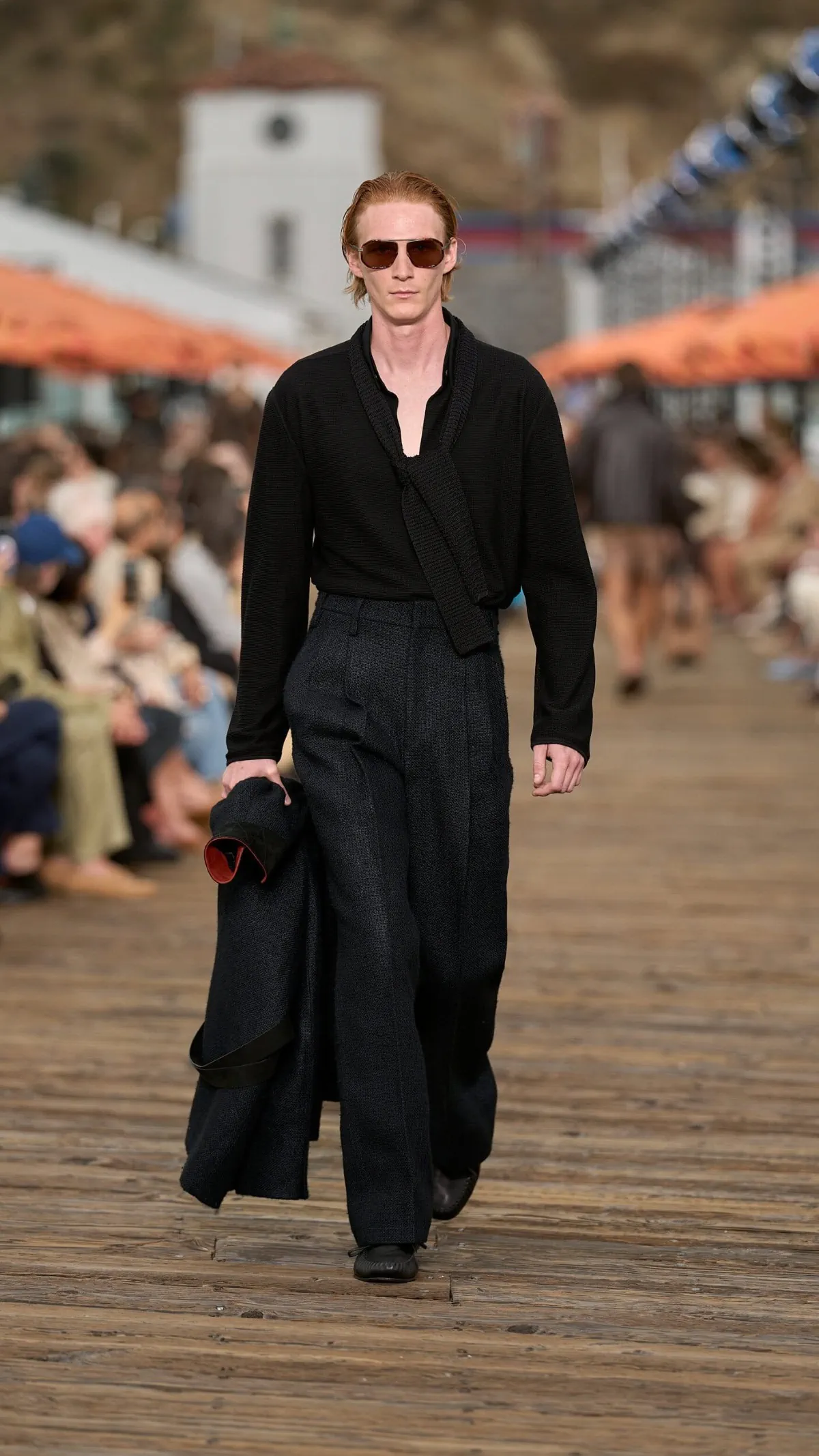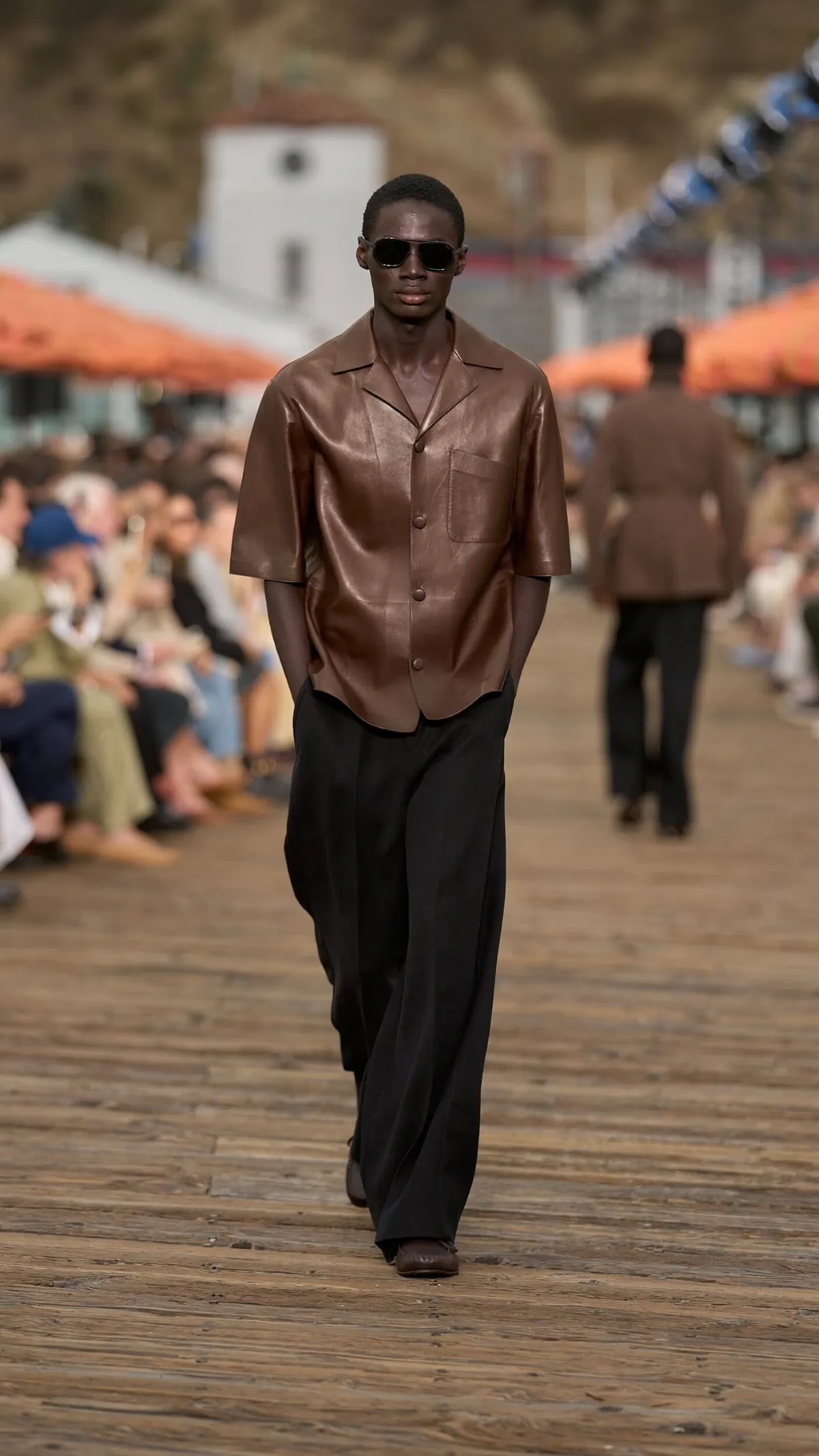

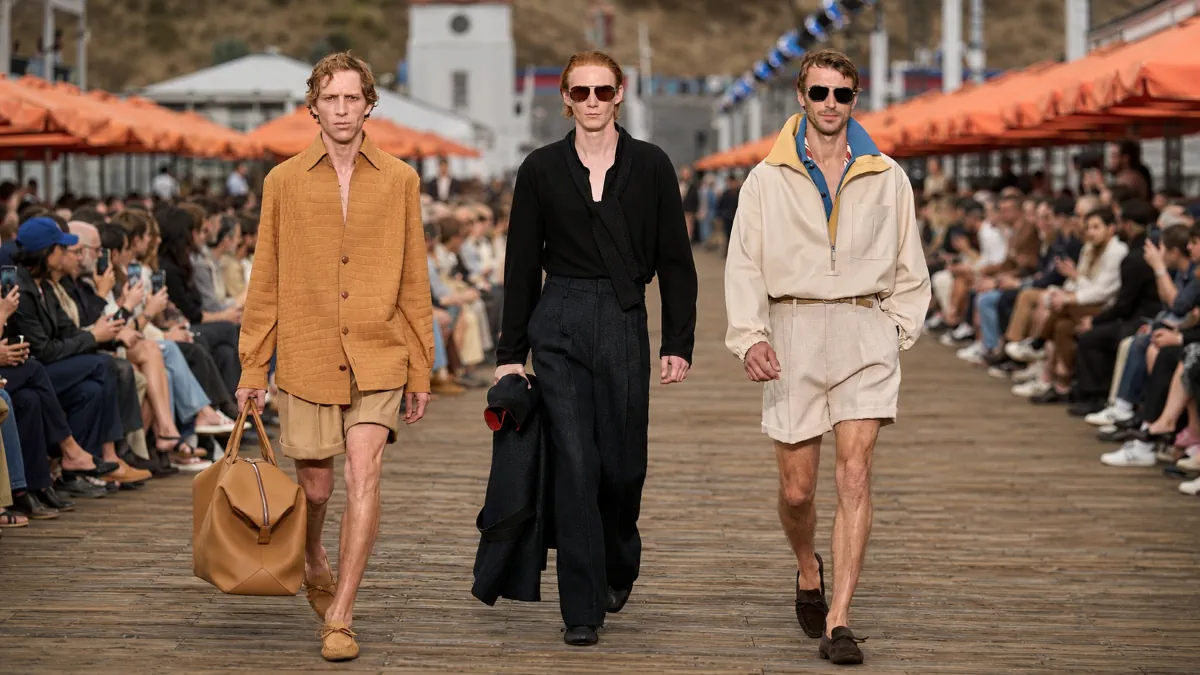
There is a moment sometime in July when the city stops making sense. The heat presses down, the streets empty out, and those who know how to live simply leave. They head to a house by the sea, a farmhouse in the hills, or a rented villa on a coast that smells of wild fennel and sunscreen. They bring their routines, their habits, and their families with them. That, in essence, is la villeggiatura – and it is exactly what Zegna built its Summer 2027 collection around.
On Friday evening, the Italian menswear brand staged its latest runway show on the Malibu Pier, a structure built in 1905 – five years before the Zegna company was founded in the Piedmont hills in 1910. The setting was deliberate. The brand transformed the seaside spot into an Italian-style beach club with striped umbrellas and bright orange seats lining the wooden deck. Guests, including Rami Malek, Mahershala Ali, and Gael García Bernal, were welcomed with trays of citrus-colored cocktails. A seal watched from below. Pelicans circled overhead. The June fog kept a respectful distance.
Gildo Zegna, the company’s chairman and CEO, summed up the geopolitical logistics of the fashion week moment with his usual dry wit. As he told Vogue Business shortly before the show: “We let Hermès take the hills.” Hermès had also presented their collection the previous night in Los Angeles. Zegna took the water.
The concept behind the collection deserves further explanation because it is not merely an aesthetic mood board of linen shirts and sun-bleached canvas. La villeggiatura was a specific social ritual that flourished in Italy from the 1950s through the 1970s. During this time, bourgeois families would relocate to the countryside or the coast for weeks at a time. It was not a vacation, but rather a temporary life. The grandparents came. The dog came too. Their routines, mealtimes, and unspoken rules of dress all moved to another place, softer and slower.
Alessandro Sartori explained backstage that the title of the collection wasn’t just about vacations, but about bringing your whole life with you. “The dog, the grandma – everything,” he said. This is not nostalgia for its own sake. The concept resonates because it conveys a specific notion of how elegance behaves outside its natural habitat – not abandoned, but recalibrated.
The collection’s starting point was a nautical line called E. Zegna Yachting, which the brand produced in the 1970s and ’80s when it sponsored regattas in Portofino on the Italian Riviera. This archival theme runs through the entire presentation without overwhelming it.
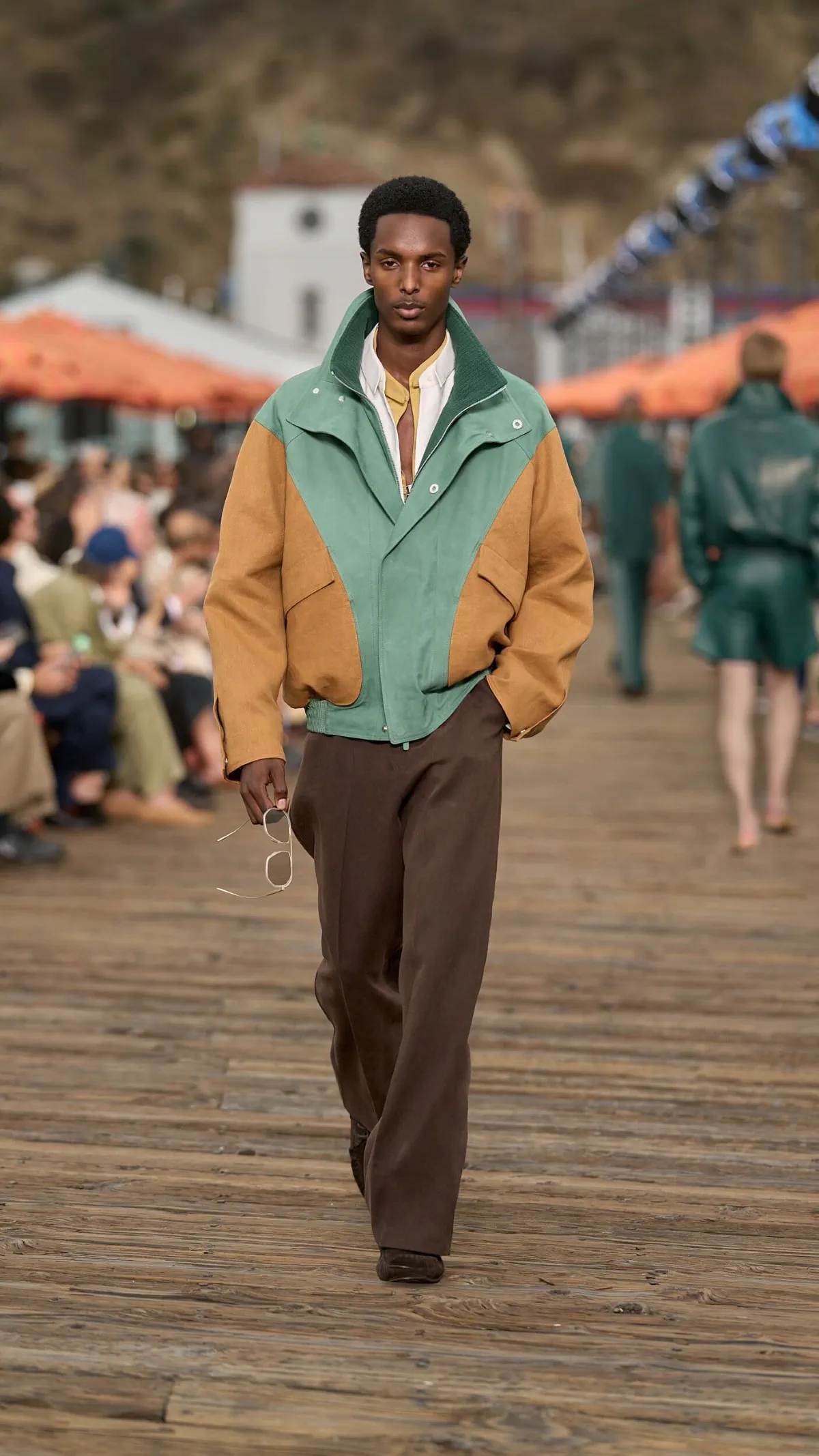
The silhouette is loose and vertical. The shirts are boxy or fluid and are made of nappa, nubuck, silk, or linen that feels like peach fuzz. All shirts have interchangeable collars that can be swapped out, a small innovation with significant implications for men who want variety without accumulation. Blazers come with hidden, adjustable half-belts that allow the wearer to decide morning by morning whether they want a cinched or looser line.
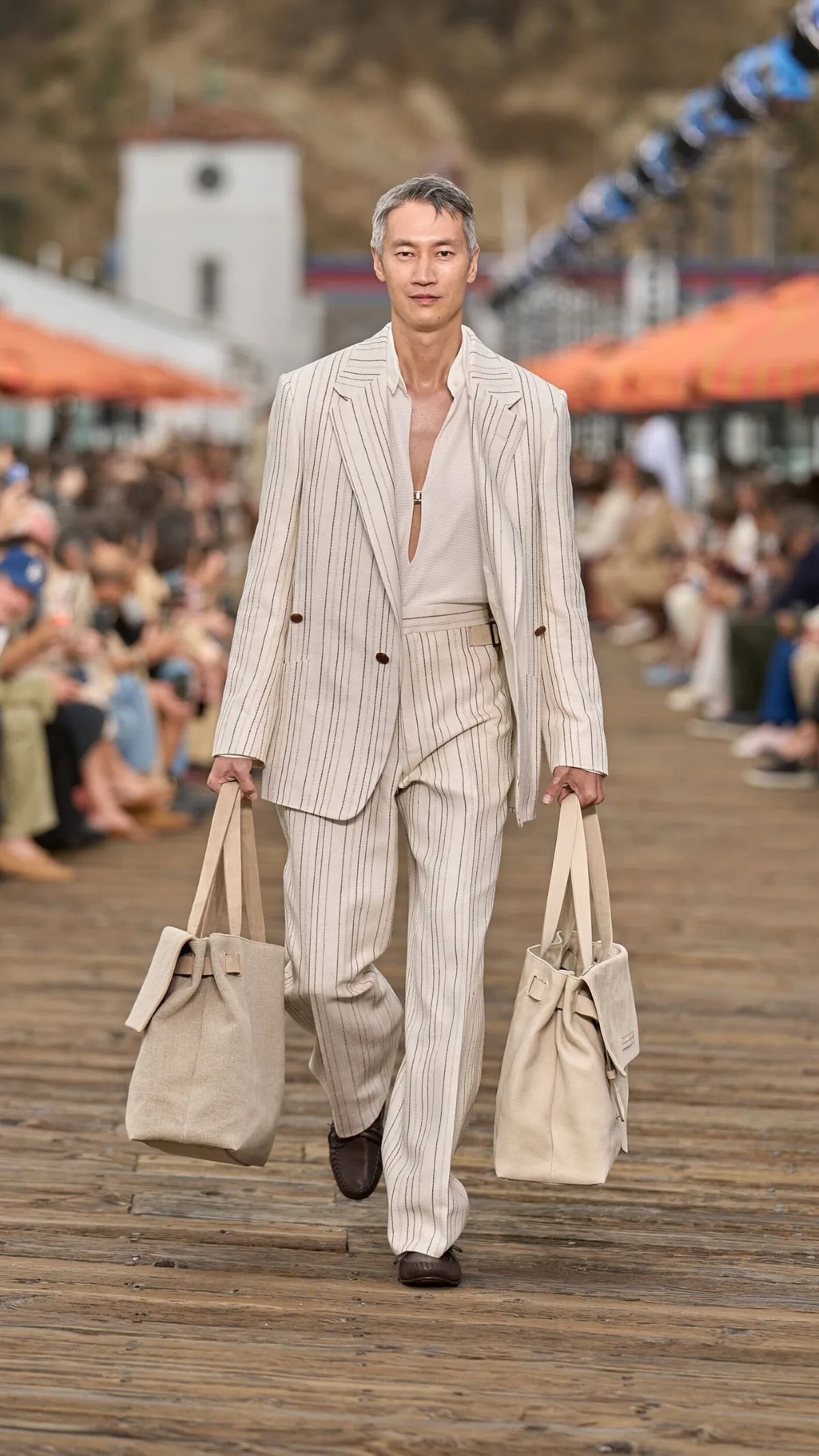
Sartori’s three-button blazer reappeared, this time in bouclé terry cloth. Another highlight was the seersucker Norfolk jackets with peak lapels, which were worn with tailored shorts. Nearly every jacket and shirt had a back vent, or spacco, to allow for movement and add ease without sacrificing structure.
Follow all the latest news from Fashionotography on Flipboard, or receive it directly in your inbox with Feeder.
You may also read

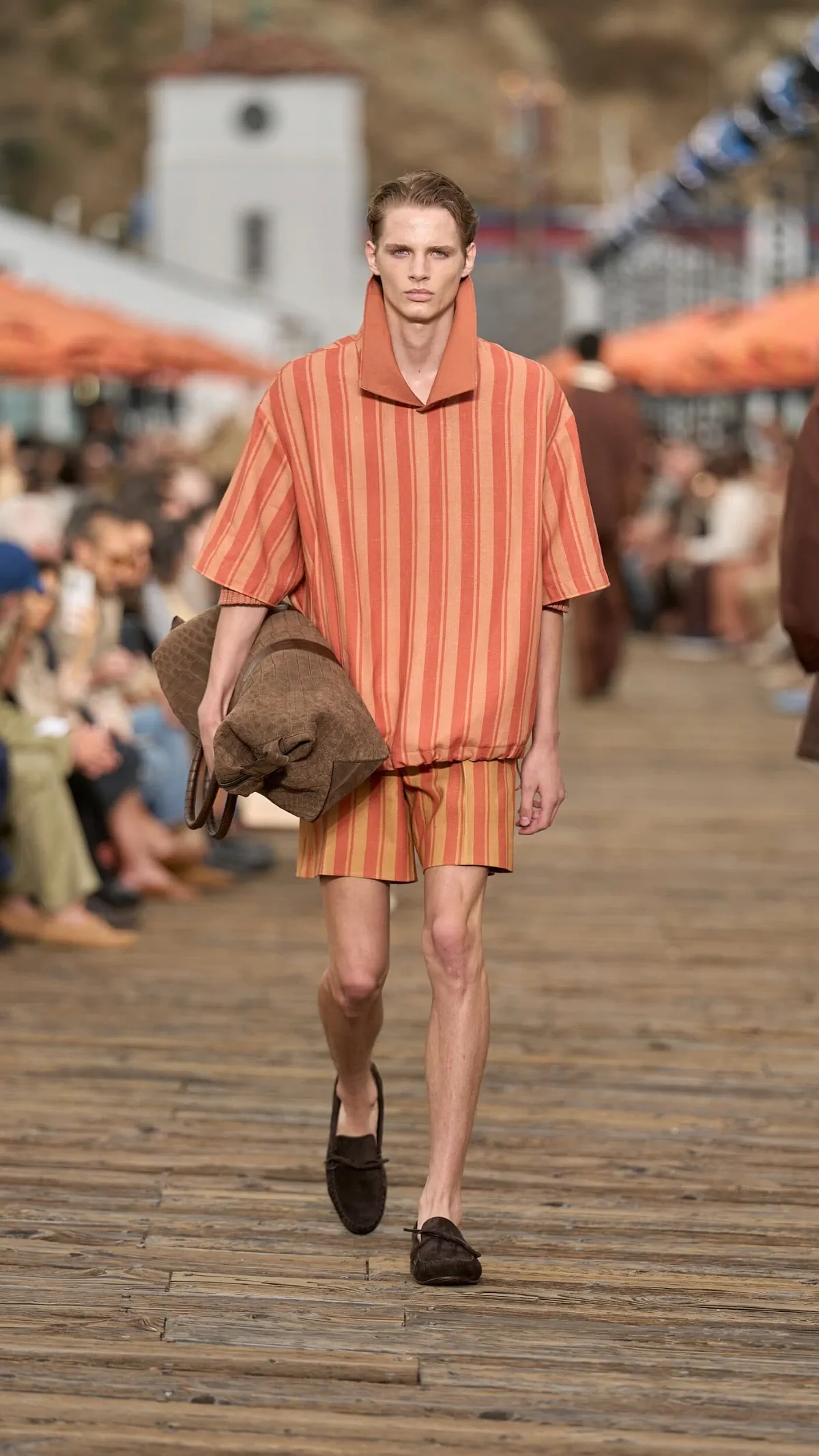
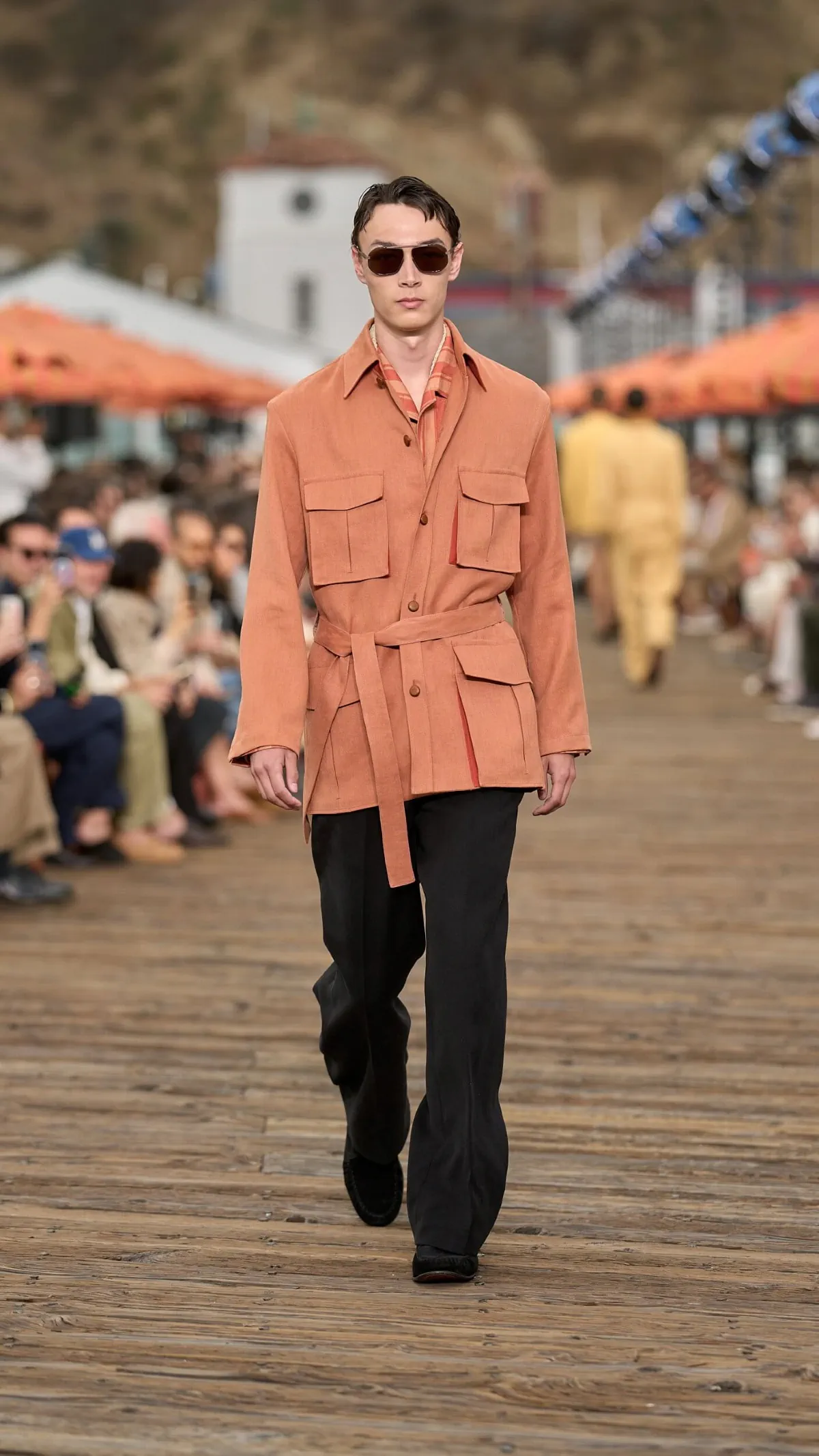
Striped suits were paired with matching shirts, further pushing the color-blocking concept. Safari jackets came belted or as short-sleeved overshirts. Leather anoraks and intarsia bombers gesture toward the nautical without going full sailor. A black button-front bomber that appeared to have vertical stripes was revealed to be a Zegna innovation: an open weave of knitted suede on the outside and nubuck on the inside. Accessories include slippers and moccasins made of the softest leather available, spacious totes made of striped or plain nubuck, silk foulards, and knitted scarves that are tied at the neck with an effortless look.
At Zegna, the clothes always begin as textiles. Sartori said it plainly: “Everything here starts with fabrics that have texture and pattern. They look endlessly renewed by simply twisting and turning the subtlest elements, even just a thread. Constant evolution is what we strive for.“
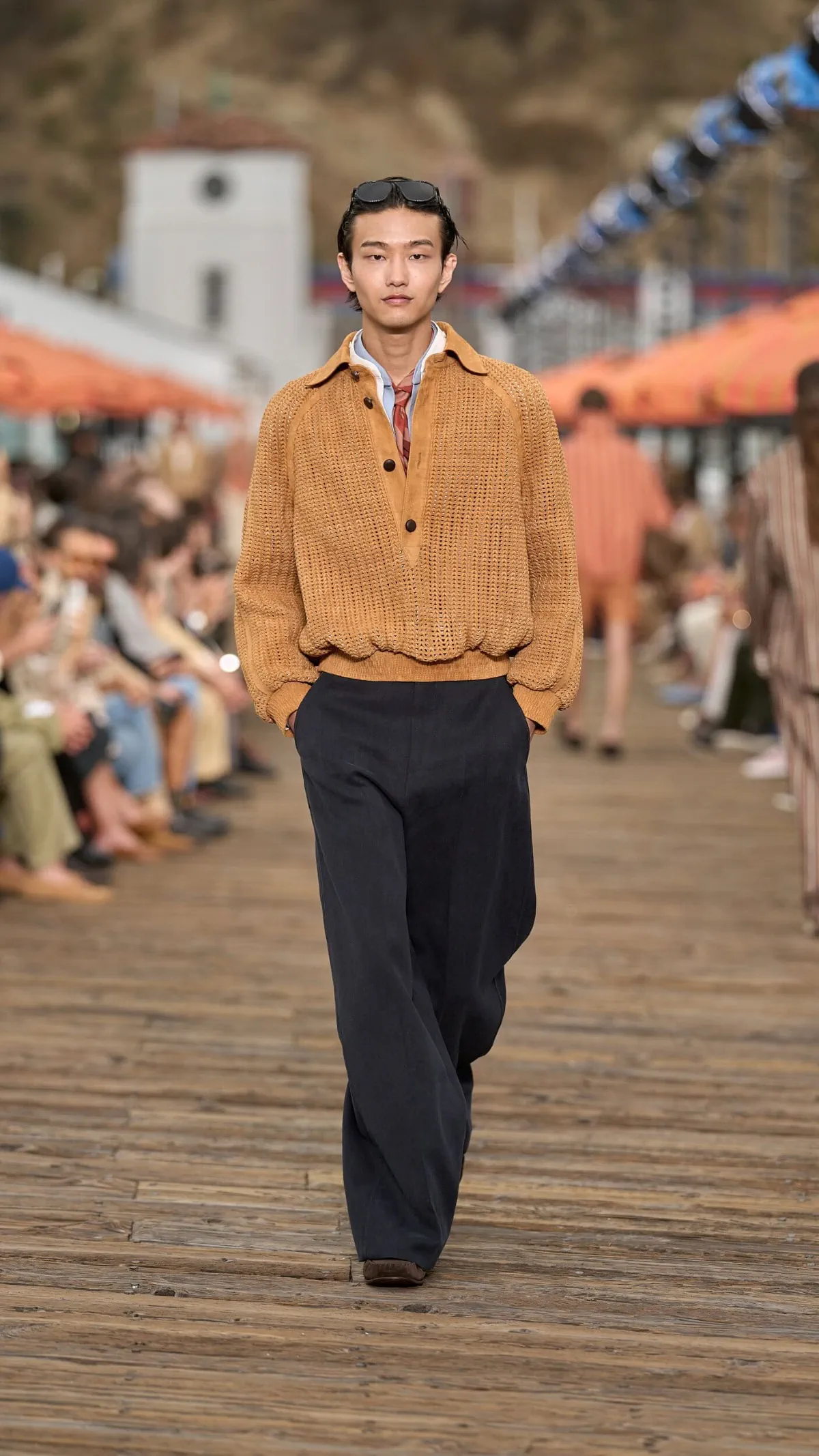
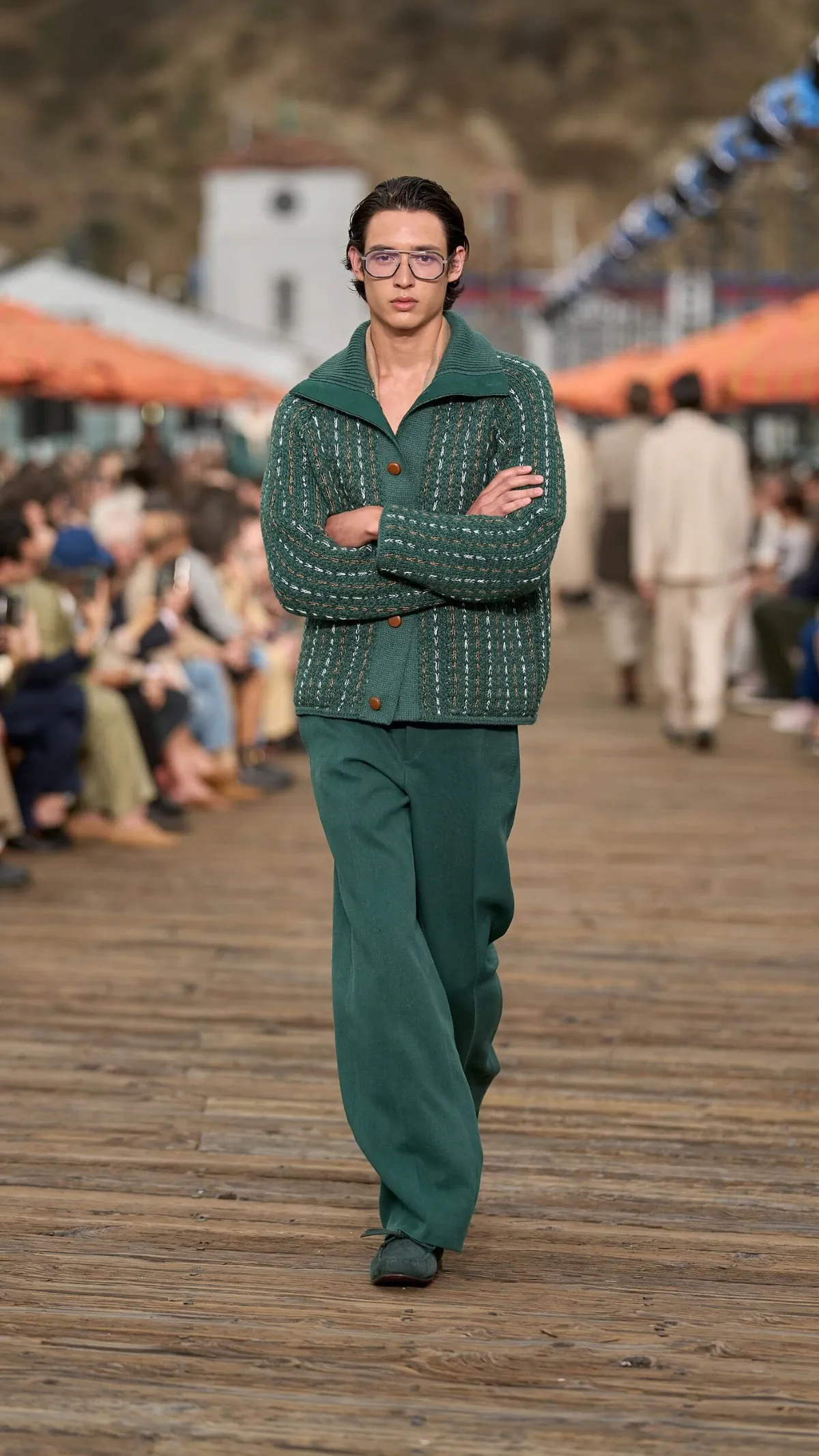
For the occasion, a special selection of signature pieces was created, rendered in materials including vicuña, ultra-fine cashmere, and 12-micron wool. The broader palette draws on raw silk, denim drill, washed hemp, Oasi Lino oxford, French velvet, and a technically ambitious silk-wool-paper canvas. The colors are inspired by the water and the shore: acquamarina,onda, alga, and madrepora, as well as the neutrals conchiglia, duna, and molo, with a subtle hint of desaturated black.
The not-quite-checks, where horizontal stripes are often subtracted, were achieved by running 21st-century Zegna yarns, including a silk-paper blend, through vintage 1950s and ’60s jacquard looms at Tessitura Ubertino. The group acquired a majority stake in the specialist mill several years ago. Old processes, new materials. The results are familiar yet not retro.
This is not simply a runway exercise. Around 120 guests were VICs (very important clients), roughly half of whom were American. They were invited to purchase the runway looks and place made-to-measure orders at the Villa Zegna event held at Chateau Marmont in the days following the show. Zegna calls Los Angeles its second-largest market after New York, and treats its top clients accordingly.
The show took place on the Malibu Pier, with the Pacific Ocean as its backdrop. However, the connection to the natural landscape runs deeper than one runway location. As early as the 1930s, Ermenegildo Zegna commissioned an extensive reforestation project on the surrounding mountain slopes and planted 500,000 conifer trees. Formalized in 1993, the Oasi Zegna project was the first Italian example of environmental patronage. It covers 100 square kilometers, prioritizing the relationship between people, nature, and mountain culture. Zegna’s support of California State Parks during this Los Angeles event extends that same logic to a new geography.
Sartori himself spent several weeks in Los Angeles while finalizing the collection, giving the whole process a working villeggiatura quality – the studio moved to the coast, absorbed the light, and returned with clothes genuinely shaped by that immersion rather than merely decorated with its imagery.
This distinction between clothing that absorbs a place and clothing that merely references it is what prevents Zegna’s Summer 2027 collection from becoming lifestyle branding. The ease here is earned, not applied. The stripes have been woven on old looms with new thread. The collars detach. The belts are adjustable. The man who wears these clothes is not on vacation. He has simply moved to a place with better light.