


Yohji Yamamoto has never been one to hide behind metaphor. His Fall 2026 collection arrived in Paris with the kind of directness that feels increasingly rare in an industry prone to mystification. The clothes plainly conveyed themes of protection, labor, and the fundamental human need for security when external demands become overwhelming.
| 📌 Key Facts |
|---|
| 🏛️ Brand: Yohji Yamamoto 🧑🎨 Designer: Yohji Yamamoto 🛡️ Core theme: Protection of the body and the mind 🧵 Inspiration: Workwear, military uniforms, utilitarian clothing 🧥 Key pieces: Reinforced coats, padded trousers, technical coveralls 🕰️ Historical references: 18th to 20th century garments 🎭 Runway concept: Boxing balls symbolizing emotional expression 🧠 Creative vision: Fashion as armor, not provocation |
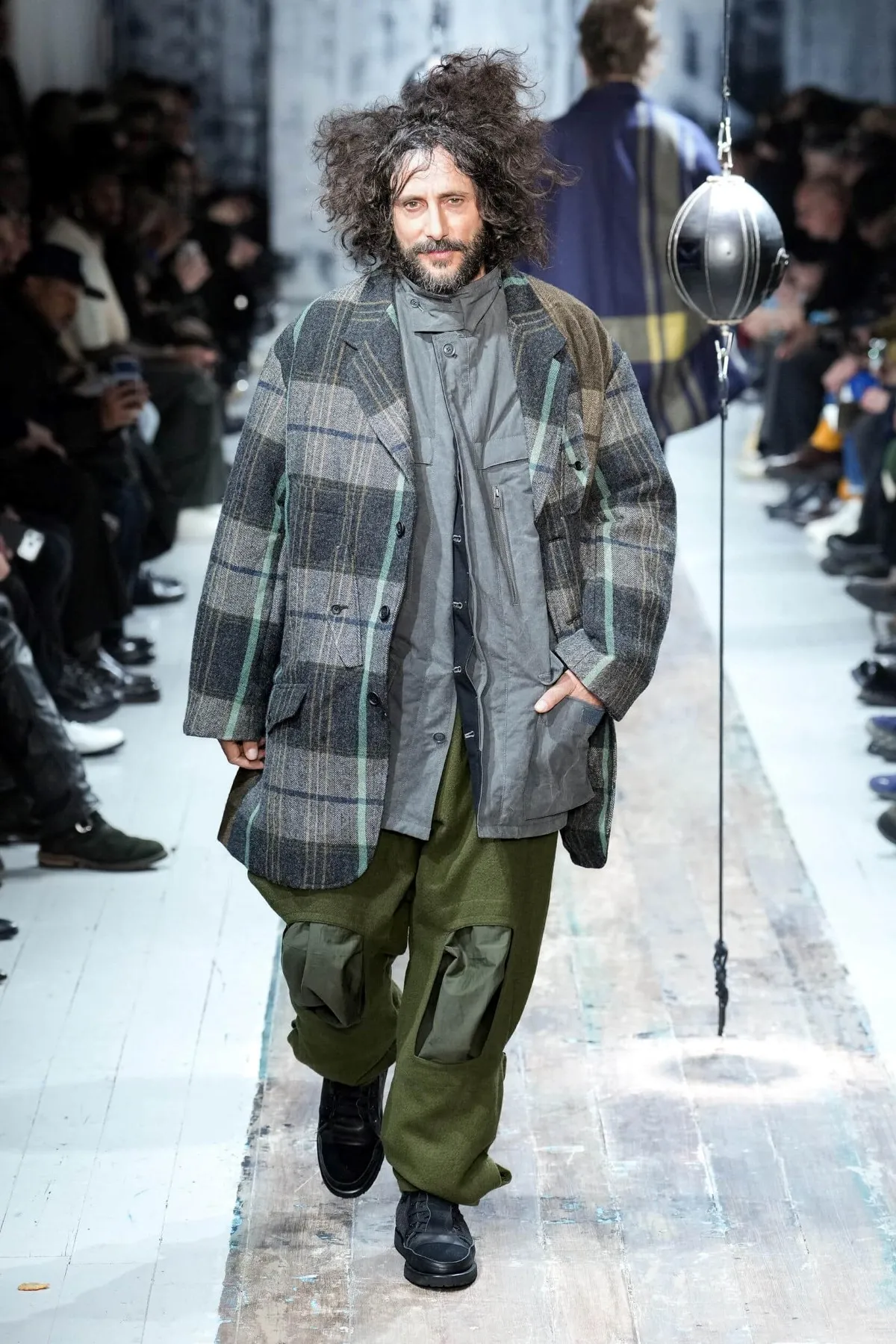
The runway opened with models approaching hanging boxing balls suspended at intervals along their path. Some struck the orbs with force. Others offered gentle touches or slight bows before moving on. Yamamoto later explained that these spheres represented emotion, though he certainly wasn’t advocating violence. The gesture felt more like an acknowledgment that people need ways to externalize their feelings, to make their internal states visible through action rather than words.
What followed was a procession of garments built for endurance. Yamamoto drew inspiration from military uniforms and workwear, not to romanticize them, but because they both exist to shield the body from hostile conditions. Heavy coveralls appeared in mottled patterns that suggested splatter and accidental bleaching. Reinforced kneepads marked the stress points on thick trousers. Some pants had panels like chaps that could be zippered or laced at the shin to add extra layers where they are needed most.
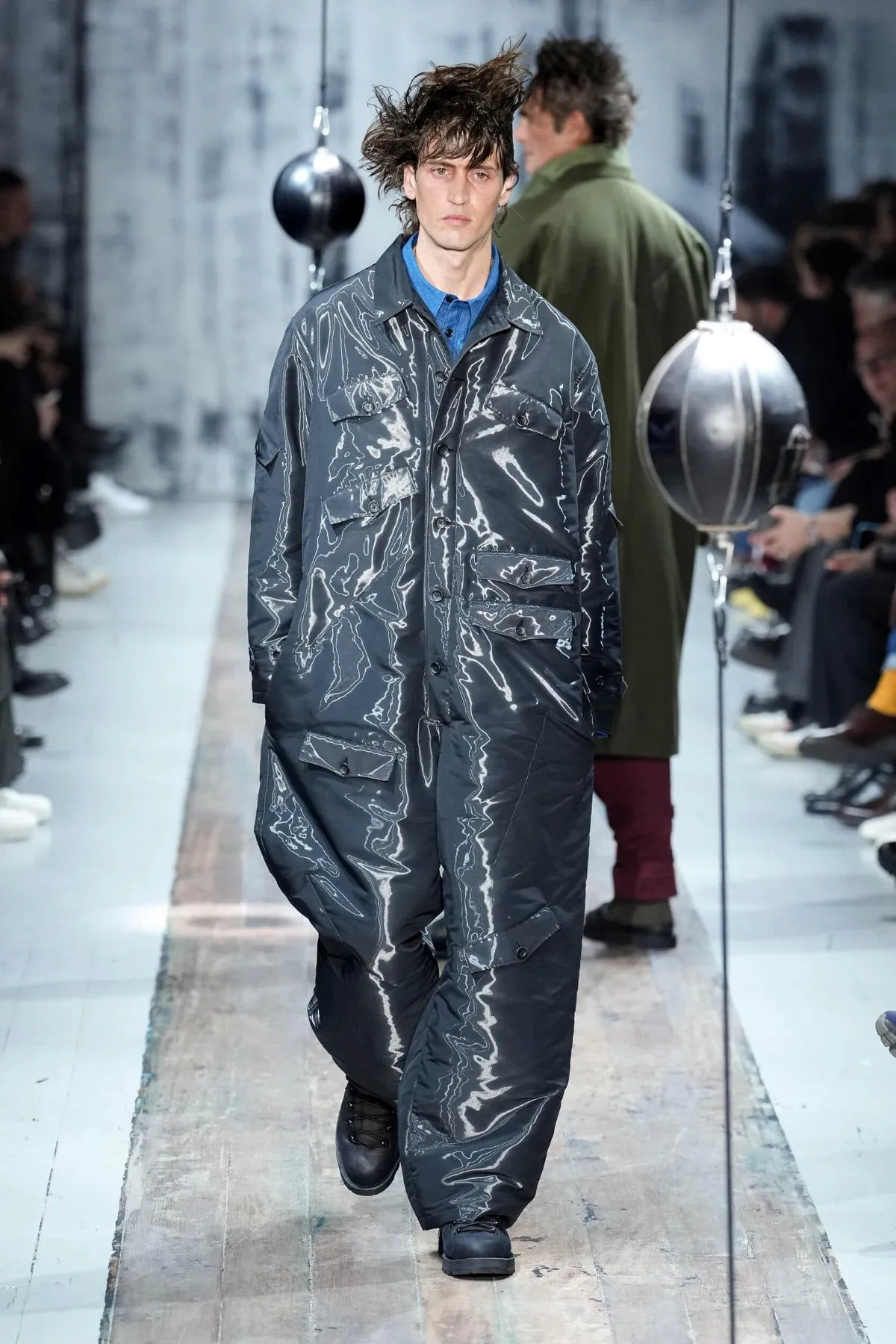
The designer has long understood how clothing from different eras can influence contemporary menswear. This collection drew inspiration from various eras: 18th-century frock coats, 19th-century peacoats and duffle coats, and 20th-century field jackets and suits. A few looks leaned futuristic, with high-gloss liquid finishes that read almost like spacesuits. However, even those designs maintained the utilitarian spirit that governed the rest of the lineup.
Backstage, Yamamoto made clear that he wasn’t chasing novelty for its own sake. “We don’t need a crazy cut,” he said flatly. The silhouettes remained recognizable and traditional. What elevated the work were surface treatments and textile manipulations. Overcoats and jackets appeared to have suffered major spillage, but closer inspection revealed intricate felting and feathers at the edges that mimicked dye effects. Discrete stitching created patterns that resembled long-healed scars or marks from near misses.
The outerwear was lightly padded or constructed from the most durable fabric available. There were suits, too, which Yamamoto treats as another form of armor. Throughout, flourishes remained minimal. The emphasis remained on construction and materials rather than decoration.
Thick padding ran along the arms and down the legs to create a uniform shape across different body types. Infantry buttons served both aesthetic and functional purposes, enabling wearers to adjust the silhouette as needed. The references to mechanic and military uniforms weren’t arbitrary. Yamamoto described his inspiration as rooted in army outfits and working in dirty conditions, emphasizing that such clothing is important for safety.
Follow all the latest news from Fashionotography on Flipboard, or receive it directly in your inbox with Feeder.
You may also read

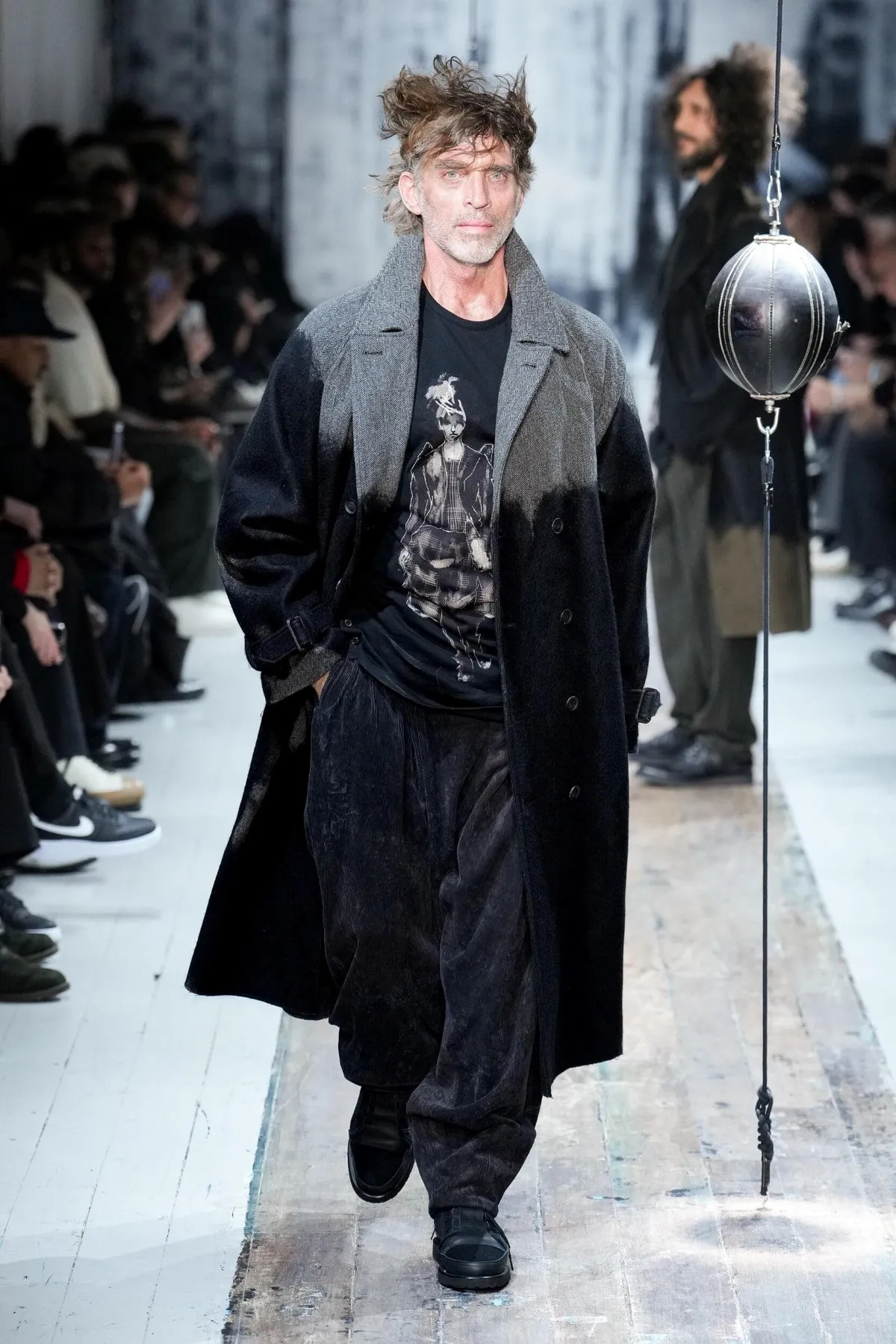
However, the protection he proposed wasn’t aggressive. The men walking his runway looked enveloped rather than armed; their extreme bedhead hair softened the heavily quilted layers. Flannel and blanket wool suggested long periods outdoors. The styling oscillated between eccentric resourcefulness and refined practicality. Fold-over cuffs appeared on redefined corduroy pants with lacing. A series of unstructured black ensembles showed minimal detail, except for red threads that set a single coat sleeve ablaze with color.
Yamamoto’s approach to familiar concepts tends toward complex execution. His version of armor involved flattened aluminum cans fashioned into vests and hats. Camouflage became patchwork in elaborate relief – cut-up fabric arranged with visible texture. The prints that opened the show suggested subway posters peeling away to expose layered colors underneath. Later, glistening jumpsuits provided technical precision against the earlier textile experimentation.
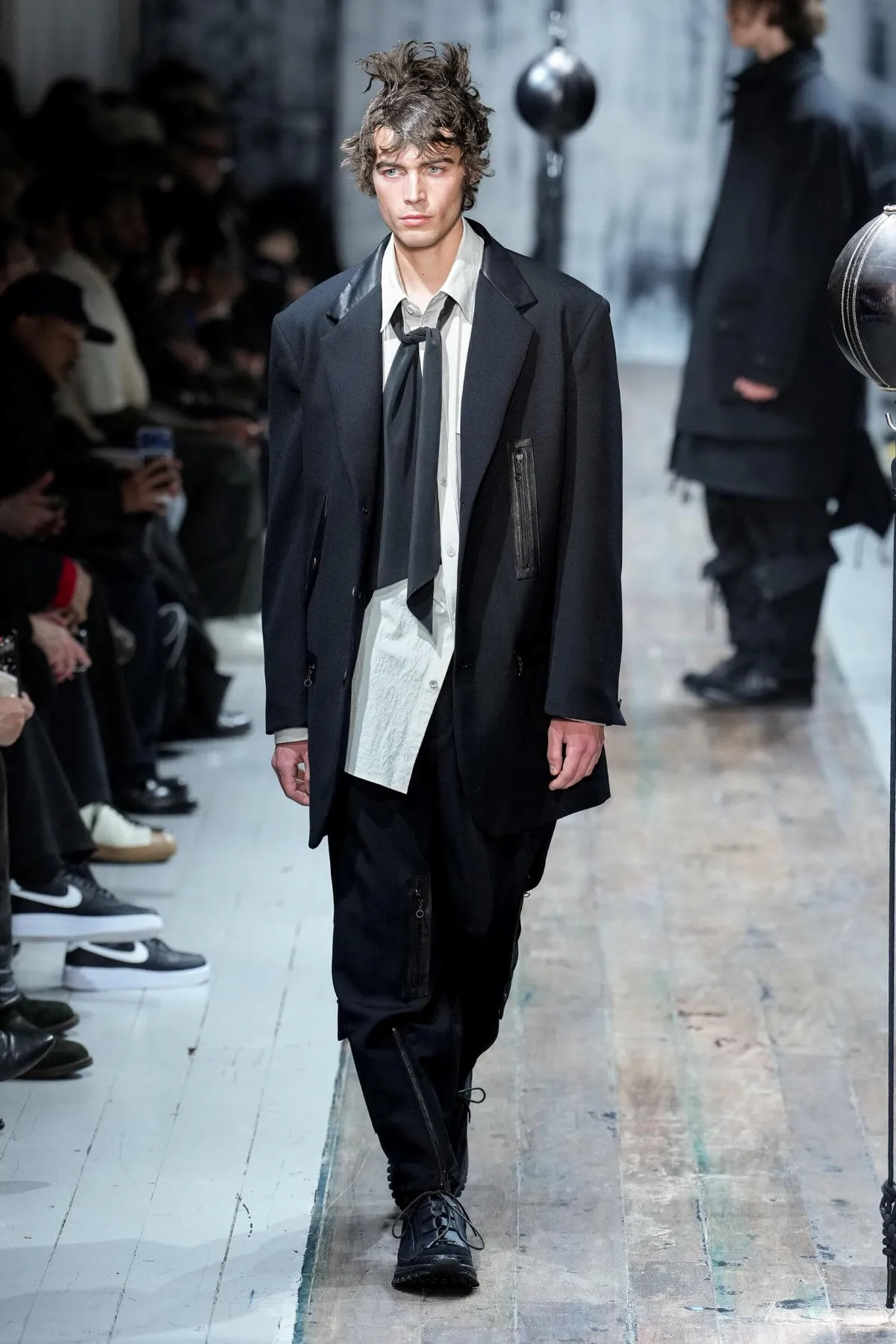
The final trio walked out in coats that were so heavily patchworked, they appeared to be fragments rather than finished garments. Yet, they held together, suggesting resilience through visible repair. Nothing about this collection suggested vulnerability to circumstance. These are clothes for enduring whatever life throws at you. They are made by a designer who has spent decades studying how men move through the world.
Yamamoto’s work here resists easy categorization. The references are historical, yet the feeling is contemporary. The materials are rugged, yet the details are refined. He continues to occupy a position in fashion that allows him both commercial success and creative independence – a balance few designers manage to sustain for so long.
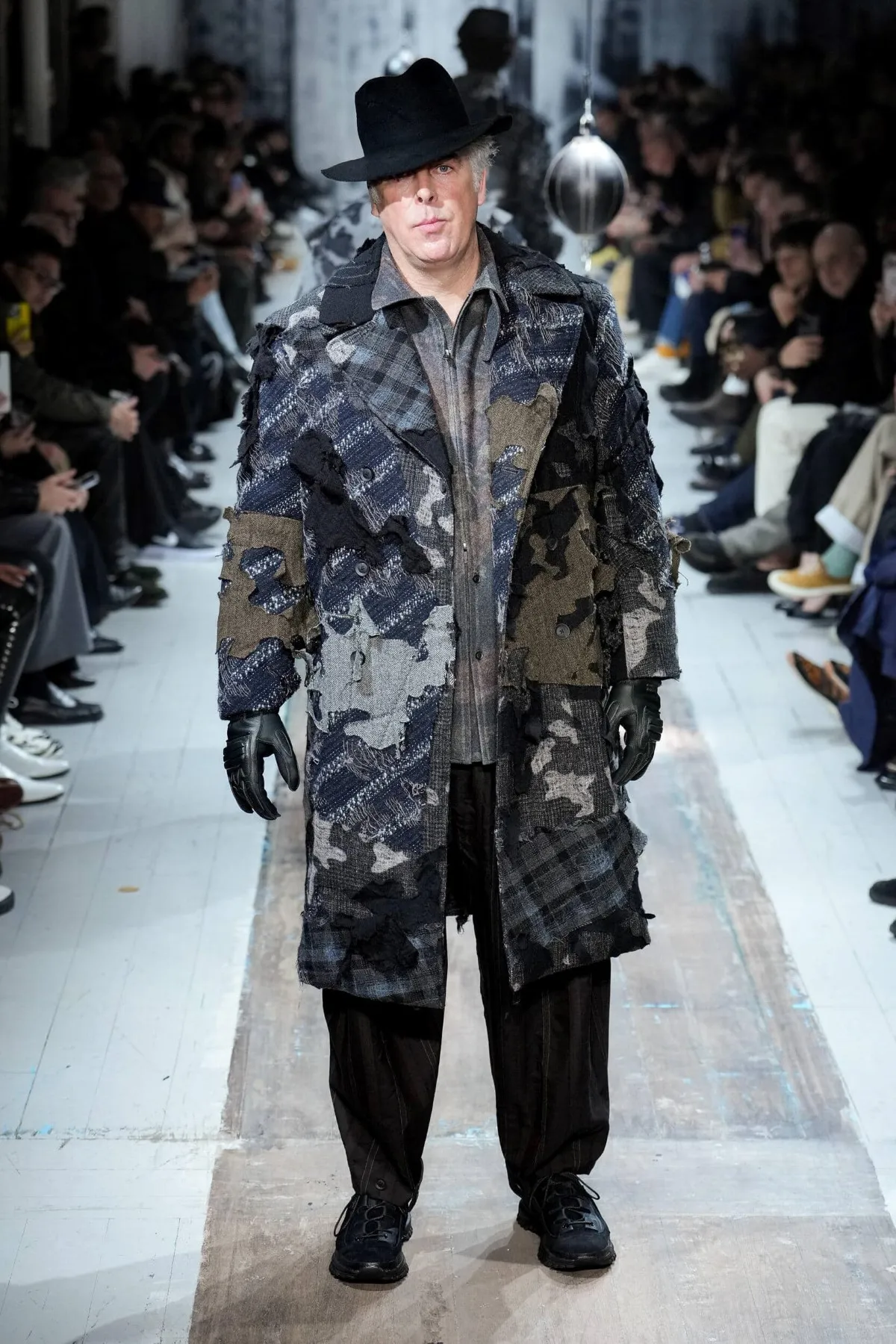
The boxing balls reappeared at the end, serving as a final reminder of the opening gesture of the collection. The models interacted with them in different ways, each responding to the object in her path in her own way. When asked what he would do, Yamamoto himself smiled and gestured a gentle caress. His point was clear: there are multiple ways to engage with what confronts you. The clothes he designs help men find their own approach.