
Tom Ford has been physically absent from the fashion scene, busy with film work and the quieter business of letting his legacy ricochet through others’ mood boards. Yet his name still functions like a tuning fork for desire and discipline. This is important when considering the Tom Ford Fall 2026 collection, presented by Haider Ackermann, a designer who approaches clothing in a direct, unflinching, and slightly unsettling manner.
| 📌 Key Facts |
|---|
| 🧵 Tailoring dominates the collection with strict double-breasted suits and sharp pinstripes. 🧥 Transparent plastic outerwear appears repeatedly, used as trenches, raincoats and head coverings. 👔 1980s power dressing influences the shirts and silhouettes. 👖 High-waisted denim and corporate styling reference office archetypes. 🧶 Knitwear and leather emphasize craftsmanship and quiet strength. 🌙 Eveningwear remains minimal, reinforcing the collection’s disciplined tone. |
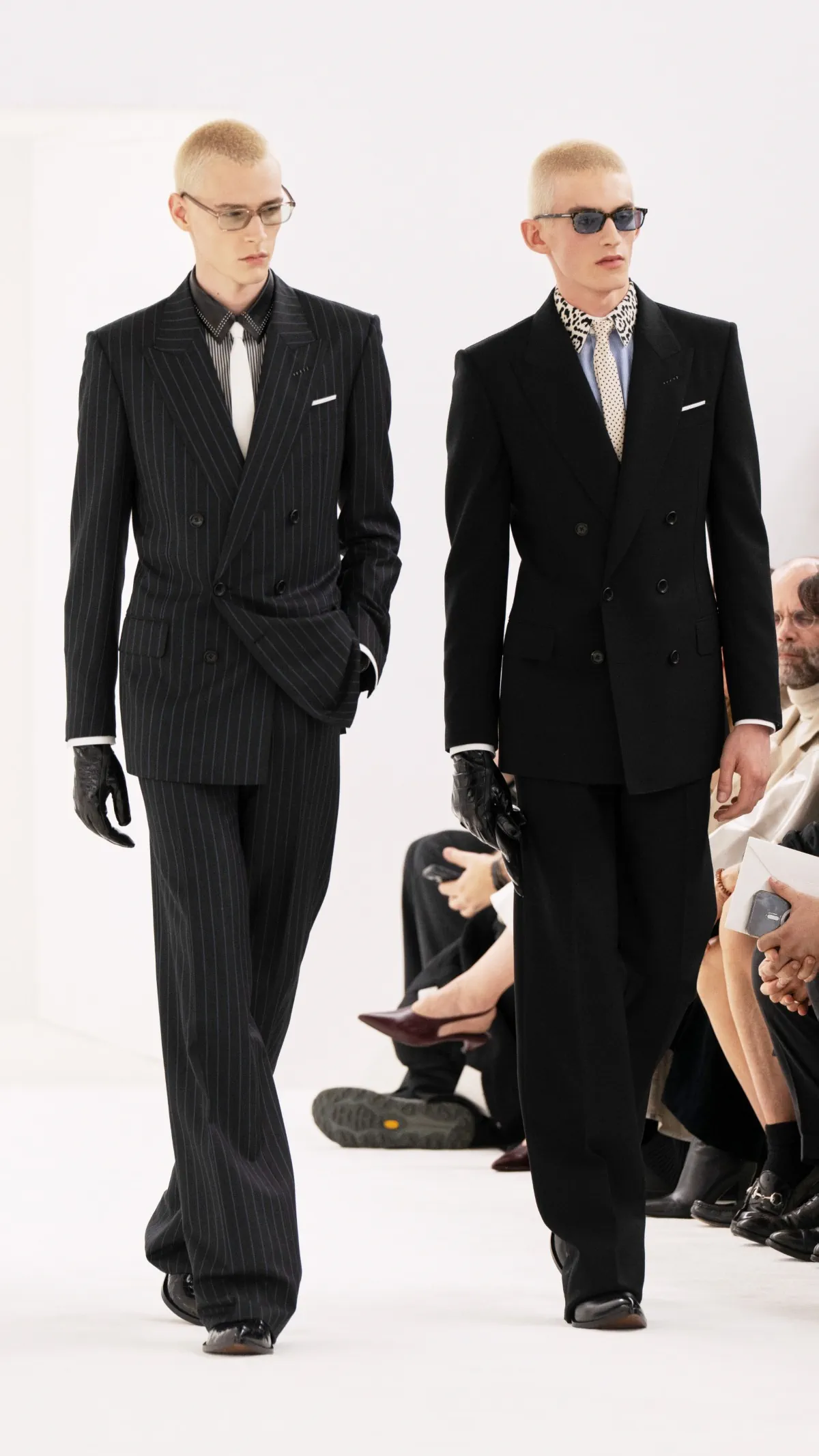
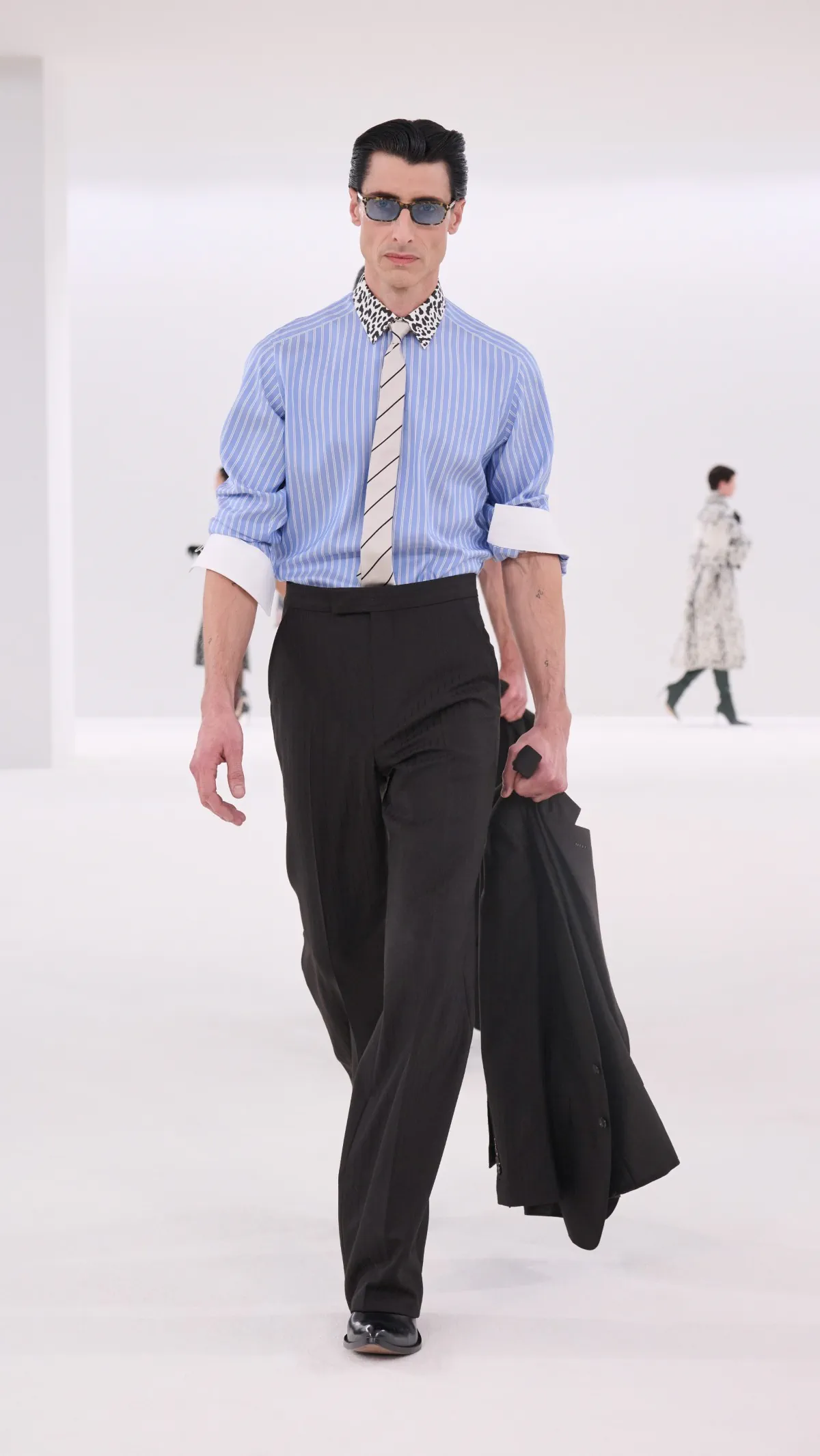
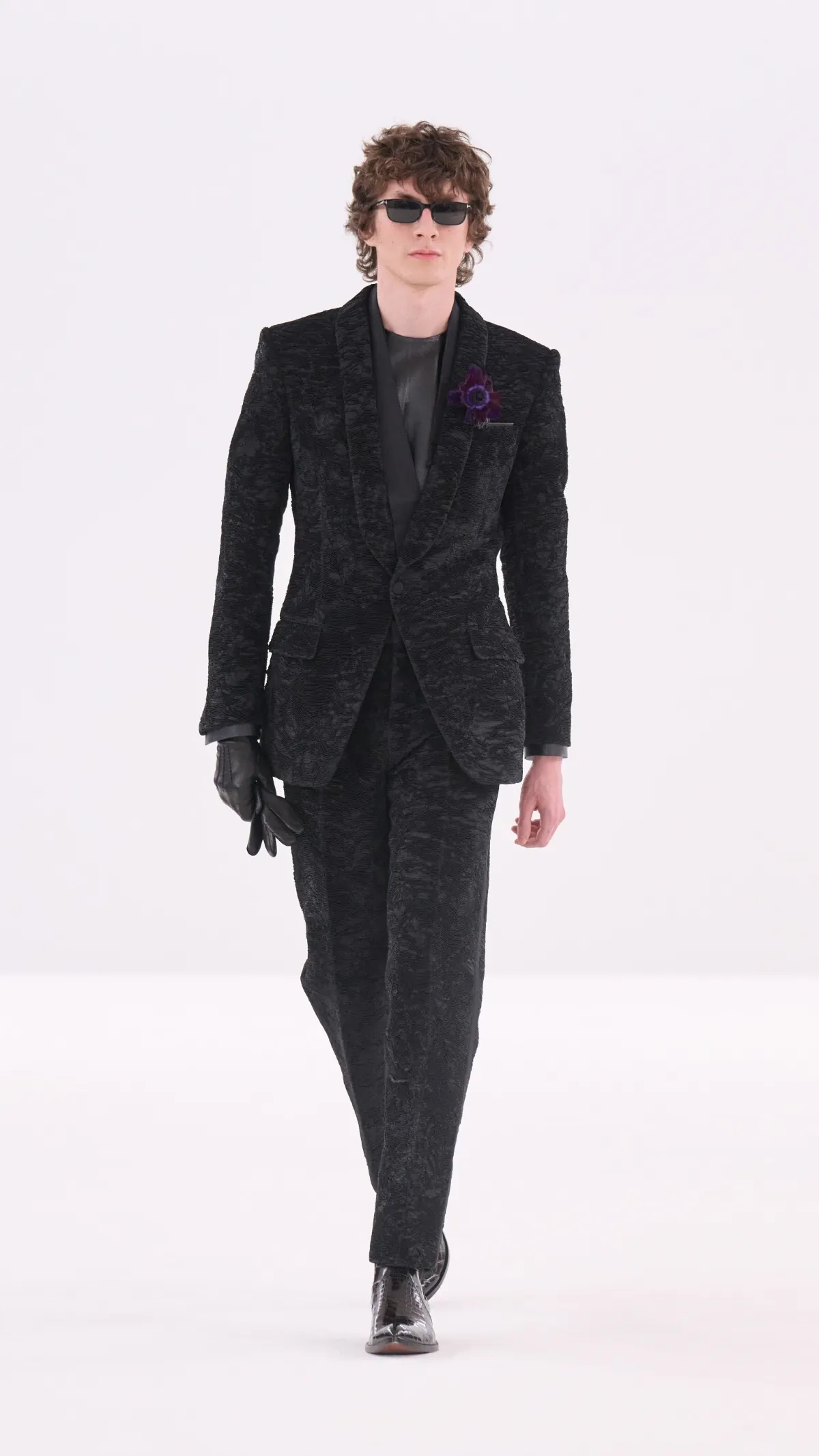
The setting was bright enough to erase excuses. A sparse white room made the opening looks read like declarations rather than decorations. Black-and-white double-breasted suits came first, cut with the kind of severity that makes posture feel like part of the garment. The point was clear: precision as a response to public noise and the sense that too much life is performed at maximum volume.
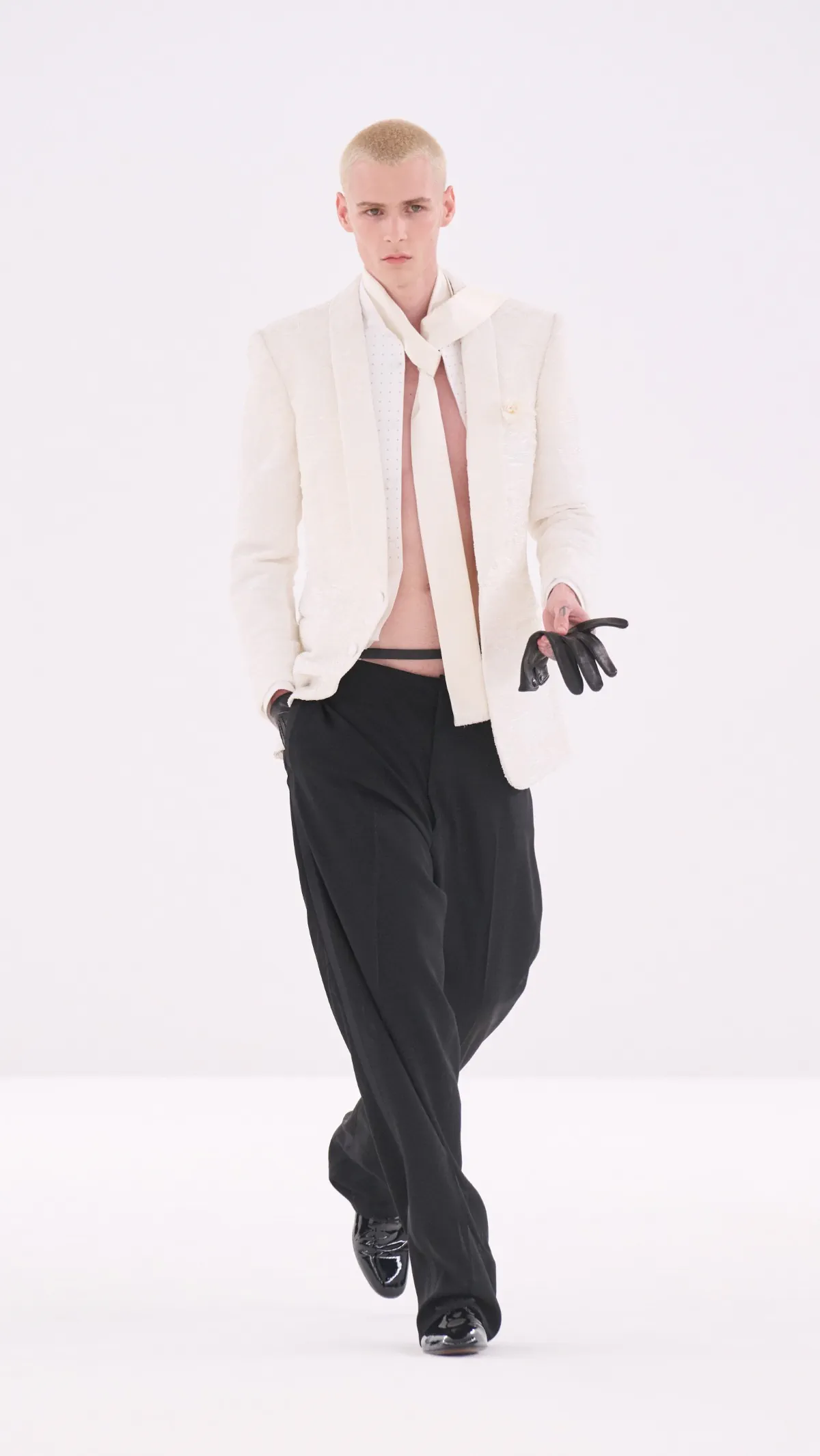
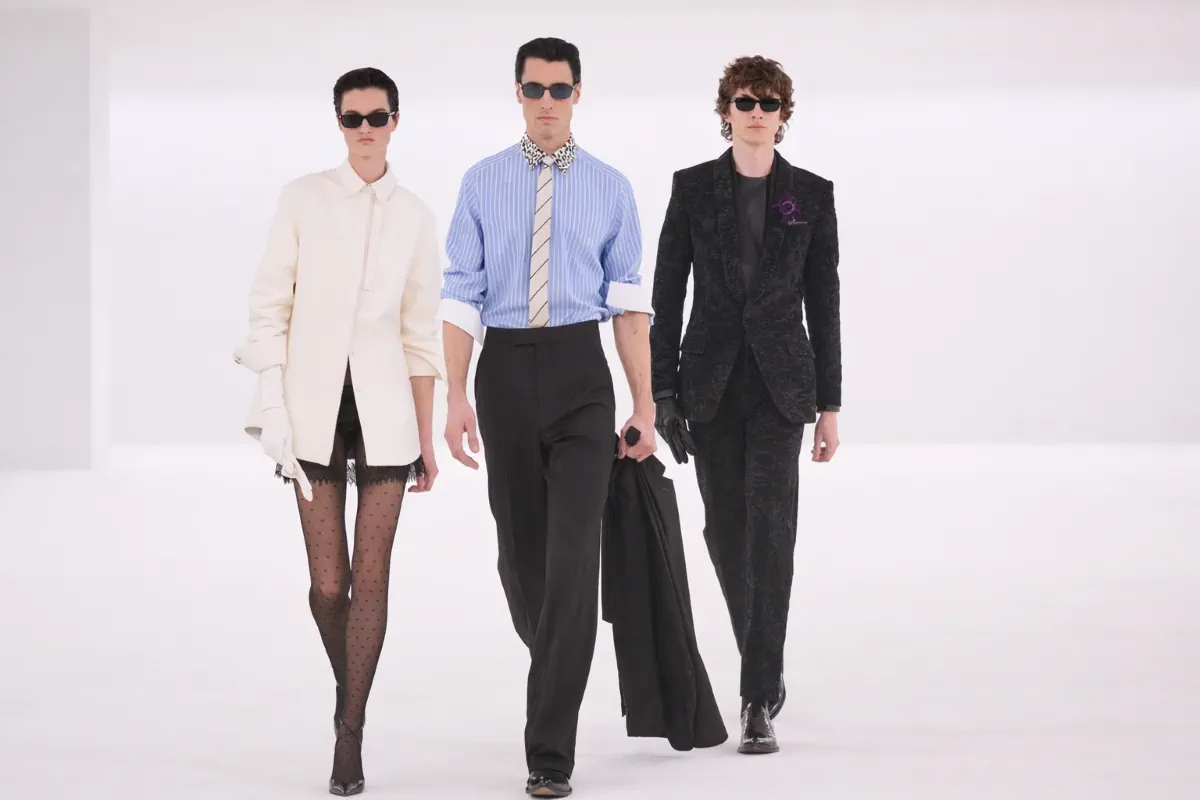
Ackermann relied heavily on tailoring because it is the brand’s most persuasive language. Pinstripes were the backbone. On men, they came with sharp lapels and the occasional white necktie – the sort of detail that signals a return to formality without nostalgia. The shirts echoed 1980s power dressing with bold stripes and collars that looked intentionally a bit “off” against the rest of the outfit. One shirt’s contrasting collar featured a Dalmatian-style print, a quick flash of wit that prevented the severity from becoming sanctimonious.
Women’s tailoring maintained the same discipline but softened the edges. A boxy gray suit dusted with sparkle suggested an evening attitude without needing a gown to prove it. Cropped, military-inspired jackets paired with pencil skirts exuded a uniform-like stance, while A-line coats with polka-dot patterns conveyed the notion that authority and playfulness can coexist in the same outfit – provided the cut remains controlled.
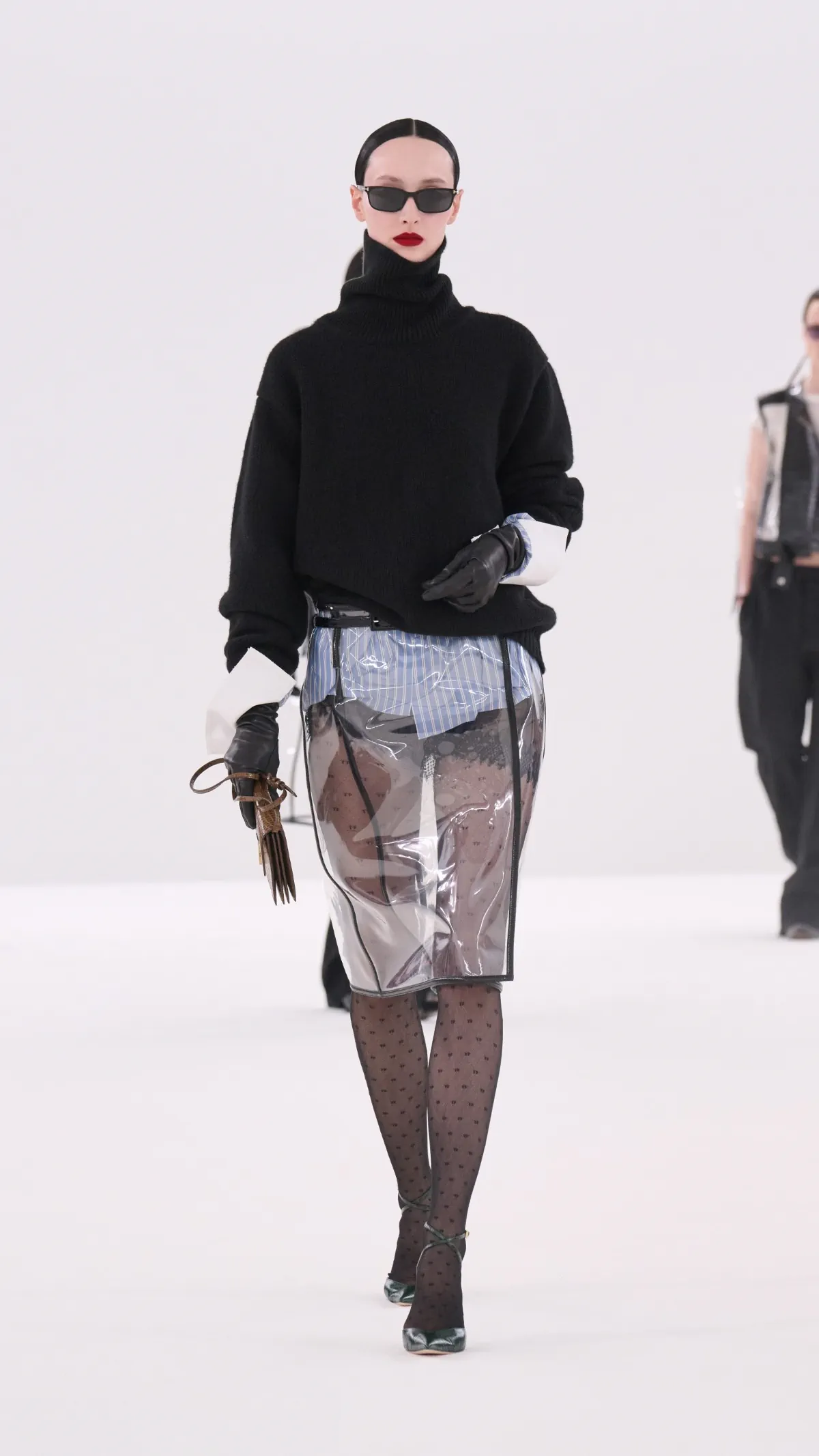
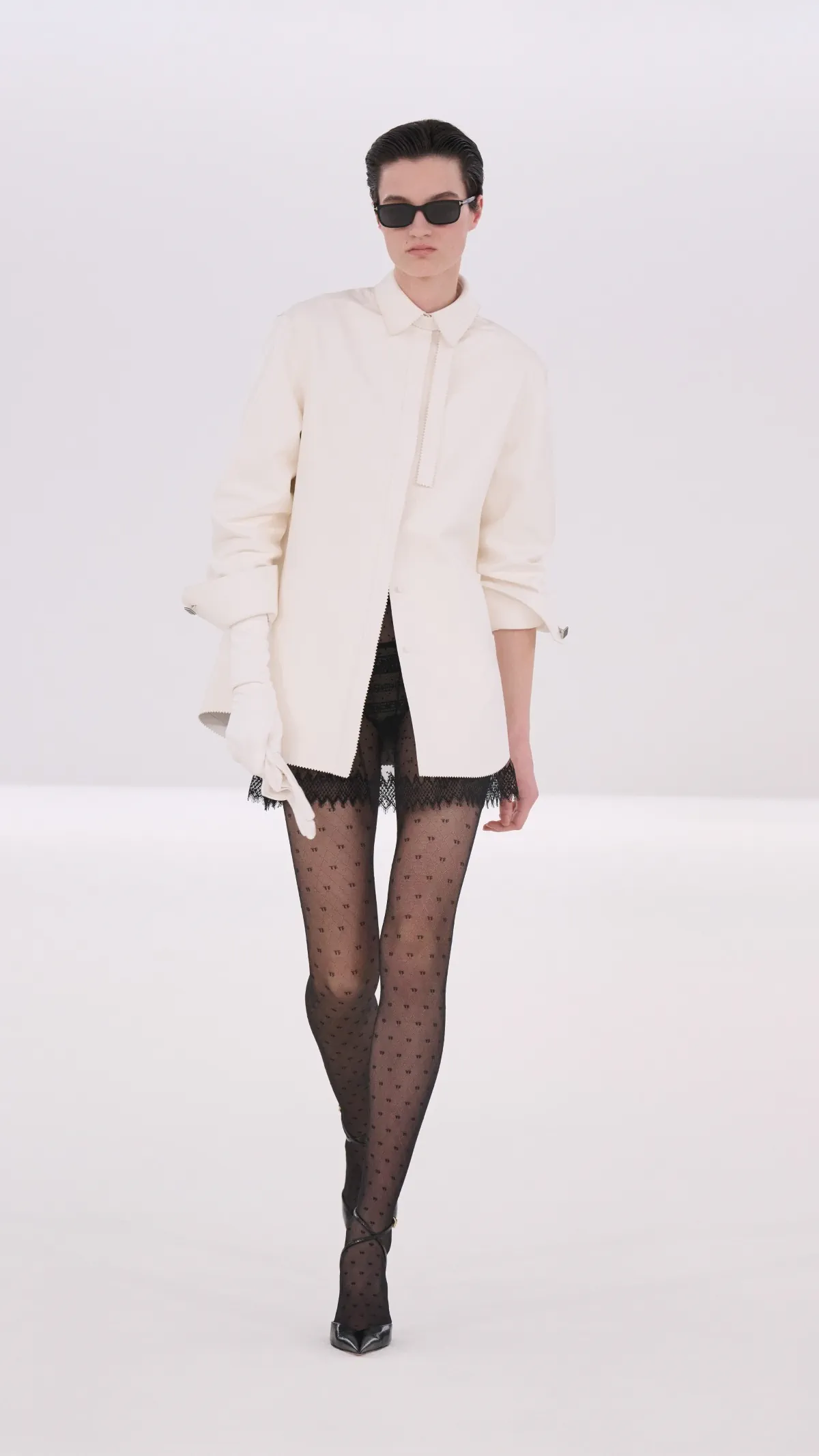
Then came transparent plastic, a material that could have read as a gimmick in less careful hands. Ackermann used it repeatedly – raincoats, trenches, abbreviated blazers, and even head coverings – layered over suits and skirts. The effect was not futuristic, but protective. The clothes looked ready to make an impact, with a glossy shield between the wearer and whatever weather – literal or social – might be waiting outside. Under the clear plastic skirts, lingerie and logo hosiery were visible, not in a loud way but with the matter-of-fact frankness of garments that refuse to pretend you don’t have a body.
Follow all the latest news from Fashionotography on Flipboard, or receive it directly in your inbox with Feeder.
You may also read

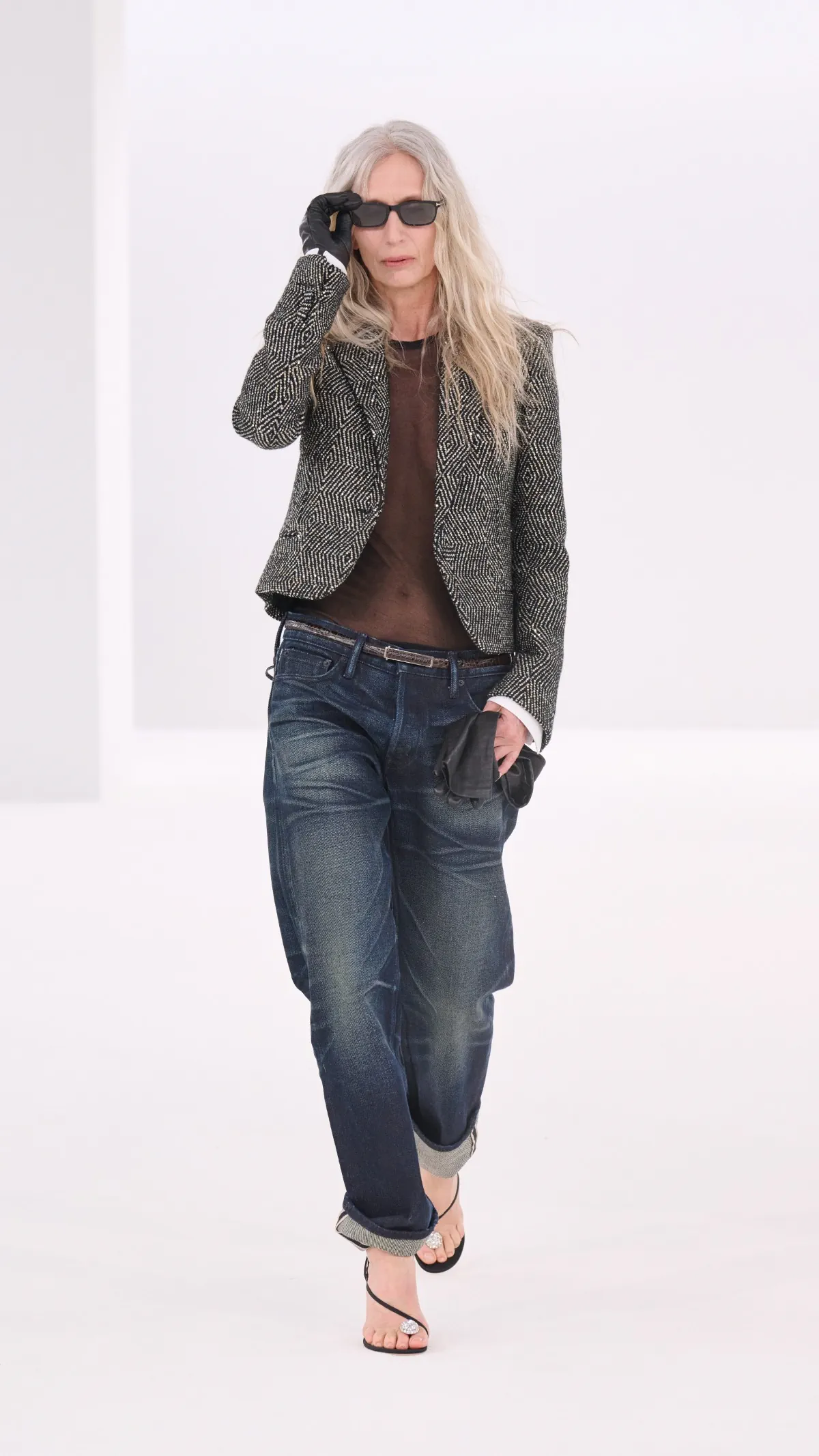
Denim provided another shift in texture and attitude. Dark-rinse jeans came pre-faded and sharply creased, offering a worn-in look that still felt rigorous. The men’s version sat high on the waist, creating a silhouette that elongated the torso. The high-waist proportion continued into trousers paired with pastel button-downs and neat ties – a nod to corporate archetypes that Tom Ford has spent decades selling and skewering.
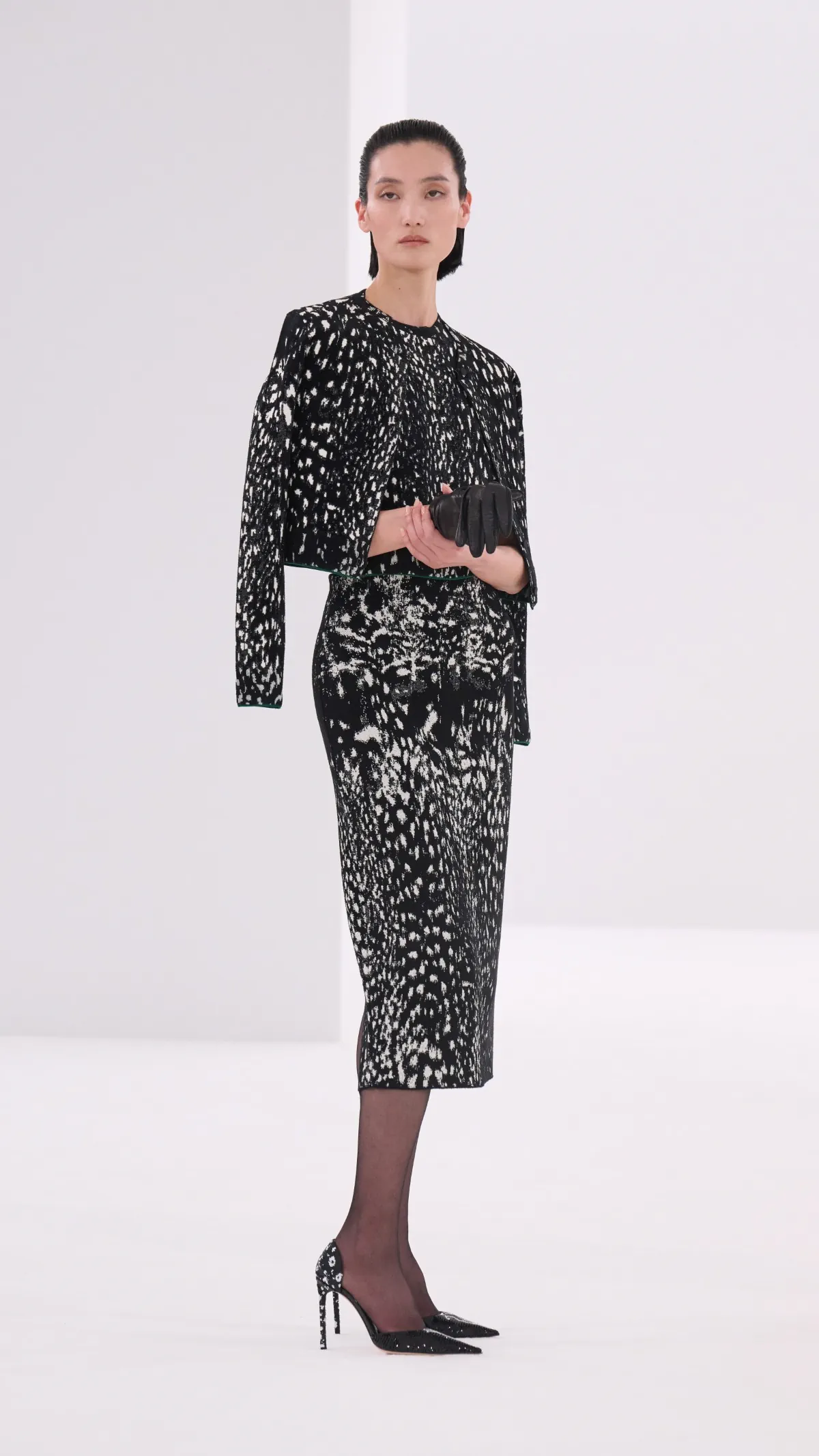
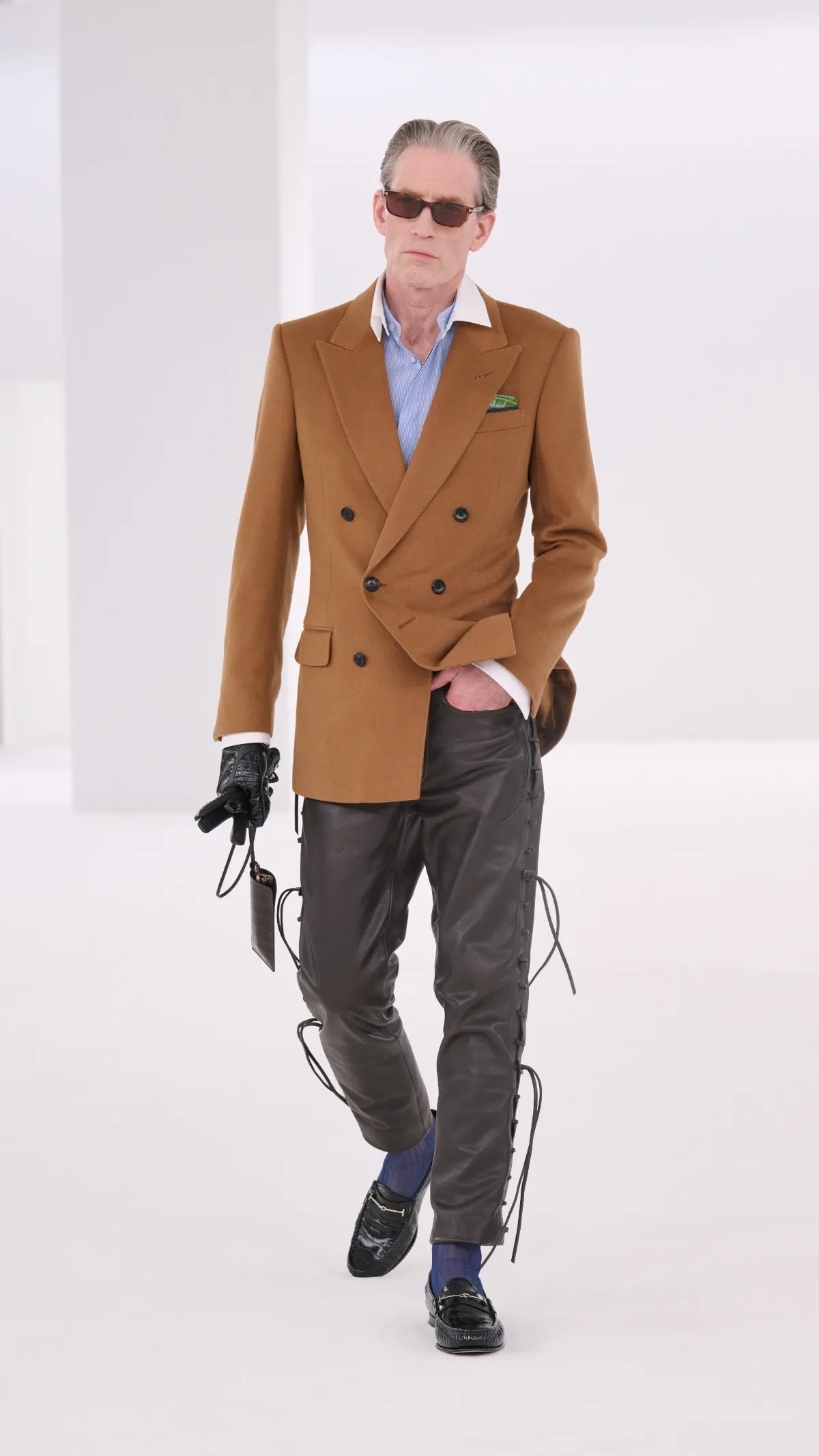
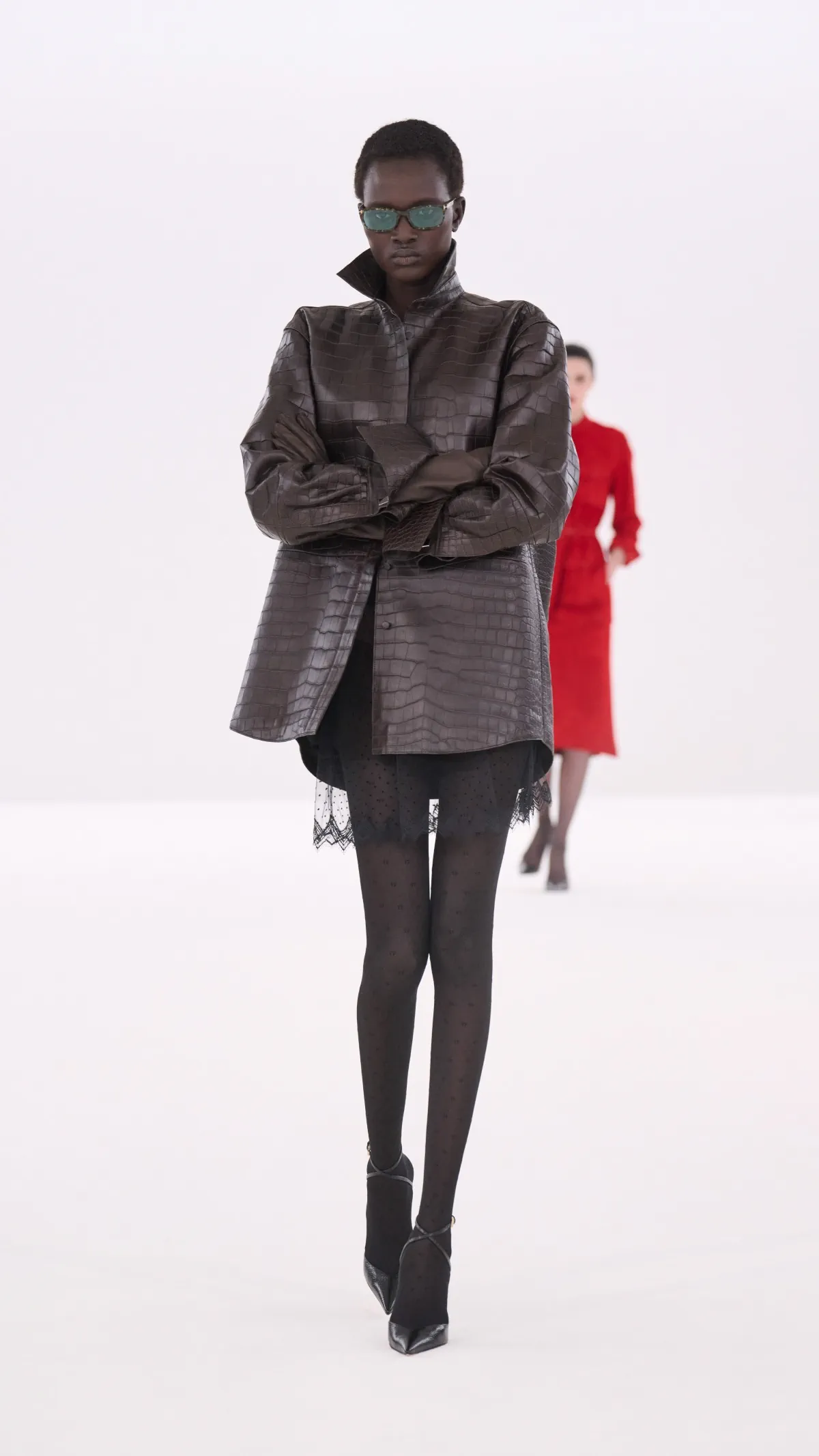
Even knitwear, fashion’s usual refuge for comfort, maintained its backbone. Beefy sweaters were worn with caramel- and olive-colored leather skirts. Leather trousers featured visible whipstitching that emphasized craftsmanship without appearing overly elaborate. Voluminous, robe-like coats suggested retreat but not surrender. They looked like armor for those who prefer to keep their defenses quiet.
The evening component was restrained. Only a few event looks appeared, including a black gown edged with fluttering fabric that gave the dress an ominous outline. The decision to keep formal wear minimal felt deliberate. In an era when red-carpet dressing can become a contest of exposure, holding back reads as confidence.