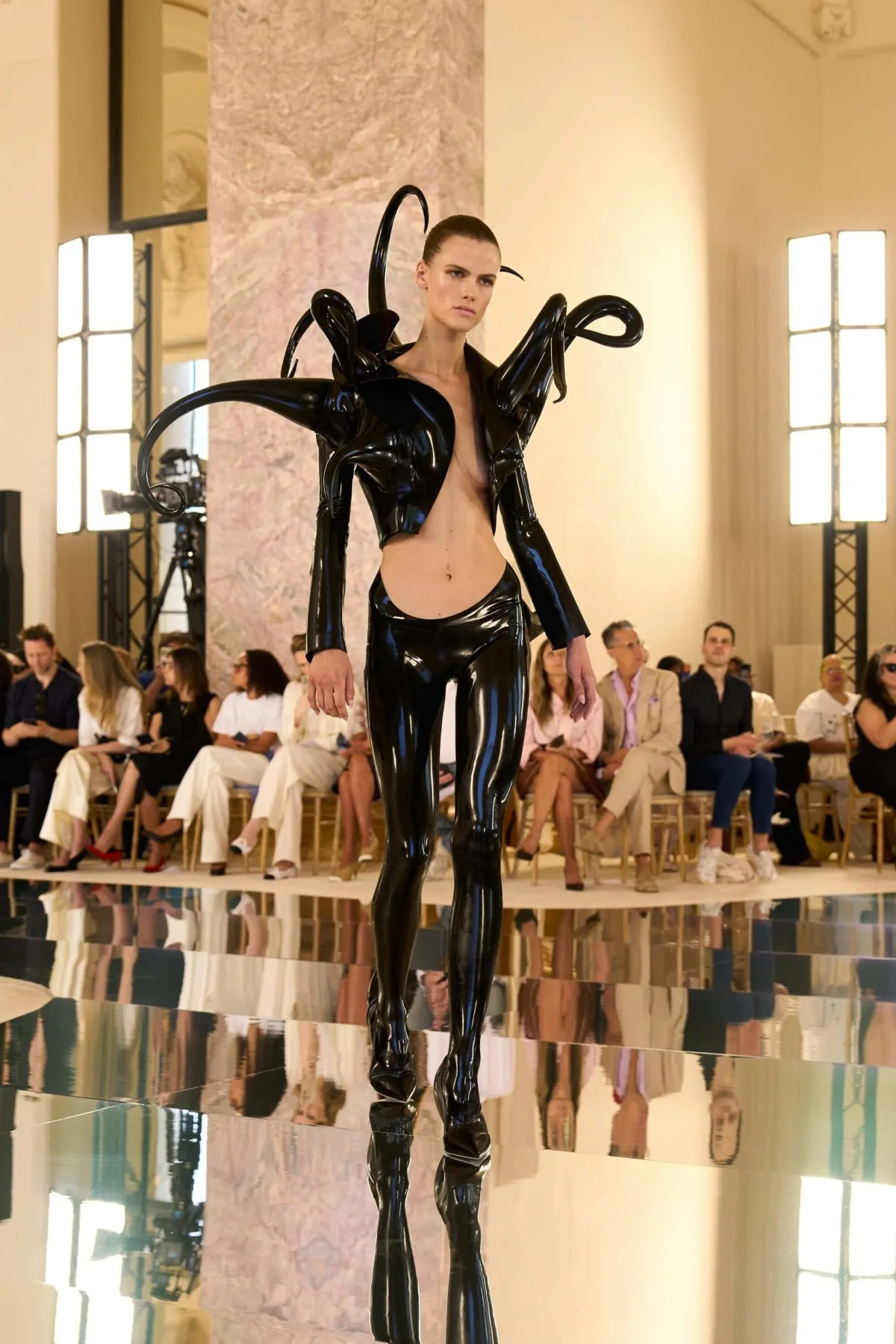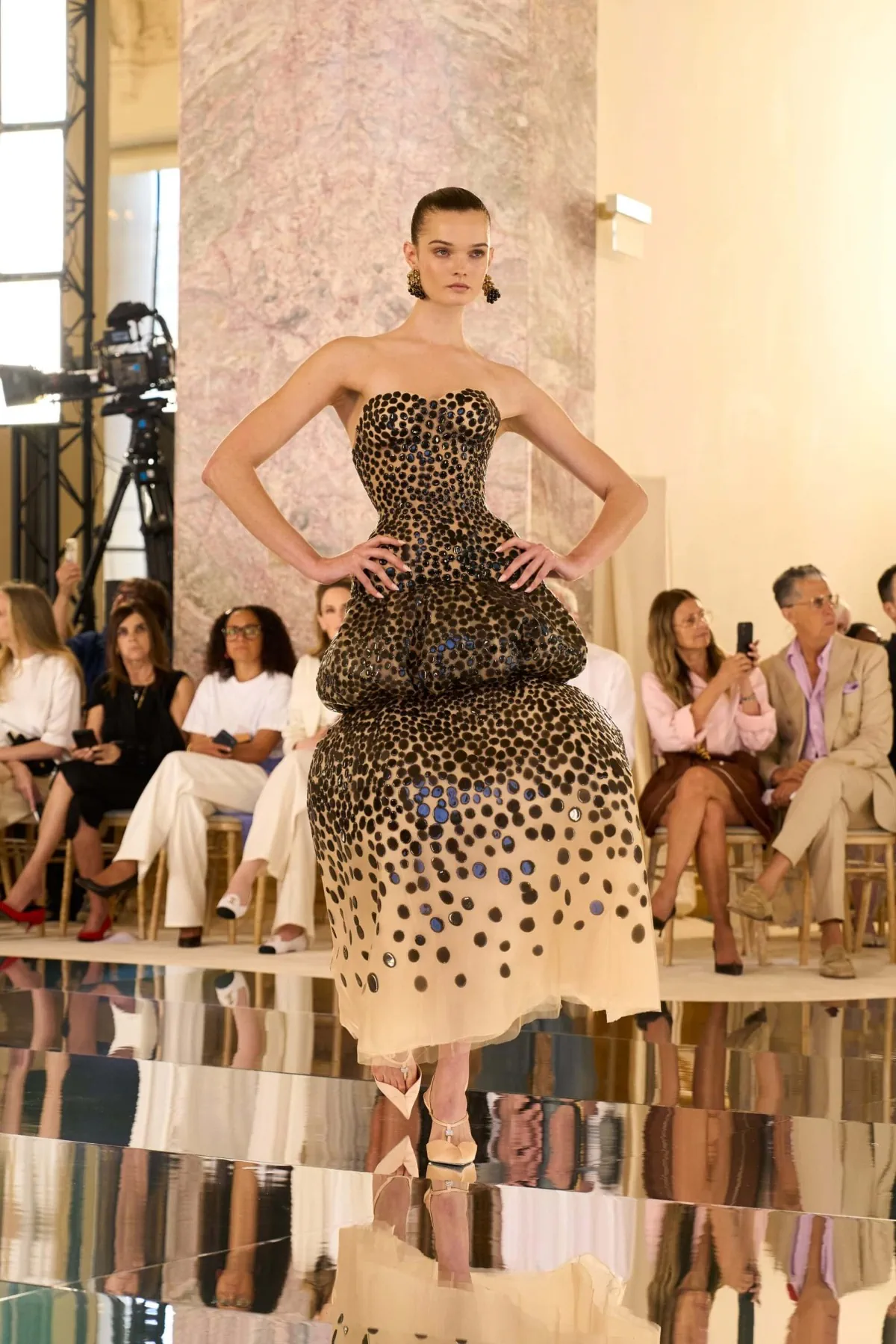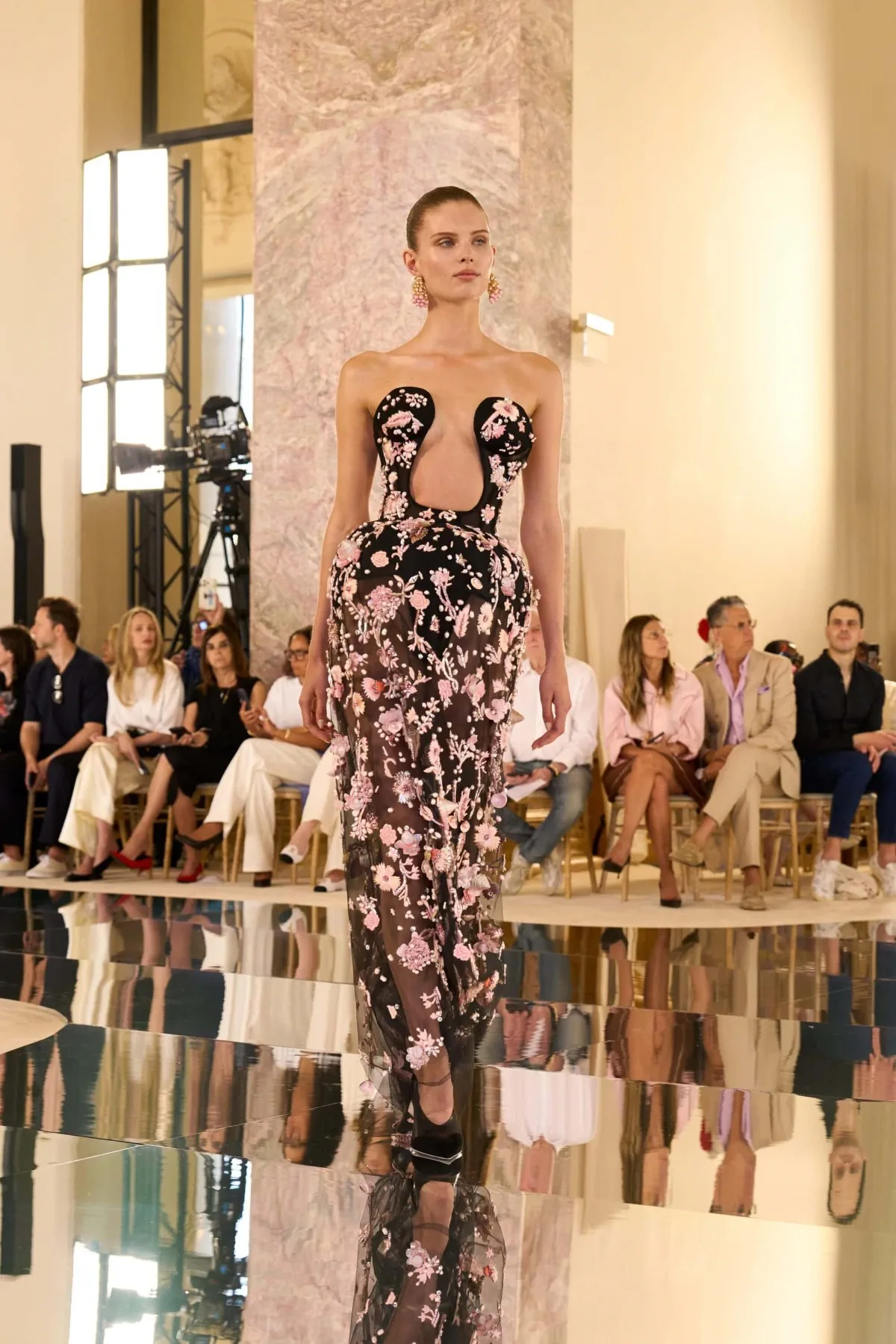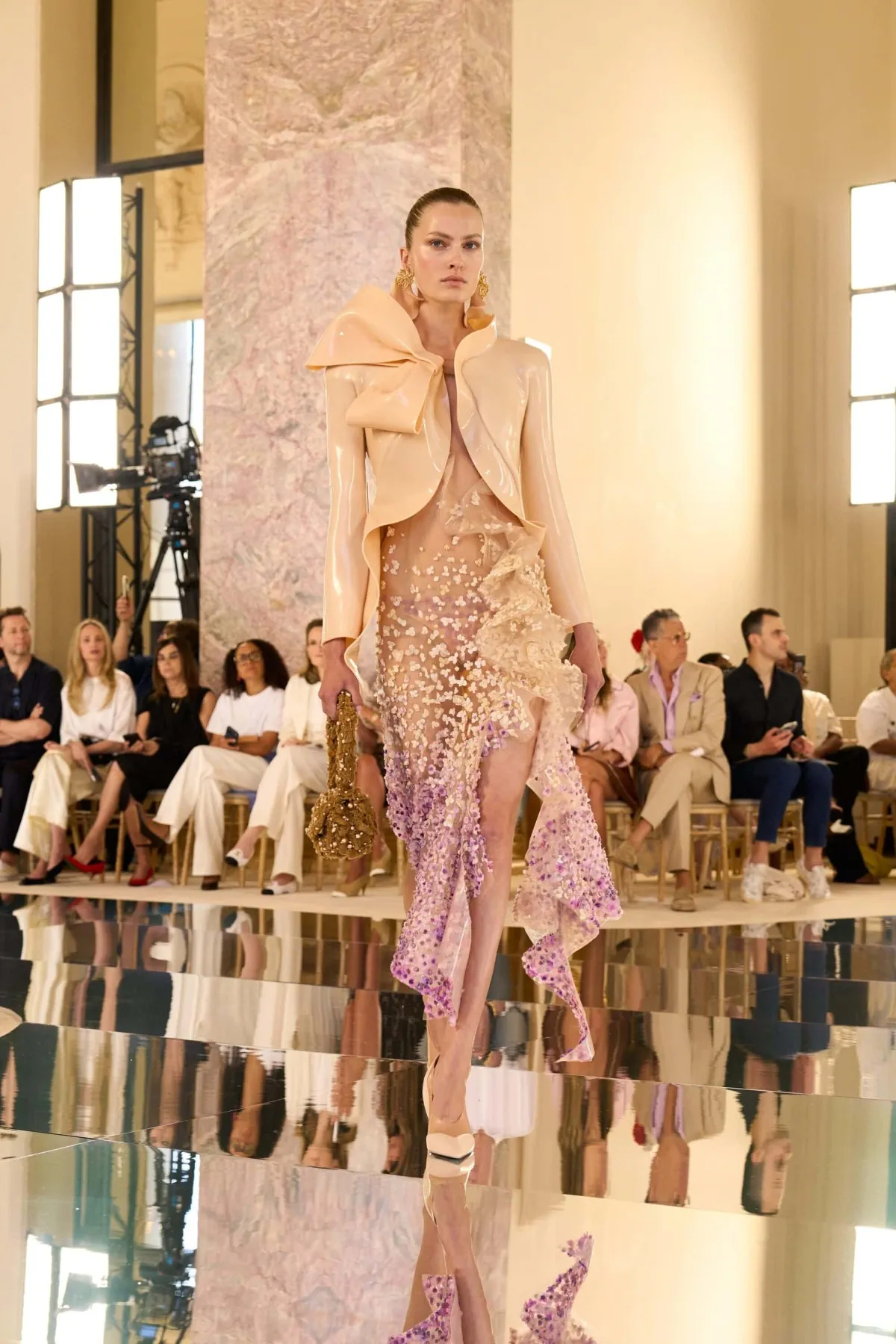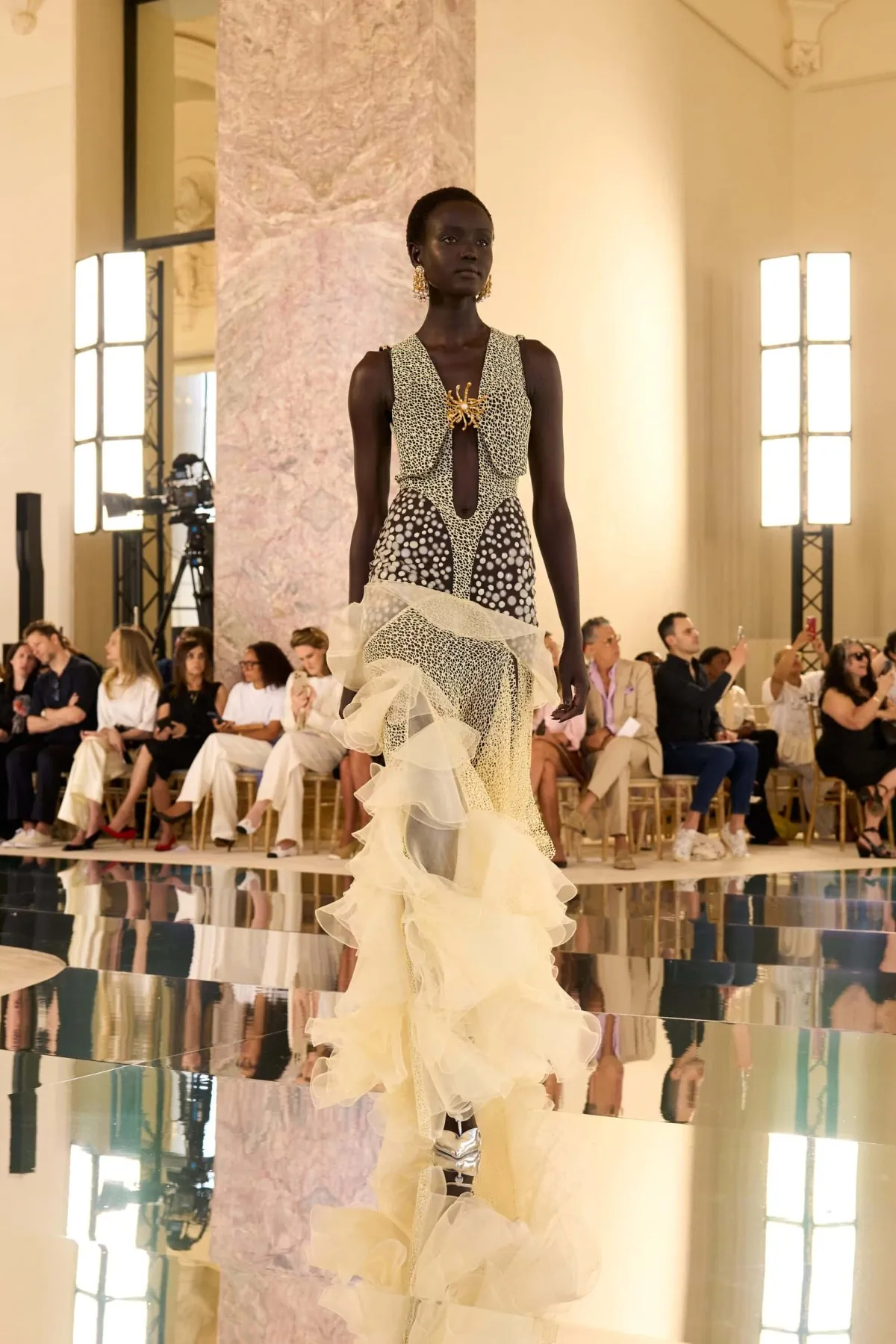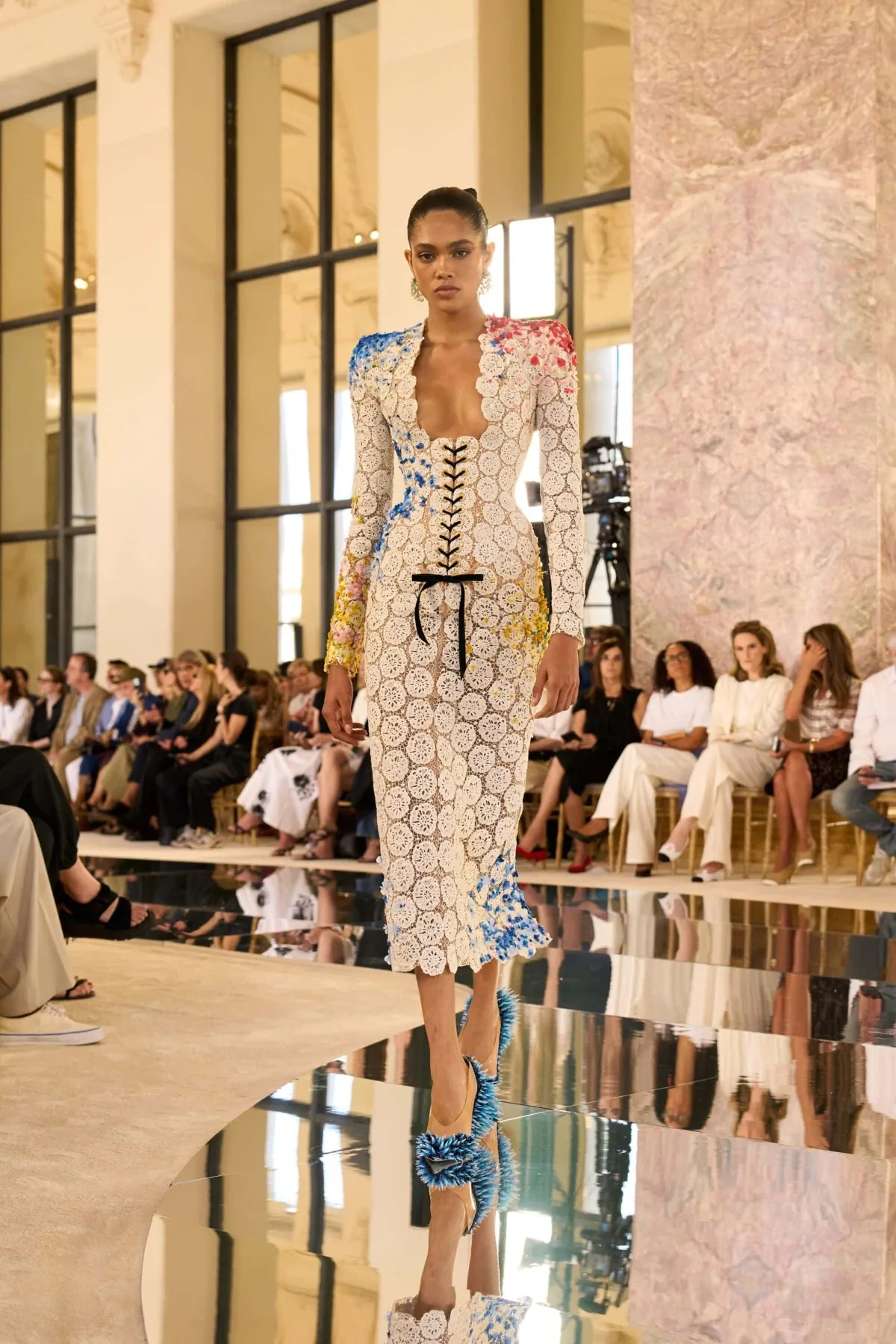

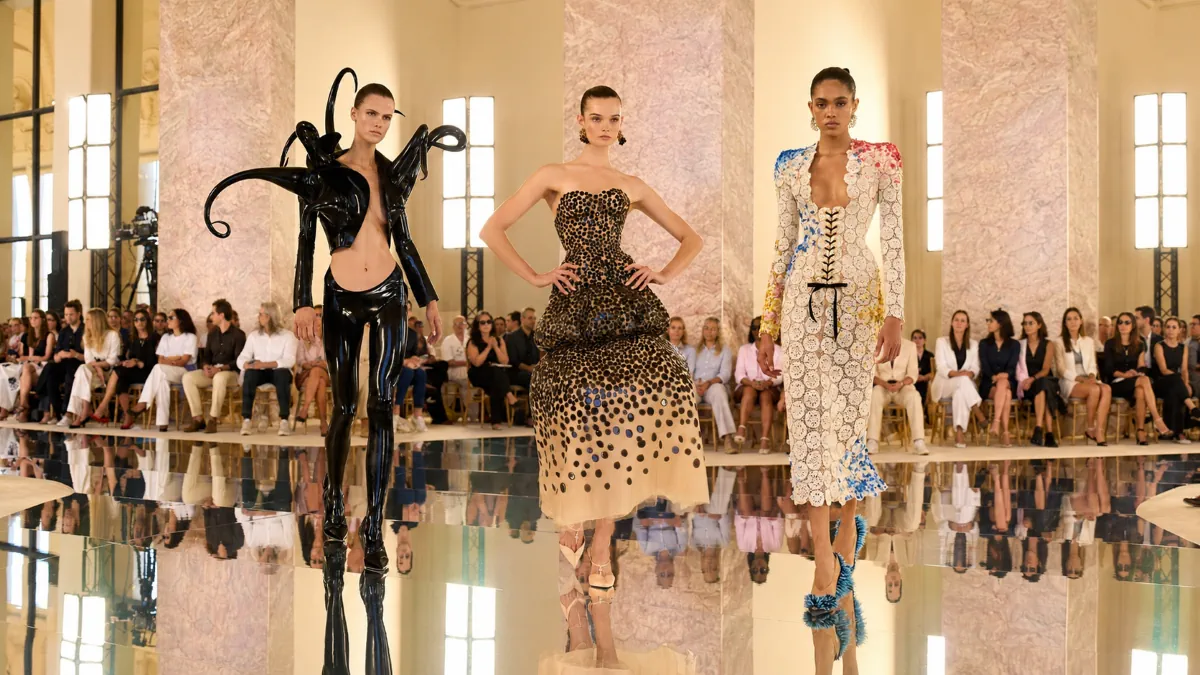
This week, Schiaparelli opened the Fall 2026 haute couture season in Paris, and Creative director Daniel Roseberry reached for an unlikely muse. Rather than polish or restraint, Roseberry built a collection around latex tentacles, glowing silicone bustiers, and gowns that seemed to pulse with their own internal current. Roseberry called the collection “The Call of the Void,” borrowing the title from the French phrase for the sensation of vertigo people feel standing near a ledge. He described this feeling as a moment when the magic of creation can only be found in total surrender to the unknown.
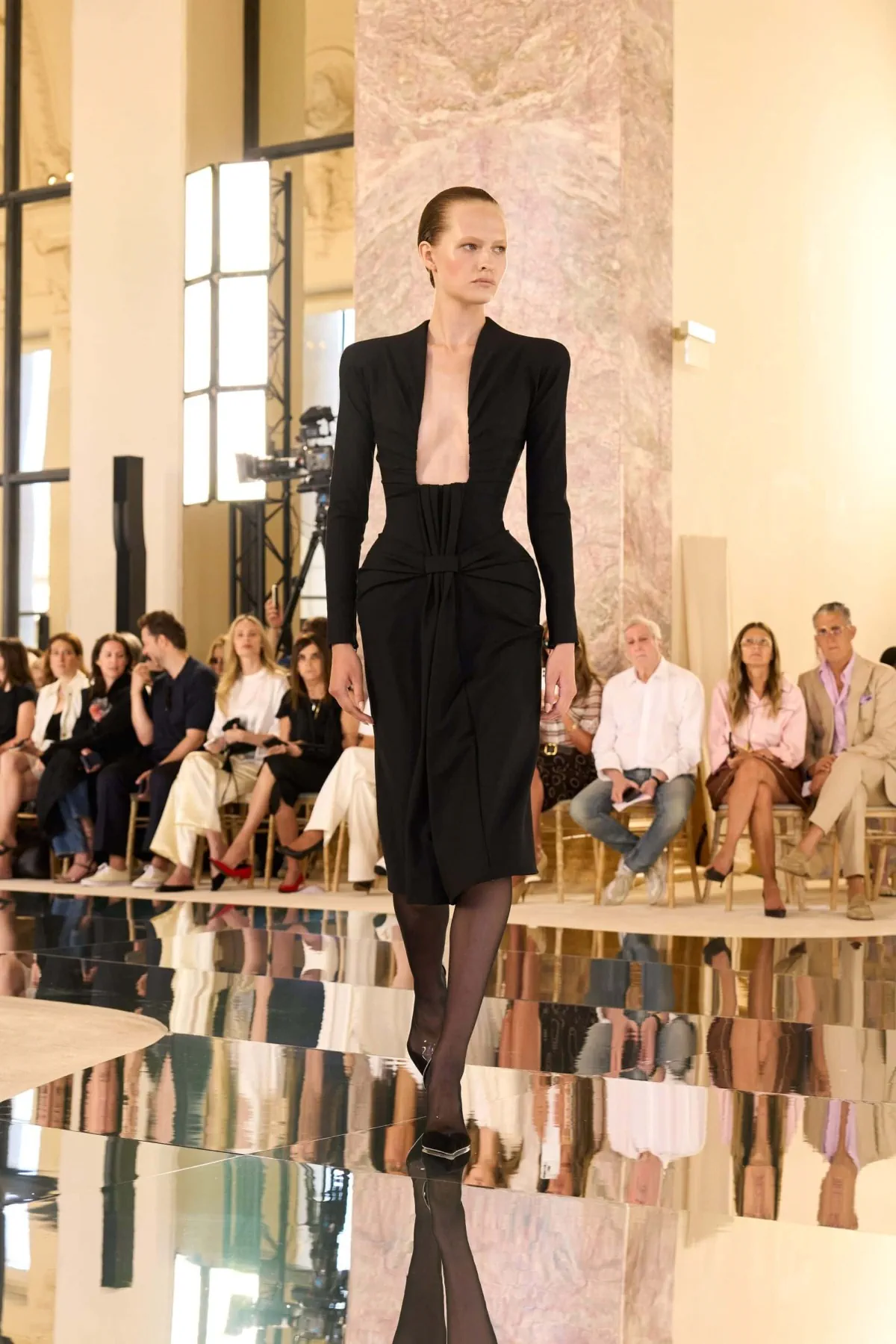
The show unfolded at the Petit Palais on a mirrored runway that transformed the gallery’s murals into a reflective, ever-changing backdrop. Marisa Berenson, Elsa Schiaparelli’s granddaughter, sat beneath a fresco titled “The Triumph of Woman,” wearing a fitted black gown with a gold chain trailing from her arm. The staging mattered. Roseberry has spent his tenure at the house arguing that Schiaparelli’s surrealist instincts were never meant to be tidy or reverent. A room full of paint and mythology made that argument before a single look appeared.
What came down the runway leaned hard into artifice. Jackets and corsets were cast in milky silicone and lit from within so that each piece glowed faintly against the skin. Roseberry collaborated with a Paris workshop that typically produces ultra-realistic silicone babies for film production on those pieces, giving the garments an unsettling, almost anatomical accuracy. Feathers, dried flowers, and seashells were pressed into the same silhouettes as the synthetic materials, causing a viewer’s eye to keep sliding between the organic and the manufactured without ever settling comfortably on either.
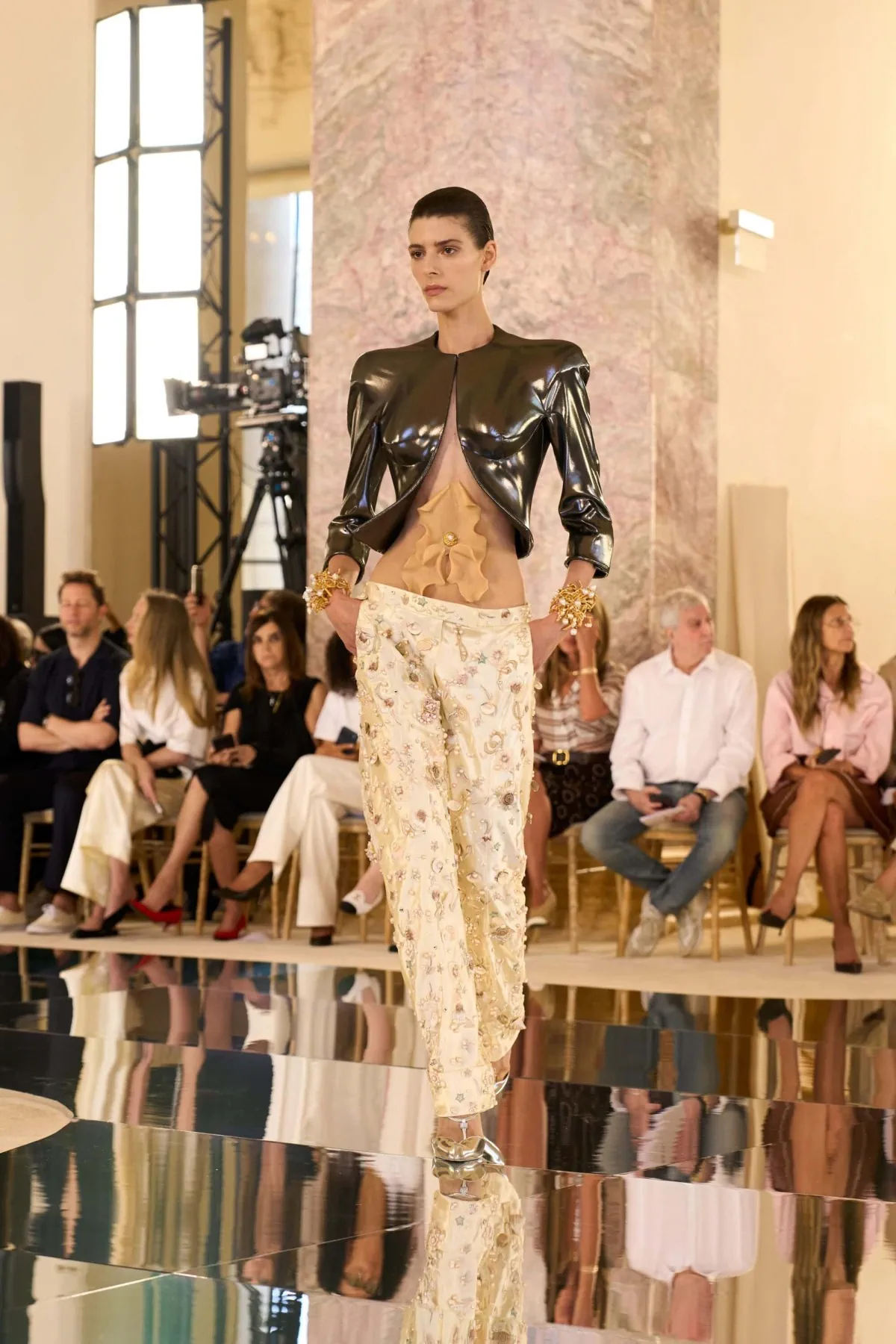
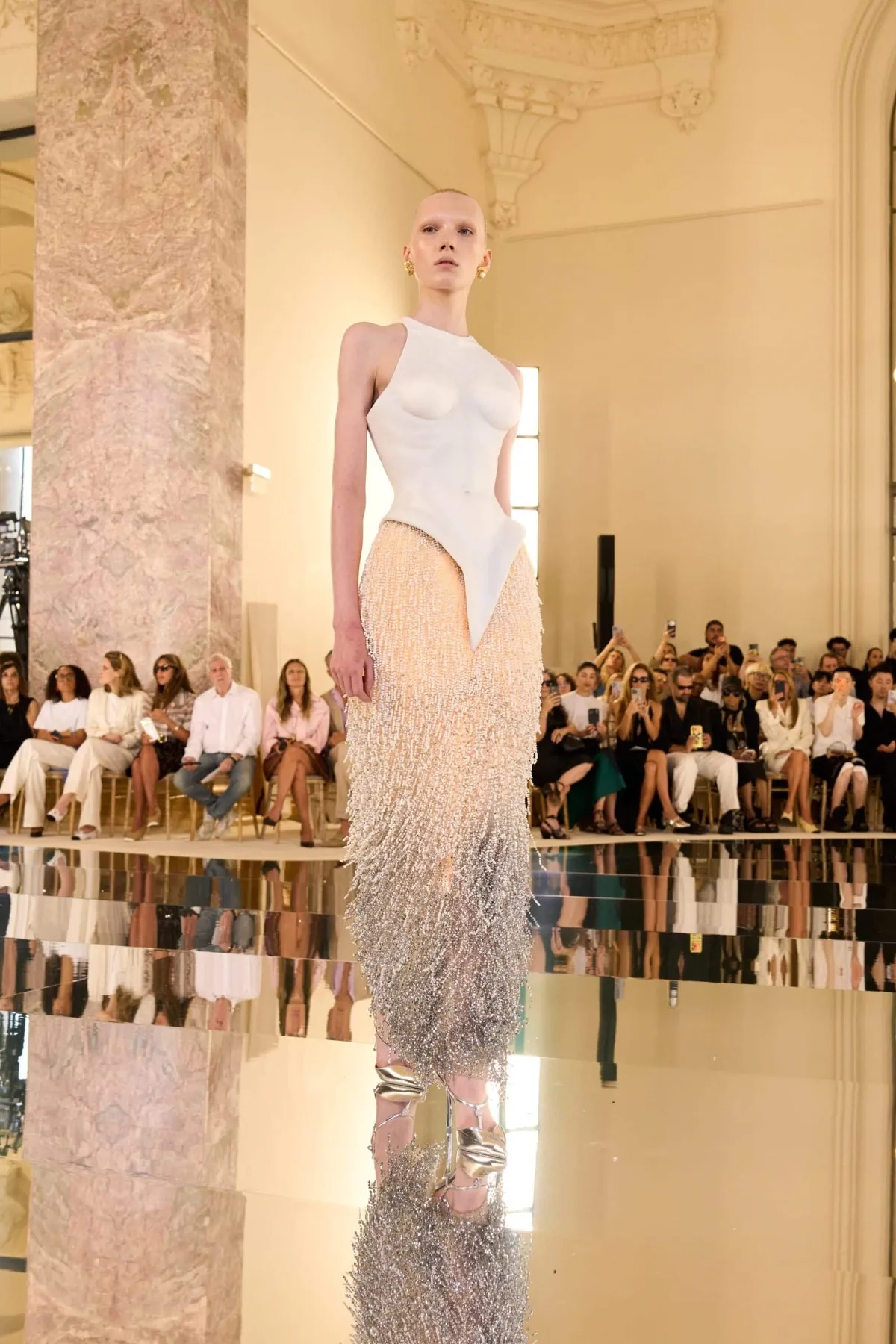
Roseberry has spoken before about wanting his clients to feel unshackled by convention, and this season he took that idea further than usual. Bustiers were sculpted to mimic anatomy rather than molded directly from a body – an inversion that allowed him to exaggerate curves without copying them directly. One cornflower blue version with a floral ombré skirt was given to Karlie Kloss, while a white version with pearl fringe was worn by Alex Consani and later by Zendaya at a London premiere. Fashion now has a way of collapsing the runway and the red carpet into the same news cycle, and Roseberry seems entirely comfortable with that.
Follow all the latest news from Fashionotography on Flipboard, or receive it directly in your inbox with Feeder.
You may also read

The celebrity attendees spoke to where Schiaparelli sits in the culture at the moment. Karlie Kloss arrived fresh from Taylor Swift’s wedding weekend wearing a seafoam corset made of glossy latex. Meanwhile, Bad Bunny showed up in a custom yellow suit covered in brooches referencing his own album art. The guest list, which included pop royalty, film stars, and old-guard Paris society, suggests that the house has become a cultural crossroads rather than a niche destination for die-hard couture clients alone.
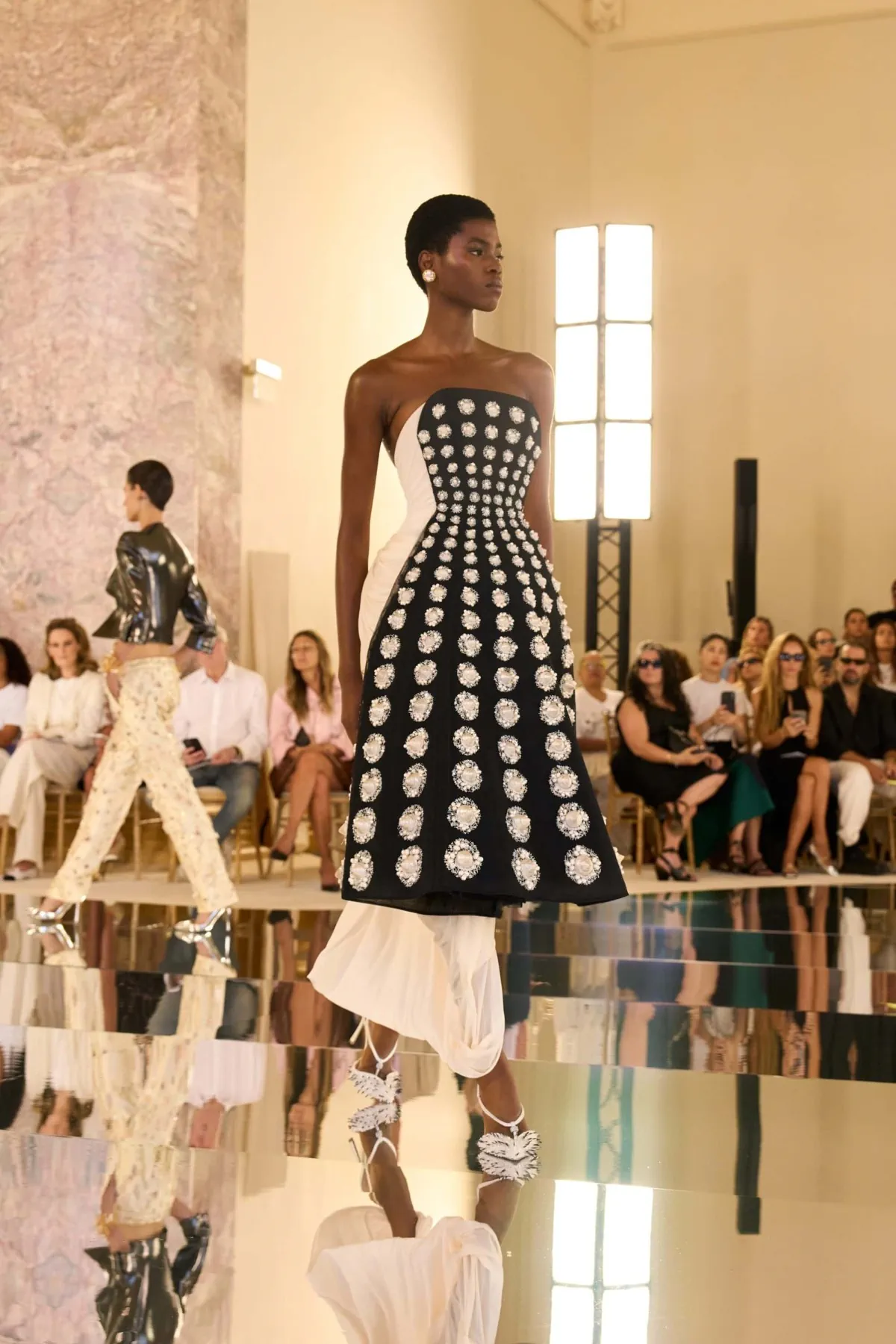
None of this experimentation occurred in isolation from the house’s history. Roseberry has repeatedly referenced Elsa Schiaparelli’s original Surrealist provocations to justify his more eccentric designs. A current retrospective at London’s Victoria and Albert Museum makes a similar case, demonstrating that unsettling imagery has always been present in the most exclusive couture circles. Artificial intelligence has recently become prevalent in design school portfolios, and Roseberry has said that this development disturbs him precisely because it eliminates the individual touch behind the work. This season, his answer was to make that hand impossible to ignore, no matter how synthetic the surface looked.