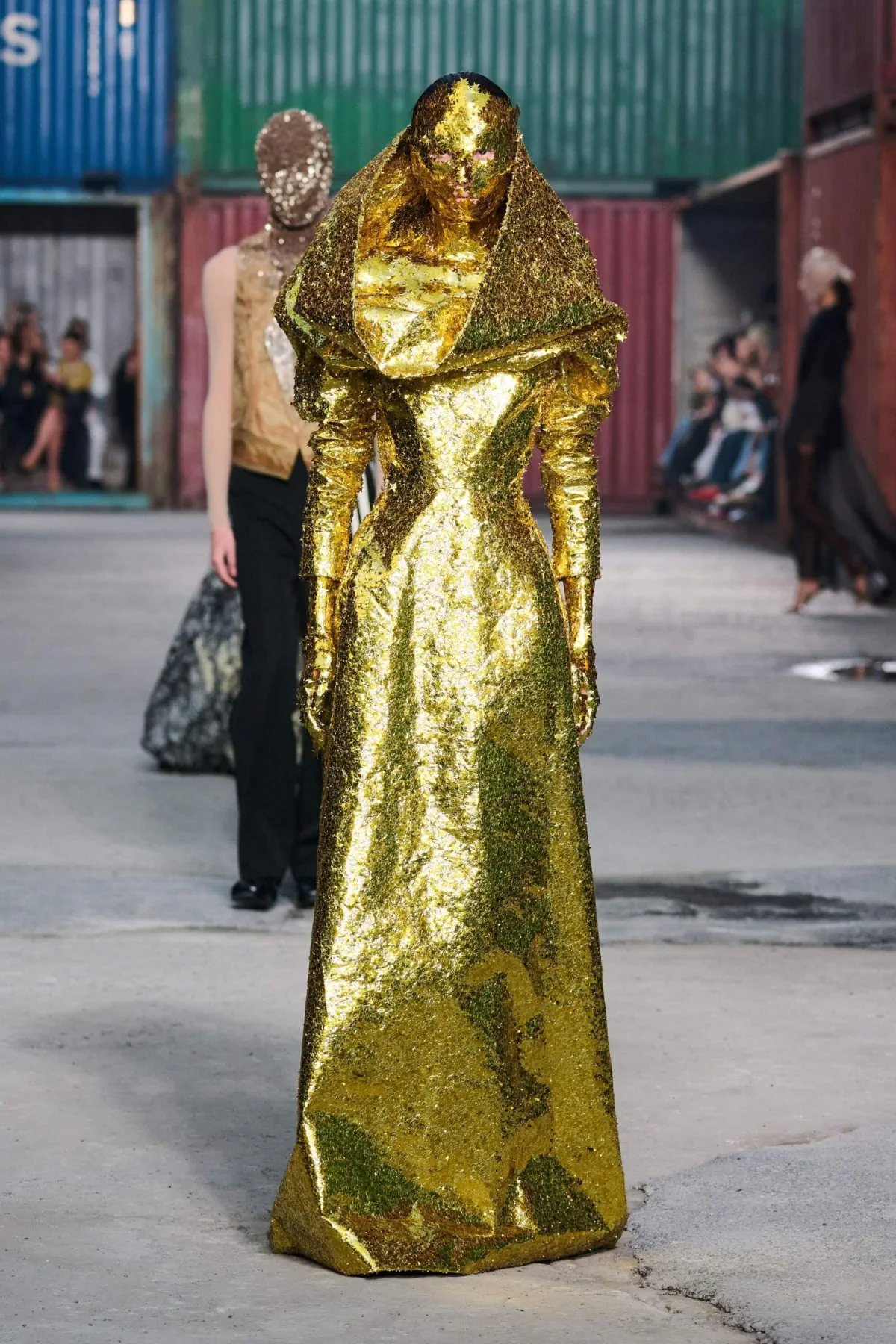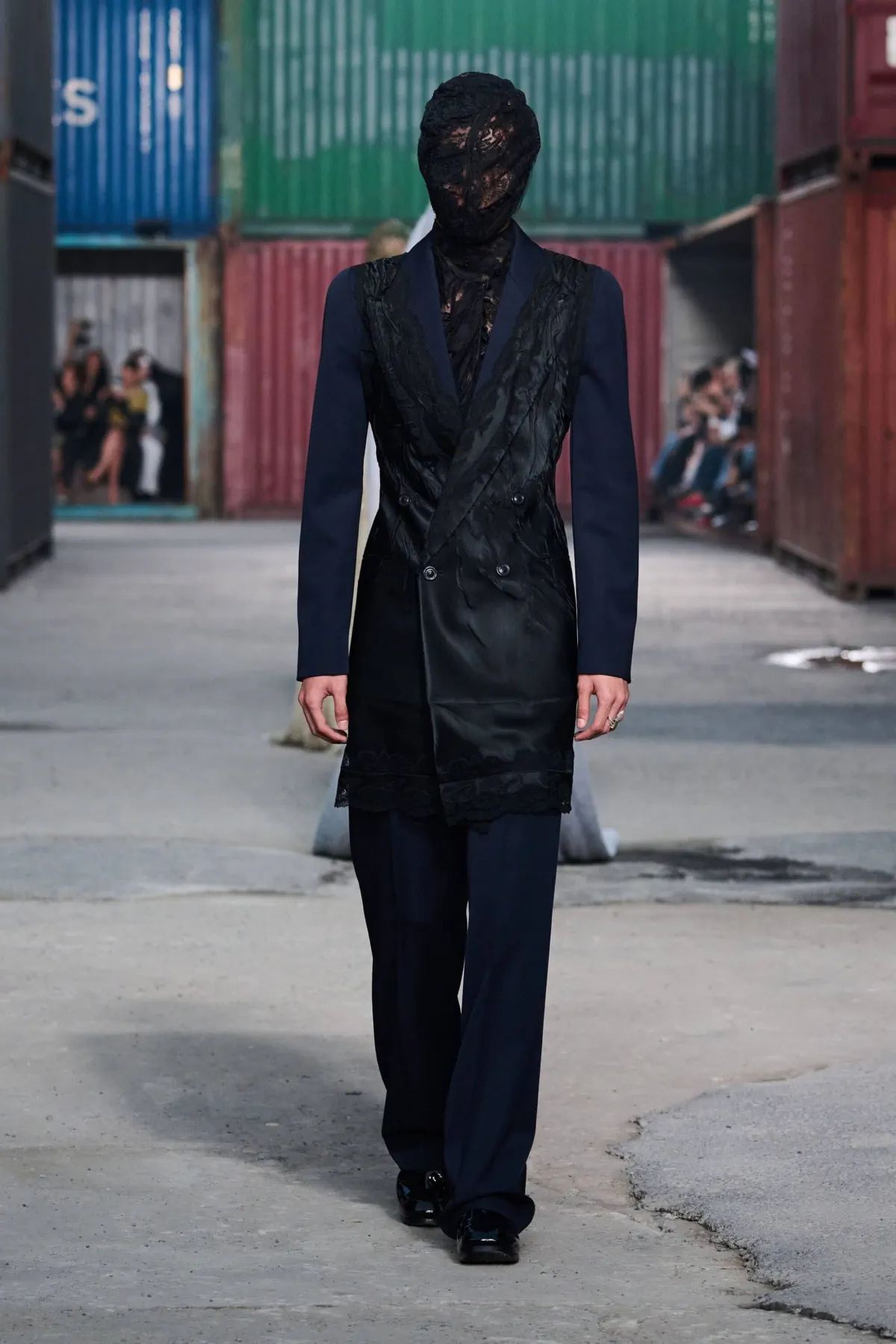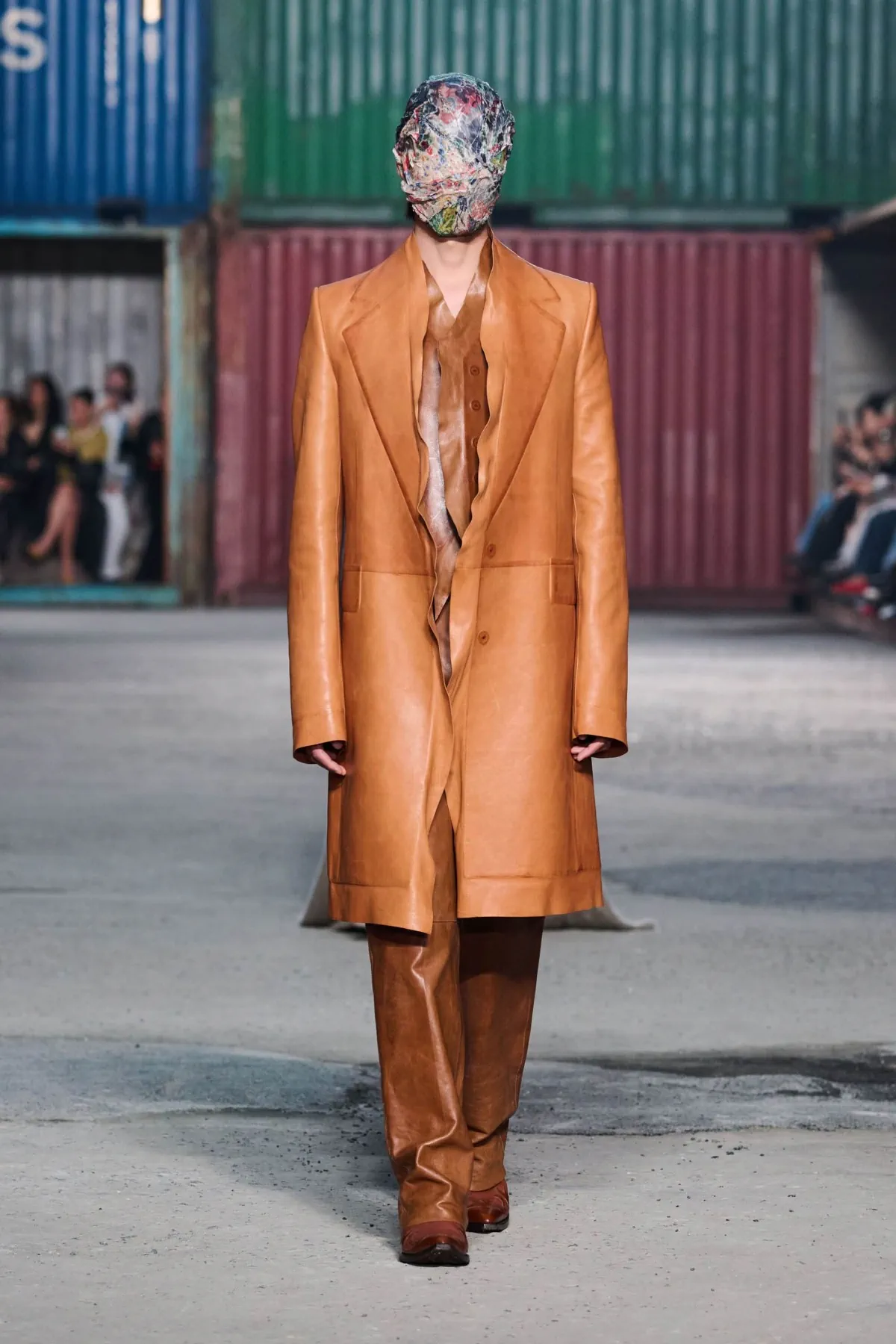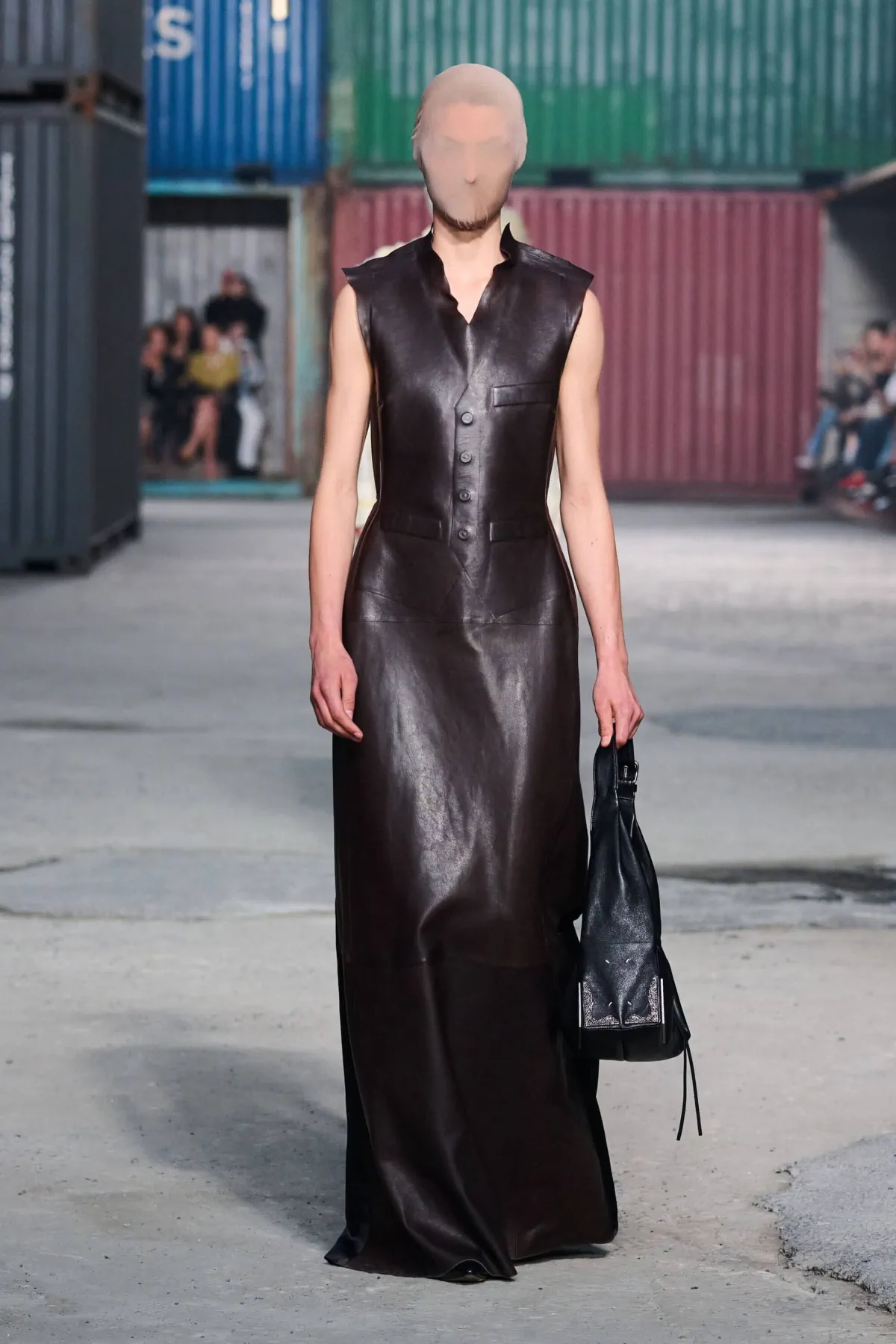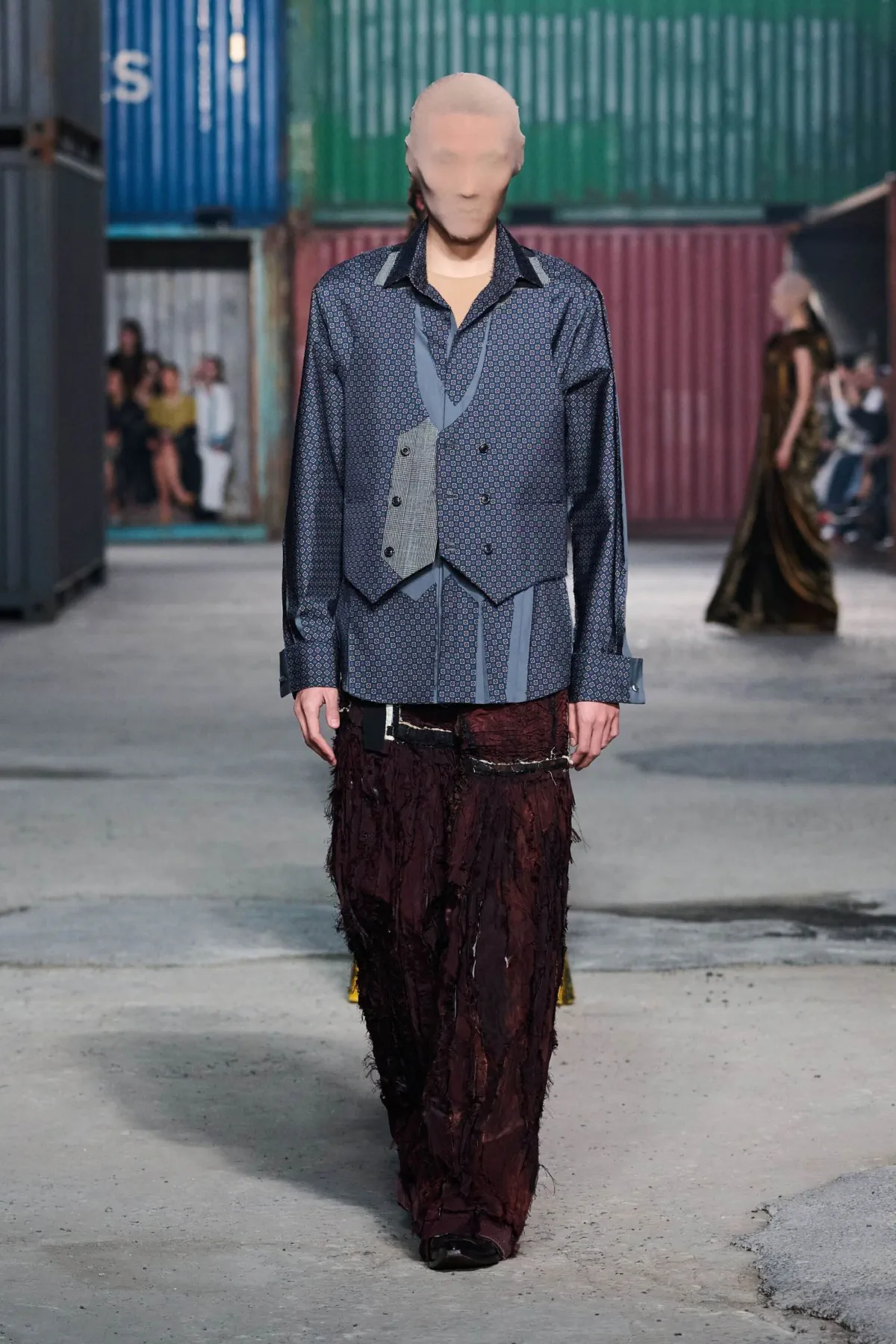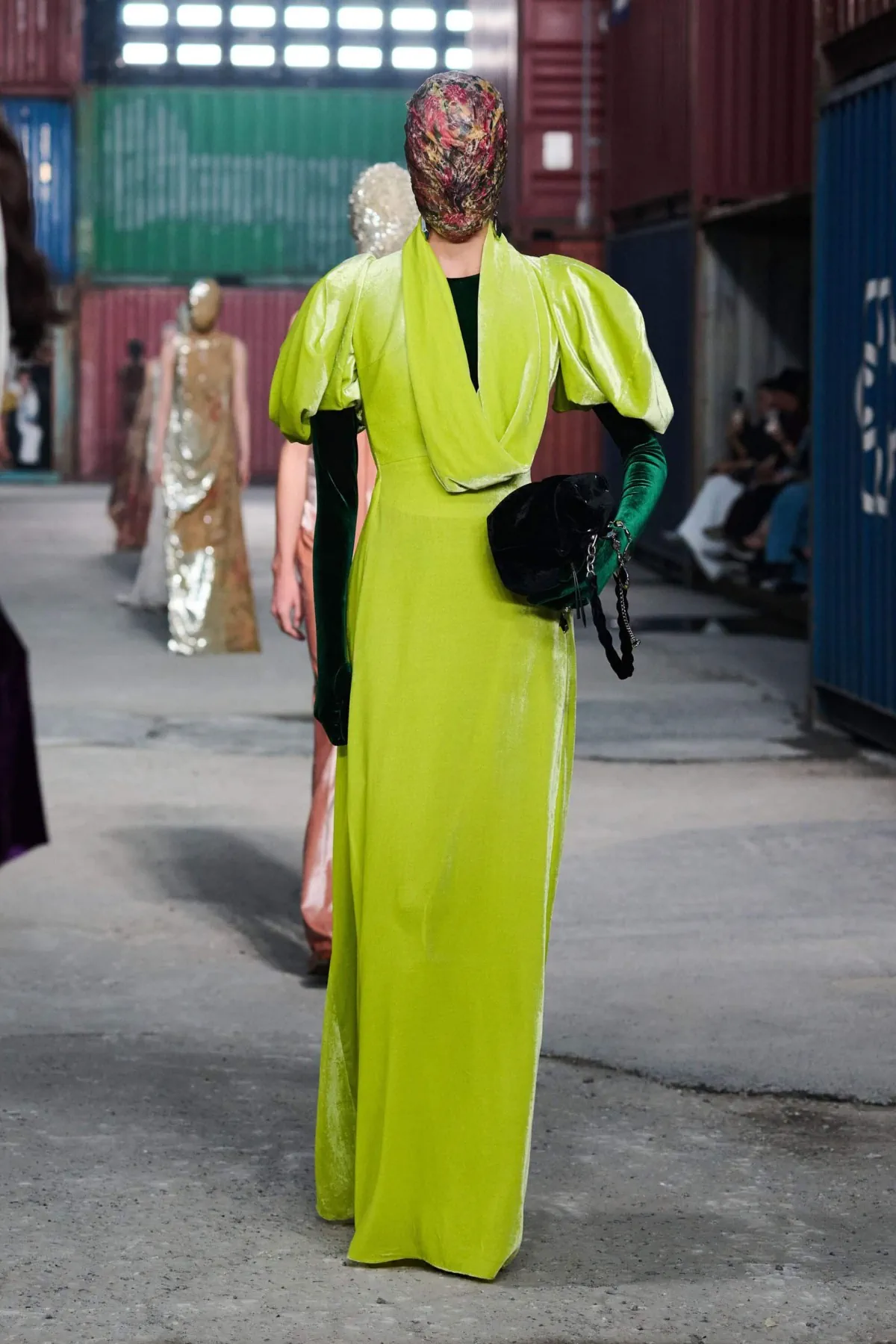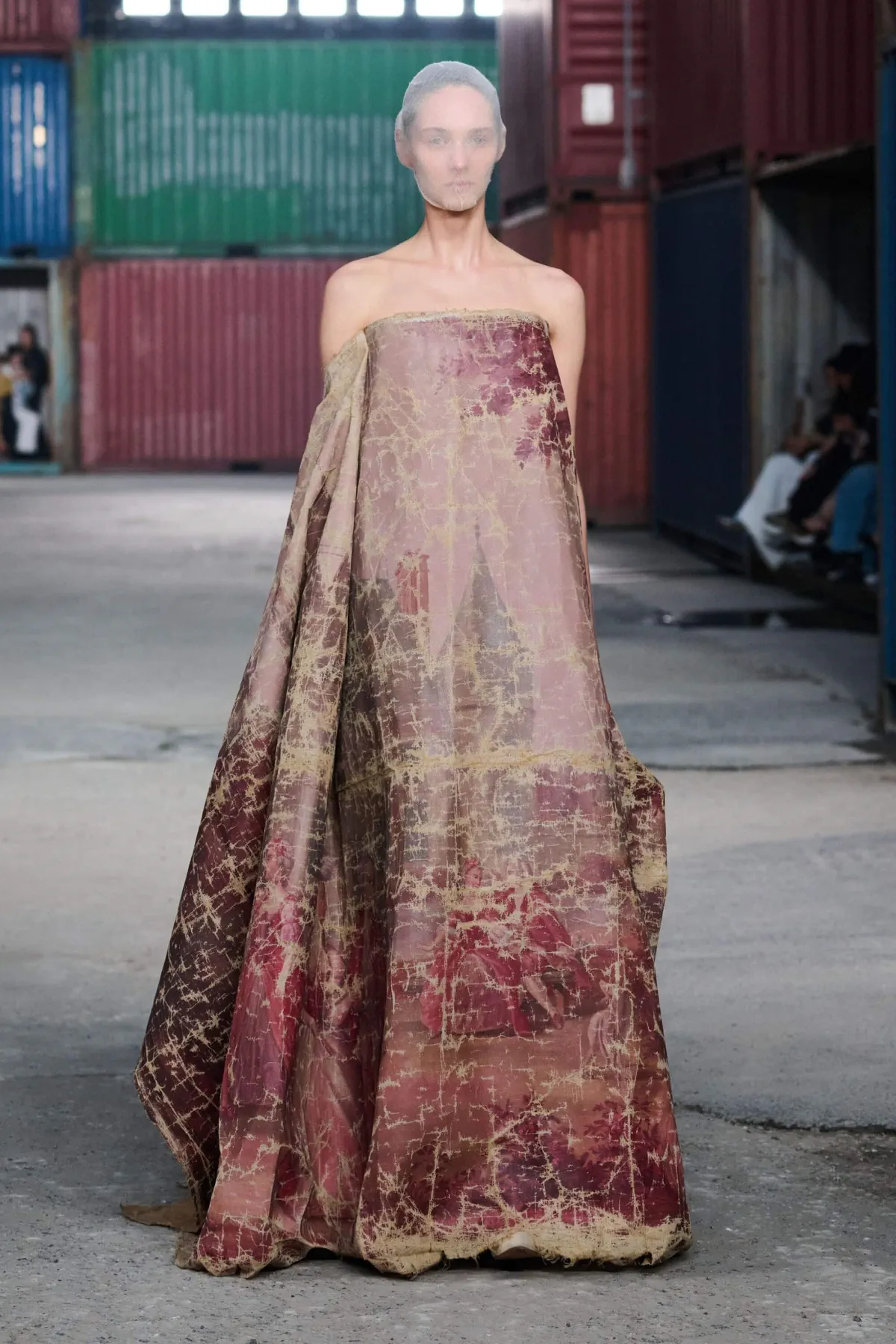

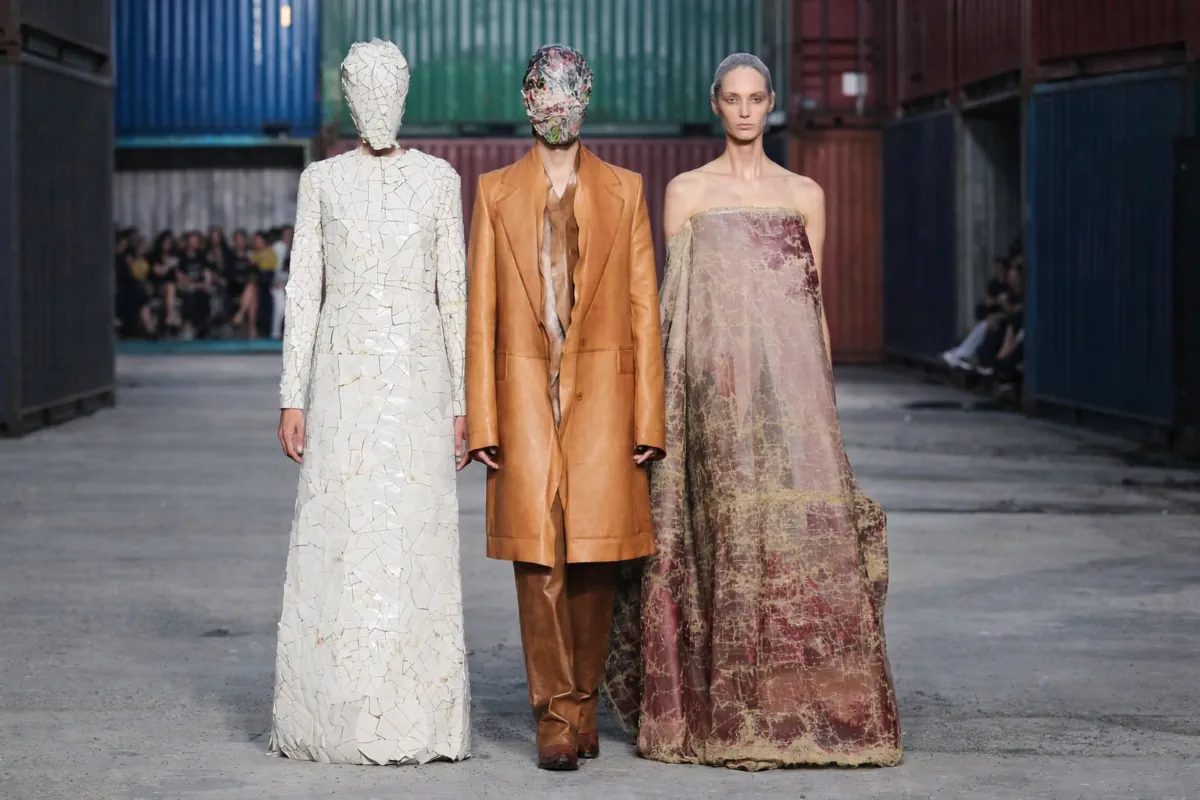
The fashion world had been waiting for Martens to make his mark at Maison Margiela. On April 1st, at a shipping container dock on the outskirts of Shanghai, he finally did – and the date was fitting. The Maison Margiela Fall 2026 collection did not arrive quietly. It arrived encrusted in porcelain shards, draped in beeswax, and dusted in gold leaf under a golden moon to the sound of Nick Cave. Nobody was laughing.
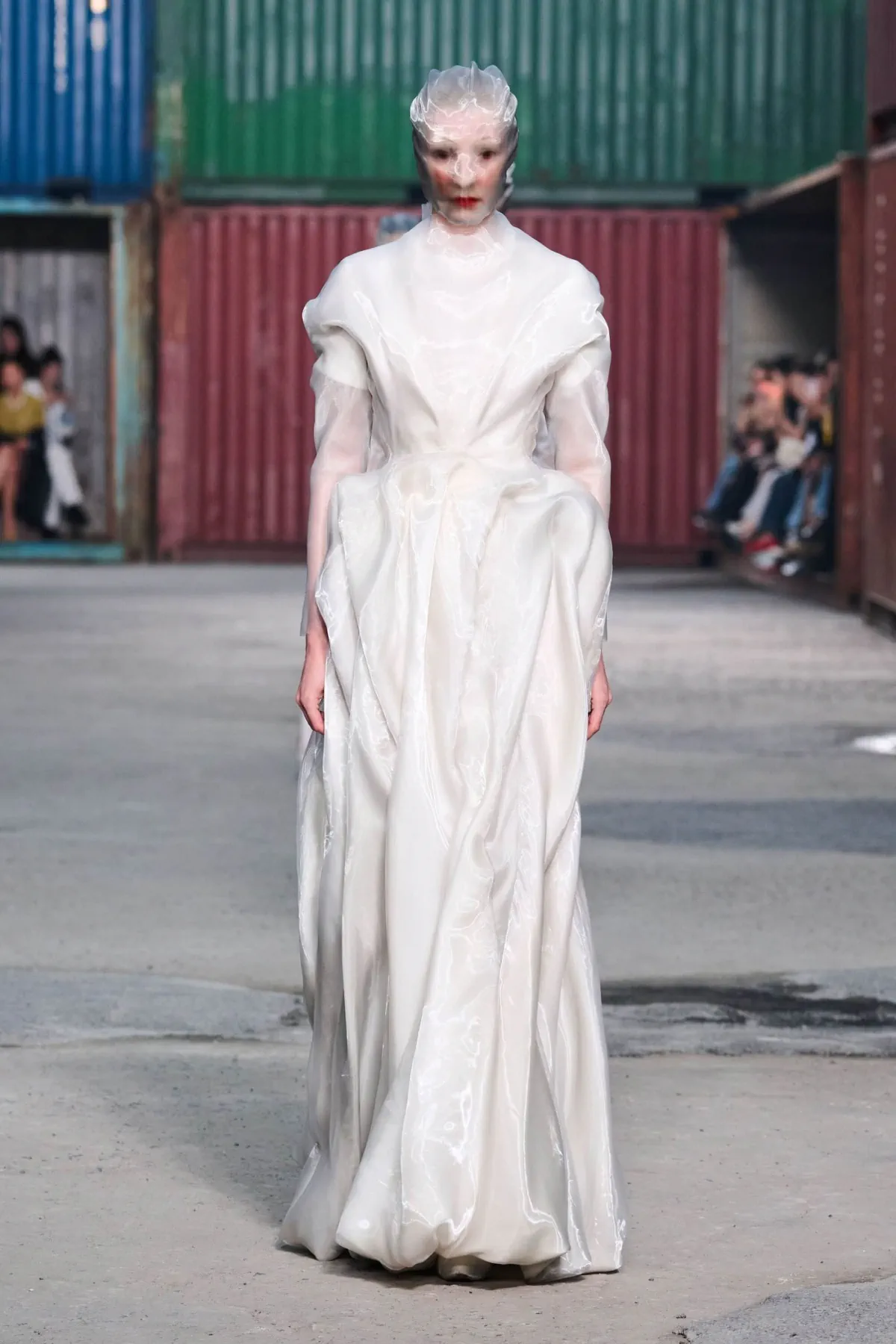
This was the first time the French label had shown outside of Paris, the first collection under Glenn Martens’s direction, and the first time the brand had combined its Artisanal and ready-to-wear collections into a single, unified showcase. These three milestones, stacked together, would have been enough to fill a press release. Instead, Martens delivered something harder to name: a show that felt less like a debut and more like a reckoning.
The setting did real work. Under Martens’s creative direction, the runway transformed into an after-hours Parisian flea market: a surreal world of living porcelain dolls, destroyed tapestries, and obsessively repurposed Edwardian silhouettes. Towers of shipping containers – red, blue, and green, stamped with cargo company names – stood as silent witnesses. The irony was deliberate: a critical artery of global trade as the backdrop for a collection rooted in thrift stores and things discarded and reclaimed.
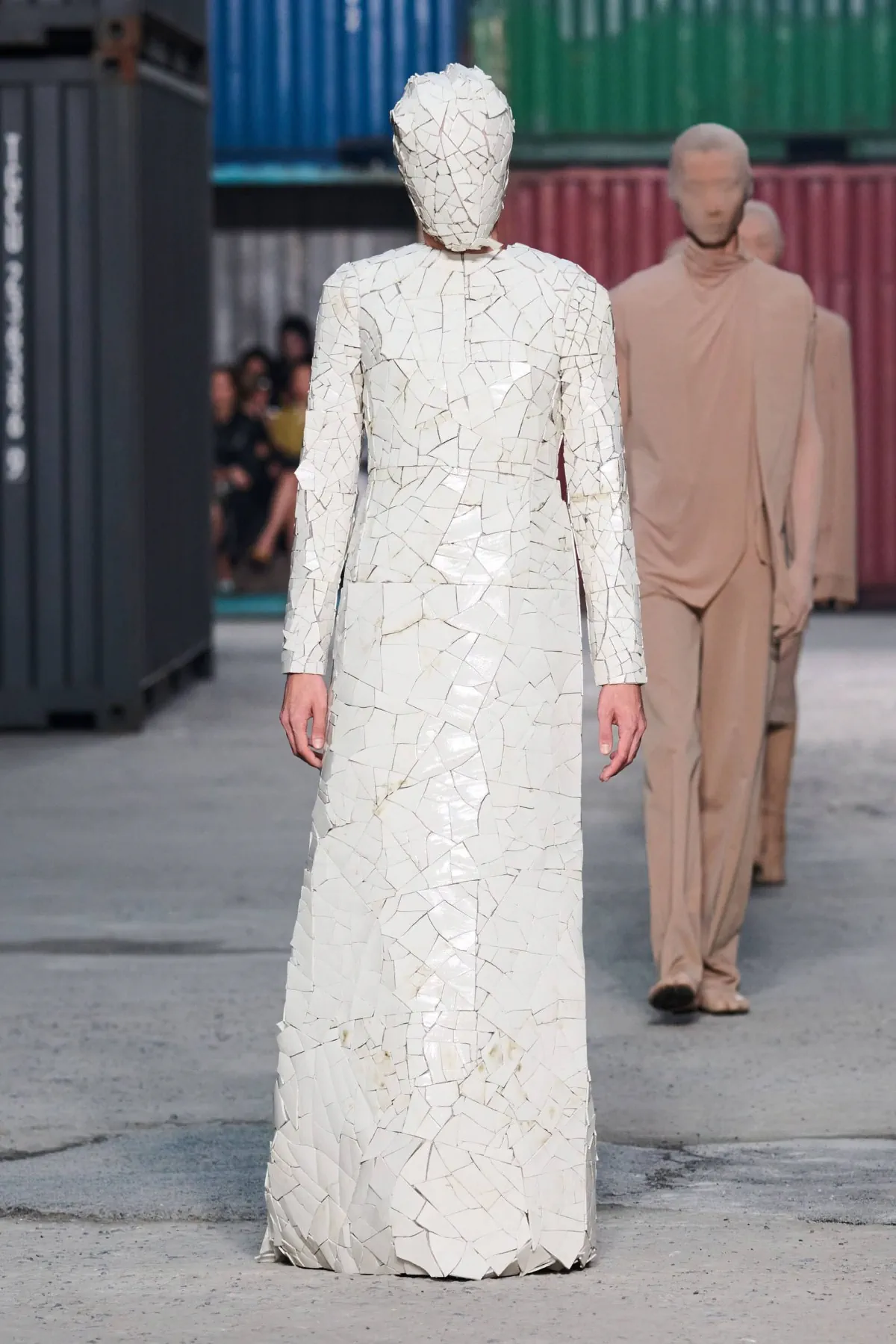
Martens has always understood that, at its most compelling, fashion is about perception, not just production. Martin Margiela taught the industry that a plastic bag could be luxury if you looked at it differently. Martens holds that lesson close. For the Fall 2026 show, he returned to the house’s founding instinct: take something broken, something old, something thrown away, and ask what it becomes when you choose to see it again. Here, the shoulders of the garments were intentionally distressed to look as if nibbled away at by moths in an Edwardian attic. Beeswax-covered draping, jewelry, and masks paid homage to ancient Chinese candles, in addition to the obvious porcelain references.
The porcelain itself was extraordinary. A stiff porcelain dress encased a model from head to toe, complete with a matching mask. As she walked down the runway against a backdrop of shipping containers, the loud, tinny echo of crushed ceramics sounded like breaking glass. You could hear this collection. That is rare. Most runway shows ask you to look, but this one demanded that you listen, too. This one demanded that you listen, too.
First came the beeswax gowns – Victorian-era mourning dresses dipped in wax and hardened – cracking as the models moved and leaving white trails across the rough cement floor. Next were the gold leaf gowns, their surfaces flaking away with every step. Next was the piece constructed from 150,000 mini-star stickers. For the finale, there was a five-meter painting sourced from the Marché de Saint-Ouen and reassembled into a column dress. The humble was made majestic.
Follow all the latest news from Fashionotography on Flipboard, or receive it directly in your inbox with Feeder.
You may also read

The incredibly tactile runway featured dresses made from shattered porcelain, heavy beadwork, and what the house calls “impossible draping,” where fabrics are bonded and cut to look as though they are caught in the wind. Martens’s complex, physical draping moved around the body as though driven by an internal weather system. One cascading gown required 22 meters of taffeta, 400 hand-sculpted points, and nearly 200 hours of labor.
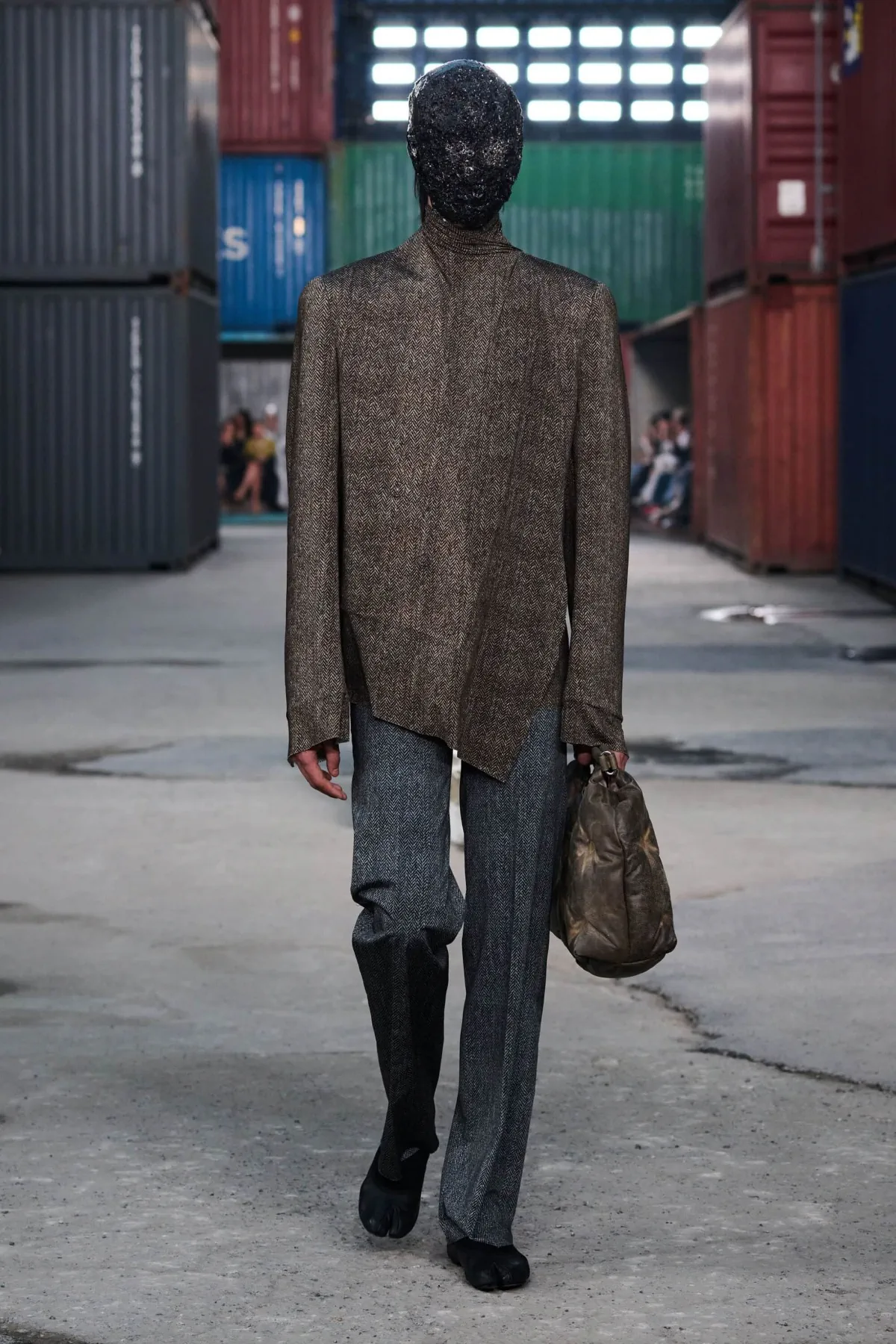
The ready-to-wear collection showcased a different kind of precision. Retro tailored jackets, leather outerwear, and stretchy jersey – some sheer and some stiffened to sculpt the silhouette – spoke directly to the favorites that buyers had already flagged during the March wholesale season. New footwear included the Level Cut-Out boots, which expose a layer of leather lining, as well as ankle boots that experimented with completely removing the front, leaving only a cuff over the ankle. These were shoes for the Tabi faithful – shoes that understood the pleasure of a podiatric illusion.
The show also marked a strategic moment. Maison Margiela entered China in 2019 and now operates 26 stores in the country. Sales increased by 8.4 percent in 2025, marking the strongest growth across the OTB Group. The Shanghai runway launched a 12-day, four-city initiative called “Maison Margiela/Folders,” featuring free public exhibitions from Shanghai to Shenzhen. One exhibition invited locals to bring their own garments and transform them with white paint. This gesture collapses the distance between the fashion house and the street and between couture and whatever you’re wearing today.
The impulse to bring in the uninitiated and make the plastic bag worth seeing is what has always set Margiela apart from the luxury crowd. Martens seems to understand it completely.