

When Louis Vuitton and De Bethune announced their collaboration, I knew something extraordinary was on the horizon. But nothing could have prepared me for the LVDB-03 Louis Varius Project, which includes a wristwatch and a reimagined Sympathique clock representing one of the most ambitious horological undertakings in recent years.
This collaboration marks the third chapter in Louis Vuitton’s support of independent watchmaking, and De Bethune is the perfect partner. The De Bethune co-founder rarely takes on collaborations, so this project is particularly significant for collectors who follow his work.
| 📌 Key Facts |
|---|
| ⏱️ Project duration: 5 years of development 🧭 Concept: Modern reinterpretation of the historic Sympathique mechanism ⌚ Wristwatch: LVDB-03 GMT Louis Varius (manual wind, 5-day power reserve) 🕰️ Clock: LVDB-03 Sympathique with automatic winding and time synchronization 🧩 Movement: De Bethune Calibers DB2507LV & DB5006 🎨 Artistic element: Rotating engraved worlds by François Schuiten 🔢 Production: 2 complete sets + 10 additional wristwatches only 🧳 Craftsmanship: Custom titanium trunks made at Louis Vuitton Asnières |
Louis Vuitton and De Bethune: A shared vision of independent watchmaking
The relationship between Jean Arnault, Louis Vuitton’s Director of Watches, and Denis Flageollet began in 2021. According to Arnault, “The first time I heard about Denis Flageollet, I must admit it left me perplexed. It was only after visiting De Bethune and witnessing the extraordinary rigor and imagination behind every decision that I began to understand who he truly is: a modern-day Leonardo da Vinci.”
This mutual respect formed the foundation of the five-year development process that followed. Their conversations eventually turned to the sympathique mechanism, an 18th-century creation by Abraham-Louis Breguet that could automatically wind and reset a portable timepiece when placed in a master clock. Only five such clocks were made during Breguet’s lifetime, and Flageollet had already worked on a modern interpretation decades earlier. Now, he would get another chance to reimagine this horological icon.
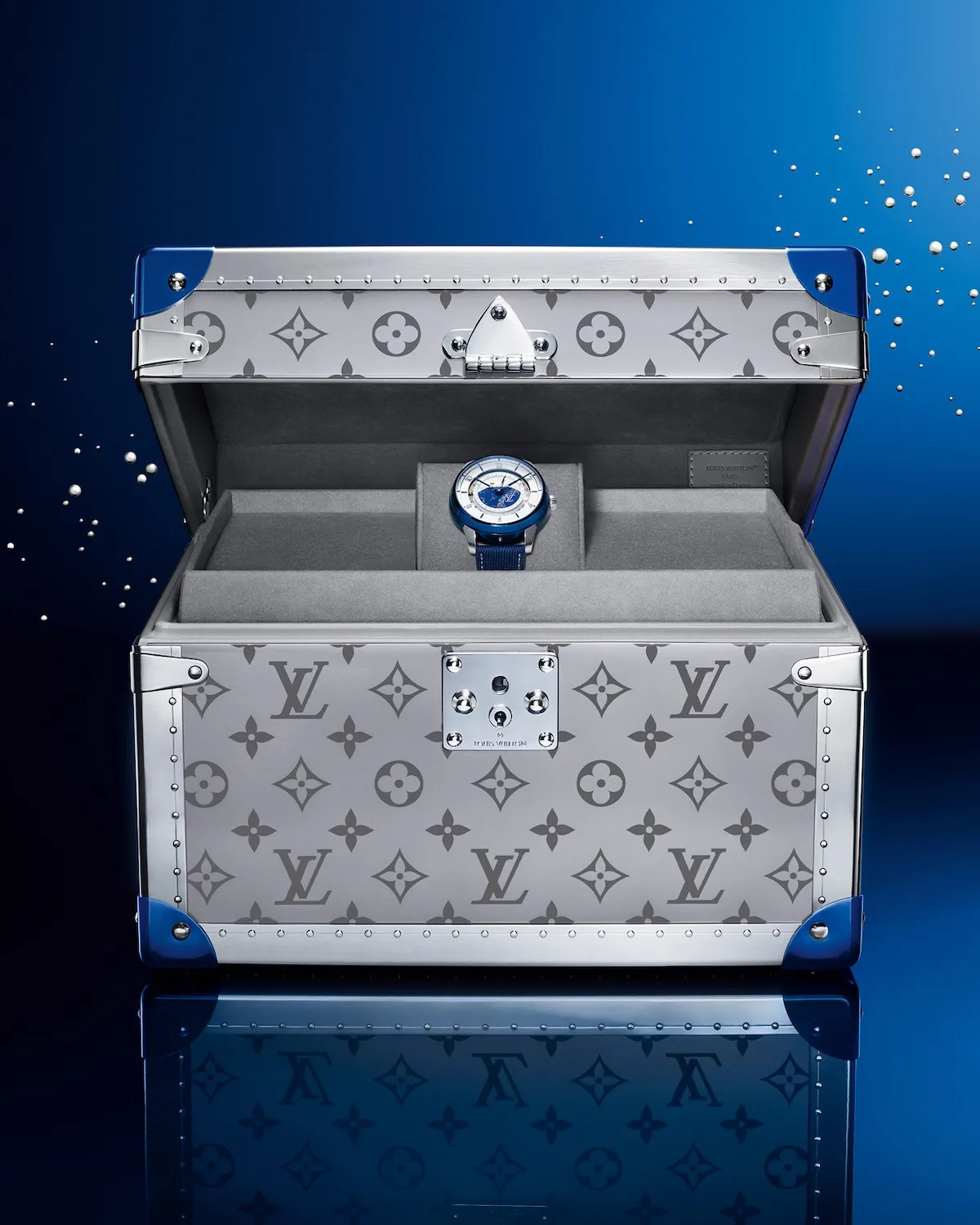
LVDB-03 GMT Louis Varius wristwatch: A modern sympathique for travel
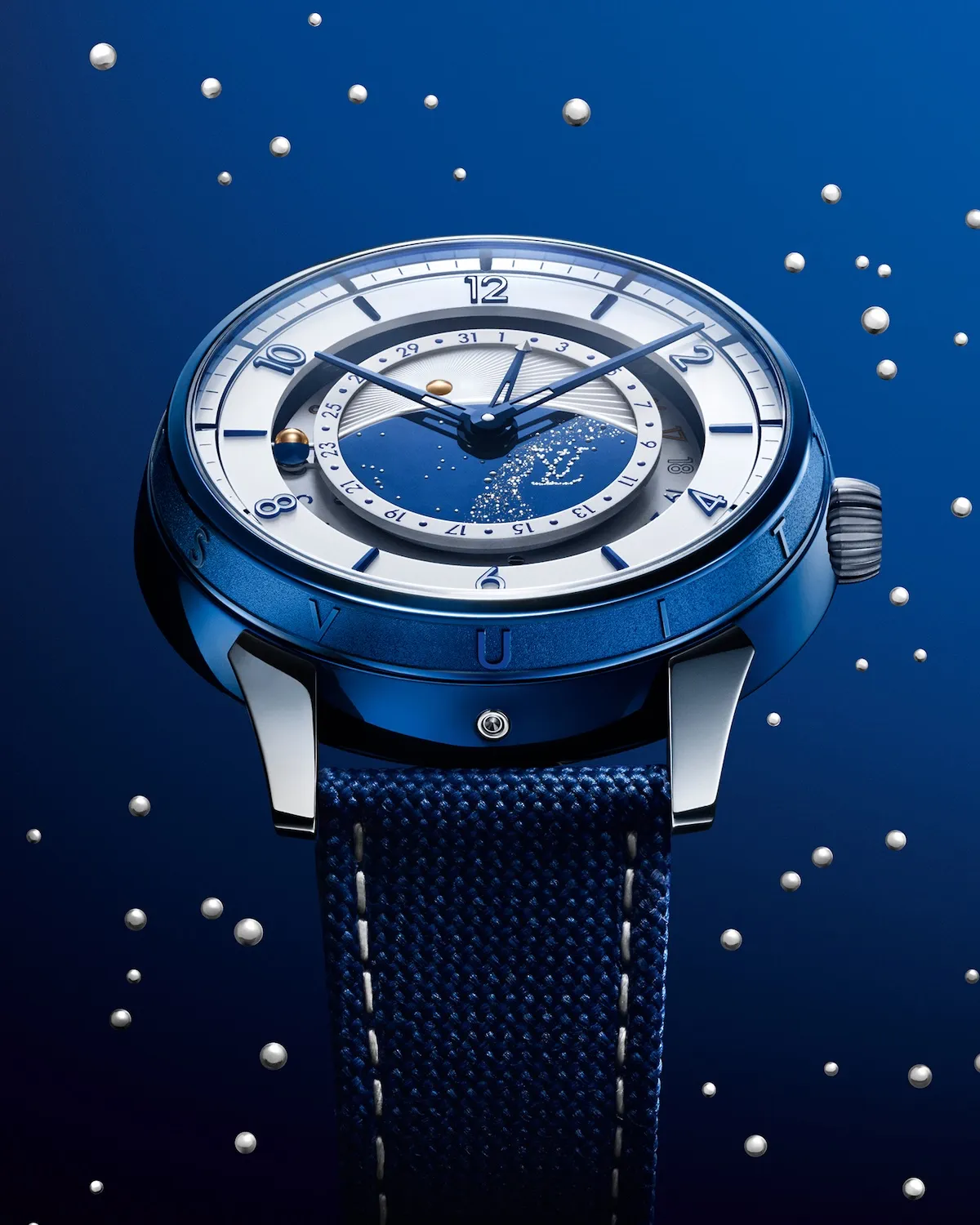
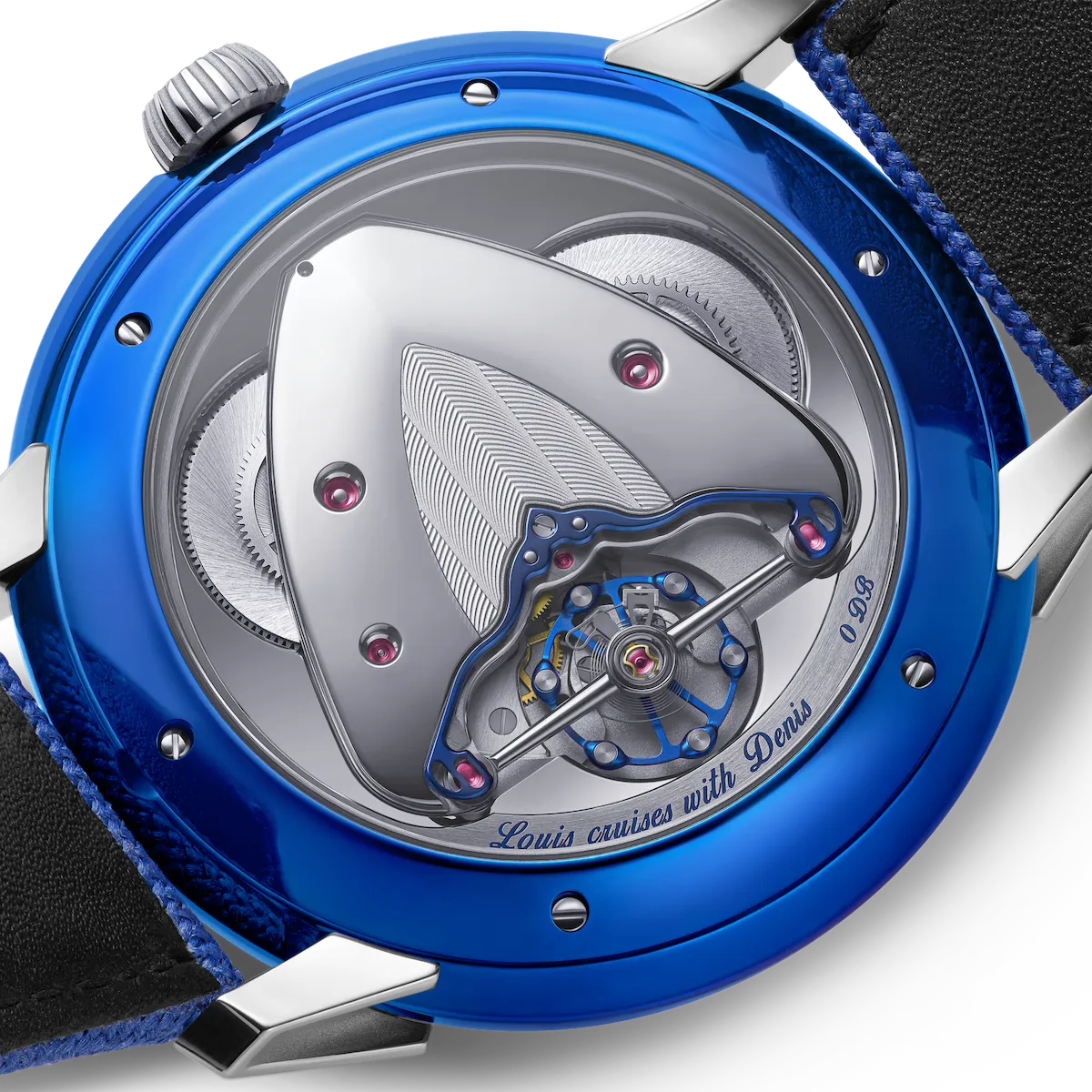
The LVDB-03 GMT Louis Varius wristwatch sits at the center of this project. Housed in Louis Vuitton’s Tambour Taiko case, the 45mm watch is crafted from polished titanium that has been blued using De Bethune’s thermal oxidation process. The deep blue color is unmistakably De Bethune’s, and applying it to Louis Vuitton’s signature case shape creates an interesting visual tension.
Platinum lugs contrast with the blued case, and the bezel features twelve sandblasted and individually polished Louis Vuitton letters. The crown features Louis Vuitton’s Monogram Flower and serves two purposes: it’s a design element and the connection point for the Sympathique system.
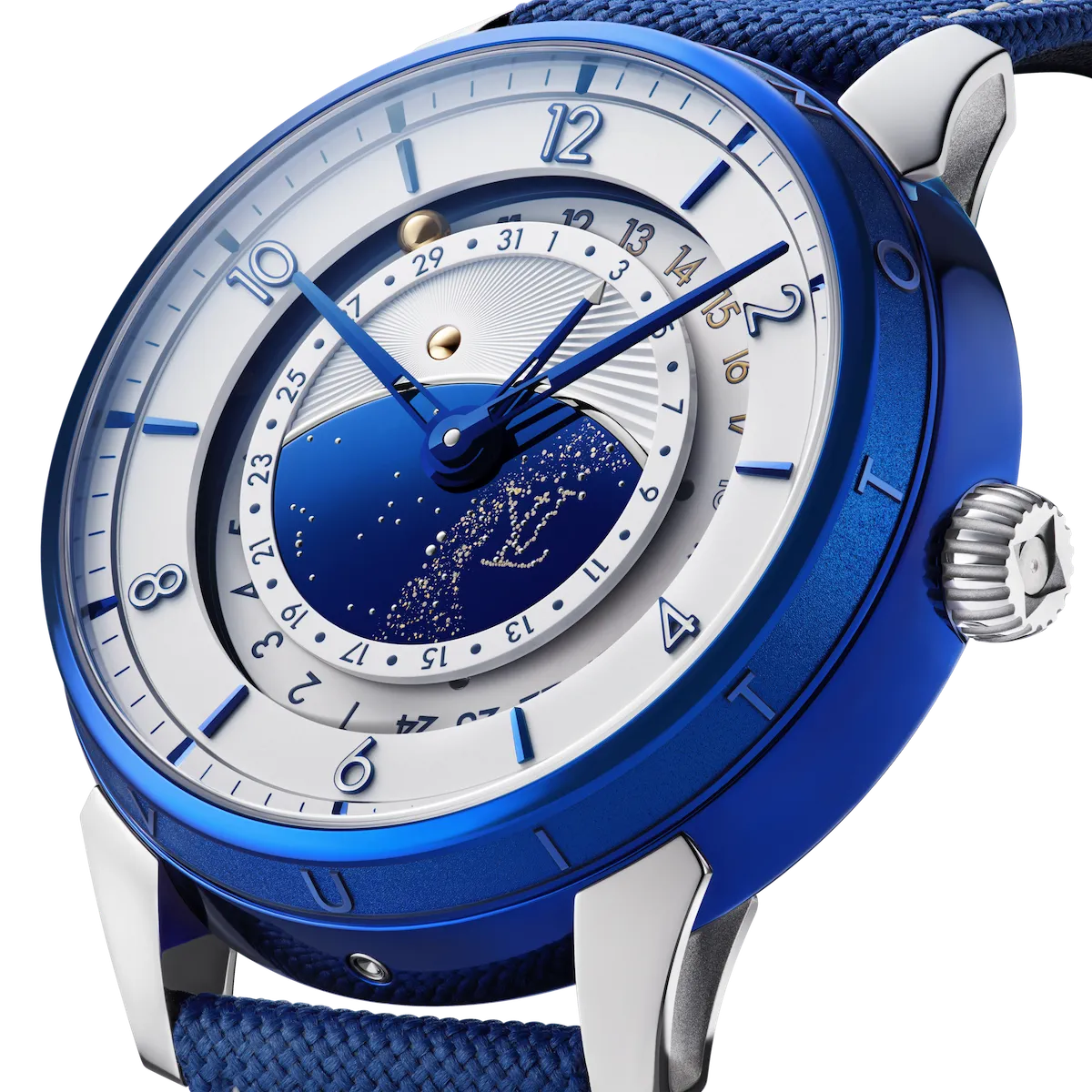
Inside is the manually wound Caliber DB2507LV, which was manufactured entirely by De Bethune. With a five-day power reserve, this is the first Sympathique wristwatch designed for extended travel away from its host clock. Previous Sympathique watches were meant to be worn briefly and quickly returned to the clock. This one actually gives you freedom to travel.
The movement displays the hours, minutes, a second time zone, a day/night indicator, and a jumping date. It is regulated by a blued-titanium balance wheel with white-gold inserts and is paired with a silicon escape wheel and De Bethune’s triple pare-chute shock-absorption system.
Follow all the latest news from Fashionotography on Flipboard, or receive it directly in your inbox with Feeder.
You may also read

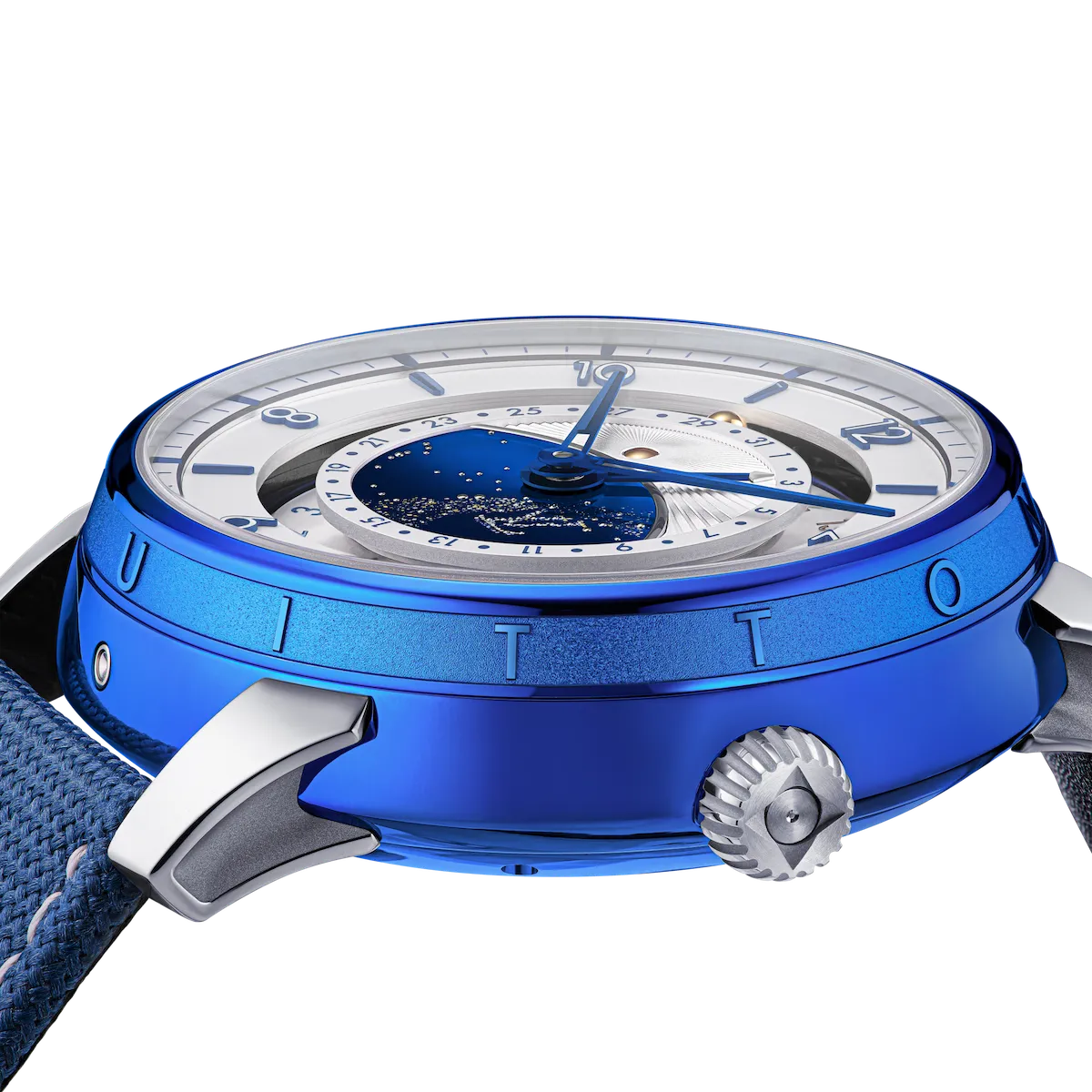
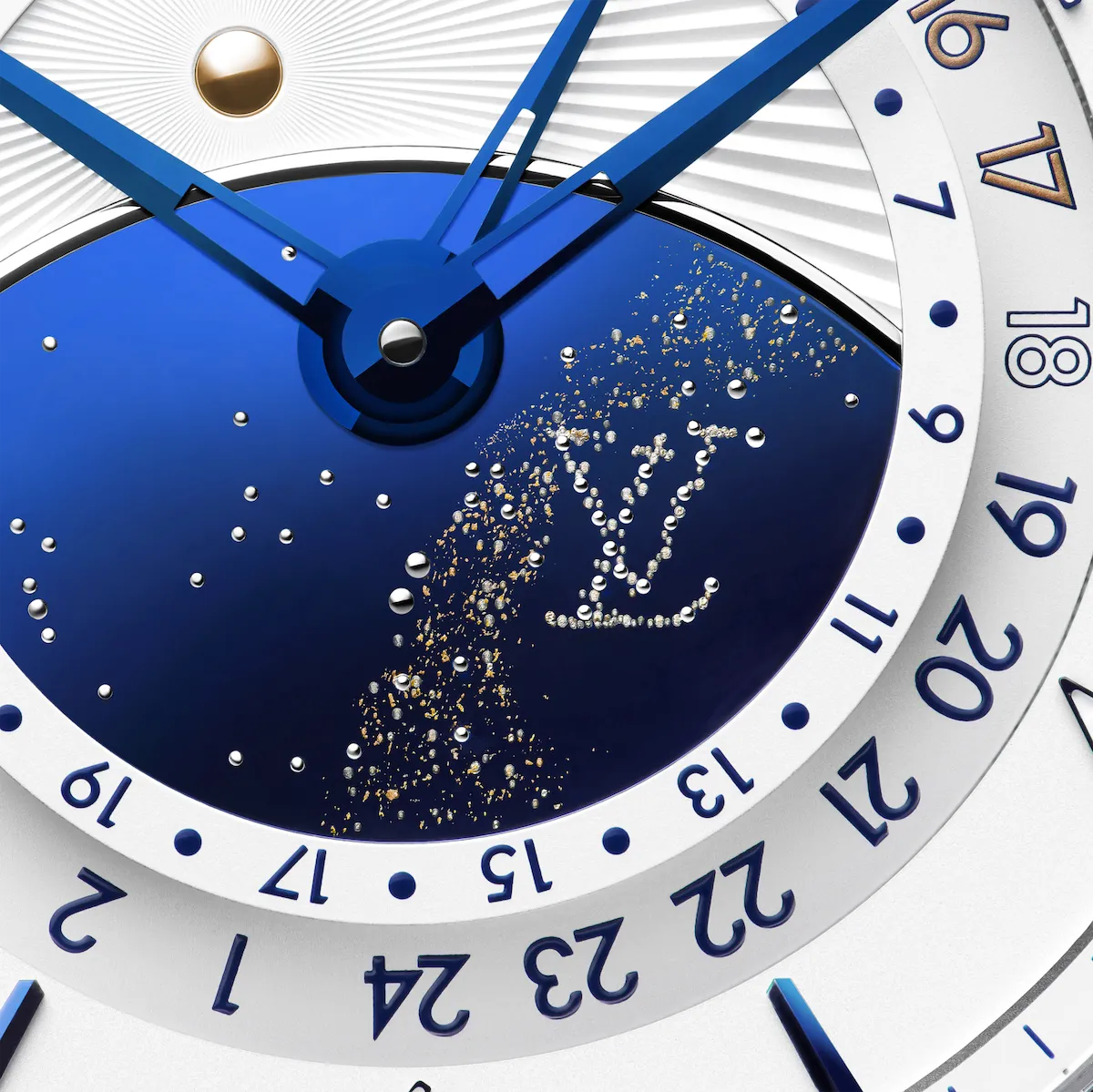
Celestial Dial and De Bethune aesthetics in the LVDB-03 Project
The dial features De Bethune’s signature celestial design. White-gold pins are set by hand into micro-perforations of varying sizes, creating depth and luminosity across the surface. Fine gold leaf is applied by hand at the De Bethune workshops. If you look closely, you will see that the star map discreetly reveals the letters “LV” integrated into the constellation.
A spherical day-and-night indicator completes two rotations every 24 hours. Based on De Bethune’s patented spherical moon-phase construction, it is crafted with 5N rose gold for the daytime and flame-blued steel for the nighttime. The faceted hands echo the deep blue tones throughout the watch; executing them presented significant technical challenges.
The watch comes with two straps: a blue fabric strap with gray edging and a black leather lining and an extra-soft cognac alligator strap with tone-on-tone stitching. Both attach via a polished, blued, titanium pin buckle engraved with the Louis Vuitton/De Bethune double signature.
LVDB-03 Sympathique clock: Engineering the automatic docking system
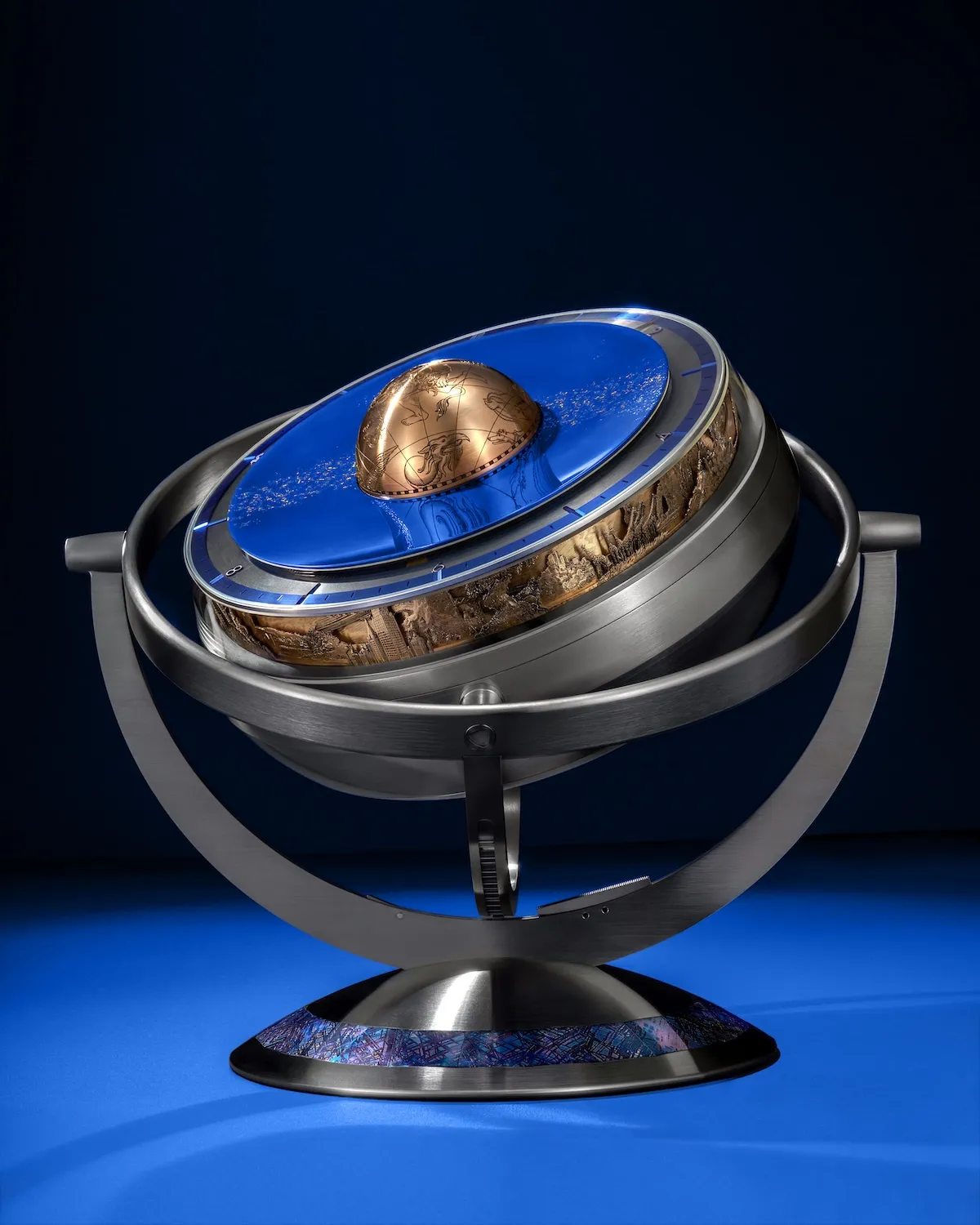
The LVDB-03 Sympathique Louis Varius is where things get ambitious. Anchored to a titanium base adorned with blued meteorite marquetry, this timepiece can be positioned in various ways, much like historical marine chronometers. At its reference position, the clock measures 310 mm wide, 266 mm deep, and 260 mm tall.
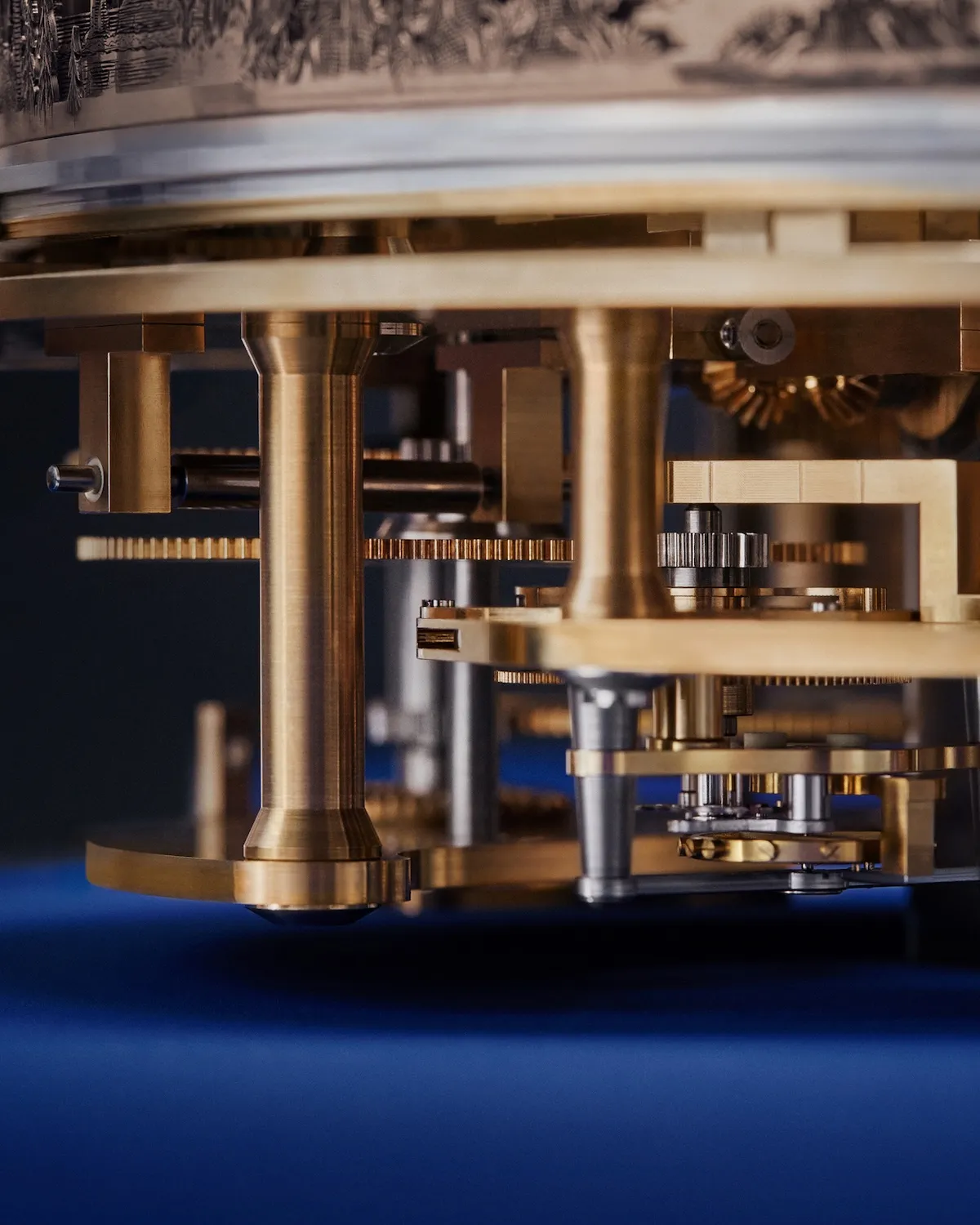
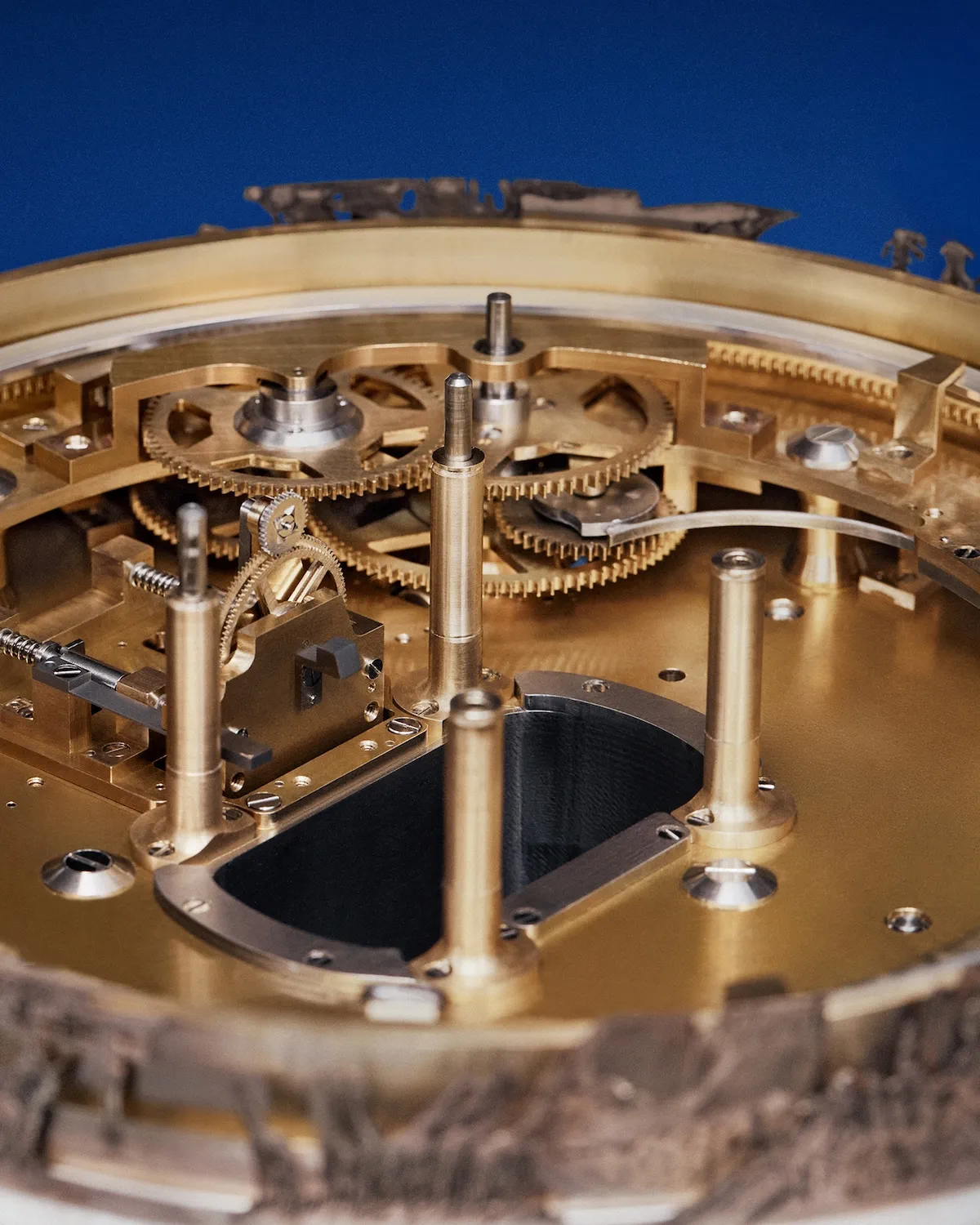
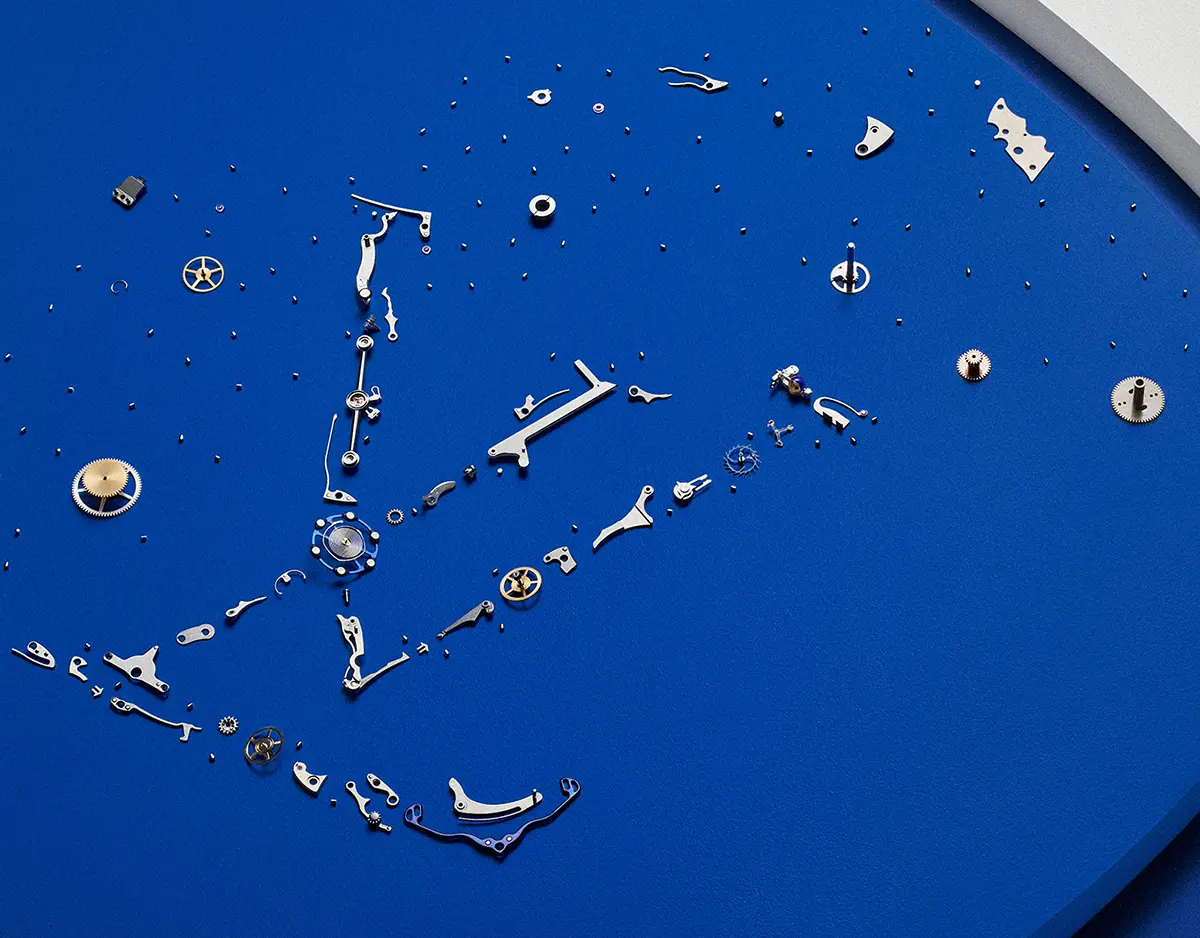
At its heart is the manually wound Caliber DB5006, comprising 763 components. It offers an 11-day power reserve and beats at 18,000 vibrations per hour. Two large barrels and a remontoir d’égalité deliver outstanding stability.
The docking interface is located beneath a domed, rose gold cover engraved with the constellation Hercules, referencing the astrological sign of the Louis Vuitton founder. When you place the wristwatch in its cradle, the system winds it automatically for 10 hours and resets the display every two hours to match the master clock. There is no need to remove the bracelet or perform any other preparation. Simply unbuckle the strap and place the watch directly into the receptacle.
François Schuiten and the artistic dimension of the LVDB-03 clock
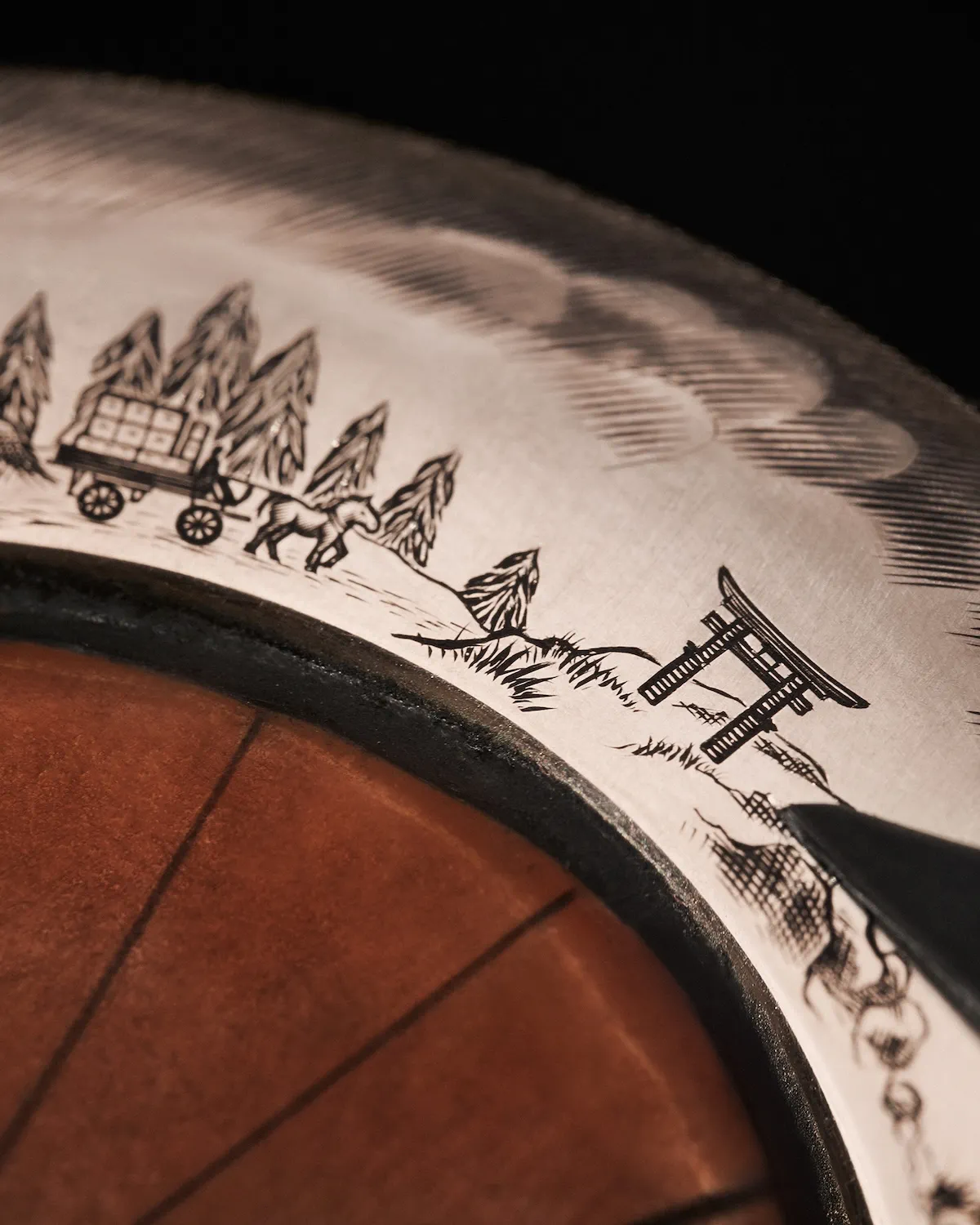
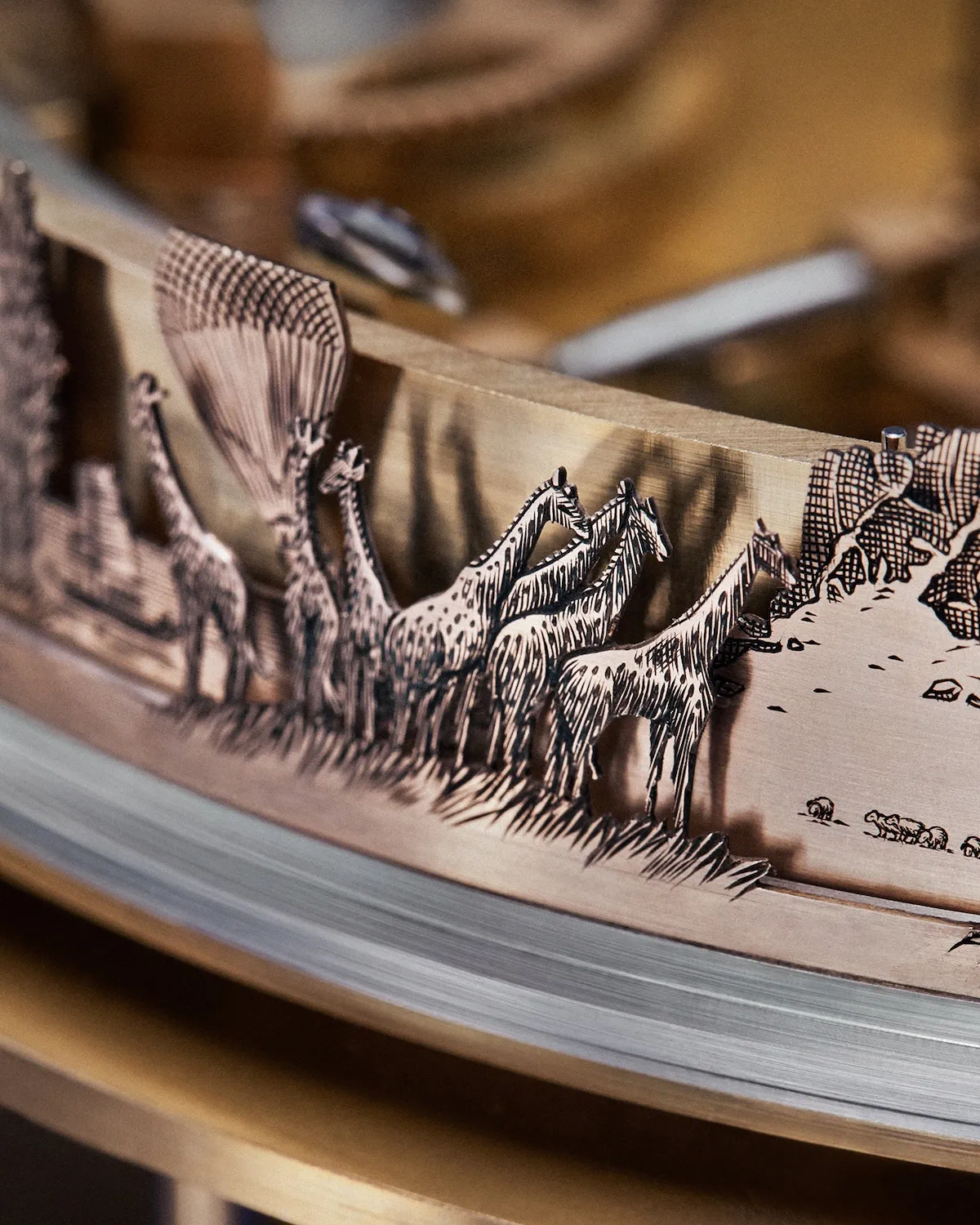
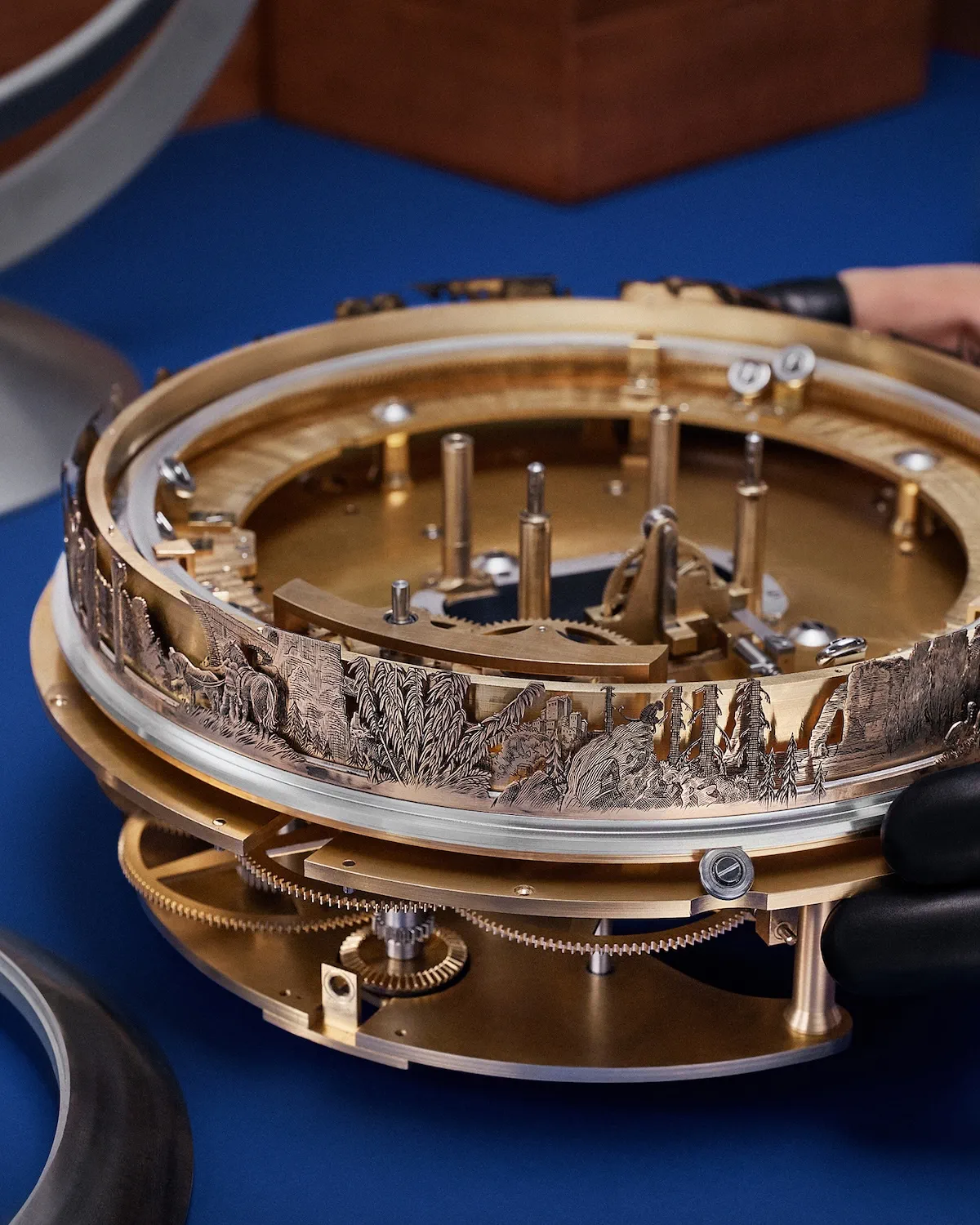
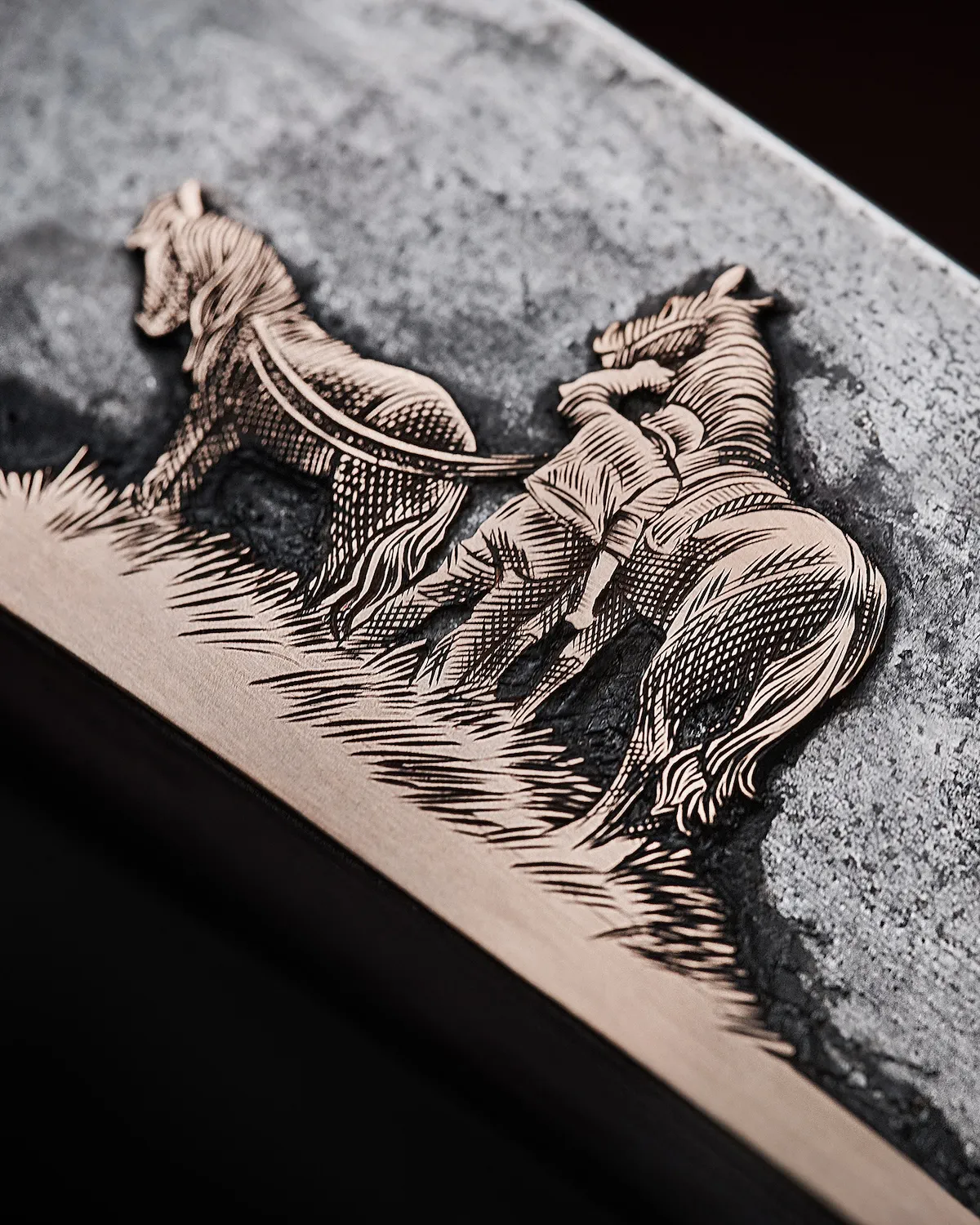
One of the most striking elements is from Belgian illustrator François Schuiten, who created three landscapes featuring scenes of exploration: a steam train crossing a viaduct, hot air balloons above the African savanna, and Sherpas ascending mountains. These miniature worlds are engraved on three 5N rose gold rings that slowly rotate around the mechanism.
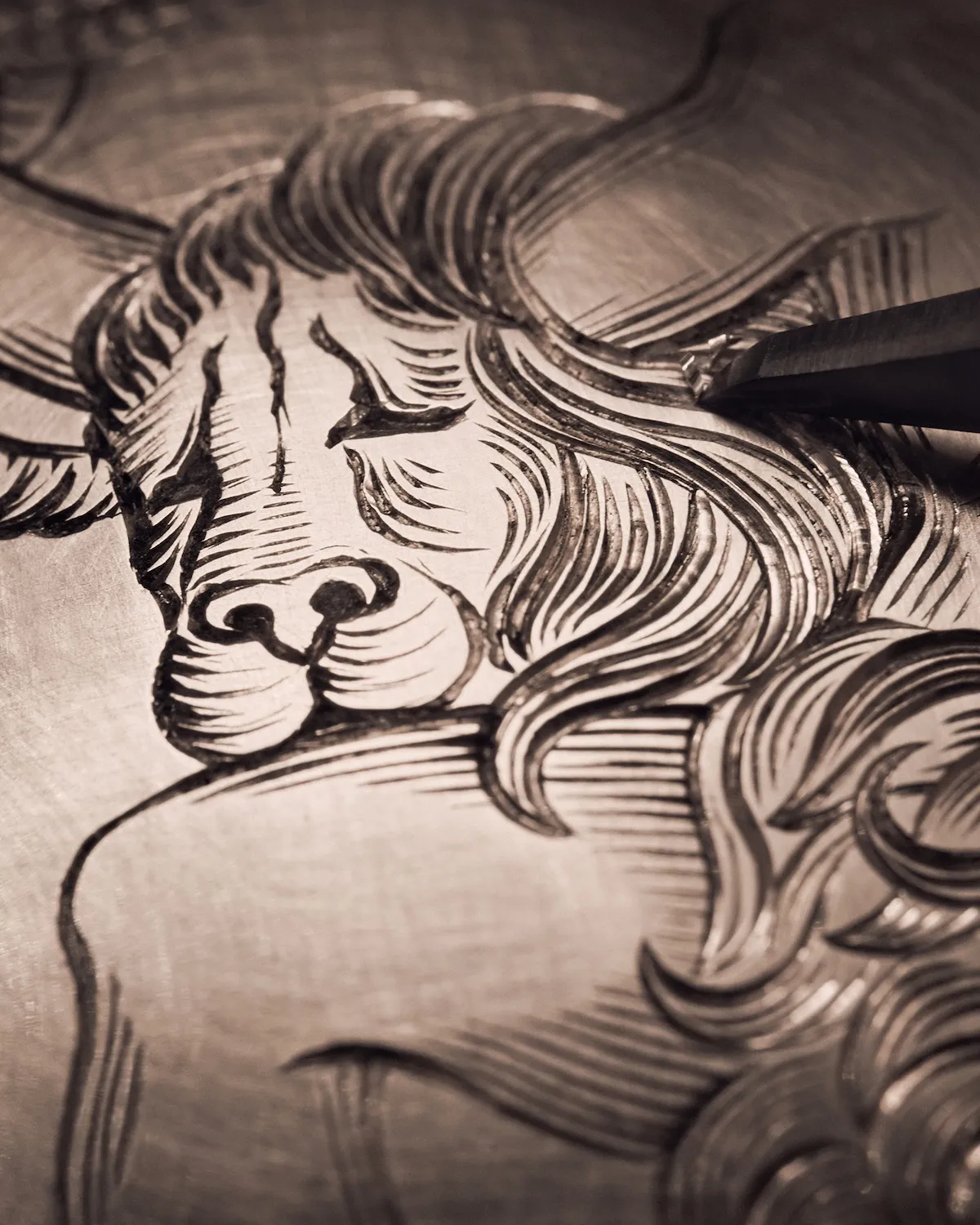
Master engraver Michèle Rothen executed this work by hand using traditional burin and chisel techniques. She engraved over one meter of surface area, achieving results that rival decorative clocks from the Late Renaissance. As Denis Flageollet describes, “This project embodies the spirit of travel dear to Louis Vuitton. It brings together horological masterpieces of the Renaissance through sculpted tambour forms, François’s precision of line, Michèle’s exceptional craftsmanship, Jean’s passion for Enlightenment-era scientific research, and my love for onboard chronometry.“
Ultra-limited production of the LVDB-03 Louis Varius Project
Production is extraordinarily limited. Only two complete sets exist, each consisting of one clock and one wristwatch. Ten additional wristwatches are sold separately, bringing the total to 12 pieces. An enormous collaborative ecosystem in Saint-Croix stretches from the Institut de la Mécanique d’Art to the De Bethune manufacture behind these numbers.
The watches and clocks are housed in custom titanium trunks crafted at Louis Vuitton’s Asnières workshops. They represent some of the most exclusive objects the atelier has ever produced. Titanium corner protectors, heat-blued by De Bethune, articulate the structures, and palladium lozines punctuate the exteriors. Inside are precisely organized Alcantara and grey leather compartments that hold the timepieces and accessories.
Why the LVDB-03 Louis Varius Project matters to modern collectors
This collaboration is compelling not only because of the technical achievement, which is considerable, but also because of how two distinct houses managed to create something that feels authentically both while remaining uniquely its own. It’s how two distinct houses managed to create something that feels authentically like both while remaining uniquely itself. The blued titanium Tambour case shouldn’t work, but it does. The celestial dial with hidden LV lettering could have been gimmicky, but it isn’t.
According to Jean Arnault, “In these collaborations, we give the watchmaker the freedom to define their own vision of time—and their own vision of Louis Vuitton. We bring an outside perspective, which allows us to support independent watchmakers. In turn, they bring their own fresh perspective on Louis Vuitton. It’s a dynamic that brings a lot of creativity and new ideas to both sides.”
This philosophy is evident here. Denis Flageollet didn’t merely apply De Bethune aesthetics to a Louis Vuitton case. He reimagined one of the most audacious historical mechanisms in horology while creating a genuinely functional travel watch. The fact that you can wear this watch for days on actual trips before returning it to the clock proves that they understand what modern collectors need.
The execution throughout is exceptional. The movement finishing includes Microlight Côtes de Bethune, a contemporary reinvention of the traditional Côtes de Genève that beautifully captures and reflects light. Every LVDB-03 GMT Louis Varius undergoes final quality control overseen personally by Denis Flageollet.
Will this project appeal to everyone? Absolutely not. However, for collectors who appreciate independent watchmaking, historical references executed through modern techniques, and collaborations where both parties contribute genuine expertise rather than just branding, the LVDB-03 Louis Varius Project is something rare. It bridges centuries of horological tradition while writing a new, relevant chapter.