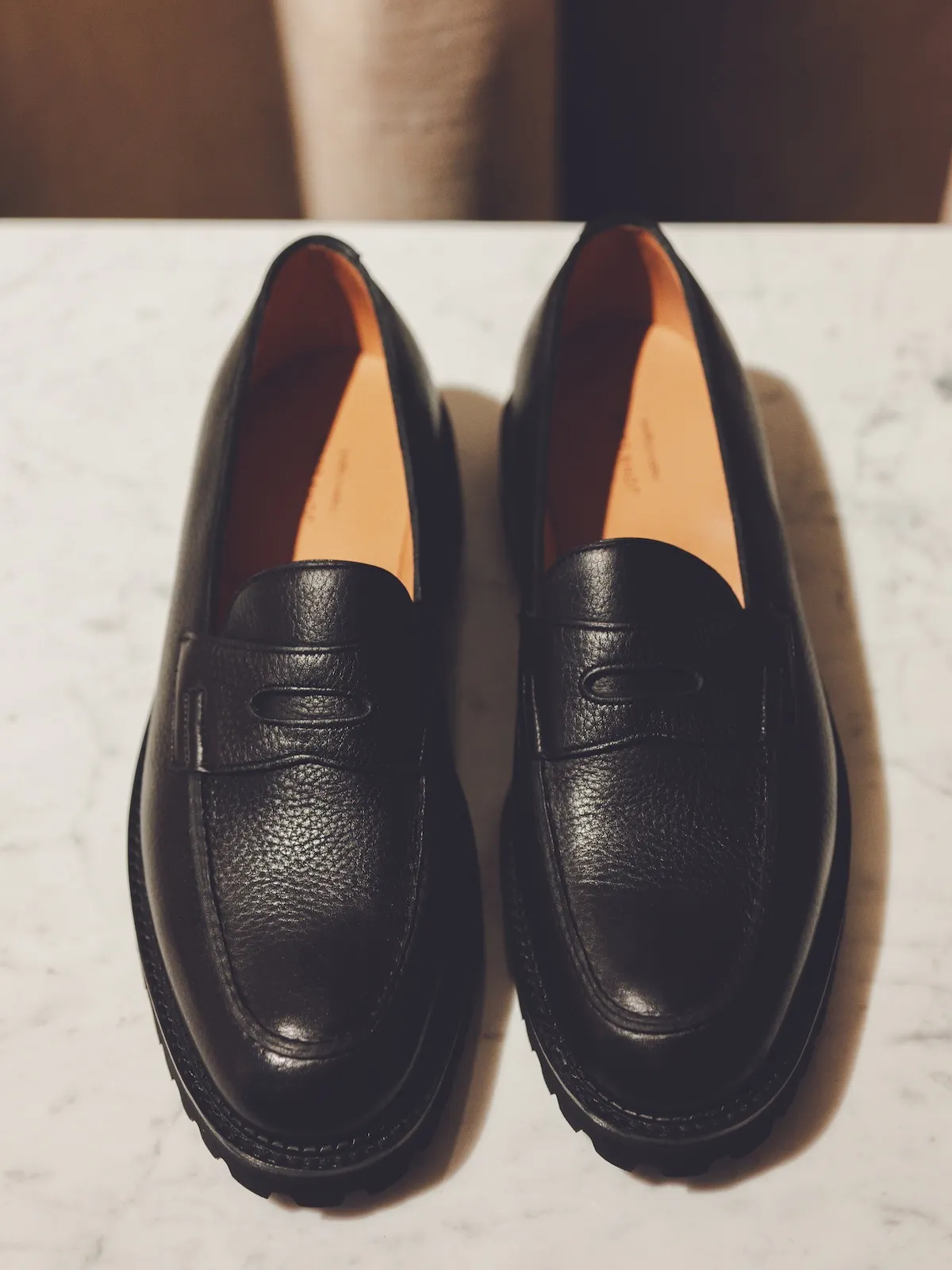


John Lobb’s Fall 2026 collection arrives with a quiet insistence that footwear matters in a culture obsessed with speed, drops, and resale charts. For Shoe enthusiasts trained to scan soles and uppers for meaning, the brand’s latest presentation at Paris Fashion Week offered something worth slowing down for: shoes crafted with purpose, discipline, and an understated confidence that defies hype yet remains engaging.
| 📌 Key Facts |
|---|
| 🥾 Collection: John Lobb Fall 2026 🇬🇧 DNA: British heritage reinterpreted through function 👟 Target audience: Luxury buyers and sneaker-culture enthusiasts 🧵 Key materials: Waxed leather, bristle hide, Norwegian welt construction ❄️ Performance focus: Waterproofing, winter-ready soles, durability 🧠 Philosophy: Anti-hype, long-term value, discreet luxury 🛍️ Availability: June 2026, worldwide boutiques and online |
John Lobb has spent more than a century refining a subtle language of footwear. This restraint shaped the Fall 2026 collection, which drew on British references without slipping into costume or nostalgia. Instead, the shoes asked practical questions. How does a dress shoe function on wet pavement? What does elegance look like when it has to withstand daily wear? These concerns feel newly relevant to younger buyers who expect durability and design.
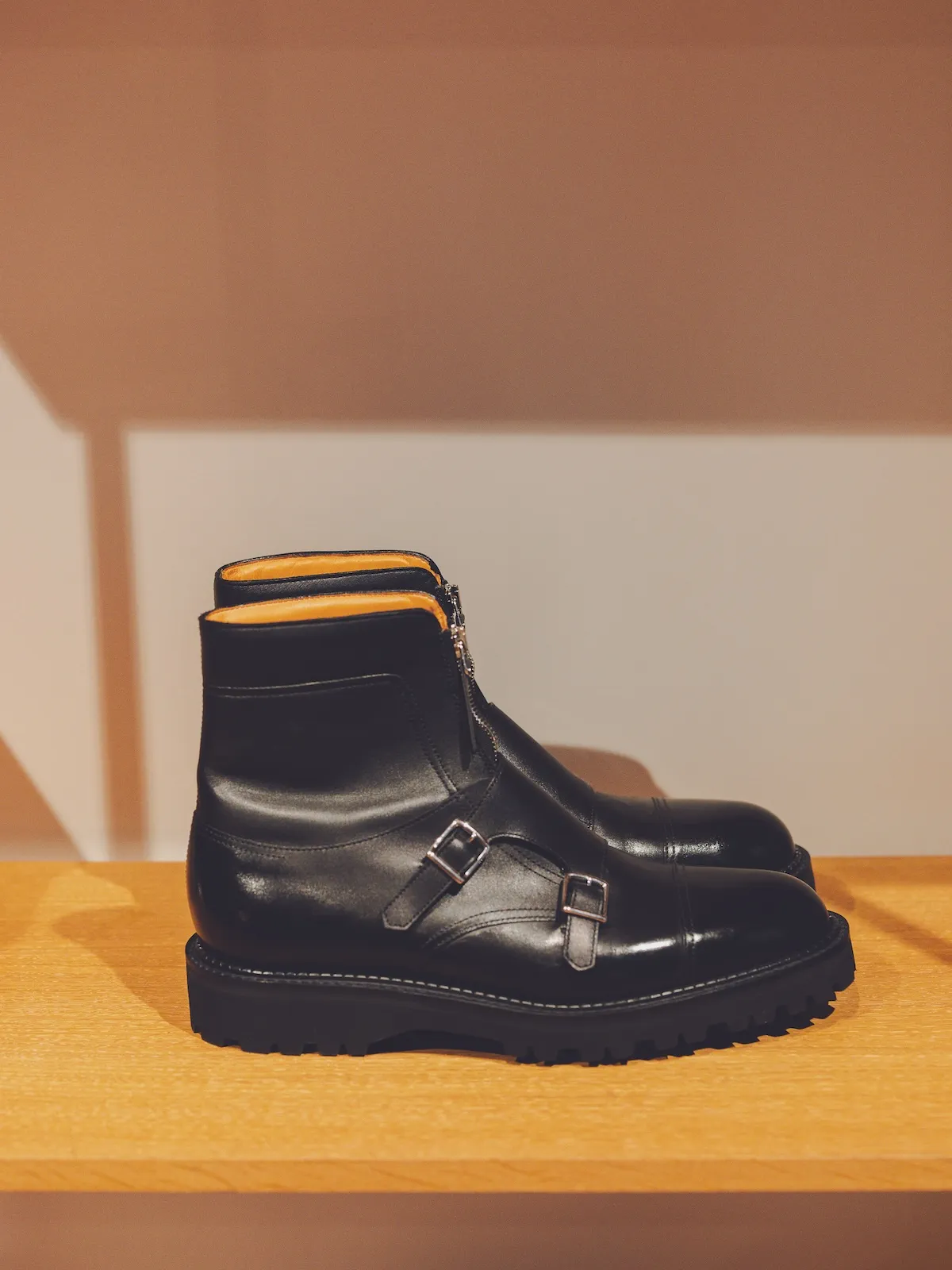
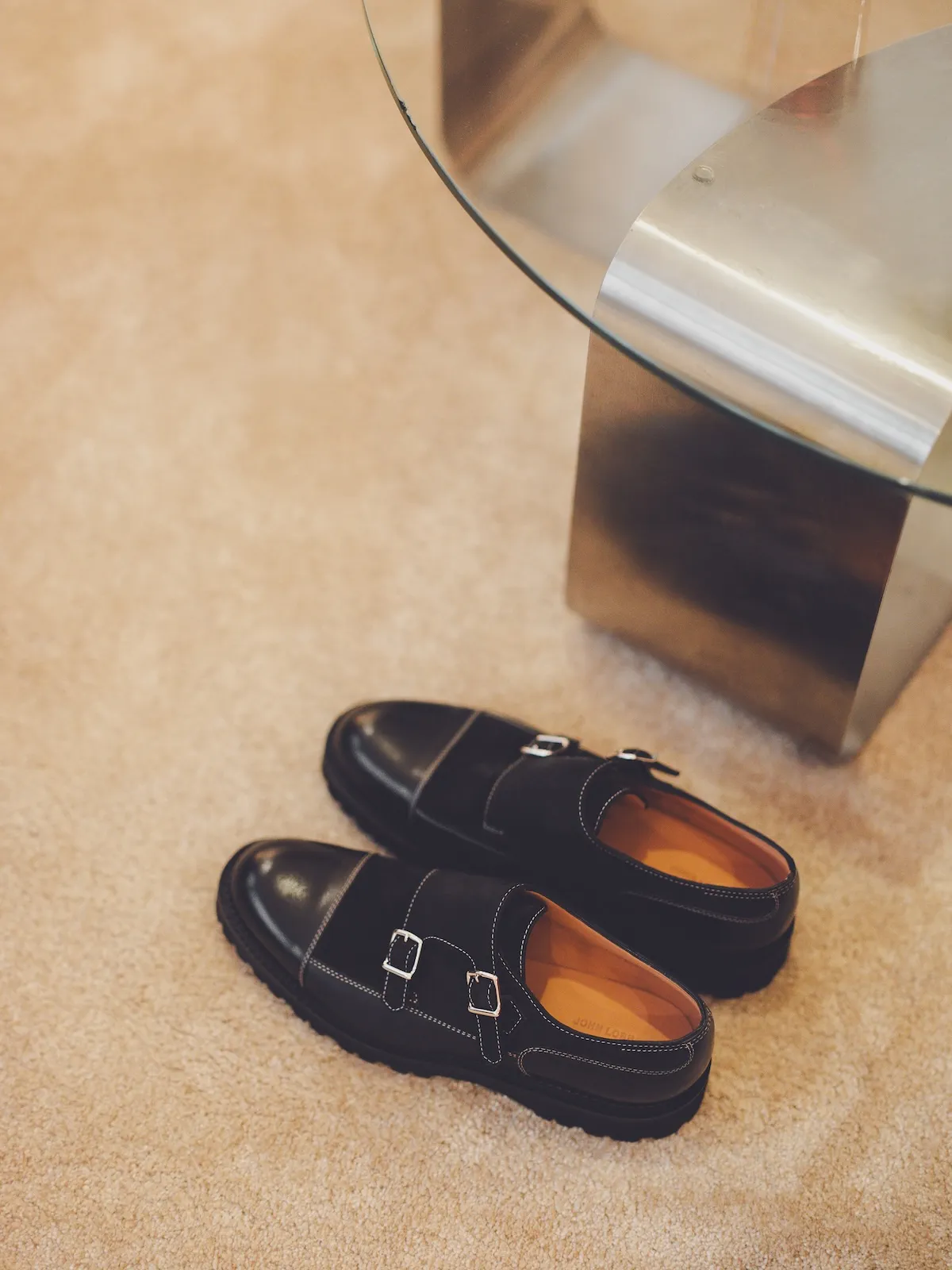
The William line set the tone. Long recognized by its double buckle, the William is now the William New Standard Jumper, a boot that nods to British aviation gear. Its proportions are grounded rather than theatrical, and its lugged sole signals utility rather than display. For footwear fans accustomed to technical storytelling, the appeal lies in construction details that serve a purpose. A patchwork version of the William New Standard takes this idea further by layering leather finishes without making the shoe a visual stunt.
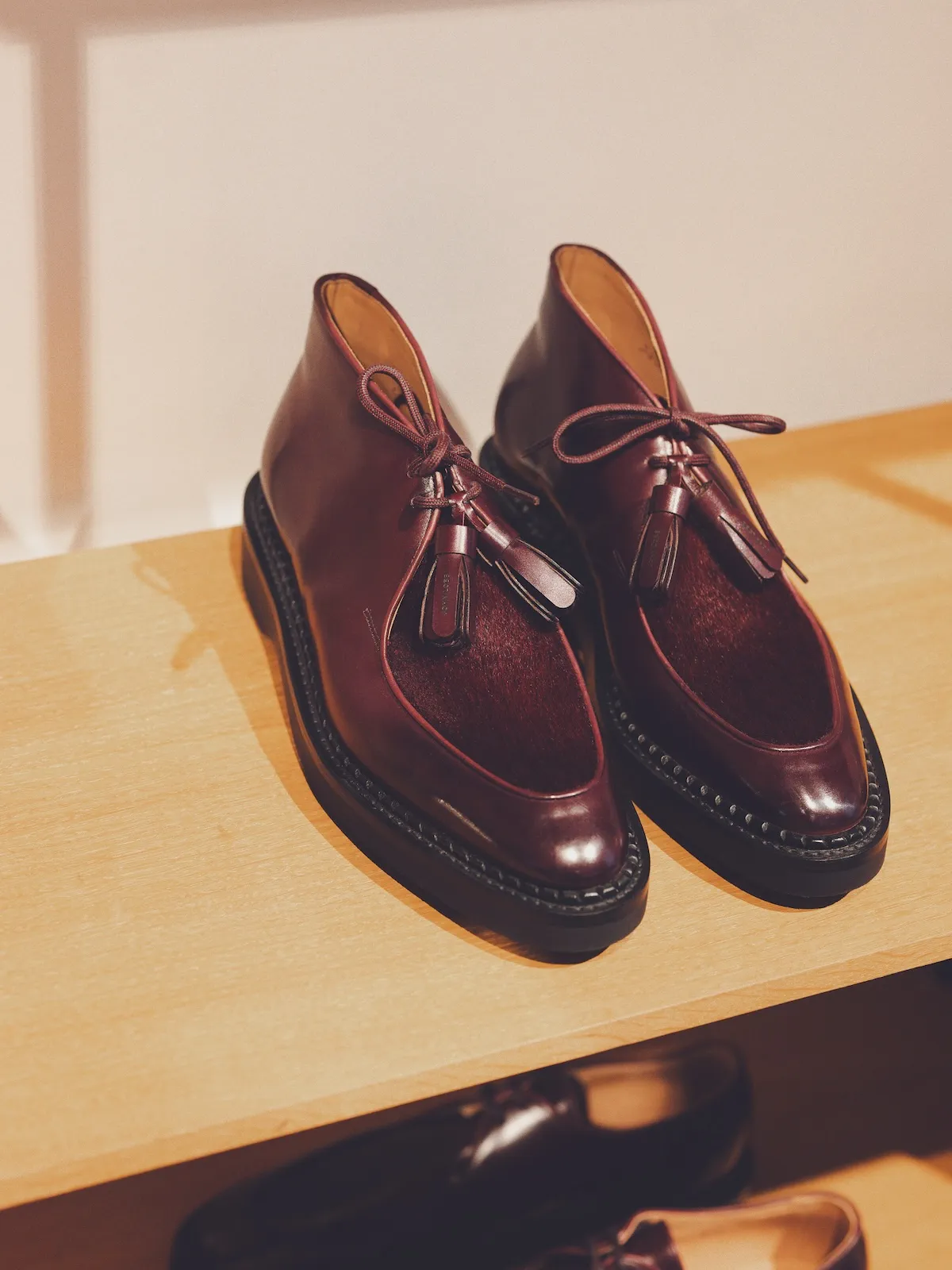
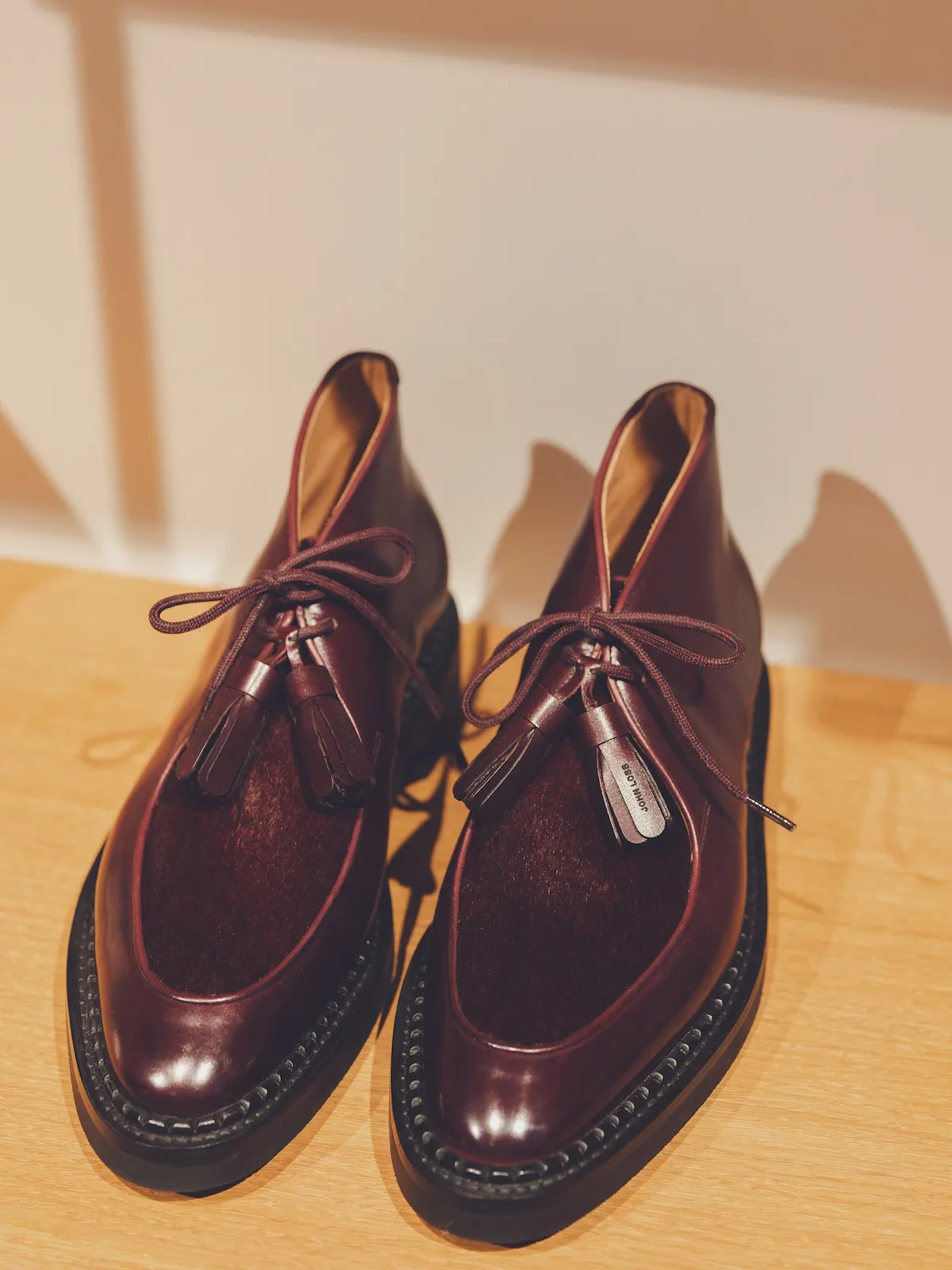
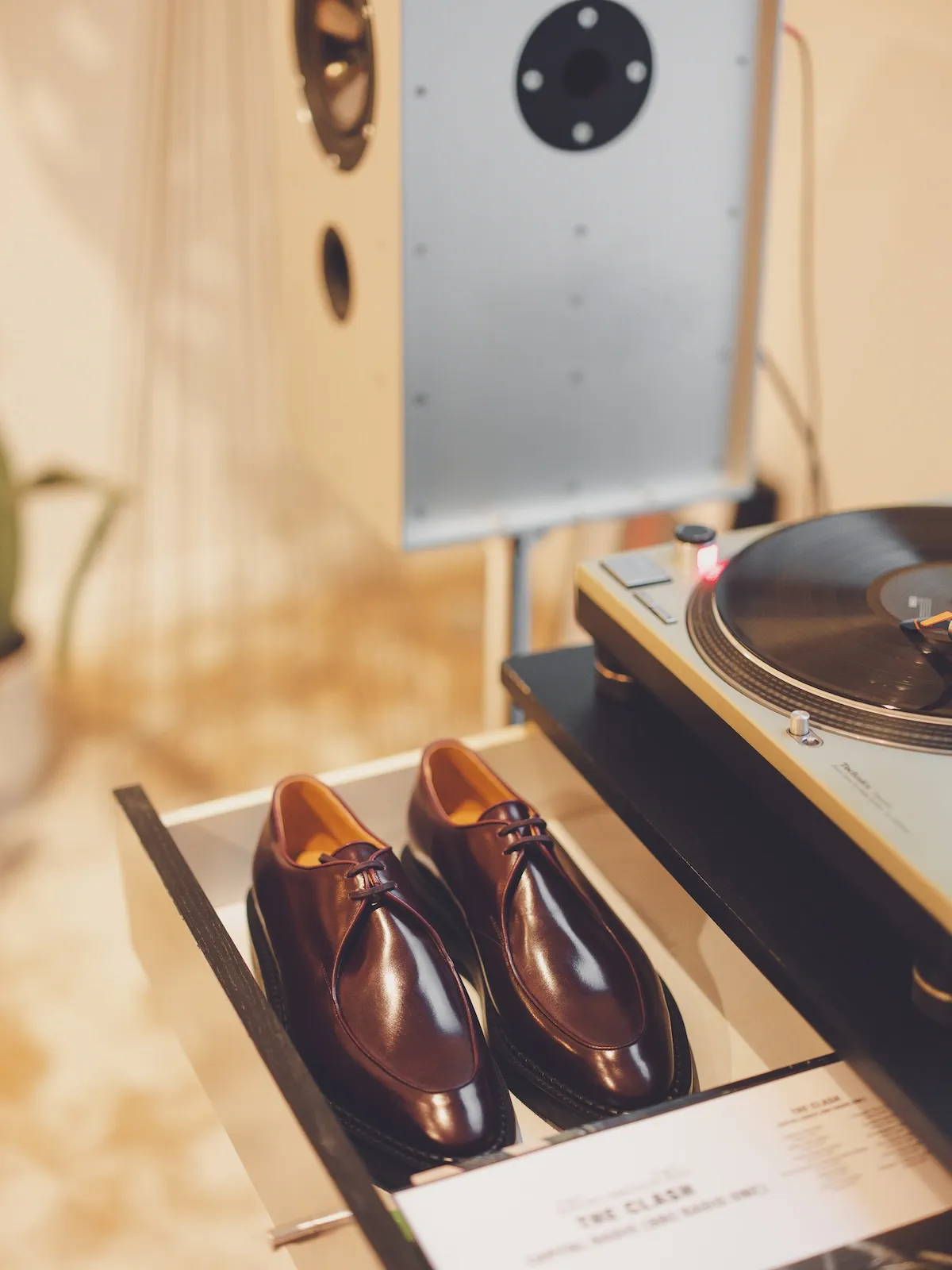
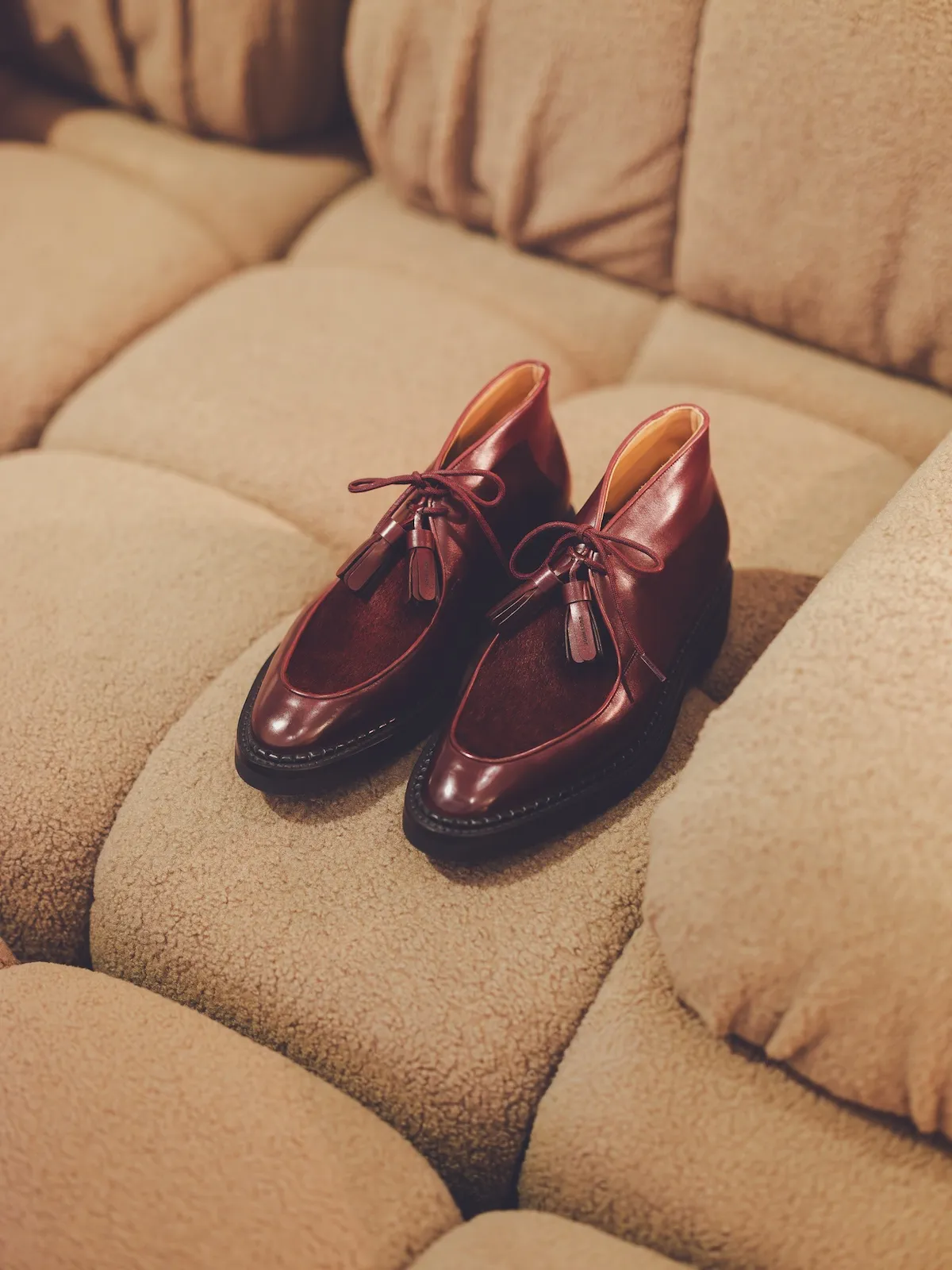
Color played a measured role. The Freddi and Lopez models appeared in bristle hide leather dyed oxblood, a shade between burgundy and brown. The effect was subtle yet expressive—the kind of color that rewards attention over time. For an audience accustomed to bold palettes and instant recognition, this restraint felt deliberate, almost defiant.
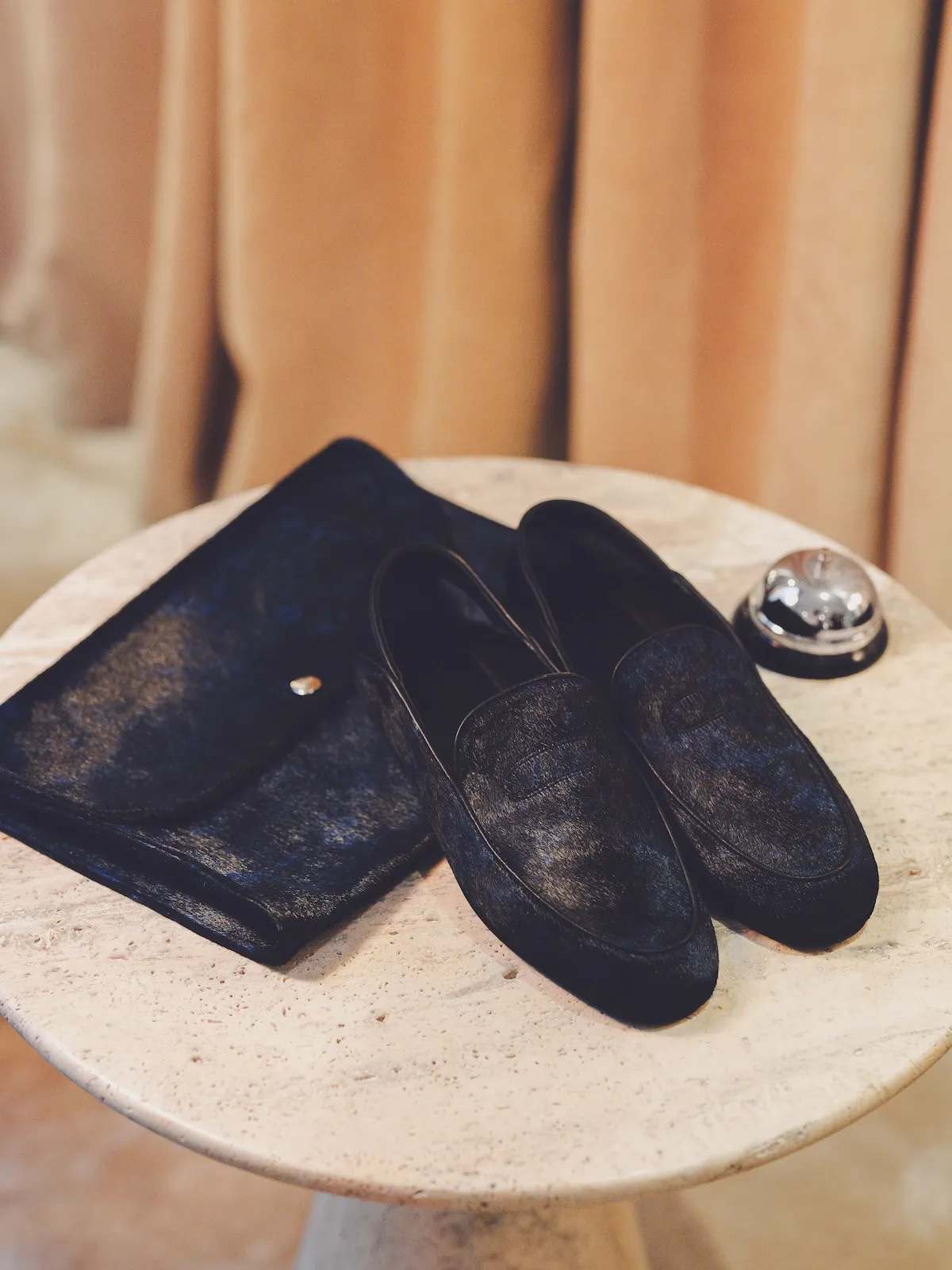
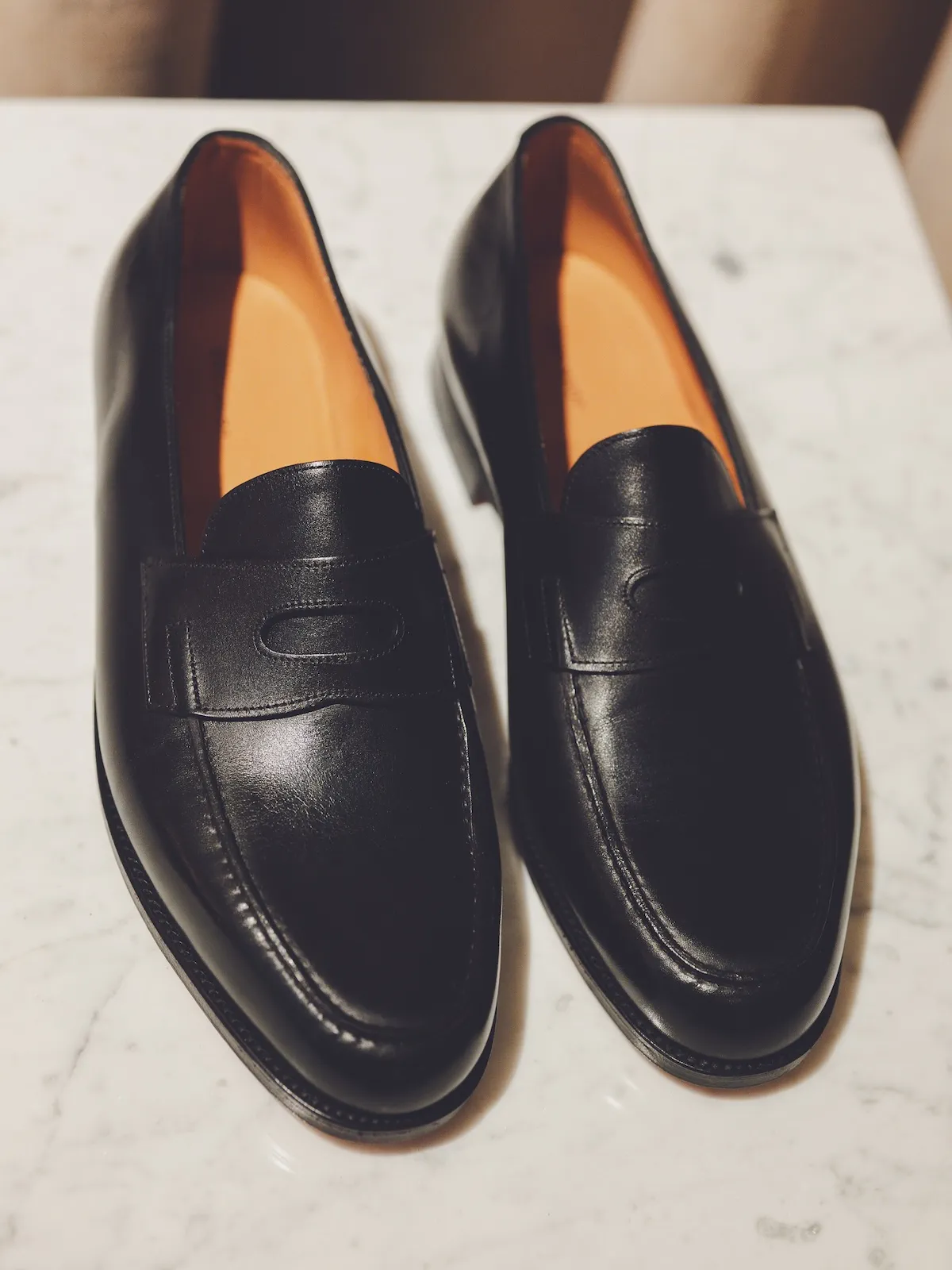
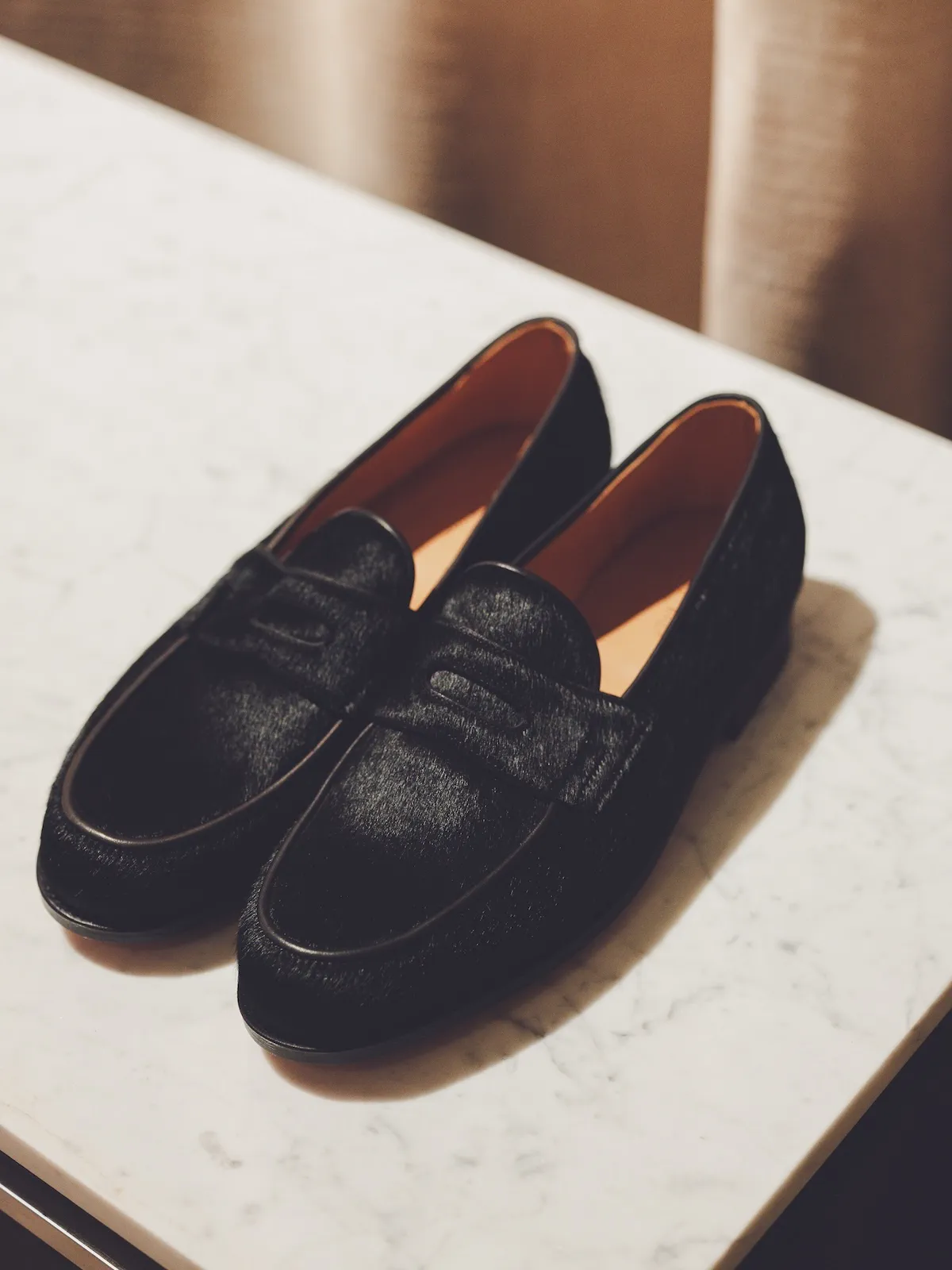
Atrium emerged as the season’s most unexpected proposal. Inspired by tuxedo slippers, the shoe had a softened silhouette that avoided stiffness while still looking formal. The shoe seemed designed for men who want formality without ceremony. Shoe enthusiasts often talk about versatility as a virtue, and the Atrium addressed that desire through its cut and materials rather than logos or technology.
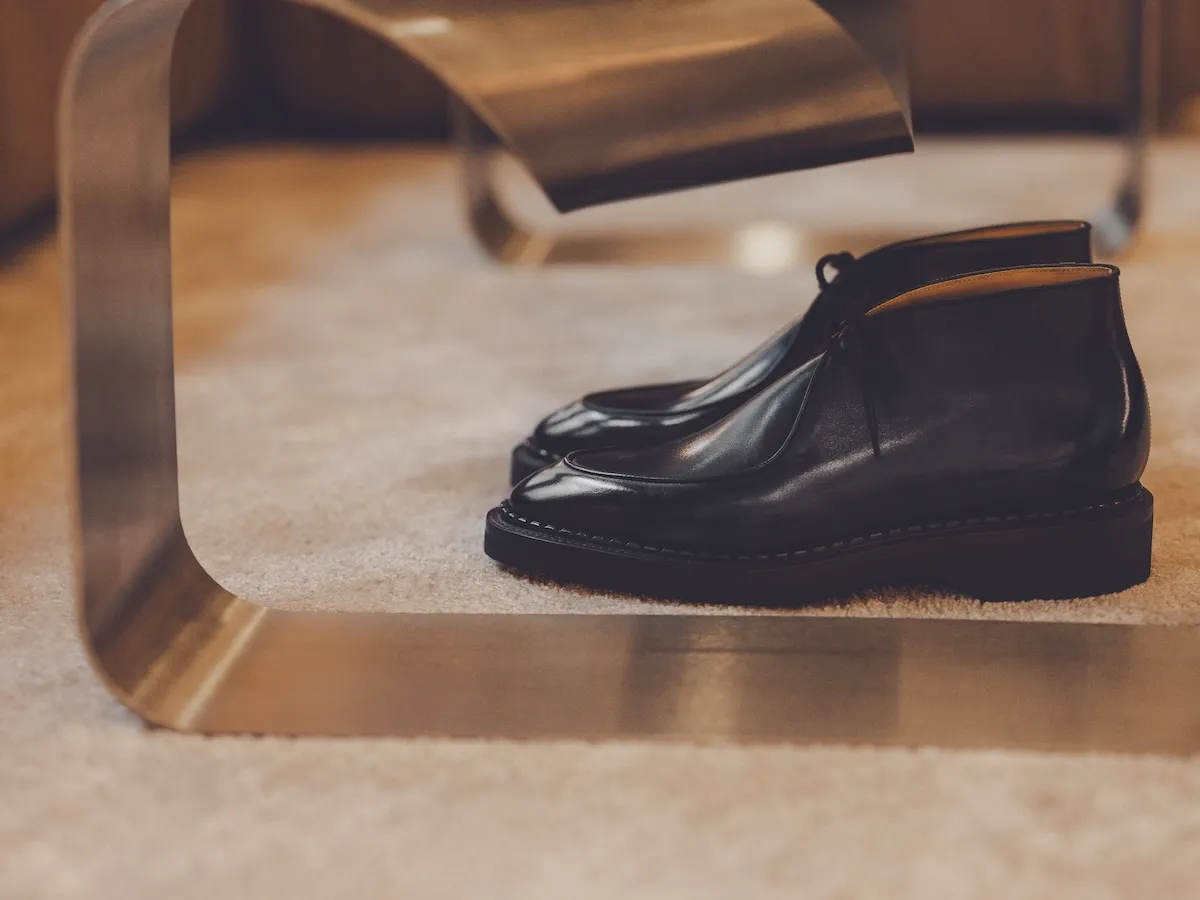
The Smith line delivered a sharper edge. Drawing from 1980s British rock and ska references, the Smith line adopted a creeper-inspired sole that introduced weight and attitude. The Smith Chukka raised the profile, both literally and figuratively, with a higher cut and exaggerated removable tassels that sparked debate. This tension between tradition and provocation mirrors the familiar conversations of footwear culture, where heritage models are constantly revised, questioned, and reinterpreted.
Follow all the latest news from Fashionotography on Flipboard, or receive it directly in your inbox with Feeder.
You may also read

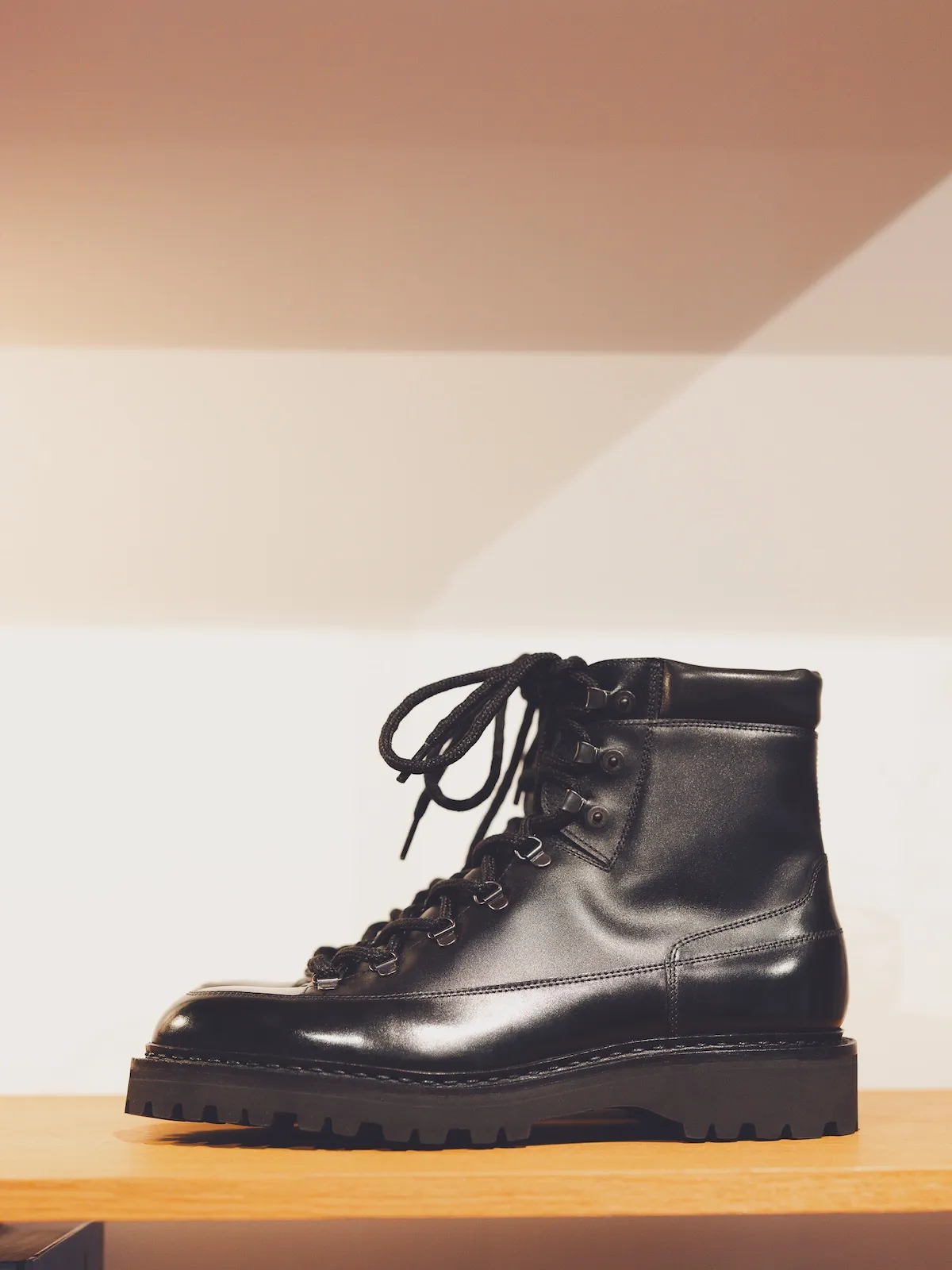
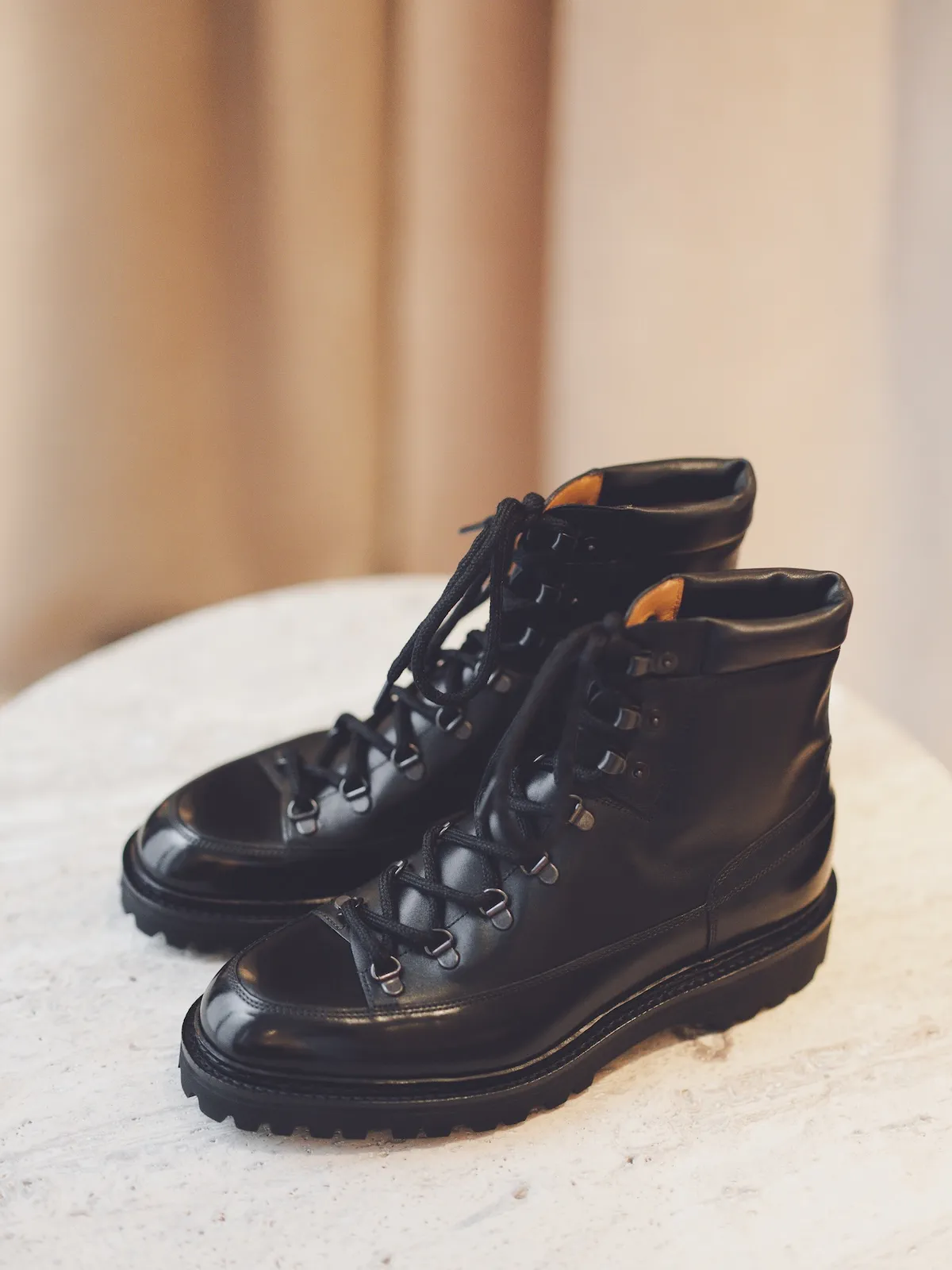
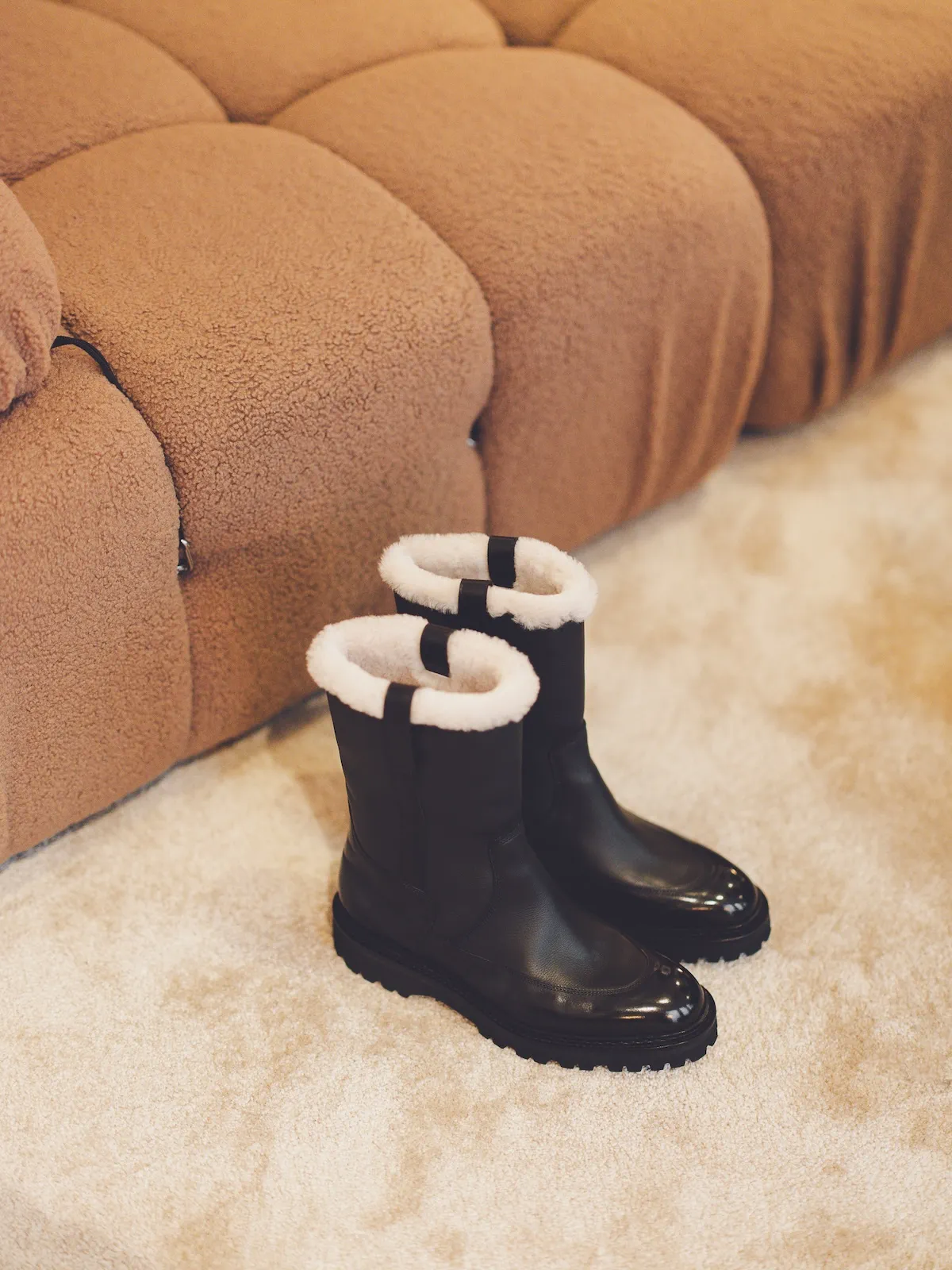
Function remained central elsewhere. Regi took inspiration from English riding boots and equipped them with a rubber sole and a subtle zipper for ease of use. Sommet looked further back in time, referencing a mountain boot from the 1950s archives of John Lobb. Waterproofing, a Norwegian welt, and a ski boot–inspired sole suggest a commitment to performance rather than aesthetic borrowing. The Highland, lined with wool and crafted in waxed leather, acknowledged winter as a real condition rather than a marketing concept.
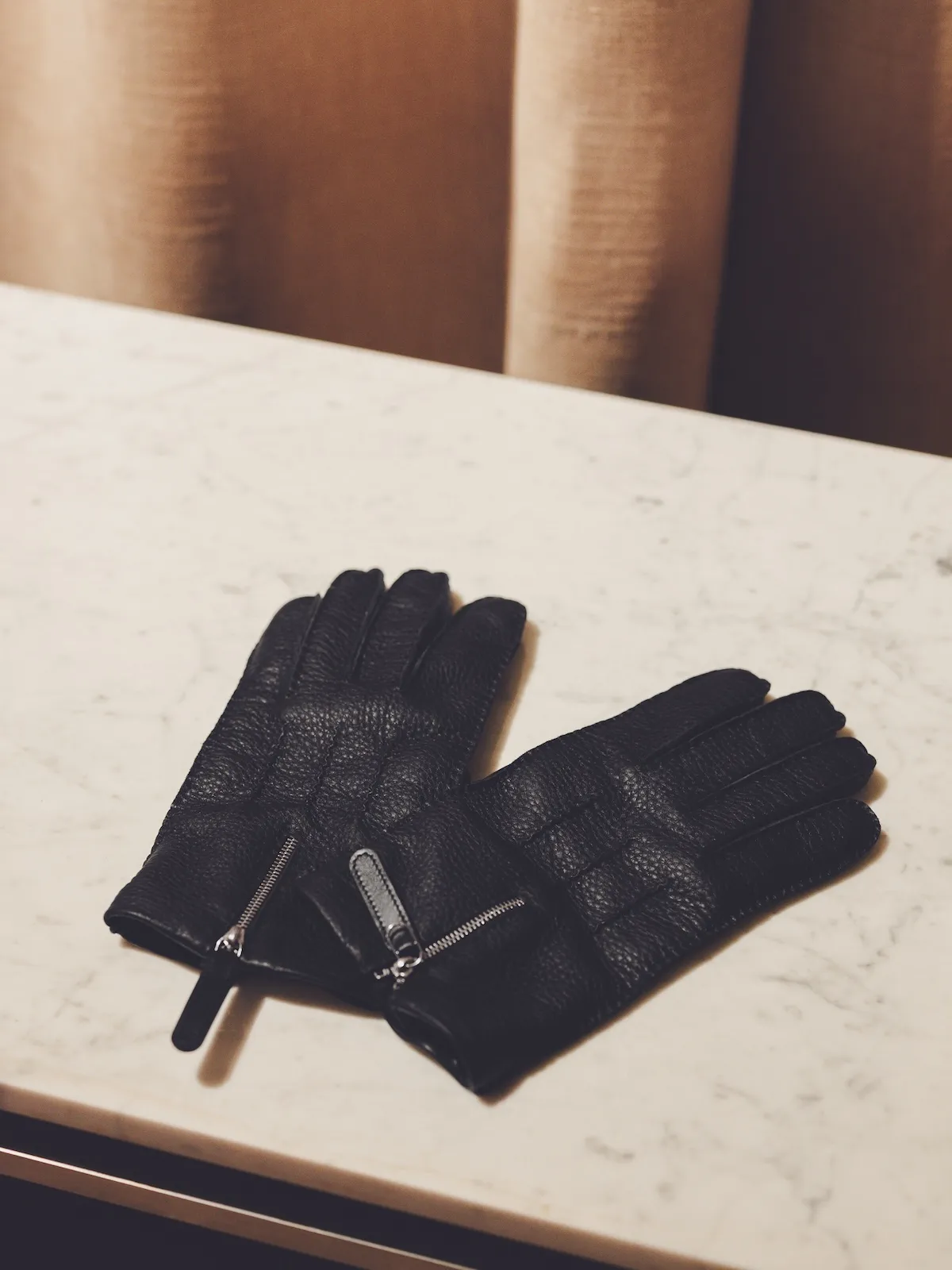
Even the accessories followed the same logic. Leather gloves stitched like the house’s loafers and lined with cashmere extended the conversation about footwear into the hands. The touchscreen-sensitive fingers acknowledged contemporary habits without drawing attention to themselves.
An absence of spectacle stood out across the Fall 2026 collection. There were no exaggerated gestures. There were no empty statements about disruption. Instead, John Lobb presented shoes that assumed the wearer was paying attention. This assumption feels quietly radical at a time when much of footwear culture relies on immediacy and noise for its existence.
John Lobb has been part of the Hermès family since 1976, and that influence is evident in their uncompromising commitment to quality. Whether the shoes are made bespoke in Paris or ready-to-wear in Northampton, the goal is longevity. These pieces will be available in June 2026. You can find them in boutiques from London to Tokyo or online if you prefer to shop from home. In a market flooded with disposable trends, there is something revolutionary about a shoe meant to last decades.