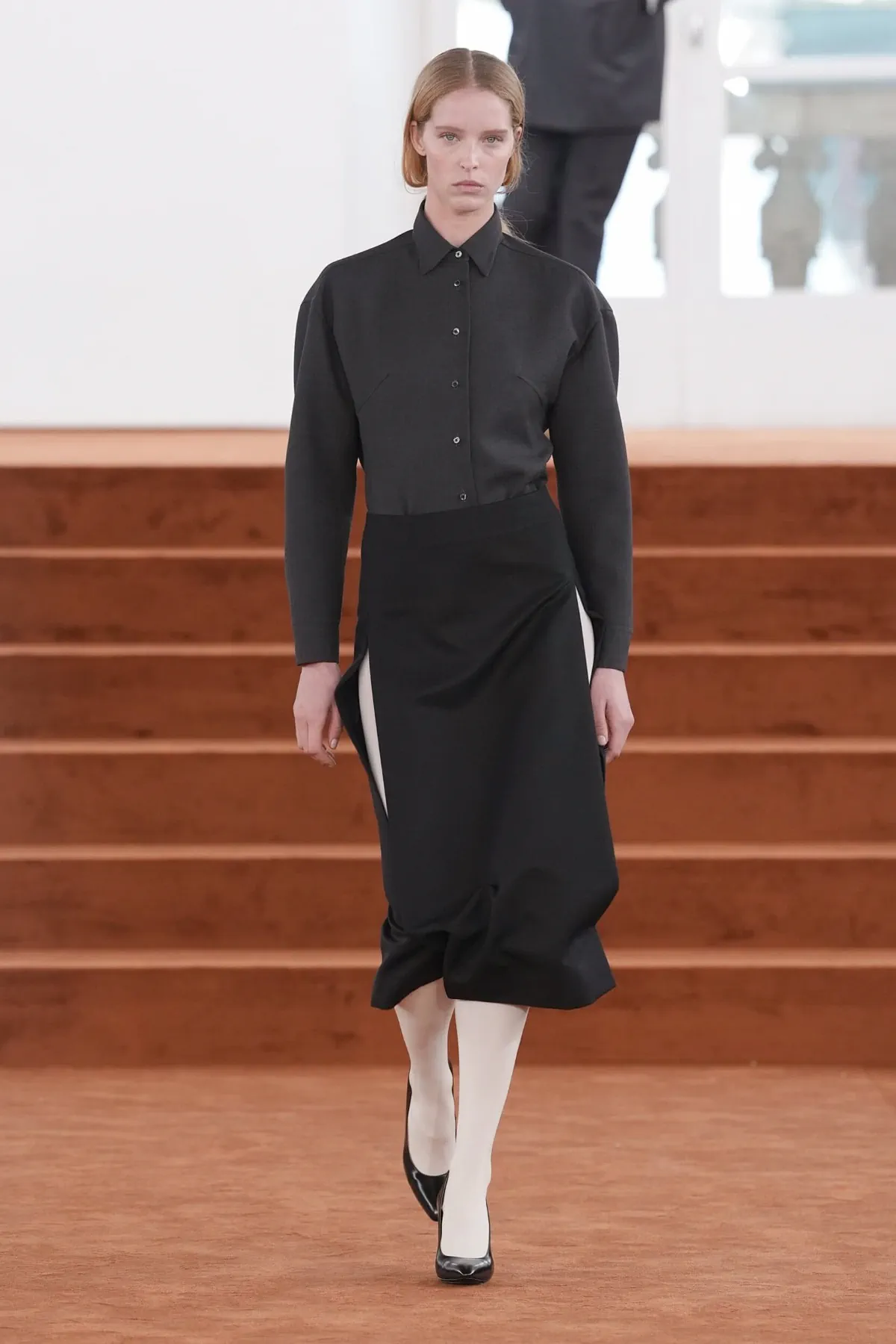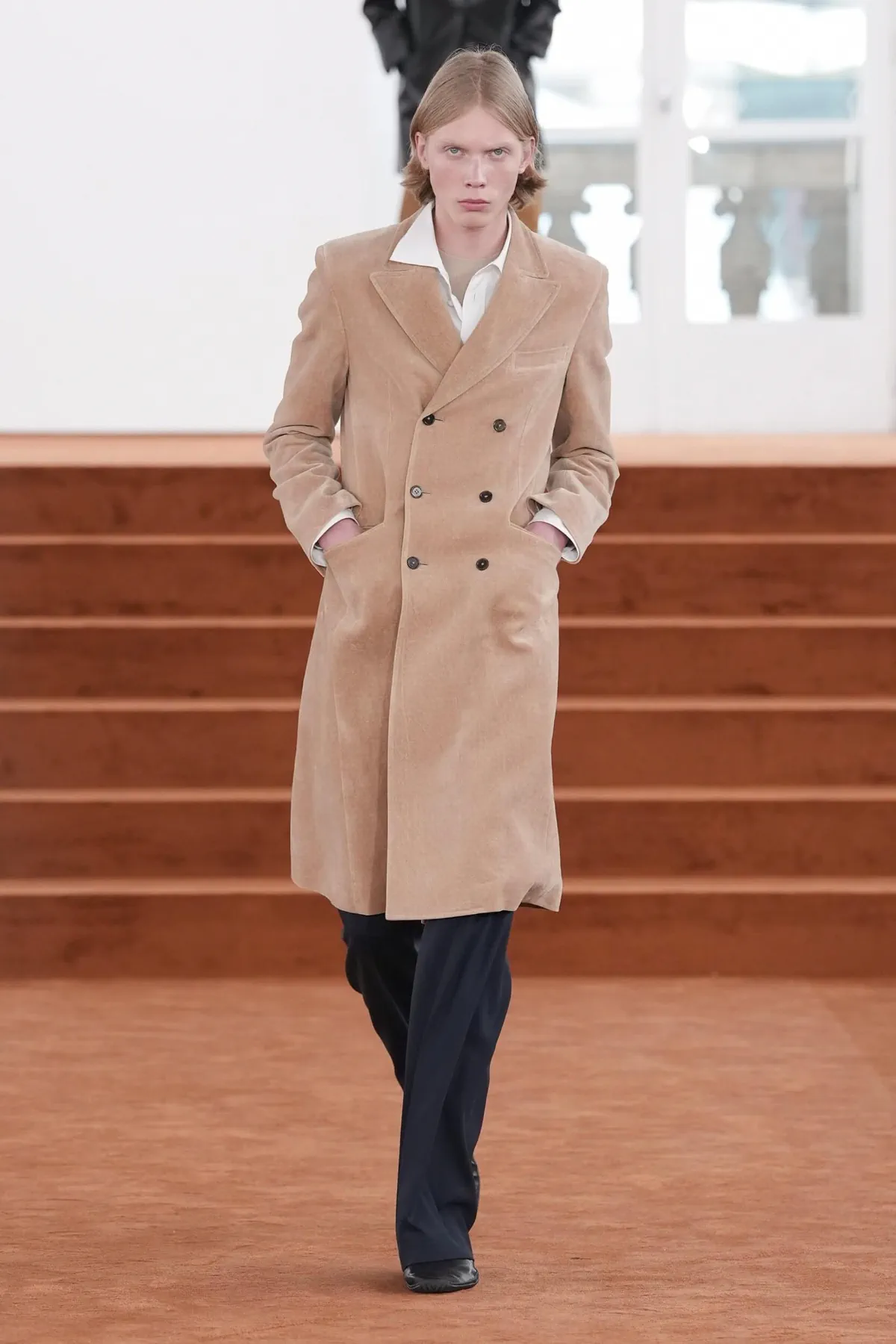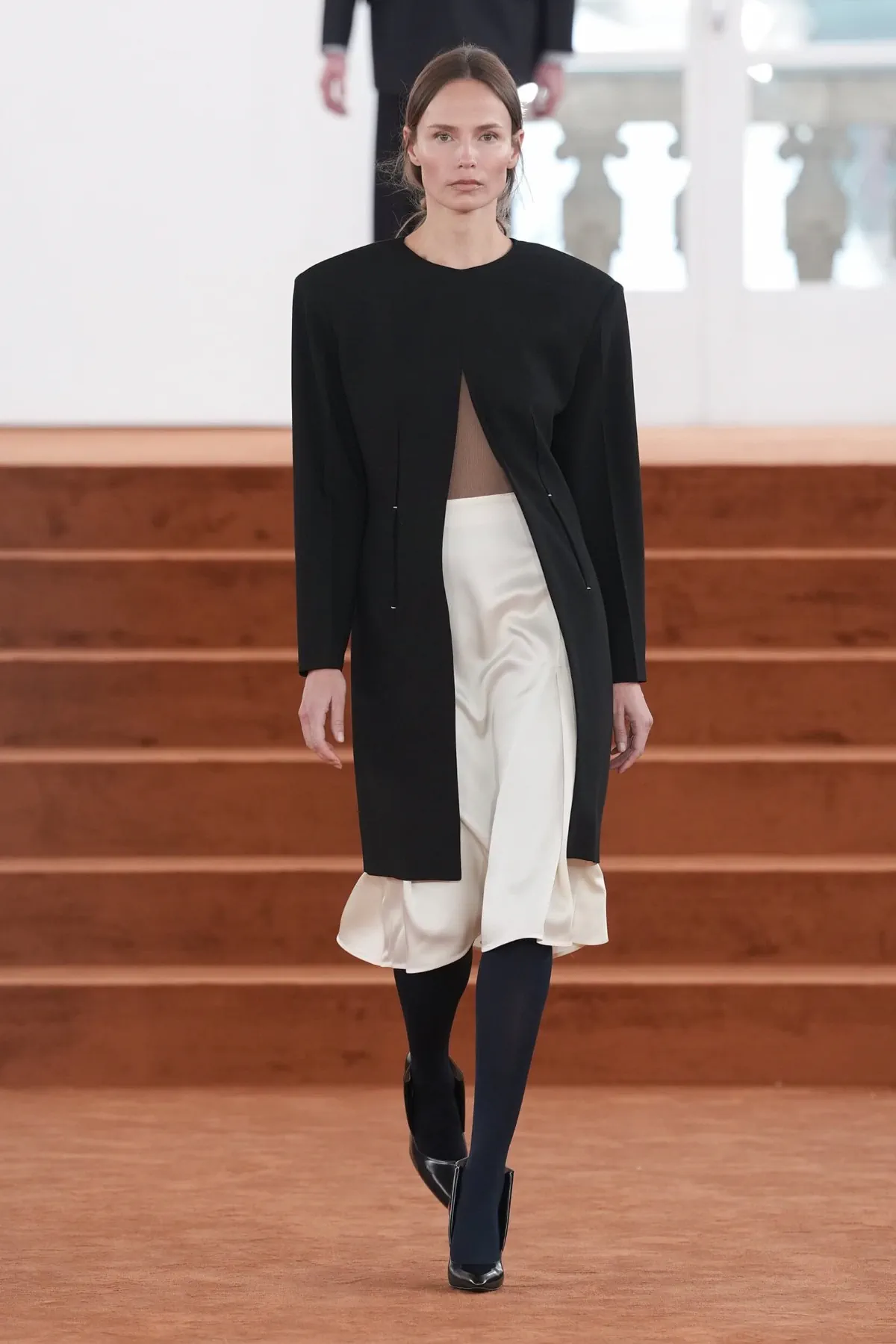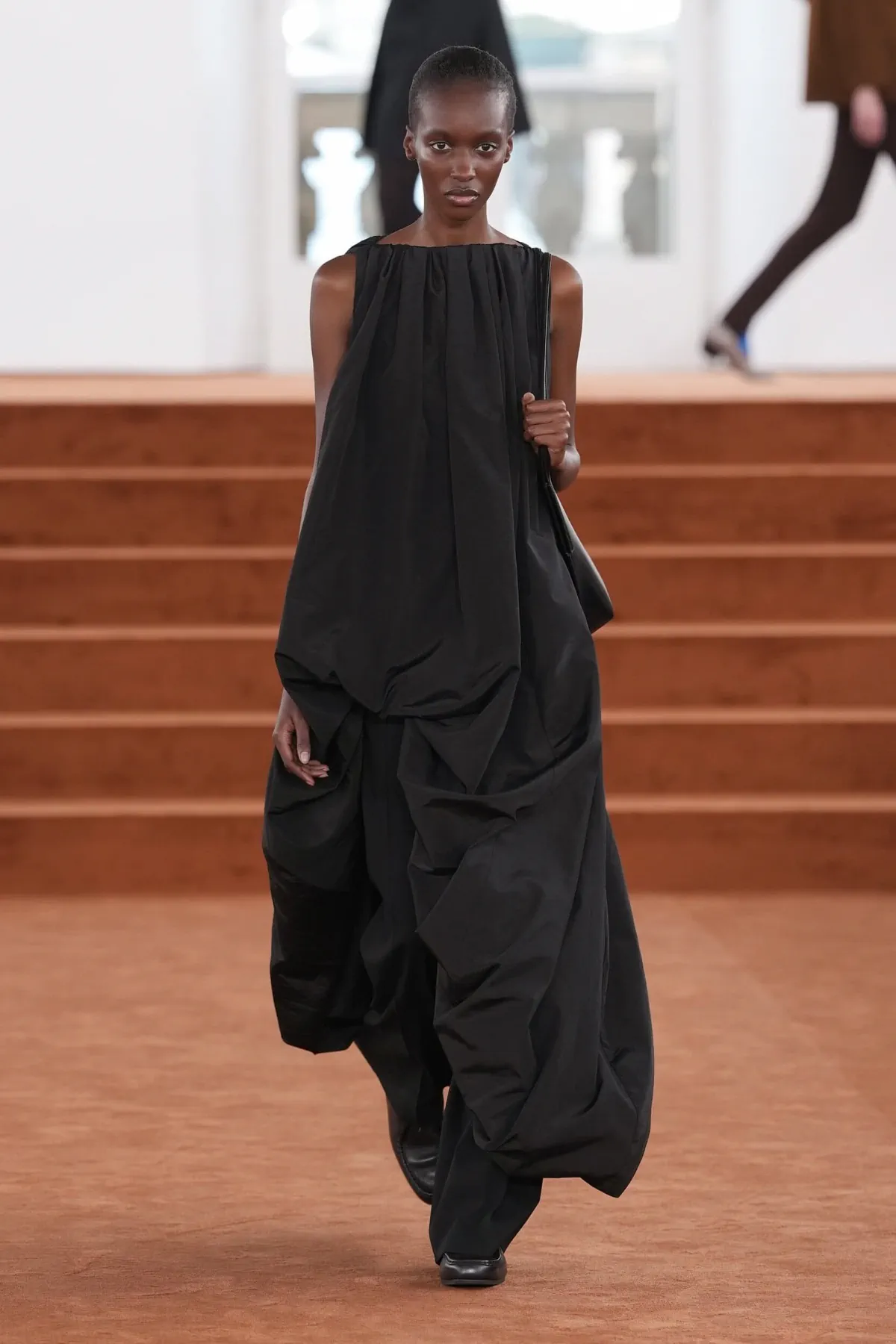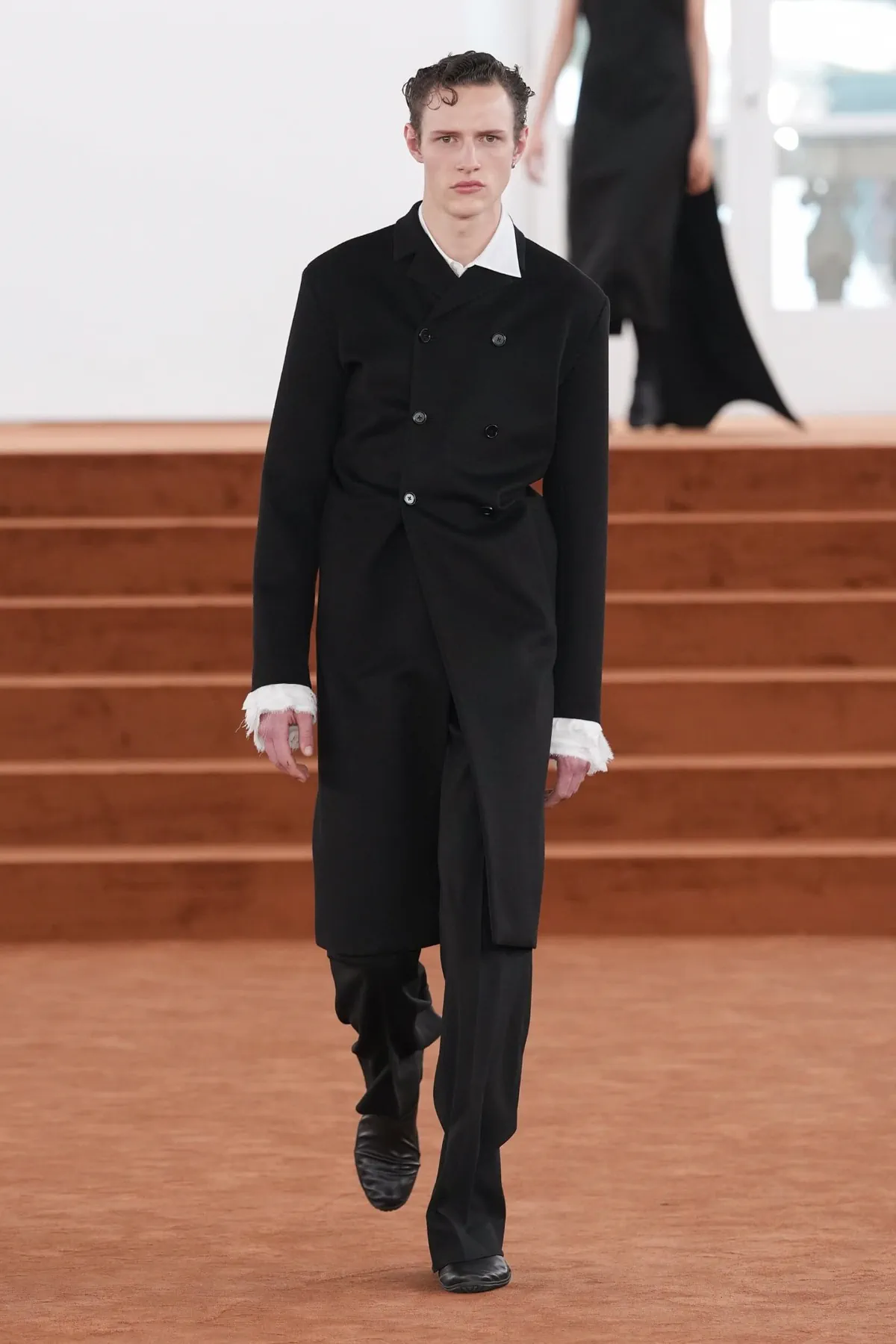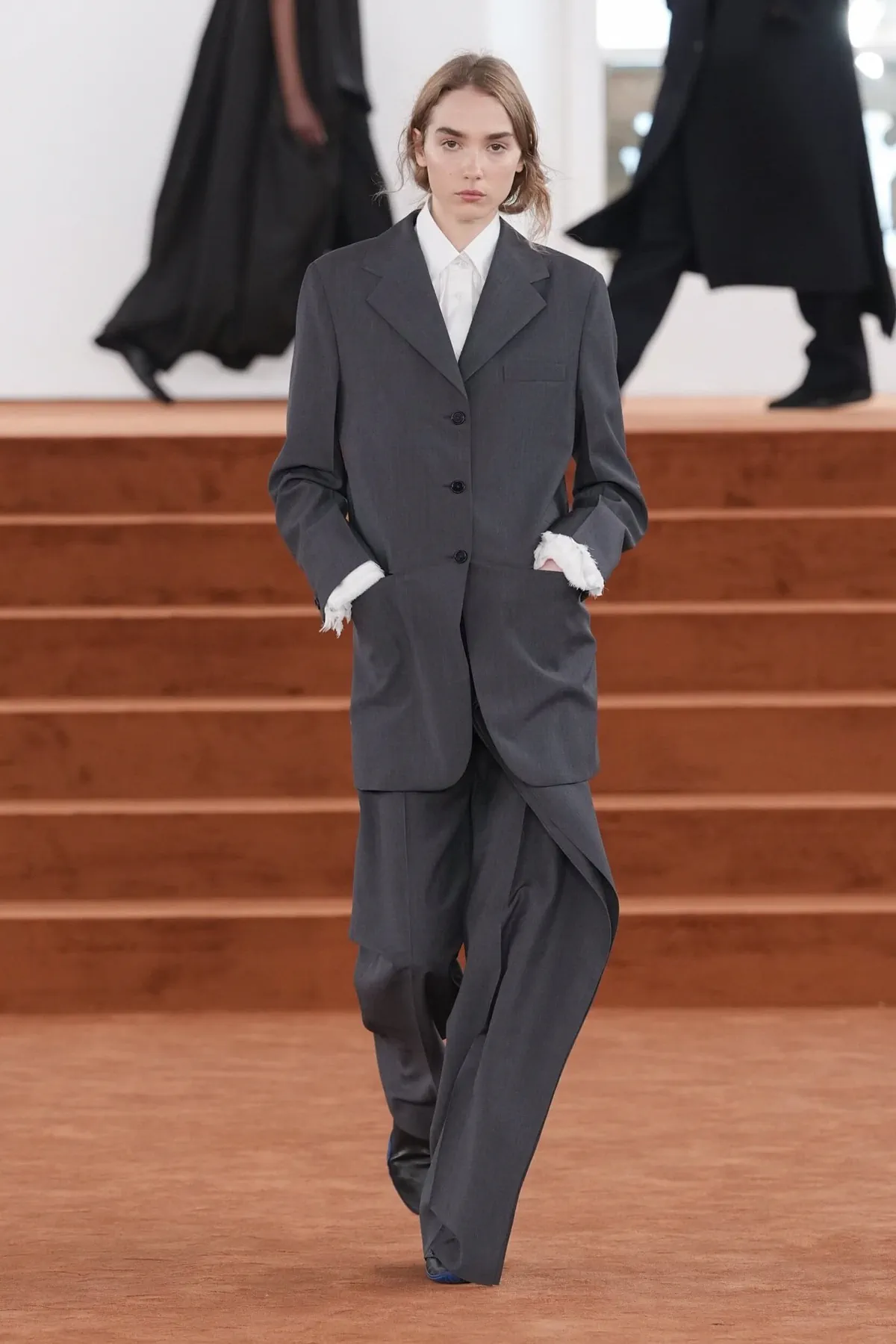

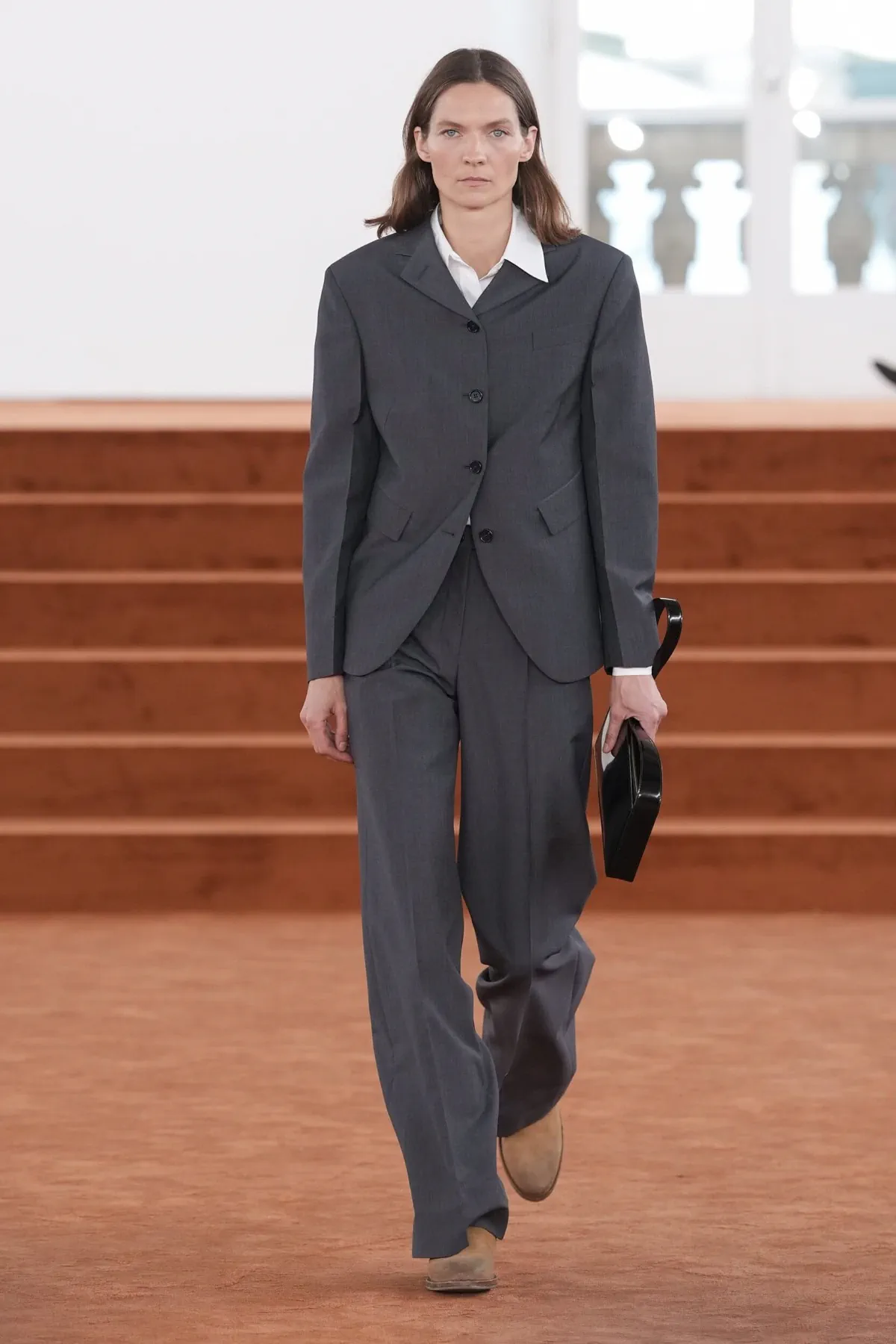
Simone Bellotti is dismantling the quiet expectations of purism. Following a debut focused on rigorously removing excess, his latest work for Jil Sander welcomes a layer of grit and imperfection into a space previously known for sterile precision. This shift does not signal a loss of discipline, but rather a sophisticated evolution. Bellotti examines the human element within the clothes, specifically how garments react to the wearer’s lived experience.
| 📌 Key Facts |
|---|
| 🧵 Simone Bellotti introduces distorted tailoring to Jil Sander Fall 2026 📷 Inspiration comes from Anders Petersen’s 1960s Hamburg photography 🧥 Upholstery-inspired tweeds and jacquards dominate textures 👢 Pre-dirtied suede boots reinforce the lived-in aesthetic ✂️ Deconstructed suits challenge traditional minimalist codes 🍸 The collection shifts from purity to expressive detail |
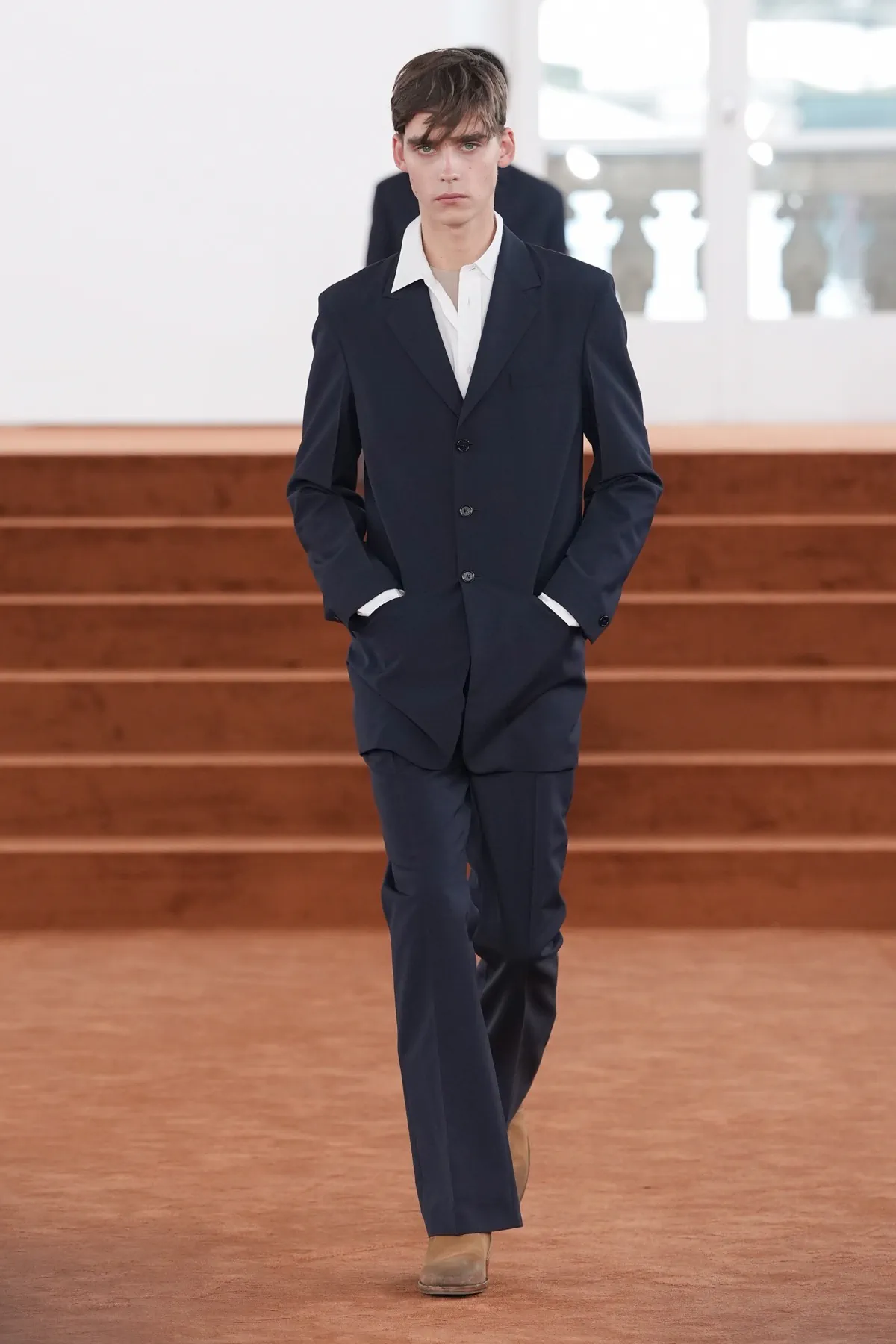
The atmosphere of the presentation was intentionally stark. Fluorescent lights illuminated a rust-colored carpet, evoking the atmosphere of a basement or dimly lit bar from decades past. This setting served as the backdrop for a character study that prioritized personality over polished perfection. Bellotti was primarily inspired by the raw black-and-white photography of Anders Petersen, who captured the patrons of a Hamburg establishment in the late sixties. The images contain a certain distortion and closeness between people that the designer translated into the construction of the garments themselves.
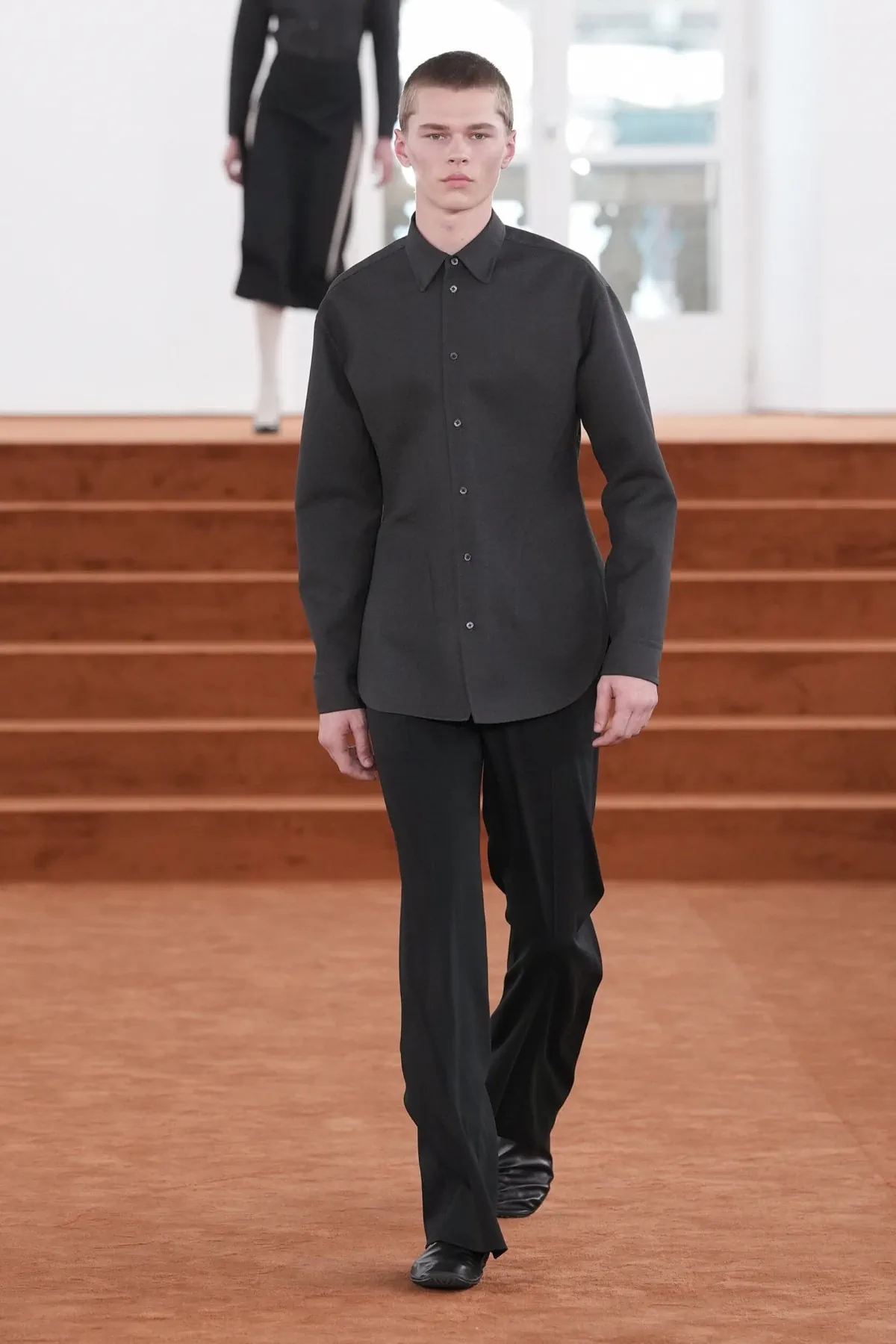
These silhouettes have a deliberate sense of the irrational. Some suit jackets appear shrunken or jut out at odd angles, while others have shoulders that seem detached from the body. One might see a collar that looks as if it is falling away from the neck or a coat with a curved cut that appears to embrace the torso. These are not mistakes, but rather meticulous observations of how clothes move, wrinkle, and settle during a long night out. The craftsmanship remains high, yet it allows for the kind of awkwardness that makes a look feel authentic rather than curated.
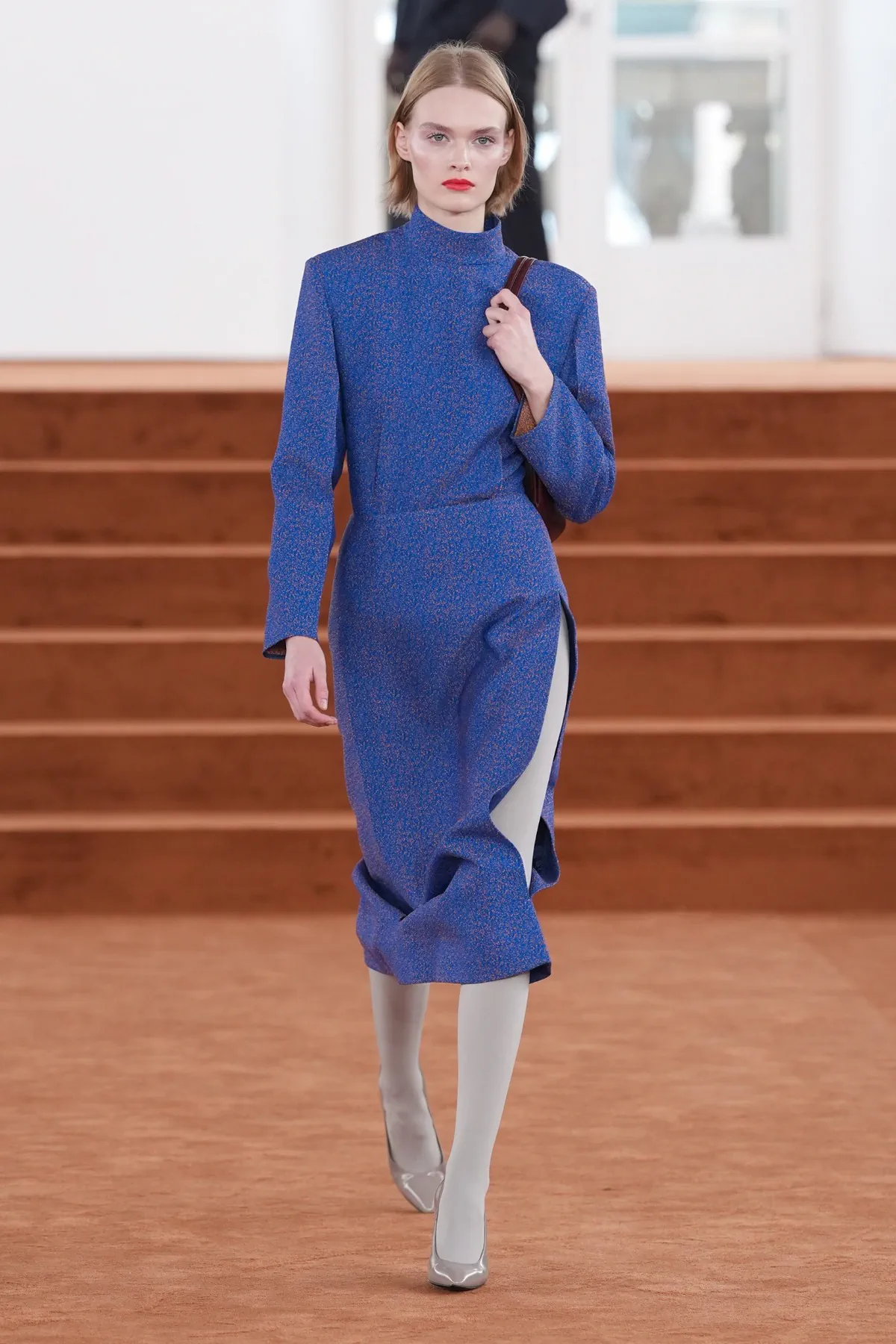
Texture plays a significant role in this new direction. Drawing on his family’s history in upholstery, the designer used sturdy tweeds and jacquards reminiscent of home furnishings. There were padded dresses that shared a visual DNA with mattresses, as well as outerwear with generous seam allowances that trailed behind like a train. Even the footwear reflected this lived-in philosophy. Tan suede boots arrived pre-dirtied, ready for a crowded room, and sharp pumps featured splices at the back to match the experimental tailoring of the skirts and trousers.
Follow all the latest news from Fashionotography on Flipboard, or receive it directly in your inbox with Feeder.
You may also read
The collection also explores the idea of the superfluous becoming essential. Decorative ruffles ran down the sides of the pants, and high slits were cut into the backs of the heavy coats. These details provide glimpses of what lies beneath, suggesting intimacy and a hint of the provocative. This marks a departure from the brand’s previous comparison to a simple glass of water. While the previous era was about the clarity of the liquid, this era is about the olive in the martini – the extra element that provides specific flavor and completes the entire composition.
This approach acknowledges that fashion is now an integral part of our collective culture, where everyone has an opinion on what a brand should represent. While some might argue that these designs do not fit the traditional mold of the brand, such critics often overlook the revolutionary spirit required to keep a label relevant. By challenging assumptions about luxury and utility, the brand’s current direction opens minds to the possibilities when designers embrace the rougher edges of reality. The result is a wardrobe that functions in the real world while maintaining a sharp artistic edge.