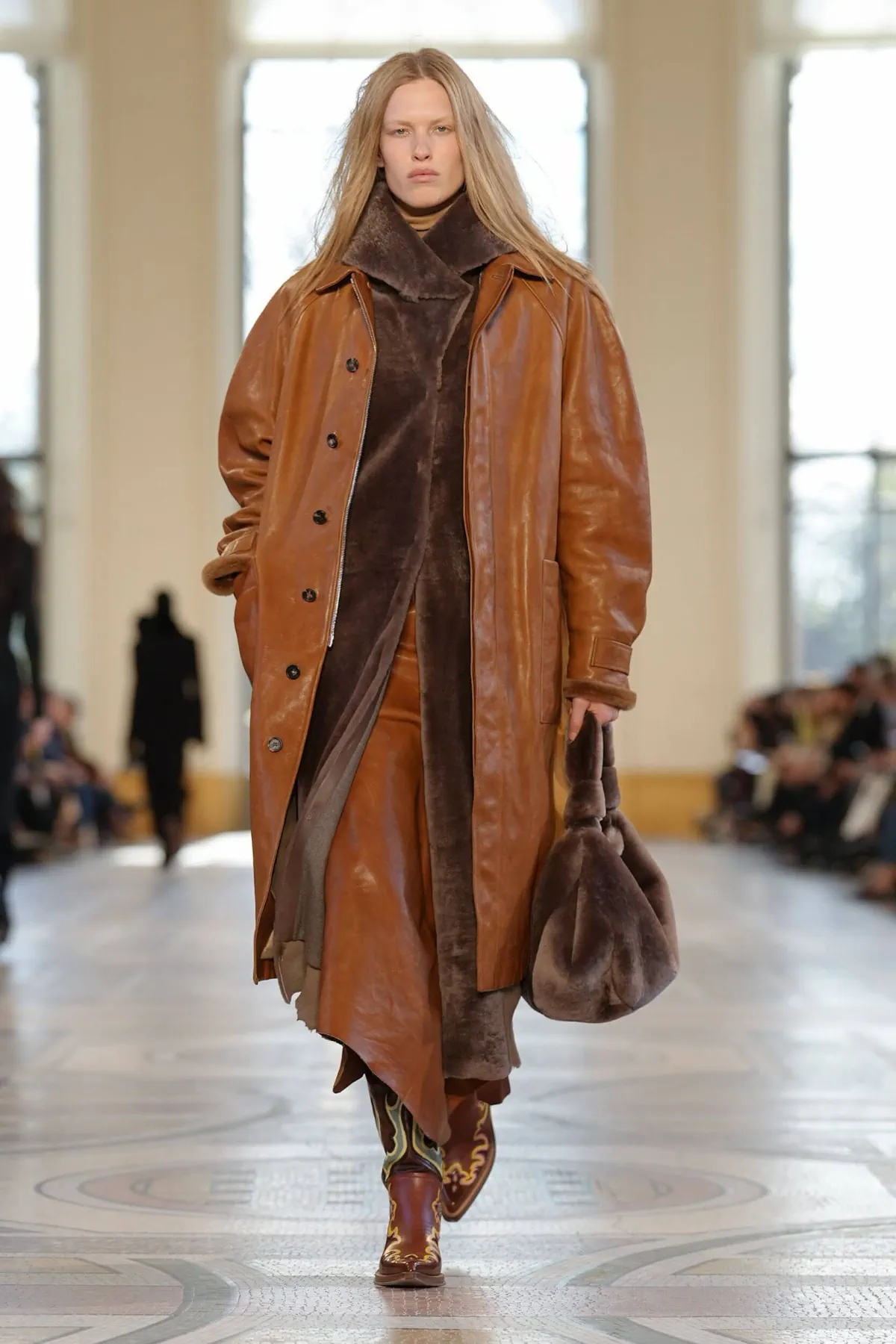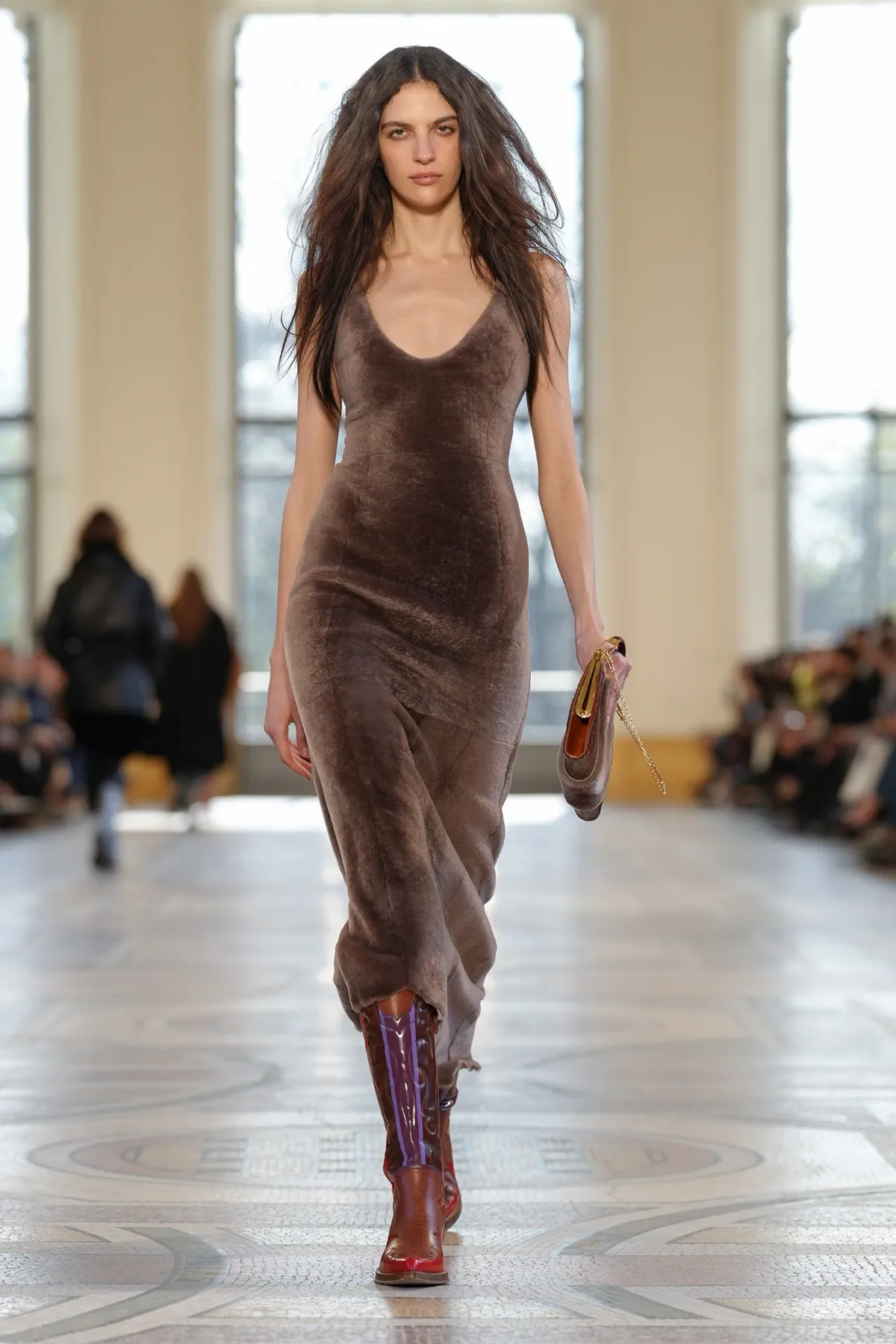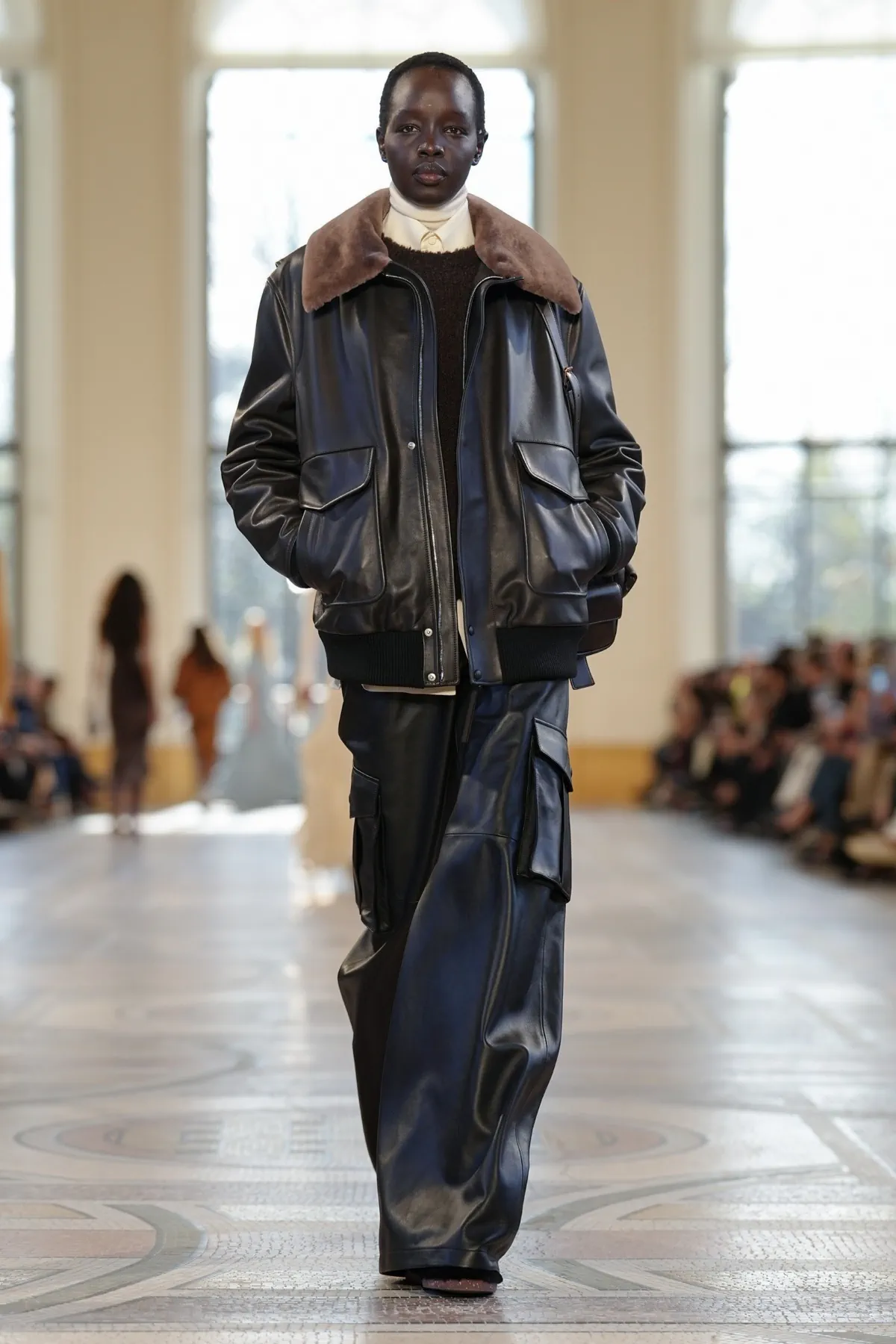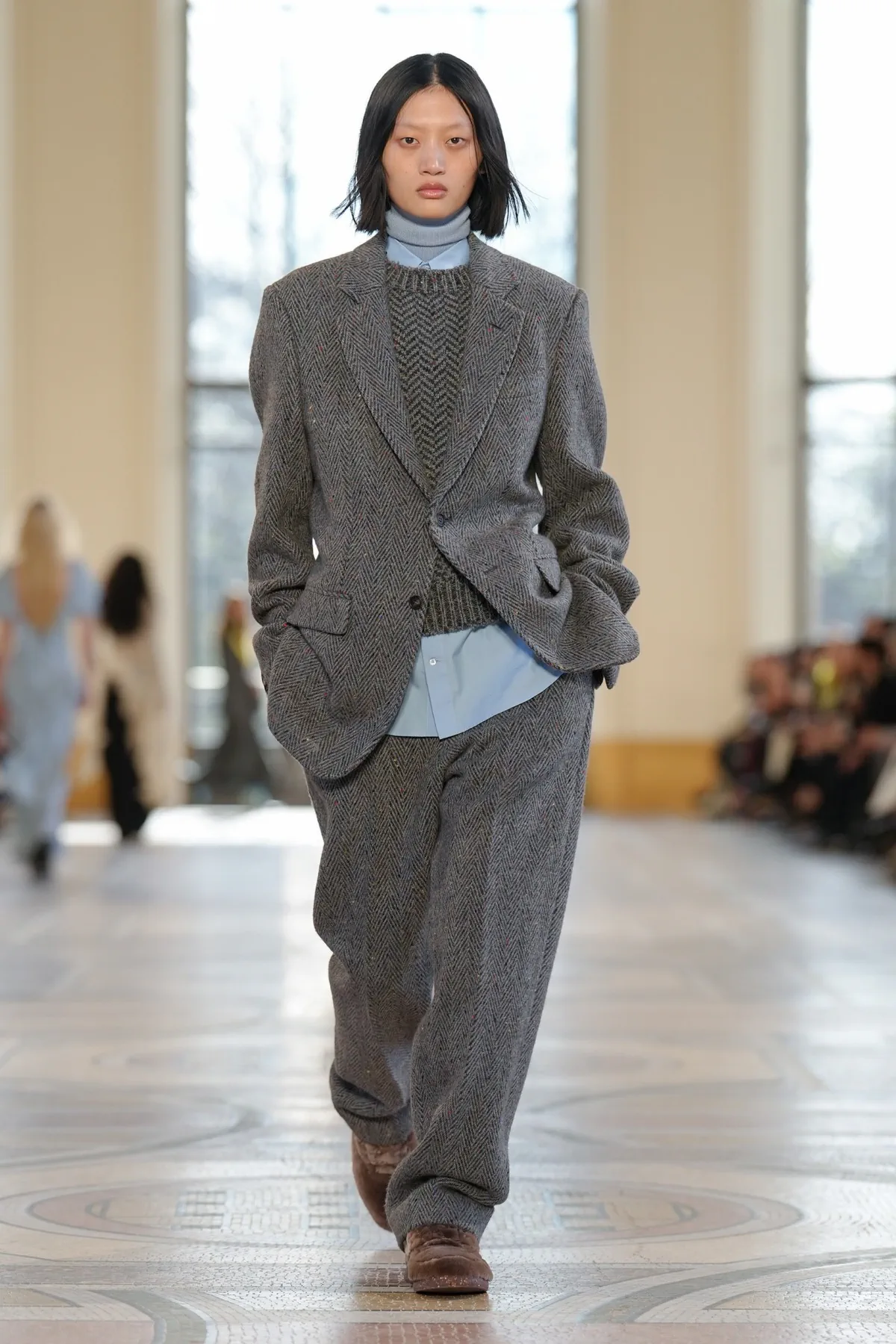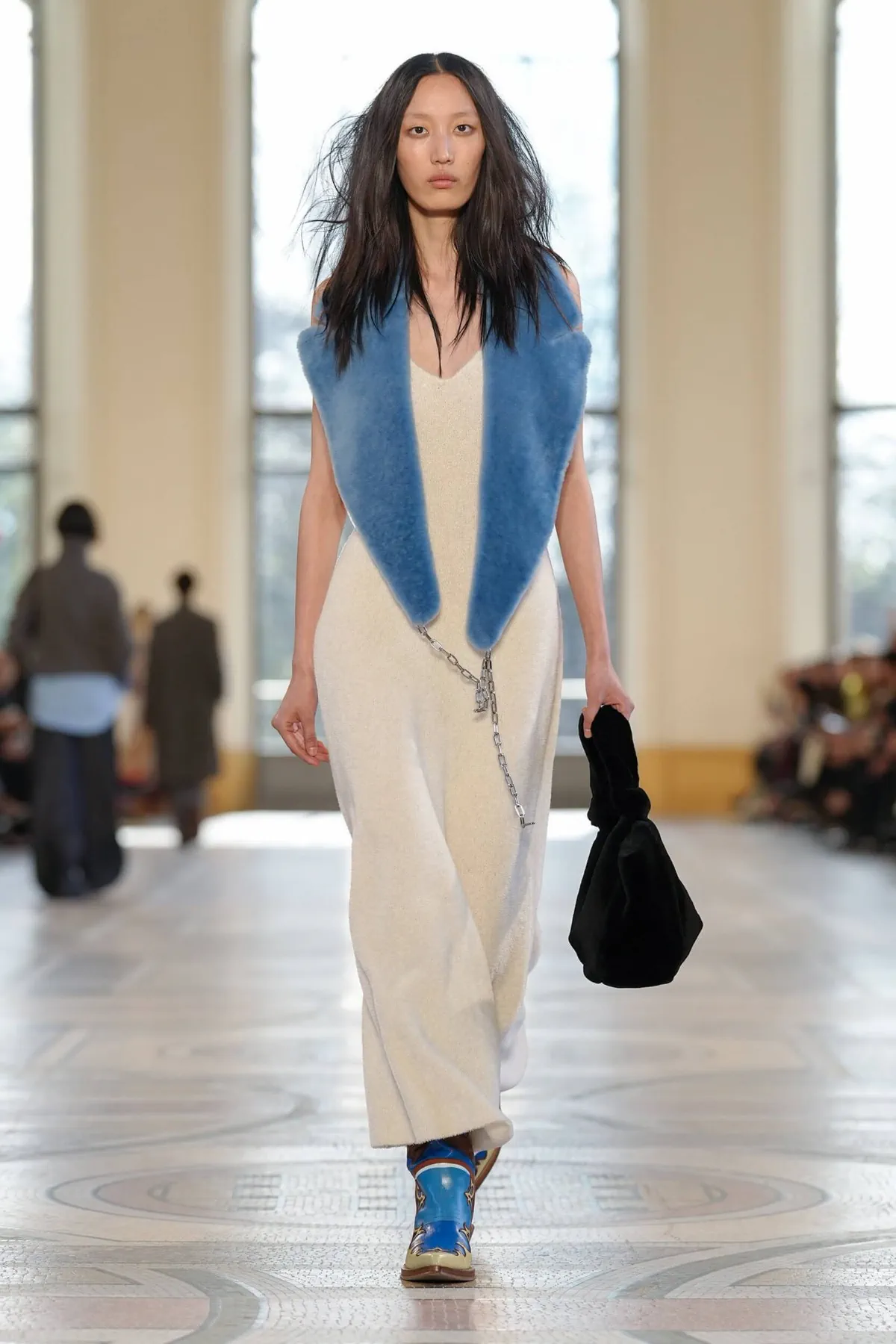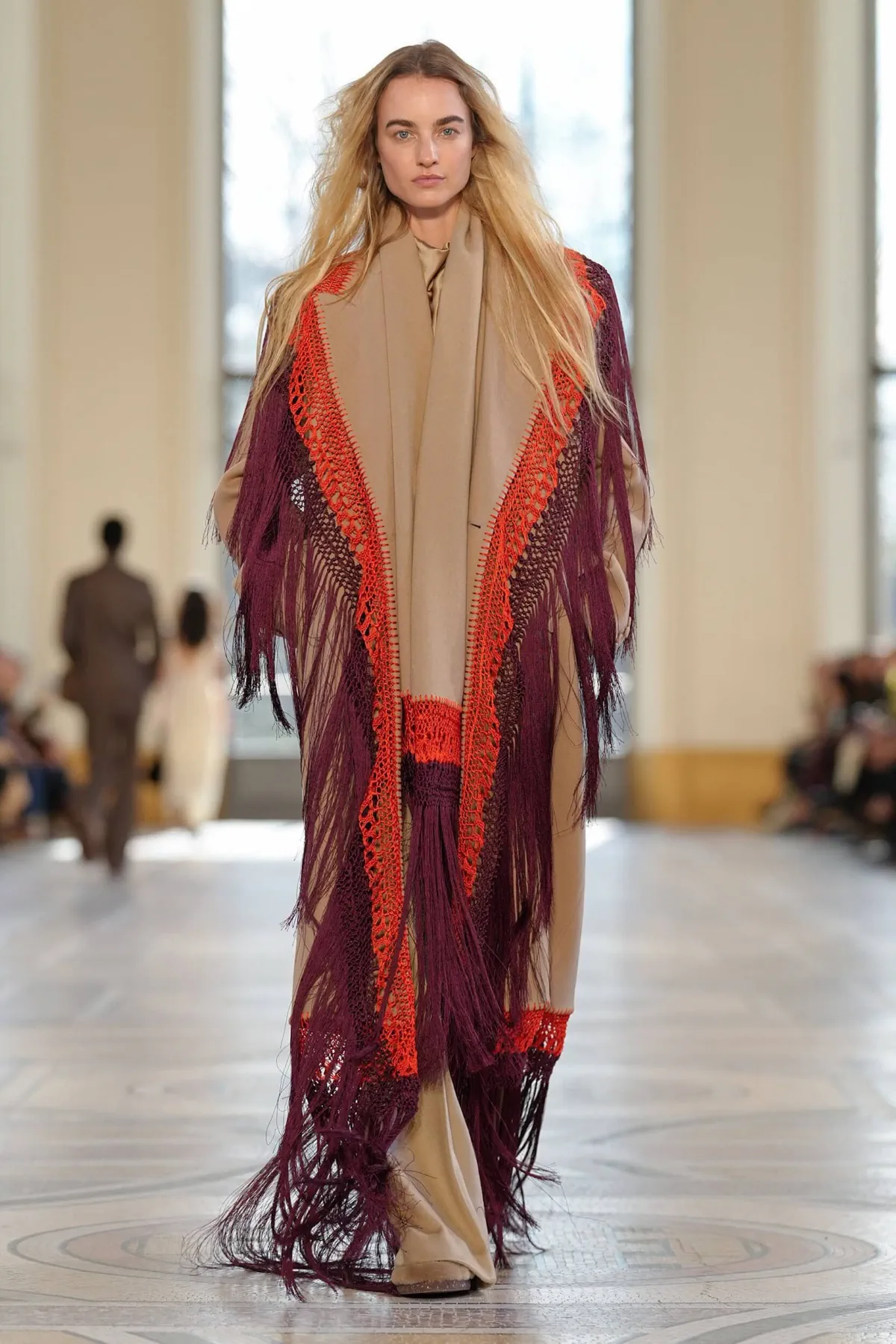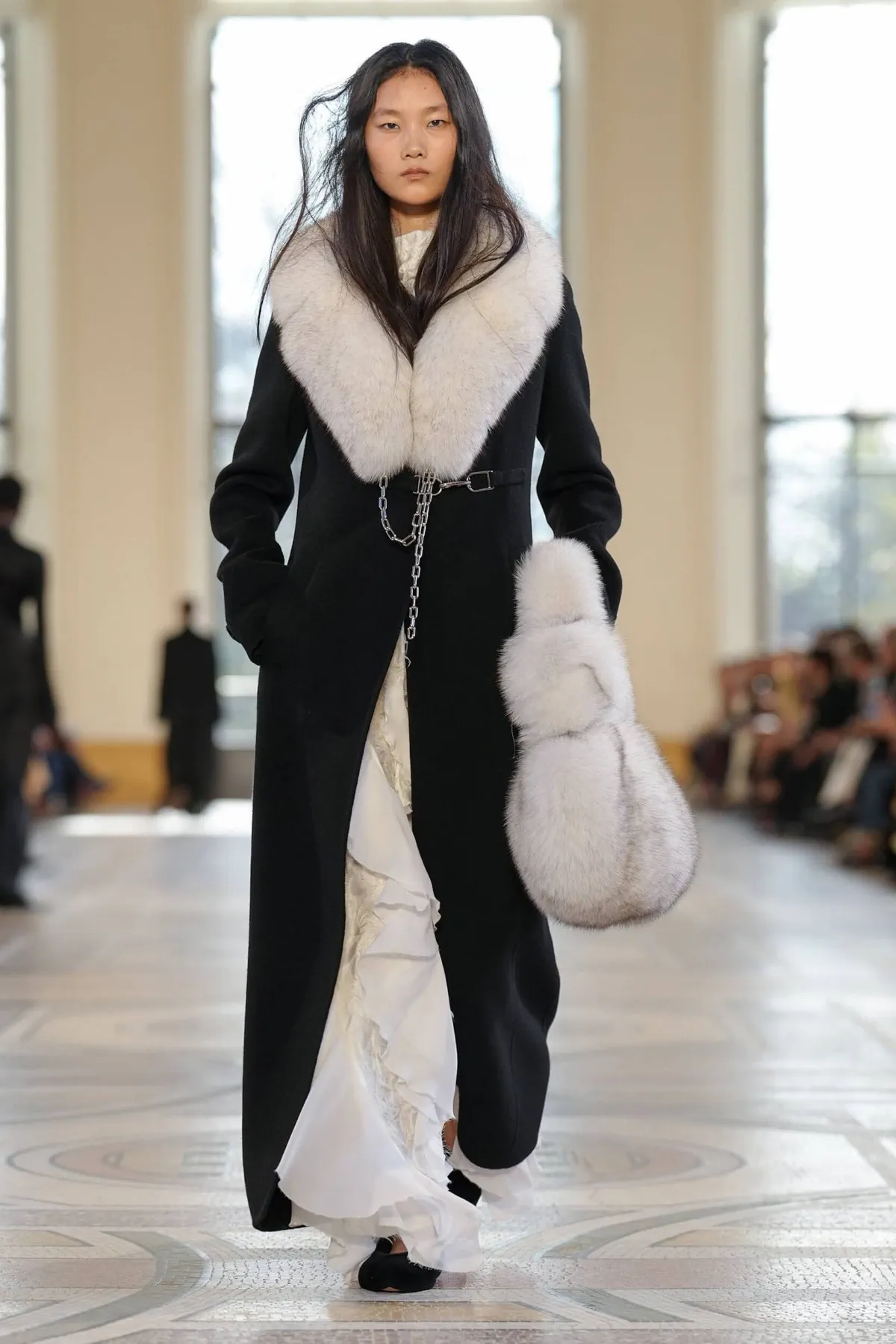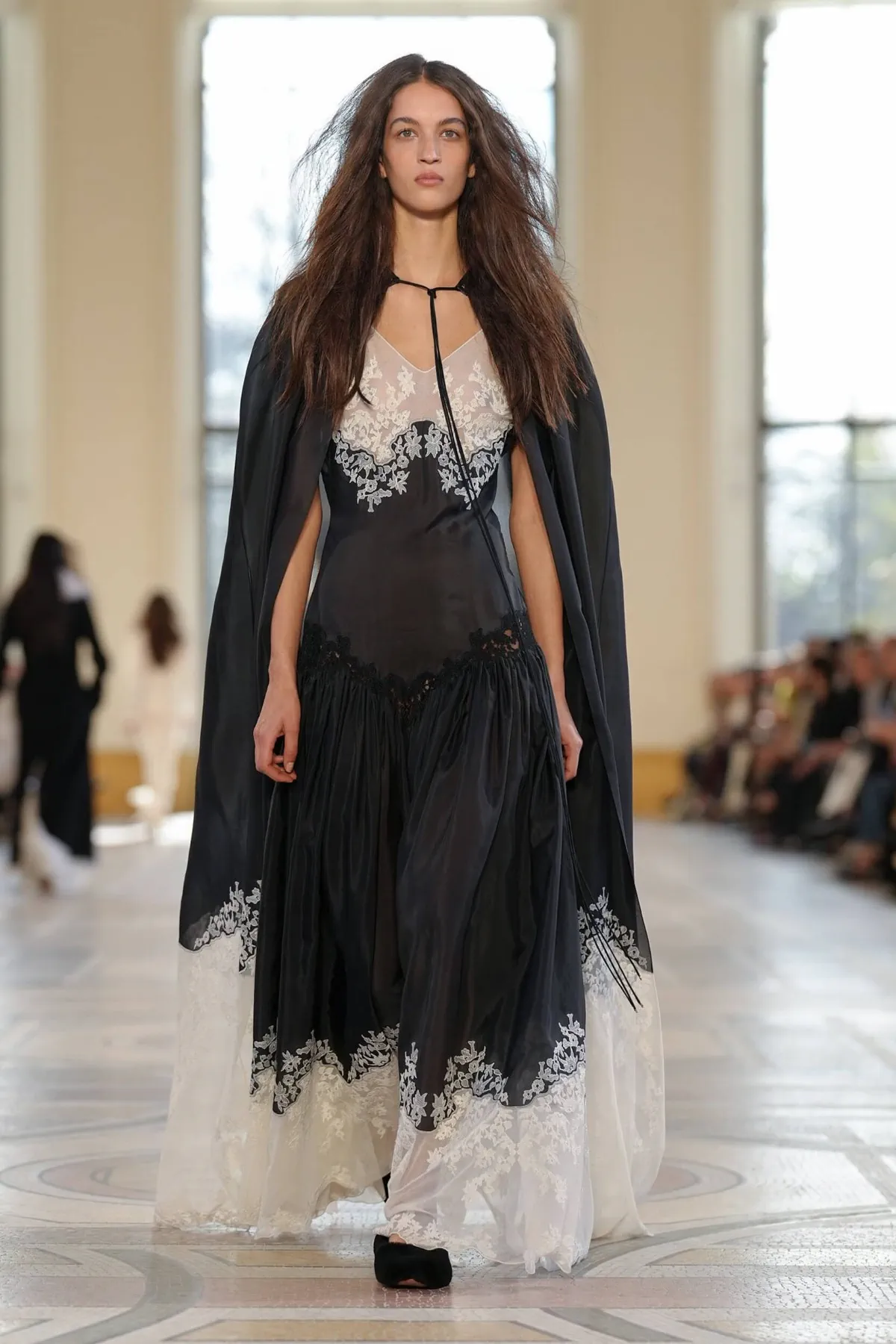

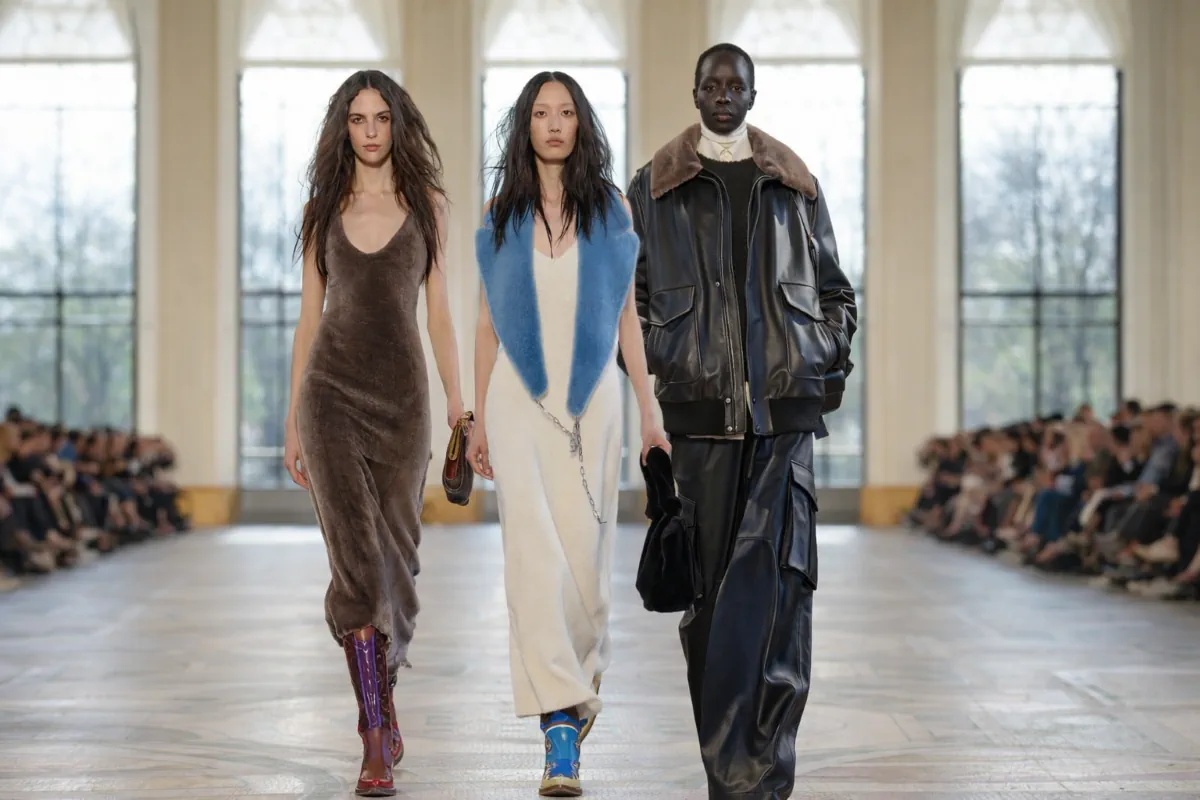
Gabriela Hearst has spent the past decade aligning her label with Save the Children, one of the world’s oldest and most respected humanitarian organizations. For Fall 2026, rather than merely supporting the cause, Hearst sought the inspiration behind it all: Eglantyne Jebb. Eglantyne Jebb, a British social reformer born in 1876, founded Save the Children at the close of World War I. She learned that children in defeated nations were dying of hunger while Allied naval blockades prevented aid from reaching them. Jebb was arrested for distributing protest leaflets in Trafalgar Square, fined five pounds, and reportedly moved the judge who prosecuted her so much that he paid her fine on the spot. Jebb later drafted the Declaration of the Rights of the Child.
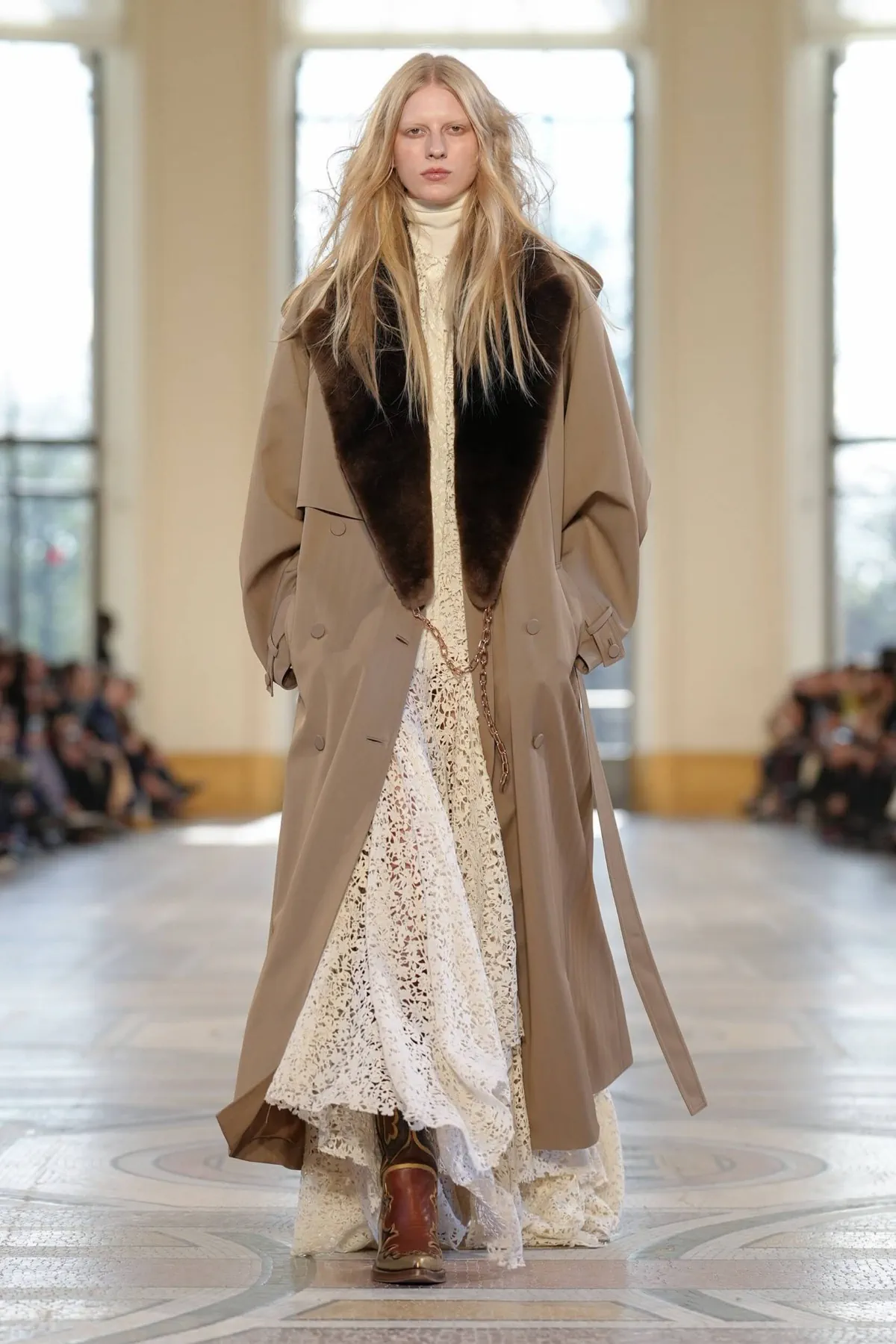
For Hearst, this is not a superficial tribute. The designer reportedly woke up in the night seized by visions of long lace gowns and striking white hair – a reference to Jebb’s prematurely silvered locks which earned her the nickname “the white flame” among friends. This image is present throughout the Fall 2026 collection: ivory, floor-length dresses crafted from proprietary cashmere lace; pointelle knits; and hand-crocheted separates made by Madres y Artesanas, a women’s artisan collective based in La Paz, Bolivia.
The clothes themselves are worth examining closely. There are dense double-faced recycled cashmere cocoon coats; shearlings sourced in South Africa that are so soft they seem almost absurdly luxurious; and herringbone tweed handwoven from Scottish wool and Italian cashmere. The materials are handled with a precision bordering on obsession. Hearst matched herringbone patterns from the tailored outerwear to the knit separates worn underneath. Then, she carried the motif further into silk georgette blouses, suede footwear, and repurposed leather handbags. The effect is not merely coordinated, but almost architectural; each layer is a deliberate echo of the one beneath it.
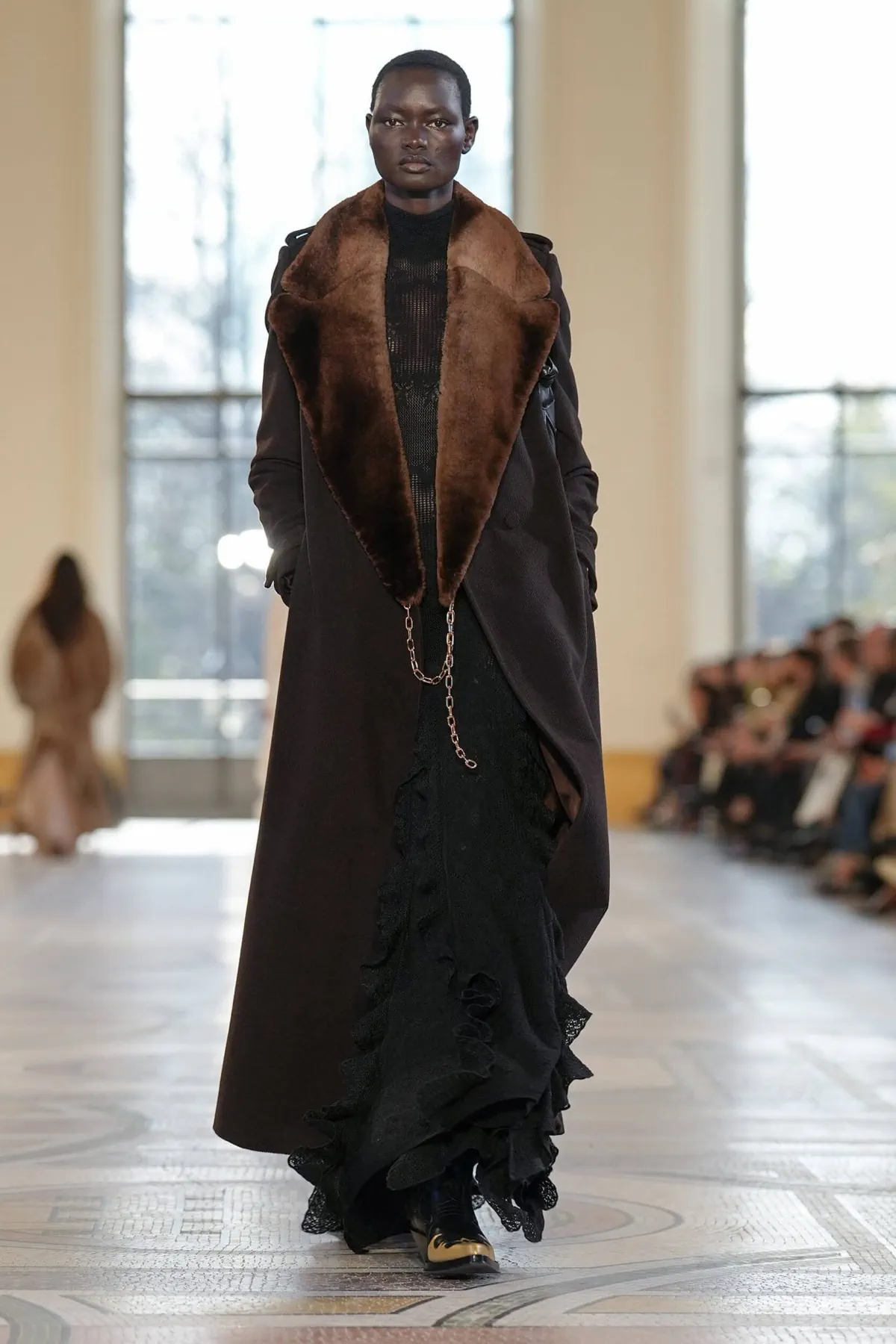
The tailoring category, one of Hearst’s growing strengths, holds its own here. Oversized blazers and wide-leg trousers form tonal ensembles that can be worn alone or under the collection’s substantial outerwear. Removable fur collars repurposed from vintage pieces and secured with the house’s signature rose-gold-plated link chains add warmth and flexibility. A trench coat, a garment invented during Jebb’s Edwardian era, appears here in cross-dyed wools with a subtle sheen that feels practical yet refined.
| 📌 Key Facts |
|---|
| 🧵 The collection draws inspiration from Eglantyne Jebb, founder of Save the Children. 🕊 Jebb helped draft the Declaration of the Rights of the Child after World War I. 🧶 Ivory cashmere lace gowns, pointelle knits and hand-crocheted pieces anchor the collection. 🧥 Double-faced recycled cashmere coats and refined trench silhouettes define the wardrobe. 👢 24 hand-painted cowboy boots illustrate moments from Jebb’s life. |
Follow all the latest news from Fashionotography on Flipboard, or receive it directly in your inbox with Feeder.
You may also read

Then there are the cowboy boots. Hand-painted by Spanish artist Almudena Cañedo, twenty-four unique pairs depict the arc of Jebb’s life: countryside horseback rides and childhood play in Shropshire, the loneliness and intensity of her years at Oxford, and the mature work of a woman who moved continents to save lives. The palette shifts accordingly: light blue, golden birch, and camel in youth, and olive, chocolate, and plum later on. These are objects that reward attention, and they reinforce what distinguishes Hearst from designers who merely reference a muse without delving deeper.
A broader point is being made here, even without a word being spoken on the runway. The show took place at the Petit Palais in Paris on March 9th, 2026, while the global conversation around children caught in conflict zones grew louder by the week. Hearst had committed to Jebb as her source of inspiration long before recent headlines, but the timing amplified everything.