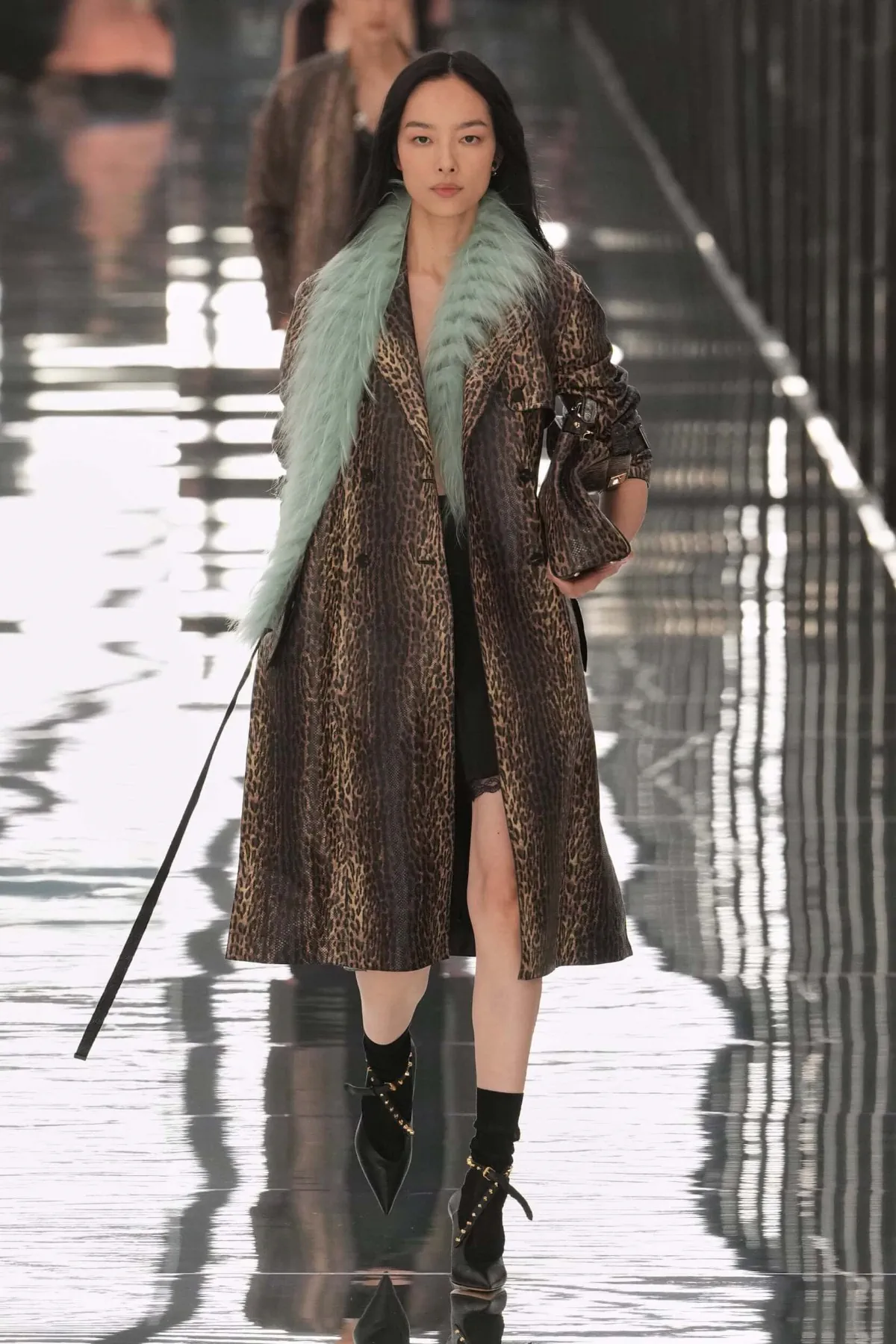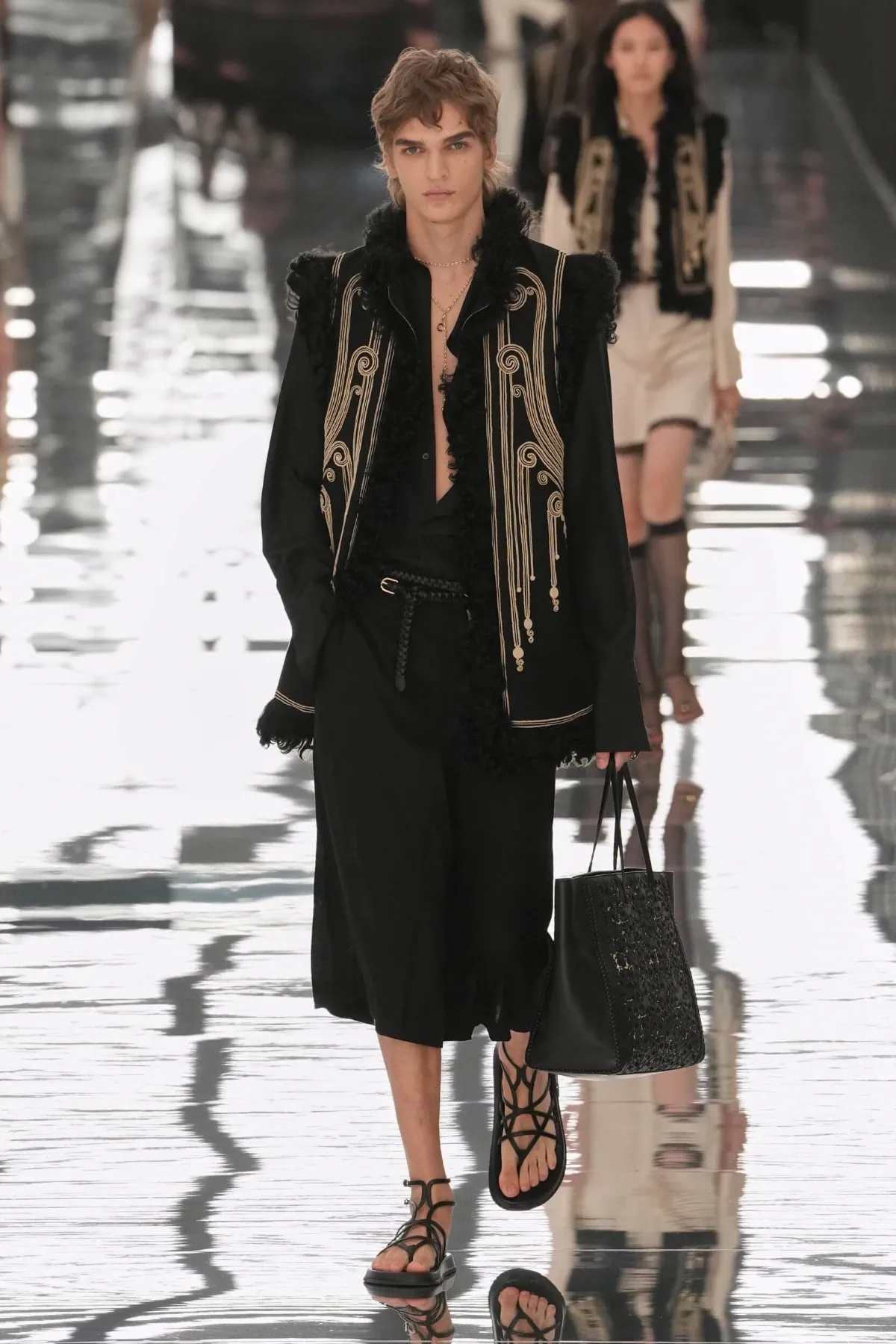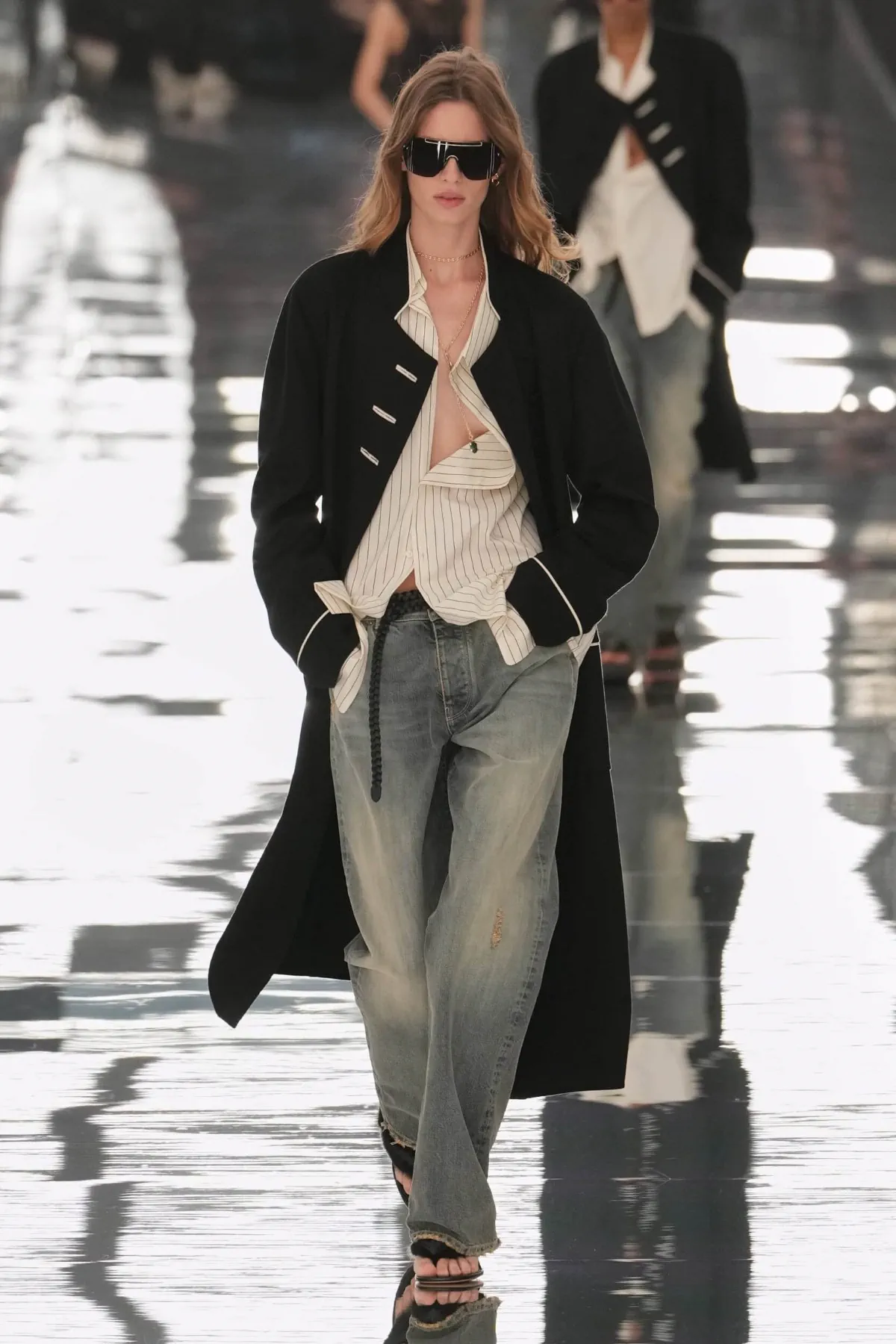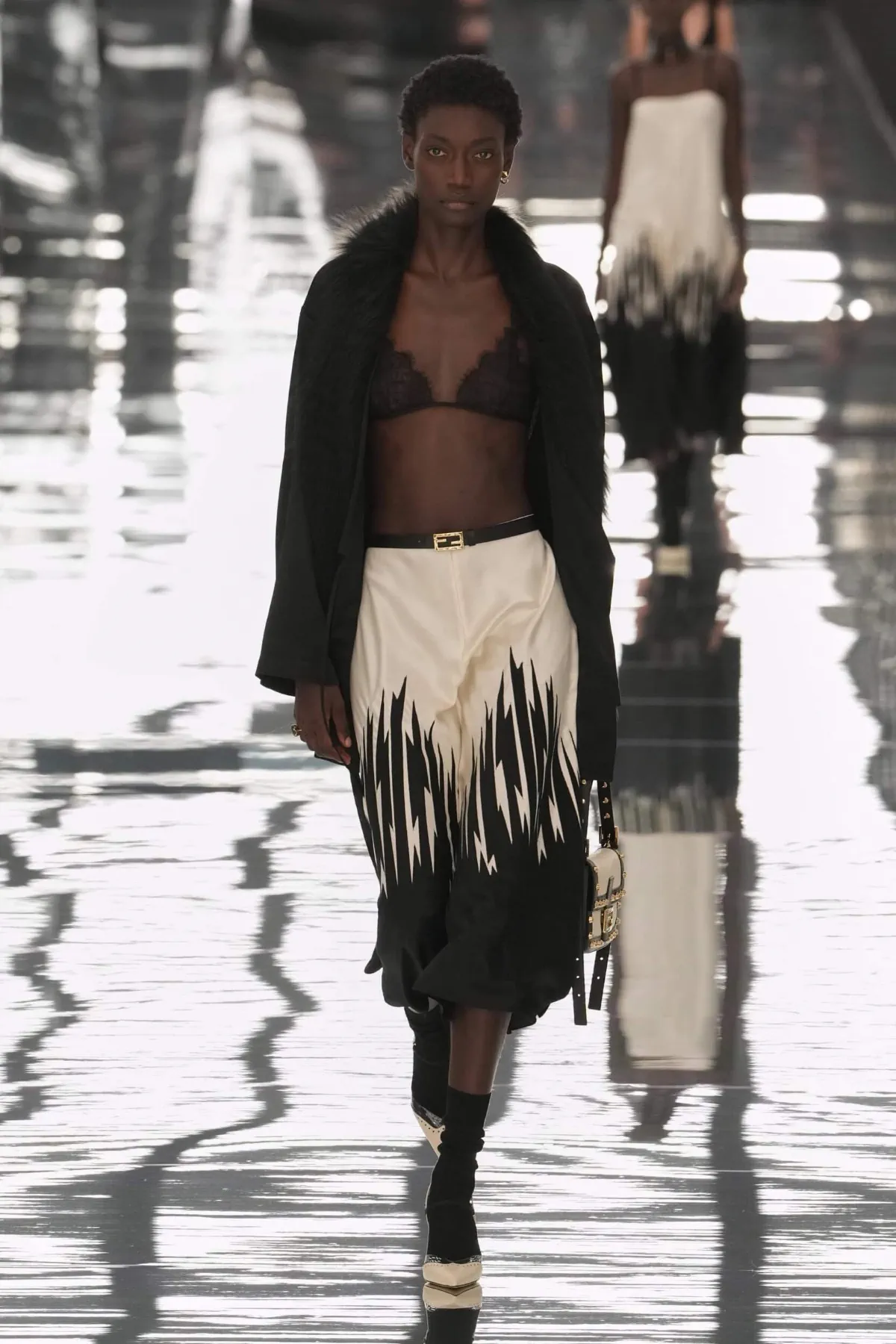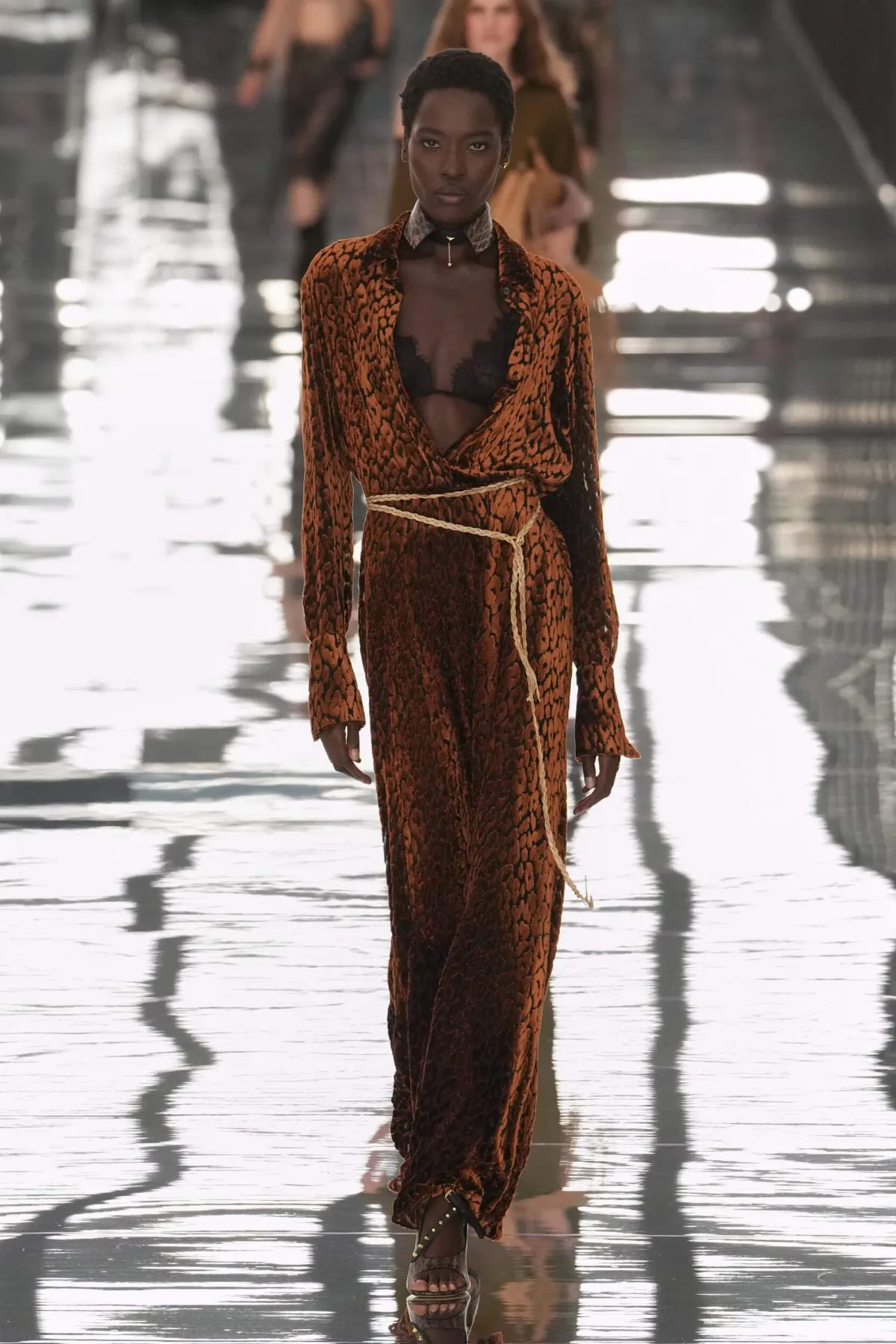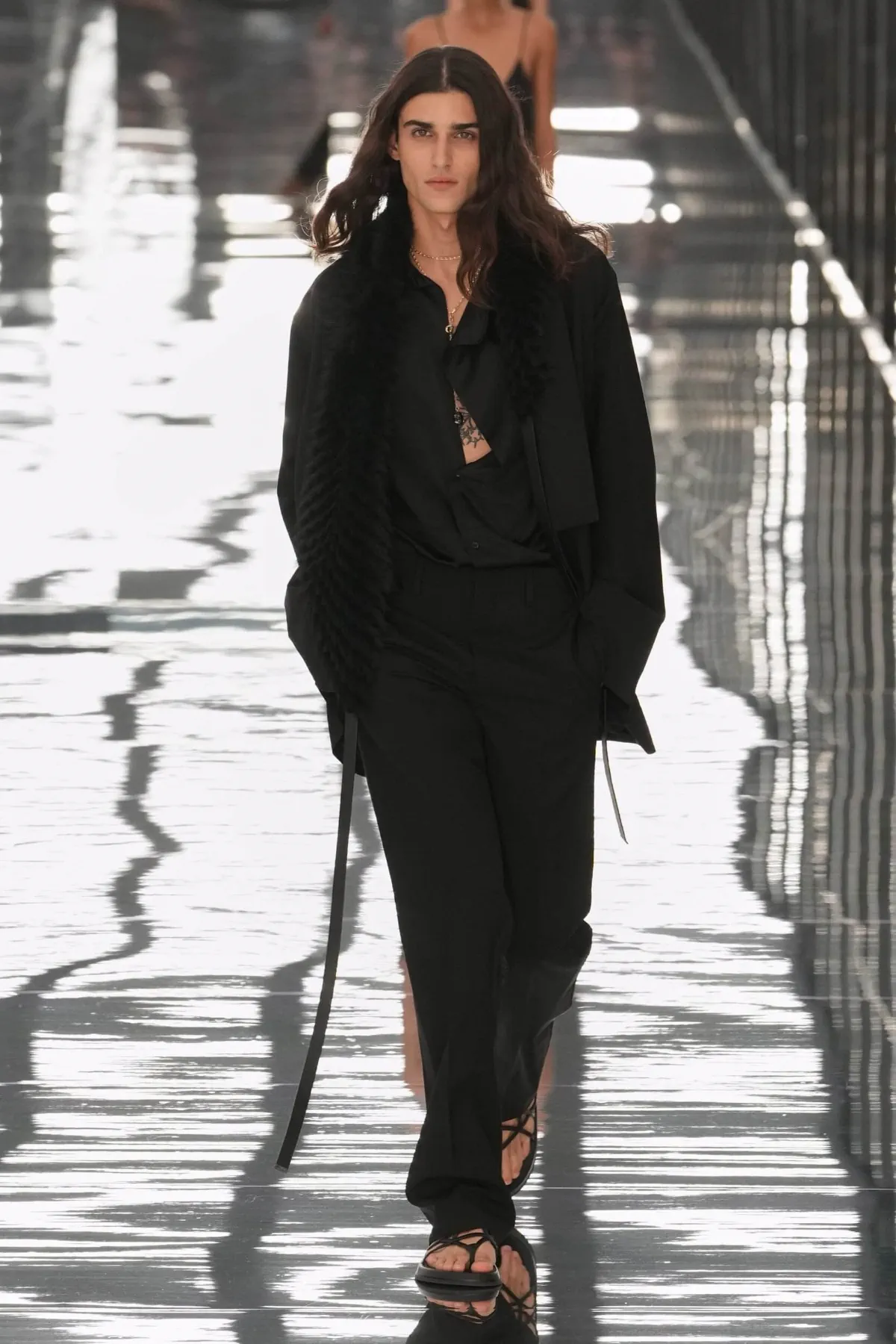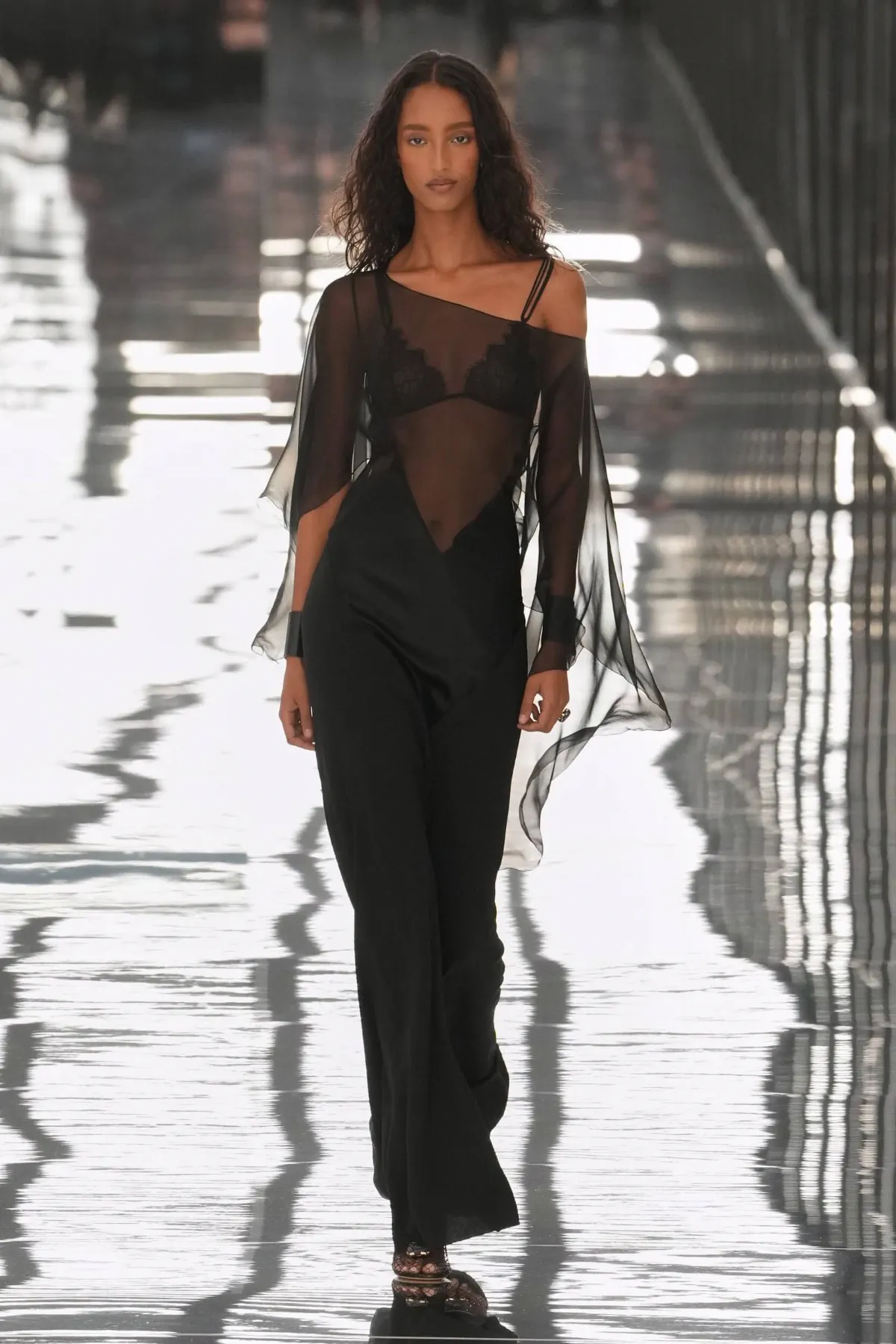

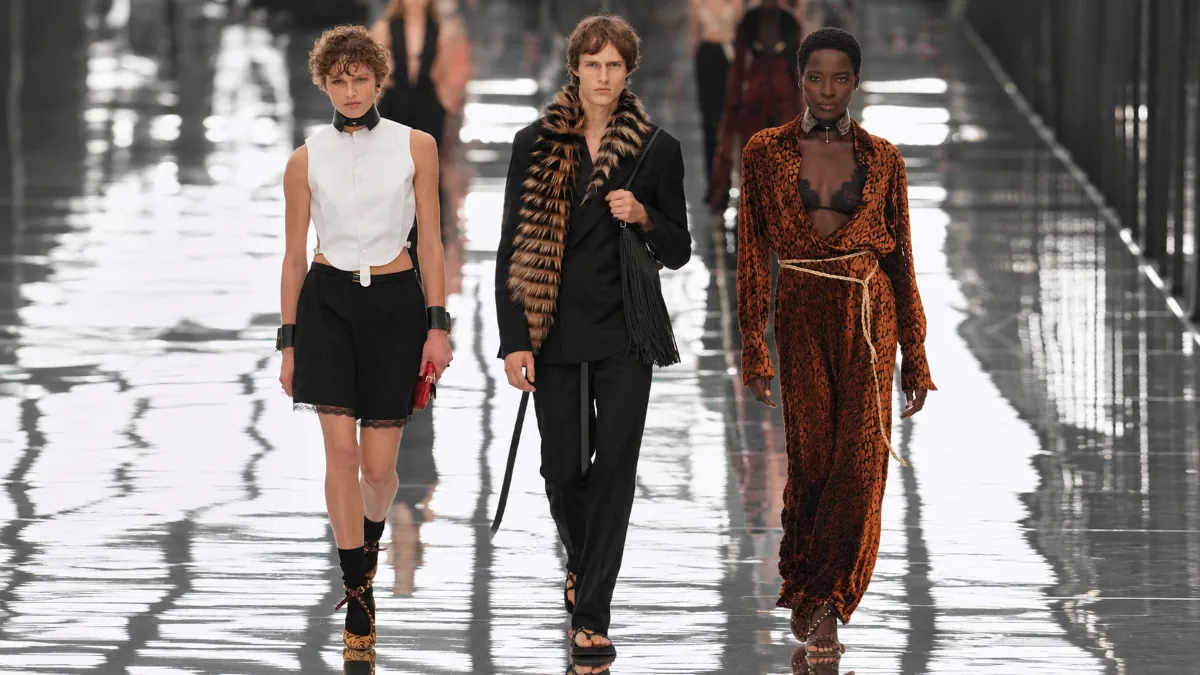
| Fendi presented its Spring 2027 ready-to-wear collection in Milan, designed by Maria Grazia Chiuri in her second season at the house. The show took place inside a mirrored set inspired by Italian artist Luciano Fabro. The collection featured lingerie-inspired shapes, sheer fabrics, reinterpreted fur, and a miniature baguette bag sized to hold only a phone. Chiuri continued her shift away from Fendi’s formal, logo-driven aesthetic toward a softer, body-driven silhouette. |
Even before a single look hit the runway, the audience had already become the show. Seated inside a mirrored box at the brand’s Milan headquarters, guests saw themselves before they saw the clothes – a half-second of self-recognition that Maria Grazia Chiuri based her entire second ready-to-wear collection for the house on. It’s a small trick, but it establishes the tension that the rest of the collection plays with: How much of yourself do you reveal, and on whose terms?
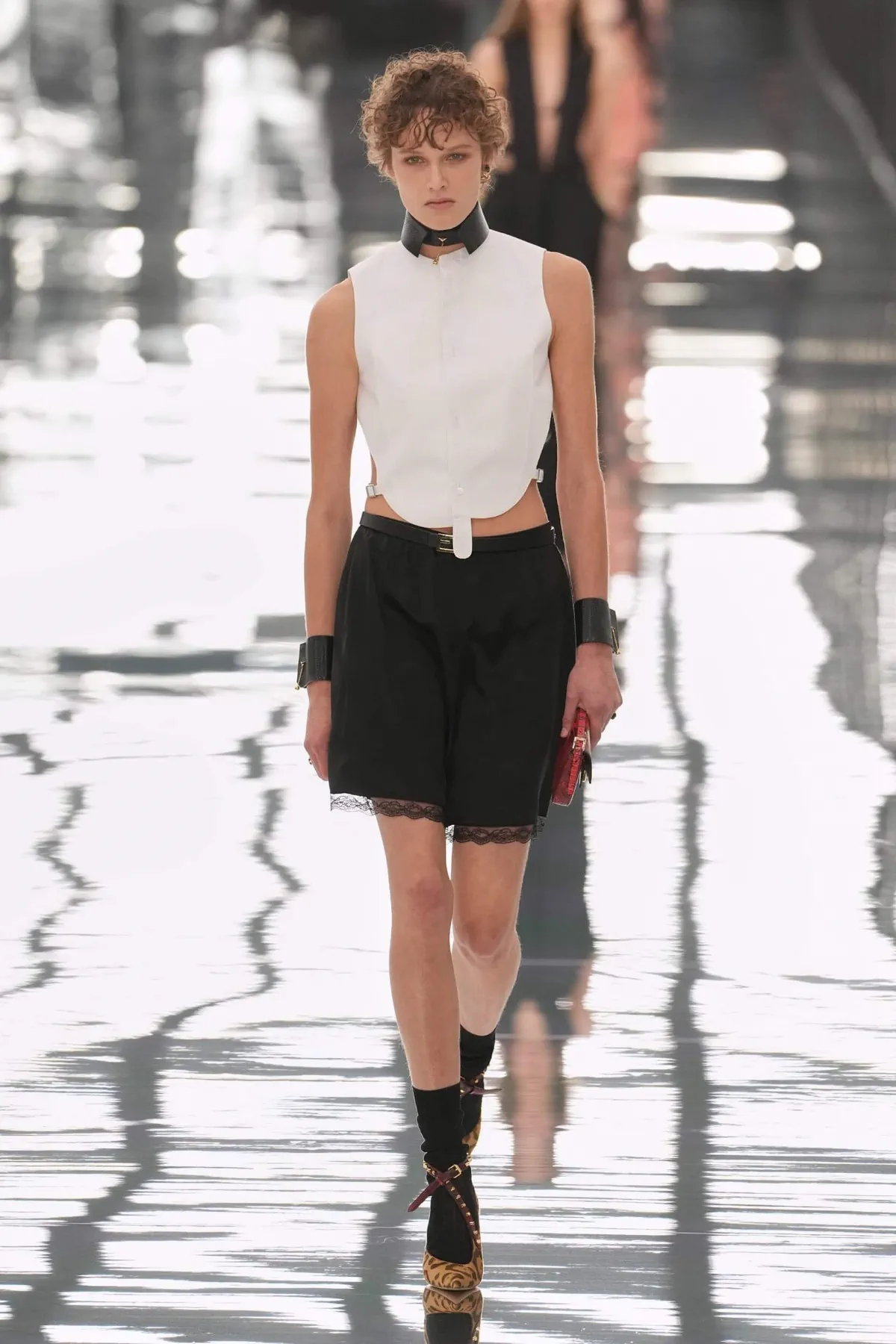
Chiuri has spent her brief tenure at Fendi moving the brand away from stiff formality toward a more relaxed aesthetic. This season, she leaned into lingerie shapes, slip dresses, and lace rompers, all cut with a frankness that felt new for a brand once known for its seriousness in the fur trade. Sheer fabrics played a significant role in the show, not as a gimmick, but as a means of allowing the body to dictate the silhouette.
Fringed bags, dangling fur tippets, and folkloric vests gave the collection a loose, nomadic energy. Nothing felt overworked. A backless black dress with grommet cutouts was paired with a lace bralette and silk shorts, and the combination never felt jarring. It read as a designer figuring out what her Fendi woman actually wants to wear once the focus shifts away from logos.
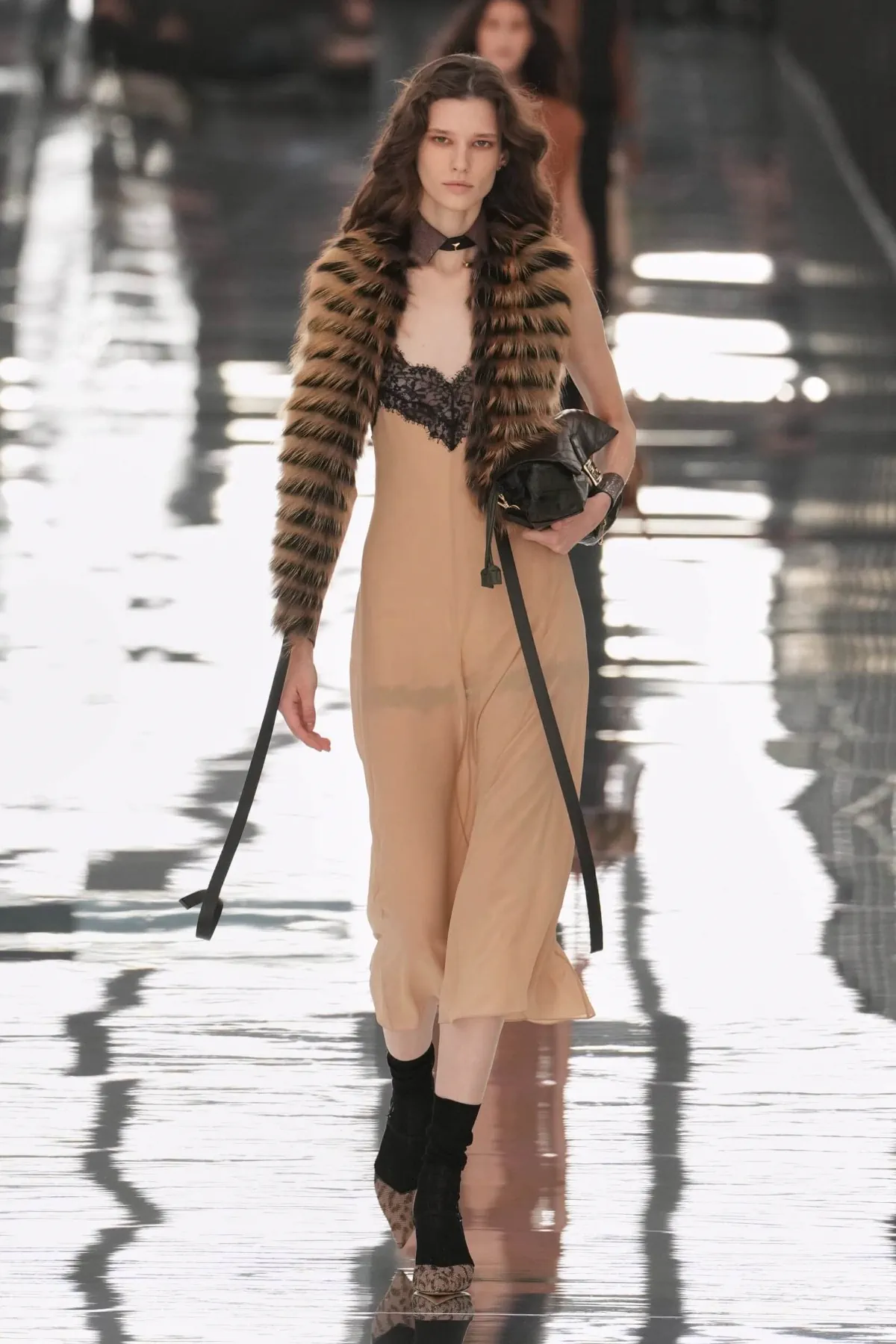
Fur, once treated at Fendi like scripture, showed up reinterpreted rather than reproduced. Before the show, Chiuri described fur as a starting point for lightness rather than heaviness. This idea shaped clinging dresses with cutout portholes and a menswear jacket cut from roughly finished pelts. The founding Fendi sisters built the company’s reputation on fur technique. Chiuri seems intent on proving that this heritage can still thrive.
The mirrored set, inspired by Italian artist Luciano Fabro, forced editors and buyers to look past their own reflections to see the details in the fabric. Some in the audience grumbled about missing embroidery and lost silhouettes. Fair enough. However, the friction felt intentional, as if Chiuri wanted people to work for the payoff, much like she wants her customers to decide how much skin, structure, or sparkle they reveal on a given day. Other houses have used this staging choice for shock value, but Chiuri uses it as a literal demonstration of her thesis: fashion is not something you passively watch; it implicates you the second you walk in. This is a more difficult feat than a simple set design, and it’s the detail that distinguishes this show from a typical collection recap.
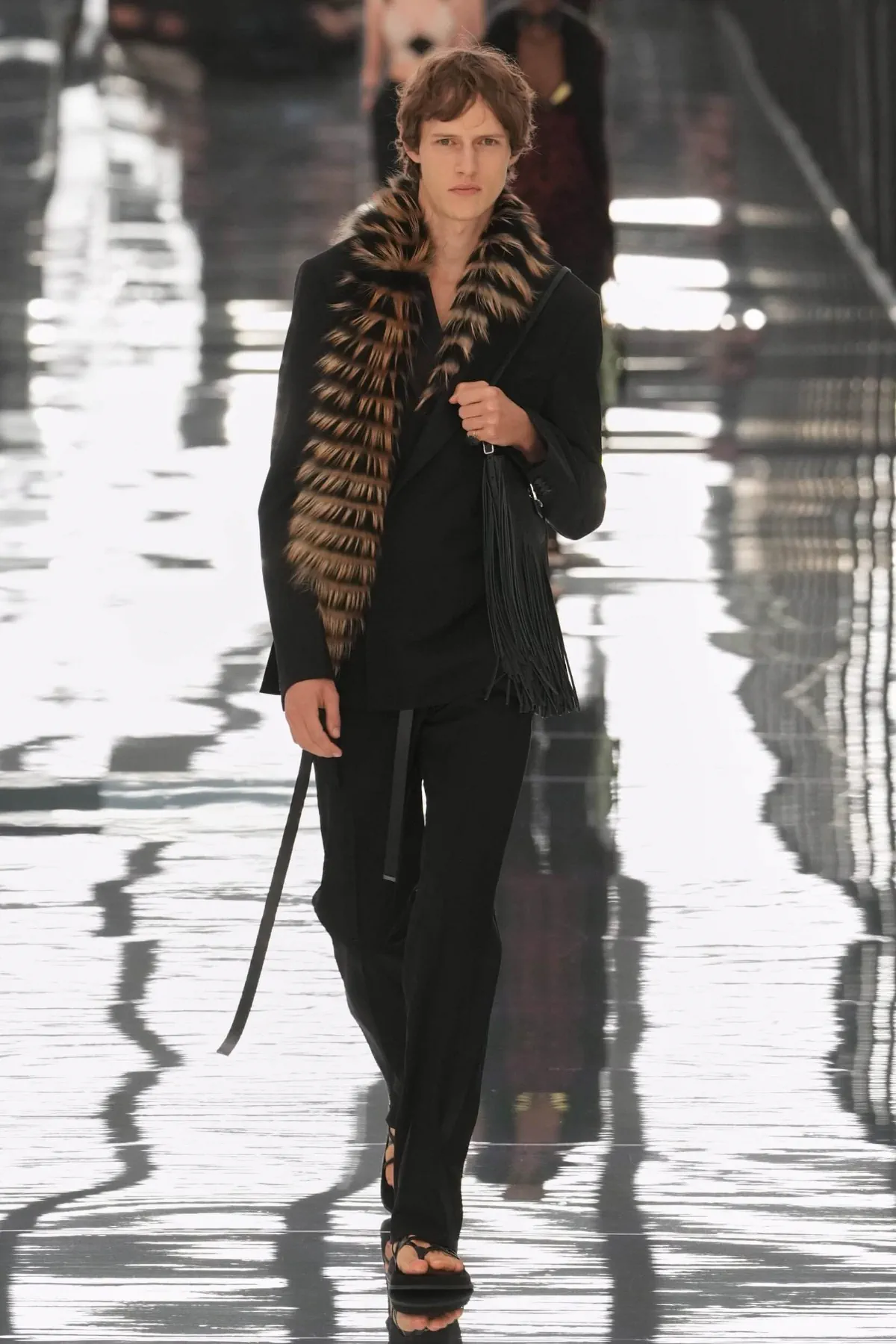
Color crept in where black once reigned supreme. There was leopard print, gold frogging on a black coat dress, and an Afghan-inspired silhouette in brown astrakhan. A striped shirt was open low at the chest, nodding to the Italian pop tradition that clearly shaped her mood board this season. Disco records were spun through the soundtrack. The reference points felt personal rather than decorative, which is rarer than it should be on a runway this size.
Chiuri also mentioned a miniature version of the house’s signature baguette bag, resized to hold only a phone. It’s a subtle joke about how little most people carry nowadays and a comment on a bag that once defined excess. Not incidentally, it’s also a preview of the kind of item that will likely travel far beyond the fashion press. A shrunken cult accessory is instantly recognizable, even to people who can’t name a single look from the runway.
Follow all the latest news from Fashionotography on Flipboard, or receive it directly in your inbox with Feeder.
You may also read

The Fendi logo, designed decades ago, was meant to stand for playfulness. Recent Fendi shows have mostly skipped that part. This one, with its sensual cuts and Roman disco pulse, finally brought some fun back to the show without losing the precision that makes Chiuri’s work worth watching closely.
Spring 2027 will not answer all the questions people have about where Fendi will go next under Chiuri. It does answer one, though. Chiuri wants to design clothes that make you look twice: first in the mirror and then at the woman standing in front of it. This is a reasonable ambition for a house built on fur and craft. Based on this collection, Chiuri is getting closer to achieving it, proving that a legacy house can loosen its grip on formality without losing its recognizable essence.