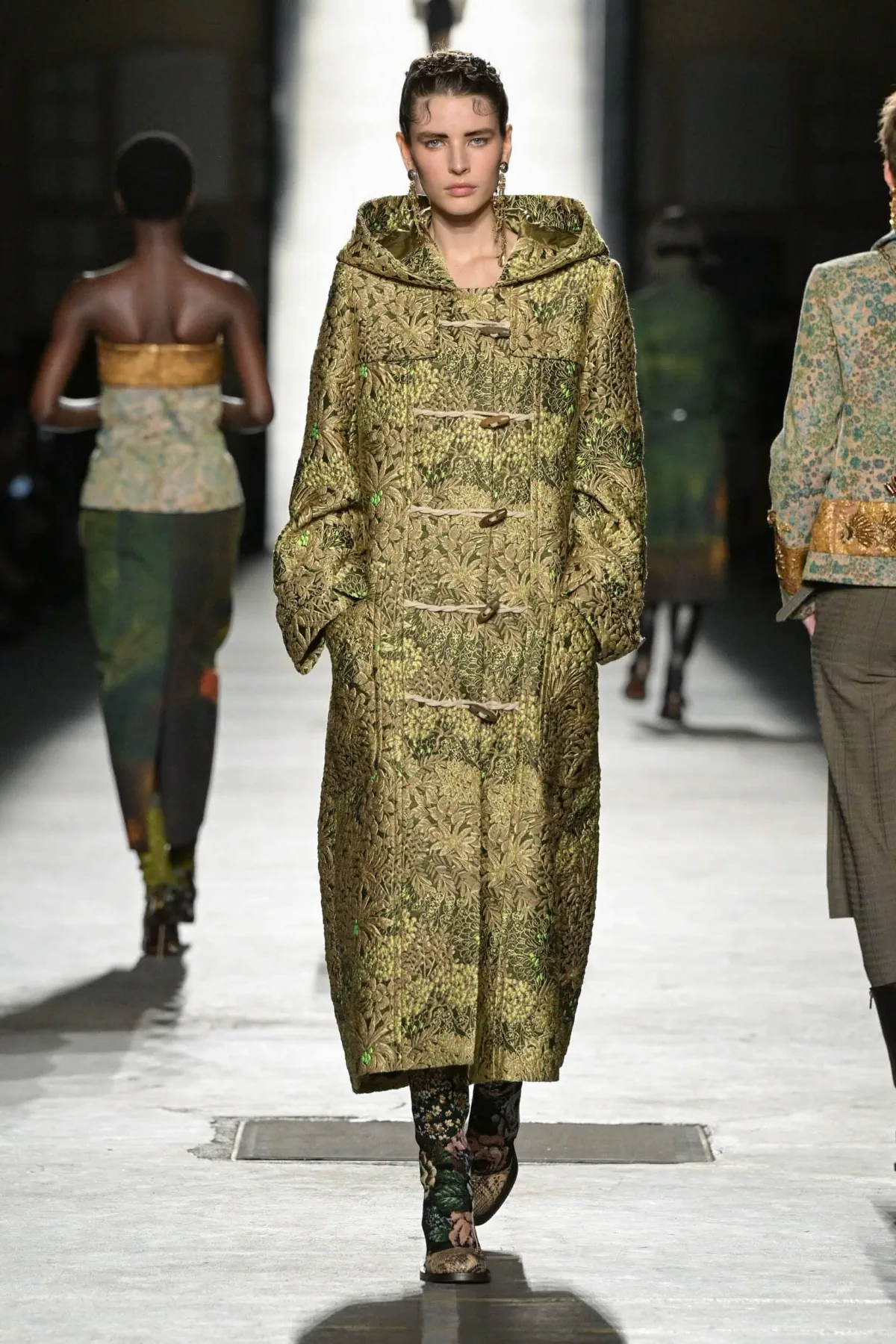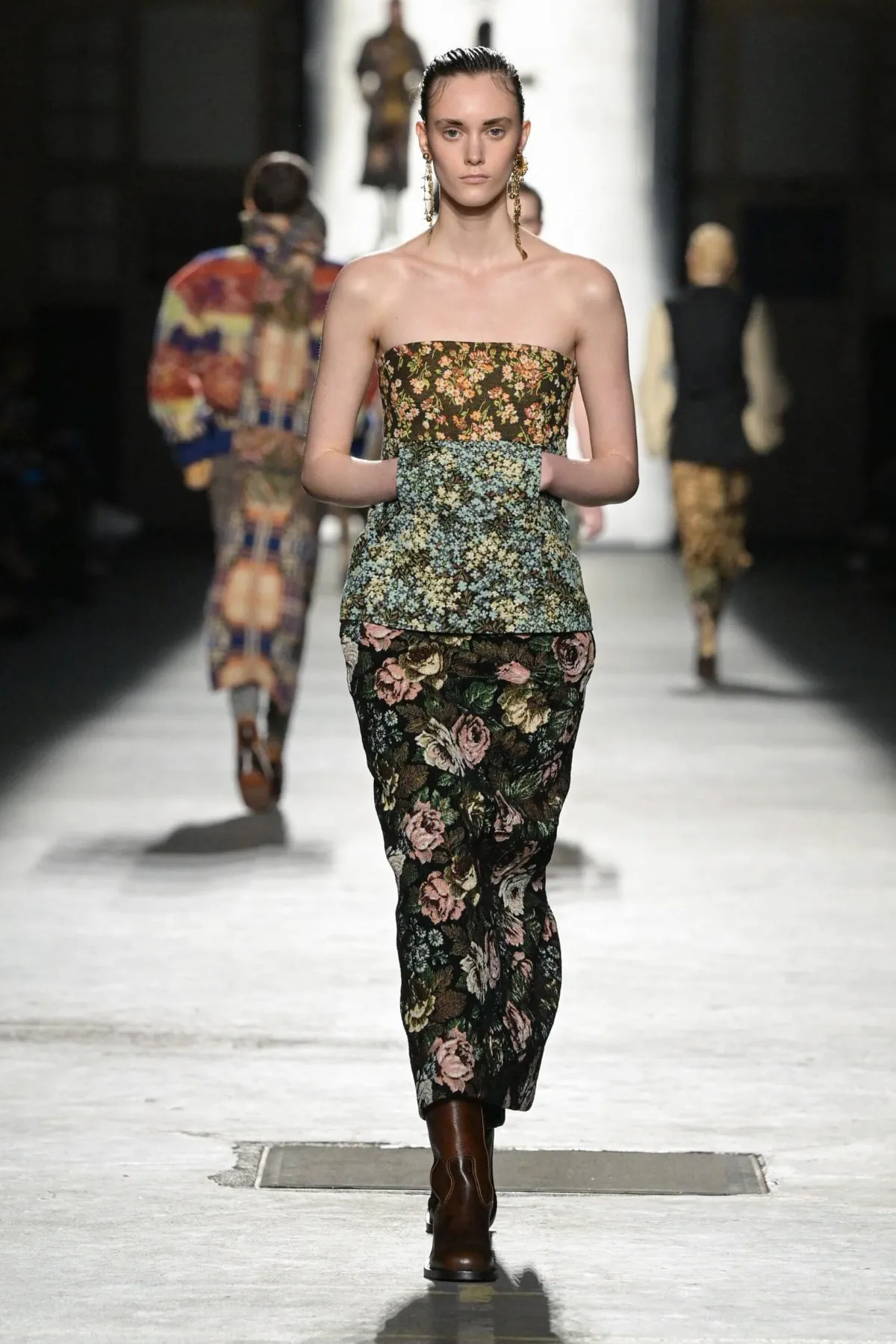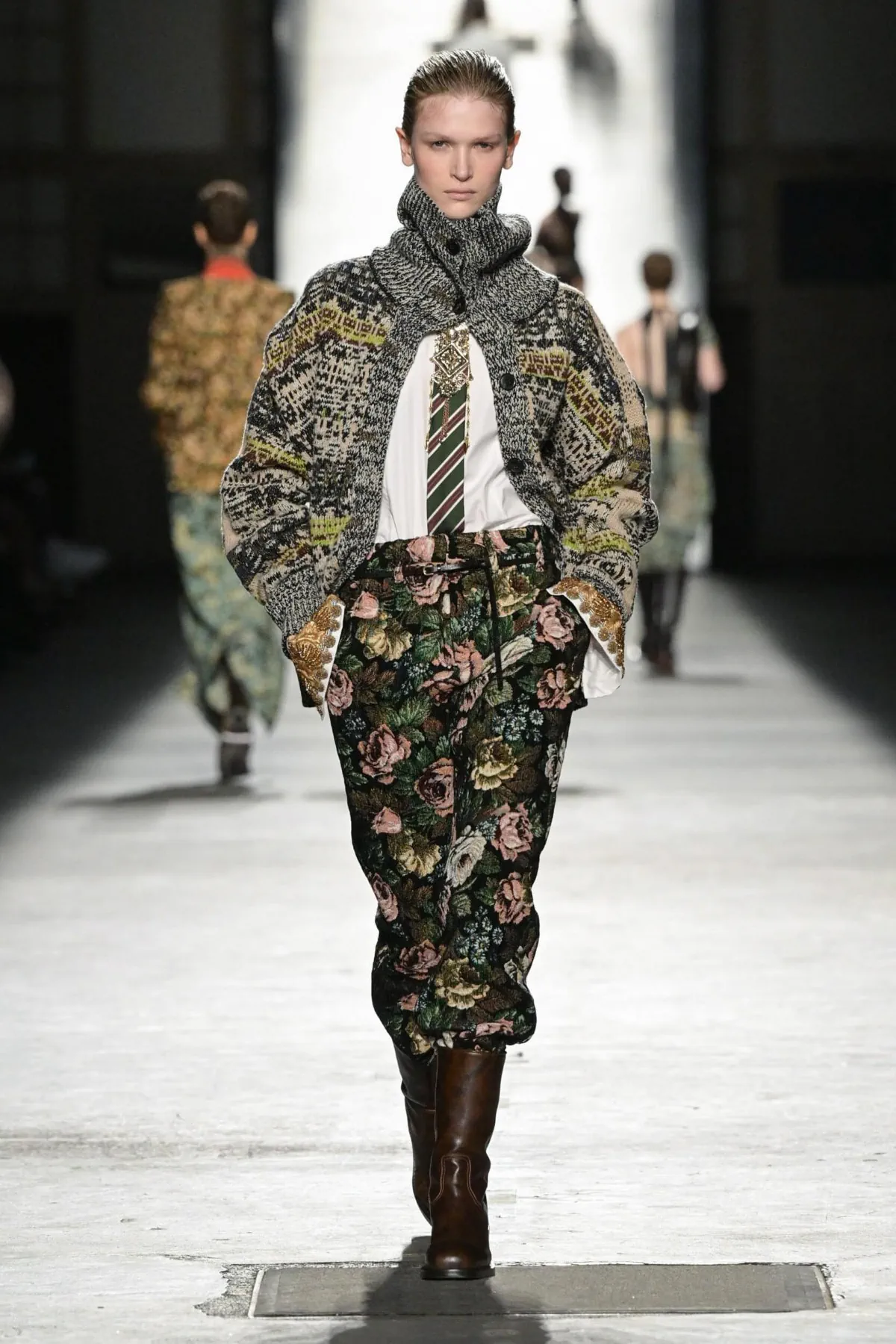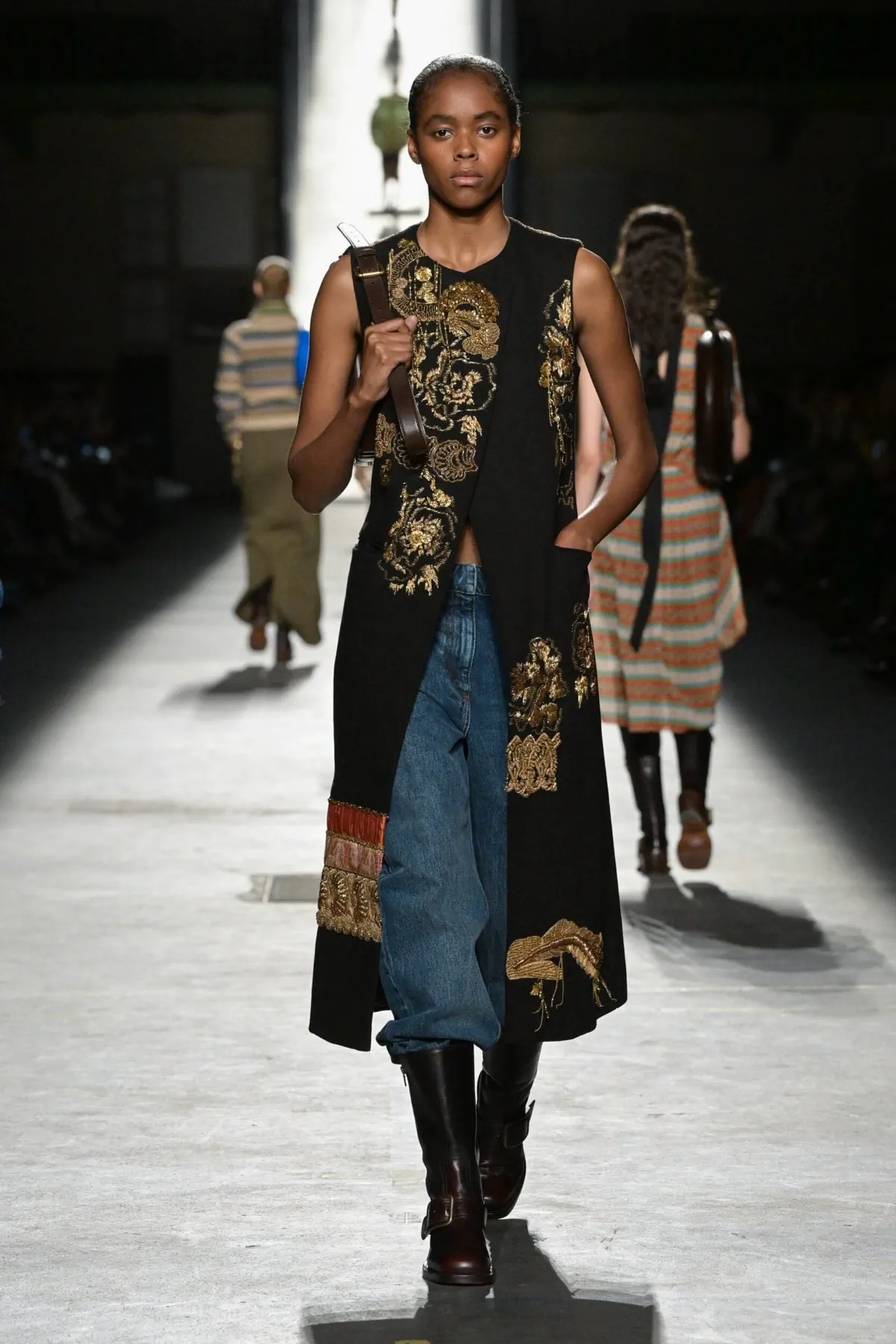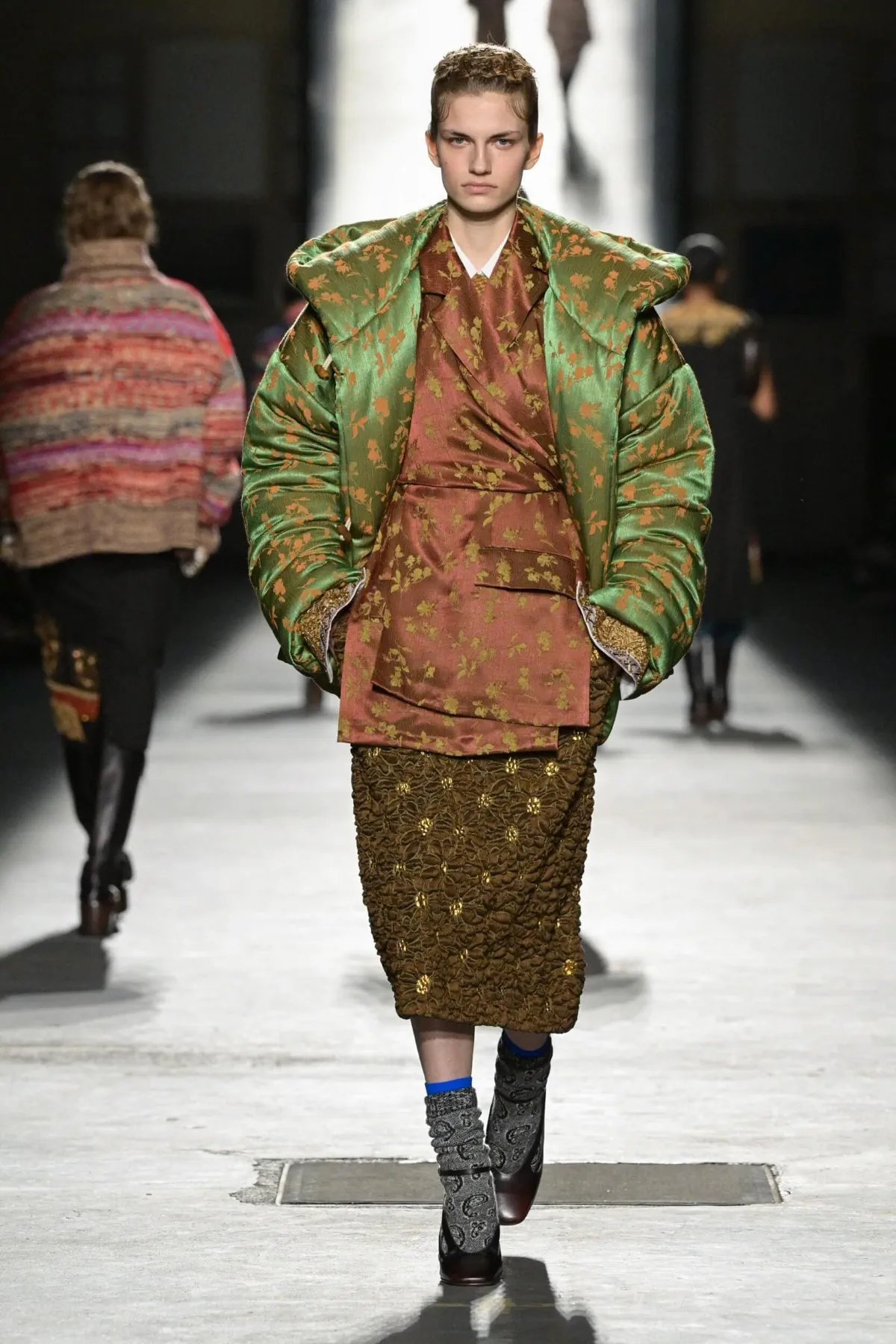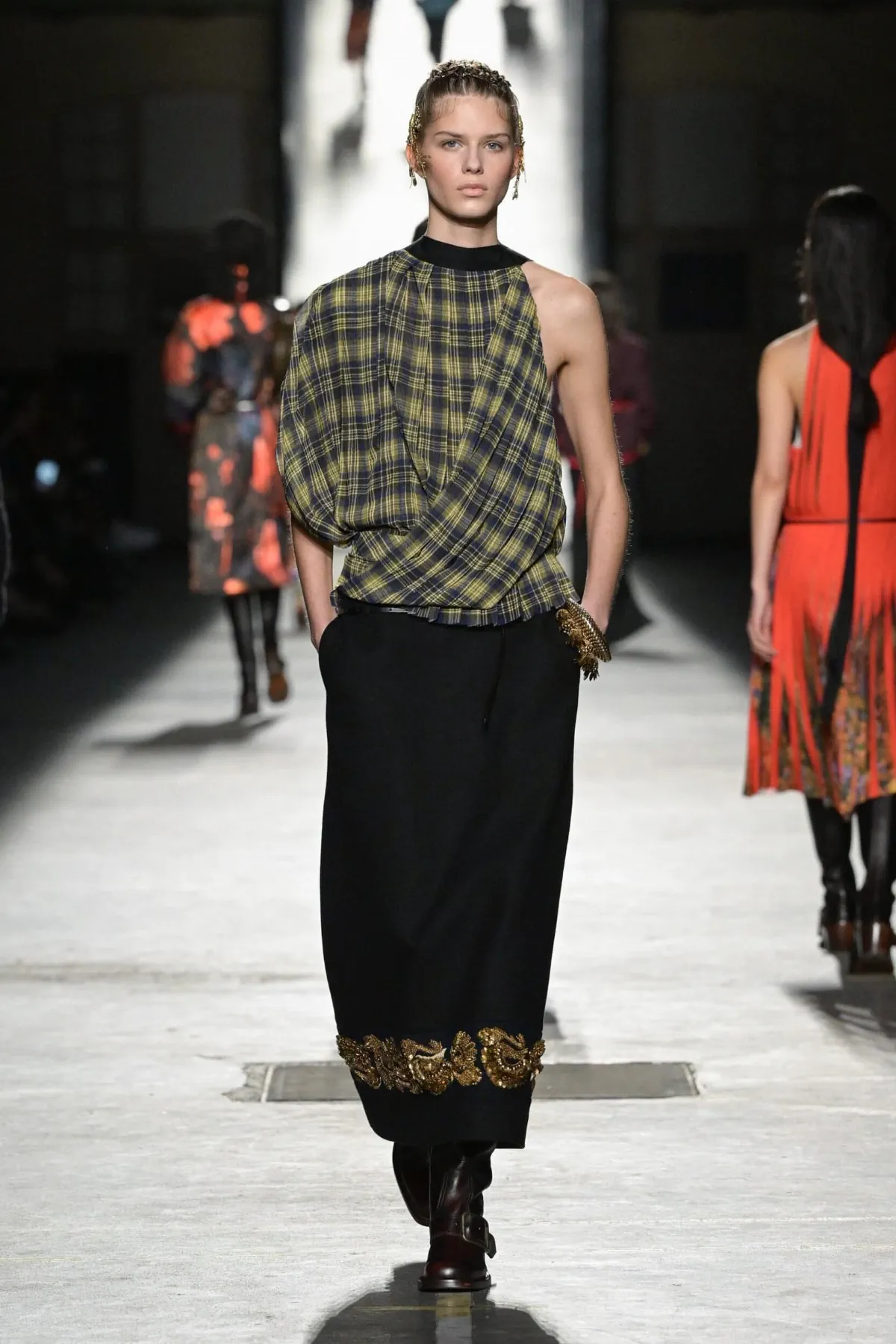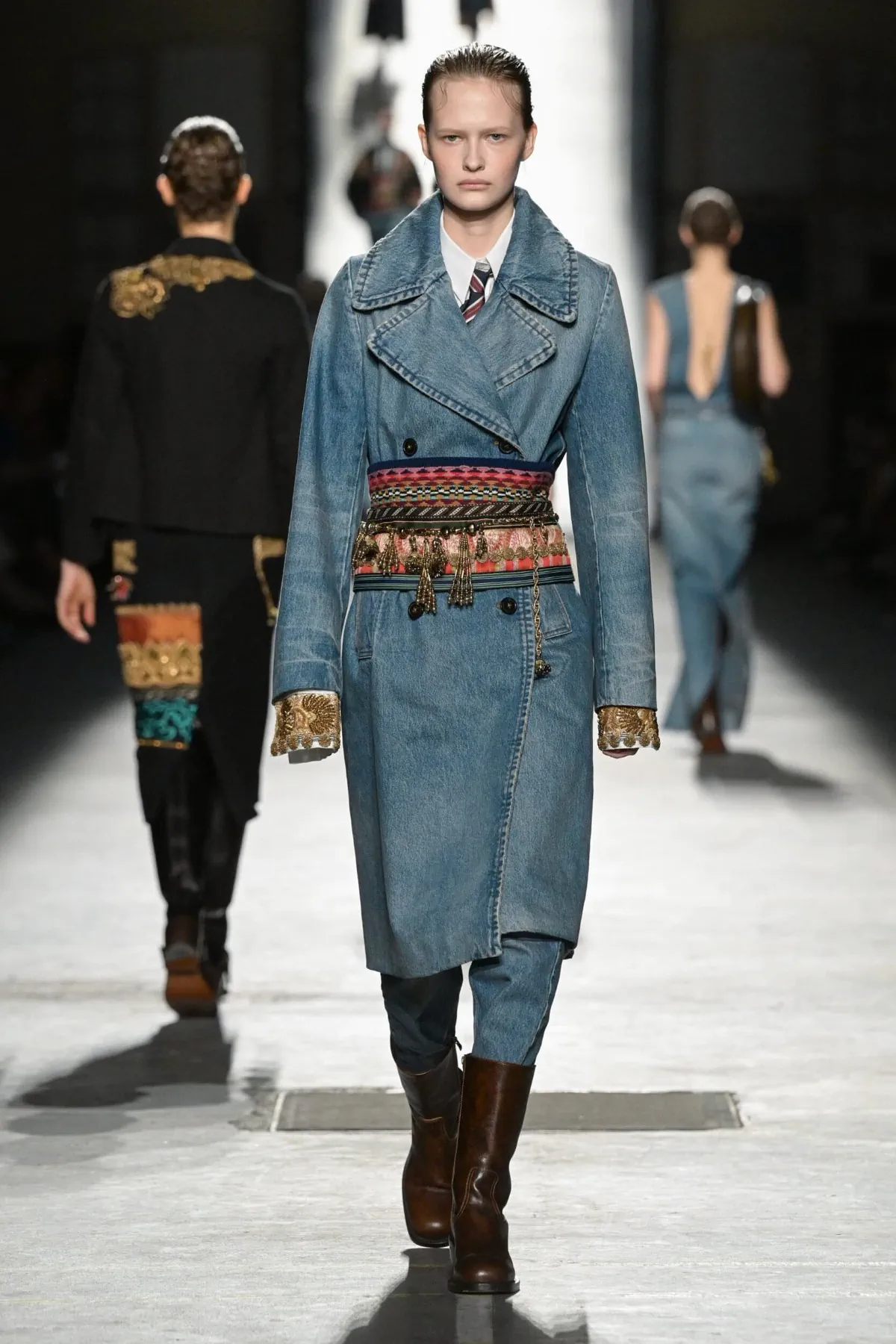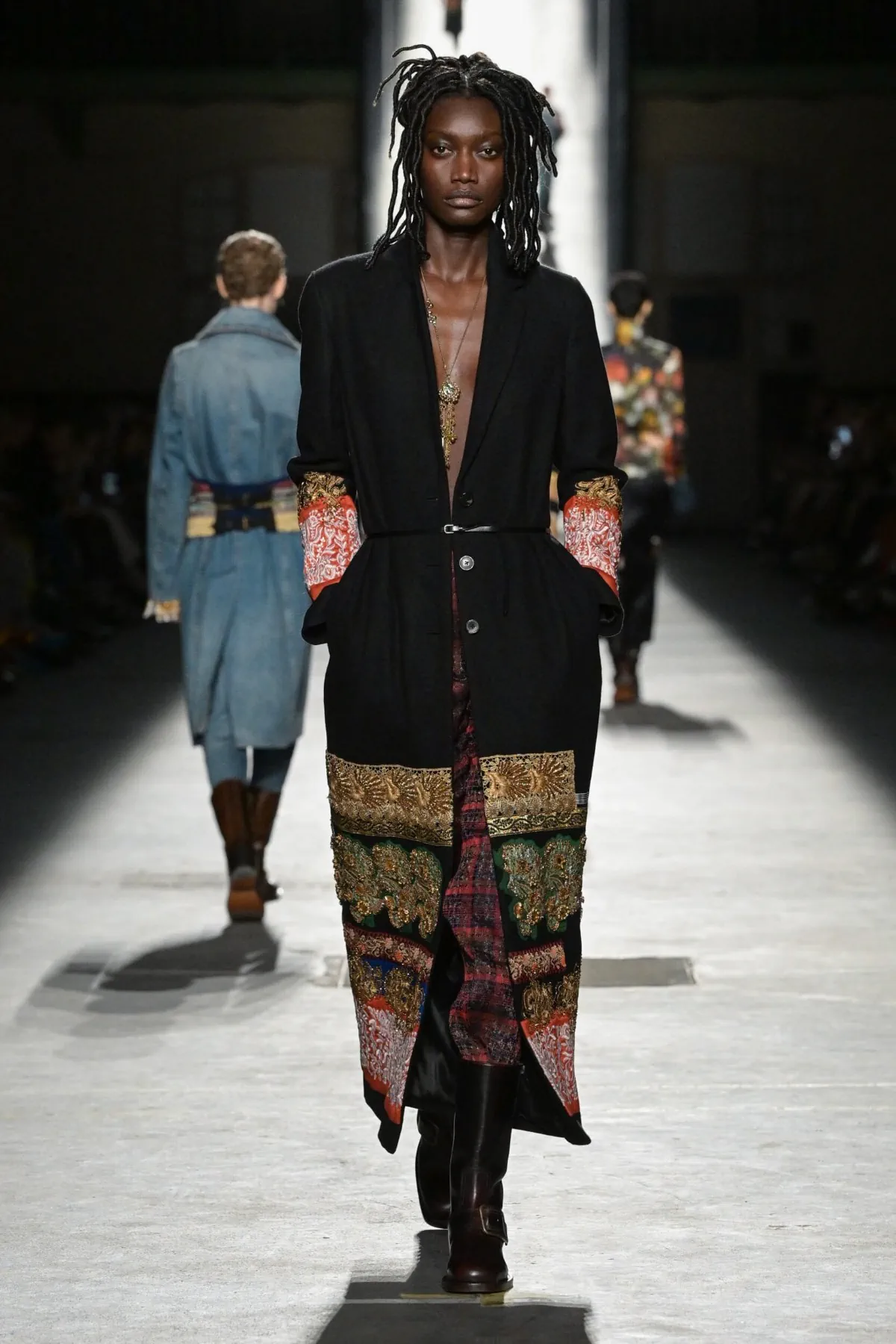

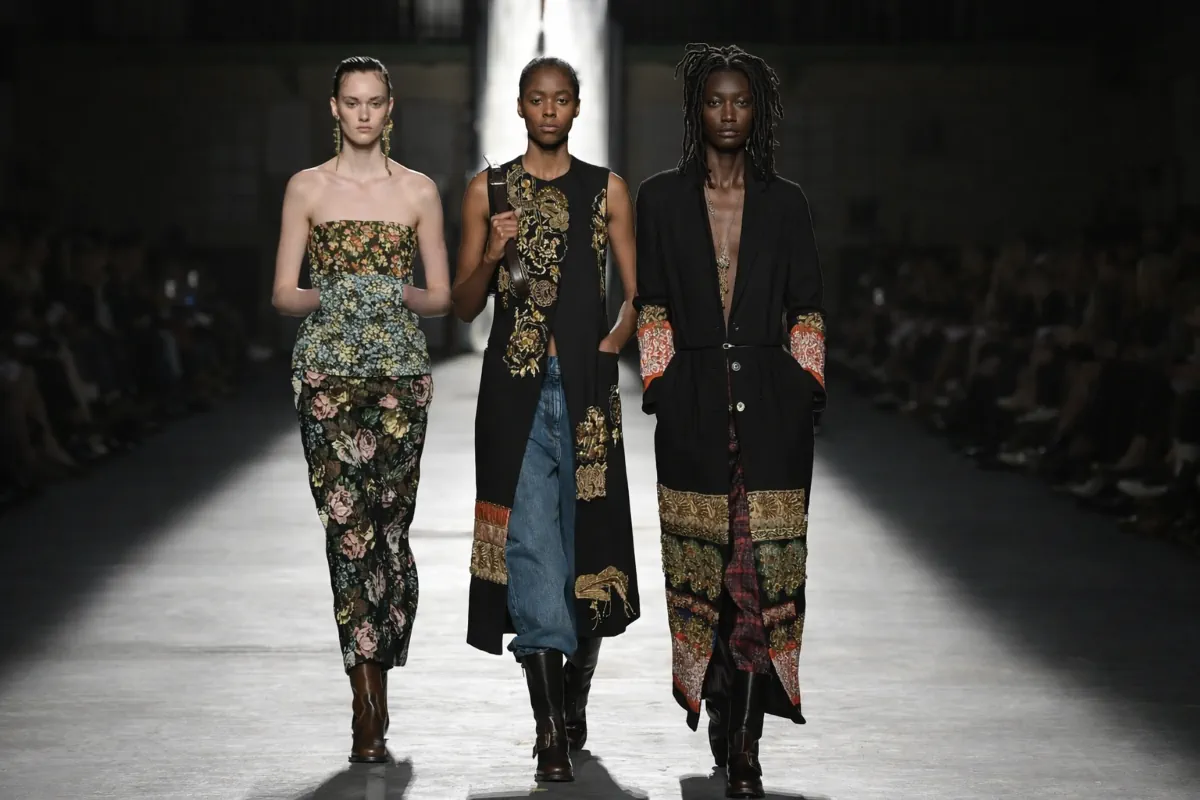
There’s a particular kind of longing that has nothing to do with fashion. Yet, Julian Klausner, Dries Van Noten’s Creative director, made it the center of his Fall 2026 collection. Not nostalgia for a designer’s archive and not a deliberate callback to a founding vision, but rather, something far more personal and universal: the feeling of being sixteen and not quite knowing who you are.
| 📌 Key Facts |
|---|
| 📍 Show staged at Lycée Carnot in Paris 👨🎨 Collection designed by Creative director Julian Klausner 🎓 Central inspiration: teenage identity and school uniforms 🖼 Visual references include XVII century Flemish still-life paintings 🧵 Key materials: embroidered ribbons, jacquard fabrics, sequins and glass beads 🧥 Signature silhouettes: toggle coats, varsity jackets, tailored blazers 🎨 Recurring motif: pixelated art patterns integrated into garments |
The show took place at the Lycée Carnot, a Paris high school that was emptied out for midwinter break. The choice of venue was not accidental. Klausner had visited the school shortly after his first women’s show. What stayed with him was what he witnessed: hundreds of teenagers flooding the hallways when the bell rang. There was something in the energy of that moment – the awkwardness, the self-consciousness, and the tentative attempts at self-definition through clothing – that struck him as deeply human. Not just adolescent, but human.
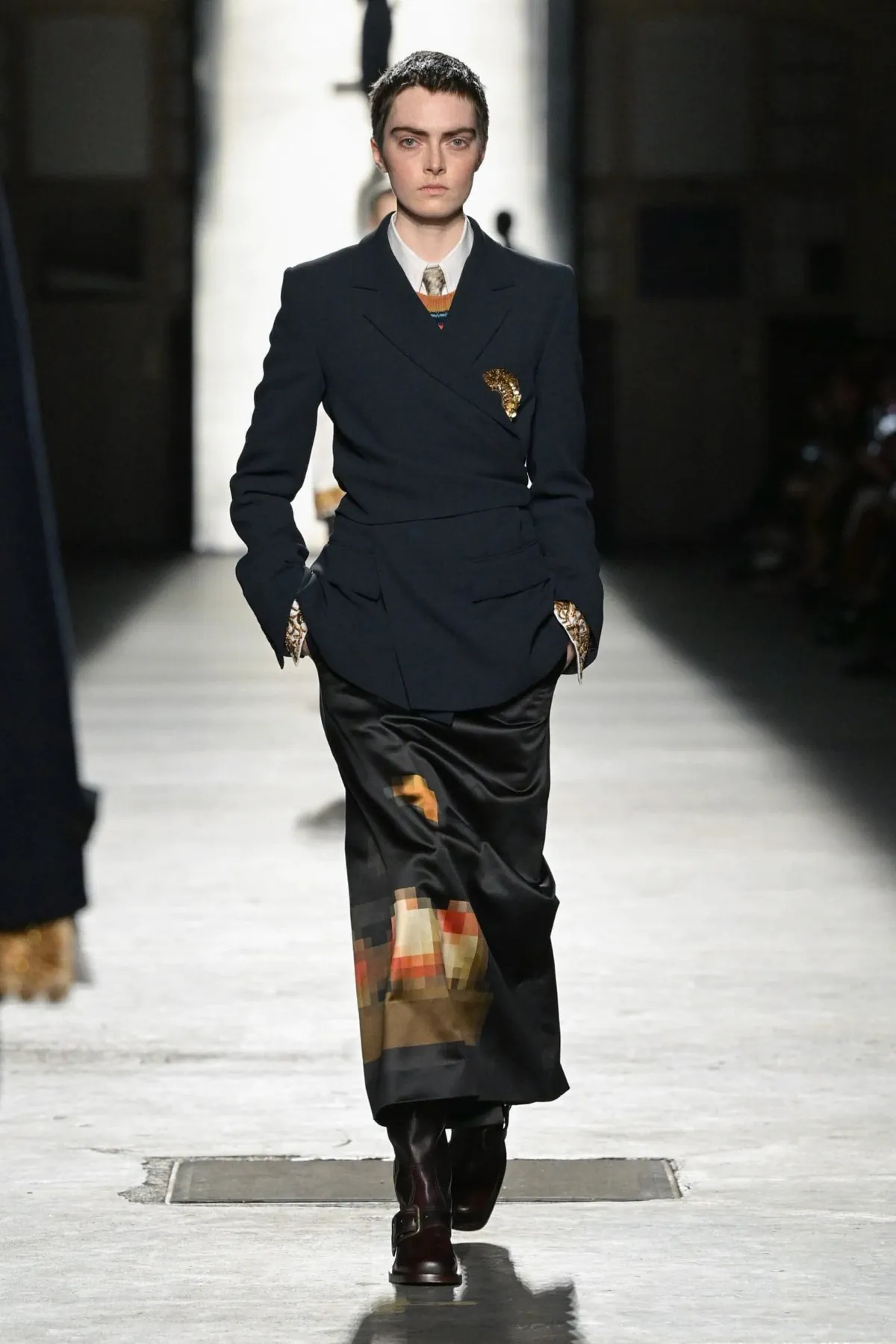
He started the collection where teenagers often start: with the uniform. There were toggle coats, crisp shirt-and-tie combinations, and neatly tailored blazers – the kind of clothes designed to make everyone look the same. But uniformity never lasts long, of course. Teenagers push back. They deface, personalize, reject, and reclaim. Klausner followed that same logic.
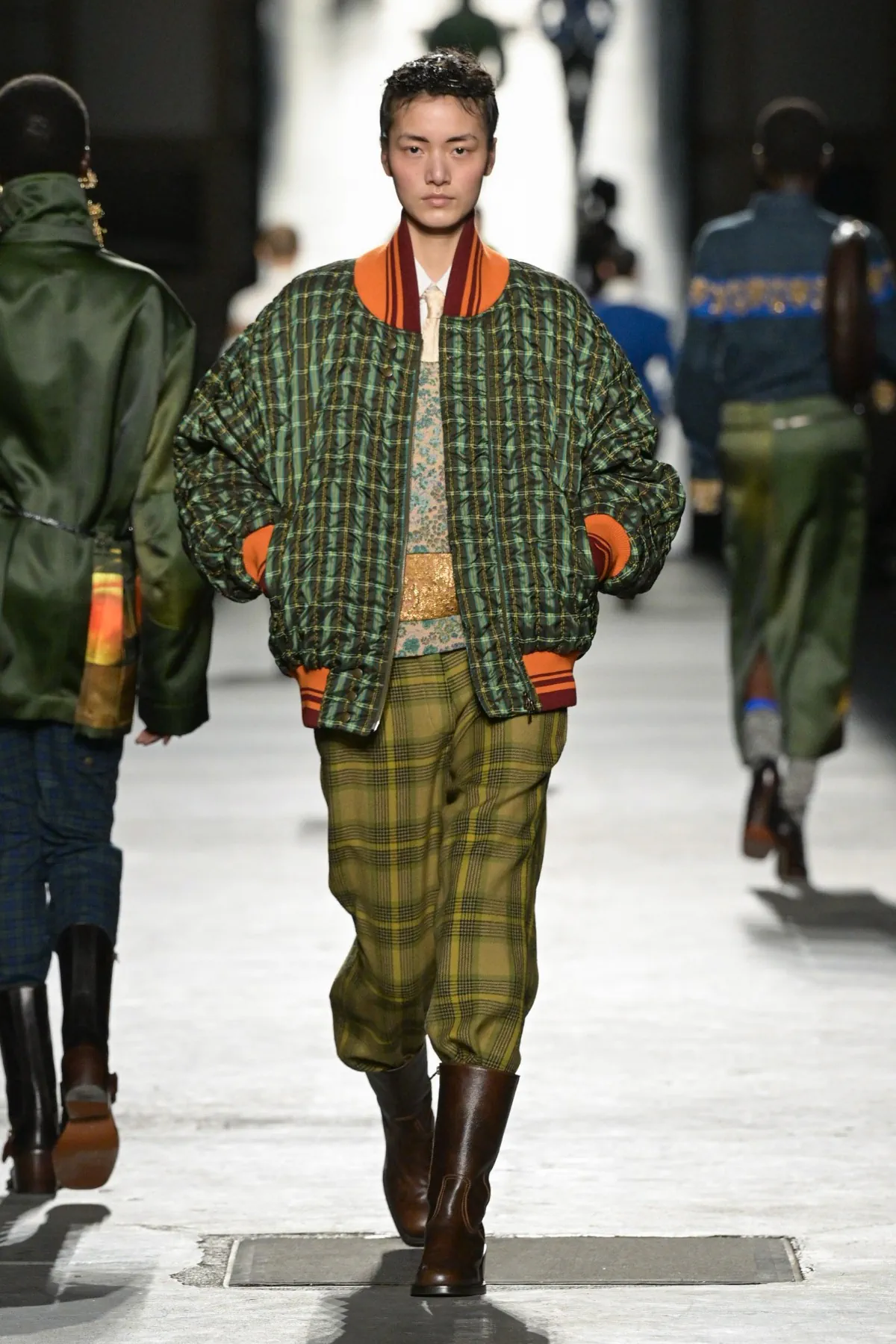
Grungy plaids entered the picture. So did oversized varsity jackets, some bearing gold crests. Flemish still-life paintings from the XVII century appeared on coats and skirts, sometimes rendered faithfully and sometimes pixelated into abstraction. The effect was that of a student who had wandered into an art history class and walked out wearing a panel from the wall. Embroidered ribbons were sewn onto jackets at angles suggesting spontaneity rather than calculation – the way a teenager might decorate a pair of jeans with whatever she has on hand.
The collection’s remarkable quality lay not in the volume of references, but in Klausner’s ability to hold them all together without letting the seams show. A collegiate jacket was paired with a skirt paneled in richly embroidered ribbons. A bronze jacquard coat with ribbed knit sleeves appeared, opulent and casual at once. A denim jacket was paired with a skirt adorned with pixels picked out in silk thread, sequins, and glass beads. None of it should have worked. Yet it all did.
Follow all the latest news from Fashionotography on Flipboard, or receive it directly in your inbox with Feeder.
You may also read

This is the particular genius that Klausner shares with the house’s founder – the ability to bring together things that shouldn’t go together and make the result feel inevitable. Van Noten built a career on that instinct, and Klausner is building on it rather than imitating it. He works from the same set of principles, but arrives at his own conclusions.
The collection was also notable for what it was not. It was not a tribute to the house’s past. Klausner is not interested in the kind of direct archival quotation that incoming creative directors often use as a shortcut, with one-to-one references meant to signal respect and continuity. Klausner is after something subtler: an emotional connection to the people who wear these clothes, rather than to the clothes that came before.