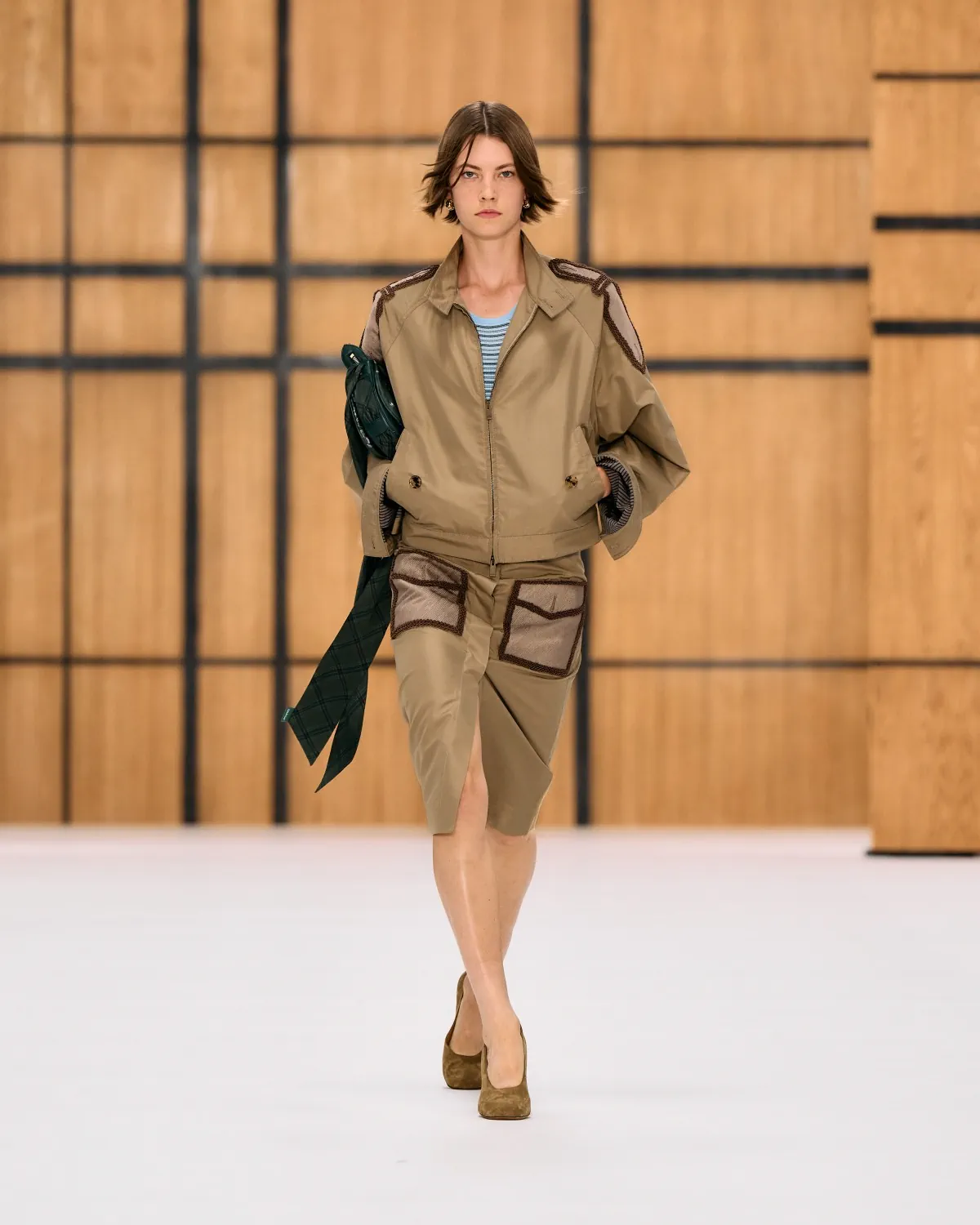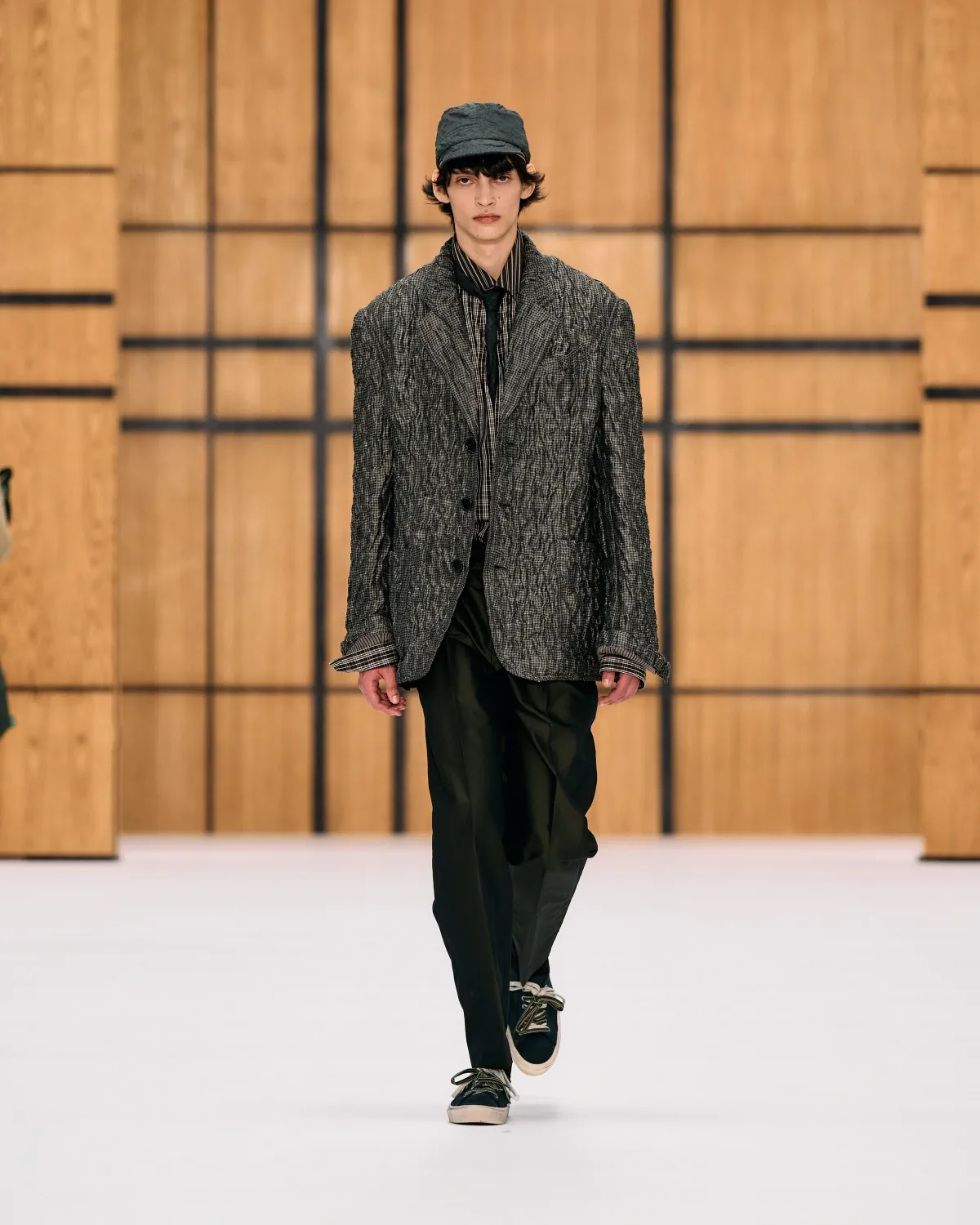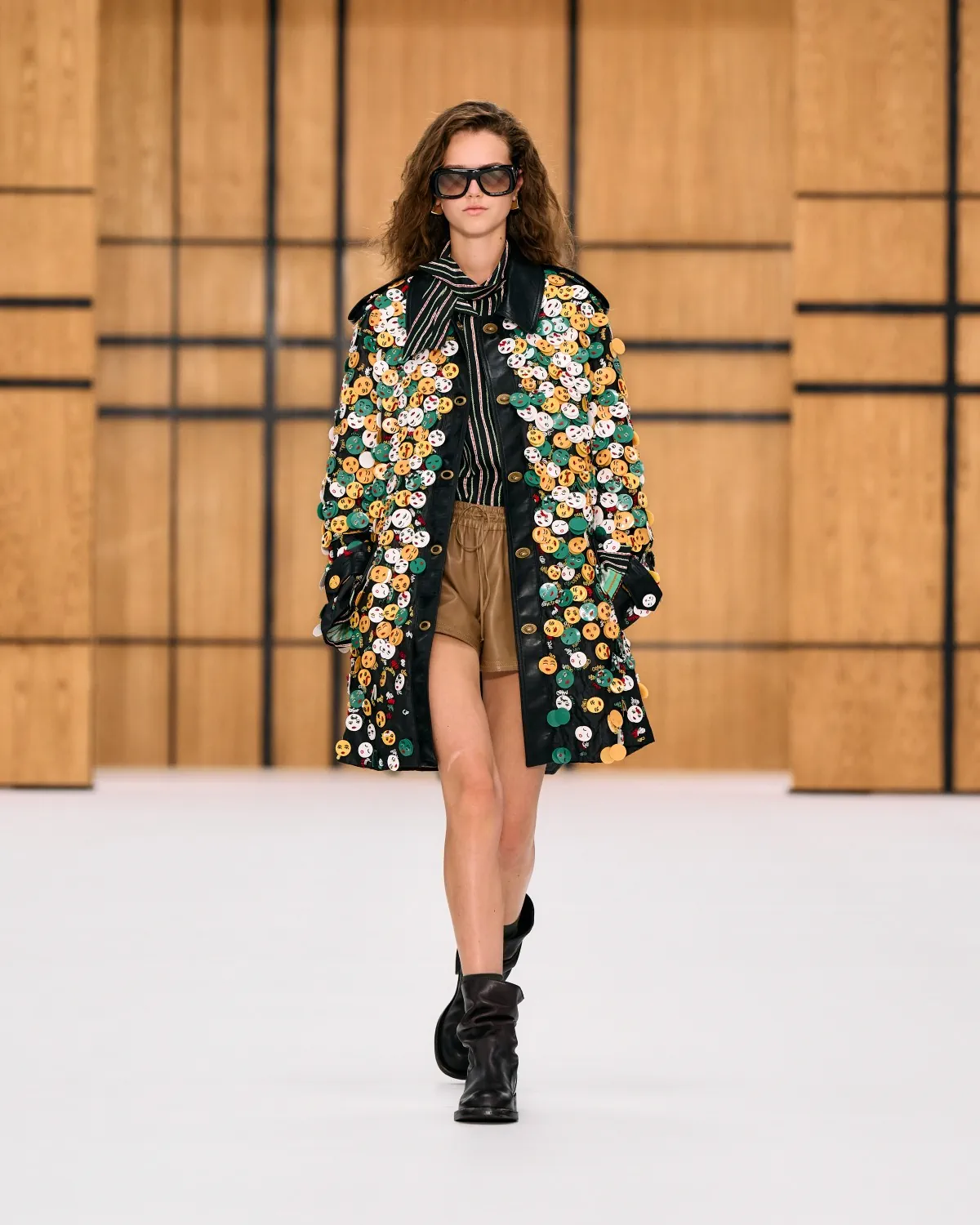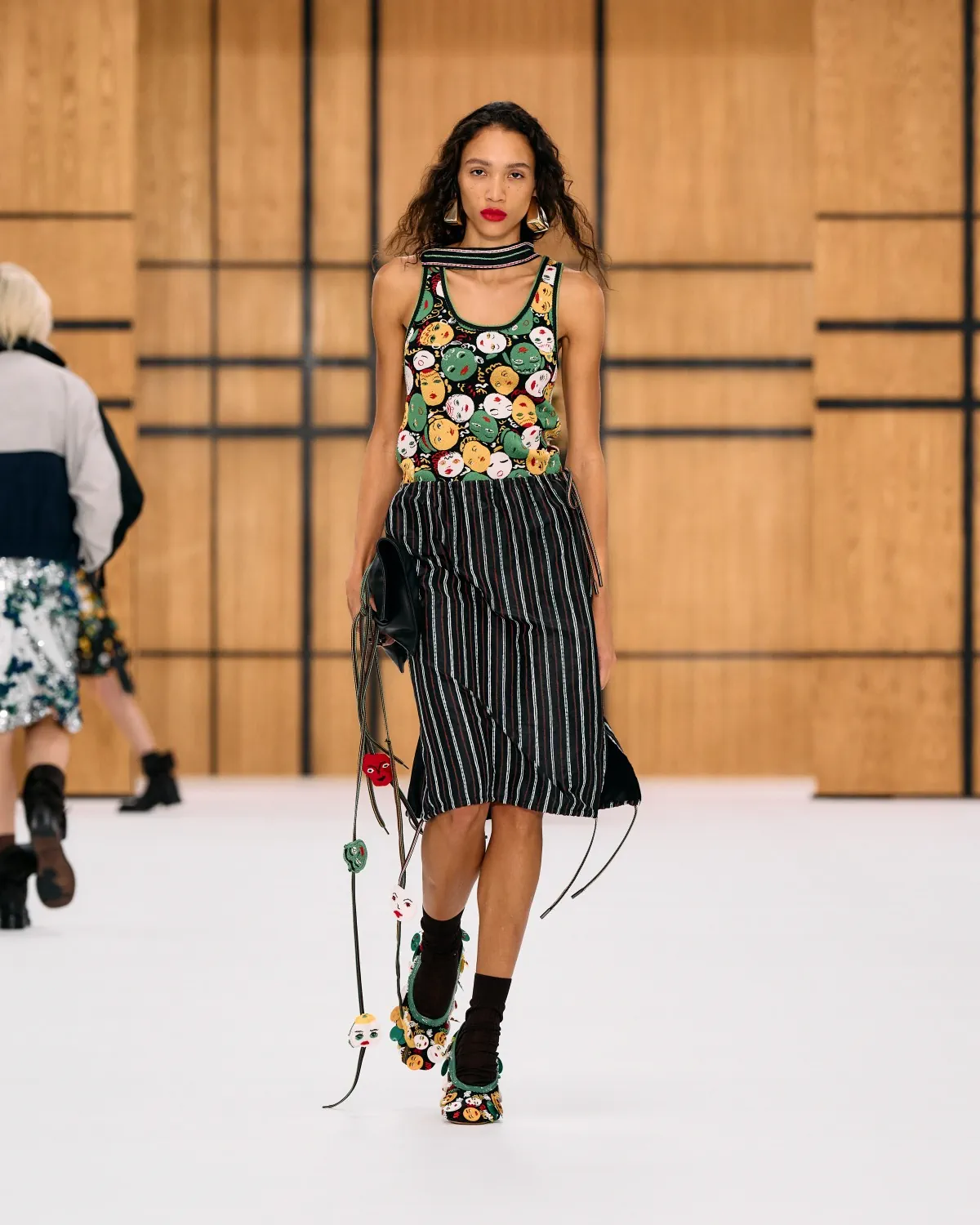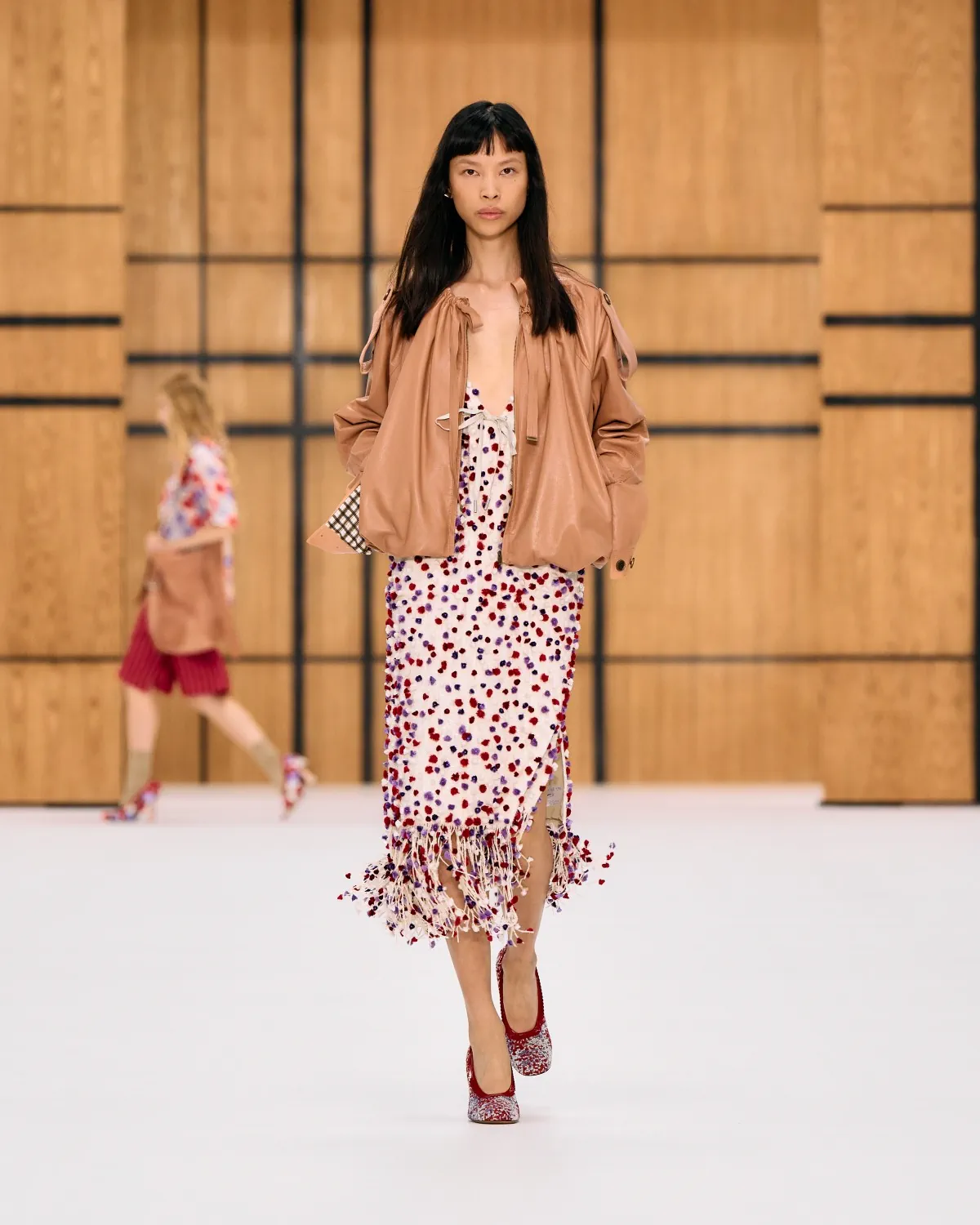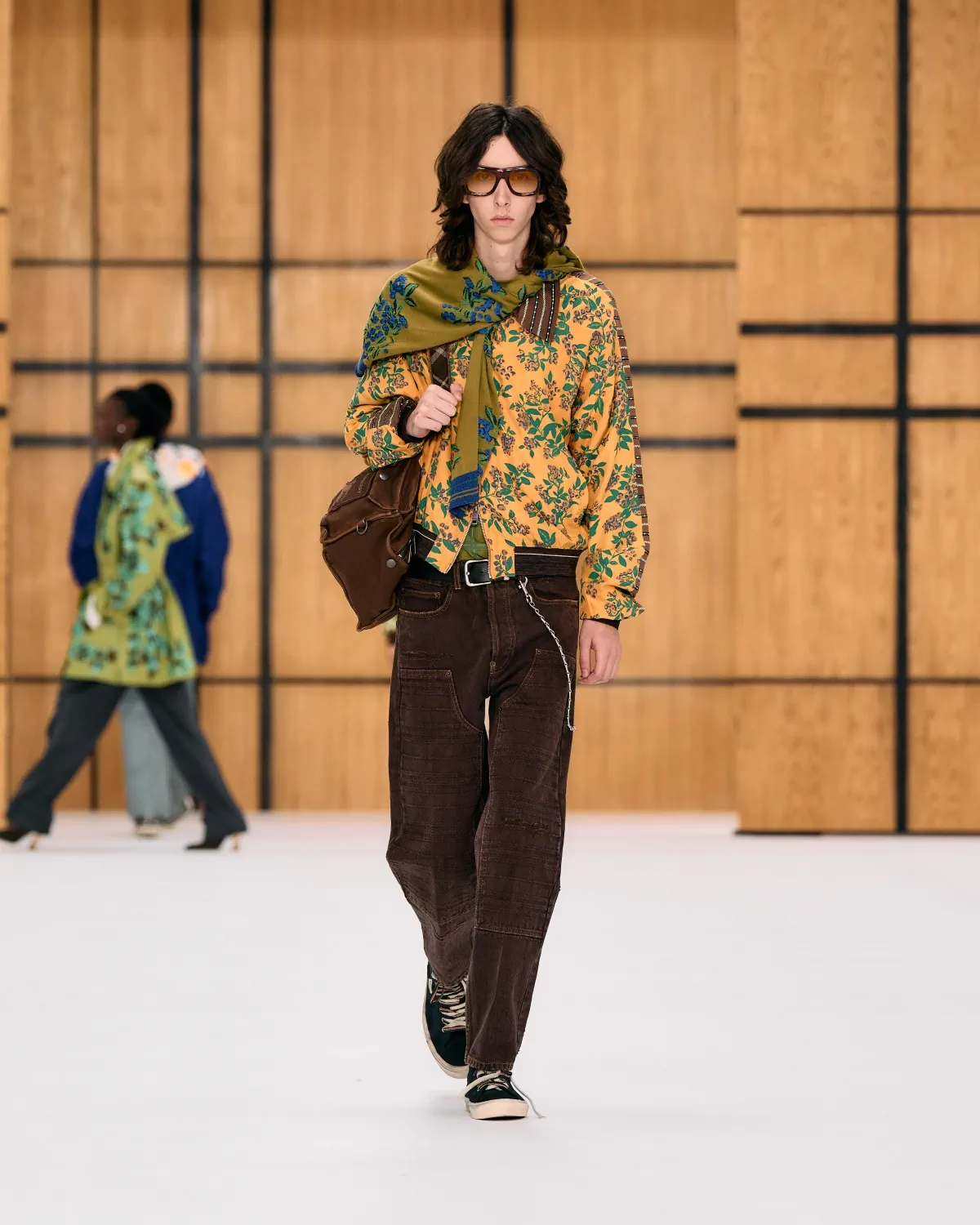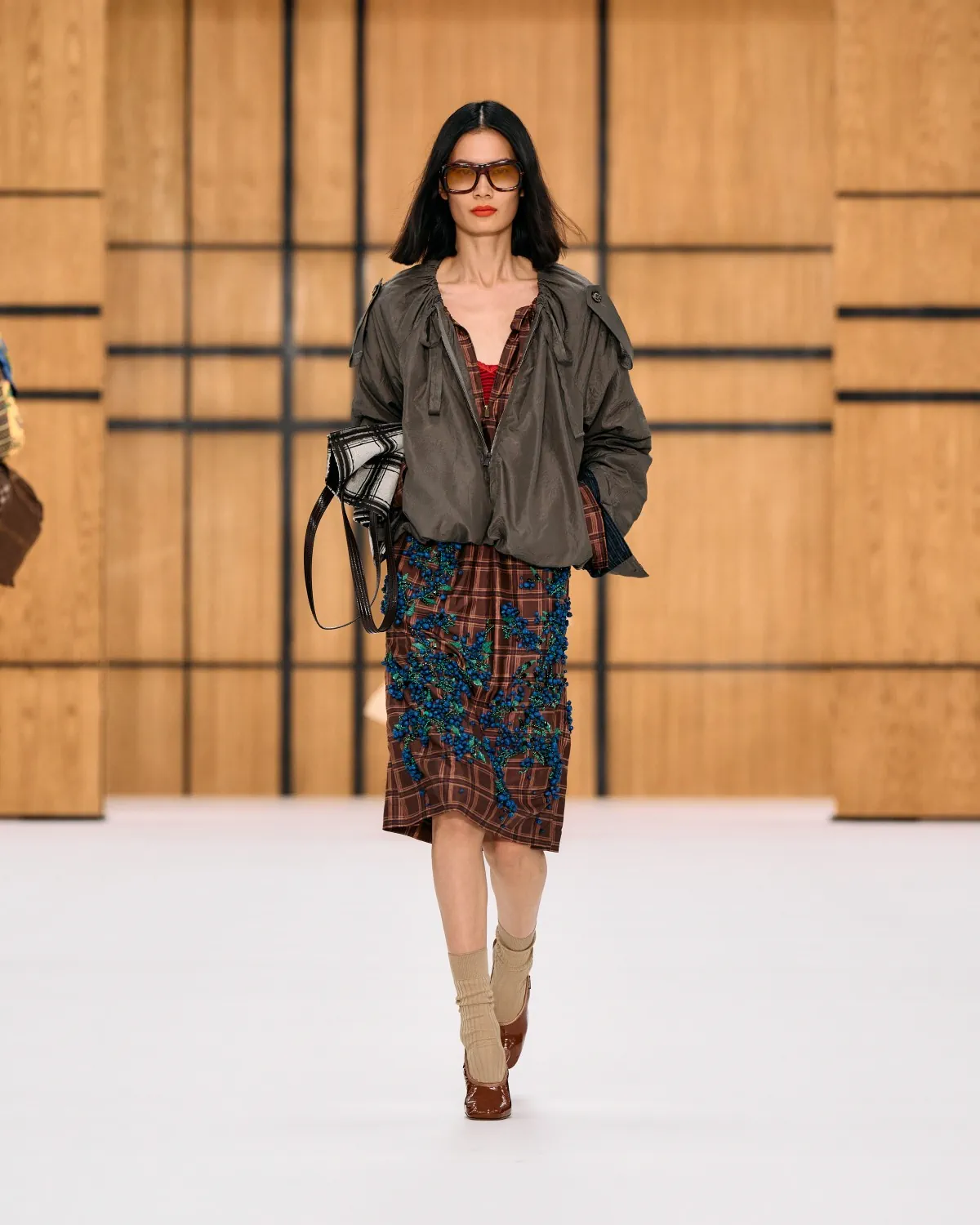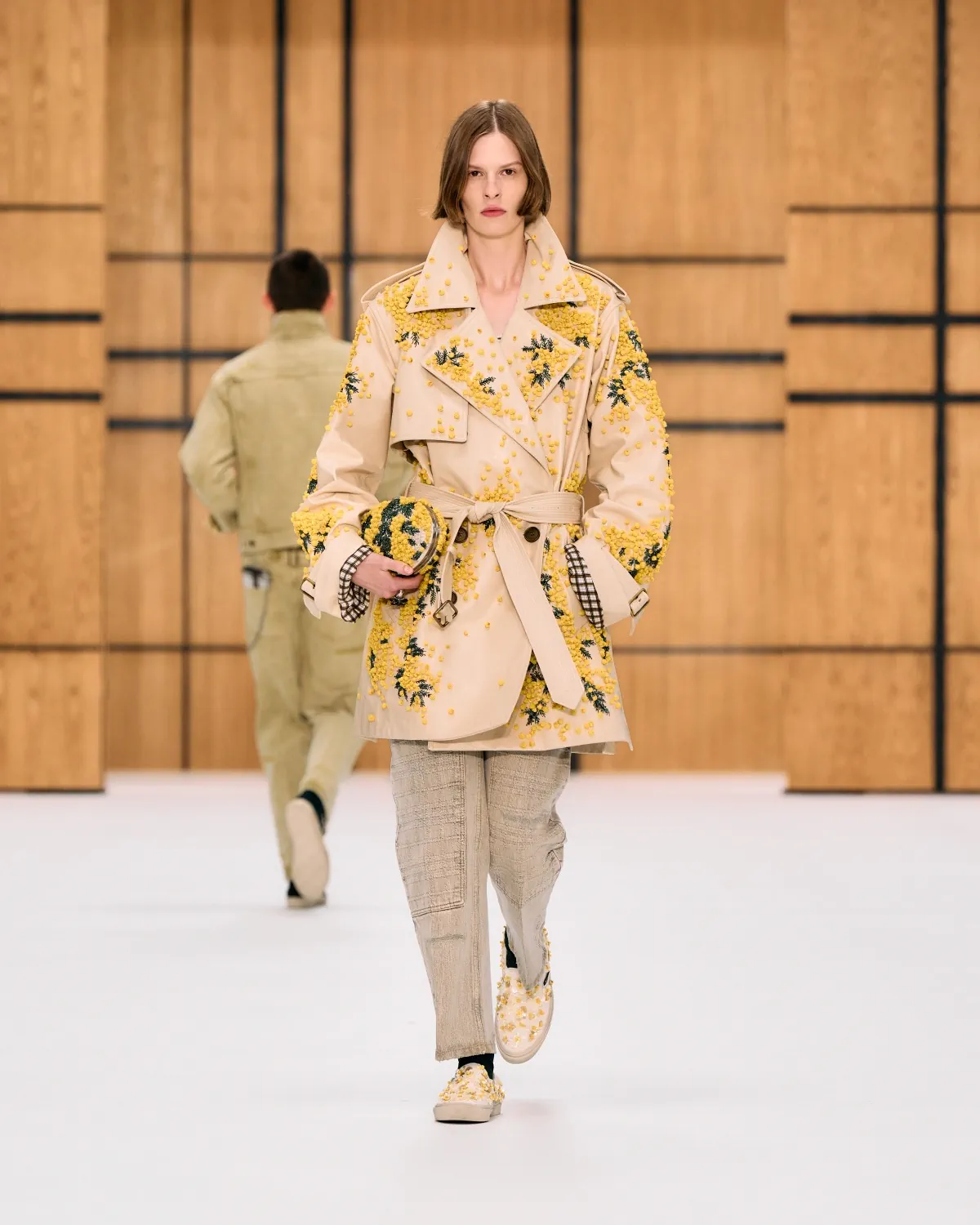

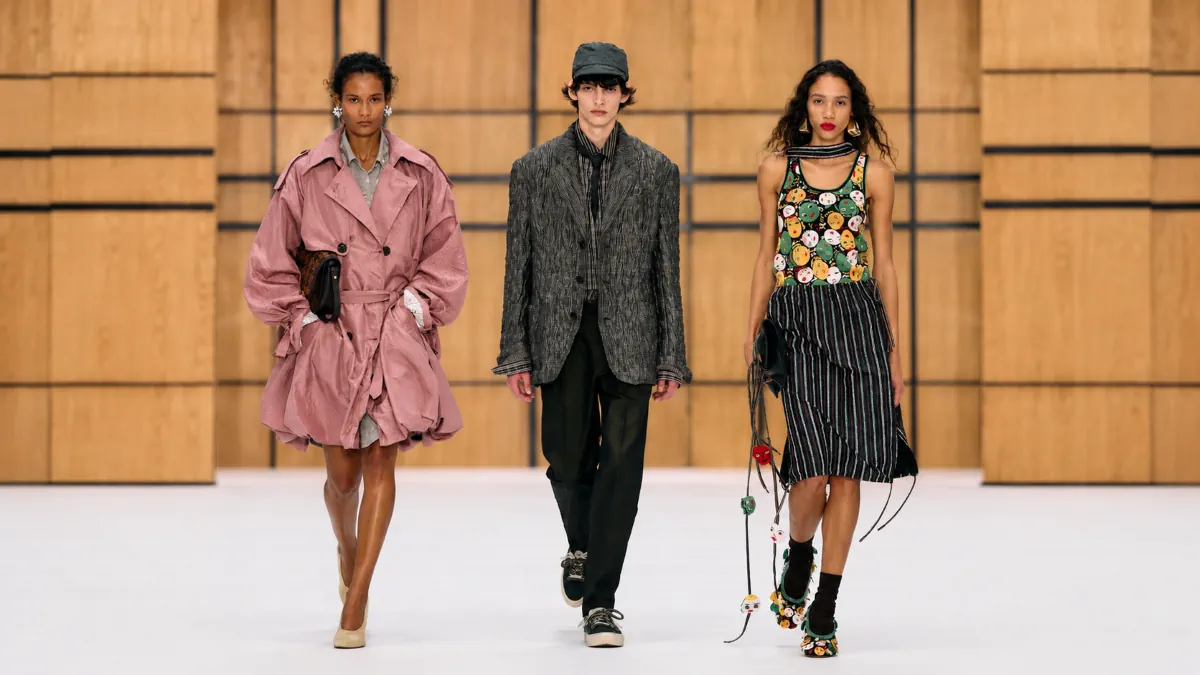
| Burberry Spring 2027 brings Daniel Lee together with British textile designer Celia Birtwell for a collection shown in London on September 21st, 2026. Created during Burberry’s 170th-anniversary year, it reworks the house check with Birtwell’s florals while softening trenches, denim and accessories through rumpled textures, embroidery and relaxed proportions. |
Daniel Lee isn’t sentimental. Three seasons into his tenure at Burberry, the brand’s aesthetic has become more precise, rigid, and controlled. So, when Burberry suddenly loosens its grip for its 170th anniversary, it’s worth asking why. The answer appeared backstage at the Burberry Spring 2027 show in the form of an 85-year-old textile designer that most shoppers have never heard of: Celia Birtwell.
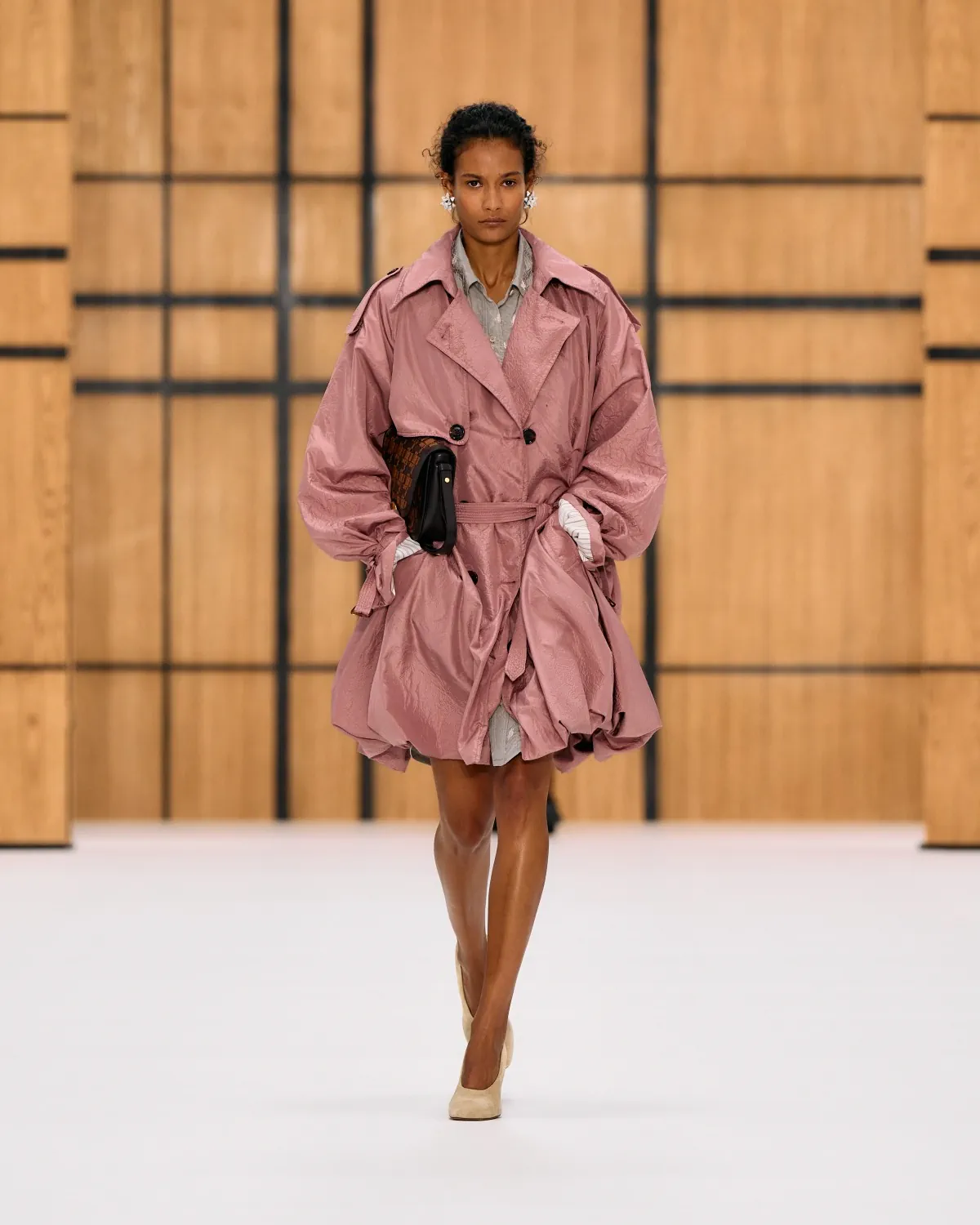
Daniel Lee has spent several seasons tightening Burberry’s grip on its codes. The trench got sharper. The gabardine got stiffer. At times, the house looked like it was holding its breath. For Spring 2027, something loosened. The label brought in 85-year-old textile designer Celia Birtwell, and the result is Lee’s most relaxed and human collection since he took over the label. Marking the house’s 170th anniversary, the Burberry Spring 2027 collection trades polish for personality – and it works.
Birtwell isn’t a household name to most shoppers, but she should be. She defined the visual language of British fashion in the late 1960s and early 1970s. She worked alongside her former husband, designer Ossie Clark. His silhouettes carried her prints down the runway decade after decade. The same partnership was immortalized by David Hockney in his 1970–71 double portrait, Mr. and Mrs. Clark and Percy. It is now hanging in the Tate. Her florals, faces, and instinct for patterns that feel drawn rather than plotted have aged into something timeless rather than dated. Lee met her in May. He said afterward that he had never really collaborated with anyone on a collection before and that finding the right partner is not something you can force. With Birtwell, he said, everyone just loves her.
Walk through the racks, and you will notice the wrinkles before the prints. Silk faille trenches arrived with a lived-in crumple, as though they had already survived a long lunch. Braided epaulets sat flat against the shoulder, stitched on like patches rather than sewn in place. Nothing looked pressed. Nothing looked finished in the traditional sense, and that was the point. Lee has talked about wanting Burberry to feel less like a product and more like an object to which you can form an attachment, something closer to a favorite sweater than a showroom piece.
This philosophy was most evident in the fabric choices. Denim came in pink, taupe, and black washes, each with a roughened surface that unevenly caught the light. Taffeta trenches puffed at the hem instead of falling straight. Even the white soles of the sneakers looked deliberately smudged, as though they had already been worn somewhere interesting.
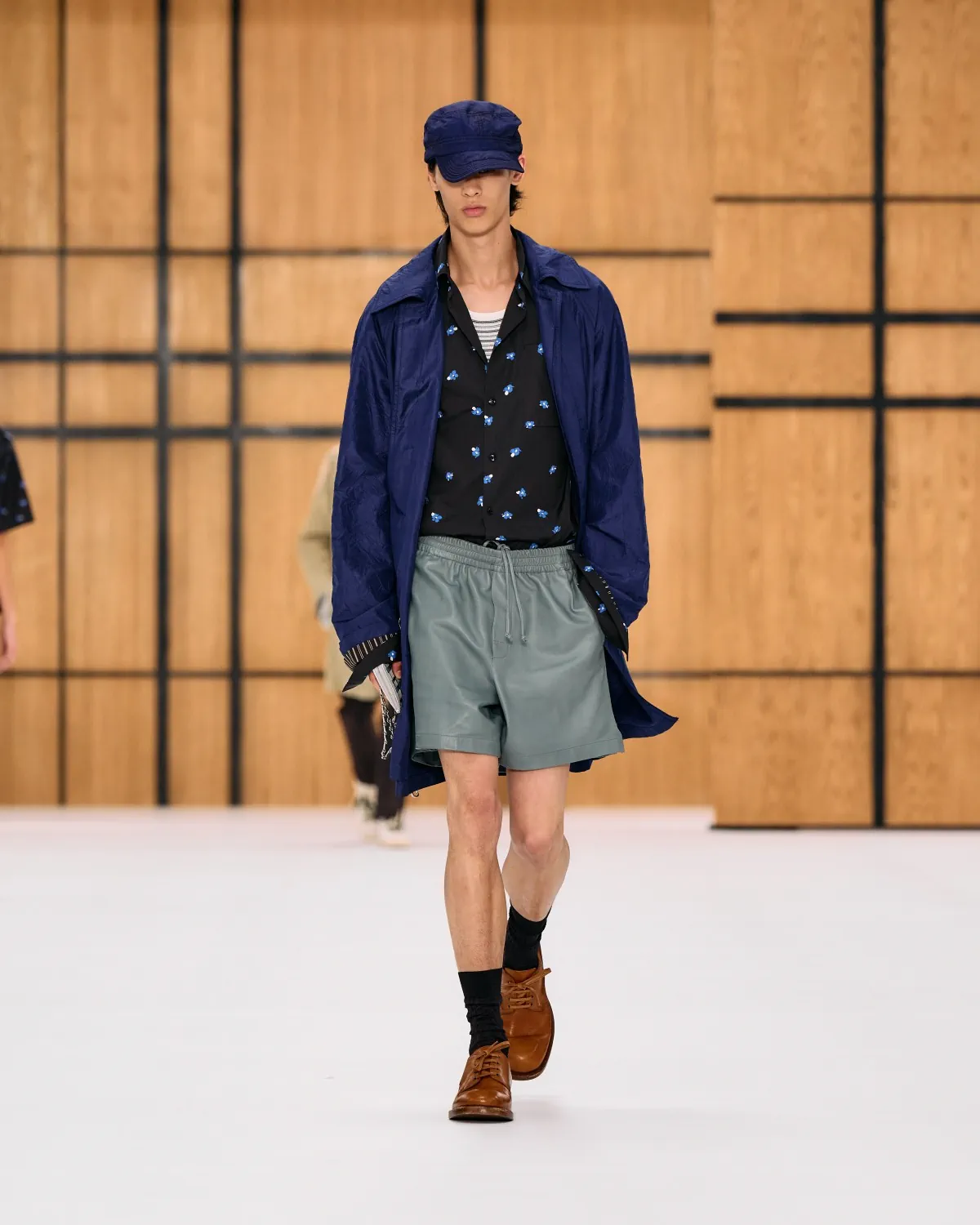
The most striking shift, though, was structural. Burberry’s check has always been a fairly rigid grid, instantly recognizable and rarely altered. Lee and Birtwell transformed it into scaffolding, a trellis for her florals to climb. Mimosas, blueberries, rosebuds, and violets spread across skirts and coats. Some were rendered as three-dimensional embroidery; others were soft, blurred prints that looked more like watercolor than fashion illustration. Birtwell’s old, hand-drawn happy-face motifs reappeared on knitwear and as small medallions swinging from coat hems and kitten heels. It’s a risky move for a company whose entire brand equity is tied to one fixed pattern. Lee is betting that Birtwell’s designs can soften the check pattern without diluting it. Based on this collection, the bet pays off.
Color did a lot of the talking, too. Lavender and burgundy, pulled from an English garden palette, ran through diaphanous silk trenches so sheer that they blurred the line between coat and dress. A swimming-pool blue parka and a sunset orange-trimmed trench coat gave the lineup moments of real punch against an otherwise soft, neutral base.
Follow all the latest news from Fashionotography on Flipboard, or receive it directly in your inbox with Feeder.
You may also read

This season, menswear leaned shorter and looser, worn with the kind of ease that suggests no one fussed too much before heading out the door. The equestrian-inspired Derby bag featured hand-worked florals, and the Sloane bag had a woven leather texture that begged to be touched. Clogs with straps nodding to the ’70s showed up under technical outerwear – an odd pairing that read as confident rather than confused.
Birtwell sat in the front row, watching her prints move past her. She later said that working with a younger design team was good mental exercise. She has a busy stretch ahead. A retrospective devoted to her and Christopher Bailey opens at London’s Fashion and Textile Museum on October 2 and runs through next spring. This means the Burberry Spring 2027 pieces built around her prints will hit stores at almost the exact moment her own archive goes on public display across town. Her prints shaped one generation of British style. Through this Burberry Spring 2027 collection, they are poised to influence another.
This collection really tests whether heritage houses need outside authorship to feel alive again or if that’s just this season’s trick. Lee didn’t hire a hype collaborator; he hired the person whose work defined the era he’s borrowing from. That’s why this collection is a revival rather than nostalgia.