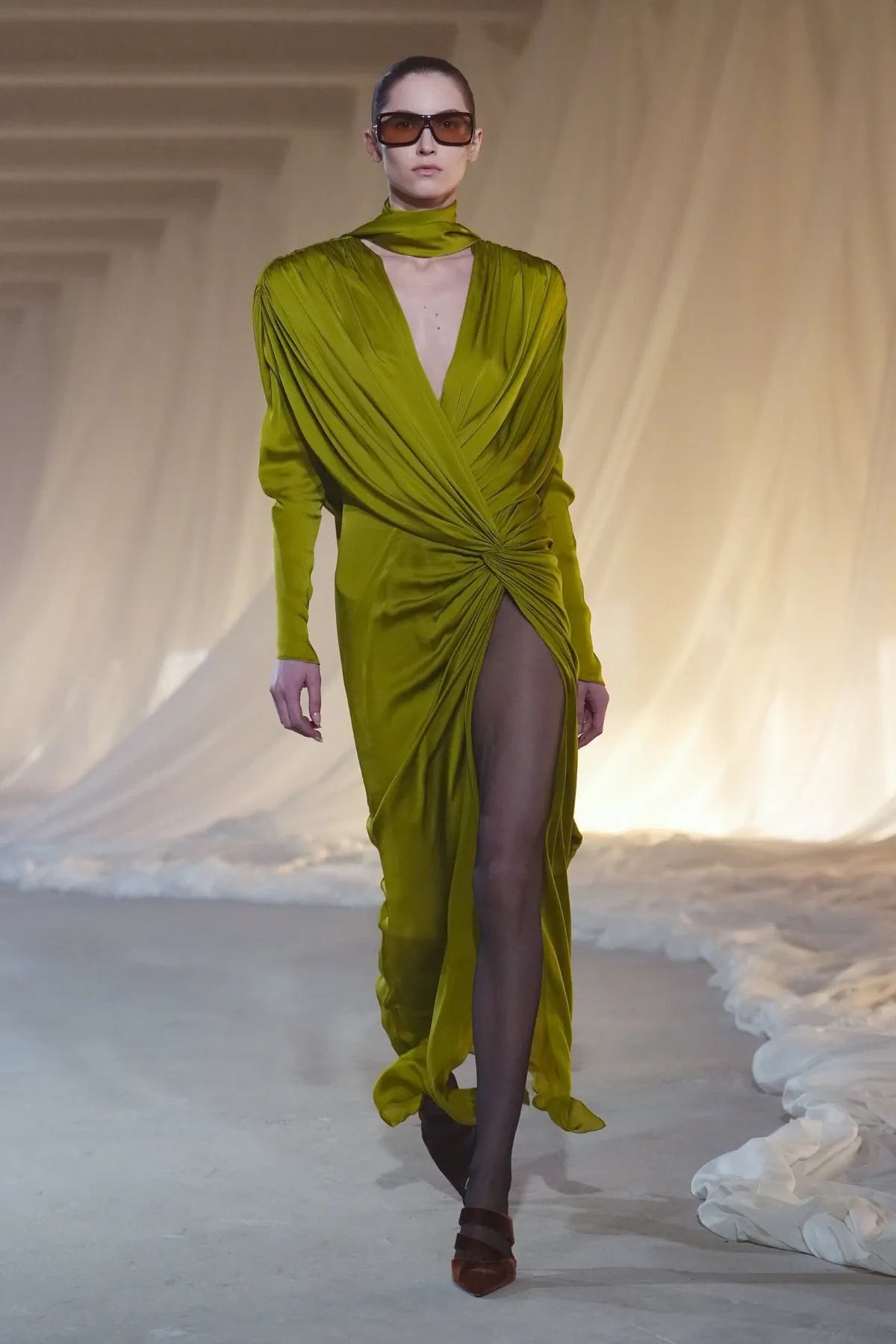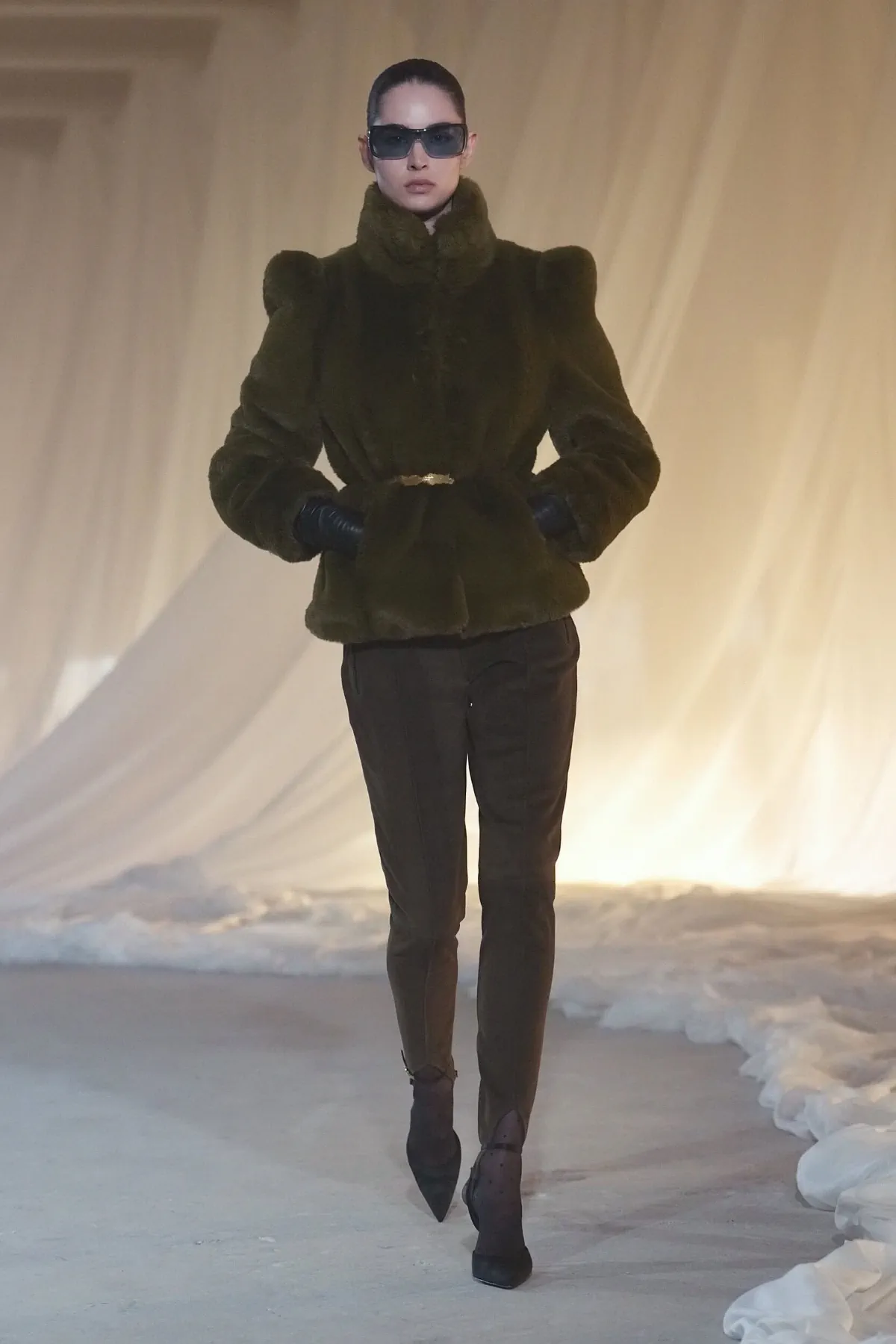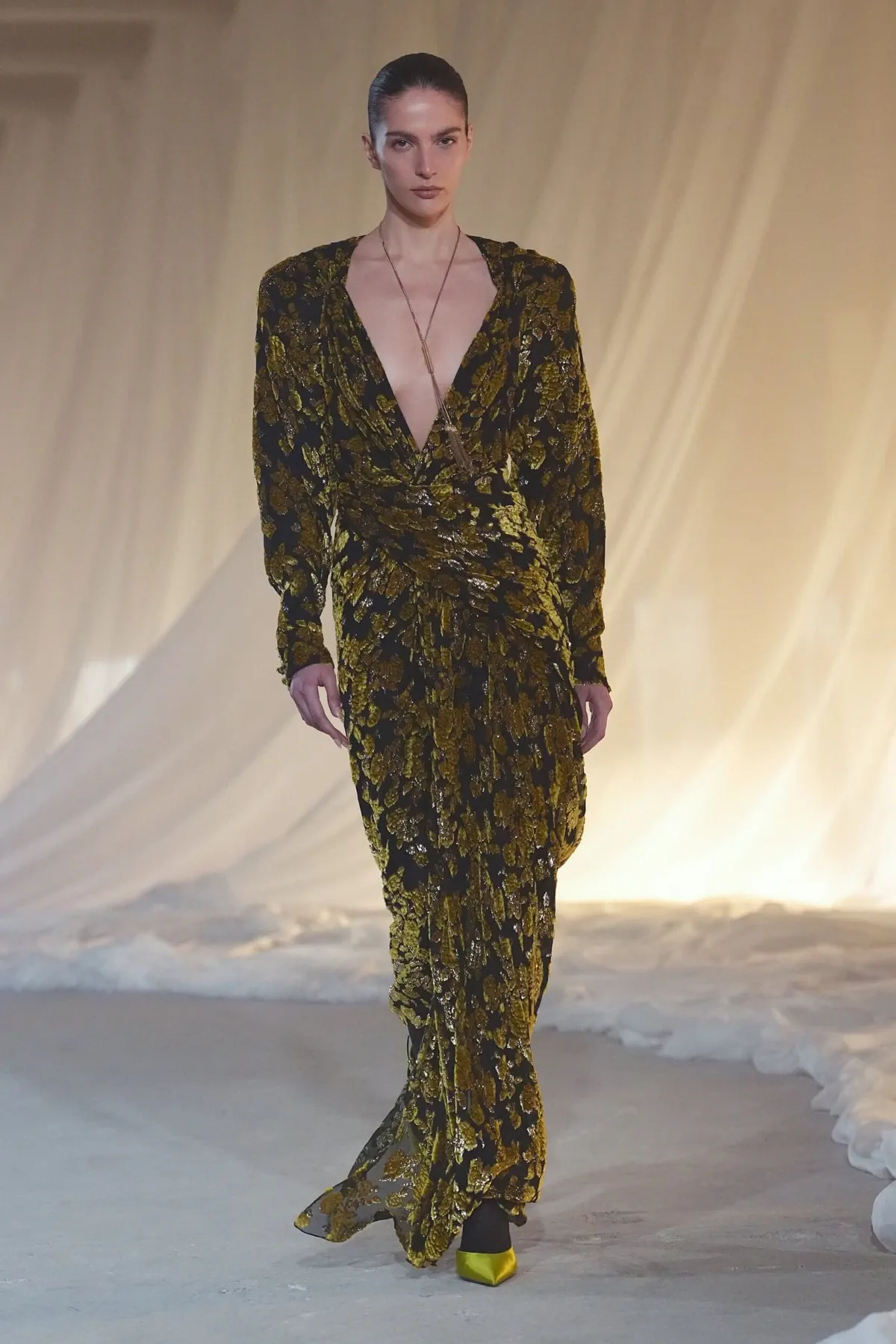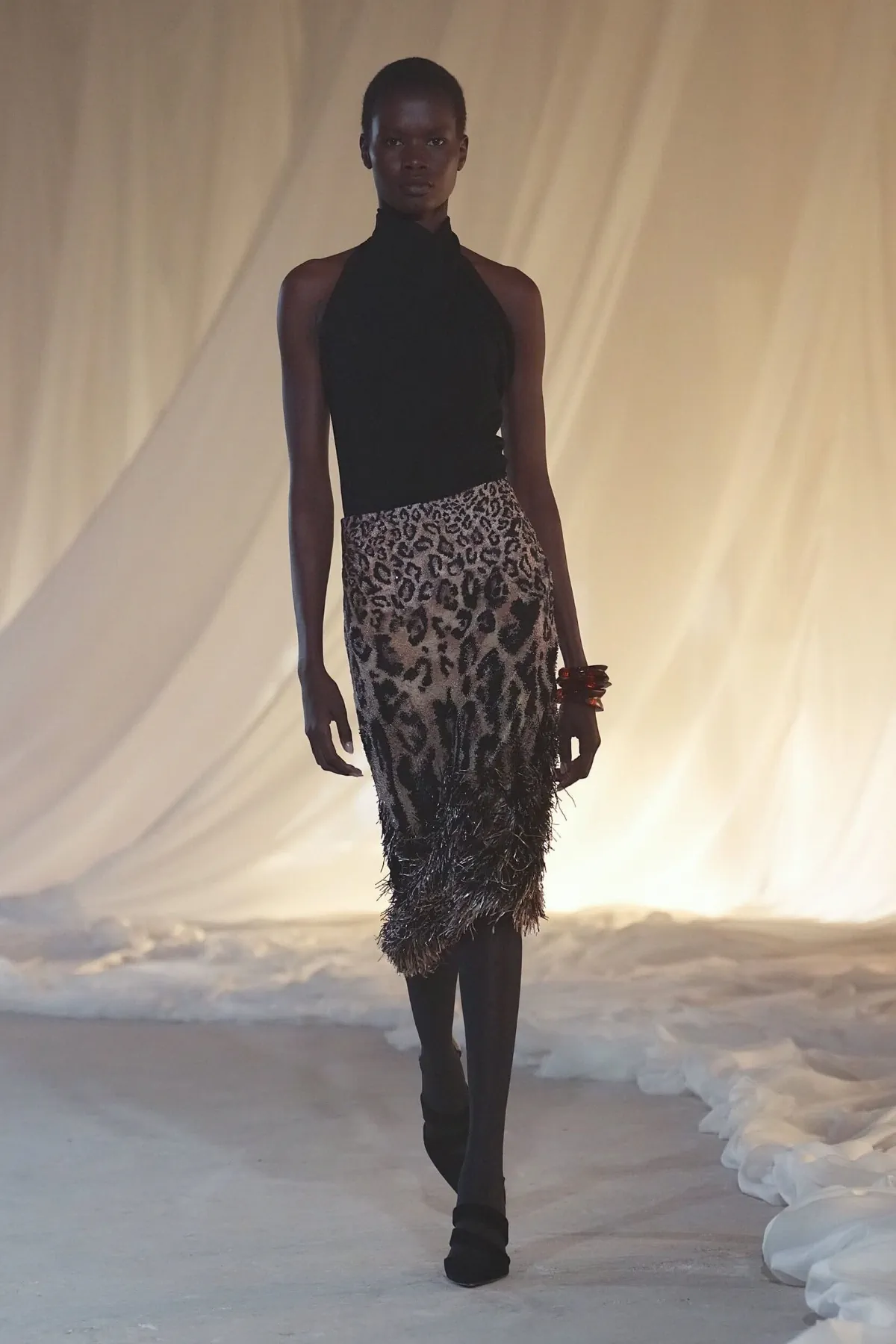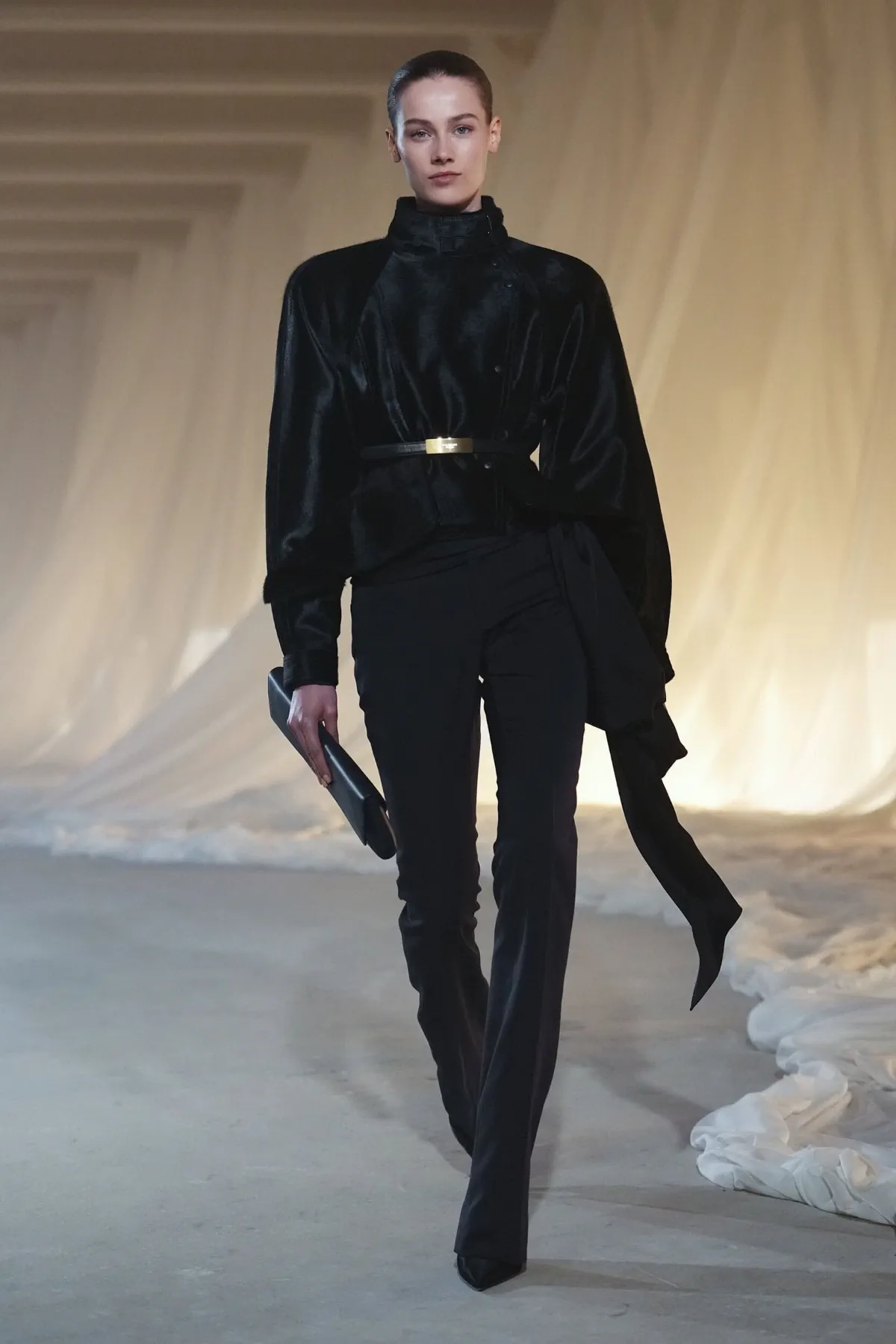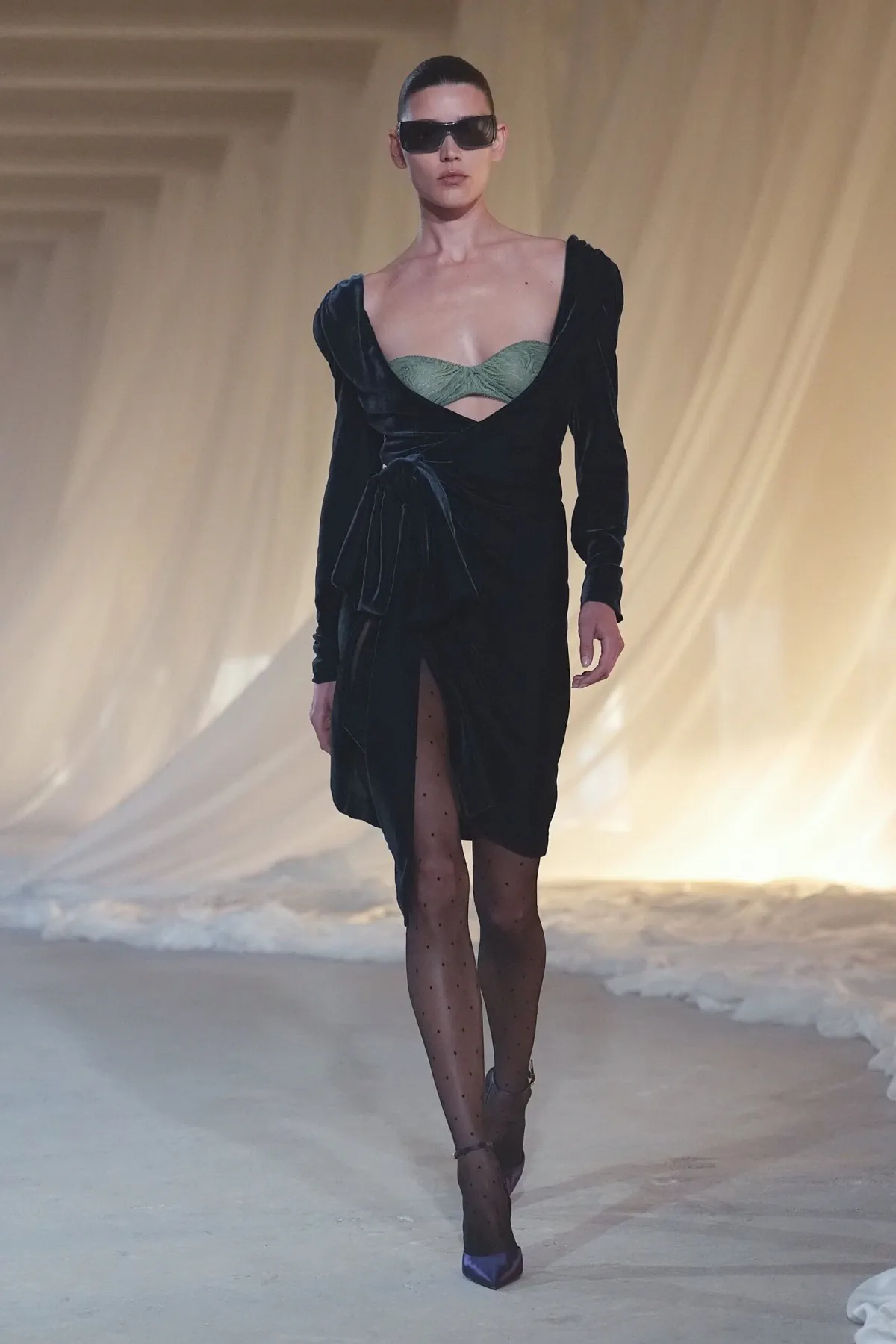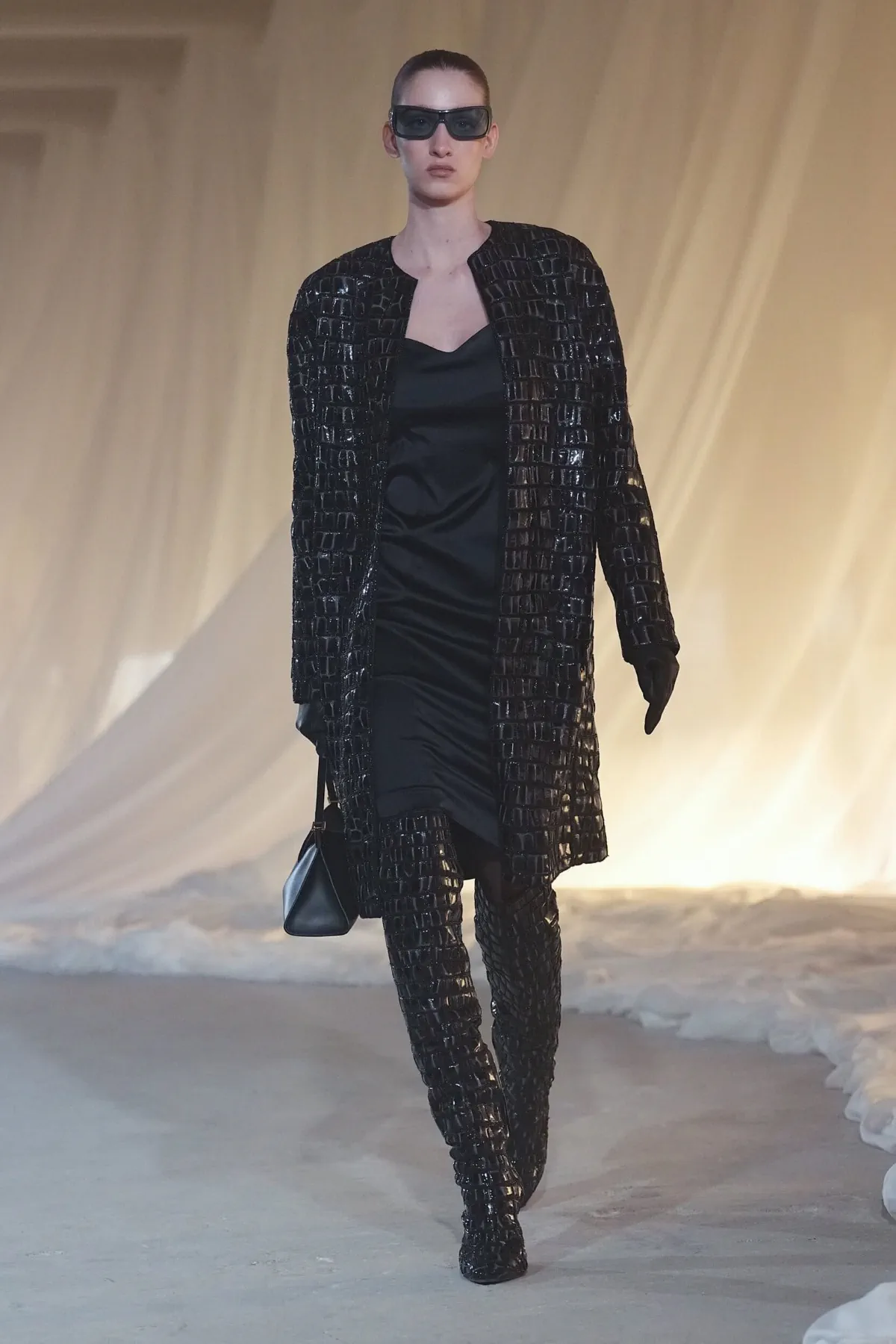

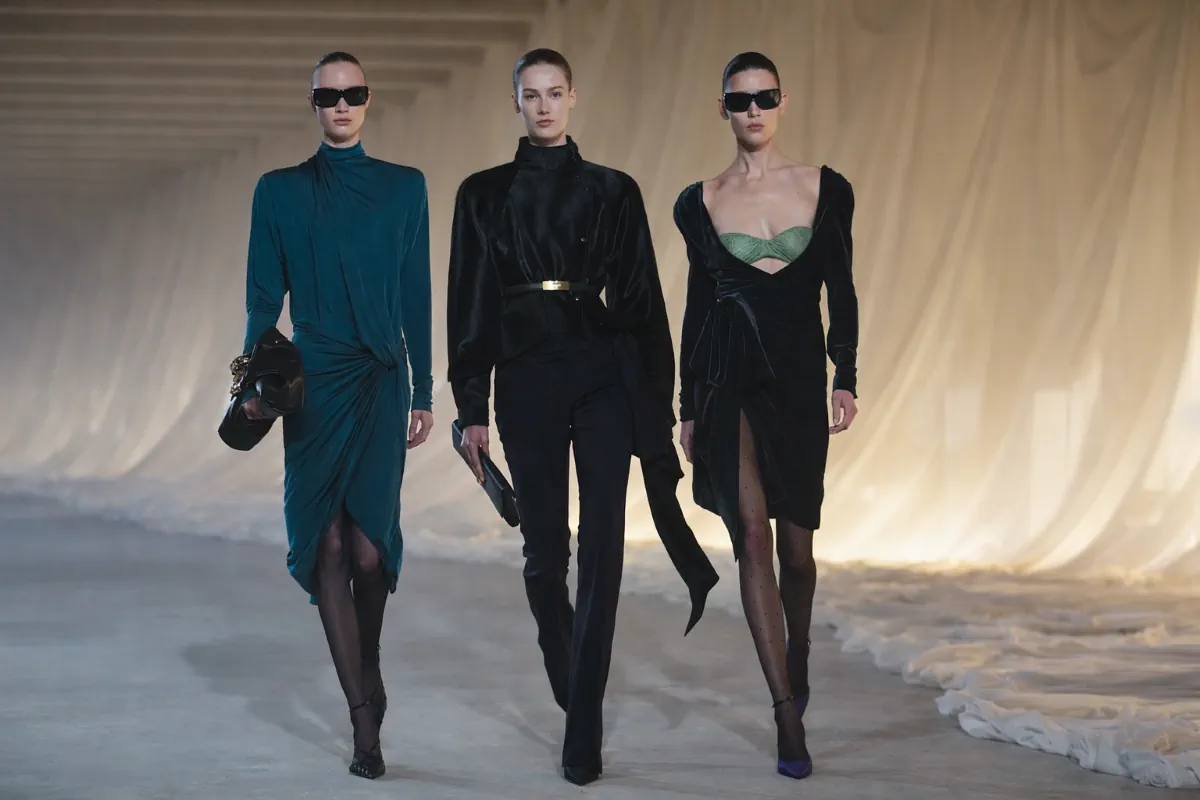
Antonin Tron presented his inaugural collection as Balmain’s Creative director during Paris Fashion Week, and his vision was evident before a single look hit the runway. Gone were the heavy embellishments and relentless maximalism that defined the house under Olivier Rousteing for 14 years. Tron offered something quieter and, in many ways, more demanding instead. He calls it “minimal opulence,” and the Balmain Fall 2026 collection delivers precisely that.
| 📌 Key Facts |
|---|
| 🎬 Film noir inspiration shaped the atmosphere and palette of the runway show 🧵 Antonin Tron introduces “minimal opulence” as the new aesthetic direction 🕰 Pierre Balmain’s 1946 silhouettes directly inspired the tailoring 🐆 Animal prints return, reinterpreted through embroidery and jacquard 🧥 The opening flight jacket references Danielle Demás, Air France’s first female pilot 📉 The collection shifts away from Rousteing’s maximalism toward restraint 💼 The central question remains commercial: will customers embrace the change? |
Tron arrived at Balmain in November 2025, stepping into one of the most high-profile creative roles in French fashion. He built his own label, Atlein, for nearly a decade before that. Previously, he had worked in menswear at Louis Vuitton and in womenswear at Givenchy, Balenciaga, and most recently, Saint Laurent. He paused Atlein entirely to focus on Balmain, a significant gesture signaling genuine commitment rather than treating Balmain as a side project.
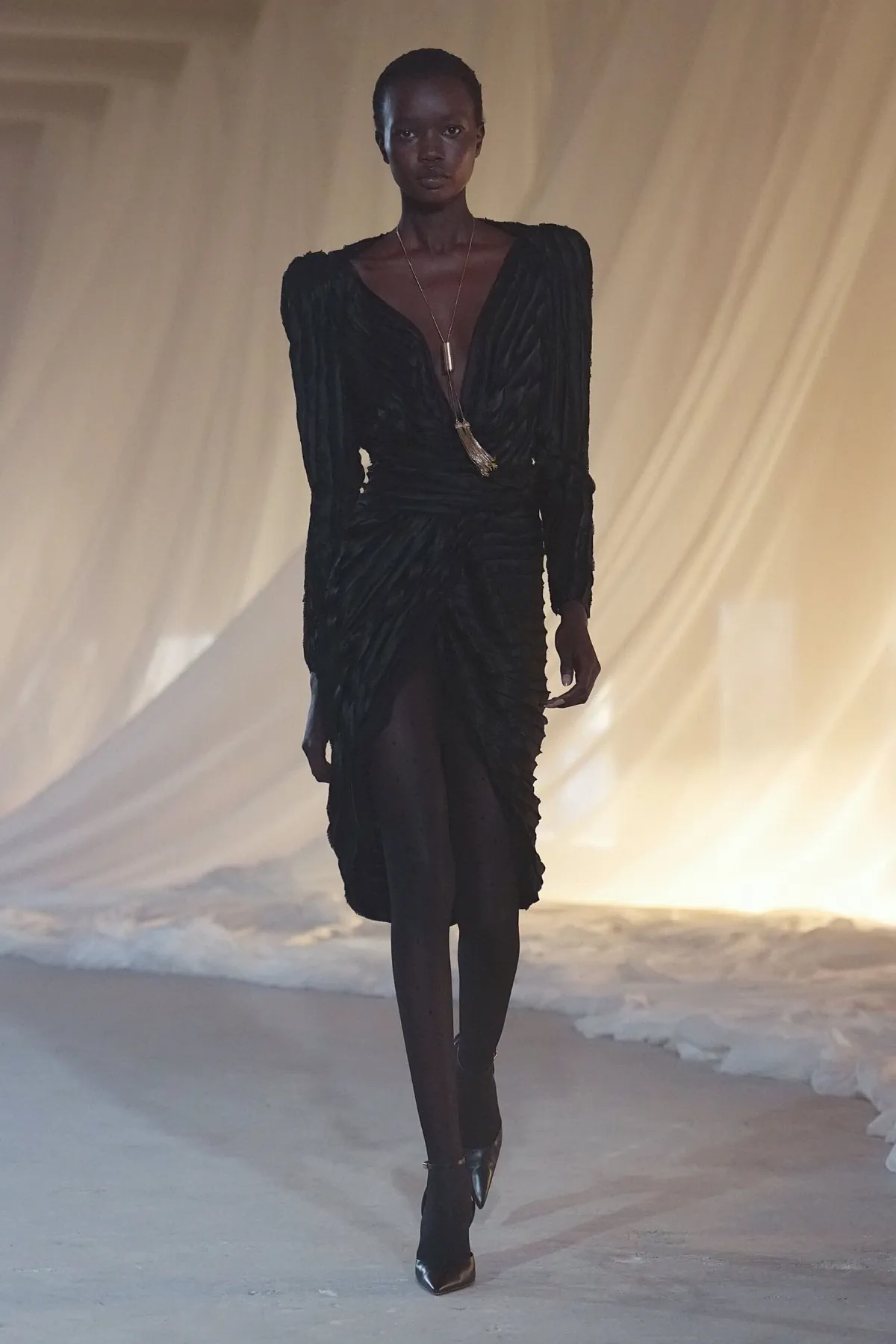
The show unfolded inside a vast concrete space hung with gauzy white curtains and shutters that flickered open in the background – a deliberate nod to the film noir universe that served as Tron’s primary mood board. Tony Scott’s The Hunger and David Lynch’s Mulholland Drive informed his sensibility, and the atmosphere on the runway reflected that shadowy, cinematic restlessness. The palette was dark and controlled, consisting of oxblood, midnight blue, deep green, and black – colors that sometimes bled into one another under the dim lighting.
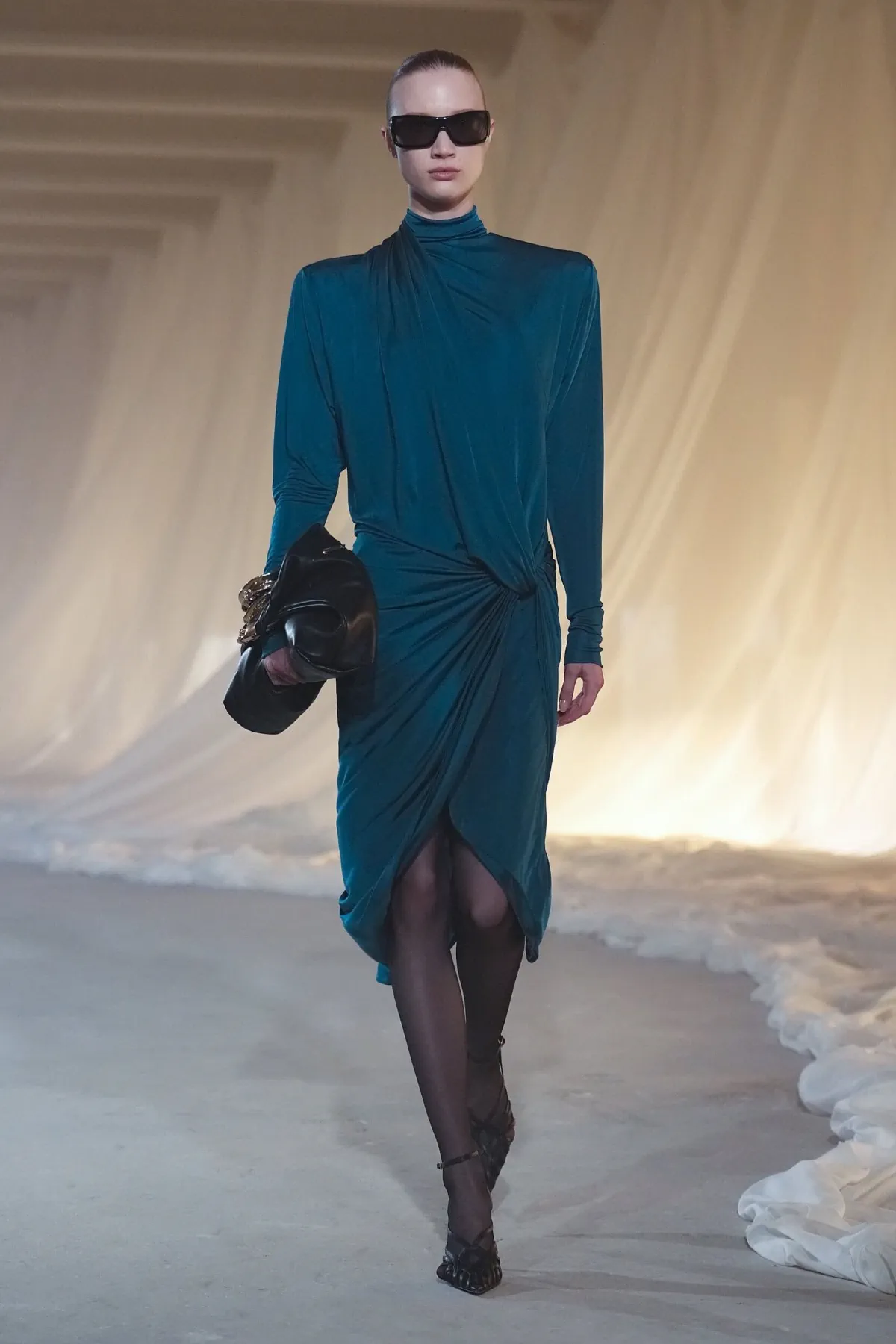
The clothes themselves were polished and confident. Tron moved between tough, structured tailoring and softer cocktail and evening silhouettes, all with an unmistakable ’80s flair. Wraparound sunglasses, leather trousers with knee padding, and bomber jackets with cinched waists conveyed speed and physical confidence rather than passive elegance. The opening look, a flight jacket made of rich matte lambskin, nodded to Danielle Demás, Air France’s first female pilot. Pierre Balmain designed her 1975 uniform. Tron called her unapologetic, and that word hung over the entire collection.
Tron spent considerable time in Balmain’s archives before presenting a single design. He was particularly drawn to the severity and restrained sensuality of the house founder’s spring 1946 collection. The urgency with which Pierre Balmain launched the house in the early postwar period to create couture glamour gave Tron his emotional anchor. Rounded, structured shoulders; gathered waistlines; pencil skirts; and fitted sleeves became recurring motifs drawn directly from the silhouettes associated with classic film noir heroines.
Follow all the latest news from Fashionotography on Flipboard, or receive it directly in your inbox with Feeder.
You may also read

Animal prints, another original Balmain signature, appeared throughout the collection, but were treated with considerable finesse. Instead of bold graphic patterns, Tron rendered them through dense, intricate embroideries and cloqué and fil coupé jacquards that suggested leopard spots and tiger stripes. Caviar beads formed animalier motifs on several pieces. One coat was covered in hand-cut leather feathers. Another coat was constructed from applied mosaics of leather panels edged with beading. The atelier craftsmanship was evident, though the dim runway lighting made some of the subtler details difficult to discern from the audience’s perspective.
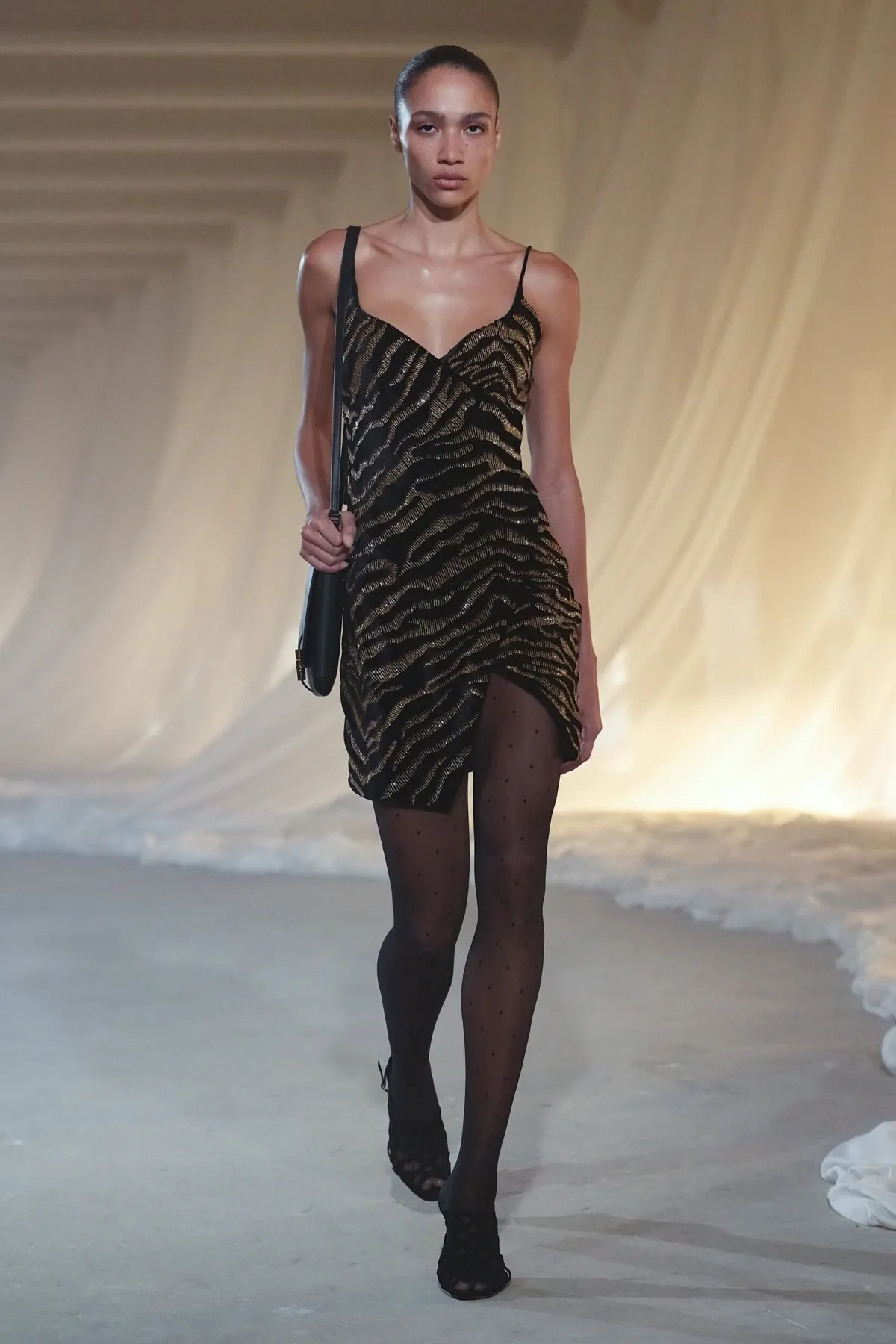
What distinguishes Balmain from many of its peers is that it sells products. Tron is aware of this and addressed it directly backstage. The house has a substantial ready-to-wear clientele: women who came to Balmain during the Rousteing years and attended this show in pieces from that era. Watching them absorb Tron’s new direction was a kind of cultural observation in itself: a house recalibrating and its loyal customers adjusting alongside it.
The question worth asking now is whether “minimal opulence” has enough commercial potential. Rousteing’s Balmain was loud, legible, and shareable, a visual shorthand that traveled effortlessly on social media. Tron’s version requires closer attention. The craftsmanship is there. The point of view is coherent. The real test this Fall 2026 collection sets up is whether the market will reward restraint with the same enthusiasm it once gave excess.