



It is particularly enjoyable to watch two Italian institutions, each dominant in its own field, venture into each other’s territory. That is precisely what Alessi and C.P. Company have done with their first collaboration, which was unveiled at Milan Design Week 2026 through an immersive installation and a tightly edited joint collection. One makes objects for the home. The other makes clothes for the body. Together, they demonstrate the potential of Italian design culture at its most self-aware.
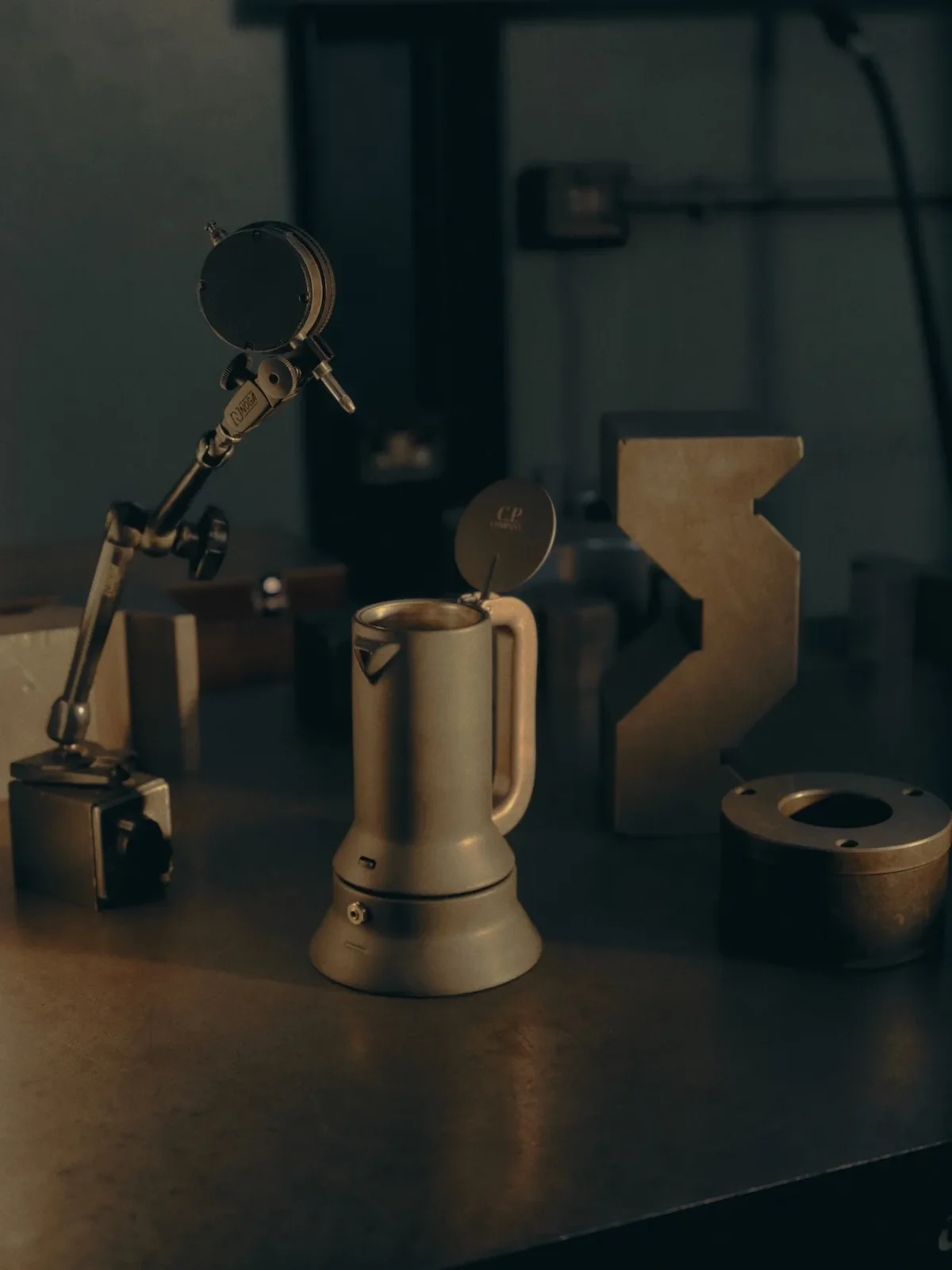
The two brands share more than just geography. Both were born from the belief that a factory is not just a place of production, but also a place where ideas are tested, refined, and transformed through accumulated human knowledge. Founded in 1921 as a workshop for processing brass and nickel silver sheet metal in Omegna, Piedmont, Alessi has since become one of the defining names in applied arts and domestic objects. C.P. Company was founded in 1971 in Bologna, Italy by the graphic designer Massimo Osti, who would later be recognized as the godfather of urban sportswear. In 1978, the company was renamed C.P. Company, marking the beginning of one of the most creative and influential eras in contemporary sportswear. Beyond the Italian peninsula, what links them is an obsessive relationship with process and what happens to a material when it is pushed past its obvious uses.
Both companies describe their project as being rooted in the factory as a conceptual anchor. For Alessi, that means the Officina in Omegna, where skilled craftspeople have worked with cold metal for over a century. For C.P. Company, it means the Bolognese tradition of textile research and garment dyeing, a distinct aesthetic rooted in a love for military surplus and vintage workwear where research is the driving force. Both archives function less as traditional archives and more as living laboratories where historical references are broken down and reassembled into something new.
Coffee runs through the whole thing, too, which feels entirely right. For Italians, the espresso ritual is inseparable from beginning work, starting a conversation, or finalizing a creative agreement. We are told that this collaboration started precisely over that.
Follow all the latest news from Fashionotography on Flipboard, or receive it directly in your inbox with Feeder.
You may also read

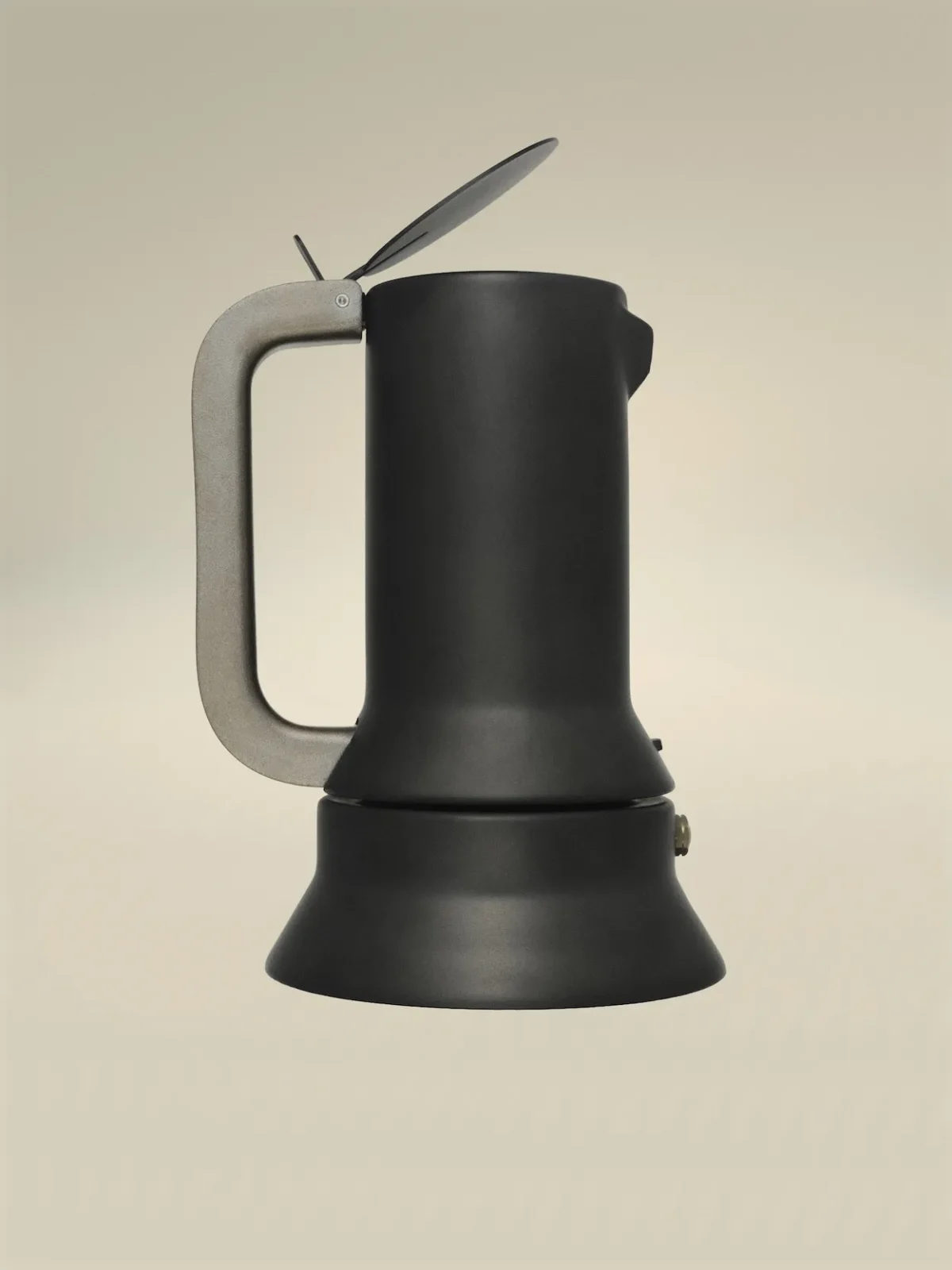
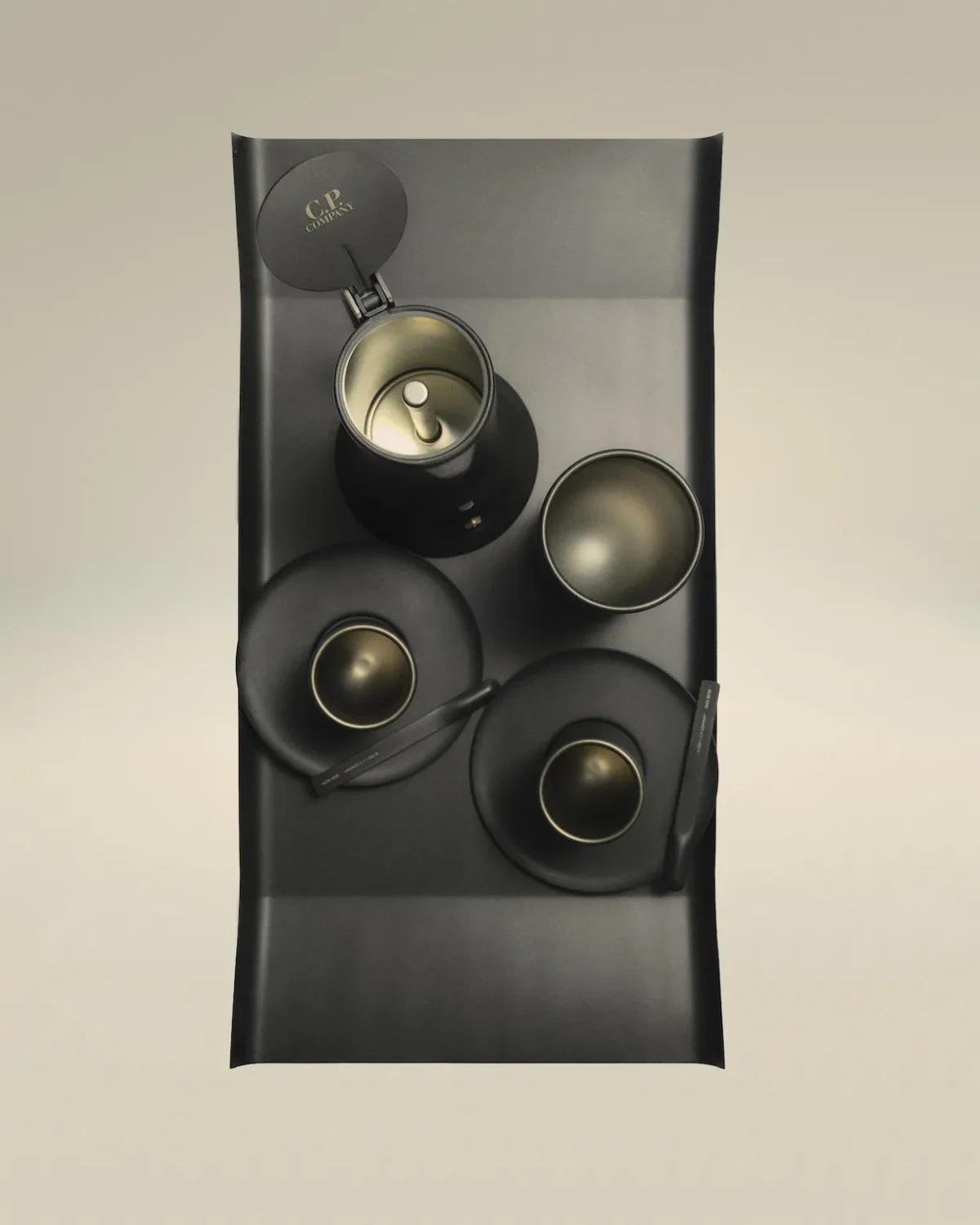
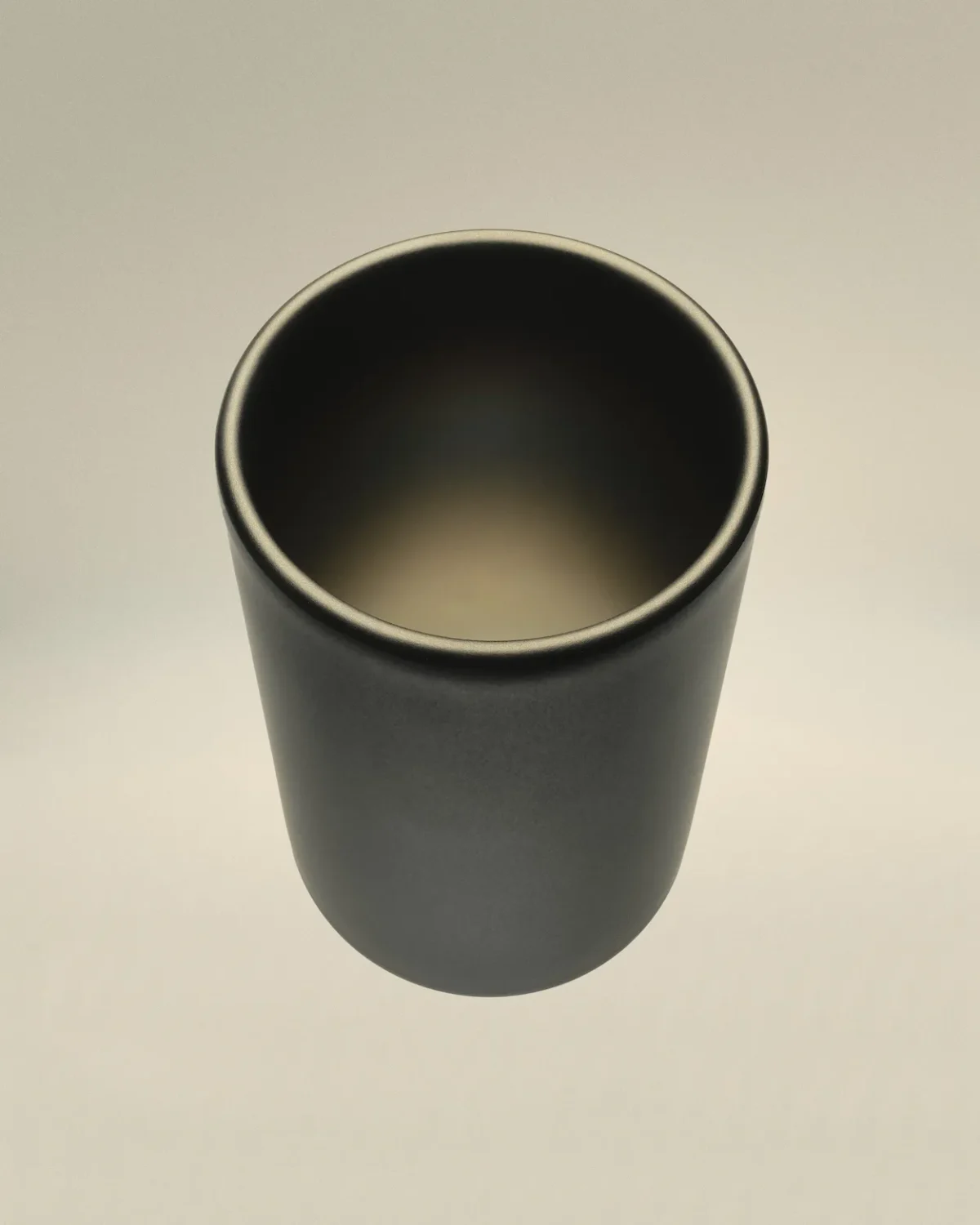
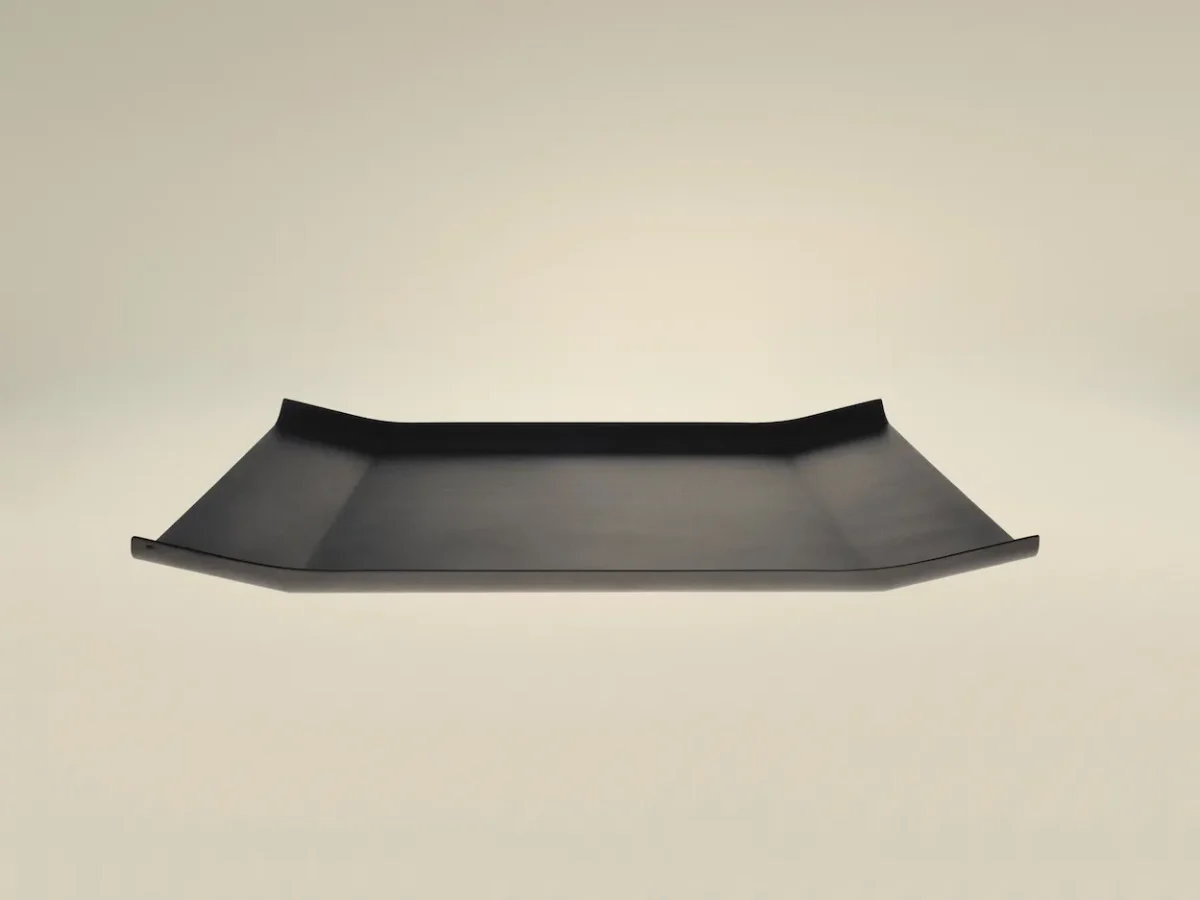
The Alessi side of the collection draws from some of the brand’s most storied designs. The 9090 espresso coffee maker, designed by Richard Sapper in 1979, takes pride of place. This rocket-shaped stovetop coffee maker was Alessi’s first kitchen product, won the company its first Compasso d’Oro award in 1979, and is included in the permanent collection at the Museum of Modern Art in New York. For this collaboration, the 9090 is being reissued as a limited edition of 999 individually numbered pieces. Accompanying it are a double-wall mug, two cups with saucers, and a coffee spoon, all designed by Jean Nouvel in 2005. Also included is the Arran tray, designed by Enzo Mari in 1961.
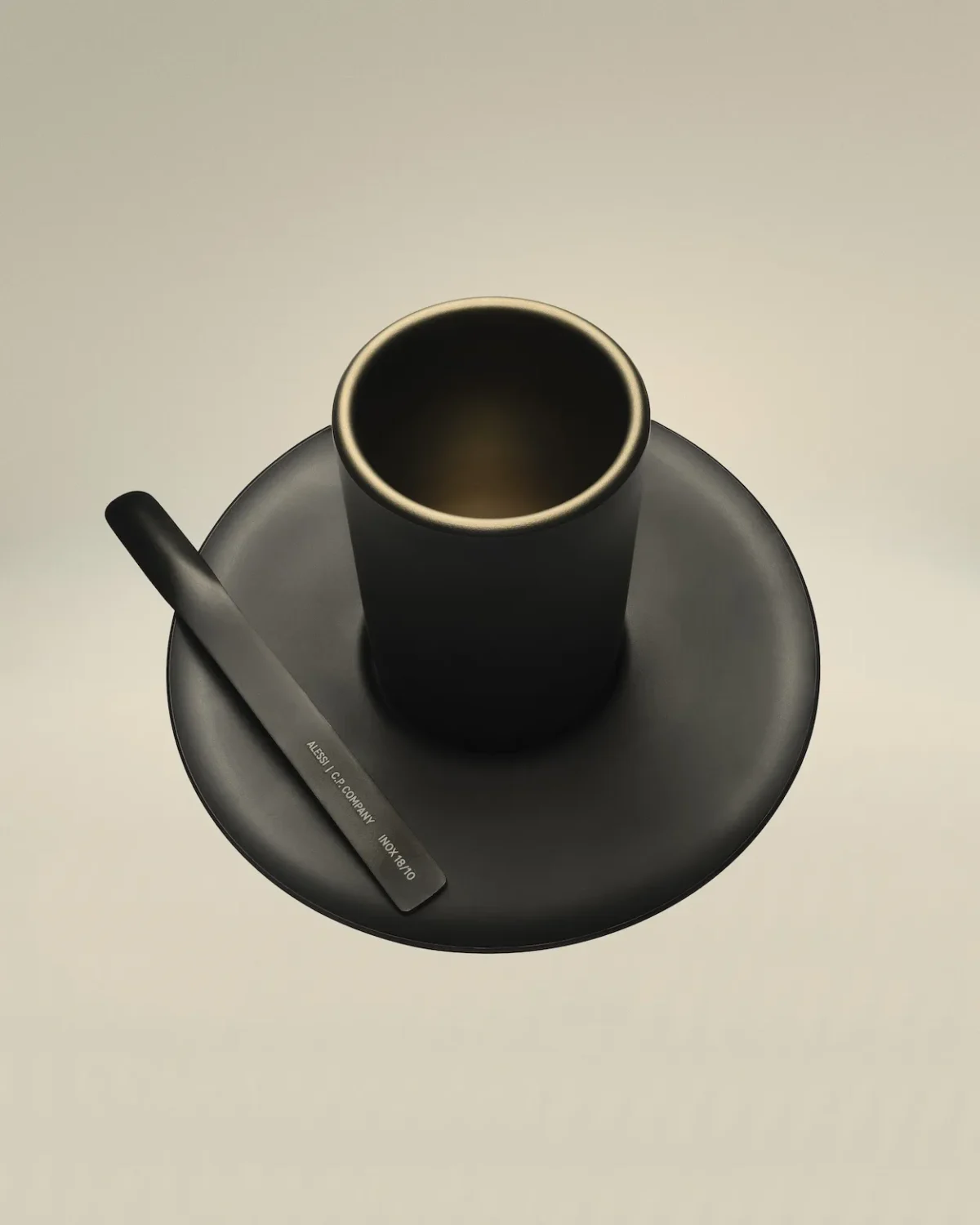
The finish sets this reissue apart from a reprint: each object undergoes manual sandblasting before receiving a black PVD (physical vapor deposition) coating. This process applies an ultra-thin layer of metal to the surface, amplifying its visual depth and tactile density. The choice is methodologically precise. PVD alters the behavior of metal over time, much like C.P. Company’s dyeing processes alter the behavior of fabric. With use, the surface of each object gradually develops a unique patina — a character earned rather than applied.
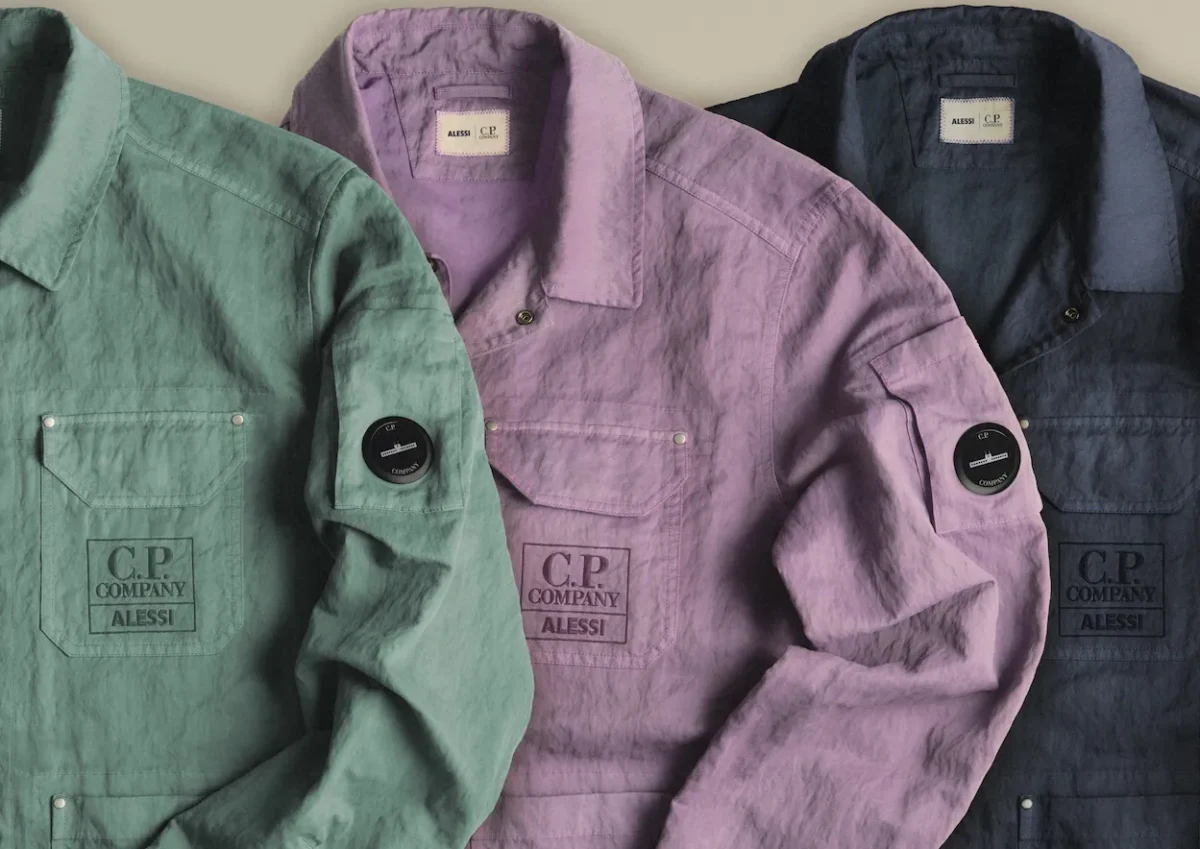
In the clothing category, C.P. Company contributes a nylon B overshirt in three exclusive colorways: Total Eclipse, Malachite Green, and Deep Lavender. The garment is made from military-inspired, brushed, multifilament nylon, and is garment-dyed to achieve chromatic depth and a lived-in quality. A key aspect of C.P. Company’s design aesthetic is the use of intricate dyeing processes to create various finishes on garments throughout their product line. Here, this approach is applied to achieve a specific visual reference: two of the three colorways are inspired by the uniforms worn by technicians at Officina Alessi, which were introduced during the rebranding overseen by Ettore Sottsass in 1983. The overshirt also features a custom sleeve lens that combines the iconic Alessi factory graphic with the C.P. Company logo.
This collaboration will be presented through an immersive installation titled “BLEND: The Kinetic Pulse of Italian Industrial Mastery” at the C.P. Company showroom in Milan. The installation opens on April 21, which is also the day the collection will go on sale through both brands’ official channels. Milan Design Week 2026 takes place from April 20 to 26, putting this event at the center of what is shaping up to be a particularly busy edition of the Fuorisalone.
The collection will be available for purchase at the showroom, either individually or as a limited-edition set in exclusive packaging