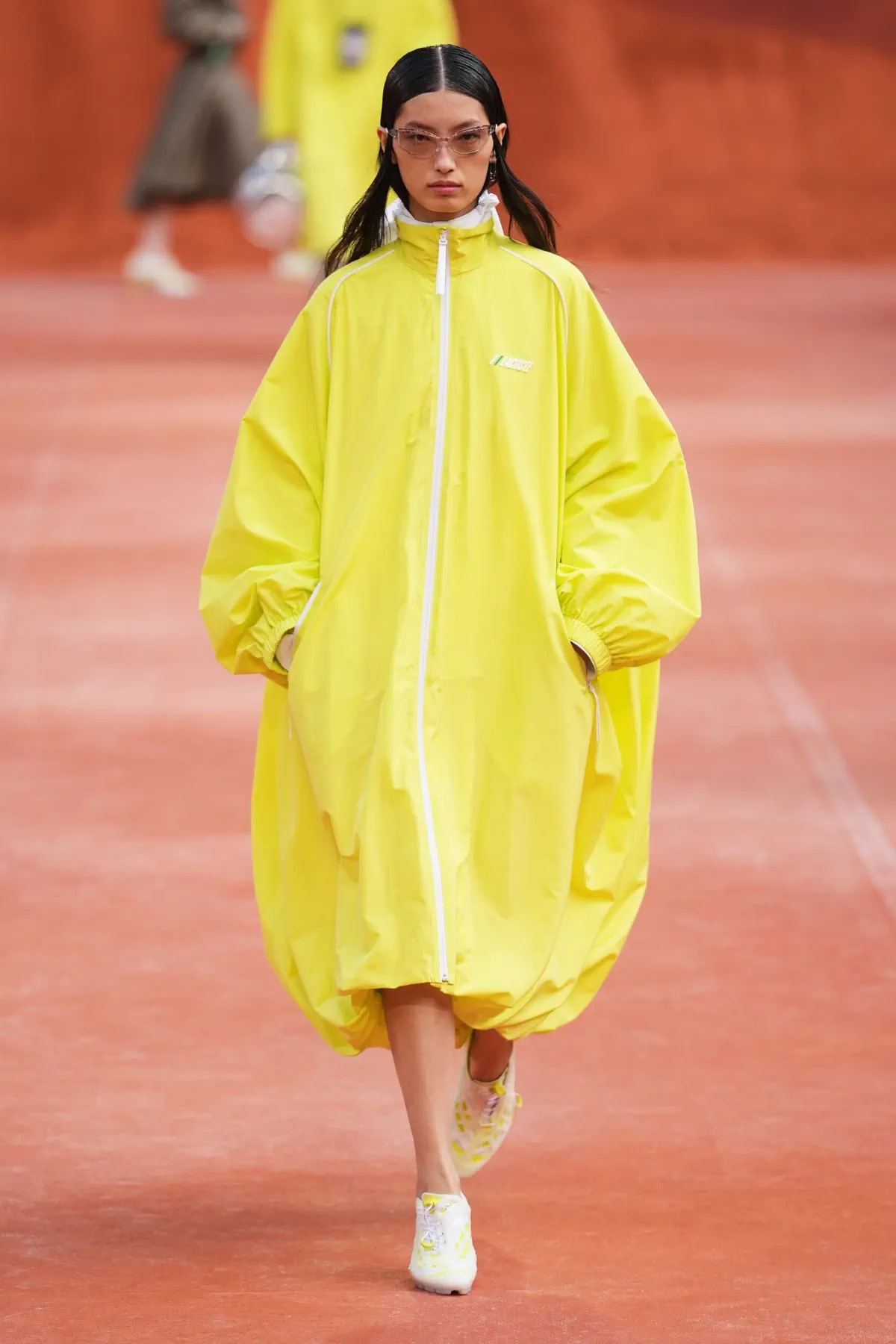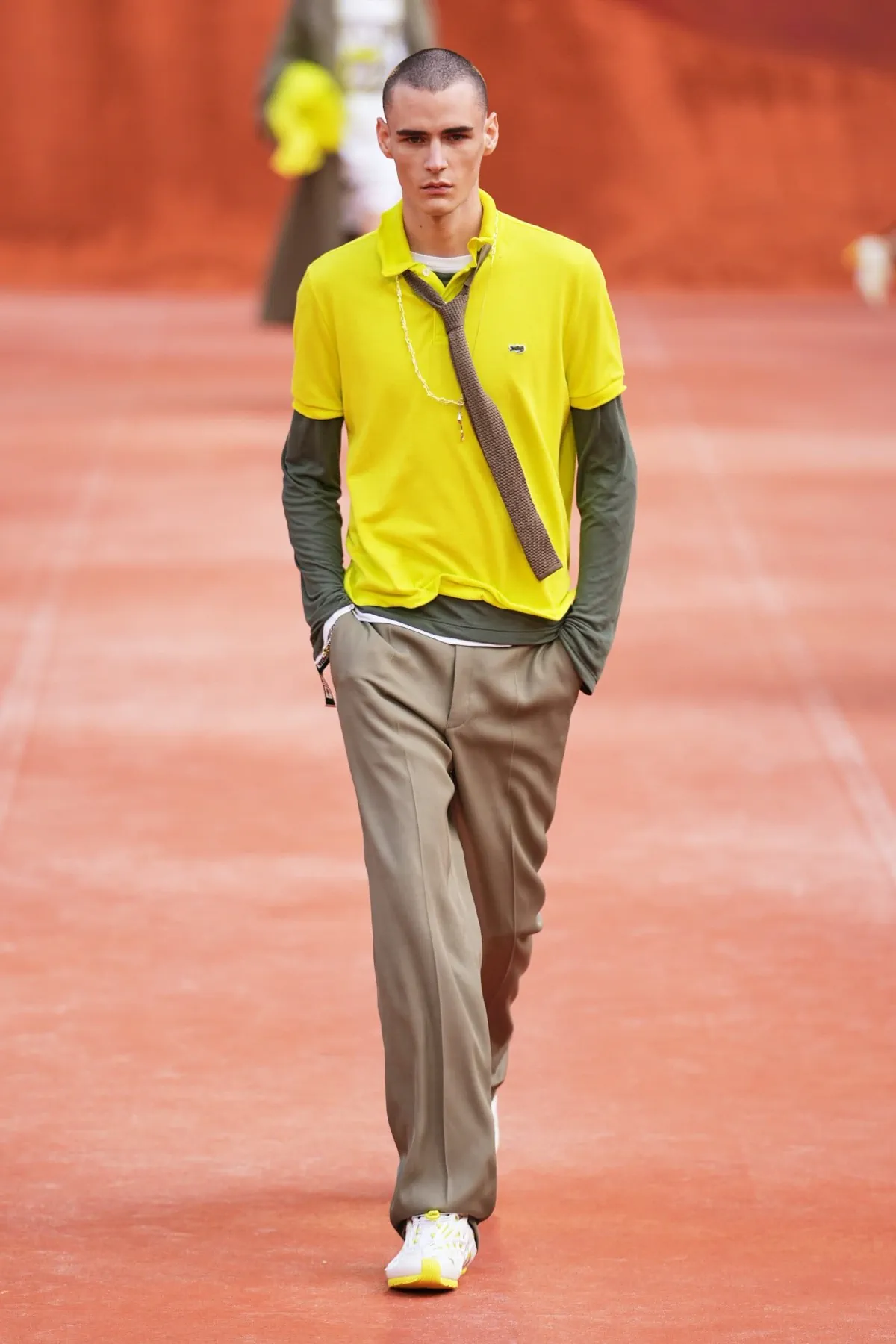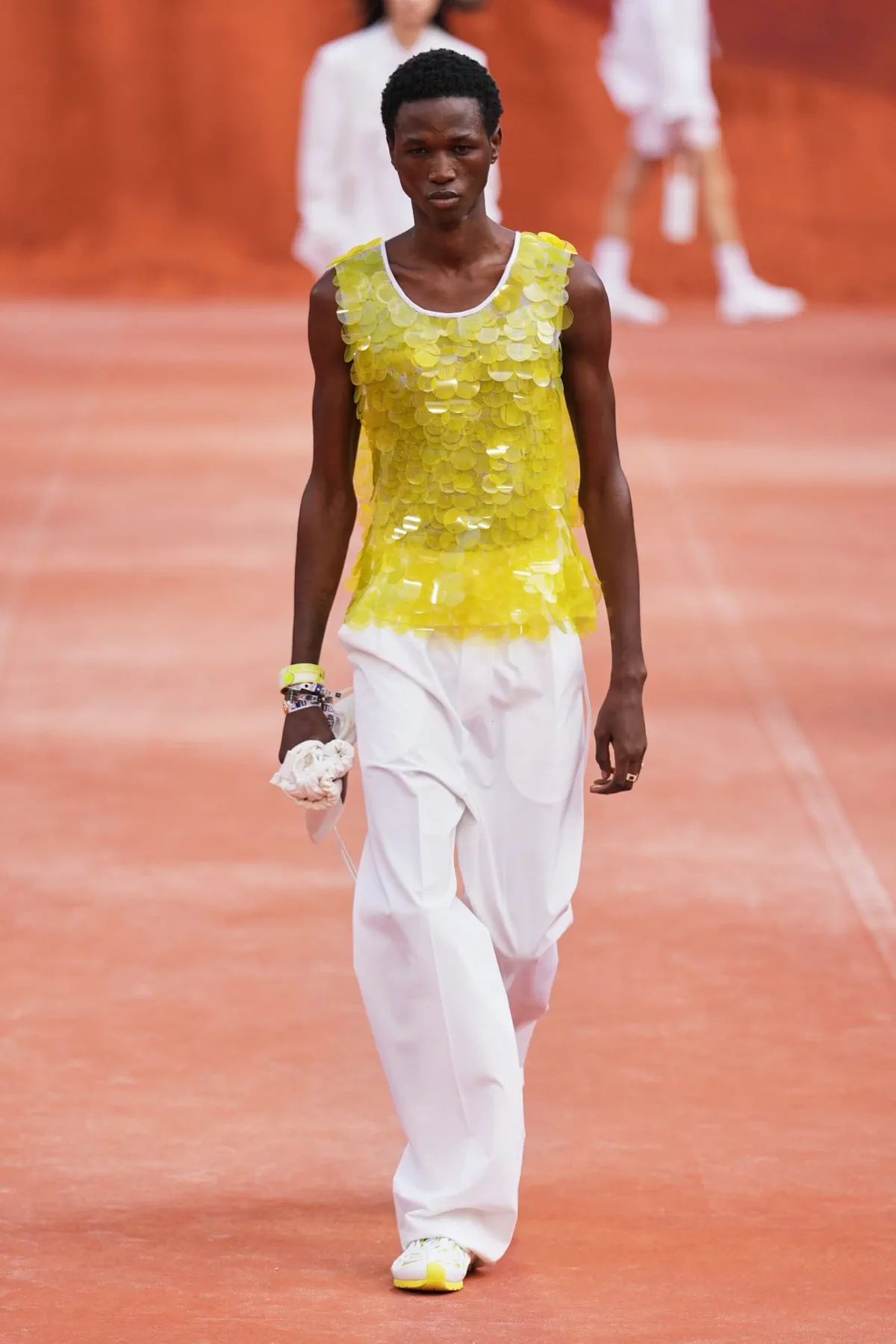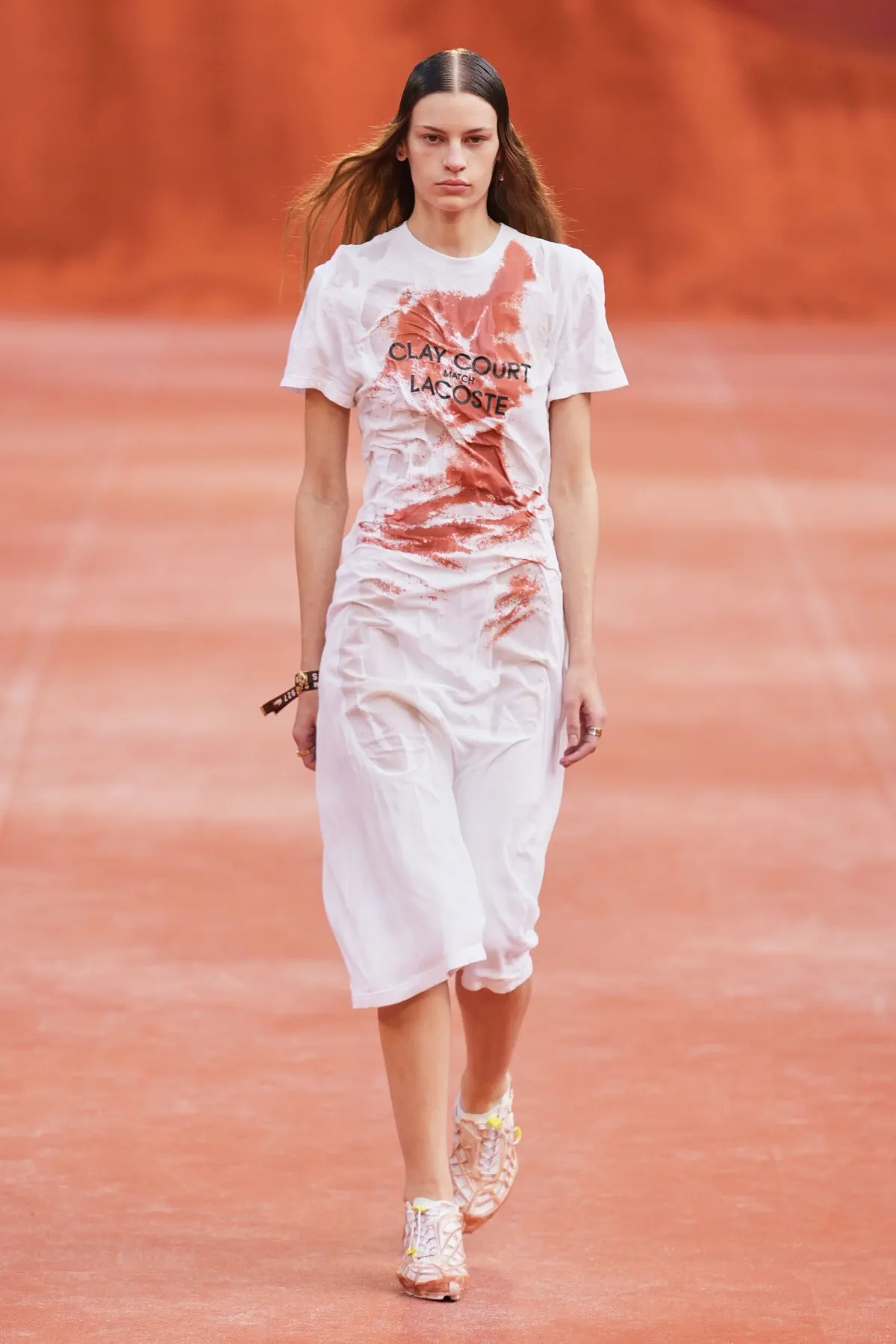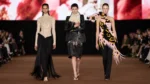

| Lacoste presented its Spring 2027 collection on Sunday, October 4th, 2026, on the Philippe-Chatrier court at Roland-Garros during Paris Fashion Week. Creative director Pelagia Kolotouros showed clay-stained, steam-puckered whites, upside-down crocodile logos and the ACE-T1 sneaker. |
A 217 km/h serve, a court of crushed red brick, and a polo shirt that can finally get dirty. For most of its history, Lacoste whites were meant to stay spotless. This season, however, the company sent them out looking like they had just lost a five-set final.
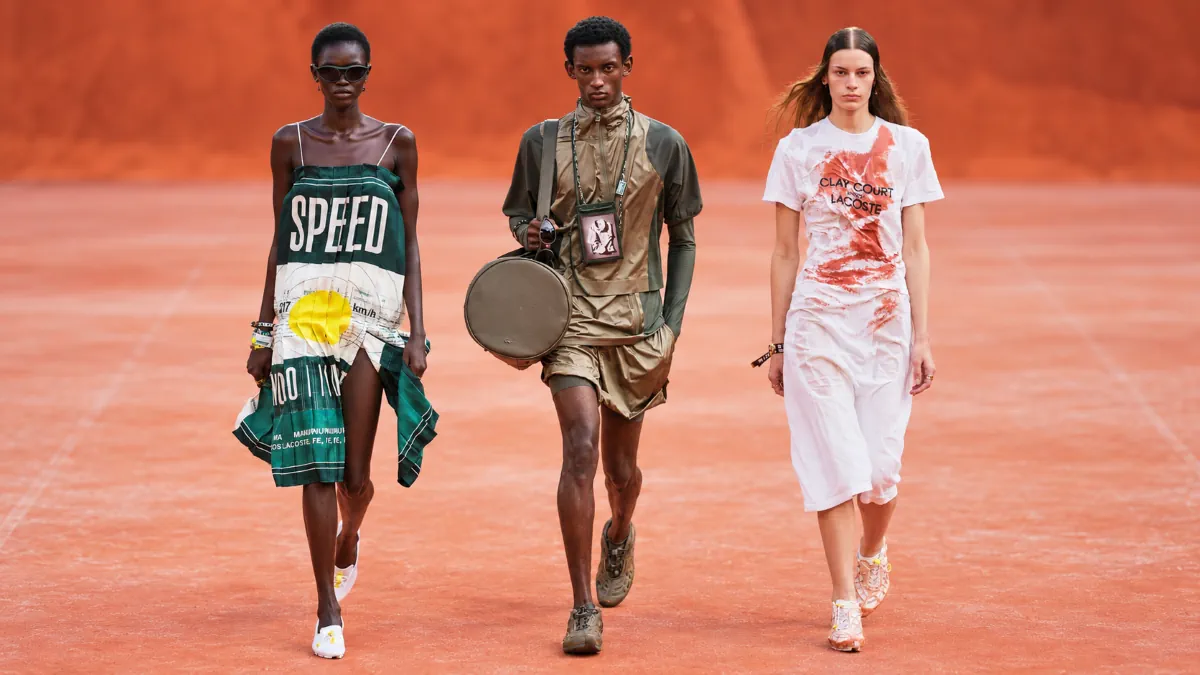
On Sunday, during Paris Fashion Week, Lacoste presented its Spring 2027 collection on the clay of the Philippe Chatrier court at Roland-Garros. The venue was a natural choice for a brand that has partnered with the tournament since 2021. However, this was no polite tennis tribute. The last three looks were the ones people talked about afterward. White jeans, polo shirts, t-shirts, shorts, and sneakers came out streaked with ochre, as if the models had been rolling around on the court after a long match. Beneath the stains was a damp, crumpled surface that resembled sweat.
Backstage, Pelagia Kolotouros, the brand’s Creative director since 2023, explained how it was done. The fabric was layered over tulle and fusible and then hit with hot steam until it shrank and puckered permanently. In other words, the “dirt” is built into the garment. It’s not a print sitting on top of the fabric, and it won’t wash out.
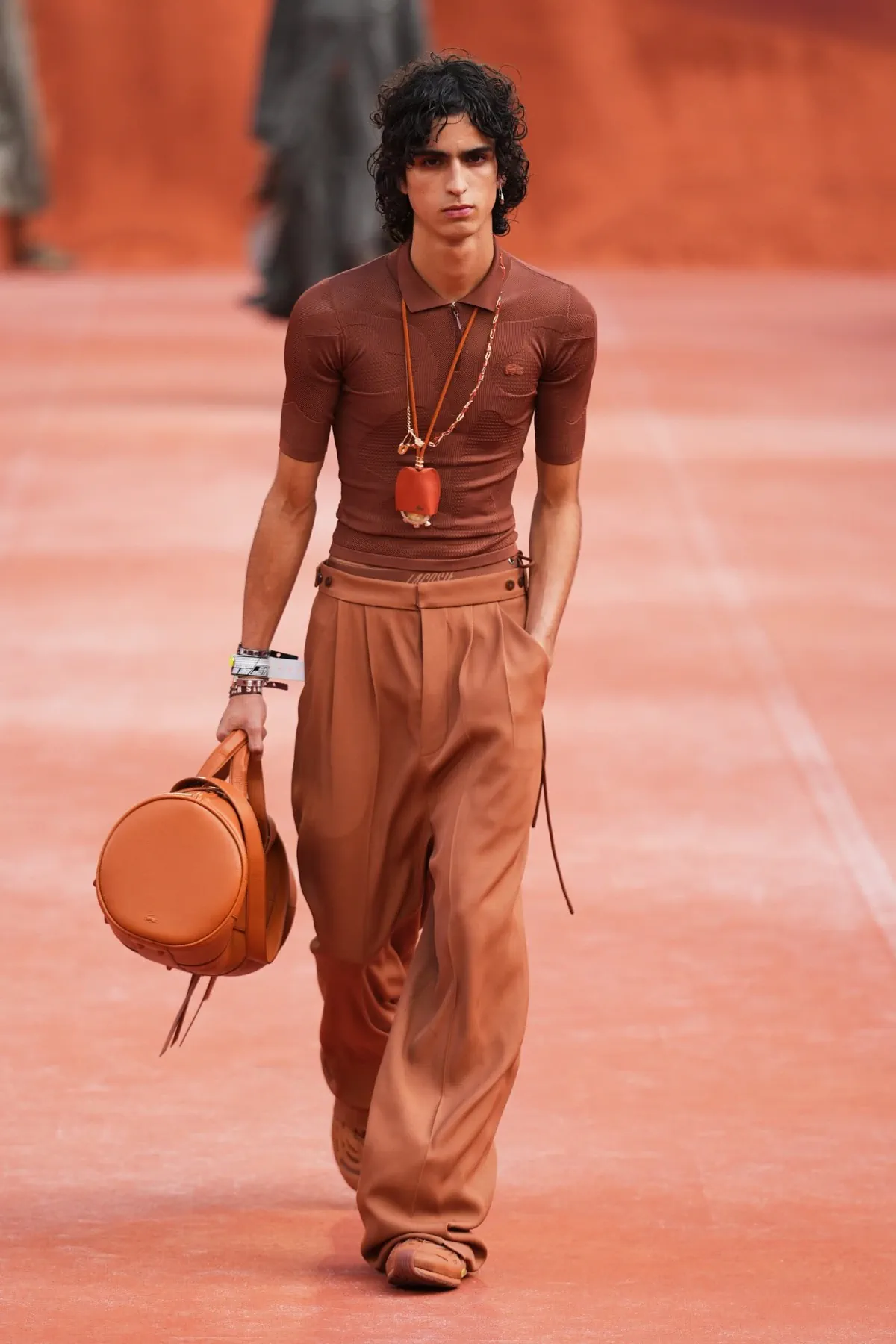
Was she trying to make Lacoste sexier? “Definitely,” she said. “I think sportswear can be sexy.“
Kolotouros said her starting point was “the notion of quiet rebellion.” She likes to bring up René Lacoste, who cut the sleeves off his shirts in the 1920s because he wanted to move faster and stay cooler. Back then, tennis players were expected to cover up. She sees this as proof that defiance is in the brand’s DNA. That same player, nicknamed “the Crocodile” on the circuit, later put a crocodile on his chest. This was one of the first visible logos ever worn on clothing. The rebellion and the branding were born together. This is precisely the tension with which Kolotouros works.
The trouble is the polo shirt. The piqué polo that René Lacoste took into production in 1933 is Lacoste’s best-known garment and a pillar of the preppy wardrobe – hardly a symbol of revolt. Kolotouros knows this. Her mood board featured an old newspaper clipping titled “Putting Down Preppydom” with the slogan, “Save an Alligator, Shoot a Preppie.”
“There’s so much prep out there right now,” she said. “I don’t like people getting caged into something prescriptive.“
She has a point about timing. Since Luca Guadagnino’s Challengers popularized the term “tenniscore” in 2024, half the industry has been selling clean, country-club tennis wear. Lacoste is the only brand with real legitimacy in that territory, and it chose to step away from the pristine version just as everyone else stepped into it.
So she turned the crocodiles on her piqué polos upside down. Collars and hems were sewn with metal filament, allowing them to be popped and bent into shapes that would turn heads at a country club. A new bag came with a flap cut like a collar down one side.
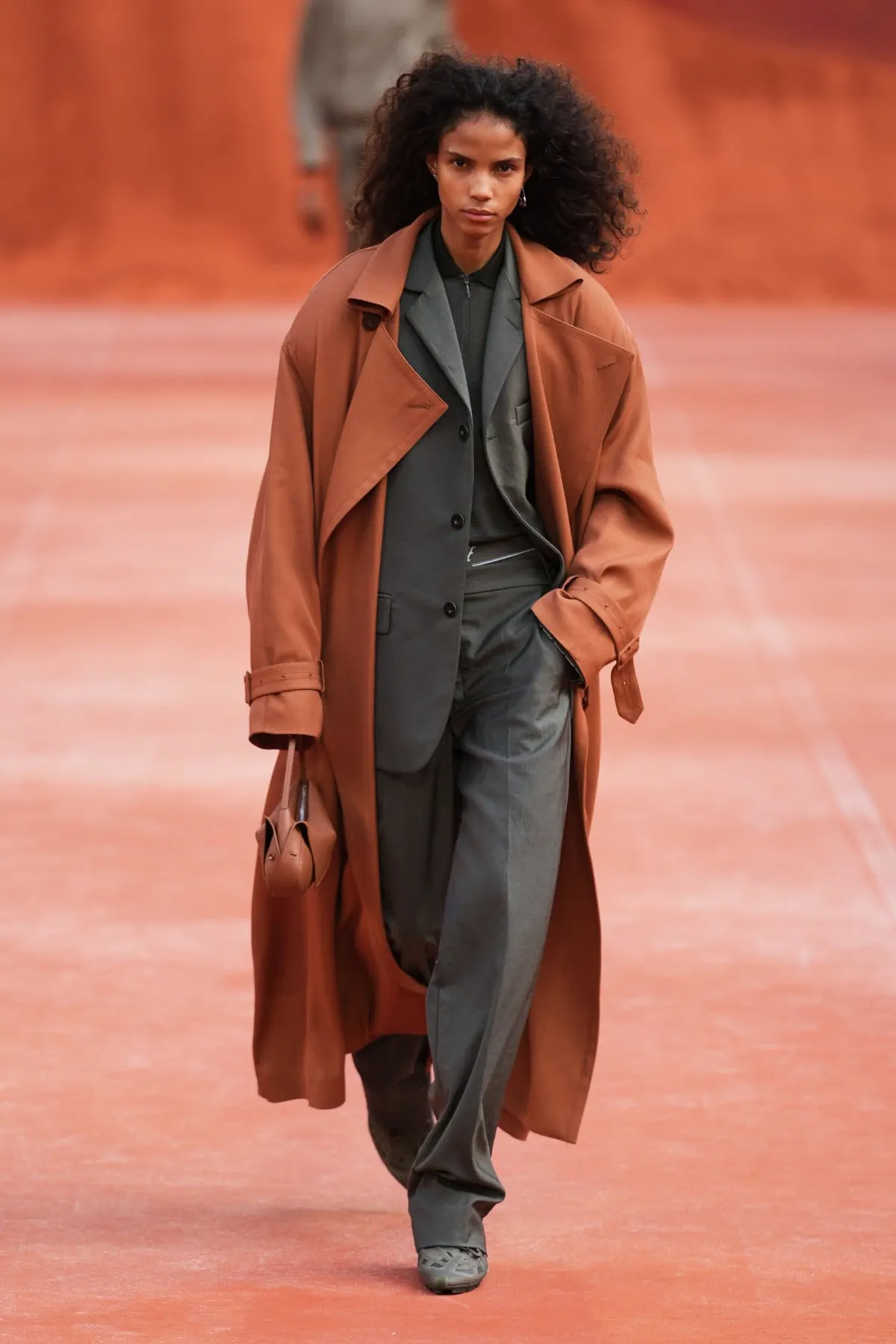
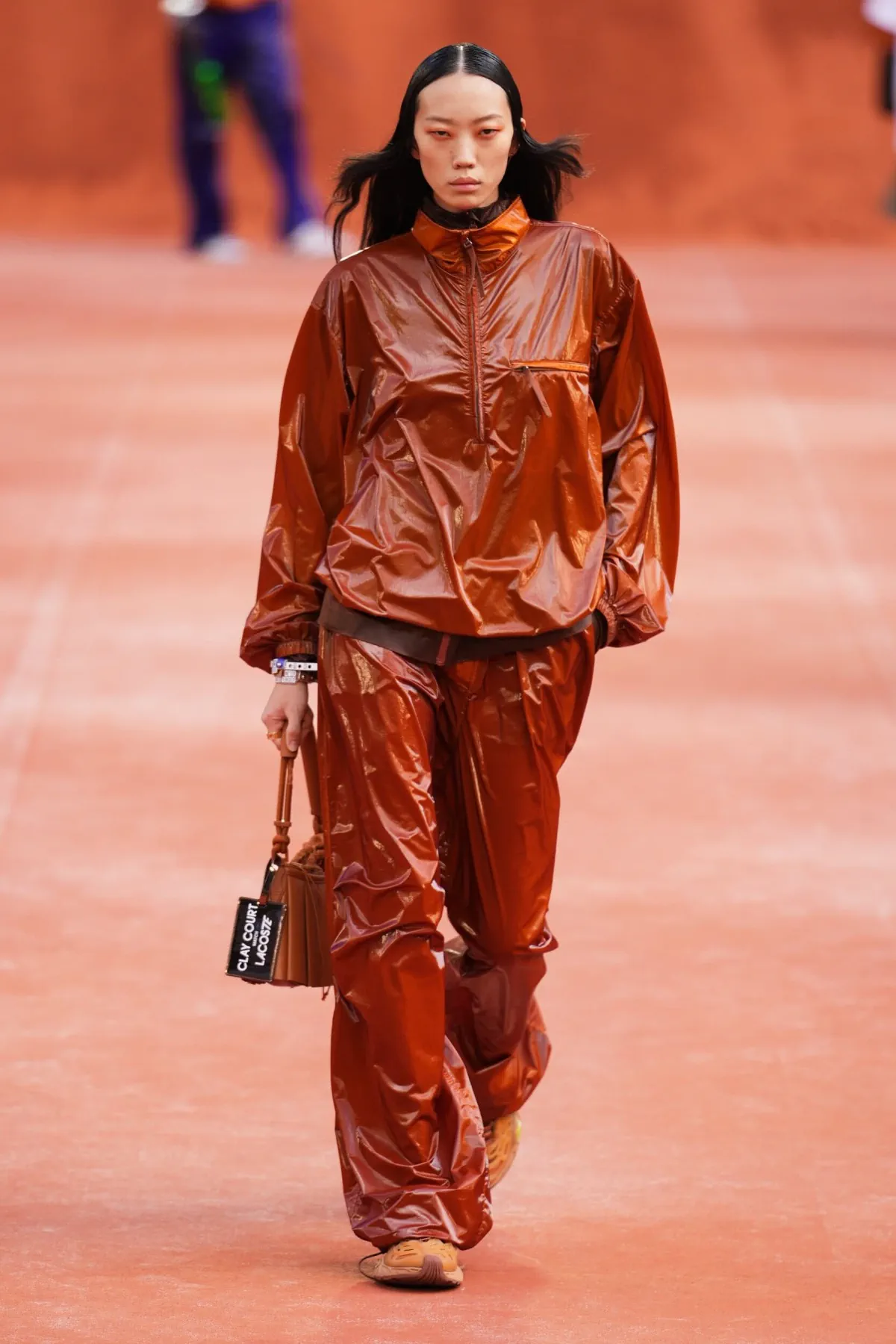
The show opened with what has become her signature at Lacoste: light, roomy coats; breathable tailoring; and relaxed sportswear. Then the temperature went up. Perforated sweat-stain patterns appeared on shrunken polos that clung to the torso. Joggers slid low enough to reveal the waistband of underwear. Washed silks gave a floor-length blouson and matching trousers a worn, lived-in feel. Collars were layered the wrong way or flipped up.
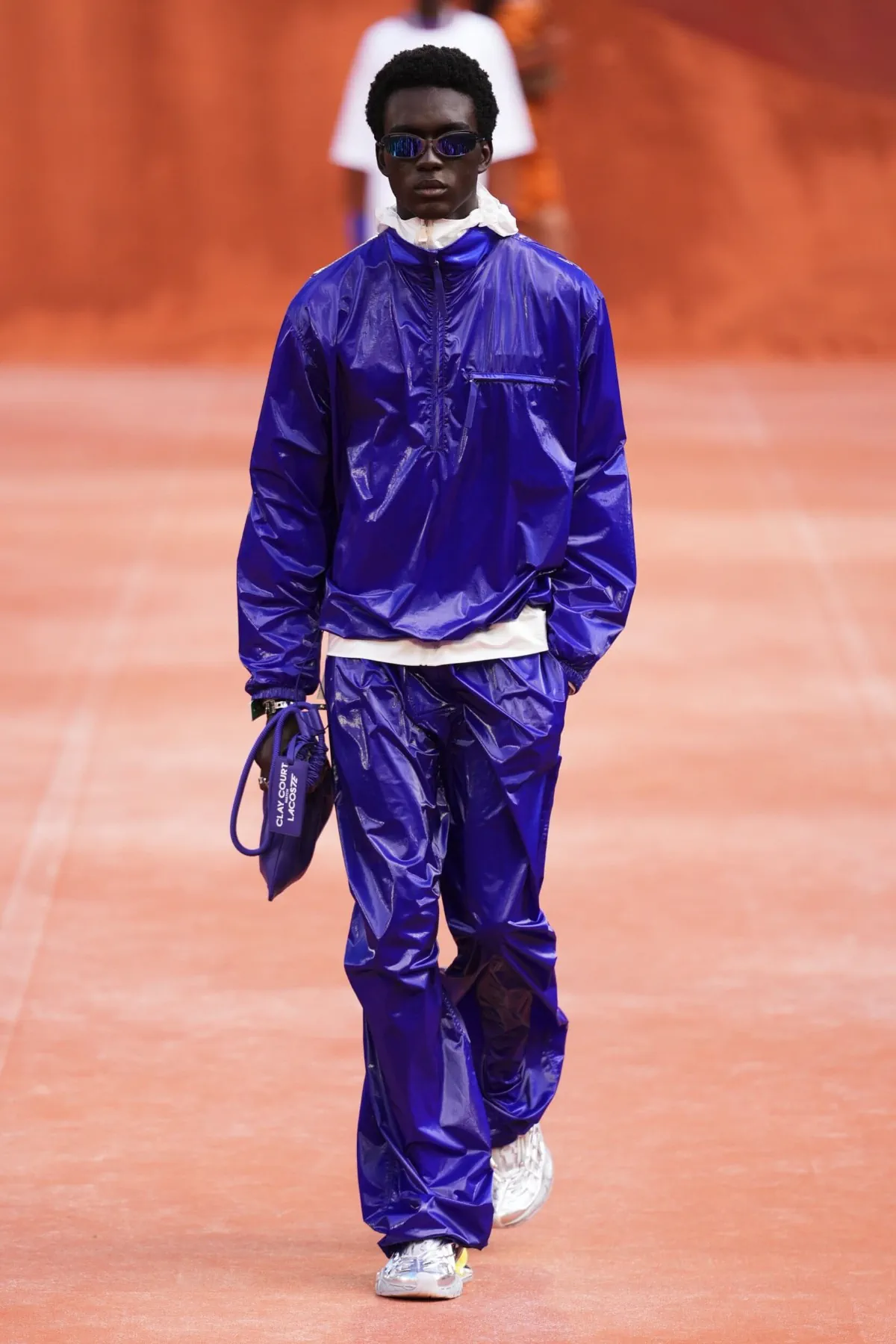
Speed was her other fixation. While watching Novak Djokovic play in Athens in November 2025, she saw a serve clocked at 217 km/h. The number stayed with her. It ended up as graphics on pleated, drop-waist dresses and hoodies. The choice of player is no accident. Djokovic has been a Lacoste ambassador since 2017. Putting one of his stats on a hoodie speaks to a sports audience that understands numbers the way fashion fans understand logos. A figure from a live match is more personal and current than an old crocodile logo.
Then there is the ACE-T1 sneaker. Its upper sits inside a net-like cage based on how a net bulges when a serve slams into it. A tennis ball is set into the heel. There is also a mid-heel version meant for night matches. I smiled at that one.
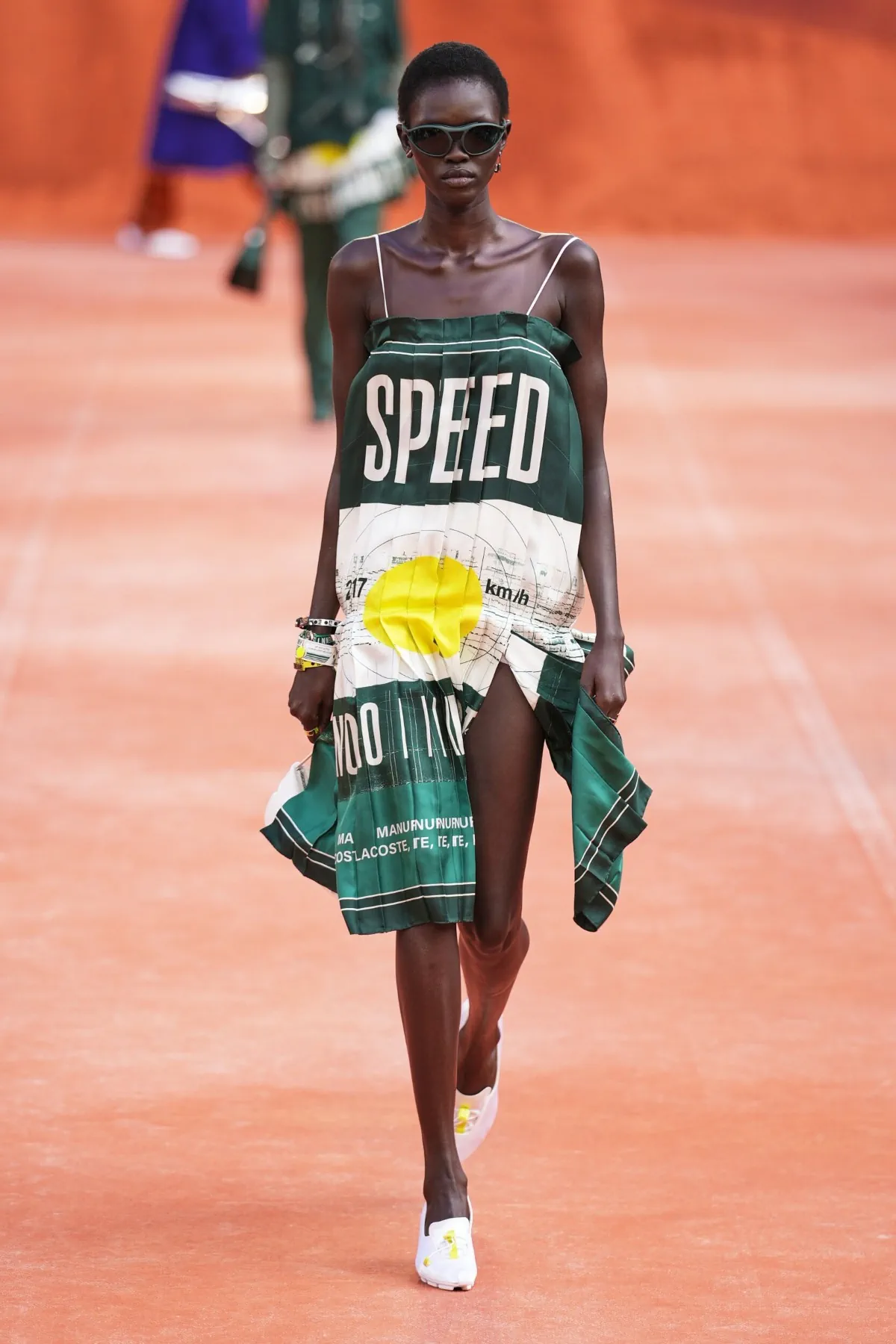
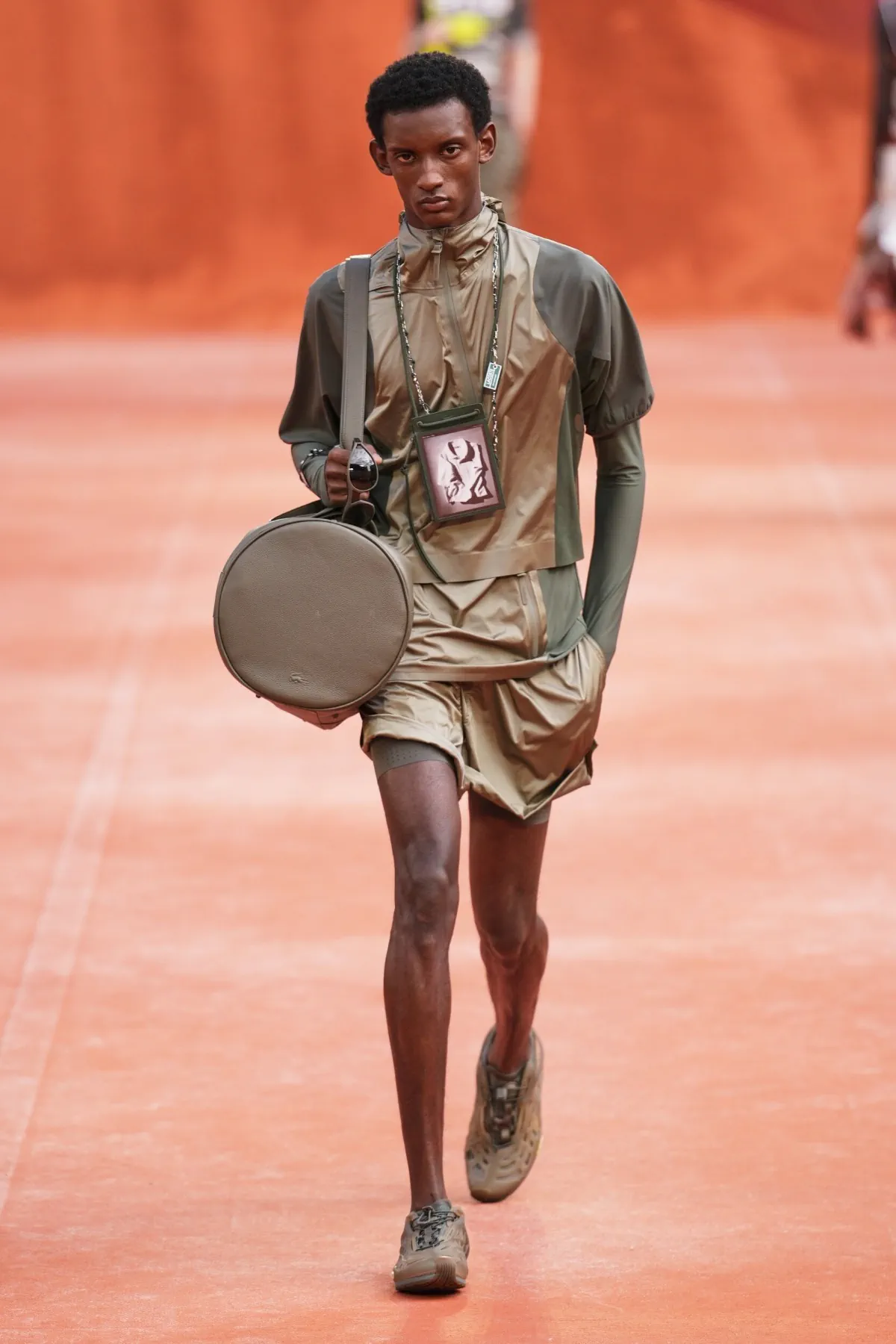
The colors mostly stayed with olive, white, and clay, with small bursts of cobalt, tennis-ball green, orange, and silver. Knitted ties hung loosely over polos. A few pieces glittered with sequins the color of tennis balls. Some T-shirts featured Irving Penn’s photograph of a folded crocodile polo and were worn over mid-sleeved clay shirts and long olive base layers. A quiet wink at the famous missing sleeves.
Does the quiet rebellion land? Mostly, yes. Kolotouros said her plan was to make the polo “feel more individualistic and less pristine and perfect.” This idea was carried through the whole collection. Her best idea was to turn effort into something you can see and touch without relying on logos. The stained whites were far more convincing than another round of crocodile graphics would have been.
Not all of it will translate well to everyday life. Some of the shrunken polos will look better on a runway than on most people. That is a minor complaint, though.
Follow all the latest news from Fashionotography on Flipboard, or receive it directly in your inbox with Feeder.
You may also read

For French readers, the calendar works in the collection’s favor. Spring 2027 pieces should reach stores during the first months of 2027, just ahead of the next Roland Garros tournament in late May, when clay tennis returns to every screen in the country. Prices have not been announced yet, and the clay-stained looks will probably remain limited. The more wearable takeaway is already in your wardrobe: a classic polo shirt worn with the collar popped, slightly rumpled and untucked. Imperfection is the point.
Retailers seem to agree with her vision. Beyond Lacoste’s own stores, more than 40 accounts have signed on, including Dover Street Market, Selfridges, Galeries Lafayette, Ssense, and Japan’s Hankyu. If this new edge translates into actual sales, Kolotouros may well secure Lacoste’s long-term success. The most important point has already been won, though: for the first time in years, a Lacoste polo looks like something you have to earn, not just something you buy.