
| Celine presented its Spring 2027 collection by Creative director Michael Rider on Saturday, October 3rd, 2026, during Paris Fashion Week. The show took place in the garden of the Archives Nationales, in the Marais. It included 71 looks for women and men. Rider succeeded Hedi Slimane in October 2024. |
Michael Rider does not do mood boards for the press. Ask him where his Celine Spring 2027 collection came from and he will shrug, smile and tell you something close to the truth. “We’re pretty intuitive, and I think that’s how we roll,” he said backstage after the show, with the mild hesitation that has become part of his charm.
Then look at the clothes. They do the explaining for him.
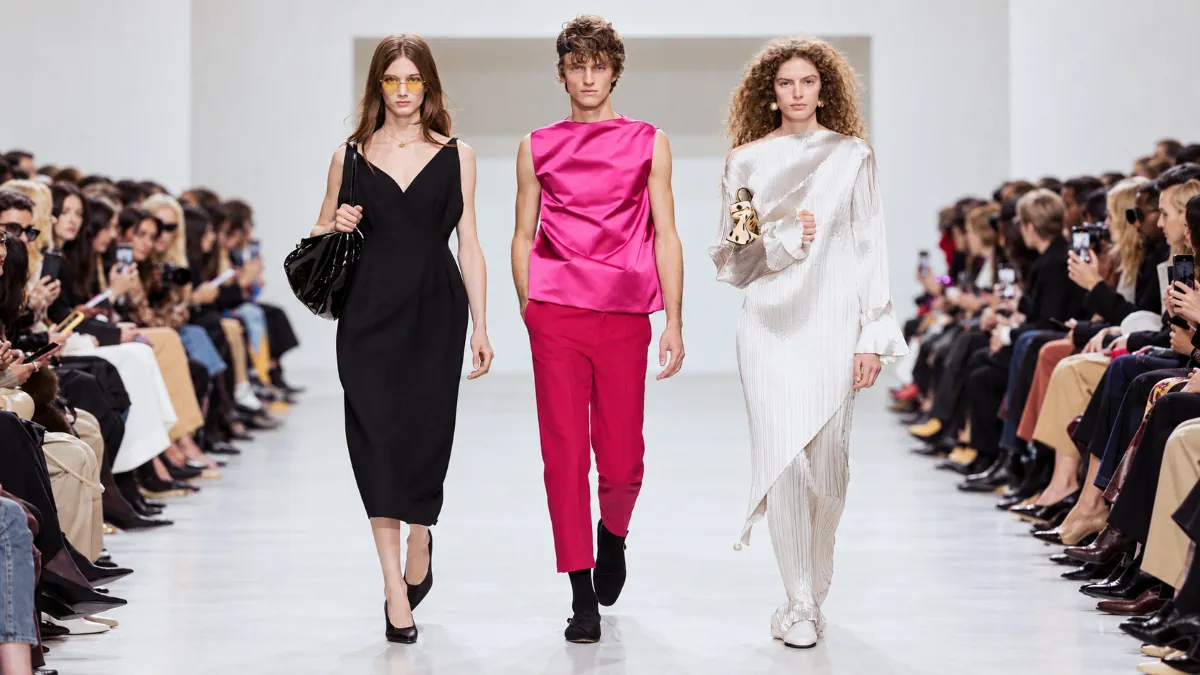
The Celine Spring 2027 collection was shown on Saturday, October 3rd, during Paris Fashion Week, in the garden of the Archives Nationales in the Marais. It came three months after Rider’s first standalone menswear runway at the Tennis Club de Paris in June, and roughly fifteen months after his debut for the house in July 2025. Rider was appointed in October 2024 to succeed Hedi Slimane. The front row reflected how far the house’s reach now extends beyond fashion insiders: SZA, Lisa Bonet, Tracee Ellis Ross, Honey Dijon, Hannah Einbinder and Ruth Negga were all in attendance.
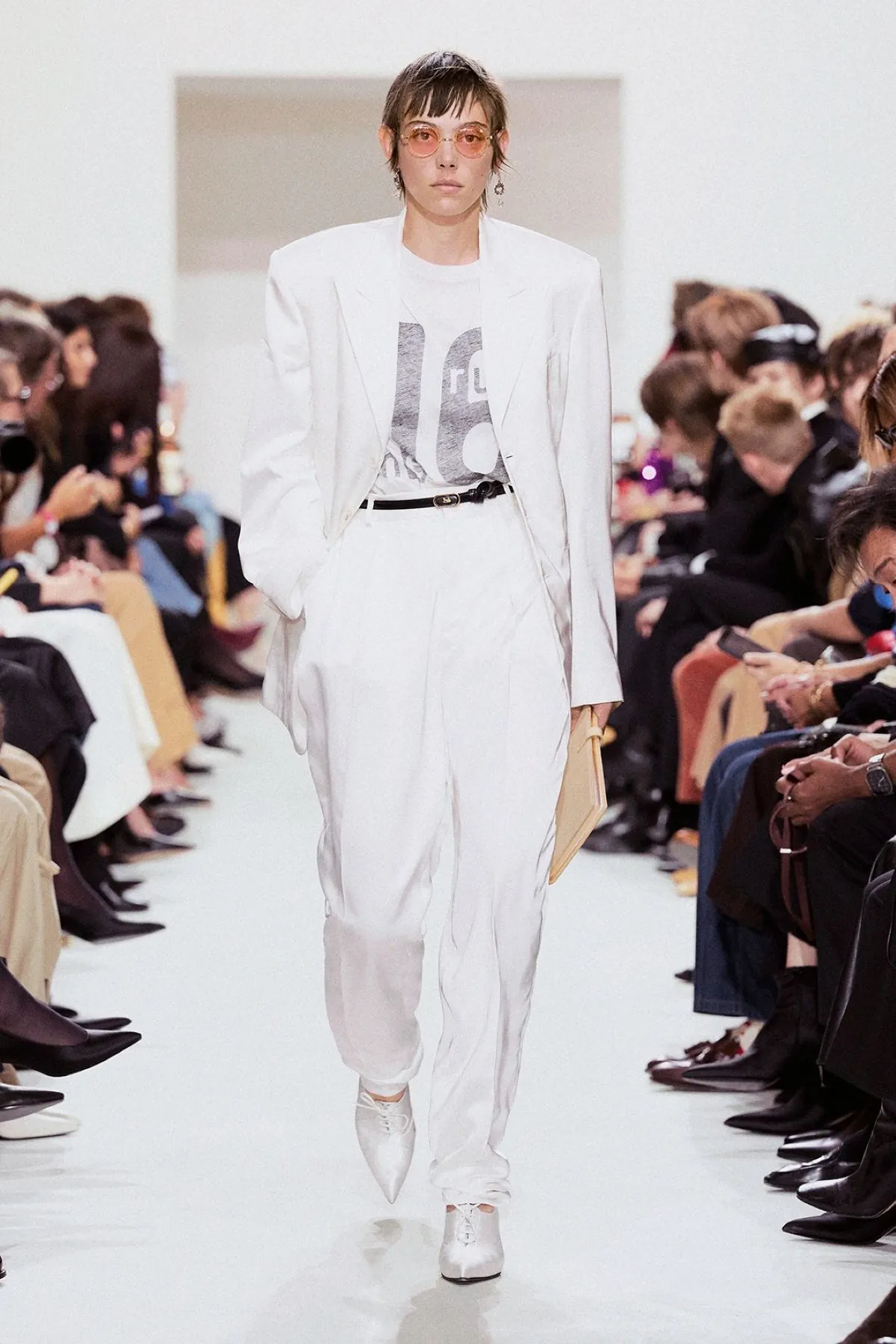
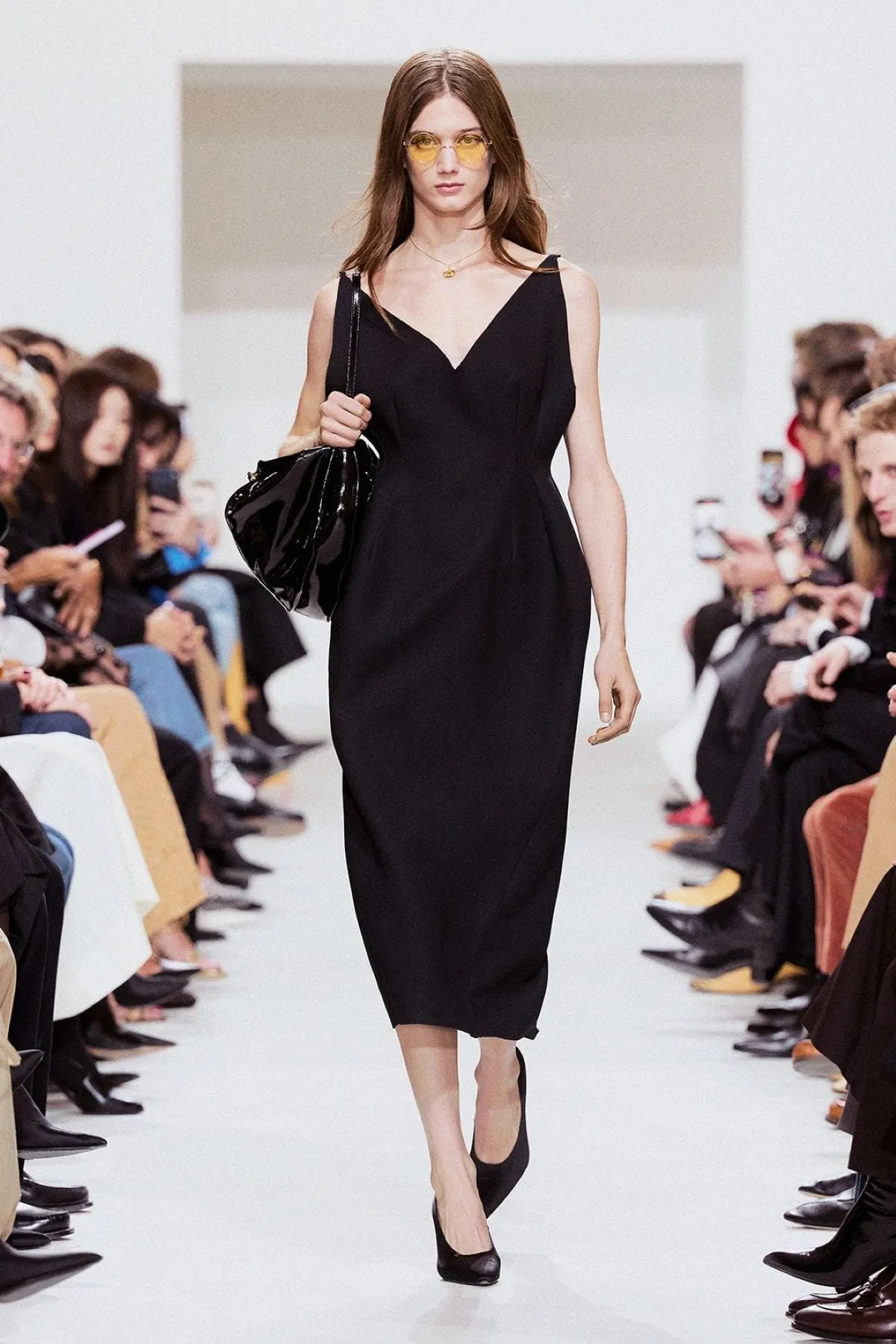
The show opened with a black summer dress, mid-length, with a V-neck and a waist drawn in just enough to notice. Pointed pumps. Nothing more. It closed on a white suit with high-waisted, fluid trousers and lace-up boots in satin on a high heel. Between those two bookends came 71 looks for women and men, and very few of them repeated an idea.
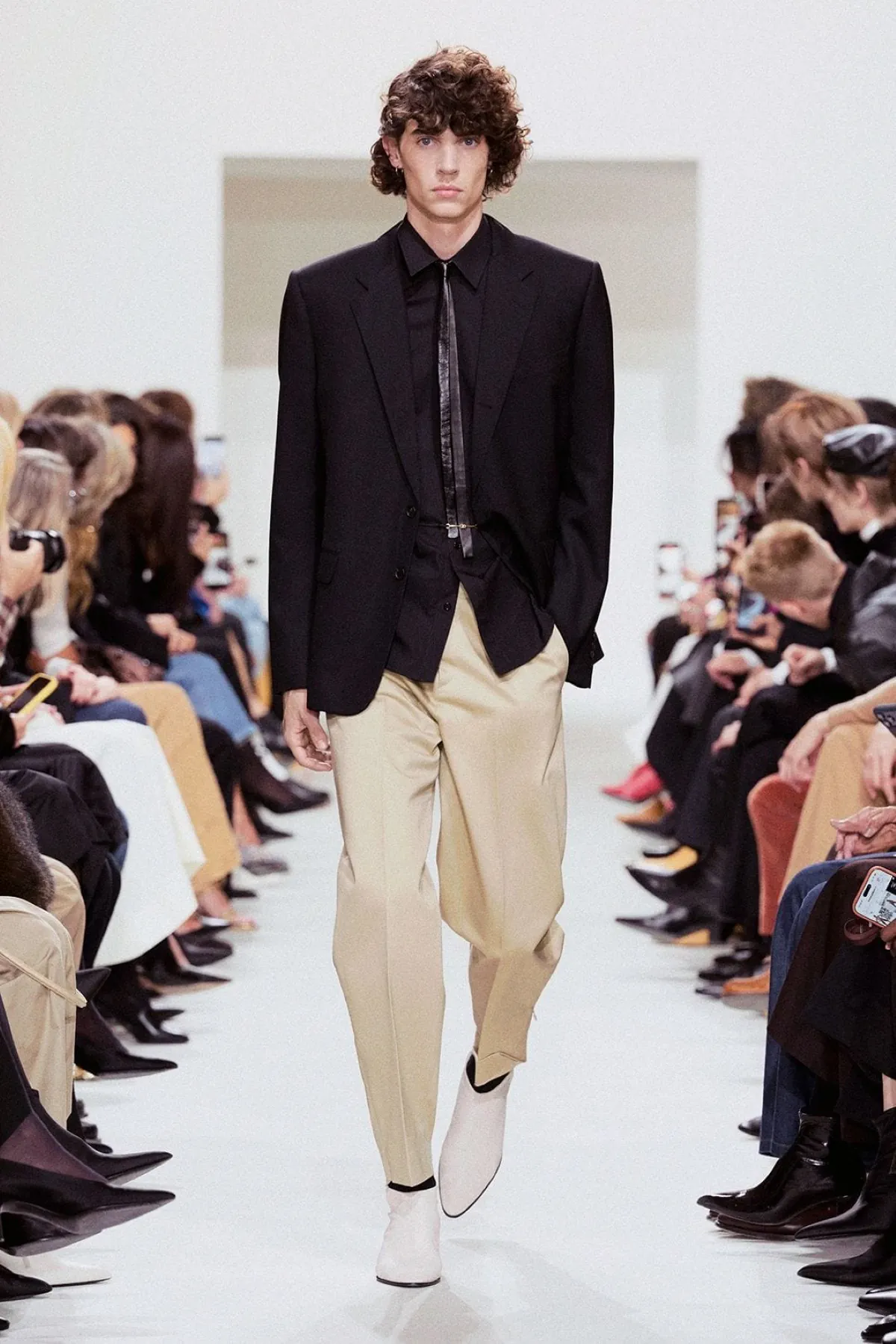
Rider has a talent for sending your gaze somewhere you did not expect. A belt as thin as a shoelace sits on a generous, dressmaker coat. A silver bangle roughly the size of a melon interrupts a narrow gown. The back vent of a jacket made from a papery fabric carries a deliberate crease, as though somebody had sat on it in a taxi. Several little black dresses fit slightly off, and you sense that the awkwardness was the point.
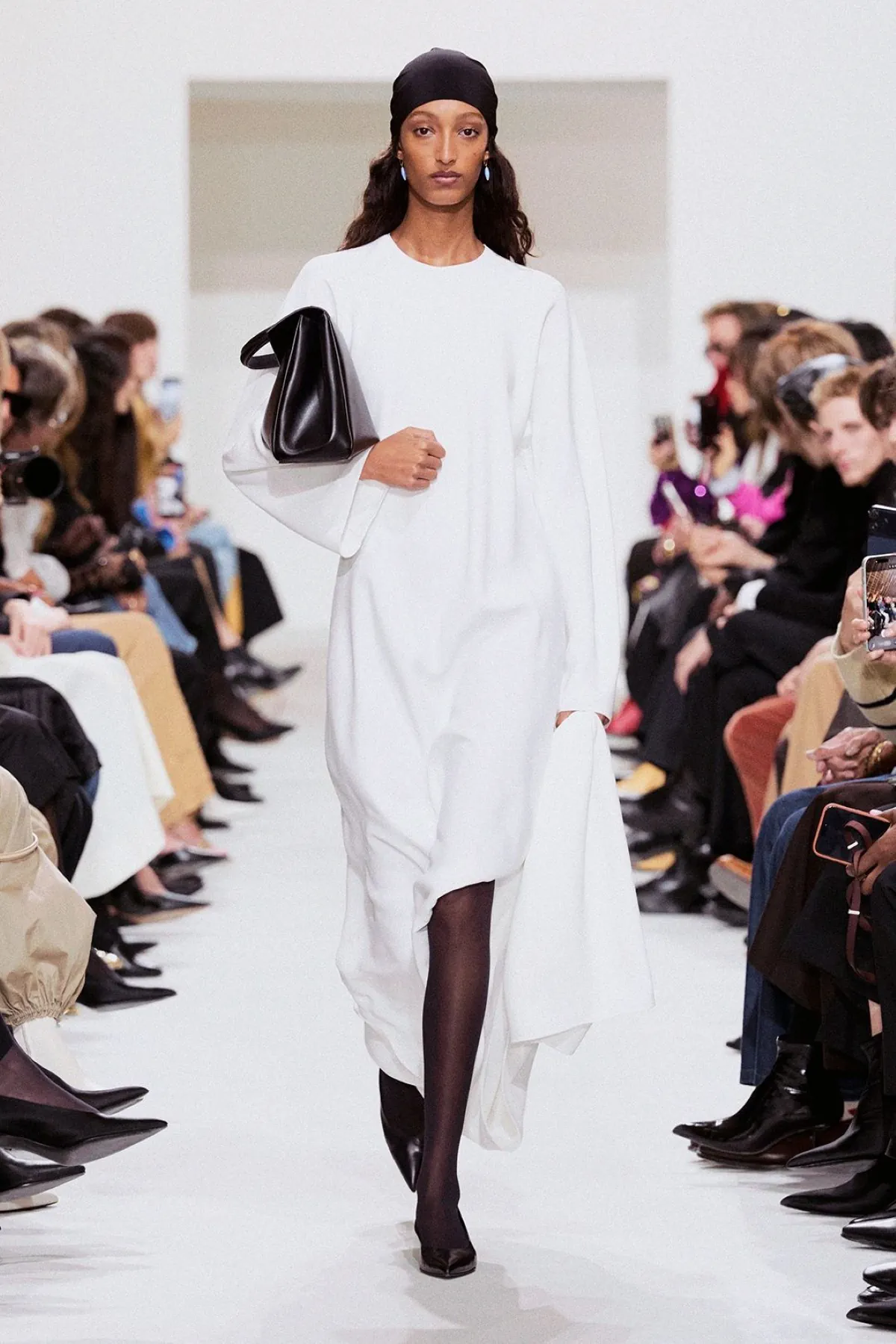
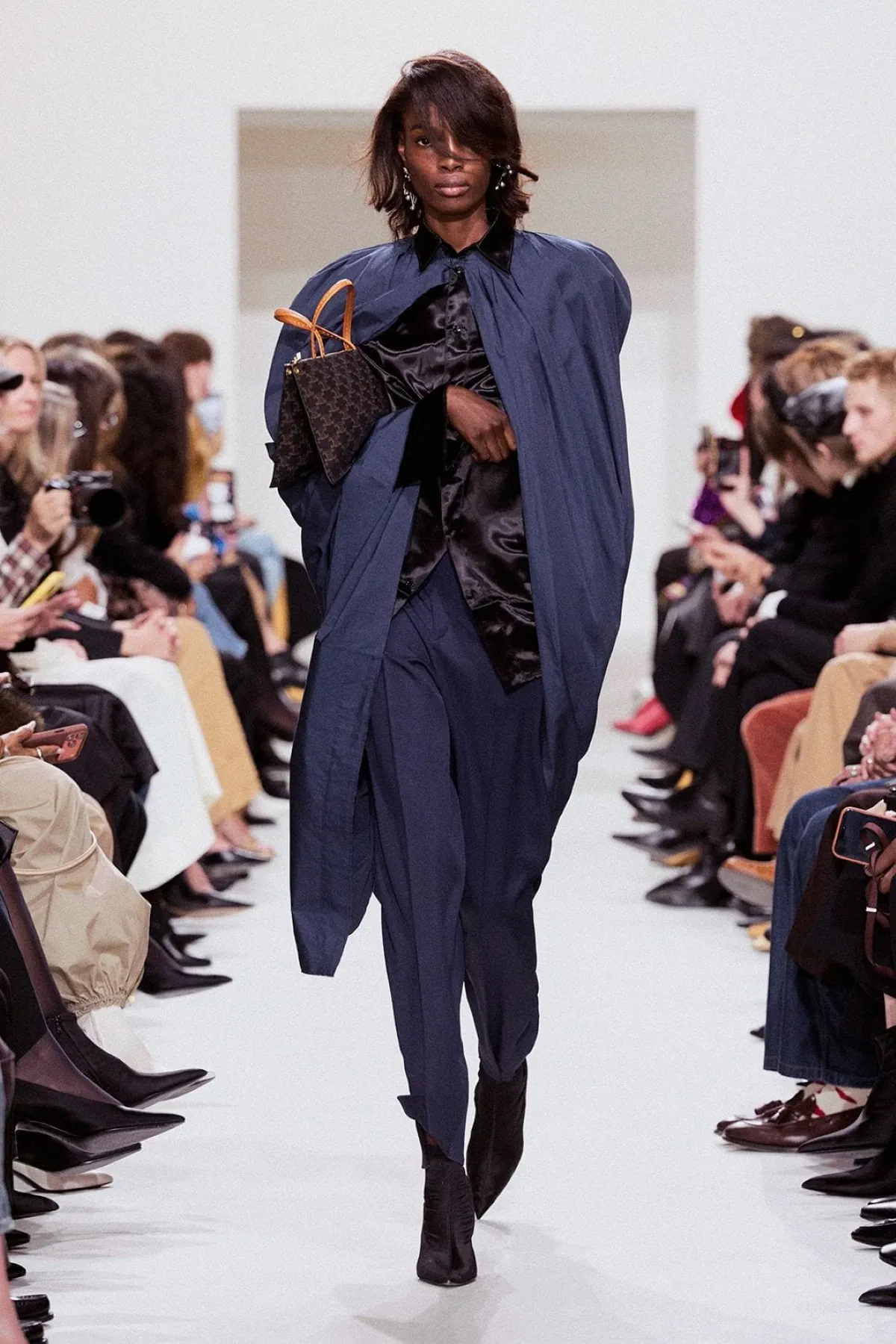
There was a great deal of satin, much of it crisp, and a lot of black and midnight blue. That gave the collection a polished, grown-up finish. Yet Rider rarely lets an outfit settle into pure formality. A scuffed sneaker turns up under a good dress. A bandana print appears on harem pants. A white satin pantsuit, which at first glance recalls Bianca Jagger at her most glamorous, is worn over a graphic t-shirt, and the reference collapses in the best possible way.
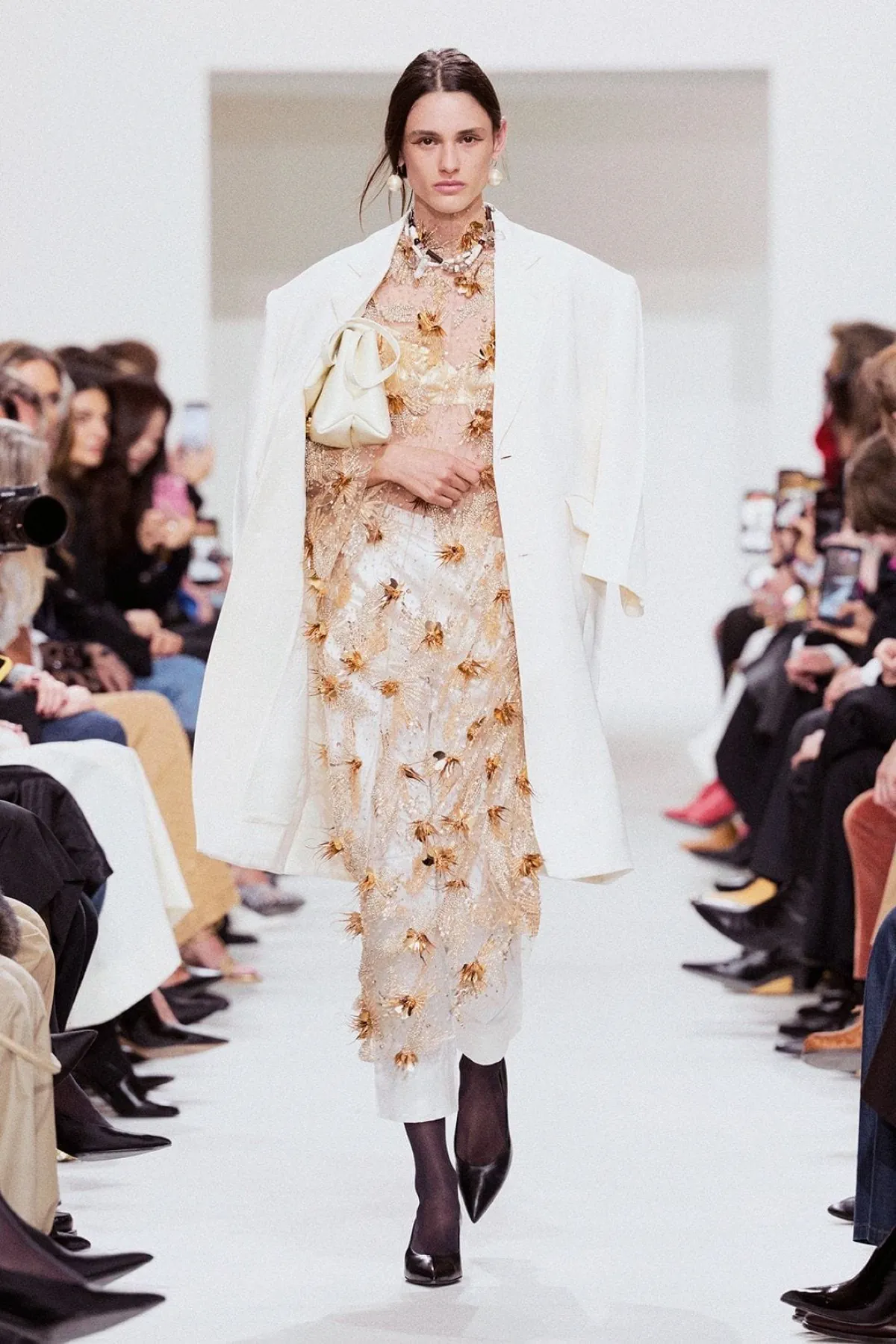
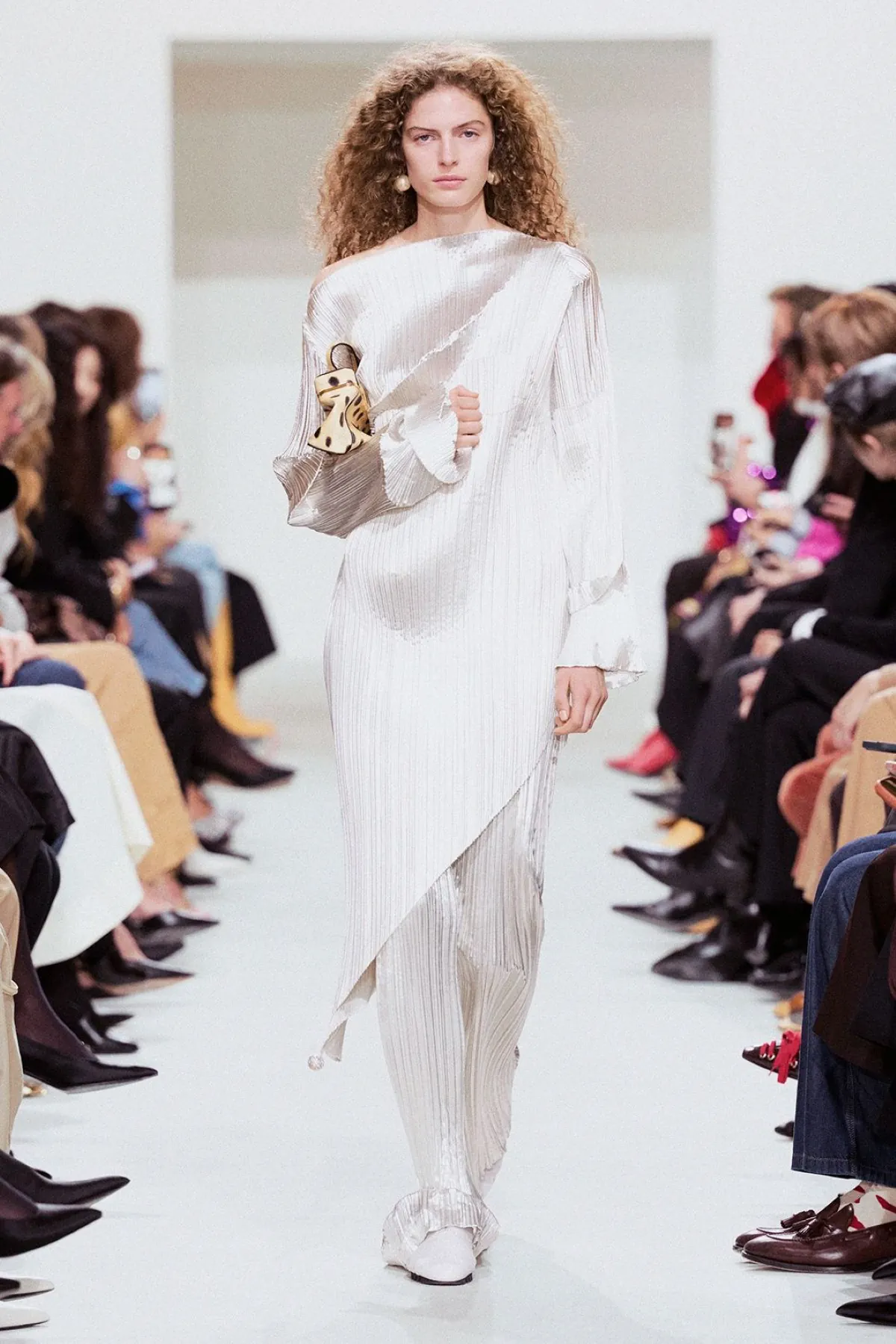
My favorite moment was a silver plissé tunic with a sliced hem, worn over trousers. The model carried a tiny polka dot tote in the crook of her arm. She looked like a modern goddess on her way to the pharmacy.
What holds this collection together is not a theme. It is a sense of real people with somewhere to be. One woman, in a black taffeta top cut off the shoulder with a matching skirt, had slung her coat under her arm against the heat of an imagined city afternoon. She looked chicer for it. Another model seemed to have left the house with a trouser leg caught in his sock. Some of the young men appeared to be drifting home after a long weekend in Ibiza.
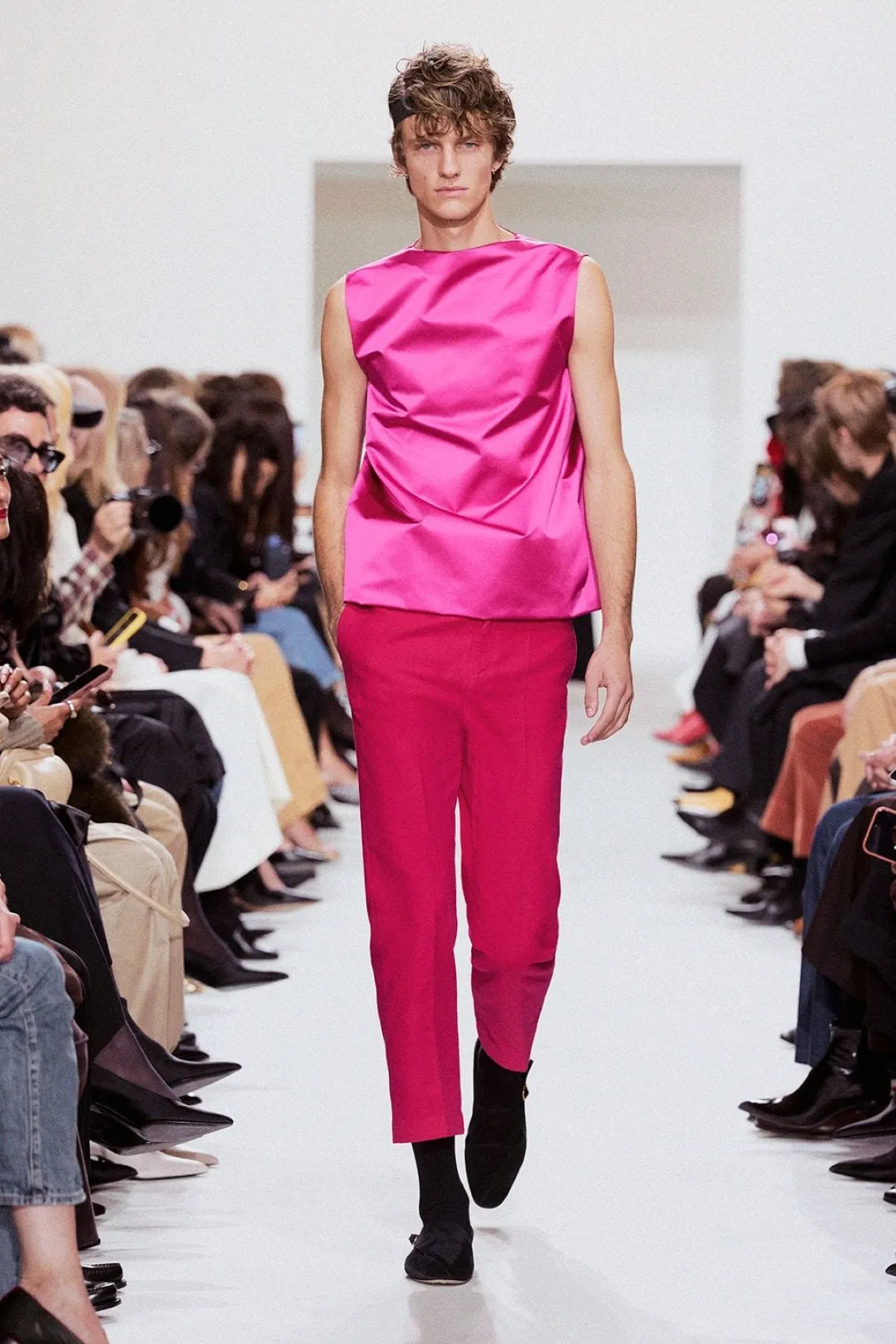
Rider was candid about this. Spontaneous, slightly accidental styling is “what turns me on,” he said, laughing. “I think that’s how I am, and I don’t know how not to do that.” He was equally clear about the limits. “I think what’s interesting about Celine is that tension, because this is a rigorous place,” he said. “We’re not living on the edge at Celine. You’re coming to get real clothes.“
That tension is the right one for the house. Celine carries several identities at once. There is the old Parisian bourgeois chic. There is the cool, cerebral period under Phoebe Philo, then the narrow, youthful silhouette of Hedi Slimane. Rider adds his own background in American sportswear, shaped by six years at Polo Ralph Lauren, where he ran the women’s collections from 2018. He also knows the Philo era from the inside, having worked at the house under her after an apprenticeship at Balenciaga with Nicolas Ghesquière. This is a return, not a discovery, which may explain the ease. Barely two years after his appointment, he has absorbed all of that without letting any single influence dominate. The collection leans toward austerity one minute and toward a bohemian looseness the next. It never fully commits to either, and that refusal feels intentional rather than indecisive.
Follow all the latest news from Fashionotography on Flipboard, or receive it directly in your inbox with Feeder.
More Read
The setting matched the mood. Guests were packed onto narrow benches beneath a large thatched roof, a sort of palapa, built in the green courtyard of a Paris museum, the Archives Nationales, housed in the Hôtel de Soubise. The sun was out. Nobody was comfortable, and nobody seemed to mind.
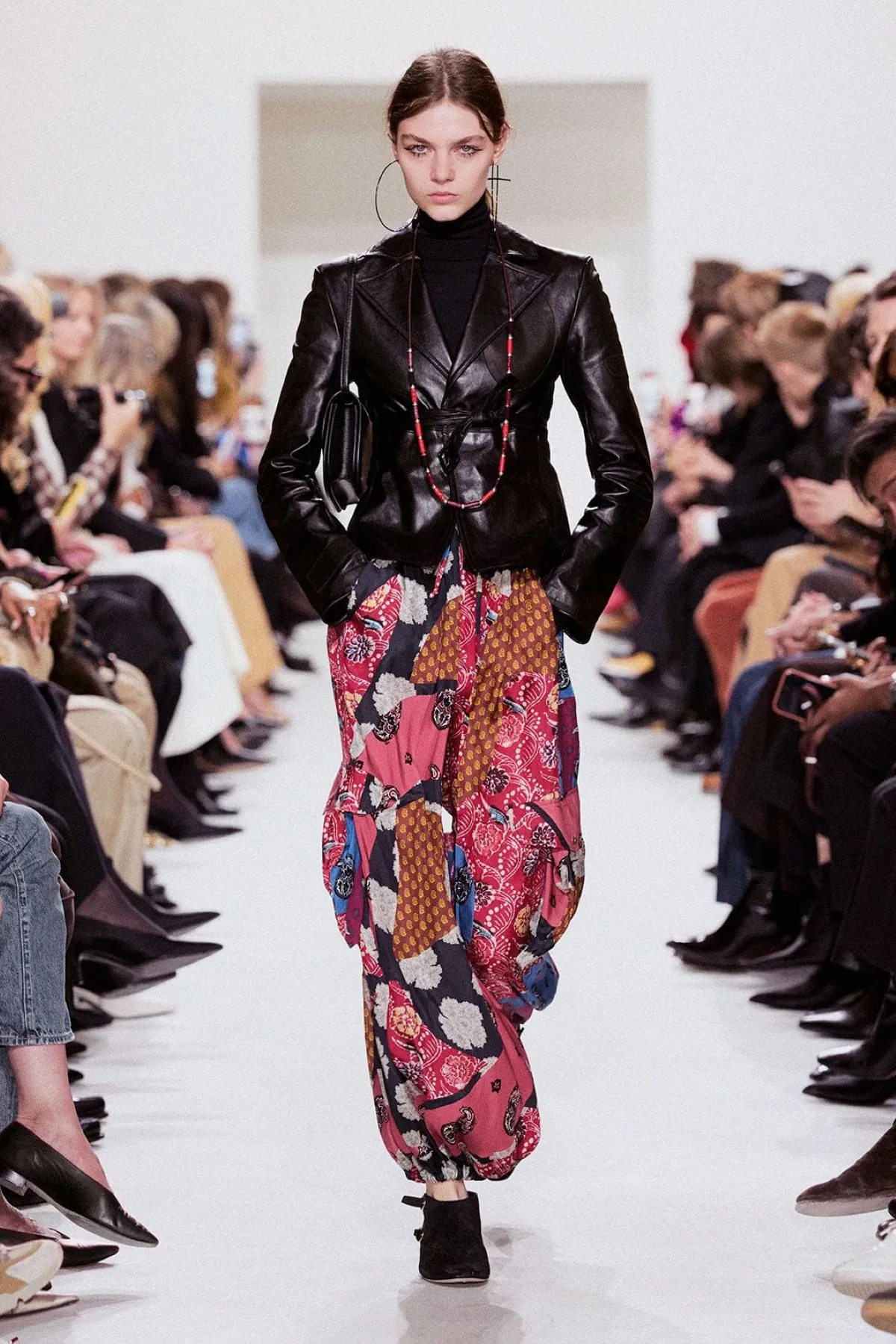
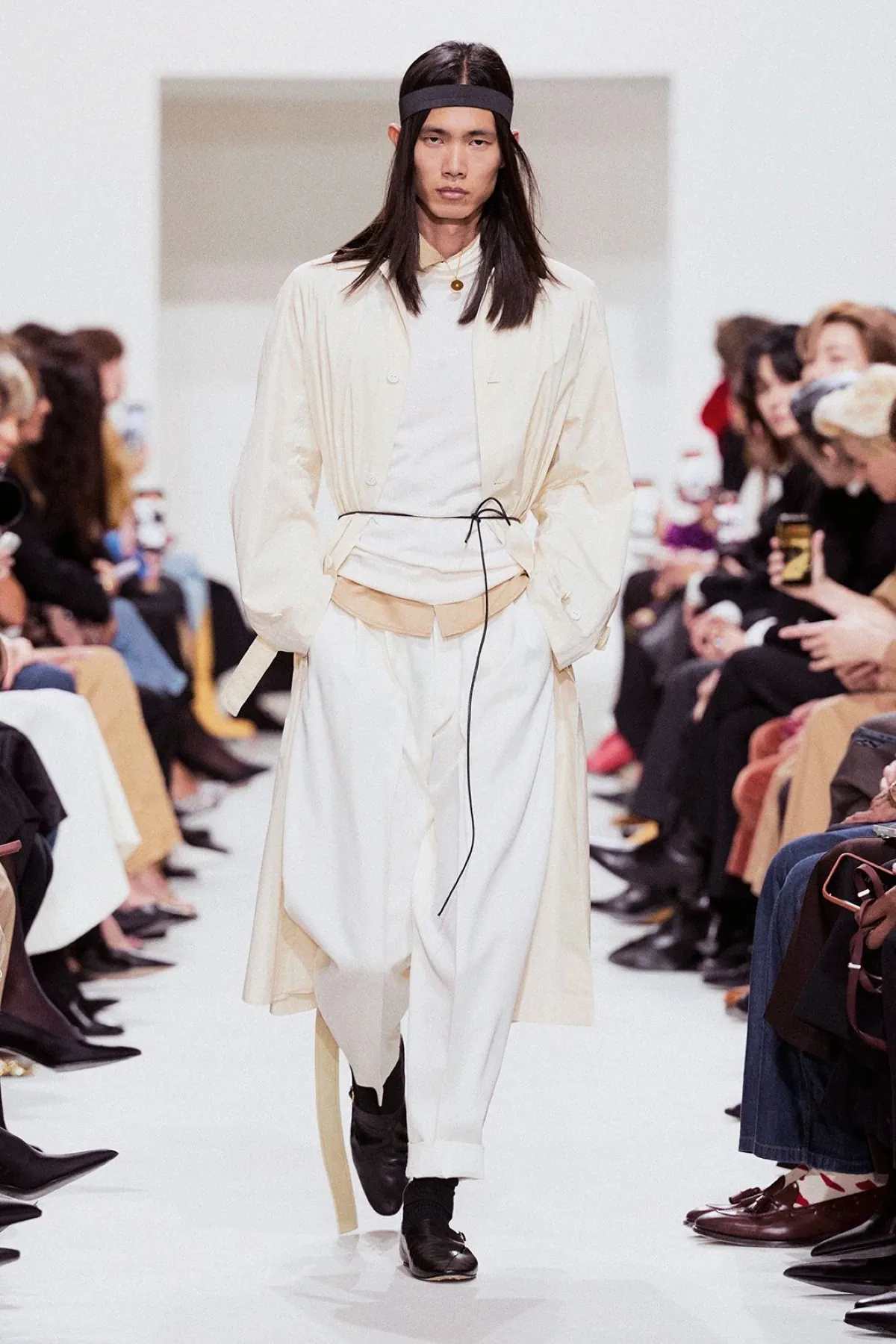
Up close, the details rewarded attention. Fine chain belts were hooked to a single button on a couple of tailored jackets. Suede slippers wrapped around the foot and fastened with two side buckles. Pearl earrings swung lightly with the walk. There were rumpled satin coats, clean leather coats, plain t-shirts and loose chino trousers cut for any gender. The silk drawstring balloon pants that caused a stir at Rider’s men’s show came back in patchwork prints. Look 17 was red on red, several vibrating shades at once.
That red matters. After his first men’s collection, red sweaters seemed to appear on half the people I passed in Paris. The same goes for the soft, flat lace-up shoes that have quietly replaced chunky trainers for a certain crowd. Very few designers can shift what people want to wear so quickly, and Rider has done it well beyond the small circle of customers who actually buy Celine.
This is where the front row stops being a decorative footnote. Rider’s ideas spread through people, not logos: a red knit, a flat shoe, a hat worn slightly askew. When Lisa Bonet or SZA wears something in a photo, these details travel far faster than any campaign could carry them. The guest list read less like a gathering of brand ambassadors and more like a casting of the woman Rider designs for: grown-up, independent, a little unpredictable. That is precisely why his influence on the street moves faster than his sales figures.
For anyone not planning to spend Celine money, the lesson of this collection is free to apply. Like most spring collections, the pieces should reach boutiques from early 2027. The method can be copied tomorrow, though. Take a red sweater over chinos, swap your sneakers for soft flat lace-ups, wear a satin shirt with relaxed trousers, or carry your jacket over your arm instead of wearing it. Rider’s whole proposition rests on good basics worn with a slight, deliberate imperfection, and that is something any wardrobe can already afford.
Rider, like the designers before him at the house, does not like to over-explain. He did, however, leave a badge on the seats, printed like a campaign button. It read: “If you shoot an arrow and it goes real high….Hooray for you.”
The line belongs to Dorian Corey, the drag artist, from the 1990 documentary “Paris Is Burning.” She says it while applying heavy eye makeup and reflecting on age, ambition and what a person leaves behind. A recording of her voice also opened the show. “What she says in that moment felt very relevant right here, right now,” Rider said.
He did not elaborate, and he did not need to. This was a confident collection from a designer who knows exactly what he likes and has stopped worrying about whether it fits a label. He aimed high this season. The arrow landed.
The real measure of Rider’s Celine is not how loudly it speaks on the runway, but how quietly it ends up in everyone else’s wardrobe.