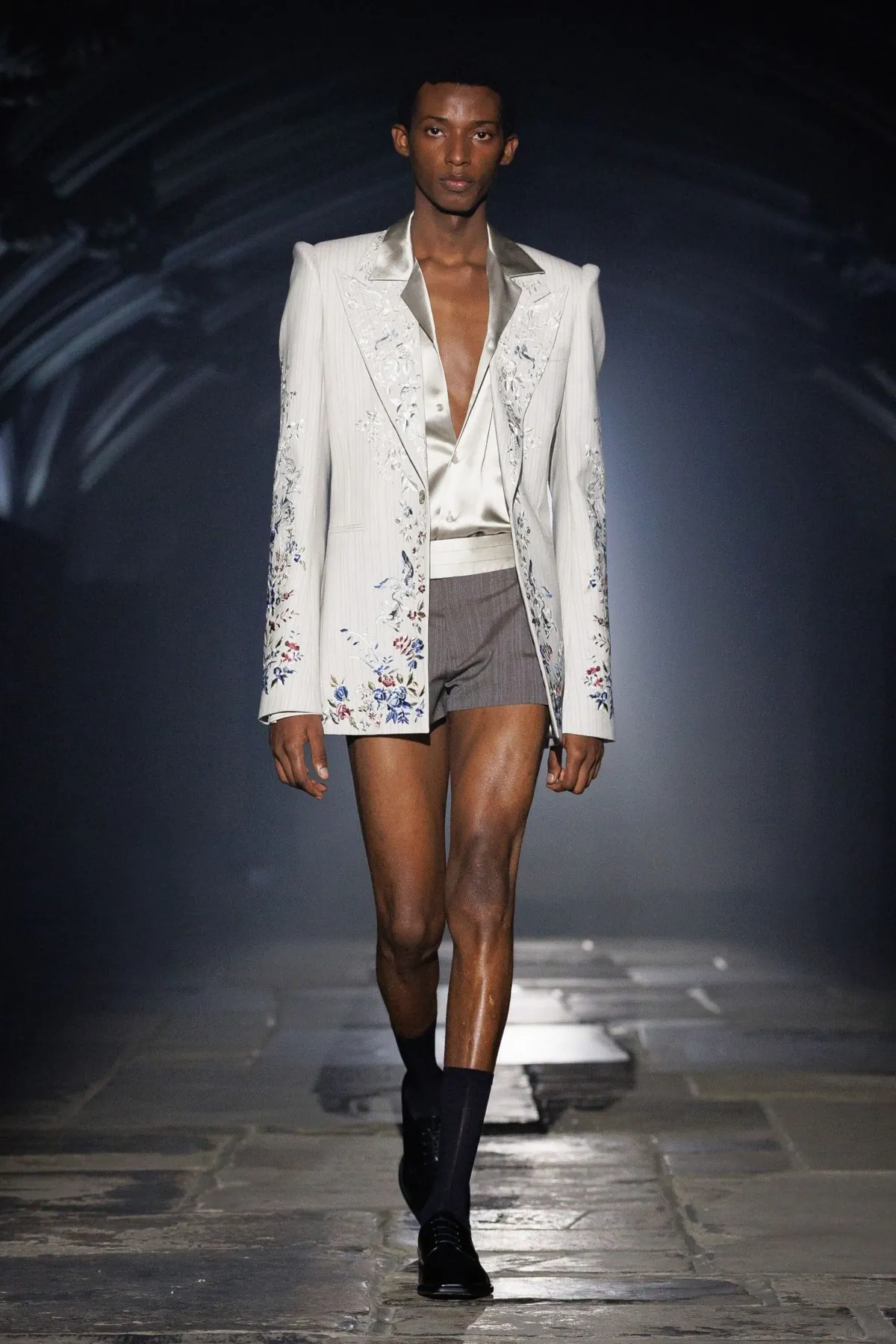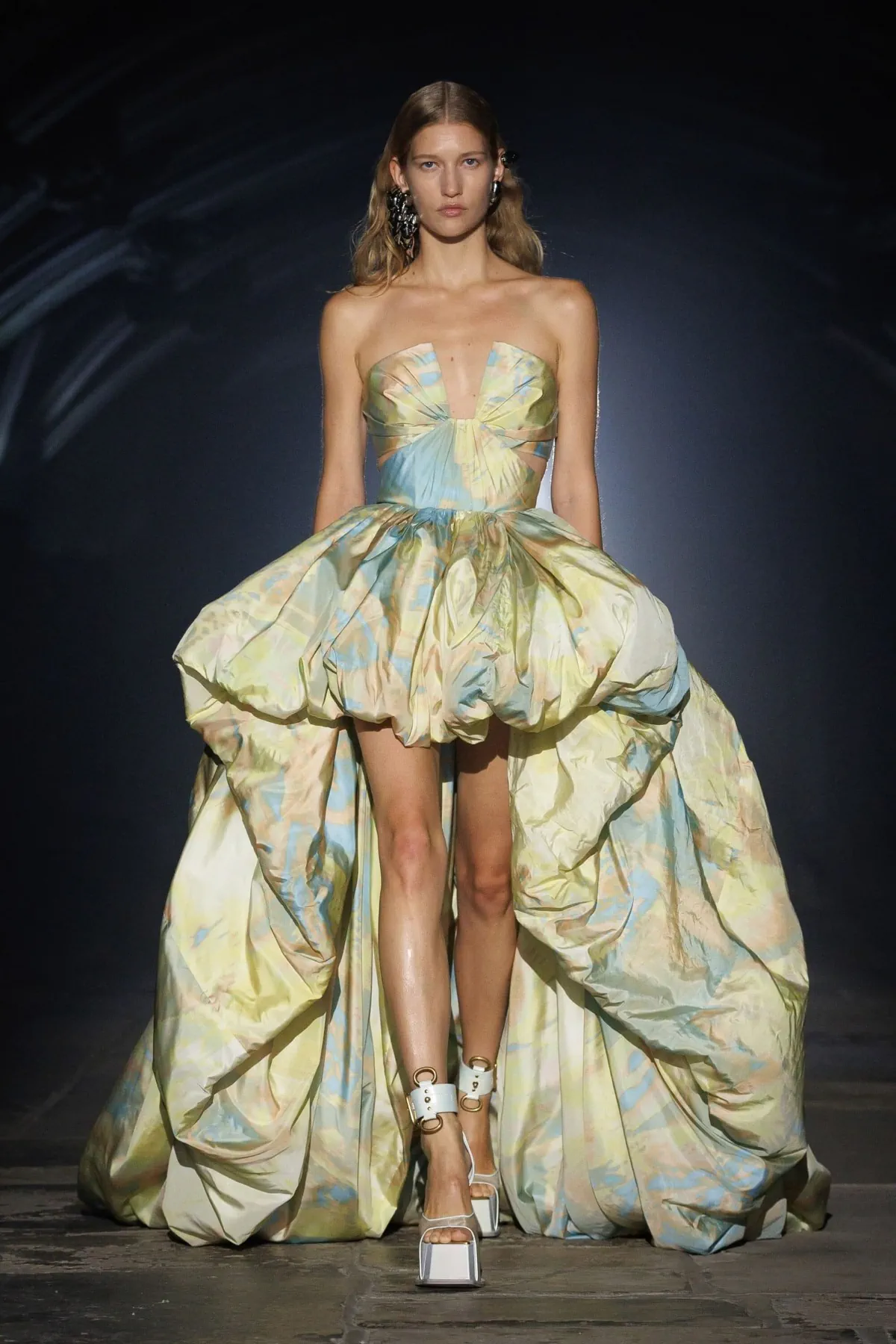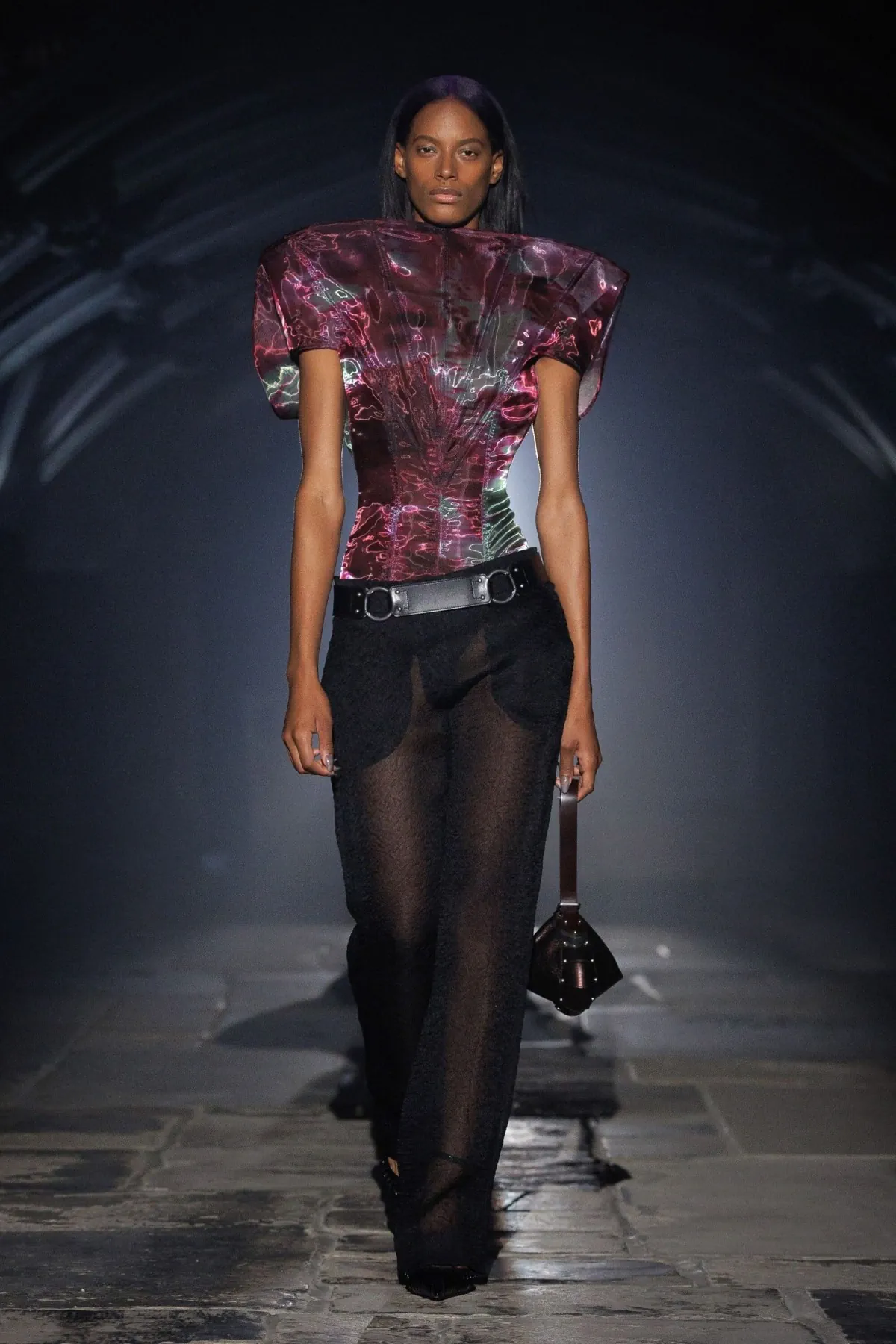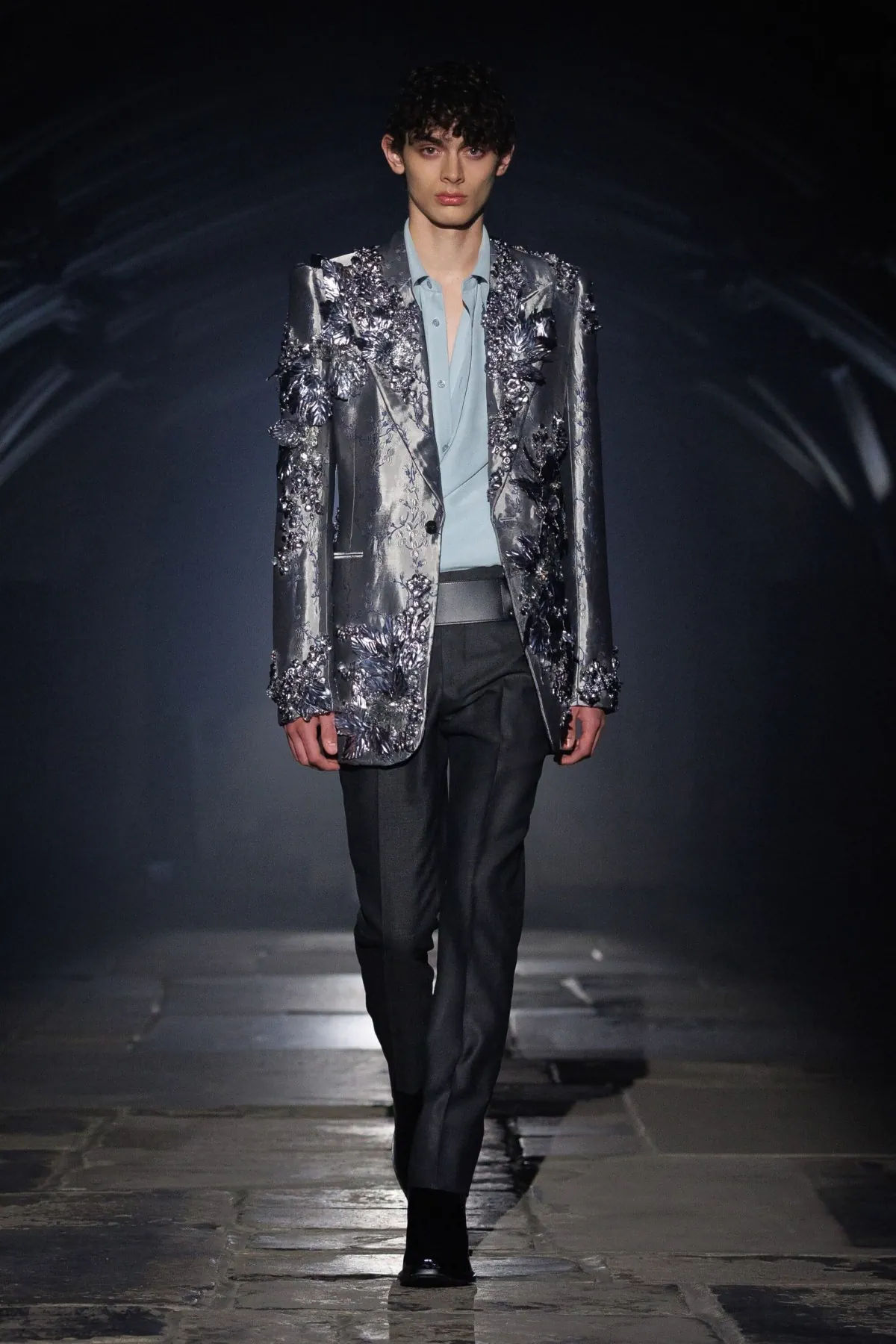

| Alexander McQueen ended a 25-year run of Paris shows on Sunday, staging Spring 2027 in a 17th-century crypt beneath Lincoln’s Inn Chapel, London. Designer Sean McGirr worked with jeweler Shaun Leane and Savile Row tailor Huntsman. CEO Gianfranco D’Attis confirmed a new Bond Street store will open within months. |
A runway show in a new city can be meaningless. This one meant something. For the first time in twenty-five years, McQueen did not show in Paris. The address it chose instead – a seventeenth-century crypt in London – said more about where the house is headed than any collection note could.
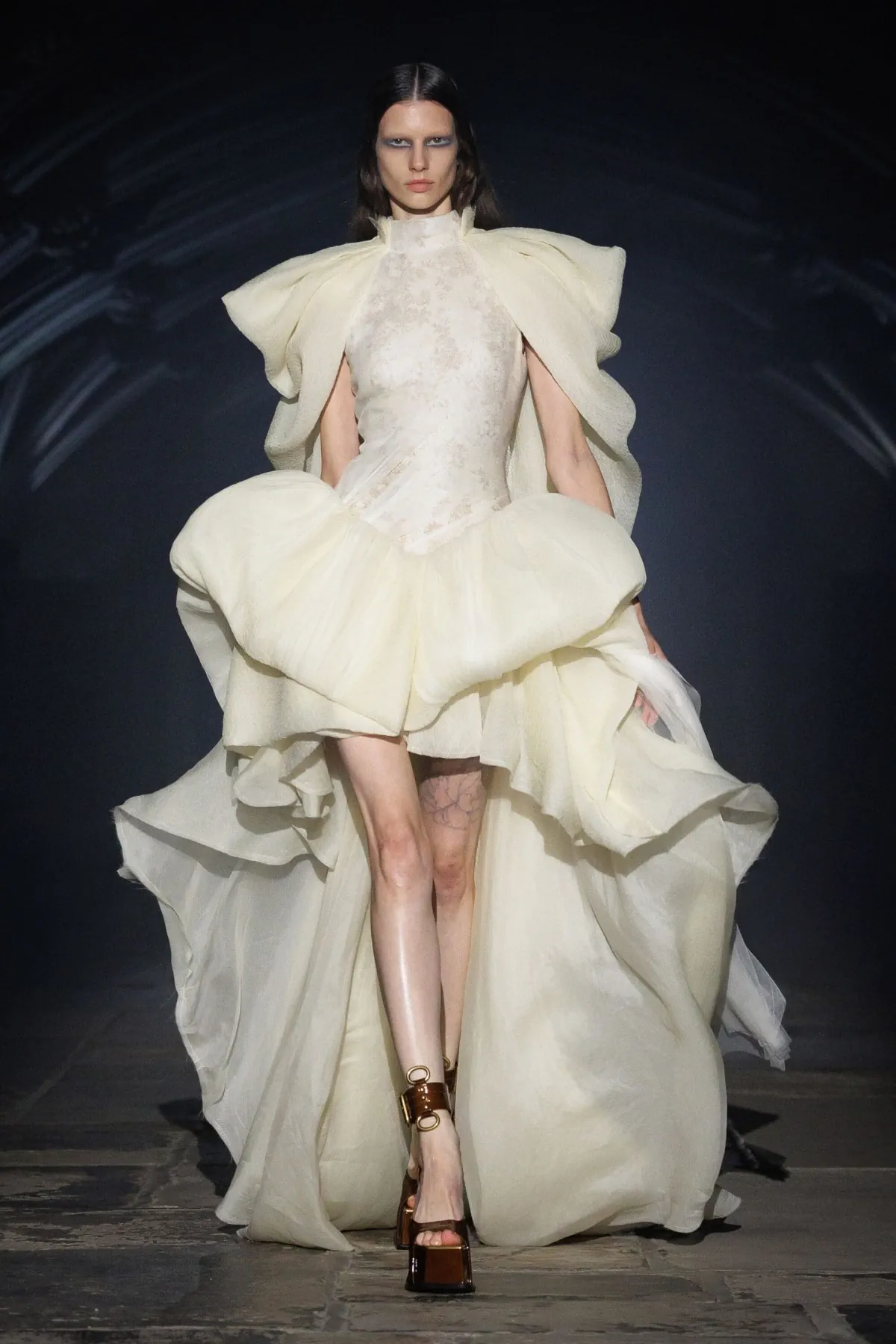
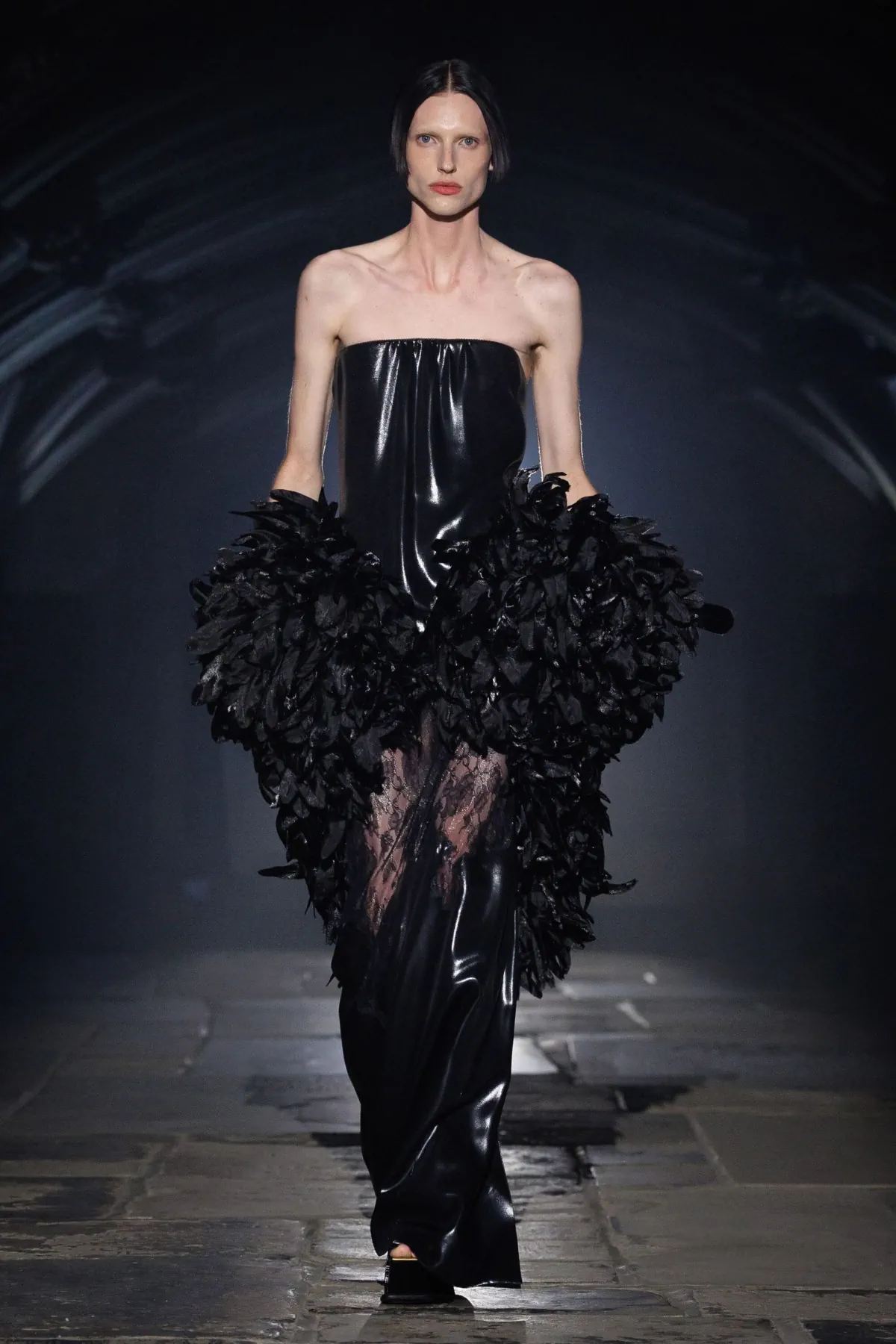
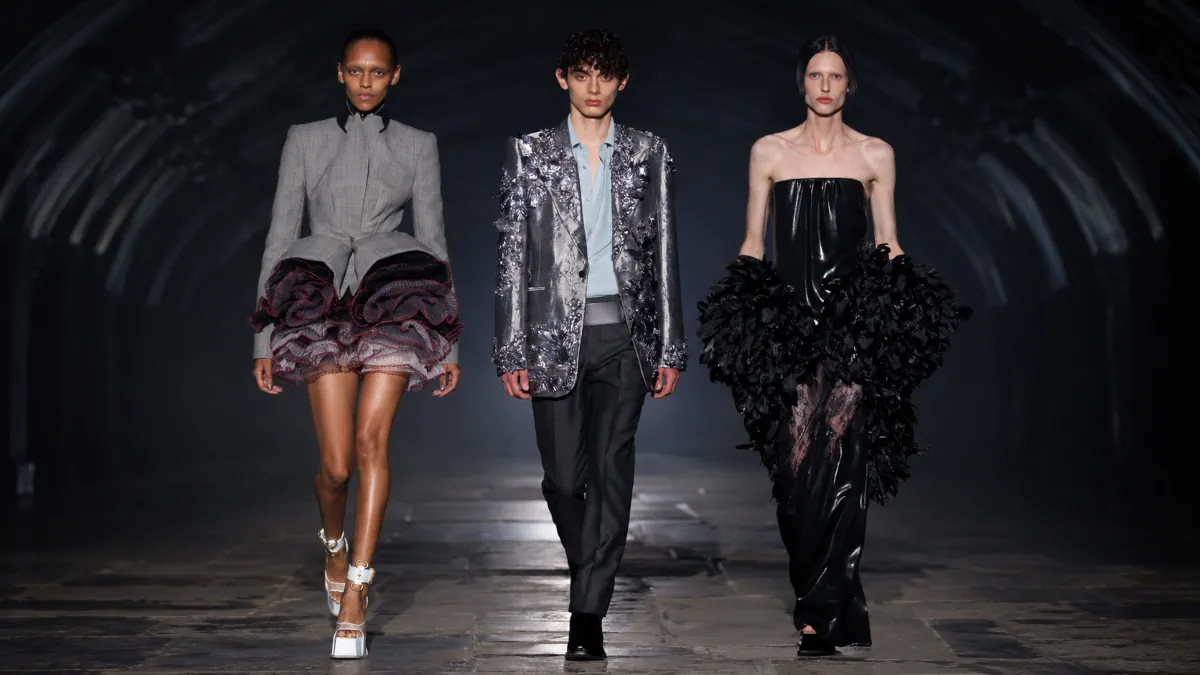
For twenty-five years, McQueen showed in Paris. On Sunday night, that changed. Seán McGirr presented his Spring 2027 collection on the stone floor of the undercroft of Lincoln’s Inn Chapel, a 17th-century chamber in London where the names of deceased lawyers and clergy are carved into the flagstones beneath the guests’ feet. This gesture was as important as anything on the runway. This is where the house was born, in a city that has never quite lost its taste for beautiful trouble. McGirr wanted everyone in that room to feel it.
He made this clear backstage, without embellishment. “The brand is rooted here, and this is where I feel at home.” There was also something almost domestic in his relief at being able to sleep in his own bed during show week – a small detail that revealed more about the pressure he has been under than any press release could.
The move is not just sentimental. It’s part of a broader restructuring under Gianfranco D’Attis, the label’s new chief executive. D’Attis wants McQueen to function as a full wardrobe house again, offering ready-to-wear items, tailored clothing, evening wear, and the sculptural footwear that made the label famous long before McGirr arrived. Paris gave McQueen scale. London, according to D’Attis and McGirr, gives the label its identity. The label will also open a smaller store on Bond Street in the coming months – a deliberate move, not a defensive one.
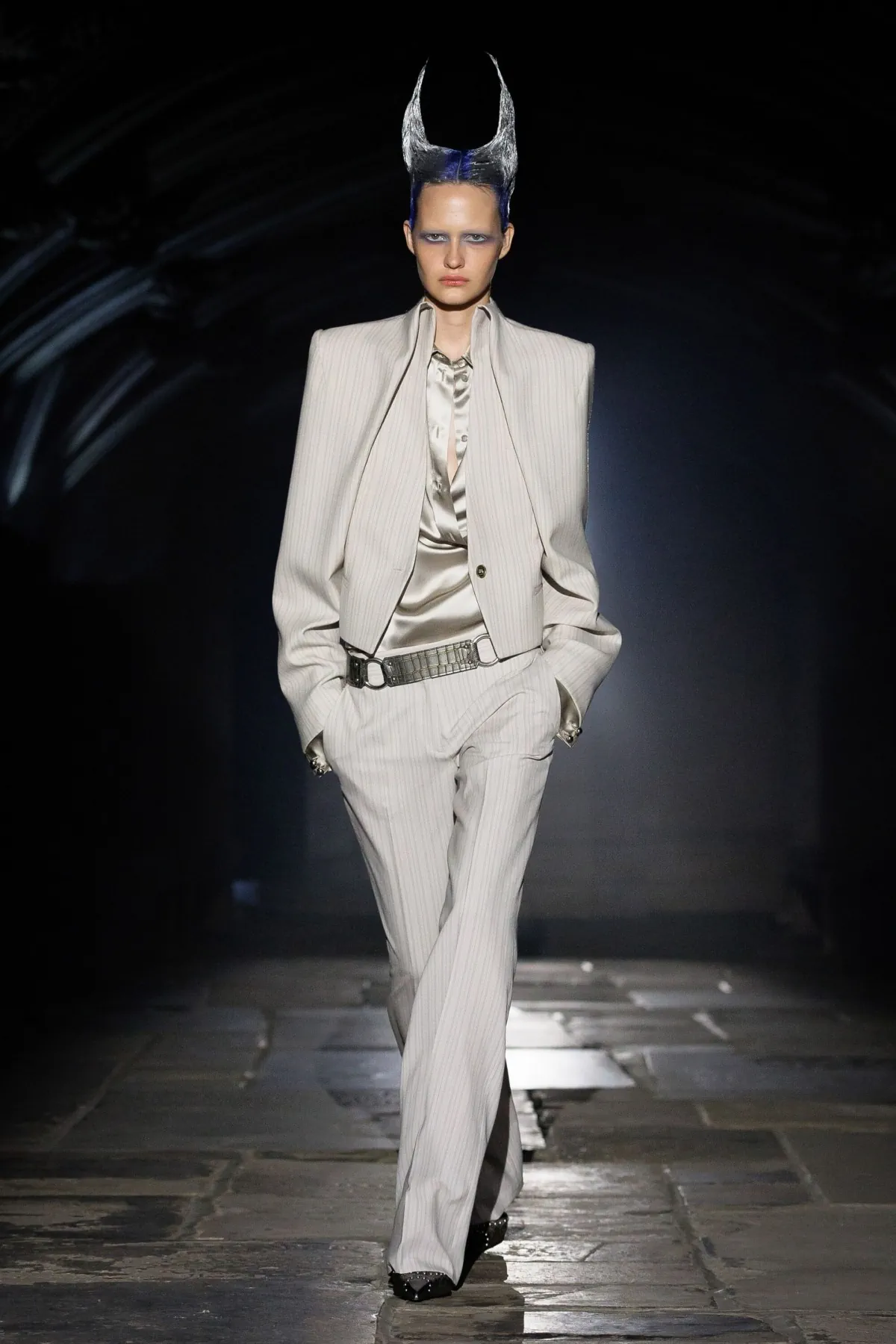
Craft was the operative word all week, and McGirr treated it as more than a talking point. He brought back Shaun Leane, the jeweler whose sharp, sculptural metalwork defined Lee Alexander McQueen’s runways for years. Leane unveiled his own bespoke label, 12, earlier this month. Leane’s return was not just for nostalgia. His pieces, cast in recycled silver, provided the collection with a sense of precision that complemented McGirr’s softer aesthetic. Two archival Leane headpieces, Joan from the 1998 collection and Pantheon ad Lucem from the 2004 collection, appeared on models as quiet reminders of where this house has already been.
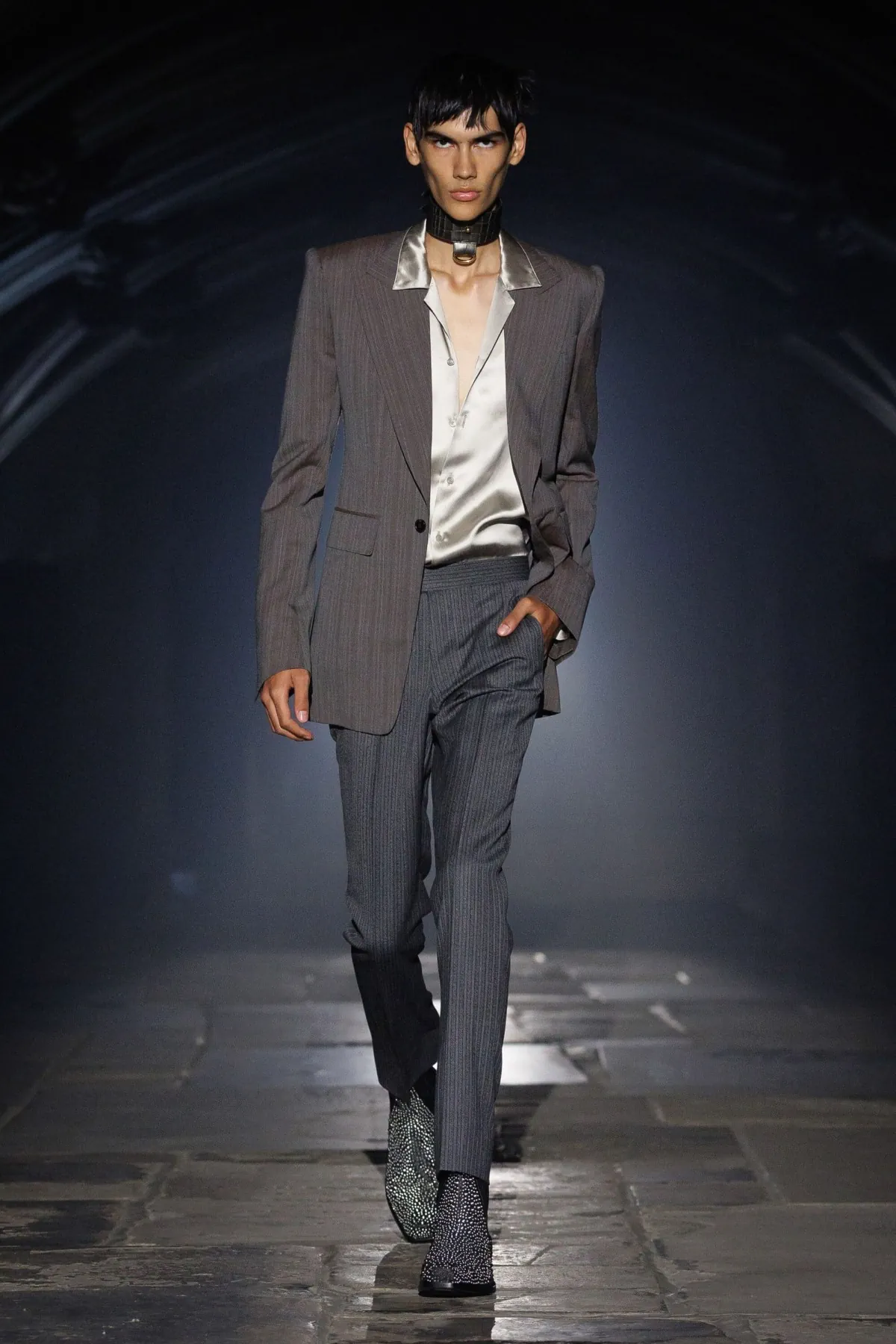
Savile Row received its due, too. McGirr collaborated with Huntsman, a tailor that had previously made suits for McQueen in 2002 and 2012, to create three bespoke men’s silhouettes cut from heritage British wool. With nearly two centuries of tailoring history, Huntsman brought weight to the collection, which otherwise threatened to float away on its own atmosphere.
McGirr has spoken before about Piero della Francesca’s The Baptism of Christ, a painting on which he became fixated as a new student in London. This Spring, he juxtaposed that religious serenity with the city’s rave culture: the sweaty, hopeful chaos of teenagers dancing until sunrise. On paper, it sounds like an odd pairing. On the runway, however, it produced curve-hugging, sheer dresses next to tailored jackets streaked with faded, abstract tie-dye, as well as gowns scattered with silver leaves that moved and caught the light as the models walked.
Follow all the latest news from Fashionotography on Flipboard, or receive it directly in your inbox with Feeder.
You may also read
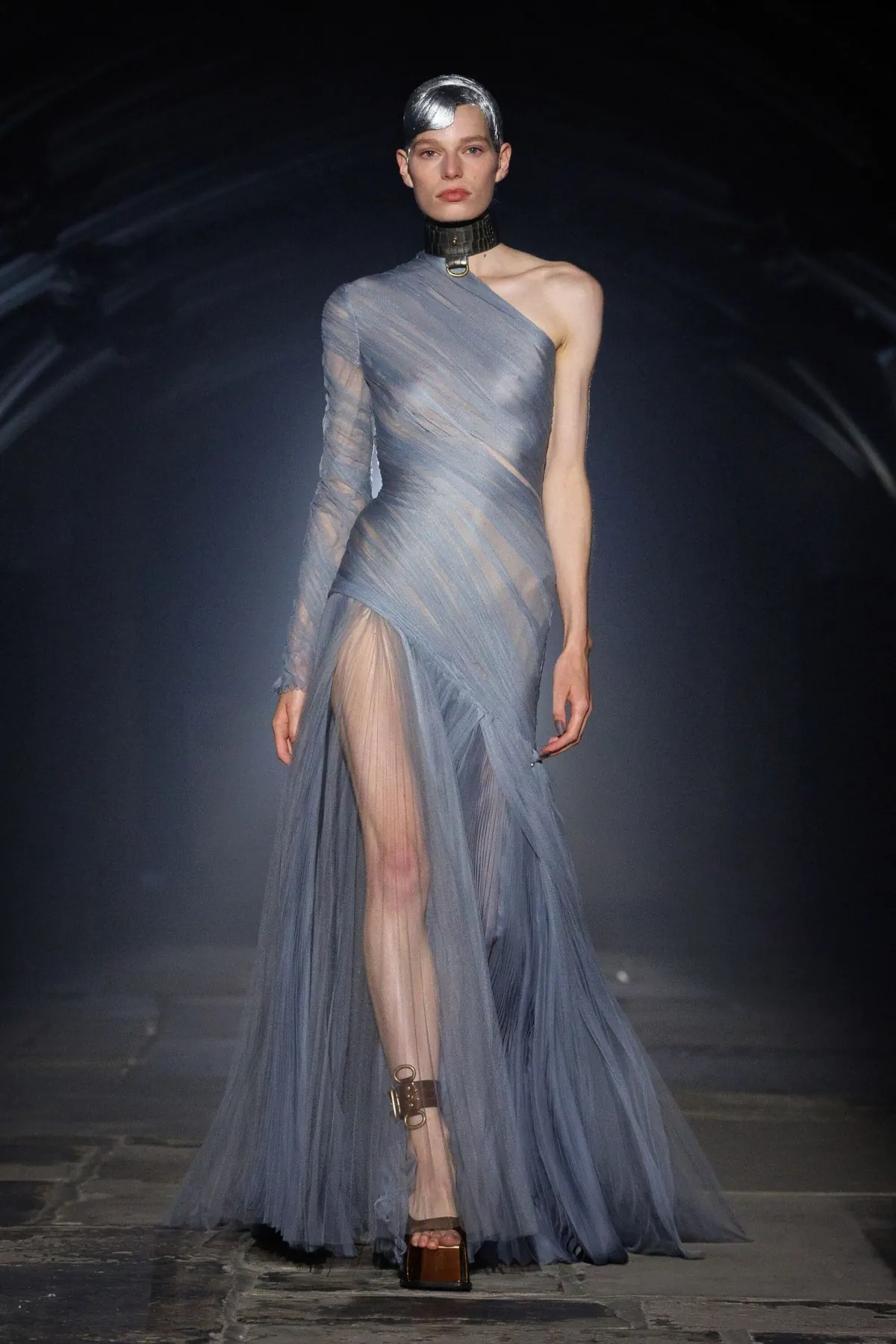
McGirr described the inspiration for those leaf-covered gowns: people walking home from a night out with wind blowing debris onto their clothes. It is a small, tender image that explains why the softer pieces in the show felt more convincing than the harder ones. Some jackets had reshaped sleeves that looked like wings, meant to suggest angels. They came off as pretty rather than transcendent, weighed down instead of lifted. A black smoking jacket with off-center buttons did more with less. A hand-pleated georgette gown in a pale, brushed blue – the exact shade of the angel’s wing in Della Francesca’s painting – was the clearest single idea in the whole show.
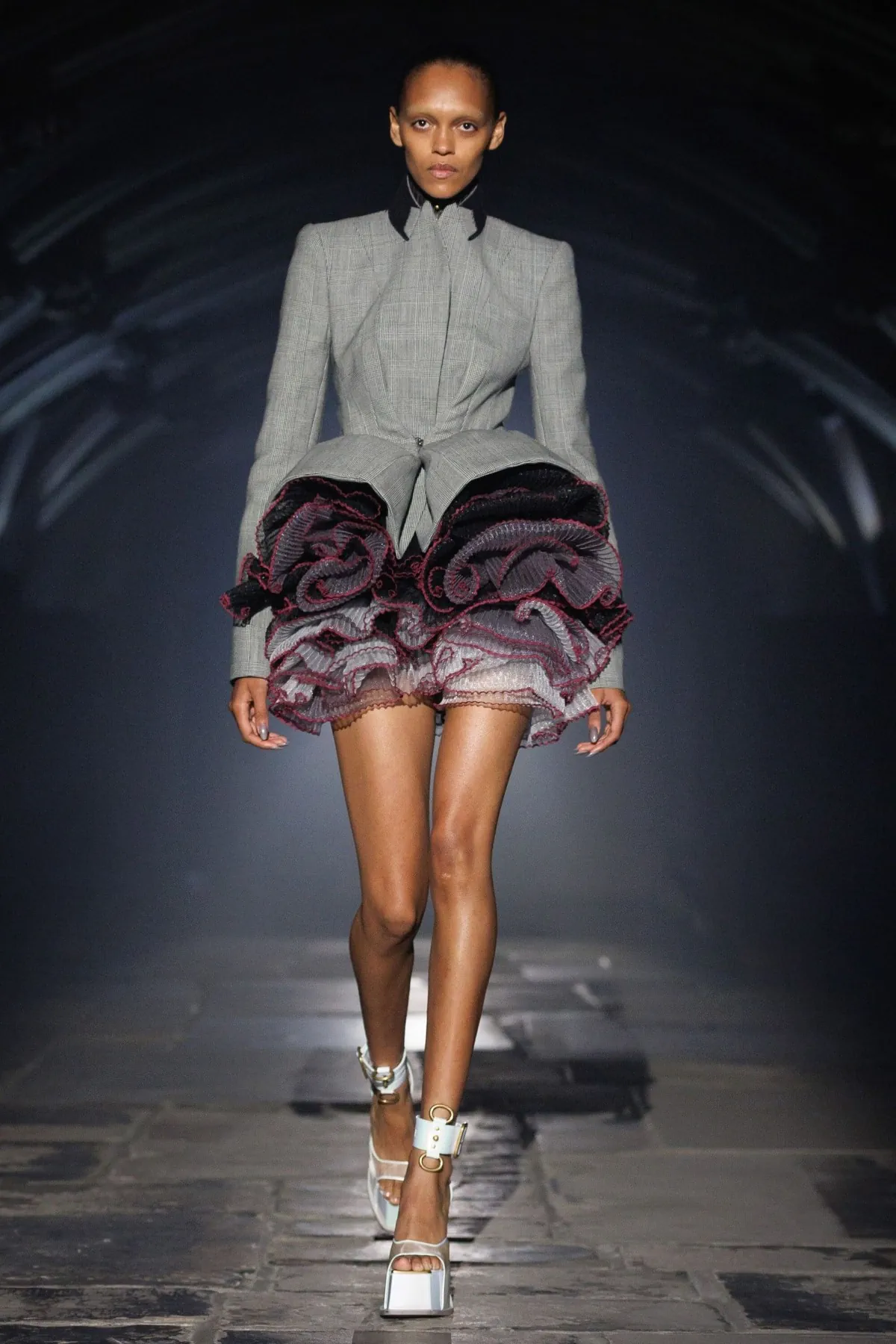
Other dresses were held together with leather harnesses or a harness made from recycled silver designed specifically for Karen Elson by Leane. These straps kept the collection from drifting into pure prettiness. They gave the silk something to push against.
Not every idea landed with equal force, and this unevenness is worth acknowledging rather than glossing over. The wing sleeves needed more definition. The jacquards, layered and interrupted until their patterns nearly dissolved, occasionally tipped past interesting into muddled territory. However, the tailoring remained solid, the metalwork provided visual interest, and the mood, with its collision of the sacred and the chemical, felt genuinely native to this venue rather than imported for effect.
For anyone tracking where the industry’s biggest houses choose to show, this is a signal worth watching beyond McQueen alone. After two decades of consolidating around Paris’s crowded calendar, the fact that a flagship British label is betting that London itself is now part of the product says something about how much cities, not just clothes, are being asked to sell a brand’s story.
When asked about the tension running through his work, McGirr put it simply. “You can talk about the dark stuff. You can let it into your work, but you shouldn’t let it into your life. You should have a good time.” London originally provided McQueen with its darkness. What McGirr is proving, slowly and not without stumbles, is that a house can change address without changing its nature. The surest sign that he has found his footing at McQueen isn’t a flawless show; it’s a collection confident enough to leave its rough edges showing.